Have you had your joy snack today?

Who doesn’t want to feel more joyful? And who doesn’t like a snack? If you are still with me, then let me introduce you to the combined concept of a joy snack. As Neuroscientist and science journalist Richard Sima explains, these are:

… little moments of delight you experience throughout the day: He calls them “joy snacks.” These include things like your first sip of coffee in the morning, or telling a joke where the punchline hits just right. By savoring even small bites of bliss, you can transform an otherwise mundane moment into something joyful. And cultivating more joy can help you create a more meaningful life.

I like it! Joy and snacks: two great things that go great together!

For more on this, check this out: An easy way to feel happier: Snacking on joy. In The Washington Post.

Now get snacking!

Does all gamification suck? (Why that isn’t necessarily true)

500
Is all gamification bad? If you read this piece, How gamification took over the world published in MIT Technology Review, you might come to the conclusion that it is. I thought the strongest criticism of it came from the game designer, Margaret Robertson. She…

 argued that gamification should really be called “pointsification,” writing: “What we’re currently terming gamification is in fact the process of taking the thing that is least essential to games and representing it as the core of the experience. Points and badges have no closer a relationship to games than they do to websites and fitness apps and loyalty cards.”

I think that’s true. If the whole game is just getting more and more points and levels, after awhile the game gets dull and easy to abandon.

So what should a game be, if it’s not just about keeping score? The article goes on to say:

“A game is about play and disruption and creativity and ambiguity and surprise,” wrote the late Jeff Watson, a game designer, writer, and educator who taught at the University of Southern California’s School of Cinematic Arts. Gamification is about the opposite—the known, the badgeable, the quantifiable.

Ideally that might be the case, but there is a range of game play, and some great games may only have a modicum of creativity and ambiguity and surprise and can still be loads of enjoyment.

Indeed, that’s the thing about games and indeed gamification. Some games can be engaging and great fun. And some games suck. The same can be said for gamification: some of it is fun, and some — alot — isn’t.

This is especially true for gamification that is imposed on us. We all can recall childhood friends who would say “let’s play a game” and the game turned out to be something that would be good for them and not for you. It was no fun then, and it’s no fun later in life where you are working for a company and your employer wants you to play a game in order to get you to behave in a certain way for their benefit.

If imposed games are bad, so are endless games. Games that never come to an end or that are practically impossible to win also suck. Yet for game makers, it is tempting to engineer the game so that you never leave it (and them). I was reminded of people I know who played Duolingo and who found once they got to a certain level, they were just floating there. Now it was no longer a game to them, but merely an activity. Now some activities can be fun, but it’s no longer a game.

Gaming is a structured form of play, and like any type of play, it should be fun and it should come to an end. Too often with gamification, neither of those things are true. That, to me, is the true problem with the practice of turning non-game activities into games.

(Image is linked from the article in MIT Review)

It’s the weekend. Go do something with your hands

Why? Well according to this: Working With Your Hands Is Good for Your Brain (in The New York Times). It doesn’t matter if it is knitting or gardening or writing or painting. As long as it is not….typing.

It’s not clear why this is so, but studies show it to be true. So put the computer down and go do something manual. You’ll be glad you did.


What do tractors and leaves have in common? (What I find interesting in art, March 2025 edition)

What do tractors and leaves have in common? They are featured in the work of the artists I’ve been reading about recently.

The tractor is just one of the works I came across while reading about artist of Charles Ray.  The New York Times has two pieces on him  here and here, and this here piece (where the above image originates) is also good.

We lost some fine artists in the last while. The iconoclast John Wesley has died. (More on him, here.)  Ben Vautier of Fluxus has also passed on. As has noteworthy black Broadway producer, Ron Simons. I was struck by Simons story, how he skipped the arts as a young man to go into IT, only to return to theatre at a later again. It was inspiring.

Relatedly, here is a good piece on how artists deal with grief.

In happier news, here’s a good piece on Vivian Meyer, who has a show out on her work. Likewise  Mary Cassatt. Go see them if you can.

This is a fascinating piece here on Brecht’s collages, which feature Hitler among other things. This is a very insider-y piece on Francis Bacon’s contempt for the Marlborough Gallery. This is a good study on the intersection of art and luxury fashion.

Finally, I recommend you check out Susanna Bauer’s work (seen below). She does wonderous things with leaves and nature.

What does caviar have to do with the McRib? (find out in this Friday’s food links for food lovers, July 2024 edition)

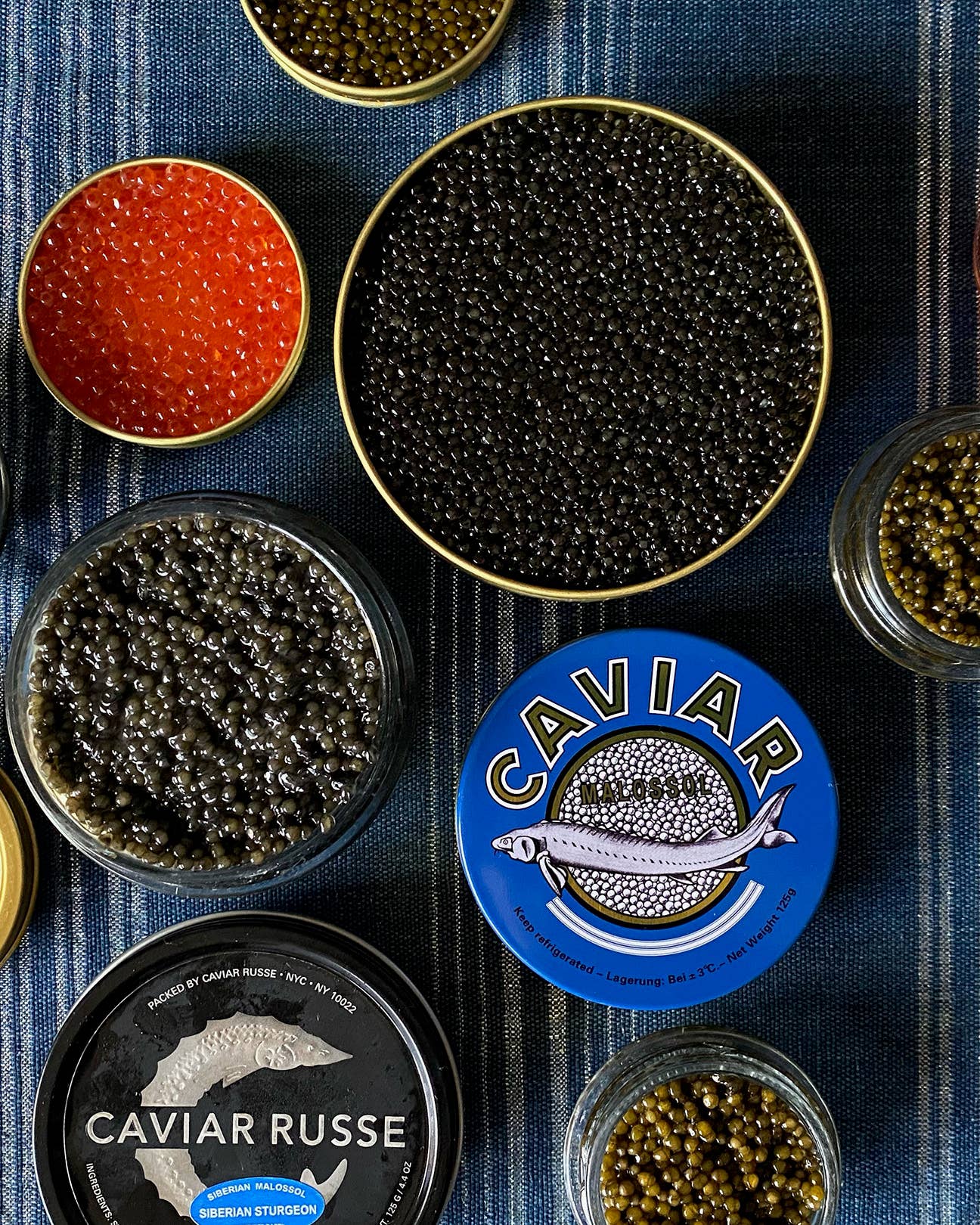
What does caviar have to do with the McRib? Hardly anything, other than they are edible and they are both featured in this blog post.

Now most of the time when I write blog posts on cooking and food, they are associated with recipes. Not today. This is mainly about highlighting good writing about food. So grab a chip and some caviar — or a McRib — and let’s go….

Here’s advice on how to be a better cook. This tells you what mirepoix is. And this tells you all about emulsification. These are some smart shortcuts for big flavor in your cooking. This is how to put those staples you have to good use.

You may be asking yourself…what is the diff between baking soda and baking powder? Should you subscribe to a farm box csa? What are eight good rules for dinner parties? What is a Coney Island hot dog?

You might wonder what should you cook when it’s insanely cold outside? What to make at New Years? What to make for your kids?What are the best caviars? And what are the best potato chips? What is the best air fryer?  What are some ways to eat less not no meat? How to know how to salt pasta water? What is the best pasta to eat in Italy?

You may even want to know who the eff is the food professor? What is the unstoppable Matty Matheson up to? How did Julie Powell and her julie julia blog change food writing?

So many good questions. Those links will help answer them.

I liked this piece on the late poet Charles Simic who had a love affair with spaghetti. Relatedly: when my mom died I mourned her with spaghetti. That too was good. Finally, here’s an obit for the great NY Times food critic, Mimi Sheraton.

You may not have realized that jelly is ready for a comeback. Or that there is great Aspic Renaissance. I personally am skeptical.

If you are curious about what Costco‚’s $4.99 rotisserie chicken says about the future of American farming, read that. If you are interested in food and how it relates to instagram or tiktok, then read those two pieces.

You may want to know what are the 45 Biggest Food Trends That Defined the Past 45 Years. You may not be surprised to learn that most canned ‘San Marzano’ Tomatoes are fake.

For restaurant goers, this talks about new restaurant plating trends. And this talks about the restaurant staff meal.

For fans of processed food, here’s something on McDonald’s McRib, the future of fast food, and the Florida ban on lab grown meat,

Caviar and the McRib. Two good things that normally do not go together, except in this blog post. 🙂 Thanks for reading it.

Space is big. This piece on Space isn’t

Space news comes fast and furious these days. There’s so much exploration going on, it can be hard to keep track. For example, ESA has approved a search for the gravitational echoes of the big bang. Countries that you might not expect, like Mexico, are going to the moon.  Japan is already there. In the USA, here’s some of the many things NASA is up to including going to the moon. Mind you, not everything is going well with the American space program.
Privately, here’s what Jeff Bezos’s Blue Origin is doing. (Here’s more on that.) Not to be outdone, this is some of what SpaceX is trying to accomplish.

Besides the engineering problems of exploring space, there’s also the human problem. For example, can astronauts deal with the isolation of Mars? Space is hard on astronauts physically as well as mentally, as that piece shows.

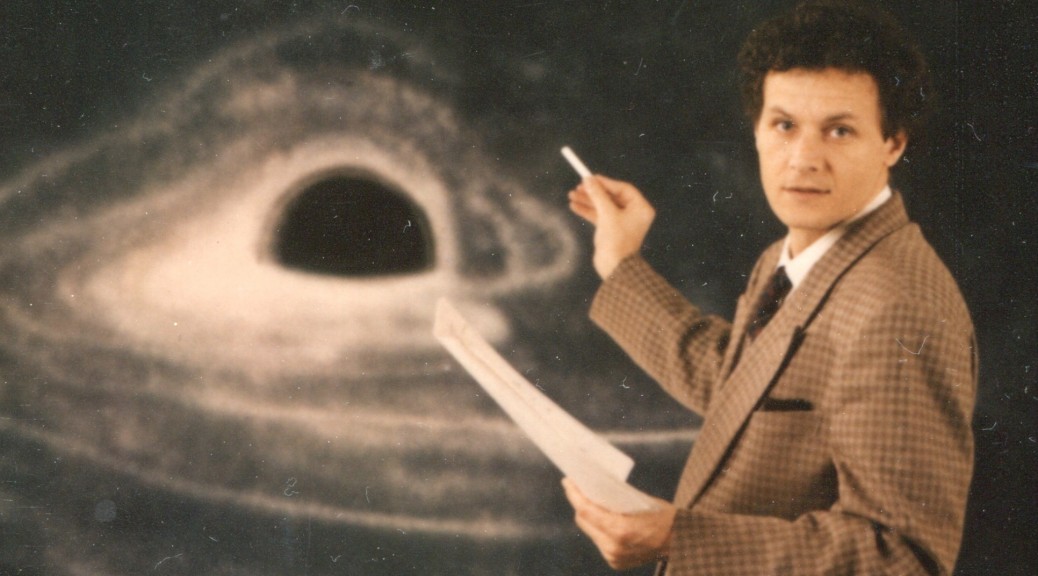
Not news, but here’s some more good space articles. This is a good piece on the early universe: it’s bananas. 🙂 This, on gamma ray bursts, caught my eye. As did the milky way photographer of the year (shown at the top). Finally, here’s a good story on Jean Pierre Luminet (the man in the photo), who did some first work on black hole imagery.

Ikea collaborates with gamers and more

Ikea often collaborates with others to come up with home furnishing a bit outside their usual stuff. For example, this collab in the area of  gaming furniture (seen above). Or this partnering between them and Japanese designer Hiroko Takahashi. They have worked with Marimekko too.

Not a collaboration, but if you into pet furniture and a fan of Ikea, you’ll want to check this out. And speaking of pet furniture, imagine combining a dog bed with a desk — that’s what you’ll find here.

Restaurants loved and lost?: Prune

Like many restaurants, Prune was shuttered during the pandemic. Unlike other restaurateurs who quietly left, the head of Prune wrote a brilliant essay on its passing: My Restaurant Was My Life for 20 Years. Does the World Need It Anymore?

Like many of the other noted restaurants loved and lost, this one hurt. Especially so. I had only just started to make it a destination whenever I was in New York and suddenly it was gone. Or was it?

As this piece noted in 2023, the restaurant was being renovated and private events were being held there. Heck, Alison Roman and her beau had celebrated part of their wedding there. I was hopeful that it eventually would go from being private to being public. But as of March 2024, at least, it still looked like it did in the photo I took above. Indeed this article in The New Yorker at the same time said it is only available for private parties at the owner’s discretion. Sigh.

There was something magical about Prune. It was a world class restaurant that was also a small neighborhood restaurant. I remember the first time I went: I wandered by it while in NY’s Lower East Side and I popped in to see if they had any tables available for the evening. To my surprise they said I could sit at the bar at 7:30. I had a fabulous meal that day. I thought: I want to come back here often and for ever.

And maybe I will someday. Maybe Gabrielle Hamilton will throw open her doors to the public once again. But for now, I am including this among the restaurants loved and lost. I’ll miss your snack plate, Prune, and your duck breast over beans, and all the other great meals there. I’ll miss your small, perfect space. I may walk by you from time to time, but I doubt I’ll leave the sidewalk and cross your threshold any more.

Why social media content is so addictive (at least for me) and what it has to do with raw dogging flights

As I waste time doomscrolling through text based social media or reels, I will often stop and ask myself: why am I doing this? Why am I not reading a book or watching a movie? After many an hour wasted on the couch with my phone, I’ve come to the conclusion that it’s not that social media content that is a problem: it’s the social media format that is a problem.

Social media is essentially a stream of randomness: a collection of words and sentences and images with limited or no connection. You can surf along and not have to hold anything together in your head. That’s it’s format.

Now if you are reading a book or watching a movie, the format is different. Sentences are connected to paragraphs which are connected to stories or chapters. Characters and scenes and dialogue in a movie are connected to other characters, scenes, dialog. Your brain has to work to keep all those connections in mind when reading or viewing. The format of books or movies demands it.

With  social media content, you don’t have to maintain any of those connections in mind. You read and scroll and read and scroll, or you swipe through reels or Tiktoks, and in the end perhaps you retain one or two things.

Not having to maintain these connections in mind makes it easier for your brain to process social media content. That ease can make it more preferable, especially when you are tired or in a low energy state. Which, if you are like me, is fairly often.

Now it seems like some people are taking it to a new level by raw-dogging flights. (What Does ‘Raw-Dogging’ a Flight Mean? All About the Viral Travel Trend). Perhaps because they are in a low energy state and they don’t have access to social media, they just stare ahead the whole trip. It’s almost meditative. Again, the brain has very little to do here. People on a flight watching the flight path have zero connections to maintain.

So the next time you are beating yourself for wasting time on social media, perhaps acknowledge your brain is tired and this is all you can do. If you can, try meditating or napping or just going outside. Just understand that social media knows you are the way you are and it will suck you in if you are not careful.

Why OneMillionCheckBoxes.com shows we can never have nice big things again on the Internet

500

The site onemillioncheckboxes.com is just that: a site that has one million checkboxes to check (and uncheck). But it has become something more.
As The New York Times describes it (the bold emphasis is mine):

By providing a blank slate to users, One Million Checkboxes has also cycled rapidly through the stages of internet maturity, serving as something of a microcosm of the joys and horrors of digital life. First there was a period of exploration, in which users worked together to check as many boxes as they could. Next came creativity, as some began filling in boxes to illustrate hearts or, in more cases, crude drawings of male genitalia. Then things devolved, as they often do online, into all-out war. Steven Piziks, 57, a science fiction author in Ann Arbor, Mich., began checking boxes on Tuesday because he thought it might be soothing. He soon noticed someone else working behind him and unchecking every single one. He started checking even faster, and about half an hour later, the site’s built-in tally said he had checked more than 1,000 boxes. It was not soothing at all. It felt “like a metaphor for all of social media,” Mr. Piziks said. “We go into it thinking it’s going to be wonderful and collaborative and interesting, and it kind of turns into a fight.” Some bad actors on the site are human mischief-makers who take a perverse joy in undoing other people’s work. Others are simply bots that have been programmed to uncheck boxes en masse, Mr. Royalty said. (He has been working to contain them, with mixed success.) Those bots have been particularly infuriating to Frank Elavsky, 34, a Ph.D. student at Carnegie Mellon University who has checked more than 20,000 boxes in his “fight for the cause.” He got in a spat on X with someone he suspected of tinkering with the site’s code in the name of unchecking. “It became kind of personal,” he said. “I’m like, ‘You foul, foul demon. How could you?’” The website’s creator has been watching this all play out at a kind of omnipotent remove.

The freedom that the site gives users also comes with risks. In addition to lewd drawings, users have checked boxes in order to spell out profanities and at least one racial slur.

And that’s why I think OneMillionCheckBoxes.com shows we can never have nice big things again on the Internet. We can have big things, like OneMillionCheckBoxes.com, but you eventually get bad actors, bots, and racists. And we can have nice things with a significant investment in content moderation, but that doesn’t scale. Right now Threads.net is trying to prove me wrong, but in the end they will go for scale over nice, and when that happens, it’s only a matter of time before it all declines. Just like Facebook, and Twitter/X and others.

It will be interesting to check out (and maybe even check) OneMillionCheckBoxes.com in July 2025 and see if it is still active, or whether it succumbed to a combination of bad actors and ennui. I’m not optimistic.

For more on this, see: One Million Checkboxes, ‘Useless’ Internet Game, Lives Up to Its Name – The New York Times

Also the Washington Post has an interview with the creator, here.

28 or so interesting things I wanted to write about and maybe will some day


Last year I wrote about 85 or so interesting things I wanted to write about and maybe will some day. This year I am down to 28. Progress? I’m not sure.

Like last year, over the last 12 months I have found things I would like to write about but never do. I think people should check out these things/links at least, so I am including them all in this Sunday post to read at your leisure. Maybe you can write something worthwhile with them.

For fans of TV, you might like this piece on how Netflix dominates. Or this, on the end of peak TV. Read this if you are a die hard  film fan who refuses to surrender to streaming. I keep track of how the big studios are doing, so I found this worth a note, on Disney woes with Jonathan Majors. Speaking of woeful is this item on the troubles of Justin Timberlake.

As I continue to blog, I was interested in these blogging myths. If you have a newsletter, you might want to make it more like a letter. Here’s some dated words to avoid. Here’s some beautiful words to take a moment and read: When i am among the trees by Mary Oliver.

Is the money is in all the wrong places? Of course. This, on the problems of the silicon valley bank and the federal reserve clampdown, shows it to some degree. Speaking of money, this is a good piece on debt free college.

I like to write about decor, but had nothing to say regarding this Kohler’s Brutalist Toilet. (Shown below.)  Ditto for Sherwin Williams least popular paint color for 2024. (Shown above.)

All I can say on this is… nice: creative growth art center in san francisco; neat: on the price of the Costco hot dog; cool: analyzing my emacs time over the last 11 years or so.

Some LASS (Liberal arts, social science) pieces I collected recently are these two pieces on the Bengal Famine here and here; more brutal history: The chilling sound that signalled death for IRA ‘informers’; also terrible: homosexuality was considered a disorder in psychiatry. I thought these religious writings were worthwhile: a good essay on Jewish beliefs and practices, on the great flood, and how we are reading the Book of Job wrong.

Do I like a good piece on John Rawls? I do. Do I agree with what is going wrong with Liberalism on the west coast? I do not. Do you need to know how to clean house with micro decluttering? I’d say yes.

As before, and always, thanks for reading this blog. I truly appreciate it. I hope you found a link or two — or ten! — worth your while.

Waste is a failure of imagination, and other thoughts on waste

Waste is a failure of imagination. Woodworkers know that especially. Good wood workers will try and minimize waste by designing their cuts to use as much of their raw material as possible, and then they will try and use up the remains in one way or another.

We should be like good woodworkers, using our imaginations, our minds, to come up with new uses for things we consider waste. During the pandemic we even depended on our wastewater to tell us how we were doing. Even that kind of waste can be useful.

Not all waste is material. Waste can also be temporal: we talk about wasting our time and wasting our life. Here too, we should consider ways to minimize such waste. And not just by being busy all the time. Being idle is not always a waste of time: idleness can be often be necessary. Just as being busy without a purpose can be a great waste of time.

What is important is the context. How we spend our time — idle, busy, something else — and whether or not it is a waste depends on the context we have of it. So, doing nothing with someone you love is a good use of your time, just like working hard on a project no one wants could be a waste of time.

These are some of the recent thoughts I had on waste when I read this post: No such thing as waste, by Austin Kleon. I recommend it.

I’ve written often about waste here on smart people I know. Recently I talked about it, here, when I was futzing around with code. Then there is this piece, on how Waste = failure to innovate. More on time and waste: Focus on maximizing your time instead of worrying about the time you waste. I even wrote on love and waste: On the love we waste.

If that isn’t enough, here’s all the time I touched on waste on this blog. Quite a lot. None of it was a waste, though.

Detroit returns, happily

This is a great news story: Once a symbol of Detroit’s downturn, the iconic Michigan Central Station reopens its doors at CBC News. It has come a long way since I wrote about it back in 2008: Detroit: the future sadly (Smart People I Know). A building once waterlogged and crusted with graffiti has been restored to its former beauty and glory.

The CBC news story has more on it including some inside shots. It makes me glad to see them. Here’s to a resurgent Detroit.

Philippe Starck reaches for a new design tool: A.I.


According to the site, Design-Milk, Philippe Starck is working with Kartell to use A.I. in the design of furniture:

Known as a progressive Italian brand that doesn’t shy away from experimentation and innovation, Kartell is becoming increasingly daring as their endeavors expand. At the moment, that means stepping into the world of artificial intelligence. In collaboration with Philippe Starck, they’ve released environmentally friendly furniture designs that merge human creativity with AI, bolstered by advancements in materials and manufacturing.

In case you are worried about them replacing designers, the site goes on to say:

Rather than replace the designer – a huge fear amongst creatives – artificial intelligence helps streamline the prototyping and planning phases, sticking to Starck’s vision and ensuring Kartell’s high quality and production standards are met. In this case, AI also contributes to calculating optimal material usage, a reduction in waste, and ultimately environmental sustainability.

Good to see! Speaking of good to see, you can see more of the furniture on the Design-Milk site, as well as the Kartell site.