How to choose artwork for your home (plus gallery wall ideas)

If you are thinking of improving your home by adding some artwork, this piece can be helpful: How to Choose Artwork for Your Home – Decorology

Among other things, there’s some offbeat examples of how to do gallery walls. Sure, you can do strict grid patterns for your gallery wall, but why not try something different, like that wall shown above?

Also, if you are interested in getting great affordable art, check out the works for sale at Art Interiors. They have gallery wall ideas, too.

Tourism posters in the pandemic era


It’s not a fun time, and it’s not an era for travel, but if you want a souvenir of your non-travels from the pandemic, head on over to Colossal and check out:  Witty ‘Coronavirus Tourism’ Posters Advertise the Thrilling Adventures of Staying Home

Better still, if you like the one above, or any of the other ones, visit the artist’s commercial site and buy one!

Hey, what’s the point of (non) travel if you don’t get a souvenir or two.

It’s a good time to check out the Criterion Channel

If you are tired of other streaming services, or if you want to improve the films you are watching, now is a good time to check out the high quality films on  The Criterion Channel.

Right now they have a 14 day free trial. Now, if you are not a cinephile, the list of films they have could feel daunting. To make it simple, here is a list of 50 essential films you can watch there, with reasons why you want to see them.

If you aren’t sure, you can check out Criterion films streaming on Netflix, Apple TV and more. Consider giving them a try, though.

Mario Moore and his paintings of blue-collar workers who ‘really run things’…

…is a fantastic story you can read about here:  Princeton University portraits lacked diversity, so artist Mario Moore painted blue-collar workers who ‘really run things’ – The Washington Post.

His painting is fine, and the subject matter he has chosen especially so. Check out the story: it has many of his works on display too.

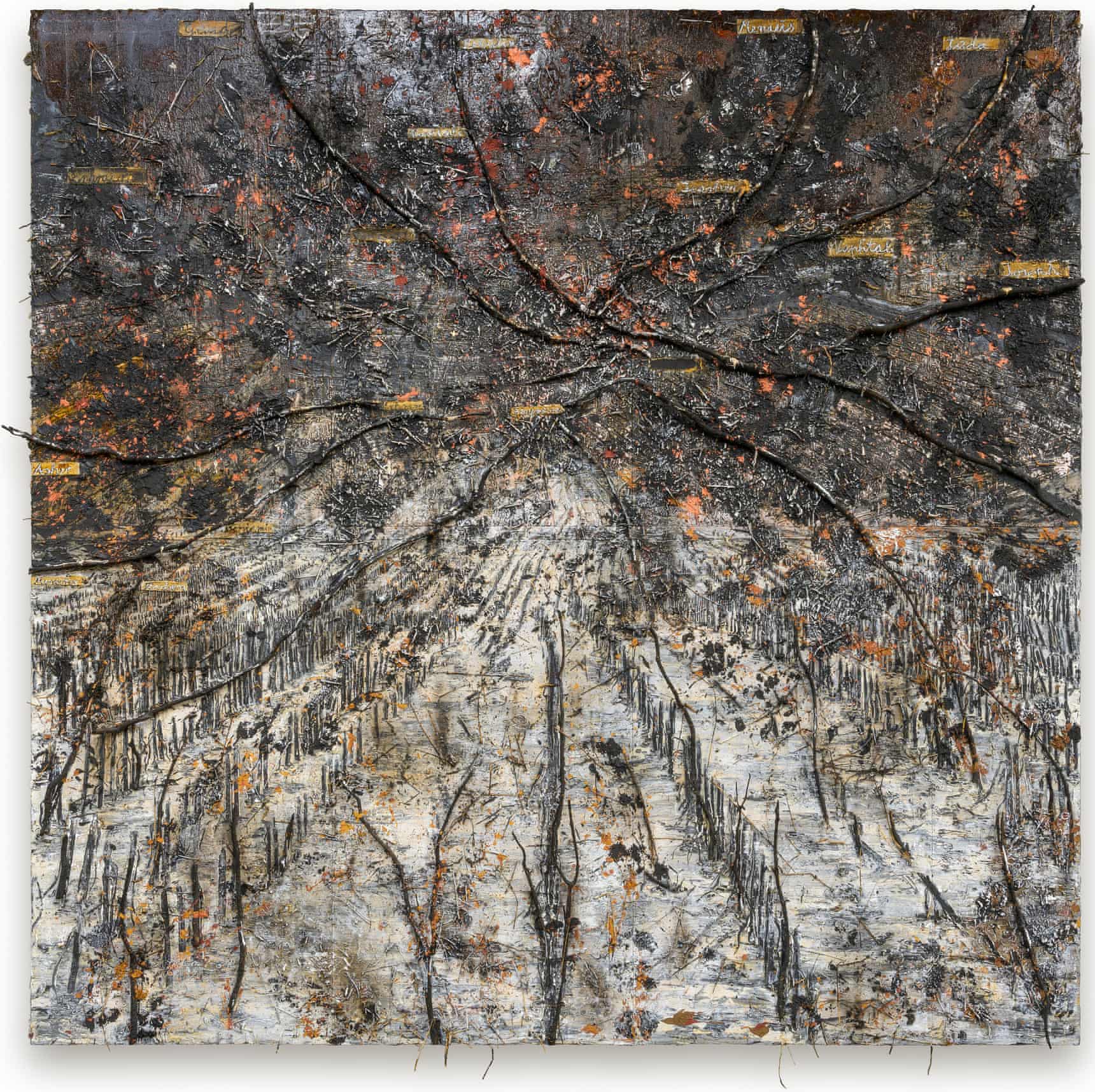
Three good pieces on Anselm Kiefer, in the Guardian

Anselm Kiefer had a big show in England this year, and that lead me down a rabbit hole reading pieces in the Guardian on him.  Never boring in his art work or his interviewers, anyone interested in knowing more about this great German artist can learn more here:

how to become artist in 6 steps, with 33 rules to follow


From this superb piece, Jerry Saltz: How to Be an Artist, come this:

Step One: You Are a Total Amateur
Lesson 1: Don’t Be Embarrassed
Lesson 2: “Tell your own story and you will be interesting.” — Louise Bourgeois
Lesson 3: Feel Free to Imitate
Lesson 4: Art Is Not About Understanding. Or Mastery. (It is about doing and experience)
Lesson 5: Work, Work, Work

Step Two: How to Actually Begin
Lesson 6: Start With a Pencil
Lesson 7: Develop Forms of Practice
Lesson 8: Now, Redefine Skill
Lesson 9: “Embed thought in material.” — Roberta Smith
Lesson 10: Find Your Own Voice (then exaggerate it)
Lesson 11: Listen to the Crazy Voices in Your Head
Lesson 12: Know What You Hate
Lesson 13: Scavenge

Step Three: Learn How to Think Like an Artist
Lesson 14: Compare Cats and Dogs
Lesson 15: Understand That Art Is Not Just for Looking At
Lesson 16: Learn the Difference Between Subject Matter and Content
Lesson 17: See As Much As You Can
Lesson 18: All Art Is Identity Art!
Lesson 19: All Art Was Once Contemporary Art

Step Four: Enter the Art World
Lesson 20: Accept That You Will Likely Be Poor
Lesson 21: Define Success
Lesson 22: It Takes Only a Few People to Make a Career
Lesson 23: Learn to Write

Step Five: Survive the Art World
Lesson 24: Artists Must Be Vampires
Lesson 25: Learn to Deal With Rejection
Lesson 26: Make an Enemy of Envy
Lesson 27: Having a Family Is Fine

Step Six: Attain Galactic Brain
Lesson 28: What You Don’t Like Is As Important As What You Do Like
Lesson 29: Art Is a Form of Knowing Yourself
Lesson 30: “Artists do not own the meaning of their work.” — Roberta Smith
Lesson 31: All Art Is Subjective
Lesson 32: You Must Prize Vulnerability
Lesson 33: Be Delusional

But read the piece: the comments he provides are what gets to the heart of it.

On Jeff Koons


Two worthwhile pieces on Jeff Koons: this Stop Hating Jeff Koons – The New York Times, and in a way, this.

I used to have great disdain for Koons, but the more I think about his work, the better appreciation I have for it. There is a ceiling to that appreciation: the emptiness of it imposes that. But Koons and his work gets me to think about art and the art world and the meaning of art and culture, and for that his work appeals to me.

However you think about him, those pieces are worth reading.

(Image via link to the NYTimes.com piece)

Advice to young (and not so young) artists. (We are all artists in some way)


Here are two good pieces full of advice for artists.

One big: Advice to Young Aspiring Artists from Patti Smith, David Byrne & Marina Abramović | Open Culture

One small: None of us know what will happen – Austin Kleon

Key quote from the Austin Kleon piece is this, from Laurie Anderson:

The world may end. You’re right. But that’s not a reason to be scared. None of us know what will happen. Don’t spend time worrying about it. Make the most beautiful thing you can. Try to do that every day. That’s it. You know? What are you working for, posterity? We don’t know if there is any posterity.

(Image from pexels.com)

The brilliant pothole mosaics from Jim Bachor’s

Your city should be so lucky as to have Jim Bachor filling your potholes with amazing mosaics such as this:

For more on it, see: Mosaic Vermin Invade New York City as Part of Jim Bachor’s Latest Pothole Interventions at Colossal. Also, search from him on Instagram: he posts regularly and he does a wide range of mosaics. And he travels, so maybe your city is next.

A smart poster that knows the weather (and a great alternative display)

Is this:

It uses smart ink, so it’s low power. But it changes throughout the day, based on the information it gets from the Internet. It looks great, and it’s around $134, which is not bad.

I’d like to see more tech do this. A fine marriage of high tech and aesthetics.

For more information, see A smart poster that knows the weather | Yanko Design

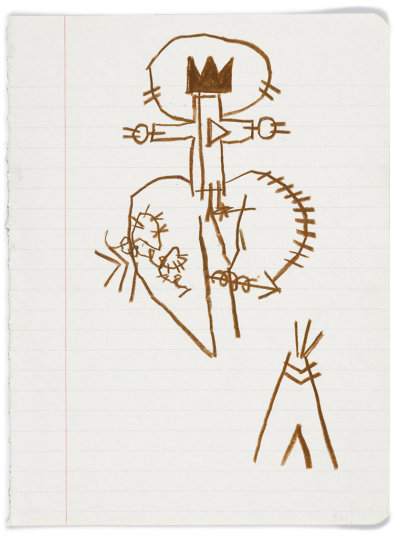
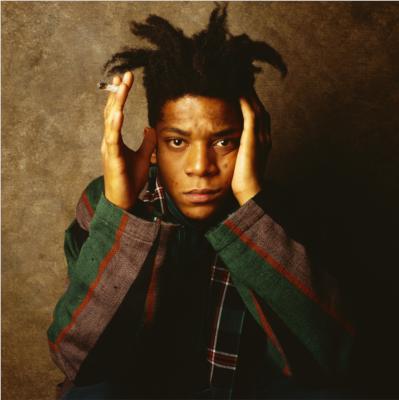
Where to See Basquiat Around the World

A good item to add to your bucket list, if you are a fan of Basquiat: travel the world and see all the places where his works are displayed. To do that, you will need this list: Where to See Basquiat Around the World – Barron’s. And money. And time.

After you do that, you can go see all the Vermeers in the world!

(Image: Wikiart.org)

Four fascinating music links

  1. “Love Will Tear Us Apart” by Iggy Pop & Bernard Sumner of New Order at Carnegie Hall: for fans of either or both, doing one of the best songs ever. (see above)
  2. A Big Choir Sings Patti Smith’s “Because the Night” | Open Culture: so good. I love this.
  3. Thinking About: Strange Fruit (& Friday Links) – Hither & Thither: a thoughtful analysis of a titanic  song.
  4. Hear the Famously Controversial Concert Where Leonard Bernstein Introduces Glenn Gould & His Idiosyncratic Performance of Brahms’ First Piano Concerto (1962) | Open Culture: this is a fascinating bit of musical history. Read the post to see why.

How art can make us more confident


According to this, art can make us more confident by providing us with stories and representations of people with characteristics we share that overcome similar obstacles that we run up against. After all….

Confidence isn’t the belief that we won’t meet obstacles. It is the recognition that difficulties are an inescapable part of all worthwhile contributions. We need to ensure we have to hand plenty of narratives that normalise the role of pain, anxiety and disappointment in even the best and most successful lives.

I agree.

The image is an extended version of the work highlighted in the article. Like the Stations of the Cross and other works, they illustrate the difficulties of a way of life, and by making us aware of them, allow us to best prepare to meet them and overcome them.

Good advice on how to get started on that project / hobby / adventure you have always want to start


Good advice on how to get started on that project / hobby / adventure you have always want to start can be found here: How to Dare to Begin.

Beginning is often the biggest hurdle. Before you begin, you can imagine all the difficulties you will have, and such imaginings stop you before you can even start. If this applies to you, read the article. You may find yourself getting started after all.

Another thought: take an athlete’s approach to getting started and keeping at it. Get a coach. Get cheerleaders. Talk it up while you are doing the thing you’ve held off doing. Give yourself as much encouragement as you can. Give yourself a goal. Do all those things and you will find you not only get started but you keep going.

Good luck. Dare to do good things. Great things, eventually.

(Image from the article linked to.)

Knowing more women artists: Berthe Morisot


Sadly, I don’t know enough women artists. If this is you as well, then you want to check out this piece: You know Monet and Manet. This female Impressionist deserves your attention, too. – The Washington Post.  I agree: Morisot is one artist you should know better.

As well as doing a good job of summarizing this great artist, hey highlight the travelling show that is currently running and highlighting her work. If you can, it would be well worth visiting it if it coming near you. (Currently it is Quebec City.)

On outsider art / art brut

Someone made a reference to outsider art this week and it sent me researching some links on it. Like Dada, outsider art is one of the most interesting things about 20th century art, though of course it has no specific time period. It challenges everything about the art world, even as the art world tries to incorporate it.

If you don’t know much outsider art, here are some places you can start to learn more:

From there, Google as much as you can.

(Image of Jean Dubuffet via the Guggenheim)

A reluctant promotion of a Kickstarter project: Color Problems – A Book by Emily Noyes Vanderpoel by The Circadian Press with Sacred Bones


Despite being burned too many times by Kickstarter projects, this one seems so worthwhile I feel I must promote it: Color Problems – A Book by Emily Noyes Vanderpoel by The Circadian Press with Sacred Bones — Kickstarter. It’s a great project to recreate a classic book, and it will be a boon to many people if it gets off the ground. Anyone interested in the visual arts should check it out and contribute some way if you can.

I hope it’s successful, that the project initiators have 1) their act together 2) actually release something tangible and 3) in a timely manner that is high quality.  (Many of my recent Kickstarter projects have failed at 1, 2 and 3.)

Good luck to them.

Quilting as a form of coding


First off, I think the quilts by Elizabeth Elliott are beautiful. Besides their beauty, I found it remarkable how she goes about making them.  According to this piece, Quilts Made of Code by Elizabeth Elliott – Design Milk,  the quilts are designed…

using a programming language called Processing. Through Processing, Elliott edits coding and generates random formations of geometric and traditional quilt block shapes. Afterward, she plays and edits the configuration until it becomes a quilt design she likes.

Here’s one more:

.

Go see the Design Milk article to see more and get more information.

It’s the weekend. You should be painting.

Now, you might think: ugh, painting is alot of work. But as this piece shows, there’s some good paint jobs you can do in a weekend that still leaves you time to do other things.

For example, you can paint a door:

Or even just part of a wall, like the moulding:


The piece in Apartment Therapy is worth looking at to get ideas. If you’ve been tired of looking at the same old space and you don’t want to get new furnishings, a splash of paint can do the trick of improving the space.

Another option: do a painting (or buy a painting if shopping vs doing is your thing).  This article has lots of examples, such as this:

And if you think: I suck at art, then read this piece in Hypoallergic about how making art, no matter how bad, can reduce stress.

Now head to the paint store and start your next project.

(See the articles for credits for the pictures.)