In a conflict with significant bad actors on both sides, there are no good options for bystanders

In a conflict with significant bad actors on both sides, there are no good options for bystanders.In such a conflict, you have three options:

  1. you can take a side
  2. you can try to rise above the conflict
  3. you can do nothing

If you take a side, you will be associated with the bad actors on that side. If you try to say “I take this side but I don’t associate with the bad actors on this side”, you will come across as a hypocrite, or naive, or ignorant. And when the bad actors on your side do something wrong, which they will, you will be associated with that wrong too.

You might say, I don’t care. Or the other side is still worse. And that’s fine. But it doesn’t make this option a good one. It’s just an option you are willing to take.

If you try and rise above the conflict, then you will be criticized by both sides for ignoring the bad actors on the other side. In addition, you will be seen as ineffective and weak and irrelevant. Again, it’s an option, it’s just not a good one.

Doing nothing is the flipside of trying to rise above the conflict. You won’t be stuck with having to side with bad actors, but you will be criticized for being indifferent and uncaring, cold and thoughtless.

In life there are often situations where there is no good options to choose from. A conflict with significant bad actors on both sides is one of those situations.

On Jimmy Carter, the 39th president and responder in chief of the USA

Last week former US President Jimmy Carter celebrated his 100th birthday. This piece sums up how many think of Carter as president:

In the popular imagination, his presidency was viewed as a fiasco. Besieged by inflation and a hostage crisis in Iran, it ended with a landslide loss to Mr. Reagan after just four years.  … But Mr. Carter’s presidency was more consequential than is commonly remembered, said Stuart E. Eizenstat, his chief domestic policy adviser in the White House. Eizenstat’s 2018 book argued that Mr. Carter notched significant but overlooked wins, including on energy, the environment and foreign policy.

All that’s true, but it leaves out an important detail. Whatever Jimmy Carter was, he was Not Nixon. Indeed he came across as the anti-Nixon. President Ford was Not Nixon either, but he was still attached to his disgraced predecessor. Carter allowed Americans to turn the page on Nixon in a way Ford never could.

The Vietnam War, the Pentagon Papers and then Watergate were a lot for Americans to handle. Carter gave Americans an opportunity to move on from all that and restore the presidency by being everything Nixon was not.

Sometimes presidents come along and act like first responders to a crisis. FDR did that. So did Obama and Biden. In between them was Carter. He restored the country in a way he doesn’t get credit for. Here’s hoping that becomes a bigger part of his legacy.

For more on the aftermath of Watergate, see here and here.

What you mean when you say you’re wasting your time doing X

What does it mean when you say you’re wasting your time doing X?

This question came to me recently when I was sitting on my porch. I thought: why am I wasting my time here? And then I had the follow on thought: what should I be doing this is not a waste of time?

Before I moved though, I asked myself: why was sitting on the porch a waste of time? I concluded I was sitting on the porch because it was a nice summer day and I was enjoying it. In other word,  enjoying a nice summer day has no value (i.e. it’s a waste of time).

Now there are other enjoyable I do that I don’t consider a waste of time: talking with loved ones, eating a good meal, going for a walk. So why is this different?

I think I have been conditioned to think simply sitting around is a waste of time, best done on vacation. Otherwise I think deep down I should be doing something productive. it’s a weirdly puritanical view that conflicts with my non puritanical views on food.

So the next time you are doing something you enjoy doing, attach some value to that. 


How to shop for a duffle bag or gym bag on Amazon and get the right size

If you are shopping for a gym bag or duffle bag on Amazon, you might be hard pressed to know if the bag you are buying is big enough. Some of them will say they are large but they aren’t really.

One good way to gauge how big a bag is look for its litre size (e.g. 60L) Roughly speaking, there seems to be four ranges that gym bags or duffle bags come in:

  • 40 L – small
  • 60L – medium and a typical gym bag
  • 100L – large. Good if you have a lot of gear.
  • 150L – extra-large. Likely a good size for hockey gear.

If you just have a few items, a small might do it, but something in the medium range might be more versatile and typical for a gym bag. If you have equipment to carry, though, you want to get something in the large or even extra large size, depending on how much equipment you have.


The Fall. A time of change. Here’s some thoughts on what changes have occurred recently (and what stayed the same) in my usual ramblings for a new season  (i.e. the September 2024 edition of my not-a-newsletter newsletter)


It’s the Fall, a season of change. Let take some time and look at what’s changed and what hasn’t since I last posted.

The obvious thing that hasn’t changed is I am still writing newsletter.  Thanks for continuing to read these odd newsletterish posts of mine. I’ve been writing them since the beginning of the pandemic. There’s a certain pleasure in adding another link in the chain.

Olympics: Since the last newsletter, we’ve had the Paris Olympics. That was a nice change for many people. It was a bit unusual, as it used the city for much of the venue. But since it was Paris, the venue was beautiful. Speaking of beauty, here are some of the most beautiful moments of the Olympics. And here are some of the best moments.

While there were plenty of amazing stories coming out of the Olympics, This  one of one Olympic ahtlete who competed at age 61 caught my attention.

Pandemic: you might not think there is anything changing regarding the pandemic, but there was a spike in covid over the summer. (Get those fall vaccines when you can.) More on that wave, here.

The kids who were preschool age during the pandemic are now in classes and struggling. Just one of the many long term impacts of that period.

Inflation: lots of good change on this front. Inflation  is finally below 3% in the US. Grocery prices are finally falling. Dining out is getting cheaper, at least in the fast food industry, as this and this explain. All good to see.

Work: Some companies are trying to get employees to change their routine and stop working from home. Some, like Amazon, are forcing employees to return to office (RTO) fulltime. Are there also layoffs coming down the pike at Amazon? I am guessing yes. After all, weaponizing RTO is an easy way to shed employees. And while they might be able to get away with this in the US, they should expect legal issues in the UK.

As time progresses, who knows how many offices there will even be in the future? The Times has a good piece on how banks are quietly dumping  commercial real estate loans.

USA: it’s an election year in America, which should bring in much change come November.  If you want to understand who is leading in the US polls, read this.

A big part of the presidential election comes down to certain states. This piece on  swing states explains that for you and why it’s important.

Have you heard of sanewashing?  Poynter explains what it means. It will be interesting to see if journalists can allow Trump’s words speak for themselves, or whether they will continue the practice.

When it comes to supporting a presidential candidate, are the Silicon Valley elites right wing or left wing? As this piece explains, it depends. Some, like Peter Thiel, are very conservative to the point of being directly involved in sponsoring  JD Vance, Trump’s VP choice, among others.

As for American conservatives on the whole, they’ve had some big wins with regards to US supreme court term decisions lately. Here”s a good piece the dives deeper and assesses the radically right wing Roberts court.

With all these wins, what might conservatives in the US come after next? Possibly no fault divorce. And if you are wondering how conservatives are so successful getting their way legally, here’s something on how they game the US supreme court.

On last American item. I think the fact that  insurance companies are going to try to stop losing money because of  climate change is going to be a big thing politically and otherwise.

China: things continue to change in China. The government is struggling to improve  the  economy. The government is also concerned with Russia and North Korea getting closer. Perhaps that explains the big shakeup in the military. This has nothing to do with changes, but this piece by a Times bureau chief exploring his father’s time spent in Mao’s army was quite good.

The World: After winning a landslide victory, Labour in the UK is shaking things up there with plans to remove all hereditary peers from the House of Lords.

Like a lot of cities, Barcelona has had it with too many tourists. To change that, it is ending apartment rentals by foreign tourists. On the other hand, Oslo had a viral ad campaign that is meant to attract tourists.

War continues to shape the Middle East. Israel is now ramping up their attacks on Hezbollah to the north of them. For readers not familiar with the group, this is a good piece on what is Hezbollah’s role and influence in Lebanon.

Finally, people have been worried about AI disrupting the world. While all that worrying was happening, the computer company  Crowdstrike caused a massinve outage on computers all over the world after pushing out a change. Talk about disruptive. Not the type of change the world needs.

As always, thanks for taking the time to read these rambles. I appreciate it.

Restaurants loved and lost: the places that Greg Couillard cooked

Reading this piece by Greg Couillard in Toronto Life (from 2018) brought back tons of memories of dining in the 80s and 90s. Back then fine dining went from being French-centric to representing a diverse range of cultures and flavours. Greg Couillard was at the center of all of that in this city, and the restaurants he and others cooked in drove that change. Whenever he joined a new place, I would grab a table and eat his Jump Up Soup and anything else he was plating. He didn’t stay at places long, but while he was there, the food was great. (In fact the soup was so great the Loblaws bottled it up and sold it in stores.)

It was a treat to read his piece and to recall places like Avec and Emilio’s. A treat to read those old clippings from NOW (shown above). It got me thinking about his soup, too. I’ll have to try and make it some day and relive old times and tastes. It won’t be as good as eating it at his places, but it’s the best I can do these days.


Toronto: a city of surpluses and abundance (random updates from the Big Smoke, September 2024)

Toronto is a city of abundance. But don’t just take my word on it. In a recent
travel piece on this place, The New York Times described Toronto as…

…proudly multicultural with an outstanding art scene, fantastic food and a patchwork of diverse neighborhoods to explore… this sprawling city — Canada’s most populous — has more to offer than one could possibly digest in a single weekend.

So there!

On the topic of abundance, city hall also seems to have it. Indeed, it is doing much better than it was a six months ago when I last wrote about it. For one thing, local politicians have gotten its finances in order and it is now running a surplus! Much thanks to that should go to the mayor, though of course it is a team effort up to including all levels of government. Nonetheless the Mayor should feel good about that.

Toronto also has a surplus of problems. Case in point, real estate. Commercial real estate continues to suffer.  There is talk of converting or even demolishing them. Some Toronto CEOs tried to enlist Mayor Chow with regards to encouraging employees going back to downtown offices. She later said something more nuanced than what’s in here.

The residential market has also been struggling recently, with some Toronto developers saying no one is buying condos anymore. I am not sure about that. After all, housing prices are too high and some say unattainable in Toronto. So something is going to have to adjust.

The TTC has seen some highs and lows in the last while. There are still episodes of horrible incidents happening on it, such as a sword attack of all things. Then there was a major incident so bad the TTC CEO apologized and offered to have open review. Not good.

On a more positive note, it looks like the TTC will be adding service to 24 bus routes with focus on off-peak hours. So that’s good. Also good: the Ontario line is progressing. And multiple subway stations are getting colourful transformations.

Shawn Micallef recently asked if  Toronto’s streets are boring and brought in my area, Yonge and Eglinton, as an example. He’s not wrong. But a new park is coming to the area. It will likely get here before the LRT is done. A new grocery store is also coming to the area, which is good, because people here are fed up with the local supermarkets and their high prices.

As for other maligned grocers, here’s a story of the recent loblaw boycott and a statement by their CEO regarding it. The good news is inflation in Canada is really coming down. This may take the heat of them and other food companies in the future.

In other food/bev news, the strike concerning LCBO workers was recently resolved. Good thing for wine drinkers, because  the Wine Racks that had been making up for the closed LCBOs almost ran out of wine.

Like other cities, climate change is affecting Toronto. Case in point, the bad flooding we’ve been having the overwhelms place like Union Station  and even  Drake’s mansion. It didn’t help we had the wettest summer on record.

The film festival has come and gone as it does every September. One frequent visitor is Guillermo Del Toronto, who apparently loves Torontos bookstores. We do have good bookstores. Also good libraries! Not only are they great to visit, but a Toronto Public Library card will help you get access to places in the city! One more reason libraries are great.

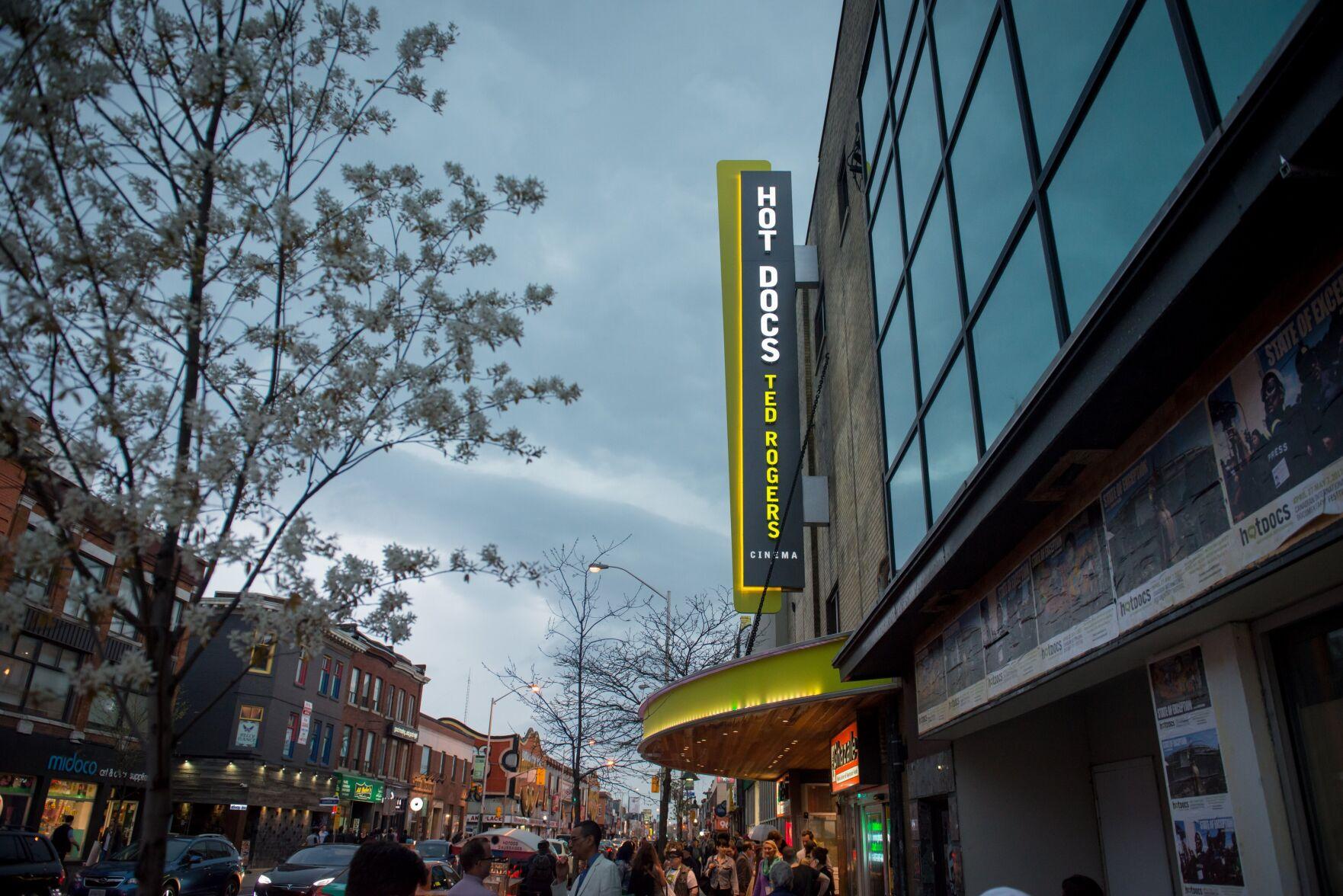
As for other parts of Toronto, downtown the renaming of Dundas Square is not going well according to this. Meanwhile over in the Annex there is sad news regarding the hot docs cinema, with a temporary closing and a laying off staff. Here’s hoping for better things for them. Indeed, they may be reopening soon.

I hope so. I loved that theatre — once known as the Bloor — since I first moved to Toronto in the 80s. I hope it is open for business and doing well, just like I hope that for all of the city.

Thanks for reading this. I’ll have another update in another six months!

Friday Night Cocktail: the Wet Martini

Too much is made of martinis being dry. Meh. A martini is a cocktail: if you just want to drink gin or vodka straight up, do that instead.

I especially like this Wet Martini Recipe from Pete Wells because it leans into not one but two different vermouths as well as some other ingredients to make a true cocktail. Martini lovers especially should give this a try.

On BECKHAM, the documentary

BECKHAM the documentary is very good. So good, it won an Emmy. Very good, but not flawless. Indeed, this piece argues, Netflix’s ‘Beckham’ Is a Very Good Docuseries with Two Glaring Flaws. I’d say it has one overriding flaw,and it has to do with any documentary like this.

With a documentary like this, the documentarian (Stevens) is dependent on the subject (the Beckhams) to tell the story. And whatever story he meant to tell, the Beckhams also had a story they wanted to tell. I felt those stories were in sync up until the end.

Then the ending occurred and I felt a bit betrayed. I thought David Beckham was telling a story about wanting to settle down with his family, but then it ends with him in Miami, seeming to do anything but settle. I thought he wanted to be different than his dad when it came to football, but getting a glimpse of how he talks to his son, I heard echos of his dad talking to him.

That ending made me wonder if the Beckhams were using the documentary to tell a certain story they wanted to tell in a way they wanted to tell it. A way of maintaining the brand, the way they had been maintaining a brand for many years.

I think there’s alot of sincerity in the film, and it’s a great story, well told. But I felt there was more going on than the narrative driving the film, and I think that slipped away from us.

Collage is alive and well as an art form

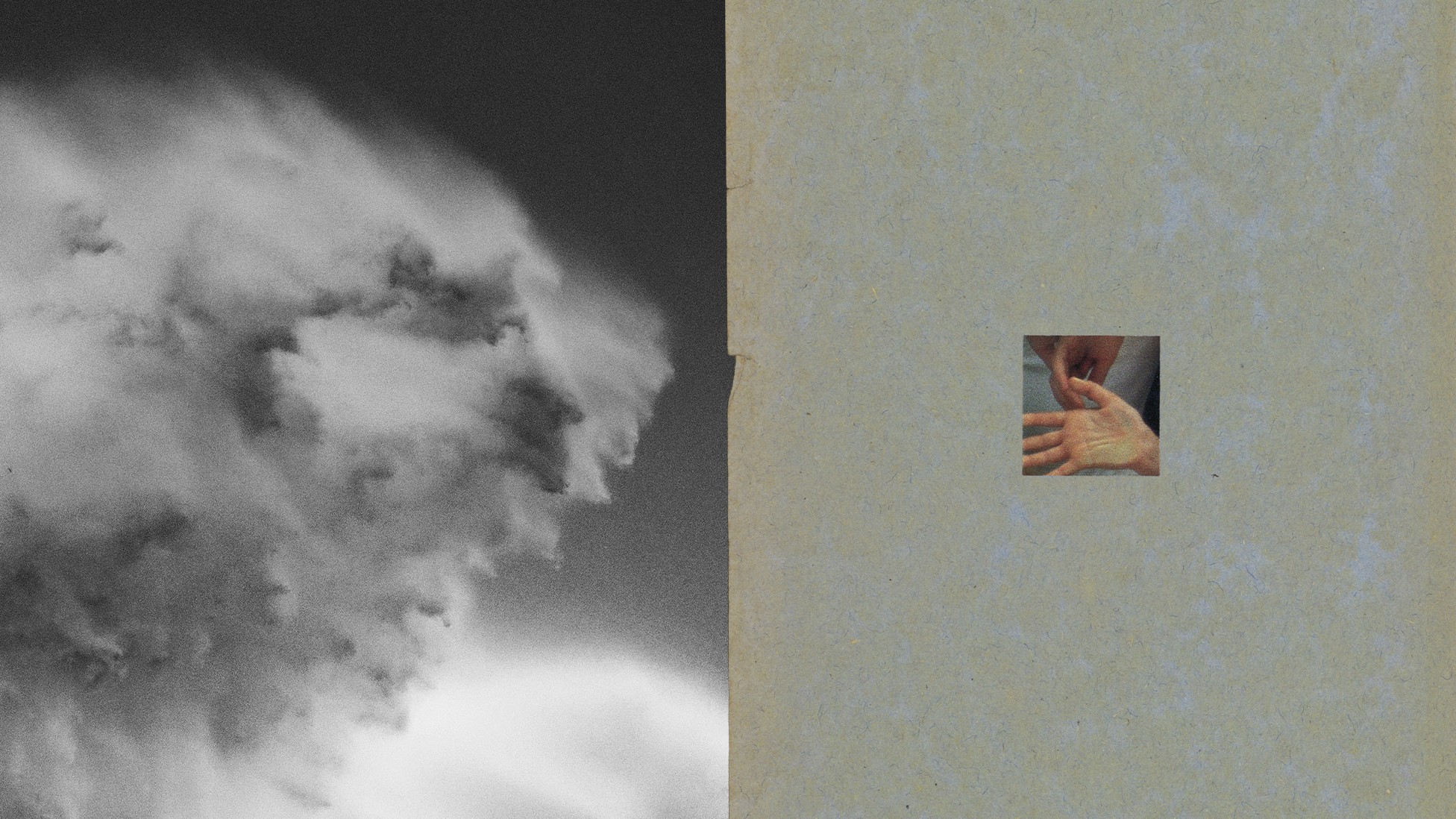
If you don’t think of collage as a serious or living art form, think again. Collage is alive and well as an art form in some of the largest publications out there. I often see it used to illustrate stories in the Atlantic:

But the New York Times uses it a fair bit, too:

Those are just a small sample of the type of collages I see there. Keep an eye out for great collage work and you’ll see some too. It might even inspire you to try making some of your own.

(Top illustration by Vivian Dehning, bottom by Shoshana Schultz)

On Brats, and other 80s artifacts

Sure it’s Brat summer, but I want to talk about some other Brats, specifically those from the 80s.

Andrew McCarthy recent made a documentary film that looks back at his time in the 80s when he was a member of the Brat Pack. Watching it, I was fascinated by how the various members of that group were affected by that label. Of all the members of said pack, no one seems as deeply affected by it as McCarthy. He’s a good reminder to leave the past in the past. It’s fine to revisit it from time to time, but it’s not good to get affixed to it.

Brats is a good film. The Times has a review here. More thoughts on it, here.

Relatedly, here are five films from that era, if you are feeling curious or nostalgic. Here’s even more on the brat actors who defined the 80s.

If after seeing McCarthy’s documentary, you might have been curious as to why Molly Ringwald and Judd Nelson don’t appear in Brats, so click on this.

Brats is all about reunions. Speaking of 80s reunions, this is a story of the SCTV reunion from a few years ago. That group was one of the best things to come out of that decade.

Other things from the decade I thought worth noting:


Can you live in a 74 square foot apartment?

Well if you are these two architects who designed a tiny apartment in Rotterdam that’s only 74 square feet, then…maybe?

I dunno. It is impressive how the whole room expands and stores away depending on how you configure it. And as an experiment, I think it is impressive. Is it practical? Of course not. But it is well worth checking out, especially if you are a fan of small spaces like I am.

How to predict who will win the US Presidential Election?


Here’s two ways to predict who will win the presidential election:

First: look at the 13 keys of Allan Lichtman, Presidential Predictions Guru. According to Lichtman, there are 13 keys to determine who will win the next election:

  1. Midterm gains
  2. Incumbency
  3. Primary Contest
  4. Third Party
  5. Short-term economy
  6. Long-term economy
  7. Policy Change
  8. Social Unrest
  9. White House Scandal
  10. Incumbent Charisma
  11. Challenger Charisma
  12. Foreign Policy Failure
  13. Foreign Policy Success

Of the first 11, Lichtman says Trump comes out ahead on 1, 2, and 10 (in italics) while Harris comes out ahead on the rest (e.g. there was no primary contest, no third party, the economy is doing well, no policy issues, no major social unrest, and no scandals for her.)  That’s enough to assume she will win the election, regardless of foreign policy (which he skipped over).

Mind you, based on this, Biden was set to win the election, but I am not alone in thinking that was not going to happen.

Still, I think there is alot to agree with in the 13 keys. As people go to vote one or more of these keys will be on their minds as they cast their ballot. Check out the link above to get more insights from the man saying Harris is the next US President.

Second: look at the Electoral College map and the swing states. That’s certainly what the candidates are doing on their campaigns. Two states in particular could make all the difference as to who is the next US President: Georgia and Pennsylvania. The Washington Post takes a closer look at the two states that loom largest in 2024 election.

What will get lost if activists continue to vandalize paintings

Untitled

The above is a painting by Francis Bacon that I saw in 2022 in London at the Royal Academy. I am a huge fan of Bacon, and this show not only allowed me to see many of the works of this great artist, but it also allowed me to get up close and examine the paintings, like this:

Untitled

If you click on this link you can do so yourself.

I love being able to do that. You can see the brush strokes, the markings on the surface. You can better understand how the painting was made. You gain a different appreciation of the work up close.

That’s why it continues to bother me when people vandalize these paintings. I fear exhibits of paintings could end up looking like this:

Mona Lisa behind glass

Sure it’s fine if you want to send a selfie to your friends, but as far as looking at the painting, you might as well resort to a book.

The next time you go and look at art, look at it from all angles and all distances. You will gain an appreciation of it you won’t get any other way. And do it soon: someday you might not be able to.

(Top two flickr images by me. The bottom one from Valerie.)

Taking care of yourself is not optional

I’ve been thinking of this commandment, ““taking care of yourself is not optional” ever since I read it on an email from Mike Monteiro’s newsletter. I think that is an important commandment to abide by, especially as you get old.

When you get old, it is temping to think taking care of yourself doesn’t matter. Why bother, you think. You don’t have that many years anyway.Why waste your time on that when I have so little time as it is. Besides, no one cares.

But here’s the thing: people do care. You don’t know how many years you have left, and you never have, even when you were younger and you did take care of yourself. And if you don’t take care of yourself, that little time you have might be miserable due to your neglect of yourself.

If you argue that “I don’t believe in all that self-care goopy nonsense”, consider that taking care of yourself doesn’t have to mean meditation and massages and whatever else new age beliefs you may be rejecting. Taking care of yourself can just be the basics: get some good sleep habits, some good eating habits, add some good hygiene habits, plus a bit of exercise too, even if it is walking regularly. If you have all that going on, then you can extend that out to taking care of the environment you are in and the relationships you have, because that comes back to taking care of yourself, too. Have you been to the doctor lately? If not, get checked out. Dentist? Do that too.

Here’s another thing. Taking care of yourself sends a message, to others and yourself. The message is, you matter. You have value. You are precious, even. So start acting like it.

Start taking care of yourself. It’s not optional.

‘Unexpected red’ works for clothes too.

According to this piece, What Is ‘Unexpected Red’? in The New York Times

“The ‘unexpected red’ theory is basically adding anything that’s red, big or small, to a room where it doesn’t match at all, and it automatically looks better,”

That makes sense for homes.  It also makes sense for men’s clothing, especially if the colour palette of your clothing is neutral, black or navy. A pop of red — a toque, some shoelaces, a tote bag — can add some pop to your look. So grab some red accessories and add them to your wardrobe.

If you like to shop online, do what I do and on the search line type in “men red”. I find it will come back with all the men’s clothes that are red or have red in them. I’ve found toques, scarves, T shirts and socks that way.

For more thoughts from me on red in fashion, go here.

P.S. I think this theory could also apply for colours like purple and yellow.

What should you do? Here’s a chart to guide you

I like this chart, found at substack TBM 16/52: Can Do vs. Should Do by John Cutler. I use a similar one when working with clients.

If you have a list of tasks you feel need doing, list them out and grade them on a scale of 1 to 3 (or 5 or 10). We grade them usually on a scale of Low, Medium and High. If you rank a task High for you Should do it and High for you Can do it, then that goes up in the top right corner of this chart (#3). Those are the tasks you want to do first.

See #1 and #2? The way we tackle them is by breaking them down and finding a part of them we can do. That part we move into the #3 section. There’s always some part of #1 and #2 you Can do, even if it involved asking someone for help with them.

Obviously those things you shouldn’t do (#9) should move off your list, no matter how capable you are of doing things. Likewise #6-#8 should be avoided, but sometimes we do #8 when we are blocked or tired (which is a form of blocked).

Anyway, a great chart. Check out the substack post for more insight on it.


Robots, robots and more robots.

I haven’t written about robots in awhile. That’s not for a lack of news stories about robots. We are finding them popping up all over the place.

Robots have always been used in manufacturing. Now they are moving into other businesses. Here’s a story of how robots are moving into restaurants. I’ve already seen one of these…it was less than impressive.

Drones are a form of robot. Here is a story on how IKEA is using drones for inventory management.

Wildlife has to be managed, too. This robot dressed up like a predator makes flights safer at airports by keeping wildlife away from runways.

The military is known for using robots. Here’s a piece on gun carrying robot dogs in the Chinese army. Not to be outdone,  the Canadian armed forces are ramping up with the use of drones.

Back at home, this unit from Samsung can vacuum and steam clean your floors. And this home robot comes with an arm. (No word on if it can unload the dishwasher.)

Speaking of vacuuming robots, this quadruped robot can pick up cigarette butts on beaches. That’s a good use of robots.

Back at work, these BMW robots being tested in their factories in South Carolina give off Terminator vibes. (see below.) More on them, here.

Boston Dynamics has it’s own Terminator like robots too. This dog like robot gives off Boston Dynamics vibes, but isn’t from B.D.

Here’s a robot that can become your child’s protector, teacher, and even playmate. Meanwhile, this one hangs out in your  kitchen and acts as an air purifier.

Here’s is a robot that is part of a work of art.

Finally, is the robot backlash starting? It already has in San Francisco, where a crowd vandalized a Waymo driverless taxi.

Forward: the new Shepard Fairey


Just as he did for Obama, you can find his latest imagery for Harris by Fairey,  here.

I’d add it’s smart he did this. I’ve been seeing all sorts of remixes of his old work, applied to Kamala Harris. It’s good to see his version.

(Art by Shepard Fairey. Reference photo by Lawrence Jackson / Biden for President is licensed under CC BY-NC-SA 2.0; For personal, non-commercial use only.)

In praise of teenage engineering

How great is Teenage Engineering? Let me count the ways. Or devices. In this case, three very special devices designed by them.

Device #1: the play.date

First up is the Playdate, a unique game playing device with a black and white screen and a crank. Is it any good? It is according to this: Playdate, all it’s cranked up to be (The Verge). You can read more about it, here:playdate – teenage engineering.


Device #2: Rabbit R1

For the second device, there is a chance you’ve heard of the rabbit, a pocket companion that moves AI from words to action”. I have one and I like it. Is it good AI? Yes. Is it brilliant design? Definitely.

If you’ve only ever read disparaging things about the device, then read this: Rabbit R1 Explained: What This Tiny AI Gadget Actually Does (CNET) and this:I just spent my first day with the Rabbit R1 — here’s what this AI gadget can do | Tom’s Guide.

Device #3: the EP–1320 medieval.

finally for the third device, you might exclaim, what is that?? Well let the folks from Wallpaper explain: Teenage Engineering EP-1320 Medieval: back to the Middle Ages.

What I love about the 3rd device is a) who knows what kind of market there is for this if any, and b) they don’t care, they made it anyway!

I love how different these devices are from most current handheld devices. The form factor is different, the colors are bold, the inputs are unique. They are small pieces of equipment, but they are not minimalistic pieces of equipment. I love them.

For more of teenage engineering’s great products, go here. For the longest time I wanted to have something from them, but most of their musical devices would be wasted on someone as non-musical as me. (Although if I ever get around to building my own computer, I am getting this:)

How can you learn about Project 2025? Three ways

If you are curious about Project 2025 — and if you are an American, you should be — there are at least three ways you can learn more about it.

The first way is to go to a web site set up to describe it, Project 2025: Presidential Transition Project.

Personally, and as a progressive person, I found this the best way to understand the effects it could have, 25and.me: How Does Project 2025 Affect Me?

However, if all that is hard to get a handle on, or if you want something more neutral, you can also check out: Project 2025 in Wikipedia.

Chances are if Donald Trump is reelected president, many of the things proposed in Project 2025 will come to fruition in the four years he is in office. So before you vote, read up on Project 2025 and know what you might be in store for.

It’s ok to hate August and love February (and vice versa. Or neither)

It’s ok to hate August and love February (and vice versa. Or neither.)

If you live in the northern hemisphere and you say you hate February, many people will get it. It’s a month of darkness and cold, they will say, of course you hate it.

Not all will agree. For many others love the middle of winter. They love doing winter activities. They love snow. They love staying indoors and being cozy and warm.

However, if you say you hate August, many people will not get it. They will ask you what’s not to like about warmth and sunlight? They love doing summer activities. They love BBQs, going to the beach, being outside. How could you not love that?

But like February, August is a month of extreme temperatures. And for those of us who don’t do well in high heat and humidity, it’s a brutal month to get through. Especially if you can’t go to the beach or the pool, or if you don’t like being outside so much. Or if you have to be inside and don’t have AC. For people of that group, August is easy to dislike.

I am no fan of either February or August. I prefer more moderate temperatures of September and June. But to each their own. Not everybody has to like what you like, and that is especially true of the weather.

I am glad for the folks who love July and August. As for me, I am patiently waiting for September and October.

Some thoughts on using the Digital Holga

Untitled

I bought a digital Holga for two reasons (some time ago):

  1. I love the images produced by cameras like the Diana camera and hoped the digital Holga would give me similar images
  2. I was happy to have digital images and not have to deal with film

Alas, my thoughts on the camera are similar to the ones expressed here. The images I captured were disappointing. I didn’t get what I had hoped for despite taking photos in a variety of light sources.

It’s true, you can make it better with with Adobe Lighthouse, as that piece argues. That kinda defeats the purpose of having the camera, to me.

If you are going to get one, then read this review: it is good for helping you understand the device.

Here are some of my photos. If you want to see more photos of this sort, this section of Flickr can help.

Finally, this here talks about the Holga in general.

(Top photo by me.)

New York in August – hot time in a hot city

Untitled

New York is always great to revisit, and revisit it again I did last week. Like my visit in March, I stayed with my girlfriend in the Lower East Side, eating and walking around and even taking in a Broadway show (“Illinoise”).  We hit up Freeman’s Alley and Lafayette for the breakfast, because they are always good. Plus Clinton Street Baking Company. We also dined at WildAir and King. The best of the lot, though, was Via Carota (seen above). Is it New York’s most perfect restaurant? This piece argues it is. It’s hard to disagree, although it is a bold claim, since New York has so many great restaurants. Not just now, but in it’s entire history. Read this piece on the social history of the city, told entirely through its restaurants, to see what I mean.

During the pandemic New York adopted outdoor dining and many places like Via Carota set up a big outdoor area to serve people. It’s still going strong, although the city is cracking down on outdoor dining. If you like that kinda thing, you may want to do it while you can.

Speaking of New York City post pandemic stories, here are two: this one on a 23 floor midtown Manhattan office building going for a 97.5% discount. (Practically free). And this one about how people are returning to the Met Opera, but selectively.

Here’s three good stories on NYC history: 1) a fascinating history of  Lincoln Center you might not know about, 2) the abandoned islands of New York in pictures, and 3) a bio on Lorne Michaels.  Hey, when I think of the recent history of New York, Michaels figures prominently in it.

When we were visiting, New Yorkers were talking about an impromptu goldfish pond set up outside a leaking hydrant in Bedstuy. (See above.) It was all going well until an animal lover thought she was doing the right thing by freeing fish from the pit. The man who created the pond saw it differently. Mayhem ensued.

I am not sure who thought it would be a good idea to put up a Portal between New York and Dublin, but they did. More mayhem ensued.

Finally a non-story about how the M.T.A. wanted runners of the New York City Marathon to pay bridge tolls. Needless to say, this did not happen.

Computers and the Vietnam War: a cautionary tale

500
This piece, According to Big Data We Won the Vietnam War, should be read by everyone who  strongly believes the next new technology (e.g. gen AI) will be able to make decisive predictions to solve big problems (e.g. the Vietnam War).  The best computers and minds at the time thought they could win the war with technology. They were wrong then, and they will be wrong again.

If you think newer computers will win this time, reconsider that. If you think we learned our lesson last time, read this.

It’s summer. Time to hit the beach with a good…list of tech links :) (What I find interesting in tech August 2024)

The last time I wrote about what I find interesting in tech, it was winter. Now it’s anything but, and I have lots of things I’ve been studying in IT. Lots of material on COBOL and mainframes since I am working on mainframe modernization. But there’s stuff regarding Python, cloud, Apple computers and so much more. Let’s see what we have here….

Software: this section is so big I need to break it up! First up, COBOL:

Next, here’ some good stuff on Python:

And lastly here’s some general software links:

Mainframe


Apple…a few good links:

Some helpful cloud pieces:

  1. Getting start with the Container Registry,  here
  2. On  deploying a simple http server to ibm cloud code engine from source code using python node and go 
  3. Provisioning on ibm cloud using terraform with a sample_vpc_config 
  4. On  how set or restore remote access windows vsi 
  5. How to create a single virtual server instance (VSI) in a virtual private cloud (VPC) infrastructure on IBM Cloud, here.
  6. File Sharing through RDP from MacOS  here 

And finally, here’s a good set of Random links that were too good to pass up:

So you want to publish a cookbook? If so, read this.

If you are thinking of publishing a cook book, then you owe it to yourself to read this piece in Eater. Eater interviewed three cookbook authors on how they got their first book deal and touches on all aspects of the process they followed. It even talks about how much money you might make. (Emphasis on the word, might.)

Obviously this isn’t the last word on how to get published, but you will come away from it with a better sense of what those authors did to become successful. In one case, author Priya Krishna went on to become very successful with a prominent position at the New York Times. Who knows where you and your stack of recipes — or Instagram posts — will end up?


Have you had your joy snack today?

Who doesn’t want to feel more joyful? And who doesn’t like a snack? If you are still with me, then let me introduce you to the combined concept of a joy snack. As Neuroscientist and science journalist Richard Sima explains, these are:

… little moments of delight you experience throughout the day: He calls them “joy snacks.” These include things like your first sip of coffee in the morning, or telling a joke where the punchline hits just right. By savoring even small bites of bliss, you can transform an otherwise mundane moment into something joyful. And cultivating more joy can help you create a more meaningful life.

I like it! Joy and snacks: two great things that go great together!

For more on this, check this out: An easy way to feel happier: Snacking on joy. In The Washington Post.

Now get snacking!

Does all gamification suck? (Why that isn’t necessarily true)

500
Is all gamification bad? If you read this piece, How gamification took over the world published in MIT Technology Review, you might come to the conclusion that it is. I thought the strongest criticism of it came from the game designer, Margaret Robertson. She…

 argued that gamification should really be called “pointsification,” writing: “What we’re currently terming gamification is in fact the process of taking the thing that is least essential to games and representing it as the core of the experience. Points and badges have no closer a relationship to games than they do to websites and fitness apps and loyalty cards.”

I think that’s true. If the whole game is just getting more and more points and levels, after awhile the game gets dull and easy to abandon.

So what should a game be, if it’s not just about keeping score? The article goes on to say:

“A game is about play and disruption and creativity and ambiguity and surprise,” wrote the late Jeff Watson, a game designer, writer, and educator who taught at the University of Southern California’s School of Cinematic Arts. Gamification is about the opposite—the known, the badgeable, the quantifiable.

Ideally that might be the case, but there is a range of game play, and some great games may only have a modicum of creativity and ambiguity and surprise and can still be loads of enjoyment.

Indeed, that’s the thing about games and indeed gamification. Some games can be engaging and great fun. And some games suck. The same can be said for gamification: some of it is fun, and some — alot — isn’t.

This is especially true for gamification that is imposed on us. We all can recall childhood friends who would say “let’s play a game” and the game turned out to be something that would be good for them and not for you. It was no fun then, and it’s no fun later in life where you are working for a company and your employer wants you to play a game in order to get you to behave in a certain way for their benefit.

If imposed games are bad, so are endless games. Games that never come to an end or that are practically impossible to win also suck. Yet for game makers, it is tempting to engineer the game so that you never leave it (and them). I was reminded of people I know who played Duolingo and who found once they got to a certain level, they were just floating there. Now it was no longer a game to them, but merely an activity. Now some activities can be fun, but it’s no longer a game.

Gaming is a structured form of play, and like any type of play, it should be fun and it should come to an end. Too often with gamification, neither of those things are true. That, to me, is the true problem with the practice of turning non-game activities into games.

(Image is linked from the article in MIT Review)

It’s the weekend. Go do something with your hands

Why? Well according to this: Working With Your Hands Is Good for Your Brain (in The New York Times). It doesn’t matter if it is knitting or gardening or writing or painting. As long as it is not….typing.

It’s not clear why this is so, but studies show it to be true. So put the computer down and go do something manual. You’ll be glad you did.


What do tractors and leaves have in common? (What I find interesting in art, March 2025 edition)

What do tractors and leaves have in common? They are featured in the work of the artists I’ve been reading about recently.

The tractor is just one of the works I came across while reading about artist of Charles Ray.  The New York Times has two pieces on him  here and here, and this here piece (where the above image originates) is also good.

We lost some fine artists in the last while. The iconoclast John Wesley has died. (More on him, here.)  Ben Vautier of Fluxus has also passed on. As has noteworthy black Broadway producer, Ron Simons. I was struck by Simons story, how he skipped the arts as a young man to go into IT, only to return to theatre at a later again. It was inspiring.

Relatedly, here is a good piece on how artists deal with grief.

In happier news, here’s a good piece on Vivian Meyer, who has a show out on her work. Likewise  Mary Cassatt. Go see them if you can.

This is a fascinating piece here on Brecht’s collages, which feature Hitler among other things. This is a very insider-y piece on Francis Bacon’s contempt for the Marlborough Gallery. This is a good study on the intersection of art and luxury fashion.

Finally, I recommend you check out Susanna Bauer’s work (seen below). She does wonderous things with leaves and nature.

What does caviar have to do with the McRib? (find out in this Friday’s food links for food lovers, July 2024 edition)

What does caviar have to do with the McRib? Hardly anything, other than they are edible and they are both featured in this blog post.

Now most of the time when I write blog posts on cooking and food, they are associated with recipes. Not today. This is mainly about highlighting good writing about food. So grab a chip and some caviar — or a McRib — and let’s go….

Here’s advice on how to be a better cook. This tells you what mirepoix is. And this tells you all about emulsification. These are some smart shortcuts for big flavor in your cooking. This is how to put those staples you have to good use.

You may be asking yourself…what is the diff between baking soda and baking powder? Should you subscribe to a farm box csa? What are eight good rules for dinner parties? What is a Coney Island hot dog?

You might wonder what should you cook when it’s insanely cold outside? What to make at New Years? What to make for your kids?What are the best caviars? And what are the best potato chips? What is the best air fryer?  What are some ways to eat less not no meat? How to know how to salt pasta water? What is the best pasta to eat in Italy?

You may even want to know who the eff is the food professor? What is the unstoppable Matty Matheson up to? How did Julie Powell and her julie julia blog change food writing?

So many good questions. Those links will help answer them.

I liked this piece on the late poet Charles Simic who had a love affair with spaghetti. Relatedly: when my mom died I mourned her with spaghetti. That too was good. Finally, here’s an obit for the great NY Times food critic, Mimi Sheraton.

You may not have realized that jelly is ready for a comeback. Or that there is great Aspic Renaissance. I personally am skeptical.

If you are curious about what Costco‚’s $4.99 rotisserie chicken says about the future of American farming, read that. If you are interested in food and how it relates to instagram or tiktok, then read those two pieces.

You may want to know what are the 45 Biggest Food Trends That Defined the Past 45 Years. You may not be surprised to learn that most canned ‘San Marzano’ Tomatoes are fake.

For restaurant goers, this talks about new restaurant plating trends. And this talks about the restaurant staff meal.

For fans of processed food, here’s something on McDonald’s McRib, the future of fast food, and the Florida ban on lab grown meat,

Caviar and the McRib. Two good things that normally do not go together, except in this blog post. 🙂 Thanks for reading it.

Space is big. This piece on Space isn’t

Space news comes fast and furious these days. There’s so much exploration going on, it can be hard to keep track. For example, ESA has approved a search for the gravitational echoes of the big bang. Countries that you might not expect, like Mexico, are going to the moon.  Japan is already there. In the USA, here’s some of the many things NASA is up to including going to the moon. Mind you, not everything is going well with the American space program.

Privately, here’s what Jeff Bezos’s Blue Origin is doing. (Here’s more on that.) Not to be outdone, this is some of what SpaceX is trying to accomplish.

Besides the engineering problems of exploring space, there’s also the human problem. For example, can astronauts deal with the isolation of Mars? Space is hard on astronauts physically as well as mentally, as that piece shows.

Not news, but here’s some more good space articles. This is a good piece on the early universe: it’s bananas. 🙂 This, on gamma ray bursts, caught my eye. As did the milky way photographer of the year (shown at the top). Finally, here’s a good story on Jean Pierre Luminet (the man in the photo), who did some first work on black hole imagery.

Ikea collaborates with gamers and more

Ikea often collaborates with others to come up with home furnishing a bit outside their usual stuff. For example, this collab in the area of  gaming furniture (seen above). Or this partnering between them and Japanese designer Hiroko Takahashi. They have worked with Marimekko too.

Not a collaboration, but if you into pet furniture and a fan of Ikea, you’ll want to check this out. And speaking of pet furniture, imagine combining a dog bed with a desk — that’s what you’ll find here.

Restaurants loved and lost?: Prune

Like many restaurants, Prune was shuttered during the pandemic. Unlike other restaurateurs who quietly left, the head of Prune wrote a brilliant essay on its passing: My Restaurant Was My Life for 20 Years. Does the World Need It Anymore?

Like many of the other noted restaurants loved and lost, this one hurt. Especially so. I had only just started to make it a destination whenever I was in New York and suddenly it was gone. Or was it?

As this piece noted in 2023, the restaurant was being renovated and private events were being held there. Heck, Alison Roman and her beau had celebrated part of their wedding there. I was hopeful that it eventually would go from being private to being public. But as of March 2024, at least, it still looked like it did in the photo I took above. Indeed this article in The New Yorker at the same time said it is only available for private parties at the owner’s discretion. Sigh.

There was something magical about Prune. It was a world class restaurant that was also a small neighborhood restaurant. I remember the first time I went: I wandered by it while in NY’s Lower East Side and I popped in to see if they had any tables available for the evening. To my surprise they said I could sit at the bar at 7:30. I had a fabulous meal that day. I thought: I want to come back here often and for ever.

And maybe I will someday. Maybe Gabrielle Hamilton will throw open her doors to the public once again. But for now, I am including this among the restaurants loved and lost. I’ll miss your snack plate, Prune, and your duck breast over beans, and all the other great meals there. I’ll miss your small, perfect space. I may walk by you from time to time, but I doubt I’ll leave the sidewalk and cross your threshold any more.

Why social media content is so addictive (at least for me) and what it has to do with raw dogging flights

As I waste time doomscrolling through text based social media or reels, I will often stop and ask myself: why am I doing this? Why am I not reading a book or watching a movie? After many an hour wasted on the couch with my phone, I’ve come to the conclusion that it’s not that social media content that is a problem: it’s the social media format that is a problem.

Social media is essentially a stream of randomness: a collection of words and sentences and images with limited or no connection. You can surf along and not have to hold anything together in your head. That’s it’s format.

Now if you are reading a book or watching a movie, the format is different. Sentences are connected to paragraphs which are connected to stories or chapters. Characters and scenes and dialogue in a movie are connected to other characters, scenes, dialog. Your brain has to work to keep all those connections in mind when reading or viewing. The format of books or movies demands it.

With  social media content, you don’t have to maintain any of those connections in mind. You read and scroll and read and scroll, or you swipe through reels or Tiktoks, and in the end perhaps you retain one or two things.

Not having to maintain these connections in mind makes it easier for your brain to process social media content. That ease can make it more preferable, especially when you are tired or in a low energy state. Which, if you are like me, is fairly often.

Now it seems like some people are taking it to a new level by raw-dogging flights. (What Does ‘Raw-Dogging’ a Flight Mean? All About the Viral Travel Trend). Perhaps because they are in a low energy state and they don’t have access to social media, they just stare ahead the whole trip. It’s almost meditative. Again, the brain has very little to do here. People on a flight watching the flight path have zero connections to maintain.

So the next time you are beating yourself for wasting time on social media, perhaps acknowledge your brain is tired and this is all you can do. If you can, try meditating or napping or just going outside. Just understand that social media knows you are the way you are and it will suck you in if you are not careful.

Why OneMillionCheckBoxes.com shows we can never have nice big things again on the Internet

500

The site onemillioncheckboxes.com is just that: a site that has one million checkboxes to check (and uncheck). But it has become something more.
As The New York Times describes it (the bold emphasis is mine):

By providing a blank slate to users, One Million Checkboxes has also cycled rapidly through the stages of internet maturity, serving as something of a microcosm of the joys and horrors of digital life. First there was a period of exploration, in which users worked together to check as many boxes as they could. Next came creativity, as some began filling in boxes to illustrate hearts or, in more cases, crude drawings of male genitalia. Then things devolved, as they often do online, into all-out war. Steven Piziks, 57, a science fiction author in Ann Arbor, Mich., began checking boxes on Tuesday because he thought it might be soothing. He soon noticed someone else working behind him and unchecking every single one. He started checking even faster, and about half an hour later, the site’s built-in tally said he had checked more than 1,000 boxes. It was not soothing at all. It felt “like a metaphor for all of social media,” Mr. Piziks said. “We go into it thinking it’s going to be wonderful and collaborative and interesting, and it kind of turns into a fight.” Some bad actors on the site are human mischief-makers who take a perverse joy in undoing other people’s work. Others are simply bots that have been programmed to uncheck boxes en masse, Mr. Royalty said. (He has been working to contain them, with mixed success.) Those bots have been particularly infuriating to Frank Elavsky, 34, a Ph.D. student at Carnegie Mellon University who has checked more than 20,000 boxes in his “fight for the cause.” He got in a spat on X with someone he suspected of tinkering with the site’s code in the name of unchecking. “It became kind of personal,” he said. “I’m like, ‘You foul, foul demon. How could you?’” The website’s creator has been watching this all play out at a kind of omnipotent remove.

The freedom that the site gives users also comes with risks. In addition to lewd drawings, users have checked boxes in order to spell out profanities and at least one racial slur.

And that’s why I think OneMillionCheckBoxes.com shows we can never have nice big things again on the Internet. We can have big things, like OneMillionCheckBoxes.com, but you eventually get bad actors, bots, and racists. And we can have nice things with a significant investment in content moderation, but that doesn’t scale. Right now Threads.net is trying to prove me wrong, but in the end they will go for scale over nice, and when that happens, it’s only a matter of time before it all declines. Just like Facebook, and Twitter/X and others.

It will be interesting to check out (and maybe even check) OneMillionCheckBoxes.com in July 2025 and see if it is still active, or whether it succumbed to a combination of bad actors and ennui. I’m not optimistic.

For more on this, see: One Million Checkboxes, ‘Useless’ Internet Game, Lives Up to Its Name – The New York Times

Also the Washington Post has an interview with the creator, here.