
My guide on how to use Michelin Guides to causally dine

You may think of Michelin guides in terms of deciding the best places to dine in a particular city or place. That is one way to think of them. If you aim to eat in the finest of establishments, their guides to 2 and 3 star restaurants can help you there.

On the other hand, if you want have a relaxing meal that doesn’t cost too much, you can still use their guides. Here’s two ways to do that:

  1. Go to restaurants with Bib Gourmand awards. As Michelin says, these are places with good quality, good value cooking. That’s how I ended up eating recently at Bao in London. It was delicious and super inexpensive. Same goes for Brutto, which I stopped at on my previous visit. If you were visiting Toronto, you would do well to eat at such places as Sunny’s Chinese or Bar Raval, all places with Bib Gourmands. Same goes for Russ and Daughters and Katz’s in New York, to name just a few more places.
  2. Go with restaurants with a price point rating of $ or $$. You likely won’t get fancy tablecloths or candlelight, but you will get really good food. Two examples of that in Toronto are PAI and CÀ PHÊ RANG, while in New York you get great meals at place like Via Carota and Momofuku Noodle Bar. Are you in London? Check out Barrafina or the Pig and Butcher.

Now, you can still causally dine in places that don’t meet the criteria above. I had a fantastic meal at Parcelles in Paris, but it is €€€, even though it feels casual there. Likewise I love St. JOHN in London, and it too feels like a casual place, but again, it is £££. But over all my guide holds, especially if you have no idea how to proceed and you don’t want to spend too much while still eating well.

Michelin is not the be all and end of all of where to dine in a city. Anyone who knows a city well can tell you that they pass over places that should be included, and underrate places you should check out. But you would do well to lean into their guides if you are aiming to eat well and eat causally in a city.

No one is safe from eviction, not even the rich and famous

Nothing is permanent in life. Ask Prince Andrew (now Andrew Mountbatten Windsor). Not only has he been stripped of his titles, but he has also been evicted from his residence, Royal Lodge. At least he has a place to go: who knows what will happen to his former wife, Sarah Ferguson, who also lived at the Lodge.

This reminds me of a recent story I read about other rich and famous people living at the grand Pierre Hotel in New York City. They too could soon be forced to move out due to the machinations of Howard Lutnick, no less.

There’s a cautionary tale for us all in these stories of the rich and famous: no matter how long or how settled you are in where you reside, you too could be forced to move under the right or wrong conditions. Not even wealth or fame can prevent it. Best to choose to live lightly. (Easier said than done, I know.)

P.S. For more on Andrew, see this. For a long and detailed story of the shenanigans happening at the Pierre, read this.

On Giorgio Armani, Kate Moss, and other great things from the 80s and 90s

I don’t write as much about the 80s these days, possibly because the media has shifted their nostalgic articles and stories from that decade to the one that follows. So I have decided to combine both decades in this one post. Hey it’s my annual indulgence, so bear with me. 🙂

The fashion giant Giorgio Armani passed away last week. While his greatness spanned decades, he really dominated the 80s with his flowing and beautifully cut clothing. There was a number of things written about him on the day of his death, but this piece in Wallpaper I found was the best. I’d also recommend this older piece that explains why 80s Armani still matters. And while I was a huge fan of his back in the 80s, as this piece in the New York Times showed, the man never stopped.

I was not the only fan of Armani obviously. Scott Schuman a/k/a The Sartorialist had a special Instagram account dedicated to him. Worth visiting.

If you are in the mood for more great photos of the 80s, I think this photo essay is excellent:  the 1980s turned out to be magic… david bailey on the era of excess in pictures.

Not as many photos in it, but this essay on  The Cameron Public House and 1980s Toronto is a fine remembrance of the beginning of an era at that famous Torontoian establishment. Another famous Toronto establishment, By the Way cafe, also began then. Sadly that restaurant will be closing after 40 years. It won’t be quite the same on the corner of Bloor and Brunswick with it gone.

If you want to know what we were eating in the 80s, read this. If you want to know what were listening too, go here.

One of the people I was listening to back in the day was Tracey Thorn. Nowadays she has a reoccurring column in The Independent where she writes about our current times, such as this: seeing endless faces in the city brings me comfort and relief. Always worth a read. Check out her books too.

Did Tracey Thorn go to clubs like the Limelight in London? Possibly. Did I go into one of the clubs that Sharon Smith captured with her polaroids of NYC nightlife in the 1980s? Definitely. Was I happy to see ‘The Breakfast Club’ stars reunite for the first time in 40 years? You know it. Am I glad that Giancarlo Esposito found happiness and success after a difficult struggle? Most certainly.

Moving from the 80s nightclub scene to the 90s, I give you this story on the famous cafe tabac in NYC. If you had gone during that time, you might have seen Kate Moss there. Zara had a special collection devoted to her not so long ago: Collection Kate Moss. This led to coverage in places like British Vogue and  The Guardian. It may be the reason why someone decided to write this: why fashion keeps selling us the 90s.

PeeWee Herman was another celebrity who rose to the top in that era. Even if you are not a fan of the 90s or Herman, I recommend a recent documentary on him…it’s brilliant.

Finally, here’s a piece on technology that was big at the end of the 20th century. Also big at the end of the 20th century: Friends. For fans of that 90s show, here a recent review of  friends at 30…inside story writers and producers tell all. More friends at 30 sitcom cultural phenomenon here.


New York is great, near or far

It’s been a year since I’ve visited or wrote about New York City. I miss it. Alas I don’t think I’ll be going to the States / NYC any time soon for a number of reasons. There are many in the same situation, so much that it seems to be having an impact. (Although it didn’t seem to limit Paul McCartney, who played a few surprise concerts in NYC in the last year. The man is everywhere.)

In the meantime, I’ve been following along with what’s been happening in the city, especially on the dining scene. After four years of a vegan menu, meat is back on at Eleven Madison Park restaurant. A place once impossible to get into seems less so: hence the addition of meat.

In other restaurant news, it seems there’s been a resurgence of new restaurants since the pandemic. That’s good to see. Also, it turns out young chefs are saving old school diners. Good for them.

One thing that came about during the pandemic was outdoor dining, but now that the pandemic is long gone, people are wondering: is outdoor dining dying off? I suspect it won’t. New Yorkers remain resilient and resourceful despite difficulties. I mean, you have restaurants thriving without kitchens there. I suspect restaurants will hold on to outdoor dining for some time, too.

Dining experiences in New York are about the Old as much as they are about the New. To show you what I mean, check out Resy’s great guide to New York’s New Old-School Restaurants. You’ll want to hit up some of them on your next visit. Maybe you’ll go to one of the greatest of old school establishments, Keens steakhouse, beloved by old and young diners alike.

Thinking of old school dining got me going down a rabbit hole of Manhattan nostalgia recently. Perhaps it was all the pieces I read about Lutèce after the great chef André Soltner died. Pieces like this and this and this. Those pieces lead me to read this: Reliving The 1980s: 10 Iconic New York Dining Moments That Defined Decadence. And then this: the 50 year club (i.e. the oldest upper west side shops and restaurants still in business). Which finally led me to this article on the battle for Bryant Park Grill, a famous restaurant which also happens to be a great piece of real estate.

Speaking of real estate, here’s a good story about my favorite building: cooper union is taking back the Chrysler building.

While ostensibly about the artists, this piece on the NYC apartment of Jean and Jean Claude Christo’s apartment got me thinking about living in downtown Manhattan when it was grittier. Perhaps that’s why I watched this not too long ago: ‘On the Bowery’. Very gritty indeed.

The Lower East Side is my favourite part of the city, which is why I was happy to read about the efforts to save the dive bar Lucy’s in the East Village. Meanwhile for Brooklyn fans, check out this hot pink building there. Or this Maximalist Brooklyn apartment. It’s not all light in that borough though. Check out as this grim piece on Brooklyn deaths possibly due to a serial killer. NYC is not without its dangers.

Like many people, I sometimes want New York to never change, though change it will. This year congestion pricing went in, and it turns out it’s a hit. That was fast. Not so fast is the adoption of trash bins. It boggles my mind, especially since a) no one likes all the rats b) bins wipe out rat populations. Go figure. Another antique thing that should change is the New York’s subway system. Good luck with that Herculean task. That said, they recently retired some of their  old subway cars. So even the subway system can adopt.

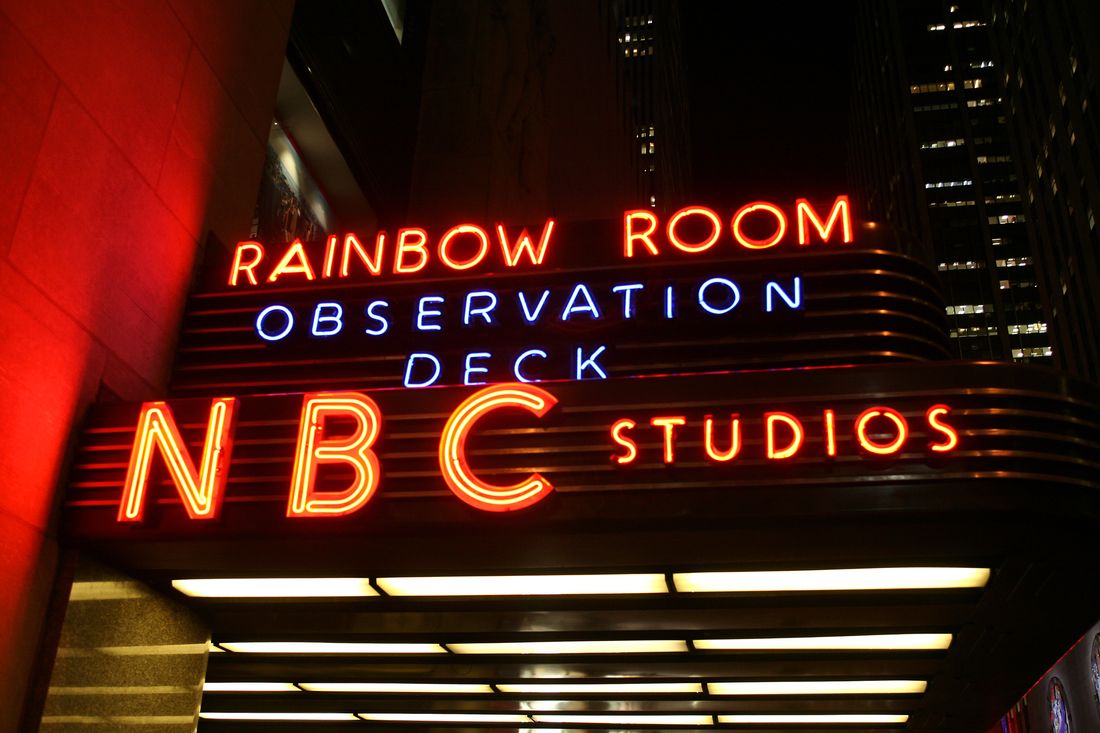
As for other changes, this piece on  the slow death of neon signage in New York made me wonder what the town would look like without bright neon. I can’t imagine it.

To close out, here’s a fun piece on the hardest working font in NYC. It looks like the NYPD is having a hard time recruiting cops. And the city is having a hard time figuring out how to bring people back to NYC. New York is never without challenges, no mater how much it changes.This piece by Naomi Fry writing about the famous piece by Jay McInerney on Chloe Sevigny in the New Yorker was very meta. Did I love this piece Jeannette Montgomery Barron’s black and white portraits of artists in Downtown New York in the 1980s? You know I did. Included in it is this photo of John Lurie, taken in 1982. Cool, like the city he was in.

Thanks for taking the time to read this. See you in a year when I post my annual appreciation of the greatest city in the world.

SNL makes you famous. It may not make you rich.

If you are fan of Saturday Night Live as I am, you may have guessed that cast members get paid well to be on the show. If that was also your guess, then guess again. As this piece shows, the pay is not exactly stellar. Mind you, for some cast members, things have worked very well in the longer term. But in the short term, it’s not all that much. Enough to pay the bills of living in NYC and a bit more.

Still, if fame now and fortune maybe later is your goal, SNL is the way to go.


How to live in wonderful small spaces

Over at the blog Cup of Jo is a story of the 175 sq foot apartment and the woman who lives there. She has lots of tips on how to thrive in a small space.

I like the bold use of black and white to simplify the decor and make it seem less busy.

Looking at this small apartment reminded me of another small space also featured on that blog, this one being Erin Boyle’s:

Like the first place, Erin’s place is full of well curated pieces. And also like the first place, she is not afraid to put big pieces of furniture in a small space. (By the way, Erin has a book and a substack devoted to her way of life. I recommend both.)

Check out both of blog posts featuring their homes. Anyone living in or dreaming of living in a small space of their own will be inspired.


On the famous essay and subsequent career of Anthony Bourdain

Like many, I love the famous New Yorker essay by Anthony Bourdain, Don’t Eat Before Reading This, published in 1999. For some reason, I always thought he submitted it to the New Yorker as a whim, that the success of it was a fluke, and the great books that followed were simply a response to this essay’s success.

So I was surprised to read this interview of him in 1997, “Potboiler Dreams: Chef Hopes To Write His Way Out of the Kitchen”. He confessed in the interview that he already wanted to write his “dream book, a definitive, foody memoir, a ribald account of my 22 years in the restaurant business that would probably appall and horrify anyone thinking of hiring me.” That dream book was Kitchen Confidential, published in 2000. The man had a plan, and with some luck, the plan succeeded. A good thing it did too, for we all benefitted.

More on this, from VOX: “Bourdain’s first big essay shows off all the things that would make him a great food celebrity”.

P.S. Here’s an excerpt from the film, “The Big Short” in which the film writers get Bourdain to riff on his fish story to explain financial instruments.

The Christmas Trees of NYC

peninsula hotel xmas tree

There are many reasons why Christmas in New York is special. One reason is that New Yorkers go all out when it comes to decorations. Especially when it comes to Christmas trees. Sure, the Christmas tree in Rockefeller Center is great, but you’d be missing out if you went to Manhattan and only saw that one. There are at least 15 Christmas Trees in NYC that are great and not in Rockefeller Center, as that link will prove. Check some/all of them out. You’ll be glad you did.

New York in August – hot time in a hot city

Untitled

New York is always great to revisit, and revisit it again I did last week. Like my visit in March, I stayed with my girlfriend in the Lower East Side, eating and walking around and even taking in a Broadway show (“Illinoise”).  We hit up Freeman’s Alley and Lafayette for the breakfast, because they are always good. Plus Clinton Street Baking Company. We also dined at WildAir and King. The best of the lot, though, was Via Carota (seen above). Is it New York’s most perfect restaurant? This piece argues it is. It’s hard to disagree, although it is a bold claim, since New York has so many great restaurants. Not just now, but in it’s entire history. Read this piece on the social history of the city, told entirely through its restaurants, to see what I mean.

During the pandemic New York adopted outdoor dining and many places like Via Carota set up a big outdoor area to serve people. It’s still going strong, although the city is cracking down on outdoor dining. If you like that kinda thing, you may want to do it while you can.

Speaking of New York City post pandemic stories, here are two: this one on a 23 floor midtown Manhattan office building going for a 97.5% discount. (Practically free). And this one about how people are returning to the Met Opera, but selectively.

Here’s three good stories on NYC history: 1) a fascinating history of  Lincoln Center you might not know about, 2) the abandoned islands of New York in pictures, and 3) a bio on Lorne Michaels.  Hey, when I think of the recent history of New York, Michaels figures prominently in it.

When we were visiting, New Yorkers were talking about an impromptu goldfish pond set up outside a leaking hydrant in Bedstuy. (See above.) It was all going well until an animal lover thought she was doing the right thing by freeing fish from the pit. The man who created the pond saw it differently. Mayhem ensued.

I am not sure who thought it would be a good idea to put up a Portal between New York and Dublin, but they did. More mayhem ensued.

Finally a non-story about how the M.T.A. wanted runners of the New York City Marathon to pay bridge tolls. Needless to say, this did not happen.

On the chocolate cake at Claud and what we can learn from it

The Claud chocolate cake can be a lesson for any restaurant in this day of social media and influencers.

Claud in NYC is a highly respected restaurant with subtle and sophisticated cuisine. Yet if you go to social media sites like Instagram, what you’ll often see is their chocolate cake, shown above. (And yes it is mine and I ordered it.)  Just looking at it and you can see why it is popular: it is an eye catching slice of dessert.

I hesitate to call it a gimmick, for it’s delicious and well made. But it is definitely an attention getter, and in this age of social media, getting attention is key.

There are many ways to attract diners. If you want an easy and low cost way to do that, get yourself a menu item like Claud’s cake.


Who let the (robot) dogs out? And other animated machines on the loose you should know about

A year ago I wrote: Sorry robots: no one is afraid of YOU any more. Now everyone is freaking out about AI instead. A year later and it’s still true. Despite that, robots are still advancing and moving into our lives, albeit slowly.

Drones are a form of robot in my opinion. The New York Times shows how they are shaping warfare, here. More on that, here.

Most of us know about the dog robots of Boston Dynamics. Looks like others are making them too. Still not anywhere as good as a real dog, but interesting nonetheless.

What do you get when you combine warfare and robot dogs? These here dogs being used by the US Marines.

Someone related, the NYPD has their own robot and you can get the details  here.

Not all robots are hardcore. Take the robot Turing for example (shown below). Or the ecovacs, which can mop your floors and more.

What does it all mean? Perhaps this piece on the impact of robots in our lives can shed some light.

Robots are coming: it’s just a matter of time before there are many of them everywhere.

New York City is full of stories. Here’s 15 of them.

New York City is full of stories. Here’s 15 I’ve collected over the last few months that I thought were really good. I hope you like them too:

  1. Here’s a good story on the Louis Armstrong house museum in Queens. I love that museum. I love the fact that Armstrong lived in Queens, too.
  2. This is a sad story of an 82 year old man and a Stewart hotel long term resident who is facing eviction after living there for decades.
  3. Here’s a fascinating story of the brooklyn seltzer boys who still make seltzer the old fashion way.
  4. Here’s a story for book lovers:  five enchanting art bookstores in NYC they should visit.
  5. Here’s 10 Movies that tell the story of New York and capture its essence.
  6. Here’s a cool story on how Brooklyn Public Library is offering free eCards to teens nationwide who are dealing with book bans in local communities.
  7. This is a story to follow up on: How New York’s MTA is using AI scanning software to stop fare evasion.
  8. Another story to follow up on: how the Mayor plans to convert midtown Manhattan buildings into housing.
  9. No one can tell a story like Anthony Bourdain. Here he is in 2000 writing in the New Yorker and describing a day in the life of working in his kitchen at Les Halles in NYC. Bourdain is a romantic and it comes across in that piece.
  10. A practical story: how to  find a public restroom in New York.
  11. This is a fascinating story on how Korean fine dining has taken over the New York restaurant scene.
  12. Times Square is full of stories. This web cam proves it.
  13. Here’s how three vastly different subway signs can tell a story of three eras in NYC.
  14. This is a scary story of how New York is not ready for climate change flooding storms
  15. Finally, I love this story on the the improbable resurrection of an all night kebab place in the Lower East Side.

The wonderful historicalness of “You’ve Got Mail”, 25 years on

“You’ve Got Mail” is many things. A romantic comedy, of course. A tragedy, as this piece argues… possibly. Of the many things I could list about it, what I loved most about it when I watched it was it’s historicalness.

For starters, the gentrification of New York is one of the historical things that pops out in the film. If New York now is a place of wealth and insane living costs, and New York of the 70s and 80s was a place of poverty and decrepitude, then the New York of the 90s was undergoing a time of economic transition between those two times. You see that in the arrival of bougie things like Starbucks and big bad book store chains like Fox / Barnes and Noble. The city just seems on the rise in the film. It is poor no more. New money is leading the development of real estate that is forcing a transition in the city.

The film also shows the start of the next big thing coming to force a transition: online communication. You’ve Got Mail illustrates how people back then are already dealing with how computers are starting to affect how we live and communicate. It will take some time past the 90s for books and magazines and newspapers to be impacted as we all take to the Internet in the 21st century, but the seeds are already sprouting up as we watch Kathleen and Joe get to know each other via their Apple Macbooks and IBM Thinkpads and the end of the 20th century. (And naturally she owns the former and he the latter). And the beloved typewriters in the film are dodo-birds of a mechanical sort.

It’s funny to think the film was once criticized by the Washington Post for product placement. After all, this month an entire film, Barbie, is launched and co-produced by Mattel.  It may have been jarring then, but it barely registered to me watching the products placed in this movie from 25 years ago. If anything, it seems quaint compared to todays films.

Culturally the film drips with historicalness, from the clothes they wear (Ryan’s layered sweaters, Hanks’s dark shirts and ties), to the technology they use (AOL!, that MacBook), to the actors themselves (Hanks being a love interest, Chappelle trying to be mainstream). It all seems so long ago. It was 25 years ago, so I guess it was.

There’s lots to enjoy in You’ve Got Mail. One thing for sure: it’s a time capsule, and it’s quite good just to enjoy it for that.

P.S. You can read more on the film: You’ve Got Mail in Wikipedia. If you’re curious, here’s a piece on the You’ve Got Mail film locations. Many, like Zabars and Barney Greengrass, still exist.

Is this the start of the decline of opera in New York?

I have always been envious of New Yorkers and their Metropolitan Opera House. Toronto’s Canadian Opera Company is planning to perform 7 operas next season (and that’s good). Meanwhile the Met in 2022-23 performed 22. With that many performances going throughout the year you could sometimes feast on four different operas in a weekend! And it’s not just quantity: the greatest performers in the world are appearing in those shows. I cannot be alone in my envy and admiration of it all and imagining it to be never ending era.
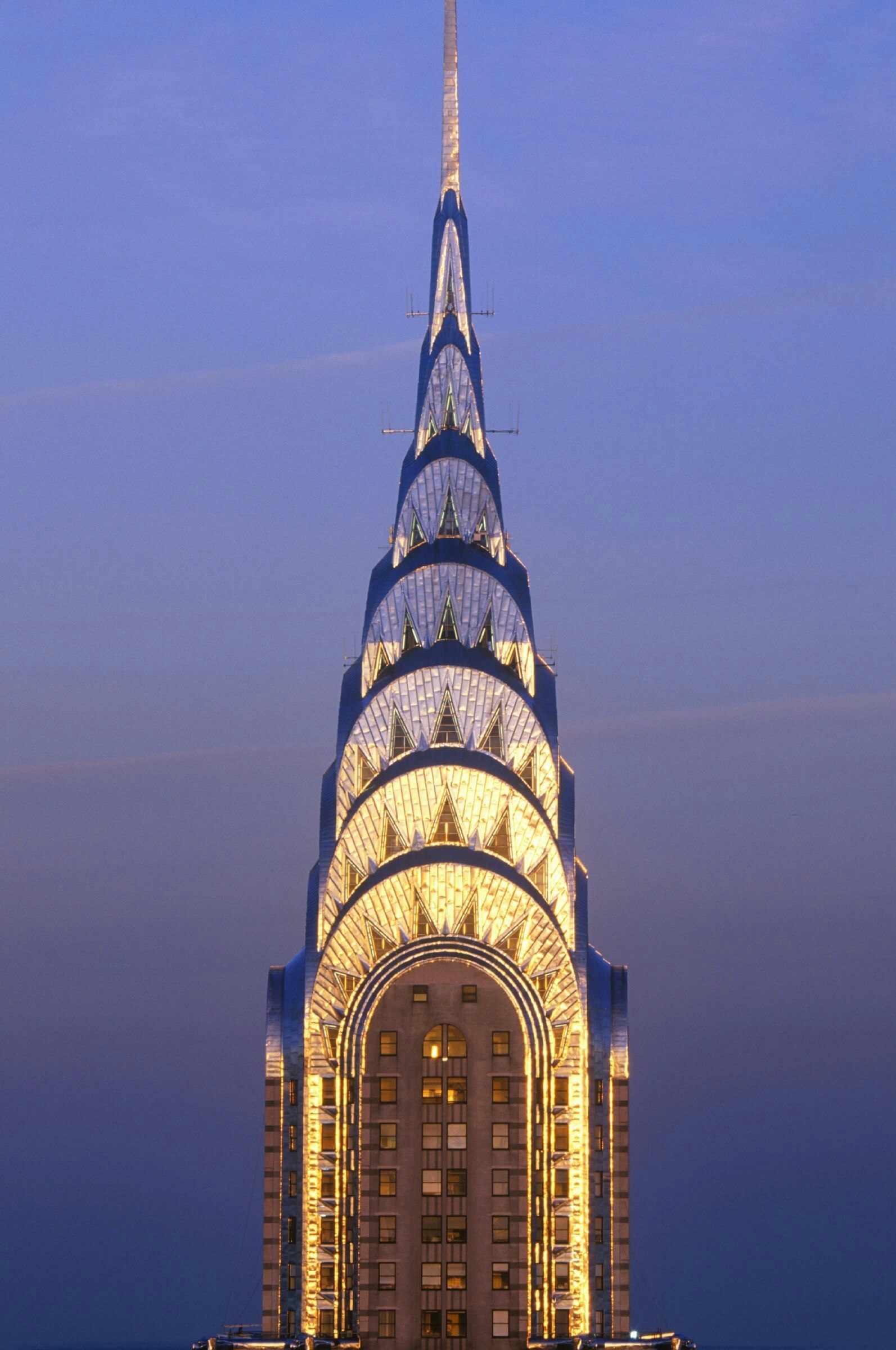
So I was somewhat shocked to read that we may be at the end of that era, according to this piece in The New York Times:

Ticket sales have been robust for some new productions, even of contemporary works. But revivals, less obviously newsworthy and less widely promoted, are no longer sure things — especially slightly off-the-beaten-path stuff like Mozart’s “Idomeneo” or Verdi’s “Don Carlo.”

And I was disturbed to read this:

In an attempt to make ends meet, the Met has raided its endowment and plans to put on 10 percent fewer performances next season, which will feature just 18 staged operas (six of them written in the past 30 years). The days of being America’s grand repertory company, of 20-plus titles a year, could be slowly entering the rearview mirror.

Besides less new stuff, it sounds like some of the old stuff is being put out to pasture:

So it was fitting that, last month, the Met said farewell to one of the shows that typified the era that’s ending: its “Aida” from the 1980s. The production was typical Met: hardly cheap but sturdy and flexible, into which you could toss singers with relatively little rehearsal. The company’s model has depended on a core of stagings of the standards like this — ones which could be mounted, and sell well, year after year. If there’s less of a year-after-year opera audience, though, the only solution may be to do less.

All signs point to the beginning of a decline of opera at the Met. Now perhaps this is a just a temporary decline brought on by the pandemic and our change of behaviors. But I fear it is not.

If you are in New York (or anywhere), make plans to go to an opera. Even if you know nothing about it, an evening at the Met is always magical.

(Photo Credit: Marty Sohl/Metropolitan Opera)

The 100 best restaurants in NYC in 2023 (plus the best places to eat and drink outside)


Yesterday I wrote about restaurants in Paris, today I want to point out the list of the 100 Best Restaurants in NYC, according to The New York Times food critic, Pete Wells

It’s a great list. There are restaurants for all the different boroughs and at all different price points. There are fancy French restaurants and there are casual night markets and more. You can find old school places like Barney Greengrass and Le Bernardin. You can find hot new places like Atomix and King. Whatever you need, the list can help you with.

If you live in NYC or plan to visit, you owe it to yourself to check out the list and start making reservations. Or just drop by.

P.S. If you are going to be in New York in the warmer parts of the year, you also owe it to yourself to check out the Vogue editors guide to outdoor dining in NYC. Some days you just want to get a cocktail and sit outside and enjoy all the city has to offer. The folks from Vogue can help.

(Photo is from the website for King.)


On appreciating the Chrysler Building (my favorite building in the world)

I love the Chrsyler building in New York City. While there are many great buildings in the World — never mind Manhattan — it’s always been my favorite. So I was happy to come across this on the site, Open Culture: An Architect Demystifies the Art Deco Design of the Iconic Chrysler Building. That site highlights a video from AD and explains:

In the Architectural Digest (AD) video… architect Michael Wyetzner takes us on a tour of that design, explaining how each of its features works with the others to make an enduring visual impact. Some, like the gleaming oversized radiator-cap gargoyles, impress with sheer brazenness; others, like the Native American-derived patterns that repeat in various locations at various scales, take a more practiced eye to identify.

Fans of this building, like I am, take note.

P.S. I think Ridley Scott is also a fan. In the opening minute of his film, Someone to Watch Over Me, he takes an entire minute to lovingly film the skyscraper just as night falls. Here’s a clip of it:

Beautiful.


On Karl Lagerfeld now (thinking about difficult people)

I’ve written about Karl Lagerfeld often on this blog. In the past I found much to admire about him: his drive, his levels of energy, his capability to go in different directions, his ability to change mentally and physically. He was also quite the wit, as can be seen here and  here, and I admired that too.

Not everyone feels this way, however. The Guardian gives you a sense of that here. The New York Times calls Lagerfeld a “firehose of offense”, and they are not wrong. His disparaging remarks about any woman he considered “fat” are infamous. Over at hyperallergic they open their own firehose of criticism back at Karl. Not my approach, but again, some (not all) of what they related is true.

Despite all that, Lagerfeld still has allies. Like Anna Wintour, a friend who thought highly of him. It’s not a fluke he was the focus of the recent Met Gala, run by Wintour. And anyone who cares for fashion and design that flipped through this retrospective the Tines did of his work at  Chanel, Fendi, H&M would agree just how influential and powerful his work was.

So what to do with difficult people? I often think the best way to think and talk about them is like this. Instead of saying “I admire Mr/Ms X”,  I try to say, “There are things I admire about Mr/Ms X” or “I admire anyone who can do Y”. That is the case when it comes to me and Karl Lagerfeld now. There are things I admire about Lagerfeld. And I admire anyone who can do some of the things he achieved.

Like any famous person, Karl Lagerfeld is not my friend, my foe, or even a member of my family. I don’t have to accept or reject him unconditionally. You don’t have to either.

P.S. All this was driven by the recent Met Gala. Here’s more from the New York Times on this year’s event, which was based around Lagerfeld. Also here’s a look back at the Met Gala’s red carpet shenanigans from the last decade.

Besides being a famous fashion designer, he is also well known for the Karl Lagerfeld diet. You can read more about that here and here and  here and here.

New York stories and snippets (April 2023)

Here’s some bits and snippets on the New York I’ve been collecting over time. I hope you like them.

A great source of such snippets of life in New York can be found here, in the New York Times section called Metropolitan diary. Just little bits of life in the Big Apple, with wonderful grease pencil drawings to go with them. (See one such drawing below).

Speaking of the Times, noted conservative David French is joining them as an Opinion Columnist. I have to say, these conservatives often start out there with great praise but then become awful. Let’s see how French does.  I’m not optimistic.

Yesterday I wrote of a landmark of the city closing down: the Pennsylvania Hotel. Here’s a story on a smaller landmark also leaving: Alleva Dairy in NYC Will Close. I am sure that place contains many stories itself.


Manhattan is a region of extremes when it comes to rich and poor. On the rich side, here’s a Look Inside the NYC Apartment of MALIN GOETZ Founders. Pretty posh. Also, what’s it like surviving as a staff member of the high end store, Bergdorf Goodman? Well not as tough as being Flaco the owl, but tough nonetheless. To see what I mean, see this: Surviving 10 Hours and 32 Minutes at Bergdorf Goodman. If nothing else, you can see what providing exemplary service is all about.

If you want more stories on the rich and famous of New York: here’s something on the gatekeepers of New York’s most coveted tables.

For stories on the flip side, here’s a story on how Hell’s Kitchen got its rough and ready name. Also downtown based is this piece on someone coming of age in LES before it was gentrified: Watching a Girl’s Life Change on the Lower East Side. And here’s a tough piece on NYC’s jails.

People often hate the mayor of New York, and the current one is no exception. Here’s what he is working on: Mayor Adams Focuses Agenda on the ‘Working People’ of New York. You be the judge. Speaking of people more and more people hate, here’s something on Robert Moses: Robert Moses Is A Racist Whatever.

Finally, here’s a worthy piece on the Central Central Park Conservancy. Here’s a piece on another Robert of NYC who is praiseworthy: Robert Caro Wonders What New York Is Going To Become. Don’t we all wonder?

(Top image: Christopher O’Keeffe, the director of loss prevention, locks the door at the end of the shopping day of Bergdorf. Credit…Landon Nordeman for The New York Times)

A love letter for the Pennsylvania hotel in NYC and the two-letter phone exchange (PE 6-5000)

I had been thinking about the Pennsylvania hotel recently. I first started thinking about it when I read this: Discovering another vintage two-letter phone exchange on a West Side sign. See the bottom? Things like MU 2-2655 were how phone numbers looked in the Big Apple (and other places too). Forget about area codes like 212.

One of the most famous of these old two letter phone exchanges was PEnnsylvania_6-5000 (PE 6-5000) for two reasons. One, it was the number assigned to one place and one place only: the Pennsylvania hotel. Two, Glenn Miller wrote a famous song about it, called…PEnnsylvania_6-5000. (My Dad loved this song, and whenever I hear the title, I can hear him shouting out with the band: PEnnsylvania 6-5000!).

Sadly, having a storied presence as well as being famous is not enough to survive. The Times has a piece on how its going to be demolished soon. That’s a shame. I hope the don’t regret it like they do the demolition of Penn Station.

As you can see from the photo being held, it was a massive hotel, and one deserving of its own exchange.

I highly recommend you read that piece on it in the Times. It had quite the run.

Now let’s join in with the the Muppets as they do their version of the famous song:

Flaco the Owl! A free bird in New York….

Flaco, in case you haven’t heard, is an Eurasian eagle-owl that escaped the Central Park Zoo when vandals opened his enclosure. The zookeepers tried to lure him back to capitivity, but he wasn’t having it. They weren’t being mean: there was a good chance he could die in the wild, even if the wild currently consists of Central Park. Instead, he seems to be thriving, flying around the park and dining on the many rats available to him.

I think one of the reason we love him is that Flaco and his new freedom is a great metaphor that gives us hope. I also think we love him because he is a handsome bird! Regardless, we all want him to be independent and well. It makes me happy every day to read about him.

If by chance you don’t know about him, the Times has a story on him,  here. You can find lots of people talking about him on twitter. He even has an account dedicated to him: .

If something cost $1 in the 1980s, what does it cost now?


If something cost $1 in the 1980s — or the 1990s, or 2000, etc — what does it cost now?

I used to use a calculate this by using a rough 1:3 ratio in terms of 1980s dollars:today’s dollars, but there is a better way. You can go to the site in2013dollars.com and enter your information and it will spit out an answer. For example, what cost $1 in 1980 would cost $3.62 today, according to this: $1 in 1980 → 2023 | Inflation Calculator

I used that site because I was reading that in the early 80s Jim Jarmusch had an apartment in Manhattan that cost $170 a month. I wondered: what would that cost now? Well according to the site above, in 2023 that same place should cost $615. Of course the idea that ANYPLACE in Manhattan cost $615/month is hilarious. But you get the idea. 🙂

On the new subway mosaics by Yayoi Kusama and Kiki Smith (and other works by fine artists)

Over at the New York Times they have a write up on the Yayoi Kusama and Kiki Smith’s Grand Central Madison Mosaics. They look fantastic. Very few art installations can achieve the viewing that those in subways achieve. It’s important to have really great work there, and in this case, I think the work is great. But see for yourself: check out that Times article. Better still, go to the subway in person.

Speaking of mosaics, this piece on how  Chicago artist Jim Bachor fills potholes with mosaics is great.

Also great:  Sheree Hovsepian’s Poetic Assemblages now showing at Rachel Uffner Gallery.

Why not take a look at the  Household Surrealism art by Helga Stentzel?

Tom Phillips died recently. I’m a fan of Austin Kleon and he was influenced by Tom. I can see why. For more, see Tom Phillips obituary  in The Guardian. Also this  Tom Phillips – Works and Tom Phillips – A Humument.

Finally, two extremes: this, At Art Basel Miami Beach the ATM is the new banana, vs this which is “an exhibition in Berlin shines a light on class, showing how social and financial inequality affect how art gets made, sold and displayed”. I was moved by the latter.

(Images: links to the Times story on the subway art installations)

The best time to visit New York is in December. And other things NYC

The best time to visit New York is in December. I did once many years ago and I just remember how magical it was: the city was lightly covered in snow, the shops were all lit up and decorated for Christmas, and everyone was bustling about. I had a moment where I stood in front of a store, the snow lightly falling on me, and thinking excitedly: it’s perfect. I hope you can go and experience something similar.

Whenever you go, you’ll need a place to stay.  Vogue has some suggestions on places. The New York Times has a recent guide to what you can do in 36 hours. The food writer Michael Ruhlman has some suggestions, too. If you want to go where few do, perhaps you can head to the Bronx and enjoy what that borough has to offer. One day the Bronx will have it’s moment. Get there first.

If you haven’t been in awhile, this piece tells you what has changed in terms of dining. Don’t be deterred though: New York is always changing and is always good.

I’ll close off with three New York Stories. Here’s a sad story of how Trump destroyed one of the gems of Mahhattan to put up his Tower: Vanished New York City Art Deco – Bonwit Teller. Here’s a cool story on the Hart Island cemetery. And here’s a good story on planting a million trees in NYC .

One last thing: here is the trailer for one of my favorite films, Metropolitan. It’s set in New York in December, and that’s just one of many things I love about it.

(Image from Cup of Jo. I recommend their Guide to NYC in Winter.)


On restaurants loved and lost: Brasserie in midtown Manhattan

It was fairly nondescript from the outside: a simple awning, some signs stating its name, and a revolving door. You might not think much of it walking along East 53rd.

Once you walked in, though, your impression immediately changed. Especially if you were there early in the morning, the way I often was in the 80s and 90s. You would be at the top of the stairs looking over the whole place, and it was packed with people there for power breakfasts. The sound of people talking just washed over you, and if you managed to find a seat, you would hear what was on the mind of Manhattan men and women of that era.

It could be intimidating, especially walking down those stairs into the middle of it all. Everyone seemed so confident, so polished, so put together. The fact Mike Bloomberg would often dine here to start his day gives you an idea of what it was like. While I felt shy on my first visit,  I quickly found the place thrilling and energizing. No doubt the other diners did too.

Among other things, it was a convenient place to go. I would be in the city for business and the offices we worked in and the hotels we stayed in were nearby. I could wander over to the Brasserie and have delicious croissants or a proper egg and sausage breakfast before I went to work. The coffee and orange juice? Also great. As was the service.  Convenient yes, but excellent too.

I don’t ever recall it changing that much over the years, which is one of the things about it that appealed to me. It gave me that constant connection to midtown Manhattan over the decades. It was my spot. After a long period of not visiting, I went back to NYC around 2018 and I wanted to hit it up, only to discover it had closed. Sad.

I’m glad I got to go all those years. If you visit a city often, I hope you can find such a place that allows you to fit in and belong and be part of something. It won’t be Brasserie, but I hope you find the next best thing.

For more on it, see this piece in Eater on it’s closing. Looks like they went out with a bang. Nice. More on it, here. (Images from those two places.) Finally this piece is in Japanese but you can get Google to translate it and there are some good images of Brasserie in it too. One thing I like about the Japanese post is you can see some of the food but you can also get a sense for what the stairs were like.

The pandemic hit NYC in so many ways, including an unusual one

The pandemic hit NYC harder than many cities, I believe. While terrible things like COVID deaths and ad hoc evacuation have thankfully declined, it is still feeling the impact. Dining is one of these things that was affected. According to the Times, the city that never sleeps is now turning off the “Open 24 hours” sign, at least in some places:  In NYC Some Doors Now Close at 10 p.m. One of the reasons for this could be that for (some) New Yorkers, 6 p.m. Is the New 8 p.m. How long will will this last? I’m guessing like many things in New York, it is transitory and the city that used to never sleep will be sleepless soon enough and flocking to places like Katz’s Deli in the Lower East Side.

I love New York. It never gets old. It’s just acting like an oldster lately. 🙂

P.S. Somewhat relatedly, this was a fun story: Immigrant brothers crafted New York’s hand-drawn posters for decades 

(Image: from the Times piece – Katz Deli)

On Basquiat and Recent Crimes

Basquiat has been in the news this week on account of two alleged crimes: theft and fraud. In the first instance, this “Brazen” Couple Tries to Walk Out of Manhattan Gallery With a Basquiat. Nice try, brazen couple.

The other alleged crime is fraud, although the owners of these works deny that in this instance: Is the Orlando Museum of Art Displaying Fake Basquiats?

All I can say is to anyone buying these “new” Basquiats: caveat emptor.

(Image from this tumblr, which has quite a few good images of the man, including the one above.)

July 1, 2022: update. Looks like the FBI have decided to step in and deal with the works at the Orlando Museum. You can read about that here and here.

Basquiat 101

People in New York City have the great pleasure of having not one but two exhibits dedicated to him at the moment. (Not to mention his works being on display at MoMA.) If you are not familiar with him or would like to know how to better appreciate him, this piece, How to Look at a Basquiat in The New York Times is worth a read. It’s like Basquiat 101.

Better still, read it and then go check out the shows.

I’m in a New York state of mind…

…So I decided to share these links I’ve been collecting that all relate to that great city:

  • The 212 is all about “revisiting New York institutions that have defined cool for decades, from time-honored restaurants to unsung dives.” New York is always NEW, but old New York is great and continues to be for good reason.
  • Finally a fashion legend passed away recently. RIP Andre Leon Talley. Here he is photographed through the years by another fashion legend, Bill Cunningham:  Andre by Bill

The 80s were cool. Don’t believe me? Ask the kids

It’s easy to mock any era for its excesses – and the 80s had those – but it still had much good about it. Perhaps that’s one reason why some Zoomers are so wistful for that era. Your mileage may differ, but I think the kids are alright.

One of the things about that time that was great was Giorgio Armani. I love his clothes and his look then, and I still do. Here’s a good piece on what makes it great: Permanent Style.

Finally this is fun: New Yorkers and Their 80s Routines, Block by Block (NY Times)

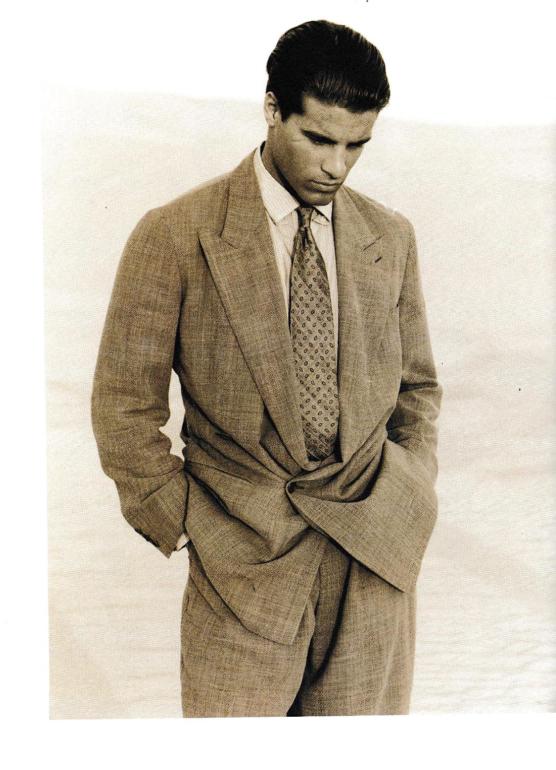
Top image from the Armani piece, bottom from the Times piece.

Three interiors of New York

Not sure what the purpose of this post is, other than offer up a snapshot of how people live in NYC in all extremes, from this 400-Square-Foot Brooklyn Studio  with a weird layout: 

To this somewhat bigger One-Bedroom in Brooklyn with a Smart Layout:

To this lifestyle of the rich and famous home of  director Paul Feig’s on Madison Avenue:

They are all very New York in their own way. Nothing is big though they try to look it. Brooklyn is now the place for the young to live: once affordable Manhattan rarely is. It’s all fascinating, at least to me.

P.S. Not NYC related, but I also found this fascinating: The dingy apartment of my 20s left an indelible mark on me. Many of us start out living not in places like above, but in crappy little dives. It leaves a mark on us and shapes us in a way. Recommended

It’s time to travel again. It’s also time to ditch Airbnb and get a hotel instead

Why is that? Well according to Reddit (fwiw), the fees are making Airbnb unattractive: Why Airbnb Isn’t Worth All Those Fees, According to Reddit

If you are convinced and need a hotel to stay in NYC, I recommend this: Best hotels in New York | Telegraph Travel.

Lots of information on hotels over at The Telegraph. Well worth a look. You can find places at all different price points, at all different parts of the city.

One last thing on AOC and the Met Gala

The best thing written on AOC and the Met Gala was written here: Activism Is Now In Fashion – The Atlantic.

I had planned to write something, but that piece is so good I can’t possibly express my meh feelings to the empty activism and her presence there better than that piece does. For example, this is just one sliver of goodness from the Atlantic piece:

 Ocasio-Cortez has fired up her base, raised her profile, and reminded everyone that she is the standard-bearer for today’s activist left.

At the same time, the Met Gala is essentially a costume ball, which removes the potential for actual subversion…the Met Gala red carpet is now an arena where people go to make statements, which inevitably robs those statements of their power. No one here is rebelling against the Man. The Man loves the extra publicity; it helps sell more $35,000 tickets to socialites who love a frisson of revolution as long as it’s safely divorced from the threat of actual tumbrels. … The Met Ball is … a safe space for political statements that all attendees will applaud, regardless of whether they truly believe them. … no one gets booed, or thrown out, or shunned by their peers for wearing an ensemble supporting any progressive cause to the Met Gala. … So what is the risk of wearing a sloganeering outfit to the Met Gala…? For Ocasio-Cortez, that’s just a day ending in a Y. (Emphasis is mine)

I like AOC for her intelligence and her seriousness and I like the Met Ball for it’s vapid ridiculousness. The two don’t mix. I am glad she got to enjoy the party and wear a great dress and support a good designer, but either go and acknowledge you are part of the ridiculousness, or stay serious and avoid it.

Image from the New York Times. Their piece on it is worthwhile too.

On restaurants loved and lost: Florent (and Odeon)

Here are a number of pieces on two great downtown Manhattan restaurants: Florent and Odeon. Florent has been closed for a number of years. But Odeon lives on, happily. What I love about both restaurants is how the embodied that era and how they both set a stage. You can see that in the pieces below about them. Florent in particular was a radical place that was like no other, right down to their menus and promotional material (like the one above). When they both opened the lower part of Manhattan had nothing like them. There was no gentrification down there like there is now. They were an oasis of good food, good design, and good times. To really get a sense of that, read Restaurant Florent Takes Its Final Bows – The New York Times. For more on the design ideas around Florent, see: Restaurant Florent | Restaurant Design in New York, NY — Memo Productions A short history of the space Florent occupied is written about here: What remains of a Gansevoort Street restaurant | Ephemeral New York Lastly, here is it’s Wikipedia write-up: Florent (restaurant). It’s a good source of other links on the place. Before I forget, this is a fun piece on The Odeon: A Retro Haven That Defined New York 1980s Nightlife | Vanity Fair. Also worth reading. Now go and eat at The Odeon.  

More on New York in the 80s


Here on my blog I like to write about one of my favourite places (NYC) and my favorite eras (the 80s). So I am happy to highlight this piece on an exhibit on the music of New York at time: New York, New Music: how the city became a hotbed for music in the 80s | Music | The Guardian.

New York then was a hotbed not only for music, but for art. After almost dying in the 60s and 70s, it started it’s Phoenix rebirth in the 80s. I was happy to be a part of it, and I often like to highlight it. That Guardian piece does a good job of capturing the place and the time.

(Photo by Bryan G. on Unsplash.  I don’t think it is of the 80s, but it is a photo of the Lower East Side and it is reminiscent of it.)

Web site of the day! or what’s old is new again


In the early days of the Web, there were several sites that would feature the Web Site of the Day. It would be something someone put together that was smart or wacky of useful. Those days were good.

Good news! Here is a list of web sites that Buzzfeed put together that made me think of those days: 38 Super Useful And Fun Websites You Never Knew You Needed In Your Life.

Every day check out a different one!

In a similar vein, here is a list of places in New York that have been around forever that are still going. Likewise, check out a different one every day: The 212 – The New York Times

The Internet can feel stale. Let’s make it fresh again.

(Photo by Jon Tyson on Unsplash )


The problems with supertall towers

I am not a fan of supertall towers. They are bland looking, and they add little to a skyline. Therefore I was glad to see this week that they are being exposed for being problematic. First up was this piece in the New York Times on how one of them has been having lots of problems:  The Downside to Life in a Supertall Tower: Leaks, Creaks, Breaks.  Then there was a more general critique of them here:  Why Pencil Towers are Problematic.

It seems to me that there are some problems with the buildings that not even super-engineering can fix. Perhaps this means that this is the beginning of the end of supertall buildings. I can hope.

(Image link to NYtimes.com)

Vestiges of New York: the taxi light

All cities have vestiges, things that once made sense but over time became obsolete, yet still remain. In my former house I had a small door and nook near the main door where milkmen would once leave milk. Across Toronto you can still see coal doors at basement level, where coal delivery people would shovel in the coal for the coal furnaces.

Elsewhere, here is a great story about taxi signs across New York City that were once used to hail a cab if you needed one. In the days of Uber and Lyft apps, these seem quaint. Just like those apps will seem years from now. Great story, though.

I love the blog that story comes from. It’s full of odd bits of New York, written with love. Well worth diving into.

Is New York dead yet?

Predictions are hard. Predictions about New York City especially so. This one was written a few years ago, and talks about how gentrification is killing NY: The Death of a Once Great City | Harper’s Magazine.

Now in the midst of the pandemic, that economic costs of that will take a bite out of gentrification, which will be nothing compared to the closures that will occur as this disease hangs over the city and the rest of the world.

Whatever happens to New York, be it 9/11 or gentrification or the pandemic, I think the best and safest prediction is to never count it out. Perhaps some far off day New York will no longer be one of the world’s great cities. Perhaps some day it will die off, like many other great cities have. I think we can predict that day is far away still.

So whenever you read about New York dying of one thing or another, take it with a grain of salt.

(Photo via malteesimo)

Adafruit goes to war against the coronavirus

That’s a bit dramatic, but Adafruit (a tech company I love) has been deemed an essential service and is helping to manufacture things needed in the fight against it. I am happy to see that.

Here’s a bit from them saying who they are and what they are doing. Awesome!

Adafruit is a 100% woman-owned, loan-free, VC-free. profitable, USA Manufacturing company. Please see our about page and press page to read about us. Our founder and lead engineer is Limor Fried, a MIT Electrical Engineer.

We have paused some operations in NYC due to COVID-19, we are paying all team members, contractors, and more. There are no layoffs for 130+ Adafruit team members.

Adafruit was deemed an essential service to distribute/make some PPE (Personal Protection Equipment) such as face shields, and manufacturer electronics for essential life-saving/preserving equipment and developement which is needed in New York and beyond.

Adafruit Industries located at 150 Varick Street, New York, NY 10013 by Executive Order 202.6, “Essential Business” by New York State:
https://esd.ny.gov/guidance-executive-order-2026

via Adafruit Industries, Essential service and business: NYC – Executive Order 202.6 Capabilities and more #NewYorkTough #NewYorkStrong #adafruitchronicles @adafruit « Adafruit Industries – Makers, hackers, artists, designers and engineers!

The limits of wine bars in North America cities as compared to Paris and why this is interesting


We have tons of upscale coffee shops, and wine is more popular than ever in North America, so Eater asks what seems to be a simple question: Natural Wine Is Everywhere in America. Where Are the Wine Bars?

I say “seems” because the answer is long and fascinating for a number of reasons: economic, cultural, and gastronomical. It’s a smart piece. I highly recommend it.

Here’s a snippet of what I mean:

It’s sad to see something so ostensibly simple become another exclusive pleasure, so I keep looking for the neighborhood wine bar of my dreams — which is honestly just a cramped room with bottles of interesting, affordable wine on the wall and, like, a cheese plate? Yet this seemingly simple thing is stupidly hard to find. It’d be sort of funny that cosseted American wine bars struggle to attain the loose charm of Paris, given that France is stereotyped as the place that’s snooty, rules-bound, and tradition-obsessed, if the result wasn’t such a bummer. While yes, there are a lot of rules, France also has a more open culture of public life; you don’t need to make plans to go out to drink wine. And though wine signifies many things in French culture, an air of sophistication because you drink it is not one of them. The appeal of enjoying wine in France, at least as the kind of person who’s moved by wine but still needs bolds on the list, is that French wine culture feels so much less precious than in America.