Restaurants loved and living: The Senator

Like Okonomi House and Le Paradis, the Senator restaurant is a much loved restaurant I’ve been going to for a long time (the 1980s), though it predates that era by many years. It has the same 1930s ambiance of Le Swan and The Lakeview, two other Toronto restaurants I love. And while it has many fine things on the menu, the one reason I go there for is the breakfast.

The last time I went I splurged and got the steak and eggs (seen above), as opposed to the bacon and eggs, which was my Usual. Either dish is excellent. Also excellent: their coffee. Make sure when you go there to get some of their excellent brew: it’s hot and tasty and endless and served up in an old school diner mug.

When the pandemic hit I feared it would be one of the places to go under. Fortunately it held on, and the last time I went for brunch on a Sunday, it was packed with theatre people who planned to go to the Ed Mirvish show next door once they had their fill. That busyness was great to see.

When I was younger I would make my birthday a vacation day and I would start it with a trip to the Senator. I did that for decades. In all that time, the food and coffee and decor has been consistent and great. While they seem to no longer offer breakfast dishes on the week days, you can still get that and more if you hit them up for brunch on the weekend.

Whenever you go to the Senator, by all means go and soak up all that 1930s diner goodness. Get some coffee too. You’ll be glad you did.

It’s time for PI (What I find interesting in tech, special raspberry pi edition, Mar. 2025)


Over the last year I’ve been working with various Raspberry Pi products, from the Pi Pico to the all-in-1 400 series. Along the way, I’ve found these links / articles to be useful for me. I hope they might help you too.

How To Guides: Here’s a variety of how to articles for various Raspberry Pi products:

LCD/OLED output: If you want to use LCD or oled displays with your Pi, check out how to get Billboard Scrolling with LCD Display & Raspberry Pi Pico. Here’s how to get your raspberry pi working with your oled. More on that, here: using ssd1315 oleds with the raspberry pi pico. Also here .

RPis’ config.txt: If you want to use your Pi with an old composite display, then you need to learn more about the config.txt file. So here’s click on the links to know about the config.txt file: here and here and here and here.

If you are having problems with output display, check those out. Also, how do i shrink the screen with composite out is good. So is this: how to add an rca tv connector to a raspberry pi zero. 

Pin settings: Pin settings articles for the Raspberry Pi are here and  here and  here. Finally, here’s the pin layout for the  Digispark Pro. More on the Digispark here.

P.S. Posted on 3/14 for obvious reasons. 🙂

On letting go of the last of Twitter (with a PS on ephemerality of tweets)

A few weeks ago I downloaded my twitter archive from X.com and deactivated my main account there. I assume this will result in blm849 being deleted, but who knows with that site.

I was unsure of what to do with this archive of mine. I had a lot of good memories of posting and interacting with people on that site, but the archive was taking up too much space for the value it contained, so I deleted it.

I still have all the blog posts I wrote about twitter, here. And an old tumblr of mine still has quite a few tweets contained in it. But overall it was time to let it go. Twitter was good while it lasted.

P.S. I always knew tweets were ephemeral. All digital media is, but tweets seemed more ephemeral than most. If you want to create or maintain a presence or a record, consider less ephemeral ways to do it.  Don’t depend on a site or a tool that can be easily taken away from you, or a record that is hard to replay.

The mongolian horde approach, or why you don’t have to be a fool to think that Elon Musk is incompetent

Is Elon Musk incompetent? Is he a genius? Or is he something else?

While some think his recent actions at Twitter and in DOGE indicate he is  incompetent, Noah Smith came out and defended Musk in this Substack post: Only fools think Elon is incompetent – by Noah Smith.

Smith starts off by saying that Musk …

is a man of well above average intellect.

Let’s just pass on that, since we don’t know the IQ or any other such measure of the intellect of Musk. Plus, competent people don’t need to have a high IQ.

Indeed Smith gives up on IQ and goes for another measure:

And yet whatever his IQ is, Elon has unquestionably accomplished incredible feats of organization-building in his career. This is from a post I wrote about Musk back in October, in which I described entrepreneurialism as a kind of superpower

So it’s not high IQ that makes Elon Musk more competent than most, it’s his entrepreneurialism. In case you think anyone could have the same ability, Smith goes on the say why Musk is more capable than most of us:

Why would we fail? Even with zero institutional constraints in our way, we would fail to identify the best managers and the best engineers. Even when we did find them, we’d often fail to convince them to come work for us — and even if they did, we might not be able to inspire them to work incredibly hard, week in and week out. We’d also often fail to elevate and promote the best workers and give them more authority and responsibilities, or ruthlessly fire the low performers. We’d fail to raise tens of billions of dollars at favorable rates to fund our companies. We’d fail to negotiate government contracts and create buzz for consumer products. And so on.

Smith then drives home this point by saying:

California is famously one of the hardest states to build in, and yet SpaceX makes most of its rockets — so much better than anything the Chinese can build — in California, almost singlehandedly reviving the Los Angeles region’s aerospace industry. And when Elon wanted to set up a data center for his new AI company xAI — a process that usually takes several years — he reportedly did it in 19 days

And because of all that, Smith concludes:

Elon Musk is, in many important ways, the single most capable man in America, and we deny that fact at our peril.

Reading all that, you might be willing to concede that whatever Musk’s IQ is, not only is he more than competent, but he must be some sort of genius to make his companies do what they do, and that you would be a fool to think otherwise.

But is he some kind of entrepreneurial genius? Let’s turn to Dave Karpf for a different perspective. Karpf, in his Substack post, Elon Musk and the Infinite Rebuy, examines Musk’s approach to being successful by way of example:

There’s a scene in Walter Isaacson’s new biography of Elon Musk that unintentionally captures the essence of the book: [Max] Levchin was at a friend’s bachelor pad hanging out with Musk. Some people were playing a high-stakes game of Texas Hold ‘Em. Although Musk was not a card player, he pulled up to the table. “There were all these nerds and sharpsters who were good at memorizing cards and calculating odds,” Levchin says. “Elon just proceeded to go all in on every hand and lose. Then he would buy more chips and double down. Eventually, after losing many hands, he went all in and won. Then he said “Right, fine, I’m done.” It would be a theme in his life: avoid taking chips off the table; keep risking them. That would turn out to be a good strategy. (page 86) There are a couple ways you can read this scene. One is that Musk is an aggressive risk-taker who defies convention, blazes his own path, and routinely proves his doubters wrong. The other is that Elon Musk sucks at poker. But he has access to so much capital that he can keep rebuying until he scores a win.

So Musk wins at poker not by being the most competent poker player: he wins by overwhelming the other players with his boundless resources. And it’s not just poker where he uses this approach to succeed. Karpf adds:

Musk flipped his first company (Zip2) for a profit back in the early internet boom years, when it was easy to flip your company for a profit. He was ousted as CEO of his second company (PayPal). It succeeded in spite of him. He was still the largest shareholder when it was sold to eBay, which netted him $175 million for a company whose key move was removing him from leadership. He invested the PayPal windfall into SpaceX, and burned through all of SpaceX’s capital without successfully launching a single rocket. The first three rockets all blew up, at least partially because Musk-the-manager insisted on cutting the wrong corners. He only had the budget to try three times. In 2008 SpaceX was spiraling toward bankruptcy. The company was rescued by Peter Thiel’s Founders Fund (which was populated by basically the whole rest of the “PayPal mafia”). These were the same people who had firsthand knowledge of Musk-the-impetuous-and-destructive-CEO. There’s a fascinating scene in the book, where Thiel asks Musk if he can speak with the company’s chief rocket engineer. Elon replies “you’re speaking to him right now.” That’s, uh, not reassuring to Thiel and his crew. They had worked with Musk. They know he isn’t an ACTUAL rocket scientist. They also know he’s a control freak with at-times-awful instincts. SpaceX employs plenty of rocket scientists with Ph.D.’s. But Elon is always gonna Elon. The “real world Tony Stark” vibe is an illusion, but one that he desperately seeks to maintain, even when his company is on the line and his audience knows better. Founders Fund invests $20 million anyway, effectively saving the company. The investment wasn’t because they believed human civilization has to become multiplanetary, or even because they were confident the fourth rocket launch would go better than the first three. It was because they felt guilty about firing Elon back in the PayPal days, and they figured there would be a lot of money in it if the longshot bet paid off. They spotted Elon another buy-in. He went all-in again. And this time the rocket launch was a success. If you want to be hailed as a genius innovator, you don’t actually need next-level brilliance. You just need access to enough money to keep rebuying until you succeed.

It seems that the path to success for Musk is not to be good at something, but to be tenacious and throw massive amounts of resources at a problem until you defeat it.

In IT, there is an approach to solving problems like this called the Mongolian horde approach. In the Mongolian horde approach, you solve a problem by throwing all the resources you can at it. It’s not the smartest or most cost effective approach to problem solving, but if a problem is difficult and important, it can be an effective way to deal with it.

It’s interesting that Smith touches on this approach in his post. He brings up Genghis Khan, the leader of the Mongols:

Note the key example of Genghis (Chinggis) Khan. It wasn’t just his decisions that influenced the course of history, of course; lots of other steppe warlords tried to conquer the world and simply failed. Genghis might have benefited from being in just the right place at just the right time, but he probably had organizational and motivational talents that made him uniquely capable of conquering more territory than any other person in history. The comparison, of course, is not lost on Elon himself

It appears that Musk is familiar with the Mongolian Horde approach as well. Indeed, Karpf illustrates the number of times Musk used this approach in order to be successful, whether it’s playing poker or building rockets.

If you can take this approach, with persistence and some luck, you can be successful. Success might come at a great cost, but it likely will come. And in America, if you are successful, people assume you are intelligent and highly competent regardless of your approach. That’s what Smith seems to assume in his post on Musk.

Even with this approach, you do have to have some degree of competency. If you are using this approach to play poker, you have to know enough about the game to win when the opportunity presents itself. But you don’t have to be the world’s best poker player or even a good poker player.

The same holds true for Musk and his other companies. He’s not incompetent, but he’s not necessarily great or even good at what he does. He just hangs in there and keeps applying overwhelming resources until he eventually wins. His access to resources and his tenacity are impressive: his competency, not so much.

P.S. Like many others, I used to think Musk was highly competent. I stopped thinking that when he took over Twitter and turned it into X. This “Batshit Crazy Story Of The Day Elon Musk Decided To Personally Rip Servers Out Of A Sacramento Data Center” in Techdirt convinced me his IT competency is not much better than his poker competency. Indeed, if success was a metric, then he is incompetent at running tech companies, based on this piece in the Verge: Elon Musk email to X staff: ‘we’re barely breaking even’. I won’t count him out until he abandons X, but if the time comes when X is successful, it will be because of him applying massive amount of resources (time, money, etc) to it, not because he is an IT genius.


Improve your life with ikigai, kaizen, and other concepts from Japan

Recently I was doing some research on ikigai and kaizen and that research led me to collect these lists of ideas and concepts originating from Japan. I found they helped me reflect on life in a new and better way. I also found they could help anyone not already familiar with these Japanese ideas, so I give you:

Finally, I thought the ideas behind the design of  Naoto Fukasawa furniture was worthwhile, too. (Images above are his designs.)

Something for fans — like me — of Hockney, Bacon, Guston and more

Here’s a fine collection of links on some of my favorite artists, as well as new artists who had work that intrigued me:

Keith Haring work from Victoria Beckham's collection

SNL turns 50

It’s been a year of celebration for the television show, Saturday Night Live. And why not? Any show that can last for 50 years deserves to be celebrated. And celebrate they did with a three hour prime time special.

I’ve started watching the show on TV at the very first season, when it was a new way to fill the dead hours of Saturday night. Now 50 years later I watch it mostly on Instagram. The Media has changed dramatically, but the Message has been consistent: 90 minutes of music and comedy every Saturday night in a strict format of cold open, monologue, sketches, music, Weekend Update, more sketches and music, closing. That it could continue to do that for half a century is a tremendous credit to the talented writers and comedians and musicians who create the show. And especially it is a credit to the producer, Lorne Michaels.

The influence of Michaels was apparent in how the show started with Paul Simon and Steve Martin and ended with Paul McCartney and Martin Short. But while it had a lot of his favourite old timers laced throughout on the show, it was not just a nostalgia trip. Which is why you had Paul Simon perform with Sabrina Carpenter and the new cast mixed in with the old. This show, like all shows, aimed to be current and successful. It was a bullseye.

For those who missed it, the New York Times has a good run down of the special: ‘S.N.L.’ Celebrates 50 Years With Star-Studded Prime-Time Special, while CNN has what they considered the best moments from ‘SNL’s’ 50th anniversary special, here. CBC also had a piece on it: Saturday Night Live celebrates 50 years with comedy, music and many, many famous friends. Of course being CBC they also had something on some of its best moments that have featured Canadians.

Theres been many a story written on the show this season. Here’s one on performers  breaking on SNL. This is a good set of interviews of the original  snl 1975 cast and crew.

Even with it being double a normal show’s time slot, it could not be all things to all people. This is a lament for what was not on the 50th special, here. And while it seemed like everyone who was ever on the show was there, a few big stars like Dan Ackroyd and Bill Hader could not make it.

P.S. I’d be remiss without mentioning this year’s film of the first episode of SNL. Sadly it got mixed ratings, such as this: Saturday Night mild? Jason Reitman’s SNL recreation doesn’t quite match the original’s rebellious spirit.

On the No-Recipe Recipes cookbook from the New York Times

I want to recommend the cookbook above, one of my favorites.  The blurb for it says:

You don’t need a recipe. Really, you don’t. Sam Sifton, founding editor of New York Times Cooking, makes improvisational cooking easier than you think. In this compact, handy book of ideas, Sifton delivers 100 no-recipe recipes — each gloriously photographed — to make with the ingredients you have on hand or could pick up on a quick trip to the store. You’ll see how to make these meals as big or as small as you like, substituting ingredients as you go.

For experienced cooks, it’s a great book. For most others, I think you kinda need more detailed recipes, unless you are adventurous. If nothing else, it’s a fun book to read: Sam Sifton is a great food writer and every time I read him, I am inspired to cook.

Before you rush out and get it, take a look at this: You Don’t Need a Recipe – The New York Times. It’s a beautiful representation of the book. You can also get many of the recipes list here. I am a big fan of the pasta amatriciana on the fly and the pasta with chickpeas and a negroni! And you can’t go wrong with Italian subs with sausage and peppers.

If making a few recipes gets you wanting more, you can buy the book here: Cooking No-Recipe Recipes – The New York Times Store


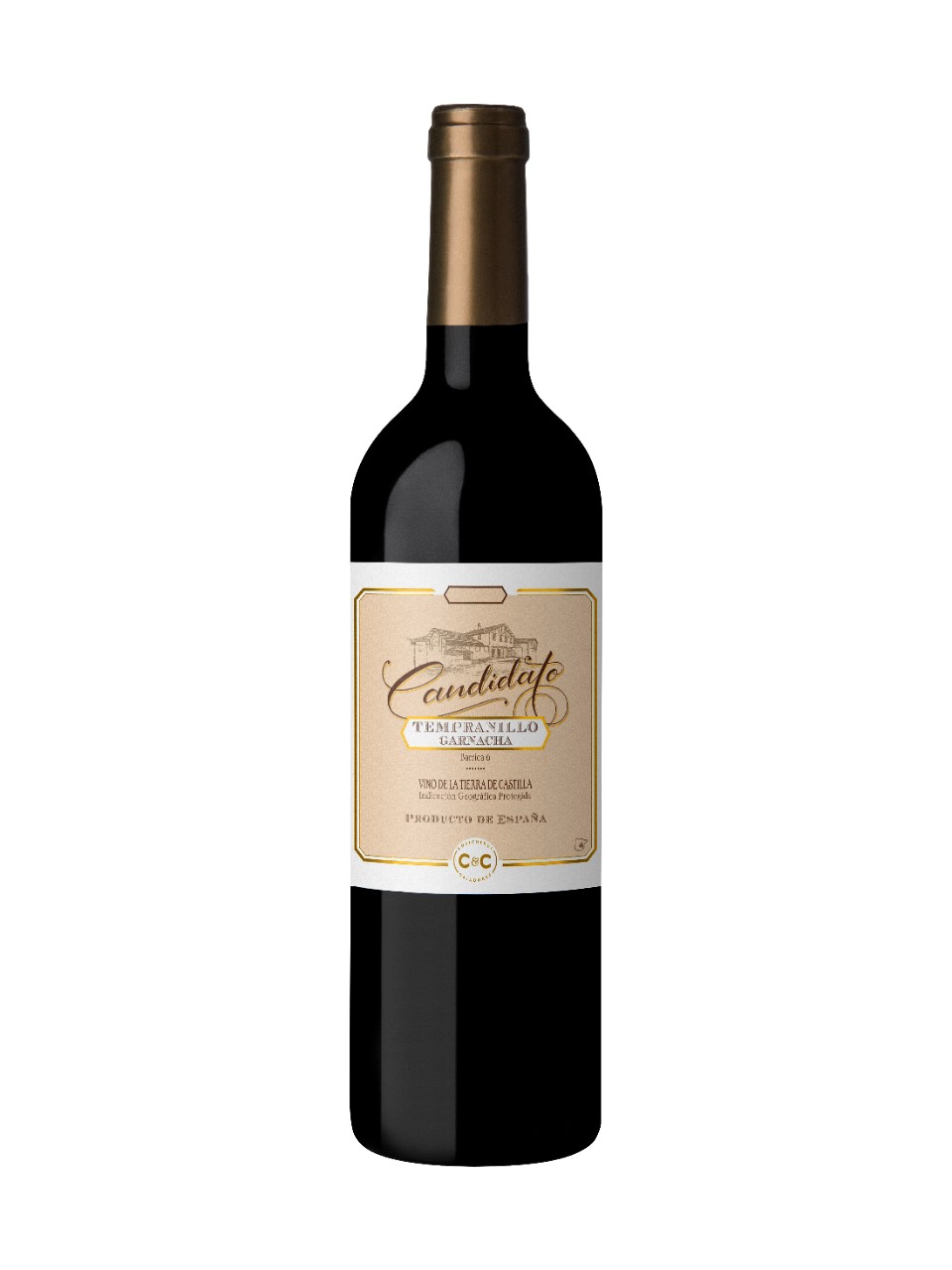
Château Argadens: good and cheap Bordeaux after all these years

I’ve been buying Château Argadens Bordeaux Supérieur since 2008! The LCBO says it has flavours of “Floral, Chocolate, Plum” (true) and goes on to say that this Bordeaux is “a great value” (very true) and “this popular, classically framed blend of Merlot and Cabernet is a great choice for grilled lamb.” (Also true.)

What’s crazy is that it now goes for $17.60. Seventeen years ago it went for…$18.95! How many great products do that?! Practically none.

Grab yourself a bottle or a case when you can. You won’t be disappointed.

P.S. My original post from 2008 is here: Good “cheap” Bordeaux at the LCBO this month | Smart People I Know


A guide to generative AI and LLM (large language models), February 2025


I decided to go through all my posts on AI and pull out information that would be useful to anyone wanting to learn more about generative AI (often referred to as gen AI or genAI) and the LLMs they run. If you have used chatGPT, you have used genAI. But there’s much more to the technology than what you find on that site. To see what I mean, click on any of the blue underlined text and you will be taken to a site talking about something to do with gen AI.

Enjoy!

Tutorials/Introductions: for people just getting started with gen AI, I found these links useful: how generative AI works, what is generative AI, how LLMs works,  sentence word embeddings which kinda shows  how LLM works, best practices for prompt engineering with openai api a beginners guide to tokens, a chatGPT cheat sheet,  demystifying tokens: a beginners guide to understanding AI building blocks, what are tokens and how to count them, how to build an llm rag pipeline with llama 2 pgvector and llamaindex and finally this: azure search openai demo. (Some of these are introductory for technical people – don’t worry if you don’t understand all of them.)

For people who are comfortable with github, this is a really good repo / course on generative AI for beginners. (and check out these other repositories here, too). This here on the importance of responsible AI. and here’s a step by step guide to using generative AI in your business, here.

Prompts and Prompt Engineering: if you want some guidance on how best to write prompts as you work with gen AI, I recommend this, thisthis, this, this, this, this, and this.

Finally:  Here’s the associated press AI guidelines for journalists. This here’s a piece on how the  Globe and Mail is using AI in the newsroom. Here’s a how-to on using AI for photo editing. Also, here’s some advice on writing better ChatGPT prompts. How Kevin Kelly is using  AI as an intern, as told to Austin Kleon. A good guide on  how to use AI to do practical stuff.

Note: AI (artificial intelligence) is a big field incorporating everything from vision recognition to game playing to machine learning and more. Generative AI is a part of that field. However nowadays when we talk of AI people usually mean gen AI. A few years ago it was machine learning and before that it was expert systems. Just something to keep in mind as you learn more about AI and gen AI in particular.


Strategic Voting in 2025 – what you should know

Canada flag on brick wall

I am still a supporter of strategic voting in Canada. My thoughts on it haven’t changed much since I wrote this in 2019: Strategic Voting in Canada – some thoughts.

What has changed is the site you should go to if you  also want to vote that way. It doesn’t look like this site, strategicvoting.ca, is working any more. However this site SmartVoting.ca, seems up to date, at least for the Ontario election this week. And it looks like they are preparing to work on the soon to come Federal election.

It’s good to check out regardless of how you plan to vote.

Tipping is dead (and some other thoughts about restaurants)

Two things killed tipping: the pandemic and the handheld payment device (show in the picture above).

For decades before the pandemic, the standard tip was 15%. It was something you figured out yourself, and you either added it to the amount on your credit card or you might even pay in cash.

During the pandemic, patrons were asked to contribute more the usual 15% because everyone was struggling during the pandemic and this was especially true of restaurant workers. So people would tip sometimes 20% or more.

Also around this time the handheld payment devices became ubiquitous with default payment amounts. Unlike the one shown above, 18% became the lowest amount in many places, although I’ve seen some places have 20% and some with the audacity to make the lowest 22%. The pandemic ended, but rarely do I see 15% any more.

It’s true, for some places the device provides you an option to put in another amount. But you have to press several buttons and do your own calculation of the tip. And I am sure people do that and it’s fine. Most people I dine with, though, just go with one of the preselected picks of 18% or more.

This got me to conclude that the tip is no longer a tip. It’s just a service fee. Indeed I’ve seen some restaurants recently come out and say that on their bills. We are becoming more like Europe, where service is included but you throw in a bit more if the service is really good. I am not a fan of this.

This forced tipping is part of what I don’t like about restaurants and fine dining any more. I dislike the rushed service where they bring out all your food within 20 or 30 minutes of sitting down (if I want fast food I’ll go to a fast food restaurant).  Or bringing out the first food while I am enjoying a pre-dinner cocktail (I’ve pretty much given up on ordering them because of that). Or the smaller menus. Or surly and inflexible front of house who insist you sit in the table they’ve assigned you because that’s what’s on the iPad at their station. Or the waiters telling you that you have to be done by a certain time as soon as you sit down. And finally the payment device with a hardcoded 20% coded in handed to you by a hovering waiter. Bah humbug to all of that. I feel like I am renting a table, as opposed to being a guest.

I’m not the only one who is unhappy about it. Before he retired from the New York Times, Pete Wells wrote about how restaurants have changed and not for the better. I have to agree with him.

Maybe there are too many places chasing the fine dining experience but unable to provide it. I understand that: it’s hard to do. I mean, even the the French Laundry hasn’t aged well, according to Melissa Clark (also of the Times).

Perhaps we need to go back in time to when chefs (according to Jacques Pepin) were more like labourers and less like the rock stars you see in the bear season 3 with it’s chef cameos. I’m not sure that’s even possible any more. Everyone in the kitchen want to be Thomas Keller or Gordon Ramsey or Matty Matheson. No one wants to be Anthony Bourdain before he was famous.

I still love going out to restaurants, and there are a few places that offer great service, delicious food and fine ambience. It’s never a given you will get all three though, no matter what the prices on the menu say.

P.S. For more on how tipping has gotten out of control, check out these pieces: Tip-flation has some restaurants asking for up to 30% in tips and More and more places are asking for tips. Hidden cameras reveal who is and isn’t getting them and finally  Tipping Isn’t about Service – It’s a Psychological Con Job and Waymo may let you tip — but there’s a catch in The Verge.


Meat is good. Delivery is good. But meat delivery from Sanagan’s in Toronto is great. Here’s eight good reasons why you should order from them

If you love good meat, then I highly recommend you get it from Sanagan’s Meat Locker in Toronto. If you can get to one of their locations — my fav is in Kensington — you should. But if you can’t, I highly recommend their delivery.

First off, their delivery rate, which was good before, is going lower, starting at $5. That less than the cost of commuting there. Spend over $150, and delivery is free.

Second, the quality of their meats and other goods is great. When I get a steak from Sanagan’s, it tastes like something and that something is delicious. So often meats from other places taste like nothing.

Third, the prices are reasonable. For example, here is what I paid recently:

  • Sliced Roast Beef × 1 – $4.89
    Duck and Green Peppercorn Terrine × 1 – $6.99
  • Metzger: Westphalian Ham × 1 – $5.20
  • Jambon de Paris × 1 – $5.69
  • Lamb Merguez Sausage × 1 – $9.99
  • Lamb Leg Steaks × 1 – $15.79
  • Paleron × 1 – $7.99
  • Flank Steak × 1 – $11.49
  • Pork Rib Chops × 2 – $11.98
  • Flat-Iron Steak × 1 – $9.79
  • Refundable Credit Card Hold For Overweight Products – $30.00

Those are as good if not better than the prices for comparable products at places like Loblaws or Metro.

Fourth, the selection is great. I can get cuts I can’t always get at the big grocery stores. Flank, paleron, tritip, and more. I didn’t get it last time, but I love getting their hanger steak and making myself a classic steak frites with it.

Fifth, you get points for every order which you can cash in and use on your next order.

Sixth, if you are a fan of charcuterie, they have everything you need for a great platter.

Seventh, they have lots of other great products too, from superb butters to great sauces, to mustards.

Eighth, they carry Blackbird bread, arguably the finest bread in Toronto and very hard to get (it sells out fast). I love that.

Ok, you get the idea. Sanagan’s is great, and their delivery is great. Check them out. You’ll be glad you did.


The cold plunge, or good things don’t have to last long to provide longer term benefits

Lately I’ve been going out on my porch or on my girlfriend’s balcony to do a dry “cold plunge”: stepping out into the winter air for a brief period of time until it gets to the point I can’t bear it. It isn’t long, but like people who do cold water plunges, I feel I get some of the same benefits. (If you make snow angels, I recommend dressing appropriately. :))

It’s a good remind to me that good things don’t have to last long to provide longer term benefits.  Sometimes 10 seconds is all you need, as I wrote about, here: My 10 seconds of happiness exercise | Smart People I Know


On how I am understanding Trump 2.0

Photo by charlesdeluvio on Unsplash.com

Since the inauguration it’s been difficult to avoid thinking about Donald Trump. Even if you avoid social media or the news, if you care about the world at all you are forced to consider what he and the people in his administration are up to.

With the flurry of actions his team has taken, many people I follow have been trying to make sense of it all. I’m no exception. So I wrote out this list of what I think are the things that motivate him or are in his comfort zone:

  1. making money
  2. being the center of attention / good publicity
  3. power / being the boss
  4. rewarding those who treat him well
  5. punishing those that treat him poorly
  6. not having to work hard
  7. not thinking (i.e. doing whatever someone recommends)
  8. real estate
  9. the 80s
  10. Mar-a-Lago

That list hasn’t changed much since Trump 1.0 and his first term in office. What is different is the intensity.

Unlike other presidents, he is not motivated to work hard, to give back to others, to be virtuous in any way, or to stay current with the culture. He may appear to concede some of these (e.g., letting Elon be the center of attention) if he thinks it will help him with something else (making money, not having to work hard).

The next time you see him doing something, you can look to this list and at least one if not more of these items for an explanation. Getting into crypto? #1. Taking over the Kennedy Center? #2.  Running for president? #3. Appointing people like Kristi Noem for anything? #4. You get the idea.

I’m sure there will be things you might add to that list. But if you see Trump doing something and ask yourself “what possessed him to do that”, it’s likely one of the items on this list.

My Charleston Favorites, 2025 edition


Chubby fish interior

I was recently in Charleston, S.C., a city I love.

I’ve written about Charleston several times here, but I am sure some people might wonder, what do I recommend for anyone visiting Charleston? Here’s a short list for the start of 2025. It’s far from exhausting.

  1. Maison. Simply the best French food I’ve eaten anywhere in North America, save Le Bernardin. Sit at the bar: the bartenders are tremendous. Get them to make you a french negroni to start, and then have them recommend wine by the glass as you go. The salmon tartar is a great starter, as is the french onion croquet. Not sure about things? Get the steak frites. But it pay to try something a bit more adventurous. And if you want more French food, hit up
  2. Fast and French. If Maison is fine dining, this is fun dining. Go for lunch and rub elbows in their cozy downtown space. If it’s too cozy, you need to go to…
  3. The Ordinary. Make it easy and get a seafood tower. Get a table on the second floor if you can and look out over the place. But no where is a bad seat. It’s a big place.
  4. Renzo’s has delicious pizza and great wines, though it is not a big place, so you may have to wait. Speaking of that, you should try to go to…
  5. Chubbyfish (shown above) if you can ever get in, it’s superb. It may be easier to head over to…
  6. Santis for margueritas and TexMex food. It’s a super fun atmosphere too.
  7. Ted’s Butcher Block makes superb sandwiches every day of the week and on Saturdays, superb burgers. Grab some meat and cheese and wine to bring home for later. If you need options, then….
  8. Cow Sheep Cow also has excellent provisions, including cheese and wine. Need a corkscrew? They have great ones. Likewise,  go to…
  9. Monarch Wines for a bottle of something special. After that, go next door to…
  10. Harbinger and grab a coffee and a cookie. Or head over to…
  11. Sightsee, which also has amazing coffee. A beautiful space too. Then head downtown to wander along…
  12. King St. So much to see here, but make sure you pop into…
  13. Candlefish. It’s a great place for souvenirs and gifts. I recommend their library for a classic candle, though everything there is great. Speaking of great products…
  14. J Stark is loaded with them. You can’t go wrong with any of their bags or wallets. Even their key chains are wonderful. While you are in that part of Charleston, grab some food at…
  15. EVO or Odd Duck. Or if you are driving and hungry, go to…
  16. Cookout. Their hamburgers and chili fries can’t be beat. Love milkshakes? Then you definitely need to go.
  17. Munkle is just one of the great local brewers there. Stop by for a pint. If you are lucky…
  18. Doughboyz will be onsite selling their pizzas from their truck. Get the pepperoni. You’ll be glad you did. Did I forget…
  19. Rodney’s or Lewis’s for BBQ? I did not. Nor should you.
  20. Hampton Park is never a bad idea, either. Grab a coffee from Sightsee or Harbinger and then wander around or just snag a bench and relax.

A long list, and I could easily double it. Go to Charleston when you can.


If you are stuck on what action to take next, remove one thing

person frustrated at desk

If you need to work on something and you can’t get started or you are stuck, then remove one thing. It can be anything. If you need to cook a meal and you don’t know what to do, remove things from your cooking area or decide to cook one less thing. If you are going to construct something and you are blocked, then cut back on the time you are going to spend or the steps you are going to take.

If you are still stuck, keep removing things. Too often we overwhelm ourselves. Removing things helps either that. It’s a form of editing, in a sense.

Plus removing things is an activity. You are no longer stuck. You are now making some form of progress.


Generative AI = relational databases

tables of information


Imagine you have a database with two tables of information: customer information and account information. The one piece of data that both tables share is account ID. With relational database software, you can use it to tie the two tables together. So if a customer comes to you and asks for their current balance, you can ask them for their account ID and some other personal info. Then you can query that database with the account ID and verify who they are because you can see their customer information and then once you validate them you can also see their account information and you can get the computer to print out their balance. The database, in this case a relational database, relates the two source of information (customer info and account info) and lets you retrieve that information.

Now the nice thing about relational databases is you can further relate that information to other sources of information. If you have a table of products you want to promote to customers depending on their net worth, you can query the database for the accounts that meet the product criteria and then pull up the customer information and mail them the information about their product. You’ve related three different tables of information to do this and pulled it together using a query.

When it comes to generative AI, the prompt you enter is also a query. The gen AI system doesn’t search tables though. Instead it searches a model it has that was build with sources of information it was trained on. If it was trained on Wikipedia, then all those pages of Wikipedia are not unlike tables being queried. The difference is the gen AI system uses its algorithm to determine how all that Wikipedia knowledge relates to your query before it gives you a result. But in many ways you are querying the gen AI systems just like you might query a relational database.

Of course generative AI has much more power than a simple relational database. But in many ways the two things are the same. We need to start looking at it then the same way. we can do many clever things with relational databases but don’t think of them as intelligent. The same should hold for generative AI.


When you are stuck, you think it will last forever

Post Xmas shopping at Aroma

When you are stuck, you think it will last forever.

It’s natural to think that way, since being stuck is often a negative situation, and such situations make one pessimistic. Pessimistic thinking can make you think that the bad times are permanent and pervasive.

If that describes you, just know that we all live in a stream constantly flowing strongly downstream. Regardless how stuck we may be, the stream will push against you and eventually you will no longer be stuck.

So yes, it may seem like it will last forever, but the never ending change all around you will eventually free you. If you don’t free yourself in the meantime.

A good mediation on fire…

 A good mediation on fire can be found here:  Fire and focus – Austin Kleon.

It can be hard to think about fire as a positive thing if you have been focused on the wild fires in Los Angeles. But it can be, and that comes across in what Kleon writes about it. It reminded me of growing up and the times my father would have a fire pit in the backyard, and we would spend hours around it, tending it, talking, watching it. It also made me think of times later on when I had a house with a fireplace and I’d love the meditative and contemplative aspect of it.

Fire can be a great thing. Read Kleon and see.

(Photo by Hayden Scott on Unsplash)


Two rules for dealing with political opposition

Rule #1: accurately assess the strength of your opponent. When you are in control, your opponent is going to try and stop you from doing things, and when then are in control, it is your job to stop them. If you underestimate the strength of your opponent, you will get overrun by them. If you overestimate their strength, you will retreat or surrender too easily. (Seeing a lot of that right now.)

Rule #2: know the difference between an opponent and an enemy.  You can work with your opponent on things you have in common, despite having other things you disagree with. You cannot work with your enemy: they must be defeated. If you don’t defeat them, they will defeat you.

If you believe in democracy and freedom and the person on the other side is a nazi or a fascist, they are your enemy, not your opponent. It’s foolish to think otherwise.

Winter and flowers: two words that should go together

Sure, gardens are great when the weather is warm, but what about when it is not. Well then you want some winter flowers. Indeed, here are 25 Winter Flowers: Cold-Loving Plants to Plant in Winter. I was amazed how many types there are. After seeing them, you may want to order some seeds and plant them too. Like those iceland poppies, shown above.

P.S. For more on cold weather gardening, see: How to garden in the winter | Smart People I Know

(Image from Eden Brothers. They sell those poppy seeds and much more)


Libraries are essential digital places too

Libraries provide so many public services, from great books to read to great places to read them. You’d likely be surprised just how much they provide. For example, here’s a list that my library, the Toronto Public Library (TPL), provides. All of that shows just how essential libraries are.

While libraries are great physical places, they are also great digital places. Check out this list to see what I mean. I’m a big user of TPL’s digital services, and I’m not alone is that regard. To see what I mean, check out the Toronto Public Library Dashboard and see in real time what ebooks people are checking out, how many loans happen each day, how many holds happen each day, and more! It’s quite something to see.

P.S. Did you know you that you can donate to the library? Well you can, though the TPL foundation. The link is here.

P.S.S. If you want that T shirt, you can go here. Be sure to pick the right size.


Some thoughts on data centres and the environment

325 Front Street West III

People are worried about data centres.

People are worried about data centres and carbon emissions, especially if they read articles like these: Google’s carbon footprint balloons in its Gemini AI era, or Microsoft’s AI obsession is jeopardizing its climate ambitions or Google’s greenhouse gas emissions are soaring thanks to AI or Exxon Plans to Sell Electricity to Data Centers.

People are also worried about data centres and water usage after they read articles about how much water is used for each ChatGPT query.

And when people read pieces like this, Amid Arizona’s data center boom, many Native Americans live without power, they are no doubt worried about what data centres do to the communities where they reside.

My thoughts on this, as someone who has worked in data centres for 40 years, is that there are valid reasons to be concerned, but there are positive aspects to data centre growth and it’s important to keep those in mind.

Data centres are simply places with a concentration of information technology (IT). One time companies had data centres on a floor of their building, or in special buildings in locations like the one pictured about on 325 Front St in Toronto. These days, many companies are moving from hosting their own technology in their own buildings and moving that tech to cloud computing locations, which are just another form of data centre.

I believe that’s this migration to the cloud is a good thing. As this states:

Research published in 2020 found that the computing output of data centers increased 550% between 2010 and 2018. However, energy consumption from those data centers grew just 6%. As of 2018, data centers consumed about 1% of the world’s electricity output.

Moving workloads from on premise infrastructure to cloud infrastructure hosted in big cloud data centres saves on energy consumption.  One of the reason for the savings is this:

…normally IT infrastructure is used on average at 40%. When we move to cloud providers, the rate of efficiency using servers is 85%. So with the same energy, we are managing double or more than double the workloads.

You might think all this data centre growth is being driven by things like AI and crypto, but according to this IEA report:

Demand for digital services is growing rapidly. Since 2010, the number of internet users worldwide has more than doubled, while global internet traffic has expanded 25-fold. Rapid improvements in energy efficiency have, however, helped moderate growth in energy demand from data centres and data transmission networks, which each account for 1-1.5% of global electricity use.

That’s the key point: the demand for digital services is driving the growth of data centres. Every time you watch a video on your phone or pay your bills on your computer, you are using a data centre. Even things like the smart meter on your house or the computer in your car or the digital signs you see interact with a data centre. You use data centres pretty much all day, sometimes without knowing it.

The good news is that there are innovations to make them greener are happening with them, like this new method for liquid-cooling data centres that could make the waste heat useful. And it’s good that IT professionals are moving towards green cloud computing.  But it’s not good that with the rise of technologies like generative AI, IT companies are having a difficult time keeping up with the demand and sticking to their green targets.

Speaking of gen AI, I think energy costs associated with AI will peak and come down from the initial estimates. Indeed, when I read this article Data centres & networks – IEA, and in particular this…

Early studies focused on the energy and carbon emissions associated with training large ML models, but recent data from Meta and Google indicate that the training phase only accounts for around 20–40% of overall ML-related energy use, with 60–70% for inference (the application or use of AI models) and up to 10% for model development (experimentation). Google estimates that ML accounted for 10-15% of its total energy use in 2019-2021, growing at a rate comparable with overall energy growth (+20-25% per year over the same period).

… then I am optimistic that energy costs will not be as bad as initially estimated when it comes to AI. I am not optimistic that we will not decrease our demand for digital services any time soon. Because of that demand, we need not just more data centres, but better ones. It’s up to companies to build them, and it’s up to citizens to keep the companies accountable. The best way to keep them accountable is to better understand how data centres work. I hope this post went some small way to doing that.

P.S. All the opinions expressed here are my own and do not represent the views of my employer.

(Photo by Jack Landau on Flickr)

If you have a hard time searching for something, blog about it later

If you are trying to search for an answer to something and after much effort find an answer, write a blog post about it. Chances are many others are having the same difficulty, and they may not have the tenacity to keep looking the way you did. By writing about it, you increase the chances other people will get their answer via your post.

The other good reason to do this is that you might forget what you did. That’s fine unless later you want to recreate what you did. That blog post will save you.

Getting ready to start a new blog

In writing about my old posterous blog, I started thinking about how I loved to post via email. I thought I would like to do that again. Maybe not for this blog but another blog. A blog not so much about links but about thoughts and ideas.

So I’m going to give this a little test and see how it goes.

PS going to get started with blm849.wordpress.com for now.

Not making progress on your resolution to declutter? Start with your fridge!

a clutter fridge.

I came across this advice and I highly recommend it: Don’t Try to Declutter Your Whole Life. Start With Your Fridge. | Wirecutter.

Let’s face it: decluttering can be a hard thing to do, and an easy thing to avoid. To get over that avoidance, start the practice of decluttering by tackling your fridge.

There’s some good reasons to do so. One: the amount of decluttering you have to do is limited, so it doesn’t end up feeling like a never ending chore. Two: you are less attached to items in your fridge than you are old clothes or books or photo albums, so tossing old food that you will not eat is less emotionally difficult (I hope). Three: you will see benefits right away and that good feeling should help you move on to your next item.

So get a move on that decluttering resolution this weekend and clear out your fridge!

P.S. If your fridge is in good shape, then start with your pantry. Or where you store your dry goods. If all that is in great shape, then pick one closet.

How will you know it is a day when your whole world is about to change?


How will you know it is a day when your whole world is about to change? I thought about that often since I read this BBC piece, the life changing day World War Two began for the English. Some at the time knew their world was about to change dramatically. For many, the day seemed like any other.

Something similar is related in the first chapter of the book Stalingrad, by Antony Beevor. Germans in Berlin hearing about the start of their war with Russia likely knew their world was going to change for the worse, though the day of the announcement was a pleasant one.

Did the Viennese at the Funeral of Franz Joseph above know their world was ending on that day? After all, the Emperor considered himself “the last ruler of the old world”, and with his death, the old world and Vienna’s place in it was to go as well? I don’t know.

Maybe our world is changing dramatically now and we are still living like it hasn’t. We are good at that. The Great Recession occurred and governments took drastic action and then went back about our business like it never happened. The same occurred with great COVID-19 pandemic: we all took great steps to deal with it, like a car swerving around a big pothole before regaining its place on the road. Perhaps that will be the case with climate change.

Aftermath of LA fire, 2025.

Or perhaps the world is different now, the way it was different on that September 3rd day in England, 1939. Pick your climate change disaster day, be it the Los Angeles fires of January, 2025, or some other day recent day. When you are older, you may look back on that day and think: that’s the day the world changed, and we didn’t really feel it.

(Bottom photo of LA during the fires of January 2025 by Mark Abramson for The New York Times)

Are you fit? This post can help you find out (with lots of good fitness and health links)

It’s January, a time folks resolve to get in shape. But where to start? First off, start by getting some advice. This page is full of it! So let’s go.

Exercise: let’s warm up with some exercise links.


Gear: here’s some good links on gear, mainly Nike.

  • Nike has been making the pegasus running shoe for decades. Here’s something on the latest, the nike pegasus 41.
  • If you are more of a trail running, you might want to check out the nike pegasus trail 4.
  • Speaking of Nike, I have always been a fan of their mission.
  • The nike run club app might help you get running again.
  • What to look for in a  running shoes, be they Nike or otherwise.

Diet: for a lot of folks, you may not need so much to exercise as to eat better and lose weight. These could help.

Health in general: finally, these are a mix of good links.

On restoring my posterous blog. (RIP posterous, a great service)

From 2008 to 2013, there was a great service called posterous that would allow you to easily blog from your mobile device. You could simply email your blog posts from your phone, and many a late night I would lie down with my Blackberry and blog to berniemichalik.posterous.com. (There are many ways to deal with insomnia: this was mine.)

All those posterous blogs are gone now, but at least I was able to export mine. And from time to time I would post excerpts from it here on this blog under the tag, oldposterous. That was ok, but I wanted a better solution.

My solution was to post the entire posterous blog on AWS. You can find it here at berniemichalik.com/posterous. It goes from newest to oldest post. Not all of them are great, but some are.

This blog, smartpeopleiknow, is mainly a link blog, an approach I adopted a long time ago from people like Jason Kottke. What I liked about that posterous blog was it was more a journal/ideas blog. I might start such a journal/ideas blog again. In the meantime, I can go back and see what I was thinking from 2009-2012, thanks to posterous.

Thanks for read that blog, and as always, thanks for reading this one.


On Yacht Rock and the Yacht Rock “dockumentary”

I’m a fan of yacht rock, so I was keen to watch “Yacht Rock: A Dockumentary”. I’m happy to say it does a great job not only of reviewing the music being made at that time, but also in analyzing how a term (yacht rock) got applied to this music (since the term didn’t exist at that time).

that said, like some of the musicians involved, I have issues with the term. For one thing, I can also see why some of the musicians hate it, since it seems pejorative. For another, it’s also arbitrary and limited. For example, you can say Michael McDonald was Yacht Rock and Hall and Oates is not, but to me they’re all part of that soft rock era of the 70s. Likewise, Quincy Jones may have used Yacht Rock musicians on Thriller, but I just can’t think of it belonging to the same genre of music as Christopher Cross.

So enjoy the documentary…or Dockumentary. And if you find yourself liking what you hear, check out any of your favorite stream services: you’ll be bound to find a number of playlists serving up that easy listening sound.

P.S. How for to watch it online and stream from anywhere, see Tom’s Guide. Also my older post on Yacht Rock is here.

(Image from Tom’s Guide.)

From Bouguereau to Cattelan (what I find interesting in art, Jan 2024)

From Bouguereau to Cattelan, here’s a baker’s dozen pieces on artists new and old thought worthy of my attention and yours.

First up a good article on the young artist Lee Bul and their work, The Four Mysterious Guardians.  Also this Colossal piece on how  Dabin Ahn Balances Hope and Melancholy in His Sculptural Paintings  As for other newer (to me) artists, I think it’s good to remember that the  art market giveth and the art market taketh, as this piece shows: Young Artists Rode a $712 Million Boom. Then Came the Bust.

Some good exhibits that recently showed were:


As for older artists, this is a good introduction to Hans Haacke  Why Are Museums So Afraid of This Artist? The great artist Frank Auerbach died not too long ago. The Guardian has a piece on him here: Frank auerbach a life in pictures. Sadly John Little, whose paintings showed the raw side of Montreal, recently died at 96 (one of his painting is at the end).

Some artists are good at getting attention. Even people who don’t know or follow art know about the conceptual artwork by Maurizio Cattelan, “Comedian,” which consists of a fruit-stand banana taped on the wall. In the end the art market did the very thing Cattelan was mocking, with 7 bidders biting before it went to …you might have guessed before hand…a crypto entrepreneur.

Another artist who gets lots of attention is David Shrigley. I admire what he is doing here:  David Shrigley urges schools to prioritise arts with aid of giant mantis. Will it be successful? I don’t know.

Finally I went down a rabbit hole on 19th century painting after I came across someone ripping into Basquiat and Twombly and extolling the work of William Adolphe Bouguereau, and I dunno. I’d take the first two over the third any day.

On how to assess political leadership reviews

Not too long ago Danielle Smith in Alberta had a leadership review in which she won with 91.5% approval. 91.5 certainly sounds like a win. But what if she got 80%? Or 70%? Is that still a win? What about 55%?

If you are wondering that, then I highly recommend this piece by Jason Markusoff: Danielle Smith’s UCP leadership test: here’s what history says about how safe she is. He analyzes her win in the context of other leadership reviews where leaders scored that result or less and then summarizes what happened next.

Something to keep in mind in Canadian politics for 2025 and years to come.

The New Dark. A glimmer of good thoughts in a bleak time plus the usual ramblings (i.e. the December 2024 edition of my not-a-newsletter newsletter)

It’s the time of year when it’s darkest in the Northern hemisphere. In my area the sun goes down before five o’ clock. It’s just getting started with Winter, as well. Not a hopeful time, but a time to do what we can. Likewise, I’ll try to do what I can and point out the bright stars in the night sky, so to speak.

When I started writing this not-a-newsletter newsletter in 2020, Trump was ending his presidency and the pandemic was starting. Four years later, the pandemic is done, and he will take over the White House and begin his second term as President.

It’s hard to believe he won. Many people tried to make sense of it, two examples being here and here. Did it matter that Trump is still an incredible liar? Nope. Did it matter that so many people talked about Trump being a fascist? Not enough. Maybe all that mattered was that voters wanted to punish incumbents everywhere over the suffering of the pandemic, and in this case, the incumbent was Joe Biden (and Kamala Harris). CNN seems to agree.

It would be some form of irony if after stomping out inflation due to the pandemic, Trump brought in new forms of inflation due to tariffs. My own belief is Trump will mainly use tariffs to shake down other countries and enrich himself, but one can never be too sure with him. (For more on tariffs and their effects, read this.)

It would be another form of irony if after vanquishing COVID due to vaccines, we suffered a resurgence of other diseases due to Trump and his disastrous pick, RFK Jr. (If you aren’t a supporter of or skeptical of vaccines, read this or this. Or read more on the addled thoughts of  RFK Jr. And by the way if you think Canada is immune to that form of thinking, read about how the town of New Glasgow is about to stop adding fluoride to water.)

RFK Jr. is just one of the many terrible actors Trump is raising up on the world stage. Elon Musk is another. In 2021 Musk was Time Man of the Year. In 2022 he bought Twitter, zombified it into X and his own personal megaphone, and now in 2024, after spending $250 million to help Trump, is being spoken of as co-president. I think this will all end badly, but that is going to be a way of describing the next four years in general.

Will Trump bring an end to the Russia-Ukraine war? Will there be peace in the Middle East? Possibly, though I suspect Trump will be used as a tool by others to bring it about, if anything. Maybe crypto will return from the dead? Perhaps the US will annex Canada?? Anything is possible. (Though what is most likely is Trump will waddle back to Mar-a-Lago for golf and personal enrichment and partying with sycophants and leave the governing to others.)

Anyway, enough with focusing on the dark. In bright spots, since the pandemic began, we have seen inflation come down, unemployment go low and the stock market hit a 10 Year high. That’s all good. So is the investment Biden and the US made in infrastructure. And I would be remiss in noting that we mostly have forgetten about COVID-19 because while it is serious, it is manageable, like the flu is manageable.

In other bright spots, Mexico elected the first president who is Jewish and a woman, Claudia Sheinbaum. Rebels in Syria overthrew the regime of Bashar al-Assad. And despite all the fear mongering on the right when it comes to trans issues, Americans elected their first transgender representative, Sarah McBride.

2024 finally saw the end of Taylor Swift‘s ginormous Eras tour. The tour brought a lot of happiness to Swifties everywhere. It brought a lot of money to the cities it visited, too.

Taylor Swift was not the only female pop star excelling this year. Us Weekly asked the question: Was 2024 the Biggest Year Ever for Female Pop Stars? I think the answer is “yes”. Grab that bag, ladies.

Not everyone who grabbed that bag felt like a winner. Proof once again that money doesn’t make you happy is the news that despite winning $20 million for this, Mike Tyson still seems heartbroken following the Jake Paul fight. (Although Mike seems bleak, generally.)

Let’s be less like Mike, less bleak, and more optimistic about the future. There’s lots of darkness in front of us, but lots of starlight too. Let’s keep an eye out for that as we head into ….

What you should have with you if you are in the hospital for a few days (and other tips)

Untitled

Based on my experience of being in the main part of the hospital as well as the ICU, I recommend that if you are going to be there a few days, ask someone to bring you the following:

Phone and phone charger: this is a must. You need to be able to keep in touch with people, and your phone is the best way to do that. Plus it can be a source of other information and entertainment.

(If you are conscious and not in too much pain, you will find the hospital very boring. Also the one time I did not have my phone I was left in a hallway and unable to move for over an hour until a porter came and got me. It sucked big time. You want to avoid that.)

Earplugs / noise reduction headphones / headphones: it is hard to get rest in the hospital. Even in the middle of the night it is a busy place, and staff are always about and not quiet. Earplugs and noise reducing headphones can help you defeat that noise.

Also, headphones (noise reducing or no) mean you can listen to your phone for entertainment and news.

Sleep mask: it can be hard to sleep in the hospital. Especially in the ICU, nurses are waking you all the time for checks and tests, which means you need to grab some sleep any time you can. Sometimes the best time to sleep is between breakfast and lunch. A mask can help you sleep any time of day.

Toothbrush, hairbrush and grooming supplies: unless you don’t care how you look, being able to take care of yourself can make you feel a bit better. I was able to have a shower after 5 days in the ICU and being able to clean up and brush my hair and look better made me feel better about my current state.

Blanket and pillows: if you can, have someone bring you a comforting pillow and blanket…maybe a nice sweater. Such things can make you feel good and even help you sleep and get more rest. You’ll need that, and you aren’t going to get too much comfort from the bedclothes the hospital provides. (Also if you are cold, you can ask the nurses for more blankets.)

Water bottle: it can be dry in the hospital. Having a source of water you can drink any time helps with that (assuming you can drink water). It can also help with coughing and if you have meds to swallow, having water can help with that.

Snacks: Often you may not want to eat the hospital food. Having acceptable snacks to eat mean you won’t have to deal with being hungry on top of everything else.

Other tips:

  • Go vegetarian: while I am not a vegetarian, I found going with a vegetarian diet helped. The food tended to be more flavourful and less disgusting than the meat dishes I was initially eating.
  • Move around: if you can, move around. Even getting out of the bed and walking around the room was a big lift for me. Have someone accompany you as you got down the hallway. I got to go to the shopping area in Sunnybrook after being in the ICU and ward for seven days, and it was delightful. Don’t let the bed trap you.
  • Always ask for more: don’t settle for what is provided. Ask if you can move around. Ask if people can bring you food. Ask the nurses for more food if you are hungry. Ask if you can go to the bathroom by yourself. Ask to see the doctor. Ask when you can go home. Don’t accept the status quo. Everyone in the hospital is busy or preoccupied. If you don’t ask, you may be unnecessarily making things worse for yourself.
  • Ask different nurses for advice: Once I was lucky to get a nurse who offered me different treatment than the other nurses and that improved my condition and my stay immensely. Don’t forget: every nurse is different. Some have a better bed side manner, others are technically better…occasionally you may get one who should take up a different profession. Regardless, don’t assume they are all the same.
  • Know your medication schedule and track it: a few times in the hospital I didn’t get the medication I needed when I needed it and I was too unsure to ask, and that led to needless suffering. Know when you should get your meds, especially those for pain relief, and ring the nurses if they are late. (They may be late because they are busy but they just may have lost track of time.)
  • If the medication doesn’t seem to be working, say so: don’t assume you don’t have options. If the medication isn’t helping you, ask if there alternatives and ask for the pros and cons of them.
  • Be appreciative of those who are helping you: it is difficult for them too, even if you are the one who is ill. Do what you can to make it easier for them and make sure they know how thankful you are for what they are doing for you, whatever it is. This also goes for the staff. Healthcare can be a hard job: you can make it easier for the people working in the hospital by being kind.

Does participating on social media contribute in a positive way to your life?


Does participating on social media contribute in a positive way to your life? I came across a form of that question today. I think it sometimes can. And because it sometimes can, I think we are led to continue to participate. But even in that case, is the occasional positive contribution enough to keep reading various feeds every day? Is it enough to keep creating user generated content? I don’t know the answers to those questions these days.

This post, for example: I think the positive thing about it is it allows me to set a marker for myself. Such markers, in a sense, are a way of contributing to my future self in a positive way.

On the whole, though, is my participation in social media a positive thing? It’s something I am going to be thinking about in the new year. Perhaps you will too.

Boxing day advice, recycled

Rather than write something new for Boxing Day, I thought I would recycle some of my old posts, such as:

Ten good pieces of good advice

Untitled

  1. Here’s some simple advice for personal finance.
  2. Something to think about after the holidays: Paul Graham on Work.
  3. For small home lovers:  How to downsize before you move into a small home.
  4. Relatedly, here’s the difference between Peter Walsh and Marie Kondo’s decluttering methods.
  5. Here’s Martha on things that make your home look messy.
  6. For those feeling hopeless: the joy was leaking out of my life… talking to a friend saved me.
  7. In case you are feeling down, here’s a mental health wellbeing check in.
  8. A good list: 50 things I know.
  9. Also good: to lead a meaningful life become your own hero, perhaps.
  10. I don’t agree with this, but it’s interesting: saving seconds is better than hours.