In reading Clive Thompson’s latest linkfest, I came across the above painting by Thomas Cole. It illustrates a section of his newsletter talking about how the collapse of empires can lead to benefits for those other than the 1%. I highly recommend not just that section, “3) 🌋 The upside of societal collapse”, but the entire newsletter.
Cole’s paintings imply an arc that goes from Commencement to Desolation, with Consumption being a peak. However based on the newsletter and the book it references to, “Goliath’s Curse: The History and Future of Societal Collapse” by Luke Kemp, it seems more likely that with Desolation comes an overlapping Pastoral State and that Consumption is bad for all but a privileged minority.
Check out the newsletter and the five paintings to see what I mean.
P.S. The Pastoral State, below, looks good to me. 🙂
One way to avoid doom scrolling is to put down your phone. If you can do that, great.
If you’re not likely to do that, then you need better things to scroll through. That’s likely my route.
To go that route, I am building a list of good sites to visit when I am bored and tempted to endlessly scroll. So far this is the list. I plan to build it up:
Around a decade ago, I put a marker on my blog regarding Peter Thiel, because I thought it worthwhile to track his decline. Last week the pattern of Nazi related activities in the American right got to the point where I thought: I need to start noting these.
First off, Peter Thiel is giving a lecture on “The Antichrist: A Four-Part Lecture Series” of all things. One thing that stood out for me was the reference to Carl Schmitt. In case you don’t know much about Schmitt and his relationship with the Nazis, you can read this.
Next up, JD Vance (who is also aware of Schmitt), said, “I don’t know why we accepted that it was reasonable to have crazy people yelling at our kids. You should not have to cross the street in downtown Atlanta to avoid a crazy person yelling at your family. Those are your streets.” Read that, I thought, I wonder if we should be prepared for someone in the Trump administration to propose Aktion T4. This is a marker to see if they are going to go down that road.
(Photo of Miller, Hegseth and Vance with the National Guard in Washington D.C.)
P.S. For people who say, Americans would never do anything terrible, I would simply start by by pointing out CIA Black Sites, where Americans would “detain, interrogate, and often torture suspected enemy combatants” in extrajudical locations outside the U.S.
It’s been a year since I’ve visited or wrote about New York City. I miss it. Alas I don’t think I’ll be going to the States / NYC any time soon for a number of reasons. There are many in the same situation, so much that it seems to be having an impact. (Although it didn’t seem to limit Paul McCartney, who played a few surprise concerts in NYC in the last year. The man is everywhere.)
In the meantime, I’ve been following along with what’s been happening in the city, especially on the dining scene. After four years of a vegan menu, meat is back on at Eleven Madison Park restaurant. A place once impossible to get into seems less so: hence the addition of meat.
One thing that came about during the pandemic was outdoor dining, but now that the pandemic is long gone, people are wondering: is outdoor dining dying off? I suspect it won’t. New Yorkers remain resilient and resourceful despite difficulties. I mean, you have restaurants thriving without kitchens there. I suspect restaurants will hold on to outdoor dining for some time, too.
Dining experiences in New York are about the Old as much as they are about the New. To show you what I mean, check out Resy’s great guide to New York’s New Old-School Restaurants. You’ll want to hit up some of them on your next visit. Maybe you’ll go to one of the greatest of old school establishments, Keens steakhouse, beloved by old and young diners alike.
While ostensibly about the artists, this piece on the NYC apartment of Jean and Jean Claude Christo’s apartment got me thinking about living in downtown Manhattan when it was grittier. Perhaps that’s why I watched this not too long ago: ‘On the Bowery’. Very gritty indeed.
Like many people, I sometimes want New York to never change, though change it will. This year congestion pricing went in, and it turns out it’s a hit. That was fast. Not so fast is the adoption of trash bins. It boggles my mind, especially since a) no one likes all the rats b) bins wipe out rat populations. Go figure. Another antique thing that should change is the New York’s subway system. Good luck with that Herculean task. That said, they recently retired some of their old subway cars. So even the subway system can adopt.
As for other changes, this piece on the slow death of neon signage in New York made me wonder what the town would look like without bright neon. I can’t imagine it.
While I am a big fan of tiny homes on this blog, I haven’t done a post on them in some time.
I used to do them on the regular because a) I like the idea of tiny homes b) a blog I follow called Yanko Design often posted stories on tiny homes, giving me lots of material to comment on.
As it is, I still love tiny homes, and I still follow Yanko, so here’s four recent posts from them worth checking out:
First up is this cool place in Tokyo. Most tiny homes in North America are horizontal: that one is very vertical (as you can see in the photo).
1. What was the best thing that happened yesterday?
2. Will this enlarge or diminish me?
3. What would it look like to be done for the day?
4. What did you really want to say?
5. What’s the matter?
6. Would I do it tomorrow?
7. And then what?
I don’t think you have to ask yourself these questions every day or in every situation. Instead, use them in the right context. For example, whenever I am faced with doing something difficult, I ask myself #2. Whenever I am blogging, I keep question #4 in mind. If you are aiming for a goal, it’s good to keep #7 in mind before you achieve it.
If those questions appeal to you, go check out his post. He provides more insight into each of the questions that you’ll benefit from if you ask them of yourself this week.
I’ve recently discovered a bunch of math / physics Dover books via Google Books of all things. You can access previews of them based on the link below and also buy them. I like this because I have a tendency to splurge for Dover books only to find my math skills are too weak to make progress. I don’t mind, since I like giving money to Dover, but my bookshelves are too full and this seems like a good compromise. Here’s just some I found good:
Another perk more employees used to have was sabbaticals. I know some jobs still have them, but at one time even tech firms like Apple offered them. Based on this piece, it looks like young people are trying to reinvent them in a way: To Escape the Grind, Young People Turn to ‘Mini-Retirements’.
Forming Storming Norming Performing: those four words you may have seen or experienced at work. The idea comes from here:Tuckman’s_stages_of_group_development. Some teams never go from Forming to Performing, but many do.
Roxane Gay is a great writer who also writes well about work. Here’s her last piece: Goodbye, Work Friends. You’d do well to read the rest.
(P.S. Photo of many of my work neckties and bowties I finally threw out. Many trends come and go and return when it comes to work, but wearing ties is over, I think.)
As diets go, the egg and wine diet — which has an entry in wikipedia, no less — is one of the crazier ones out there. I have always been fascinated by it, but I was curious if it actually worked. Well according to this and also this but not this, it does, kinda. One person lost 7.5 pounds, one lost 5, and one lost only one. No one felt good about it. No one recommends it. I can’t recommend it either, and I love eggs, steak, coffee and Chablis! But if you were ever inclined to do it, read those articles first.
P.S. If you feel you have to lose weight, talk to a medical professional about how to do it in a healthy manner.
Whenever you read a historical book, you owe it to yourself to find good critics of the book. Those critics could be other historians writing other books on the topic. Or they could be book reviewers.
Case in point, the book Plantation Goods: A Material History of American Slavery by Seth Rockman. Rockman writes about “the rise of wage work and factory labor, the relationship between slavery and capitalism, the emergence of a market society, the varieties of coercion under capitalism”. Reading it, you might be inclined to come to the same sweeping conclusion that the author does. I did when I read about the book. Which is why I was glad to read this review of the book, The Hazards of Slavery by Scott Spillman, in the LA Review of Books. In his review, Spillman notes the following:
Following plantation goods allows Rockman to provide an effective tour of how both capitalism and slavery operated in the early United States. He also shows that the Northern and Southern economies were knit together more tightly than our typical caricature of the free North versus the slave South might suggest. All this is welcome and generally well done…
Yet Rockman falls short in his larger ambition to prompt “a rethinking of the sectional geography of a United States where the division between slavery and freedom would eventually start a Civil War.” Like many scholars of slavery and capitalism, he focuses so intently on establishing ties between North and South that he excludes the internal development of the Northern economy from his story. His book is notably light on numbers, but one gets the impression that plantation provisioning predominated only in fringe areas of the industrializing Northeast, while larger manufacturing centers saw the South as just one of many markets. As Rockman himself admits, the production of plantation goods did not power the Northern economy as a whole.
Critics of capitalism might be inclined the come to the strong conclusion that Rockman does. I was inclined to at first. However after reading Spillman, I backed off and considered the situation might be more complicated than that.
The next time you are swept up in the conclusions of a historian, do yourself a favour and seek out other historians on the topic. If nothing else, you’ll have a wider and better view of the history you are studying.
In May I started having problems with my vision. I went to Sunnybrook and after a long series of exams I was told to come back and have a retina specialist take a look at it.
At the end of August I finally got to see that specialist. Given I hadn’t been having any vision problems for weeks, I assumed the visit would be relatively routine.
I say relatively because having your retina examined is never that routine. The way the doctor’s handle your eyeball feels tough, and the amount of light they blast in your eye is intense. You feel somewhat disoriented afterwards.
This visit was even less routine because he said there was still some damage and he wanted to repair it with laser eye surgery. While it seemed like no big deal to the doctor, it was a big deal to me. If the previous tests were intense, this was even more so. It’s not that there is pain: it’s that the intensity of light that hits your eye makes you want to flinch and move. Of course you can’t do that, which means you have to steel yourself to remain steady. Fortunately the doctor knew that so he was good about signalling how long the duration was. Despite that, it was still hard to endure.
I’m glad I got the work done. It’s worth the small amount of intense suffering to prevent going blind. But anyone undergoing such a procedure should be ready with whatever means they have to get through it.
How generative AI works is likely not how you think it works.
What led me to state this was two discussions I’ve had this week about the “design” of gen AI. I think the “design” conclusion that people come up with is based on emergent behaviours of the system. You can shape this behaviour in a number of ways, based on the data you feed the system or some ways you configure the software being trained. However at best you are influencing the behaviour of the system, vs designing the behaviour of the system.
In some ways it’s like taking a bucket of seeds and tossing them around a large area of a field. If you took only seeds of one or two flowers and distributed the seeds so that only these one or two flowers and grew there, you could say you designed the garden to grow these flowers. Likewise, if you divided up the land into rows and planted one type of seed in each row, you can say you designed the garden. However if you have a wide range of seeds included in your bucket and you don’t target the planting of the seeds but just toss them into the ground, it will no longer be considered designed.
That’s why I think gen AI is not really designed. It’s a alot like a big bucket of random seeds not planted in any order. What design you see there is likely how you look at it.
P.S. If you want to explore more on how gen AI works, see this. For a great example of how a gen AI system is built from the ground up, see this.
If you are fan of Saturday Night Live as I am, you may have guessed that cast members get paid well to be on the show. If that was also your guess, then guess again. As this piece shows, the pay is not exactly stellar. Mind you, for some cast members, things have worked very well in the longer term. But in the short term, it’s not all that much. Enough to pay the bills of living in NYC and a bit more.
Still, if fame now and fortune maybe later is your goal, SNL is the way to go.
If you are a frustrated furniture maker like myself, you might want to see what you can make by hacking some IKEA furniture. It’s not the same as getting out the circular saw and cutting your own boards, but it is a good way to combine traditional IKEA pieces with additional material to make something unique for you. Case in point, the raised bed above: made from IKEA without looking like IKEA.
I was thinking about what makes good political art after reviewing the work of Mike Monteiro. One of his encaustic works takes a traditional image seen on Portuguese tiles and underlines it with the message: All Portuguese ships are slave ships. While I like all of his work (seen here), that one especially resonated with me. Possibly because in Toronto (with a large Portuguese speaking community) you can see such art in many places, including the subway. I had always taken a benign view to the representation of such ships before. But this work got me to read up more on the leading role of Portugal in the Altantic Slave Trade. This work had me admiring it aesthetically as well as appreciating it for its political statement.
I think for political art to be good it has to strike such a balance between the aesthetic value of the work and the political value of the work. The work of Barbara Kruger or General Idea or Picasso’s Guernica all strike that important balance. Art where the political message is obscure or art that is merely an illustrated political message is out of balance and comes up short. It’s not that the work is bad: it’s that the work that strikes that balance is better.
For more and better thought on the power of political art, read this. For more great political art, see this. Also much of the work of General Idea and Kruger is political and worth seeking out.
(Image above from the art group General Idea. For more on it, refer to this.)
For the last few years I’ve shared interesting links I wanted to write about some day and maybe I will. Last year it was 28. The year before it was 85. As in other years, I think these links are all interesting, even if I don’t have much to say about them.
For some time I was wanting to write a critique of Peter Singer and his arguments about affluence and morality. So I read a number of pieces on him and his argument here, here, and here. In the end the cartoon shown above (and found here) summed up what I wanted to say, so I leave it at that for now. In addition, I wanted to also write on the correspondence theory of truth (more on it, here) but didn’t. Same goes for Compatibilism.
Anyone who knows me and my blog will know I have always been a fan of Philippe Starck. I am especially a fan of his hotels. So of course I was delighted to hear about this new place he is working on, the Maison Heler hotel (shown above) in Metz in the north of France. It’s fantastic and fantastical, as many of his hotels are / were. It’s worthwhile to read this here and check out the lots more great photos.
While I am a fan of Starck, I aslo a fan of the city of Charleston. Which leads me to point out another great hotel, The Nickel, that has just opened up in that city.
Just as the Maison Heler is a reflection of Starck, the Nickel hotel is a reflection of Charleston. Other than that, they are both very different hotels. To see what I mean, check out this piece here. That piece too is filed with details on the hotel, not to mention great photos.
If you liked those two hotels, I recommend you head over to the website Design-Milk for many more great hotel stories.
P.S. For even more on hotels, specifically hotels next to railways, read this.
Yesterday’s declutter challenge was all about getting the trash out of your home.
Today’s declutter challenge is about putting things away. To do that, you are going to use the pile method. As this piece explains:
To use the “pile method” to declutter a room, start by gathering everything that’s not in its place into a basket. Then, dump it all in the living room, start sorting, and then put items away.
It seems counterintuitive, but it works. I’ve used it for clothes especially, but it can work for any bunch of things lying around.
Some thoughts:
One good thing is once you remove all the clutter, you already feel confident the place can be restored, even if you still have a pile to deal with.
If there are things you know have a place to go, put them to one side. If there are things to go in the trash, put them right in the trash. Hopefully at this point there is a place for everything in the pile. For those things that do not, consider donating them to someone. Or try than the box and banish approach.
Inspired by this piece here in the Washington Post, I am going to challenge myself to do a “trash dash” and see how many of these things in my home I can get rid of in less than half an hour:
Expired food, including spices.
Branded freebies and promotional items like plastic cups, water bottles, koozies, insulated tumblers.
Takeout detritus including plastic utensils, takeout containers, sauce and spice packets, and paper menus.
Food storage containers.
Reusable bags.
Plastic dry cleaning bags and unused wire hangers.
Clothing that is torn, stained or stretched, including items in need of repair
Promotional swag like T-shirts, tote bags and bandannas.
Orphaned socks.
Paper bags.
Receipts and product manuals.
Magazines or books you’ll never reread.
Calendars and newspapers.
Junk mail.
Expired or barely used beauty and personal care products, including makeup, sunscreen and bug spray.
Hotel toiletries.
Dried-up markers and pens.
DVDs and board games you don’t use.
Completed coloring books, puzzles with missing pieces and other kid stuff that has run its course.
Decorative items.
Unused hobby gear.
Give it a try. And if even that seem too overwhelming for you, set a 5, 10 or 15 minute timer and see how much you can collect. I bet you’ll be surprised by how much you get rid of, and how inspired you are to do more.
Don’t make it hard by overthinking it: just grab any old garbage bag or old box and start throwing things in it. If you aren’t sure, toss it in the bag/box and reconsider it AFTER the challenge. The need here is for speed, not contemplation. Go fast, toss things in the bag, and move on.
Sad to hear that another Canadian chocolate icon, the Jersey Milk bar, is being discontinued. The company that owns it, Mondelez, said there was more demand for it’s other products. Hence, the discontinuance. Hey, I get that. It’s still sad to see part of one’s youthful experiences disappear. I really used to like Jersey Milk chocolate. It was different and dare I say better than other chocolate only bars.
Sad too was the demise of a “bar” I loved that many didn’t: Cherry Blossom. It wasn’t a bar so much as it was a mound of chocolate with a cherry filling. It was also a candy that brought up strong feelings, with many saying they hated it. What did they know: I thought it was unique and excellent.
Over at the blog Cup of Jo is a story of the 175 sq foot apartment and the woman who lives there. She has lots of tips on how to thrive in a small space.
I like the bold use of black and white to simplify the decor and make it seem less busy.
Looking at this small apartment reminded me of another small space also featured on that blog, this one being Erin Boyle’s:
Like the first place, Erin’s place is full of well curated pieces. And also like the first place, she is not afraid to put big pieces of furniture in a small space. (By the way, Erin has a book and a substack devoted to her way of life. I recommend both.)
Check out both of blog posts featuring their homes. Anyone living in or dreaming of living in a small space of their own will be inspired.
In an age when the default design approach for devices tends towards minimal and digital, it’s great to see devices that go in a different direction. Take this device:
If it weren’t for the dial, you might have a hard time determining it is a very fun FM radio. I love it. It reminds me of Italian design from the 1980s.
Or take this analog device:
It’s a brilliant way to know the weather outside! I highly recommend you go here to really get a sense of well it is designed and all it can do.
Check out the link for the radio as well. It’s also innovative in it’s design.
While I am a big fan of the Apple Watch, I know some people are put off by the look of it. If you are one of those people, then consider the Withings ScanWatch 2. It’s a good alternative for those of you who want a smart watch that has a more traditional look to it.
Even though it looks traditional, it seem it can do all the health monitoring of an Apple Watch as well. Plus, it has a long battery life and it comes in different materials and colors and has a variety of bands. Nice.
If you need a less expensive version, Withings has a variety of watches at different price points. Lots of other smart products, too. Check it all out, here, on their online Store.
P.S. It’s interesting how closely the product page for the watch resembles an Apple Product page. I’m sure that’s no accident.
What’s great about it is not only does it provide good instructions on how to become a birder, but how in the process of becoming one, you also improve your life.
Any hobby that allows you you to “broaden your horizons” and be a part of “something bigger” is an excellent hobby indeed.
Become a birder, not just to see birds, but to become a better person.
Like many, I love the famous New Yorker essay by Anthony Bourdain, Don’t Eat Before Reading This, published in 1999. For some reason, I always thought he submitted it to the New Yorker as a whim, that the success of it was a fluke, and the great books that followed were simply a response to this essay’s success.
So I was surprised to read this interview of him in 1997, “Potboiler Dreams: Chef Hopes To Write His Way Out of the Kitchen”. He confessed in the interview that he already wanted to write his “dream book, a definitive, foody memoir, a ribald account of my 22 years in the restaurant business that would probably appall and horrify anyone thinking of hiring me.” That dream book was Kitchen Confidential, published in 2000. The man had a plan, and with some luck, the plan succeeded. A good thing it did too, for we all benefitted.
P.S. Here’s an excerpt from the film, “The Big Short” in which the film writers get Bourdain to riff on his fish story to explain financial instruments.
In the last year the thing that mostly preoccupies the world are the actions of the second Trump administration. I suspect that this will also be the thing that preoccupies this this newsletter for the next few years.
Trump 2.0
Tariffs were pretty high on the agenda for Trump’s second term in office. I think he dreamed he could eliminate income taxes and replace them with tariffs. (Never mind that tariffs are just another form of tax, which everyone but Trump seems to know). Turns out, it’s not that easy to get rid of income taxes. And while trying to switch over to a tariff based form of revenue, you get things like shipments freezing up just like in the bad old days of the pandemic. Does any of Trump’s tariffs make any sense? Some try to explain away his actions, but the constant changing of tariff rates on various places seems like madness to many.
It’s not only individuals that Trump is after. It’s also institutions, such as U.S. universities. While his administration has gone after a number of schools, Harvard has been hit especially hard, as you can see here. Why Harvard? Perhaps because they are fighting back, unlike Columbia University, which quickly threw in the towel.
What else? He picked up a free plane from Qatar, just one of many corrupt acts. He also got his wish of having a military parade on his birthday. In the end, many thought it was a failure. What does not seem to have been a failure were the No Kings protests that happened at the same time.
Carney has since paid a visit to Trump and it seemed to go well, but one never knows what will happen at any given week in the White House. Meanwhile Carney has also been courting other world leaders like King Charles and members of the G7, no doubt as a way of dealing with our neighbor down south.
Michelin, which has been to Toronto a few times, has now expanded their Canadian presence by going to Montreal and Quebec and reporting back on all the goodness that part of the country has to offer.
Finally
The great Brian Wilson of Beach Boys fame passed away recently. I’ve always loved his song, “God Only Knows”, and here he is with an abundance of new and not so new musicians to perform it with him for the BBC:
As always, thanks for reading the June 2025 edition of my not-a-newsletter newsletter! Enjoy your summer.
Over at my other blog, I recently asked myself, “why record at all”. I didn’t have an answer to it until I looked at some old photos like the one above.
I like that photo, taken using a Diana camera of a wooden wall I made. The wall wasn’t very good: I didn’t know enough and didn’t have enough resources to make it properly. As a result, it flopped around and was prone to getting wrecked when a high wind came along. No matter. I was proud I could make that then. And I was happy with the way this photo came out. I am still proud and happy about that.
The record — in this case a photo — reminds me of what I am capable of. It states: you could do that again. At a time when one is plagued by negative self-talk, a record can provide a voice to drown out the negativity. A record can be a voice of encouragement.
There are many good reasons to make a record in any form. A record that can help you regain your better self is surely a good reason to make it.
When people first started putting things on the Web, virtual tours were very cool. Guess what? They still are. Check out this recent virtual tour of the Basilica Santa Maria.
Wednesday seems to be a good day to take a break from your work and feast your eyes on the work of artists covered in these 10+ pieces. There’s something for everyone’s taste, from classic painters to conceptual artists. Enjoy!
For fans of album art, you will want to see the seven LP album covers that the artist Josef Albers designed for Command Records. You can see them here.
For fans of photography, here is a great piece on the Mean High Water project, the stark impact of water, and the photography of Jared Bramblett, here.
For fans of filmmaking, I recommend this interview with Steven Soderburgh.
I had never seen Haring’s “Altarpiece: The Life of Christ” before. I came across it on Google Arts and Letters. Puts me in mind of Warhol’s later religious work. It was also one of his last works of art.
I recently discovered the work of the artist Brian Charney and I was struck by how he captured what was going on in his mind that suffered from schizophrenia through his paintings.
It’s hard for me to wrap my head around the idea that the 21st century is 1/4 completed. When I was young, the 21st century was far off in the future. Now so much of it has already past.
Given this milestone, it seems a good time to look at what some of the best books and films have been of this era.
For films, I recommend this essay in the New York Times of the best films of each year from 2000 to 2024.
For books, I recommend this piece from Kircus Reviews.
I love buying flowers, and there are several good green grocers near me that sell many different types of flowers. The problem I have is, what to buy and how much should I buy? I am always disastified with what I end up as I leave the store.
So I am excited to try this formula which I found at Cup of Jo. You can too! You need to buy:
a seasonal flower (tulips, daffodils, whatever)
a filler flower (like one with little buds on it, like baby’s breath)
a flower that fits the color palette (spray roses look good with everything)
greenery (“I generally like bigger wider leaves,” she says)
Once you get home, grab a vase and fill it like so:
Greenery goes first, since it’s the foundation to hold everything together.
Add the filler flower.
Layer in the spray roses.
Lastly, add the seasonal flower, which is usually the most delicate, but everything else will hold it up.
With any luck, it will look just like the ones in the blog post (which is where the rules and instructions also come from).
There was a Japanese influencer I used to follow on Instagram mainly because I was fascinated by his minimalist life. As someone who has too much stuff, I could watch his daily routine and live a minimal life vicariously this way. No doubt many others do too.
So I was surprised to see he had an page on Amazon that allows (allowed?) you to buy all the things he has in his home. Surprised because I thought a minimalist would not encourage people to buy more stuff. But then I thought about it again and realized he is an influencer first, and like many influencers, he benefits by you buying more stuff. Stuff that makes you think you can be a minimalist, too, if you only had these things.
If that’s you, consider there is an easier way to be a minimalist. Start by having less. When you finish reading this, go and get rid of things in your house. For every new thing you bring in, throw out at least two things. You don’t need more different stuff. You need less of what you have. If you pursue Less, you may get to Minimal. Or better still, you will achieve Optimal.
In politics I believe it is common to talk of political pragmatists vs political ideologues. What is less common is to talk about political consequentialists vs political deontologists. The two “vs” seem to overlap, but there are differences. The key difference is that political consequentialists and political deontologists make their decisions from an ethical viewpoint.
I was thinking of political ethics this week when there was a discussion around whether or not the Democratic Party in the U.S. should accept money from Elon Musk. As someone who is more of a political consequentialist, I thought: of course they should take his money, especially because it could help them win control of the U.S. government and for starters they could reverse the changes he has done. Then I read others who argued they would not take money “from a guy who does a Hitler salute” (i.e. is evil). I get that argument: they think they have a duty to never ally with someone as bad as Musk, and they must believe they can get money from elsewhere that does not conflict with their political duties.
There are pros and cons with either ethical approaches to politics. I tend to take a deontological approach when the consequences are difficult to measure, but when the possible outcomes are measurable, I tend to take a consequentialist approach. For example, thinking like a political consequentialist, I might not vote for a corrupt politician or an anti-democratic politician, even if I think this will lead to good short term outcomes, because I believe there are potentially larger bad outcomes that come in the long term from having corrupt and anti-democratic politicians in power. But that’s a complicated calculus. Thinking as a political deontologist, I would simply not vote for a corrupt or anti-democratic politician because I have a moral obligation to support only those people who are not corrupt and are for democracy.
People can be on the same side of the political aisle and still argue. Sometimes they argue over the practicality of something. But sometimes they will be arguing for ethical reasons. Something to watch for.
P.S. More on the difference between consequentialism and deontology terms, here. Also this piece, which also adds virtue ethics to the mix.
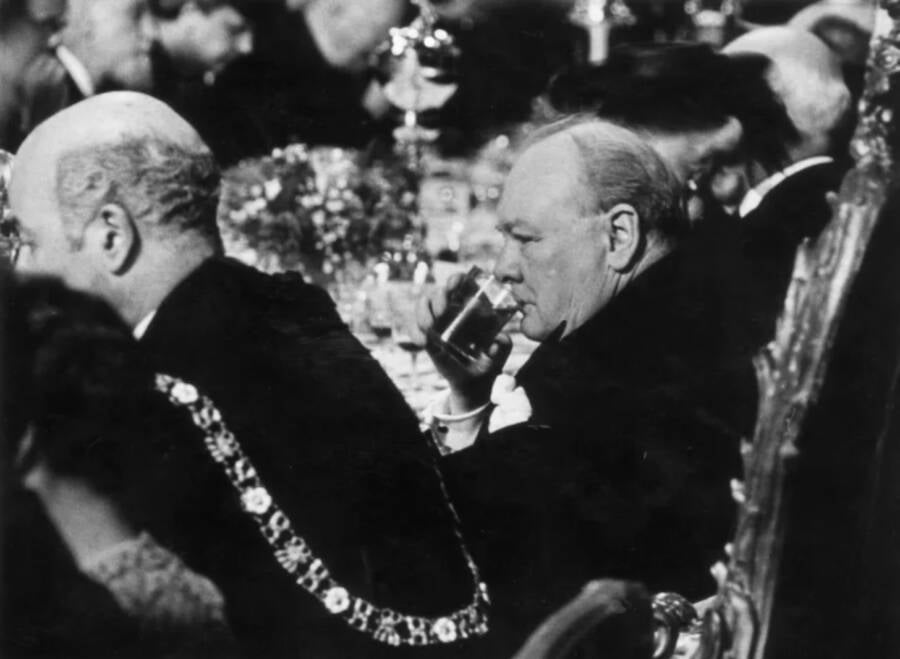
P.S.S. The photo is of Churchill walking through Coventry. The moral question there was: if you have access to the secret communications of your enemies and you know they are going to bomb a certain city on a certain day, do you warn the people of that city, knowing that by doing so, you risk losing your access and potentially lengthening the war? It’s a question that also comes up in the TV series, Andor, where one character (Luthen Rael) sacrifices 31 men in order to continue hiding the fact that he has an informant in the Empire he is fighting against.
If you want to create a basic web page with some css, I recommend you check out this. In no time you will have a web page structured like this:
If you want to have something even simpler, I have it here.
Of course you can use something bootstrap to make a nice webpage too. Indeed a page built with bootstrap is more flexible than the page above. For more on that, check this page out.
Open Benches is a map of thousands of “memorial benches – added by people like you”. Just type in a search request and see if anyone has dedicated a bench to someone or something, like people and their dogs. For example, this bench was dedicate to Veronica Calver.
You can find examples all over the world, including my town, Toronto. Thanks to the folks who put together this wonderful crowd sourced project.
P.S. If you want to first get a commemorative bench or tree in Toronto, you can get more information on that, here.
Over on Timothy Snyder’s web site is a resources page where you can find free resources (posters, postcards, etc.) for you to use. Highly recommended. Also highly recommended is the book it came from: On Tyranny. That page also has links to web sites selling his book. It’s a very smart, very readable, and very useful book to own in these trying times. Get yourself a copy.
P.S. I think a resources page is a great idea. More sites should have one.
L’Express restaurant: just the thought of being there again makes me happy. I’ve gone countless times in the last few decades. Whenever I am in Montreal, even if just for a day, I dine there. Everything about it is great: the bistro food, the great value French wine, the superb waiters, the classic decor, and especially the big jars of cornichons. I love the ravioli and the hanger steak, followed by one scoop of ice cream (preferably maple), but I have never been disappointed with whatever is served.
I was worried about it during the pandemic, but they seem to have muscled through those lean times. No doubt because of its many fans who have been there since 1980, and who no doubt will still be going in 2080.
So the next time you are in Montreal strolling the great street of St. Denis, pop in to L’Express, either to have some wine (it’s also a great wine bar) or better yet find a table, scan the wonderfully printed menu, and settle into a plate of savoury bistro food. You won’t be sorry.