
It seems hard to believe that the words “budget” and “Venice” can go together, but as this Guardian article shows, it is possible to enjoy Venice and still do it somewhat economically. Now hotels are another story. But every bit helps.
Author: smartpeopleiknow
Twenty good IT links to make you smarter
Here are some good links I have been collecting over time on IT that are still worth reading. They cover AI, the IOT, containers, and more. Enjoy!
- How to build a supercomputer with Raspberry Pis: Fun!
- 6 things I’ve learned in my first 6 months using serverless: Good stuff for serverless fans
- Building a serverless website in AWS: More good serverless stuff
- The Strange Birth and Long Life of Unix: A really good history of Unix. Well written.
- Spring Boot Memory Performance: If you use springboot, this is worth your while
- The end of windows: Anything that stratechery puts out is good, including this
- Dockerize a Spring Boot application: Speaking of springboot, this is useful
- Building a Deep Neural Network to play FIFA 18: A fascinating example of using AI to play games
- ThinkPad 25th Anniversary Edition : A great commemoration of a fine computer
- GitHub Is Microsoft’s $7.5 Billion Undo Button: A good piece on the story behind this investment by Microsoft
- Circuito.io: Want to build circuits, but don’t know how. This killer site is for you.
- Effie robot claims to do all your ironing: If you like robots and hate ironing, this could be for you.
- How To Install and Use TensorFlow on Ubuntu 16.04: For AI fans
- Set up a firewall on Ubuntu: Another good tutorial from Digital Ocean
- Not even IBM is sure where its quantum computer experiments will lead: For IBM Quantum fans
- In an Era of ‘Smart’ Things, Sometimes Dumb Stuff Is Better: Why analog is sometimes better.
- A simple neural network with Python and Keras: A good way to dabble with NNs
- The Talk: A comic which wonderfully explains quantum computing
- Use case diagrams: For those who like UML
- Eating disorder and social media: Wired has a good piece on how people avoid controls
why the best white noise machine might be the Google Home Mini
I have had a number of white noise devices with some of them costing a lot more than the Mini. They are not hard to set up and once you do you can ask it to play rain sounds or relaxing sounds or whatever sounds help you relax or sleep it work. Plus you get all the advantages of having it to find out the weather, get news, set appointments and more. If you don’t mind having one in your house – and some people do – then you can buy them everywhere, like here: m.bestbuy.ca/en-CA/product/google-home-mini-charcoal/11615336
On having no heat in the middle of winter
In the last five years I’ve lost heat in my house twice in the middle of winter.
The last time it happened was this week. My furnace started intermittently failing. It wasn’t a big deal, despite the cold. I bought a heater and my landlord had the repair people come in a few days and fixed the furnace.
The first time it happened was the ice storm of Christmas 2013. Then it lasted over three days as lack of power prevented my furnace from starting. My house got as low as 42 Degrees, and I could see my breath in the house. And then at 12:30 am on Christmas Day the power was restored and over many hours my furnace warmed up the house.
In both cases I remember the satisfaction of hearing the forced air furnace blowing warm air through the house. It’s such a basic thing, and yet so satisfying.
There are many great pleasures in the world, but few compare with the restoration of heat your home in the middle of bitter winter.
The ikigai Venn diagram

What you really want to aim for in your profession and your life is ikigai.
I’ve seen this a few times and I can’t find the original but also I don’t want to lose it. It really is too good to lose. I’d like to credit and link to the originator.
The problem with carpentry and how it differs from IT
It is near impossible to learn how to do carpentry from either books or the Internet. I know because I’ve tried really hard.
Let’s say you decide you no longer want to buy bookcases from Ikea but you want to make you own. You decide a book case is simply a box and decide you want to learn how to make a box with a few tools and some simple instructions.
If you go search for help with your box, you may very likely come across instructions like this: www.popularmechanics.com/home/how-to-plans/how-to/g1591/how-to-make-a-box/
It makes assumptions that you have lots of tools and you can do hard things like cut joints. After a few hours of searches, you will find most sites are like this: tailored to woodworkers making wood pieces that are hard to do and not anything near modern looking.
IT is different. For any technology out there, you can search for the name of the technology and “tutorial” and find something. You can be up and running using the technology in the time it takes you to give up looking for carpentry skills.
I am not sure why that is. Maybe there is more interest in IT so there are more tutorials on it. You could argue carpentry is harder but I have done both and I disagree.
I especially disagree because there is one site I could that actually does make it easy to make furniture and that is Ana White’s. Because of her I have made a wide range of furniture with basically a hammer, a jigsaw and a drill. The furniture isn’t fancy but it was cheaper and better and as modern looking as Ikea.
I think that is a problem with a lot of woodworking sites. They assume you want to do fine woodworking. Find woodworking is fine, but for people starting out, they likely want to make a simple table, a bookcase or set of shelves, perhaps a storage chest. A good joint may be best, but most Ikea furniture is held together with dowels and screws. If you make a book case with dowels and screws and glue, it will last and hold lots of books.
I wish there were more introductory sites on the internet that help people who wanted to learn how to make furniture and do carpentry, like there is with IT. Right now all I have found is Ana White’s site. I highly recommend it.
Who can bear to be forgotten? Who can bear to be remembered?

Who will pass on without kind words? Who will have loved ones gathered for them? Who will have them stay away? If a tree is best measured when it is down, what does it say when the downed tree is not measured? Where is the measure of how we were loved when we were alive? Or the measure of how we were unloved?
If you read obituaries from your small home town, you will see things and you will wonder. Wonder about lives past. Wonder about your life to pass. What people will think. What people think now. What difference you can make. Did you even make a difference. Are you remembered. Are you forgotten.
And I have thought these things as I read this. RIP D.J.L.
On the things we endure
We endure so much throughout our lives. When we are young, we endure school. We endure our siblings, perhaps. Certainly we endure some of our classmates. We endure teachers and subjects and our parents to some degree.
Later we grow up and roommates, apartments, bad jobs and bad relationships of once kind or another we live through in hope of an end.
Eventually we get old and the thing we have to endure most of all is ourselves. The qualities we seem stuck with, the habits unshakeable, and the traits indelible. We make an effort occasionally to shake them off, like dust, but then we settle and they settle back upon us. And so we endure them. Until the end.
On confusing resilience and endurance
As I suffer from personal difficulty, many people tell me I need to be resilient. This is what I thought as well. But what they really mean is I must be able to endure.
The key difference between resiliency and endurance is temporal.
If the difficulty you suffer is over and you bounce back, you are resilient. You can’t be resilient if your difficulty is on going. Then you are simply enduring.
For some reason, resiliency sounds better than endurance. Perhaps the former sounds active and the latter passive. There is nothing passive about endurance. It is a struggle to work against your difficulties, and those that passively suffer them will likely not endure for long.
To be resilient is good. But while you suffer, endurance is what you need.
It’s RRSP season in Canada. You may feel: why bother contributing? Read this then.
If you are daunted and dismayed with the impossibiity of saving for retirement, then read this.
A few thoughts:
- It’s written for Americans, but it works just as well for Canadians. (Replace 401K with RRSP).
- You may still not be able to retire, but the more you save, the more cushion you have for later.
- It may help you get to sleep at night when your brain starts saying: you are doomed to die old and poor!
On deplatforming on social media
Deplatforming is starting to rise up as a means of dealing with the bad effects of social media. For instance:
- Deplatforming topics: This was done at Reddit where topics were banned Study finds Reddit’s controversial ban of its most toxic subreddits actually worked
- Deplatforming people: described in this piece, Social Media Bans Actually Work.
- Deplotforming whole subject matter: Pinterest has banned vaccine talking all together: Pinterest is blocking all searches on vaccinations to stop spread of misinformation
Are there downsides to this? For governments and societies, yes. China also deplatforms people and topics that the government deems undesirable. Deplatforming, like excommunications and exile and shunning are all blunt instruments that need to be I think this is vigorously examined not only from the point of view of free speech, but also the result of such speech.
On having fallen from the grace of god
Having walked for seven plus years, having lost so much, so much dead, so much broken, he accepted he had fallen from the grace of god. He walked through the years, and recalled them, picking over broken things, things he had built now gone, things he had saved now lost. He had walked for seven plus years and lost so much from the lack of grace from god. And he despaired, and fed the fires of despair. And when his despair had burned away, he looked around once more and saw what still remained, what was good, what could be built up. And this was the true gift, not this thing or that, not the vain hope of never losing. This vision was the gift. With this vision, he could see that he had regained the grace of god, though it had never left him.
Some thoughts on leftists calling for radical measures on climate change
I see that leftists are calling for radical measures to fight climate change. I have a few issues with this:
- You have to be careful for what you wish for. When they talk about radical measures, they are likely thinking that the line of what is radical is where they get to draw it. I don’t think this is true. To me, radical is things like geoengineering. Or nuclear proliferation. Leftists should not assume they get to draw the line as to what radical is. And leftists should not be surprised if they don’t like what they ask for.
- Some of this seems to be a way to score points against centrists and rightists. It may be true that centrists and rightists have bad solutions. They are not bad solutions because they are associated with anyone of a certain political stripe. They are bad because they may not be enough.
Everyone involved with dealing with climate change should
- work very hard to promote new and better ideas and solutions for climate change
- be as persuasive as possible, especially for those more moderate than themselves
- be very humble when it comes to thinking you know what is right
Obviously this is not the easy a thing to solve by any stretch, and the tradeoffs are significant. Worse still, the solutions involve humans and all their flaws as well as science and technology still in development.
I personally believe it is too late already and that:
- there is going to be global devastation with many coastal cities being destroyed over the next 20 years, despite any advances in policies or technology.
- there is going to be such severe weather in the next two decades that global warming and climate change will be the main political topic affecting everything, and there will be a surge in advances in response to this.
- there will be feedback in terms of population decreases, new technologies, new policies, and planetary unknowns. This feedback will result in climate change stabilizing.
- there will be positive gains to be had from global warming and climate change but that they will not be known for sometime.
Thanks for reading this. Feel free to disagree. Just not on twitter, or I will block you.
17 things you should do as soon as you get laid off (and here’s hoping you don’t)
Here’s hoping you don’t get laid off, but if you do, keep this in mind: 17 things you should do as soon as you get laid off | Business Insider India
The joy of being out of and in a storm at night
There is a joy of being out of a storm at night. You can listen to the wind blast and watch the trees whip while the rain or snow fills the air. You can experience that from inside a warm room, dry and safe. You can think: thankfully I am not out in weather like that. It is a pleasure to be sheltered in such a night.
There is a joy in being out in a storm at night. Dressed well, you can move through the elements, complimenting yourself for being able to handle such weather. Even in a big city, you will have little if any company. If you do come across another hardy soul, you can nod and smile as if you met another member of your secret society.
There are not many things that can bring joy no matter how you experience it, but a storm at night is one of those rare things.
A great list of interchangeable ingredients to turn to when you are cooking, from Mark Bittman
Is this list.
Print it off, leave it in the kitchen, add your own items.
I often use sriracha for dried chilies, or even any hot sauce, for when you just need some heat. Likewise, if you don’t have jalapenos, you could also replace them with some of other heat source. (If it is a lot of jalapenos, you might use regular peppers with some chilies or other hot things to add the appropriate level of hotness.)
Finally, I’ve seen people suggest replacing creme fraiche with full fat greek yogurt.
If you want to make a podcast
Then consider this: A Beginner’s Guide to Getting Into Podcasts – The New York Times.
It doesn’t appeal to me, but podcasts are hot now, and if you want to give it a go, a good guide such as this one can help.
Good luck!
Things you don’t need and the one thing you do
This struck me today: I had these two posts I found interesting, both starting with “You don’t Need”. This is good: I think I will stop pursuing something because I think I need something first. Recipes help. And have free time to make things helps. But don’t use things you think you need stopping you from doing what you want.
Here are the two pieces. The only thing you need is a desire to make things.
C’mon, It’s Just 7 Days – a good challenge for next week
You either are keeping your New Year’s Resolutions (yay!) or you have shelved them. If the latter, cheer up. You don’t need to wait a year to resolve to be better. And you don’t need to necessarily make a big commitment either. Maybe just a week of doing something for the better is enough to make an improvement in yourself. A week may be just the thing to kick start you and send you off in a better direction.
Sound good? Great. And if you are stuck for ideas, check out this: C’mon, It’s Just 7 Days recipes and how-tos from Food52.
It’s not just about food. If you are looking for a week of challenges to try out, read the articles there.
The articles are fun even if you aren’t looking to change. A lot can happen in a week.
On the limits on tiny houses
I’ve written a fair bit about tiny homes as they are something of a fascination for me. This piece, in Fast Company, is about the downsides of them. They pump up the downsides, but there are downsides for sure. Anyone with fantasies about tossing it all in and getting one would do well to read this.
Friday night cocktails: a few simple ingredients = 3 Campari Cocktails
So sez this: 3 Campari Cocktails You Don’t Need a Gazillion Ingredients to Make | Bon Appetit. For anyone wanting to get started making cocktails, this is a good guide for this. Next thing you know you’re well on your way to being a bartender! At least for your friends. Enjoy.
My new favorite dish: Andrea’s Pasta with Pork Ribs from Mark Bittman

I made this last week and I’m thinking of making it again this weekend, it’s that good: Andrea’s Pasta with Pork Ribs, via Mark Bittman.
It has all the benefits of a good marinara dish, but the ribs really take it to a whole different and higher level. It is especially good with cheap pork ribs that might not make sense grilled due to being an odd shape. Those ribs are perfect here.
If you want, add more garlic…I added twice this amount. I also threw in sprigs of fresh herbs too. I went with basil, but I am sure rosemary or thyme or marjoram would be great.
I also doubled the ribs and I took half, deboned them, then chopped them into bite sized pieces and added them to the sauce. The other ribs I garnished the pasta with.
Finally, since you have so few ingredients, try to use really good tomatoes and cheese. You can skimp on the ribs and get gnarly ones because they will still taste great, but the tomatoes especially make a huge difference here. Same with the cheese.
Superb.
The law of supply and demand strikes again, this time with truckers for Walmart
It seems to me that the law of supply and demand stops working from time to time. But I think that is wrong, and pieces like this remind me that I am wrong: How Walmart has successfully recruited truck drivers amid a labor shortage crisis.
The reason I think it stops working is because I see wage growth stagnating in many places. But I also see productivity stagnating too, and I think there is a relationship between that. There is some elasticity there that allows wage growth to stagnate but in return productivity growth stagnates too.
In Walmart’s case, the elasticity is gone: if they can’t get truckers, they lose business. It’s simple. But for businesses without such hard and fast metrics, you might just continue to see slack productivity and slack wage growth.
A few thoughts on Marie Kondo

Marie Kondo and her method of cleaning up are very hot now, likely due to her TV show. This hotness sparked a number of discussions about her, such as this: “Tokimeku” Means So Much More Than “Spark Joy” in Japanese | Apartment Therapy. It also sparked other, more extreme discussions, such as how it is racist to not account for the deeper Shinto meaning in her works.
I read her book when it first came out and I admired it. I didn’t agree with all of it, but I liked her approach to life and the things we own. I got the Shinto aspect of the book, but I don’t recall that it was emphasized, so criticizing people of missing that who are unaware of Shintoism is a ridiculous criticism.
There have been shows like Marie Kondo on before. It makes sense. We are driven in North American culture to accumulate, and shows like hers provide us with an antidote to this. When Marie Kondo is forgotten, another home organizer will come along.
I have read more extreme versions of Marie Kondo, like “Goodbye, Things”, which promotes a very minimal life style. I bought it the way I buy other books that have subjects to aspire to but will never achieve. I guess others have too.
There is something to be said for a minimalist lifestyle, a maximalist life style, and something in between. In the end, what counts is that you have positive feelings towards the place you inhabit, however much you have.
One thing Marie Kondo misses is the notion of a room as a workshop. If you have a hobby, be it cooking or woodworking or gardening or reading, you likely have a room where all your tools and supplies are. If you are good at your hobby, you likely have alot of them. That makes sense. It doesn’t make sense to get rid of them just because you want to have less things. Have what you need to do the job when you want to. You could still trim back: do you really need 10 cutting boards or 3 screwdrivers that are exactly the same? But otherwise keep the tools you need or may need.
I think Marie Kondo is great because she encourages us to live better with some simple guidelines. Even if you don’t follow them all, you will live better if you consider her message and try to apply it. In the end you’ll have a better home, and you will have a better idea of what you consider a better home.
Image from the NYTimes article on her, here.
Howard Schultz is running for President. Here’s something you might want to read about him….
If you are seriously considering Howard Schultz run for president, you should read this: How Howard Schultz Left a Bitter Taste in Seattle’s Mouth – POLITICO Magazine
I think he doesn’t have a chance, although he could help the current President get reelected. I thought that before, and I thought it even more after reading the piece in Politico. Here’s hoping he drops out.
Merry Christmas!

For those celebrating, a very merry christmas.
For those looking to relax after a busy day, here are many Christmas links I’ve gathered over the years for you to read if you are still in the Christmas spirit.
Silent Night is supposed to be performed on Christmas Eve, and other interesting things about the 200 year old carol
As Silent Night turns 200 this year, the CBC has come up with a great piece on the history of this famous carol, which you can read here:
www.cbc.ca/amp/1.4950242
My last work project…
is written up, here: ATB Financial, IBM partnership focuses on digital transformation in banking | IT Business.
It was a great project, with a great team, a great client, and a great working environment. All around great. I am glad I had the opportunity to do it.
The joy of midnight pasta
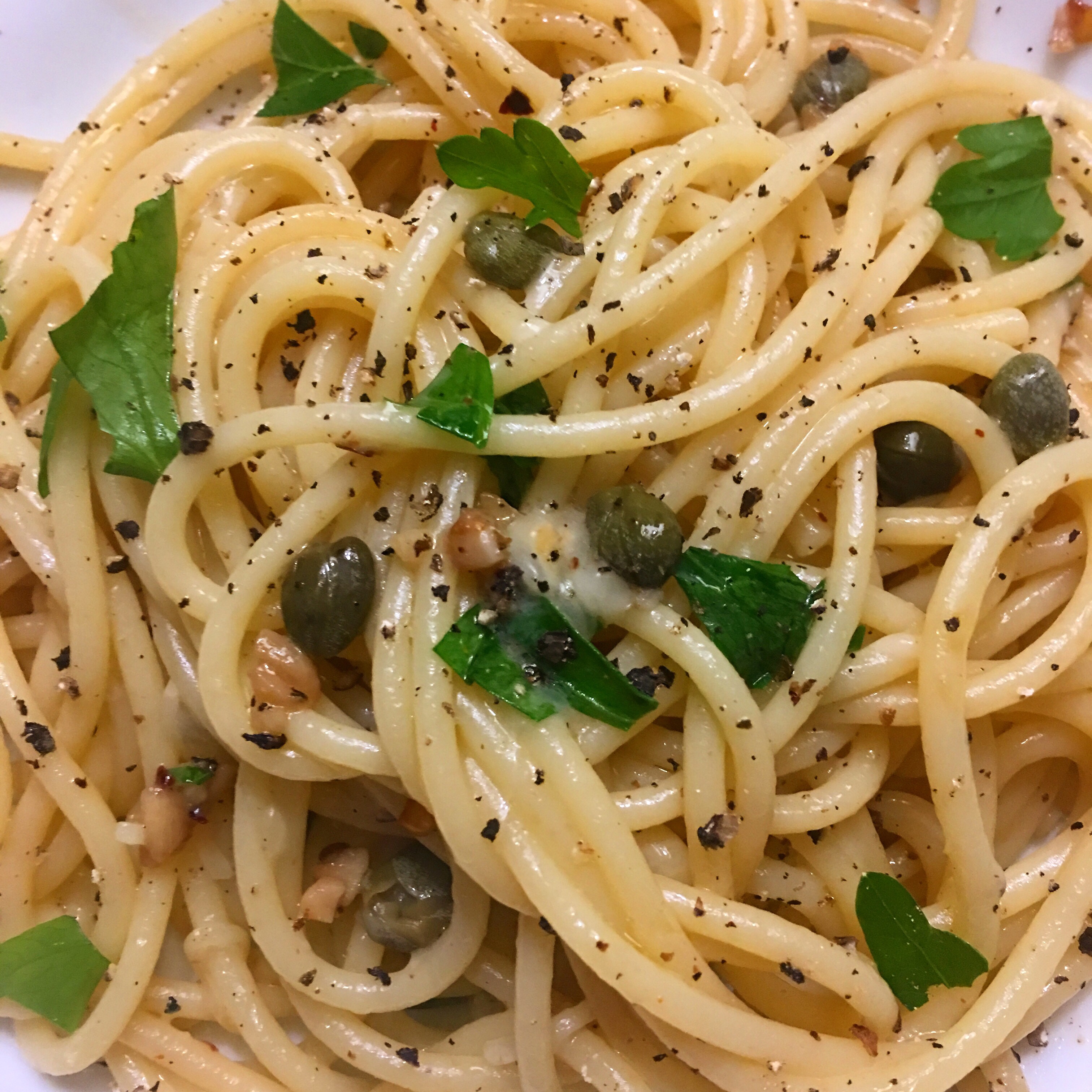
If you are busy, or don’t feel like cooking much, or don’t have much in your fridge, then this pasta recipe is for you. It’s hard to believe something this simple could be so good, but it is. Lots of flavour with very few ingredients, ingredients you can have in your pantry.
Give it a try, especially when you are short of time, money, or food.
The photo is of the dish I whipped up one night.
Some contrarian ideas on happiness and being happy
Can be found here:
- BBC – Future – Why the quickest route to happiness may be to do nothing
- Daniel Kahneman explains why most people don’t want to be happy — Quartz
Basically, happiness is an elusive and not well defined idea and we are better off seeking things other than happiness. It is great to be happy, but it may not be great to try and be happy. Feel free to read and disagree.
10 Spectacular Roast Recipes That Aren’t Turkey

Many people
- want to make a roast turkey for Christmas
- do not want roast turkey
If that’s you, Chatelaine has your back with this: 10 Spectacular Roast Recipes That Aren’t Turkey | Chatelaine.
They truly are spectacular recipes, perfect not just for Christmas but any time of the year (ahem, winter) when a good roast is just what you need.
This is good parenting advice: don’t kill your kids even though you want to sometimes….
If you are a parent and don’t need this advice: Parenting Advice: Don’t Kill Them – Ijeoma Oluo – Medium, then kudos to you. You are first among humans.
And if you aren’t a parent, your opinion hardly matters.
Heroic Symbols 1969 by Anselm Kiefer
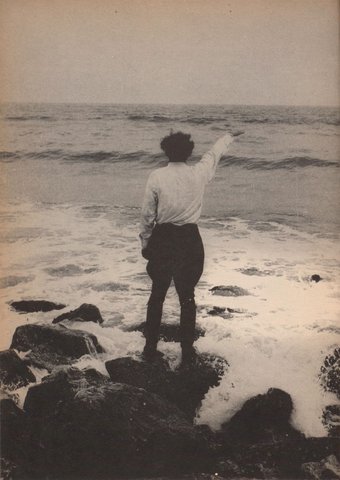
For fans of Anselm Kiefer, there is an in depth discussion of this particular work, here:
Heroic Symbols 1969 by Anselm Kiefer – In Focus | Tate
In search of the real Scrooge
suppression
Everyone knows of Scrooge, the character in Charles Dickens’ “A Christmas Carol”. But is there a real person Scrooge was based on? This article sets out to find him: The real man who inspired Ebenezer Scrooge.
On cities and digital technology and loneliness
This is a good piece: How to redesign cities to fight loneliness.
It talks about how cities and services can be changed to fight loneliness. This is good. The flipside of it, though, is that cities are designed and have evolved to promote loneliness. One of the reasons people come to cities is to get away from things. The cost of that is often loneliness.
Cities are not the only contributor. Digital technology also can contribute to loneliness. But like cities, digital technology can also help to assist those struggling with being alone.
The bigger problem is loneliness in general. Cities and digital technologies can help there. But there are bigger social and cultural issues in the mix, and those need to be addressed as well.
Cook90: a goal for the new year
Can you cook 90 meals in a month? For many it sounds daunting. I like to cook and even I am not sure that I could do it.
If you like a challenge and the idea of it, there is a book you should consider: Cook90: The 30-Day Plan for Faster, Healthier, Happier by David Tamarkin from Epicurious, at Amazon. (Also available in Canada at Indigo).
I heard of it from Mark Bittman and his newsletter (which I recommend also). One good quote from the newsletter was this:
“Entire industries want us to believe that cooking is so much harder and more time consuming than it really is.”
It’s true that you can make complex meals, but a simple green salad, a fried egg with toast, or those two things combined can make up a home prepared meal.
On exhibit: the Slave Bible

A fascinating exhibit in Washington, DC on the Slave Bible. What is the Slave Bible? It was a heavily reacted book with anything removed that could have supported slaves seeking their freedom. It’s a sad but also interesting story, and more of the details are here: Slave Bible From The 1800s Omitted Key Passages That Could Incite Rebellion : NPR.
A fascinating side by side comparison of Blade Runner 2049 with the original
Can be seen in this video:
I knew there were many visual parallels, but I didn’t catch just how many there were until I watched that video.
Found via this link: Take a closer look at how Blade Runner 2049 subtly updated its predecessor
On “River”, the sad Joni Mitchell song that became a Christmas classic
A fine and detailed study on Mitchell’s great song from her masterpiece album, “Blue”: www.washingtonpost.com/arts-entertainment/2018/12/07/how-thoroughly-depressing-joni-mitchell-song-became-blue-christmas-classic/
My impression reading it was that there were no sad or melancholy Christmas songs before it, but “I’ll Be Home for Christmas” and “Blue Christmas” are two that immediately come to mind. And later on songs like “Last Christmas” have shown that the holidays can be sometimes difficult.
Read the piece though. Lots of good commentary by great singers who have covered it, as well as what it really means.
New York City and the future of retail in cities

I’ve read a number of articles talking about the demise of New York due to rising rents and gentrification. After reading them, tt’s easy to feel hopeless about New York and cities in general. Which is why I was glad to read this: New York City Reveals the Future of American Retail – The Atlantic. It’s true, there are big changes in New York, just like there are big changes in other cities. And it’s true that many beloved retail stores are disappearing in cities everywhere. But it’s untrue that vacancy rates are shooting up and it’s untrue that it’s only big chains taking over. While retail stores threatened by Amazon are closing, places like restaurants and fitness locations are filling the gap.
You can argue that a city needs more than this new world of cafes and restaurants and gyms. The article points out to ways cities can encourage that. Specifically:
According to Jeremiah Moss, specific policies caused the disappearance of old New York—like tax breaks for big businesses, which have been a hallmark of city governance since the Ed Koch days (and up through HQ2). Moss says that several new policies could fix the problem. First, he is an advocate of the Small Business Jobs Survival Act, which would make it easier for small retailers to extend their lease in neighborhoods with rising rents. Second, he favors zoning laws that would limit the density of chain stores. He and others have also called for “vacancy taxes” that punish landlords who sit on empty storefronts for months at a time. All of these policies could help small businesses push back against the blandification of New York and the broader country.
Cities thrive when there is a mix of establishments servicing the wants and needs of its occupants. After reading this article, I think cities, New York and elswhere, are doing well and have a viable path to get better.
 Smart People I Know