Affordable dining in Paris is possible, and the New York Times is on it.

For more, see: Three Courses, 20 Euros: The Affordable Dining Renaissance in Paris – The New York Times

Affordable dining in Paris is possible, and the New York Times is on it.
For more, see: Three Courses, 20 Euros: The Affordable Dining Renaissance in Paris – The New York Times
Urbanization is an increase in cities through their growth, either in more cities being created or growth within cities. Superurbanization is a new idea. It’s how some cities get the lion share of growth at the expense of other cities.
To see what I mean, look at this chart: 
Source: Tech is divergent | TechCrunch
Cities are growing everywhere, as people move from rural areas. But some cities are growing much more than others.
Smaller cities are trying to do something about it, as this article shows. But in the end, we may end up with more and more supercities, and smaller cities may suffer in the same way rural areas are suffering now.
Bad news for Barneys, the premiere merchant in NYC. On one hand they are getting hit with a huge rent increase, and on the other, people’s shopping habits are changing. Could this be the end? It seems so.
See this for more: Bankruptcy for Barneys? Symbol of New York luxe faces uncertain future | US news | The Guardian

Part bookshelf, part seat, this bookshelf is not like any other.
For more information on how you can get your own, see Bookworm – The only cocoon shaped bookshelf in the world | Atelier 010 Rotterdam

If you are using CBT to deal with your mood, consider this app: Moodnotes: a Thought Journal, Mood Diary, CBT App.
It helps you quickly capture your mood, but it also help you deal with distorted thinking that contributes to poor moods or worse.
I am cautious about recommending such apps, because I worry what the app developers will do with the data. I have looked at their privacy policy and it is easy to understand and it says they won’t keep specific data. So I am cautiously recommending it.

Some amazing work here: Glitched Sculptures of Greek Gods by Zachary Eastwood-Bloom Reimagine Classicism in the Digital Age.
From the good people at Colossal. Go to their site to see more of Eastwood-Bloom’s work.

As someone who is in the maximalist camp (as opposed to the minimalist camp) I love this idea: Why I Use 3 Monitors to Boost Productivity (And You Should, Too) | Inc.com. It’s hard to pull off at home, but I have such a set up at home and it really does work. I have a monitor off to the side for messaging systems and email, I have a second monitor attached to my laptop which I use for what I am focused on, and I have my laptop screen I use for supporting my focus work.
True, if you have a Mac, you can have multiple Desktops and easily swipe from one to the other. I do that in workspaces where I can’t have multiple physical monitors. When I can have them, I like the multiple physical monitor approach. Frankly, I would like to have even more!

There’s a little bit of everything here for those who aspire to a minimalist lifestyle, from fitness to decor to cooking. Enjoy.

I recommend this piece on a family that had to do extreme decluttering because of a move. There’s lots of good advice in the piece, and worth reading if you are feeling the need to declutter. You may not feel you need to do it in an extreme way, but does this sound familiar?
Decluttering was an item on my to-do list for years. One I kept putting off.
Yep. Never a fun thing to do. But in their case, they had added pressure:
… we decided to sell our house and downsize to an apartment less than half the size. Then, getting rid of stuff became priority number one. It was an essential step in selling our home fast and for top dollar and critical for surviving a long distance move on a shoestring budget.
When I brought in professional movers to estimate our long distance move, I was shocked by estimates that we’d have 90+ boxes of stuff to move, which did not include existing storage totes. My first thought was How could four people possibly need that much stuff? The short answer is we didn’t, and I made it my mission to get that box number down.
In fact, not only did we want less stuff but we also wanted to move it ourselves on just one rental moving truck.
Needless to say, once you have such goals, extreme decluttering becomes mandatory.
We started extreme decluttering. We ended up moving across the country with one 26 ft. moving truck that was only about three-quarters of the way full. And no, we didn’t get rid of everything. We kept enough to furnish our new apartment fully.
With half of our stuff gone, we were able to downsize from a 4500 sq ft home to a 1768 sq ft townhouse-style apartment. Now we are living comfortably in 61% less space.
A good piece. Recommended, regardless of whether or not you are downsizing.
(Bold emphasis added by me. Image from here.)

For fans of NY back when, or people just curious about a very different New York then the current one, here’s a bunch of links worth reading:
Here’s a short but good interview with Francis Ford Coppola on The Godfather book’s 50th anniversary | EW.com.
“The Godfather” is one of those films I can always sit down and watch, and is on the list of my top favourite films. It is such an odd film from the 70s, in that it doesn’t seem from that era, but if you grew up in that era, then you see the 70s reflected in a film set in the 40s.
It’s a masterpiece of a film, and I can watch it with the sound off, for it is beautiful to see. The acting is superb as well. The only thing about it that never fails to bother me when I watch it is knowing I am sympathetic to a family of criminals. Coppola wisely sets up the Corleone family’s antagonists in a way you have a hard time feeling sympathy for them when they are attacked, which makes the viewer complicit in what is going on, corrupting him or her. It’s a corrupt world, the film says, and the only way to deal with that is to accept it. I never way to accept that, and I always am aware of that when watching the film.
I often think of it in comparison to the great film by Clint Eastwood, “Unforgiven”. Eastwood’s character succumbs to the forces of evil, but he never takes it for granted, and he moves away from it again. As well, Eastwood takes the entire film of “Unforgiven” to strip away all the myths and glory and glamour of Westerns. In some ways, it is the opposite of “The Godfather”. Later film makers would do to gangster films what Eastwood did to the Western.
Emma Thompson in the New York Times and Lesley Manville in the Guardian.
Interesting perspectives from them. Worth reading.

I love Raspberry Pis. They are great for playing around and learning about technology. But until recently I would not recommend them as an every day computer, if anything because they are just too slow. Or they were before the Raspberry Pi 4. With the capabilities of the new Pi 4, they may be ready to become your main or at least backup computer.
If you are interested, you can Google them and get alot more information on them. Here’s two sources more: Raspberry Pi 4 Computer | Uncrate and Engadget.
The Sonos One is a smart little speaker. Using Google Assistant and IFTTT.com make it even smarter.
They may not be fancy, but they are cheap and plentiful. And some people have used them to work out ideas. People like Basquiat and Haring.
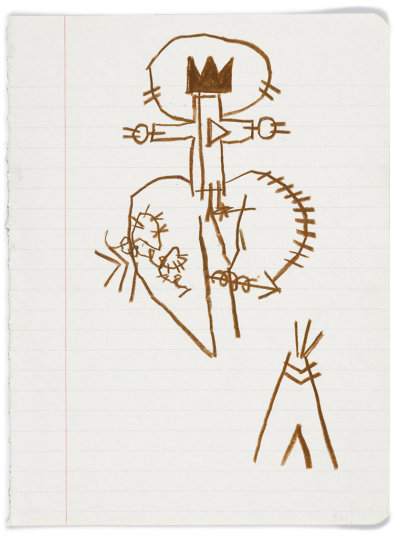

I never thought much of them, but I changed my mind after a number of posts over at the blog of Austin Kleon. Click on the link for more inspiration. Then head out to the dollar store and get your own.
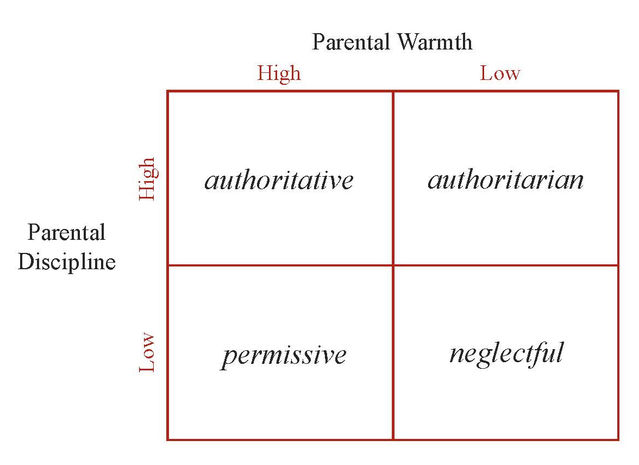
A very good piece for parents to read. How Parental Love Impacts Flourishing Later in Life | Psychology Today
Parenting is a long term play, though it might not seem some days. And some days the effort you put in doesn’t seem to make a difference. But it does. Read that for those days when you wonder if you are doing anything right as a parent.
By Blake Gopnik, Andy Warhol Inc.: How He Made Business His Art – The New York Times.
By Jerry Saltz, on the Whitney retrospective of Warhol.
P.S. I think Andy would approve of being used on a skateboard.
Finally got around to doing this, so I have update this page. Here’s your options. Option 3 worked for me.
Note, you will need some technical knowledge, an Amazon account, and one of these guides:
You don’t have to use AWS. Other cloud providers offers something similar:
So, lots of options.
I don’t know. But if you have thoughts about it, or about philosophy in the 20th century, you should consider this piece: What is truth? On Ramsey, Wittgenstein and the Vienna Circle | Aeon Essays

And what is it: Say nice things – to yourself
It sounds ridiculous, and you may feel ridiculous if you try it. If so, consider this:
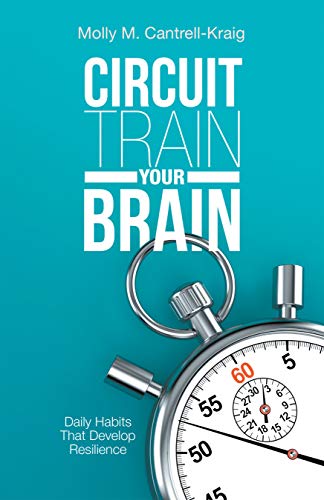
One way is by getting a copy of Molly Cantrell-Kraig’s new ebook: Amazon.com: Circuit Train Your Brain: Daily Habits That Develop Resilience eBook: Molly M. Cantrell-Kraig: Kindle Store.
It just came out, and it can just be the thing you need if you are struggling through a difficult time.
When it comes to Einstein, what comes to mind? This?
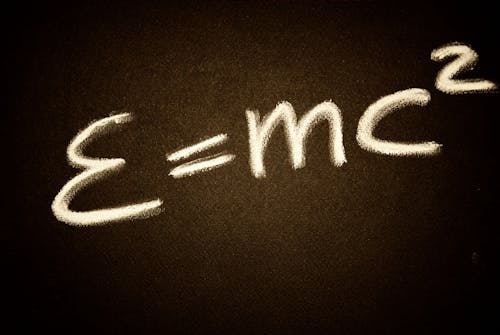
How about this?
Yep, his hobby was making a better fridge. Read about it here: Einstein’s Little-Known Passion Project? A Refrigerator | WIRED.
It’s odd but fun to read.
People who have high standards fear being mediocre. I thought of that when I read this: Opinion | I’ll Never Be Rachmaninoff – The New York Times.
People without high standards never worry about that. They do stuff, and the result is what it is. It comes with no judgment, for the most part.
Being fearful of being mediocre is twice cursed. First, if you fear that, you likely will not attempt things that could bring you joy and happiness due to your fearfulness. Second, you are already mediocre at some many things already, and yet you turn a blind eye to them, convinced that the few things you excel at removes the label of Mediocre from you. I have rarely met people who are great at one thing not be mediocre at many other things. There’s only so much time, and greatness comes with tradeoffs.
Don’t fear being mediocre. You already are! Go out and enjoy what you can. You may find the things you start off being mediocre in at first are things you end up being good at later. Not that you need to get good!
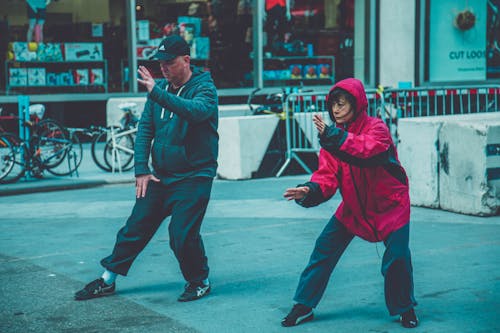
Here’s some things you can get better at: being stronger, writing a book, become an artist. Or get a partner and learn tai-chi.

From this superb piece, Jerry Saltz: How to Be an Artist, come this:
Step One: You Are a Total Amateur
Lesson 1: Don’t Be Embarrassed
Lesson 2: “Tell your own story and you will be interesting.” — Louise Bourgeois
Lesson 3: Feel Free to Imitate
Lesson 4: Art Is Not About Understanding. Or Mastery. (It is about doing and experience)
Lesson 5: Work, Work, Work
Step Two: How to Actually Begin
Lesson 6: Start With a Pencil
Lesson 7: Develop Forms of Practice
Lesson 8: Now, Redefine Skill
Lesson 9: “Embed thought in material.” — Roberta Smith
Lesson 10: Find Your Own Voice (then exaggerate it)
Lesson 11: Listen to the Crazy Voices in Your Head
Lesson 12: Know What You Hate
Lesson 13: Scavenge
Step Three: Learn How to Think Like an Artist
Lesson 14: Compare Cats and Dogs
Lesson 15: Understand That Art Is Not Just for Looking At
Lesson 16: Learn the Difference Between Subject Matter and Content
Lesson 17: See As Much As You Can
Lesson 18: All Art Is Identity Art!
Lesson 19: All Art Was Once Contemporary Art
Step Four: Enter the Art World
Lesson 20: Accept That You Will Likely Be Poor
Lesson 21: Define Success
Lesson 22: It Takes Only a Few People to Make a Career
Lesson 23: Learn to Write
Step Five: Survive the Art World
Lesson 24: Artists Must Be Vampires
Lesson 25: Learn to Deal With Rejection
Lesson 26: Make an Enemy of Envy
Lesson 27: Having a Family Is Fine
Step Six: Attain Galactic Brain
Lesson 28: What You Don’t Like Is As Important As What You Do Like
Lesson 29: Art Is a Form of Knowing Yourself
Lesson 30: “Artists do not own the meaning of their work.” — Roberta Smith
Lesson 31: All Art Is Subjective
Lesson 32: You Must Prize Vulnerability
Lesson 33: Be Delusional
But read the piece: the comments he provides are what gets to the heart of it.
wΔz=cov(wi,zi)+E(wiΔzi)
That equation can be found in this odd article here: Evolution: biologist George Price’s life and death – Vox.
It tells the story of George Price and how his extreme altruism led to his death. Well worth reading, especially if you think self care is bunk.
In short, take care of yourself to some degree, or you end up not benefitting anyone. And if you are not benefiting anyone, you are not being altruistic after all.

How you read this piece depends on who you are: Is It Ever Too Late to Pursue a Dream? You may recall it: it’s a long article about Dan Stoddard, a 39 year old, 6 foot 8 inch, 300+ pound guy playing basketball for a small college in Ontario who want to play pro.
When I read it, I first thought: no way. The guy’s too old, too big, too…you name it, he isn’t going to be a professional basketball player. That’s one way to read it. A very grounded way to read it.
Another way to read it is to consider how dreams and goals shape us and change us and change others around us. I have a friend who sets very high goals and sometimes lands short of them. But even landing short, she accomplishes something beyond most people and beyond herself. The accomplishments matter, because they matter to her. The accomplishments matter, because they get others to seek out goals too. Others, like her, setting aim and leaving the ground. Leaving the ground, the way Dan Stoddard does.
How you consider these quotes depends on who you are.


I think this will become true, and not just in India: Are parts of India becoming too hot for humans? – CNN.
Already we have parts of the world barely inhabitable due to extreme weather. Think of Antartica on one hand, and the Sahara desert on the other. Soon places in India will join them. Other parts will become inhabitable for different reasons: extreme weather and flooding.

I loved these stories. I don’t believe they tell me anything in particular about modern Japan, but I found them all fascinating:

Despite what the New York Times and others say: ‘Guilty’ Pleasures? No Such Thing – The New York Times, there is such a thing as guilty pleasures.
Usually guilty pleasures arise out of inconsistency or lack of integrity with what you like versus who you are (or think you are). You want to be one way, but you enjoy doing something the other way. People who say they don’t have guilty pleasures are simply saying that the things they like are consistent with how they perceive themselves. Or they are saying that they have no problem with occasionally being inconsistent. That’s fine, but that isn’t everyone.
Feel free to call your pleasures guilty if you want. Just try not to have any that harm anyone or anything other than your desire to be consistent.

This is a fascinating story: The famous tea water pumps of 1700s New York | Ephemeral New York.
Hard to imagine now, if you’ve seen NYC, to think of water being drawn this way. Good weekend morning reading!
 There are few who would argue against a good walk. And any old walk will do. But if you want to walk mindfully, then Thich Nhat Hanh has a book that will help you do it. Quartz has a run down on it here: Zen master Thich Nhat Hanh explains how to walk more mindfully.
I think it could be great for people who have a hard time being mindful because they always need to be on the go. And for people who want to have more mindfulness in their life, it is also great. Read the article/book and improve your walks and your mind.

Not easy to do sometimes. Especially difficult if you don’t have any ideas on how to do so. Here are some ideas for you: Survive Life’s Deepest Stresses With These 8 Skills : Shots – Health News : NPR

Two pessimistic articles that made a big impact on me recently are this The Case for Not Being Born | The New Yorker and this I am not always very attached to being alive.
I think there is a strong case for being born (many, in fact) and also many reasons to be attached to being alive. But it is not nonsense to think otherwise. I think those articles bear that out.
I like that image: depending on your frame of mind, it is someone floating and enjoying the water, or someone reaching out for help. No form of thinking is more important than how you align your thoughts; everything follows from there.

Is this: Flight Light.
You can use it to track night flights of the ones you love. I don’t know how much traction it will get, but I personally find it appealing.

If you are travelling soon and you are sitting in the boarding area wondering why the whole process is ridiculous / dumb / insane, then you should read this Here’s Why Airplane Boarding Got So Ridiculous. It may not change your mind, but at least you will get a better understanding behind the rationale for it.
Also, don’t expect it to change soon.

Well, there’s a lot of options, if you go through this list: What to Do With a Day Off – The New York Times. My take is you can either tackle those things you have been putting off (hello! Finances!) or you can literally vacate your normal life and take it easy. Either is good. Better yet: consider being productive this time off and extra lazy the next time.
Enjoy your day. You deserve it.

Two worthwhile pieces on Jeff Koons: this Stop Hating Jeff Koons – The New York Times, and in a way, this.
I used to have great disdain for Koons, but the more I think about his work, the better appreciation I have for it. There is a ceiling to that appreciation: the emptiness of it imposes that. But Koons and his work gets me to think about art and the art world and the meaning of art and culture, and for that his work appeals to me.
However you think about him, those pieces are worth reading.
(Image via link to the NYTimes.com piece)
Use this: Irish Coast • Ocean Waves, Wind and Rain Noise Generator.
It’s fantastic. Perfect for sleep sounds, or to listen to while working.
Not just for people who know little about art. Thanks Sister Wendy: you are missed. As are you, Francis Bacon, the painter of the image above.


