If you must, more about it is here: Supreme is releasing a branded 3G burner phone

If you must, more about it is here: Supreme is releasing a branded 3G burner phone
The nature of work is always changing, and if you want to think about how we work now, I recommend this piece: LARPing your job.
Work has always been performative. With more flexibility and less well defined jobs, this becomes more and more important. How do you show your value? How do you demonstrate you are working hard (or working at all)? That piece addresses that. As for the title, if you want to know what LARPing is, you’ll have to read the piece. 🙂

If you are like me and have too many half finished or unfinished notebooks and journals, you will want to read this: Why it’s so hard to finish a notebook or journal – Vox.
I can’t say reading that piece will help you finish them, but it will help you better appreciate some of the difficulty MANY of us have with doing so.
My take on it is: buy ones that are either small or have pages that are easy to tear out. After awhile go through old ones and tear out things of note and then toss them aside. And then go buy more! 🙂

This is great: A Field Guide to New York Workers – People in NYC | Topic.
All the people you typically see in NYC. Well worth a look.
I started thinking this when I read this: How Tech Bros Fell in Love With Baking Bread – Eater.
First thought, I think this is something tech bros do to any subject area they stumble into: they are the equivalent of European explorers “discovering” places that have been inhabited for ages. Second thought, there is something patriarchal about men discovering and improving something as basic as bread.
I love bread. I think everyone would get joy out of learning to make it. And while you can really do amazing things in breadmaking, it should not be seen as something only the rarest of bakers can do.
To get you started, here is a bunch of recipes that are simple and varied. Good luck!

If you have Philips Hue products or are thinking of getting them, then I recommend you read this: Philips Hue super guide: How to set up and use your Hue lights.
The Hue is a great product, but it may not be the easiest thing to set up. This guide will help.

For fans of Aperol Spritz looking to branch out, I give you this: It’s Called Spaghett and It’s Now My Favorite Summer Cocktail | Bon Appétit
Slack may not be the end of email, but some version of it is likely going to result in a decline in email. If it won’t be slack, it might be one of the ones mentioned here:
Speaking of Google, the company has a Slack alternative of its own, called Hangouts Chat, as does Facebook, in Workplace. Microsoft has Teams, which is bundled with its Office software and which the company says is being used by more than 500,000 organizations. This multi-front attack on email is just beginning, but a wartime narrative already dominates: The universally despised office culture of replies and forwards and mass CCs and “looping in” and “circling back” is on its way out, and it’s going to be replaced by chat apps.
I doubt email will go away forever: that’ not how tech works. Dominant tech tends to fade away rather than outright collapse. That’s likely what will happen with email.
Will Slack et all be better? Good lord, no. Just different. Some aspects of it are better, and many aspects will be worse than email.
For the curious, here’s more on this idea: Slack Wants to Replace Email. Is That What We Want? – The New York Times
This is fascinating: The Apollo 11 mission as told through the astronauts’ heart rates | Popular Science
Here’s Armstrong:

A good reminder that even the best prepared and most cool can still have elevated heart levels under stress.

For fans of maximalism, you can get some good ideas on how to pull it off and still make your place feel orderly by checking out this post: A Book-Filled Manhattan Apartment Where Everything Tells a Story | A Cup of Jo.
If you love small spaces AND stuff, you need to learn to be a good maximalist. (Or buy storage.) That post in A Cup of Jo can help.

New York City has had skyscrapers for a long time. A new twist on the skyscraper is the super skinny ones popping up all over Manhattan. There’s plenty of reasons for that, and the Guardian well documents that, here: Super-tall, super-skinny, super-expensive: the ‘pencil towers’ of New York’s super-rich | Cities | The Guardian.
I don’t particularly like them, but like all buildings, I am sure they will grow on me over time. They seem too featureless. Their main feature seems to be the thinness. That hardly puts them in the same class as the Chrysler Building or the Empire State Building.
Regardless of your thoughts on them, the article in the Guardian is good.

The book of Job is one of my two favourite parts of the Bible (the other being Ecclesiastes). If you also have a keen interest in it, there is a new book out on it and The Atlantic has the goods on it, here: The Book of Job in a New Light.
The new book casts Job in a different light than other interpretations. It’s not a terrible interpretation, and worth thinking upon. After all, that is what the Book of Job is about.
For more on the strangeness that is the Book of Job, see this article.

You might need this: This desktop lightbox makes your lighting setup as advanced as your camera | Yanko Design.
Ok, you like do not need this. But it is a pretty cool lightbox. Worth checking out, if only to fantasize about.
Did you guess 50? No? If you didn’t you should read this: A Study of 2.7 Million Startups Found the Ideal Age to Start a Business (and It’s Much Older Than You Think) | Inc.com
Key quote:
And in general terms, a 50-year-old entrepreneur is almost twice as likely to start an extremely successful company as a 30-year-old. (Or, for that matter, a successful side hustle.)
It’s never too late to pursue that business dream.
If you think all mindfulness is the same, then read this: Different Types Of Meditation Change Different Areas Of The Brain, Study Finds.
Key quote:
a new study from the Max Planck Institute finds that three different types of meditation training are linked to changes in corresponding brain regions. The results, published in Science Advances, have a lot of relevance to schools, businesses and, of course, the general public.
Mindfulness can be helpful for many reasons. But how you pursue it can yield different results. Something to keep in…mind.

If you fitness routine is stuck or worse, then I highly recommend you read this: How to Stay Fit Forever: 25 Tips When Life Gets in the Way.
You should find something in that piece to help get you unstuck and get going again. So grab a towel and a water bottle and get moving!

Two pieces recently make the case for long recipes. This one, directly: The Case for Very Long Recipes | TASTE.
And this one, indirectly: Jerk Chicken So Good I’ve Been Making It Every Summer for 25 Years – The New York Times
The first one makes the direct case that long detail makes for a better recipe, and I agree with that. If you just need a list of ingredients and short steps, go to allrecipes.com and you can find it. If you want to know why things are done a certain way and why certain ingredients are used and how they should be cooked, then a long recipe is preferable.
The second one, by Gabrielle Hamilton, makes the case indirectly. The recipe comes at the end of a long essay that explains the origin of it. You could just read the recipe, but you’d be missing out on so much if you just did that.
I get why people hate long recipes. Not everyone who writes a long preamble before a recipe can writes as well as Hamilton. But it would be a shame if cooks stopped trying.
One site that does this really well is BudgetBytes.com. She has a button at the top that let’s you jump to the recipe, which is in the middle of the piece. At the top of the piece is her thoughts on the recipe. Then the recipe. Then detailed instructions on how to prepare the dish. Smittenkitchen.com also does long recipes, and they are also really worth reading through.
Image from here.

Is captured in that picture frame.
Found here: Hello Strawberries, Popsicles, Lemonade, Fresh Cut Lawns, Swimming & Starry Skies | Poppytalk
Sadly it doesn’t look like the person who originally made it exists. At least I get a 404 error when I click through. Maybe if you love it you can make it yourself!

Then read this Vice piece: How to Make a Phone Farm
I’ve seen pictures of Phone Farms in China, but I thought you needed some advanced tech to run them. Turns out, you just need a bit of work and some old phones, and…well for the rest, read the article.
For those who don’t know, Phone Farms are banks of cell phones automated to do the things you do manually with your phone.
P.S. I expect marketers will read this and start to come up with ways to defeat this, if they haven’t already started. This provides a threat to them, and a ramp up of this can be seriously deterimental.

Perfect for summer.
Actually, perfect for any time of the year.
Want one? Go here: Voilà l’Été: The French 75 Recipe on Food52

I love stories about colours and their origins, but this one on Paris Green is especially good: This Trendy But Toxic Shade of Green Left Thousands Dead in the Victorian Era.
Turns out 19th century patrons loved this tint that was produced using…arsenic. You can imagine how this turns out, but save your imagination and read the story.
Image and story from Town and Country, of all things. Not sure how I came across it, but I am glad I did.
This is a good piece: How to Be Thankful For Your Life by Changing Just One Word. I have thought about it often since I read it. You can get to read it too, but in short, write down all the things you “have to” do or “should” do and think differently. Key passage:
You have to wake up early for work. You have to make another sales call for your business. You have to work out today. You have to write an article. You have to make dinner for your family. You have to go to your son’s game.
Now, imagine changing just one word in the sentences above.
You don’t “have” to. You “get” to.
You get to wake up early for work. You get to make another sales call for your business. You get to cook dinner for your family. By simply changing one word, you shift the way you view each event. You transition from seeing these behaviors as burdens and turn them into opportunities.
Get. You get to. Better still, you are lucky to get to. Write down the inner dialog in your head and see if you can edit it this way.
The cliche, you don’t know what you got until it’s gone, holds here. Know what you got. Think about it in a new way.

This article makes the case: Why You Should Start A Blog In 2019. Austin Kleon backs that up, here.
If you do certain things on a regular basis, you should blog. For example:
Forget about becoming famous or having a million viewers or getting rich. Just start simply and write what matters to you. Get a blog.
It sounds hyperbolic, but this piece makes a very strong case for that fact that it is: This Is the Beginning of the End of the Beef Industry | Outside Online
For pro-beef fans, consider this (emphasis is mine)
Sure, steak is great, but ground beef makes up 60 percent of beef sales, and most of it is more Salisbury than salutary, a greasy vehicle for the yummy stuff: ketchup, mushrooms, pickles, bacon, sriracha mayo. I knew I wouldn’t object if my central puck came from a plant, as long as it chewed right and tasted right. I suspected others might feel the same.
Even if people don’t go entirely vegan or vegetarian, there is going to be a lot less beef sold in the future, in my opinion.
Read the article: it’s great.
A thought provoking piece on how we spend too much time on new restaurants and not enough on established ones: Why we should ignore the buzz surrounding new restaurants and give proper due to the ones that have lasted | National Post.
I think this is true. I pay attention to new places and hot places and places closing, but places that are great day in and day out I pay less attention to. I suspect many people are like that.
It would be great if publications that write on restaurants periodically round up places that are consistently great would write about them.

You can find a description of hostile architecture here, but the best way to describe it is to show it, as Vice does here: Photos of the Most Egregious ‘Anti-Homeless’ Architecture – VICE. Once you see these photos, you will find you see examples of it everywhere in the places you frequent.
Most hostile architecture is aimed at homeless people. Sometimes it is obvious, like spikes installed on flat surfaces. Other times, it’s more subtle, like arm rests in the middle of benches. (Prevents homeless people from lying down on them.)
One of the problems with hostile architecture is that it allows us to pretend homeless doesn’t exist. If we don’t see homeless people, it’s easier to image they aren’t there. A lesser problem is that cities become more unliveable for all, because hostile architecture for anyone is hostile architecture for everyone.
We need more livable cities. And we need more support for homeless people. Hostile architecture is not the solution.
P.S. Not all hostile architecture is aimed at people. Some of it, like spikes on top of outdoor ledges, is aimed at pigeons. I’ll leave that for another post.
There was much concern from progressives when Gorsuch and then Kavanaugh joined the U.S. Supreme Court. It was believed by myself and others that the court was going to vote 5-4 in lock step on every option, with the 5 conservative judges routinely beating the four liberal ones.
If you are progressive, it is still a concern. But as these two pieces show, the Supremes vote more independently than you or I might think:
This is not to say it is entire unpredictable how they will vote on matters before them. The liberal and conservative labels are convenient and often useful, but there’s much more to consider than just that when trying to determine how they will vote. Read the two pieces and see if they change your mind.
(Photo by Claire Anderson via unsplash.com)

I am fascinated by living in a small space. Here are some of the better links I’ve found on how to live well in such confines.
(Picture from the Cup of Jo piece.)

Eating meat is a significant contributor to global warming. I knew this, but the chart above and the article below really drove this home. As the Soviet Union was collapsing, people in that region started eating less meat. The result was a drop in carbon emissions. Now imagine if that was replicated worldwide for many years.
There’s actions we can take to attack global warming. Eating less or no meat is one of them. For more on this, see: Soviet Union’s collapse led to massive drop in carbon emissions

Not for everyone visiting Paris, but if you want to see Paris in a way untypical of most visitors, consider this: Paris on Foot: 35 Miles, 6 Days and One Blistered Toe – The New York Times

So says this article: The rise and fall of French cuisine | Food | The Guardian.
I tend to disagree with the pessimistic assessment, but regardless, I recommend the piece because it really does cover what has happened to food and cooking in the last 50 or so years. For people who love food, it’s a worthwhile read.
I think the decline of French food is relative. So many more cuisines have been discovered and appreciated, from Italian to Vietnamese, that French cuisine has competition for people’s attention. That comes across in this piece: Bon appétit! How I rediscovered the joys of French cuisine | Food | The Guardian.
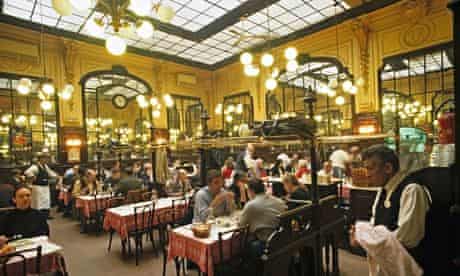
It’s a good thing we have so many people writing and thinking and preparing food in new ways. French cuisine may no longer be dominant, but it is still great. And if you are going to Paris, then check out this list of David Lebovitz for what he recommends in his city. Or this list, somewhat dated, may still have value:
Top 10 budget restaurants and bistros in Paris | Travel | The Guardian
Affordable dining in Paris is possible, and the New York Times is on it.

For more, see: Three Courses, 20 Euros: The Affordable Dining Renaissance in Paris – The New York Times
Urbanization is an increase in cities through their growth, either in more cities being created or growth within cities. Superurbanization is a new idea. It’s how some cities get the lion share of growth at the expense of other cities.
To see what I mean, look at this chart: 
Source: Tech is divergent | TechCrunch
Cities are growing everywhere, as people move from rural areas. But some cities are growing much more than others.
Smaller cities are trying to do something about it, as this article shows. But in the end, we may end up with more and more supercities, and smaller cities may suffer in the same way rural areas are suffering now.
Bad news for Barneys, the premiere merchant in NYC. On one hand they are getting hit with a huge rent increase, and on the other, people’s shopping habits are changing. Could this be the end? It seems so.
See this for more: Bankruptcy for Barneys? Symbol of New York luxe faces uncertain future | US news | The Guardian

Part bookshelf, part seat, this bookshelf is not like any other.
For more information on how you can get your own, see Bookworm – The only cocoon shaped bookshelf in the world | Atelier 010 Rotterdam

If you are using CBT to deal with your mood, consider this app: Moodnotes: a Thought Journal, Mood Diary, CBT App.
It helps you quickly capture your mood, but it also help you deal with distorted thinking that contributes to poor moods or worse.
I am cautious about recommending such apps, because I worry what the app developers will do with the data. I have looked at their privacy policy and it is easy to understand and it says they won’t keep specific data. So I am cautiously recommending it.

Some amazing work here: Glitched Sculptures of Greek Gods by Zachary Eastwood-Bloom Reimagine Classicism in the Digital Age.
From the good people at Colossal. Go to their site to see more of Eastwood-Bloom’s work.

As someone who is in the maximalist camp (as opposed to the minimalist camp) I love this idea: Why I Use 3 Monitors to Boost Productivity (And You Should, Too) | Inc.com. It’s hard to pull off at home, but I have such a set up at home and it really does work. I have a monitor off to the side for messaging systems and email, I have a second monitor attached to my laptop which I use for what I am focused on, and I have my laptop screen I use for supporting my focus work.
True, if you have a Mac, you can have multiple Desktops and easily swipe from one to the other. I do that in workspaces where I can’t have multiple physical monitors. When I can have them, I like the multiple physical monitor approach. Frankly, I would like to have even more!

There’s a little bit of everything here for those who aspire to a minimalist lifestyle, from fitness to decor to cooking. Enjoy.