What are Spite Houses?


I love this piece on a rather odd thing: The Spite House, an Architectural Phenomenon Built on Rage and Revenge.

Spite houses can be houses or buildings or any structure built not so much to be lived it as they are the express a very negative emotion. Once you know about them, you will be surprised you know more of them than you thought.

I don’t think I’ve ever been that spiteful that I would go through the trouble of spending all the time and money to get back at someone. But that’s not true of everyone, if you read that article.

The challenges of taxing the wealthy

Is outlined here: Taxing the Wealthy Sounds Easy. It’s Not. – The New York Times.

It’s worth a read. It’s thoughtful, even if you may not agree with it. Also, just because something is not easy does not mean do not attempt it.

Taxing drives behaviour. My thought is drive behaviour in the right direction.  Tell affluent people to use their wealth in directed ways that improve our society or tax them so that it can be done. If they disagree, then it is time to make explicit the social contracts in place and ask what has to be changed to make for a better society. Because for most societies in the world, including Canada’s, the social contract can be a lot better.

A masterwork of maximalism

Is this home featured here: This Cozy Minnesota Home Will Make You Want a Candelabra | A Cup of Jo

You really out to go to the site and check it out. Meanwhile, here’s a peek to show you what I mean:

Some thoughts on this:

  • There is a ton of objects in this photo, but they are orderly. There is a place for everything; things aren’t just thrown about.
  • The objects are all attractive: nothing is just stuck somewhere.
  • It helps to be in a nice room, but the good thing about maximalism is that you can turn even a boring box in to something attractive. (Much harder to do with minimalism
  • The colour scheme is consistent here. That helps rest the eye as it moves around the room.

I highly recommend you go to Cup of Jo linked to above and see the rest of it. It’s inspiring for maximalists like myself. 🙂

For fans of faux calligraphy

Some fantastic fun links:

  1. 60 free minimalist fonts for your designs – Learn
  2. 60 free calligraphy fonts to bring charm to your designs — Learn
  3. 50 free stylish fonts to bring a touch of elegance to any design – Learn
  4. The Ultimate Guide to Font Pairing — Learn – Learn
  5. 60 free sans serif fonts to give your designs a modern touch – Learn
  6. 11 Simple Hand-Lettered Fonts For Your Bullet Journal | Little Miss Rose
  7. Three Ingenious Hacks to Fake Brush-lettering | Little Miss Rose
  8. 8 Fancy Hand-Lettering Ideas That Are Actually Easy
  9. How to “Fake” Calligraphy | I Try DIY

How to make a man’s Zara suit look expensive


GQ has the five good ideas here: 5 Tricks That’ll Make Cheap Suits Look More Expensive. I said “Zara” but you could do the same with lower end suits as well.

I’d add:

  1. Get the whole suit tailored to fit. They mention the sleeves, but if you get the jacket tapered to your body, the impression of fit will be strong and it won’t look off the rack.
  2. Go with a conservative colour. I like this suit over the one in the GQ article. It’s somewhat bold with windowpane plaid (vs pinstripe or solid), but the charcoal grey tones it down. Grey suits and jackets are deceptive: even the cheapest of them are hard to guess how expensive they are unless you look closely and know clothing.
  3. Go with good accessories in general, not just shoes. A great watch, French cuff shirt with cufflinks, a beautiful tie: all of those things give an impression of being expensive. Be bold here. I like how the suit pictured is paired with a shirt and tie that have a tiny pattern to compliment the larger pattern of the suit. It’s a good look. And his shoes stand out in a good way and look great with the tapered pant.

For details on this suit, go here.

Two ways to do the Toronto International Film Festival (tiff)

Here are two ways to do TIFF:

  1. There’s the way most people do it, which seems awful: The TIFF ticketing system is a total nightmare this year.
  2. There’s the way my friend Annie does it, which seems great: A day in the Life of a Torontonian: TIFF 2019 – Advanced Screenings

Now Annie’s way is going to cost more, but if you want to have an enjoyable experience and get the most out of a great festival, then read up on how she and her husband do it.

A love story of a different kind: love of the small phone


This is a love story in a way, although it’s a love affair with a device: Tim Cook Will Have To Pry My iPhone SE From My Cold, Tiny Hands.

It brings up an interesting thought: that for all the seeming abundance of smart phones, they really have narrowed into a specific style and range. They are all large, glass devices with fancy cameras. That’s what sells, and manufactures have no desire to make anything else. Or maybe they are fearful of trying to make something else.

Some event will occur and innovation and diversity will come to the personal device market. But for now, expect more of less.

(Image linked to in the article)


Some basic thoughts on “Friends”: it’s roots and its relationship to screwball comedy


It’s the 25th anniversary of “Friends”, and a number of reviews I read talk about it looking backwards.This piece, though, does something better: it looks at where the series came up from.  Key quote to me was this:

Chandler, who is so indifferent about what he does that he is unable to pay his job even the small courtesy of hating it—Chandler, besuited and bedraggled, whose work in computer-something-or-other summons the amorphous anxieties of the coming digital age. … It is through Chandler, in the end, that Reality Bites finds its way into Friends’ otherwise chipper cosmology. His work is simply there, looming, draining, tautological. His laconic resentments of it invoke the precise strain of Gen Xed ennui the novelist Douglas Coupland had described earlier in the decade: the mistrust of institutions, the mistrust of professions, the mistrust of meaning itself.

You can see in the quote the tie to Douglas Coupland’s  book Generation X and the film Reality Bites. These are the roots of “Friends”. ‘Friends’ at 25: The Prescience of Chandler Bing’s Job – The Atlantic. That generation after the boomers needed a show, and many of them found it in “Friends”. Now people look back at it and many mock a show about six well dressed people living in an amazing apartment in NYC. But “Friends” then tried to make sense of becoming an adult, or “adulting”, to use a word that came along later. The fact that people have such fondness for it makes me think it resonated with them and it represents part of their lives.

I always liked “Friends”, but for a different reason. I am a fan of screwball comedy, and that series often went there. Seinfeld did absurdist comedy well, but I loved that this series did a comedic style I loved so much. Watch some episodes of “Friends” and then watch a classic screwball comedy like “Bringing Up Baby” or “His Girl Friday” and you will see the similarities.

All comedy series go pear shaped after a time, and the things that made it originally great fades. For a time “Friends” was one of the best comedies on TV, and it was great then because of the form of comedy it aspired to and because of the way it represented the time it was rooted in.

You want short novels? The Paris Review got your back


As they say, here is: A Very Short List of Very Short Novels with Very Short Commentary.

Some of these you may have read, but chances are there are a few you haven’t. I recommend short novels to people who want to read more and are stuck with not having read anything recently. Better still, read good short novels. Every book on that short list is a good book.

Enjoy

How to Read More Books, According to an Editor Who Finishes 60+ a Year


It’s Saturday. You are thinking: I should start reading more books. But I suck at it. Well then, read this: How to Read More Books, According to an Editor Who Finishes 60+ a Year

I can’t promise it will get you to 60 books, but it will help.

Things I’d add:

  • Toss books you don’t like.
  • If you get stuck on a book, move on.
  • Put down your phone.
  • Don’t just sit there: pick up a book!
  • Have more than one book on the go, but mix up the genres.
  • If you get put off by big books, get smaller books. Finishing any sized book is satisfying.

Is the Citroën Ami One the future of urban vehicles?


I am not sure of the viability of this vehicle, licence or no: You don’t need a licence to drive the Citroën Ami One in Yanko Design,

I do think it is interesting though. And Yanko Design has great photos and a write up on it. Worth reviewing and considering it. We need alternatives to the automobiles we have now. Perhaps this is it.

How to be more productive with a better todo list?


Easy. Don’t make these mistakes: These Seven To-Do List Mistakes Could Be Derailing Your Productivity

What should you do?

1. Write your lists the day before
2. Don’t have too many items
3. Have items you can truly do that day
4. Prioritize items
5. Be specific
6. Create a fresh list each day
7. Link it to your calendar

If you need guidance, see the article.

It’s a skill writing a good todo list. Having better ones means you have a better or at least a more productive day.

Assessing the Speaker of the UK House of Commons, John Bercow


This is a good piece: How bad is Bercow? – UnHerd.

Bercow is a controversial figure, and as you can guess, many think he is a bad thing. But the UnHerd piece looks back over numerous Speakers of the House of Commons and gives a kinder assessment. Given that we are going to be reading alot about the House due to Brexit, it might be a good time to become better aware of the man and the role.

On Fred Perry, fashion writing, and the Guardian


Here are two pieces on the association of Fred Perry and political fashion.. This one, Why does the far right love Fred Perry? Mainstream fashion is its new camouflage | by Cynthia Miller-Idriss in The Guardian and this one, Fred Perry, Proud Boys, and the Semiotics of Fashion.

The first one superficially touches on how the political right adopts certain clothing to wear as a uniform. The second goes deep into the history of clothing to signify membership within social groups.

If you read the first one, you’d get the impression that some good PR could shift the negative associations of the far right with Fred Perry. After reading the second one, you may realize it would be much harder to do than that. The associations go deep.

Sadly, many of the pieces I read in the Guardian are like that. They are a good jumping off point, but if you want to better understand a subject, you need to go elsewhere.

How Toronto looks from the City of Buffalo

Torontoians will find this interesting: Toronto’s astonishing growth: Will it matter to Buffalo? – The Buffalo News.

This was a key passage:

For Buffalo, the question now is whether Toronto’s “reimagining” might seep south of the border, as well. Smaller cities in Ontario’s Golden Horseshoe are booming, too, thanks in part to Toronto’s spillover. And Toronto and Buffalo, incorporated two years and 100 miles apart, kept pace with each other until the 1950s, said the University of Toronto’s Bourne, who used to assign a project comparing the cities’ trajectories to his undergraduate students.

That history is interesting, Bourne said, because while Buffalo and Toronto share important characteristics, they suffered opposite fates: Buffalo shrinking with the sunset of the Erie Canal and Rust Belt manufacturing, and Toronto swelling when the Quebec separatist movement made it the favored home for Canada’s banks.

As late as the 1970s, Torontonians considered Buffalo a nightlife destination. Many of their restaurants still closed on Sundays and maintained separate male and female entrances.

Torontonians “would come to shop, they would come for jazz – Buffalo was the hive,” said UB’s Foster, who lived in Toronto for more than three decades. “But then people started going the other way, and that hasn’t changed.”

Years ago going to Buffalo for shopping was still a thing in Toronto: not sure it is now. Perhaps some people still go to watch the Buffalo Sabers play hockey. Perhaps the linkages between the two cities will become stronger over time and there will be a good proportion of Torontoians making Buffalo a destination again.

For Torontoians considering going to Buffalo, I recommend this piece in the New York Times.

(Image linked to the New York Times piece)

The problem with colonizing other worlds…

The problems with colonizing other worlds can be read here:  Humans Will Never Colonize Mars.

It’s a bucket of ice water to dump on the head of anyone who optimistically thinks it will happen. It may happen, centuries from now.  More likely places like Mars will be colonized by robots that will do a lot of the activities we once expected humans to do.


On being grateful (and a good alternative to it)


I have read in many places that it is good to be grateful. To be thankful. Here is one such article: What Does It Mean to Be Grateful? – Mindful. If that works for you, then I recommend it.

I find a simpler and just as effective approach is to acknowledge when something is good. Wake up feeling rested? Say “This is good”. Enjoy your cup of coffee or tea or even just being up? Acknowledge that “This is nice”. As you go through your day, make an effort to consciously acknowledge all the good things big and small in your life. You’ll find many. And if you can’t, that’s ok too. Work to appreciate the good things in the bad. Rainy, overcast day? Good for flowers. Monday? A new week to do something good. Etc. If you struggle to think of any, talk to a friend or some other council.

You have lots of good things in your life. As you appreciate them, you will better appreciate your life in general. And that too is good.

A bold maximalism


Meanwhile a bold maximalism is achieved here, not so much by the amount of items as by the amount of bold colours and prints used throughout the place. It’s still not a big place, but it feels right. I guess that is all relative, but I love this.

For more, see This Manhattan Home Feels Like a Jewel Box | A Cup of Jo

(Image a link from the above article in A Cup of Jo)

The limits of minimalism…

Might be here: Under 200 Square Foot Studio Apartment in Hong Kong | Apartment Therapy.

Cozy and minimal is fine, but this is basically the space you find in a big camping tent. I am sure some people can adopt just fine, but I don’t know if I could live in such a space for long. I also wonder if this is the direction we are heading for cities other than Hong Kong. Higher property costs and lower incomes might cause this to happen in other cities. I don’t look forward to that.

The decline in the arts as a bachelor degree major


Can be seen here: Has the Sharp Decline in Philosophy Majors Hit Bottom? (guest post by Eric Schwitzgebel) – Daily Nous.

It is remarkable how much majors in history and philosophy have declined. I feel we need these things more than ever. That said, my bachelor degree is with a major in computer science. I have studied much philosophy and history since then, but not in an academic setting. It would be good to find a way to study them more formally without the commitment of getting a bachelor degree.

There are so many online sites teaching computer science topics. We need more that teach philosophy and history in the same way.

Mechanical Kiwis, or how the Kiwi’s food delivery bots are only semi-autonomous


Looks like autonomous robots have a way to go. So while Kiwi’s food delivery bots are rolling out to 12 more colleges (TechCrunch), they aren’t exactly autonomous robots. Instead…

The robots are what Kiwi calls “semi-autonomous.” This means that although they can navigate most sidewalks and avoid pedestrians, each has a human monitoring it and setting waypoints for it to follow, on average every five seconds. Iatsenia told me that they’d tried going full autonomous and that it worked… most of the time. But most of the time isn’t good enough for a commercial service, so they’ve got humans in the loop. They’re working on improving autonomy, but for now this is how it is.

The future is weird. Also, good luck with those in places with hostile weather, architecture, or people.

Five ways to be more stoical


1. Visualize Your Life Without the Things You Love

“He robs present ills of their power who has perceived their coming beforehand.” —Seneca

2. Memento Mori — Meditate on Death

“Let us prepare our minds as if we’d come to the very end of life. Let us postpone nothing. Let us balance life’s books each day. . . . The one who puts the finishing touches on their life each day is never short of time.” —Seneca

3. Set Internal Goals and Detach Yourself From Outcomes

“Some things are within our power, while others are not. Within our power are opinion, motivation, desire, aversion, and, in a word, whatever is of our own doing; not within our power are our body, our property, reputation, office, and, in a word, whatever is not of our own doing.” —Epictetus

4. Welcome Discomfort

“Nature has intermingled pleasure with necessary things — not in order that we should seek pleasure, but in order that the addition of pleasure may make the indispensable means of existence attractive to our eyes. Should it claim rights of its own, it is luxury. Let us therefore resist these faults when they are demanding entrance, because, as I have said, it is easier to deny them admittance than to make them depart.” —Seneca

5. Vigorously Pursue Character and Virtue

“Every day I reduce the number of my vices.” —Seneca

via 5 Ancient Stoic Tactics for Modern Life | The Art of Manliness

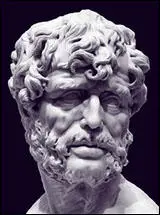
(Image of Seneca)

Humanless stores: a bad idea that refuses to die


It’s funny how certain tech ideas are bad and yet keep coming back, like zombies. Micropayments is one. Another is stores or establishments run without people: automats, in a sense. It’s a terrible idea in my opinion, and yet people keep trying them. Case in point, here’s some in China that came and went: China’s unmanned store boom ends as quickly as it began – Nikkei Asian Review. 

I am sure these will pop up from time to time. Robots are becoming more prevalent, and the urge to keep putting more and more of them in establishments will continue. But like the old automats, I think they will only get so far before they fail.

No, you cannot nuke a hurricane (and the alternatives aren’t great either)

Yes, nuking a hurricane is a bad idea. (duh.) There are better ideas,
but as Vox explains, even those are prone to problems. For example…

In one of the most infamous attempts to slay a hurricane, Nobel laureate Irving Langmuir led a US military experiment in 1947 to seed Hurricane King with ice in hopes of sapping its vigor. The storm at the time was sliding away from the United States and losing strength.

In an excerpt in the Atlantic from his book Caesar’s Last Breath, author Sam Kean explained Langmuir’s idea: Growing ice in the eye of the hurricane would make the eye grow wider and collapse the storm. But Hurricane King didn’t respond as expected. “To everyone’s horror, it then pivoted — taking an impossible 135-degree turn — and began racing into Savannah, Georgia, causing $3 million in damage ($32 million today) and killing one person,” Kean writes.

So yeah, it’s no small thing to stop hurricanes. But given that climate change may make things worse, it could be worth it.

If you fantasize about getting away, here’s one option: the 50 hour Trans-Siberian Railway trip

Sure there are shorter and sweeter train trips, but the  legendary Trans-Siberian Railway is a trip like no other, and Business Insider has a run down of what is like. I was surprised how relatively low key it was. It seems doable, which is something for a train ride that takes over 2 days. If you ever fantasized about going on such an adventure, the article is made for you. As for me, the longest I’ve ever been on a trip was from Sydney, N.S. to Toronto and that was around 36 hours. By the time it was done I was glad to be off the train.

(Image: link from article)

Friday night cocktails from Alison Roman


You might argue that spritzers and shandies are not cocktails, but that is just classist nonsense! 🙂 Besides, not everything needs to be prepared by a fancy mixologist. These cheap and cheerful mixes may be some of the best things to drink during these late great summer days.

What goes into a spacesuit?

Quite a lot! And it took quite a lot to figure it out! Did you know part of the mission of the space suit is just to filter out body odor? Or that the spacesuit of one astronaut can be used to help another astronaut with a failing suit? There’s lots of interesting facts about spacesuits, here: Apollo’s PLSS And The Science Of Keeping Humans Alive In Space | Hackaday

Did Rembrandt’s use mirrors for his paintings?


It’s debatable for sure, but there are a number of people who think he did. This piece (from a few years ago) titled The Mirrors Behind Rembrandt’s Self-Portraits in The New York Times  looks into one paper that argues so

In a paper published Wednesday in the Journal of Optics, Mr. O’Neill lays out a theory that Rembrandt set up flat and concave mirrors to project his subjects — including himself — onto surfaces before painting or etching them.

By tracing these projections, the 17th-century painter would have been able to achieve a higher degree of precision, Mr. O’Neill said. His research suggests that some of Rembrandt’s most prominent work may not have been done purely freehand, as many art historians believe.

He is not the first to suggest that old master painters used optics for their famous portraits.

In 2001, David Hockney, a renowned British painter, and Charles Falco, an optical sciences professor at the University of Arizona, published a book in which they argued that master painters secretly used mirrors and lenses to create hyperrealistic paintings, starting in the Renaissance.

Their theory, known as the Hockney-Falco thesis, generated controversy among scientists and art historians, some of whom took the findings as an implication that old master painters had “cheated” to produce their works.

I’ve read Hockney on this and he makes a strong case too. Not everyone agrees though. It’s worth reading the article and get a better picture, pardon the pun.

My thought is it’s likely all artists of the time would have used them to some extent. But Rembrandt is such a remarkable painter that it can only account for some of his greatness, if any.

One of the the better reviews of WeWork and their IPO is naturally this one, by Stratechery


Stratechery is always great and this piece is no different: The WeWork IPO – Stratechery by Ben Thompson.

What makes it good is that rather than just slamming WeWork superficially, as many takes have, it delves into what could possibly justify why WeWork is a good investment.

My take is that if WeWork had a different executive, it could be a successful company. I think the comparison to AWS is somewhat valid, and in the gig economy with lots of short term work, it could become very successful. (It worked really well for a recent project I was on).

That said, I believe the executive team of WeWork will not be able to handle any drying up of capital or a recession of any length. Or investors will wake up and ask themselves why WeWork should be valued way more than IWG/Regus. Time will tell, of course.

One last thing: my understanding is that WeWork had to start from scratch in terms of buying up / leasing real estate, but AWS did not start from scratch and took advantage of existing capacity Amazon currently had.

(Image link to the original piece in the article reference)