
For those celebrating, a very merry christmas.
For those looking to relax after a busy day, here are many Christmas links I’ve gathered over the years for you to read if you are still in the Christmas spirit.

For those celebrating, a very merry christmas.
For those looking to relax after a busy day, here are many Christmas links I’ve gathered over the years for you to read if you are still in the Christmas spirit.
As Silent Night turns 200 this year, the CBC has come up with a great piece on the history of this famous carol, which you can read here:
www.cbc.ca/amp/1.4950242
is written up, here: ATB Financial, IBM partnership focuses on digital transformation in banking | IT Business.
It was a great project, with a great team, a great client, and a great working environment. All around great. I am glad I had the opportunity to do it.
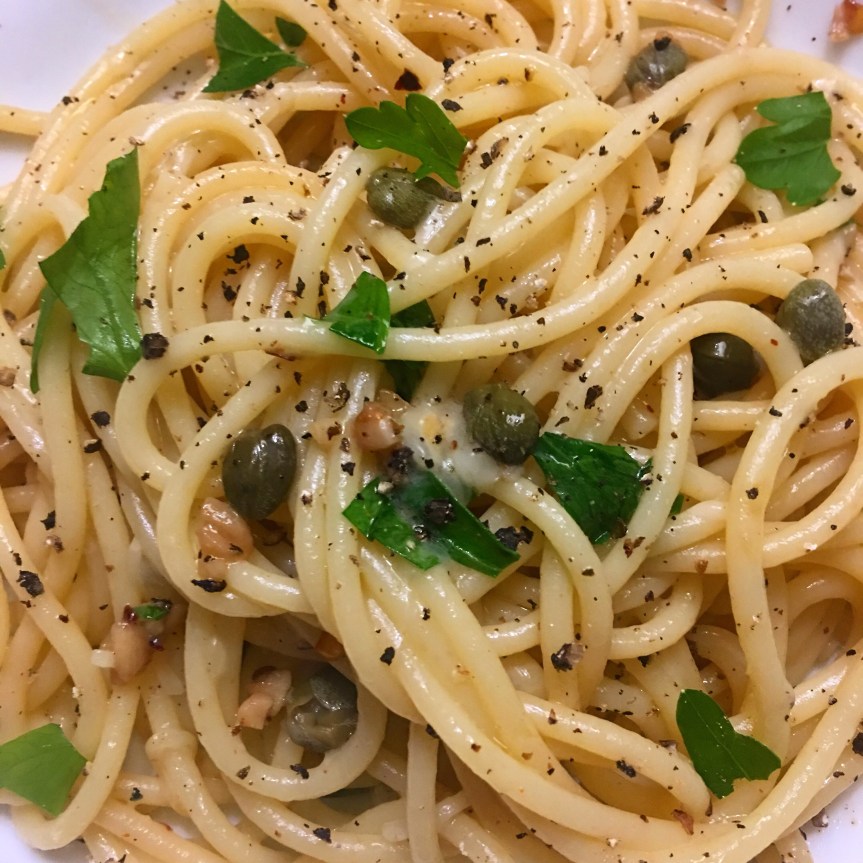
If you are busy, or don’t feel like cooking much, or don’t have much in your fridge, then this pasta recipe is for you. It’s hard to believe something this simple could be so good, but it is. Lots of flavour with very few ingredients, ingredients you can have in your pantry.
Give it a try, especially when you are short of time, money, or food.
The photo is of the dish I whipped up one night.
Can be found here:
Basically, happiness is an elusive and not well defined idea and we are better off seeking things other than happiness. It is great to be happy, but it may not be great to try and be happy. Feel free to read and disagree.

Many people
If that’s you, Chatelaine has your back with this: 10 Spectacular Roast Recipes That Aren’t Turkey | Chatelaine.
They truly are spectacular recipes, perfect not just for Christmas but any time of the year (ahem, winter) when a good roast is just what you need.
If you are a parent and don’t need this advice: Parenting Advice: Don’t Kill Them – Ijeoma Oluo – Medium, then kudos to you. You are first among humans.
And if you aren’t a parent, your opinion hardly matters.
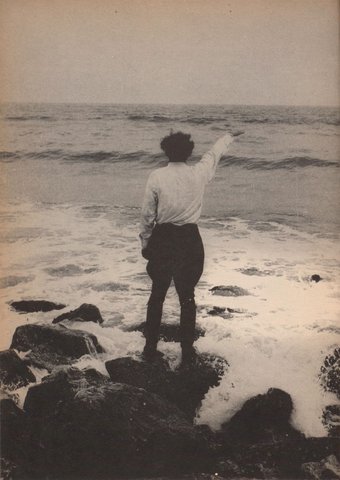
For fans of Anselm Kiefer, there is an in depth discussion of this particular work, here:
Heroic Symbols 1969 by Anselm Kiefer – In Focus | Tate
suppression
Everyone knows of Scrooge, the character in Charles Dickens’ “A Christmas Carol”. But is there a real person Scrooge was based on? This article sets out to find him: The real man who inspired Ebenezer Scrooge.
This is a good piece: How to redesign cities to fight loneliness.
It talks about how cities and services can be changed to fight loneliness. This is good. The flipside of it, though, is that cities are designed and have evolved to promote loneliness. One of the reasons people come to cities is to get away from things. The cost of that is often loneliness.
Cities are not the only contributor. Digital technology also can contribute to loneliness. But like cities, digital technology can also help to assist those struggling with being alone.
The bigger problem is loneliness in general. Cities and digital technologies can help there. But there are bigger social and cultural issues in the mix, and those need to be addressed as well.
Can you cook 90 meals in a month? For many it sounds daunting. I like to cook and even I am not sure that I could do it.
If you like a challenge and the idea of it, there is a book you should consider: Cook90: The 30-Day Plan for Faster, Healthier, Happier by David Tamarkin from Epicurious, at Amazon. (Also available in Canada at Indigo).
I heard of it from Mark Bittman and his newsletter (which I recommend also). One good quote from the newsletter was this:
“Entire industries want us to believe that cooking is so much harder and more time consuming than it really is.”
It’s true that you can make complex meals, but a simple green salad, a fried egg with toast, or those two things combined can make up a home prepared meal.

A fascinating exhibit in Washington, DC on the Slave Bible. What is the Slave Bible? It was a heavily reacted book with anything removed that could have supported slaves seeking their freedom. It’s a sad but also interesting story, and more of the details are here: Slave Bible From The 1800s Omitted Key Passages That Could Incite Rebellion : NPR.
Can be seen in this video:
I knew there were many visual parallels, but I didn’t catch just how many there were until I watched that video.
Found via this link: Take a closer look at how Blade Runner 2049 subtly updated its predecessor
A fine and detailed study on Mitchell’s great song from her masterpiece album, “Blue”: www.washingtonpost.com/arts-entertainment/2018/12/07/how-thoroughly-depressing-joni-mitchell-song-became-blue-christmas-classic/
My impression reading it was that there were no sad or melancholy Christmas songs before it, but “I’ll Be Home for Christmas” and “Blue Christmas” are two that immediately come to mind. And later on songs like “Last Christmas” have shown that the holidays can be sometimes difficult.
Read the piece though. Lots of good commentary by great singers who have covered it, as well as what it really means.

I’ve read a number of articles talking about the demise of New York due to rising rents and gentrification. After reading them, tt’s easy to feel hopeless about New York and cities in general. Which is why I was glad to read this: New York City Reveals the Future of American Retail – The Atlantic. It’s true, there are big changes in New York, just like there are big changes in other cities. And it’s true that many beloved retail stores are disappearing in cities everywhere. But it’s untrue that vacancy rates are shooting up and it’s untrue that it’s only big chains taking over. While retail stores threatened by Amazon are closing, places like restaurants and fitness locations are filling the gap.
You can argue that a city needs more than this new world of cafes and restaurants and gyms. The article points out to ways cities can encourage that. Specifically:
According to Jeremiah Moss, specific policies caused the disappearance of old New York—like tax breaks for big businesses, which have been a hallmark of city governance since the Ed Koch days (and up through HQ2). Moss says that several new policies could fix the problem. First, he is an advocate of the Small Business Jobs Survival Act, which would make it easier for small retailers to extend their lease in neighborhoods with rising rents. Second, he favors zoning laws that would limit the density of chain stores. He and others have also called for “vacancy taxes” that punish landlords who sit on empty storefronts for months at a time. All of these policies could help small businesses push back against the blandification of New York and the broader country.
Cities thrive when there is a mix of establishments servicing the wants and needs of its occupants. After reading this article, I think cities, New York and elswhere, are doing well and have a viable path to get better.
If you are Philip Glass you can. And likely anyone who has the capacity to make art can as well. It may take you longer, but you can do it. To see how he did it, see this piece: How Philip Glass Went From Driving Taxis to Composing – The Atlantic
I was always impressed by this, and have read it often. Young people especially should read it: Reconnecting with Newfoundland – Free Candie.

Yep. You can get them here: Vintage Computer Punch Cards for Sale — Online Store & Gift Shop
This is brilliant: 44 Short Books to Help You Reach Your Reading Challenge Goal – Goodreads News & Interviews.
It’s a great list of books, for starters. Second, they tell you how long they long they are and a number of them are under 100 or 200 pages.
If you are trying to reach a reading challenge goal, or if you are stuck trying to get started reading, or if you find you never finish books due to their length, then you should check out that list.

Fascinating: THE BOOK – Eliooo.

If you are looking to give someone a gift that is hand made, this might be an idea for you: How to Make a Simple Chapbook | Indie Press | Philadelphia | Lady Blue Publishing.
I had one made for my 40th birthday and I still treasure it. No doubt someone you make one for will too.
I think often of this speech Philip Pullman gave regarding the rights and limits associated with free speech. I like what he says, and I like how he says it.
I’d like to see a similar one for de-platforming. No one has a right to be popular on social media. No one has a right to access and use a specific platform. No one has a right to stay on the platform if they don’t abide by the rules. If they get kicked off, they can complain on other platforms. They can complain to the owners of the platform. They can build a platform of their own and make their own rules and say what they want in a law abiding way.
But wait, isn’t that a violation of someone’s free speech? I don’t think it is. It gives too much power to existing platforms to treat them like utilities. They are not utilities. If they are utilities, then they should be heavily regulated. Better that they are not regulated, that they do not gain too much power, and that people that want to exercise their free speech build their own platforms.
Free speech should be defined within the context of a citizen and their government. People should be able to say what they want within the law. People should also be willing to accept the social consequences if they say something that offends others. That is what Pullman is saying in some ways. If his book shocks and offends you, you can take action that may harm him by reducing the number of books he might sell. That is the consequence he is willing to take in order to write the book he wanted to write. He understands that free speech has consequences. The one consequence he is not willing to accept is to be prevented from speaking. (I would add that the other consequence he is unwilling to accept is to be physically threatened, an all too common threat that hangs over discussions of free speech on the Internet.)
People who are deplatformed are not prevented from speaking either. They are being prevented from speaking the way they prefer, and that is a different matter. They want to speak their way without the consequence of being deplatformed.
Can be found here: Why I Love Benjamin Moore’s Tundra Paint Color | Architectural Digest, as well as here and here.
Two good recent pieces on the great Dieter Rams, here:
Then you need this. Top 40 Tricks and DIY Projects to Organize Your Office. Quite a few good set ups and tips there.
I thought this was clever:


If you want to run away from it all and live in a small (but nice) cabin somewhere in the woods, then you ought to read this: Modern life too much for you? Maybe a tiny box in the woods is the cure. – The Washington Post. I have often thought of it myself. I may have to check this out.
 Smart People I Know