A critique of the weird counterfactual history of Matt Yglesias and his case for the Austro-Hungarian Empire


Recently, Matt Yglesias wrote one of his contrarian essays arguing the case for the Austro-Hungarian Empire. There’s so much wrongness about it that it’s hard to know where to start.

Perhaps the best place to start is some basic history of the empire over the 19th century. As the Holy Roman Empire was dying off, the Austrian Empire was formed from it and lasted from 1804 to 1867. From there it transformed into the Austria-Hungary Empire.  During the 19th century the Empire, led by the Hapsburgs, had stability issues. It was battered from the outside by leaders such as Napoleon of France and Bismarck of Prussia/Germany. It was torn internally, with revolutions like those in 1848. Even under less dramatic situations, it struggled to manage large parts of it due to things like the divisive actions of the Kingdom of Hungary.

Given all that, the idea that Yglesias puts forward that:

In today’s light, the idea of the Habsburg realms evolving into a multi-lingual democratic entity doesn’t seem particularly absurd.

Well, it is pretty absurd. The Emperor took all forms of actions to prevent the forces externally and internally from defeating the Empire, but those forces only grew stronger over that time. To imagine it evolving into a singular democratic entity is based on nothing and counter to the history of the Empire during that century.

Yglesias goes on to propose:

The empire wasn’t doomed by its diversity of linguistic groups — it started and then lost a major war.

Actually, it was doomed by its diversity in war and peace. In peacetime it was doomed by too many political groups it could not reconcile. In wartime it was doomed too. (This is covered in depth in the book,  A Mad Catastrophe.) The army of the Emperor was terrible for many reasons, and a key one in particular that led to their downfall was the inability of its soldiers to communicate with each other.

Yglesias drives forward:

And this, I think, is the thin point: had the continent not plunged into war following Ferdinand’s assassination, I think the empire could have survived.

This overlooks why there was a war in the first place. The Empire was looking to flex their muscle in the Balkans since they made aims to move into that area that was once part of the Ottoman Empire. After the assassination, an ultimatum of demands was put to Serbia. The demands were difficult and still Serbia made an effort to agree with them. Despite being agreeable to all but one, Austria-Hungary would not accept this and this ultimately lead up to the Great War. The continent was plugged into that war because of the Empire.

Assuming no war – a tremendous assumption – he goes on to imagine an optimistic future for the Empire:

My optimistic view is twofold:

Absent the pretext of war, the Viennese authorities would recognize the need to return to parliamentary government, even if that meant dealing with socialists as a counterweight to the grab-bag of nationalists.

Franz Ferdinand wanted to cut Hungary down to size (literally) and the Hungarian nationalists might have realized that this was actually in their interests and would have let them be masters of their own domain.

Again no. Hungary had been fighting against the leaders in Vienna for decade. There’s nothing in their history that indicates they would have changed their minds. If you are going to be a contrarian historian, at least have some facts to support your counter history.

He also has a fantastical view of how the Empire might have operated:

I think a more workable version of federalism would have been to leverage the Empire’s small administrative divisions and create a state where a lot of power was devolved to local government with the national government handling national defense and foreign policy, plus the kinds of things that are run out of Brussels and Frankfurt in contemporary Europe.

This is also counter to the facts. Facts such as how Hungary would subvert any kind of spending that was not in their interest, including defense, to name just one.

More fantasy in the form of how schools would run:

The expectation would be that schooling would be available in one or two local languages of instruction in every locality, that every non-German student would be taught German as a foreign language, and that every German student would choose from one of the other languages of the empire. I think that absent the outbreak of war, this would have proved to be a sustainable model

Again, no. Not based on history.

Finally:

And by midcentury, the script has sort of flipped on the Habsburg domains. Far from a feudal relic, the empire starts to seem progressive and modern.

That certainly wasn’t going to happen when Franz Joseph was emperor. He truly was a feudal relic, and the only purpose of the empire was for him to be Emperor. Preferably an empire that was based on those of centuries past. He and the land he ruled was notoriously conservative and antiquated. Nothing in their history would indicate this would become anything other than that, short of dissolution.

In summary, Matt Yglesias imagines an Austria-Hungary that never existed and never could exist, but if it did, it would form a model of some ideal federation within Mittel Europa. The only place that might fill that bill is Switzerland.

If you want to read what the empire was really like at the end, read A Mad Catastrophe. As well, AJP Taylor has written several essays and books on the subject, including this. I’ve found all those worthwhile The Guardian has 10 more books on the topic, here. Finally, consider reading Musil’s The Man Without Qualities.

The history of the 80s as it first appeared in Usenet groups

Images from the 1980s
Before the Web, there was Usenet. And like the web, it had everything. Just in text form. 🙂

Someone has mined Usenet to find the first cultural references in the 1980s to famous events. It’s an fascnating list of when things first started to gain prominence. For example:

  1. May 1981 First mention of Microsoft
  2. Dec 1982 First thread about AIDS
  3. Jul 1983 First mention of Madonna
  4. Nov 1989 First post from Berlin after the wall came down

Check it out for some major 80s flashbacks.

PS. If all you are thinking while you read this is “what the heck is Usenet??” then read this.

On Stonehenge and the Judean Date palm: the past is never gone

I have been thinking much on these two pieces I’ve read recently:

One thing I find interesting about them both is how something that could be considered part of the Past is now part of the Present. Stonehenge keeps being meaningful to us now by revealing things about the people of that era; the seed for the Judean date palm shows us what a long lost plant looks like now.

The past is never past. We choose not to pay attention to it, but it remains, piled up behind us, a huge closet full of things that were once in the present. They remain there until we find a reason to make them present again.

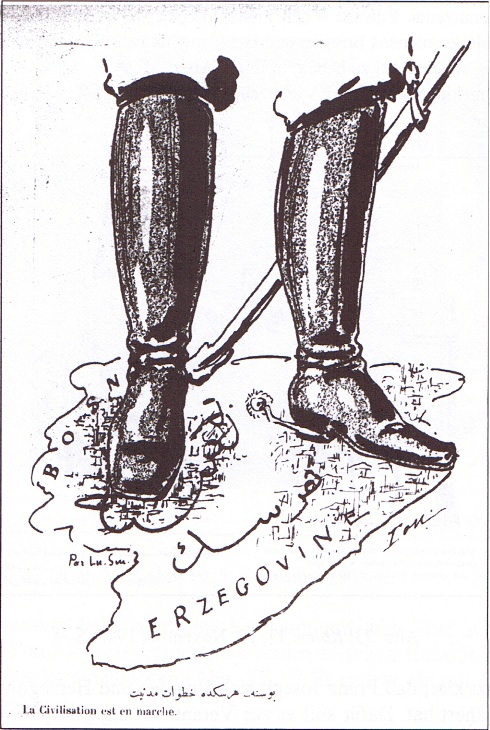
On the annexation of the Balkan regions of Bosnia and Herzegovina by Austria-Hungary (or, the world needs more historical examples)

I find it sad is that whenever something happens that can be compared to history, we get comparisons only to Nazi Germany. Case in point, last week I saw Nancy Pelosi compare the attack on Ukraine to the Sudeten Crisis.

This is problematic in several ways. One problem is that it isn’t the only comparison that can be made. There are many such instances in history where military annexation takes place.  Another problem is that such comparisons lead people to think that things will progress along the same lines.

The solution is to learn more history. This can be hard for non-historians like me. Google is no help. I searched for annexations this weekend and most of my searches returned links to Nazi Germany. We have to research deeper.

When it comes to annexations, there are countless examples throughout history. Take Prussia. If you go through the history of Prussia in the 19th century and look for annexations, you can find many examples. European nations were always annexing their neighbor’s turf, and Prussia was just one such nation to do so.

But you don’t have to go back that far. For instance, you would be wise to read about  the Bosnian Crisis of 1908 – 1909.   In it you can see many parallels to what is happening in Ukraine right now. And that’s just one concrete example. There are many more.

The point is, the next time you want to reach for a comparison to Nazi Germany or you hear someone reference Nazi Germany in comparison to something that is happening in the world, try and read more history and find other examples.

P.S. Note the quote on that image: Civilization is on the March. That’s some disagreeable quote, but not a surprising one.


Colonialism, Churchill, and other things I find interesting in history, February 2022

Recently I’ve been reading more about colonialism, Churchill and more. Here are some links on this.

Recently there was  a controversial article that praised colonialism. This article shows colonialism’s real legacy was ugly. This piece also shows how colonialism was a disaster and the facts prove it.  More dismissal of the idea that colonialism was good: A Quick Reminder of Why Colonialism Was Bad. This argues that: All Britons Benefited From Colonialism, Regardless Of Class. While Britain was a big colonial power, there were others as well. For example, Russia: Empire of the steppe: Russia’s colonial experience on the Eurasian frontier. Finally: 500 years of European colonialism in one animated map.

Related to colonialism, here are some links on Winston Churchill. Here’s two pieces critical of him: The Case Against Winston Churchill and Why can’t Britain handle the truth about Winston Churchill? My thought is anti-Churchillians downplay his role in defeating Hitler, while pro-Churchillians focus mainly on his role in defeating Hitler and downplay everything else. Finally, for a piece that takes into account the complexity of Churchill and his legacy, there is this:  The best books on Winston Churchill.

I disagreed with the monocausal aspect of this piece, The Bomb Didn’t Beat Japan, Stalin Did. Many things led to the defeat of Japan. Russia was one of them, for sure. Still a good read.

I liked this piece by TNC that  talks about Tony Judt: The Man Who Freed Me From Cant. My minor criticism is that Coates has an American centric view and this prevents him to some degree to fairly assessing Judt. But it’s a minor one: I recommend it, as I do for anything Ta-Nehesi Coates writes.

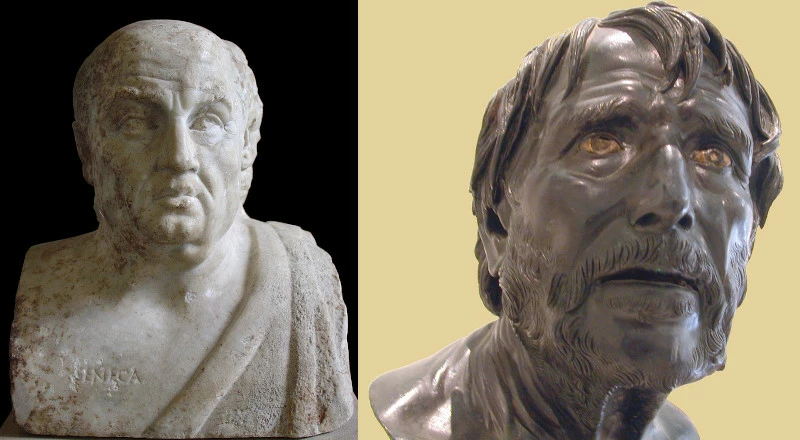
On Seneca, or good advice is good advice, regardless of whom it comes from

I’ve always thought highly of the wisdom dispensed by Seneca. Many do. However, I started to think about it more after reading this: Lucius Annaeus Seneca | Daily Philosophy.

Seneca’s advice is admirable and worthwhile. His life, less so. Read that piece and you will see what I mean.Which is once again why I will conclude that good advice is good advice, regardless of whom it comes from. Not everyone is as consistent in life and thought as Diogenes. 🙂


Late night thoughts on America, China and Africa

Here’s some interesting links I found on America, China, and Africa over the year that I thought worth revisited as we move from 2021 to 2022.
On American justice: There was plenty of turmoil in the American justice system in 2021. For example, the Arbery trial outcome was uncertain:  Nearly All-White Jury in Arbery Killing Draws Scrutiny while the Rittenhouse trial was not: Of Course Kyle Rittenhouse Was Acquitted. The effects of the US Supreme Court becoming more conservative was discussed in pieces like this  Five Justices Did This Because They Could and this It’s time to say it: The conservatives on the Supreme Court lied to us all. Finally a reminder of how terrible capital punishment is in many ways, as this piece shows: They executed people for the state of South Carolina. For some it nearly destroyed them.

On American history: Americans spent much time debating their history, too, in pieces like this, Date of Viking Visit to North America Pinpointed to 1021 AD,
this The Debate Over a Jefferson Statue Is Missing Some Surprising History  this Cancel Columbus Day: Sun storms pinpoint Europeans being in Canada in 1021 A.D., and this: Does America really lose all its wars?.

A special focus was put on the 1619 Project, here The 1619 Project and the Demands of Public History and here The 1619 Project started as history. Now it’s also a political program. Relatedly, this: List of last surviving American enslaved people.

Finally, this bears rereading:  Bertrand Russell’s Ten Commandments for Living in a Healthy Democracy.

China: like the US, China is struggling too. Struggling with it’s young people (‘Lying flat’: The millennials quitting China’s ‘996’ work culture to live ‘free of anxiety’), scandals (Beijing Silenced Peng Shuai in 20 Minutes, Then Spent Weeks on Damage Control), worldwide distrust (As Distrust of China Grows Europe May Inch Closer to Taiwan), and their treatment of  Uyghurs (U.S. Holocaust Museum Says China May Be Committing Genocide Against Uyghurs). And as Xi Jinping gains more control, he is coming under more scrutiny, as seen here China’s Xi Jinping Remakes the Communist Party’s History in His Image and here What if Xi Jinping just isn’t that competent?

Africa: For the first part of the 21st century, China and the US will be the dominant great powers. However as we move towards the 22nd century, the next great power may come from Africa. At the very least, Africa’s rising cities will be dominant.

Happy Boxing Day! Go have a snowball fight! Here’s some inspiration!

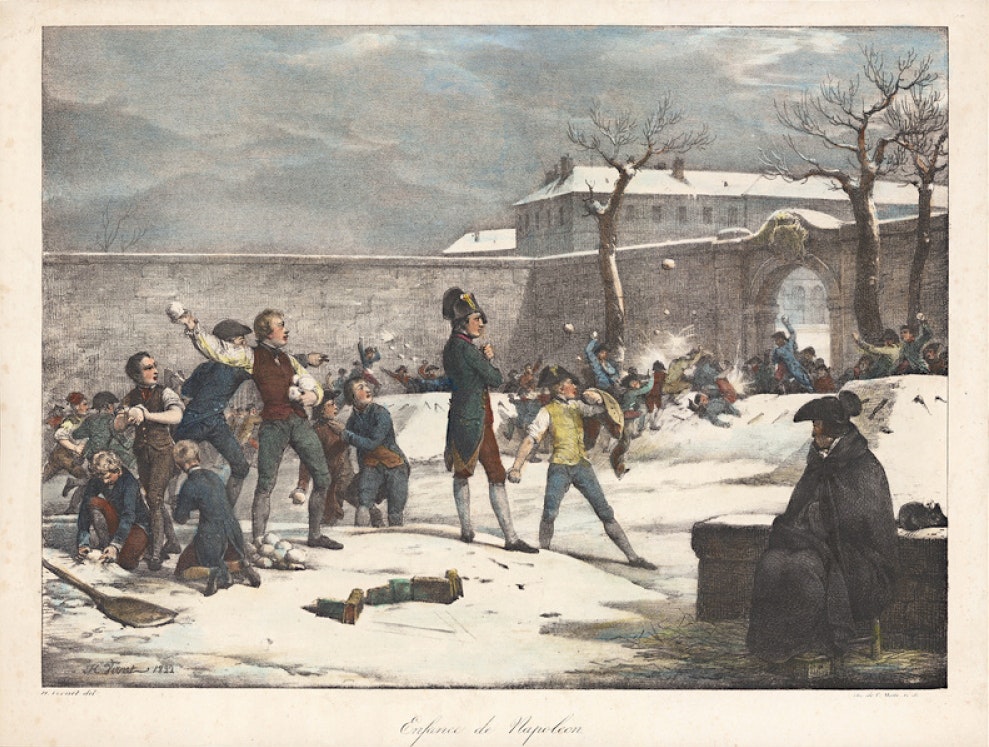
Happy Boxing Day to those that celebrate. It’s always a good day to go outside after all the festivities of Christmas. If you are fortunate to have snow, maybe you can go have a (gentle) snowball fight. Either way, this link is a collection of Snowball Fights in Art (1400–1946) over at The Public Domain Review. Dive in.


A virtual tour of Hagia Sophia


A few years ago I was fortunate to visit Hagia Sophia and get a tour of it. If you ever can get a chance, I highly recommend it. For those who cannot visit it, this might be the next best thing: 360 Degree Virtual Tours of the Hagia Sophia .

I think Hagia Sophia is one of the wonders of the world. See it if you can.

(Image via Wikipedia)

On de Klerk and Hume (and Cromwell too)

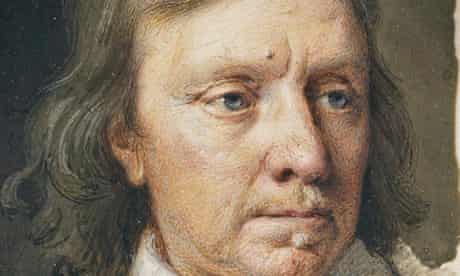
Cromwell
FW de Klerk died last week. While there were many reactions to his death, I thought this one was best. His legacy is complicated. But he has a legacy that is complicated and not one that is simply horrible because of the bold actions he took. I had thoughts on de Klerk, but that piece is better than anything I could have written.

I’d argue that almost everyone’s legacy is complicated. I especially thought that after reading about how David Hume’s tower was renamed last year. I suspect that eventually the only things that will be named after people will be for people whose lives we no longer care about. But who knows? As I wrote earlier, the naming of things (and the removal of names) is about power and eventually those newly in power want to name their things so they become their own.

Perhaps we should not erect memorials at all. Perhaps we all need to be iconoclastic. If we do cast new ones, then the memorials we erect of people need to include the “warts and all” aspects of them. Make the memorials a lesson instead of an icon to worship.

One thing I want to add on de Klerk is that when I was younger, I never thought that the Soviet Union, Apartheid, or the Troubles in Ireland would end in my lifetime. For every de Klerk there was a Paisley in Northern Ireland who would fight tooth and nail to prevent change from happening. But it did happen, because of people like Gorbachev, de Klerk and Mandela, Trimble and Hume. They should be acknowledged for the good they did.

(Image from a story on the painter who painted Cromwell, warts and all: Samuel Cooper)


The wonderful infographics of W.E.B. Du Bois

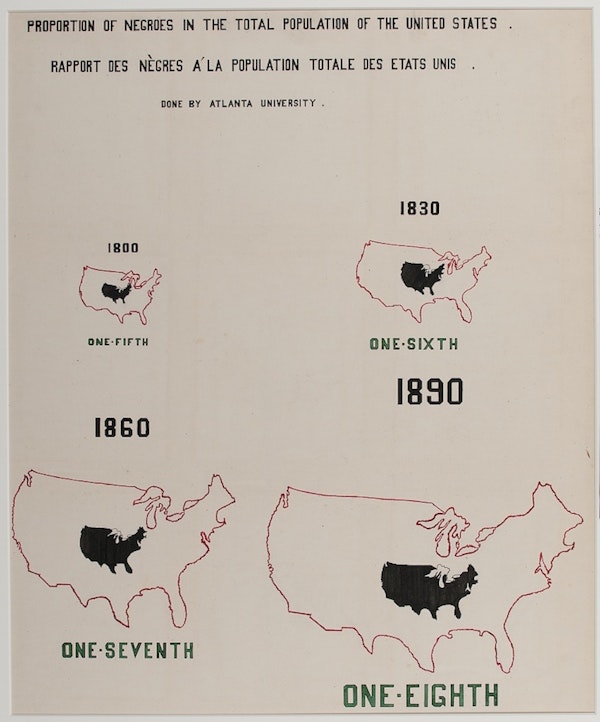
While W.E.B. Du Bois is acclaimed for many achievements, one that I had never heard of until I came across this was how great he was at making infographics: W. E. B. Du Bois’ Hand-Drawn Infographics of African-American Life (1900) – The Public Domain Review.

That piece has several of his works on display, including the one above. Not only are they well designed, but seeing them gives you a valuable American history lesson. For example, this one below uses text and imagery to show how the population of African Americans changed over time in proportion to the rest of the population:

Well worth checking out that article to see more of his work.


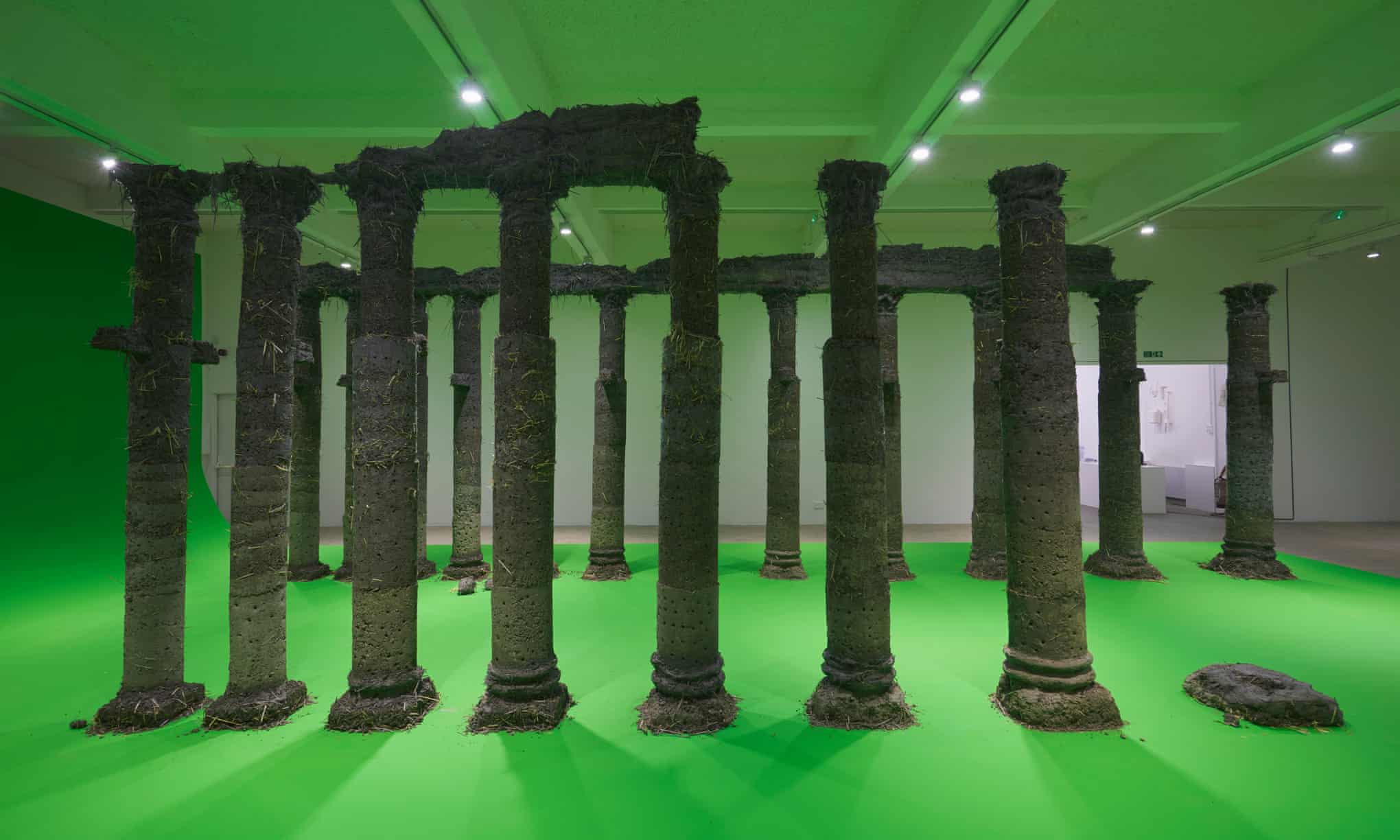
The fantastic recreation of the ruins of Palmyra by Abbas Akhavan


Many were devastated by the destruction of the ancient ruins of Palmyra by Isis. There have been attempts both small and not so small to recreate them. Above you can see how the artist Abbas Akhavan has done it using straw and clay. It’s a wonderful work, and you can learn more about it, here: Abbas Akhavan review – a poetic monument to folly | Art and design | The Guardian.


Consolations from the classics: Seneca and Suetonius

First up, Seneca. Here’s a good piece that summarizes some of the consolation letters he wrote to people close to him. Though they were written centuries ago, they are timeless and worth reading.

Second, Suetonius. Here’s a good piece on why you want to read him:  The Consolations of History. Essentially,  good histories like those of Suetonius give you  perspective that help you deal with your own time. Sometimes they do that by showing you things are fundamentally the same. Other times they do that by showing how much things have changed since that time. Either way you come away with a deeper understanding of your own time even as you learn about another time.

During the pandemic I have been noticing this frequently. People are looking back at the pandemic of 1918-19 and trying to draw lessons from it. That’s a good thing, I think. We can all gain perspective by looking to the past, which is never really past.


Great parts of Toronto: Baldwin Street

Recently there was much discussion around this famous bakery in Toronto: Yung Sing. Many people I know have fond memories of going there and eating their famous pastry. And not just people I know, as this shows: Why Chinese bakery Yung Sing is one of the most fondly remembered in Toronto

That got me reminiscing about the street that Yung Sing is on. Baldwin Street has many famous places that incorporate Toronto history. You can see one example of that  in this piece: Yiddish sign survives threat to last vestige of Jewish enclave on Baldwin | The Star. 

And John’s and Yung Sing are just a few of the great places on Baldwin. You can read about more of them here: Toronto patios: Baldwin St. | The Star. 

That’s an older piece, but there’s still some of those places. And there are other places that are new and great, like Omai.

I miss Baldwin Street. I used to go often before the pandemic. It’s easy to get to from Spadina Avenue and it’s just up from the AGO, making it a perfect destination. I need to go back soon.

If you want to learn more about the street, read this: Baldwin Village – Wikipedia

(Image linked to in the story on the Yiddish sign).

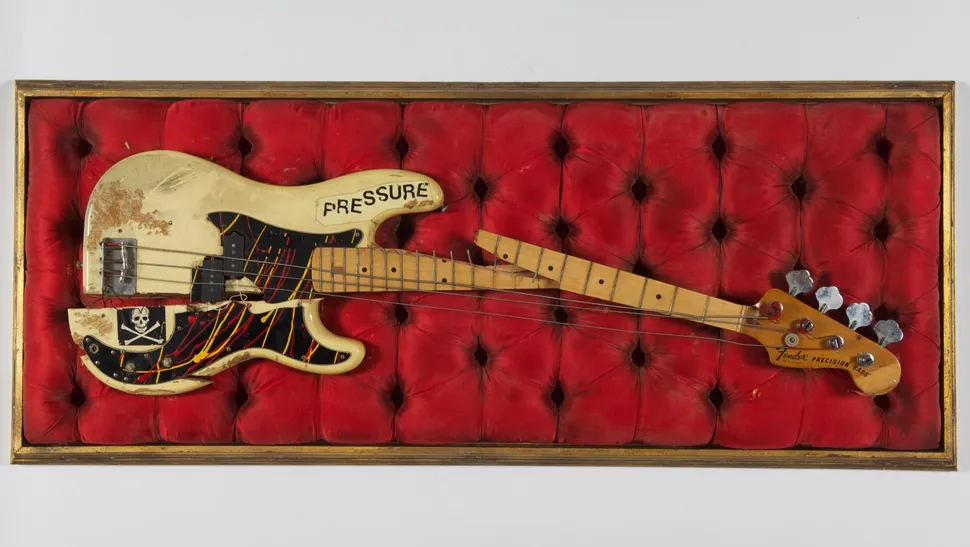
On the historic smashed guitar of Paul Simonon of the Clash

From small moments of frustration, history is made.  As the Guardian explains:

The guitar was last played on stage at the Palladium in New York on 20 September 1979. Frustrated at the stiffness of the audience, Simonon raised his guitar like a giant axe, turned his back to singer Joe Strummer, and brought it crashing down.

That moment was captured on film, made into part of the cover for the band’s London Calling record, and the rest, as the cliche goes, is history.

For more details, see: Bass guitar smashed at Clash gig to join relics at Museum of London | The Clash | The Guardian

(Image via GuitarWorld)

On my study of history in school and out of school

In the United States and Canada recently, there have been terrible events that have driven people to ask: why didn’t we learn about XYZ in school? Tom Hanks devotes an article to this line of thinking in the New York Times, here.

I just have a few things to say about that, based on my own education in history, the education of my kids, and the education I gave to myself post high school.

In Canada there was a big discussion about the Residential School System and why did we not learn about it. I didn’t, and my kids didn’t, I don’t think. What I did learn when I was younger was different aspects of history for each year I was in grade school. In the earlier grades, we studied Nova Scotian history, British history, and Canadian history. We studied ancient world history and then history of the second millenium. We did study indigenous people at the time when the focus was on North America. (As well, we studied Mi’kmaq religion in grade 7, which was interesting). Indigenous people were not invisible in the lessons, and their role was significant at times. That said, the lessons were mainly Eurocentric and mainly focused on major events like wars and politics, though.

I noticed a shift in this when my kids were studying history in grades 7 and 8. There were lessons on injustices in Canada, especially when it came to racist events such as the internment of Japanese-Canadians during World War II. I thought that was a good improvement in the study of Canadian history.

Of course what facts are taught in history, and what are not, changes all the time. This will depend on many factors, from school administrators, teachers, parents, and others. Even what books are available matters. I hope and expect that Canadian history will be taught in a less Eurocentric way, and that Indigenous and people of non-European origin will get more focus. Also important would be more focus given to the role of women in history. That would be a change for the better.

I think it is important to acknowledge, though, that the point of history classes in school is not just to teach facts. For example my kids were learning not just about Canadian history, they were learning how to think about history. That makes a great deal of sense (though learning the facts is good too).

I can say this because I actually stopped studying  history as soon as I could in high school, and I think that is a shame. I found grade 10 history boring, and there were alternative classes that were more interesting in the next two years, classes I took instead. I made up for that later by reading history copiously starting in my late 20s, thanks to encouragement from my brother. By reading people like AJP Taylor, not only did I learn about history, I learned how historical writing could be criticized. I also learned from Taylor how history could be presented in a way different than more mainstream historical writing. I was studying history again. Thinking about it. Thinking about the arguments historians made. Agreeing and disagreeing with historians. Getting to recognize good history from not so good history, at least in a limited way.

I think knowing how to think about history is as important as ever. We are being confronted with our past and the past of others all the time. By being able to think critically of those times, we can better understand our past, our current era, and even ourselves.

P.S. If you want to understand more about how to history is taught, at least in Ontario, see this.

(Photo by Museums Victoria on Unsplash)

Treadmills are horrible and have been forever

A horrific accident with a treadmill happened this week, causing lots of understandable worry. To see what I mean, see this: Peloton recalls treadmills after a child dies | CTV News

If you were wondering if treadmills were ever good, read this: The Torturous History of the Treadmill | Wirecutter

They have their uses, sure. But as equipment goes, they are one of my least favorite.

(Photo by Ryan De Hamer on Unsplash)

The fascinating history of art in the Oval Office of the White House

The New York Times does a great job of telling the story of The Art in the Oval Office. There’s a good story of how it has evolved from Kennedy to Biden, and the Times does a good job of telling it by using various interactive tools. Well worth viewing.

Personally I like how different Kennedy was than the other presidents. But judge for yourself.

Revisiting my views on the Renaissance and the Middle Ages

Growing up, I learned about the glorious Renaissance and the Dark Ages that preceded them. If you learned something similar, here are two articles to set you straight. The first one argues that the Middle Ages (not the Dark Ages, thank you very much!) were pretty interesting, actually. After you read it, I think you will agree. The second one argues not only were the Middle Ages good, but the Renaissance was not all that great. I had to agree after reading it.

I will still have a fondness and a preference for the Renaissance, but I found these two pieces were good correctives for my bias against the Middle Ages.

(Image from the first piece in currentaffairs.org)

Sodom, or when science collides with early religions and folklore

I thought this was fascinating: New Science Suggests Biblical City Of Sodom Was Smote By An Exploding Meteor.

There is an archaeological dig happening that seems to say that a meteor hit the region at some point and destroyed the place people were inhabiting. You can see how this could have been taken for divine retribution, just like the Great Flood was. Then this great event is incorporated into folklore and early religion.

Now how good is this new science? If you read the wikipedia page for Sodom, you can see at the bottom in the section Historicity that shows the claims made and how debatable they are. So maybe this isn’t the actual site and it’s possible Sodom was not wiped out by a meteor. Still, it is fascinating to think about.

(General Photo by John Ballem on Unsplash of a site hit by a meteor.)

The worst ever president of the United States of America (revised) is…

No longer this guy:

Three years ago I argued Buchanan was the worst president, here:
The worst ever president of the United States of America is… | Smart People I Know

But a lot has happened in three years, and I now agree with Tim Naftali who argues that: Trump Is the Worst President in History – The Atlantic.

He makes a strong case. Not only that, but we haven’t even begin to know all the bad things Trump has done.

There have been many bad presidents, from Harding to Johnson to Nixon. But Trump takes the “prize” for being the worst.

One of my favorite photos: nine kings at Buckingham Palace

This may be one of my favorite photographs of all time:


Nine Kings at Buckingham Palace – Iconic Photos

It pictures the nine European Kings gathered together for the funeral in 1910 of England’s King Edward VII.

What I love about it is the illusion of power and permanence it holds. All nine men were soon to shaken by the changes brought on by the upcoming war. All nine would fall from the height they stood on in this photo.

If you go to the link in Iconic Photos, you can get a who’s who of the Kings as well as what happened to them.

More on it here including some wonderful detail, such as the seating list for dinner. Of those gathered around the table, everyone was royalty save the heads of state of the USA and France.

Four good pieces on my hometown, Glace Bay

Anyone with an interest in Glace Bay will find these worth reading:

  1. A COAL TOWN FIGHTS FOR ITS LIFE | Maclean’s | MARCH 15 1954: this was fascinating. A story from Maclean’s Magazine in the 1950s that documented Glace Bay at the crossroads. So much in this piece explains my home town and the people who lived there.
  2. Glace Bay hockey rink’s new name closer to its roots | CBC.ca: a mainstay of Glace Bay is the hockey rink. When I was a kid I lived about 100 meters from it. I spent most of my early days (until grade 10) going to it. So many memories back then revolved around that building.
  3. KEN MACDONALD: Remembering the miners | Local-Lifestyles | Lifestyles | Cape Breton Post: a good piece from the local paper on the mines of Glace Bay and the miners who lived and sometimes died in them.
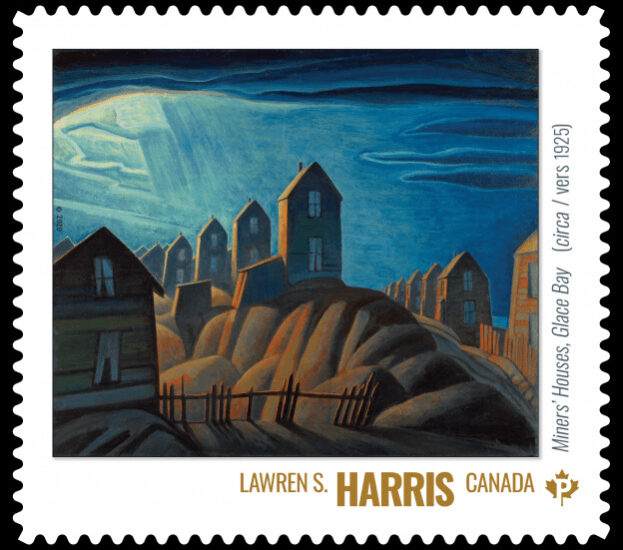
  4. Miners’ houses: Lawren Harris in Glace Bay – Nova Scotia Advocate: finally this piece on Glace Bay with a focus on a famous painting of Glace Bay by Lawren Harris (shown above). It used to be in the AGO and I often paused to reflect on it, and my hometown. Just like I am doing now.

A history degree is still worthwhile and this shows why

More than ever, post secondary institutions are dropping various humanity degrees from what they offer. History is one of them. No doubt part of the reason is because people are not studying history when they attend post secondary schools. I imagine part of the reason people are not studying it is because they believe one or more of these statements:

  1. History Majors Are Underemployed
  2. A History Major Does Not Prepare You for Gainful Employment
  3. History Majors Are Underpaid

That’s too bad. Anyone who things that should read this piece. It makes the case that those statements are myths: History Is Not a Useless Major: Fighting Myths with Data | Perspectives on History | AHA

There is economic value in attaining a degree in history. After reading that piece, no one should be able to say a history degree is worthless.

It goes without saying that there are non-economic benefits to a history degree too. The more I read history the better sense I have of my own time and my place in it. By studying history and the arguments that historians make, I am better able to think for myself. I regret not studying more history when I was younger. I make up for it now by reading history often. I hope you will too. Perhaps even study it in university.

You’ve heard of Pompeii and Troy, but have you heard of the lost city of Merv?


If not, then you might want to read of the city that was wiped out by Genghis Khan with the result of 700,000 deaths. That’s a gruesome statistic, but this is a fascinating story:  Lost cities #5: how the magnificent city of Merv was razed – and never recovered | Cities | The Guardian.

It’s part of a series on Lost Cities, which includes Troy and Pompeii and much more.

The decline in the arts as a bachelor degree major


Can be seen here: Has the Sharp Decline in Philosophy Majors Hit Bottom? (guest post by Eric Schwitzgebel) – Daily Nous.

It is remarkable how much majors in history and philosophy have declined. I feel we need these things more than ever. That said, my bachelor degree is with a major in computer science. I have studied much philosophy and history since then, but not in an academic setting. It would be good to find a way to study them more formally without the commitment of getting a bachelor degree.

There are so many online sites teaching computer science topics. We need more that teach philosophy and history in the same way.

The post-presidential life of Mikhail Gorbachev

If you have forgotten about Mikhail Gorbachev and wondered what he is up to, you can find a rich source of information here:  ‘Crucify me right here’ The post-presidential life of Mikhail Gorbachev — Meduza.

At 88 he is still alive and active. He’s outlived Reagan and Bush Sr and many other leaders of the era when the Soviet Union was collapsing. He’s led a remarkable life, one worth reading about.

(Photo: Mikhail Svetlov / Getty Images; linked to at the site)

The idea of North American and 11 nations…


…Is a good one, I think. I found after I read this book, American Nations, I had a much better appreciation for decision made by people from different regions of the United States, once I had a better understanding of the culture and background of each “nation” and how that affects their thinking.

If you are curious, this is a good article that summarizes the ideas in the book:Which of the 11 American nations do you live in? – The Washington Post

The book is good, though. Worth a read.

The Disaster of Richard Nixon, and thinking about US presidents

A good book on something that people needs to be reminded of:  The Disaster of Richard Nixon | by Robert G. Kaiser | The New York Review of Books.

No matter how bad the current president is, longing for bad former presidents is nostalgia at its worst. It’s good that works like this are frequently published to remind us and give us perspective.

Finding your way with maps (via @austinkleon)

Austin Kleon has a great piece here on the importance of maps, and not as a means of getting around: Finding your way with maps

I love maps too. Especially hand drawn maps. And ancient maps.

I worry that our phones may be ruining hand drawn maps. When I used to take my son to hockey, I would draw my own maps to get to various obscure rinks. Later, I found out about Waze and it was so superior I stopped drawing my own maps. It’s too bad: it would be fun for my son years from now to have those old maps (which I never kept).

This is a map too.

It’s not really about how to get around. It’s a map showing the relationship between things. In this case, the organizations and their computers that made up the Internet in 1969. It does something old maps do: they show us the two dimensions of space and the one dimension of time.

Read Kleon’s piece. You’ll want to go look at maps afterwards, and you’ll be glad.

Why math is great, and other interesting ideas, from Steven Strogatz

It’s hard to say why this interview with Strogatz is so good, other than to say he covers much ground on a variety of interesting topics and speaks lively on them. (Ok, I find game theory, “elegant” math, math education, etc, interesting, but you likely will too).

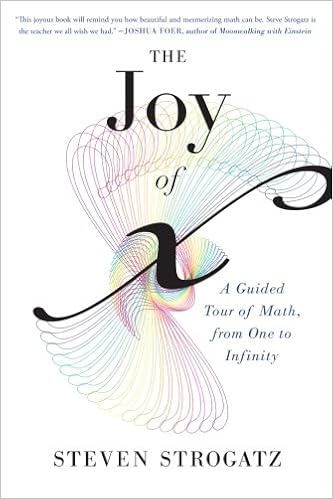
If you enjoyed this interview, he has a recent book out, “Joy of X: A Guided Tour of Math, from One to Infinity.” Worth a look. 

Interview is here: Steven Strogatz interview on math education and other related topics

Can we have greater equality without great catastrophes?

This is the question reviewed here:  Are plagues and wars the only ways to reduce inequality? | Aeon Essays.  (It’s a long read but a good one.)

If you are not familiar with this idea, consider this graph:

The higher the red line is, the greater inequality is. Throughout the last 2000+ years, inequality has been reduced only by terrible events like plague and war.

For a time post World War II, inequality was declining in much of the world. Then, around the 1980s, it started to increase and continues to do so. Now we have a race on. Population declines should occur over the next 100 years, leading to greater equality. To counter that, we have greater automation occurring which may boost inequality as those with the means to control the automation make much of the income and increase their wealth. Will this inequality lead to events that once again levels off the distribution of wealth and income? Or will we reach a balance somehow?

I highly recommend the article. Rising inequality will be one of the great strains on the 21st century, and this article helps to provide some context on the subject.


Before the Kindle, there was Napoleon’s travelling library

And what a library! Napoleon had asked for it to be as follows:

The Emperor wishes you to form a traveling library of one thousand volumes in small 12mo and printed in handsome type. It is his Majesty’s intention to have these works printed for his special use, and in order to economize space there is to be no margin to them. They should contain from five hundred to six hundred pages, and be bound in covers as flexible as possible and with spring backs. There should be forty works on religion, forty dramatic works, forty volumes of epic and sixty of other poetry, one hundred novels and sixty volumes of history, the remainder being historical memoirs of every period.

Even with slimmed down books, that is a lot of paper to be carrying around as your conquer Europe and other parts of the world. I’m sure he would have loved the Kindle.

For more details on this library, see: Napoleon’s Kindle: See the Miniaturized Traveling Library He Took on Military Campaigns | Open Culture

Thinking about Woodrow Wilson (and other American leaders)


Before this piece, I had limited knowledge of Woodrow Wilson. Most of that was centered on the work he did at the beginning of the 20th century, and much of that came from Margaret McMillan’s book, “The Peacemakers” (in the UK) / Paris, 1919 (in North America)”. My impression of him was a giant, transforming the old world with his ideas and his actions, and it was a transformation that was much needed. The world transformed after the first World War, leaving behind much that was bad, and a lot of that was Wilson’s doing.

However, Wilson racism was a terrible thing, and there is no overlooking it. There is no way to say Wilson was simply a great man: his racism and the discriminatory actions he took stain him permanently. He is a complex man, though, and there is no one scale to measure him on.

This complexity is  true for all American presidents. There is a part of Americans that want to revere their leaders. They build them monuments, they sanctify them, they constantly assess and reassess them, be they Wilson, or Grant, or even Reagan. No doubt this will happen to Obama, too. This desire to sanctify leads to trouble, just as it is leading to trouble in Wilson’s case.

Ideally Americans would spend less time idealizing their past leaders and building them monuments and centers like the one for Wilson. Anything like that should include all the history of the person and the time they lived in. Show the complexity of the person, their strengths and their weaknesses, and highlight both what they achieved and what they failed to achieve. Give a full accounting of the person.

(Image is a link to a photo by Mark Makela for the New York Times)

What has mattered most over the last millennium (a list of 10)

Principia Mathematica

This is a fascinating piece: The 10 greatest changes of the past 1,000 years | Books | The Guardian. It’s easy to argue that additional things should be added (e.g. emancipation) and things should be deleted or modified (I would replace “Columbus” with “Explorers”). Indeed, one of the things that makes such lists enjoyable to read and think about is how you would change it. As it is, it’s a pretty good list, and in line with what you see in other works that span time like this (e.g. “Sapiens” by Yuval Noah Harari).

If you liked reading that list, you may like “Sapiens” too.  I’d also recommend The BBC’s History of the World in a 100 Objects.