Having problems reading? Then avoid these books

It’s always tricky posting a list like this, for the minute you do, many people will go over it and disagree with it. They will say, “but The Ambassadors is my favorite book”. Fine. Read this list and decide for yourself: 21 Books You Don’t Have to Read | GQ

Many of these books you will be familiar with. (Ahem, The Bible.) You may have them somewhere in your house. Perhaps on your nightside table. Hopefully this will save some of you from spend time struggling to read a book you shouldn’t even be reading.

Life is short. There is an endless list of books you can read. Read the ones you want to.

A list of films you might need right now is this: the best screwball comedy movies


Here’s a good list to take your mind off these pandemic times: Best Screwball Comedy Movies: List Ranked By Film Fans

And no, it’s not just old black and white movies, great as they are. There’s films as recent as 2019.

The weather is going to be rainy this week (at least in Toronto): take a break and have a laugh by watch one (or ten) of the films listed there.

Can you improve yourself in 10 minutes a day?

According to this, unlikely: ‘Most of us are too busy to be better’: the lazy person’s guide to self-improvement | Life and style | The Guardian

So if you only take 10 minutes to try and improve, not much will happen. But do 10 minutes every day.  10 minutes every day adds up to 60 hours a year. 15 minutes is over 90 hours. You can improve noticeably if you do that.

So what can you do in 10 minutes? Well, HIIT exercise, for one thing. A drawing can be done in 10 minutes: do 365 of them and you will get better. Stretching can be done in that time and you will be more flexible by then. Pick any area you are interested in improving, and practice to be better every day, and you will see improvement.

In praise of gray (the colour)

Gray is a beautiful colour, but it is hard to appreciate. If you feel that way, I recommend this piece, which is beautifully write about this beautiful colour: Ode to Gray

And then there are these quotes by Gerhard Richter about the colour gray.

I’d love to read more such pieces on colours that mean so much to artists. These two artists make me appreciate gray more than I ever did.

Some thoughts on the pandemic and plasticity

Will people be largely changed by the pandemic, or will they revert to the way they were? My initial thought was that people would all be changed to some degree by the pandemic. I am now leaning towards thinking that it will depend on two things: the degree it impacts them and the plasticity of the individual.

By plasticity, I mean malleability but in a way that once reshaped, you likely do not go back to your original shape. Some plastics are very easy to reshape and some are not. I think some individuals are like thin plastic bottles that crumble with the least pressure, while other individuals are more like thick plastic bottles that revert more or less to their original form once you release the pressure on them.

Plasticity is one thing. The other thing to consider is the impact the pandemic has on a person. A person that lost a loved one or their job or their business suffers a big impact. If your biggest impact is missing going out or to the gym or getting a haircut then the impact is little.

Given that, I think the pandemic will change people in the following ways:

Impact vs plasticity Easily shaped Hard to shape
Little Impact Some change No change
Big impact Big change Some change

People easily shaped that experience a big impact  will be seriously changed by the pandemic. Most others will experience some change, and a certain class of person will not change at all.


On Prune, and restaurants in general

Many many people were blown away by this piece written by Gabrielle Hamilton of Prune fame: My Restaurant Was My Life for 20 Years. Does the World Need It Anymore? in The New York Times. 

She’s a great writer, and a great restaurateur, writing about a time of peril for all restaurants.

During the pandemic I’ve thought about it often, as well as the future of restaurants. I don’t know a fraction about the business Hamilton excels in, other than to recognize that even for someone good at it, it’s a hard business. It was a hard business before when places were jammed with hungry eaters. It may well be impossible now.

My hope is that knowing that  restaurateurs are smart, hard working and passionate people.  They have managed in difficult situations before. They will find a way to make the foods that they love and feed them to us. And we will find a way to get out and support them.

I have had a number of meals at Prune, and they have been some of the finest of times for me. Here’s to it and many more places coming back soon and giving us meals and memories that make life worthwhile.

(Image is a link to the Village Voice.)

On the economics of running a restaurant

I don’t know how typical the economics of Prohibition Gastrohouse  in Toronto is with other restaurants, but I imagine they all have something in common with it. If true, then I can’t see it being easy for any restaurant to operate for long in the coming phase of post pandemic, short of getting significant financial relief or radically redoing their business.

To see what I mean, read this: Prohibition Gastrohouse shuts down after 13 years in Toronto and owner says he lost his house too

Is it time for Frank Ramsey to get his due?

In some ways, that question is ridiculous. Ramsey and his ideas are embedded in so many fields of thought, from mathematics to economics to philosophy. However, I had never heard of him before. Or I should say, I had heard of him, but I never thought of him the way I thought of Russell or Wittgenstein or other contemporaries he had.

That might change now. There are two good pieces I recently found, here on CBC Radio and here in The New Yorker. I really enjoyed both. If you do too, you can get a recent book on him called, Frank Ramsey: A Sheer Excess of Powers
by Cheryl Misak
.

Recommended.

Skills you might want: how to make a basic stitch

It’s too bad we don’t get taught more practical skills in grade school. So many of these skills are only taught if you aren’t pursuing college or university. That’s a shame, because how to cook, clean, and repair things are skills everyone should know or be able to learn.

One such skill is how to make a stitch. Here’ a link to 5 Basic Stitches You Need to Know, Plus Other Textile Tips.

Go now and fix that piece of fabric that you love and want to see last a long time. You can do it.

Darebee has great meal plans too (if you feel the need to get off the all you can eat pandemic merry go round)


The pandemic working from home has been hard, and for some of us, eating has been a source of joy. However, I am feeling the need to eat better and maybe even shed a few pounds. For help, I am turning to one of my favorite sites for this: Darebee.

I love DareBee.com for it’s fitness routines and the great posters they provide.  They have made getting in some exercise a breeze. But they have other things to help you get fit and live better too. One section of the site is dedicated to Meal Planning. You can find lots of great items there, including ones to help you transition to a vegetarian meal routine

If you feel like eating better, consider checking this out.

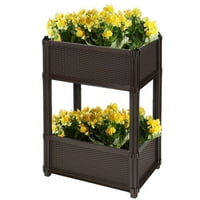
It’s that time of the year and seeing how people are into it, here’s how to start a garden without a backyard


I’m seeing lots of people growing pandemic gardens in their homes using scallions, celery, etc. I think that is cool. If you’ve done that, or if you want to go to the next phase, read this: How to Start a Garden Without a Backyard – The Simple Dollar

I want to add that many dollar stores will have seeds and other things to get started. You can also shop garden stores online and get supplies that way. You have options.

Of course, if you have a backyard or other areas you can plant, go for it. But if you have more gardening ambitions than you have space, give that a go.

How to choose artwork for your home (plus gallery wall ideas)

If you are thinking of improving your home by adding some artwork, this piece can be helpful: How to Choose Artwork for Your Home – Decorology

Among other things, there’s some offbeat examples of how to do gallery walls. Sure, you can do strict grid patterns for your gallery wall, but why not try something different, like that wall shown above?

Also, if you are interested in getting great affordable art, check out the works for sale at Art Interiors. They have gallery wall ideas, too.

Pandemic Challenge: read an entire book in a single day

I realize not everyone can do this, but if you are bored out of your gourd right now and are looking for a challenge, why not try to read an entire book in a single day.

If you think: there’s no way I can do that, then read this:  How to Read an Entire Book in a Single Day.

As you can see, it’s quite possible to do it, and with that article, you have all kinds of advice on how to succeed.

The weekend is coming up. This could be just the thing you need to feel some sense of accomplishment.

Let me know what you read!

My six month rule that destroys my negative certainty

Sometimes – ok, often – I will be down and despairing and I will strongly feel I will never be happy again. When I think that, I fall back on my six month rule.

For my six month rule, I think of the times in my life I’ve been happy and I picture that time. Then I picture the time six months earlier. In that earlier time, I think: could I have predicted that I would be happy six months later? The answer is no, I never could. Then I ask myself: is my ability to predict any better now? And the answer again is no. Then how can you predict you won’t be happy again in the future, I wonder? And I have to answer: I can’t. For me that is enough to break out of my negative fortune telling about the future.

Maybe I won’t be happy in six months. Maybe I will be worse. Who knows? I sure don’t. So I get in with things and hope and work for the best and I stop trying to predict the future and I stop letting this predictions determine the way I feel right now at this moment.

On the benefits of repetition


You might be thinking at this stage of staying home that there is no benefit of repitition. But Darius Foroux makes the case for the benefit of repetition here: All Strength Comes From Repetition.

I get it: you might be sick of the repetition you are currently undergoing. For me, part of that sickness is this pandemic repetition is forced and prolonged and with an unknown end date. But we are all stuck with it. Here’s a way of thinking of it and acting upon it in a positive manner.

Good luck. Get better.

How to hack your workout routine so you do it more


Ok, fine, your workout routine right now might consist of opening the fridge thirty times a day. That’s fair. It’s hard to get motivated to exercise during a pandemic.

But you might be trapped in thinking that a) I am feeling crappy because I am not exercising but b) exercising makes me feel crappy. It’s a dilemma.

I think this article can help you out of the dilemma: Maybe You’d Exercise More If It Didn’t Feel So Crappy in FiveThirtyEight

I’d rather you read it then summarize it. I will say that one way to get out of the rut you are in is to reconsider what you are exercising for. You may have high goals, and if so, great. But if your goals are: “feel better” then there are plenty of ways to exert yourself (i.e. exercise) that are not crappy. A good long walk (preferably with a destination, at least for me), a bicycle ride, or running around the park with your dog (don’t just stand there) can all work. Stretching daily as a way to break from work is useful. Go to the dollar store and get a jump rope and get outside and skip again. Grab a garbage bag and go pick up some litter (I saw someone on twitter doing this). Do some woodworking or do a lot of batch baking (if you haven’t been exercising, you will find this tiring). Plenty of ways of being active. Or do things like the article says: start off hard into your exercise routine but gradually make it easier and easier.

Most importantly, find an easy way to track it so you stick with it. You will likely find yourself feeling better, or at least less crappy.

Generation Jones: the cusp gen, between boomers and Gen X

If you are a member of those people born between 1954 and 1965, you may never felt comfortable being associated with Boomers or Gen X. You may have felt a bit of both and a bit of neither. Congratulations, there is a gen for you now: Generation Jones.

Let me let Wikipedia explain:

Generation Jones is the social cohort of the latter half of the baby boomers to the first years of Generation X.

The term was first coined by the cultural commentator Jonathan Pontell, who identified the cohort as those born from 1954 to 1965 in the U.S.who came of age during the oil crisis, stagflation, and the Carter presidency, rather than during the 1960s, but slightly before Gen X. Other sources place the starting point at 1956 or 1957.

Unlike boomers, most of Generation Jones did not grow up with World War II veterans as fathers, and for them there was no compulsory military service and no defining political cause, as opposition to United States involvement in the Vietnam War had been for the older boomers.

Also, by 1955, a majority of U.S. households had at least one television set, and so unlike boomers born in the 1940s, many members of Generation Jones have never lived in a world without television – similar to how many members of Generation Z (1997–2012) have never lived in a world without personal computers or the internet, which a majority of U.S. households had by 2000 and 2001 respectively.

Unlike Generation X (1965–1980), Generation Jones was born before most of the Sexual Revolution of the 1960s and ’70s.

So, lots of reasons why you may feel unique. And you are. And also this generational explanations for how you are is slightly more accurate than horoscopes, but not much more, in my opinion.

For more on this, see Generation Jones – Wikipedia

You’ve been working from home for awhile. You need to spruce up your space. Here are some ideas. #wfh

Many of you have been working from home for several weeks now due to the pandemic. You may be getting fatigue for a number of reasons with your environment. Worse, you might have to keep doing it for some time to come.

Don’t fret. Here’s 10 Home Office Ideas That Will Make You Want to Work All Day from Real Simple magazine. Lots of good ideas in that piece, and nice photos to offer up some inspiration. Best of all, most of the ideas are affordable. If you can’t get out to shop and don’t want to shop online, consider “shopping your house” (i.e. take pictures, rugs, clocks, etc from other parts of your home and put them in your work space. Hey, you are there most of the time, why not make it shine). Also Google things like “home office gallery wall” or “home office decor ideas” for more visual ideas.

If you feel you need to cut your hair at home…

My first question is: really? Are you absolutely sure? Positive? Can’t just use some hair product or a hat?

Ok, if you are still determined to do the deed, then consider reading this:  How to Cut Your Own Hair at Home (Long, Short, Wavy, Curly, Kids, Bangs) | WIRED.

Despite being in Wired, it is surprising detailed and gives lots of practical advice.

Good luck. And if you are using anything electric to cut or trim, make sure it is well charged and not old: you don’t want them giving out on you midcut.

Tourism posters in the pandemic era


It’s not a fun time, and it’s not an era for travel, but if you want a souvenir of your non-travels from the pandemic, head on over to Colossal and check out:  Witty ‘Coronavirus Tourism’ Posters Advertise the Thrilling Adventures of Staying Home

Better still, if you like the one above, or any of the other ones, visit the artist’s commercial site and buy one!

Hey, what’s the point of (non) travel if you don’t get a souvenir or two.

How good is the new iPhone SE


According to this, it is shockingly good value. You might find that hard to believe, since if you think it looks an iPhone 8, you are right. As the Verge writes, the new SE has…

the iPhone 8’s body, the iPhone 11’s processor, and the iPhone XR’s camera system with a few new capabilities.

So a bit of a combo of different features, all adding up to something many people will be happy to move to.

I have always been happy when Apple puts out lower cost products, because they are never bad, and they put more Apple devices in the hands of people who otherwise might not be able to afford them. I think the new SE will be no exception.

Good phone to get if you are due for an upgrade.

You are tired of being inside. And baking bread. Here’s how to start running outdoors even if you never have

Chances are your exercise routine has declined or even stopped with being inside for the pandemic. If you are thinking about running, but have never run before, then I highly recognize this: How to Start Running Outside If You’ve Never Run Before | Chatelaine

The audience for that article is women, but it can apply to men too (well, other than the sports bra part). I like that piece because it really makes running something low key that anyone can do. Which is good, because almost anyone can! (There are exceptions, but I am willing to guess you aren’t exceptional here.)

The weather is getting more conducive to running outdoors. Read the article, strap on your shoes, and go. Good luck!

Sweden is acting as a control for social distancing

There will be much discussion about social distancing in the future, and much of that discussion will center on whether or not it has been worth it. One of the ways to better discuss this is to be aware of what Sweden has done. Here’s some key points from this piece Coronavirus: Is Sweden have second thoughts on lockdown? | The Independent:

Sweden, in contrast with most of Europe, has not enforced a lockdown on its citizens. In the balmy Easter weather, people sit and soak in the spring sunshine.

Despite the mounting concerns of experts both at home and abroad, Sweden continues what Anders Tegnell, the country’s chief epidemiologist, has called a “low-scale” approach. He insists this “is much more sustainable” in the long run.

But Sweden’s cases are rising. The country of some 10 million now has more than 10,000 cases and 887 deaths. Its total death toll is higher than that of all the other Nordic countries put together.

The government has said repeatedly that the main cornerstone of their strategy is to protect the elderly. Since the beginning of the crisis, they have been asked to stay home but despite these measures, the virus has spread to one-third of nursing homes in Stockholm, which has resulted in a spike in fatalities.

Prime minister Stefan Lofven recently admitted in an interview with daily Svenska Dagbladet that “Sweden has not succeeded in protecting it’s elderly”. Mr Lofven also warned citizens to prepare for possibly up to “thousands” of deaths.

In the long term Sweden may ultimately have less deaths and suffering because of their hands off approach. Right now, they are doing much worse than other countries practicing social distancing.

It has been very hard for people to social distance but they have because they believe it is worth it. Sweden is now acting as a control in this global experiment and may save many lives globally by showing that social distancing is the way to go. I hope they end the experiment soon.

Two ways to relieve stress and be mindful without meditating

The first one is make art. It can be of anything with anything. Draw, make collages, do simple painting. Anything. Why? As David Hockney says:

“We need art, and I do think it can relieve stress,” he said. “What is stress? It’s worrying about something in the future. Art is now.”

And if you can find the ingredients, try and bake bread. It’s also good for getting you to focus on the now and stop worrying about the future.

Read both pieces I’ve linked to. Then get busy.

Eight easy workouts while staying at home during the pandemic

I am guessing that

  • your exercise routine has died (if not, kudos!)
  • you feel like you should do some form of exercise
  • you are feeling worried about doing workouts outdoors

If this is true, you need some workouts to do at home. Now you might be thinking that you don’t have room or equipment or even the energy to workout at home. Think again: these eight workouts below can be done by most people. There’s a combination of things to make yourself more active during the day, from stretching to exercising:

  1. Morning Stretching
  2. Morning Workout
  3. Energy Boost
  4. Reset Stretch
  5. Mini workout while watching TV
  6. Or while playing video games
  7. Office Yoga
  8. Simple workout before bed

All these workout comes from the DAREBEE website, which has an impressive and excellent database of exercises. You can find all the workouts here, and they are all easily searchable. You can find a workout for pretty much anything.

These days of staying at home during the pandemic are hard days. Being inactive can make it harder. Try lightening things up with a bit of physical activity.

Why are people still crowding on TTC during the pandemic?

This is a fine analysis of why people are still crowding on certain TTC routes despite everyone being told to stay home: Mapping TTC crowding during a pandemic | Marshall’s Musings.

Even during a pandemic, some people have to go in to work, and some people don’t have the money to have their own car to do so. Those are the people likely crowding still on the buses.

Maps are a great tool during breakouts of epidemics and pandemics, and this one is no exception (map above linked to in the article).


What is OK Soda?

OK Soda is a product I never heard of before today, and reading about it in Wikipedia, I can see why.  It had a short unsuccessful life, lasting from 1993 to 1995. It was targeted at the marketplace of Gen Xers and echoes so much of that era. The first sentence in the Ok Manifesto — it was a product with a manifesto! – sums up the viewpoint of many people at the time:

  •  What’s the point of OK? Well, what’s the point of anything?

It was fun reading about this failed product and the time it failed in. I can see why it may have developed a cult following.

For more on OK, see this good post  or this piece in Buzzfeed.

It’s a good time to check out the Criterion Channel

If you are tired of other streaming services, or if you want to improve the films you are watching, now is a good time to check out the high quality films on  The Criterion Channel.

Right now they have a 14 day free trial. Now, if you are not a cinephile, the list of films they have could feel daunting. To make it simple, here is a list of 50 essential films you can watch there, with reasons why you want to see them.

If you aren’t sure, you can check out Criterion films streaming on Netflix, Apple TV and more. Consider giving them a try, though.

Do Authoritarian or Democratic Countries Handle Pandemics Better?

There’s already been some pundits claiming autocratic countries have been handling the pandemic better than democratic countries.  This piece on the website for the Carnegie Endowment for International Peace argues differently. It’s worth reading, but a key part of the piece is this:

Despite attempts by politicians to use the crisis to tout their favored political model, the record so far does not show a strong correlation between efficacy and regime type. While some autocracies have performed well, like Singapore, others have done very poorly, like Iran. Similarly, some democracies have stumbled, like Italy and the United States, while others have performed admirably, like South Korea and Taiwan. The disease has not yet ravaged developing countries, making it impossible to include poorer autocracies and democracies in the comparison.

Keep this in mind, especially afterwards, when writers and authorities argue that we need more controls on people to fight future pandemics.

On specific Agile (software development) traps

There’s much positive to be said about the benefits of Agile software development, and the shift of software development teams is one sign that many feel this way.

However, I think there are some limits to Agile, and this leads teams to fall into certain traps over and over. Indeed, the Wikipedia page highlights a common criticism of Agile, namely:

Lack of overall product design
A goal of agile software development is to focus more on producing working software and less on documentation. This is in contrast to waterfall models where the process is often highly controlled and minor changes to the system require significant revision of supporting documentation. However, this does not justify completely doing without any analysis or design at all. Failure to pay attention to design can cause a team to proceed rapidly at first but then to have significant rework required as they attempt to scale up the system. One of the key features of agile software development is that it is iterative. When done correctly design emerges as the system is developed and commonalities and opportunities for re-use are discovered.

Now, it’s not the case that teams either do design or not. But I have seen that there are a number of specific traps bigger that Agile teams fall into that arise from lack of design. These traps arise from making tactical or limited decisions outside of a larger framework or structure, which isn’t surprising since Agile followers are guided by the principles that the “best architectures, requirements, and designs emerge from self-organizing teams” and “working software is the primary measure of progress”. Unfortunately what I’ve seen that lead to is:

  • Poor middleware/database system decisions: with this trap, you get teams making a decision on deploying a specific middleware package or database system that will support the software development they are doing. However, while that may be great for the Dev, it may not be great for the Ops. If you have enough teams making tactical decisions, you may end up with a more complex system than is necessary and greater technical debt that you want. Once you get enough data into your database systems, trying to reverse the decision may result not result not only in new development and testing, but a small (or not so small) migration project as well.
  • Poor infrastructure decisions: likewise, with this Agile trap I have seen teams using IaaS pick different images to deploy their software onto. Like the database problem, developers may choose one operating system (e.g. Windows) over another (e.g. Debian) because they are comfortable with the former, even if the production environment is more of the latter. The result can be your organization ending up with multiple VMs with many different operating systems to support and thereby increasing the operational costs of the system.
  • Poor application framework decisions: I see less of this one, although it can happen where teams pick an assortment of application frameworks to use in creating their software, and as with middleware and infrastructure, this will drive up the support effort down the road.

Given these traps, I think the way to avoid them is to inject some specific design phases into the overall software development lifecycle. One way to do that is to revisit a software development lifecycle (see diagram below) used by practitioners at IBM and documented in places like this IBM redbook. It has a waterfall quality about it, but it doesn’t have to be limited to waterfall type projects. It can be highly iterative.

The lifecycle process is shown here (taken from the redbook):


GSMethod

The part of the lifecycle in the large box is iterative and not all that different from an agile sprint.  But here you take time to explicitly make design / architecture decisions before building  software. You continue to iterate while making important design decisions before building.

Now, before you start your iterative software development lifecycle, you should need to  make specific architectural decisions. You should make these specific decisions in the solution outline and macro design phase. For smaller teams, these two phases may blend into one. But it is here in solution outline and macro design where you make decisions that are fundamental to the overall solution.

For example, in solution outline you could make overall architectural decisions about the application architecture, the choice of infrastructure technology, what application frameworks are the target for the team. These overall architectural decisions guide the dev, test and ops teams in the future. You may also decide to park some of these decisions in order to do further discovery.  Macro design could be next, where each of the dev teams make certain design decisions about their technology choices before they proceed with their iterations. As they are building and deploying code, they can run into issues where they need to make further design decisions, either due to problems that arise or technology choices that have to finally be made: and this is where the micro design phase is useful.  Micro design decisions could be quickly made, or they may require spikes and proof of concepts before proceeding. Or there could be no decisions to be made at all.  The main thing is more design checkpoints are built into the development lifecycle, which can result in less complexity, less maintainability costs, and less technical debt down the road. What you lose in velocity you can make up in overall lower TCO (total cost of ownership).

There is a risks to this type of approach as well. For example, if the project gets hung up with trying to make design decisions instead of gather requirements and making working software. The key stakeholders need to be aware of this and push on the design teams to prevent that from happening. If anything, it can help the key stakeholders better understand the risks before getting too far down the road in terms of developing software. Overall I think the risks are worth it if it helps you avoid these common agile traps.

Highlights and Ramblings (a newsletter, as such)


Here’s a list of  random items I’ve been stashing away while working from home in this time of social distancing and the pandemic. Initially my goal was to create a newsletter, and perhaps I still will create one. Most of the newsletters I get, though, read like blog posts. That’s fine. But then why do I need to create a newsletter, when I can just post here. Plus, it will save you another thing to deal with in your inbox. Read when you have nothing else to read.

  1. Privacy: It’s worrying to me that as people try to adapt to social distancing, tech companies continue to do things poorly. I am thinking of Yelp signing up restaurants for GoFundMe, Zoom selling people’s data, and other tech companies ostensibly tracking sick people using cellphone data. It’s hard to think about things such as privacy abuse with all the fear of the pandemic, but it’s something to not lose track of.
  2. Food suppliers: Before the pandemic, it was a given that pickers would migrate to wherever crops were ripe and pick them, Perhaps not anymore. After this crisis, I think the world is going to need to reconsider so many people they took for granted before, be it food pickers, grocery store clerks, or delivery people. I hope this would mean they would be taken better care of. Maybe they will be. Or maybe the push for automation will come on even stronger. We will see soon enough.
  3. Leadership: Impressed to see that the grocer HEB in the US reached out to Chinese grocers to help them deal with the pandemic. Smart. A case study in good business leadership.
  4. Leadership, pt 2: Trump continues to be Trump: a crisis has not altered who he is or how he acts. All I can say is from my vantage point in Toronto that all three levels of government are being effective. It surprised me by how governments can spring to life during a crisis. I haven’t recalled such strong action since the start of the Great Recession. Not something to take for granted.
  5. Entertainment: As entertainers lost venues, it was heartening to see them take to Instagram and other platforms to perform for us. From singers playing new records to actors like Patrick Stewart reading sonnets was a balm.
  6. Scarcity: it was and is a shock to see sections of the grocery store still empty. Eventually it will return, and toilet paper will go back to being a loss leader versus a scarce product.
  7. Fear: lots of people seem anxious and down, understandably. The efforts of people to deal with that has been a comfort.
  8. Making things: Also, since I seem to have more time, I made a zine, did some painting, wrote some python code to process KML.  Blogged, of course.
  9. Food: Like many  people, I am baking and cooking. I mean, what else can you do? I miss restaurants and cafes and bookstores, though. They feed me with more than food.
  10. Other things: I thought this was a good piece on parenthood: https://www.theschooloflife.com/thebookoflife/the-task-of-parenthood/.  Nicholson Baker followed me on Twitter. Whenever I have interactions with prominent people, I think: oh, I should get serious now and not look the fool. But it doesn’t last for long.