On DevOps, or the important of a good reference architecture when doing IT Architecture

Update: as of July 2024, this reference architecture is no longer available.

If you are designing an IT system, you can greatly benefit from a good reference architecture. A good reference architecture can be:

  • a superset of whatever architecture you design
  • a guide to what is possible in your design
  • a reminder of what is essential and what you may have left out
  • an explainer of all the potentially relevant parts to your design
  • a supporter of whatever architecture you do decide on
  • like a mentor providing you thought leadership and guidance on what works and why you need it

IBM has long put together such good reference architectures. Of all I have seen, this is one of the better ones I have seen: DevOps architecture: Reference diagram – IBM Cloud Architecture Center. It covers all the stages of DevOps, from Planning to  Deployment to Learning. It shows the logical parts of the DevOps Architecture and what tools support that. It reveals the relationships between the parts, both static and dynamic. It reminds you of the things you need that you might not be aware of. I think it’s fantastic.

I think it is great for another reason. Implicit in the architecture is the definition —  at least for IBM and I — of what DevOps should be. It’s not just CI and CD. It’s not just a toolchain/pipeline from Dev to Ops. DevOps is really this entire cycle:

Each stage is important. Too often the focus is on Development and Deployment. But stages like Planning and Learning are an essential part of the DevOps cycle  that are essential not just for code quality but testing quality and ops quality.  It all ends up with better results for all the stakeholders of an IT system, from the business sponsors to the users.

Anyone involved with IT architecture, system design, IT testing, system operations or DevOps in general would benefit from studying that reference architecture.

Here’s how to know when to quit, using math.


Knowing when to quit is difficult. Fortunately, there is science and math to help us, as this article in plus.maths.org explains:

Knowing when to quit is one of life’s great dilemmas, whether to persist in the face of diminishing rewards, or to quit now in the hope of finding richer rewards further afield. For every gold mine, eventually there comes a point when the amount of gold extracted can no longer justify the cost of keeping the mine open; once that point has been reached, it is time to quit, and start looking for a new mine.

Similarly, for a bird feeding on caterpillars in a bush, there comes a point when the calories gained can no longer justify the energy expended in searching for more caterpillars; once that point has been reached, it is time to quit, and move to another bush. And, for a honeybee, there comes a time when the weight of pollen collected can no longer justify the energy required to carry that pollen; at that point it is time to quit collecting, and fly back to the hive.

Fortunately, there is a mathematical recipe, embodied in the marginal value theorem (developed by the American ecologist Eric Charnov in 1976), which specifies when to quit in order to maximise rewards. More importantly, the marginal value theorem has an enormously wide range of applications, from its origins in optimal foraging theory to how brains process information. In essence, the marginal value theorem provides a general strategy for maximising the bang per buck, irrespective of the nature of the bang and the buck under consideration.

Wait you say: it’s Friday afternoon! You know when to quit (at least for this week). Ok, that works too. But if you need more general guidance, read the article.

It’s Thursday. Here’s how to motivate your unmotivated self


I’ll confess, if you skimmed this article, How to Keep Working When You’re Just Not Feeling It, and you saw these subheaders:

  • Design Goals, Not Chores
  • Find Effective Rewards
  • Sustain Progress
  • Harness the Influence of Others

You might think there is not much of value in there. But give it a read. I guarantee you can get at least one idea that can keep you going if you feel you Just Can’t Right Now.

Your next TV should be dumb. Here’s how to go about getting a dumbTV and why


I’ve complained here before about Smart TVs and the problem they bring Thinking of getting a SmartTV? | Smart People I Know. After reading this, Samsung details how its TVs will become NFT gateways – The Verge, I am more determined than ever to try and make my next TV as dumb as heck.

If you are leaning the same same way, I recommend you read this: Why You Should Buy the Dumbest TV You Can Find. I’m certain after you do, you’ll want a dumb TV too.

The next trick is how to find one. They offer some advice, but you may not be sure how to apply it. I recommend you do this.

First, take the TV they recommend. Here it is on Amazon:

Samsung Business QB75R 75 inch 4K UHD 3840×2160 LED Commercial Signage Display for Business with HDMI, Wi-Fi, 350 nit (LH75QBREBGCXZA), Black : Amazon.ca: Electronics

You might look at that and shout: whoa, that’s too big and expensive. The way to find a smaller one is like this. See the model ID in the URL? It’s QB75R. The 75 is the size of the TV. What happens if I search for QB55R on Amazon? Well, I find this:

Amazon.com: Samsung Business QB55R 55 inch 4K UHD LED Commercial Signage Display for Business with HDMI, Wi-Fi, 350 nit (LH55QBREBGCXZA) : Everything Else.

Much smaller, much cheaper. Good! But I also get something else, this string: 4K UHD LED Commercial Signage Display.

If I search for that on Amazon, I get a long list of Commercial TVs from Samsung. Awesome! Now if I search for just: Commercial Signage Display, I get other models, like displays from Viewsonic.

Thanks to Amazon, I have a list of options to choose from. If you want to buy them from Amazon, you’re all set. But you can also list the models and prices and shop around.

Good luck. Stay dumb! 🙂

It’s Monday. How much “fun” have you scheduled in your calendar?


That might seem like a dumb idea, but chances are your calendar is full of events you have scheduled for this week: meetings, appointments, get togethers with friends, workouts. Is fun anywhere there?

It may be. Perhaps going for your regular workout is fun for you. Or that murder mystery you watch each week is fun. If so, that’s great.

If you can’t find fun in your calendar, I recommend you read this piece: Why We All Need to Have More Fun in The New York Times. It can help you figure out how to get more fun into your life. Have you forgotten what fun is? It can help you there, too.

Let me add: keep track of the fun you are having. Some of it — maybe most of it — will actually come up accidentally in your week. Note the circumstances which lead to having fun. Try to include them intentionally in your next week.

Likewise, note the events you planned that turned out to be not so much fun. Perhaps you need a break from them.

Life can be hard and painful. It can also be fun. Make sure you get as much of the latter in as you can. Scheduling your fun can help there.

It’s Monday. Two ways to work better this week: more stretching and less control freaking

Here’s two piece of advice for you on a Monday morning: one is easy, one is hard.

First, the easy piece. You need to work more stretching into your day. Here’s some advice on how to do that. If it has been so long you don’t even remember how to stretch, I give you:

I don’t think you need a dozen stretches (but go for it if that makes you happy). I do four to six for about 20 seconds each and I find that very helpful. I try and focus on the parts of me that tend to get stiff or sore.

Now the hard piece. Does the following apply to you?

  • You’re a perfectionist with high standards (and you don’t trust anyone else to meet them).
  • You want to know every detail of an activity or event: Who, what, when, where, and why.
  • You over-plan and get upset when things don’t go the way you envisioned them.
  • There’s only one right way to do something—which happens to be yours.
  • You get angry when other people mess up your plan, or do things differently than you would.
  • You prefer to be in charge. That way, there will be fewer mistakes.
  • You have trouble giving others free rein to do things as they see fit. Instead, you micromanage.
  • You’re overly-critical of yourself and others.

That list comes from this piece: How to Stop Being Such a Control Freak. If one or more of them apply to you, you could be a control freak. It’s not a good way to be. If you would like to change that, I recommend you read that piece and work towards being less of one. The people around you would appreciate it.

(Image: link from Cup of Jo piece.)

It’s spring. You should freshen up your web site too.

Is your website looking old and tired? Maybe you just need to freshen it up and clean it up. I wrote about how you can do that in around 30 minutes, here: Ok, you have a web page or a web site. Here’s how can you make it look better in no time. I used the guidelines there to refresh one of my sites: berniemichalik.com.

Part of that advice is freshening up your web site’s fonts. If you have no idea how to do that, then you need this: top 50 Google Font Pairings [Handpicked by Pro Designers]. One of the examples is displayed above.

It’s Monday, you need some healthy habits to add to your life. Here you go.

Biking
Now there are a million lists of such habits. However, I liked this recent one from the New York Times: Our Favorite Healthy Habits of 2021.  Here are three of their favorites that are my favorites too:

  1. Enjoy exercise snacks.
  2. Take a gratitude photo.
  3. Give the best hours of your day (or week – B) to yourself.

I’ve been doing the first one and I found it very useful. Even just some simple stretching each day makes a difference. As for the second one, every day I write down one thing I am grateful for and it makes me better too. As for the last one, I do that every weekend when I sit down to blog on Saturday. I need to it more often and during the week, too.

One healthy habit I need to revisit is biking/cycling. If you need convincing, read this by Clive Thompson. Austin Kleon is also a fan. Fun exercise is one of the best healthy habits you can take up.

Spring is a good time to adopt some healthy habits. I hope you can find some.

It’s time for spring cleaning. That includes the art on your walls. Here’s what you should do.

Art work for sale from 20x200
It’s spring cleaning time. No doubt you will be tossing out things from your house as you clean. While you clean and purge, consider tossing some of the things hanging on your walls* that you no longer look at because frankly you are tired of them.  (Yes, you are.)

Now that you have bare walls, I recommend you get some new art for them. If you are not sure where to do that, I recommend one of the sites listed here: 12 Great Places to Buy Art Online | Cup of Jo. I am a fan of one of them, 20X200.

Twelve is a great set of options to choose from, but let me make it a baker’s dozen by adding this place to the list: Art Interiors / Toronto Art Gallery. I’ve been a fan of Art Interiors for some time. They have fine art that’s affordable. If you live in Toronto, you can even visit their gallery. The people there are fine too.

Bonus: Another idea is to check out bigcartel. For example, I found this artist online and she has her work there:Painterlady.

* If you can’t bear to toss your old art, at least store them for awhile and freshen up your walls with new work. But do consider putting things out on the curb for someone else to have. For them it will be fresh and new and valuable. Everyone benefits.

(Image from a link to the blog Cup of Jo)

Stop giving the praise sandwich feedback, and other advice on giving good feedback at work

Image of feedback

Do you use the “praise sandwich feedback” approach at work? If you don’t know it, the approach is this: you take a piece of negative feedback and layer it between two pieces of positive feedback.  If you do know it and use it, consider reading these pieces for better ways on how to give feedback:

We all benefit from good feedback. Deliver it better. I’m sure you can.

P.S. One of the articles argues for Radical Candor. I can see it’s appeal, but I wrote before why it is usually not a good way to provide feedback. My arguments against it are here.

On the importance of intolerance and how it plays out in real life

Intolerance has a bad reputation. People will talk about having “zero tolerance” for something, which means they are intolerant of it, but they don’t want to use the “I” word in case it makes them look terrible. That’s too bad.

We need to be intolerant at times. Otherwise we run the risk that comes from the paradox of tolerance. If you are not aware of that paradox, I recommend you read this.  You may have even come across practical examples of it, such as this: Bartender explains why he swiftly kicks out Nazis even if they’re ‘not bothering anyone’ – Upworthy.

Being intolerant is not just something that is limited to Nazis. I was thinking of this recently when the “trucker rally” moved into Ottawa. That band of malcontents were tolerated by the officials of that city, and things got out of hand.  Meanwhile, they were not tolerated in other cities like Toronto, and things went better for the citizens there.

We see levels of intolerance on a smaller scale on social media. Blocking people is a form of intolerance. I generally put up with bad comments from people if they are infrequent, but others do not and block them immediately. That doesn’t make me a better person, just someone with a higher (and perhaps wrong) level of tolerance.

It can be hard to know what to be intolerant about. Too much intolerance is also bad. Too much intolerance can lead to rigidity which can lead to loss of opportunity, lack of understanding, bad feelings, and even destructiveness. Not all unwelcome behavior leads to a bad end for the tolerant. Be as tolerant as you can be, but have firm limits for those rare instances when you have to be intolerant towards those that overstep them (while understanding what if anything you lose when you take action).

It’s Wednesday. If you need a reset, read this


I often blog about Mondays. Mondays are pivotal days in our lives. Sometimes they are days we dread, sometimes they are days we get ahead and get on with things.

Wednesdays are a different beast. Wednesdays we are in the thick of things. Even on the best of Wednesdays we can feel over our heads and wondering if we are succeeding or even managing.

If that’s how Wednesdays feel to you, read this: How to Make the Most of Your 24 Hours. It’s a great piece on how to reset your approach to your days. You can read it on any day, but I think today is the best day to read it. Take a break and do that. You might find your week improves going forward.

It’s Monday. Here’s how to work smarter and speak better


To be your best at work, you need plenty of skills. Hard skills for sure. But soft skills are the thing you need to really have a successful career. Here’s two good sources of information to help you with those skills.

First, check out this article on how to speak better in public: Demystifying Public Speaking . Whether you are talking to 2 or 2000 people, knowing how to do it effectively is an essential soft skill to have.

Second, if you want to have a long and successful career, you need to work smarter, not just harder. For ideas on how to do that, study this: Why Simply Hustling Harder Won’t Help You With the Big Problems in Life .

Ok, break’s over. Go and have a good Monday!

How to write a long sentence

This piece has convinced me to reconsider long sentences: How to Write a Long Sentence: Tips + Example Sentences. I was skeptical when I first read this:

Long sentences get a bad rap. Because many writers abuse long sentences, cramming too many thoughts into each sentence, muddling up their message and leaving readers confused. So, the main trick to composing a beautiful long sentence is to communicate only one idea with clarity.

After I finished it, I was won over. You will be too if you read it.

Long sentences are like semicolons: easy to misuse but excellent when well employed.

It’s Monday. Family Day. Here’s a guide to getting the rest you need, today and other days

It’s Monday, but it’s a long weekend here on the blog, thanks to Family Day. I hope you are getting a chance to spend time with your family and loved ones.

Long weekends are also good for catching up on your rest. But what sort of rest? It seems like an odd question. But after I read this, I realized it’s not odd at all:  The seven types of rest: I spent a week trying them all. Could they help end my exhaustion?

If you truly want to get some rest, read the article and reflect on what kind you need. For many of us, we think of rest as physical rest. But I know that sometimes I am not physically tired, but emotionally or mentally tired. And in times of great grief, I was spiritually tired.

We all need rest from time to time. Read that and make sure you get the kind you need.

Analog: a beautifully simple non-digital way to be productive

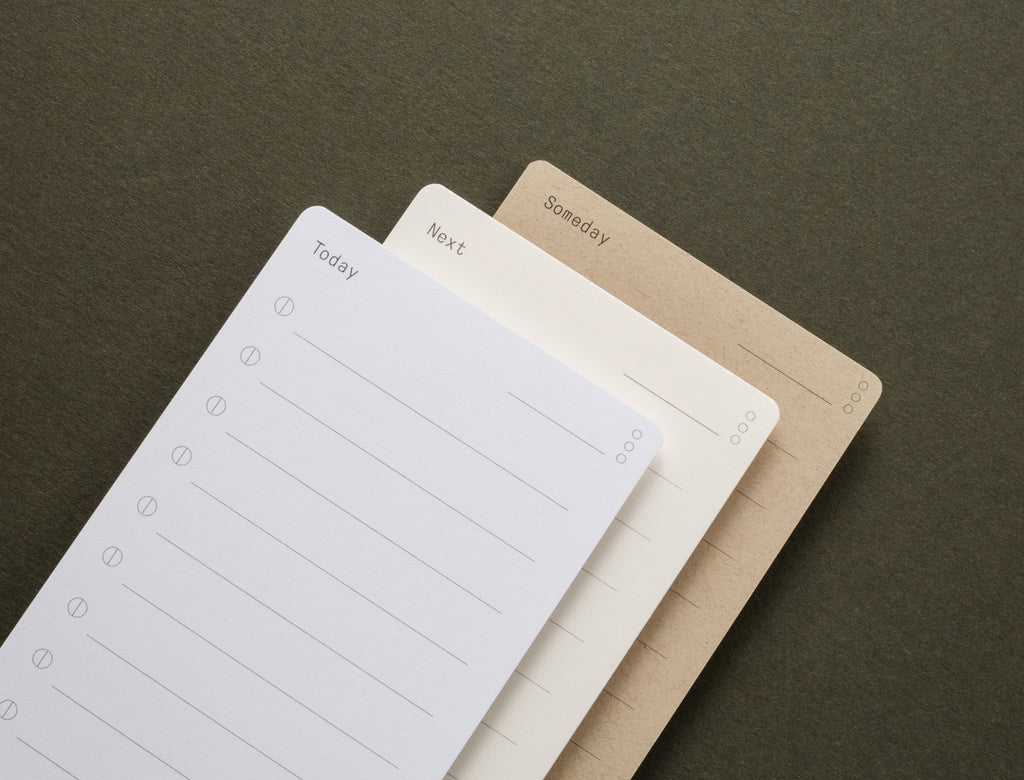
If you find yourself struggling with too many digital tools that don’t seem to help with being productive, consider this tool:  Analog: The Simplest Productivity System – Ugmonk.

It’s a very smart, very simple, and dare I say very productive way to get work done. If you love simplicity or love paper or both, then you owe it to yourself to check it out.

I linked to one of the images, but you really want to see all it is capable of by going to their site.

Hey, I know there is no one tool that will make you productive. But some tools are better than others, and you could find that Analog is one of those tools.


It’s winter. And cold. You could use some flannel sheets

Yep, good flannel sheets can be such a pleasure in the depth of February in Canada. If you agree and you’d like some, check out: The Best Flannel Sheets for 2022 | Reviews by Wirecutter. You don’t have to spend a fortune to get good ones either.

Hey, it’s tough outside: make it nice inside.


Thinking of moving from Spotify to another service?

If you are thinking of moving from Spotify but you don’t want to because you have all these great playlists, then you might want to consider the site TuneMyMusic.com . It’s a service to help you do just that. I haven’t tried it yet but it could be just the thing if you are thinking of going from Spotify to Apple Music or Tidal or one of the other music streaming services.

Thanks to Navneet Alang for point it out.

It’s Monday. Your resume could use a tuneup. Here’s a easy and fast way to do it

Chances are you have a weakness in your resume and you don’t even know it. (I did.) The weakness is the word “helped”. Sure, helping is good, and helping is likely something you did on the projects you worked on. But compared to other words, “helped” sounds weak. I’d advise you to upgrade it. For help on that, see this piece: Stop Saying You ‘Helped’ on Your Resume (and Use These Verbs Instead)

It’s a small thing, but I bet when you make the tuneup you’ll be glad you did.

The way to tell your kids how to live is to show them

There is no one way to teach your kids things. You try things and some things stick and some things don’t. Additionally you as a parent are not the only influence on your kids. Sometimes the things you try and teach your kids is undone by others.

It’s a hard job but it’s worthwhile. To make it slightly easier, I want to share this good advice from Austin Kleon. It’s gleaned from this piece he wrote, Love what you do in front of the kids in your life. Here it is:

You can’t tell kids anything. Kids want to be like adults. They want to do what the adults are doing. You have to let them see adults behaving like the whole, human beings you’d like them to be.

If we want to raise whole human beings, we have to become whole human beings ourselves.

This is the really, really hard work.

Easy, right? 🙂 Seriously, in retrospect I have found my kids have adopted things I have demonstrated love for in my life. Not everything. But more than I could have imagined.

Here’s the other thing. Even if they don’t, you have spent your time doing things you loved AND raising your kids. Some people sacrifice things they loved and went on to becoming bitter and resentful. You have to sacrifice some things when you raise kids: make sure it is not the things truly dear to you. Who knows: your kids may up loving them too. And loving you more as well as understanding you better. What could be a better outcome than that?

It’s Monday. You want to be more productive. Maybe you need to be less available.


With all the ways people can reach you, you may find that you spend much of your time responding to requests and less time doing work you consider productive. Being responsive is good but not at the cost of being unproductive. If that sounds like you, I recommend you read this: I’m Not Sorry for My Delay – The Atlantic.

Much of the time we respond quickly because we feel we must. Being able to comfortably separate the times we must respond quickly versus the times we can respond slower is a worthwhile thing to cultivate. Reading that article can help you get there.

Here’s 100 ways to improve your life by tweaking it slightly


I love this: 100 ways to slightly improve your life without really trying | Life and style | The Guardian. While it’s great to tackle big resolutions in the new year, sometimes small changes are fine.

Here’s a few of the 100 to give you a sense of what they recommend:

24 Start a Saturday morning with some classical music – it sets the tone for a calm weekend.
25 Look closely.
27 If possible, take the stairs.
30 Be polite to rude strangers – it’s oddly thrilling.

I especially like 30!

While the Guardian says they are slight, I think some of them take a bit of work. But see for yourself. Look closely. 🙂

How I track my goals and my year using spreadsheets: my 2021 review. (Maybe you can steal this approach)

I’ve used a number of ways to track my goals and my year, and I have found spreadsheets the best way to do it.

Below are snapshots of the two worksheets I used in my spreadsheet. The first image is the worksheet I use for the goals I have regarding my responsibility for people and other things. The second image is the worksheet I use for the goals I have regarding myself. Each row is a week in the year. If I did nothing to advance the goal that week, I colour the cell red. If I did something but fell short, I use yellow. If I had a good week, the cell is green, and if I had a great week the cell is purple.

What’s nice about using colour like this is that I can zoom out and see how I am progressing over the year.

In the first two columns above I track how much I do for my son and daughter. Pretty good there. The next column is what I do for my brother and sister: I started weak but picked up throughout the year. It was good, and better than last year, but it can be better still. Next column is for keeping in touch with friends. It’s tough in a pandemic but I could email and use social media. The last three columns are my home, my finances, and my involvement in politics.  I was much better with political engagement last year: this year the pandemic wore me down. Likewise I did ok managing my home and finances this year but it could be better. All in all too much red and yellow in those last 2 columns. (Part of the problem is I find them thankless tasks that provide little or no good feedback.)

After my responsibility to others,  my goals are managing myself. I found I did poorly on the hard parts of this but better on the soft parts. lol! The first two columns above are fitness (do more exercising) and reading (do more reading). I get a D to an F grade for much of the year there. The third column tracks how much I draw and do other art. Again, D or maybe a C-. I did well writing (column 4): I wrote every week in my main blog, and sometimes elsewhere.  After that comes column 5 and IT skills development: I got maybe a B- there. Often that takes a backseat to other things. In terms of cooking (column 6) that was easy in a pandemic! I did a lot of cooking and cooked hundreds of different recipes. (I track all the meals separately because I am a nut.)

For a long time I felt homebound and never did things for myself, so I tried to improve that and make them goals. So the last three columns are Treats, Restaurants I’ve tried, and new and good things I have done. Mostly I’ve done well there, compared to reading and fitness. Sigh. Ah well. (Those are easy to do, since the feedback you get once you do them is really good.)

The colour coding is subjective, of course, and in a pandemic the bar to green and purple is lower. But as a consultant, I quite like this way of tracking my goals.

Now I have a lot of goals, I admit. One thing nice about that is that I usually feel like I am accomplishing something. So if I am not getting in shape, at least I am keeping in touch with people and taking care of other things.

I also don’t track everything in a spreadsheet: I have some goals I track elsewhere, for example for some relationships and responsibilities. Likewise I sometimes have goals that are in a limited time window of weeks instead of months: they don’t go here.

It may seem like a lot to track, but I find I spent a few minutes each day then I can get it done. Plus I can course correct this way too and shift my priorities around.

If you struggle with goals and tracking them and moving forward, I recommend this approach. It’s fast and painless.

Here’s to achieving your goals, small and big, in 2022.

Great dumbbell exercises and other good things to get back in shape post holidays

If you are past Christmas feast you may be thinking of getting in shape as a New Year’s Resolution. If so, good for you. But you may need help. Here’s some links to do that.

I am a big fan of dumbbells, both at home and in the gym, and I think they are a great way to get stronger and fitter. This particular guide is one of the best ones I’ve seen: 19 Best Dumbbell Exercises for Building Muscle 2021 | Garage Gym Reviews. If you want to take them up or get back into them, read that.

If you aren’t sure how often you should work out, read this, How to Motivate Yourself to Exercise Every Morning, this Can You Do a Full-Body Workout Two Days in a Row?, and this I Stopped Working Out Daily. Here’s What Happened.

If you want to get started but find the idea of it daunting, read this,  How to ‘Grease the Groove’ and Exercise Easy – The Atlantic and this, From Zero to 45 Days in a Row: How I Built a Habit of Daily Exercise.

Good luck! Get up and go!

(Image from Garage Gym)


How to easily buy wine as a gift at the LCBO


You want to buy wine for a gift at the LCBO. Maybe you know nothing about wine. Maybe you only know a little bit. Unless you know a lot, here’s what I recommend. It’s simple.

Go into your local LCBO. Ask for where the Wines of the Month are. Buy as many of those as your budget allows. That’s it.

You can also go to the web site and look for Vintages New Releases. Once on that page, look for Explore our featured products and click on it. Then look for Wines of the Month. Easy peasy.

What’s great about this is you can be sure those wines are very good and carefully selected by staff at the LCBO. Not only that, but most of the time they are around twenty bucks. Want to spent $40? Buy two bottles.  If you want to spend over a $100, you can consider getting a half case or more. Or mix in a bottle of champagne: you can’t go wrong with that.

If you know what the person likes, then you can buy that. If you know wine, then you should pick what you think is best. Otherwise, follow this and you won’t go wrong.


It’s Monday. The Holiday Season is Upon Us. You need help

The holiday season is upon us! If you need help, The Washington Post has your back with these tips for decorating — and staying organized — for the holidays.

Included are such classics as:

  • How to stay organized
  • How to pick a tree
  • How to do your lights

And more. Don’t fret. You can do it. It’s not too late. Grab a piece of paper and a candy cane and get working on planning, and more importantly ENJOYING, the holidays. Cheers!

You have some difficult things you need to get done. What you need is a hate day


According to this, a hate day is…

…a day each week when I lump together all the tasks that steal my energy to knock them out in one long, extended punch.

So if you have a pile of things you have putting off, that might be a way to do them. Now not only will you get them done, but you won’t be thinking about them all the time.

Some additional thoughts:

  • if a day seems too much, pick a part of the day you think is best. Even an afternoon can be good.
  • if you don’t get them all done, you still got some done. Remember that.
  • treat yourself afterwards if you can. Hey you did a hard thing!
  • give yourself a lot of credit for getting the hard things done. You should be proud!

P.S. Yes, there is a German word for it. According to the piece, it is called a “Kleinscheiss Tag”—or, “little shit day.”


Good gift ideas: books (courtesy of Five Books)


Books usually make good gift ideas. While there are lots of ways to come up with book ideas, one way I think is good is to go to FiveBooks.com and check out their most recommended books. They have them all listed, here.

You can’t go wrong with any of books on the list. In the worst case, you can refresh a copy of a book the person may already have.

How I made my bucket list by making a reverse bucket list

bucket list
Have you been thinking of making a bucket list? A few years ago I was thinking the same thing. Do you get stuck when you try to do it? Me too.  I started creating one back then but it seemed blah and untrue.

Since I was stuck,  I started researching what other people put on their lists.  I wrote down the things people listed and then put them into groups. The main groups looked like this:

  • Fitness goals
  • Creative goals
  • Travel goals
  • Material attainment goals
  • Relationship attainment goals
  • Fame goals
  • Spiritual achievement goals

Within these groups there were subgroups:

  • Fitness goals
    • Complete an event (e.g. 5K/10K/marathon)
    • Complete certain fitness challenges (e.g. 100 pushups)
    • Join a gym / join a team
    • Lose / gain weight
    • Change your diet, go on a diet and lose x pounds, become a vegan / vegetarian
  • Creative goals
    • Write a book, play or poem
    • Learn an instrument
    • Learn how to draw, paint, sculpt, take photography
    • Learn a language
    • Act in a play
    • Sing or play in a band
    • Read certain books
  • Travel goals
    • Visit certain countries
    • Visit cities
    • Stay at certain places
    • Go to certain museums
    • Eat at certain places
    • Meet certain people
    • See specific sites
    • Travel in specific ways
  • Material attainment goals
    • Own a certain vehicle
    • Own a certain home/house
    • Live in a particular place
    • Start a business
    • Save X amount of money
    • Have certain investments
  • Personal and Relationship attainment goals
    • Get engaged / married / divorced
    • Disconnect or reconnect with certain people
    • Have kids
    • Have pets
    • Complete college or university
    • Learn a non-creative skill
  • Fame goals
    • Win certain awards
    • Meet certain people
    • Perform in certain venues
    • Appear in certain media
  • Spiritual achievement goals
    • Perform certain pilgrimages
    • Do specific religious activities

I used this as the basis of my reverse bucket list. I went through those categories and listed all the things I had already done. It was surprisingly a lot.

Then I took things not yet done and separated them into three lists:  Want to Do, Maybe Do, Not Interested in Doing.  The first two make up my new Bucket List.

So now I have a Bucket List of things I want to do, plus a Reverse Bucket List of things that would have been on the Bucket List of younger Me.

A Reverse Bucket List is a good thing to have: it can help you come up with a Bucket List and it can give you a sense of accomplishment. I highly recommend you make both.

P.S. I started thinking again about bucket lists after reading this:  One Thing I Don’t Plan to Do Before I Die Is Make a Bucket List. That’s totally understandable.

Another thought I had is there are things I want to do again. Go to Paris and NYC were things I really wanted to do when I was younger and I did. But I want to do them again. You don’t have to always be doing new and unique things. Sometimes enjoy what is have is the best.

(Photo by Tobi Law on Unsplash)

Thoughts on getting my booster vaccine

I got my booster shot yesterday. It was different from my other two in several ways. My first two were AZ shots at my local pharmacy: this was Pfizer at the Toronto Metro Convention Center. Getting it at a pharmacy is very low key: at the Center it was a process. That said, it was a well organized and fast process. I went from entering the building to sitting in the waiting area in minutes. There are lots of signs and assistance everywhere and well done.

Like my other two vaccines the side effects occurred. I slept a lot. With this one, my arm was sore longer. Also I had flu like chills at one point. Overall though it was fairly mild.

The pandemic is hard. Get your vaccine booster when you are eligible. Get a flu shot too.

Some consolation for “bad” sleepers

man yawning

Are you worried you are a bad sleeper? Do you wake up in the middle of the night often and think: OMG I will never get back to sleep?? Do you fret daily about what can be done about your sleeping?

If those things apply to you, first of all, read this: Shuteye and Sleep Hygiene: The Truth About Why You Keep Waking up at 3 a.m.

The key take away I took from it is this:

A mindset change may be what’s needed. “People might have this belief that they are a ‘bad sleeper’ and there is nothing that they can do about it. Sometimes it’s about changing people’s perceptions of what good sleep looks like.” Taylor says she “really cannot bear” fitness trackers, which monitor sleep, for focusing people’s minds on often inaccurate data. It is wrong to assume that you must sleep through the night, every night, she says. “We all have blips in our sleep – it’s never going to be that you sleep brilliantly all the time.”

Maybe I am not the good sleeper I wish I was. But maybe it is not as bad as I feared. That might apply to you too.

(Photo by Sammy Williams on Unsplash )

It’s Monday. You have a difficult decision to make. Use this approach to make it

a ladder

If you have a difficult decision to make, then the 5-minute ladder rule is a good way to approach it. Essentially the ladder rule allows you ” to climb, one rung at a time, to a resolution. For example, at the first rung, ask yourself:

  • “Will this decision have a measurable or noticeable impact on my people, my company, or society?
  • Is this decision time-sensitive?”

The rest of the rungs and the approach in general can be found here: Stressing Out About a Tough Decision? Make it Easy with the 5-Minute ‘Ladder Rule’ | Inc.com.

Dealing with tough decisions is like falling into a big hole — it can overwhelm us. The ladder rule approach can help you get out of such overwhelming sitations. Give it a try.

(Photo by Andrew Neel on Unsplash)

It’s Monday. You need some inspirational quotes to perhaps fire you up. Here’s 10

EpictetusMark Dymond, a senior leader in my part of IBM, has put together a good list of leadership quotes that I think can benefit a wide range of people. My favorite of them is from one of my favorite thinkers, Epictetus:

Anyone can hold the tiller when the sea is calm.

Check out his list for the other 9. Worthwhile.

(Image of Epictetus from Wikipedia)

If you are writing a bash script to call a curl command and you want to pass variable values to it, read this…

CodingImage
If you are writing a bash script to call a curl command and you want to pass variable values to it, you may find a hard time determining how to go about it. I did!! I consulting with lots of pages, and nothing seemed to tell me what I want.

Here’s what I eventually did.

Take this example. I am using curl to call the sendgrid API, as you can see below. (I don’t have all the variables, but they were all strings like THESUBJECT and THECONTENT.).

The trick is in the use of single and double quotes. For the variables, they are in double quotes. But notice the use of single and double quotes in the curl command:


TOYOU="noone@gmail.com"
THESUBJECT="once again!"
THECONTENT="Looks good!"
curl --request POST --url https://api.sendgrid.com/v3/mail/send \
--header 'Authorization: Bearer '$AUTH_TOKEN \
-H 'Content-Type: application/json' \
--data '{"personalizations": [{"to": [{"email": '\"$TOYOU\"'}]}],"from": {"email": '\"$FROMME\"'}, "subject": '\""$THESUBJECT"\"', "content": [{"type": "text/plain", "value": '\""$THECONTENT"\"' }]}'

Let’s look at the variables in that curl command.

$AUTH_TOKEN has no quotes around it. In fact, it is up against a single quote on its left. That single quote ends the string Authorization: Bearer and let’s the script fill in the value of $AUTH_TOKEN.

Now look at $TOYOU AND $FROMME. Both of those variables have no blanks in them. So there is a single quote-slash-double quote on the left and a slash-double quote-single quote to the right.

that is different than $THESUBJECT and $THECONTENT. Those strings have blanks in them. For them, there is a single quote-slash-double quote-double quote to the left of them and a double quote-slash-double quote-single quote to the right.

It’s crazy but true. Good luck with it!

(Photo by Shahadat Rahman on Unsplash )

Five digital tools to help you with Kanban (plus one analog tool)

Last week I extolled the virtues of Kanban. If you are looking to grab some tech to run yours from, here are 5 open-source kanban boards to help you get and stay on task from TechRepublic. I’ve used one of them (Kanboard, seen above) and liked it. Check them out and see which one works best for you.

If analog is more your thing, consider this tool featured on Yanko design:

You can easily work this into a Kanban type tracker. Plus it looks cool.

For more on it, see it here.

It’s never too late to….

It’s never too late to do many things. And the Times has an entire section devoted to it, here. For example, here is a lovely story on people who fell in love in their 80s. Here’s another fine piece about a woman in her 60s who learned how to swim.

If you are older and you feel it’s too late to attempt to do the Thing You Always Wanted To Do, read those pieces.

This goes for younger people too. Sometimes people in their 30s or 40s think it is too late to do something. Nonsense. It’s never too late to start.  You may not reach the stars, as they say, but you’ll land on the moon. Better than than continually looking up wondering what if.

IBM Cloud tip: take advantage of tags to better manage your cloud environment

Last week I encouraged you to  consider your naming standards before adding services. This week I’d like to encourage you to use tags as well to help you manage your IBM Cloud environment.


As this piece from the IBM Cloud Docs on Working with tags explains, you can use tags to

organize, track usage costs, and even manage access to your resources. You can tag related resources and view them throughout your account by filtering by tags from your resource list. To see a full list of tags in your account, go to Manage > Account in the IBM Cloud® console, and select Tags. You can apply user tags to organize your resources and easily find them later or help you with identifying specific team usage or cost allocation. By creating access management tags, you can control access to your resources without requiring updates to your IAM policies.

Here’s some examples, partially taken from the same piece:

  • Use tags to identify or even manage access to your development environment, not to mention QA, UAT, Production and DR
  • Use tags to identify or even manage access to a project: project:lw-wizard, app:poc-app
  •  Use tags to define compliance requirements: dataresidency:germany, compliance:hipaa, compliance:pii
  •  Use tags to help you automate optimization: schedule:24×7, maxruntime:12days

So use tags: your IBM cloud environment will be easier to operate if you do.

For more on this, here’s a good blog post on tags, here: Characteristics of User and Access Tags on IBM Cloud | IBM

And this piece in IBM Cloud Docs is a good tutorial that will guide you:

…through the steps to centrally manage access to the resources in your account at scale (using tags). By completing this tutorial, you learn how to create an access management tag, add the tag to selected resources, and define a policy to assign access to resources based on the tags on those resources.

Good stuff. Start using tags more and you will find it much easier to manage your resources in the IBM Cloud. If you are unsure, start with a few for now (e.g. tag your production environment, tag resources belong to specific groups).  You’ll start to see the benefits soon.

It’s Monday. You want to be more productive. Toss your todo list and project plans and use a Kanban board


It’s true: we can all get more done if we adopt Kanban boards, as this piece in TechRepublic argues. While todo lists are good, Kanban boards give you more. They show you your backlog (more or less your todo list). But they also show you todos in progress and what state they are in. That’s good. They’re more flexible than a project plan, which is great for when you aren’t sure of what it takes to get done. In effect, they lie somewhere between a todo list and a project plan.

Kanban boards are also good for prioritizing long lists of todos. The tasks that leave the backlog are the ones you have decided are the most important. That’s useful, especially if you are trying to communicate to someone else what is happening and what is on hold.

Kanban boards also give you a sense of progress. Sure there may be lots of things to do, but over time the Done column fills up. It can give you a real sense of accomplishment.

They have weaknesses though. If the tasks you include are too big, they may sit in one column for a long time. If the tasks are too small, they move quickly from backlog to done.  That said, those weaknesses can turn into strengths. Items that are too big should be broken down into parts. Small items can be lumped together with larger items or left off all together.

There’s lots of ways to create a Kanban board. Simply sticky notes can work. You can use a window or whiteboard or even fridge to attached them too. You can also use software tools. You can set up a spreadsheet with the various columns. You can use a tool like Workflowy to manage them. Trello boards are another source. You can even build your own, like I did using IBM Cloud years ago. 

While it may seem that they are tools for IT only, they actually can be used by anyone. For anything.  Moving your home? Use a Kanban tool. Planning a trip? Kanban it. Staging a big event? Well, you know.

So get out your todo list or your project plan and turn it into a Kanban board. You will see results soon enough.

(Image from the TechRepublic article)


So you are thinking of quitting your job during the Great Resignation. If so, read this

If you are thinking of walking away from your job these days,  you are not alone. As the WSJ says:

The ‘Great Resignation’ is on. Here’s what to do about your finances before embarking on the slowdown you’ve been craving.

Wait! You haven’t thought of your finances before quitting? Well stop for a second and read this: How to Prepare Your Finances Before Quitting Your Job – WSJ.

Change is good. Well thought out change is better. So get your finances in place and then make your move. Good luck!
(Photo by Rodion Kutsaev on Unsplash )

IBM Cloud tip: consider your naming standards before adding services

Before adding services to your IBM Cloud environment, consider adopting a naming standard for them. By default IBM Cloud services will give them a unique name (e.g.IBM Log Analysis-4g, DB2-r0). While that may be fine, giving them a name that clearly identifies their role and service (e.g. DB2-Development, IBM Log Analysis for Production) helps the support teams do their job easier. It can also help later if you are deciding to pare back services. If you have 10 instances of DB2 or 100 devices, clear naming standards will also help you decide which ones to delete and which ones to keep.