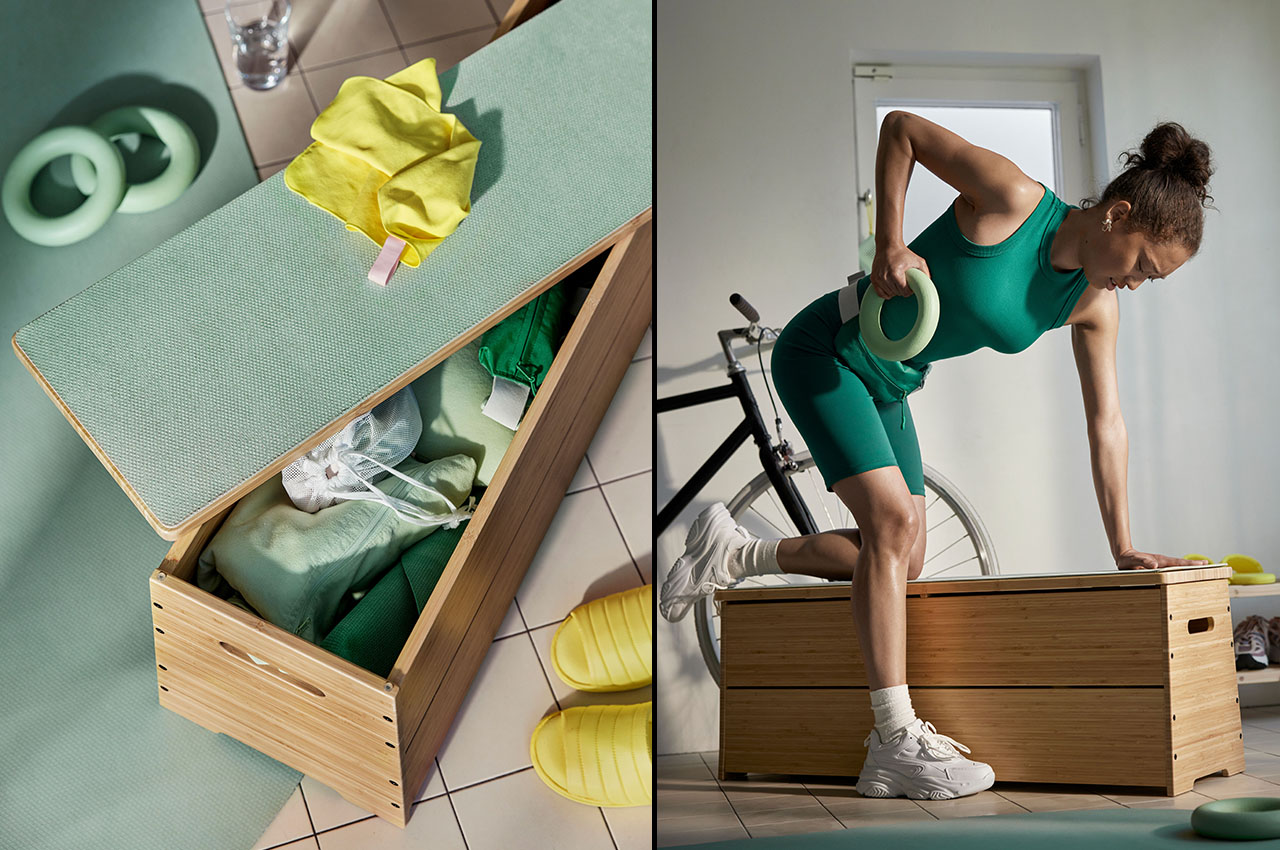
Does your WFH desk / work area need a refresh?


If you are feeling your work from home (WFH) work area needs some new ideas, I think you should check out the following links for inspiration.

For example, this setup was designed to maximize productivity while minimizing your screen time. Also good:  every one of these wfh furniture pieces includes a secret feature to keep your work and life separate. Cool. Cool too are these Panasonic desks: komoru. (More on that panasonic desk, here.)

Need more ideas? Then check out these great  desk setups with minimal designs to increase your work from home productivity.


On Anselm Kiefer’s watercolor paintings

500

I was glad to come across this piece at artsy.com on these Anselm Kiefer’s watercolors. It’s a fine reminder just how great watercolor can be in the right hands, like Keifer’s. It was also a pleasant shock to see him make works so very different than what I am used to seeing from him.  If you know his work, you’ll know what I mean. Regardless of how knowledgeable you are, go over to artsy and check these out.

Toronto is ramping and opening up (random updates on Hogtown, March 2024)

Since I last wrote about Toronto in the fall the Mayor has been busy doing the hard stuff of getting the city’s finances in order. She worked out a deal with the province to upload the costs of the DVP and the Gardiner to the province. She managed to wrangle almost half a billion in cash for housing from the Federal government. (I say “wrangle” because some of the MPs did not seem too happy with her, according to this: How the mayor outsmarted Toronto MPs). And she just finished her 1st budget under with a record tax increase (so says Globalnews.ca). All in all, a pretty strong first year for her.

I can’t say it will be smooth sailing from this point. Before he left, Mayor Tory acquired the FIFA world cup for the city. Not surprisingly, costs are surging.  Mayor Chow acknowledges she and the rest of the city are saddled with it. No doubt it will be a great event: it will also be a drain on Toronto coffers, as this shows. Will she be able to keep voters happy with all these additional financial demands? It depends.

One group of people who might behard to win over will be residents in Etobicoke. They are mad because they now have to bag their own leaves in the fall! Imagine that. I also imagine many a perq unique to certain neighborhoods will die over time if they haven’t already done so.

One of the gems of Toronto, our libraries, were slammed with a cyberattack, and while it’s been slow to recover — it’s hard! — it finally has. Kudos to all the staff and support who managed to pull this off.

In other good news, after years of blockages, my intersection, Yonge and Eglinton, has finally  reopened! (You can see it above.) Yay!  As for other intersections, people have been trying to rename Yonge and Dundas. It has not been a good process, despite good intentions. This argues that people should just stop.

In food news, the couple who ran long time Toronto dining establishment the Rosedale Diner are putting down their pans and retiring after almost 50 years in the kitchen. Wow. I remember going there in the early days and how it was such a great spot to hang out. Especially in the teeny tiny booths in the window.


Relatedly, blogTO has a good story on how Toronto establishments are struggling to deal with diners  working in them. Also in blotTO is a fun piece on the best restaurants near each ttc subway station. For some stations, there’s a wealth of places to choose from. Others, like Castle Frank, not so much.

This might not seem to be a Toronto story, but this piece on how tough it is to get into schools like Waterloo certainly is, because it ties back into some of the high schools in the city. As this piece shows,not all 94 averages mean the same thing. Do some private schools have grade inflation? The universities in the province seem to think so.

In other city stories, the TTC is getting new 60 new streetcars. That’s good. Also Toronto Police arrest kids as young as 14 in a TTC stabbing. Not good. Terrible in fact. Also terrible: Loblaws was blamed for the botched flu rollout in the city recently. Ugh.

Speaking of the flu, if you know someone who has it or other some other ailment and needs cheering up, why not send them flowers? I highly recommend tonicblooms.com if you need someone to order from.

Thanks for reading this. See you again next season. I’ll close off with this poster from the late great Bamboo Club  (below) courtesy of Jamie Bradburn.

A weird week at Wendy’s (and a few thoughts on dynamic pricing)


It was a weird week last week at Wendy’s. First they were talking about introducing dynamic pricing, only to walk it back later: Wendy’s clarifies no surge pricing after CEO ‘dynamic pricing’ comment.

Was this a weird way to get attention? Possibly.  Or possibly some executive had half an idea this was a good idea before the deluge or outrage hit them. (Recommending surge pricing after consumers have been complaining for months and months about food price inflation is a great example of not reading the room. Not to mention people are already annoyed at the cost of fast food these days.)

Look if Wendy’s wants to go with surge pricing, I say good luck with that. (Also good luck with saying “no it’s not surge pricing, it’s dynamic pricing”.) Unlike Uber in bad weather, they don’t have a lock on meals. Anyone with a little knowledge of economics knows people will just substitute them out with other fast food (or a brown bag lunch). Wendy’s does not make Giffen goods. All they are going to achieve is angering their customers.

For a good guide to dynamic pricing, I recommend this. It can be done successfully and lead to greater profit, but you are playing with fire if you are thinking of using it for your business.

On the creator economy and the weakness of 1000 true fans

I found this was a good piece on the state of the creator economy right now: the creator economy can’t rely on patreon. I have no doubt what the author is saying is true: it is very difficult to build up a sufficient number of followers to make it economically viable. If anything, I would say the conversion percentage for some people could be even lower than 5%. I remember in the 80s magazine would expect to get 1-2% conversion of offers sent out to subscriptions coming in. It’s difficult to convert people, regardless if your medium is magazines or social media.

One disagreement I do have with the piece is the critique of Kevin Kelly’s 1000 true fans theory. I would not say it’s true that “the 1,000 true fans theory that we’ve all been sold for the past 15 years – that all you need is a strong mailing list of people who give a shit, and a healthy living will follow….Unfortunately, a theory is all it is.” Kelly states clearly in his piece that “(a) true fan is defined as a fan that will buy anything you produce”. He goes on to state that they are “super fans”.  You might have 20,000 followers on social media, but they are not true fans. The 1000 followers who pay up are your true fans. If you can get those 1000 to pay you $10/month, you should be good in most places in North America.

The problem no longer is publishing your work. Publishing is easy. The problem now is finding super fans, keeping them, and growing them. But that’s always been a problem. You won’t find a single way of doing that.

If there is any weakness with the 1000 true fans theory, it’s that it can’t provide a way to achieve that.


The way to make your Apple Watch more useful is to change your App View

If you want to make your Apple Watch more useful, you want to change your App View. Here’s how.

On your iPhone, find the Watch app icon and click on it. Look for App View and click on it. From here you can change the view to Grid View. (Grid View looks like the watch in the photo above.) Now click on Arrangement.

Once in Arrangement, hold your finger on an icon of something you use often. Drag your finger tip and the icon to the top left. Keep doing that so all the Watch apps you will use the most are on the top rows. Once you have it the way you like it, exit the Watch app.

If you are stuck as to what to put on top, my top apps are:

  1. Stopwatch
  2. Workout
  3. IFTTT
  4. Weather
  5. Text
  6. Phone
  7. Calendar
  8. Heart rate monitor
  9. Activity
  10. Maps

I have a few dozen more Watch apps, but those are the ones I use often.

If you want to see what you can have on your Watch, go back to the Watch app on your phone and scroll down to see what apps are installed on your watch and what ones you can install.

Once you rearrange the Watch apps,  press in the crown on your Watch. You will now see the Watch apps organized the way you want. I bet you start pressing your crown more to access and use the apps you have installed.

The Apple Watch is great. Squeeze more greatness from it by taking advantage of the Watch apps you have.

Thoughts on the baseline scene in BladeRunner 2049

500

I want to point out this fantastic essay on the baseline scene in Blade Runner 2049. I loved reading it because I learned some fascinating background about the film and I reexamined both films in a fresh light.

For instance, watching the sequel I didn’t think much about the lack of Voight-Kampff devices. Those machines are essential in the first Blade Runner. But in 2049 they are obsolete of course because replicants have advanced so much since then and there are different ways of identifying them. In 2049 the challenge is not identifying replicants: the challenge is keeping them from becoming something other than replicants. That’s what the machine above comes into play. I hadn’t thought of that until I read the essay.

My only insight into the machine above came from a recent CT scan I had. Lying on the bed below, I looked up and saw a device similar to the machine above! I was somewhat shocked. It’s not quite identical, but I would not be surprised if the set designers got the idea for it from the Siemens machine below. After all, both are providing insights into the head in front of them.

If you are a fan of Blade Runner like I am, read the essay above. You’ll be glad you did.


How to assess the value of an education in the humanities (or indeed any college education)

In discussing the value of an education, things often get muddled up. That comes across in this essay in the New York Times, where the author who teaches humanities confesses she is not sure of their value.

That’s too bad, because the humanities obviously have value. A humanities degree may not. The difference hinges on the word value. Let’s take a moment to examine that essential word in relation to a college education.

The value of a college education can be looked at in two ways: it’s economic value and it’s non-economic value.

If you go to college and get a degree, there is an economic cost associated with that. There are the costs of going to a school of higher education, such as tuition, books and even residence. There are also opportunity costs: I might forgo getting a job right after high school in order to attend school and as a result I lose the salary I could have made at that job. Both sets of costs need to be accounted for.

Besides the costs, there are the economic benefits of going to college. The job I skipped to go to college may have paid me $X dollars over 20 years. If I studied medicine and become a doctor, then I may end up making $X+Y over 20 years. The additional Y dollars is the economic benefit of going to college.

Take all that, subtract the economic cost of going to college from the economic benefit, and you get the economic value.

Of course you get more than economic value. You gain knowledge and skills. You might learn to live independently in a new town or city. You could meet people who become lifelong friends, perhaps even your spouse or partner. The  non-economic benefits you acquire from going to college go on and on.

The challenge humanities (and even undergraduate science) degrees have is they no longer have the economic value they once have. The time you spend gaining a degree in English literature may have enriched your life forever, but it likely won’t get you a good job the way it did for the boomer generation.

If people are going to formally study subjects in post secondary school, there either needs to be some economic benefit to doing so or the cost has to be drastically reduced. Otherwise most people will stop going to college and university and start going to schools that provide more focused practical education and greater value to them.

In some ways that would be a good thing.  College may be the best way to study classic literature, or practice computer science, but it is hard to do it all there.  You are pretty much forced into a lane when it comes into choosing courses at school, be it in math or philosophy or theatre. Unless you have lots of money and time, trying to learn a diverse range of subjects in school is prohibitively expensive. The only way of gaining all that value is outside an academic environment. People need to learn how to gain that outside a four year degree program. Education should not be something that ends in your early twenties. It’s also something you go into lifelong debt for, either.

The humanities have value; it just may not be economic value. The challenge we have now is providing that particular value to people outside of costly college programs. It a challenge to us both as individuals and as a society.

P.S. Throughout this essay, I used the terms college and diploma. You can easily replace diploma with degree or certificate gained from any post high school institution that resembles a college.


IKEA is expanding (their product lines)

It seems like IKEA is making forays into things other than furniture these days. For example, here’s a story on their smart home monitoring products. Here’s another piece on the exercise equipment they have.They’re even repurposing their old uniforms into a new lifestyle collection (see photo above). That’s all great to see.

I knew how they were doing things like air purifiers and small speakers. I’m glad they continue to offer new things for the home besides furniture. Kudos to them.

P.S. These aren’t IKEA, but they are cool desks for people that like IKEA products. Worth a look.


Private jets are a sign of excess in general. Not just for one individual.

There was a lot of chatter around private jets last week as a result of Taylor Swift’s lawyers threatening to sue a person tracking her jet on social media. There’s a whole bunch of PR and legal maneuvers around that I won’t get into.

One thing that came out of that hullabaloo for me was finding this site: climatejets.org. While I don’t hold the creators of the site accountable for total accuracy, I do think it is accurate enough to highlight the fact that many wealthy people in the world use private jets a lot. And why wouldn’t they? Private jets do four things for rich people: they are efficient, they are private, they are status symbols, and they use up the excess amounts of money they have.

The focus on private jets has been centred around climate change. I think some of that focus should be on economic discrepancy. People use private jets because they have vast amounts of money and we have great inequality in our societies. If tomorrow someone invents private jets that run on clean energy, they will still highlight a problem in our society. It just won’t be a climate problem.

In our age of great inequality, it’s not enough to own large mansions or fancy cars or be surrounded by body guards. In our age, you need your own jet to bounce around in, whether you be Jay-Z or Bill Gates.


Do you love music? Then you want to read Absolutely on Music by Murakami and Ozawa

The great conductor Seiji Ozawa died last week. The New York Times has his obit here. If you don’t know much about him, I recommend you read that obiturary.

Regardless of how much you knew of the man, if you haven’t read it already, I hope you have the chance to read the book he did with Haruki Murakami, Absolutely on Music. Anyone who loves music will get something out of this book, which is a document of six conversations the two men had. (It’s a podcast before they were a thing, so to speak.) And no you don’t have to be an expert in classical music to get enjoyment from reading it.

Here’s a review of the book. And here more on the book from the publisher.

Get a copy today.


It’s the weekend. You’ve much to do but you still would like to watch a movie. Got 90 minutes?

Nowadays movies seem to be getting longer….many creeping up to 2.5 hours in length. (Don’t believe me? Check out this.) That’s fine if you have the time to settle into a film, but what if you can’t? What if your weekend is already packed as it is, but you still would like to see something?

If that’s your problem, then Lifehacker has the solution here: the best movies under 90 minutes. The list has everything: classic movies, kids movies, films that are fairly recent….you name it. Even better, it tells you where you can see it.

Highly recommended for your next sit down in front of the big screen at home.

A Scratch Ticket Vending machine! Win fame!

I love this: truly a vending machine for our times! Instead of scratch tickets that promise us fortune, these scratch tickets promise us fame! Well, if not fame, then many more social media followers. I guess that counts for fame in this day and age.

For more on this amazing vending machine go here.

P.S. Dries is a brilliant artist / technologists: check out the rest of his site, here.

Some quick thoughts on the Apple Vision Pro

Apple is a computing hardware company: if there is a market for a new form of computing hardware out there, Apple will make it. It was true of digital watches, smart speakers, and various forms of headphones. It’s now true of wearable AR/VR devices with the Apple Vision Pro.

The price doesn’t matter for now. If Apple is lucky, rich people will make it a Veblen Good like many of Apple’s Pro phones. Rich people like CEOs will want to be seen using it, even for a short time. Wannable rich pretenders like influencers will show it off too. All this buys time for Tim Cook and his COO to ramp up production for the next version. Who knows: in a few years there could be an Apple Vision SE?

The size doesn’t matter for now. IT always gets smaller in size or scales up in terms of capacity, and I suspect the Vision devices will do that too.

As long as Facebook/Meta is making these type of devices, I expect Apple will too. And once enough apps exist, expect other hardware manufacturers like Samsung and Lenovo to come out with their own version.

It’s possible that the Vision devices will be a dead end. They could end up like Apple TV. I suspect that won’t happen, but anything can happen. I suspect they will be like other wearable devices Apple makes: they won’t replace the Phone or the Mac, but they will be something in Apple’s product set for at least the next five years.

Let’s see what happens, now that Apple has committed to the device.

P.S. Two good reviews on it are in the New York Times and in the Verge .

Also, I still think spatial computing is the real story behind the new device. I wrote about that here.

It’s hard to think of an Apple device being a flop, but as I wrote here, it does happen.

Five good pieces on five great artists for a Friday

The great  Cindy Sherman has a show at Hauser & Wirth on Wooster Street in SoHo NYC. The Times took the time recently to do a long profile on her. I really enjoyed it. It also has a straight up photo of the artist and it was surprising for me to see.

David Shrigley has a very Shrigleyesque work in Australia that involves tennis balls. Click the link to see more to see what I mean by Shrigleyesque.

The Guardian has a review of a Robert Mapplethorpe photography show and they are not keen on it. I was not keen on the review.  If you want to just skip that and check out the (NSFW) show, go here.

The National Gallery of Art in the US was granted a treasure trove of work by the artist Joseph Cornell. You can read more about that, here. (One of his boxes is pictured above.)

Finally the great artist Giovanni Anselmo, of the ‘arte povera’ movement, has died. You can read more about him and the movement, here.

I’m back and rambling into 2024 (i.e. the January 2024 edition of my not-a-newsletter newsletter)

After missing last month’s newsletter due to being in the hospital with life threatening injuries, I thought I might just skip on writing my weird newsletter this year. But then I found some good things to share so I thought: let’s celebrate the end of January 2024 with at least one more.

As far as January’s go, it’s been a relatively mild one, other than one week of polar vortex weather. Indeed, there’s been much mildness all around.

Pandemic-ally speaking, it’s also been a bit of a mildness in January in terms of COVID, as you can see from the Ontario wastewater signal:

Before Christmas 2023 there was a lot of talk of the new covid variant JN1 and how it could overwhelm hospitals like those in Ontario, but if it did, I suspect that is subsiding now. If anything, we are now seeing states like California and Oregon break with CDC guidelines and tell people you don’t have to isolate so much any more. As I said last year, 2023 should be a transition year for COVID. It will always be with us, like colds and flu, but we will make less and less of an issue of it by and large.

As for inflation, it’s also looking pretty mild, as you can see from this graph from Reuters:

A remarkable change from the peak of the pandemic. We have been living through some wild years. We could use some more mildness like this and a return to the way it was before the pandemic.

This is not to say everything is going back to pre-pandemic days. Take work. While there has been some people returning to the offices, I am not certain staff will ever fully return. For one thing, workers are more productive working for home. For another, cities and landlords are starting to accept it. New York is in the lead here I believe, with their Office Conversion Accelerator Team. There’s already a pack of offices with conversions underway. I expect more cities to follow NYC’s lead.

A new trend at work is the annual January layoffs. Tech companies like Google and Microsoft went through another round of year beginning job cuts, though it wasn’t limited to those two companies. And layoffs weren’t limited to tech, as anyone in the media can tell you. It was a brutal January for that industry. And then you had inexplicable moves like Conde Nast folding Pitchfork into GQ. Weird.

Relatedly, this piece on the history of the website Jezebel is the story of media from 2008 as told through this one property, imho.

As for that other form of media, social media, there’s really only two platforms that seem to matter anymore: TikTok and Substack. (Sorry, not sorry, Elon.) Here’s two Tiktok stories: one on the sleepy girl mocktail and one on cleantok and performative hygiene. Ugh. As for Substack,  this and that report on Substack’s Nazi problem. Good lord. An overall sad state of affairs when it comes to social platforms.

I would like to say anything to do with web3, bitcoin, crypto, NFTs, etc is dead as a doorknob…but no. Like zombies, it’s coming back in the form of bitcoin ETFs from major asset managers like BlackRock and Fidelity. Caveat emptor, people.

I had some links to share regarding Taylor Swift and Barbie, but honestly you can easily search for that with your favorite search engine. Heck, you don’t have to search for it: go to any major website and they will have a story on them. Three or four stories, even.

I greatly enjoyed watching the Netflix series The Crown during the last few years. Here’s something ranking  every episode of the series. A nice way for fans like myself to relive it.

One of my favorite films of all time is Moonstruck. The director of that film was Norman Jewison, who just recently died. The writer of the film, John Patrick Shanley, has a good remembrance of making that film with him, here. Highly recommended.

Last, here is an image of one of my favorite restaurants of all time, Prune, closed during the pandemic. I love the image of it below, and if you love it too you can buy it, here.

As always, thanks for reading this. See you in a month, I hope.

Six cool things to start off your Monday

  1. This obit of Red Paden, the “Juke Joint ‘King’ Who Kept the Blues Alive” is great not just because of the man himself, but the culture and history his life embodied. Well worth a read. (Image above from that article by Rory Doyle.)
  2. For fans of David Byrne (like myself) who like to dance (not me), here’s how to dance like David using this easy to follow instructional video.
  3. For fans of Rubik cubes and those who want to solve them.
  4. Here’s a piece on the world’s smallest car which comes as a kit that you can build yourself. Amazing.
  5. I love Charleston and I love maps, so I really love these 7 amazing illustrated maps of that city. (Map by Lucy Davey from this article.)
  6. This was as good of a story on the month of January as I could imagine. From the Paris Review.


Philippe Starck: industrial designer

While I do love Philippe Starck for his designs both personal and furniture,  I also admire his work with regards to industrial design. Take the Hydrogen refueling station he created above. Yanko Design has the details:

In the latest venture with HRS (leading European manufacturer of hydrogen stations), Starck has created one of the most striking hydrogen refueling stations you would come across. Dubbed HRS by Starck, the prototype of the refueling station is currently on show at the COP28 climate summit at Expo City Dubai. Being a part of the Green Zone hub (dedicated to decarbonization and energy transition) the creation leverages HRS’s high-capacity refueling prowess and Philippe’s innovation to make possible such a resourceful collaboration.

Amplifying the core idea of clean fuel transition, the fuelling station takes an almost invisible form, just like Hydrogen which is inherently a colorless, clean gas. The fuelling station is made out of polished reflective steel material, as Philippe envisioned it in his mind to have the essence of disappearance. From the very beginning, Starck was crystal clear about the form of the HRS by Starck hydrogen refueling station. This smart-looking device mimics the character of disappearance, dissolving from the viewers’ eyesight, only to reflect the surroundings.

Very cool. Now I underlined the word prototype because who knows if these will be rolled out. I’m hoping they will.

Here’s to better industrial design everywhere. Starting with these.

It’s winter. Time to curl up with a good…list of tech links :) (What I find interesting in tech January 2024)

500Wow. I have not posted any tech links since last September. Needless to say, I’ve been doing alot of reading on the usual topics, from architecture and cloud to hardware and software. I’ve included many of them in the lists below. There’s a special shout out to COBOL of all things. Is there something on DOOM! in here? Of course there is. Let’s take a look….

Architecture: A mixed bag here, with some focus on enterprise architecture.

Cloud: a number of links on cloud object storage, plus more….

COBOL: COBOL is hot these days. Trust me.

Hardware: mostly but not exclusively on the Raspberry Pi….

Mainframe/middleware: still doing mainframe stuff, but I added on some middleware links….

Linux/Windows: mostly Linux but some of the other OS….

Software: another mixed bag of links…

Misc.:  For all the things that don’t fit anywhere else….also the most fun links….

Thanks for reading this!

Habit List: an app that has really helped me with keeping my habits

If you are looking for an app that can help you form good habits, I highly recommend this one: Habit List

Things I like about it:

  • it is easy to add new habits to your list
  • you can decide the frequency of the habit: daily, weekly, 3 times a week, etc. It’s very flexible
  • it’s quick to update
  • you can track your streaks, completions, and best streaks which I find motivating
  • you can set reminders
  • you can export your data
  • it is priced reasonably: you can track a few habits for free and after that I think it has a one time charge of less than $10. Compared to some apps that want you to pay over $100 / year, it’s a bargain.

Check out the link above for more details. If it sounds good, download it for free and start with a few habits you want to work on. I think you’ll be glad you did.


Have we reached peak chore coat yet?


It looks we have reached peak chore coat, based on this: How Paynter Jacket Co. Found Success With Limited-Edition Chore Coats )in The New York Times).

I’ve seen more and more men wearing them, especially around the time of peak pandemic. But men have been wearing them for ages. In some ways a chore coat reminds me of a denim jacket: once the domain of workers, it has been absorbed by the fashionable.

If you’re interested, note that you don’t need to snag a limited-edition version that costs hundreds of dollars. You can see plenty of them on ebay, for example. Plus some retailers sell them from time to time. I purchased some at Old Navy not too long ago.

Hard to say if chore coats will go out of style or remain classic the way denim or khakis have. I hope they do: they fill a niche that no other coat does.

(Photo of the late great Bill Cunningham, known for wearing chore coats as he cycled around New York.)

Things to Pack When Heading to the Emergency Room

Here’s a really good list: 11 Things to Pack When Heading to the Emergency Room.

A few thoughts/additions:

  • take your smartphone. Much of this information can be found there. Indeed, you can put much of this information in a central, easy to find place on your phone, so when you are at the hospital and at admittance, you can easily share it with the hospital. Plus you may use your phone to order Ubers, pay for things, update work, etc.
  • take a smartphone charger. Your smartphone is your contact to the outside world. It’s also a reliever of boredom while you wait for treatment. You don’t want it to die on you while you are in a waiting room.
  • take your wallet. Things not on your smartphone are there.
  • take some snacks (e.g. granola bars) and water if you can. You may want to have some sustenance to keep you going if you are waiting for awhile. Don’t assume your trip will be brief or you can find food there.
  • take something to listen to sounds on your phone. It can help you stay calm and relaxed when you are waiting.
  • write down the timeline of events that made you decide to come to the ER. Do this either on your phone or on paper. It will help you when you have to repeat things and you and you are too tired or ill to tell them.

Dead week, week 52, Janus week, the last week of the old before the first week of the new

How to think about week 52, the last week of the old year before the first week of the new year? It’s a good question I’ve been considering since I read this post by Austin Kleon over on his substack: How I’m spending Dead Week. He states:

For years, I have dreaded the weird no man’s land between Christmas and New Year’s Eve. Because I set my own hours around here, I never know what I should be doing. Should I be working? Should I rest? Should I do both? I was delighted when Meg sent me Helena Fitzgerald’s piece, “All Hail Dead Week, the Best Week of the Year.” Finally, a term I can use. “Dead Week!”  Fitzgerald says instead of dreading Dead Week, she looks forward to it all year long. She frames Dead Week as a “nothing time” in which nobody really expects that much of you and nothing you do matters that much.

Ha! That’s one way to look at it! I think it especially good if your year has had you burning the candle at both ends….use that week to let the candle burn out! Rest and recuperate, I say. Read some books. Take some baths! Grabs some naps. Let things slide.

I also think of the week as Janus week. As wikipedia explains:

In ancient Roman religion and myth, Janus  is the god of beginnings, gates, transitions, time, duality, doorways, passages, frames, and endings. He is usually depicted as having two faces. The month of January is named for Janus (Ianuarius).

That’s how I like to use the week. There’s lots to look back upon and consider during that time. Indeed, it’s hard not to, as media of all kinds publish their Bests of 2023 lists on every topic you can think of. And while it is fine to contemplate the year that past — and I recommend you do —  it’s also a good time to think about what you will do in the new year. So do that too. Like Janus, look backwards and forwards simulataneously.

So while it is a dead week for some, for others like myself it is a transition week where the old goes out and the new comes in and I prepare myself accordingly. Does this mean I am discouraging you from hot baths, trashy TV and Christmas leftovers? Not at all. I think there is room for both in this, the last week of the year.

Enjoy week 52, however you go about it. Your earned some rest, and then some.

Merry Christmas! From me, in 2023!

Merry Christmas to all the smart people I know! I’ve written quite a bit on the topic of Christmas over the years, as you can see if you follow that link. As a small present, so to speak, I’ve pulled out some of my best Christmas links and put them below:

Dickens’s Bob Cratchit from “A Christmas Carol”, then and now


Well this is fascinating. People have been claiming that Bob Cratchit from A Christmas Carol was a) destitute b) still earning more than the current U.S. minimum wage. So USA Today did some investigating, here: Fact check: Bob Cratchit’s salary higher than US minimum wage.

They state:

The claim: Bob Cratchit was destitute but still earned more than the U.S. minimum wage The work of Victorian-era novelist Charles Dickens went viral over the holidays, when a tweet used his 1843 novella “A Christmas Carol” to make a point about the minimum wage.  Posted Dec. 19 and retweeted by over 14,000 users, it centered on Bob Cratchit. The character works as a clerk and accountant for wealthy Ebenezer Scrooge yet struggles to provide enough food and clothing for his wife and six children. According to the post – which was screenshotted and shared by many Facebook users – Cratchit symbolizes “destitution” in the novella but would have made an inflation-adjusted wage of around $13.50 per hour – almost twice the federal minimum wage.

From there they go on to say the claim is not really true. I highly recommend you go read the rest of it on their site.

P.S. If you can, I recommend reading “A Christmas Carol” on Christmas eve (today!). It puts me in the Christmas spirit, and it’s a great read (of course).

(Image, from wikipedia, of Scrooge hosting Cratchit.)

How to take the stress out of entertaining over the Christmas holidays

Christmas time is a busy time and a stressful time. If you are having people over for dinner during this holiday season, you can reduce your own stress by taking some tips from House & Garden and serve what they have to offer, here: The easiest dinner party you’ll ever host: seven cold plates to serve this Christmas.

Make those dishes: the food will still be great, and you will have a much more enjoyable time hosting.

Good luck!

Who let the (robot) dogs out? And other animated machines on the loose you should know about

A year ago I wrote: Sorry robots: no one is afraid of YOU any more. Now everyone is freaking out about AI instead. A year later and it’s still true. Despite that, robots are still advancing and moving into our lives, albeit slowly.

Drones are a form of robot in my opinion. The New York Times shows how they are shaping warfare, here. More on that, here.

Most of us know about the dog robots of Boston Dynamics. Looks like others are making them too. Still not anywhere as good as a real dog, but interesting nonetheless.

What do you get when you combine warfare and robot dogs? These here dogs being used by the US Marines.

Someone related, the NYPD has their own robot and you can get the details  here.

Not all robots are hardcore. Take the robot Turing for example (shown below). Or the ecovacs, which can mop your floors and more.

What does it all mean? Perhaps this piece on the impact of robots in our lives can shed some light.

Robots are coming: it’s just a matter of time before there are many of them everywhere.

Advent of Code: a great way for coders to celebrate this season

You’ve likely heard of Advent, but have you heard of Advent of Code? Well let the maker of the site, Advent of Code 2023, explain what it is:

Hi! I’m Eric Wastl. I make Advent of Code. I hope you like it! I also made Vanilla JS, PHP Sadness, and lots of other things. You can find me on Twitter, Mastodon, and GitHub. Advent of Code is an Advent calendar of small programming puzzles for a variety of skill sets and skill levels that can be solved in any programming language you like. People use them as interview prep, company training, university coursework, practice problems, a speed contest, or to challenge each other. You don’t need a computer science background to participate – just a little programming knowledge and some problem solving skills will get you pretty far. Nor do you need a fancy computer; every problem has a solution that completes in at most 15 seconds on ten-year-old hardware.

It seems like just the thing for coders of all kinds, from amateurs to professional devs. Check it out. And if you want to get involved from day 1 in 2024, make a note on your calendar (assuming Eric still does it.)

Canadian Christmas gift ideas you can use now (or even the rest of the year)

For Canadians who still have some Christmas shopping to do, this list of made in Canada Christmas gift ideas from Chatelaine could be just the thing to help with those left on the gift list.

And hey, unlike the beautiful panettone from Viva pictured above, many of them would make good birthday gifts too. So even if you have all your holiday shopping done, give it a look.

Cleaning is part of a cycle. Complete the cycle (though cycles are never done)

I have come across the idea of completing the cycle when it comes to cleaning and it has made a difference in how I perceive cleaning.

I hate cleaning, but a contributor to that was I didn’t complete the cycle. If I was making a meal, I’d start the cycle by getting out the ingredients, then cook them, then eat them. The end of that cycle is putting the ingredients away and doing the dishes. But I didn’t commit to that, which meant the dishes would pile up. The same was true of other activities: I would stop at the satisfying part of activity (e.g. eating).

Once I committed to completing the cycle, things improved. I recognized that doing any activity meant I had to clean up at the end. Cleaning wasn’t a separate activity: it was part of the overall cycle of the activity.

I thought of this again when I read this piece in VOX on the vicious cycle of never-ending laundry. In it they are so close to getting it. It’s true, laundry is a cycle. They seem to think of it as something you can complete. You can never complete doing laundry, any more than you can complete cleaning your bathroom or complete eating. They are all cycles. The best you can do is complete a cycle of whatever you are doing.

Think of laundry as part of a bigger cycle of caring for your clothes, which is an extension of caring for yourself. There are any number of things you do to care of yourself during the week, from getting good sleep to exercising to…well, washing drying and putting away your clothes. Laundry is all part of that cycle you do every day and week to take care of yourself. It’s part of completing that cycle. Don’t think of it as a separate activity. (Unless you actually love doing laundry. :))

Completing the cycle: a smarter way to clean up and stay clean.

P.S. For more on the “Complete the Cycle” Cleaning Method, read this.

I also thought that this piece in the New York Times has some good advice on  how to clean was good.

Finally, if it is all too much, the Washington Post has an article on how to fake clean your house. Hey, whatever works.

The rise and fall? of DieWorkWear (and other Friday fashion items)

500

There was a weird time on Twitter in 2023 where Mr Derek Guy (i.e. @dieworkwear) was appearing everywhere in people’s feed. So odd. Anyway, here’s a piece he wrote on  professional workplace respectability dressing.  Here’s something else he did on men’s wear wins and fails on the campaign trail. He also weighed in on the topic: do dress sneakers belong in the oval office.

With the fall of Twitter, I suspect his star will fall as well. He’s a smart guy, though. And not a snob. For example, reading him, I ended up reading this on value focused brands. Worth a look.

Also worth a look is this good look for men in summer: garb tourist. It works for men going away to someplace warm this winter, too. If it’s still cool where you are, grab a chore coat. Here’s a nice one: outerknown utilitarian chore coat.

This is a good take on the recent Vogue september issue featuring the supermodels of the 90s. Another good take, this time on the decline of the brand  Balenciaga.

This was funny: GQ on how celebrities do not know how to dress in summer style. This was ridiculous: the mschf microscopic handbag from Louis Vuitton.


Cool devices with e-ink display

E-ink displays are useful for more than just for e-book devices. Take this portable e ink typewriter, for example:

A great way to write your next great novel without being distracted. Or how about this e ink wall frame lets you read your newspapers front page:

Is it expensive? Very. Is it cool? Without a doubt.

You can find more cool designs using e-ink displays, here, at Yanko Design.


If you are having a difficult time, you need to listen to Michael Caine

If you are struggling with difficulties in life, then you need to listen to what Michael Caine has to say on this. He recalls once when he was acting on stage…

“I opened the door, and I said to the producer who was sitting out in the stalls, ‘Well look, I can’t get in. There’s a chair in my way.’

He said, ‘Well, use the difficulty.’

So I said, ‘What do you mean, use the difficulty?’

He said, ‘Well, if it’s a drama, pick it up and smash it. If it’s a comedy, fall over it.’

This was a line for me for life: Always use the difficulty.”

I think that is great. He followed up by saying, if possible avoid the difficulty! 🙂

You can hear him talk about it, and more,  here.

Remember: USE the difficulty.

The rise and fall of Beaujolais Nouveau Day in Canada

For many Novembers the LCBO and other alcohol distributors in Canada made a big deal of Beaujolais Nouveau Day. In Ontario it started with a few French winemakers and expanded to winemakers in Italy and other countries releasing similar styled wines on that date. I personally thought it was fun and a bit over the top and expected it to grow and get bigger in the future.

That’s why I was surprised to see at the beginning of November that the NSLC in Nova Scotia was dropping the whole thing. No doubt plunging sales had something to do with. Then the LCBO in Ontario dropped it as well. The bubble had burst.

Well. the bubble has burst in Canada, anyway. As far as Wine Spectator is concerned, 2023 is a solid year for fun Beaujolais Nouveau. And winemaker Georges Duboeuf put out a press release to exclaim:

Beaujolais Nouveau Day is not just about uncorking a bottle, it’s about a shared experience—a time when wine lovers around the world unite to raise a glass and celebrate.

So now doubt they are still into it.

If you are in France or elsewhere, grab a bottle and have a fun time. In Canada, you’ll just have to drink the older style of beajolais wine. And there’s nothing wrong with that.

P.S. If you are curious, here’s a piece on  the story behind Beaujolais Nouveau Day.

The benefits you get running Ubuntu/Linux on an old computer and why you should get one

I am a big fan of usable old computers. After you read this, you will be too.

Currently I have an old Lenovo M57p ThinkCentre M series that was made around 2007 that still works fine and is running Ubuntu 20.04 (the latest version is currently 22.04, so this is very current). Not only that, but it runs well. It never crashes, and I can download new software on it and it runs without a problem.

Here are some the benefits of having such a computer:

  • it can act as my backup computer if I have a problem with my main work one. I can read my email at Yahoo and Google. If I need to, I can use things like Google sheets to be productive. I can download software to do word processing on it too. I can attend online meetings. Most of my day to day work functions can be done if need be.
  • it can act as a test computer. I was writing a document on how to use a feature in IBM cloud, but I needed to test it out with a computer other than my work machine (which has special privileges). This old machine was perfect for that.
  • it can also act as a hobby computer. I like to do things with arduinos and Raspberry Pi computers and the Lenovo computer is great for that.
  • it can help me keep up my Unix skills. While I can get some of that by using my Mac, if I had a Windows machine for work I would especially want to have this machine for staying skilled up.
  • it can do batch processing for me. I wrote a Python program to run for days to scrape information from the Internet and I could just have this machine do that while I worked away. I didn’t need to do any fancy cloud programming to do this: I just ran the Python program and checked on it from time to time.
  • It has lots of old ports, including VGA and serial ports. Will I ever need them? Maybe! It also has a CD-ROM drive in case I need that.

As for the version of Linux, I tend to stay with Ubuntu. There’s lots of great Linux distros out there, but I like this one. Plus most times when I come across online Linux documentation, I will find it has explicit references to Ubuntu.

Now you can buy an old machine like this online from Amazon or eBay, but if I can do this on a 15 year old computer, you likely can ask around and get one for free. A free computer that can do all this? The only thing that should be stopping you is how to get started. For that, you will need these Ubuntu install instructions and a USB drive.

Good luck!

P.S. The software neofetch gave the output above. To install it, read this: How do I check my PC specs on Ubuntu 20.04.3 LTS?