
I’m not a ventilator expert, but I am curious as to what it takes to get more to patients who are sick due to COVID-19. This will give you some answers as to what it takes to get more out there: Why U.S. hospitals don’t have enough ventilators – The Washington Post
Category: new!
Five ways to think about flattening the curve and other things related to COVID-19
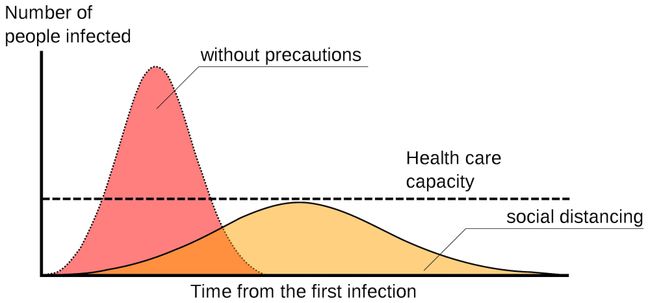
Chances are you’ve seen this chart: it’s strongly related to the justification for all the dramatic changes that have been happening. Now there’s some counterarguments that it will not work: Squashing the curve? | plus.maths.org
First off, the chart is a model, and like all models, it makes assumptions. For COVID-19, the first assumption it makes is that the outbreak will rise and then drop off. I am not sure this is true, and I don’t know if anyone else is certain either. There are good reasons to make this assumption, but certainty will come later.
Another big assumption this chart makes is that social distancing will bring the cases down so that there is enough health care capacity to handle it. I think social distancing will bring things down, but the health care capacity could still be overwhelmed.
Is social distancing useless then? I think that is the wrong question, and the wrong way of thinking about things. So how should you think about things?
First: think skeptically. I would say you should keep an open mind but be skeptical about information on the Internet. Things are changing all the time, and there is so much we don’t know. Be doubtful of anyone with strong certainty about this.
Second: think optimistically. My thinking was pessimistic before, but I think I am changing to being optimistic about how we deal with the disease. There are lots of positive signs out there and there are many people working to get more resources thrown at this. It will make a difference.
Third: think maximally. Continue to wash yourself with soap often. Continue to practice social / physical distance. Continue to do anything that a recognized authority says will help. More action is better than little or no action. Some action may be no better than eating chicken soup, but you don’t know. Just make sure you are following a recognized authority.
Fourth: think practically. You have to make tradeoffs. Some people have to travel outside to get to work or get groceries. Try to minimize them. But don’t beat yourself up either. Do the best you can. Be cautious, but don’t panic.
Fifth: think and act healthy. The better you take care of your health, the better off you will be. There are other ways to get sick besides COVID-19 that could also land you in the healthcare system. That won’t help.
On two risks regarding taking an “abundance of caution” approach to danger
With regards to the coronavirus and what to do about it, I see many cases of overreaction. Specifically I see people and organization saying they are taking an abundance of caution when it comes to deciding how to act. And to me, an abundance of caution is equivalent to overreacting. With this overreaction, I see two longer term risks:
Risk one: people get desensitized to future risks because the current models of danger let them down. An example of this, via Conundrum: Why People Do Not Listen to Evacuation Orders – Scientific American:
The fact that we failed to catch this intensification has had a counterproductive effect,” said Berrien Moore, director of the University of Oklahoma’s National Weather Center. “People tend to say, well, it’s uncertain, or it wasn’t predicted. And that leads to inaction. … Our models have let us down.”
Desensitization makes it harder to react the next time an outbreak occurs.
Risk two: it’s not a sustainable approach. We take risks all the time: when we drive to work, when we cross the street, the food we eat, the places we visit, all of these have risks associated with them. We assess the risk (sometimes poorly) and try to make rational decisions. We don’t tend to decide with an abundance of caution, because to do so is to severely limit what we can do. The tradeoffs we make when we decide that way end up harming us overall.
Desensitization and sustainability may not be big concerns if this outbreak is a rare event. If it is not rare but something we start seeing regularly, then this abundance of caution response may harm future efforts to control such contagions.
If you believe this is a rare event, then the benefit of overreaction makes sense. If you do not believe it is, then overreaction will cause problems in the future.
How to wash your hands better
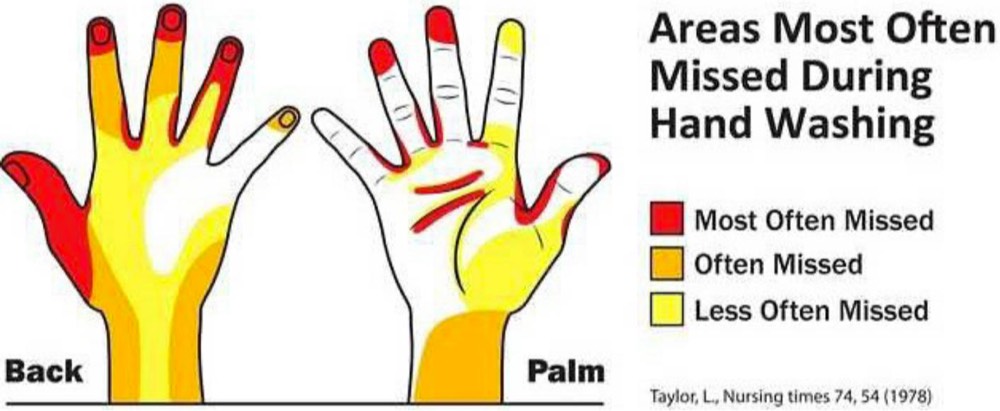
The number one thing you can do to stay well is wash your hands often, and chances are you are doing it wrong by missing spots. For more on how to do it right, see: Map of Areas Most Often Missing During Handwashing
The decline of youth hockey in Canada
The other day I wrote of the decline of start up tech. Today, I’m writing about the decline of youth hockey in Canada, as written about here: In Canada, the Cost of Youth Hockey Benches the Next Generation – The New York Times.
The chief reason for the decline is due to costs. If anything, the article understates the cost. The other big reason is organized hockey. There’s much money to be made from parents wanting the best for their sons and daughters who want to play hockey: you can wring thousands of dollars from them. And wring they do. The clubs, the coaches, you name it, there is someone making a buck from hockey teams. Hockey plays are streamed from an early age, and the faster you can stream kids onto certain “elite” teams, the more you can start charging more for the privilege of them being there.
Not that the parents are pure victims. Lots of parents want their kids to make the big leagues or college teams and those parents press hard for their kid to be on the more expensive teams. It all adds up. If anything, it adds up to something more and more families can’t afford. Read the piece linked to above and you’ll get a better grasp of it.
Congratulations! You get an extra day this year and it lands on a Saturday!
If someone said you get an extra hour in a day or an extra day in a week or month, you’d likely have ideas on what to do with it, yes? Well today is one of those days! You only get this day once every four years, though, which makes it extra special. Given that, consider doing something special for even part of the day. You deserve it! So start that project you always wanted to start, go visit that place you always wanted to visit, reach out to that person you haven’t reached out to in some time. Today is the perfect day for it.
The decline of start-up tech in 2020
Is described here: As the Start-Up Boom Deflates, Tech Is Humbled – The New York Times.
Key takeaways:
- It’s not as bad as the dot com era
- It should not be expected, given how many duds startup tech has given us lately
- It may lead to something worse, but my assessment right now is it could signal a correction more than an overall decline
There’s been many stories written about tech lately: that article is a good chance to get an overall assessment as to where tech is now. At least, start up tech.
A tale of two Condé Nasts
One, the new hip Condé Nast: How Bon Appétit Accidentally Made YouTube’s Most Beloved Stars
Two, the Condé Nast of the pre-digital age: Chaos at Condé Nast
It’s fascinating to read them together. Clearly a lot has changed since the turn of the century. While Bon Appétit is clearly on to something, it’s like a fluke that doesn’t translate across the rest of the organization. And regardless of how well they do — and I hope they do well — the golden pre-digital age is gone and not coming back.
Good weekend reading. That you likely are reading on a phone or tablet.
It’s Friday. Time to assess your work week. Here’s something to consider
A good work practice is to take some time on Friday and assess what went well this week and what could be improved next week. A great thing to assess is the value your work provides to yourself and others. Clearly if you feel your work has no value, then that’s something you want to address as a top priority. But that’s not enough. If you feel your work is of low value, then read this article: Stop Doing Low-Value Work.
That article makes the case for why you don’t want to be doing low value work. Sure your boss might not care and sure you may be comfortable, but come on, you can do better and you and your boss will be happy when you do.
Read the article. Assess your week. Do better next week. Now enjoy the weekend.
It’s winter in New York. You don’t want to be outside. So go see these places.
:format(webp):no_upscale()/cdn.vox-cdn.com/uploads/chorus_image/image/66215262/FordFoundationAtrium_2018_A23A5554.0.jpg)
Yesterday I showed you how to cry in New York. Today I want to show you how to enjoy New York when the weather is less than ideal. The best way to do that is to be indoors. And the best way to enjoy the indoors in New York is to visit the most beautiful interiors in New York City
P.S. If you are a fan of New York like I am, then ny.curbed.com might be for you too.
How should you exercise as you get older?
Like nutrition advice, exercise advice seems to change as often as clothing fashion changes. It can be hard to keep up, and easy to get skeptical that any advice is solid. However, if you want to keep up and are not skeptical, read this: How Smart Exercise Keeps You Younger for Longer.
My take, which is a variation of this, is simple: do a range of exercises, from cardio, to strength, to stretching to balancing. A fitness routine that includes all this is better than a fitness routine that just focuses on one or two areas. And any fitness routine is better than no fitness routine.
The future of laptops…

Might be seen here: LG brings Gram 17 laptop to Canada | IT Business
Qualities include lightness and thinness, as well as limited ability to make hardware changes. Magnesium body vs aluminum. You can read more about it at IT Business.
It’s only a matter of time before laptops reach a physical limit as to how much lighter and thinner we can make them. That time is not yet. But definitely in the next 5-7 years.
The limits of wine bars in North America cities as compared to Paris and why this is interesting
:format(webp)/cdn.vox-cdn.com/uploads/chorus_image/image/66306749/la_buvette_paris.0.jpg)
We have tons of upscale coffee shops, and wine is more popular than ever in North America, so Eater asks what seems to be a simple question: Natural Wine Is Everywhere in America. Where Are the Wine Bars?
I say “seems” because the answer is long and fascinating for a number of reasons: economic, cultural, and gastronomical. It’s a smart piece. I highly recommend it.
Here’s a snippet of what I mean:
It’s sad to see something so ostensibly simple become another exclusive pleasure, so I keep looking for the neighborhood wine bar of my dreams — which is honestly just a cramped room with bottles of interesting, affordable wine on the wall and, like, a cheese plate? Yet this seemingly simple thing is stupidly hard to find. It’d be sort of funny that cosseted American wine bars struggle to attain the loose charm of Paris, given that France is stereotyped as the place that’s snooty, rules-bound, and tradition-obsessed, if the result wasn’t such a bummer. While yes, there are a lot of rules, France also has a more open culture of public life; you don’t need to make plans to go out to drink wine. And though wine signifies many things in French culture, an air of sophistication because you drink it is not one of them. The appeal of enjoying wine in France, at least as the kind of person who’s moved by wine but still needs bolds on the list, is that French wine culture feels so much less precious than in America.
Free Picture Stencil Maker
This is a nice little tool if you want to turn a photograph into a stencil or drawing: Free Picture Stencil Maker.
If you wanted to simplify an image, this can help. For example, if you wanted to break down an image for painting or drawing, this could be really useful.
Give it a try!
Two pieces on the Canadian pipeline protests, with no special insight from me…
Two pieces on the Canadian pipeline protests worth reflecting on are here in The Globe and Mail and here in Macleans. Obviously there has been much more written, but these seem to capture at least some of the differences.
It’s a complicated situation, to say the least, and I have no clear insight or recommendations on how to assess it. How you assess it depends on how you see the world and Canada’s place in it.
My general thoughts are we need to strongly move away from fossil fuels and all of Canada needs to strongly move towards strengthening indigenous people so they have more autonomy and better relations with and within Canada. Underlying that, my cynical and skeptical view is that there is money and power involved and nothing is as it seems because of this. So I am hoping for the best and expecting the worst and in the end I believe there will be progress however tarnished.
Houseplants for people terrible with plants
If you are terrible with plants, like me, and want to get some plants regardless, then check this out: Houseplants You Can’t Kill – Dwell.
The plants are:
- Snake plant
- Cast iron plant
- Jade
- Aloe
- Rubber plant
Relatedly, my office recent had plants added, and the plants added were from this list. So far they are doing fine. Let’s see if I (and you) have similar results.
What does Bong Joon-ho’s ‘Parasite’ win mean for the Oscars?
Likely nothing. On the surface, it might seem like it will. But step back: every year some pattern emerges from the Oscar winners, and this pattern is seized on as meaning something meaningful.
The only pattern I can see as meaningful is how Netflix has been steadily gaining more and more nominations over the last few years. There is a meaningful trend. It could end any time, but I think it means that more American films will come from new organizations (e.g. Netflix, Apple, Amazon).
I thought Parasite was a great movie, and Boon Joon-ho is a great director. But look over the last 10 or 20 years and see if you can find a trend in which films are winning. If you can, I’d love to read about your analysis.
P.S. This is a good piece that got me thinking about the meaning of a film winning at the Oscars: Bong Joon-ho’s ‘Parasite’ makes Oscar history by repurposing the familiar – The Washington Post
What is pink noise and why you might need it if you have trouble sleeping or relaxing
I was aware of white noise, but I didn’t realize there is a range of noises associated with colour:
Both pink and white noise are members of an entire color family of sound including black and brown noise. Sounds are assigned these colors based on how energy is distributed over several frequencies, according to Healthline.com. White noise, for example, is comprised of energy that is equally distributed across all audible frequencies. Brown noise, sometimes called red noise, consists of higher energies at lower frequencies—think thunder and deep, roaring sounds.
Pink noise, on the other hand, is a shade deeper than white noise. It’s similar to white noise in that it includes all audible frequencies; however, unlike white noise, energy is not distributed equally among them.
I have found that the rain sounds I listen to are more pink noise than white noise, and I prefer it for sleeping. If you are having trouble sleeping or relaxing, try listening to some pink noise.
For more on it, see: Pink Noise Sleep Benefits | Apartment Therapy
For all of you performing (or interested in performing) mindfulness…
For all of you performing (or interested in performing) mindfulness, I recommend you read this: The Honest Guide to Mindfulness : zen habits.
If you have been doing mindfulness for awhile and you are getting frustrated or giving up, then it can help ease your frustration and prevent you from quitting. If you are new to mindfulness and concerned you won’t be able to do it effectively, then it can help give you some perspective.
Mindfulness has been good for me. I am looking forward to reading this from time to time whenever I find it difficult.
Some brief thoughts on the 10th anniversary of the iPad
It’s odd how people perceive the iPad after a decade. From what I read, the view overall seems negative. Even smart analysts like Stratechery call it “tragic”.
I can see why reviewers see that. They had an expectation of what the device could be, and lament that it never became that. That is one way to perceive it.
I think there are two different and better ways to view it. One way is seeing the iPad as a secondary device. The iPad will be always secondary to the iPhone, just as the Touch will always be secondary to the iPhone. The iPhone is the premier Apple device, and all other devices do and even should be secondary to it. The iPhone sits at the center, and the Watch and the Airpods and the other devices sit outside of that.
Another way of looking at it is that perhaps the MacBook, the iPhone, Apple TV and the iPad will merge over time. Perhaps in the future there will be no separate MacBook and iPhone. Instead there will be a Display, a Keyboard or UI of some form, and and a Network Device. Underneath it all will be software that brings them all together. That’s my long term expectation.
The iPad is a great device. It’s not the iPhone, and it’s not a Mac. It does what Apple needs it to do right now, and it will continue to do so over time.
On the subtitles of ‘Parasite’ (things get lost in translation)
For fans of Bong Joon-ho’s film, Parasite, here’s a fine essay on some of the things lost in translation:
Gen.medium.com/subtitles-cant-capture-the-full-class-critique-in-parasite
I am not too surprised: any film would lose something in translation, and a smart film like this one takes on further risk as it aims to speak to audiences at different levels.
Of course if you haven’t seen the film yet, I highly recommend it (and recommend you watch it before reading more about it).
The Free-Time Paradox in America
Here’s something to ponder on a Sunday:
The rich were meant to have the most leisure time. The working poor were meant to have the least. The opposite is happening.
That is extracted from this: The Free-Time Paradox in America – The Atlantic
It’s a fascinating study of work and leisure and why it is not what many expected.
One of my favourite works at the AGO is Lisa Reihana: in Pursuit of Venus [infected]

It’s a great work for many reasons, not least is the technically superb use of Audio Visual technology. It’s well worth seeing and experiencing. Do so soon: it ends May, 2020.
For more on it, see: Lisa Reihana: in Pursuit of Venus [infected] | Art Gallery of Ontario
February is the best month to make resolutions
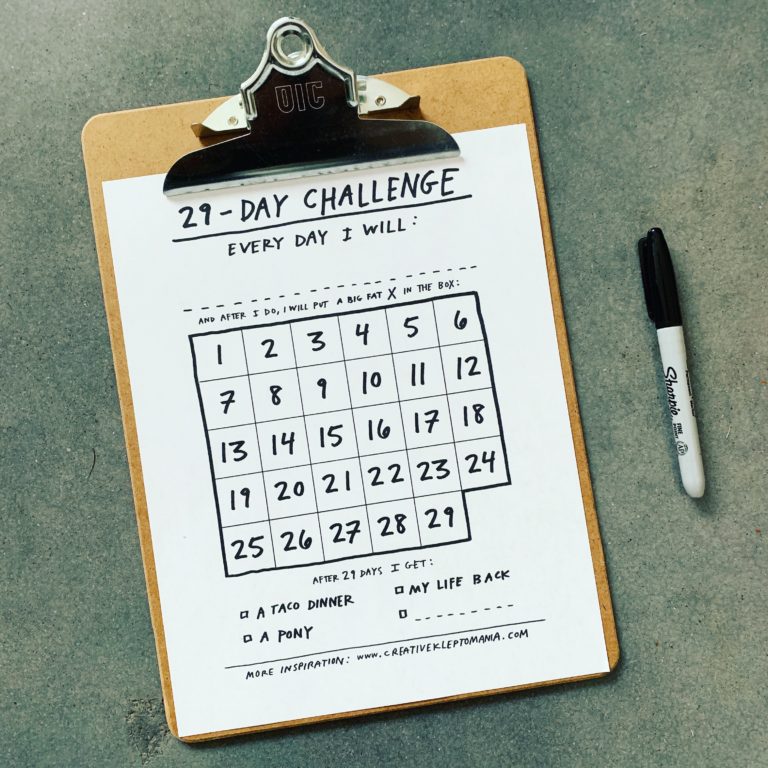
Why? Because as Austin Kleon points out, it is the shortest month. Even this year, when we have a leap year.
It’s also a better month to go to the gym, because all the people who made resolutions have dropped off.
In the northern hemisphere it’s cold and dark, which makes it a perfect time to resolve to read more.
If you want to diet or not drink or not smoke for a month, why not pick the shortest month.
And hey, if you need a calendar to keep track of how well you are doing, go here: 29-day challenge – Austin Kleon.
Good luck!
P.S. You get an extra day this year, and it falls on a weekend! Use it to do something you don’t normally have time for!
Glitch yourself
If you for whatever reason what to turn an image into a glitched out version of itself, you can do that easily, here.
Have fun!
The 22 rules of storytelling, according to Pixar
Anyone wanting to tell a story, be it a novel or a business proposal, could do well to read The 22 rules of storytelling, according to Pixar.
At my work we are a fan of #4. But they are all good.
Stuck telling a story? Check out the list.
You likely know about phishing. But do you know about smishing?
Sorry, yes, there is a new form of fraud coming to get you. It’s called “smishing”. What is it?
“smishing” scams (the word combines SMS, the technical format for texting, and phishing) have become increasingly common. Fraudsters often create realistic-looking texts from seemingly reputable sources, such as FedEx or Amazon, which are then used to extract personal information: passwords, Social Security numbers, bank account or credit card numbers.
So, yeah, be careful about responding to text from people you don’t know and especially from organizations who may or may not be the real deal. For more on this, see: FedEx didn’t send that text about a package. It’s a scam. – The Washington Post
How to think of climate change/the environment in terms of economics
Forget what Steven Mnuchin said about Greta Thunberg needing to study economics before offering climate change proposals. That was an asinine thing for him to say.. But read that article in the Washington Post for the ideas. They spoke to an economist about climate change and how economics comes in and it’s worthwhile for that.
People might argue that we need to do something about climate change, but we can’t afford it. If you want to argue back, the article can help.
This Is How You Live on Swiss Time, by Taffy Brodesser-Akner

This article, This Is How You Live on Swiss Time, is a great piece for two reasons:
- You get a wonderful appreciation of Switzerland and the Swiss
- You get to read the fine writing of Brodesser-Akner
This article was published in 2015. In 2019 her book, Fleishman Is in Trouble, was a big hit that was talked about everywhere. If you haven’t read her before, read this travel article, and you will get a sense for what a fine writer she is. Then get her book. 🙂
P.S. This was published in afar.com. If you like to travel, or like to dream about travelling, it’s a great site.
What’s wrong with starting a sustainable business?
Nothing, of course, unless you are playing by the rules and goals of Silicon Valley, where VC money comes at a cost. In this piece He Wanted a Unicorn. He Got … a Sustainable Business | WIRED, we hear
(this) story is one part cautionary tale for entrepreneurs seduced by the allure of venture capital and billion-dollar valuations, and one part an example of how a company can thrive outside those expectations.
I liked the angle of this story and found it fascinating. I think we need more stories of people quite nicely achieving a sustainable business. It’s not that having a blockbuster business is terrible, but it is rare, like all exceptional things are. It’s a winner takes all approach to business. To me, a better approach is that people can be successful in many different ways. Ways like having a sustainable business that provides a service that people really need. That’s a good measure of success to me. I hope we can get more such stories.
Mario Moore and his paintings of blue-collar workers who ‘really run things’…
…is a fantastic story you can read about here: Princeton University portraits lacked diversity, so artist Mario Moore painted blue-collar workers who ‘really run things’ – The Washington Post.
His painting is fine, and the subject matter he has chosen especially so. Check out the story: it has many of his works on display too.
On retirement in the 21st century: three good pieces
The notion of retirement in the Western world has been changing since the mid 20th century, and it will continue to change as the population increasingly gets older. To get an appreciation for what that means and what can be done, these three articles are worth reading:
- It’s Time to Say It: Retirement Is Dead. This Is What Will Take Its Place | Inc.com
- Baby boomers delaying retirement: It’s a myth, because retirement is inevitable, and bleaker than ever.
- This Is What Life Without Retirement Savings Looks Like
Not fun reading, but essential.
Lenovo and its folding tablet

Tech manufacturers are struggling to make folding devices. So far the folding smartphones are not where they need to be. Lenovo has taken a different approach, by building a folding tablet first, and not a folding smartphone.
Whether this will be a hit remains to be seen. But as the Yanko Design piece shows, the chance of success with a folding tablet is much higher than a folding phone. If it is a hit, it could lead to smaller devices (i.e., phones) eventually getting that way too.
Another example of Microsoft’s CEO Satya Nadella being effective by being different
Is this: Inside Microsoft’s surprise decision to work with Google on its Edge browser – The Verge.
Years ago Microsoft would have not made such a move. They would have kept trying until the bitter end (e.g. Zune, Microsoft phone). Instead Nadella and team made a decision based more on what works for the users rather that what works for Microsoft. It’s not a radical notion in itself, but for a company that prides itself on being successful and dominant, it’s a big switch. And it’s not just here with browsers. Microsoft’s cloud service, Azure, has a range of technology supported. It’s one of the reasons it is successful.
Microsoft has always been a successful company. They were successful under Gates and Ballmer with one approach. Nadella has a somewhat different approach, and I believe they will continue to be successful with it.
Maybe Ballie the ball robot is a device we don’t need in our homes
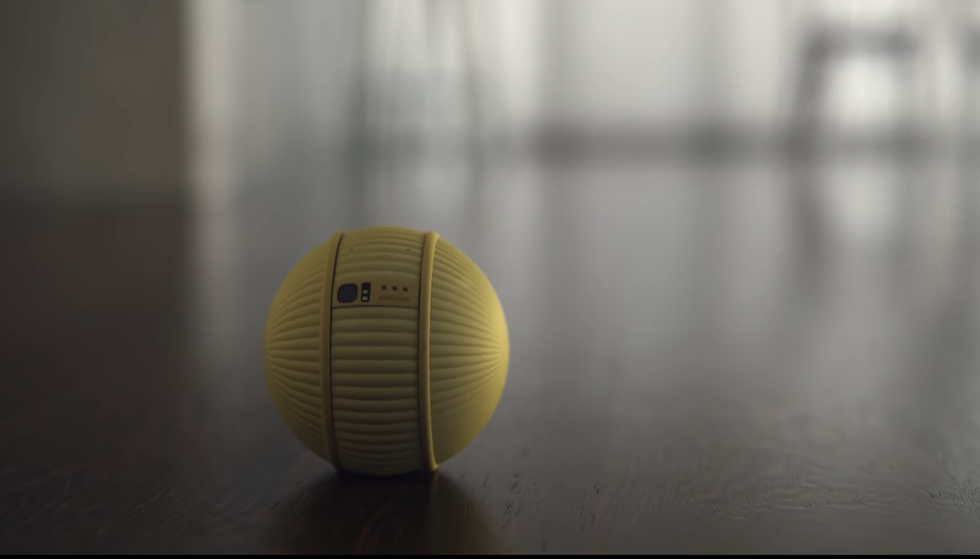
Ballie is the cute little yellow ball above. Samsung unvailled ‘Ballie’ at the 2020 Consumer Electronic Show. If you go to the link, you can read all the things Ballie can do for you. What you don’t get to read is what Ballie is going to do for others. Because there’s never been a more potentially intrusive device in your house like this one. It can go around your house 24/7, recording not just sounds but images. Images (and sounds) that anyone back on the Internet can process.
Until companies and other organizations can demonstrate proper stewardship of such data, I wouldn’t recommend anyone get one of these things. They are far from essential and potentially harmful.
The effectiveness of Bernie Sanders
Whatever else you think of Sanders and his politics, if you think he is ineffective, then I recommend these two pieces:
I used to wonder if he was effective, but not anymore. Based on those piece, I think he has been effective, and if anything, very effective in certain years.
The new IKEA in Vienna is going to be amazing

And not just amazing visually, either. There are a number of new and better ways this new IKEA will be operating in Austria’s capital. To really get an appreciation for it, see this: IKEA is building a big new store in Vienna with no parking | TreeHugger
The problem with hand me down cheap clothing?
Is simple: it’s wanted less and less. As this piece shows, No One Wants Your Used Clothes Anymore.
What’s changed? Well…
For decades, the donation bin has offered consumers in rich countries a guilt-free way to unload their old clothing. In a virtuous and profitable cycle, a global network of traders would collect these garments, grade them, and transport them around the world to be recycled, worn again, or turned into rags and stuffing.
Now that cycle is breaking down. Fashion trends are accelerating, new clothes are becoming as cheap as used ones, and poor countries are turning their backs on the secondhand trade. Without significant changes in the way that clothes are made and marketed, this could add up to an environmental disaster in the making.
I think there is no easy remedy for this, unless you’re someone happy to wear a limited number of pieces of clothing over and over again. But something will have to change. If you thought all those clothes you put in the donation bin are going on people’s bodies and not to the garbage dump, then read the piece.
Is Forever 21 doomed?

Yesterday I asked that about Muji. The short answer for Muji: not doomed yet, but in trouble.
For Forever 21, it appears to be a different story. If you read this, The Failure of the Fast-Fashion Forever 21 Empire – Bloomberg, you see an organization in big trouble, with poor management and poor demand for their product. It is still possible for them to pull out, but I would be surprised if Forever 21 is still a going concern in 2021.
Is Muji doomed?

Not yet, but clearly it is in trouble, based on this: Why Muji Is Struggling | News & Analysis | BoF.
My feeling is they have expanded past the point it is sustainable, and now they are going to have to adjust. Hopefully they can adjust: they are a good company and they could be as big as IKEA or H&M. Or they could go bankrupt. The next few years will show which direction they go.
Thanks to Jeff Smith for sending me this link!
 Smart People I Know