It’s that time of the year and seeing how people are into it, here’s how to start a garden without a backyard


I’m seeing lots of people growing pandemic gardens in their homes using scallions, celery, etc. I think that is cool. If you’ve done that, or if you want to go to the next phase, read this: How to Start a Garden Without a Backyard – The Simple Dollar

I want to add that many dollar stores will have seeds and other things to get started. You can also shop garden stores online and get supplies that way. You have options.

Of course, if you have a backyard or other areas you can plant, go for it. But if you have more gardening ambitions than you have space, give that a go.

Generation Jones: the cusp gen, between boomers and Gen X

If you are a member of those people born between 1954 and 1965, you may never felt comfortable being associated with Boomers or Gen X. You may have felt a bit of both and a bit of neither. Congratulations, there is a gen for you now: Generation Jones.

Let me let Wikipedia explain:

Generation Jones is the social cohort of the latter half of the baby boomers to the first years of Generation X.

The term was first coined by the cultural commentator Jonathan Pontell, who identified the cohort as those born from 1954 to 1965 in the U.S.who came of age during the oil crisis, stagflation, and the Carter presidency, rather than during the 1960s, but slightly before Gen X. Other sources place the starting point at 1956 or 1957.

Unlike boomers, most of Generation Jones did not grow up with World War II veterans as fathers, and for them there was no compulsory military service and no defining political cause, as opposition to United States involvement in the Vietnam War had been for the older boomers.

Also, by 1955, a majority of U.S. households had at least one television set, and so unlike boomers born in the 1940s, many members of Generation Jones have never lived in a world without television – similar to how many members of Generation Z (1997–2012) have never lived in a world without personal computers or the internet, which a majority of U.S. households had by 2000 and 2001 respectively.

Unlike Generation X (1965–1980), Generation Jones was born before most of the Sexual Revolution of the 1960s and ’70s.

So, lots of reasons why you may feel unique. And you are. And also this generational explanations for how you are is slightly more accurate than horoscopes, but not much more, in my opinion.

For more on this, see Generation Jones – Wikipedia

Why are people still crowding on TTC during the pandemic?

This is a fine analysis of why people are still crowding on certain TTC routes despite everyone being told to stay home: Mapping TTC crowding during a pandemic | Marshall’s Musings.

Even during a pandemic, some people have to go in to work, and some people don’t have the money to have their own car to do so. Those are the people likely crowding still on the buses.

Maps are a great tool during breakouts of epidemics and pandemics, and this one is no exception (map above linked to in the article).


Do Authoritarian or Democratic Countries Handle Pandemics Better?

There’s already been some pundits claiming autocratic countries have been handling the pandemic better than democratic countries.  This piece on the website for the Carnegie Endowment for International Peace argues differently. It’s worth reading, but a key part of the piece is this:

Despite attempts by politicians to use the crisis to tout their favored political model, the record so far does not show a strong correlation between efficacy and regime type. While some autocracies have performed well, like Singapore, others have done very poorly, like Iran. Similarly, some democracies have stumbled, like Italy and the United States, while others have performed admirably, like South Korea and Taiwan. The disease has not yet ravaged developing countries, making it impossible to include poorer autocracies and democracies in the comparison.

Keep this in mind, especially afterwards, when writers and authorities argue that we need more controls on people to fight future pandemics.

In Defense of Self-Help Books

A strong defense of self help books can be found here: On Self-Help Books | The Book of Life.

Essentially the argument is that the genre has been overtaken and is associated with people like this:

And not associated with this:

We need a list of good self help books, classic and current. Unfortunately, even lists with the so called best self-help books of all time  are lacking in literary qualities. That’s a shame.

I think we need a new list of self-help books then, a list stretching  from the classics such as the Dhammapada and the Bible and the Meditations of Marcus Aurelius, all the way to present day books like In Search of Meaning. A new list of books that help us live better lives but that are good as books themselves. It’s time for such a list, and time for the current list of self-help books to take a backseat to this new list.


On two risks regarding taking an “abundance of caution” approach to danger

With regards to the coronavirus and what to do about it, I see many cases of  overreaction. Specifically I see people and organization saying they are taking an abundance of caution when it comes to deciding how to act.  And to me, an abundance of caution is equivalent to overreacting. With this overreaction, I see two longer term risks:

Risk one: people get desensitized to future risks because the current models of danger let them down.  An example of this, via Conundrum: Why People Do Not Listen to Evacuation Orders – Scientific American:

The fact that we failed to catch this intensification has had a counterproductive effect,” said Berrien Moore, director of the University of Oklahoma’s National Weather Center. “People tend to say, well, it’s uncertain, or it wasn’t predicted. And that leads to inaction. … Our models have let us down.”

Desensitization makes it harder to react the next time an outbreak occurs.

Risk two: it’s not a sustainable approach. We take risks all the time: when we drive to work, when we cross the street, the food we eat, the places we visit, all of these have risks associated with them. We assess the risk (sometimes poorly) and try to make rational decisions. We don’t tend to decide with an abundance of caution, because to do so is to severely limit what we can do. The tradeoffs we make when we decide that way end up harming us overall.

Desensitization and sustainability may not be big concerns if this outbreak is a rare event. If it is not rare but something we start seeing regularly, then this abundance of caution response may harm future efforts to control such contagions.

If you believe this is a rare event, then the benefit of overreaction makes sense. If you do not believe it is, then overreaction will cause problems in the future.


Congratulations! You get an extra day this year and it lands on a Saturday!

If someone said you get an extra hour in a day or an extra day in a week or month, you’d likely have ideas on what to do with it, yes? Well today is one of those days! You only get this day once every four years, though, which makes it extra special. Given that, consider doing something special for even part of the day. You deserve it! So start that project you always wanted to start, go visit that place you always wanted to visit, reach out to that person you haven’t reached out to in some time. Today is the perfect day for it.

On retirement in the 21st century: three good pieces

The notion of retirement in the Western world has been changing since the mid 20th century, and it will continue to change as the population increasingly gets older. To get an appreciation for what that means and what can be done, these three articles are worth reading:

  1. It’s Time to Say It: Retirement Is Dead. This Is What Will Take Its Place | Inc.com
  2. Baby boomers delaying retirement: It’s a myth, because retirement is inevitable, and bleaker than ever.
  3. This Is What Life Without Retirement Savings Looks Like

Not fun reading, but essential.

Thinking about how topics of interest change


I was thinking about how topics of interest change when I came across this link I had saved since 2016: Should we have intervened in Syria? I don’t know – and neither do most armchair generals.

Back when Obama was president, whether or not the US should intervene in Syria was a hot topic. Articles like this struggled with whether or not something should be done about it. It was hard not to think about, both because it was terrible and because there was alot of media devoted to it.

Then Trump became President. Suddenly everything shifted. Terrible things went on in Syria, but it was no longer a topic of interest in much of North America.  I confess I barely know what is going on there now.

It’s a good reminder to me how much of what I think about is driven by who ever can get information in front of you. And it’s also a reminder of why disinformation campaigns will get stronger and stronger.

I don’t know what the answer is. I just know I have to constantly remind myself that just because it appears something is important or unimportant, my ability to assess that is shaped very much by others. There may be topics I spend a lot of time thinking about and researching. But most of the time, and for most people, that is not possible.

Some basic thoughts on “Friends”: it’s roots and its relationship to screwball comedy


It’s the 25th anniversary of “Friends”, and a number of reviews I read talk about it looking backwards.This piece, though, does something better: it looks at where the series came up from.  Key quote to me was this:

Chandler, who is so indifferent about what he does that he is unable to pay his job even the small courtesy of hating it—Chandler, besuited and bedraggled, whose work in computer-something-or-other summons the amorphous anxieties of the coming digital age. … It is through Chandler, in the end, that Reality Bites finds its way into Friends’ otherwise chipper cosmology. His work is simply there, looming, draining, tautological. His laconic resentments of it invoke the precise strain of Gen Xed ennui the novelist Douglas Coupland had described earlier in the decade: the mistrust of institutions, the mistrust of professions, the mistrust of meaning itself.

You can see in the quote the tie to Douglas Coupland’s  book Generation X and the film Reality Bites. These are the roots of “Friends”. ‘Friends’ at 25: The Prescience of Chandler Bing’s Job – The Atlantic. That generation after the boomers needed a show, and many of them found it in “Friends”. Now people look back at it and many mock a show about six well dressed people living in an amazing apartment in NYC. But “Friends” then tried to make sense of becoming an adult, or “adulting”, to use a word that came along later. The fact that people have such fondness for it makes me think it resonated with them and it represents part of their lives.

I always liked “Friends”, but for a different reason. I am a fan of screwball comedy, and that series often went there. Seinfeld did absurdist comedy well, but I loved that this series did a comedic style I loved so much. Watch some episodes of “Friends” and then watch a classic screwball comedy like “Bringing Up Baby” or “His Girl Friday” and you will see the similarities.

All comedy series go pear shaped after a time, and the things that made it originally great fades. For a time “Friends” was one of the best comedies on TV, and it was great then because of the form of comedy it aspired to and because of the way it represented the time it was rooted in.

The decline in the arts as a bachelor degree major


Can be seen here: Has the Sharp Decline in Philosophy Majors Hit Bottom? (guest post by Eric Schwitzgebel) – Daily Nous.

It is remarkable how much majors in history and philosophy have declined. I feel we need these things more than ever. That said, my bachelor degree is with a major in computer science. I have studied much philosophy and history since then, but not in an academic setting. It would be good to find a way to study them more formally without the commitment of getting a bachelor degree.

There are so many online sites teaching computer science topics. We need more that teach philosophy and history in the same way.

Did Rembrandt’s use mirrors for his paintings?


It’s debatable for sure, but there are a number of people who think he did. This piece (from a few years ago) titled The Mirrors Behind Rembrandt’s Self-Portraits in The New York Times  looks into one paper that argues so

In a paper published Wednesday in the Journal of Optics, Mr. O’Neill lays out a theory that Rembrandt set up flat and concave mirrors to project his subjects — including himself — onto surfaces before painting or etching them.

By tracing these projections, the 17th-century painter would have been able to achieve a higher degree of precision, Mr. O’Neill said. His research suggests that some of Rembrandt’s most prominent work may not have been done purely freehand, as many art historians believe.

He is not the first to suggest that old master painters used optics for their famous portraits.

In 2001, David Hockney, a renowned British painter, and Charles Falco, an optical sciences professor at the University of Arizona, published a book in which they argued that master painters secretly used mirrors and lenses to create hyperrealistic paintings, starting in the Renaissance.

Their theory, known as the Hockney-Falco thesis, generated controversy among scientists and art historians, some of whom took the findings as an implication that old master painters had “cheated” to produce their works.

I’ve read Hockney on this and he makes a strong case too. Not everyone agrees though. It’s worth reading the article and get a better picture, pardon the pun.

My thought is it’s likely all artists of the time would have used them to some extent. But Rembrandt is such a remarkable painter that it can only account for some of his greatness, if any.

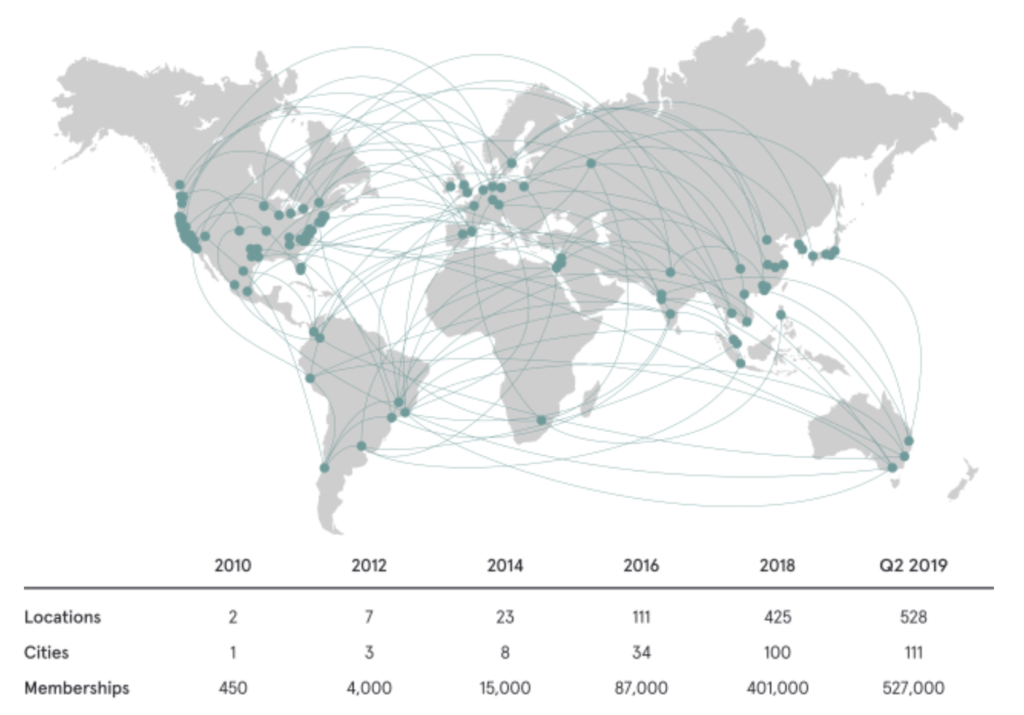
One of the the better reviews of WeWork and their IPO is naturally this one, by Stratechery


Stratechery is always great and this piece is no different: The WeWork IPO – Stratechery by Ben Thompson.

What makes it good is that rather than just slamming WeWork superficially, as many takes have, it delves into what could possibly justify why WeWork is a good investment.

My take is that if WeWork had a different executive, it could be a successful company. I think the comparison to AWS is somewhat valid, and in the gig economy with lots of short term work, it could become very successful. (It worked really well for a recent project I was on).

That said, I believe the executive team of WeWork will not be able to handle any drying up of capital or a recession of any length. Or investors will wake up and ask themselves why WeWork should be valued way more than IWG/Regus. Time will tell, of course.

One last thing: my understanding is that WeWork had to start from scratch in terms of buying up / leasing real estate, but AWS did not start from scratch and took advantage of existing capacity Amazon currently had.

(Image link to the original piece in the article reference)

The U.S. Supreme Court is not what you think


There was much concern from progressives when Gorsuch and then Kavanaugh joined the U.S. Supreme Court. It was believed by myself and others that the court was going to vote 5-4 in lock step on every option, with the 5 conservative judges routinely beating the four liberal ones.

If you are progressive, it is still a concern. But as these two pieces show, the Supremes vote more independently than you or I might think:

  1. The Supreme Court’s Biggest Decisions in 2019 – The New York Times
  2. The Supreme Court Might Have Three Swing Justices Now | FiveThirtyEight

This is not to say it is entire unpredictable how they will vote on matters before them. The liberal and conservative labels are convenient and often useful, but there’s much more to consider than just that when trying to determine how they will vote. Read the two pieces and see if they change your mind.

(Photo by Claire Anderson via unsplash.com)

On superurbanization

Urbanization is an increase in cities  through their growth, either in more cities being created or growth within cities. Superurbanization is a new idea. It’s how some cities get the lion share of growth at the expense of other cities.

To see what I mean, look at this chart: A chart showing the growth of tech in US cities

Source: Tech is divergent | TechCrunch

Cities are growing everywhere, as people move from rural areas. But some cities are growing much more than others.

Smaller cities are trying to do something about it, as this article shows. But in the end, we may end up with more and more supercities, and smaller cities may suffer in the same way rural areas are suffering now.

On dreams and goals


How you read this piece depends on who you are: Is It Ever Too Late to Pursue a Dream? You may recall it: it’s a long article about Dan Stoddard, a 39 year old, 6 foot 8 inch, 300+ pound guy playing basketball for a small college in Ontario who want to play pro.

When I read it, I first thought: no way. The guy’s too old, too big, too…you name it, he isn’t going to be a professional basketball player. That’s one  way to read it. A very grounded way to read it.

Another way  to read it  is to consider how dreams and goals shape us and change us and change others around us. I have a friend who sets very high goals and sometimes lands short of them. But even landing short, she accomplishes something beyond most people and beyond herself. The accomplishments matter, because they matter to her. The accomplishments matter, because they get others to seek out goals too. Others, like her, setting aim and leaving the ground.  Leaving the ground, the way Dan Stoddard does.

How you consider these quotes depends on who you are.

Three different stories about modern Japan


I loved these stories. I don’t believe they tell me anything in particular about modern Japan, but I found them all fascinating:

On Small Pleasures


This seems like a wonderful book, Small Pleasures Book | The School of Life.

It reminded me of small pleasures of my own, like listening to the rain while sitting on a porch, or driving at night listening to jazz, or having a good croissant and latte in a quiet spot.

I think I want to keep a list of such pleasures and make sure I have them constantly in my life. They are the things that make our lives bright and warm.

The idea of North American and 11 nations…


…Is a good one, I think. I found after I read this book, American Nations, I had a much better appreciation for decision made by people from different regions of the United States, once I had a better understanding of the culture and background of each “nation” and how that affects their thinking.

If you are curious, this is a good article that summarizes the ideas in the book:Which of the 11 American nations do you live in? – The Washington Post

The book is good, though. Worth a read.

The most relaxing vacation you can take is going nowhere

Good tips in this article on how to take a successful staycation. Key quote:

The key to a successful staycation, whatever you’re doing, is to just be. That’s not easy for people working in cultures intent on busyness. Yet it is a way we can reduce stress levels and return to work with more energy. “We shouldn’t associate relaxation with being away,” advises Quartz’s managing editor Kira Bindrim, who describes herself as an avid staycation advocate. “Reclaim the place you already chose to live!”

I think you can do staycations in a number of ways. Sometimes they are great ways to achieve a personal project. Other times they are good for exploring the city you live in. But if you want to have a relaxing staycation, check out that article.

Two tools to help you be more productive at work

Spotify

You can use Spotify to listen to music while you work. But sometime music can be distracting. Sometime all you want is to drown out the sounds in your work environment. During those times, a good alternative to music is rain sounds. Spotify has a lot of different rain sounds to choose from. Well worth trying for those noisy work spaces that you need to be productive in.

Flow

 
Another good way to be productive is to use the Flow desktop app for the Mac. I’ve tried many a timer app and I like this one best. It is simple to get started with. It reminds you when to take a break and when to work, but let’s you chose if you want to get back into the flow. It can block out certain apps that might prevent you from being productive, like your browser. Also worth a look.
(Image from pexels.com)

why the best white noise machine might be the Google Home Mini

I have had a number of white noise devices with some of them costing a lot more than the Mini. They are not hard to set up and once you do you can ask it to play rain sounds or relaxing sounds or whatever sounds help you relax or sleep it work. Plus you get all the advantages of having it to find out the weather, get news, set appointments and more. If you don’t mind having one in your house – and some people do – then you can buy them everywhere, like here: m.bestbuy.ca/en-CA/product/google-home-mini-charcoal/11615336

A great list of interchangeable ingredients to turn to when you are cooking, from Mark Bittman

Is this list.

Print it off, leave it in the kitchen, add your own items.

I often use sriracha for dried chilies, or even any hot sauce, for when you just need some heat. Likewise, if you don’t have jalapenos, you could also replace them with some of other heat source. (If it is a lot of jalapenos, you might use regular peppers with some chilies or other hot things to add the appropriate level of hotness.)

Finally, I’ve seen people suggest replacing creme fraiche with full fat greek yogurt.

Some contrarian ideas on happiness and being happy

Can be found here:

  1. BBC – Future – Why the quickest route to happiness may be to do nothing
  2. Daniel Kahneman explains why most people don’t want to be happy — Quartz

Basically, happiness is an elusive and not well defined idea and we are better off seeking things other than happiness. It is great to be happy, but it may not be great to try and be happy. Feel free to read and disagree.

On cities and digital technology and loneliness

This is a good piece: How to redesign cities to fight loneliness.

It talks about how cities and services can be changed to fight loneliness. This is good. The flipside of it, though, is that cities are designed and have evolved to promote loneliness. One of the reasons people come to cities is to get away from things. The cost of that is often loneliness.

Cities are not the only contributor. Digital technology also can contribute to loneliness. But like cities, digital technology can also help to assist those struggling with being alone.

The bigger problem is loneliness in general. Cities and digital technologies can help there. But there are bigger social and cultural issues in the mix, and those need to be addressed as well.


Some thoughts on Philip Pullman, free speech and de-platforming

I think often of this speech Philip Pullman gave regarding the rights and limits associated with free speech. I like what he says, and I like how he says it.

I’d like to see a similar one for de-platforming. No one has a right to be popular on social media. No one has a right to access and use a specific platform. No one has a right to stay on the platform if they don’t abide by the rules. If they get kicked off, they can complain on other platforms. They can complain to the owners of the platform. They can build a platform of their own and make their own rules and say what they want in a law abiding way.

But wait, isn’t that a violation of someone’s free speech? I don’t think it is. It gives too much power to existing platforms to treat them like utilities. They are not utilities. If they are utilities, then they should be heavily regulated. Better that they are not regulated, that they do not gain too much power, and that people that want to exercise their free speech build their own platforms.

Free speech should be defined within the context of a citizen and their government. People should be able to say what they want within the law. People should also be willing to accept the social consequences if they say something that offends others. That is what Pullman is saying in some ways. If his book shocks and offends you, you can take action that may harm him by reducing the number of books he might sell. That is the consequence he is willing to take in order to write the book he wanted to write. He understands that free speech has consequences. The one consequence he is not willing to accept is to be prevented from speaking. (I would add that the other consequence he is unwilling to accept is to be physically threatened, an all too common threat that hangs over discussions of free speech on the Internet.)

People who are deplatformed are not prevented from speaking either. They are being prevented from speaking the way they prefer, and that is a different matter. They want to speak their way without the consequence of being deplatformed.


Sara restaurant in Toronto has a cool way to deal with cell phones at restaurants

According to blogTO, the tables are of a ….

…Design by ODAMI and MiiM (that) incorporates innovative tabletop cubbies with heavy, spill-proof lids designed to stow your phone at the beginning of the meal. Servers remove the lid at the end to remind you to return to your phone, and emerge from the period of serenity Sara offers diners.

Nice restaurant, great idea. For more on it, see:  Sara – blogTO – Toronto

Finding your way with maps (via @austinkleon)

Austin Kleon has a great piece here on the importance of maps, and not as a means of getting around: Finding your way with maps

I love maps too. Especially hand drawn maps. And ancient maps.

I worry that our phones may be ruining hand drawn maps. When I used to take my son to hockey, I would draw my own maps to get to various obscure rinks. Later, I found out about Waze and it was so superior I stopped drawing my own maps. It’s too bad: it would be fun for my son years from now to have those old maps (which I never kept).

This is a map too.

It’s not really about how to get around. It’s a map showing the relationship between things. In this case, the organizations and their computers that made up the Internet in 1969. It does something old maps do: they show us the two dimensions of space and the one dimension of time.

Read Kleon’s piece. You’ll want to go look at maps afterwards, and you’ll be glad.

The crumbling and outright destruction of “brutalist treasures”

If you are a fan of Brutalism, you will want to visit this: Attack the blocks: brutalist treasures under threat – in pictures | Cities | The Guardian

You might want to even visit them, because for some of them, their days are numbered.

I imagine that in the next 50 years, the number of Brutalist buildings currently existing will be significantly reduced. That would be a shame. Brutalism gets knocked hard, and I can see why. But worse than Brutalist building are boring buildings from all different architectural styles. I’d like to see those go first. The world could use good Brutalism in their cities. Here’s hoping it doesn’t undergo severe decline.

How to grow gardens in the desert? Jordan has an answer


How to grow gardens in the desert? If you are the country Jordan, you use a combination of salt water and sunshine. Lots of both. To see how this engineering miracle occurs, see: BBC – Future – How to use seawater to grow food – in the desert.

It’s a great story, well told. Here’s to it scaling up in the future.

The philosopher Karl Popper in Scientific American

This is one of those things that popped up via Pocket, yesterday: The Paradox of Karl Popper – Scientific American Blog Network

It’s odd, because the interview is old, and Popper has been dead for sometime. Odd or not, it is still a worthwhile interview of the philosopher. The interviewer seems to capture the spirit and the essential ideas of the man in the three hours he spoke with him.

Worthwhile for anyone interested in philosophy or science.

Why math is great, and other interesting ideas, from Steven Strogatz

It’s hard to say why this interview with Strogatz is so good, other than to say he covers much ground on a variety of interesting topics and speaks lively on them. (Ok, I find game theory, “elegant” math, math education, etc, interesting, but you likely will too).

If you enjoyed this interview, he has a recent book out, “Joy of X: A Guided Tour of Math, from One to Infinity.” Worth a look. 

Interview is here: Steven Strogatz interview on math education and other related topics

Where American live in their houses and why you need a smaller one

This is fascinating. Among other reasons, it shows so many people have significant amounts of their living space that they rarely use (the living room, the dining room). I imagine many eat their meals either in the kitchen or the family room. Based on this diagram, I can easily see people being able to get by with almost half the square footage pictured above.

It is nice to have that extra space, but if you wished you could live in a larger space but cannot afford it, you might console yourself with knowing you might not use it anyway. Save your money and live with what you need.