Instragram = advertising

Each social media has an implicit purpose. The stronger ones have a purpose that is clear. Facebook: stay connected to family and friends; LinkedIn: connect with employees/employers. For Instagram, the purpose is advertising. For most people, it is advertising your life. For certain people, with many many followers, it is advertising products.

To get a sense of how much Instagram is about advertising, see this: Confessions of an Instagram Influencer – Bloomberg. While many of us are amateurs at advertising on Instagram, this article will show you how the pros go about it.

I have often looked at people Instagram proposes I follow and I have wondered why people take the photos they do. This article helps explain that. It also helps one understand why some people’s photos look nothing like yours.

Facebook shows why we need augmented intelligence (Artificial and Human Intelligence)

Because if you don’t have augmented intelligence, and if you solely depend on AI like software, you get problems like this, whereby automated software triggers an event that a trained human might have picked up on.

AI and ML (machine learning) can be highly probabilistic and limited to the information it is trained on. Having a human involved makes up for those limits. Just like AI can process much more information quicker than a limited human can.

See the link to the New York Times story to see what I mean.

Eric Holder has a new role – defending California against the Trump Regime

The State of California has a new lawyer to represent it: Eric Holder. The New York Times has the details, here. A good piece, showcasing what we can expect from that State while Trump occupies the White House.

As an aside, I found it fascinating to see how Americans perceived Holder. For a number of Americans, they saw him and his Justice Department as inhibitor of liberty due to how his department cracked down on leaks, among other things. For African Americans, they likely saw him as a provider of liberty, as his DOJ went after those looking to restrict their voting rights.

I think both those activities reflected the wishes of his boss, as well as his own goals.

I think he will be formidable in the next four years as he and his law firm defends the interests of California. It will be interesting, for certain.

A good new year’s resolution: unsubscribing to mailing lists

Unsubscribing to mailing lists you no longer read or want is a good resolution to make and keep. Here’s why it’s a good idea:

  1. It doesn’t take long.
  2. It’s not something you have to do every day.
  3. It let’s you put off getting deep into work on your first day/week back from vacation. (Assuming this is you.)
  4. It will save you much more time than you think over the next month, season, year. If you spend 5 minutes a day deleting such email, over the year, that’s over 2 days of meaningless activity.
  5. It will help you get your inbox under control. It won’t get you to Inbox Zero, but it helps.

By the way, if you’ve been wanting to do a New Year’s resolution but haven’t come up with any, this one is easy.

If you like Teju Cole, you can find some of his things here

Two pieces by Teju Cole related to Trump.

This first one he wrote about Trump was a Facebook post, captured here. It struck me at the time, for he seemed to want to pivot from Trump’s bigotry to attack something else. The attack against something else was understandable to me: the downplaying of Trump was not.

Now he has a new piece out, making parallels between Trump and Ionesco’s “Rhinoceros”, here.

If you like Cole, you might like them.

I used to follow Cole on twitter, and much of what he wrote was interesting and thought provoking.

I do not care for these pieces. Downplaying Trump was a terrible idea in the first case. In the second case, I do not believe that Trump is going to lead to widespread fascism, though many bad leaders and followers are going to stampede out from the worst places and take center stage for awhile. Unlike Ionesco, I don’t believe everyone will turn into a rhinoceros: a small minority crashing about is enough to make it feel like everyone has transformed. They will be taken down, in due time or well past due time, but never made extinct.

A better symbol than rhinos may be snakes or reptiles. The political climate is such that these cold blooded animals feel they can come out and cause havoc. It seems like others are transforming into them, but there are just more of them and less warm blooded creatures in our midst in this time of transformation. When the climate changes, they will retreat. Until then, we have to wrangle with them as they appear.

Some loose thoughts on the magic of Christmas

When you are very young, Christmas is a magical time. We all know that. But
it is magical when you have children, too, for .then you are the magician.
I realized that the hard age for Christmas is in your 20s. The magic
bypasses you then. No wonder people of that age cut up Christmas. The magic
they once held is lost.

Christmas is magic not because the day itself is magical, but because we
invest the magic that we have within us on that day. It would be better if
we brought forward that magic every day, but one day is better than no
days. We have such, well, .. Magic!..within us. We need to be reminded to
let it out.

(Originally posted on posterous, December 24 2011, 9:24 PM)

My Lessons Learned from Christmas’ past (including where to buy trees in Toronto)

Christmas for me is many things, including an annual exercise in planning. I keep a Word document that I update every year. It contains the typical list of things to do, by when. It tracks cards sent and received, presents given to whom, key dates, even what I need to buy for Christmas Day meal. One other thing I keep is a list of lessons learned. Here’s mine.

  • Christmas planning should start the day after Remembrance Day.
  • Get gifts at the end of November, if possible. It takes time to get
    them, wrap them, send them off.
  • Indigo has lots of gift ideas, not just books. Music, movies, nic nacs.
    Plus, if you shop there early, you can provide gift ideas for others
  • Winners is also good. Future shop (now Best Buy) is better than Toys R Us for electronics for the kids.
  • Get time consuming activities done asap. You have less time in December than you think.
  • Check Canada Post web site for mailing dates. It helps to keep you on track.
  • Get tree on Saturday. While it is settling, put up the lights. On Sunday bring it in and decorate it. It takes time to set it up and decorate and  it is difficult to get done during the week.
  • Get a poinsettia around the same time you get the tree (or much
    earlier). You can get some small plants at the green grocer for $2.99:
    has the same effect as a big one.
  • I used to say: get your tree at Sheridan: It is close, you don’t need a
    car, and the prices are better. But last year a 6′ tree was $60 and a 7′
    tree was $99! And we need a 7′ tree. I called after the fact and the
    Loblaws trees this year were $40 for 6-8 feet. IKEA trees are $20 and you get a coupon for $20 for a purchase of $75 or more.  After that, you can get your tree from Dominion at Bayview/Eg. It
    was better there than Loblaws. Then IKEA last.
  • Use cut off branches from the bottom of the tree to make something to hang on the door. Just add some red ribbon.
  • Plan Christmas spirit events throughout December. Start planning them in November. Besides putting up the tree and Santa, there could be: get a gift for poorer children, Swiss Chalet Festive Special Run
  • Put up decorations outside earlier than you think. Lots of people have them up in the first week of December before it gets too cold
  • Indigo is good for more than books: calendars, DVDs, music CDs,  nicnacs
  • The week before Christmas is busy. Not just with the Xmas activities, but with cleaning, etc. Don’t assume you have time to do much more
  • Playing shinny / going skating daily is a great idea over the Holidays.

(Originally posted on Posterous, December 5 2011, 7:51 AM)

The quality of darkness and the luminosity of winter nights

I like when artists emphasize darkness in photography and film. To me, it is not negative space, but an essential part of the space. Just like all colours are essential parts of a colour photograph, all tones are essential parts of a black and white image to me. If anything, the darker spaces are exciting because they challenge your eye – outer and inner – to see more, to see what is in the darkness and the shadows. What I love about a photographer such as Roy Decarava is how he uses exactly those ideas in his photographs to tell very powerful stories and convey powerful images.

One thing that I don’t like about most movies is that there is rarely any darkness. There is always some light somewhere lighting the protagonists. It’s as if there is a fear that people will complain if they have to use their ears and their imagination. I’d like to see more films where much of it is shot in near darkness such that the audience is more engaged in the film.

There is a quieting aspect to darkness or near darkness. We sleep in that state, or we watch movies or plays or concerts. We become quiet and still. We contemplate, dream, express our inner selves more than we do in the fast paced brightness of day. This is a quality of darkness too.

Looking out on the backyard tonight, what I realized, as I have before, how
it is that ‘dark’ really isn’t once your eyes get used to the light that is there. This is especially the case in winter, when the sky turns light gray with clouds and the fallen snow has a luminosity all of it’s own even without street lights or house lights. If it is snowing it can actually get quite bright, even at midnight, as the snow falls and sparkles. Some nights can be brights as days.

At this time of year in Canada there is also the luminosity of house lights and Christmas trees that shine on as the end solstice nears and Christmas is celebrated. Despite long nights, there is much light.

And as we pass through the bleak midwinter, I like to warm it up with tea
lights and roaring fires. Though it be dark, the darkness is tinged with that glow of burning logs and burning candles. And when finally when all that is spent, I can go to the window and given some time to adjust, my eyes can eventually see much that is visible, though it is very late, for in the darkness there is more light than we may have suspected, and much to see and enjoy.

These are some of the things that I thought of while I looked on the snowfall arriving tonight at midnight.

Thanks for reading this. Enjoy your night.

(Originally posted on posterous, December 15 2010, 9:53 PM)

Some thoughts on memory and winter

There are bad associations with winter. We talk of the dead of winter. Or the bleak midwinter. Plants and trees are barren. Animals hibernate, deathlike. Cold itself, winter’s prime attribute, we associate with the dead. As is the additional darkness that winter throws over us.

Yet these should not be the only associations we come to know of winter. For it is a time of joy and birth and beauty. And though light and heat are scarce, where they are concentrated, they are a treasure.

If spring is a season of rebirth and hope, summer a time of happiness and luxury, while autumn is a time of transition and abundance, then winter is a season of reflection and memory. Winter is a season of the mind. In winter we can look to the trees bare and the frozen earth and recall and imagine the fullness of leaves and grasses and flowers that will arrive in the months to come. Though they are not there yet, we can imagine them still. And in these acts of imagining, we can imagine further as we pass through the snow falling the times past and the times still to come. We can do this in other seasons too, but winter concentrates the mind.

(Originally posted on Posterous, January 18 2011, 10:25 PM)

Thoughts on automation, from the WSJ (and me, someone who specialized in automation)

Robots
Christopher Mims has a good piece here that touches on many of the recent arguments concerning automation, here: Automation Can Actually Create More Jobs (WSJ). Well worth reading.

For my own perspective, early in my career my job was automating many of the systems operations tasks in my part of IBM. In one year I automated essentially the work of 10 people. No one lost their job as result, because while it was good to have these activities automated, the activities were not valuable enough to justify hiring people to do the work. Essentially the automation improved the quality of our work. Automation using IT to improve the quality of work is a good use of automation, be that automation be a lowly shell script or very expensive robot with A.I. Quality aside, how the automation affects staff depends on the culture and the makeup of an organization.

There is talk of places like McDonald’s replacing workers with kiosks as a result of a drive by some for a higher minimum wage. First off, McDonald’s are rolling out those kiosks in Canada, too, which makes me think they are going to deploy them regardless of what the minimum wage is. Second, I have used the kiosks a number of times, and they are of a limited benefit to a McDonald’s customer. The kiosks are good if there is a long line for a person to take your order: they kiosks are bad if there is a small line or no line. They are bad because it will take you many more minutes to place your order, due to the kiosk’s user interface. (Try one and you will see.) The kiosks some time will fail to print out your receipt: if you don’t remember your order number, then you have to go in line, tell them what you ordered, and then get your number. Overall the kiosks are not bad: they are especially good if you like to special order. But if the lines aren’t long and your order is standard, skip them and go in line.

Besides that, McDonald’s will still have plenty of staff and likely will for the future. Kiosks can’t cook, can’t pack your order, and can’t clean the restaurant. If you think robots can do that and do it cheaply, you need to learn more about robotics. I can see why McDonald’s and other fast food places need automation: they are constantly trying to retain people while trying to keep costs down. But the notion they are automating to spite people looking for a higher wage is ridiculous. McDonald’s is not going to become a glorified vending machine and they should not try to be. People go to restaurants and coffee shops to socialize and to come in contact with other people, and automation will provide less of that, not more.

As well, smart fast food places will learn that human contact makes for better business (see Starbucks). There are many ways to be successful as a fast food business, and a positive experience in dealing with staff is one of those ways.

Automation changes work. However, how it changes work is complex. It is tempting to assume that it will eliminate all work, but that is too simplistic. In addition, we need to think about work, income, and why we do what we do. Automation can help us do that, and that is one clear benefit of automation.

(Image: link to image.freepik.com)

Is it possible to run a sub two hour marathon?

Nike seems to think so, based on this: Nike Wants Athletes to Run a Marathon in Under Two Hours, So It’s Rebuilding the Race. And the Runners | WIRED

While it’s a bad idea to say it can’t happen, Runner’s World has a long list of reasons why it will be a difficult thing to accomplish: What Will It Take to Run A 2-Hour Marathon

Perhaps the two hour marathon will be like the four minute mile: once insurmountable, then broken, then broken often.  If and when that happens, I think it will not be a near term event.

In the meantime, read the articles, especially the one from Runner’s World: it’s a fascinating study into biomechanics and running, as well as some fine infographics.

Zeitgeist links for December, 2016

I often come across links that capture the spirit of the time, links that I save using Pocket or Instapaper.  Here are some of them, with quick comments.

Politics, mostly American:

Culture:

Psychology, mostly links about glumness in America

Work, mainly grim or putting a good face on work.

How IBM Watson helped Time magazine narrow its search for Person of the Year 

Interesting article: How IBM Watson helped Time magazine narrow its search for Person of the Year (IT Business)

From a technology point of view, it is also interesting that the IBM partner was using IBM’s Watson and Bluemix technologies.

I am biased here, as someone who works for IBM and believes in these technology, but I do think that if you think A.I. and cognitive doesn’t have a place in your business, you should read this. In the next two years, expect all your competitors to adopt these new technologies to compete with you.

My mixed bag of IT links for December

Like previous collections of IT links, this collection reflects things I am interested in or found useful recently:

  1. If you want to get started using APIs, I recommend this: Most Popular APIs Used at Hackathons | ProgrammableWeb
  2. If you want to build that web site, consider Using Twitter Bootstrap with Node.js, Express and Jade – Andrea Grandi, and this Building a Website from Scratch with ExpressJS and Bootstrap | Codementor. Also Mastering MEAN: Introducing the MEAN stack and Bluemix Mobile, Part 1: Creating a Store Catalog application – Bluemix Blog
  3. Or develop a mobile app like this: Create Swift mobile apps with IBM Watson services – developerWorks Courses
  4. I am a fan of Bluemix and Eclipse. This article ties them nicely together: IBM Bluemix – Eclipse Package Download – Neon release.
  5. I am also a fan of IoT these days. For fellow IoT fans, these links are good: Intro to Hardware Hacking on the Arduino — Julia H Grace and $10 DIY Wifi Smart Button | SimpleIOThings.
  6. Speaking of IoT, if you have been doing some work with Arduinos, you might be interested in the ESP8266. Some good info on it here ESP8266 Thing Hookup Guide – learn.sparkfun.com and a good thing to do with it, here: SimpleIOThings | Simple Do-It-Yourself Internet-of-Things Projects
  7. More good links related to software and application development work here Migrate an app from Heroku to Bluemix and here A Concise Introduction To Prolog, plus Building without an Ounce of Code – Part 2 – Apps Without Code Blog and this Turning a form element into JSON and submiting it via jQuery – Developer Drive
  8. Some interesting links pertaining to Minecraft: Can Minecraft teach kids how to code? – Safari Blog and Minecraft and Bluemix, Part 1: Running Minecraft servers within Docker.
  9. There’s lots of talk about AI these days, the  Economist explains why artificial intelligence is enjoying a renaissance
  10. If you are interesting in working in IT, you might like this: How to Get a Job In Deep Learning or this: An Unconventional Guide for Getting a Software Engineering Job — Julia H Grace
  11. Or maybe you want start a start-up. If so, check this out: A Free Course from Y Combinator Taught at Stanford | Open Culture
  12. Finally, here are just a number of interesting but mostly unrelated links:
    1. IBM Blockchain 101: Quick-start guide for developers
    2. Building three-tier architectures with security groups | AWS Blog
    3. Performance Tuning Apache and MySQL for Drupal
    4. How to secure an Ubuntu 16.04 LTS server 
    5. Clean Your System and Free Disk Space | BleachBit
    6. Use an iPad as a Raspberry Pi display — Kano OS – YouTube
    7. (Software iSCSI) Configuring SAN boot on Red Hat Enterprise Linux 5 or 6 series


In praise of the 5K and other (non-marathon) races

The marathon is great race, and if you are aiming to run your first in the new year, it is a great thing to accomplish.

That said, you can also get a great sense of accomplishment out of running races less than 42.2 kilometers. To see what I mean, I highly recommend these two articles that praise the 5K:

  1. The 5K, Not The Marathon, Is The Ideal Race | FiveThirtyEight
  2. 10 Reasons the 5K is Freaking Awesome | Runner’s World

After reading them, I had a much greater appreciation of that race. (I think the same argument could be made for the 10K.)

As for me, I am a fan of the half-marathon. The only thing I don’t like about it is the name: it implies you haven’t done something great, when you have. Perhaps it needs to get rebranded as a 20K: not half a marathon, but twice a 10K!

Regardless of the distance you run, and how often you run it, enjoy your athleticism and take pride in it.

(Chart is a link to the image from the FiveThirtyEight article)

Two additions to my github repositories: one for IBM Watson, one for monitoring Linux systems

I’ve recently added two repos to my github account:

The first one is some proof of concept code I wrote to demonstrate how to work with IBM Watson’s Tradeoff Analytics service using node.js

The second one is some sample code I have had for some time that does simple server monitoring of a Linux server.

There is no intellectual property involved in these repos: it is simple code based on documented code samples found in many places on the web.

For more details, see my Github landing page, here: blm849 (Bernie Michalik)

Is Tim Cook the Steve Ballmer of Apple?

This piece makes a strong case that he is: Why Tim Cook is Steve Ballmer and Why He Still Has His Job at Apple. I’d add to it and say that people like Steve Jobs and Bill Gates were great people at a great time and a great place. Steve Jobs wasn’t terribly successful at NeXT: he was still great, but the timing of his ideas wasn’t and the company itself wasn’t either. Tim Cook and Steve Ballmer are very good CEOs, but they are not in the same league as Jobs and Gates, and you could argue that the time has come and gone for both Apple and Microsoft.

Apple has many good months and years ahead. We will have to wait and see if they can regain the golden era of Jobs and his new iMacs, iPods, and iPhones.

Shocked by the image of the Syrian boy in the rubble? Here’s how to help | World news | The Guardian

Syrian civil war as of 08-2016

There is much outrage over the images of dead and injured children. If you feel compelled to do something, here’s a good source of information on how: Shocked by the image of the Syrian boy in the rubble? Here’s how to help | World news | The Guardian

If you are wondering why it is so terrible, especially around the city of Aleppo, then you can read this: Lina Khatib on the Battle of Aleppo – Council on Foreign Relations Lina Khatib on the Battle of Aleppo – Council on Foreign Relations.

Khatib argue that because Aleppo is seen as crucial for success by both regime and opposition forces, much terrible fighting is occurring there. To add to that, partners and proxies are joining the fight, turning it into something that looks like a modern day Stalingrad. At this time, there does not seem to be many (or any) good diplomatic or military solutions. Hence the terribleness that is happening.


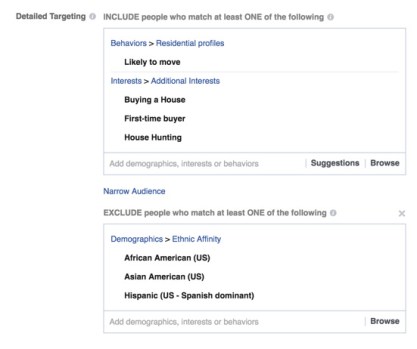
Facebook Lets Advertisers Exclude Users by Race

So, you might ask? Well, as ProPublica states, “Imagine if, during the Jim Crow era, a newspaper offered advertisers the option of placing ads only in copies that went to white readers. That’s basically what Facebook is doing nowadays.”

There is no end to the discrimination that can result in the features that Facebook is enabling, as described here: Facebook Lets Advertisers Exclude Users by Race – ProPublica. Worse, Facebook seems to be clueless as to what they are enabling.

The IT profession has too many company’s like Facebook that are developing technology that affects society in ways they are unable to process. There needs to be more focus on this. I’m glad ProPublica has done this here: more work on this has to be done.

A reminder: Soylent? Still terrible

Why? According to the LA Times, “Liquid meal maker Soylent is stopping sales of its flagship powder, warning that a handful of customers reported stomach sickness after consuming it.” This after recently having problems with their food bar causing people to become ill. So far, their blended liquid drink is not having an ill effects on people. Though, honestly, if a company keeps making food products that make you ill, why are trusting anything that comes from them.

Why people digest this stuff when simple foods are easy to eat is beyond me.  Even Boost or any existing meal supplement products seem to be better.

For more on the story, see: Soylent halts sales of its powder as customers keep getting sick – LA Times

The Apple Car is off (for now)

According to the article below, Apple “has drastically scaled back its automotive ambitions, leading to hundreds of job cuts and a new direction that, for now, no longer includes building its own car, according to people familiar with the project.” Too bad. I expect we will see more and more car related activity from Apple, but a shiny new vehicle may not be one of those things.

For more details, see:

Source: How Apple Scaled Back Its Titanic Plan to Take on Detroit – Bloomberg

The surprisingly easy way anyone can start an art collection

If you love art, but believe you have to have tons of money or an art history degree to have an art collection, then take a few minutes and watch the above videos from the good people at art interiors (two of whom are in the video). After watching it, you’ll feel it’s something you can achieve, I’m sure.

Next step? I recommend a visit to their site and store to see what they have that suits you.

Good luck!

Sixteen ways to think about and improve your life

Over the last year or so, I’ve found these worthwhile pieces on how to think about life and how to improve it. If you find one of these worthwhile and it improves your life as a result of you reading it, then I think collecting and writing about these is worthwhile.

  1. If you are feeling lonely and want to understand and deal with it better, consider this: The Science of Loneliness: How Isolation Can Kill You – New Republic
  2. One idea you can consider: talk to strangers. Hello, Stranger – NYTimes.com
  3. If you need new ways to live a better life, courtesy of a famous person….7 Steps to Living a Bill Murray Life – Vulture
  4. Or if you like to write, try to improve your life via writing: Writing Your Way to Happiness – NYTimes.com (I am guessing some writers would not agree with it)
  5. If you struggle to be happy, this could help: Everyone wants to be happy. Almost everyone is going about it wrong. – Vox
  6. If you want to be more optimistic, consider the big picture, presented here: A Cockeyed Optimist – NYTimes.com
  7. If you think you are working too much and are often thinking of cutting back, this could help you: Keynes’ 15 Hour Work Week Is Here Right Now
  8. Lots of good ideas via a collected stream of tweets, here: Things @GhostfaceKnitta Learned in 2015 (with tweets) · valerieinto · Storify
  9. Why should you give away money and be happier: Giving money away makes us happy. Then why do so few of us do it? – Vox
  10. Don’t hesitate when it comes to improving your life. You have less time than you think. See this to see why: These graphics will make you rethink your life – Tech Insider
  11. Being laid off will happen to everyone. If that’s you now,  and you are struggling with it, consider: Advice For the Recently Laid Off – Medium
  12. Self Confidence makes for a better life. Here’s how to become that way and more so: The Truth On How To Become Self Confident
  13. Change your mind, change your life. How? One way: Rewire your brain: Why Practice Makes Perfect: How to Rewire Your Brain for Performance
  14. If you struggle with your thoughts (e.g., worry too much), read : BBC – Future – Why we should stop worrying about our wandering minds
  15. Sometimes the way to improve our lives is not to have more, but to seek less and not be caught up in the trappings of status. To live a simpler life, like this: Here’s why one of the world’s richest men wears hand-me-down clothes – The Washington Post
  16. More on how to live with less. Living With Less. A Lot Less. – The New York Times

(Image from one of the articles linked to on NYTimes.com)

40,000 home decor links to make your place more attractive

Ok, not quite 40,000, but quite a lot. Some are very practical, some are inspirational, and some may even have you building your own furniture (as I did).

First, here are a bushel of links from the Apartment Therapy web site. They have lots and lots and lots of pages filled with ideas for people who rent apartments that can be used by anyone, renter or owner. Very practical, low cost, smart ideas and approaches to home decor. Good stuff.

Not so how to oriented, but this handful of links might give you some ideas and inspiration to improve your place:

Now that you are inspired, here are some good links I found for buying furniture:

Or if you want to build vs buy furniture, you might want these links:

Finally, if you are not so much into furnishing your place but more into painting it, then consider these few links:

(The lovely entrance at the top of the post is from a link to How to Make a Small Apartment Feel Huge | A Cup of Jo)

My favorite place to go for technical tutorials is DigitalOcean

If you want tutorials that are clear and understandable and work, then I recommend the Tutorials at DigitalOcean. You might think it is obvious, but I can’t count the number of how to technical guides on the Web that don’t work are hard to understand and confusing.  All the ones I’ve used from DigitalOcean have worked well. Plus they are a pleasure to read.

Now when I am searching on for a technical topic, I put in “DigitalOcean” as part of the search terms.

Installing and configuring and using IT is hard enough: make getting started that much easier by using their tutorials.

What makes McMansions bad? The opposite of what makes other houses appealing

This piece, Worst of McMansions — McMansions 101: What Makes a McMansion Bad…, not only clearly explains why McMansions are so ugly, but it shows why other houses are appealing. A good primer for anyone interested in buildings and architecture, especially for someone looking to build a new home. I

Thoughts on using JMeter to do web performance testing

There are many tools to use for web performance testing, but if you want a good tool that does the job, I recommend Jmeter. The good and bad thing about JMeter is that there are alot of different options and features. To make it simpler for you, the good folks at Digital Ocean have a good tutorial on getting it set up, here: How To Use Apache JMeter To Perform Load Testing on a Web Server | DigitalOcean. While this is fine for testing one page, there are test scenarios where you want to have the user perform multiple steps (e.g. go to the home page, login to their account, check their account balance, then logout). If that is the case for you, too, then you want to read this next: How To Use JMeter To Record Test Scenarios | DigitalOcean (I used Firefox for this: if you are going to use JMeter to develop your performance test cases, then download Firefox too.) For any performance testing that follows a sequence, you really want to use the recording feature of JMeter.

Some other thoughts….

On my thread group, I added the following listeners:

  • Response time graph
  • Graph results
  • Aggregate report
  • View results tree (with scroll automatically on)

I also login to the web server and tail -f  the access log (and sometimes the error log).

I do all this because it is easy to run have a lot of errors when you first (and even later) run your test. For example, if you are testing a sequence, you might see good performance, but you might also see 404s in the access log, or you might see other anomalies in the aggregate report (e.g. good response 90% of the time, but bad response on average). Having more data is better and it insures you don’t have false positives (e.g., you think performance is good, but it really isn’t because the application is failing).

As soon as your developers have some code in place, have someone run Jmeter against it. Don’t wait until towards the end of the project. Jmeter is free and anyone can use it.

Back up your test plans often. It is easy to change your test plan, have it go from a successful one to an unsuccessful one because of the change, and then find it hard to go back because you changed a number of variables.

For your test plan, have multiple thread groups. This will allow you to test different test scenarios for different test groups. You can have different test plans too: it’s up to you how you manage it. For example, I recorded a long sequence for one test group, then I copied it and made a simple test group with less steps by removing them.

On being great and still having to deal with rejection from employers

Is this you: despite having a great resume and being really good at your job, you aren’t appreciated at your current workplace or you are struggling to find a new place to work? If so, I encourage you to read this: The Life of a Free Agent Kicker | The Players’ Tribune

It doesn’t matter if you love or hate football, it is a great example of how you need to think in order to stay positive and maintain perspective when your work situation gets tough.

You can be great at your job, you can have a record of success, and you can still be rejected by employers. It can happen to anyone. You have to stay ready, stay focused, and do your best when the next opportunity comes along. Read the article and grab some perspective.

How to stop Whatsapp from sharing information with Facebook 

Instructions are here as to how to stop Whatsapp from sharing information with Facebook.

Facebook owns Whatsapp. I expect this simple opt out may not be so simple in the months and years to come. You may have to make a harder choice then when it comes to privacy on Whatsapp. In the meantime, you can follow those instructions to maintain the separation between your Whatsapp data and your Facebook data.

Uber is reaching an inflection point (and may be reaching a crisis point)

Why? According to Bloomberg:

After touting profitability in the U.S. early this year, the ride-hailing company is said to post second-quarter losses exceeding $100 million.

A main source of the losses: subsidizing Uber drivers. As Christopher Mims commented on Twitter, “So Uber is a giant machine for transferring wealth from venture capitalists to underemployed Americans”. This is both clever and something that can’t go on indefinitely. It makes clearer to me now why Uber is keen to make self driving cars work. Sure, Uber could charge more for cabs or pay cab drivers less, but in either case, they risk losing market share.

The losses this quarter certainly are an inflection point. It remains to be see if it is a crisis point. That will depend on how the VCs see this loss. I believe they will have patience and they haven’t reached a crisis point yet. Uber should hope that their investors have the same patience that Amazon’s investors have.

For the rest of the story, see: Uber Loses at Least $1.2 Billion in First Half of 2016 – Bloomberg (Image above via the Bloomberg article)

Anil Dash says: ‘There is no “technology industry”’. In reality….

There is a technology industry. Specifically, there is an information technology industry. There are lots of companies, big and small, whose sole aim is providing information technology products and services. Take a look at this list: they are some of the largest companies in the world whose purpose is I.T. They don’t focus on food, or entertainment, or logistics, or advertising: they focus on information technology.

The point he seems to be raising in his piece: There is no “technology industry” — Humane Tech — Medium is that there are companies leveraging I.T. that are considered tech companies, but aren’t. That’s a valid point. But that doesn’t mean there isn’t a technology industry. Should we treat these companies differently that I.T. companies? Possibly. Companies like Theranos, for example, partially ran into trouble because they were treated the way a I.T. startup should be treated, when in my opinion they should have been treated more like a pharmaceutical or medical equipment company is treated. It’s important to look at what the companies do and not just how they model their business.

Towards the end of the piece, he says, “All it takes is a little discipline in how we communicate”. I agree.

Tug of War, 56 pound weight throw, and other discontinued sports of the Olympics

Watching athletics events like javelin and discus, you might think that the sports for the Olympics have been constant since the beginning of the modern games. But as this shows, Unusual and Discontinued Olympic Sports, there are many sports and events that have been dropped since the revival of the modern day Olympics. In particular there was a lot of tinkering in the early years. Not that that is stopping: many sports have been added in the last few decades, and some (e.g. softball) have been dropped.

It would be sad to see your sport dropped from the Olympics, though it would be something to be the last Olympic record holder for it.

Enjoy this year’s Olympics in Rio.

The decline of Peter Thiel – a marker

After reading these three profiles on Peter Thiel in the New Yorker:

1. From 2011: No Death, No Taxes – The New Yorker

2. From 2016, just after he spoke at the Republican Convention: Peter Thiel’s Conservative Vision – The New Yorker

3. From May 2016, How Peter Thiel’s Gawker Battle Could Open a War Against the Press – The New Yorker

What came to mind is the decline of his reputation in the last half decade. A decline he has brought on himself. Whatever you thought of him in 2011 — if you thought of him at all — you likely joined a majority by 2016 in thinking poorly of him.

I’m just putting this here for now. I am sure his reputation will decline further, and I want to revisit that when it happens.

Food! Recipes! Techniques! :)

I read an awful lot about food on my iPad and my iPhone, and as I do, I save the links on Instapaper.com or getPocket.com. You might not believe it, but I don’t blog all of them. The ones I do post, like the ones you see below, are ones I think people who love to cook or love to eat (or both!) would enjoy. So…enjoy! 🙂

  1. Here’s a good review of one of Mark Bittman’s latest books: The new fast food: Why Mark Bittman is revolutionizing the recipe with How To Cook Everything Fast | National Post
  2. If you want to jazz up the presentation of your food, consider this: How To Plate Food Like A 3-Star Michelin Chef | Co.Design | business + design
  3. Of course what is a good plating without some good sauces. Here’s some you can try: Simple Pan Sauces : The Reluctant Gourmet. Here’s more from the same site: How to Make Reduction Sauces : The Reluctant Gourmet. A great sauce can make a dish.
  4. If you think you need to run a fancy restaurant to win a Michelin star, read this and change your mind: Michelin star for Singapore noodle stall where lunch is half the price of a Big Mac | Life and style | The Guardian.
  5.  If you are struggling with dieting, you might find this useful: Hunger is psychological – and dieting only makes it worse | Aeon Essays
  6. Any good cook should know some fundamentals. The site Food 52 is helpful with articles like this: The 10 Dishes to Know By Heart This Year. I think part of the fundamentals of cooking is knowing how to make a good stock. If you don’t know how, check this out: How to make soup stock – Chatelaine
  7. Some simple but good pasta recipes, here: A niçoise pasta that you can make with whatever’s in the pantry | Metro News and here: Orecchiette with turkey and broccoli in less than 30 minutes | Metro News and here: Macaroni Milanaise Recipe – NYT Cooking
  8. If you feel like more of a challenge, try this: Bouillabaisse – Lucky Peach
  9. If you don’t feel like cooking at all and just want to drink wine and eat cheese, this can help: 13 Helpful Diagrams For People Who Only Care About Cheese
  10. This says “Summer Express”, but you can easily use it all year round: Summer Express: 101 Simple Meals Ready in 10 Minutes or Less – The New York Times
  11.  This is dead simple. And if you have this, you can make pulled pork sandwiches, enchilladas, etc. Slow-Cooker Pulled-Pork Tacos Recipe | Real Simple

A sign of the times: Adblock blocks Facebook. Facebook circumvents Adblock. Now Adblock circumvents Facebook.

No doubt this game of cat and mouse will go on for some time. For Adblock to prosper, they need to block ads on Facebook. Likewise, for Facebook there is too much money at stake to allow Adblock to block their ads.  For details on this, see: Adblock Plus and (a little) more: FB reblock: ad-blocking community finds workaround to Facebook

One thing for sure: developers from both sides will be pushing out changes on a regular basis as this battle heats up.

Of course, behind such tactics, the deeper questions are left unresolved, questions around business models and the viability of services without access to advertising revenue.

The Globe and Mail on the plan to defeat Usain Bolt is sports writing at its best

Usain Bolt and Andre De Grasse running in the Olympics

Here’s the story behind the photo, above.  Andre De Grasse, the up and coming runner from Canada, was going against the legend from Jamaica, Usain Bolt, in the 200 meter race at the Olympics. Rather than just concede to Bolt, De Grasse and team came up with a plan to beat him. It’s was a smart plan, and the story of it is equally good. Read it here: De Grasse’s plan was to beat Bolt by making him run faster. It almost worked. Here’s why – The Globe and Mail

While it didn’t work, it was likely the best way to beat Bolt (assuming he was beatable).  And the confidence to think he could beat the Jamaican legend is one of the reasons we’ll be reading about the success of Andre De Grasse for some time to come.

A primer on how to understand and compare health care systems around the world

McMaster University Teaching Hospital
If you are interested in comparing health care systems in various countries, then one place to start is here: Health systems by country – Wikipedia.

While it seems like there is a different setup for each country in the world, many of them are variations of four different models, which are summarized here: Health Care Systems – Four Basic Models | Physicians for a National Health Program

(Image = McMaster University Teaching Hospital. Via Wikipedia)