The Most Influential Artists of 2019 according to Artsy

It seems every year the website Artsy puts together a list of artists who were recently influential. The lists are always interesting, mixing artists you likely heard of (e.g., Jeff Koons) and others you may hear more of.  It’s a great way to find out what artists are making a difference right now.

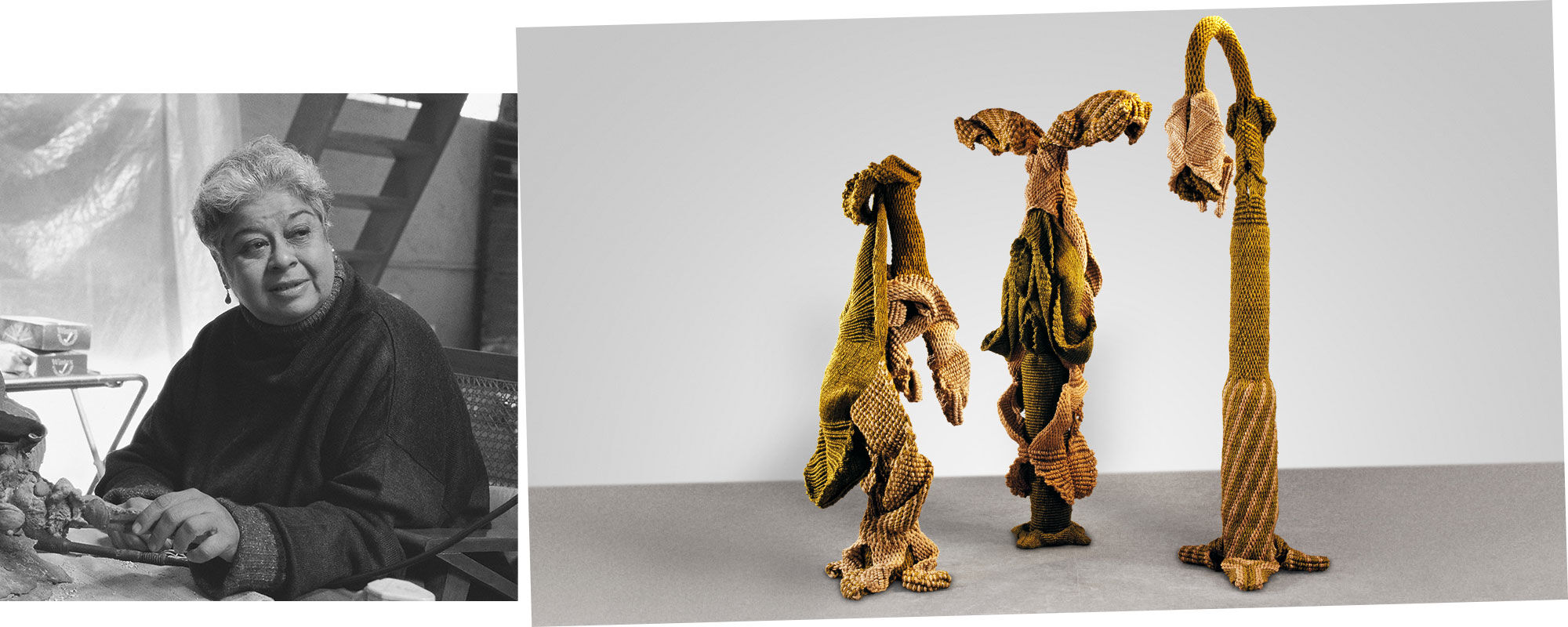
I had not heard of Mrinalini Mukherjee before. (Not that I even pretend to know everything about the current art world.) But I am glad to have discovered her for myself. Go here and learn more for yourself: The Most Influential Artists of 2019 – Artsy

(Image about is of Mukherjee and a featured work of hers.)

Discrimination in design can come in two forms


Discrimination in design comes in two forms. One is through direct action. When you see benches designed to prevent homeless people from sleeping on them, that’s one example. Many more examples can be found in this ProPublica piece: Discrimination by Design — ProPublica.

Ignorance is the second way discrimination can occur in design. Just this week Twitter rolled out an audio feature that is inaccessible for deaf people. No one at twitter set out to discriminate against deaf people. The designers at Twitter just didn’t take them into account. (Apparently Twitter doesn’t have an accessibility review team for their software updates, which is bad for a technology company as large as they are.)

Keep in mind both forms when you see something that seems designed to discriminate against certain people. It may be intentional, or it may be an omission. Either way, steps should be taken to eliminate that discrimination.

(More on twitter’s audio tweets, here.)

Which technology has lasted since 1995, 25 years ago


This is interesting. In reflecting upon Java’s 25th birthday, this article looks at what else has lasted since that then: Java’s 25th birthday prompts a look at which tech products have survived since 1995 – TechRepublic.

You might think that very little has lasted that long. And it’s true, many technologies have died. (Altavista for one.) But many technologies continue to succeed and grow. Amazon, for starters.  Java itself still is found in computers all over the world. Check out the piece and see what lives and what died since the mid 90s, when the World Wide Web came into its own.

Tools to help you deal with anxiety, during a pandemic, or otherwise

I think this is a terrible headline, which is too bad, because there is much to take away from this piece:  How to stay sane when the world’s going mad | MIT Technology Review

There are tools and advice in there, including this:

  • Notice when you are worrying, and be kind and compassionate to yourself. This is a difficult time; it makes sense that you might be more anxious.
  • Focus on what’s in your control. Work out what is a hypothetical worry (you cannot do anything about it) and what is a real problem (needs a solution now).
  • Refocus on the present moment. Focus on your breath, or on using your five senses.
  • Engage in activities that you find meaningful and enjoyable. That could include music, walking, reading, baths, household tasks, or calls with friends and family.
  • Notice and limit your worry triggers. If the news is making you anxious, limit your consumption.
  • Practice gratitude. List the things you were grateful for that day: for example, “The sun was shining.”
  • Keep a routine, and stay mentally and physically active.


Fifty ideas and concepts to ponder


I am not sure if these will change your life, but this piece is full of interesting ideas and concepts to consider: 50 Ideas That Changed My Life — David Perell

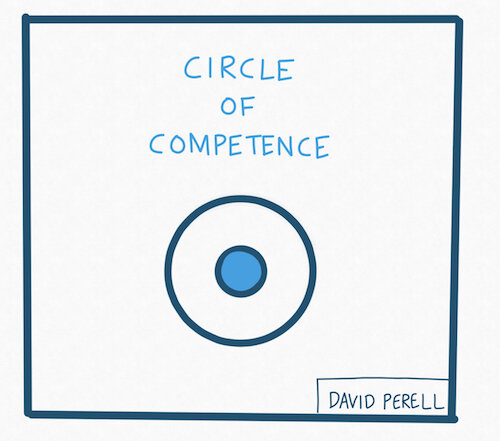
I like the circle of competence one. It’s worthwhile to consider and remember when you hear someone smart in one area making claims in other areas. Chances are they are not any more competent in all areas than anyone else, and you should take their claims with a grain of salt.

You may be working from home for awhile. Here are some tools to help you stay focused

This is actually a great looking set of tools to help you work from home: Eight apps to help you stay focused when working from home – The Globe and Mail

Normally when I see such a list — and there have been many — I see the same tools over and over again. Not with this list. Moreover, they are a diverse set of tools to help with various difficulties when you work from home.

Have a look. I’d be surprised if there isn’t one there you could use.

The best advice I’ve received on setting long term goals

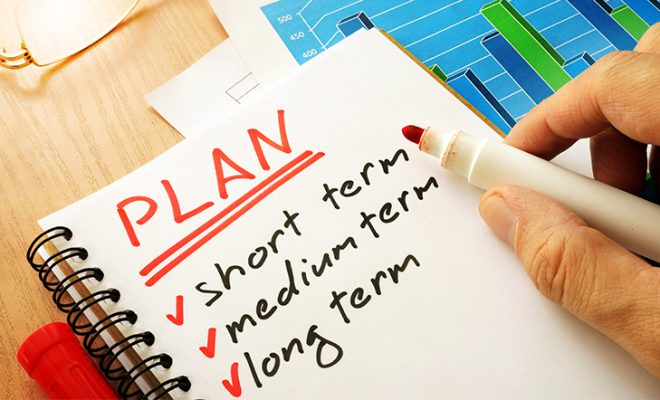
The best advice I’ve ever gotten on setting long term goals is one I heard at a client I was working with. His team was making five year goals. It’s a difficult thing to do. It’s easy to make a vague statement about where you’d ideally like to get to in five years. To make it concrete, he told his team that they had to make a one year goal that bridged to the goal in year five and that they would commit to do before the year was done.

This is something you can do for any longer term goal, from one year to ten. Let’s say you want to run a marathon in a year. Then decide what your goal is for the next 1-3 months that brings you closer to that goal. If you want to own a house in ten years, what are you doing in the next 1-2 years to get there. By committing to shorter term goals, you get greater certainly you will achieve your longer term goals and you get closer to them with each short term goal you achieve.

If you want to set some financial goals, try reading this: How to Save for Short & Medium-Term Financial Goals? | WiserAdvisor – Blog. 

It’s also where I got the image above.

How to feel less hopeless and other good links I’ve found

Here’s some random links I have found this week and some comments. The tone is somewhat negative. The mood of the web is negative these days, and it gets to me. If you are not up for that, just ignore this for now.


Lighten your mental load by lifting a physical one: lift weights to lift depression

You may hate lifting weights, but if you struggle with depression, even from time to time, then you should consider it.

More details, here: Resistance Training May Help Relieve Depression (Time)

What are you looking at in terms of exercise? It says:

He recommends following the guidelines provided by the American College of Sports Medicine: doing strength training at least two days per week by performing eight to 12 repetitions of eight to 10 different strength-building exercises each time.

Sounds hard, but it isn’t. And if you need some exercise routes, go to Darebee and find some routines you need.

Swedish death blogging: on my favorite parts of my blog and more


I have blogged for over 13 years. I have almost 3900 posts, over 964,000s view and over 221,000 visitors. I’ve also made over 200 dollars from ads. 🙂
At one time I had hoped to get over a million views, but at 50 views a day, that is unlikely to happen. When I first started, I wrote blog posts because blogs were new and big in social media. Then I was added as a noteworthy blog on the New York Times Fashion blog list (for bizarre reasons) and I had 10 times the current traffic and I blogged to keep it going. Then that changed and I kept going to practice writing, to share ideas and advice with people, and to journal things that were happening at the time.

But in the back of my mind I had a thought that some day my kids would want to know more about their dad and they might go through my blog the way kids go through our diaries and letters after their parents pass on. To find out what made him tick. What he thought about when he was sitting on the porch those many years.

I realized though that they were never going to go through thousands of posts to find the ones I thought the most of. As a way of ensuring they would at least read some of them, I’ve tagged my favorite ones and put them here: favorites | Smart People I Know

.They are a range in different ways. I can’t say all or even most of them are any good. But of the thousands of posts here, these are among the better ones, I thought. They span the years. Some of them are about me. Others are about things I loved at the time. A few of them are historically interesting.

In a way this is like Swedish Death Cleaning: throwing away most things that you own to simplify things for people who come later.  I don’t plan on going anywhere yet, but I thought I would get started on the process now.

As well, it’s been a way to go through it and say, has any of this been worthwhile? I think I can say, some of it has. If you go through my favorites, you can see so for yourself.

Is technology designed to perpetuate racism?

That’s what this piece argues: Of course technology perpetuates racism. It was designed that way. | MIT Technology Review.

I disagree. Technology sometimes perpetuates racism, but it is often due to the fact it is NOT designed to account for racism. Sometimes machine learning software cannot perceive non-white faces correctly because they are trained with only white faces and cannot account for non-white faces. Sometimes search engines result in racist results, based on racist queries. AI systems can be made racist by engaging with a multitude of racists. If you feed systematic racist data based on redlining into your banking system or prison data into your justice software system, then those systems will make racist decisions. In all these cases, the fact that the systems are not designed to account for racism (or sexism or any form of discrimintation) is the problem. They need to be designed to account for these things.

Only when technology is designed to account for racism will it stop perpetuating racism.

Some ways to tackle inequality if you are an introvert

If you are an introvert and shy away from using your voice or your presence to address inequality, there are still a number of things you can do to improve things. Here’s a starter list for you to consider.

1. Contribute money. Money is power, and giving money to groups that work to combat inequality is a straightforward way to shift power to those having less of it.

2. Vote for candidates working to reduce inequality.

3. Decline positions that reinforce inequality. Do you belong to some organization that fosters inequality? Consider resigning or asking the leaders of the organization to better balance the group so it is more equal.

4. Educate yourself. Find good sources that deal with the inequalities you see and will give you better insight into the problems and how they can be solved.

5. Amplify voices dealing with inequality. If you can, help share the voices of people trying to address inequality so others can hear them.

6. Address your elected officials. Besides voting, you can prod your elected officials to do more to address inequality. Most elected officials are interested to hear what you say and even for an introvert it is not that hard to speak up to them.

7. Educate others. This may be harder for you, but consider ways you can share what you have learned and try and find ways to communicate to others existing inequalities and how they might be addressed.

This isn’t an exhaustive list, but it will start you on your way to help push back against the inequality you see in the world.

On the evolution of technologies

This is a great piece on understanding technology: The best is the last — Benedict Evans. One thing I love about it is that it illustrates its point by using non-digital technology. I tend to think of information and digital technology when I think of tech. This piece overturns that and talks about planes and ships.

And what is the point it is illustrating? Namely, this:

The development of technologies tends to follow an S-Curve: they improve slowly, then quickly, and then slowly again. And at that last stage, they’re really, really good. Everything has been optimised and worked out and understood, and they’re fast, cheap and reliable. That’s also often the point that a new architecture comes to replace them.

Smart piece. Once I read it, I wanted to apply the lessons to other technology too.

How living in a poor neighborhood changes everything about your life (and this was before the pandemic)


This is a really good explanation piece on how living in a poor neighborhood changes everything about your life (Vox).

It is focused on the United States, but is not unique to it. Well worth reading. It can also explain why people who live in poorer neighborhoods are more likely to suffer the effects of the pandemic.

On recipes


After the controversy regarding Alison Roman written about here and elsewhere, I started thinking about recipes, where they come from, how I use them, and how I think about them.

A recipe is usually instructions for how to do something. Typically we associated it with food preparation. Recipes list ingredients and steps to prepare the ingredients. They tell you how many people the recipe typically feeds. Sometimes they tell you other things, like nutritional information.

Some recipes are like open source software. You can take a recipe and modify it to make it your own, just like open source software. Other recipes are not open and kept secret, like the formula for certain soft drinks, or the recipe for a certain fried chicken. Some are even patentable (although good luck with that).

Some recipes are associated with regions or cultures. If you think of bouillabaisse,  you think of France. Risotto: Italy. Sushi: Japan. Some recipes and dishes transcend regions and become universal. Dumplings are like that. Noodles too. The same goes for ingredients: you can find basil and oregano in many recipes all over the world, and garlic is about as universal ingredient as any.

Some are associated with certain people, such as Marcella Hazan’s tomato sauce. You can claim making tomato sauce with butter and onion and tomatoes is a recipe of yours, but by now it is associated with Marcella Hazan. Likewise with Martha Stewart’s One-Pot Pasta. It’s not like no one has ever made such a dish before, but now we associate them with one particular person.

Alison Roman is a person who has had success with  recipes that became associated with her, namely her chocolate chunk shortbread cookies (” the cookies”) and her chickpea stew (“the Stew”). The Stew in particular got me thinking about recipes and ingredients and how people go about making recipes. For example, if a recipe is based on another recipe, should the author mention that? It likely depends on the publication and other factors. For example, with someone like Deb Perleman, you get a lot of detail about the recipe before she goes into it. Or with Hugh Acheson where he talks about the origin of his catfish stew recipe before proceeding to list the steps and ingredients.

Some people (like me)  prefer recipes with those details; other people just want the recipe. Anyone creating and publishing recipes needs to decide how much detail to include, depending on their audience. In publications like Bon Appetit, there is often space allocated only for the recipe itself. I don’t know what the text was wrapped around this recipe for a  Zingy Red Sauce when it was published, but I assuming it matched the minimum detail found on the web site. Now is this recipe a derivation of a Romesco Sauce (also in Bon Appetit)? Possibly. Likewise this Seafood Stew for Two Recipe  in Bon Appetit.  This stew shares a lot of ingredients with this classic Cioppino Recipe also in  Bon Appetit, but it is also varied enough to consider it to be it’s own recipe.

I think Roman does variations of recipes not infrequently, which aligns with her belief that she won’t ask you to do any more than you have to, while still making it a good dish. So this recipe for Summer Greens with Mustardy Potatoes and Six-Minute Egg Recipe in Bon Appetit is not unlike a stripped down Nicoise salad, but it is not a Nicoise salad despite some commonality. That I think explains the success of her recipes: she takes ingredients and recipes and strips them down somewhat while still making them look good, taste good, and accessible for home cooks to make.

She has not been called out for making recipes with strong European origins. But where she ran into trouble with The Stew is that she seemed to take some ingredients that resembled a curry and had it identified with her. If The Stew associated with her was the seafood stew above or this Fish Stew with Fennel and Baby Potatoes, then she still would have had a problem for the insulting things she said, but it is less likely she would have been criticized with terms like “Columbus Cuisine” and accused of ripping off other cultures and enriching herself at their expense. I don’t believe she does that, but that has been a lively topic of debate with smarter food writers than me.

I don’t think her approach to writing recipes is wrong. I can’t say that recipes  going viral is bad. What I will say is ultimately  it is better if we read from  a diverse range of food writers who can bring not just interesting recipes to publication, but the interesting stories that go with them. I also think it is good when people from different backgrounds can explore the recipes and ingredients of other cultures and make something new with them while acknowledging what the inspiration is. This is much better than remixing an older recipe without attribution. I’d add that acknowledging the origins of an ingredient can’t hurt either. After awhile some of those ingredients may seem universal. Perhaps kimchi will become as common as dill pickles in North American kitchens, and turmeric becomes as frequently used as cumin.

I think publications can do a better job of not just publishing recipes but educating their readers. Likewise, I think sharing, innovating and educating others on food is a great thing, and I hope recipe writers from all background can borrow and improvise and create new dishes. They won’t be quite as eclectic as these recipes that resulted from a collaboration with IBM’s Watson computer and Bon Appetit, but they will inspire us and help us prepare better meals and make our lives better.

On David McMillan’s Love Letter to Toronto

David McMillan, who is responsible for some of the great restaurants in Montreal, wrote this love letter to Toronto and it’s restaurants a few years ago. It’s wonderful. Reading it over again, it has a bittersweetness as I read the names of some of the wonderful Toronto food establishments he mentions. I wonder if many of them will still exist after this pandemic. I want to hope that most will and I want to hope that the Toronto food scene will still be great. Just like I want the Montreal food scene to recover and thrive. I will say a prayer that both those things come true.

Some random thoughts on bullet journals


There’s merit to be had in having a bullet journal. It lets you capture the things you have to do and track and quickly capture them. If this appeals to you and you want to learn more, I found this use helpful:  Learn – Bullet Journal

That used to be my impression of how they worked, and they looked very minimal.

It seems though that bullet journals have transformed into these amazingly detailed books filled with calligraphy and they started to look like this:

Now there is nothing bad about that, and for some that is an impressive way of capturing information. But as the person who made that wrote, it may not be the best way to be productive, and she switched to a simpler mode of documentation.

I can’t say which is the better way of doing things: it’s a personal preference in my opinion.

I do want to say that there is this person who has come up with a smart way to visually represent the things she has to do. For example, here’s her todo list for decluttering her house. It’s a much better visual representation of what she has to do.

Likewise this is a smart way to plan a big meal:

If I were to do a bullet journal, I think I’d stick with the minimal approach. But even that is a lot of work. Perhaps if I were more artistically inclined I’d go with the more graphic approach.

Like I said, random thoughts.

Why running may help your brain

Based on this older study (For Your Brain’s Sake, Keep Moving – The New York Times), it seems like running helps the brain grow better. It’s a good read. It may also explain, at least in part, why people’s brains are not doing so great lately with the lockdown due to the pandemic.

We rightly attribute running to helping our muscles and our cardiovascular system. It seems to help our nervous system as well. Try to get out and move if you can.

You need more than a room of your own. Virginia Woolf said so herself

As Austin Kleon highlights in this post:

It is curious to me how often, when people quote Woolf, they quote the room part and leave out the money part — especially when you consider that money buys you both the time and the space

I’m not sure why people leave that out, but it’s an essential part of the freedom required to create fiction or any other artistic endeavour. The money frees you from the basic needs, just like the room gives you the social freedom you need. You can still create art if you are weighed down by poverty and responsibilities, but it’s harder.

I recommend that post by Kleon, and Kleon’s blog in general.


If you are feeling blah, set up an inspiration board

For some people, the first response is going to be: “great idea, but I need some bootstrap inspiration”.  Totally understandable response. So here are seven boards to get you going on making your own: Peek at the Inspiration Boards of These 7 Female Designers

If you first response was something the opposite of “great idea”, then all I would say is try to find 3 or 4 items that represent things you value and have them in a space that you can see often. Maybe they are awards, or pictures of people you love, or items from trips you’ve been on. A cluster of things to remind you of what you have and what you accomplished. They may sit on a shelf instead of a board, but they will inspire you nonetheless. Whatever works.

One thing I would recommend is set the board up so you can change it often. I find if the board is inflexible, you end up not seeing it any more. If you have a dozen images or items you want to post, perhaps post a fraction of them, then switch them around with the unposted ones. It will keep it fresh that way.

It is a slog being locked down during this pandemic. Anything that lifts your spirits help. Inspiration boards can be one of those things. Make yours today.


How to get started reading the classics


Well this advice is fraught with assumptions, but if you are hankering to read the classics and have an open idea of what “the classics” are, I recommend this:  So you want to read classic books during the coronavirus pandemic – Vox

Basically, there are quite a number of books that are considered classic, but not all classics are approachable. You might pick up one in anticipation, get stuck, and abandon the idea of ever reading such books. To prevent that from happening, read the advice given in Vox. Start slow, and go from there.

Finally, there has always been a debate over what consists of the classics. Many of them will not appeal to you. And other books not considered “Classic” by many might just be old enough for you to fill your appetite for something you consider classic. (e.g. A fan of science fiction might consider Jules Verne classic. ) I consider it good to read from different times: it gives you a better appreciation of your own time, among other reasons. So put down those contemporary writings and go find your own classics to read and love.

Tired of cooking during the pandemic? Here’s some ideas to keep you going

Me too. I go through waves of wanting to cook things fancy, and other days when a sandwich is all I got in me to make. If this is you too, but you want more than a sandwich, consider this:  The No-Brainer Meals Chefs Make When They’re Too Tired to Cook

That piece has tried and true meals that can fill you up and satisfy you without having to put a lot of thought in them. One of my favorites on the list is fried rice. A great way to use up ingredients at hand, and it always tastes great for something requiring minimal effort.

Sure there is take out, and that’s fine. And perhaps one day soon we can sit in restaurants again. But if you are stuck with having to making something, consider the somethings in that list of meals.

(Photo by Ali Cayne.)

On the Silver Palate Cookbook

I started thinking about the Silver Palate cookbook again after reading this piece in Bon Appetit: How the Silver Palate Cookbook Changed Our Cooking

It’s funny to read the staff of Bon Appetit talk about this as their parent’s cookbook. To me the tone is nostalgic. Perhaps they believe it is dated. Like any decades old cookbook, it is dated in a way. There’s lots of things in there that was novel and daring at the time but now are passe, and ingredients which are now commonplace were once hard to find.

But there is much about the book that is still great. The layout and design, for one thing. And some recipes stand the test of time and became classics. It’s so much more than a collection of recipes.

In some ways, publications like Bon Appetit are the same. Many of the things I’ve said about that cookbook will apply to Bon Appetit over time.  And like the Silver Palate cookbook, I believe people will look back on Bon Appetit in this era the way the folks at BA look back at this kitchen classic.

If you haven’t read the Silver Palate cookbook in some time (or ever), you can read (at least some of) it online.

P.S. I came across another article on the Silver Palate in the New York Times, and similar to Bon Appetit, the author was condescending towards it and the owners of the place. Odd. Especially since the Cooking section recently did two versions of the Palate’s classic dish, Chicken Marbella. Here’s a weeknight version of the recipe, and here’s the standard version. Go and make either one whenever you get a chance. You’ll be glad you did.

Friday night cocktails: the Bronx

What is a Bronx cocktail? David Lebovitz explains:

Not as famous as its “other borough” cousin, the Manhattan, the Bronx is a fruitier, lighter alternative to the rough-and-tumbler whiskey-based cocktail. However one sip and you may find yourself visiting the Bronx a little more often!

I’ve had one recently and it’s delicious. Get your ingredient list, here: Bronx Cocktail – David Lebovitz Bronx Cocktail recipe.


A checklist to review for when you aren’t motivated

If you are trying to be motivated but are struggling, then take this review:

  1. Are you tired? Perhaps you are too tired to do anything. Maybe your first goal should be to get some rest and refreshment.
  2. Is there some other physical problem? Maybe you are hungry or dehydrated or sore or sick? If so, your first task should be to deal with that problem
  3. Is it your environment? Sometimes it’s hard to be motivated if your environment puts you off. First up, fix up your environment. Even small changes can make a difference. Think about how better you will feel if you do those changes and use that to energize you to make them.
  4. Is it your mental state? Maybe you are anxious or depressed? If so, look into what you can do about that: talk to a friend or a professional or your doctor or look into online services.

I can add more and more things to this list. So can you. The point is, when conditions are good, it is much easier to be motivated to do the things in front of you. If conditions are bad, then your motivation should switch to improving your conditions first. And chances are if you are tired or sick or stressed, you are motivated to improve them anyway. Recognize you are motivated, just not for the things you feel you should be motivated for. And that’s fine.

Don’t Want to Pay for Art School? Here’s how you can get similar benefits from home

Before the pandemic, I would not have taken this too seriously. But with everyone studying from home, I am taking it a bit more seriously.  And even without the pandemic, there are benefits to this approach. So if you want to get some of the benefits of going to art school without going to art school, check out this piece and this syllabus: Don’t Want to Pay for Art School? Here’s a Streamlined Syllabus for Getting Your Own DIY MFA at Home | Art for Sale | Artspace

Key passage from that piece:

Art schools are renowned as being inspiring places where art lovers can imbibe the history and practice of their favorite creative disciplines among like minded strivers. They’re also known for being very expensive (and not necessarily remunerative). Happily, we can offer an alternative avenue to learning. Here, …find a syllabus that will give you the tools you need to navigate today’s art world—taught by some of the greatest artists and thinkers in the world.

If that appeals to you, get a copy of that syllabus and get studying.

The Best Websites to Get Your Retro Gaming Fix

For a generation of oldesters like me, arcade games were what we grew up on. They seem quaint next to games on XBOX of PS3 or 4, but compared to games like Animal Crossings or other Nintendo games, they still seem relevant. Anyway, whatever your take, if you are into old games, check this post out: The Best Websites to Get Your Retro Gaming Fix.

I was over at archive.org playing my old favorite, Berzerk! Still fun! And hard! 🙂

Note to Mac users: I had a problem with the Fire button on my Mac. So I followed the advice on this page to map my SPACE bar to the fire button. Then I was fine.

More pandemic Highlights and Ramblings (a newsletter, as such)


This is my latest not-a-newsletter of highlights (not so many) and ramblings (many) since the last one at the end of March. Like many of you, I’ve felt the time blur since then. I’ve joked that the difference between the weekdays and the weekend is I am not on video calls during the weekend. Otherwise the days have a sameness. Here’s what has changed, though.

  1. Spring: despite the sameness of day to day life, Spring continues to develop. It’s been a pleasure walking my neighborhood and seeing the buds and the flowers. It’s an implicit sign of hope. Try to get out while you can.
  2. Fitness: I’ve lost a lot of interest in fitness since I lost access to a gym. That’s been bad for me. I’ve been struggling to get in more exercise, which led me to at least do daily stretching and trying to get out more. I’ve started weighing myself and wearing my Fitbit too. I’ve wanted to just ignore it, but my body and my pants have told me otherwise. My go to these days for help on this is darebee.com. And I’ve been trying to log my eating and my weight to see where adjustments can be made.
  3. Food/cooking: earlier in the pandemic, I had a passion for cooking. As the weeks have gone on, I’m still cooking, just not with the gusto I had earlier. I think that is the way it is for others. Earlier on, I saw many people posting fantastic meals and fresh bread. Now people are showing dishes with simple ingredients and simple preparations.
  4. Restaurants: it’s a tough time for them, but some are adopting new ways of doing business. I’ve been trying to patronize some of them as I can. I wish I could say it will be enough. I’ve had great meals from Bar Volo and Cote de Boeuf and Brando’s Fried Chicken, not to mention great pizza from Classico and Terroni’s, and last but not least, Brothers.
  5. Reading: my eating has been good, my reading has not been. I just can’t seem to settle my brain enough to read much of anything. The other thing is I used to read heavily during commuting and now I never commute, unless it’s from my desk to my couch. Sometimes I bring a book for when I line up for groceries, but even that doesn’t last long.
  6. Zoom get togethers and other forms of checking in: during my last rambling, there was a lot of that. I don’t see so much of it now. Perhaps the sameness of it all makes people less likely to want to do it.
  7. Leadership: I am surprised but I still steady leadership, with the occasional slips here and there. At least in Canada. In the US, I see the President continue to decline. I wish it weren’t so.
  8. Negativity on social media: I made the mistake of tweeting that Twitter had gone from being positive to nasty. That was true. How I went about it was wrong, though. That was poor judgment on my part. To fix that, I am reverting to trying to be generally positive only on social media. I should know better.
  9. Entertainment: Some people still continue to lift us with their performances on social media. Two of my favorite performers are Patrick Stewart and Angela Hewitt. But many others have dropped off and have done less. I don’t fault anyone for doing that.
  10. Scarcity: the scarcity I’ve seen early has all subsided. That is good. Perhaps I am missing some of it, but the beans and the toilet paper and the rice have all returned to the shelves.
  11. Mood: my perception is that people seem to have gone from fearful and anxious to resigned.
  12. Making things: I am still making things, but not as much. It’s enough to do what I can some days just to get through the day.

Thanks for reading this. Here’s to better days.


If you know someone learning about the periodic table, show them this

Not too long ago I was teaching my son about the periodic table and trying to make some of it relevant to him. Something like this would have helped: This Illustrated Periodic Table Shows How We Regularly Interact With Each Element | Mental Floss

It’s a great way of showing that the dozens of elements listed there are things we interact with regularly.

Check out the link for a more detailed version of the chart. (The above image is just an abridged version).