
If that question is on your mind, this link to Canada Post is the answer:
Don’t delay: get on that today.

If that question is on your mind, this link to Canada Post is the answer:
Don’t delay: get on that today.
The shoes, they are getting thick.*
Perhaps they’ve been inspired by the Nike alphafly 3 proto running shoes shown below:

…but they seem to have moved far and away from the minimal sole. For example these New Balance Permafrost Fresh Foam X which are made for winter running are might think in the sole:

Same with the New Balance x district vision trail running shoe:

Nice. I have always been in favour of thick soles, so I approve of this trend. I am also a fan of running shoes made for winter running (and you’ll be too the minute you go for a run and get freezing slush in your shoe).
Need new shoes? Check these out. You’ll be faster in no time.
* I am sure there are plenty of running shoes that are being sold that are not thick. But definitely noticing a trend towards a thicker sole.
 Now that Evernote is all but killing their free plan, you may be considering moving. That was me awhile ago. I loved Evernote, but the restrictions and bloated features made me want to move.
I wasn’t sure what to move to, so I did some research. These two links were especially helpful:
I nixed migrating Evernote to OneNote because I use the latter mostly for work notes. And while I use and love SimpleNote, I like it only for specific purposes. I considered Obsidian, but it seemed more than what I wanted.
In the end I went with Joplin for a few reasons:
I haven’t had any problems with Joplin since I moved to it many weeks ago. I kept Evernote on my Phone in case of problems, but I have not used it in ages. After I post this, I think it will be time to delete the app from all my platforms.
I was a big fan of Evernote. It was great. But Joplin is great too, and once you start using it, you won’t turn back.
P.S. Don’t just take my word on it. Read those links, too. You might find you want to go with one of those other tools. I use OneNote and SimpleNote all the time and I highly recommend those, too.
Why this, the Official 2023 Sufjan Yule Log video, containing all of Sufjan Stevens’s Christmas music:
Almost 5 hours of seasonal songs to accompany a lovely fire. Perfect to get you in the spirit of Christmas.

November is a month of chills and cooling off. Not just literally but figuratively. So many things have been cooling off, dying off, or just ending this month. Many things, but not all things.
Dying: A year ago crypto exploded in a fireball. Now all that’s left are the embers. Last month the fraud / conspiracy trial of Sam Bankman-Fried (SBF) was underway. How did it go? Well, not great for SBF. He was evasive under cross examination. His lawyers did not do well with their closing arguments. It didn’t help that so many of his coworkers plead guilty and cooperated with prosecutors. In the end it took the jury less than five hours to find him guilty on all charges. No doubt pictures like this couldn’t have helped his case:
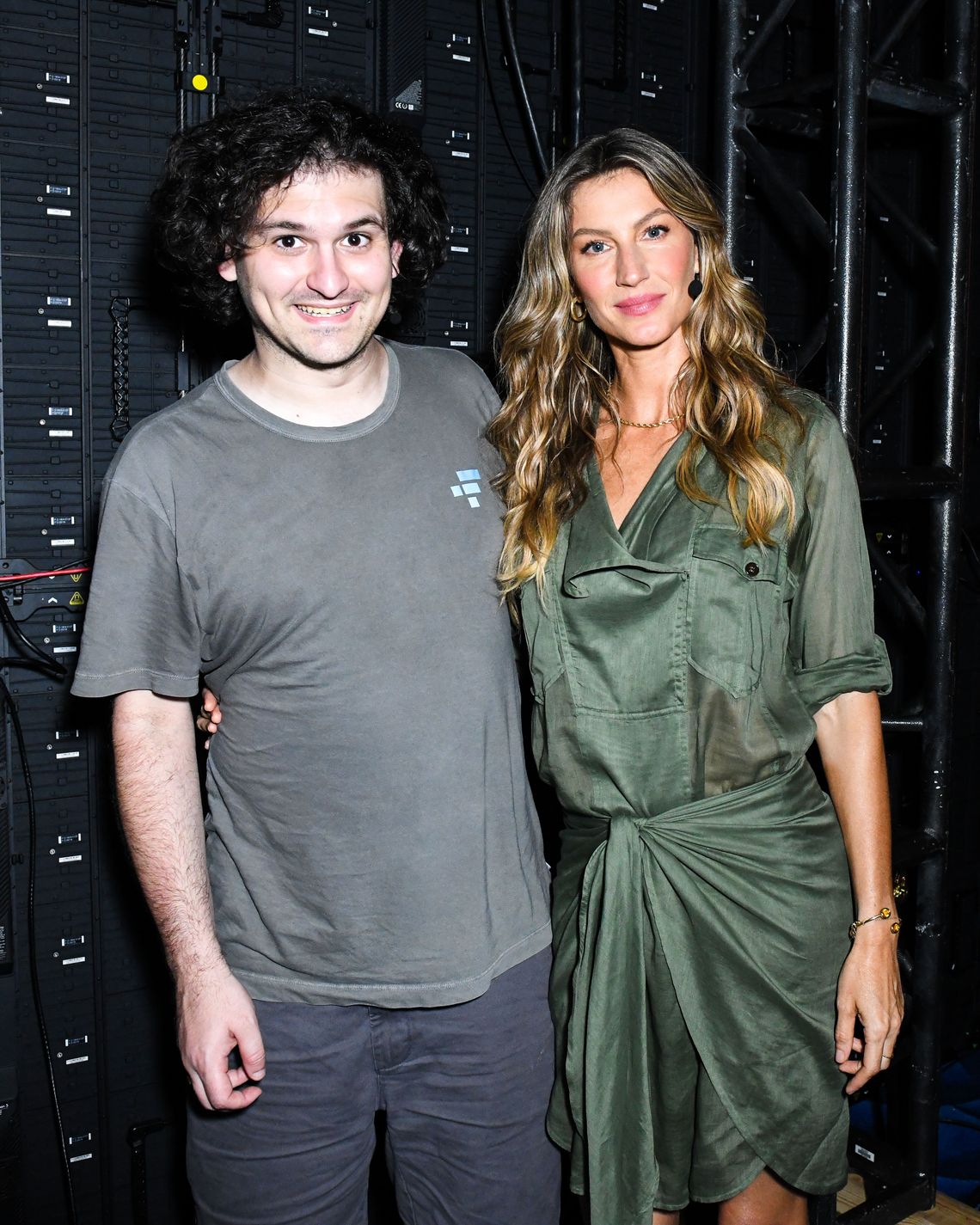
What a mess.
If you want to read more about it all, this piece by Zeke Faux is good. Check out his book too. You can read the book Going Infinite by Michael Lewis as well, though this review which discusses how he fell for the antihero (SBF, not Taylor Swift) makes me wonder if I would bother, even though I like Lewis’s other books.
The other big player in crypto is Changpeng Zhao (CZ) of Binance. Is? Was. The SEC has been cleaning the Aegean Stables that is crypto and went after him and forced him to plead guilty and step down from him company.
In the end the only people I felt sorry for in all this debacle was SBF’s parents. Do I feel bad for crypto investors? Well in April of 2022 the Financial Times sat down with SBF and more or less explained how SBF’s crypto yield farming was a ponzi scheme. If you had major money in crypto after reading that, then you got what was coming to you, I’m sorry to say.
Cooling off: after being heated in all the ways, China is starting to cool off. Last year China and Xi were at their aggressive peak, lecturing Trudeau and others with their wolf warrior diplomacy.
Well that’s gone, and Xi recently adopted a milder manner in this month’s meeting with President Biden. Wolf warrior diplomacy is dying off. No doubt some of that has to do with the many problem that China is suffering, from real estate problems to high youth unemployment to the decline of their belt road loans program.
That said, while China seems to be backing away from invading Taiwan, they are still being very aggressive in dominating the South China sea, as these two stories here and here show. They are still aggressive at home, too, as this piece on China spies campaign shows.
It’s not all bad news for Xi and his country. This is good news, for instance: China’s war on pollution has great improved air quality for their citizens. But things could be better. Will they be under Xi is the question. Read The New York Times piece on Xi’s rule and decide for yourself. Don’t miss this piece by Noah Smith either. Smith thinks the Chinese leader is incompetent and he makes a compelling case.
Dying off: Culturally we may be seeing the dying off of the superhero movies that have dominated screens big and small for so long. The Marvels, the latest film from Marvel Studios just came out and it recorded the worst ever North American opening weekend performance of all those films. The Times put it simply: it floundered.

This has all led Disney, the owner of Marvel Studios, to do some backtracking. They are delaying Deadpool 3 and other such films. TV wise, Disney is not doing great either, as their new series, Ahsoka shows.
Will bringing back the X men help? Maybe fantastic four will do it? Or maybe it’s the beginning of the end of the superhero movies, as this piece examines.
On death’s door: well, that would be twitter. I mean it’s been dying all year since Musk took over. But his increasingly mismanagement of the site and his own terrible behavior has led to many companies pulling their advertising dollars from it. Not only that, but increasingly people I used to follow regularly have moved to sites like Threads and Bluesky. I am not sure when it will die off: Musk could keep it on life support for a long time. Dan Sinker’s has a good piece on the site known still as Twitter to read while we sit by its deathbed and wait for the inevitable.
Moving on, office work is also waning. A sign of this is wework going bankrupt. Some of the Toronto locations have shut down. That’s too bad: I am a fan of wework. In better news, in New York some financial district offices have been converted into housing. Here’s to more of that.
Gone but not forgotten: I hadn’t realized that November is JFK season in the US. Or so says Mark Bittman in this piece: JFK season. Perhaps it always will be, until the last of the Baby Boomers in the US has passed away. Meanwhile we get people still second guessing the JFK assassination. And RFK Jr is hanging around the current election, cashing in on his family name while he spouts his toxic views on disease and race.
The pandemic is not dying, but heating up in many places, including Nova Scotia, which reported 35 covid-19 deaths since august. In China there has been an increase in respiratory diseases in children. The Times has more on where we are in this article.
Wars in Ukraine and Israel/Palestine continue to burn on as well. Here’s to better days in both places and soon, though right now soon is no where soon enough. In the mean time I am going to the New York Times for news on the latest developments in Ukraine and Israel/Palestine and I recommend you do so too.
Speaking of endlings, that’s the end of this month’s newsletter. Thanks for reading it. May the next one be merry and bright.

In reading this remembrance of a dear friend of Maria Popova, I was struck by this poem, You Can’t Have It All by Barbara Ras. It starts:
YOU CAN’T HAVE IT ALL
But you can have the fig tree and its fat leaves like clown hands
gloved with green. You can have the touch of a single eleven-year-old finger
on your cheek, waking you at one a.m. to say the hamster is back.….
Click on the link and read the poem and the remembrance, too. May we all be remembered so well.

 I get it: it’s Monday and you are busy. Fine. But if you need a break for any reason, then check out these 10 cool / fun /interesting / useful links:
Ok get back at it. Happy Monday!

If you are going for an eye exam in Ontario, ask the staff some questions before you go. Otherwise you might get surprised by charges you were not expecting.
As the Toronto Star reported, the Ford government has cut back on OHIP-covered eye services for some seniors. Specifically….
Free annual eye exams paid for through the Ontario Health Insurance Plan will no longer be available to all seniors…Only those with “eligible medical conditions affecting their eyes such as macular degeneration, glaucoma or diabetes” will get a yearly checkup. “Seniors without an eligible medical condition will receive one exam every 18 months,” the government said…As well, seniors will be limited to just two minor followup assessments with an optometrist every year. Currently, there’s no limit on such minor assessments. OHIP coverage of eye exams for people of all ages with cataracts will continue.
Additional charges are not limited to seniors. I was surprised at my last visit: I knew I was going to be charged for the visit, but I did not know that the optometrist was going to do additional tests that drove the cost of the visit to over 300. I am lucky to be covered for that: some Ontarians who have stretched finances might find that hard to deal with.
It’s not just limited to Ontarians, either: provinces like Manitoba and Nova Scotia only insure eye exams every 24 months for all seniors.
The next time you go, ask what it will cost.
(This might be mind boggling to any Americans reading this, I know.)
Over at Yanko Design is a story on a table that can go from this:

to this:

If not magical then certainly amazing. Sure you need a space to expand into, but anyone who has to host larger gatherings on the regular and has the space should check it out.
And to all my American friends, happy Thanksgiving!

If you have not heard of Cook Out, you a) likely have not been to the U.S. South b) have been missing out! Whenever I can get down there I try to make one visit for a burger and chili fries. It’s fantastic. I would eat there all the time if I could.
Well good news: I might be able to. According to Slate, the Cook Out fast-food chain is expanding! Hey if Chick-fil-A can get to Toronto, maybe Cook Out can too. The thought of it is thrilling!
If you do get a chance to go to a Cook Out, I highly recommend it. Until then, read the Slate piece to find out more about this fine fast food place.
P.S. No, the burgers do not come with googly eyes. Slate did that. 🙂
If you have an interest in Cape Breton, you owe it to yourself to check out the The Beaton Institute’s website. It is filled with great images of Cape Breton. That’s what I was doing earlier this year.
One of the things I found there that reminded me of my life in Glace Bay is the hospital in this picture:

I lived not too far from the Glace Bay General Hospital (above) and I used to cut through the grounds of it to get to high school or go to play hockey at the Miners Forum. I remember playing soccer with friends on the grass in the front of the hospital. I remember going to get inhalation treatments in the basement for my sinuses. It was a cool old place.

One of the jobs I had when I was younger was going into Sydney and cleaning the Nova Scotia Power Trucks (shown above). It was a cool job I did with some friends of mine. We would drive the trucks out (somewhat like this), wash them, then return them to the parking lot. It was hard work, but good and memorable.

Finally, I love this photo of Marconi in the Marconi Station in Glace Bay. Here he is making communications history!
:max_bytes(150000):strip_icc():format(webp)/basic-white-sauce-4172027-hero-01-968e34d7187a4315b367287ee623a84d.jpg)
Sauces are the way to take a simple and maybe even boring dish and transform it into a great one. If you agree, here’s dozens of sauce recipes I’ve been collecting that can help with that. Grab a pan and let’s start in.
Pan sauces are a great way to sauce up your dish. Here’s something on the perfect pan sauce. If you want to make restaurant quality pan sauce, read this. Maybe you want to know how to make an easy pan sauce in minutes? That can help.
Do you eat a lot of chicken? Here’s 3 variations on pan sauce for weeknight chicken. Want something lighter? Here’s 3 Great (and Easy) Pan Sauces for Chicken from Cooking Light. Finally here’s one more pan sauce recipe for chicken to add to your repertoire.
if you’re cooking beef or pork, here’s how to make a basic red wine reduction sauce to go with it. Or make one of my favorite sauces: Supreme. I am a fan of veloute, too.
Bechamel is a useful sauce. Here’s how to make a perfect bechamel according to the chefs of Food & Wine. More on that. sauce here and here and here.
Here’s how to make a roux and use it right. Relatedly: this is a basic white sauce recipe.
More on the French mother sauces here and here: month and daughter sauces. Speaking of that, here’s how to make mayonnaise. Last, this is supposedly essential sauces for the home cook.
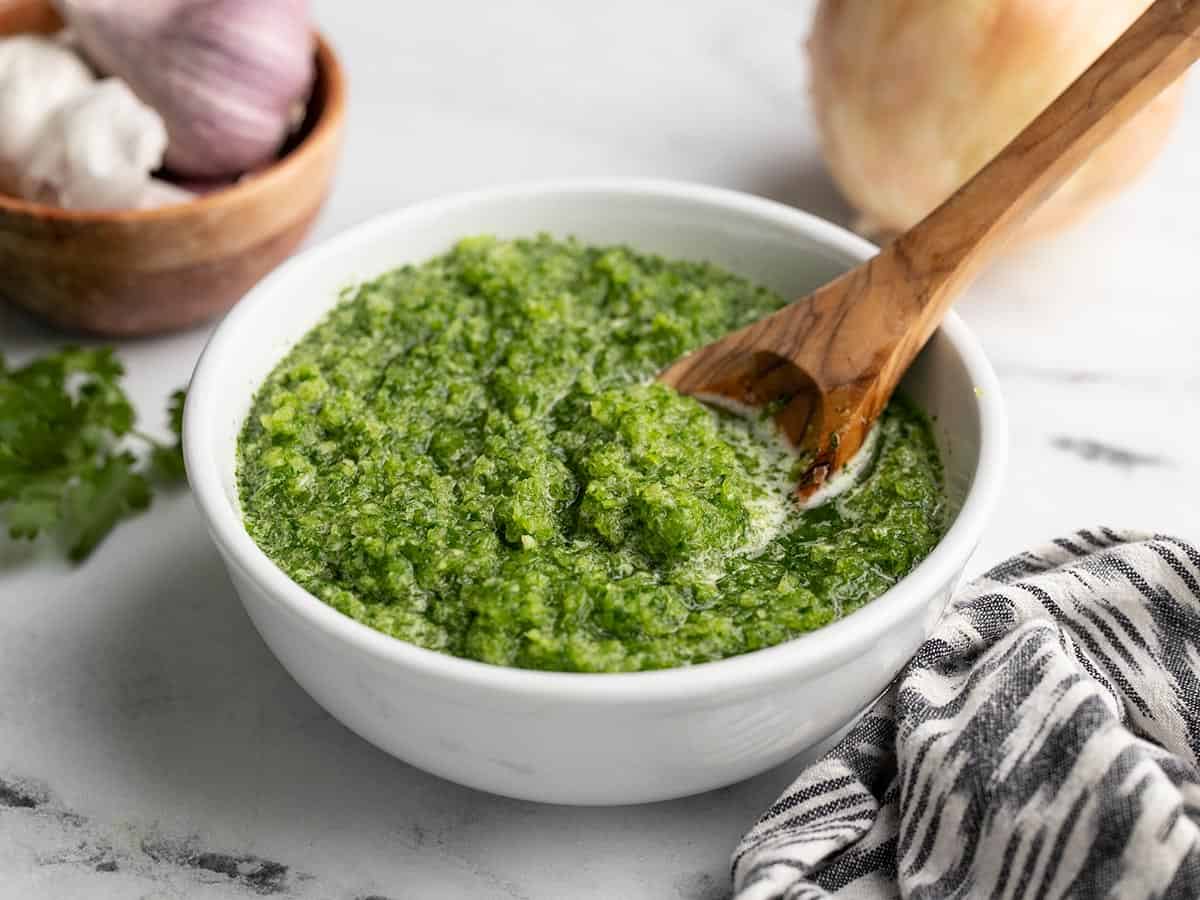
Not even meal needs a sauce from France. For instance, here’s some great sauce recipes for guacamole, sofrito, aioli, pine nut free pesto, Peruvian-Style Green Sauce, more peruvian style green sauce, homemade ketchup, and fresh chili harissa.
I would be remiss if I didn’t include some tomato sauces. Here’s a good marinara sauce recipe. Though this one from the New York Times is my all time favorite.
This piece argues this heidi swanson 5 minute tomato sauce is genius. Who am I to argue?
Speaking of genius, check out this piece: Adding Oyster Sauce to My Spaghetti Was Probably the Best Thing I’ve Ever Done. The folks at Bon Appetit like to be dramatic. Speaking of dramatic, the Guardian argues that this sauce will change your life.
Let’s dial it back and take a look at these marinades from Food and Wine. Not sauces, but related.
Happy Cooking!
 In my mind, there is not enough eco-friendly design out there, and there should be. It can be a great way to recycle and reuse.
Case in point, the stools above, which are made of plastic and fiber-based waste. Or these concept shoes below that are made of sugar derived from plant waste and microbes which is then turned into nanocellulose as a material.

For more on the topic, I owe it to myself to go through all these Eco-Friendly designs over at Yanko Design. I recommend you do too.

Space: Well there has been plenty of space missions in the last while.
India has made great progress with their space missions, including successfully landing on the moon. The New Times has a piece on their moon launch here. It’s an exciting development! You can read more on it here and here. And India is not just going to the moon: they have mission going to the center of the solar system. Great to see all this activity.
Unlike India, Russia has been less successful, with their spaceship crashing on the moon. More on that, here. Space is hard.
Meanwhile, Japan is aspiring to be doing work on the moon, too. More on the all the participants in the moon race here.
As for private space exploration, the Times has a piece on an alternative group to SpaceX that are making progress here. Good: we need an alternative to Musk’s company. Speaking of alternatives, here’s more on Virgin Galatic’s recent progress. And this asks the question: How long will Jeff Bezos continue to subsidize his New Shepard rocket? Maybe if NASA goes with this new way of doing moon missions with his Blue Origin organization.
In other space news, here’s something on the new crew for the space station. This is a new theory on galaxy mergers that could shed light on how galaxies evolve.

Other things on space that I loved was this piece: Our Galaxy Is Home to Trillions of Worlds Gone Rogue. Also this dazzling view of the Milky Way from southern Africa. I love this too: Microsoft has an introduction to Python programming by taking on assignments inspired by NASA scientists to prepare you for a career in space exploration. A great collaboration.
Here’s some less than loveable space story I read. For instance, this is bad: Space junk is on the rise, and no one is in charge of cleaning it up. More on that, here. Also not good: what a long term mission in space does to the human body.
Physics: this is a good explainer on quantum entanglement. Relatedly, if you thought quantum mechanics was weird , check out entangled time.
Here’s something on a study combining continuum mechanics with Einstein’s field equations. Worthwhile.
last but not least, if you want to learn or relearn physics, then head over to Susan Rigetti (nee Fowler)’s great site, here.
Math: three good math pieces: 1) a good introduction on lagrangian-mechanics 2) something I liked on Multivariate calculus 3) Also this on mutlivarable calculus.
Biology: I thought this, on our golden age of medicine was good. As was this piece on newly detailed nerve links between brain and other organs and how it shapes thoughts and memories.


(Top image: Richter. Bottom image: Day)

Glad to see that Perrier has come out with a new and cool bottle done by my favorite designer, Philippe Starck. Vive la France!
Sadly this will not be in Canada. I need to find a way to get a bottle. Perrier, if you are listening… (Just kidding, this is 2023. Now if it was 2009…. :))
You can read more about it here at UnCrate and the Perrier site.
 From time to time articles will appear promoting the importance of families eating together. If you search on “how important is the family dinner table”, the first piece that you might see is an article from Stanford Medicine on Why the Family Meal Is Important.
I don’t deny that there is value in good family meals. But I was also heartend by this article, Bad Cook, Great Mom from Cup of Jo, where she writes:
Before having kids, I envisioned sitting down for dinner, Norman Rockwell style, and sharing our hopes and dreams while breaking bread. But honestly? We didn’t have regular sit-down family dinners until Toby was around 10, and we still eat at the table together only a few times a week. And yet. I’m a terrible cook, but I crush it at being a mom.
When I think about my children leaving the nest and looking back on their childhoods, I know they won’t picture epic homemade meals because I did not serve many. We eat simply, and pizza is regularly ordered. But there are SO MANY BEAUTIFUL THINGS they will remember….
I think this is right. I also think this comment someone posted in response is also right (I added the bold):
Well I will say this: I am a good cook. I’m French and my English husband delights in my cooking. But last year, our 6yo French-British daughter gave me her Mother’s Day card, on which she had written “I love my mummy because… she’s a great soup maker”
To this day I am still laughing every time I see the card. Soup is what I make with all the tired veg from the bottom of the fridge when I am totally uninspired. And yet, I got the highest praise for it.
You never know what your children will remember fondly, really…
You never can know what your kids will remember fondly. The things important to you may not be important to them. And the things that other people think are important in their family (family meals) may be less so in your family. All you can do is try your best with the skills you have. There are many ways to be a good parent. Never forget that.
P.S. I’ve recently started having Sunday suppers with my adult kids and I really enjoy it. But I also have more time these days to do that. When they were smaller they weren’t into eating at the table and I was just happy when they were eating good food, regardless of where they ate it.
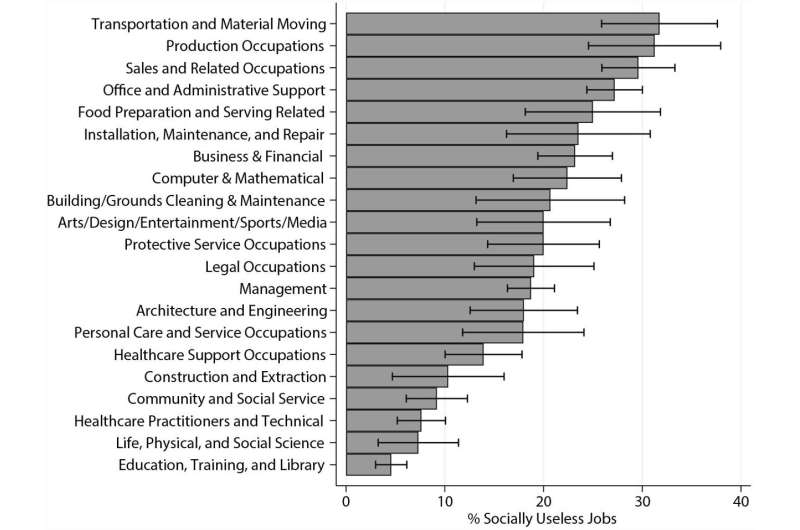
Do you feel like your job is socially useless? If so, you may have a bullshit job. As this piece shows, many people feel they work in pointless, meaningless jobs. Just look at the graph above, taken from the article. People in all sorts of occupations feel like their job is a waste of time. People in office jobs especially so.
What I would like to focus on is the jobs at the bottom of that chart. Many of those jobs center around helping others, be it trainers, librarians, healthcare practitioners, and social service workers. There are also jobs where people make things, be it in construction or engineering and architecture. When you are making something like a building or a road, you know you are doing something useful. Likewise, you know what you are doing is useful if you are helping to educate someone or helping them get healthier. I suspect that is why people in those professions they don’t find their jobs useless.
If you have a job that you feel is useless, see if there are aspects of it that are helpful to someone. Or try and find activities where you make something that others can take and do something with. Or do both. It might feel like you currently don’t do any such things, but if you track what you do in a week or a month, you may find you were doing those things and you just weren’t aware of it.
You can also try and insert more of those activities into your job. Share the things you know with your coworkers. Mentor new people on the job. Create material that others can use to make their own job easier, even if it’s simply a spreadsheet or a Powerpoint template. Look for ways to be useful to others on your job. You may find yourself enjoying your job more in the process of being useful.
Good luck!

There are two ways to be free:
The first way of being free requires a continual effort to remain that way. If you do not expend this effort, you will slip back down and no longer be free.
When political people say “eternal vigilance is the price of liberty”, they are talking about this type of freedom. It’s also true for people that get into shape, or quit a bad habit, or make improvements in other aspects of their life. Indeed, any type of freedom that has to battle decay and entropy is a type of freedom that needs continual effort.
The second way of being free does not require continual effort. When you graduate from school, quit a job, end a relationship, or move away from someplace, you become free of those things. You have transitioned to a different state of being.
You might argue that some people have to work hard to not go back to that old job, that old relationship, or that old home town. I’d counter that even if one does, they are a different person than when they left and what they return to has changed too Additionally I think most people do not go back. People move on. They move away.
It is easy to get discouraged if you think all forms of freedom require continual effort. Many do, but many do not. Sometimes you just need to push to get to the other side to be free, and once you do, you are free once and for all.
P.S. For more on this, see: It takes a daily effort to be free by Austin Kleon. His piece got me thinking along these lines.
P.S.S. If you think of life as being cyclical, you are likely to see freedom as being something you constantly have to work with. If you see life as linear, you are likely to see it as something you can achieve once and be done.
Well this is fun:
Go check out the YouTube channel for PostmodernJukebox for more such goodness.
 If you are reading this, chances are you cannot write to your USB drive on your Mac.
To force a USB drive to be both read and writable, I did the following (note, I had a Kingston drive, so my Mac identified it as KINGSTON and I went with that. If you buy a USB drive that is not from Kingston, you may see something different):
diskutil list

/dev/disk2 (external, physical):

#: TYPE NAME SIZE IDENTIFIER

0: FDisk_partition_scheme *62.0 GB disk2

1: Windows_NTFS KINGSTON 62.0 GB disk2s1
sudo mkdir /Volumes/KINGSTONsudo mount -w -t ExFAT /dev/disk2s1 /Volumes/KINGSTONYou should now be able to write to your drive as well as read it.
Happy. Hallow’een! It seems many things have gone sideways this month, almost like a crab walk. Many things, but not all. Let’s take a look.
In Ukraine, people are worried that their counteroffensive against the Russians is struggling to go forward and is only going to be more so as the winter season arrives. Not that it’s looking good from the Russian side. No doubt Putin would like to see the US drop the amount of aid they give to Ukrainians, as some on the America. right are threatening. Whether or not that happens, we shall see, now that Congress has finally elected a speaker.
Another thing going sideways is COVID/the pandemic. It was surging in Ontario and other places, but I checked the New York Times and they record hospitalizations going down this week. All I know is the new XBB vaccine booster is out, so you should go get that, people. Get a flu shot, too.
 Remember inflation? It too continues to crab walk (see chart above). Same with Donald Trump. He continues to meander through various courtroom preceding in the US. He is currently participating in his civil trial in New York and is expected to testify. He also has a three other trials underway: the Washington Post has more on all that here.
In North America it’s been a summer of strikes starting and ending and that does not look like it is going to change this autumn. While the Writers strike in Hollywood has been settled, the Actors strike is still on going. The UAW in the US is expanding the autoworkers strike in the US, while the autoworkers in Canada settled their strike. In Ontario the workers at TVO continue to walk the picket line with no hope for a resolution.
Not everything is going sidewise. In the Middle East, Hamas forces from the Gaza Strip attacked neighboring Israeli towns, killing over a 1000 soldiers and civilians, and then withdrawing with over 200 hostages. In response the Israeli army has repeatedly bombed Gaza, killing 1000s more Palestinians. And that is just the beginning. Likely by the next newsletter Israel will move ground forces into the Strip, resulting in even more loss of life for their soldiers, Hamas fighters, and Palestinians stuck in the middle of the fighting.
As the world watches this unfold, people have been tying themselves in knots in trying to respond. And regardless of whether or not they have responded, they have been criticized. Former president Obama issued this statement on Israel and Gaza and the length of it highlights the difficulty on weighing in on the matter. Personally I don’t think commenting on social media is the way to go, and I wrote about that, here.
What happens next and how this plays out, no one can say. I suspect it will play out like one of the other Israeli wars of the last decade or so.
A year ago Elon Musk took over Twitter. It’s been a weird time for social media since then. It’s been zigzagging for the most part. Dan Sinker has a good run down of what it’s been like, here. I highly recommend that piece, as well as anything that Dan writes.
In terms of crypto and NFTs, they have more or less scuttled off to their demise. The only thing going on of note is the trial of SBF (Sam Bankman-Fried). It’s not looking good for him, as the Verge explains. We shall see. Anyone wanting to read more about the rise and fall of SBF and crypto should read Michael Lewis’s new Book, Going Infinite.
 I wish climate change was only going sideways. Instead it continues to worsen. At the beginning of the month, New York was suddenly hit with crazy flooding that caught them unaware. At the end of the month Mexico was hit with a sudden CAT 5 hurricane. Bad weather from global warming is bad enough: surprising bad weather is even worse.
As always, thanks for reading this, whenever you are reading this. If you are reading this years from now, I hope things improved, and things went from going sideways to progressing.


If you want to improve your vocabulary, bookmark this link: Word of the Day from The New York Times. It’s not just any old word, either: it seems to be one that appears often in stories in the Times.
Highly recommended.
Image is by Cindy Lozito, who does all the illustrations. They are fantastic.
 I’ve written a number of things on Instacart from the viewpoint of a user of the service. Now here is something on what it’s like to be an Instacart shopper. The piece is centered on a day in the life of Larry Askew, who works for Instacart early in the morning and Uber at night. Larry alone is worth reading about.
One thing that struck me was how some shoppers use bots to scoop up the best of what Instacart offers its shoppers. I imagine it’s not unlike people using bots to snag tickets for events.
Besides that, I learned a lot about the service I didn’t know before. It’s a good piece, and if you use Instacart, I highly recommend it.
P.S. Always treat your shopper well, and that includes tipping. Do not tipbait, especially. Thank you.
 IF you are a fan of using Chrome to cast one of your tabs to a TV, you may be surprised to find that the Cast option is missing. Worse, if you look in places like Chromecast Help on how to Cast a Chrome tab on your TV, you may not find that all that helpful.
Fear not. The Cast option is still there, just hidden. As before, go to the top right of your browser where the three dots are and click on them. Then click on Save and Share… and look for Cast…
Now you can Cast as you did before.
 It’s been a season since I last wrote about Toronto. In that time our new mayor has been in office roughly 100 days. The Toronto Star has a rundown of what election pledges by Mayor Olivia Chow that she already has accomplished, as well as what she is working on. Not surprisingly some of them have been rather straightforward to achieve (e.g. keeping libraries open on Sunday), while some will be much harder to do (e.g., stopping the Gardner expressway rebuild). It’s a promising start, and she seems to have momentum. Of course much depends on the will of other councillors, not to mention people like Premier Ford. I’m hopeful for now.
One good thing she is working on is expanding the TTC by spending $10 million on staffing to curb transit crimes. Good. The best way to keep transit safer is having more people on it dedicated to the task. Let’s hope they do a good job. We need a safe and vibrant transit system.
In other transit news, one of the things that will be more difficult to fix is the Eglinton Crosstown LRT line. I’m not hopeful for that being done any time soon. It doesn’t help that the communications of the people building it has been poor. For example, one time their website quietly disappeared. Another time Metrolinx straight up refused to say when long-delayed LRT might finally open (see here). Terrible and unacceptable.

As for the mayor’s partner, Premier Ford, he has been up to his neck in hot water, mainly due to his involvement in Ontario’s Greenbelt. After Ford apologized for his ‘wrong’ Greenbelt decision, and vowing to reverse it, he finally cancelled the Greenbelt land swap. While that was good, he is not out of hot water yet, as there is another scandal with his plans to have Ontario Place developed, a plan blogTO says no one wants (other than Ford and the developers). I am sure there will be more news developing on that scandal before the end of 2023.
From a real-estate viewpoint, Toronto’s downtown core has major troubles as office vacancy rates soar. I know some businesses are trying to get people to go back into the office, but many workers are resistant and I don’t think that is going to be enough to reverse those troubles. In other real-estate news, experts revise Toronto housing forecast due to a tanking market. Prices are still going up, but for how long?
Other workers have been striking in Toronto since the summer. The Metro grocery strike is finally over after a month-long walkout. More on that, here. Meanwhile the TVO strike continues to drag on with no end in sight. 2023 is a year of striking workers.
In other business news, the book chain Indigo is looking to offer alcohol to its customers. I dunno how successful that will be. The company has suffered big problems, including losing $50M last year. It doesn’t help their execs are heading for the exits. Let’s hope it can get corrected: I’d hate to lose that chain of stores.
Foodwise, the folks from Michelin have come to town and passed out more awards. Last year was the first time they did that and it got a lot of attention. This year…not so much. The Star had something on it, here. BlogTO put together a list of all the restaurants here for easy reference. If that’s your jam, this links to the Michelin site with more info.
Raccoons continue to own Toronto: we humans just live here. Recently they’ve taken over the roof of Union Station. They are a weird nuisance: not as scary as rats and not as hostile as Canada Geese. Just charming enough to offset anyone taking major steps to get rid of them.

I really enjoy Jamie Bradburn’s blog and the pieces he writes on old Toronto. Here’s something on subway interlining, or why does lower Bay Station exists. If you ever get a chance to go down to lower Bay, I highly recommend you do. Other than the benches, it does not seem too out of place from the rest of the subway. It’s fascinating to see.
As I was poking around Jamie’s site I came across this post on the Book City store on Bloor in the Annex closing. That was a sad event for me when that happened. I had gone there for years, ever since I moved into the area in the 80s. I loved that store. Loved checking out all the magazines, the books on the tables on the first floor, and taking the funky stairs up to the second floor to just hang around. It was a great place. There are still Book City stores in Toronto and they are fine, but I miss that one.
I also came across the image below on his site. It’s an IBM ad from back in the day when it’s headquarters were in the Don Mills and Eglinton area. Toronto was a city with a future back then…and it still is.

 The easiest way to install Java on your Mac is by using homebrew. Honestly, if you don’t have homebrew on your Mac, I highly recommend you do that. Plus it’s easy to do. All you need is to enter the following:
$ /bin/bash -c “$(curl -fsSL https://raw.githubusercontent.com/Homebrew/install/HEAD/install.sh)”
Now that you have homebrew installed, you can install Java by entering:
$ brew install java
That should install the latest version of it. If you want to install an older version, you can do something like this:
$ brew install java11
If you’ve done this a few times, you may have a few different version of Java installed liked me, and if you enter the following command it may look something like this:
% ls /usr/local/opt | grep openjdk

openjdk

openjdk@11

openjdk@18

openjdk@19

openjdk@20

openjdk@21

%
As you can see, I have a few different versions installed. However, if I do this:
% java --version

openjdk 11.0.20.1 2023-08-24

OpenJDK Runtime Environment Homebrew (build 11.0.20.1+0)

OpenJDK 64-Bit Server VM Homebrew (build 11.0.20.1+0, mixed mode)

%
It shows the OS thinks I have JDK version 11 running.
Why is that? Well, it turns out if I enter this:
% ls /Library/Java/JavaVirtualMachines/

jdk1.8.0_261.jdk	openjdk-11.jdk

%
I can see I have two JDKs installed there. MacOS will go with the latest JDK there when you ask what version is installed, in this case openjdk-11.
If I want the OS to use a different version like openjdk 21, I can enter this symbolic link (all one line):
sudo ln -sfn /usr/local/opt/openjdk@21/libexec/openjdk.jdk /Library/Java/JavaVirtualMachines/openjdk-21.jdk
Then when I check on things, I see the following:
% java --version

openjdk 21 2023-09-19

OpenJDK Runtime Environment Homebrew (build 21)

OpenJDK 64-Bit Server VM Homebrew (build 21, mixed mode, sharing)

% ls /Library/Java/JavaVirtualMachines/

jdk1.8.0_261.jdk openjdk-11.jdk openjdk-21.jdk

%
Now the system thinks openJDK 21 is running.
If I want to reverse this and go back to openjdk 11, I can use this unlink command and see this:
% sudo unlink /Library/Java/JavaVirtualMachines/openjdk-21.jdk

% java --version

openjdk 11.0.20.1 2023-08-24

OpenJDK Runtime Environment Homebrew (build 11.0.20.1+0)

OpenJDK 64-Bit Server VM Homebrew (build 11.0.20.1+0, mixed mode)

% ls /library/Java/JavaVirtualMachines

jdk1.8.0_261.jdk	openjdk-11.jdk

berniemichalik@Bernies-MacBook-Air-4 ~ %
Normally I would recommend going with the latest and greatest version of Java on your Mac. However, you may have a situation where you have some Java code that only runs on older versions of Java. This is one way to deal with that.
For more on this, here are some good links I found:

If you are thinking of possibly running a 5K (or just using the Couch to 5K program), then these links can help:
 Now this is a rare thing. I was reading this piece, in praise of short books: to start and finish in one sitting is a rare unbridled joy, and it asked readers to list good short books. Instead of a typical dumpster fire, it was full of thoughtful and short comments on….good short books. Amazing.
So if you want some recommendations on good short books to read this weekend or next, head over to that link.
 Exercise: You don’t have to use heavy weights to get stronger. The Washington Post explains. Speaking of weights, you can get a full body workout by filling a backpack full of weights. And the weight could be something as simple as groceries or even books. Get on the rucking bandwagon. Meanwhile, if blood pressure is your worry, skip the weights and consider doing wall squat workouts.
Dieting: Matt Yglesias recently lost 70 pounds with a combination of surgery and dietary restrictions. Here’s what he learned. Relatedly, here’s how former NFL Player Russell Okung lost over 100 pounds on a 40-day water-only fast. I can say I don’t recommend either of those things. Now maybe ozempic is what you are thinking about. Well so are major retailers, and they are worried about it. So much so that Walmart is monitoring the relationship between ozempic use and reduced shopping. I think a lawsuit is going to be coming there.
Gear: If you are using an Apple Watch to improve your fitness, you might find this piece on how to set apple watch move goal useful. I did. Also useful: some tips on what the value should be. If badges motivate you, here’s how to get all of the Apple watch activity challenge badges. You can use your watch for other health benefits, such as monitoring your sleep. Here’s a good article on why you want to get the benefits of rem sleep. Let your watch help you with that.
As for other gear, if you plan to workout this winter in the great outdoors, consider getting a pair of new balance fresh foam x permafrost running shoes. I am sure they are great. For more advice on working out in bad weather, check out this. It has gear recommendations and more.
Finally, the Guardian has a piece on the new Taschen book focused on Arnold Schwarzenegger. Fascinating. And yeah, Arnold had a head start on most people in the bodybuilding game.
(Link to photo by Ariana Drehsler for The New York Times)

New York City is full of stories. Here’s 15 I’ve collected over the last few months that I thought were really good. I hope you like them too:


That’s a good question. I thought about it when I came across this: what’s actually worth buying at Dollarama? Here’s my 2 cents (2 dollars?):
Other thoughts: some time the items in Dollarama aren’t cheaper, just smaller. That said, it can be cheaper than going to Canadian Tire or IKEA, but ymmv.
Dollaramas are everywhere, it seems. Make the most of them.

The problems of homelessness and poverty are solvable and simple. They take money, and they take concentrated effort. Doug Saunders explains how London solved its homeless problem doing just that. But eliminating homelessness isn’t enough. Once people are housed, then they need support to eliminate their poverty. Such support is worth it. Studies like this show that public guaranteed child support programs help reduce poverty worldwide. Or these studies like this one in Nature on the positive effects of cash transfers on adult and child mortality in low- and middle-income countries, Or this piece on how CERB training programs during the pandemic helped people find better jobs which also reduces poverty.
It all makes sense to me. That’s why I find it deplorable when I read that the American federal policy on homelessness is becoming a new target of the right. Or that the GOP is striving to cut SNAP benefits and are trying to make it more difficult for people to access social assistance.
After all, the United States is the wealthiest country in the world. If any place could eliminate the problems of poverty, they could. But rather than putting in the effort into helping the homeless, their cities are demolishing homeless camps and forcing people out of hotels homeless people were using during the pandemic. (More on that, here).
Canada is not much better. We also are wealthy. We could also eliminate poverty. But we have also demolished our homeless camps and forced people out of hotels that they stayed in during the pandemic.
It’s easy to fall into despair. When I do, I try to read stories like this one on Nashville’s Father Strobel. Also good is this piece on how ending chronic homelessness is a mission of love. Or this on shelter and palliative care for the homeless.
We need to do better. We need to be more like London, less like so many other places. It’s simple. It’s just not easy.

According to Instacart Help Center on Tipping
Instacart suggests a default tip based on a number of factors, such as order attributes and your tip history. The minimum default tip is 5% of your order total.
Which it has been for some time. But my last few orders the default tip was 10%. If you are like me and you just automatically power through all the things they put in front of you on your way to complete your order, you might not even notice it.
There does not seem to be a way to change the percentage back. You have to do it manually each time you get an order.
If 10% is what you normally tipped anyway, then you are all set. If you want more flexibility over your tip, be advised.

You don’t owe anyone anything on social media.
You can better meet your personal and social responsibilities elsewhere in a manner you think is best. If you think there is something wrong in the world, you can contribute directly either with your time or your money or with whatever resources you see fit. If you need ideas, consider this thing I wrote some time ago.
Social media is a construct of large corporations to capture your free user generated content and feed it into a mechanism that allows them to capture fees (usually ads) from other corporations and organizations. In exchange for that free work, you get an opportunity to read what others are saying gratis, as well as giving others a chance to see and comment on what you are posting, also without cost. That’s it. That’s social media.
If you want to contribute your voice on social media to a cause you feel strongly about, go ahead. I personally believe it doesn’t amount to much, but your mileage might differ. Like I said above, you’d likely be much better off meeting your responsibilities elsewhere.
Social media these days is largely a mess, and it is doubtful it has an overall benefit on the whole. So extract what value you can from it, then leave it alone. You don’t owe anyone anything on social media. Not the people who see your posts, and certainly not the people who run the companies.
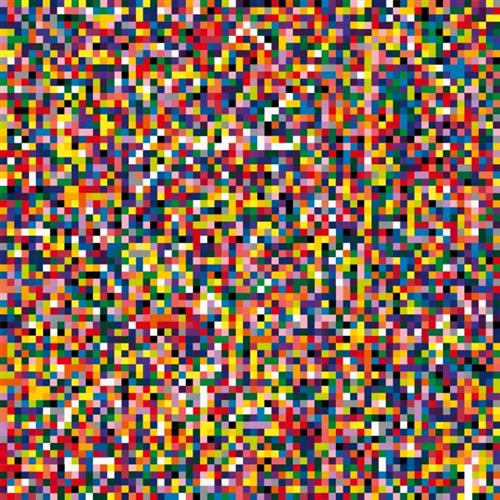
Using technology to make art is not new. Gerhard Richter used special software to make the work you see above (4900 colours). Before computers, artists would use lens and photographs and even craftsmen and women to help them create their final artwork.
What is new now is artists (and non-artists) are using AI to make art. Kevin Kelly talks about how he is using AI in his creative process. David Salle has dived deep into making new work using AI. NYT columnist Farhad Manjoo is using visual tools like Procreate to make AI art.
I have seen Kelly’s work, and Manjoo and Salle’s work are on display in their articles. Kelly experiments with AI to produce images in various styles. Perhaps he has changed, but there is no artist in his work that I can see. With Manjoo, you can see more of him in his drawings. And with Salle the artist’s presence comes in as an editor of the works the AI produces out of his original pieces.
In trying to assess these AI generated works, I think Walter Benjamin and his idea of an artwork having an aura can be useful here. Benjamin was thinking about how original art works have an aura that reproduced images of it do not have. I agree with that: no matter how good a reproduction of a work is, it rarely compares to the original work. There’s that something extra in the original.
I think we can extend out the idea of a work having an aura and also having a humanity. What does a work say about the person who created it? What do I recognize in it that is human and unique to that person? What ideas are there that could only come from that person in that time?
You can argue back that this is irrelevant and that AI generated images are interesting and beautiful and furthermore I cannot distinguish them from human generated images. That might be true. Maybe galleries will be filled with images and sculpture with no human involvement whatsoever, not unlike deep learning software that comes up with ways to be best at playing games like Chess and Go. Such AI artwork may be interesting and even beautiful and may seem to have that aura Benjamin talks about. They just won’t be associated with a human.
Even minimal and conceptual art has a humanity associated with it. Duchamp’s Fountain embodies Duchamp’s intelligence and wit and contrariness. Arp’s “According to the Laws of Chance” likewise shows his interest in pushing the bounds of what is acceptable in a composition of an abstract work. A person is responsible for the work and the work is tied to them. A person is what makes the work relevant to us in a way that a wall covered with children’s collages or a shelf of toilets in a hardware store are not.
We need a new aesthetic philosophy to deal with the firehose of AI art that is coming our way. I propose we tie the art back to our humanity.
P.S. For more on Richter’s 4900 colours, you can see it here on his web site. There’s also a great view of 4900 colors, here,
_in_the_Art_Institute_of_Chicago.jpg)
And by this, I mean this piece by Sherri Irvin: Contemporary art is made out of rules that mobilise us to act. It rightly states that…
Conceptual art often confounds. The key is to understand the rules of the artwork and the aesthetic experiences they yield.
She says conceptual art has three sets of rules:
I agree. If you understand those rules, you can better understand works like the one above, Untitled (Portrait of Ross in LA) (1991) by Félix González-Torres. (One of my favorites.) Now you may not grasp everything the artist is trying to express, but you will get closer to it.
I highly recommend her essay. It should open up such work to you the next time you encounter it in a museum or elsewhere.
(Image linked to in the article and is courtesy of Wikipedia)

While there are still prophets and pundits arguing doom and gloom regarding AI, most people and organizations have moved past them and have been adopting the technology widely. Some times that has been good, some times not. To get a sample of how it’s going, here’s a few dozen pieces on AI worth a look:
(Photo: link to image in the NVIDIA story. By Philip Cheung for The New York Times)

Every so often remnants from the 80s pop up in my feed. When something does stick out like a thread and I pull on it, more good 80s things appear.
For instance, things like this story on Angelina Jolie taking over Basquiat’s former NYC studio that lead me to a good post on Jean Michel Basquiat’s notebooks which is JAM PACKED with good stuff on him.
Or this thing in Martha Stewart on how 80s decor home trends are back that led me to this piece on one woman’s home full of Memphis design (so 80s!)
Same with tech. I went from this excellent interview on Robert Longo where he talks about many things such as the remaking of Johnny Mnemonic into black and white, That led to me reading how modern software is bringing back the timex datalink, a device I loved, to this great video of this guy living with 1980s tech for a week! Awesome.
Other great threads that came out of my 80s unravelling was this piece on how Sinead O’connor changed Ireland, these fantastic photos of Blitz Club in London by Andrew Holligan, and this interview of the singular Debbie Harry who says sex is what makes everything happen and more. This blog by Jamie Bradburn on Toronto in 1980s is a whole rabbit hole in and of itself.
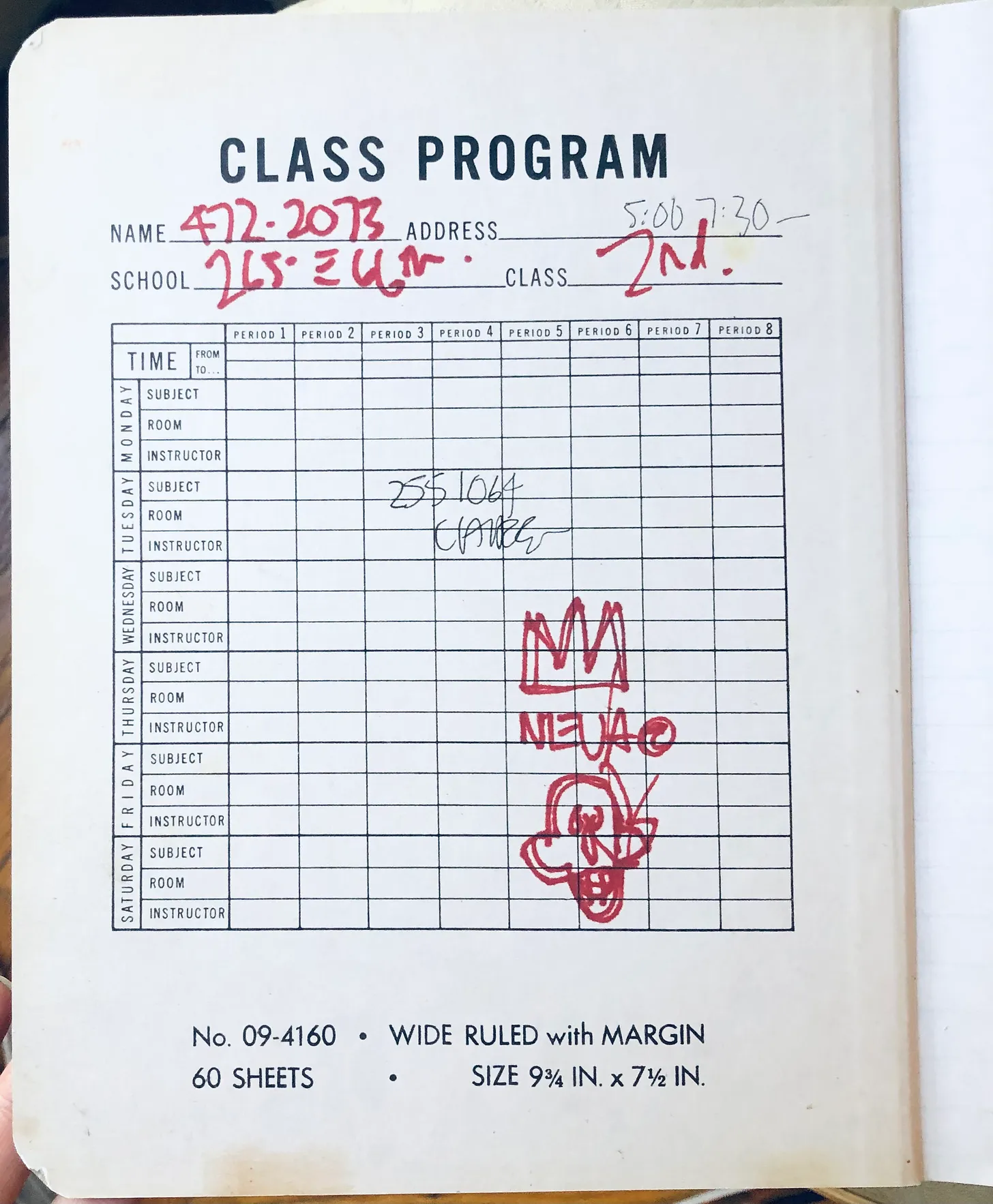
The number of times the 80s appears in my feed is less and less. So whenever I find a bunch of them, I will of course be writing about them. 🙂
(Top image from the story on Memphis; bottom image from the substack on Basquiat’s notes)


 Smart People I Know