How to write a long sentence

This piece has convinced me to reconsider long sentences: How to Write a Long Sentence: Tips + Example Sentences. I was skeptical when I first read this:

Long sentences get a bad rap. Because many writers abuse long sentences, cramming too many thoughts into each sentence, muddling up their message and leaving readers confused. So, the main trick to composing a beautiful long sentence is to communicate only one idea with clarity.

After I finished it, I was won over. You will be too if you read it.

Long sentences are like semicolons: easy to misuse but excellent when well employed.

It’s Monday. Family Day. Here’s a guide to getting the rest you need, today and other days

It’s Monday, but it’s a long weekend here on the blog, thanks to Family Day. I hope you are getting a chance to spend time with your family and loved ones.

Long weekends are also good for catching up on your rest. But what sort of rest? It seems like an odd question. But after I read this, I realized it’s not odd at all:  The seven types of rest: I spent a week trying them all. Could they help end my exhaustion?

If you truly want to get some rest, read the article and reflect on what kind you need. For many of us, we think of rest as physical rest. But I know that sometimes I am not physically tired, but emotionally or mentally tired. And in times of great grief, I was spiritually tired.

We all need rest from time to time. Read that and make sure you get the kind you need.

Soups! Salads! Oysters! And more. My cooking interests for February, 2022


Well, I have not done one of these since October! You’d think I have stopped cooking! Hardly. I have been cooking a lot. Thanks, Pandemic! 🙂

Some of things below have already been through my kitchen; others have still to make it. All are good. So dig in!

Soup, salad and veg: winter is a great time for soups, and here are some I’ve been making or wanting to make. This Turmeric-Ginger Chicken Soup from Claire Saffitz at Bon Appetit is amazing. Highly recommend it. (Shown above.) Also delicious is this Italian Sausage Tortellini Soup… super hardy that one. If you love sausage in your soup, then there’s Christmas Sausage and Kale Soup Recipe (not just for Christmas). If you want to riff a bit on your soup, then read this: If You’ve Got a Can of Coconut Milk and a Pound of Vegetables You’ve Got Soup. Coconut milk makes any soup rich and creamy. Still into soup? Check out this: 25 Easy Soup Recipes For When You Need a Hot Soup Facial Stat. Do you remember the story of Stone Soup? I do. It really struck me as a kid. What Stone Soup Means to a Seasoned Chef is a great piece on that story. No one writes better about food than Gabrielle Hamilton.

What goes great with soup? Salad! I love a good chopped salad like this: nancy’s chopped salad. Wedge salads are also great. The twist with this one is the use of cabbage. Try it: Napa Cabbage Wedge With Sesame Ranch. Got a bunch of greens? Here’s two great dressings you can put on them and so many different veg too: Greek Salad Dressing and Creamy Herb Dressing.

Speaking of veg, one of my favorites is the humble potato. Here’s two ways to make it less humble: Greek-Style Lemon Roasted Potatoes and Perfect Oven-Roasted Potatoes. The first one goes great with lamb and other Greek foods, while the second one is ideal with roast chicken.

Winter is stew time, so here’s two to cook up this month: Martha’s Hearty Vegetable Stew and Martha’s One-Pot Quick Vegetable and Navy-Bean Stew. Thanks, Martha! Wait, you want more stew?  Try Martha’s Cannellini-Bean and Greens Stew. Easy.

I love a good one pot meal. If you do too, then here’s  14 One-Pot Vegetarian Recipes That Keep Effort to a Minimum.

I am eating lots of gnocchi these days, and this has been one way I enjoyed it: Crispy Pan Fried Gnocchi w/ Brussels Sprouts. I’ve been eating more spinach too. Here’s 3 Reasons Why You Should Be Eating More of This Superfood. Maybe you want to grow your own veg to eat. If so, read this and get going: Plant fast-growing vegetables for a homegrown harvest in six weeks or less.

Fish: one of my favorite types of fish is squid. Here’s two ways to try them from Food and Wine that I thought looked good: Salt-and-Pepper Squid with Chinese Five-Spice Powder and Squid and Black-Eyed Pea Salad. I’ve loved squid for a long time. Recently I’ve developed a love for oysters. I loved this deep dive on them: What Are the Differences Between East and West Coast Oysters?. While you read that, make this pantry classic: Salmon cakes with green beans.

Noodles: if you love pantry dishes, here are two you may want to try, Singapore Noodles and Coconut Curry Ramen. Very slurpable.  And this dish has become a social media darling recently:  Easy Chili Garlic Oil Noodles.

Salt and Lavender: S&L is not a recipe, but a web site. I have been enjoying cooking many of the recipes there. One thing I love about their recipes is how much they embrace cream! Give the web site a visit. So many good rich dinners, perfect for winter. Here’s two recipes from it to give you a sense of what it’s like: Mushroom Stroganoff and Easy Smothered Pork Chops and Gravy. Break out the heavy cream and enjoy!

Chicken: I have been making a ton of chicken recently. More than what is represented here. These are some I wanted to try:

Beef: unlike chicken, I have been making less beef lately. Which is weird because I tend to make it more in the winter. I still love beef, and I’d love to try some of these. Some are fancy, some are basic:

And more: These oddballs don’t fit any easy classification, but you want to see them:

Stories about food: I loved this story, Newcomer from India teaches Cape Bretoners to cook with underused food bank items.  This is fascinating: The Humble Beginnings of Today’s Culinary Delicacies. Finally, two famous food people I follow but for very different reasons: Alison Roman (Alison Roman Just Can’t Help Herself) and Jacques Pepin (6 Best Jacques Pepin Recipes to Celebrate His 86th Birthday).

Thanks for reading all this. As my buddy Jacques says: Happy Cooking!

(Image is a link to Bon Appetit)

Cloudnola: for lovers of clocks

If you love clocks, you will want to see those on offer at Cloudnola. They have a wide range of very interesting clocks, from traditional to ones like this one:


Cheap they aren’t, but cool they most definitely are. Sure you can use your phone or your computer to tell you the time, but if you want more of a statement timepiece, consider going to Cloudnola.

Is Facebook / Meta in trouble?

Is Facebook / Meta in trouble? Kinda. I mean, it has lost a lot of market cap. On the other hand, having done so brings it other benefits, such as less scrutiny:
Facebook market cap under $600 billion threshold for antitrust bills

And losing value is not the only problems it has, as this shows: 6 Reasons Meta Is in Trouble – The New York Times.

I think instead of thinking it is in trouble, think of it in transition. The rebranding is only part of transition. Transitions tend to be tough. Right now Facebook sees itself in a corner in many ways: from declining users to pressing regulators. It has to do the transition at some time and now is likely the best time. So yes, it is in trouble, but not fatal trouble. I suspect we will have Meta with us long into the future.

On Philippe Starck, now and then

Philippe Starck has been tied to my life since I was a young man in the 80s, staying at his hotels and buying what i could afford of his. Chances are you have sat in some of his chairs or seen his hotels and didn’t even know it.

He and I parted ways some time ago: my hotel staying days died down and I settled for more modest chairs. I would occasionally wonder what he was up to.

Turns out he is still making great things. Case in point, those wooden armchairs that fit together brilliantly. The chairs are…

…The first collaboration between designer Philippe Starck and Spanish furnishings manufacturer Andreu World … Their Adela Rex walnut and oak plywood armchairs are made from three molded shapes that fit together without hardware. (Take that, IKEA.) Part of World’s 100% pure wood project, the chairs are FSC Certified.

Beautiful. Perhaps one day I’ll have a chance to relax in one.

P.S. I am happy to say that not only is his career continuing, but so is his web site. It used to be a bit of a disaster from a UX perspective, but it seems to have improved. Here’s a link to part of it: Royalton hotel, New York. That hotel, like many he designed in the 80s, no longer sports his designs. But at the time it was a dream to visit and stay in.

Pop over and take a look. Perhaps the next hotel you stay in will be one of his.

P.S.S. More things on this blog about Starck, here.

Analog: a beautifully simple non-digital way to be productive

If you find yourself struggling with too many digital tools that don’t seem to help with being productive, consider this tool:  Analog: The Simplest Productivity System – Ugmonk.

It’s a very smart, very simple, and dare I say very productive way to get work done. If you love simplicity or love paper or both, then you owe it to yourself to check it out.

I linked to one of the images, but you really want to see all it is capable of by going to their site.

Hey, I know there is no one tool that will make you productive. But some tools are better than others, and you could find that Analog is one of those tools.


Colonialism, Churchill, and other things I find interesting in history, February 2022

Recently I’ve been reading more about colonialism, Churchill and more. Here are some links on this.

Recently there was  a controversial article that praised colonialism. This article shows colonialism’s real legacy was ugly. This piece also shows how colonialism was a disaster and the facts prove it.  More dismissal of the idea that colonialism was good: A Quick Reminder of Why Colonialism Was Bad. This argues that: All Britons Benefited From Colonialism, Regardless Of Class. While Britain was a big colonial power, there were others as well. For example, Russia: Empire of the steppe: Russia’s colonial experience on the Eurasian frontier. Finally: 500 years of European colonialism in one animated map.

Related to colonialism, here are some links on Winston Churchill. Here’s two pieces critical of him: The Case Against Winston Churchill and Why can’t Britain handle the truth about Winston Churchill? My thought is anti-Churchillians downplay his role in defeating Hitler, while pro-Churchillians focus mainly on his role in defeating Hitler and downplay everything else. Finally, for a piece that takes into account the complexity of Churchill and his legacy, there is this:  The best books on Winston Churchill.

I disagreed with the monocausal aspect of this piece, The Bomb Didn’t Beat Japan, Stalin Did. Many things led to the defeat of Japan. Russia was one of them, for sure. Still a good read.

I liked this piece by TNC that  talks about Tony Judt: The Man Who Freed Me From Cant. My minor criticism is that Coates has an American centric view and this prevents him to some degree to fairly assessing Judt. But it’s a minor one: I recommend it, as I do for anything Ta-Nehesi Coates writes.

Decluttering 101

I like this piece: Why We Clutter, and What to Do About It – The New York Times. If you never decluttered your place before, it’s a good place to start.

Decluttering is like dieting though: you can make an effort to cut back, but unless you address the thoughts and behaviors that lead to clutter/overeating, you may end up back where you started.

I recommend while you are decluttering to take note of what you have excess of. Is it too much paper, clothing, books, utensils, tech stuff, or something else altogether? Those are the areas you need to focus your analysis of if you want to have any hope of living with less clutter. In the end you may be fine with periodically paring down the amount of clothes or books or stationery you have from time to time.


Why some people in the hospital with COVID despite being vaccinated …

…is explained by this tweet from Dr Jennifer Kwan:

Yes, vaccines great reduce your chances from landing in the hospital from COVID. But it can still happen. Get vaccinated and stay well.

(Image from her tweet)

It’s winter. And cold. You could use some flannel sheets

Yep, good flannel sheets can be such a pleasure in the depth of February in Canada. If you agree and you’d like some, check out: The Best Flannel Sheets for 2022 | Reviews by Wirecutter. You don’t have to spend a fortune to get good ones either.

Hey, it’s tough outside: make it nice inside.


Hacking North Korea


This is a fascinating story in WIRED: North Korea Hacked Him. So He Took Down Its Internet

It may seem far fetched, but if you read it you can see there were plenty of opportunities for him to exploit weaknesses in North Korea’s networks. He’s also modest about what he was able to accomplish.

Among other things, it reminded me that the Internet is full of fragile technology that can be brought down. Even if that technology is owned by government agencies.

Good fast cheap: pick two

In IT we have a saying for anyone wanting a new IT system: good, fast or cheap…pick two (of them). Everyone wants all three of course, but you can never get that.

This fun little site puts this into effect: Fast Good Cheap

Try it out!

P.S. This is also a great example of a one page web site! Everything including the CSS seems to be all in one page. So view the source too!

The beauty of the TTC’s interiors

On twitter the other day I had a brief discussion about the good and bad aspects of the TTC’s interiors. This got me thinking, and led me to this site and post on it: juliekinnear.com. I really encourage you to click that link to see a good photoessay on all the beauty of the TTC’s stations. Here are two images from that post, but there are many. The TTC doesn’t have anything like the Oculus in Manhattan, but it has many beautiful spots of it’s own. You can see them in person, or do the next best thing and read that piece by Julie Kinnear.

Five great links on three great (and one not so great) painters

  1. Duchamp:  I visited the Duchamp Research Portal and it is full of everything a fan of Duchamp like me would want. If you are a fan too, you have to check it out.
  2. Bacon: Francis Bacon: Man and Beast review. Bacon has a new show with a new angle and while I am not supportive of the review, I am highly supportive of new displays of Bacon’s work. If you can, check it out
  3. Hirst: Damien Hirst and the Art of the Deal. Unlike Duchamp and Bacon, I am not a fan of Hirst. I think this piece misses the point though. What Hirst is great at is not painting or sculpture. He is great at making money. That’s his art: money making.
  4. Thiebaud: Wayne Thiebaud Whose Paintings Were (Almost) Good Enough to Eat Dies at 101. RIP Mr Thiebaud. Unlike Hirst, you were a great painter who filled up the world with great paintings.
  5. Anonymous:  So many great paintings are actually painted by anonymous painters you never know. Here’s a good piece on them:  Without these assistants many famous artists would never complete their masterpieces.

(Image from atlasobscura.com)

The 80s were cool. Don’t believe me? Ask the kids

It’s easy to mock any era for its excesses – and the 80s had those – but it still had much good about it. Perhaps that’s one reason why some Zoomers are so wistful for that era. Your mileage may differ, but I think the kids are alright.

One of the things about that time that was great was Giorgio Armani. I love his clothes and his look then, and I still do. Here’s a good piece on what makes it great: Permanent Style.

Finally this is fun: New Yorkers and Their 80s Routines, Block by Block (NY Times)

Top image from the Armani piece, bottom from the Times piece.

Some good links on how to learn Python

A friend asked me for some help when it comes to learning Python. I put together this list for him, but it’s good for anyone wanting to learn the computer language.

  1. Why Learn Python
  2. Automate the boring stuff with python. A great book!
  3. Learn python in 24 hours. Another book. Also great.
  4. Learn python in 10 minutes
  5. Good doc on python
  6. Learn Python the hard way
  7. How to make a web app using Flask and Python
  8. How to build a twitter app in python
  9. Become a More Efficient Python Programmer

There are so many great resources on the Internet concerning Python. I could easily triple the size of this list. Start with these: you’ll find the rest soon enough.

(Image from Free Code Camp, which also has good links worth reviewing.)

Thinking of moving from Spotify to another service?

If you are thinking of moving from Spotify but you don’t want to because you have all these great playlists, then you might want to consider the site TuneMyMusic.com . It’s a service to help you do just that. I haven’t tried it yet but it could be just the thing if you are thinking of going from Spotify to Apple Music or Tidal or one of the other music streaming services.

Thanks to Navneet Alang for point it out.

It’s the third year of the pandemic. Sigh. Here’s my highlights and ramblings for January 2022 (a newsletter, in blog form)

This is the third calendar year of being in this pandemic: 2020, 2021 and now 2022. True, the duration is technically less than 3 years (March 2020-January 2022) but heck it feels like three years to me. Likely it does for you too. I can assure reading this newsletter will go by quickly in comparison.

Pandemic: The last month has seen Omicron variant slamming into the world with  full force, including yours truly. After managing to avoid Covid-19 in all its variant forms, me and the people in my bubble (save my son) managed to get it within a day of each other. Fortunately we were all vaxxed and in some cases boosted. Likely because of that, we all felt sick and weak but nothing remotely requiring a visit to a hospital, never mind a stay. It sucked, and I missed some work in order to rest up (and frankly in the early days I slept most of the day while my body worked overtime to squash those bugs). We are now as healthy as we were before.

And it wasn’t just us. It seemed almost everyone had it. Partially because of all this sickness, we started to see impacts of it everywhere, such as the grocery stores. It seems like grocery stores running out of food, but this piece has what’s really going on. The stores are empty in many parts. But I suspect this will not be for long.

Other areas continue to suffer, such as travel. Case in point:  Air Canada ending flights between Sydney and Halifax in January. Also the  health care system. While Omicron is relatively milder, hospitals are still filling up with people due to the number of unvaccinated people. I am not sure if it’s true that our current health-care disaster could have been averted, but some believe it could have been

Meanwhile, speaking of the unvaccinated and the anti-vaxxers, in much of the West the walls are closing in on them. Let’s hope that leads to less and less unvaccinated people. Sadly, there is still a big convoy going to Ottawa to protest vaccine mandates. Idiots.

A milder form of protest is in the form of people whose livelihood depends on crowds. Restaurants for sure, but also the arts. It was stated here that  arbitrary shutdowns show that most Canadian leaders hold little value in artists. It may seem unfair, especially in light of sporting events going on. But to say that crowded venues are harmless is wrong, in my opinion.

Elsewhere, here’s two views on other parts of the world that are in the vanguard of dealing with the pandemic: Japan (What Japan Got Right About Covid-19) and Israel (How do key COVID-19 metrics compare to the early 2021 peak in Israel?).

It’s important thing to keep in mind the true cost of the pandemic. As this shows,  the pandemic’s true death toll is millions more than official counts. It has been a time of great tragedy and loss.

Business: the pandemic continues to impact business and the working world in many ways. Besides food shortages, we also have demand driven inflation.  Here’s a horribly wrong take on how to deal with it: What a Socialist Response to Inflation Should Look Like. While I am sympathetic to the impact inflation has on low income workers, price controls will not effectively deal with it. Income supports and other programs would be far more effective.

Besides that,  workers quit jobs in droves to become their own bosses. At least in the US.  Here’s how  millions of jobless Americans can afford to ditch work. As well,  distributed work continues to appeal. Companies are going to want to move away from that and back into offices. I am not sure how successful that will be.

Toronto: Meanwhile in Toronto we were hit with a big blizzard this month. it was so bad, people helped push a TTC bus out of the snow during it.  Meanwhile, our premier, who is trailing in the polls, decided to drive around Toronto and pick up people stranded by the blizzard. It did not go over well it seemed, as people mocked the whole thing as a stunt.

Crypto: it seems like there is an explosion of discussion with regards to digital finance. While there are many aspects to it, it seems to have centered around the term “crypto”. Here’s a good piece on it from Josh Barro: Why I hate cryptocurrency. Here’s an attempt at a fair assessment Crypto: the good the bad and the ugly.  I still think it is mostly bad. Even in areas where it is supposed to be helpful, it isn’t. Case in point: NFT art sales are booming. Just without some artists’ permission. I find the whole topic depressing to think about.

Speaking of depressing, here’s the dumb man’s idea of a smart man, Jordan Peterson making a fool of himself on the topic of climate:  word salad of nonsense: scientists denounce Jordan Peterson’s comments on climate models. This is grim: The return of the 10-minute eviction in the US. Also downbeat is how America can’t seem to help themselves when it comes to improving their country with programs like Biden’s Build Back Better. This article seems to think it will not go well for one opposing senator: West Virginia‚’s coal miners just made Joe Manchin’s life a lot harder. I’ll believe it when I see it. Of course we just can’t stand by and watch it happen. The American polity is cracked and might collapse. Canada must prepare. Sad.

Wordle! One good thing about the pandemic was the mass adoption of the game Wordle.  For those of you wondering or have forgotten, here are  your other Wordle questions answered. Also on the topic: Six Lessons From the Success of Wordle.

Finally and positively: In general, it is easy to get downbeat in the midst of winter during this seemingly endless pandemic. But it is truly incredible how quickly we have developed a vaccine and rolled it out (and continue to roll it out) around the world. Most people have worked hard to do the right thing and try and end this situation. It is too easy to focus on the bad parts like the antivaxxers and antimaskers, when at least in Canada the vast majority are provaxx and promask and supportive of good initiatives. Let’s focus on that for a moment. Meanwhile do what you can to stay well and help your community to do the same.

P. S. I took a drawing challenge this month: draw every day and post it on Instagram. I failed, but I failed in a “shoot for the stars, land on the moon” way. I didn’t manage to draw 31 images, but I managed to draw much more than I had been in ages. I was glad for that. Here’s one of those sketches: white conte on black paper.

When I lived on Castlefield Avenue I would often see the sky like this walking home late at night. It’s a good image and memory for me. Thanks to my friend and old colleague Karen Maxwell for the challenge.

Hey! Thanks for reading this. See you next month.

It’s Monday. Your resume could use a tuneup. Here’s a easy and fast way to do it

Chances are you have a weakness in your resume and you don’t even know it. (I did.) The weakness is the word “helped”. Sure, helping is good, and helping is likely something you did on the projects you worked on. But compared to other words, “helped” sounds weak. I’d advise you to upgrade it. For help on that, see this piece: Stop Saying You ‘Helped’ on Your Resume (and Use These Verbs Instead)

It’s a small thing, but I bet when you make the tuneup you’ll be glad you did.

It’s Sunday. A good day to be useless. Here’s a guide to being that way


You may laugh and say “I know how to be useless”, but to truly appreciate the value of uselessness, I recommend this: How to be useless | Psyche Guides.

It talks about the ideas of the great Chinese philosopher, Zhuang Zhou and his work, the Zhuangzi. (You may know him as Chuang Tzu from the great book by Thomas Merton on him.) If you have to do something useful this Sunday, I recommend you read that. Then go make yourself useless. 🙂

The way to tell your kids how to live is to show them

There is no one way to teach your kids things. You try things and some things stick and some things don’t. Additionally you as a parent are not the only influence on your kids. Sometimes the things you try and teach your kids is undone by others.

It’s a hard job but it’s worthwhile. To make it slightly easier, I want to share this good advice from Austin Kleon. It’s gleaned from this piece he wrote, Love what you do in front of the kids in your life. Here it is:

You can’t tell kids anything. Kids want to be like adults. They want to do what the adults are doing. You have to let them see adults behaving like the whole, human beings you’d like them to be.

If we want to raise whole human beings, we have to become whole human beings ourselves.

This is the really, really hard work.

Easy, right? 🙂 Seriously, in retrospect I have found my kids have adopted things I have demonstrated love for in my life. Not everything. But more than I could have imagined.

Here’s the other thing. Even if they don’t, you have spent your time doing things you loved AND raising your kids. Some people sacrifice things they loved and went on to becoming bitter and resentful. You have to sacrifice some things when you raise kids: make sure it is not the things truly dear to you. Who knows: your kids may up loving them too. And loving you more as well as understanding you better. What could be a better outcome than that?

On one of the best twitter accounts there is, Canadian Paintings

The twitter account devoted to Canadian Paintings is one of the best twitter accounts there is. Several times a day it will tweet out a great Canadian painting from artists famous and not so famous. It covers such a range of paintings too. Some days they will have something painted recently, other days something from decades ago. There are paintings from men and women, all regions, all eras, and just about every group of people in Canada you can imagine. I just love it.

Someone finally wrote about the account, and you can find it here: Canadian Paintings tunes out the noise of social media with its contemplative feed of visual art – Winnipeg Free Press

(Image from the Free Press article).


Micropayments are generally a bad idea. Web 3 is not going to fix that

There are certain zombie ideas that arise from time to time that cannot be killed. “Micropayments are good and we should have them everywhere” is such an idea. Like many zombie ideas, something new will come along and suddenly they rise up from the grave and start wandering around again. In this case, what has revived this particular zombie idea is Web 3.

I get why this idea gets revived. IT people love it because it is in their wheelhouse. They can imagine writing code to create small payments for any transaction, and once you have millions or billions of transactions, it adds up to some serious money.

This is not to say micropayments is always a bad idea. Micropayments happen in limited ways right now. Every time you use something like ApplePay or GooglePay, a very small transaction cost goes to those big providers of the service. What makes them acceptable is

  1. they are invisible
  2. they are very small
  3. the service provided outweighs the cost significantly

When I see IT people talking about micropayments, they are describing something that is none of those things. And so instead of being beneficial, they just become annoying and lead to their downfall.

In IT when decentralization gets painful, centralization occurs. In business, the pain of many small payments gets removed by turning into ac bundle. Bundling usually works out better for the provider in many cases. Spotify could charge you a penny a song you listen to and likely still do well, given it pays artists a small fraction of that. But by charging people one fixed price, they can aggregate their users and make more money that way than if they charged you per stream. Plus its more customer friendly I think. Most people don’t want to worry about managing many small costs: bundles help with that.

For more on this, here are two pieces that support my thinking:

How to garden in the winter

What’s cooler than summer gardening? Winter gardening! 🙂 No seriously, winter gardening is very cool. I wouldn’t have thought it possible, but the Times and specifically Niki Jabbour of Halifax have convinced me otherwise. As the Times explains:

Is it really possible to garden year-round? Yes, even in Nova Scotia. Through years of experimentation, Niki Jabbour has developed an all-seasons approach to edible gardening, despite the rigors of her Halifax location, where frost can linger until late May and return in early October. What Ms. Jabbour — an intrepid vegetable gardener and the host of the radio show “The Weekend Gardener” — calls her “vegetable garden tool kit” doesn’t include a trowel and pruning shears (although they are always within reach). Her essentials are an assortment of fabrics and the supports she drapes them over.

It’s really impressive. The article below gets into great depth as to how such an activity is possible. I don’t know if I will ever do it, but I really enjoyed reading about it, here: The Year-Round Garden – The New York Times

Forget cremation. When I die, turn my into a diamond.

Seriously, that is one of the options mentioned on the site Interesting Engineering. You can also be dissolved in a liquid (apparently Desmond Tutu chose this option). Or you can be turned into soil.

For more on this, see:

(Image via algordanza, makers of the diamonds)


It’s Monday. You want to be more productive. Maybe you need to be less available.


With all the ways people can reach you, you may find that you spend much of your time responding to requests and less time doing work you consider productive. Being responsive is good but not at the cost of being unproductive. If that sounds like you, I recommend you read this: I’m Not Sorry for My Delay – The Atlantic.

Much of the time we respond quickly because we feel we must. Being able to comfortably separate the times we must respond quickly versus the times we can respond slower is a worthwhile thing to cultivate. Reading that article can help you get there.

How to Make Your Home Smell Like a Williams Sonoma Store


Now here’s an unusual recipe. Instead of it being to cook something to eat, you use the ingredients to make your house smell better!  To see what I mean, check this out: How to Make Your Home Smell Like a Williams Sonoma Store – Williams-Sonoma Taste

If you ever have been into a Williams Sonoma store, you know how good they smell. Especially around Christmastime. You might think you have to buy some expensive product to make them smell good but you don’t. Just get some simple ingredients.

How would you like a cube of titanium, or copper, or even uranium? With the Luciteria web site, you can!

How cool is this Luciteria web site? Well if you are a geek like me, very cool indeed. Among other things they sell are cubes of each of the elements in the periodic table. As they say:

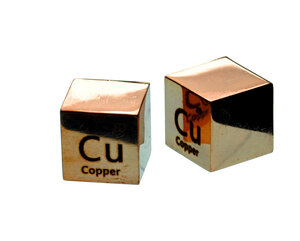
Cubes of each of the elements are our most popular sellers. And it’s not hard to see why. Precision machined and labeled each one is a self-contained ambassador of the periodic table. From the small cubic centimeter up to the hefty 5cm these cubes practically define the ideal desktop gadget for anyone who loves to nerd out on science. So get one as a conversation starter, a few as a clever means to spell out a name or phrase or go for broke and get as many as possible to make your own “real life” periodic table!

Some of them, like copper above, are pretty harmless and common. Others, like the uranium cube below, not so much.
I think these would be a great gift for anyone into science, or for teachers teaching the elements.

My first thought when I went there was that they would only have a few of the elements, but no, they have pretty much all of them. (With some reasonable exceptions.) Very much worth checking out.

On the sorry state of printers, 2021

What does the Verge think of printers?

Printers are the worst. They’re unreliable, they guzzle reportedly $12,000-a-gallon ink, and their manufacturers have been known to use dirty tricks, scare tactics, and DRM to strongly encourage you to buy cartridges exclusively from them.

Whoa! Strong but true. What prompted this? Well it seems…

Some of Canon’s own toner cartridges are now being detected as fakes — and they’re forcing the company to teach customers how to bypass its own DRM (via Techdirt).

Wild. You can read more about that here: Canon printers now think Canon’s own toner is fake – The Verge.

I have always wondered why printers are in the sorry state they are. While they are common, they are almost seen as a dead end technology. People don’t write about new printers the way the write about new smartphones. They are seen as a necessary evil in many cases. No one in Silicon Valley is coming along to disrupt the printer business.

I remember when IBM spun off their printer division into a company called Lexmark. And I can remember over a decade ago Kodak made printers with cheap ink. Now when I go into a computer store, those brands aren’t there. It’s the Canon’s and HP’s of the world that are making printers and presumably making money from them. Perhaps the only way to make a go of printers is to make them poorly. Which is sad.

On the five different levels of hype

In tech we often talk about the hype curve. When we do, we don’t distinguish the degree of hype we are talking about. This piece does exactly that: The five Levels of Hype. I hadn’t thought about it before, but the hype of marketing a new product is a different thing than the hype of a new technology. To see what I mean, see this chart from the article:

Much of the hype we are seeing around cryptocurrencies are up there in level 4 and 5. But this isn’t restricted to just that technology.

A good piece. Anyone familiar or referencing with the Gartner Hype Curve should read it.

New New York: the plan to expand Manhattan

One thing I like about Americans is their desire to dream big. This is easily demonstrated in this New York Times piece about expanding Manhattan.

It’s a smart idea. Is it doable? I don’t know. I do know that the cost of shoring up Manhattan to deal with global warming is going to be a big one. Why not use real estate and additional taxes to do that? Read the article and see what you think.

1980s me would have laughed at the idea of expanding Manhattan, since so much of the existing island was unlivable. Amazing how much has changed.

On twitter and MLK Day

So yesterday was Martin Luther King Jr. Day in the US. I think it is great Americans celebrate the life and work of Dr. King, and I hope all Americans take the day to reflect and work towards a more perfect union inspired by his ideals and vision.

It’s always a weird day on Twitter, though. I think this Wesley Yang quote hits the nail on the head:

MLK said some stuff that radicals like to quote and other stuff that conservatives and moderates like to quote, and of course what made him what he was is the ability to hold these contrasting impulses in balance

It’s true: MLK did say some radical things and he also said some moderate things. Moderate people want to claim him for his own and ignore the radical things, and radicals do the reverse. He was trying to bring people together and to move civil rights forward. There was no one way to do that. So was he moderate or radical? It depended on the context.

It’s also a weird thing when someone or some organization references Dr. King and someone quote tweets that and says “oh by the way, they are hypocritical to says that for reasons A, B, and C”. It’s the nature of people to dunk on others on twitter: I feel it just feels like petty squabbling on a day we should aspire to better.

The other thing that seems to happen on twitter every year on MLK day are tweets stating how unpopular he was at one point.  As Gallup states:

in 1966 — the last Gallup measure of King using this scalometer procedure — it was 32% positive and 63% negative.

Which is not false. It’s also not the whole picture. As CNNPolitics shows, “Black Americans” saw things differently:

 The vast majority in 1963 thought his work for equal rights was moving at the right speed (71%) or not fast enough (21%) compared to 8% who believed it was happening too fast. In 1966, 84% of Black adults had a favorable view of him, while 4% had an unfavorable view.

Martin Luther King, Jr. was an active political figure trying to effect major change. It is not surprising that his popularity was not high like it is now. That’s fairly common of political figures.  For additional context, he was listed as one of the top ten admired men in the nation in 1964 and 1965 but not 1966, according to that Gallup piece.

Popularity is a complex thing to measure. People trying to say King was unpopular back in his time are being highly selective in their selection of data, to say the least.

Anyway, I hope people’s tweets are aspirational versus petty when the holiday arrives.  I think Dr. King would want that.

What programming language should you learn? (2022 edition)

The best programming languages to learn in 2022, according to TechRepublic are these:

It’s interesting to see how things have changed. Back in 2015 when I wrote about this, Java was 1st and Python was in 4th. Javascript was 8th! I am not surprised by this.

Java and the C languages will always be good to know. But if you want to be marketable, learn some Python and Javascript.