Two really good articles on passwords. (Really!)

Yes, it is possible to write good articles on what is the bane of our current existence: computer passwords. The first one talks about the top passwords that people commonly use. The second one is a beautifully written piece about the thought that goes into people’s passwords.

You will have an entirely new perspective on passwords after reading this.

P.S. Thanks to Anna P for pointing out the second one.

Do you know someone (maybe you) who wants to make comics or cartoons?

Then send them over to this really smart post by Sarah McIntyre: i want to make cartoons & comics but i have no idea where to start!. It’s packed with great advice and plenty of links for anyone who would love to do this but is stuck on how to start.

Superb. (Image is a link to her post.)

Improve your reading with 33 short pieces of advice

If “read more” is one of your New Year Resolutions, then Austin Kleon has 33 short pieces of advice on how to read more and read better that you should review, here: 33 thoughts on reading.

I am trying to adopt most of these.  I have adopted many of them and the result has been much more reading by me for the last few years. I think the more of these you adopt, the more reading you will get done.


One way to keep your fitness New Year resolutions? Use the Pact app. Here’s how it works

If you have made a commitment to getting fit in 2015, that’s good. If you think you can manage it, that’s better. But if you think you might have troubles with it, then consider the Pact app.

It works like this, according to Pact:

  1. Make a commitment – Make a weekly Pact to exercise more or eat healthier. Set what you’ll pay other Pact members if you don’t reach it.
  2. Meet Your Goals – Use the Pact app to track your progress.
  3. Reap the rewards – Earn real cash for living healthily, paid by the members who don’t!

For more info, see their site: Pact – Commit to you.

I have no idea how well it works, but it sounds interesting.

Whatever resolutions you have made, consider these guidelines from Tony Schwartz (via @99u)

If you’ve made resolutions and plan to stick to them, that’s good. What may help you stick with them is this article: A Master Plan for Taking Back Control of Your Life – 99U. Essentially it is a list of general guidelines that can help you on your way as you tackle things like….resolutions. You will find it useful in other ways too.

I think it’s worth a read.  I’d also recommend Tony Schwartz in general: I’ve read a number of other pieces by him on the 99U and on other sites and I have found them to be valuable.

Happy New Year!


Do you feel like you do alot with little to show for it? I did too. Here’s how I turned that around.

Last year, I was discouraged: I was doing a lot with little to show for it. I would frequently be up until midnight doing chores and trying to stay on top of things and I was exhausted. Despite all that effort, I could not tell you what I had accomplished and I wasn’t getting any feedback telling me either. I decided I had to change that, and to change that, I did two major things: I started using a spreadsheet and I started using Workflowy. Let me explain how these two tools made a difference for me.

First, I started using a spreadsheet to track everything I did. Before I would write my todolists on a piece of paper, do it, then throw the list away. With the spreadsheet,  I put all my todos in there. Initially it had two columns: a todo column and a status column. Each todo had an associated status: Pending (i.e., I hadn’t started the task), WIP (work in progress, meaning I had started the task but hadn’t completed it) or Complete. As I did each todo, I changed the status from Pending to WIP (Work in progress) to Complete. I would try to only tackle tasks that were in the spreadsheet. If I did something that wasn’t in there, I started adding it there. (That last thing of capturing all todos in the spreadsheet was important.)

Very soon, I could see from the spreadsheet that I was doing a lot. In fact, the todolist expanded greatly. So I added a new column: priority. Each todo has a priority: 1-4. Once or twice a week, I reviewed my todos to see if they had the right priority. Then I ignored anything that wasn’t a 1 until the next review period. Prioritization helped me to focus.

Despite that, I still had many many todos, and still too many todos with a number 1 priority. I added additional columns over the year and this helped me manage what I had to get done. Even when my todo list had over 500 items on it, I could quickly filter out all but the 3 or 4 items I needed to focus on for a day. I added a column to help me separate Work todos from Home (not work related) todos. Then I subcategorized the Todos: there are todos related to my kids, todos concerning Money, my Home, even Me!

Of all the colums in the todo list, I found this last column of subcategories to be the most important in terms of getting a sense of accomplishment. Here’s why. At the end of each month, I took the completed todos and sorted them by subcategory. I could see from this where I was (and wasn’t) spending my time. For example, I might see that I was spending a lot of my time dealing with House issues and not enough of my time with the Kids. Having this in front of me allowed me to better focus my time in the near future. (Note: you don’t have to wait until the end of the month to do this, and when I find I am really busy, I will do weekly or biweekly reviews to see how the month is shaping up).

At the end of the month, I create a new worksheet for the new month by making a copy of the existing todo list. That way, I can focus just on the todos for that month.

After a few months of this, it was easy to do. You might think it is a lot of effort, but with the spreadsheet I have, I found it easy to add to and sort the todos. Most days I spend less than a few minutes reviewing it.

Occasionally I do things that aren’t on the list. It doesn’t matter much: most todos end up in there. The main thing is I get to see that I am getting things done and I can see where my effort is going.

That’s the spreadsheet. At first, it was all I wanted. I could see what I was getting done each month, and that felt great. I was getting a sense of accomplishment every month. But it wasn’t enough. The problem with just using the spreadsheet was that it is very granular. I could see I was doing a lot of tasks, but was that good or bad? Also, sometimes a bunch of smaller tasks add up to a bigger task that should be highlighted, but the spreadsheet couldn’t do that for me. I needed a different approach. I needed a different tool.  After thinking about this, I started using Workflowy (workflowy.com).

At the start of the month, I create a list of major activities I want to accomplish that month. (Workflowy is really  great if you like lists: that’s why I picked it.) Then I make sure my todos for that month are in line with those major activities. At the end of the month, I roll up the tasks that I did and put them in workflowy according to the major activities. Additionally, I might look and see I accomplished a number of things in the month that I didn’t expect to at the start of the month. I will add them to Workflowy, too, creating a new major activity to describe them.

What I liked about this is that month after month I could now see I was accomplishing a lot. I wasn’t just doing just a lot of little things: I was getting bigger things done. I could also see what I wasn’t accomplishing (e.g. running) and then correct that (or at least accept it in light of the other things I was accomplishing).

The other thing I realized is that if you have a lot on your plate, then it is difficult to make a lot of achievements in one month, but over many months, you start to see you have accomplished a lot. You miss that as your review your day to day activities because you are juggling a lot. Even looking back over a month, you think: wow, I barely made a dent in things. But as you look back over 3 or 6 months, you can say: wow, I made big improvements in 3 or 6 or even a dozen areas.

There are lots of improvements that can be made on this system, depending on who you are.  You may have the advantage of being able to focus in one or two areas. If so, you could use a simpler approach. If you have many major responsibilities and you want to make improvements in your own life, this approach may work for you. It works for me.

A template of my spreadsheet is here. It’s an XLS file.

As for the list I have each month in workflowy, I start with a template like this:

In Month X I plan to achieve the following

  • Concerning family and friends
  • With regards to personal finances
  • On the home front
  • With regards to staying organized
  • For special project X (whatever X is at the time)
  • Personally, I plan to do more regarding….
    • Writing/reading
    • Fitness
    • Develop personal skills
      • Develop my technical skills
      • Develop other skills
    • Explore new things

If you have read to this point: thank you! I appreciate you taking the time to do this. If you try this approach and it gives you some benefit, please let me know. Good luck! Accomplish great things!

On living in Manhattan, by Zadie Smith (a most wonderful piece of writing)

There is so much good about this piece by Zadie Smith that if I started pulling in quotes from it, I would essentially replicate it.  It’s an effortless read, and yet even as I was reading it, I could feel how great it is. I had the feeling of racing down a high mountain on skis, exhilarated and impressed by the beauty and amazed how fast I am going and then it is done.

So, yes, I recommend you read: Find Your Beach by Zadie Smith | The New York Review of Books.


Do you find yourself on your phone too much? Here’s a trick to help stop that

I find myself on my smartphone too much. It’s too easy to fall into that trap, and afterwards I wish I did something else instead. Did something useful. Or made something beautiful. Austin Kleon feels the same way, based on this post of his: Read a book instead. He made a screen lock for his phone to remind him to read a book and get off his phone.

I decided I wanted something similar. In my case, I found a photo I liked and used the Over app on my iPhone to create this:

test

I then saved it as my LockScreen. Now when I pick up the phone to start doing something mindless, the phone reminds me to do something better.

You can do the same thing yourself. You don’t even need an app or drawing skills. Write a reminder on a piece of paper and then take a photo of it with your phone and save it as your Lock Screen. It could be just the nudge you need.

Thanks for reading this. I hope you found it useful. If you did, then time spent doing it instead of playing with stuff on my phone was worthwhile.

Life in your 80s and 90s – some inspiration for then and now

On it’s own, this is a great piece:
Old Masters at the Top of Their Game – NYTimes.com. The woman above? 99. She sold her first painting at 89. She is now a world renowned artist. And there’s more great profiles of people in it. You should read it, and not just if you are older. I  recommend it for any age. How you read it at 20 will be different than how you read it at 40 or 60.  For me, I was struck by how  many of those interviewed say that nothing surprises them. As I get older, I find this true too, though I am still surprised. The flip side of this is that anxiety and concern about many things in life decreases. You know how to handle things, and you spend less time worrying about the things you ought not to worry about.

Another thing I thought interesting is that they don’t necessarily think of themselves as old. This is something I also found true as I age. I know when I talk to the 20 year olds in my office they must look at me and think: man, he’s old. 🙂 But other than superficial things, I don’t find my thinking or my view on the world has diminished from when I was younger. I have more experience now, and I had more natural energy then, but I don’t think: wow I no longer get this IT stuff now that I am older.

I highly encourage you to read the article. Then check out Austin Kleon’s blog because I found it there a lot with many other good things.

How to be more productive at work? check out what tools other people use

Chances are, if you talk to five different people at work, you will find five tools or techniques they use to be productive that you hadn’t even heard of.

Rather than do your own polling, you can also check out this article: Most Popular Apps Employees Use At Work – Business Insider.

Remember, these are just for work, and yes, Facebook still shows up there. And this is just the cloud / distributed services. (Also, I am wondering Evernote didn’t show up there.)

I  would be surprised if you read it and didn’t adopt at least one of the items on the list by the end of your work day. Good luck.

Want something great to slow cook? Try this sweet and spicy Asian pork shoulder recipe

I’ve made this Sweet and Spicy Asian Pork Shoulder Recipe from Real Simple a number of times and  it has come out great everymtime. Besides the wonderful flavours, it doesn’t use too much liquid. I find many slow cooker recipes do, and that spoils the dish for me.

You may want to trim the fat before you make this recipe. Or make it the day before, cool of the liquid, and then skim the fat off the wonderful sauce that results in slow cooking the pork. Also, it calls for a lot of sugar, but it is not too much, if you ask me.

For a variation of the recipe, see this: Chinese Slow-Cooked Pork Shoulder from the Food Network. This has more liquid than I like, but some of you might prefer this.

Are you trying to convert Word documents to HTML?

If so, you know of all the …stuff…Word will add in there. I understand why Microsoft does it, but I would rather not have it. If you are in the same boat, I recommend you check out this site: Convert Word Documents to Clean HTML. It gives you the ability to take snippets of said HTML and clean it up for you.

It has it’s limits, but worth a look. Or to your tool box.

Amy In The Sun: The Other (Caribbean) Side of Amy Winehouse – LargeUp

Interesting speculation on where Amy Winehouse’s musical direction would have gone if she hadn’t died so young: Amy In The Sun: The Other (Caribbean) Side of Amy Winehouse via LargeUp. That post has a lot of links to Amy’s performances on YouTube, so if you are the mood for something other than Christmas music, click on that link and enjoy.

It’s Monday. You need inspiration. Here’s Yves Rossy flying around Mt. Fuji using a jetpack

So for those of you who say, “Hey! We were promised jetpacks!”…well, like the future, they are hear but just not evenly distributed.

For this videos  and more on this, go here: This Man Flew Over Mt. Fuji on a Real-Life Jetpack, and It’s Absolutely Breathtaking – Mic.

In Toronto and want to learn how to skate?

Then the Harbourfront Centre’s Learn to Skate program may be for you. It’s a lovely little place to skate, and you can rent everything you need. In no time you will be braving the crowds at Nathan Phillips Square and zipping around with the best of them.

If you are looking for New Year’s resolutions to make, learning to skate is a good one.

P.S. It is usually cooler down there than the rest of the city. Dress warmly.

Why you should not use Uber? Let’s count the ways.

Uber seems in a hurry to demonstrate as many ways as possible on how to be a toxic company, from exploitng drivers to  degrading women to ripping off passengers, and more. Mike Loukides lists at least eight here is this piece: Uber is breaking bad over at O’Reilly Radar.

The idea behind Uber is worthwhile. Try and support better companies that provide such services, like Lyft. And be on the lookout for more such companies that sense an opportunity and try and be a good business for their customers and their investors.


Piketty Explained (by someone other than me. Also more prodding from me to get you to read it


I wrote about Piketty’s Capital in the Twenty-First Century here and here. As I said, I strongly encourage you to read it and take notes.

If you want a great summary of the book, I highly recommend this post: Piketty Explained: Summary of Capital in the Twenty-First Century by Thomas Piketty.

It’s superb. Peter Shirley, the author, has written  a 30 second summary and a 15 minute summary, and when you finish both, you will have a very fast but very thorough introduction to the book.  I am going to come back to this from time to time as a refresher to what I read in the book (as well as flip through the book again). Did you read Piketty but skip sections? Then review Peter’s post to see what you missed.

More good reasons to pick up Piketty before 2014 ends.

(The chart on world growth rates is from a link to Peter Shirley’s blog post.)

You too can be like Elon Musk (@elonmusk) and fund a lunar mission

Really. There is a kickstarter going on right now you can contribute to: LUNAR MISSION ONE: A new lunar mission for everyone. by Lunar Missions Ltd 

The team there says….

We plan to send an unmanned robotic landing module to the South Pole of the Moon – an area unexplored by previous missions.

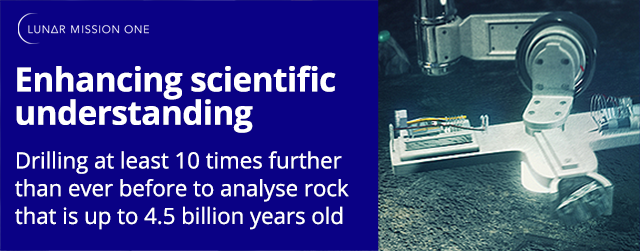
We’re going to use pioneering technology to drill down to a depth of at least 20m – 10 times deeper than has ever been drilled before – and potentially as deep as 100m. By doing this, we will access lunar rock dating back up to 4.5 billion years to discover the geological composition of the Moon, the ancient relationship it shares with our planet and the effects of asteroid bombardment. Ultimately, the project will improve scientific understanding of the early solar system, the formation of our planet and the Moon, and the conditions that initiated life on Earth.

I think this is the most fantastic Internet project I have seen yet. I highly recommend you check it out.

Thanks to Kottke for pointing it out.

Three winters (a way to think about the difficult season)

There are three winters within each winter season. The first, early winter, can actually be lovely. The temperatures are cold but not terribly so. Often you can go out with no gloves or hat. If you celebrate Christmas, there is all that to look forward to.

Next comes the bleak midwinter, sometime in January and lasting through until the end of February. This is the cold heart of winter. You need to psychologically strengthen yourself to get through this part, but if you learn how to make the most of it, it passes quickly, like all time.

Finally there is late winter. Winter falters then: days lengthen, ice melts, the earliest of flowers – snowdrops! – appear. You can already taste spring, and summer seems possible and not just a cruel memory.

Winter seems long, but each of the three winters is short. They whip by like speed skaters or tobagganers.

(Originally written on my Blackberry and published on Posterous on December 11 2011, 9:54 PM)

A great little tutorial on MySQL that covers Windows, Mac OS X, and Ubuntu (Linux)…

…can be found at this link:

MySQL Tutorial – How to Install MySQL 5 (on Windows, Mac OS X, Ubuntu) and Get Started with SQL.

Even if you don’t know hardly anything about SQL or databases, you will find this helpful. It covers pretty much everything you need to know to get started, and it’s a great cheat sheet for people who have more experience but need to know a command format or get some other quick guidance.

Recommended.

P.S. It specifies Ubuntu, but if you are using other distros like CentOS you should still find it helpful.

Why not a three day week? Something to consider on day two of your work week

This piece on the three day work week, Why Not a Three-Day Week? in The New Yorker explores the notion of working three and not five days a week and is well worth a read. But….

But….before you protest that you don’t work a five day week now, the better and more important question is: why do we have to work so much and so hard and why can we not have a lot more for a lot less? My own belief is that we are still shackled to a culture underlined by a Protestant work ethic and devoted to to a lower form of capitalism. We would lead better lives if our energies and our lives were devoted to more meaningful activities that addressed our higher needs, instead of tolling away to survive. The good/bad news is that even if we want to stay chained to this culture, we will not be able with the way mechanization and automation is proceeding. We need to start thinking about the way we work now, whether we want to or not.

4 p.m. recipes: two updates on some classic pasta dishes

I got into a habit of making pasta on Mondays: there is so much happening on Mondays for me, and pasta dishes were a way to allow me to multi-task and make dinner, help with homework, clean-up, &c.

If you feel overwhelmed on Monday, or simply if you love pasta, then I recommend you try pasta Mondays. Worst case, just keep it simple and use pre-made sauces. If you would prefer to make  things from scratch, then here are two updates on  some classic pasta dishes:

Pasta Carbonara With Spicy Sausage Recipe from Real Simple

The Best Macaroni & Cheese You’ll Ever Have from a Cup of Jo blog

Enjoy!

Going out this weekend? Here’s a list of 5 restaurants with cheap wine in Toronto

If you plan to go out wine drinking this weekend — or any day next week — then head over to blog.to and see what they have to say on 5 restaurants with cheap wine in Toronto.

Of the restos on the list, I have known about Le Paradis for along time. Whenever I went, I’d  remark how reasonable wine prices were here compared to other places. (The food and ambiance of the place is also not bad.)  If the other places are comparable, then this is a very good list indeed.

The Holiday Season is upon us. You need great gifts. You need to go to Art Interiors

Why? Because it is their annual festival of the smalls. As you can see from the JPEG above, they have art from $55-$250. Great pieces too. Perfect for the Holidays.

Want more info? Go here: Affordable Artwork / Art Interiors / Toronto Art Gallery. Bonus: lots of the work is viewable online.

Highly recommended. Make it a holiday tradition.

Dealing with an iPad saying “iCloud Backup This iPad hasnt been backed up in 5 weeks”

If you get a message on you iPad saying “iCloud Backup   This iPad hasn’t been backed up in 5 weeks”, then doing what that link says might help. Try it first.

If it doesn’t — and it didn’t for me — try this. I connected my iPad to my computer. I started iTunes. I did a backup to iCloud. I then did a restore from iCloud. The problem went away.

P.S. Thanks for reading this. If you have found it useful and you’d like to say thanks by buying me a coffee, you can do so here. Thanks! That’s awesome!

My marginalia from my copy of Piketty’s capital

My previous post was a guide to reading Piketty’s Capital. As I was going through it, I also jotted down some rough notes on the book and things I thought as I was going along. My marginalia, so to speak. Here it is, for what it’s worth to you:

  • Piketty’s book irked people for a number of reasons, including me initially. One reason, I think has to do with the grandness of his book. First, there’s the title. It implies this is a follow on to the great text by Marx. Second he does things like state fundamental laws of capitalism, as if economics were physics and Piketty is the 21st century Einstein. While Piketty can seem grand at time, he’s also humble in other parts. Throughout the book he often confesses to the limits of his approach based on the data (or lack of data) he has. He still has a lot of data and he has done a lot of analysis, but he is aware of the limits of it. This humility helped me get over the parts that irked me.
  • For non-economists like me, I think the book is most enjoyable when Piketty relates economic theory with example in literature and history. His references to Austen and Balzac make his ideas less abstract and make them richer. Fortunately, he does this often.
  • Some American critics would have you believe that Piketty is anti-capitalist / pro-socialist. I didn’t see that. I’d say Piketty is for open markets, strong on education, and democratic.  From an American point of view, he may seem left wing, but to most of the developed world I would place him closer to the center, slightly left.
  • One thing Piketty’s analysis can’t or doesn’t take into account is the exponential change in everything starting at the end of the 19th century. He touches on it a bit (pop growth rates on page 80), but this is factor. I believe that there is a correlation between growth rates and birth rates, with growth rates lagging birth rates. But this is a belief I have: I don’t have the ability to show this.
  • I was surprised by how limited economic growth is. (Chart on page 94). As Piketty mentions, people think it should be in the 3-4% range, but is much more likely to hover around the 1% range. Yet even such growth rates have a huge impact over decades and centuries.
  • Indirectly, Piketty makes the case for Naomi Klein’s thesis on disaster capitalism.  The biggest opportunities for growth in the 20th century occur as a result of the World Wars. Take a look at the charts on page 97 to see what I mean. Wars are terrible for people and cities but good for economic growth.
  • As I was reading the book in the summer, there were a slew of critics writing Think Pieces (or tweets!) against him and his book. The most ridiculous arguments against Piketty are the shallow ones, of course: the ones based on the book title, or that he is French, or that the book is all about new taxes. These arguments, mainly from American writers, reflect a lack of thought and the biases of Americans more than anything else. Critics of Piketty who write small articles on his book, criticizing this point or that, are missing the much bigger picture. Piketty, in presenting all of this data and analysis, is providing a broad stage to discuss capitalism. I think anyone wanting to take him on really has to do the same level of work. That’s the thing. Cherry picking is useless. Yes, it would be good to have more data. But this is the data available. If you want to criticize Piketty, you need more data, or you need to critique his data. If you want to show how technology is making inequality less not more, bring that data. Saying “Piketty is a red” or “this is not 19th century range” and thinking you are done just makes you look foolish and your arguments weak. (Of course you can believe what you like, but belief is not argument.)
  • Another thing he doesn’t touch on is the destructive nature of IT on capital. Being an IT professional, I was wondering if he would examine capital in the 21st century from that perspective, since IT is having a greater and greater effect on our economies, and as more things become digital, the depreciation of capital related to those things accelerates. If you’d like to read more on that topic, you won’t find it here.
  • It is interesting to note the stability of capitalism in the 19th century, at least in Europe. It was a conservative time politically, with limited warfare. Currency and other things economic were also stable then. No point here, just something that struck me as interesting.
  • I believe that an accumulation of capital leads to anti-democratic measures by capitalists that result in revolutions or wars, which lead to the destruction of private capital. Piketty doesn’t go into this, but it would be interesting to read an analysis that shows a relationship between the accumulation of capital and the advent of wars and revolutions.
  • I found this fact fascinating: after the Napoleonic wars and World War 2, Britain’s public debt was 200% of the GDP. 200%! I found this fascinating, first because there is a lot of worry now about the wealthiest nations having their public debt going over 100% of their GDP. Yet Britain’s was much much higher in those two cases. How did they reduced that debt and bring the percentage down from 200% to a much smaller number (as seen in the book)? Inflation. It was done over a very long period of time, but it is proof that high debt can be brought down and that it isn’t irreversible.
  • Reading the section on slaves and capital made me think many things, including the idea that capital based on anti-democratic or inhumane means is precarious — think of capital that pollutes or depends on the deprivation of otherwise rights….it is unstable capital — and that capitalists and not just socialists should argue for an economic society based on democracy and human rights.
  • One thing Piketty does well is whenever possible he links data from the US and Sweden because they are both relative outliers to the UK, France and Germany. It also highlighted to me how much the US lags (or leads, depending on your viewpoint) much of the developed world.
  • Piketty is big on education. If anything, I think he gives it too much weight. People from better schools stay wealthy not just because of what they learn but who they connect with in such schools. (Maybe it is different in France, but I doubt it.) Establishment schools are smart enough to let new blood in but they are far from meritocracies. To me, Piketty seems to have a blind spot when it comes to academia that he doesn’t show elsewhere when talking about inheritance or super-managers.
  • Piketty makes the case that taxes are better than debt. I made this note: “The concern for progressives is that capitalists will drive down both taxes and debt by abusing social programs.” But I don’t know why! 🙂 Ah well…it was likely a good thought at the time of reading it.
  • Piketty talks at the end about the contradiction of capitalism is r > g. My belief is that this formula should be more complicated and that when you add a time factor in there and some other dependencies, you see have a better model and formula (or formulae) on how capitalism corrects itself, either through war, or revolution, or other drastic social change. But this is just another belief I have.

As you are reading it, you will likely have your own notes and marginalia. Let me know what you think.

My modest guide to Piketty’s Capitalism and how to read it (all the way to the end)


You are looking at buying Piketty’s Capitalism, or maybe you already bought it, but you are daunted by it. Having read it, I can say it is daunting in parts, but it is also great. I highly recommend you get it and read it from front to back. Some of you will have no problem with that. For the rest, I put together this modest guide on how best to read it and finish it and not get bogged down and put it aside.

Here goes.

The introduction is an easy read. If anything, it is highly approachable. Piketty is a good writer, and he does a number of things to make it easy to read. (For example, he brings in a lot of literary references. He also does not assume you are an economist.) For the first 100 pages I thought: why is everyone having difficulty with this book….it’s fun! (Mind you, I am interested in economics, but still….) What I’d say is that this introduction is a good introduction not only to the book but the field of economics in general. Don’t be fooled though: the rest of the book is not as easy to read.

Of the book’s four sections, the first and last are the most approachable for non-economists. Emergency tip: if you are getting bogged down in the middle of the book, feel free to skip to the last section. Reading the first and last section is still rewarding, and you can read the last section without reading the middle. (Not ideal, of course, but better than skipping the last section all together).

That said, there are great passages in the middle, and there are some slow sections in the front and back. (Don’t entirely skip the middle, and likewise, don’t be thrown off by some harder parts in the front or back.) Here’s some examples of what I mean:

While non-economists might want to skip over it, I found his history of data collection — around page 55 — interesting. He is following in the footsteps of some of these other figures in the field of economics while also showing the limits of what analysis can be done, given the lack of data. I think this is an important thing to read if you read his critics. Piketty is aware of the limits of his analysis: something you would not think by reading his critics like I have. It’s good to know this. Also, this supports the case that Piketty makes later in section 4 on why a global capital tax would not just be good for states and a check on capitalism, but also as a way of improving the field of economics. Try to read this part.

Generally, the sections of the book on growth, income and capital are interesting infor the long term perspective they give. I found those worthwhile.

The second section is a good take on how capital has changed over the centuries. If you are going to think about capital and capitalism, it’s worth reading the second section on this history. There were radical changes in capital from the 18th century to the 20th, as capital went from being largely agricultural land or largely housing. In the United States another big capital shift occurred as human capital in the form of slaves rightly disappeared after the American civil war. So, I liked this section: it got me thinking about capital in ways I hadn’t before.

I highly recommend you don’t skim the part on the relationship between slavery and capitalism in around page 158. The value of slaves as part of the overall wealth of the US south is incredible, and the effect the Civil War would have on rightly destroying such capital was significant. You can rightly argue that slaves are human beings and not capital, but from the point of view of the slave owner, they were as much capital as machinery or barns or land. A thought provoking section, I found.

Of the middle section, make sure you read page 166 where Piketty introduces his law of capitalism. Piketty’s laws are a key part of the book. Also at the beginning of page 237 the book moves away from the data to talk about inequality and there is more approachable analysis. For example, around this point of the book, Piketty provides a good analysis of labor vs capital, class, and an insightful review of inequality. In particular his analysis around super managers and super salaries is really good and highly relevant in our times. (I think it also got up the nose of some Silicon Valley types, which I found fascinating.)

Make sure you read the section of the book on inequality: I found it to be one of the better parts of the book.

Overall, beware of section two. In this section, Piketty looks at capital in various parts of the world. If you are an economist, then  you really want to focus on this section, because he is making a case for his central idea. However, for a general reader, you might become fatigued in the middle of this part as it tends to feel repetitive. By the way, I think this repetitiveness is really supportive of Piketty’s point. He can argue: hey! look there is a consistency here we can make some conclusions about. If you already support his point, skim away.

If you are skimming madly in the middle, slow down as you get to page 400.
I took a lot more notes towards the end of the book (in the 400s) and I thought this section readable and interesting. For example, in the 400s, Piketty deals with merit. I believe a lot of critics don’t like the book because of how Piketty places limits on virtues of merit and hard work. Piketty argues you can work hard to get rich but someone with a lot of capital can get as rich or much richer with little if any effort. He goes on to show that capitalism is structured such that the rich will…well, get richer. Which means that proportionally the poor get poor. You may believe the rich get richer: here’s the argument as why in a capitalism society that happens.

The other thing I like about the 400s is that Piketty bring in literary examples again. He does that in the first section, and he does it again here, and I found whenever he does this, the book becomes livelier and more interesting.

Still reading? At the last section? Good! In the last section, Piketty focuses on the importance of regulating capital. Now, I am skeptical of what he recommends, even though it is hardly revolutionary (literally or figuratively). Maybe it will happen in the 22nd century. I am willing to believe it will happen, thought. After all, progressive income tax is a fairly new thing, and taxes themselves will continue to evolve, just like they have for centuries. Likewise, freer trade has increased dramatically in the 20th century, and other taxes like VAT taxes have made a big impact. Perhaps a global tax would not be impossible. That said, you should read the last section, because to not do so would be to miss out on a key point of the book.

Ok, that’s my modest guide to reading Piketty’s Capital. Did I convince you to give it a try? Great! Give it a go! If you can avoid the pitfalls in the middle, you’ll find yourself cruising towards the end and find you are done sooner than you think. Book completion aside, when you finish Piketty’s Capital you’ll have a much better understanding of capital in the 21st and capitalism in general. I think this important, because even if you don’t want to think about capitalism, capitalism affects us all. Knowing more about it, knowing how to think about it, and having ideas on how to change it are valuable.

Good luck!

The subversive genius that is Cracked.com

The team at cracked.com have a tested formula: take some good advice  and practically bury it in humour to get a piece that has you laughing at first but thinking later. It is a very subversive way to get people thinking on a site you wouldn’t expect to be doing so.

I first started reading cracked.com for the laughs, but afterwards thought: hey, they have a really great piece of guidance there. Here are two pieces from many good ones on the site:

There are lots of sites on the Web giving advice (including this one). Cracked does it in a way that is better than most. Worth checking out.

If you are having problems charging your fitbit flex, consider this fix

If you plug your fitbit into your charging cable and then into your computer, lights should start pulsing.  (See here for details.) If they don’t start pulsing, then your fitbit will not take the charge. How can you fix this?

Take a look at the three very small circles at the bottom of your fitbit. They should be a shiny copper colour if they are clean, and they need to be clean in order to take the charge. Ideally they should always stay clean, but it is easy for them to get dirty since they are so close to your skin.

To clean them, you need a very gentle abrasive to clean them. What worked for me was taking the end of a paper clip and very gently scraping the circle until I could see the shiny copper again. Then I plugged it back into the charging cable that was attached to my computer and the lights started pulsing.

Note! If you are the least bit concerned about breaking your fitbit by doing this, then do not do this. Instead, take it back to where you purchased it and see if they can help you. You are responsible for your own fitbit.  That said, this worked for me and my fitbit worked fine afterwards.

On the benefits of wearing a uniform

There are benefits to wearing a uniform: you look good, people can read you, and you simplify your life. I think that is what this article is getting at too, but to me, it oversells it: The Genius of Wearing the Same Outfit Every Day. Still worth a quick read, though.

I add that there are drawbacks to wearing a uniform: you can get stereotyped and you can get sick of it. I have tried it, and I think the trick for me was to have more of a template of clothing to wear and stick to that. By that I mean you have a number of different things to wear, but all the clothing fits a certain pattern or template. That approach  allows for some variation, but you gain all the benefits of a uniform.

Having read this, do you think the uniform idea is good or bad?

More ideas for late afternoon: are midlife crises biological?

Yesterday we considered math and infinity. Today, apes and biology.

If you read this, Even apes have ‘midlife crises,’ study finds – Yahoo News, you might conclude “possibly”. What do you think?

My thoughts: I’d push back and say the notion of a midlife crisis is a complex representation of a lot of different things, and being able to tie that back to biology direct doesn’t make sense. It may be possible to find linkages there, though, and through the discovery of these linkages gain a better understanding of how we relate to life as we mature.

Your thoughts?


10 ways to get more out of another great tool, Evernote

Yesterday was about ifttt. Today it is all about another great tool I highly depend on: Evernote. Evernote has become my go to tool for capturing information. (Bonus: it works great with ifttt). There are many great ways of using Evernote. If you are using it or planning to, here are at 10 for starters: 10 Tips On How to Use Evernote To Its Fullest « The Solopreneur Life®.

Please share any other tips you have. I find the one key tip I have for users of Evernote is this: the more you use it, the better it gets.