Someday we will have dinner parties again. When we do, I recommend you study this piece


Someday we will have dinner parties, post pandemic. When we do, we will be very rusty having them. Plus, we will be so happy to have people over that the food, while important, should be secondary to being able to host people. So, what to do?

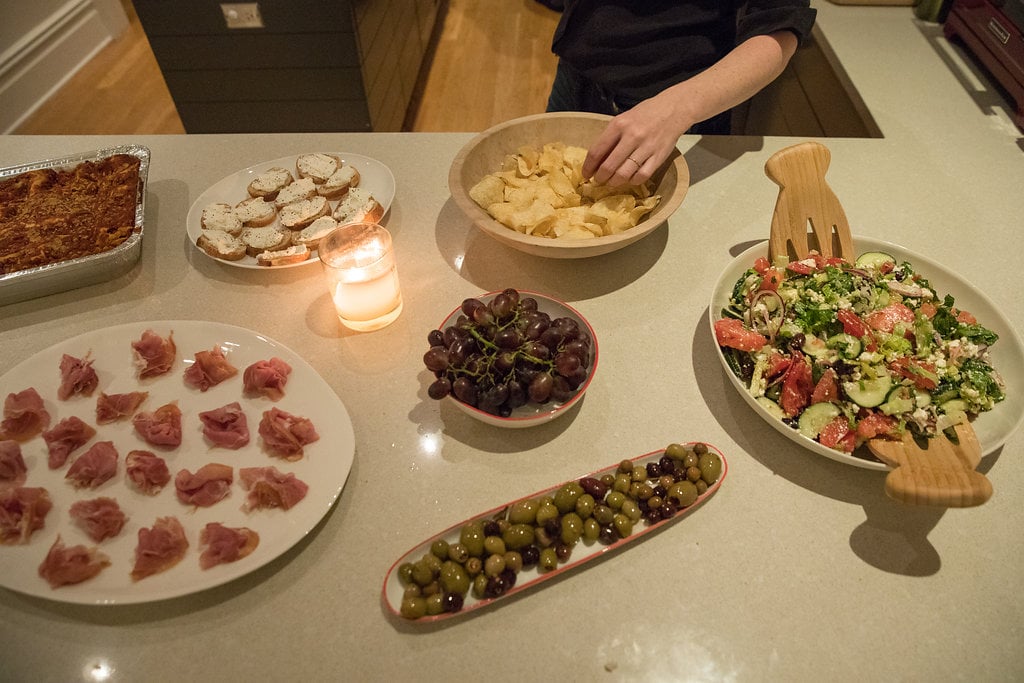
Easy, Through a very easy dinner party, like they did over at the blog, A Cup of Jo. It looks like a wonderful time with the least amount of effort. Which is fine! More than fine, in fact.

We will have dinner parties again. Read this and be ready.

P.S. Of course you can do just the opposite and throw an elaborate party to celebrate. That’s fine too! 🙂

How to make your rooms pop by using bright complementary colours

Last week I wrote about white paint. Now for something completely different: bright colours! This piece is a great guide for how to use colour in your home, which is especially good for people shy about using bolder colours: Complementary Colors & How to Decorate With Them | Apartment Therapy

In a nutshell: “Complementary colors, when used together in color schemes, are especially dynamic and pleasing to the eye.” So find your favorite colour, find its complement on the colour wheel, and use that as your guide.

My small tip: if you love a certain colour (e.g. orange), then look to use the complementary colour in the background (e.g. blue sofa, blue wall colour). Then you can fill the foreground with objects in your favourite colour.

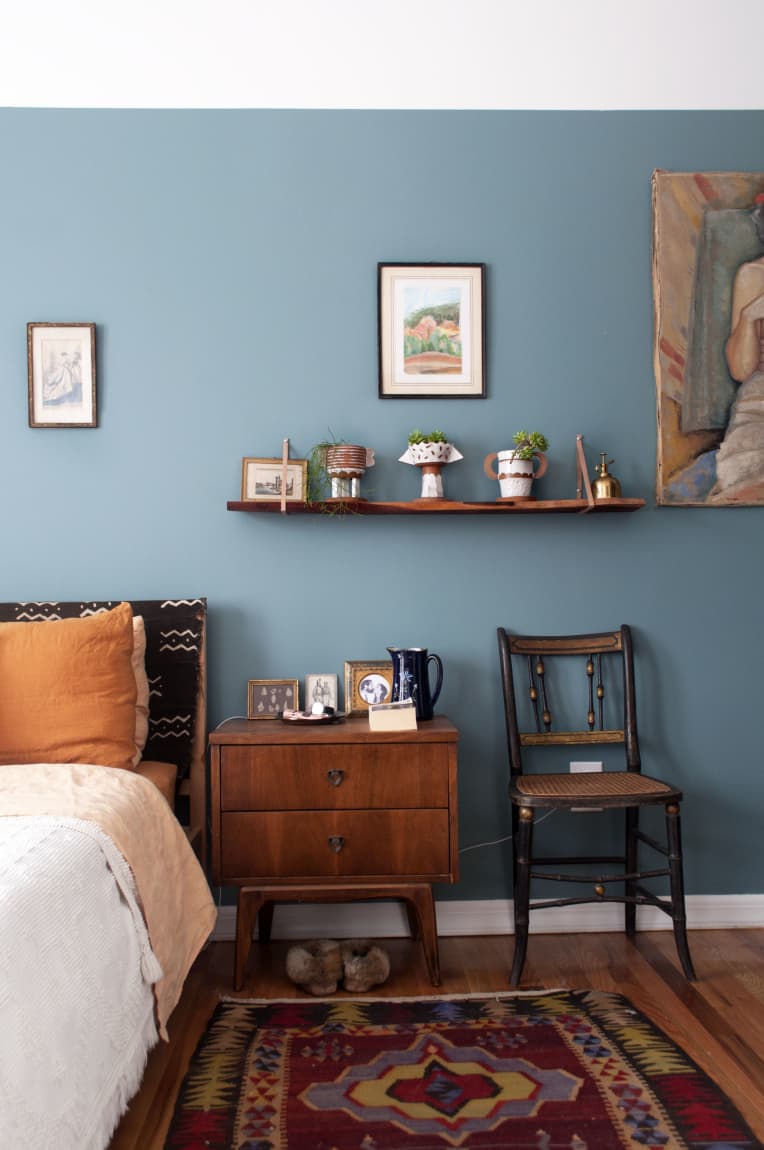
Another tip: use artworks containing both colours. Obviously you should love the art first, but if you have many pieces you can hang or display, aim to use those that fit in with the overall colour scheme of the room. (See the image above for examples of this. It’s a good example of how blue and orange go together.)

17 books to get you through the pandemic, or the summer, or even the weekend


I saved this at the start of the pandemic for a time when I could freely buy books again. Now is that time, in Canada. I think this is a fine list, full of old and new books: 17 books to get you through the pandemic – Free Candie

Summer is a great time to read. Try and do that. If you get stuck, I find sticking to short/funny/light books can help.

And ready the Free Candie blog. It’s great.

(Image from a link to the blog post)

What if the Government Gave Everyone a Paycheck? Well it just did. What did we learn?

Before the pandemic (i.e. 2018), people were asking this: What if the Government Gave Everyone a Paycheck? – The New York Times.

It seemed impossible at the time. Then the pandemic came, and governments in the US and Canada essentially did just that.

What I fear is going to happen is economic conservatives are going to rush in and start yelling “Deficits are Bad!!!” and all the Establishment will nod and a new wave of austerity will come in. What I hope is that better economists will come to the fore and push and see how close we can get to UBI, given what we learned so far.

Much depends on what happens in the next six to twelve months.

5 Hard Things You Need to Start Doing for Yourself on Hard Days: an emergency guide


Think of this list as the big red button you need to push when you find things getting too hard to deal with: 5 Hard Things You Need to Start Doing for Yourself on Hard Days

So much advice is trite. I found this a more fundamental and thoughtful list of things to pursue when you are struggling.

Good luck.

The Art of Emily Bickell (and where you can get it)

One of my favorite artists is Emily Bickell, largely for her paintings of water, which I think are sublime. You can get affordable print versions of them here:  Traces Art Print by emilybickell | Society6.

Better still, you can get affordable original versions of them here: Art Interiors.

Do you have a collection of flat objects? Then frame them and hang them!

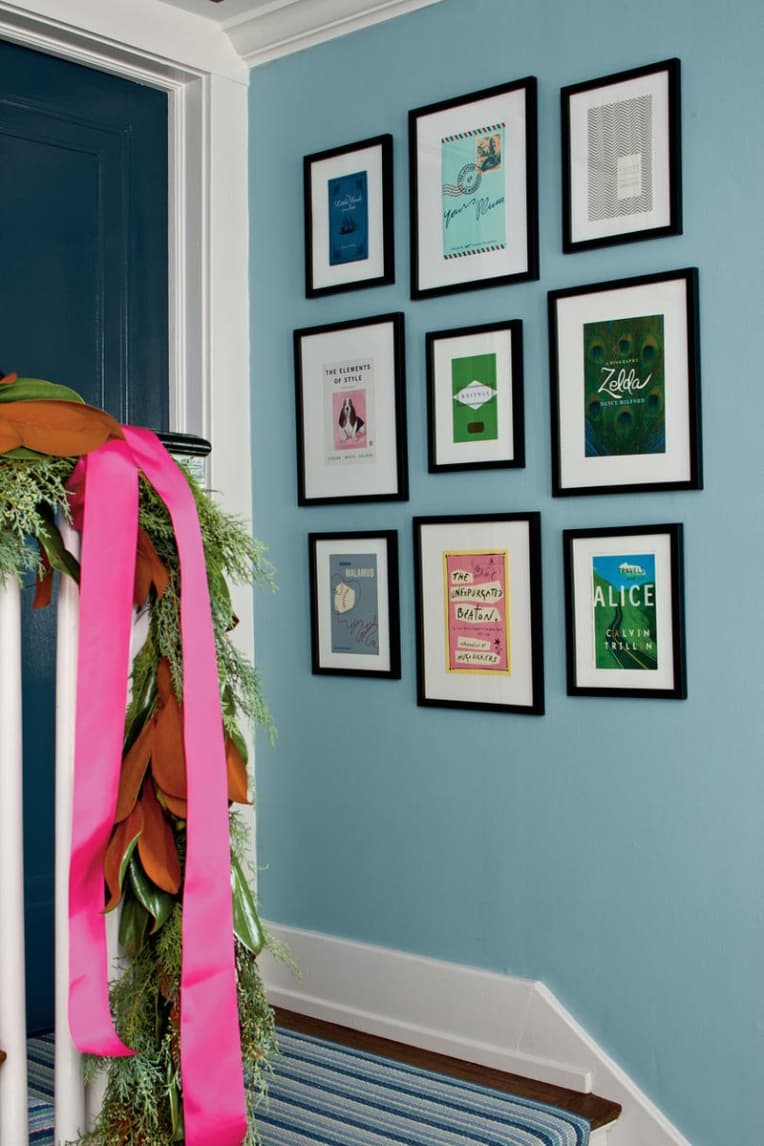
It can be anything: book covers, old CD covers, stamps, old money, wallpaper, old kid drawings (of course), letters from loved ones…you name it, if it is flat and interesting to you and you have a spare wall, go for it.

For more on this, plus other ideas, see this: Cheap Art Picture Frame Ideas | Apartment Therapy

July pandemic highlights and ramblings (a newsletter, in blog form)

Hey! Good evening (to people in my time zone, GMT -5. :))

Thanks for stopping by.

This is my latest not-a-newsletter of highlights (not so many) and ramblings (many) since the last one at the end of June.

We are still in the era of the pandemic, but we seem to have spin offs of it: in some places, it is getting much worse (e.g. the US, Brazil), in other places it is dying down (e.g. Canada) and then there places it seems to have died down but then flared up again (e.g. Australia). I think the only safe thing to say about this disease in any place is that we are in it for the long haul. Countries and governments that get that will be the ones that do best.

Pandemic: speaking of the pandemic, here are two pieces I found worth highlighting.
First up: As people mostly have to dress up only for work videoconferences, they have adopted some innovative ways of doing this: The Video Call Is Starting. Time to Put on Your Zoom Shirt. – The New York Times Secondly, a reminder: if you are going on a road trip, be prepared for failure and don’t expect things to work the way they did in the past: Canada Reopens, but Little Returns to the Old Ways – The New York Times
Free speech: there’s been lots of chatter about free speech in the US recently. Two things I noticed were the changes at Reddit, followed by the so called Open Letter defending free speech published by Harpers.

My thought on Reddit cancelling the subreddit ‘The Donald’ was: Good. That subreddit had ample opportunity to follow the most basic of rules and they didn’t, as this piece explains: Reddit, Acting Against Hate Speech, Bans ‘The_Donald’ Subreddit – The New York Times

As for the other item, I don’t have much to say about the somewhat controversial Open Letter in Harper’s. I thought it was something of a nothingburger. Others did not: it got plenty of people riled up. For those who think it was somewhat significant, I recommend this piece: Don’t Fall For The ‘Cancel Culture’ Scam | HuffPost Australia.

Also, stop writing Open Letters, people. Get a blog or something. 🙂

Bad thought: There is so much bad thought/writing in the world today, some of which I write myself! Most of it is ignored. But then some of it hits bigger sites, like The Big Think. I like the Big Think. There’s some good stuff there. There’s also some dubious stuff, such as this: End of the world: MIT prediction from 1973 is proving true – Big Think. I was surprised that they would just reference Club of Rome so generally. If you do some research into the predictions of the Club of Rome, there’s many articles debunking them. As always, take anything you read on the Internet with a grain of salt, even if it comes from reputable sources.

Speaking of bad thought,  a twitter cliche is to say “Everything is terrible, but here is something good”. For example:

Not sure why people just can’t say “here’s something to good”. Everything isn’t terrible, obviously. It’s a distorted world view. If you say, “everything is wonderful”, people would rightly give you the side-eye or worse. But say “everything is terrible” and many just nod in agreement. Bah!

More on the US: I found this accidentally while going through the New York Times site recently. It says something about the US that this barely registers as news anymore: 2 Dead in Shooting at Walmart Distribution Center in California, Including Gunman – The New York Times

Remember that couple who came out brandishing guns when Black Lives Matter protesters crashed their gates? Here’s a good follow up story on them. These people are almost Dickensian in their terribleness: Portland Place couple who confronted protesters have a long history of not backing down | Metro | stltoday.com.

I am not a fan of Kayne’s clothing — I find the designs heavy handed, bulky, and colourless – but I found this interesting: Kanye West and Gap Strike 10-Year Deal for ‘Yeezy Gap’ Apparel Line – The New York Times. I could actually see him doing something interesting with the Gap. He could help lift them up for a bit, and maybe he could find his stride with the line. Fans of West could argue that he has been successful with Adidas, and I’ll grant him that. If he and the Gap paired and succeeded, I would be first in line to applaud them both.

I’m just going to ignore the whole “Kanye running for President” non-event.

Canadians: on Twitter, people often flare up and tweet about how smug Canadians are. I thought this was solely a habit of left wing Canadians, but a search through Google showed me it cuts across the spectrum of politics: smug canadian – Google Search.

I find the idea of smug Canadians quaint, to be honest. Canadians have much to be proud of, but I am not sure they should be excessively proud (i.e. smug). And from my limited perspective, I don’t think I have ever met a smug Canadian. After all, we have many faults. And we are secondary at best when it comes to many other places in the world. So,  lots of  reasons to temper our pride. As for our accusers, I wonder if the people wagging a finger at “smug Canadians”  just don’t care for Canadians or a particular set of Canadians? I find it an odd phenomenon.

The rest of the world: I struggle with how blind we are to what is happening in the world because we focus so much on the US and its problems. We miss tragedies like this one. There is unprecedented violence in Mexico now and it barely registers north of their border: Mexico Police Chief Shot in Possible Assassination Attempt – The New York Times.

Finally, something out of this world: I think, based on this, that our understanding of our Solar System is going to change in a big way soon: Beyond Pluto: the hunt for our solar system’s new ninth planet | Science | The Guardian

Thanks for reading this. I hope you found it interesting and somewhat useful.

How to decide which white paint to go with in your home?

Well, one way is to pick one of the versions listed here: The 15 Shades of White Paint Top Designers Swear By

I’m a big fan of Benjamin Moore paints, and one of the 15 shades highlighted is Super White (shows above). I think that is great, but I was and remain a fan of Cloud White, which has almost a beige undertone and is warm, though arguably not as warm as Simply White.

For more on the Benjamin Moore paints (and the location of the image above), go here.


How to make basic flowers into something beautiful

Flowers from grocery stores and other such places are often uninspiring. Sure, you could take them home and stick them in a vase and be done. Or you can go over to this post and get some better ideas on how to make even a few stems of anything look beautiful: How to make basic flowers into something beautifulHow to Arrange Grocery Store Flowers | A Cup of Jo

The photo above is just one example. Go to A Cup of Jo to see some other smart examples.

Are you floundering? Then do this

One way to deal with floundering is to create structure. Zen Habits explains: Create Structure When You’re Floundering : zen habits

The other technique I do is to eliminate everything I am struggling with and do one small thing in a short period of time. Write it down. Repeat. Go as long as you can. Take a break. Repeat. Don’t examine everything you could be doing. Just put your head down and get one thing done. It may not be your best, but it is better than floundering.

The key to resilience is recovery

As argued here: Resilience Is About How You Recharge, Not How You Endure

If all you are doing is endlessly enduring a difficult situation, you will eventually break. That is not resiliency. To be resilient, you need a period to recharge and repair. By doing so, you can endure more and endure things better.

No one gets stronger without a period of repair. The same is true for resilience.

Sweden: how not to deal with a pandemic

It’s not good to be too confident with making pandemic assessment, but the evidence is that Sweden has failed in their approach to dealing with it. According to this, via Sweden Has Become the World’s Cautionary Tale – The New York Times:

This is what has happened: Not only have thousands more people died than in neighboring countries that imposed lockdowns, but Sweden’s economy has fared little better.

“They literally gained nothing,” said Jacob F. Kirkegaard, a senior fellow at the Peterson Institute for International Economics in Washington. “It’s a self-inflicted wound, and they have no economic gains.”

The experiment was Lose-Lose: they suffered more deaths and their economy is worse off.

There is much to be learned from what happened in the Nordic countries. We are learning at the expense of the Swedish people. Read the article for more details.

No area should get cocky when it comes to their dealing with the coronavirus

Because as this shows, How California went from a coronavirus success story to a new hot spot – Vox,  all you need to do is let your guard down and the disease comes back. I am reading stories of many places having surges and many places are having to go back into lockdown. I understand why people want to read stories of places like New Zealand where life has returned to normal. Life hasn’t returned to normal: all places have done is managed through strong measures to stop it from spreading in their area. Meanwhile it is spreading to other areas of the globe, like India. All it will take is enough relaxing of controls and it could come back stronger.

We know very little about this disease. Social distancing and masks seem to be helping to control it. That’s what we have for now: some level of control. No medicine is coming to help us yet. No mutation is coming to blunt it yet. We may have a long way to go.

A nice gift idea for the fish food lover in your life …


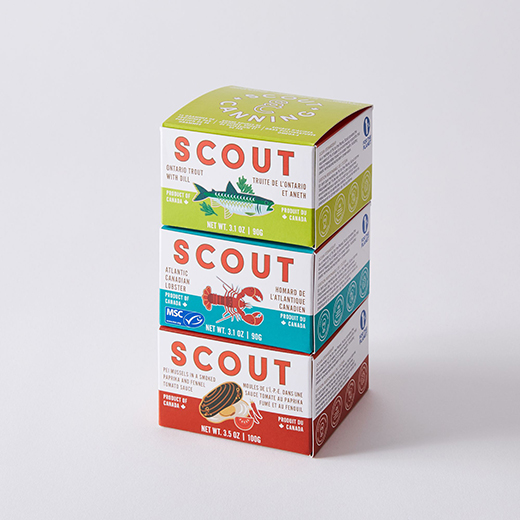
…could be this: Sustainably Harvested Canned Seafood, by Scout Canning; set of 3, 3 flavors – Lobster, Mussels, Trout on Food52

Pricer than the canned fish you are used to getting in stores, but it could be a wonderful gift for someone.  Great packaging too. Happy to see it is from Canada, too. There is different versions of this too; you could just get the lobster, for example.

Food52 has lots of wonderful products. Even if you don’t care for this one, I recommend checking them out.

Are meal kits the future of restaurants?

I don’t know, but I do know this is a good piece to read for anyone interested in establishments having some degree of success with them: Meal kits were dying. Covid-19 brought them back to life. | The Counter.

I am not sure what the future of restaurants will be. Or any places that depend on having many people close together for periods of time.  If COVID-19 sticks around for months and years, we are going to be forced to find out. Whatever that future is, it will be substantially different to the time before the arrival of this disease.

On the Facebook Boycott, and social media platforms generally

Like Fox News, I suspect Facebook will make tweaks to its service to make boycotts go away: As Facebook Boycott Grows, Advertisers Grapple With Race – The New York Times. But either through intent or due to systematic issues, I don’t think Facebook will ever change from being a malignant platform. Certainly not a long as Mark Zuckerberg reigns as CEO with a growth over everything strategy.

It’s easy to blame Zuckerberg. But even if he did moderate Facebook, I think we’d be not much better off. Facebook and to some degree Twitter and Reddit are all social media platforms intent on growing as much as possible. They have some other guiding principles for their companies, but growth is top of the list. In some ways they are like invasive species: they move in and grow incessantly until they dominate an environment, often at the great expense of whatever was there before (e.g. newspapers).

I believe the next thing societies need to do is understand this invasiveness and what it does to the existing social contracts and come up with approaches to manage these platforms. I am not sure how successful we will be. The Chinese government seems to have managed it, but at the expense of the people they govern. There needs to be a better way. I wish I could see better examples of what it is.

The Segway, the last big hyped thing of the dot com era, is no more

To be honest, I am surprised it lasted this long! I do remember the incredible hype surrounding it during the end of the dot com era. Then it came out, and the dot com era bubble burst, and so did the hype surrounding it.

It’s good for anyone to go through a bubble: it’s a good insulation against future bubbles. So RIP, Segway: you were part of one of my first big bubbles*: Segway, the most hyped invention since the Macintosh, ends production.

* The first biggish bubbles I went through was the AI bubble in the late 80s, early 90s. Anyone working in tech will likely go through many such bubbles in their life time.

Invisible cities: the eruv of Manhattan

What’s the eruv of Manhattan? Well according to the article below:

The eruv encircles much of Manhattan, acting as a symbolic boundary that turns the very public streets of the city into a private space, much like one’s own home. This allows people to freely communicate and socialize on the Sabbath—and carry whatever they please—without having to worry about breaking Jewish law.

Here’s a map of it:

You might think that it is hard to believe such a thing could last for long, but as this piece shows, it is diligently maintained.

I found this fascinating. There’s many interesting aspects of New York, but this is one of the better ones. For more on this, read: There’s a Wire Above Manhattan That You’ve Probably Never Noticed

For the few (I hope) young people who think they have nothing to fear from COVID-19

I recommend you read this: ‘Feeling Like Death’: Inside a Houston Hospital Bracing for a Virus Peak – The New York Times.

Sure, your survival rates may be higher than someone much older than you. But that doesn’t mean you still can’t suffer intensively and be weakened for much longer in the future.

This piece in the New York Times on Li Zhensheng and his photos of China’s Cultural Revolution, is worthwhile


The Times has a good obituary on a photographer worthwhile knowing: Li Zhensheng, Photographer of China’s Cultural Revolution, Dies at 79 – The New York Times

Above is just one of the photos featured in the piece. While the photos are striking and historically valuable, the story of Li Zhensheng is worth knowing as well. Take some time and click through and read it when you can.

I suspect the Chinese government would rather this time and these photographs be forgotten. I’ll leave the last words to Mr. Li: “Germany has reckoned with its Nazi past, America still talks about its history of slavery, why can’t we Chinese talk about our own history?”

On Reddit finally getting its act together

Glad to see Reddit is finally getting it’s act together:
Reddit, Acting Against Hate Speech, Bans ‘The_Donald’ Subreddit – The New York Times.

Reading the story, you can see how extremely slow Reddit has been to deal with this. And even before they shut down this part of their site, they gave it ample warning:

… the company’s executives have struggled in particular with how to handle “The_Donald” and its noxious content. Reddit said people in “The_Donald” consistently posted racist and vulgar messages that incited harassment and targeted people of different religious and ethnic groups on and off its site.

“The_Donald” has also heavily trafficked in conspiracy theories, including spreading the debunked “PizzaGate” conspiracy, in which Hillary Clinton and top Democrats were falsely accused of running a child sex-trafficking ring from a pizza parlor in Washington.

Reddit said that as of Monday, it was introducing eight rules that laid out the terms that users must abide. Those include prohibiting targeted harassment, revealing the identities of others, posting sexually exploitative content related to underage children, or trafficking in illegal substances or other illicit transactions.

While the site had already banned many of these behaviors, the latest changes take a harder line on speech that “promotes hate based on identity or vulnerability.”

Mr. Huffman said users on “The_Donald” had frequently violated its first updated rule: “Remember the human.” He said he and others at Reddit repeatedly tried to reason with moderators of “The_Donald,” who run the subreddit on a volunteer basis, to no avail. Banning the forum was a last-ditch effort to contain harassment, he said.

“We’ve given them many opportunities to be successful,” Mr. Huffman said. “The message is clear that they have no intention of working with us.”

I mean, the rules (highlighted in bold) were what they had to follow. And they couldn’t. Meanwhile you have Glenn Greenwald tweeting this blanket statement:

Why trust Silicon Valley? Well, for once, they seem to be waking up to the problem they’ve been having. I trust them more now than I have for decades. For too long Reddit has hosted some of the worst parts of the Internet. Glad to see they’ve decided to flush it. Let it crawl off to the chan sites of the world.

Your brain is dirty. There’s only one way to clean it

Sleep. At least according to this:  ‘Waves’ of fluid clear the brain of toxins during sleep, say researchers – Big Think.

When you sleep, your brain is designed to wash away toxic chemical buildup in your brain. If that toxic buildup is allowed to stick around (due to lack of sleep), bad things happen to your brain and you.

So clean your brain. Get some sleep. See the article to understand more of this.

June pandemic highlights and ramblings (a newsletter, if you’ll have it)


This is my latest not-a-newsletter of highlights (not so many) and ramblings (many) since the last one at the end of May.
It’s a weird time in the pandemic: in parts of the world, the worst is behind them (e.g. parts of Europe). Where I am, the numbers are coming down, but we still have a way to go. Meanwhile in parts of the US, Brazil, and some other places, things just keep getting worse. Hard to know what to think, other than to recognize we are all in this for the long haul. What I do think is 2020 is going to be a milestone year. Perhaps a turning point will occur in 2021. American election can cause such turning points.

I miss some of the earlier aspects of the pandemic. People checking in on you. Artists  sharing their music and creativity. Patrick Stewart reading sonnets every day. The chefs of Le Bernardin sharing cooking tips from home. Sadly much of that has fallen off in this transition period.  Sad, but not surprising. We are all reverting to the norm, even if it is askew of pre-pandemic normality.

In the meantime, you can still go on Twitter and look up Patrick Stewart’s tweets to get him reading sonnets. It’s free culture. And free in this case is good!

Cooking: One thing I did feel good about was my own home cooking compared to the chefs of Le Bernardin. Obviously they are much better cooks than I will ever be. But at home they used dried herbs such as oregano, as well as adding ingredients like garlic powder to their dishes. I have always felt that those ingredients are fine and everything doesn’t have to be fresh. Watching them cook that way was validating. If you have a chance, go and look at Le Bernardin on Instagram and you will see what I mean.

In other food notes, I am a fan of cucina povera, peasant food, what have you. These are  good examples of it:  Victoria Granof’s Pasta con Ceci Recipe on Food52quick pasta and chickpeas – smitten kitchen

The Media: Newspapers, which were in trouble before the pandemic, seem to be one of the industries that are suffering more than most during this time of severe economic downturn. I expect a lot fewer of them to be in around in the time to come. Meanwhile I am subscribing to as many as I can.

Economics: Speaking of economic changes, this is something I would not have expected before the pandemic:  Toronto rent prices drop for third month in a row. Toronto is still expensive, but supply and demand is what it is.

Mental states: Simply put, people are suffering more during the pandemic. I’ve seen a number of articles like this: Am I Depressed? The Coronavirus Mental-Health Crisis – The Atlantic

The United States: I’m a strong advocate of avoid monocausal explanations for anything historic or sociological. This is not quite a monocausal argument, but it got me thinking about them: Opinion | Why Juneteenth Matters – The New York Times

Jamelle Bouie argues that Black Americans did the work to free themselves in the United States. On the flip side you had people arguing with Bouie, saying that he was wrong and that Lincoln and the Union Army freed the slaves and guaranteed freedom. But these aren’t opposing views. I understand that articles have to have a focus, but complex social changes don’t. There are lots of forces involved in social changes, and while highlighting them makes sense, trying to eliminate other forces does not. Many things led to the abolishing of slavery in the US, and while it is interesting to examine which one mattered most, it is wrong to argue solely for one of them, in my humble opinion. Bouie doesn’t come right out and say that, but it is all but implied. But don’t believe me: read him for yourself.

And not just that piece. I highly recommend that you read Bouie whenever you can. To do that, sign up and get his newsletter. If you do, you will gain a better understanding of things in the US. Also he is a great photographer and cook, and that comes out in his newsletter too.

Speaking of the US, the current president wants a second term at being president because he likes being top dog. That’s not the only reason, but it is definitely one of them. He wants to sit in that role because it is the best role, not because he wants to do anything with it: So what does Trump want to do with a second term, anyway? – The Washington Post. The man is vacant.

Not unrelatedly,  Black Lives Matter seems to me to be undergoing a transformation as a movement, but I think that will be a good thing. If BLM gets to go deeper in our societies, it can have a transformative aspect that is truly needed. That’s not to say that transformation is not already occurring, for it has. I’d like to see it get to the point where our culture and our economies are transformed by it. For that to happen, there will need to be a lot of work done over a fair amount of time. I’m looking forward to that happening, and hopeful.

Alison Roman:  I think Alison Roman is going to be an interesting example of someone in America having a second act. People like to quote F. Scott Fitzgerald (“there are no second acts in American lives”) but I disagree with that. People comeback all the time in the US, and no one loves redemption better than Americans. Let’s see if Roman has a second act in her career.  She certainly has pivoted in some interesting ways with her social media.

Summer: summer is my least favorite season of the year. (1. Fall 2. Spring 3. Winter 4. Summer) but it is summer now, and over the years I’ve slowly learned to like it a bit more. It seems like the shortest of seasons, although I’d argue that Spring gets squeezed between Winter and Summer. If I had my choice, I’d have a long Fall, a medium Spring, a short Summer and a shorter but intense Winter. Regardless of your feelings — and I know for many people, Summer is their favorite season — try and enjoy it while it is here.

Finally: one of the reason I don’t call this a newsletter is because it isn’t really newsy or personal. More just random bits and bobs.  If you got to this point, thanks for taking the time to read it.
Remember Blackberry?

You don’t see too many BlackBerry mobile phones any more. But that doesn’t mean the end of BlackBerry the company. As you can see from this, they are alive and well making technology for automakers: BlackBerry QNX now in 175 million cars | IT Business

Here’s some key facts:

BlackBerry says its QNX suite is now in 175 million cars, up from the 150 million it announced at CES this year.

The BlackBerry QNX for automotive is a suite of embedded software solutions, including operating systems and middleware, as well as a host of security solutions that protects the vehicle’s systems from cybersecurity attacks. Vehicle manufacturers that don’t want to build their own secure operating systems can use BlackBerry’s QNX operating systems and frameworks to build their ADAS systems.


A history degree is still worthwhile and this shows why

More than ever, post secondary institutions are dropping various humanity degrees from what they offer. History is one of them. No doubt part of the reason is because people are not studying history when they attend post secondary schools. I imagine part of the reason people are not studying it is because they believe one or more of these statements:

  1. History Majors Are Underemployed
  2. A History Major Does Not Prepare You for Gainful Employment
  3. History Majors Are Underpaid

That’s too bad. Anyone who things that should read this piece. It makes the case that those statements are myths: History Is Not a Useless Major: Fighting Myths with Data | Perspectives on History | AHA

There is economic value in attaining a degree in history. After reading that piece, no one should be able to say a history degree is worthless.

It goes without saying that there are non-economic benefits to a history degree too. The more I read history the better sense I have of my own time and my place in it. By studying history and the arguments that historians make, I am better able to think for myself. I regret not studying more history when I was younger. I make up for it now by reading history often. I hope you will too. Perhaps even study it in university.

How to be more resilient? Emulate resilient people

To be more resilient, be more like resilient people. And what makes them resilient? According to this: What Makes Some People More Resilient Than Others – The New York Times resilient people have the following qualities:

They have a positive, realistic outlook. They don’t dwell on negative information and instead look for opportunities in bleak situations, striving to find the positive within the negative.

They have a moral compass. Highly resilient people have a solid sense of what they consider right and wrong, and it tends to guide their decisions.

They have a belief in something greater than themselves. This is often found through religious or spiritual practices. The community support that comes from being part of a religion also enhances resilience.

They are altruistic; they have a concern for others and a degree of selflessness. They are often dedicated to causes they find meaningful and that give them a sense of purpose.

They accept what they cannot change and focus energy on what they can change. Dr. Southwick says resilient people reappraise a difficult situation and look for meaningful opportunities within it.

They have a mission, a meaning, a purpose. Feeling committed to a meaningful mission in life gives them courage and strength.

They have a social support system, and they support others. “Very few resilient people,” said Dr. Southwick, “go it alone.”

If you want to be more resilient, try and adopt those qualities.

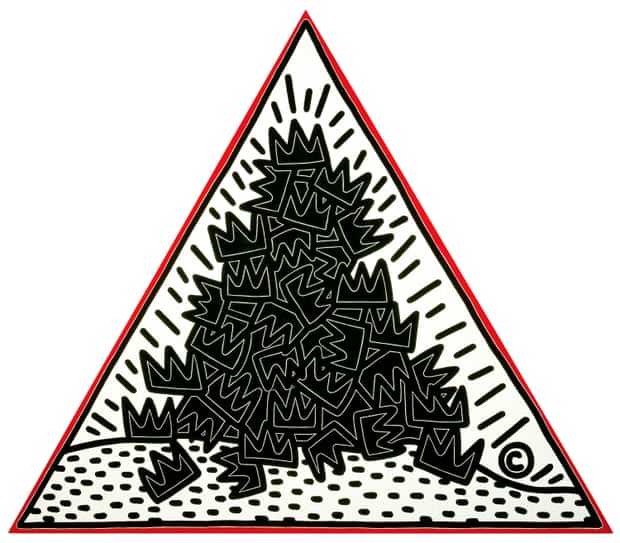
On Haring, Basquiat and the art that defined 80s New York


Some good links on the art of the 1980s, of which Basquiat and Haring played a big part, here and here.

Most of the time the links I post are mostly because I want other people to know about them. Links that talk about my youth are mainly for me. 🙂 But fans of either painter or art of that time should click through.

Painting above by Haring in tribute to Basquiat. May they both RIP.

Inequality is a fundamental problem over many centuries


At least, according to this:  700 years of Western inequality, in one chart – Vox

The chart shows the percentage of wealth owned by the top 10% since 1300. There are only two times it takes a major drop: during the Black Death in the 14th century and during World War II in the 20th century.

If true, it means that wealth concentration will continue unless another major catastrophe occurs (pandemic? global warming?).

There is lots to debate in all this. The numbers themselves are debatable (i.e. just how accurate and representative are they?)  As well, there is an argument to be made that it doesn’t matter how inequally distributed wealth is  if generally life for the 90% is good. But the Vox piece argues that such inequality leads to political instability and other problem, and that a good life for the majority isn’t enough.

Read the piece and consider it for yourself.


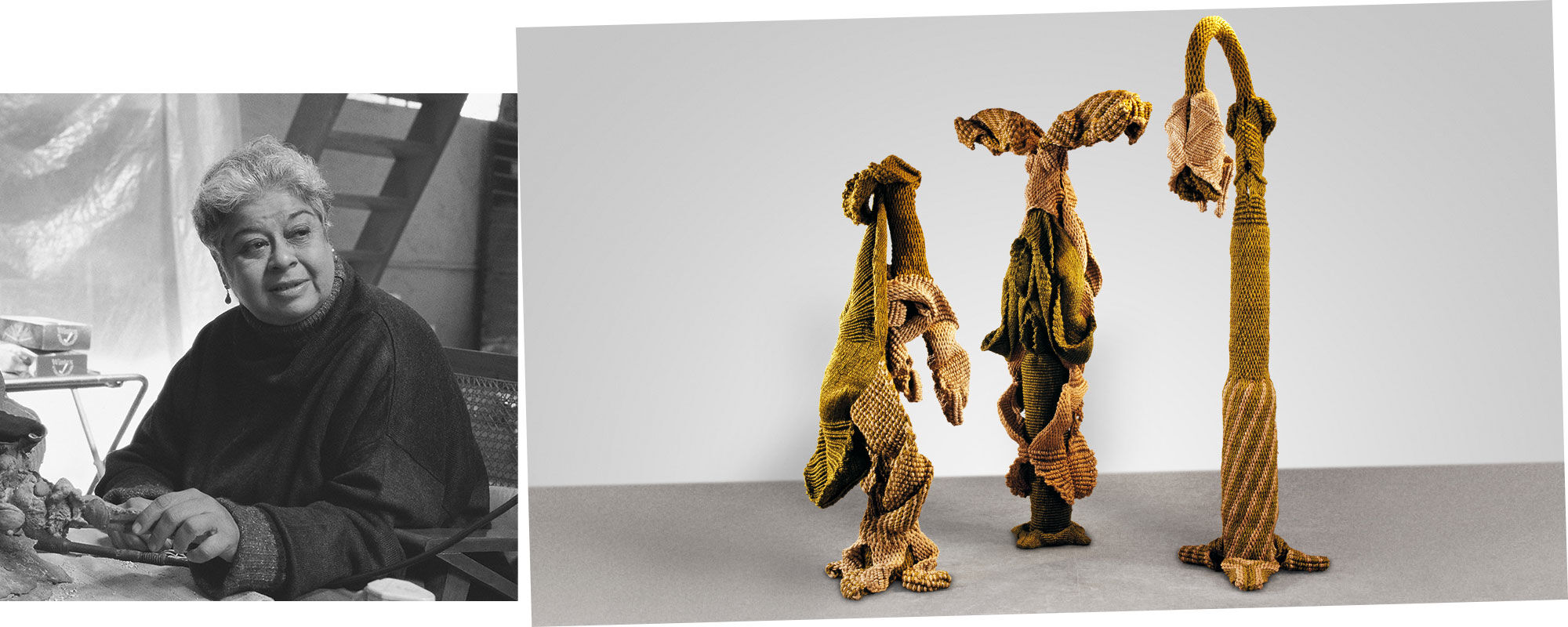
The Most Influential Artists of 2019 according to Artsy

It seems every year the website Artsy puts together a list of artists who were recently influential. The lists are always interesting, mixing artists you likely heard of (e.g., Jeff Koons) and others you may hear more of.  It’s a great way to find out what artists are making a difference right now.

I had not heard of Mrinalini Mukherjee before. (Not that I even pretend to know everything about the current art world.) But I am glad to have discovered her for myself. Go here and learn more for yourself: The Most Influential Artists of 2019 – Artsy

(Image about is of Mukherjee and a featured work of hers.)

Discrimination in design can come in two forms


Discrimination in design comes in two forms. One is through direct action. When you see benches designed to prevent homeless people from sleeping on them, that’s one example. Many more examples can be found in this ProPublica piece: Discrimination by Design — ProPublica.

Ignorance is the second way discrimination can occur in design. Just this week Twitter rolled out an audio feature that is inaccessible for deaf people. No one at twitter set out to discriminate against deaf people. The designers at Twitter just didn’t take them into account. (Apparently Twitter doesn’t have an accessibility review team for their software updates, which is bad for a technology company as large as they are.)

Keep in mind both forms when you see something that seems designed to discriminate against certain people. It may be intentional, or it may be an omission. Either way, steps should be taken to eliminate that discrimination.

(More on twitter’s audio tweets, here.)

Which technology has lasted since 1995, 25 years ago


This is interesting. In reflecting upon Java’s 25th birthday, this article looks at what else has lasted since that then: Java’s 25th birthday prompts a look at which tech products have survived since 1995 – TechRepublic.

You might think that very little has lasted that long. And it’s true, many technologies have died. (Altavista for one.) But many technologies continue to succeed and grow. Amazon, for starters.  Java itself still is found in computers all over the world. Check out the piece and see what lives and what died since the mid 90s, when the World Wide Web came into its own.

Tools to help you deal with anxiety, during a pandemic, or otherwise

I think this is a terrible headline, which is too bad, because there is much to take away from this piece:  How to stay sane when the world’s going mad | MIT Technology Review

There are tools and advice in there, including this:

  • Notice when you are worrying, and be kind and compassionate to yourself. This is a difficult time; it makes sense that you might be more anxious.
  • Focus on what’s in your control. Work out what is a hypothetical worry (you cannot do anything about it) and what is a real problem (needs a solution now).
  • Refocus on the present moment. Focus on your breath, or on using your five senses.
  • Engage in activities that you find meaningful and enjoyable. That could include music, walking, reading, baths, household tasks, or calls with friends and family.
  • Notice and limit your worry triggers. If the news is making you anxious, limit your consumption.
  • Practice gratitude. List the things you were grateful for that day: for example, “The sun was shining.”
  • Keep a routine, and stay mentally and physically active.


Fifty ideas and concepts to ponder


I am not sure if these will change your life, but this piece is full of interesting ideas and concepts to consider: 50 Ideas That Changed My Life — David Perell

I like the circle of competence one. It’s worthwhile to consider and remember when you hear someone smart in one area making claims in other areas. Chances are they are not any more competent in all areas than anyone else, and you should take their claims with a grain of salt.