…via the good people at Leffot.
Check out their shoes: they are amazing.

…via the good people at Leffot.
Check out their shoes: they are amazing.

Is the one thing about the Obama legacy that can’t be repealed. Namely this:
There is no mystery about Barack Obama’s greatest presidential achievement: He stopped the Great Recession from becoming the second Great Depression.
Obama did many important things, Obamacare being the obvious. As someone who had seen many failed attempts at achieving this, to see him team with Pelosi and others to achieve this was astounding.
That said, there would have been nothing accomplished by Obama if the US spiralled into a second Great Depression, dragging down the world economy with it. I continue to see criticism of the actions taken by his team then, especially among progressives. They argue that more should have been done. You can google “Obama terrible” and find pieces like this.
Time will tell, but so far Obama is holding up as anything but terrible. I predict he will rise in Presidential standing in the future. Meanwhile, the world is in much better shape due to the actions he took in the early stages of his presidency to avert worldwide economic disaster.
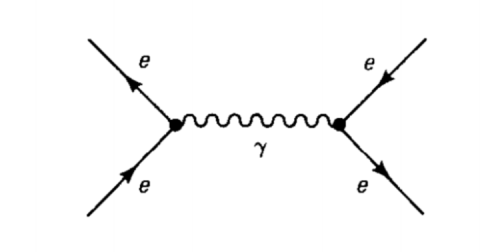
Susan is famous now (for good reason!), but before she was famous, she wrote this excellent blog post: If Susan Can Learn Physics, So Can You — Susan Fowler.
I came across it because I was trying to learn physics again. (I started off taking physics ages ago but dropped it because, well, long story, but I ended up in Computer Science and Mathematics and went on to have a career at IBM so it worked out.) I followed a lot of Susan’s advice, and while I am not good at physics yet, I highly recommend this to anyone serious about it. (Just stay away from programs that want to weed out most of the class because they want small class sizes.)
(Image via Susan’s blog)
This recent piece in the Washington Post is a reminder what a good man and what an under appreciated President that Jimmy Carter was: The un-celebrity president: Jimmy Carter shuns riches, lives modestly in his Georgia hometown – The Washington Post.
He was dealt a bad hand a number of times, but he achieved greatness too. His greatest deed may have been to allow the United States to transition from the debacle that was the Nixon Presidency. Like Obama with the Great Recession, he saved the country from those that would harm it.

In this day of increasing good cameras, of course you do. So grab a photo you want to convert and go here. Satisfaction guaranteed, and very fast turnaround. 🙂
If you’ve ever thought about self publishing but didn’t know where to start, this can help.
According to this, the interest in this style of furniture may be slowly fading:
Is Interest in Midcentury Modern Design Declining?
I’m not surprised. Revivals all have their rise and falls, and this style of furniture is overdue. Likely it won’t totally fade, since so many pieces of that era really blend in well with other styles of furnishing. It’s just likely you won’t see whole rooms dedicated to the style.
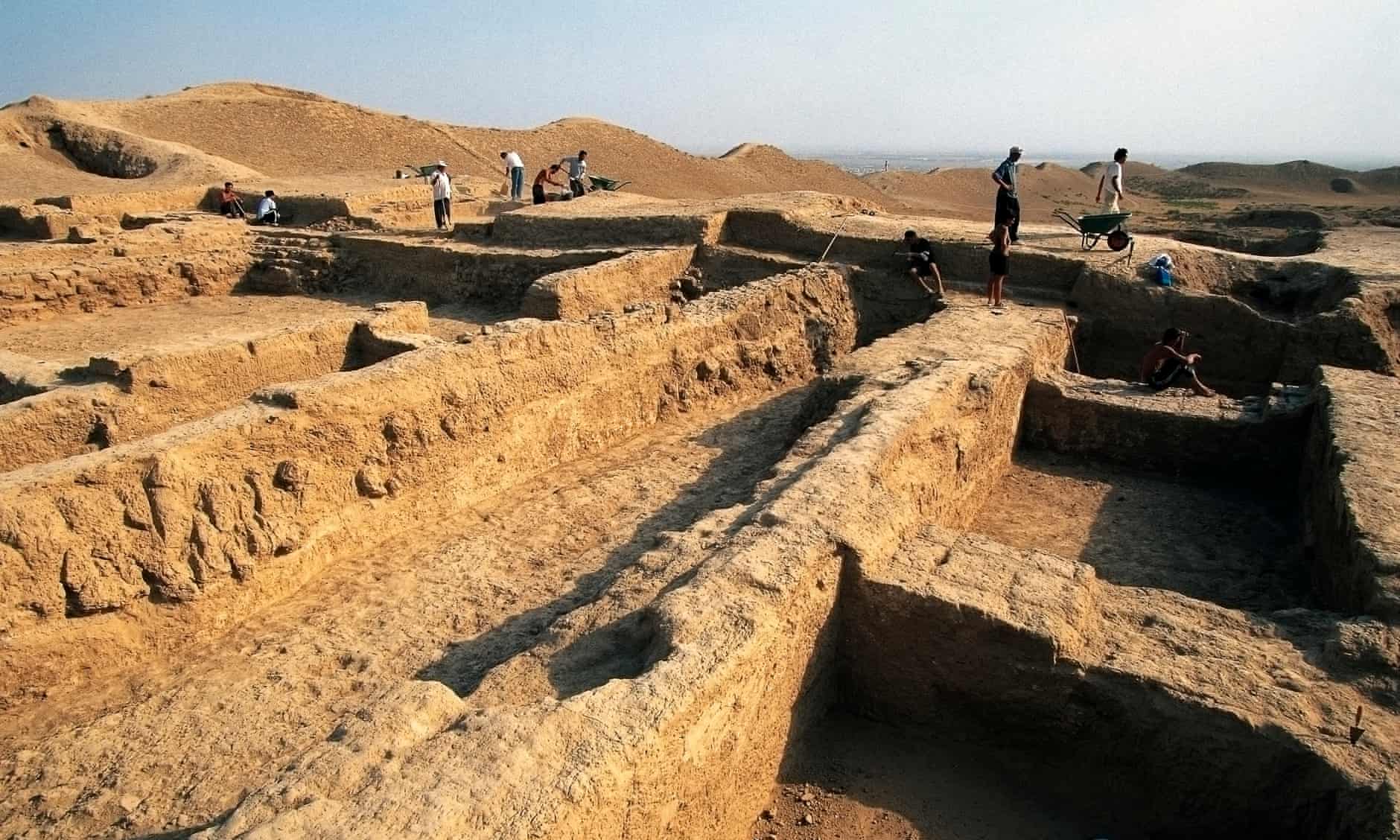
If not, then you might want to read of the city that was wiped out by Genghis Khan with the result of 700,000 deaths. That’s a gruesome statistic, but this is a fascinating story: Lost cities #5: how the magnificent city of Merv was razed – and never recovered | Cities | The Guardian.
It’s part of a series on Lost Cities, which includes Troy and Pompeii and much more.

I was thinking about how topics of interest change when I came across this link I had saved since 2016: Should we have intervened in Syria? I don’t know – and neither do most armchair generals.
Back when Obama was president, whether or not the US should intervene in Syria was a hot topic. Articles like this struggled with whether or not something should be done about it. It was hard not to think about, both because it was terrible and because there was alot of media devoted to it.
Then Trump became President. Suddenly everything shifted. Terrible things went on in Syria, but it was no longer a topic of interest in much of North America. I confess I barely know what is going on there now.
It’s a good reminder to me how much of what I think about is driven by who ever can get information in front of you. And it’s also a reminder of why disinformation campaigns will get stronger and stronger.
I don’t know what the answer is. I just know I have to constantly remind myself that just because it appears something is important or unimportant, my ability to assess that is shaped very much by others. There may be topics I spend a lot of time thinking about and researching. But most of the time, and for most people, that is not possible.

And as someone who is a fan of it since a long time, I was glad to hear about it here: There’s a New iPod Touch. Yes, in 2019, and Yes, It’s Worth Looking at. – The New York Times
Back in the day when Blackberries were the rage and I needed one for work, the iPod Touch was my way of tapping into the world of Apple. Today if I had to use Android for whatever reason, I’d be inclined to get a Touch again, just so I could do things the Apple way. It’s a great device still, and if you read the article, you’ll see it is not obsolete.
Now if Apple would only bring back the Nano! 🙂

Can be found here: Modern Brazilian Apartment for a Young Couple – Design Milk.
From black walls to black accents, this apartment has black everywhere, and it does so in a way that makes a strong visual contrast while still keeping the apartment bring.
Smart.

These works, one of which is shown above, are fantastic: Scribbled Portraits of Brooding Figures by Adam Riches | Colossal.
Go to Colossal for more.

I have thought about this piece on capital often since I read it: Continuations by Albert Wenger : Capital Is No Longer Scarce.
I realize it is relative and that there are people and organizations that have difficulty accessing capital. But I believe overall there is an abundance of capital. I believe that is why you see a lot of the behaviours you see in the world, from negative interest rates to bogus unicorns like We and Uber and Lyft to high housing valuations to no inflation.

And this piece tries to show how this happens: The Social-Network Illusion That Tricks Your Mind – MIT Technology Review

Here, in this blog post: 28th May 2019 — Daniel Benneworth-Gray.
It was charming to read about blogs in 2006. They were such a force for a time.
P.S. I think it’s a shame blogs have such a unique and unattractive name. Online journal is a better name than blog, but blog we are stuck with.

Including some good advice from Kurt Vonnegut:

For fans (or critics) of productivity books, here’s a review of “Smarter Faster Better: The Secrets of Being Productive in Life and Business” in The New Yorker.
It’s a good review of such a book. Better than the usual synopsis. Also good to think about on a Monday as you roll into work and figure out how you are going to tackle – or avoid – the week and what it entails.

Pretty well, according to this: Did Trudeau keep his 2015 election promises? Mostly, a new analysis finds | National Post.
How did the National Post determine this?
The Trudeau government’s result is based on a platform-monitoring tool called the “Polimetre,” which is managed by Universite Laval’s Centre for Public Policy Analysis.
The same group also assessed the previous government lead by Harper and found he mostly kept his too.
I think this is encouraging. Regardless of what you think of any government, it’s important that what they promise aligns to a strong degree as to what they do. This builds trust in government and the process of how governments are elected.

I love this piece on a rather odd thing: The Spite House, an Architectural Phenomenon Built on Rage and Revenge.
Spite houses can be houses or buildings or any structure built not so much to be lived it as they are the express a very negative emotion. Once you know about them, you will be surprised you know more of them than you thought.
I don’t think I’ve ever been that spiteful that I would go through the trouble of spending all the time and money to get back at someone. But that’s not true of everyone, if you read that article.

Is outlined here: Taxing the Wealthy Sounds Easy. It’s Not. – The New York Times.
It’s worth a read. It’s thoughtful, even if you may not agree with it. Also, just because something is not easy does not mean do not attempt it.
Taxing drives behaviour. My thought is drive behaviour in the right direction. Tell affluent people to use their wealth in directed ways that improve our society or tax them so that it can be done. If they disagree, then it is time to make explicit the social contracts in place and ask what has to be changed to make for a better society. Because for most societies in the world, including Canada’s, the social contract can be a lot better.
Is this home featured here: This Cozy Minnesota Home Will Make You Want a Candelabra | A Cup of Jo
You really out to go to the site and check it out. Meanwhile, here’s a peek to show you what I mean:

Some thoughts on this:
I highly recommend you go to Cup of Jo linked to above and see the rest of it. It’s inspiring for maximalists like myself. 🙂

Some fantastic fun links:

GQ has the five good ideas here: 5 Tricks That’ll Make Cheap Suits Look More Expensive. I said “Zara” but you could do the same with lower end suits as well.
I’d add:
For details on this suit, go here.

Here are two ways to do TIFF:
Now Annie’s way is going to cost more, but if you want to have an enjoyable experience and get the most out of a great festival, then read up on how she and her husband do it.

This is a love story in a way, although it’s a love affair with a device: Tim Cook Will Have To Pry My iPhone SE From My Cold, Tiny Hands.
It brings up an interesting thought: that for all the seeming abundance of smart phones, they really have narrowed into a specific style and range. They are all large, glass devices with fancy cameras. That’s what sells, and manufactures have no desire to make anything else. Or maybe they are fearful of trying to make something else.
Some event will occur and innovation and diversity will come to the personal device market. But for now, expect more of less.
(Image linked to in the article)

It’s the 25th anniversary of “Friends”, and a number of reviews I read talk about it looking backwards.This piece, though, does something better: it looks at where the series came up from. Key quote to me was this:
Chandler, who is so indifferent about what he does that he is unable to pay his job even the small courtesy of hating it—Chandler, besuited and bedraggled, whose work in computer-something-or-other summons the amorphous anxieties of the coming digital age. … It is through Chandler, in the end, that Reality Bites finds its way into Friends’ otherwise chipper cosmology. His work is simply there, looming, draining, tautological. His laconic resentments of it invoke the precise strain of Gen Xed ennui the novelist Douglas Coupland had described earlier in the decade: the mistrust of institutions, the mistrust of professions, the mistrust of meaning itself.
You can see in the quote the tie to Douglas Coupland’s book Generation X and the film Reality Bites. These are the roots of “Friends”. ‘Friends’ at 25: The Prescience of Chandler Bing’s Job – The Atlantic. That generation after the boomers needed a show, and many of them found it in “Friends”. Now people look back at it and many mock a show about six well dressed people living in an amazing apartment in NYC. But “Friends” then tried to make sense of becoming an adult, or “adulting”, to use a word that came along later. The fact that people have such fondness for it makes me think it resonated with them and it represents part of their lives.
I always liked “Friends”, but for a different reason. I am a fan of screwball comedy, and that series often went there. Seinfeld did absurdist comedy well, but I loved that this series did a comedic style I loved so much. Watch some episodes of “Friends” and then watch a classic screwball comedy like “Bringing Up Baby” or “His Girl Friday” and you will see the similarities.
All comedy series go pear shaped after a time, and the things that made it originally great fades. For a time “Friends” was one of the best comedies on TV, and it was great then because of the form of comedy it aspired to and because of the way it represented the time it was rooted in.
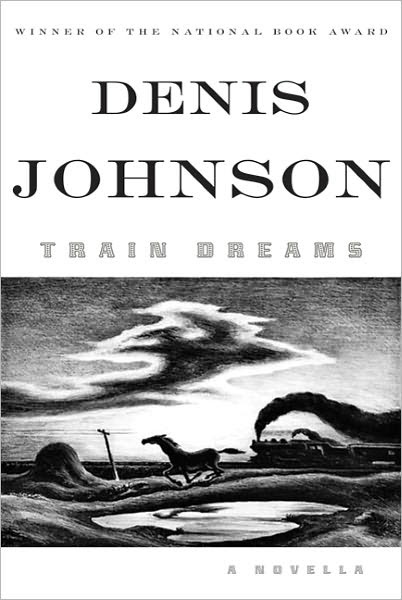
As they say, here is: A Very Short List of Very Short Novels with Very Short Commentary.
Some of these you may have read, but chances are there are a few you haven’t. I recommend short novels to people who want to read more and are stuck with not having read anything recently. Better still, read good short novels. Every book on that short list is a good book.
Enjoy

I highly highly recommend this: NYT Programs – Secure Your Digital Life in 7 (Easy) Days
You can never do enough to security your information technology, but the more you do, the better off you are.

It’s Saturday. You are thinking: I should start reading more books. But I suck at it. Well then, read this: How to Read More Books, According to an Editor Who Finishes 60+ a Year
I can’t promise it will get you to 60 books, but it will help.
Things I’d add:

First off, what is it?
The Embroidered Computer is an exploration into using historic gold embroidery materials and knowledge to craft a programmable 8 bit computer.
Brilliant. For more on the design and more photos, see here: The Embroidered Computer | Irene PoschIrene Posch

I am not sure of the viability of this vehicle, licence or no: You don’t need a licence to drive the Citroën Ami One in Yanko Design,
I do think it is interesting though. And Yanko Design has great photos and a write up on it. Worth reviewing and considering it. We need alternatives to the automobiles we have now. Perhaps this is it.

In a big city it can be hard to do DIY projects, especially if you live in a small place. Fortunately, in a big city there are often places to go and satisfy your DIY itch.
Here’s a list of some of The Best Do-It-Yourself Spaces in Toronto. Via BlogTO.

No real reason to post this other than I thought it was a nicely designed motorcycle. And if you are interested in a good way to get around a city, you might want to check it out, here: 2019 Honda Super Cub C125 Motorcycle | Uncrate

Easy. Don’t make these mistakes: These Seven To-Do List Mistakes Could Be Derailing Your Productivity
What should you do?
1. Write your lists the day before
2. Don’t have too many items
3. Have items you can truly do that day
4. Prioritize items
5. Be specific
6. Create a fresh list each day
7. Link it to your calendar
If you need guidance, see the article.
It’s a skill writing a good todo list. Having better ones means you have a better or at least a more productive day.

According to this iPad vs. Mac: Is a tablet better than a laptop for school and work? in The Washington Post, not yet.
I agree with that assessment. I think there will be a time soon when you can, but not this year. Read the piece before you try to go solo with a tablet.
This is a good piece: How bad is Bercow? – UnHerd.
Bercow is a controversial figure, and as you can guess, many think he is a bad thing. But the UnHerd piece looks back over numerous Speakers of the House of Commons and gives a kinder assessment. Given that we are going to be reading alot about the House due to Brexit, it might be a good time to become better aware of the man and the role.

Here are two pieces on the association of Fred Perry and political fashion.. This one, Why does the far right love Fred Perry? Mainstream fashion is its new camouflage | by Cynthia Miller-Idriss in The Guardian and this one, Fred Perry, Proud Boys, and the Semiotics of Fashion.
The first one superficially touches on how the political right adopts certain clothing to wear as a uniform. The second goes deep into the history of clothing to signify membership within social groups.
If you read the first one, you’d get the impression that some good PR could shift the negative associations of the far right with Fred Perry. After reading the second one, you may realize it would be much harder to do than that. The associations go deep.
Sadly, many of the pieces I read in the Guardian are like that. They are a good jumping off point, but if you want to better understand a subject, you need to go elsewhere.

Torontoians will find this interesting: Toronto’s astonishing growth: Will it matter to Buffalo? – The Buffalo News.
This was a key passage:
For Buffalo, the question now is whether Toronto’s “reimagining” might seep south of the border, as well. Smaller cities in Ontario’s Golden Horseshoe are booming, too, thanks in part to Toronto’s spillover. And Toronto and Buffalo, incorporated two years and 100 miles apart, kept pace with each other until the 1950s, said the University of Toronto’s Bourne, who used to assign a project comparing the cities’ trajectories to his undergraduate students.
That history is interesting, Bourne said, because while Buffalo and Toronto share important characteristics, they suffered opposite fates: Buffalo shrinking with the sunset of the Erie Canal and Rust Belt manufacturing, and Toronto swelling when the Quebec separatist movement made it the favored home for Canada’s banks.
As late as the 1970s, Torontonians considered Buffalo a nightlife destination. Many of their restaurants still closed on Sundays and maintained separate male and female entrances.
Torontonians “would come to shop, they would come for jazz – Buffalo was the hive,” said UB’s Foster, who lived in Toronto for more than three decades. “But then people started going the other way, and that hasn’t changed.”
Years ago going to Buffalo for shopping was still a thing in Toronto: not sure it is now. Perhaps some people still go to watch the Buffalo Sabers play hockey. Perhaps the linkages between the two cities will become stronger over time and there will be a good proportion of Torontoians making Buffalo a destination again.
For Torontoians considering going to Buffalo, I recommend this piece in the New York Times.
(Image linked to the New York Times piece)
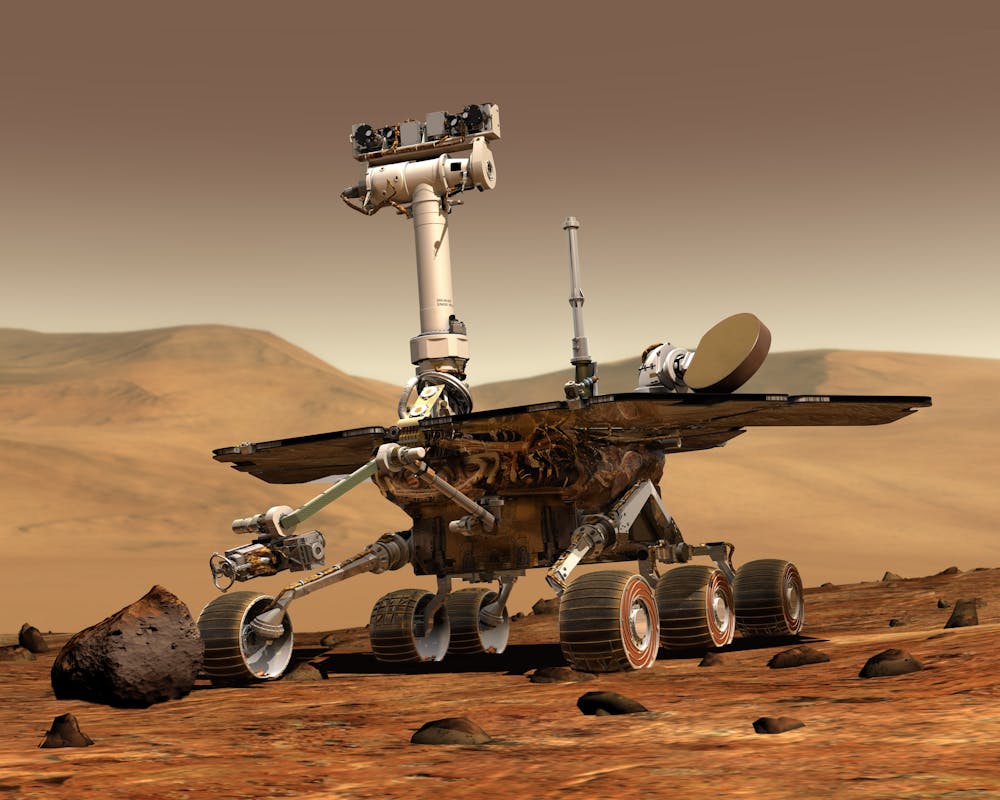
The problems with colonizing other worlds can be read here: Humans Will Never Colonize Mars.
It’s a bucket of ice water to dump on the head of anyone who optimistically thinks it will happen. It may happen, centuries from now. More likely places like Mars will be colonized by robots that will do a lot of the activities we once expected humans to do.
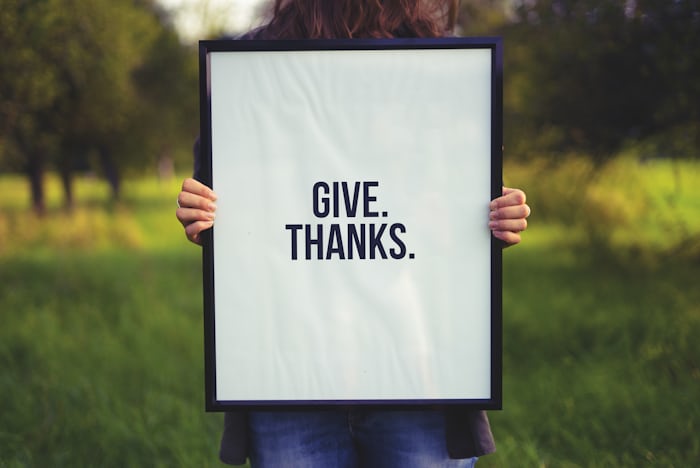
I have read in many places that it is good to be grateful. To be thankful. Here is one such article: What Does It Mean to Be Grateful? – Mindful. If that works for you, then I recommend it.
I find a simpler and just as effective approach is to acknowledge when something is good. Wake up feeling rested? Say “This is good”. Enjoy your cup of coffee or tea or even just being up? Acknowledge that “This is nice”. As you go through your day, make an effort to consciously acknowledge all the good things big and small in your life. You’ll find many. And if you can’t, that’s ok too. Work to appreciate the good things in the bad. Rainy, overcast day? Good for flowers. Monday? A new week to do something good. Etc. If you struggle to think of any, talk to a friend or some other council.
You have lots of good things in your life. As you appreciate them, you will better appreciate your life in general. And that too is good.

 Smart People I Know