A dozen or so good pieces on good artists, from Michelangelo to Tracey Emin

width

(Top image: Richter. Bottom image: Day)

Starck + Perrier: two good things that go together well

Glad to see that Perrier has come out with a new and cool bottle done by my favorite designer, Philippe Starck. Vive la France!

Sadly this will not be in Canada. I need to find a way to get a bottle. Perrier, if you are listening… (Just kidding, this is 2023. Now if it was 2009…. :))

You can read more about it here at UnCrate and the Perrier site.


Family meals are a good thing, but they are not the only good thing

From time to time articles will appear promoting the importance of families eating together. If you search on “how important is the family dinner table”, the first piece that you might see is an article from Stanford Medicine on Why the Family Meal Is Important.
I don’t deny that there is value in good family meals. But I was also heartend by this article, Bad Cook, Great Mom from Cup of Jo, where she writes:

 Before having kids, I envisioned sitting down for dinner, Norman Rockwell style, and sharing our hopes and dreams while breaking bread. But honestly? We didn’t have regular sit-down family dinners until Toby was around 10, and we still eat at the table together only a few times a week. And yet. I’m a terrible cook, but I crush it at being a mom.

When I think about my children leaving the nest and looking back on their childhoods, I know they won’t picture epic homemade meals because I did not serve many. We eat simply, and pizza is regularly ordered. But there are SO MANY BEAUTIFUL THINGS they will remember….

I think this is right. I also think this comment someone posted in response is also right (I added the bold):

Well I will say this: I am a good cook. I’m French and my English husband delights in my cooking. But last year, our 6yo French-British daughter gave me her Mother’s Day card, on which she had written “I love my mummy because… she’s a great soup maker”
To this day I am still laughing every time I see the card. Soup is what I make with all the tired veg from the bottom of the fridge when I am totally uninspired. And yet, I got the highest praise for it.
You never know what your children will remember fondly, really…

You never can know what your kids will remember fondly. The things important to you may not be important to them. And the things that other people think are important in their family (family meals) may be less so in your family. All you can do is try your best with the skills you have. There are many ways to be a good parent. Never forget that.

P.S. I’ve recently started having Sunday suppers with my adult kids and I really enjoy it. But I also have more time these days to do that. When they were smaller they weren’t into eating at the table and I was just happy when they were eating good food, regardless of where they ate it.

On bullshit jobs and how to overcome them

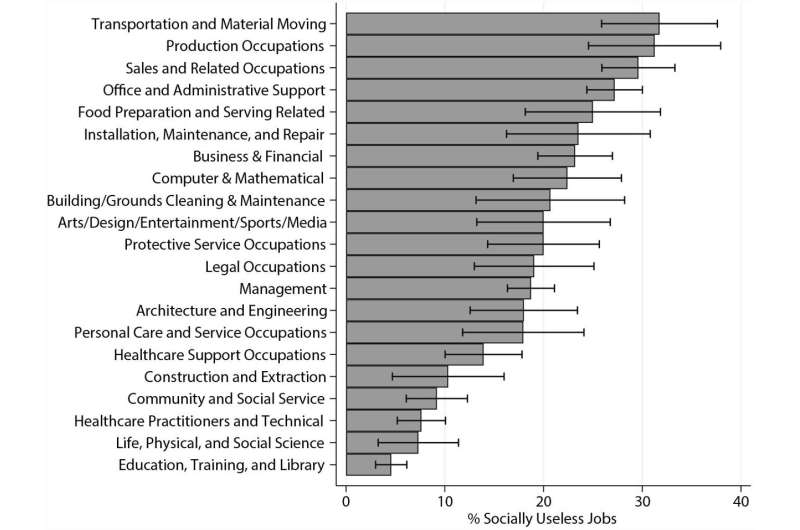
Do you feel like your job is socially useless? If so, you may have a bullshit job. As this piece shows, many people feel they work in pointless, meaningless jobs.  Just look at the graph above, taken from the article. People in all sorts of occupations feel like their job is a waste of time. People in office jobs especially so.

What I would like to focus on is the jobs at the bottom of that chart. Many of those jobs center around helping others, be it trainers, librarians, healthcare practitioners, and social service workers. There are also jobs where people make things, be it in construction or engineering and architecture. When you are making something like a building or a road, you know you are doing something useful. Likewise, you know what you are doing is useful if you are helping to educate someone or helping them get healthier. I suspect that is why people in those professions they don’t find their jobs useless.

If you have a job that you feel is useless, see if there are aspects of it that are helpful to someone. Or try and find activities where you make something that others can take and do something with. Or do both. It might feel like you currently don’t do any such things, but if you track what you do in a week or a month, you may find you were doing those things and you just weren’t aware of it.

You can also try and insert more of those activities into your job. Share the things you know with your coworkers. Mentor new people on the job. Create material that others can use to make their own job easier, even if it’s simply a spreadsheet or a Powerpoint template. Look for ways to be useful to others on your job. You may find yourself enjoying your job more in the process of being useful.

Good luck!


On there being two types of freedom

There are two ways to be free:

  1. to be in a higher state of being
  2. to be in a different state of being

The first way of being free requires a continual effort to remain that way. If you do not expend this effort, you will slip back down and no longer be free.

When political people say “eternal vigilance is the price of liberty”, they are talking about this type of freedom. It’s also true for people that get into shape, or quit a bad habit, or make improvements in other aspects of their life. Indeed, any type of freedom that has to battle decay and entropy is a type of freedom that needs continual effort.

The second way of being free does not require continual effort. When you graduate from school, quit a job, end a relationship, or move away from someplace, you become free of those things. You have transitioned to a different state of being.

You might argue that some people have to work hard to not go back to that old job, that old relationship, or that old home town. I’d counter that even if one does, they are a different person than when they left and what they return to has changed too Additionally I think most people do not go back. People move on. They move away.

It is easy to get discouraged if you think all forms of freedom require continual effort. Many do, but many do not. Sometimes you just need to push to get to the other side to be free, and once you do, you are free once and for all.

P.S. For more on this, see: It takes a daily effort to be free by Austin Kleon. His piece got me thinking along these lines.

P.S.S. If you think of life as being cyclical, you are likely to see freedom as being something you constantly have to work with. If you see life as linear, you are likely to see it as something you can achieve once and be done.

If you can’t write to your USB drive on your Mac and you want to fix that, read this

If you are reading this, chances are you cannot write to your USB drive on your Mac.

To force a USB drive to be both read and writable, I did the following (note, I had a Kingston drive, so my Mac identified it as KINGSTON and I went with that. If you buy a USB drive that is not from Kingston, you may see something different):

  1. In Finder, go under Applications > Utilities and start Disk Utility
  2. Click on your USB disk on the left (E.g. KINGSTON) and then click on Erase (top right)
  3. You can change the name if you want (I left it at KINGSTON) and make Format: ExFAT
  4. Once you do that, click the Erase button to format the disk
  5. Click on Unmount (top right) to unmount the disk
  6. Open a terminal window (Open Finder. Go to Applications > Utilities > Terminal) Enter the following diskutil list command in the Terminal window and note the results:
    diskutil list
    /dev/disk2 (external, physical):
    #: TYPE NAME SIZE IDENTIFIER
    0: FDisk_partition_scheme *62.0 GB disk2
    1: Windows_NTFS KINGSTON 62.0 GB disk2s1

    Note it my case the KINGSTON drive is associated with disk2s1. (you see that on the line “1: Windows_NTFS KINGSTON 62.0 GB disk2s1”. It may be different for you. Regardless, you want the drive name that comes after the 62.0 GB.)
  7. While in the terminal window, make a corresponding directory in the /Volumes area of your machine that has the name of your drive (in my case, KINGSTON)
    sudo mkdir /Volumes/KINGSTON
  8. Also in the terminal window, you can  mount your disk as writable and attach it to the mount point sudo mount -w -t ExFAT /dev/disk2s1 /Volumes/KINGSTON

You should now be able to write to your drive as well as read it.

It’s crabwalk time! Here’s some thoughts on how things are going sideways in many ways as well as the usual ramblings (i.e. the October 2023 edition of my not-a-newsletter newsletter)

Happy. Hallow’een! It seems many things have gone sideways this month, almost like a crab walk. Many things, but not all. Let’s take a look.

In Ukraine, people are worried that their counteroffensive against the Russians is struggling to go forward and is only going to be more so as the winter season arrives. Not that it’s looking good from the Russian side. No doubt Putin would like to see the US drop the amount of aid they give to Ukrainians, as some on the America. right are threatening. Whether or not that happens, we shall see, now that Congress has finally elected a speaker.

Another thing going sideways is COVID/the pandemic. It was surging in Ontario and other places, but I checked the New York Times and they record hospitalizations going down this week. All I know is the new XBB vaccine booster is out, so you should go get that, people. Get a flu shot, too.


 Remember inflation? It too continues to crab walk (see chart above). Same with Donald Trump. He continues to meander through various courtroom preceding in the US. He is currently participating in his civil trial in New York and is expected to testify. He also has a three other trials underway: the Washington Post has more on all that here.

In North America it’s been a summer of strikes starting and ending and that does not look like it is going to change this autumn. While the Writers strike in Hollywood has been settled, the Actors strike is still on going. The UAW in the US is expanding the autoworkers strike in the US, while the autoworkers in Canada settled their strike. In Ontario the workers at TVO continue to walk the picket line with no hope for a resolution.

Not everything is going sidewise. In the Middle East, Hamas forces from the Gaza Strip attacked neighboring Israeli towns, killing over a 1000 soldiers and civilians, and then withdrawing with over 200 hostages. In response the Israeli army has repeatedly bombed Gaza, killing 1000s more Palestinians. And that is just the beginning. Likely by the next newsletter Israel will move ground forces into the Strip, resulting in even more loss of life for their soldiers, Hamas fighters, and Palestinians stuck in the middle of the fighting.

As the world watches this unfold, people have been tying themselves in knots in trying to respond. And regardless of whether or not they have responded, they have been criticized. Former president Obama issued this statement on Israel and Gaza and the length of it highlights the difficulty on weighing in on the matter. Personally I don’t think commenting on social media is the way to go, and I wrote about that, here.

What happens next and how this plays out, no one can say. I suspect it will play out like one of the other Israeli wars of the last decade or so.

A year ago Elon Musk took over Twitter. It’s been a weird time for social media since then. It’s been zigzagging for the most part. Dan Sinker has a good run down of what it’s been like, here. I highly recommend that piece, as well as anything that Dan writes.

In terms of crypto and NFTs, they have more or less scuttled off to their demise. The only thing going on of note is the trial of SBF (Sam Bankman-Fried). It’s not looking good for him, as the Verge explains. We shall see. Anyone wanting to read more about the rise and fall of SBF and crypto should read Michael Lewis’s new Book, Going Infinite.

I wish climate change was only going sideways. Instead it continues to worsen. At the beginning of the month, New York was suddenly hit with crazy flooding that caught them unaware. At the end of the month Mexico was hit with a sudden CAT 5 hurricane. Bad weather from global warming is bad enough: surprising bad weather is even worse.

As always, thanks for reading this, whenever you are reading this. If you are reading this years from now, I hope things improved, and things went from going sideways to progressing.

500

What’s it like to be an instacart shopper

I’ve written a number of things on Instacart from the viewpoint of a user of the service. Now here is something on what it’s like to be an Instacart shopper. The piece is centered on a day in the life of Larry Askew, who works for Instacart early in the morning and Uber at night. Larry alone is worth reading about.

One thing that struck me was how some shoppers use bots to scoop up the best of what Instacart offers its shoppers. I imagine it’s not unlike people using bots to snag tickets for events.

Besides that, I learned a lot about the service I didn’t know before. It’s a good piece, and if you use Instacart, I highly recommend it.

P.S. Always treat your shopper well, and that includes tipping. Do not tipbait, especially. Thank you.


How to cast your Chrome tab to your TV in October 2023

IF you are a fan of using Chrome to cast one of your tabs to a TV, you may be surprised to find that the Cast option is missing. Worse, if you look in places like Chromecast Help on how to Cast a Chrome tab on your TV, you may not find that all that helpful.
Fear not. The Cast option is still there, just hidden. As before, go to the top right of your browser where the three dots are and click on them. Then click on Save and Share… and look for Cast…

Now you can Cast as you did before.

Toronto: city with a future (random updates on Hogtown, October 2023)

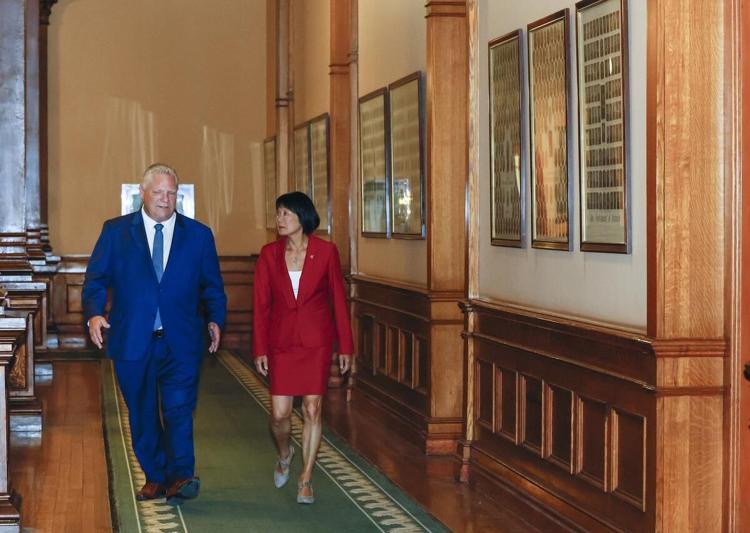
It’s been a season since I last wrote about Toronto. In that time our new mayor has been in office roughly 100 days. The Toronto Star has a rundown of what election pledges by Mayor Olivia Chow that she already has accomplished, as well as what she is working on. Not surprisingly some of them have been rather straightforward to achieve (e.g. keeping libraries open on Sunday), while some will be much harder to do (e.g., stopping the Gardner expressway rebuild). It’s a promising start, and she seems to have momentum. Of course much depends on the will of other councillors, not to mention people like Premier Ford. I’m hopeful for now.

One good thing she is working on is expanding the TTC by spending $10 million on staffing to curb transit crimes. Good. The best way to keep transit safer is having more people on it dedicated to the task. Let’s hope they do a good job. We need a safe and vibrant transit system.

In other transit news, one of the things that will be more difficult to fix is the Eglinton Crosstown LRT line. I’m not hopeful for that being done any time soon. It doesn’t help that the communications of the people building it has been poor. For example, one time their website quietly disappeared. Another time Metrolinx straight up refused to say when long-delayed LRT might finally open (see here). Terrible and unacceptable.

As for the mayor’s partner, Premier Ford, he has been up to his neck in hot water, mainly due to his involvement in Ontario’s Greenbelt. After Ford apologized for his ‘wrong’ Greenbelt decision, and  vowing to reverse it, he finally cancelled the Greenbelt land swap. While that was good, he is not out of hot water yet, as there is another scandal with his plans to have Ontario Place developed, a plan blogTO says no one wants (other than Ford and the developers). I am sure there will be more news developing on that scandal before the end of 2023.

From a real-estate viewpoint, Toronto’s downtown core has major troubles as office vacancy rates soar. I know some businesses are trying to get people to go back into the office, but many workers are resistant and I don’t think that is going to be enough to reverse those troubles. In other real-estate news, experts revise Toronto housing forecast due to a tanking market. Prices are still going up, but for how long?

Other workers have been striking in Toronto since the summer. The Metro grocery strike is finally over after a month-long walkout. More on that, here. Meanwhile the TVO strike continues to drag on with no end in sight. 2023 is a year of striking workers.

In other business news, the book chain Indigo is looking to offer alcohol to its customers. I dunno how successful that will be. The company has suffered big problems, including losing $50M last year. It doesn’t help their execs are heading for the exits. Let’s hope it can get corrected: I’d hate to lose that chain of stores.

Foodwise, the folks from Michelin have come to town and passed out more awards. Last year was the first time they did that and it got a lot of attention. This year…not so much. The Star had something on it, here. BlogTO put together a list of all the restaurants here for easy reference. If that’s your jam, this links to the Michelin site with more info.

Raccoons continue to own Toronto: we humans just live here. Recently they’ve taken over the roof of Union Station. They are a weird nuisance: not as scary as rats and not as hostile as Canada Geese. Just charming enough to offset anyone taking major steps to get rid of them.

I really enjoy Jamie Bradburn’s blog and the pieces he writes on old Toronto. Here’s something on subway interlining, or why does lower Bay Station exists. If you ever get a chance to go down to lower Bay, I highly recommend you do. Other than the benches, it does not seem too out of place from the rest of the subway. It’s fascinating to see.

As I was poking around Jamie’s site I came across this post on the Book City store on Bloor in the Annex closing. That was a sad event for me when that happened. I had gone there for years, ever since I moved into the area in the 80s. I loved that store. Loved checking out all the magazines, the books on the tables on the first floor, and taking the funky stairs up to the second floor to just hang around. It was a great place. There are still Book City stores in Toronto and they are fine, but I miss that one.

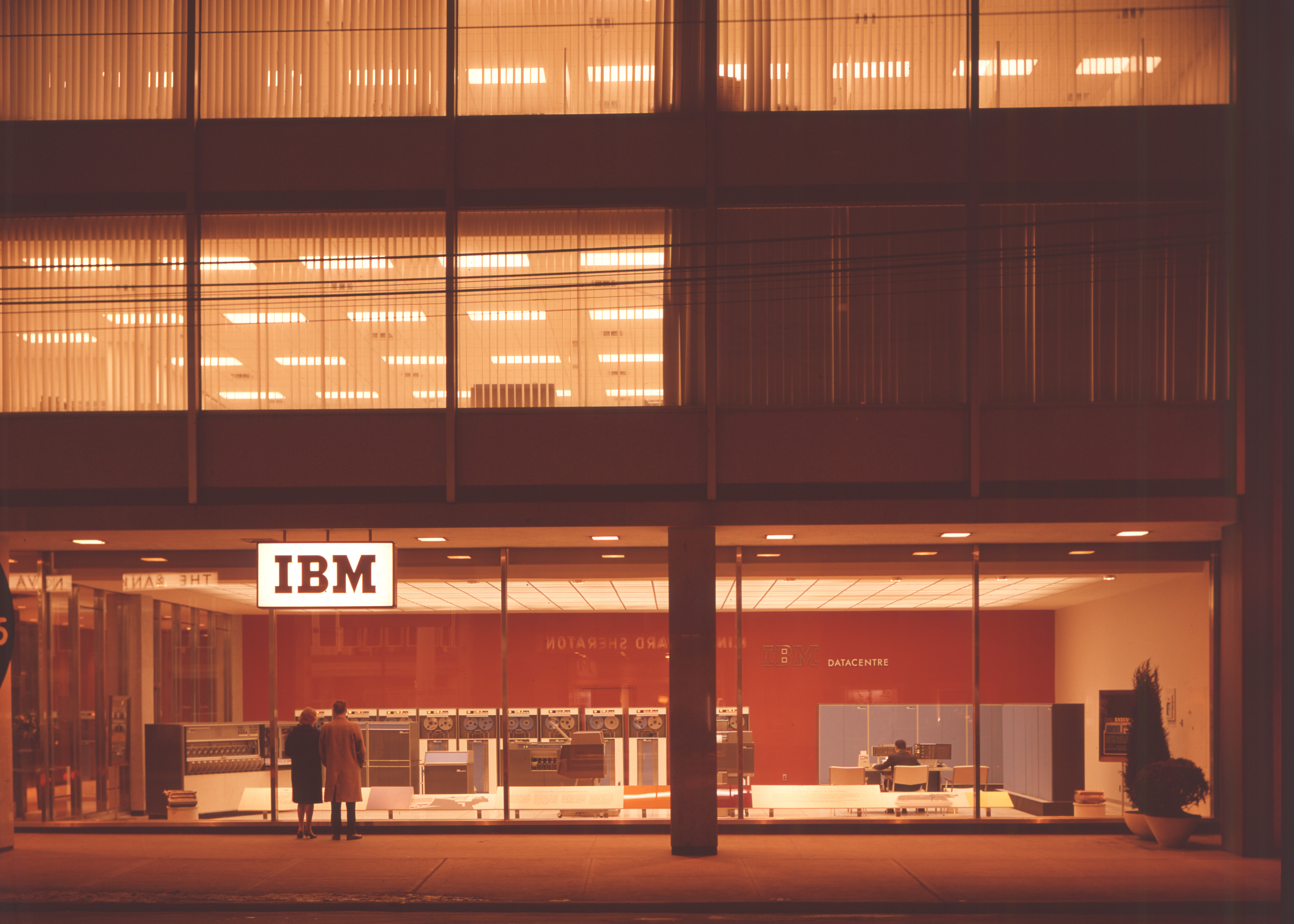
I also came across the image below on his site. It’s an IBM ad from back in the day when it’s headquarters were in the Don Mills and Eglinton area. Toronto was a city with a future back then…and it still is.

How to work with Java on your Mac, including having multiple versions of Java on your Mac

The easiest way to install Java on your Mac is by using homebrew. Honestly, if you don’t have homebrew on your Mac, I highly recommend you do that. Plus it’s easy to do. All you need is to enter the following:


$ /bin/bash -c “$(curl -fsSL https://raw.githubusercontent.com/Homebrew/install/HEAD/install.sh)”

Now that you have homebrew installed, you can install Java by entering:
$ brew install java

That should install the latest version of it. If you want to install an older version, you can do something like this:
$ brew install java11

If you’ve done this a few times, you may have a few different version of Java installed liked me, and if you enter the following command it may look something like this:

% ls /usr/local/opt | grep openjdk
openjdk
openjdk@11
openjdk@18
openjdk@19
openjdk@20
openjdk@21
%

As you can see, I have a few different versions installed. However, if I do this:

% java --version
openjdk 11.0.20.1 2023-08-24
OpenJDK Runtime Environment Homebrew (build 11.0.20.1+0)
OpenJDK 64-Bit Server VM Homebrew (build 11.0.20.1+0, mixed mode)
%

It shows the OS thinks I have JDK version 11 running.

Why is that? Well, it turns out if I enter this:

% ls /Library/Java/JavaVirtualMachines/
jdk1.8.0_261.jdk openjdk-11.jdk
%

I can see I have two JDKs installed there. MacOS will go with the latest JDK there when you ask what version is installed, in this case openjdk-11.

If I want the OS to use a different version like openjdk 21, I can enter this symbolic link (all one line):

sudo ln -sfn /usr/local/opt/openjdk@21/libexec/openjdk.jdk /Library/Java/JavaVirtualMachines/openjdk-21.jdk

Then when I check on things, I see the following:


% java --version
openjdk 21 2023-09-19
OpenJDK Runtime Environment Homebrew (build 21)
OpenJDK 64-Bit Server VM Homebrew (build 21, mixed mode, sharing)
% ls /Library/Java/JavaVirtualMachines/
jdk1.8.0_261.jdk openjdk-11.jdk openjdk-21.jdk
%

Now the system thinks openJDK 21 is running.

If I want to reverse this and go back to openjdk 11, I can use this unlink command and see this:

% sudo unlink /Library/Java/JavaVirtualMachines/openjdk-21.jdk
% java --version
openjdk 11.0.20.1 2023-08-24
OpenJDK Runtime Environment Homebrew (build 11.0.20.1+0)
OpenJDK 64-Bit Server VM Homebrew (build 11.0.20.1+0, mixed mode)
% ls /library/Java/JavaVirtualMachines
jdk1.8.0_261.jdk openjdk-11.jdk
berniemichalik@Bernies-MacBook-Air-4 ~ %

Normally I would recommend going with the latest and greatest version of Java on your Mac. However, you may have a situation where you have some Java code that only runs on older versions of Java. This is one way to deal with that.

For more on this, here are some good links I found:

If you are thinking of possibly running a 5K (or just using the Couch to 5K program)

If you are thinking of possibly running a 5K (or just using the Couch to 5K program), then these links can help:

  1. The fitness line Oiselle has a guide for you: First (or Fastest) 5k.
  2. Darebee has an 8 Week program to go from couch to 5K that’s helpful.
  3. This is a good reminder about how apps like couch to 5K and more can help: How Running Changed Me Mike Murphy
  4. Some things I wrote earlier: In praise of the 5K and other (non-marathon) races.

In praise of short books AND the comments section of the Guardian

Now this is a rare thing. I was reading this piece,  in praise of short books: to start and finish in one sitting is a rare unbridled joy, and it asked readers to list good short books. Instead of a typical dumpster fire, it was full of thoughtful and short comments on….good short books. Amazing.

So if you want some recommendations on good short books to read this weekend or next, head over to that link.

It’s Thursday: let’s go rucking. (Here’s some fitness links on exercise, dieting, gear and more for ya)

Exercise: You don’t have to use heavy weights to get stronger. The Washington Post explains. Speaking of weights, you can get a full body workout by filling a backpack full of weights. And the weight could be something as simple as groceries or even books. Get on the rucking bandwagon. Meanwhile, if blood pressure is your worry, skip the weights and consider doing wall squat workouts.

Dieting: Matt Yglesias recently lost 70 pounds with a combination of surgery and dietary restrictions. Here’s what he learned. Relatedly, here’s how former NFL Player Russell Okung lost over 100 pounds on a 40-day water-only fast. I can say I don’t recommend either of those things. Now maybe ozempic is what you are thinking about. Well so are major retailers, and they are worried about it. So much so that Walmart is monitoring the relationship between ozempic use and reduced shopping. I think a lawsuit is going to be coming there.

Gear: If you are using an Apple Watch to improve your fitness, you might find this piece on how to set apple watch move goal useful. I did. Also useful: some tips on what the value should be. If badges motivate you, here’s how to get all of the Apple watch activity challenge badges. You can use your watch for other health benefits, such as monitoring your sleep. Here’s a good article on why you want to get the benefits of rem sleep. Let your watch help you with that.

As for other gear, if you plan to workout this winter in the great outdoors, consider getting a pair of  new balance fresh foam x permafrost running shoes. I am sure they are great. For more advice on working out in bad weather, check out this. It has gear recommendations and more.

Finally, the Guardian has a piece on the new Taschen book focused on Arnold Schwarzenegger. Fascinating. And yeah, Arnold had a head start on most people in the bodybuilding game.

(Link to photo by Ariana Drehsler for The New York Times)

New York City is full of stories. Here’s 15 of them.

New York City is full of stories. Here’s 15 I’ve collected over the last few months that I thought were really good. I hope you like them too:

  1. Here’s a good story on the Louis Armstrong house museum in Queens. I love that museum. I love the fact that Armstrong lived in Queens, too.
  2. This is a sad story of an 82 year old man and a Stewart hotel long term resident who is facing eviction after living there for decades.
  3. Here’s a fascinating story of the brooklyn seltzer boys who still make seltzer the old fashion way.
  4. Here’s a story for book lovers:  five enchanting art bookstores in NYC they should visit.
  5. Here’s 10 Movies that tell the story of New York and capture its essence.
  6. Here’s a cool story on how Brooklyn Public Library is offering free eCards to teens nationwide who are dealing with book bans in local communities.
  7. This is a story to follow up on: How New York’s MTA is using AI scanning software to stop fare evasion.
  8. Another story to follow up on: how the Mayor plans to convert midtown Manhattan buildings into housing.
  9. No one can tell a story like Anthony Bourdain. Here he is in 2000 writing in the New Yorker and describing a day in the life of working in his kitchen at Les Halles in NYC. Bourdain is a romantic and it comes across in that piece.
  10. A practical story: how to  find a public restroom in New York.
  11. This is a fascinating story on how Korean fine dining has taken over the New York restaurant scene.
  12. Times Square is full of stories. This web cam proves it.
  13. Here’s how three vastly different subway signs can tell a story of three eras in NYC.
  14. This is a scary story of how New York is not ready for climate change flooding storms
  15. Finally, I love this story on the the improbable resurrection of an all night kebab place in the Lower East Side.

What actually is worth buying at Dollarama? Here’s my two cents.

That’s a good question. I thought about it when I came across this: what’s actually worth buying at Dollarama? Here’s my 2 cents (2 dollars?):

  • Much of the kitchen stuff is acceptable.
  • Cleaning supplies are fine.
  • Gift wrap and such are good.
  • Paper and school supplies are good to very good.
  • Frames are limited but not bad.
  • Candles and such are fine.
  • The tools are so-so. Like the kitchen stuff, it will do in a pinch.
  • Books are rarely good in my opinion.
  • Clothes are not so great.
  • The food is ok. Obviously not a great selection of nutritious food.
  • The computer accessories (e.g. cables) will do.
  • The lighting can be a disaster. I stopped buying it after two bulbs I put in my kid’s rooms blew up.

Other thoughts: some time the items in Dollarama aren’t cheaper, just smaller. That said, it can be cheaper than going to Canadian Tire or IKEA, but ymmv.

Dollaramas are everywhere, it seems. Make the most of them.

The problems of poverty are solvable and simple. But instead….

The problems of homelessness and poverty are solvable and simple. They take money, and they take concentrated effort. Doug Saunders explains how London solved its homeless problem doing just that. But eliminating homelessness isn’t enough. Once people are housed, then they need support to eliminate their poverty. Such support is worth it. Studies like this show that public guaranteed child support programs help reduce poverty worldwide. Or these studies like this one in Nature on the positive effects of cash transfers on adult and child mortality in low- and middle-income countries, Or this piece on how CERB training programs during the pandemic helped people find better jobs which also reduces poverty.

It all makes sense to me. That’s why I find it deplorable when I read that the American federal policy on homelessness is becoming a new target of the right. Or that the GOP is striving to cut SNAP benefits and are trying to make it more difficult for people to access social assistance.

After all, the United States is the wealthiest country in the world. If any place could eliminate the problems of poverty, they could. But rather than putting in the effort into helping the homeless, their cities are demolishing  homeless camps and forcing people out of hotels homeless people were using during the pandemic.  (More on that, here).

Canada is not much better. We also are wealthy. We could also eliminate poverty. But we have also demolished our homeless camps and forced people out of hotels that they stayed in during the pandemic.

It’s easy to fall into despair. When I do, I try to read stories like this one on  Nashville’s Father Strobel. Also good is this piece on how  ending chronic homelessness is a mission of love. Or this on  shelter and palliative care for the homeless.

We need to do better. We need to be more like London, less like so many other places. It’s simple. It’s just not easy.


Instacart users: is Instacart changing the default tip percentage from 5% to 10%?

According to Instacart Help Center on Tipping

Instacart suggests a default tip based on a number of factors, such as order attributes and your tip history. The minimum default tip is 5% of your order total.

Which it has been for some time. But my last few orders the default tip was 10%. If you are like me and you just automatically power through all the things they put in front of you on your way to complete your order, you might not even notice it.

There does not seem to be a way to change the percentage back. You have to do it manually each time you get an order.

If 10% is what you normally tipped anyway, then you are all set.  If you want more flexibility over your tip, be advised.

You don’t owe anyone anything on social media….

You don’t owe anyone anything on social media.

You can better meet your personal and social responsibilities elsewhere in a manner you think is best. If you think there is something wrong in the world, you can contribute directly either with your time or your money or with whatever resources you see fit. If you need ideas, consider this thing I wrote some time ago.

Social media is a construct of large corporations to capture your free user generated content and feed it into a mechanism that allows them to capture fees (usually ads) from other corporations and organizations. In exchange for that free work, you get an opportunity to read what others are saying gratis, as well as giving others a chance to see and comment on what you are posting, also without cost. That’s it. That’s social media.

If you want to contribute your voice on social media to a cause you feel strongly about, go ahead. I personally believe it doesn’t amount to much, but your mileage might differ. Like I said above, you’d likely be much better off meeting your responsibilities elsewhere.

Social media these days is largely a mess, and it is doubtful it has an overall benefit on the whole. So extract what value you can from it, then leave it alone. You don’t owe anyone anything on social media. Not the people who see your posts, and certainly not the people who run the companies.


Using AI in art making, from David Salle to Kevin Kelly (and how Walter Benjamin can help)


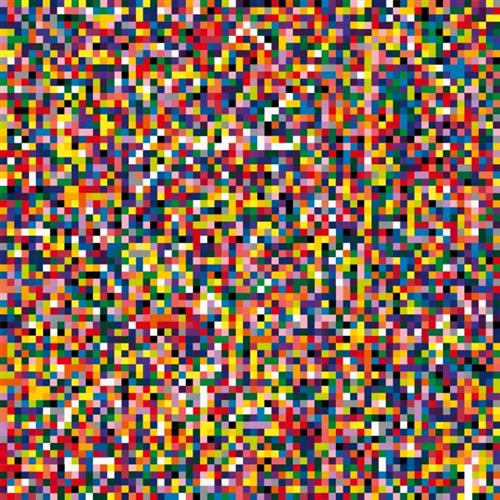
Using technology to make art is not new. Gerhard Richter used special software to make the work you see above (4900 colours). Before computers, artists would use lens and photographs and even craftsmen and women to help them create their final artwork.

What is new now is artists (and non-artists) are using AI to make art. Kevin Kelly talks about how he is using AI in his creative process. David Salle has dived deep into making new work using AI. NYT columnist Farhad Manjoo is using visual tools like Procreate to make AI art.

I have seen Kelly’s work, and Manjoo and Salle’s work are on display in their articles. Kelly experiments with AI to produce images in various styles. Perhaps he has changed, but there is no artist in his work that I can see. With Manjoo, you can see more of him in his drawings. And with Salle the artist’s presence comes in as an editor of the works the AI produces out of his original pieces.

In trying to assess these AI generated works, I think Walter Benjamin and his idea of an artwork having an aura can be useful here. Benjamin was thinking about how original art works have an aura that reproduced images of it do not have. I agree with that: no matter how good a reproduction of a work is, it rarely compares to the original work. There’s that something extra in the original.

I think we can extend out the idea of a work having an aura and also having a humanity. What does a work say about the person who created it? What do I recognize in it that is human and unique to that person? What ideas are there that could only come from that person in that time?

You can argue back that this is irrelevant and that AI generated images are interesting and beautiful and furthermore I cannot distinguish them from human generated images. That might be true. Maybe galleries will be filled with images and sculpture with no human involvement whatsoever, not unlike deep learning software that comes up with ways to be best at playing games like Chess and Go. Such AI artwork may be interesting and even beautiful and may seem to have that aura Benjamin talks about. They just won’t be associated with a human.

Even minimal and conceptual art has a humanity associated with it. Duchamp’s Fountain embodies Duchamp’s intelligence and wit and contrariness.  Arp’s “According to the Laws of Chance” likewise shows his interest in pushing the bounds of what is acceptable in a composition of an abstract work. A person is responsible for the work and the work is tied to them. A person is what makes the work relevant to us in a way that a wall covered with children’s collages or a shelf of toilets in a hardware store are not.

We need a new aesthetic philosophy to deal with the firehose of AI art that is coming our way. I propose we tie the art back to our humanity.

P.S. For more on Richter’s 4900 colours, you can see it here on his web site. There’s also a great view of  4900 colors, here,


Contemporary / conceptual art can be difficult to understand. This can help you.

"Untitled" (Portrait of Ross in L.A) in the Art Institute of Chicago

And by this, I mean this piece by Sherri Irvin: Contemporary art is made out of rules that mobilise us to act. It rightly states that…

Conceptual art often confounds. The key is to understand the rules of the artwork and the aesthetic experiences they yield.

She says conceptual art has three sets of rules:

  1. rules for display
  2. rules for conservation
  3. rules for participation

I agree. If you understand those rules, you can better understand works like the one above, Untitled (Portrait of Ross in LA) (1991) by Félix González-Torres. (One of my favorites.) Now you may not grasp everything the artist is trying to express, but you will get closer to it.

I highly recommend her essay. It should open up such work to you the next time you encounter it in a museum or elsewhere.

(Image linked to in the article and is courtesy of Wikipedia)

AI scales up and out. Here’s some pieces that shows that.


While there are still prophets and pundits arguing doom and gloom regarding AI, most people and organizations have moved past them and have been adopting the technology widely. Some times that has been good, some times not. To get a sample of how it’s going, here’s a few dozen pieces on AI worth a look:

  1. The WSJ argues that you soon won’t be able to avoid AI at work or at home. It’s true, but so what?
  2. AI is being used to deal with the threat of wildfires. Good. Also good: AI allows farmers to monitor crops in real time. More good AI:  AI used to find antibodies. By the way, here’s a piece on how to turn chatgpt into a chemistry assistant.
  3. A worthwhile piece on AI lawsuits that are coming due to intellectual property rights.
  4. The New York Times has stopped Openai from crawling its site. More on that, here.
  5. Here’s the associated press AI guidelines for journalists.
  6. Students and writers, bookmark this in case you need it: what to do when you’re accused of writing with AI.
  7. Also, what can you do when AI lies about you?
  8. This is dumb: AI builds software under 7 minutes for less than a dollar.
  9. It’s not surprising hackers from lots of security holes in AI.
  10. Take this with a big grain of salt…one of the leaders from Palantir wonders if AI should be compared to atomic energy.
  11. This is bad: how facial recognition tech resulted in a false arrest.
  12. This is not good: a story on using AI to generate books and other junk here.
  13. This is different:  Microsoft Teams is pairing up with Maybelline to provide AI generated beauty filters / virtual makeup.
  14. It’s not news but it is interesting that NVIDIA is a hot company now due to AI. See more about that, here.
  15. Maybe chatgpt and other AI will just be a tool to do inefficient things efficiently.
  16. A thoughtful piece on powering generative AI and large language models with hybrid cloud with a surprise ending, from one of the senior leaders in my group at IBM.

(Photo: link to image in the NVIDIA story. By Philip Cheung for The New York Times)

Remnants from the 80s stick out my feed that lead to other good things.

Every so often remnants from the 80s pop up in my feed. When something does stick out like a thread and I pull on it, more good 80s things appear.

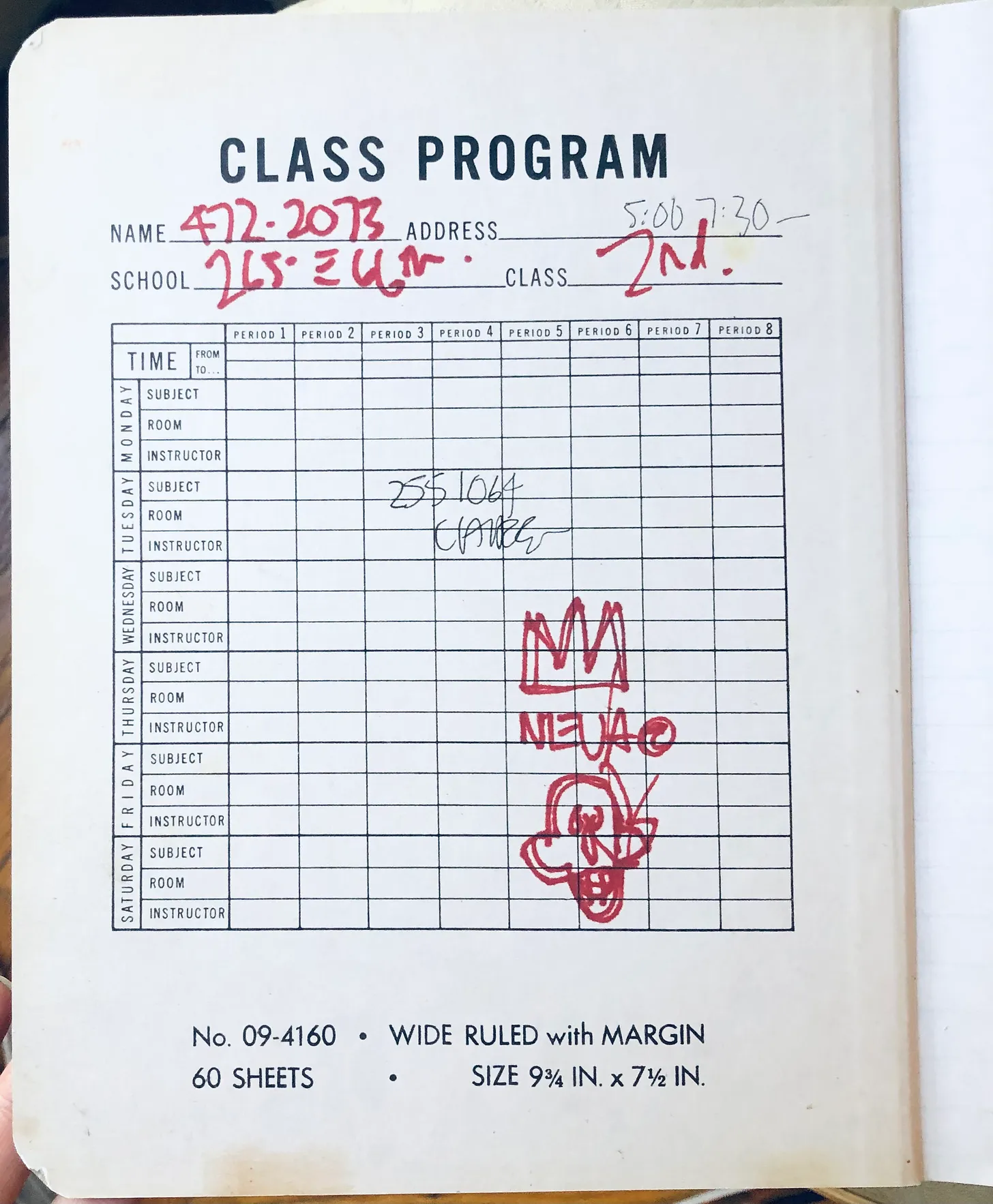
For instance, things like this story on Angelina Jolie taking over Basquiat’s former NYC studio  that  lead me to a good post on Jean Michel Basquiat’s notebooks which is JAM PACKED with good stuff on him.

Or this thing in Martha Stewart on how 80s decor home trends are back that led me to this piece on one woman’s home  full of Memphis design (so 80s!)

Same with tech. I went from this excellent interview on Robert Longo where he talks about many things such as the remaking of  Johnny Mnemonic into black and white, That led to me reading how modern software is bringing back the timex datalink, a device I loved, to this great video of this guy living with 1980s tech for a week! Awesome.

Other great threads that came out of my 80s unravelling was this piece on how Sinead O’connor changed Ireland, these fantastic photos of  Blitz Club in London by Andrew Holligan, and this interview of the singular Debbie Harry who says sex is what makes everything happen and more. This blog by Jamie Bradburn on Toronto in 1980s is a whole rabbit hole in and of itself.

The number of times the 80s appears in my feed is less and less. So whenever I find a bunch of them, I will of course be writing about them. 🙂

(Top image from the story on Memphis; bottom image from the substack on Basquiat’s notes)


Friday Night Music: Doctor, My Eyes (now and then)

What is that, you say? Let Open Culture explain:

The music collective Playing for Change is back. This time, they have Jackson Browne performing his 1970s hit, “Doctor, My Eyes,” supported by musicians from Brazil, Jamaica, India, Puerto Rico, France and beyond. Browne is also joined by Leland Sklar and Russ Kunkel, who played on the original 1972 song, and they still sound amazing.

They really do sound amazing. So many musicians I have loved have lost their voice, but Browne sounds as good as he ever did.

Don’t believe me? Here he is in 1978 doing it live:

Forty things that have changed in IT and IBM in the last forty years (from 1983 to 2023)

If you were to ask me, on this day, what has changed with regards to computers and IT and IBM in the last 40 years, I would say it’s this:

  1. Access: Very few people had access to computers 40 years ago. Those folks used mainframes, minicomputers and the occasional personal computer from Commodore or Radio Shack or this new start up called Apple. Now everyone has access to a computer they carry around in their pocket. (We call it a smart phone, but it’s really a powerful computer that makes calls.)
  2. Ubiquity: Back in the early 80s the vision of everyone having a computer / terminal on your desk was just that: a vision. The few that did have these big monster 3277 or 3298 metal terminals or if you were lucky, a 3279-color terminal. People worked on paper.
  3. email: One of the drivers of having a terminal on your desktop was to access email. Back then IBM’s email system was called PROFS (Professional Office System) and it meant you no longer had to send you three-part memos (yes people did that with carbon paper between the memo paper, so you could give the cc (carbon copy) to someone else). You sent electronic mail instead. Everyone thought it was great. Who knew?
  4. Viruses: Viruses were new. My first was called the CHRISMA exec. In those days every Christmas people would send around runnable scripts (ie. Execs) and they would be the equivalent of digital Christmas cards. The CHRISMA digital Christmas card came from outside IBM. It read your address book and sent itself to all the people you knew. Sounds like fun. In fact it overwhelmed the IBM networks and IBMers around the world and we had to shut most things down to try to purge the network of this thing. It took days. Not fun.
  5. Networks: Companies sometimes had their own networks: IBM had one called VNET. VNET connected all of IBM’s computers worldwide, and it had connection points with outside networks like BITNET too, which is where the CHRISTMA exec was. There was no Internet per se.
  6. Network size: IBM’s VNET had over 1000 VM computers all connected to each other. All of them had an id called OP which was what system operators used to sometimes control the VM mainframe. Once on second shift another system operator and I wrote a program to messages all 1000+ ops in the world the equalivant of “hi hows it going”. To our surprised many of them wrote back! We manually started messaging them back and even became friends with some of them over time. It was like twitter before twitter or gchat before gcchat, etc.
  7. Documentation: Computer documentation was hard to come by in the 80s, and if you had any, you might hide it in your desk so no one else could take it. The operators had a special rack of documentation next to where they worked. I was thrilled in the 90s when you could walk into a bookstore and actually buy books that explained how things worked rather than having to get permission from your manager to order a Redbook from IBM publishing in the US.
  8. Education: In the 80s you could get a job in IBM operations with a high school diploma. Universities in Canada were just ramping up degree programs in computer science. By the start of the 90s most new hires I knew had at least a university degree and more likely a comp sci or engineering degree.
  9. Software: We take Microsoft’s dominance in software for granted, but decades ago Lotus’s 123 was the spreadsheet program we used, just like we used Wordstar or Wordperfect for word processing. Microsoft worked very hard to dominate in that space, but in 1984 when the ads for Macintosh came out, Gates was just one of three people in the ad touting that their software ran on a Mac.
  10. Minicomputers: In between the time of the mainframe and PC, there was the rise of minicomputers. DEC in particular had minicomputers like the VAX systems that gave IBM a run for the money. IBM countered with machines like the 4300 series and the AS/400. All that would be pushed to the site by….
  11. IBM’s PC: The first truly personal computer that had mass adoption was the IBM PC. A rather massive metal box with a small TV on top, it could run the killer apps like Lotus 123. Just as importantly, it could run a terminal emulator, which meant you could get rid of old terminals like the 3270 series and just give everyone a PC instead. Soon everyone I worked with had a PC on their desk.
  12. Modems: modems in the 1980s were as big as a suitcase. If a client wanted one, an IBM specialist would go their location and install one for you. In the 90s people got personal modems from companies that sent data at 9600 bps or 14000 bps or even 56 kbps! Today people have devices the size of a book sitting at home and providing them with speeds unthinkable back then.
  13. Answering machines: The other thing people used to have on their desks besides a PC was an answering machine. Before that every office had a secretary. If you weren’t at your desk the call would go to them and they would take the message. If you had been away for a time you would stop by their desk and get any slips of paper with the name and numbers of people to call back. Answering machines did away with all that.
  14. Paper planners: Once you did call someone back, you would get out your day runner / planner and try to arrange a meeting time with them. Once a year you would buy new paper for it so you could keep track of things for the new year. In its heyday your planner was a key bit of information technology: it was just in paper form.
  15. Ashtrays and offices: it may seem hard to believe but back then smoking in the office was common, and many people smoked at their desk. It was a long and hard process to eliminate this. First there was smokeless ashtrays, then smoking areas, then finally smokers had to smoke outside, then smoke in areas well away from the main door. Likewise people worked in cubicles. It was miles away from working at places like Google or WeWork, never mind working from home.
  16. The rise of Microsoft and the decline of IBM: The success of the IBM PC lead to the success of Microsoft. The adoption of MS-DOS as the operating system for the IBM PC was a stroke of luck for Microsoft and Bill Gates. It could have easily been CP/M or some other OS. With the rise of Microsoft and the personal computer, IBM started to lose its dominance. IBM’s proprietary technologies like OS/2 and TokenRing were no match for DOS / Windows or Ethernet. IBM did better than some computer companies like Wang, but it’s days of being number one were to be over.
  17. The role of the PC: for a time in the 80s you could be a company and not have computers. Paper and phones were all you needed. We used to say that companies that used computers would beat any competitors not using computers. And that became the case by the end of the decade.
  18. The rise and fall of AI: now AI is hot, but in the late 80s and early 90s it was also hot. Back then companies were building AI using languages like LISP and Prolog, or using specialized software like IBM’s Expert Systems Environment to build smart tech. It all seemed so promising until it wasn’t.
  19. LANs: all these PCs sitting on people’s desks needed a way to talk to each other. Companies like Microsoft released technology like Windows for Workgroups to interconnect PCs. Office had servers and server rooms with shared disks where people could store files. There was no SharePoint or Confluence.
  20. The rise of Ethernet: there were several ways to set up local networks back then. IBM had its token ring technology. So did others. It didn’t matter. Eventually Ethernet became dominant and omnipresent.
  21. Email for everyone: just as everyone got PCs and network access, in the 90s eventually everyone got mail. Companies ditched physical mail and FAXes for the speed and ease of electronic mail, be it from AOL or Compuserve or someone else.
  22. Network computers: one thing that made personal computers more cost effective in the 90s for people was a specialized computer: the network computer. It was a small unit that was not unlike a terminal, and it was much cheaper for business than a PC. To compete, the prices of PCs soon dropped dramatically and the demand for the network computer died off.
  23. EDI: another thing that was big for a time in the 90s was EDI. IBM had a special network that ran special software that allowed companies to share information with each other using EDI. At one point IBM charged companies $10/hour to use it. Then the Internet rose up and ISPs charged companies $30/month and suddenly EDI could not compete with a PC using a dialup modem and FTP software provided by their ISP.
  24. Electronic banking: with personal computers and modems becoming common in homes, banks wanted to offer electronic banking to them. Some banks like the Bank of Montreal even established a specialized bank, mbanx, that was only online. Part of my job in the 90s was to help banks create the software they would give out to allow their customers to do banking via a private network. While most banks kept their branches, most day to day banking now happened online.
  25. The Internet and the web: if the PC changed everything in the 80s, the Internet changed everything in the 90s. Suddenly ISPs were springing up everywhere. Even IBM was an ISP for a time. People were scrambling to get software to allow them to connect their PC and US Robotics 14.4 kbps modems to access FTP sites and Usenet and more. No sooner did this happen than the World Wide Web and browsers bust on the scene. For many people, the Web was the Internet. So long Gopher; goodbye WAIS.
  26. Google: finding things on the Internet was no easy thing. It only got worse as web sites shot up everywhere. Google changed the Web and made it usable. They changed email too. Sites like Yahoo! wanted to make you pay for more storage: Google gave people more storage than they could ever need.
  27. From desktops to laptops: with home networks in place, people wanted to be able to bring home their computers to work remotely. I used to have a luggable computer that weighed 40 pounds that I would bring back and forth daily. As more people did this, computer companies got smart and made the portable computers smaller and better. Apple was especially good at this, but so was IBM with their Thinkpad models. As time went by, the computer you used at work became a laptop you use to work everywhere.
  28. The Palm Pilot: the Palm Pilot succeeded where Apple and others had failed. They had come up with a device you could use to track your calendar, take notes, and more. All you had to do was put it in a cradle and press the sync button and everything would be loaded onto your PC. Bye bye paper planners. Hello Personal Digital Assistant.
  29. IBM Services: One time IBM gave away its services. By the 90s they had a full one line of business devoted to providing their people to clients to help them with their business. People like me moved from helping run IBM’s data centers to going around to our clients helping them run their data centers and more.
  30. Y2K: if Y2K was a non-event, it was only because of the countless hours put in by techies to make it one. Even me. I was shocked to discover that EDI software I wrote for a Quebec bank in 1992 was still running on PC/DOS computers in 1999. It was quickly rewritten before the deadline to keep running on January 1, 2000. Just like countless software worldwide.
  31. E-business: if PCs changed business in a big way in the 80s, e-business changed them in a big way in the 90s. Even with the dot com era crash, there was no going back. With e-banking your retail branch was open 24/7; with e-business, the same was true of your favorite local (or non-local) business.
  32. The resurrection of Apple and Steve Jobs: two things transformed IT and made it cool: one was the Web and two was the return of Jobs to Apple.  Boring beige boxes were out: cool colored Macs made for the Internet were in. People were designing beautiful web sites with red and yellow and blue iMacs.And the success of those iMac led the way to the success of the iPod, and the success of the iPod led to so much more.
  33. Blackberry and dominance of smartphones: if the Palm Pilot got mobile computing started, the Blackberry accelerated that. Email, texting, and more meant that just like online banking and e-business, you were reachable 24/7. And not just reachable the way you were with a pager/beeper. Now you could reply instantly. All the computer you needed fit in your hand.
  34. The decline of analog: with the rise of all this computing came the decline of anything analog. I used to buy a newspaper every day I would commute to work. People would bring magazines or books to read. If you wanted to watch a film or listen to a song, it depended on something physical. No longer.
  35. The rise of Unix/Linux: you use Unix/Linux every day, you just don’t know it. The web servers you use, the Android device you make calls on, the Mac you write emails on: they all depend on Unix/Linux. Once something only highly technical people would use on devices like Sun computers or IBM pSeries machines is now on every device and everywhere.
  36. Open Source: in the 90s if you wanted software to run a web server, you might pay Netscape $10,000 for the software licence you needed. Quickly most people switched to the free and open source Apache web server software to do the same job. This happened over and over in the software world. Want to make a document or a spreadsheet? You could get a free version of that somewhere. For any type of software, there is an open source version of it somewhere.
  37. Outsourcing/offshore: if people could work from anywhere now, then the work that was done locally could now be done anywhere. And it increasingly was. No one locally does the job I did when I first started in the computer industry: it’s all done offshore.
  38. The Cloud: if work could be done anywhere by anyone, then the computers needed to do it could be the same. Why run your own data center when Amazon or Microsoft or IBM or Google could do it better than most? Why buy a computer when you only need it for an hour or a day? Why indeed?
  39. The return of AI: finally, AI has returned after a long time being dormant, and this time it’s not going to be something used by a few. Now everyone can use it and be more productive, smarter. Like the PC or the Internet before it, AI could be the next big thing.
  40. Web 2.0/Social Media: One thing to insert in between the Internet and AI in terms of groundbreaking changes in IT is Social Media. Both public social media like this and private social media like Slack and Microsoft Teams. Without social media I couldn’t share this with you.

In 40 years the devices have gotten smaller, the networks have gotten bigger, and the software has gotten smarter. Plus it’s all so much cheaper. If I had to sum it up, I’d say that sums up all the changes that have happened in the last 40 years. And we are just getting started.

Minimalist desks to meet your minimalist needs

As we move to living in smaller places as well as working from home, minimalist desks can be the solution we need to get things done. For example, this ignite desk that separates work and personal life in a simple yet effective way:

Very nice. Or how about these sleek desks designed to perfectly meet your work from home needs declutter your workspace:

Love the wood. Need more? Here’s  10 desk designs every workaholic needs to amp up their productivity, including this one from teenage engineering:

Awesome.

We all need a good surface to work from. Sometimes that surface doesn’t have to be very big. These desks prove it.

All images and links from Yanko Design. If you are in need of a minimalist desk, check them out.


Happy Pumpkin Spice Latte Season to you! Here’s some thoughts and ramblings on the month (i.e. the September 2023 edition of my not-a-newsletter newsletter)


Happy Pumpkin Spice Latte Season for all that celebrate. While I love the season of Autumn, that drink is not one of the things I love about it. I love the fall leaves, the cooler weather, fall fashion and of course Thanksgiving, but I prefer my lattes straight up. 🙂

One thing I don’t love about this Fall is the resurgence of COVID-19. You see evidence of it everywhere, from performers like Steve Martin and Adele having to postpone shows due to it, to things like the COVID-19 wastewater signal in Ontario:

It’s been on the rise since the summer, and doesn’t show any signs of quitting. That’s the bad news. The good news is that vaccines are coming out soon and you can get one. For more details, see here, here and here. Make sure you get a flu shot too.

Also, make sure the spaces you are in are well ventilated this fall and winter. Ventilation is key when it comes to managing any respiratory diseases like COVID-19. While there are CO2 detectors you can get to measure that, you can also get this cool thing to put on your wall.

Like a canary in a coal mine, this mechanical bird stay high on its perch when the air ventilation is good and CO2 is low, and starts to “die” (fall over) as the CO2 levels get worse. You can read more about it, here.

As it was a year ago, the war in Ukraine slogs on. That country’s president was in the US and Canada recently trying to maintain support for their war efforts. Already that support is faltering in places like Poland, which is not a good sign. Not that Russia is having an easy time of things: it has to deal with the Ukrainian counter offensive and it sees itself losing influence over nations it once had a firmer grip on. At some point something dramatic might suddenly end the war, but for now I can’t see what that is.

Last year China was making noises about invading Taiwan. For many reasons that noise seems to have quieted. No doubt seeing Russia doing poorly had something to do with that. An economic downturn can’t help. Indeed, China is suffering from many issues these days, from youth unemployment to deflation to flooding to things like the Evergrande bankruptcy. Perhaps those woes will keep them from adding to the pile with a war.

Compared to last year, inflation continues to be on the retreat. Workwise, more Canadians are commuting and leaving home for work again. In the US, some companies like tiktok are even using tracking tools to measure the success of their RTO (return to office) strategy.

Meanwhile reading this piece in the Times on office vacancies, you can get a sense of the panic setting in as most workers continue to work from home (WFH).

I thought this was an interesting post pandemic fact: Toronto restaurants are suffering a decline.  It’s been a rollercoaster for restaurants these last few years, and perhaps after the lows and then the highs, they are coming into the lows again.

Remember NFTs?Acccording to the Guardian, the vast majority of NFTs are now worthless, as a new report shows. Meanwhile, SBF (Sam Bankman Fried) has been  sent to jail while he awaits trial. That’s all there is to say about crypto these days.

Remember that trucker protest in Ottawa? Well the leaders of that are getting their time in court. As for other protests, a so called “1MillionMarch4Children” protest was met by strong counter protests. I am happy to see such a strong counter protest.

Culturally, it has been a weird time. Stars like Drew Barrymore and Jimmy Fallon have imploded for various reasons. Drew’s was due to her conflct with the actors strike, which continues to drag on.

Taylor Swift continues to move from success to success: the movie of her Eras tour has alread hit a presale record. More on it, here. Do you want to read about the most expensive outfits worn by her in her Eras tour? If so, click on that link.

I want to close on this good piece on the 20th anniversary of…the pumpkin spice latte. Have a good October, everyone!

You should set up two-factor authentication (2FA) on Instagram. And you should use an authenticator app

You might think: no one is going to hack my Instagram account. And you might be right. But here’s the thing: if someone does hack your account, you have next to no chance of getting someone at Instagram to restore it. Rather than make it easy for hackers to take over your account, spam your friends and delete years of photos, you should use 2FA. To do so, read this article: How to Turn on Two-Factor Authentication on Instagram.

While you can use SMS, I recommend using an authenticator app. That article explains how you can do it either way. Authenticator apps are more secure than SMS and are the way to go these days. For more on that, see PCMag.

IBM Cloud tip: use Multifactor authentication (MFA) also called 2-Factor Authentication (2FA) with your account

If you are using IBM Cloud technology, I recommend you consider setting up MFA for your login account. MFA makes your access more secure, and it’s easy to do. To see how easy it is, go here: IBMid – Verifying your identity and configuring MFA. It’s a well laid out description about how to do it.

You can use either a verification app or email to get a verification code. I recommend an app. While email works, it can take several minutes to get the code, while with an app you get a code instantly. As for apps, I use IBM’s verify app, but you can use Google’s and likely Microsoft’s.  They all work fine. Just go to your favorite app store and download one. (Make sure it comes from IBM or Google or Microsoft, not from some developer with a lookalike app.)


If you use two/multifactor authentication, make sure you have a backup

Multi-Factor authentication is great. There is only one downside: you lose your phone. The way to deal with that is to have a backup. To set that up, either read this if you use Microsoft’s authenticator: Back up and recover account credentials in the Authenticator app from Microsoft Support or this if you use something else for authentication: Make Sure You Have a Backup for Two-Factor Authentication.


What I am reading about lately, from Naomi Klein to Jenny Odell

Here’s a dozen good pieces I’ve read lately that I would recommend for your Sunday — or any day — reading:

  1. Naomi Klein has some new world problems: Naomi Klein deals with her doppelganger.
  2. Meanwhile, the UK is dealing with some old world problems: on the Finucane assassination in Northern Ireland.
  3. How we think about the serial killer Lucy Letby shows how she could get away with it. Hard but insightful.
  4. On a lighter note, I liked this piece on how 90s tech culture was a jumbled mess.
  5. An argument to consider: we should return to the bold egalitarianism of Iris Murdoch.
  6. Some meaty food for thought: what can we learn from John Rawls’s critique of capitalism.
  7. A good piece by Kevin Kruse on Carter and Reagan: confidence men.
  8. For fans of stoicism:  the glass is already broken.
  9. My friend Norbert with another good post on repairability, here.
  10. Science explains how we lose interest in something. Different than we think.
  11. This interview with Jenny Odell talking about time is great.
  12. I am somewhat of a fan of Horseshoe_theory, but not everyone is, I know.

I switched from grocery shopping at Metro (and Loblaws) to Walmart in 2022. In 2023 I am switching to a combination of Walmart and Food Basics. Here’s why.

Last year I did the math and found that I could save around $1500/year if I switched my grocery shopping from Metro / Loblaws to Walmart. I wrote about it here.

This year I have switched from Walmart to Food Basics for some things. So what changed?

First, Walmart’s prices have been rising over the last year, at least in Instacart. The same groceries bought at Walmart in 2022 add up to over $1000 more in 2023. I started noticing the items I have bought went up by 10% or more. Week after week those increases accumulate into that $1000.

Second, Food Basics prices either dropped or were much lower than Walmart’s to begin with and I didn’t notice last year. In almost every category now their prices are lower: beverages, condiments, dairy, snacks, pasta, frozen food, and meat. Only in the deli and produce section can I get better deals at Walmart. It’s close, but not that different.

Third, I think Walmart has changed their pricing policy in Instacart. They now say their prices are higher than in-store prices. Food Basics prices are generally the same as in-store regular retail prices. I think Walmart was that way before.

Walmart has also changed their approach to Instacart in other ways. For many months they have not had any products featured in the Deals section of Instacart. Now they do. Food Basics also has deals.

Because of how Walmart has changed, my shopping via Instacart has changed. Before I would automatically buy my groceries from them. Now I make a list and comparison shop between them and Food Basics. Most of the time Food Basics wins and I buy the bulk of my groceries from them. I still get my deli and produce from Walmart and some specific products Food Basics does not have. And if Walmart has a good deal on something, I will also buy that from them.

At some point I should go back and compare  Loblaws, No Frills, Metro, Food Basics and Walmart to see what has changed, because the grocery business is dynamic and competitive. Who knows: in a year, No Frills could be the leader when it comes to good prices.

For now I am mostly happy shopping at Food Basics and Walmart. In both places the prices are good, and the quality is high. The things I used to buy from Metro at high instore prices in my neighborhood in 2022 are less expensive when I get them via Food Basics on Instacart in 2023, so that’s good. too.

P.S. Here’s my spreadsheet on Google Sheets. You can review my numbers and see if they add up. This is my experience with this. YMMV.

P.S.S. I had to revisit my spreadsheet. At first I had Food Basic saving me $1500 over a year vs Walmart. It’s actually somewhere around $171. Not nothing, but not that much.


Let’s have some fish! And fun! And French! (Friday food links for food lovers, September 2023)

Here’s a collection of food links centered on fish, French (food) and fun. I have either made or eaten many of the dishes associated with these recipe links. All are highly recommended.

Cooked Fish: let’s start off with a fan favorite of many, salmon. To get started, we have recipes for salmon rillette and Ina’s salmon tartare. Love both of those. For those who love their spices, consider firecracker salmon, cajun salmon burgers or roasted salmon with zaatar. If you want something fancier, Saveur’s easy sheet pan salmon with dilly roasted potatoes could be what you want, or this sauted salmon in a beurre rouge sauce, perhaps. If you have to cook for a salmon hater, then read how to cook salmon for haters.

As for other seafood, one of my favorite is shrimp and one of my go to recipes is shrimp in a tomato sauce with feta and orzo. Here are four different versions of it — one, two, three and four — and they are all good.

Putting aside the feta for a sec, I love a causal bowl of peel and eat shrimp . But I’ve made this fancier Venetian shrimp with polenta and it’s fantastic (see photo above). I haven’t made this, Louisiana BBQ shrimp dish, but I want to. You fans of stir fries, try this stir fried shrimp and asparagus. And you can’t go wrong when you have shrimp with cocktail sauce.

Raw fish: I mentioned salmon tartare above. Tuna Tartare is also great. For crudo fans, I recommend this sea bass crudo recipe. This is flavorful: fish escovitch salsa. As is this poke sashimi ceviche raw fish. And you can always just get oysters…you don’t even need to shuck them: How to Open Oysters without Shucking.

Favorite fish: Besides the shrimp and feta above, two of my favorites fish recipes are Nigella’s Linguine With Mussels and Smitten Kitchen’s Manhattan style clams with fregola. Just the best.

More fish! If squid is in your sights, make Pan fried Calamari or Extra-Crunchy Calamari. If scallops are more your thing, try seared scallops with jammy cherry tomatoes.

Sole is simple and delicious, and so is this version: sole piccata. If your preference is for seafood that way, consider these Easy Sauces for Fish or these 10 quick sauces fish. Maybe read this Newfoundland Labrador cod memoir while you do.

French: let’s start off with a Southern French squid salad recipe from Saveur. If you crave something Fast and French, these fast French dishes might fill your table. Also fast are these French bistro recipes of which a croque monsieur is one of my favorites. Speaking of favorites, here are Food & Wine’s Favorite Recipes for Classic French Food. Read this with your steak frites or onion soup: How I rediscovered the joys of French cuisine.

Fun: Finally, here are some fun links on food….


The New York Times whips down to Charleston, S.C. again for 36 hours

I love the the New York Times,  I love Charleston, and I love their 36 hours travel series, so I was keen to read this: 36 Hours in Charleston, South Carolina: Things to Do and See. I was also curious to see how it compare it their 2016 version: 36 Hours in Charleston, S.C. and their somewhat 2008 version, Visiting Charleston, S.C., on a Budget.

Overall it’s a good guide, but some of the restaurants they recommend are not necessarily the best of the city. While I don’t recommend you read the comments section, one person had good advice: “Go to FIG, go to 167 Raw, The Ordinary, Maison, Melfi, The Grocery, Doar Brothers for a cocktail, Sorelle, Verns, Edmunds Oast, Lewis BBQ, Rodneys BBQ….there are probably 30-40 restaurants in this town I would go to instead of Fleet. Sullivans has beautiful beaches and OD is good for brunch. But just good. Also, go see Folly Beach. Funky and boho. The Gaillard is our large concert hall but also look to see who’s playing at Music Hall or Music Farm. Go out to some of the Breweries on Upper Morrison and Spruill. ” Well said. I’d add Chubbyfish (if you can get in), and Santis. Butcher & Bee used to be good: now it’s gone. If you want some cool stuff to take home, head over to J. Stark: their bags are fantastic, and their store is beautiful.

Charleston is a great city, and I’m glad the Times is featuring it. But if you are looking for places to eat, either talk to a local or check out Eater for the Carolinas. You’ll be glad you did.

Revisiting Toronto’s Festival of Festivals (what TIFF was before it became the thing it is now)

There was much discussion about the Talking Heads being at TIFF this year for the reissue of their great concert film, Stop Making Sense. What people might not know was that it was also at TIFF in 1984, back when the Toronto International Film Festival was known as the Festival of Festivals.

TIFF has changed a lot since then. Back then the Festival was smaller, centred in a different location (Yorkville) and played films in midtown theatres like the Varsity, Uptown, Backstage and the Cumberland. (Also the Bloor for the awesome Midnight Madness series.) It was casual and fun.

I think I went to my first Festival film — my Beautiful Launderette with a bright new actor named Daniel Day Lewis —  in 1985.  In a few years I was hooked, going from one film to many films like these from 1987 listed here. It was easy in the 80s: you got tickets (or a pass), lined up for your next film, and hopefully you got in! (Holding seats for a person, never mind many people, was frowned upon.) For a surprising number of films this was easy to do, and people would even show up and buy a ticket at the last minute. Some days you would be heading to a certain film and you would run into a friend going to a different film and you would go with them instead. Or you’d get up in the morning to watch a film in a small theatre at the Cumberland and four films later you end up going to bed after seeing a late night screening at one of the gigantic spaces in the Uptown.  A great time was had by all.

Perhaps too great. More and more people started going and it got harder to wander around and see great films. As it grew, the Festival of Festivals dropped that name, left Yorkville, and became the behemoth it is today.

I still think it’s a great thing, and I am glad it is big and bold. But back then it was small and intimate. I loved that, and I miss how it was.

P.S. More on Talking Heads with Spike Lee at TIFF in 2023 in Vulture and the New York Times. Spike Lee started at the Festival too. I remember him being in town to promote his first film, She’s Gotta Have It. Like Talking Heads, he was fresh and new and like them he changed our culture with his work and life.

Before there was “Stop Making Sense”, there was Talking Heads on Letterman

Somewhere in between June 1st, 1983 when the album Speaking in Tongues was released and December, 1983 when “Stop Making Sense” was filmed, Talking Heads and their extended band went on David Letterman to perform two of their songs: “Burning Down the House” and “I Zimbra”.

If you are a fan of the film, you’ll enjoy these two performances. Already you can see echoes of what will you will see in the show. Indeed, other than Dolette McDonald being replaced by Edna Holt, everyone on stage at Letterman appears in the film.

That was televised in the beginning of July, one month after the record was released. Already the band is pretty tight. They had months of shows to do before Jonathan Demme started filming. No wonder the performances in the film were superb.

As for “I Zimbra”, if you think you hadn’t seen it in the original concert film, you’d be correct. The band did perform it, and it was intended to be in the film, but it was taken out. Good news, it is included in the recent rerelease of the film (which I wrote about, here).

Here’s “I Zimbra”

and here’s “Burning Down the House”