Twitter is dead, and the rest of text-based social media ain’t great

Twitter is dead. Sure there is some good parts of it remaining in the new company X, as this argues. But I am not certain for how much longer. If Musk wants to use it as a vehicle to relive his start up days , I don’t have much hope for it.

I still go on X to see what some people are doing, people who seem to be posting exclusively there. I was hopeful to jump to Threads, but after a flurry of activity, engagement seems to be dropping off. I tried Bluesky, but it seems better for people who used to love to argue on Twitter. That was never my thing.

I’ve also tried Mastrodon and even some Discord servers, but the problem in all cases is I cannot reproduce the social network I built up over time on Twitter. That social network kept me coming back and wanting to read and wanting to add. I don’t have the desire to build that up again.

The closest I have to that type of social network is what I have on Instagram. But it’s highly visual and I long for the text based social communication I used to have on twitter.

I don’t know what can be done about it. Maybe nothing. Maybe it’s the dusk of social media as we knew it from the Web 2.0 days. That could be fine.

In the mean time, here’s some more interesting links on social media I’ve liked recently. None of them are positive, alas:

On the pointlessness of comparing geniuses like Hawking and Einstein

It’s a vain exercise to try and measure and compare genius, but that hasn’t stopped this scientist from saying that einstein was a peerless genius and hawking was an ordinary genius.
I get why you can say Einstein is special amongst scientists for the work he did and the influence he has. And if anyone was a genius, it was Einstein. But to say he is more of a genius than someone else is folly.

In such a debate I am reminded of John von Neumann and his genius. If you asked the smartest people in the 20th century who had the most brilliant mind, they would point to him. Yet von Neumann fretted that “in the future he would be forgotten while Gödel would be remembered with Pythagoras.” He may have been a peerless genius to his contemporaries, but he felt he was not in the same league as Gödel (never mind Einstein).

In short, other than a fun drinking game, it is pointless to try and say who is more of a genius. There is nothing quantifiable about it.

The difficult of staying controversial as an artist


It’s hard to stay controversial as an artist. Ask Andres Serrano. This piece in the New York Times explains what I mean:

As Pope Francis met with dozens of international artists at the Sistine Chapel on Friday, he sought both to reaffirm the Roman Catholic Church’s commitment to artistic endeavors and to enlist the artists to act as catalysts for change in areas like social justice.

Yet as the group sat amid Renaissance frescoes by the likes of Michelangelo, Botticelli and Perugino — undisputedly one of the high points of papal art patronage — not all of those present had a traditional religious bent.

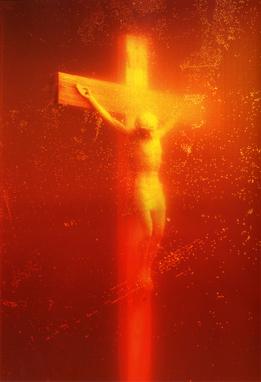
Among them were the American artist Andres Serrano, whose photograph “Piss Christ,” an image of a plastic crucifix submerged in a tank full of urine, was considered blasphemous when it debuted in 1987.

On Friday, Francis blessed Mr. Serrano and gave him a cheery thumbs up.

A thumbs up! Not too long ago he was reviled for that work. Now he’s hanging out with Pope Francis. It’s hard out there for an artist to stay controversial. After all, if you go through this piece and check out art history’s most controversial nudes, so many are anything but controversial now. Now they are classics. Serrano’s work will become that way too.

A good reminder to artists: being controversial is fine, but it’s hard to maintain. Best to focus on making your work good first: that is what will remain after the controversy dies off.

Restaurants loved and lost: Country Style


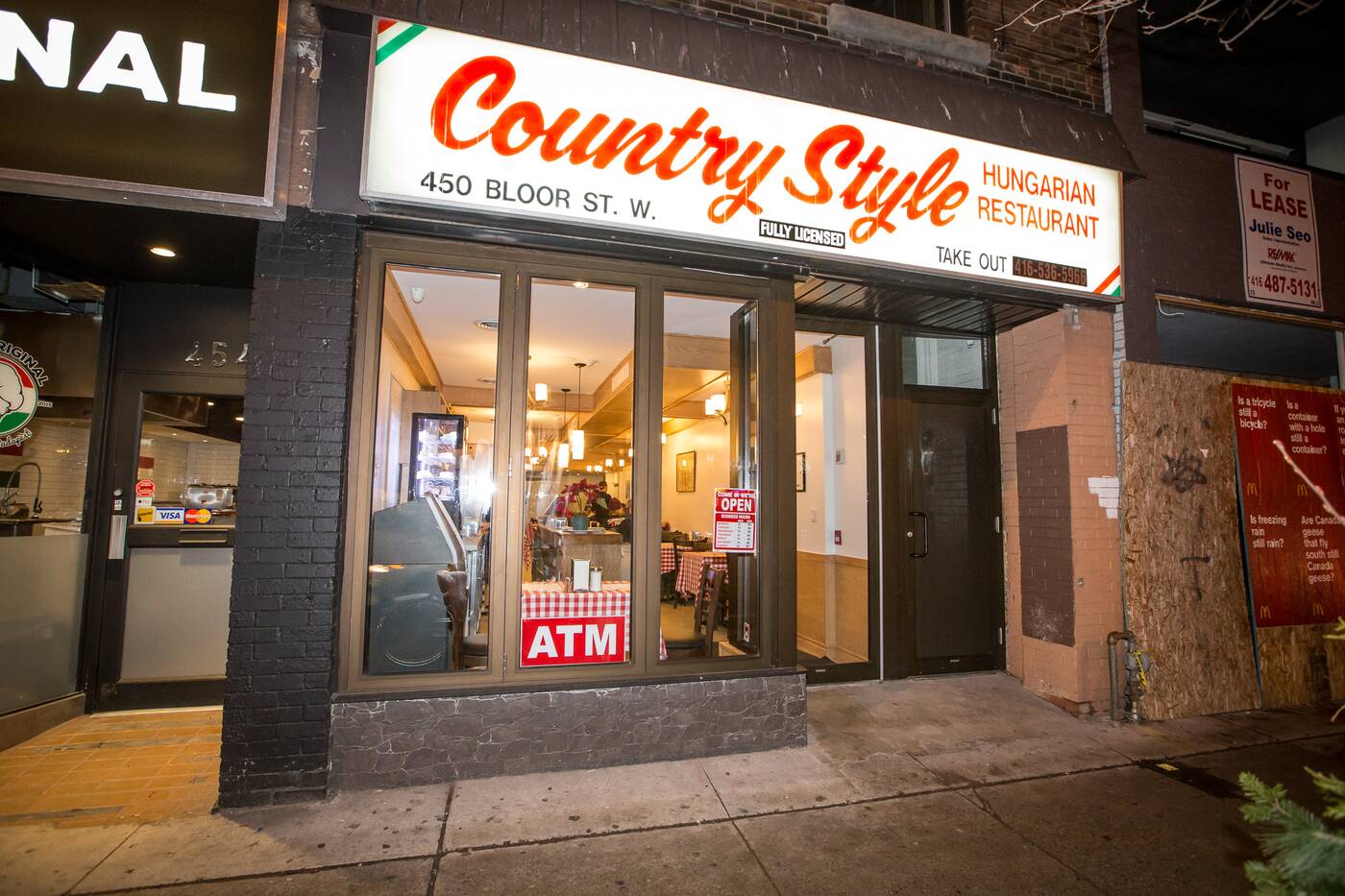
Sadly, the last of the great Hungarian restaurants in the Annex closed at the end of July. Unlike so many restaurants that have closed recently, this wasn’t due to the pandemic. The owners had been running it for many many years and decided it was time to retire. Sad for us, but good for them.

I’ve written about Country Style and the other schitnzel slinging places that occupied Bloor West between Brunswick and Bathurst. You can see that here: Chicken Schnitzel and other great Hungarian food at Country Style Hungarian Restaurant in Toronto’s Annex and here: Memory, space and time and the redrawing of a line. Lots of good memories from eating in those places, for sure.

Speaking of memories, this review from the blog jamiebradburnwriting.wordpress.com really brings back many of them:

Image above from blogto. You can read their review and get a better sense for the place, here.


Desks for people who live in small spaces and/or like Transformers

In these days of working from home in small spaces, we could use ideas for desks and workstations that can meet our needs.  Here’s five such desks that fill the bill:

This first workstation is amazing. It’s a gym! It’s a desk. It’s storage. It’s a space saving work and workout setup designed to keep your mind and body healthy. I thought this was especially cool.

For those more inclined to use their desks to lie down than workout, this hybrid couch /  desk could be just what you need.

For people really short on space, this easily concealable home office addresses productivity woes in style by transforming into furniture by night. I like it.

In a similar vein, this slim wall cabinet opens into a sleek modern functional workspace.

Finally, this multifunctional desk features entertainment and work modules to help you switch off from work mode:

I love them all.


On the benefits of diaries, journals and notebooks


We’ve all have or had diaries and journals at some point. Sometimes they’re just a few abandoned pages: other times they are volumes of notes and information. If you are like me, you are in the former group, even though I’d like to be in the latter (no doubt smaller) group.

One person I know who is the group I am not is Austin Kleon. He has written extensively about them, and he creates several of them throughout a year (the photo above is of his collection). If you read him, you see he has a number of reasons to write them: to help him pay attention to his life, to give him something to write about later, and more.

Now if you are someone special like Paul Klee, then maybe someone will put them all online for others to study them (see here). Or if you are living in historic times, like the composers of these thousands of desperate vivid diaries from occupied europe, then historians may gather them and hold them in a special place like the NIOD Institute for War, Holocaust and Genocide Studies in Amsterdam. (That might happen to anything you write, especially if you kept one during the pandemic. Decades from now people will be curious to know what life was like during lockdowns.)

Regardless of what happens to your diaries, it is beneficial to record your life, as I argued here. The only beneficiary later may only be you, but that’s enough. If anyone else benefits from it, that’s a bonus.


Transition time in media, or at least Disney, but likely more


Sometimes there are rumblings that lead to nothing, but these recently rumblings seem to be adding up to something.

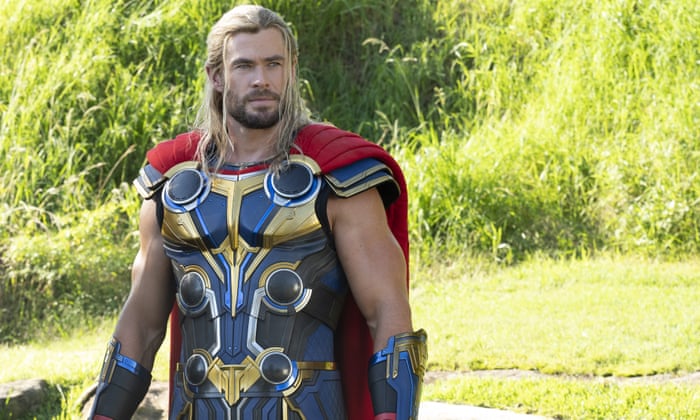
So when Disney mumbles about cutting back on Marvel and Star Wars content, it’s worth noting. Especially so when the head of Disney, Bob Iger reiterates it. Now maybe the problems are just Disney’s. After all, Netflix’s earnings looked healthy. Maybe it’s just the quality of those films, as the Marvel actors seem to be saying. I’m not sure. But it seems like a transition period is beginning to happen in Hollywood, however boffo a hit Barbie and Oppenheimer are. Certainly the writers feel that way, as do the actors.

It will be interesting to follow up on this in a year from now.

The wonderful historicalness of “You’ve Got Mail”, 25 years on

“You’ve Got Mail” is many things. A romantic comedy, of course. A tragedy, as this piece argues… possibly. Of the many things I could list about it, what I loved most about it when I watched it was it’s historicalness.

For starters, the gentrification of New York is one of the historical things that pops out in the film. If New York now is a place of wealth and insane living costs, and New York of the 70s and 80s was a place of poverty and decrepitude, then the New York of the 90s was undergoing a time of economic transition between those two times. You see that in the arrival of bougie things like Starbucks and big bad book store chains like Fox / Barnes and Noble. The city just seems on the rise in the film. It is poor no more. New money is leading the development of real estate that is forcing a transition in the city.

The film also shows the start of the next big thing coming to force a transition: online communication. You’ve Got Mail illustrates how people back then are already dealing with how computers are starting to affect how we live and communicate. It will take some time past the 90s for books and magazines and newspapers to be impacted as we all take to the Internet in the 21st century, but the seeds are already sprouting up as we watch Kathleen and Joe get to know each other via their Apple Macbooks and IBM Thinkpads and the end of the 20th century. (And naturally she owns the former and he the latter). And the beloved typewriters in the film are dodo-birds of a mechanical sort.

It’s funny to think the film was once criticized by the Washington Post for product placement. After all, this month an entire film, Barbie, is launched and co-produced by Mattel.  It may have been jarring then, but it barely registered to me watching the products placed in this movie from 25 years ago. If anything, it seems quaint compared to todays films.

Culturally the film drips with historicalness, from the clothes they wear (Ryan’s layered sweaters, Hanks’s dark shirts and ties), to the technology they use (AOL!, that MacBook), to the actors themselves (Hanks being a love interest, Chappelle trying to be mainstream). It all seems so long ago. It was 25 years ago, so I guess it was.

There’s lots to enjoy in You’ve Got Mail. One thing for sure: it’s a time capsule, and it’s quite good just to enjoy it for that.

P.S. You can read more on the film: You’ve Got Mail in Wikipedia. If you’re curious, here’s a piece on the You’ve Got Mail film locations. Many, like Zabars and Barney Greengrass, still exist.

Barbenheimer! Beyonce! Taylor Swift earthquakes! And more, in my July 2023 edition of my not-a-newsletter newsletter and assorted ramblings.

Last month I wrote about what’s hot and what’s not. Well it seems like everything is hot this month. Hot and humid. So we are going to gloss over serious subjects like Ukraine and Inflation and get light instead. Let’s go!

Summer Manias: It has seemed like a summer of manias so far. Sure, there was still stories about inflation, the war in Ukraine, and more such serious things. But the focus seemed to be on big time media sensations: Taylor Swift, Beyonce, and Barbenheimer.

Barbenheimer, you ask? Well for those reading this years from now, it was “an Internet phenomenon that began circulating on social media before the simultaneous theatrical release of two blockbuster filmsBarbie and Oppenheimer, on July 21, 2023, in the United States and several other countries” (that’s from it’s wikipedia page, no less). The madness was fueled by positive reviews, lots of think pieces, tremendous marketing and then strong ticket sales. Honestly, it was all good fun (at least as much good fun as you could have watching a film about the birth of the atomic bomb and McCarthyism. :))

To add to that, there was also the non-stop reporting on the Taylor Swift “Eras” tour.  It set all kind of weird records, like how it added $5B to the world economy. Or that fans at the show generated an earthquake (albeit only a magnitude of 2.3…but still!) Nothing can surprise me with a tour capable of generating $1B in sales.

Sadly for Canadian swifties, she did not announce any Canadian dates. Not even when PM Trudeau sent a personal message asking her to bring shows here. It was a nice try, but one fact I read was her shows play in stadiums holding 70,000 and the biggest arena in Canada holds 50,000. Maybe next tour.

Swift wasn’t the only one holding big shows. Beyonce has also been wowing audiences with her Renaissance tour, which also seems tremendous. You can read more about it here. Beyonce, Swift, Barbenheimer: it all adds up to people exercising their rights to party and enjoy themselves after too many bleak pandemic summers. I can’t say I blame them. Heck I took in Oppenheimer myself and enjoyed it.

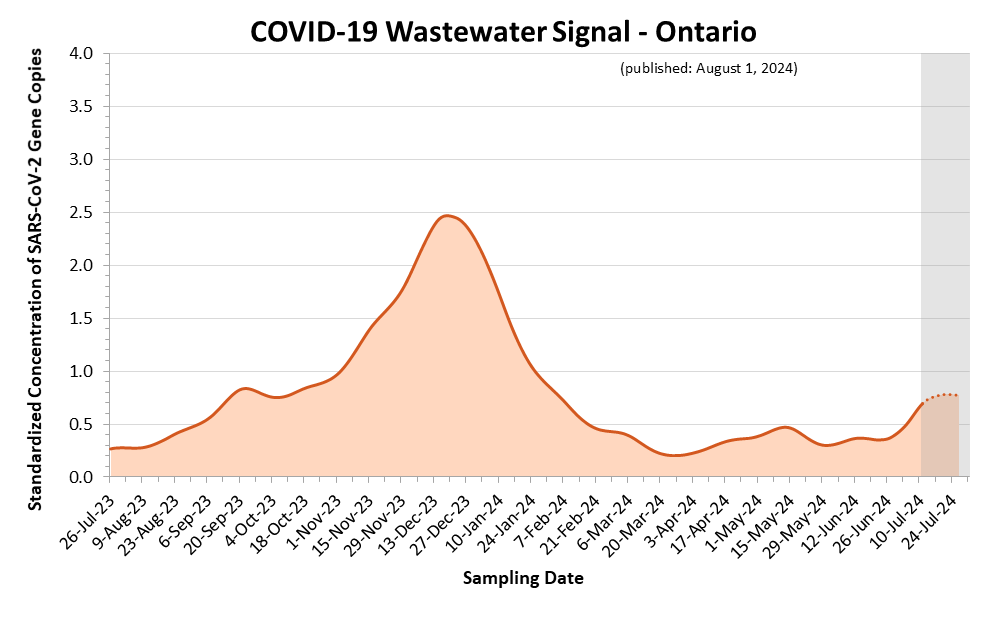
Pandemic: there is nothing light about the pandemic, but there is something positive. It may not seem positive, but it is good news that the total number of Americans dying each day is no longer historically abnormal. So while people are still getting sick from COVID-19, we are back to “normal” in terms of causes of deaths. At least for now. The COVID waste water signal for Ontario is showing a slight increase this month…let’s hope it’s just a blip. And let’s hope that governments continue to fund this monitoring, as this piece argues. We need it.

While public health is back to normal, we still see the after effects of the pandemic. For example,  local government jobs are going unfulfilled for many reasons. Companies are quietly packing it in when it comes to them using office space, at least big technology companies in NYC (and I suspect elsewhere). Schools are struggling with chronic absenteeism. And covid the disease is still affecting patients. I suspect these ripples will continue to affect our world for the rest of the decade.

That said, any good news about that this disease is very good news indeed. There are worse things in the world than having too many tests warehoused because of the decline of this terrible disease.

Social Media: there was a big shakeup in social media this month when Meta announced Threads and it quickly rocketed up to 100 million users (including yours truly). It’s too early to know what this will mean, but if Elon Musk continues his idiotic ways and Jack Dorsey continue with his half assed ways, then Threads could become the dominant company in a place that Twitter once was. (One thing interesting is it seems to be vearing off in a different direction and avoiding politics and news. Could be a wise move. Read more, here.)

Nova Scotia: last month I was writing about people evacuating in N.S. due to fire. This month they had to evacuate due to flooding. Ye gads. I feel sorry for my family, friends and other Nova Scotians suffering through that extreme weather. You can read about it here, here, and here. Awful. Climate change and the terrible effects are starting to overwhelm us.

Donald Trump is still in the news, mainly due to (more and more and more) indictments.  Remember, the best way to keep up with all his legal trouble is by signing up to the newsletter indictment.fyi by Dan Sinker. The Times also has a big section on the documents case against him. I still think he will get off, but the legal traps are multiplying rapidly.

In other legal news, the founder of the Celsius cryptocurrency was recently arrested. Most crypto/blockchain/web 3 news these days will be about bankruptcy and jail.

To close out, here’s a story on how Adele warns fans about throwing objects at musicians. I’ve seen several musicians hit with phones, including Drake, Harry Styles, and more. It’s insane. Also insane are foot eating competitions. Do you think you have want it takes to win a hot dog competition? Are you sure? After you read this, you may reconsider it.

Thanks for reading, as always. I leave you with this, from Fanny Singer along with mom Alice Waters. They are talking about Fanny’s new cookbook that had come out at the beginning of the pandemic. Just wanted to include it here, as a reminder of how things were.


The 40 hour 5 day work week has long been dead – we need the four day week to get back to 40


The 40 hour / 5 day work week has long been dead: we need the four day week to try to get back to 40.

Implicit in the 5 day / 40 hour work week was that for the most part a husband would work for an employer during that time while a wife would do 40+ hours of unpaid labour at home. So you really have an 80+ hour work week for a husband and wife team.

When the labour at the employer was factory-like shift work, a 40 hour week was truly a 40 hour week. (Domestic labour had no such boundaries.) But as work became more office oriented, many employers and ambitious employees shunned the “9 to 5” in favorite of longer hours. As more work became digital, computers came home and that time became work time. The 40 hour work week morphed into the 45, 50, 60 even 70 hour work week.

As a result of all this, men and women find themselves with very little free time for themselves. If they aren’t working, they are taking care of their family, nuclear and extended. Or they are taking care of their homes. Most people would tell you their responsibilities+work is not 8 hours a day: it’s like more like 12 or 14. Plus time on the weekend.

While employers might feel this benefits them, some of your potentially better employees — mainly women at this point — are lost to the overwhelming responsibilities they have to deal with. And even if they are somehow managing, they are likely unhappy and likely to burnout and quit, and a cost to the employer as much as the employee.

Given all this, a 4 day work week would still likely result in a 40+ work week, but at least the resulting weekend would give people a chance to truly rest. Nowadays, Saturday is a day to catch up on home responsibilities and Sunday is a day of either religion of recreation**. We need an extra day. At least.

Too many employers are still focused on things like hours worked (or worse, working in the office). Employers need to know what their purpose is and tie their employees effort to that, while recognizing employees are not machines or cogs but people. And not just employers: we need that incorporated into our society as a whole.

For more on this topic, you can easily do a search and find many pieces on how it is beneficial. To start, read this in the pro-business Wall Street Journal: The Four-Day Workweek Gets Shorter With Practice – WSJ

(** At my employer there would be many people who would be sending out and responding to emails up until noon on Saturday, breaking off to take care of their family, their homes and themselves, and then start sending out and responding to emails on Sunday evening. Their weekend was from noon on Saturday to Sunday at 6 pm.)

Can you run in summer? And other fitness advice you can use


Can you run in the summer? Of course. You just have to be smart about it. If you are interested and need advice, the New York Times has a whole section on summer running. Check it out.

Not that you have to run. Walking/running or simply walking is a perfectly fine way to get in some exercise on hot days. The Times also has a walking workout that may be just the thing you need to stay fit safely.

Back to running. Sometimes all you need to help with running is some better gear. Here’s six very different runners on what they consider their  essential running gear (not all of it is something you wear).

One of the runners featured there is Martinus Evans. He talks about his slow af run club here. I greatly admire him. He has a new book out: if you need inspiration, check it out. (Image above is of the book.) Running slowly in summer is especially a good idea.

Not all runners are inspirational. Here’s a story of  how embattled Arizona Senator Kyrsten Sinema uses campaign cash for her marathon habit. She’s a good runner, as this shows, but that is not something I would not want my representative to be doing.

Whatever her motivation is, if you need motivation, maybe running bingo can help you. Or this story on ultramarathon running from dawn dusk  over 24 hours.

It’s not all running here. This is a good piece on self described “swole woman” Casey Johnston who is an inspiration to anyone looking to get fitter using weights. Any type of weight. She publishes an e-book that looks good for beginners especially called Liftoff: couch to barbell. Check out her shop, here for more good things.

This isn’t hers, but this full body workout you can do in 20 minutes might be the thing you need to get in shape or stay fit.

I thought that this was interesting:  how to get the most out of apple watch heart rate zones. Related, here’s how analyse your health with python and apple health

Here’s something on nutrition myths. Here’s a piece in the Atlantic on ozembic.

This is how to tell the difference between being  sleepy and being fatigued differences. Maybe you need a nap: maybe you need a break.

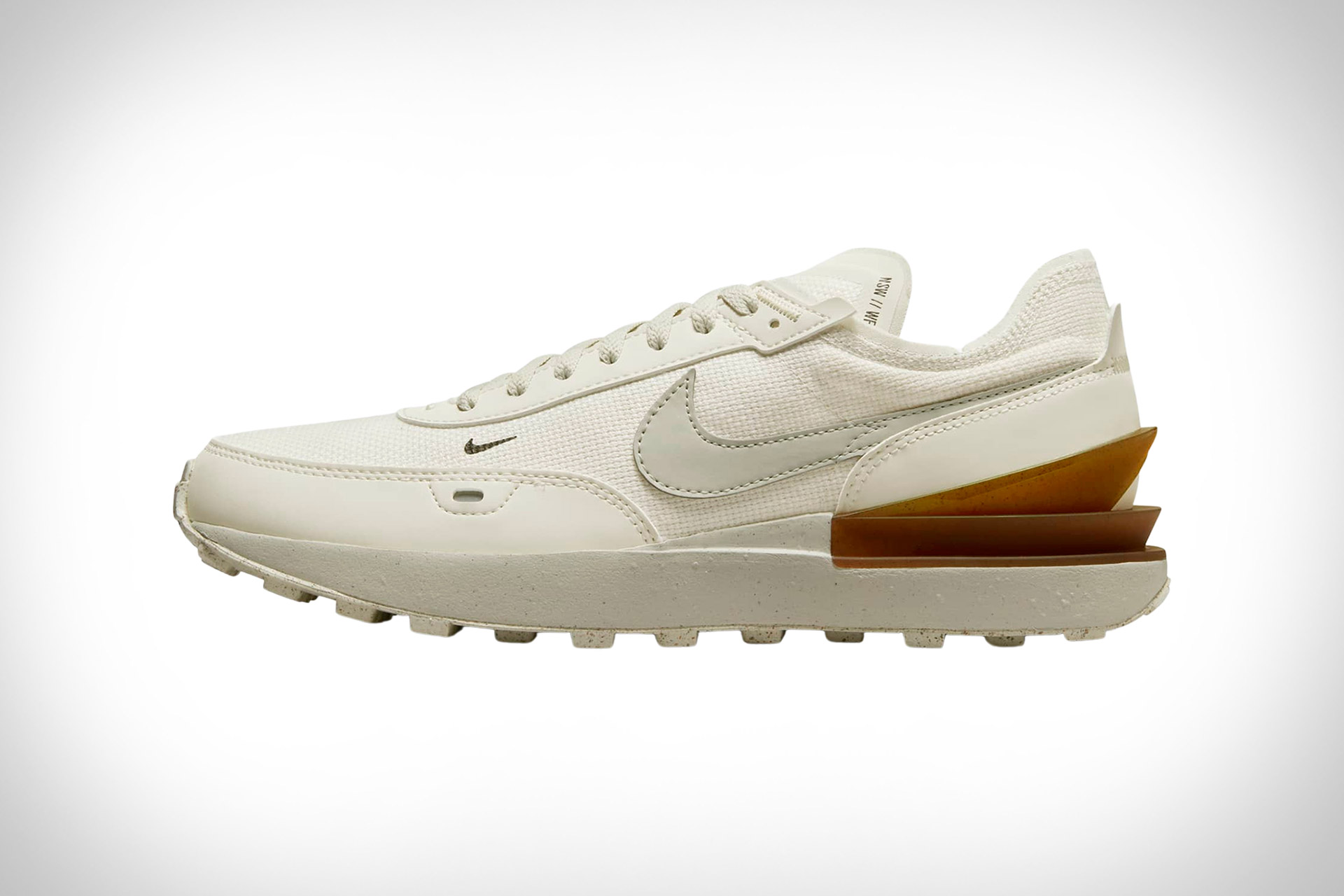
Finally, here’s a cool shoe:  nike waffle one se (shown below). Take a walk AND be stylish doing so.


i

The Wham! documentary is surprising and good and watch it you should

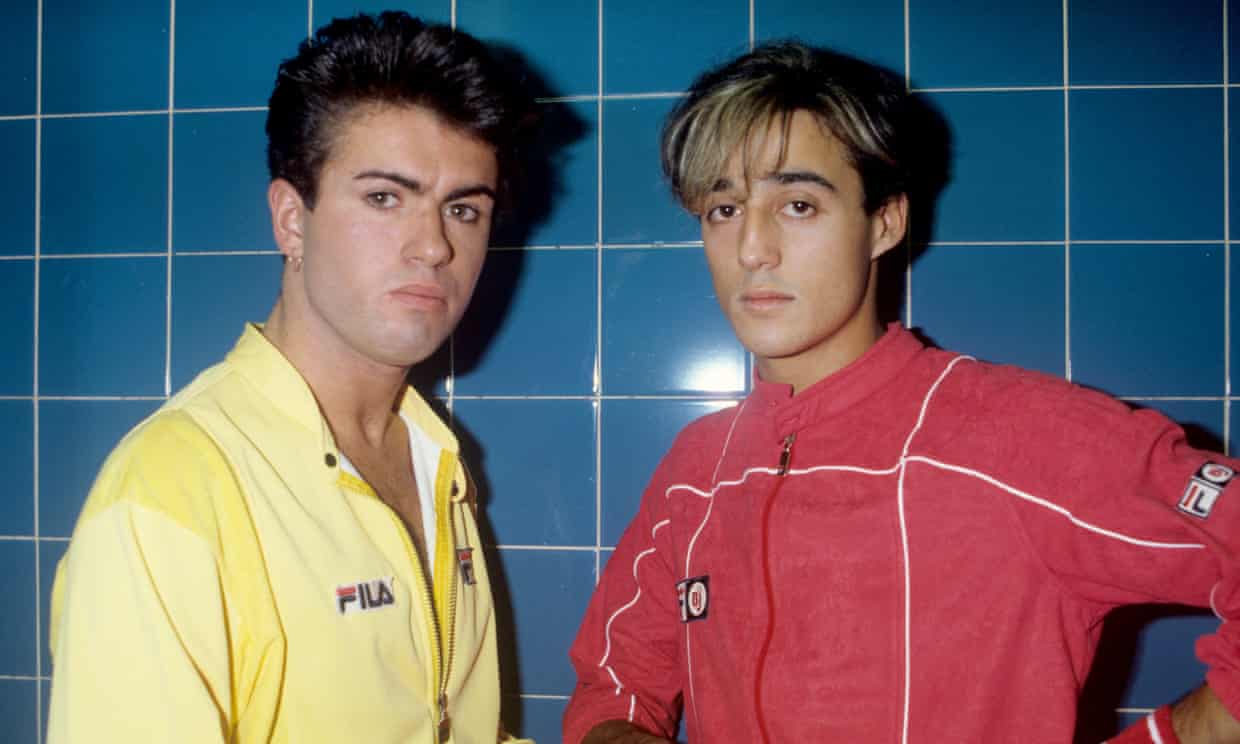
Like Austin Kleon, I found the Wham! documentary a “delight”. He adds (and it’s true) that it is “tight, light, well-edited, and stylistically coherent”. It’s also 90 minutes, and on Netflix. If want to watch something good to watch this week, make it that.

There’s no spoilers here but I must say I found the documentary surprising in several ways. Surprised at how different the men were than I thought they were. Surprised they achieved fame well before fortune. Surprised how lots of things I thought about their career and their music were very different than I imagined.

The documentary also cleared up one of the biggest mysteries I had about the band, which was what was the point of Andrew Ridgeley in Wham. I just thought he was some weird side performer that managed to get stuck to George Michael. After watching this, I can see there would be no George Michael without Andrew Ridgeley. The evolution of Michael from shy guy to major star would not have been possible without Ridgeley and Wham.

There’s been a number of good reviews of the documentary. This take at the New York Times I found interesting, especially this comment: “born during Motown’s ascent in the early 1960s and, in adolescence, bonded to each other as disco was handing the party baton to new wave and rap. They synthesized it all (plus a little Barry Manilow and Freddie Mercury, and some Billy Joel) into a genre whose only other alchemists, really, were Hall and Oates.” Once that thought is stuck in your brain, you can clearly hear all the influences Wham! bleeding into their music.

Besides that, this piece from the San Francisco Chronicle really understands the two men. This review at rogerebert.com was the one I most agreed with. Here’s something from the Guardian for those who like that sort of thing.

I’m glad Ridgeley is having a moment. He seems like he deserves it. More from him, here.

All that said, go watch it. You’ll be glad you did.

How to use the universe as an instrument to do science experiments

If you’ve been reading the news lately, you may have heard about NANOgrav and the work they were doing. If you missed it or forgot:

Scientists have observed for the first time the faint ripples caused by the motion of black holes that are gently stretching and squeezing everything in the universe.

They reported Wednesday that they were able to “hear” what are called low-frequency gravitational waves—changes in the fabric of the universe that are created by huge objects moving around and colliding in space.

How did they do that? Well:

No instruments on Earth could capture the ripples from these giants. So “we had to build a detector that was roughly the size of the galaxy,” said NANOGrav researcher Michael Lam of the SETI Institute.

The results released this week included 15 years of data from NANOGrav, which has been using telescopes across North America to search for the waves. Other teams of gravitational wave hunters around the world also published studies, including in Europe, India, China and Australia.

The scientists pointed telescopes at dead stars called pulsars, which send out flashes of radio waves as they spin around in space like lighthouses.

These bursts are so regular that scientists know exactly when the radio waves are supposed to arrive on our planet—”like a perfectly regular clock ticking away far out in space,” said NANOGrav member Sarah Vigeland, an astrophysicist at the University of Wisconsin-Milwaukee. But as gravitational waves warp the fabric of spacetime, they actually change the distance between Earth and these pulsars, throwing off that steady beat.

By analyzing tiny changes in the ticking rate across different pulsars—with some pulses coming slightly early and others coming late—scientists could tell that gravitational waves were passing through.

The NANOGrav team monitored 68 pulsars across the sky using the Green Bank Telescope in West Virginia, the Arecibo telescope in Puerto Rico and the Very Large Array in New Mexico. Other teams found similar evidence from dozens of other pulsars, monitored with telescopes across the globe.

I think it’s great science. You can read more about it here (and it’s where the quotes above come from): Scientists have finally ‘heard’ the chorus of gravitational waves that ripple through the universe at phys.org.

Did you know this is not the first time scientists have used distant objects in space to do science? Indeed, as far back as 1676, Ole Rømer used eclipses of the Jovian moon Io to determine just how fast light moves. It was a brilliant experiment that you can read about, here.

Science is as a much a creative process as it is an analytical process, and I think it is brilliantly creative to use the universe as an instrument to add to our scientific knowledge.

P.S. you can actually measure the speed of light using a chocolate bar and a microwave. Really! See this fun video to see how:

Hula hoops, or if you don’t understand NPC streaming or Pinkydoll, maybe you’re not supposed to

There was a fair amount of hubbub last week about the woman above who is known as Pinkydoll. Most of what it came down to is: what is going on??

Well if you are curious, I’ve found these three pieces useful in getting a better understanding of the phenomena: this is from the Washington Post, this is from Vice and this is from knowyourmeme.

As for me, I find it interesting because it combines a number of new media and ideas, from TikTok to gaming to monetization of audiences. The fact that they all roll in together makes it especially bewildering to people not familiar with those things. But like I said, if you don’t get it, maybe you aren’t supposed to. I’m familiar with that feeling, but I feel like many younger than me are not, and it was that cohort that was complaining about this last week.

Culture arises from new ingredients. These Internet things are as much our culture now as new books and new films. Get used to it. Hula hoops arise in all forms.

Paul McCartney’s newest creations using history and science fiction


McCartney has always been one to explore new ideas. So it doesn’t surprise me to learn that he used AI to help with a ‘final’ Beatles song. Unlike others who might muck about and try to create something Beatlesque with AI, he argues that there is nothing artificial in the “new” Beatles song. AI was just an additional instrument Paul used to create music.

While he’s been in the realm of science fiction with his AI project, he’s also been going back in time using photographs to produce a new book. He writes about the book, “1964: Eyes of the Storm – Photographs and Reflections” in the Guardian, here and in The Atlantic, here.

Regardless of what he is using, here’s a good essay by Austin Kleon on McCartney’s creative process: McCartney on not knowing and doing it now. McCartney often gets dinged for his creative failures, but I would argue he has been so massively successful because he tries and fails often enough and he does not stop whenever so called failure occurs. (It helps that things that were once considered failures (e.g., McCartney I and II) turn out later to be considered successes.)

Here’s to Paul successfully living to be a 100 and providing us more great creative works.

(Image of McCartney recording McCartney II, via Austin Kleon’s site)

AI and the shift from opinion to effect


Here’s some things I’ve been clipping out and saving concerning AI. The pattern I see emerging in my clippings is one where I am less interested in opinion on AI and more interested in the effects of AI on the world. There’s still some good think pieces on AI — I put some here — but the use of AI is accelerating in the world and we need to better understand the outcomes of that.

AI Think Pieces: For people who want to be really afraid of AI, I recommend this Guardian piece on  unknown killer robots and AI and…. well you read and decide. On the flip side of that, here’s a good piece critical of  AI alarmism.

Bill Gates chimes in on how  the risks of AI are real but manageable. My friend Clive Thompson discusses a risk of a different sort regarding AI, and that is the possibility of AI model collapse.

The mystery of how AI actually works is delved into at Vox. To me it is one of the potentially big problems AI will have in the future.

Practical AI: here’s a piece on how the  Globe and Mail is using AI in the newsroom. Also practical: How AI is working in the world of world of watches. I loved this story of how AI is being used to translate cuneiform. AI is also being used to deal with forest fires.

AI effects: This piece is on how AI’s large language models are having a big effect on the Web as we know it. To mitigate tithings, the Grammys have outlined new rules for AI use.

when it comes to writing, I think the “Five Books” series is great. They will ask an expert in an area to recommend five books in their field that people should read. So I guess it makes sense that for books on  artificial intelligence, they asked….ChatGPT. It’s well worth a read.

Not all articles written by/with AI turn out great. Ask the folks at Gizmodo.

Speaking of AI and books,  these authors have filed a lawsuit against OpenAI for unlawfully ingesting their books. Could be interesting. To add to that, the New York Times reports that “fed up with A.I. companies consuming online content without consent, fan fiction writers, actors, social media companies and news organizations are among those rebelling.”

On the topic of pushback,  China is setting out new rules concerning generative AI with an emphasis on “healthy” content and adherence to socialist values.

Asia is not a monolith, of course. Other parts of Asia have been less than keen to the EUs AI lobbying blitz. Indeed, India’s Infosys just signed a five year AI deal with 2bln target spend, and I expect lots of other India companies will be doing something similar regarding AI. Those companies have lots of smart and capable IT people, and when companies like Meta open their AI model for commercial use and throw the nascent market into flux, well, that is going to create more opportunities.

Finally, I suspect there is a lot of this going around: My Boss Won’t stop using ChatGPT.


It’s summer! Time to eat your veggies! (or, food links for food lovers, July 2023)

It’s summer! And summer is the time you want to take all the great produce available from the markets and turn it into something. Let me help you with some great recipes.

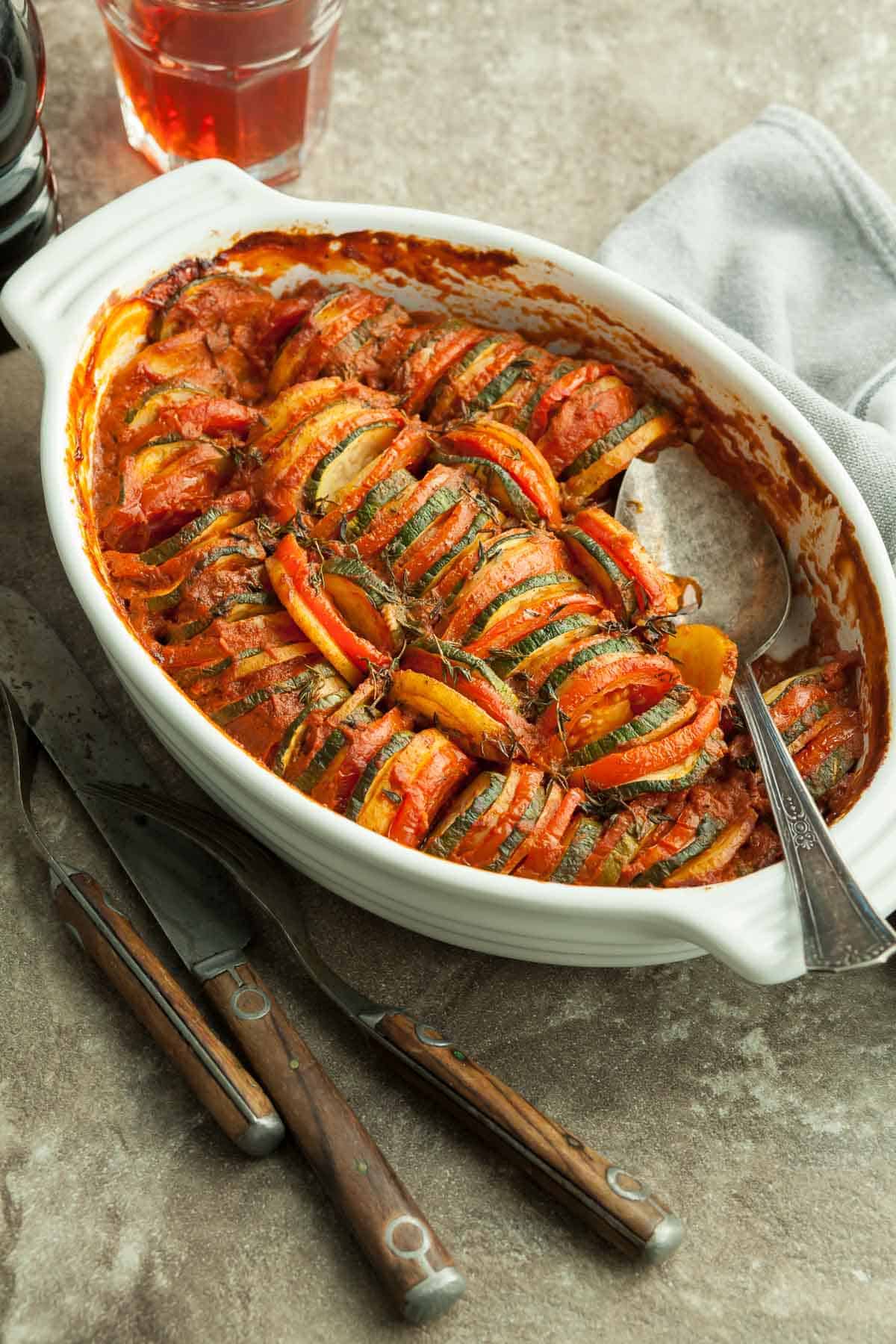
Tians: One way to use fresh veg is to lean into tian recipes. For example this one, provencal vegetable tian (shown above), or this one, which I made recently, summer vegetable tian. A tian is not all that different than ratatouille, but as Martha show in this piece, what is a tian, you can make one out of so many different vegetables. Need still more tians? Food and Wine has you covered with this Root Vegetable Tian.

Fresh veg: I love corn and broccoli, so I like this recipe for sauteed broccoli and corn salad. Corn salads look as great as they taste. Got green beans? Make Alison Roman’s blanched green beans with scallion and soy. Got some fresh kale or chard? Then make her lemony white beans with anchovy and parmesan. Packs a punch.

Do you have a bunch of asparagus? Sure you can steam it. But you can also bake it. Or to get a bit fancier, you can make this creamy Asparagus & Leek Crespelle (i.e. Italian crepe) (See below)

(If you lack leeks, this can help: leek substitutes.)

Crepes sound good, but so do galettes. If you agree, try this: This Cheesy Tomato Galette Needs Only 3 Ingredients. Use up those fresh tomatoes! If you need to use up some zucchini, try making this:  Crispy Baked Zucchini Fries.

Root veg: while all this fresh vegetable on hand is irresistable, I would be remiss if I did not include some root veggie recipes, since I love a good carrot or potato dish.

These Garlic and Herb Mashed Potatoes are a perfect side dish, as are these Basic Roasted Carrots from Hugh Acheson, whose recipes I always recommend. Parsnips are another great root veg, and I support this: In Praise of Parsnips, the Humble Heroes of the Vegetable Drawer.

Speaking of great sides, here’s Nigella’s salt and vinegar potatoes that make me think of Britain. (Here’s another version from the New York Times: salt and vinegar roasted potatoes. Relatedly, salt and vinegar spanish tortilla recipe from Serious Eats.) For a Greek side, these greek lemon potatoes go great with anything but especially lamb and chicken or really anything Mediterranean. (Again, here’s the New York Times and their version of greek lemon potatoes).

I love a good potato gratin, which is why I am giving you four versions of that dish: here, here, here, and  here.

To close out this section, consider making potato and cheese tacos. Or any of these beet recipes or cabbage recipes.

Misc.: none of these fit into a category other than delicious veggie recipes. Here’s 1 from Saveur: Asian Greens with Garlic Sauce (Choy Sum) and here’s 40 Ways You’ll Love Using Bitter Greens, also from Saveur.

This sounds great:  Tabbouleh with Marinated Artichokes and Baby Spinach. Do you have lots of peppers? Make peperonata.

You want this: a good guide on how to roast any veg. Here’s a fine way to use up your herbs: green goddess dip.  This is a good weeknight meal: one pot veggie rice bowl. Finally these are good for anyone on a budget: the BBC’s budget vegetarian family meal plan for four.

How to get started reading a particular author? The Guardian has a solution

If you want to get started reading a particular author but you don’t know where to start, head over to the Books section of The Guardian and read: Where to start with. They introduce you to a range of authors from Agatha Christie to Zadie Smith. Highly recommended.

Will there be Doom? (What I find interesting in hardware/software in tech Jul 2023)

While my last few posts on IT have been work related, most of these are on hardware and software and tend to be more hobby and fun related.

Hardware links:

Software links:

Hope something there was useful! As always, thanks for reading!

P.S. Before I forget… here’s a piece on how a hacker brought Doom to a payment terminal. Love it!


On restaurants in 2023, post-pandemic and in general

For much of this decade restaurants have suffered for many reasons, the pandemic being the main one. I am actually surprised how many made it through those years of illness and closures. But make it through they did, mostly.

Mostly, but not all. Some big name places like Noma closed, but that was for several reasons. Some tried something radical, only for it to come out all wrong. See: What Went Wrong With Eleven Madison Park’s Vegan Menu (still got 3 Stars!). Others stuck to what was tried and true and came out the other side intact (albeit with higher prices): Le Bernardin Holds On to Its Four Stars.

Speaking of higher prices, read:  Why *are* Restaurants Are Charging $12 for Fancy Butter, and find out. Don’t fret, however, for not everyone is changing more. Some have a problem with that: Tacos Should Cost More Here’s Why.

Here’s some other reads regarding restaurants post-pandemic that I thought were worthwhile:

Beautiful brutalism at home in Rome


For some, the word “brutalism” does not go with the words “beautiful” or “home”. For those, i recommend the page to visit is this: Raw and Refined: Inside a Renovated Brutalist Apartment in Rome. It’s full of photos (like the one above) showing just how brutalism can be home-y and beautiful. I think this sums it up:

Paired with the original Brutalist details are a variety of tones, textures, and materials that add up to a visually enticing space. The roughness of the terracotta tiles on the oval island and concrete pillars are juxtaposed with the smooth Patagonia marble countertops that connect the two.

For me brutalism is at its best when it pairs up with other design elements. Brutalism left to its concrete self is unappealing to me. But put it together with nature or marble or fabric or something other than itself and I think it really shines. It certainly does in that Roman apartment.

Reliability is a key quality in a better life. You need more of it.


Last week I had a really good work day and when it was done, I was satisfied and happy with how it went. The key to everything going well that day hinged on one thing: reliability. During that day:

  • I could rely on myself to get the work done because I had done it before and knew what it took to do it in terms of time and other resources
  • The resources I needed to work with were also reliable: nothing was breaking down or old or flaky. I had time. I could focus on the task at hand.
  • I could also focus because my work environment was also reliable. I had no interruptions. I had no need to make changes to my work area or the area around me. I had the supplies and access I needed.
  • Additionally the people I was working with were reliable. If I needed anything, I could ask them for help and they would provide it.

If you are struggling to have productive days like that, ask yourself: is a lack of reliability contributing to the problem? If so, make it part of your solution to increase the thing you lack ASAP. And it’s not just a matter of being productive: being able to rely on the people and things and events in your life leads to be a better life generally. So dump those people you can’t depend upon. Trash those broken down tools you use. Find a better environment you can be certain of. Reliability and quality go hand and hand. Get more of both in your life. You’ll end up being more reliable for others as a result. The benefits ripple outwards.

Is this the start of the decline of opera in New York?

I have always been envious of New Yorkers and their Metropolitan Opera House. Toronto’s Canadian Opera Company is planning to perform 7 operas next season (and that’s good). Meanwhile the Met in 2022-23 performed 22. With that many performances going throughout the year you could sometimes feast on four different operas in a weekend! And it’s not just quantity: the greatest performers in the world are appearing in those shows. I cannot be alone in my envy and admiration of it all and imagining it to be never ending era.

So I was somewhat shocked to read that we may be at the end of that era, according to this piece in The New York Times:

Ticket sales have been robust for some new productions, even of contemporary works. But revivals, less obviously newsworthy and less widely promoted, are no longer sure things — especially slightly off-the-beaten-path stuff like Mozart’s “Idomeneo” or Verdi’s “Don Carlo.”

And I was disturbed to read this:

In an attempt to make ends meet, the Met has raided its endowment and plans to put on 10 percent fewer performances next season, which will feature just 18 staged operas (six of them written in the past 30 years). The days of being America’s grand repertory company, of 20-plus titles a year, could be slowly entering the rearview mirror.

Besides less new stuff, it sounds like some of the old stuff is being put out to pasture:

So it was fitting that, last month, the Met said farewell to one of the shows that typified the era that’s ending: its “Aida” from the 1980s. The production was typical Met: hardly cheap but sturdy and flexible, into which you could toss singers with relatively little rehearsal. The company’s model has depended on a core of stagings of the standards like this — ones which could be mounted, and sell well, year after year. If there’s less of a year-after-year opera audience, though, the only solution may be to do less.

All signs point to the beginning of a decline of opera at the Met. Now perhaps this is a just a temporary decline brought on by the pandemic and our change of behaviors. But I fear it is not.

If you are in New York (or anywhere), make plans to go to an opera. Even if you know nothing about it, an evening at the Met is always magical.

(Photo Credit: Marty Sohl/Metropolitan Opera)

The 70s, now romanticized, were a time of excess in culture


Every so often I see people like Martin Scorsese and others talk nostalgically of filmmaking in the 70s. They talk about the freedom they had to make the films they wanted to make, and how filmmaking went downhill after that. It is true, there were many great films made in the 70s, and many filmmakers like Scorsese and Coppola and DePalma and others who made them.

Whenever I start to think nostalgically of all that, I remember Michael Cimino and the disaster that was Heaven’s Gate. Everything that was wrong about that freedom and that auteur style of filmmaking reached its nadir in Cimino’s film. Indeed,  “the film’s financial failure resulted in the demise of director-driven film production in the American film industry, steering back toward greater studio control of films”.

Excess wasn’t limited to film. If you listened to music of any sort, you likely heard Carole King. If you flipped open a magazine, you saw an ad for a record club (“get 10 albums for a penny!”) and you saw a picture of a barefoot King on her Tapestry album, which was everywhere all the time. There was just so much of her. I would not be surprised if people dreamed of that photo at night.

That was the 70s. If an inch was good, then a mile was better. It was the time of baby boomers in their 20s with their sixties hangover trying to be as hedonistic as possible before they settled into their jobs and houses and families. It all had to end. I’m glad it did.

P.S. For more on Carole King — who I liked, in proportion 🙂 — see this: how Carole King revolutionized 70s music.

The brilliant apparel of the Bitter Southerner General Store

While the Bitter Southerner General Store has lots of great stuff on it, I especially loved the Apparel section. I mean, how can you not love a T shirt that says “make more biscuits”? That right there is as much a commandment and a way of better living than anything I know.

On the more serious side, there is this great message:

Powerful and wise.

Finally, I think this is simple and beautiful:

Can’t you just taste that sandwich? Love it.

Cleaning is a form of care, both for other things and for you

There are many ways to think of cleaning. You can think of it as a chore, a burden, or a responsibility. Most of the ways I think about cleaning are negative.

So I was happy to read and reread this: Cleaning as Self-Care from the site zen habits. It focus on how cleaning can be a form of self-care. By “cleaning, organizing, declutttering” what is around you, you are taking care of your life. Of yourself. The act of cleaning is the act of caring.

The act of caring does not stop with you. What you clean shows what you care for. By washing your favorite clothes, by decluttering your closets, or by organizing your desk, you are showing that you care about those things. Likewise for things you do not clean.

The next time you are cleaning, notice how you feel while cleaning something you love and then notice how you feel when you have to clean something you are indifferent too or dislike. Considering getting rid of the things you have negative feelings towards cleaning. And if you can’t get rid of them, perhaps you can work on changing something so you do care for them and you do have positive feelings about cleaning them.

Cleaning requires effort, and effort can lead to you feeling badly. Changing your perspective on it can result in you feel positive and caring. Give it a try.

A cool site for people who write books (like Stewart Brand) and people who read them


books.worksinprogress.co is a cool site for people who write books and people who read them. As they explain:

Books in Progress is what we call a “public drafting tool”: Drafts will be made available for comment from the public, allowing for direct collaboration between author and reader.

As a reader, you can comment on a passage from the text, or respond to another comment. The author will accept or dismiss these comments. Once the author implements comments, a new draft will be created and the current one archived. Helpful commenters will be thanked in print at the author’s discretion.

Books in Progress was developed by Works in Progress in partnership with Stewart Brand and Stripe Press.

For authors with great readers, I could see this being an invaluable tool. Drop on by the site and see for yourself.

The 100 best restaurants in NYC in 2023 (plus the best places to eat and drink outside)


Yesterday I wrote about restaurants in Paris, today I want to point out the list of the 100 Best Restaurants in NYC, according to The New York Times food critic, Pete Wells

It’s a great list. There are restaurants for all the different boroughs and at all different price points. There are fancy French restaurants and there are casual night markets and more. You can find old school places like Barney Greengrass and Le Bernardin. You can find hot new places like Atomix and King. Whatever you need, the list can help you with.

If you live in NYC or plan to visit, you owe it to yourself to check out the list and start making reservations. Or just drop by.

P.S. If you are going to be in New York in the warmer parts of the year, you also owe it to yourself to check out the Vogue editors guide to outdoor dining in NYC. Some days you just want to get a cocktail and sit outside and enjoy all the city has to offer. The folks from Vogue can help.

(Photo is from the website for King.)


Paris bistros are resurging, and that’s great to see

I love Paris and I really love bistros and those two things go well together. But while Paris seems eternal, there was often reason to fear their bistros would die off. Well, according to this, I think I can allay my fears for now: 6 Paris Bistros to Try Now in The New York Times.  According to the Times:

Paris has recovered its scents, and the city is suddenly ravenous. The whiffs of shallots sautéing in butter, bread baking, meat roasting and bouillon simmering that invisibly punctuate any stroll in this food-loving city are back. In fact, the French capital is in the midst of a restaurant boom.

“I think it’s a carpe diem thing,” said Ezéchiel Zérah, the Paris-based editor of two popular French food publications. “After Covid, everyone has a keen appetite and wants a good time.”

Encouraged by pent-up local demand and a dramatic revival of the city’s tourist trade, young chefs and restaurateurs are hanging out their first shingles in Paris, and the most popular idiom is the beloved Parisian bistro. Some of them are pointedly traditional — the delightful Bistrot des Tournelles in the Marais, for example — while others offer a refined contemporary take on bistro cooking, notably the just opened Géosmine in the 11th Arrondissement.

Sounds superb! Also

What all of them have in common is chefs with a refreshingly simple culinary style. “No wants tweezer cooking anymore,” said Thibault Sizun, the owner of Janine, an excellent new modern bistro in Les Batignolles, a neighborhood in the 17th Arrondissement.

I have to say, the dish below looks pretty tweezerish to me, but I quibble.

All the places look fine, and the food looks fantastic. It makes me happy to hear that bistros are doing well. To see for yourself, check out the article.

(The above photos are from Joann Pai for The New York Times, who took some other great photos in the article too.)

Work outside kinda! The desk/office leaves the building


I love a good place to work. While for many those are found within the home or in an office space, there are some found in neither.

Case in point is this very cool portable affordable micro office that can be placed in your backyard or out in public (above). It can go inside, but it works great in a backyard or an office patio.

Now if you want to get out of the house because it is making you claustrophobic, you can work outside all year long with this unit (below).

It looks like a shed in that photo, but if you click through, you can see just how attractive and unshed like it is.

Finally, if you yearn for something really deluxe, then  these 3d printed pods that are sustainable personal offices that you can subscribe to just like netflix might be just the thing you need (below).

All three links have plenty of additional detail on these great person workspaces. Check em out.

Porsche 911: or what I would buy if I won the lottery

People often seem flummoxed when they win the lottery. They wanted to win, and now that they have, they don’t know what to do with their winnings. I get it. I’ll confess that I’ve thought about it before and I was flummoxed too.

Well that was then. Now I know the first major thing I would buy. It would be this baby: the 1989 Porsche 911 Turbo Cabriolet (shown above).

I remember coveting that car when I was younger. And for under $200k, it’s a deal. 🙂

Any day you buy a lottery ticket is a day you could walk away rich. Be prepared!


Some thoughts on being sufficient

It’s an easy thing to make yourself feel insufficient: simply pick a task that is beyond your reach. It can be a nearly impossible physical task, like running a long distance. Or a mental task, like memorizing a long work of fiction. Or it can be a social task, like having plenty of fans and friends. Regardless, it can be something you can be guaranteed to fall short of achieving in the attempt.

(You might exclaim: who’d do something like that to themselves? But people do something similar to that all the time.)

The hard thing is to make yourself feel sufficient. To look past your failings and limits and judge yourself worthy. It requires knowing yourself. Knowing what is required of you. Knowing that even if you can’t do everything or even many things, you still can do some things, and that those things are enough. Those things are sufficient. Just like you are sufficient.

Let us go to Enceladus! (What I find interesting in math and science, July 2023)


As always, there’s lots of exciting science things happening! The big news recently was the announcement by a group of science organizations, NANOGrav, about the existence of gravitational waves splashing, so to speak, all across the universe. You can read more about it, here. It’s a big friggin’ deal.

Space: Space exploration in general remains exciting overall. Part of that has to do with the incredible amount of missions on the go! China is a nation in a hurry when it comes to space exploration. Out on Mars, the rover they sent there has found signs of recent water in sand dunes. Closer to home, they’re doing lunar research with the Chang’e project. On top of that, they’ve successfully launched their latest mission to the Tiangong space station on Tuesday. Incredible. And good to see.

Not all space news is good. A private Japanese moon lander went into free-fall while trying to land on the lunar surface recently due to a software issue and a last-minute switch in the touchdown location.  More on that, here. I have no doubt we will see successful Japanese missions soon and on the regular.

In other news, the UAE is sending a mission to explore the debris field between Mars and Jupiter. More on that, here.

Of course American space work is ongoing. The  James Webb Space Telescope (JWST) spotted a towering plume of water vapor more than 6,000 miles long—roughly the distance from the U.S. to Japan—spewing from the surface of Saturn’s moon, Enceladus.  More on that, here.

Seeing all this space exploration, it may be time to make these  NASA visions of the future posters for real. (An example is the one for Enceladus, above.)

The billionaires are back at it too. Jeff Bezos’ rocket company is taking astronauts to the moon in 2029. Don’t screw it up, Jeff. More here. Not to be left out, Branson’s Virgin Galactic is going back to space after a 2 year hiatus, says this.

If you are feeling left out, know that you can get in on the action,  thanks to a new program launched by astronomers at the University of Arizona Lunar and Planetary Laboratory. You can help science by reading this and getting involved. 

Don’t hesitate. After all,we are all one GRB from being fried out of existence. In fact it almost happened.

Physics:  It was fun coming across the classic E & M text by Purcell and Morin. A great text book I had in university. For quantum fans, this is a good piece on how Einstein Podolsky Rosen paradox scales up.

Wanting to do your own physics experiment? Here’s how to demo special relativity for a $100 or less. Really! More on the science behind it, here and here. Muons are cool and you can be too if you do that.

Miscellany: I thought this on lagrangian mechanics for beginners was good. Relatedly, here’s something on Euler Lagrange.

Think you can’t do math? Read this: are all brains good at math?

This is some weird science: when flies see the corpses of other flies, they get depressed and die soon. Really!

This was a good piece on cancer and the nervous system. I liked how you can make better decisions by using science.

Also cool: what plants are saying about us.

(Shown above, the  NASA artemis III spacesuit. More on it, here)

Blackberry Pi, or what you get when you pair a blackberry and a Raspberry Pi

What do you get when you pair a Blackberry-like device with a Raspberry Pi?? You get the Beepberry Pocket Computer!

I mean I just love the thing! Do I know anything practical I can do with it? No. Does that mean I shouldn’t lust after it? Also no. 🙂

The brains behind it is the same as that behind the Pebble watch, which was a great device IMHO. I suspect this is as well.


Norbert Hoeller, a smart person I know, is blogging. You should read what he has to say.

I’ve often encouraged smart people I know to blog about what they know. Often they tell me stuff and I think: everyone should have the privilege I have to hear this.

So I was delighted that my dear old friend and former colleague at IBM, Norbert Hoeller, is now doing just that! For example, if you heard about how the province of Ontario will give you cash for the privilege of turning down your AC, then you owe it to yourself to read Norbert’s experience with that. His post has that clear explanation and attention to detail I come to expect from him. Like me, you’ll be wiser and better off after reading what he has to say.

Already he’s touching on different topics, like how to keep your Ikea products looking good. I hope he keeps it up. Meanwhile, add his blog to the things smart people I know (i.e., you) read.

Thinking about the SCOTUS and America on July 4th, 2023

Canadians can fool themselves into thinking they understand America and Americans. I certainly can. But America is different and there are many things I don’t really understand, try as I might.

The Supreme Court, SCOTUS, is one of those things. In Canada, the Supreme Court acts like a supreme court should, I believe. It barely gets any notice in Canada, and when it does, it’s usually for a very good reason. No one thinks of it in a politicized way.

That’s very different than SCOTUS, it seems to me. That court comes across as highly political. Which is why people talk all the time about their political leanings. Which is also why I find this feature in the New York Times so fascinating: major supreme court cases for 2023.  For certain cases, the court lines up the way you’d expect. But for a majority of the cases, that isn’t true. Take a look: you’ll see the court is more complex than you think.

That said, SCOTUS has many problems. The corruption of Alito and Thomas, for one. This fact that many of decisions are based on errors which are not hard to find, is another.

Finally, I don’t agree with everything in this, but I think that what Josh Barro wrote on the recent supreme court moves worthwhile. Likewise these pieces by Jamelle Bouie, and Steve Vladeck and Adam Liptak.


New old news from the Big Smoke/Hogtown/Toronto (July 2023 edition)

Well, it’s been a journey here in Toronto. Back in February I wrote about the mayor having to step down due to a scandal. Come May I added how the race was turning into a marathon like event with over a 100 candidates running. Now it’s July and we have a new mayor: Olivia Chow. In the end it was a nail biter of an election. With Chow’s leading in the polls for most of the race, many assumed she would easily win. But at the last minute, the old mayor (who said he wouldn’t interfere in the election) threw his support behind Ana Bailao. The result was much closer than many — certainly me — thought it would be.

Last Monday many of us in Toronto were continually refreshing the  Toronto Star’s election live updates or turning to excellent sources like the local to see what would happen. Dramatically Chow, who had been trailing Bailao in the early election results, eventually surpassed her in the end for the victory.

As for the other 90+ also rans,  no one was even close. Most of Toronto’s progressive voters went to Chow, while those who opposed her went to Bailao. Other prominent candidates like Matlow and Bradford barely registered, votewise.

What happens next? Well, Chow said she would not the strong mayor powers that the Ford government granted to Tory. Perhaps she will be successful without them. We shall see.

In the meantime, if you want to read more on the election, Blogto had a good summary. But check out the Star and the local, too.

Maybe one thing she can fix is the CafeTO program. It was a godsend during the pandemic. Now it seems like the city bureaucrats are strangling it to death. Here’s one of my favorite journalists, Ed Keenan, with some insight into that, here.

I doubt she can do much about the disaster that is the Eglinton Crosstown LRT line: it’s too far gone. At least she can keep a fire under them to delay no more.

It certainly will be a great looking transit line, based on this  private look inside the LRT. Maybe by 2030 we’ll all get to go on it. 🙂 Snark aside, I have seen they have updated the tiles in the Eglinton subway and they seem to be keeping it close to the original. That’s good, because as you can see from this piece on the original TTC subway tiles, much of that tile is gone. Many of the stations that had those classic Vitroline tiles, like Museum (below) and Rosedale, are now very different. Glad to see Eglinton will stick with the classic.

As for the TTC, it’s actually getting safer following the horrifying crime streak that occured recently. Good.

What’s getting less safe in Toronto is something you might not been aware of: backyard poultry. Yep, there is an UrbanHens project here in Toronto, or at least there was, until an outbreak of H5N1 Highly Pathogenic Avian Influenza (HPAI or “bird flu”) occurred. Who knows how long it will last now. Also why people are keeping hens in this city I dunno but you learn something new everyday. (In other Toronto biological news, here is a good guide to trees and shrubs in Toronto. More on that, here.)

Food wise, Summerlicious 2023 is underway in July….a good chance to go and try out restaurants you’ve always wanted to visit. I recommend you check it out.

As for me, one place I need to check out this month is Country Style in the Annex. As BlogTO explains, after 60 years the owners have decided to hang up their aprons and stop slinging schnitzel. Understandable, but sad.

The Annex used to be a mainstay of Hungarian food places like Country Style in the 80s. Here’s a good piece on that. Relatedly, here’s a good piece on the lost restaurants of Toronto…I had eaten at many of them.

Speaking of lost Toronto, here’s a great article on the history of Now magazine. Highly recommended. I also recommend this piece on the famous team of Yabu Pushelberg. In the 80s and 90s they seem to be everywhere and designing everything noteworthy in Toronto.

My final recommendation is this piece on the challenges downtown Toronto businesses are dealing with as hybrid work which show no signs of stopping.

Get out and enjoy all Toronto has to offer this summer, be it schnitzel or Summerlicious. Hit the patios. Or maybe take some beer and a blanket and go drink and relax in one of Toronto’s newly sanctioned drinking parks.

Are all self help books the same?

I am a fan of self help books. I’ve even written a defense of them. So I was interested to read this, which says that every self-help book ever comes down to these rules:

1. Take one small step.
2. Change your mental maps.
3. Struggle is good. Scary is good.
4. Instant judgment is bad.
5. Remember the end of your life.
6. Be playful.
7. Be useful to others.
8. Perfectionism = procrastination
9. Sleep, exercise, eat, chill out. Repeat.
10. Write it all down.
11. You can’t get it all from reading.

I don’t agree. It’s true, you will find many of these rules in popular self-help books. But the best self-help books give you insights and ideas you won’t find elsewhere.

So yeah, if you pick up the latest self help book, some form of those 11 rules may be all that you get. But take some time and do some research and you’ll find some guides that can really help you with whatever you are dealing with.

Don’t give up. Get the help you need. Even if its self help.