On Emmy Noether

Recently the Perimeter Institute held a contest called “Physics Frenzy – Battle of the Equations Championship”. I was sure James Maxwell and his equations were going to win. It turns out he lost (in the final, mind you) to Emmy Noether and her theorem!

Afterwards I wondered if people knew much about her. Besides being arguably the greatest woman mathematician, she was a significant contributor to math and physics in the 20th century. You can read a bio of her here.

Fun aside, the good people at the Perimeter Institute have a series of initiatives centered around Emmy Noether. They also have material where you could learn more about her.  Read about them, here.


My grandfather’s pansies

When I was a child I would often visit my grandfather’s house and admire the pansies he grew near the backdoor of his house. This area would get no sunshine. Worse it was where he would dump hot ash from his coal stove. In this dark fiery place grew white and yellow and purple pansies.

In our culture we associate pansies with softness and weakness. I learned instead that they were hardy and beautiful and defiant. We all should be like my grandfather’s pansies. We should all be so wondrous.


I wrote the above earlier this week and I realized it comes across like so many things I write. I don’t even know why I write this way anymore. Why I write like someone needs advice and I am the one to give it to them. There are few if any that need such things.

Perhaps I should write like most people. Write about what happened recently, what happened in the past, and what if anything I thought about it.

My grandfather did have those pansies. They were beautiful to look at. Even as a kid I was impressed that they could grow there. I liked seeing them as I came through the backdoor of the house he made with his own hands.

I also treasure that memory because I only have a few times I recall interacting with my grandfather. Typically they were about his yard and what was growing there. He grew so much, from the carrots and the cucumbers at ground level to the flowers and the dill that waved high in the breeze. Of all that I appreciated the pansies the most.

Three things to add to your first aid kit for minor mental health issues


Do you think: there are two types of people, those with mental health problems and those with no mental health problems? I used to think that way too. Like an on-off switch. Now I think of mental health as being on a slider switch.

Physical health can be like that. We can have cuts and pains that aren’t life threatening but require some form of physical first aid kit full of bandages and ASA to help us. Similarly, we can have minor bouts of anxiety and depression that also need dealing with. We should have a mental first aid kit to help us with that too.

Here’s three things to consider putting in your mental first aid kit. First, if you are feeling down more than usual, I recommend adding the HALT method. As they explain here,  How To Use the HALT Method When You’re Grumpy | Well+Good:

What Is the HALT Method? HALT stands for: Hungry Angry Lonely Tired The HALT method is based around the premise that you’re more likely to make poor, highly emotional decisions when hungry, angry, lonely, or tired. “The purpose is to help us identify these experiences when we are tempted to engage in a negative behavior and to instead address the underlying issue,” says Kassondra Glenn, LMSW, a social worker and addiction specialist at Diamond Rehab.

I’d add hungry or thirsty. I don’t know how many times I felt down in a minor way, drank some water, then suddenly felt better. Your down moods may be more serious than this, but like any first aid, try that first and see if it helps.

A second thing to put in your first aid kit is movement. Getting out and using your body has well been shown to help with anxiety and depression. Take a look at how much activity (or not) you’ve been doing when you are feeling slightly mental ill. You may need to get out more and move around. Even a brisk walk. For more on how to go about this and why, read: Can Moving the Body Heal the Mind? – The New York Times

The third thing I’d add is logging. Keep track of your moods and feelings and combine that with self care you’ve been applying to yourself. Log your sleep, your eating, your socializing and your movement and combine that with tracking your mood. Then try to apply the things discussed here and see if it changes.

Finally, if you had a headache or some other pain and you treated it and it persisted, you’d go see a doctor (I hope). Likewise with mental pains and sores. If these things don’t help you, go see your doctor. Take care of yourself the best way you can. For physical and mental illness.

Your next TV should be dumb. Here’s how to go about getting a dumbTV and why


I’ve complained here before about Smart TVs and the problem they bring Thinking of getting a SmartTV? | Smart People I Know. After reading this, Samsung details how its TVs will become NFT gateways – The Verge, I am more determined than ever to try and make my next TV as dumb as heck.

If you are leaning the same same way, I recommend you read this: Why You Should Buy the Dumbest TV You Can Find. I’m certain after you do, you’ll want a dumb TV too.

The next trick is how to find one. They offer some advice, but you may not be sure how to apply it. I recommend you do this.

First, take the TV they recommend. Here it is on Amazon:

Samsung Business QB75R 75 inch 4K UHD 3840×2160 LED Commercial Signage Display for Business with HDMI, Wi-Fi, 350 nit (LH75QBREBGCXZA), Black : Amazon.ca: Electronics

You might look at that and shout: whoa, that’s too big and expensive. The way to find a smaller one is like this. See the model ID in the URL? It’s QB75R. The 75 is the size of the TV. What happens if I search for QB55R on Amazon? Well, I find this:

Amazon.com: Samsung Business QB55R 55 inch 4K UHD LED Commercial Signage Display for Business with HDMI, Wi-Fi, 350 nit (LH55QBREBGCXZA) : Everything Else.

Much smaller, much cheaper. Good! But I also get something else, this string: 4K UHD LED Commercial Signage Display.

If I search for that on Amazon, I get a long list of Commercial TVs from Samsung. Awesome! Now if I search for just: Commercial Signage Display, I get other models, like displays from Viewsonic.

Thanks to Amazon, I have a list of options to choose from. If you want to buy them from Amazon, you’re all set. But you can also list the models and prices and shop around.

Good luck. Stay dumb! 🙂

It’s Monday. How much “fun” have you scheduled in your calendar?


That might seem like a dumb idea, but chances are your calendar is full of events you have scheduled for this week: meetings, appointments, get togethers with friends, workouts. Is fun anywhere there?

It may be. Perhaps going for your regular workout is fun for you. Or that murder mystery you watch each week is fun. If so, that’s great.

If you can’t find fun in your calendar, I recommend you read this piece: Why We All Need to Have More Fun in The New York Times. It can help you figure out how to get more fun into your life. Have you forgotten what fun is? It can help you there, too.

Let me add: keep track of the fun you are having. Some of it — maybe most of it — will actually come up accidentally in your week. Note the circumstances which lead to having fun. Try to include them intentionally in your next week.

Likewise, note the events you planned that turned out to be not so much fun. Perhaps you need a break from them.

Life can be hard and painful. It can also be fun. Make sure you get as much of the latter in as you can. Scheduling your fun can help there.

It’s Sunday afternoon. A good time to read Mary Oliver. Here’s her 10 best poems

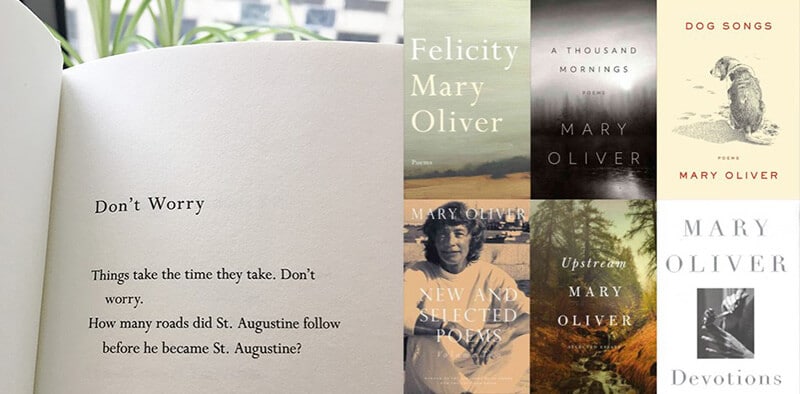
There is never a bad time to read the poetry of Mary Oliver, but Sunday afternoon seems like an especially good time. You may have some of her work already. If so, why not pull it down and savour it?

If you don’t have anything by hers, I recommend you look at this list put together by the good people at the Penn Book Center: 10 Best Mary Oliver Poems – PBC

You may have a favourite outside of these. As for me, it has two of my favorites, Wild Geese and The Summer Day. Go and enjoy. Happy Sunday to you.

P.S. I wrote this on her as well. Some good links in that post.

Great photos from NASA/ESA’s Hubble telescope and the ESA mission to the sun

While people are getting excited about the James Webb Space Telescope now it is in position to take photos, there is still some great work being done with other missions that NASA and ESA have on the go. Case in point, the Hubble telescope. If you click on that link, you can see photos that it recently took of the star Earendel. As they explain:

With this observation, the NASA/ESA Hubble Space Telescope has established an extraordinary new benchmark: detecting the light of a star that existed within the first billion years after the Universe’s birth in the Big Bang (at a redshift of 6.2) — the most distant individual star ever seen. This sets up a major target for the NASA/ESA/CSA James Webb Space Telescope in its first year.

Fantastic!

Meanwhile, closer to home, we have the ESA mission zooming into the Sun with Solar Orbiter and sending back wonderful photos and data along the way. Click the link to get some amazing images of the sun.

It’s all thrilling!

Friday night cocktail: the white negroni (with thoughts on Brutto’s £5 negronis)

I’ve been enjoying negronis lately. If you have a chance to dine at Brutto’s in London like I did this month, you can even enjoy one of their £5 negronis at the start of your meal.

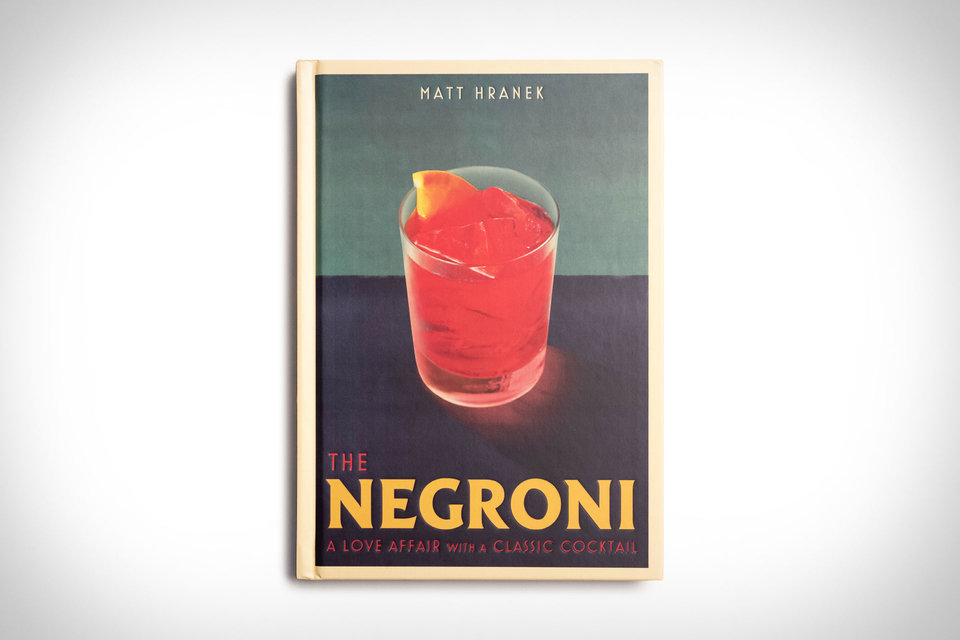
A classic negroni is a fine drink. If you want something unique, why not make this version? Like the classic, this one is also simple but delicious. See uncrate for the recipe.

P.S. New restaurants, if you want to get people into your place, be like Brutto and offer a small and low cost cocktail as a starter. You’ll get people talking about your place. “Did you hear X has a cheap Y cocktail?!” And you’ll get people who may never order a cocktail getting one because it is small. And small cocktails are good because people finish them fast and don’t feel rushed when the food comes out. Win win.

On Jim Jarmusch, the king (to me) of indie films

Last week I had to chance to watch a number of indie filmmakers back to back. Besides Jarmusch,  I saw Wes Anderson’s “The French Dispatch” and The Coen Brothers “Hail, Caesar”.  (Not too long ago I also watched “The Squid and the Whale” by Noah Baumbach.)
He has a fair number of things in common with them  besides being an independent filmmaker. He can get big name actors to work with him and he often hires some of the same actors (Bill Murray, Tilda Swinton, Adam Driver).  He’s older and has a number of films under their belt. His films have  a certain deadpan style to them.

While they are all fine filmmakers, Jarmusch is my favorite. I especially enjoy his characters more than those of the other filmmakers. There’s something deeper in them. Anderson’s characters are often flat, while those of Birnbach are often unlikable to me. Characters in the films of the Coen Brothers are there to be tossed and smashed about like toys.

Artistry asid, one striking thing about his films is that they make way less than the other directors.  Their films can gross nine figures worldwide. For his latest film, he grossed 45 million. Not bad, but that is an exception.  More typical is a film like Mystery Train from the 1980s. It made under $400,000. Even adjusted for inflation, that ain’t much.  (More details, here: Jim Jarmusch – Box Office – The Numbers).

All of this is a long way of saying you should watch more of his films. His latest from 2019 is now on Netflix. If you need details, here’s A.O. Scott’s review: ‘The Dead Don’t Die’ Review: Zombies Gobbling Up Scraps of Pop Culture – The New York Times. I enjoyed it and I think you would too. See it if you have an evening free soon and check it out.  Besides Netflix, you can find his films streaming elsewhere on sites like the Criterion Collection.

I’ll close by leaving this quote from Adam Driver, who has been in a number of his films. In interviews with the cast about How Jim Jarmusch Made an All-Star Indie Zombie Movie, he said:

But at the same time, he’s one of the most unpretentious people. He always used to say on [the 2016 film] “Paterson,” “We have to get it right, because dozens of people watch my movies.”

I like that. Jim Jarmusch is a cool guy. He hires cool people and he makes great films with them. Join the dozens of us who love them and go watch some of them soon.

In praise of non-fancy French restaurants

When I used to think of French restaurants, I used to think “fancy”. Restaurants  with nice table cloths, great lighting, complex dishes, and high prices. Places like  Le Bernardin, Bouillon Bilk, Place Carmen, Maison (S.C.) and more. All fancy, all great and I love them.

While fancy French restaurants are good, I am here to praise non-fancy French restaurants. Restaurants  with basic settings, everyday lighting, simple dishes (often bistro style), and relatively low prices. Sure, the cooking might not be as fancy, but it is still good and it satisfies the need I have for steak frites, moules, pate, croque monsieur, duck confit and inexpensive French wines.

I’ve been fortunate to go to many such places and have loved them. In London last week, I had charcuterie (shown above) at Le Beaujolais. A few weeks earlier I devoured a fine lunch at Fast and French in Charleston. Whenever I am in  Montreal I try and dine at the justifiably famous L’Express. Closer to home, I’m a decade long diner of  Le Paradis and for good reason. Finally, one of my all time favorite places to dine in Toronto is Cote du Boeuf. I was delighted this weekend to savour their oysters, pate, steak frites and duck confit. Fantastic.

There are lots of inexpensive restaurants that serve great Italian and Indian and Chinese and Vietnamese cooking. I love them. I wish there were as many places as those serving everyday French cooking. That would be heaven for me.

Let me know your favorite non-fancy French restaurants. I will add them to my list.

P.S. If you go to Le Beaujolais, get that charcuterie. You will need at least 3 hungry diners. At Fast and French, get the soup and sandwich and wine combo: it’s incredible value. L’express has too many good dishes to mention, but I love the ravioli, though many are big fans of the bone marrow. Le Paradis has great shellfish. Also cheap cocktails: I love their sazerac. The meat at Cote du Boeuf is incredibly good. I try to order many things there, but the steak frites is irresistable.


What I learned writing web scrapers last week


I started writing web scrapers last week. If you don’t know, web scraper code can read web pages on the Internet and pull information from them.

I have to thank the Ontario Minister of Health for prompting me to do this. The Minister used to share COVID-19 information on twitter, but then chose recently to no longer do that. You can come to your own conclusions as to why she stopped. As for me, I was irritated by the move. Enough so that I decided to get the information and publish it myself.

Fortunately I had two things to start with. One, this great book: Automate the Boring Stuff with Python. There is a chapter in there on how to scrape web pages using Python and something called Beautiful Soup. Two, I had the minister’s own web site: https://covid-19.ontario.ca/. It had the data I wanted right there! I wrote a little program called covid.py to scrape the data from the page and put it all on one line of output which I share on twitter every day.

Emboldened by my success, I decided to write more code like this. The challenge is finding a web page where the data is clearly marked by some standard HTML. For example, the COVID data I wanted is associated with paragraph HTML tag and it has a class label of  covid-data-block__title and covid-data-block__data. Easy.

My next bit of code was obit.py: this program scrapes the SaltWire web site (Cape Breton Post) for obituaries listed there, and writes it out into HTML. Hey, it’s weird, but again the web pages are easy to scrape. And  it’s an easy way to read my hometown’s obits to see if any of my family or friends have died. Like the Covid data, the obit’s were associated with some html, this time it was a div statement of class sw-obit-list__item. Bingo, I had my ID to get the data.

My last bit of code was somewhat different. The web page I was scraping was on the web but instead of HTML it was a CSV file. In this case I wrote a program called icu.sh to get the latest ICU information on the province of Ontario. (I am concerned Covid is going to come roaring back and the ICUs will fill up again.) ICU.sh runs a curl command and in conjunction with the tail command gets the latest ICU data from an online CSV file. ICU.sh then calls a python program to parse that CSV data and get the ICU information I want.

I learned several lessons from writing this code. First, when it comes to scraping HTML, it’s necessary that the page is well formed and consistent. In the past I tried scraping complex web pages that were not and I failed. With the COVID data and the obituary data,  those pages were that way and I succeeded. Second, not all scraping is going to be from HTML pages: sometimes there will be CSV or other files. Be prepared to deal with the format you are given. Third, once you have the data, decide how you want to publish / present it. For the COVID and ICU data, I present them in a simple manner on twitter. Just the facts, but facts I want to share. For the obit data, that is just fun and for myself. For that, I spit it into a temporary HTML file and open it in a browser to review.

If you want to see the code I wrote, you can go to my repo in Github. Feel free to fork the code and make something of your own. If you want to see some data you might want to play with, Toronto has an open data site, here. Good luck!


On the complex process of electing the Doge in 14th century Venice

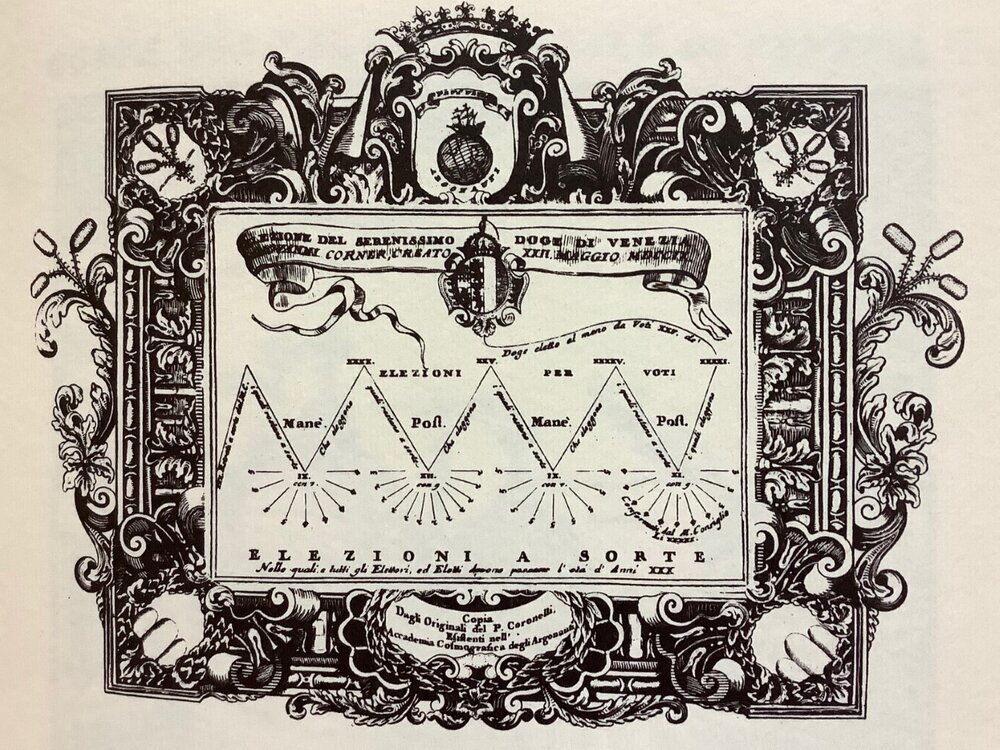
Last week on twitter I came across something that fascinated me: how the Venetians elected the Doge in the 14th century. It was a supremely complex process. At first I couldn’t believe it was real, but then I came across this: Electing the Doge (The Ballot Boy). Not only that, but I came across this academic article explaining why it made sense! And I thought runoff elections of modern states could be complicated.

For more on the city of Venice at that time, I recommend this site: The Ballot Boy – Venice in the 14th century. It provides a superb view of Venice at that time.

(Image link to The Ballot Boy, Diagram of Ducal Election)

A critique of the weird counterfactual history of Matt Yglesias and his case for the Austro-Hungarian Empire


Recently, Matt Yglesias wrote one of his contrarian essays arguing the case for the Austro-Hungarian Empire. There’s so much wrongness about it that it’s hard to know where to start.

Perhaps the best place to start is some basic history of the empire over the 19th century. As the Holy Roman Empire was dying off, the Austrian Empire was formed from it and lasted from 1804 to 1867. From there it transformed into the Austria-Hungary Empire.  During the 19th century the Empire, led by the Hapsburgs, had stability issues. It was battered from the outside by leaders such as Napoleon of France and Bismarck of Prussia/Germany. It was torn internally, with revolutions like those in 1848. Even under less dramatic situations, it struggled to manage large parts of it due to things like the divisive actions of the Kingdom of Hungary.

Given all that, the idea that Yglesias puts forward that:

In today’s light, the idea of the Habsburg realms evolving into a multi-lingual democratic entity doesn’t seem particularly absurd.

Well, it is pretty absurd. The Emperor took all forms of actions to prevent the forces externally and internally from defeating the Empire, but those forces only grew stronger over that time. To imagine it evolving into a singular democratic entity is based on nothing and counter to the history of the Empire during that century.

Yglesias goes on to propose:

The empire wasn’t doomed by its diversity of linguistic groups — it started and then lost a major war.

Actually, it was doomed by its diversity in war and peace. In peacetime it was doomed by too many political groups it could not reconcile. In wartime it was doomed too. (This is covered in depth in the book,  A Mad Catastrophe.) The army of the Emperor was terrible for many reasons, and a key one in particular that led to their downfall was the inability of its soldiers to communicate with each other.

Yglesias drives forward:

And this, I think, is the thin point: had the continent not plunged into war following Ferdinand’s assassination, I think the empire could have survived.

This overlooks why there was a war in the first place. The Empire was looking to flex their muscle in the Balkans since they made aims to move into that area that was once part of the Ottoman Empire. After the assassination, an ultimatum of demands was put to Serbia. The demands were difficult and still Serbia made an effort to agree with them. Despite being agreeable to all but one, Austria-Hungary would not accept this and this ultimately lead up to the Great War. The continent was plugged into that war because of the Empire.

Assuming no war – a tremendous assumption – he goes on to imagine an optimistic future for the Empire:

My optimistic view is twofold:

Absent the pretext of war, the Viennese authorities would recognize the need to return to parliamentary government, even if that meant dealing with socialists as a counterweight to the grab-bag of nationalists.

Franz Ferdinand wanted to cut Hungary down to size (literally) and the Hungarian nationalists might have realized that this was actually in their interests and would have let them be masters of their own domain.

Again no. Hungary had been fighting against the leaders in Vienna for decade. There’s nothing in their history that indicates they would have changed their minds. If you are going to be a contrarian historian, at least have some facts to support your counter history.

He also has a fantastical view of how the Empire might have operated:

I think a more workable version of federalism would have been to leverage the Empire’s small administrative divisions and create a state where a lot of power was devolved to local government with the national government handling national defense and foreign policy, plus the kinds of things that are run out of Brussels and Frankfurt in contemporary Europe.

This is also counter to the facts. Facts such as how Hungary would subvert any kind of spending that was not in their interest, including defense, to name just one.

More fantasy in the form of how schools would run:

The expectation would be that schooling would be available in one or two local languages of instruction in every locality, that every non-German student would be taught German as a foreign language, and that every German student would choose from one of the other languages of the empire. I think that absent the outbreak of war, this would have proved to be a sustainable model

Again, no. Not based on history.

Finally:

And by midcentury, the script has sort of flipped on the Habsburg domains. Far from a feudal relic, the empire starts to seem progressive and modern.

That certainly wasn’t going to happen when Franz Joseph was emperor. He truly was a feudal relic, and the only purpose of the empire was for him to be Emperor. Preferably an empire that was based on those of centuries past. He and the land he ruled was notoriously conservative and antiquated. Nothing in their history would indicate this would become anything other than that, short of dissolution.

In summary, Matt Yglesias imagines an Austria-Hungary that never existed and never could exist, but if it did, it would form a model of some ideal federation within Mittel Europa. The only place that might fill that bill is Switzerland.

If you want to read what the empire was really like at the end, read A Mad Catastrophe. As well, AJP Taylor has written several essays and books on the subject, including this. I’ve found all those worthwhile The Guardian has 10 more books on the topic, here. Finally, consider reading Musil’s The Man Without Qualities.

It’s Monday. Two ways to work better this week: more stretching and less control freaking

Here’s two piece of advice for you on a Monday morning: one is easy, one is hard.

First, the easy piece. You need to work more stretching into your day. Here’s some advice on how to do that. If it has been so long you don’t even remember how to stretch, I give you:

I don’t think you need a dozen stretches (but go for it if that makes you happy). I do four to six for about 20 seconds each and I find that very helpful. I try and focus on the parts of me that tend to get stiff or sore.

Now the hard piece. Does the following apply to you?

  • You’re a perfectionist with high standards (and you don’t trust anyone else to meet them).
  • You want to know every detail of an activity or event: Who, what, when, where, and why.
  • You over-plan and get upset when things don’t go the way you envisioned them.
  • There’s only one right way to do something—which happens to be yours.
  • You get angry when other people mess up your plan, or do things differently than you would.
  • You prefer to be in charge. That way, there will be fewer mistakes.
  • You have trouble giving others free rein to do things as they see fit. Instead, you micromanage.
  • You’re overly-critical of yourself and others.

That list comes from this piece: How to Stop Being Such a Control Freak. If one or more of them apply to you, you could be a control freak. It’s not a good way to be. If you would like to change that, I recommend you read that piece and work towards being less of one. The people around you would appreciate it.

(Image: link from Cup of Jo piece.)

On moving off Google for Search

Have you ever thought of giving up on Google as a search tool? I have, and so did Clive Thompson. He wrote about switching here. As for me, I have changed my default search engine to DuckDuckGo and I am preferring the experience.

I still use technology from Google. It’s pretty hard not to. But you have choices when it comes to Search, try using something else..

New robots just dropped (in your pool and your…toilet?)

Pool cleaning robot
Whenever new robots are released, I like to feature them. Robots are still pretty limited in the home, but there has been some attempts to get past the Roomba and have them in other parts of the house. Cases in point, this Toilet cleaning robot and this Pool cleaning robot .

Check them out. The robots are coming.eventually.

(Image via Yanko).

Francis Ford Coppola’s Godfather is 50

Francis Ford Coppola’s masterpiece, The Godfather, was released fifty years ago. While now everyone raves about it and the sequel (though not the third film), this was not always the case. Some insightful critics like Roger Ebert wrote positively on it,  here. Others did not. For example, read this review of  The Godfather from 1972 in The New York Times.

Since then, the Times has comes around. 🙂 Here’s two recent pieces, one long and one short, that reflect on the film:

I was glad to come across Ebert’s piece. It mirrors what I wrote about it some time ago: For fans of The Godfather, with a few minor thoughts | Smart People I Know.

If you haven’t seen it or haven’t seen it in awhile, I recommend you do. I can watch the film or even clips from the film any day, even the deleted scenes, such as this one, when Michael and the Don reunite. You can find many such clips on Youtube. But watch the whole film too. You won’t regret it. How can you refuse with an offer like that?


The pandemic is not done and neither is my newsletter. Here’s my highlights and ramblings for March 2022 (a newsletter, in blog form)

Spring is here. And with Spring, thoughts turn to getting outdoors. I understand the feeling. People want to enjoy themselves after a tough winter. But hey, if you have a few minutes, I hope you can take the time to read this, my latest newsletter.

Pandemic: Well Omicron rushed out as fast as it rushed in, at least in my part of the world. Just in time to mark the 2nd anniversary of the pandemic. It’s been so dramatic that people are willing to declare the pandemic is over. There’s been constant talk of returning to normal. But what does Normal even mean? I’m not sure, and I don’t think anyone else is either. As this post states, How Did This Many Deaths Become Normal? . There’s nothing normal to return to. Ask Hong Kong.  They are dealing with a  ‘preventable disaster’. They wish they could return to normal.

Nonetheless, in some parts of Canada, premiers are trying to get there somehow, even as they are cautioning that the pandemic isn’t over. And newspapers like the Toronto Star are reminding us that just because we are feeling done with covid, it doesn’t mean it is done with us.  This hasn’t stopped places like Ontario from removing restrictions like the mandatory use of masks, although you will need them in some places like subways.

Speaking of the Ontario Government, I was disappointed that the Minister of Health decided to stop posting COVID stats on twitter. Fortunately they can be found on a web page. So I wrote a python program called covid.py to scrape the data and output it. I then post it on twitter myself. (You can find the code here.)

As for what is in store for us as we trying to be Normal again, there is some good insight published here, here and here. Whether people are ready for potential new waves of the pandemic remains to be seen. Case in point:  Once again America is in denial about signs of a fresh Covid wave.

Finally, I recommend that you take matters into your own hands and keep an eye on things. For example, here’s data on Hospitalizations for COVID-19 (coronavirus) in Ontario. Also good data in general, here. CBC.ca is tracking information here.

Work: As for work life, people have been going into the office. If this will be you and you forget how to dress, then this (on dress jackets) or this (on no suit business attire) may help. It would be nice if the office you went back to looked as green and lush as this. Or they were as open to personalizing your space as Corbusier wanted.

Ukraine: things seem to be reaching  new phase in the Russian-Ukrainian war. Apparently peace talks are progressing. We shall see. I am sad to see such needless suffering has been brought on by the Russian government.  It is bittersweet that the Ukrainians have held out this far, thanks to their own fighting and the aid of NATO nations. Let’s hope for an end to it soon.

Unlike the pandemic, I haven’t kept too many pieces on it. However, I thought these two were worth reading: one from a socialist perspective and one from a military perspective. As was this: Xi’s China during the war.

Climate: Is it possible to write anything positive about Climate Change? Well this piece comes close: Global update: Projected warming from Paris pledges drops to 2.4 degrees after US Summit: analysis.

In other news:  I was in London last week and I saw the British Museum is getting into NFTs. Sigh. According to this, it’s not just them. (London was great btw. We had a week of sunshine and warm temperatures. It was a perfect vacation.)

Streaming is becoming a bigger and bigger deal. So what are these streaming platforms considering doing more of? Ads. Streaming also had its moment at the Oscars recently, as this piece shows. (What about Oscars and the Slap, Bernie? We don’t talk about the slap no no.)

Inflation is still a concern these days. One way companies are dealing with it is by shrinking the products you buy. Many products are too big, so this could be something of a good thing. Inflation is still a bad thing.

Twitter: someone made a twitter bot specifically to respond to brands posting their Ws during International Women’s Day. Here the story behind the Twitter Bot posting the gender pay gap of brands celebrating IWD . A nice bit of guerilla activism.

Electric vehicles continue to make progress. A new (to me) competitor for the Tesla is the Polestar . I like how their ads are mainly saying they are not Elon Musk’s company. Tesla’s shareholders should take note.

Thanks again for reading this newsletter. I hope someday it will be filled with things having nothing to do with sickness or conflict.  It’s good to be hopeful. See you next month.


On acceptance, Ukeireru and the Serenity Prayer

Rainy Japanese night

Accept. It’s a word Christians use in the Serenity Prayer. It’s a word I  thought of when reading this piece: How to Adopt the Japanese Approach to Accepting Life’s Challenges, “Ukeireru’.  Like the Serenity Prayer, it speaks to acceptance as something in the bigger scheme of life. Ukeireru ….

… goes beyond self-acceptance. It’s about accepting the realities that surround you, too – your relationships, your roles in the communities you’re a part of, and the situations you face – rather than fighting them.

But it doesn’t mean you just quit. Acceptance is the beginning of change, not the end of it. Once you accept things, you are more capable of moving to a better place. And even if you don’t move, mentally you are in a better place. Either way you benefit. Read the piece  — or say the Serenity Prayer again — and see if you agree.

It’s spring. You should freshen up your web site too.

Is your website looking old and tired? Maybe you just need to freshen it up and clean it up. I wrote about how you can do that in around 30 minutes, here: Ok, you have a web page or a web site. Here’s how can you make it look better in no time. I used the guidelines there to refresh one of my sites: berniemichalik.com.

Part of that advice is freshening up your web site’s fonts. If you have no idea how to do that, then you need this: top 50 Google Font Pairings [Handpicked by Pro Designers]. One of the examples is displayed above.

It’s Monday, you need some healthy habits to add to your life. Here you go.

Biking
Now there are a million lists of such habits. However, I liked this recent one from the New York Times: Our Favorite Healthy Habits of 2021.  Here are three of their favorites that are my favorites too:

  1. Enjoy exercise snacks.
  2. Take a gratitude photo.
  3. Give the best hours of your day (or week – B) to yourself.

I’ve been doing the first one and I found it very useful. Even just some simple stretching each day makes a difference. As for the second one, every day I write down one thing I am grateful for and it makes me better too. As for the last one, I do that every weekend when I sit down to blog on Saturday. I need to it more often and during the week, too.

One healthy habit I need to revisit is biking/cycling. If you need convincing, read this by Clive Thompson. Austin Kleon is also a fan. Fun exercise is one of the best healthy habits you can take up.

Spring is a good time to adopt some healthy habits. I hope you can find some.

The history of the 80s as it first appeared in Usenet groups

Images from the 1980s
Before the Web, there was Usenet. And like the web, it had everything. Just in text form. 🙂

Someone has mined Usenet to find the first cultural references in the 1980s to famous events. It’s an fascnating list of when things first started to gain prominence. For example:

  1. May 1981 First mention of Microsoft
  2. Dec 1982 First thread about AIDS
  3. Jul 1983 First mention of Madonna
  4. Nov 1989 First post from Berlin after the wall came down

Check it out for some major 80s flashbacks.

PS. If all you are thinking while you read this is “what the heck is Usenet??” then read this.

And now for something completely different: The Venice Simplon-Orient-Express

The Venice Simplon-Orient-Express

If you are looking for a chance to see Europe in the grandest of style, I’d like to recommend this: The Venice Simplon-Orient-Express Is Launching a Trip Through France and Italy for Champagne Lovers 

It’s been a tough pandemic: you deserve it. 😊

For more details on the train, see their website, Venice Simplon-Orient-Express Vintage Train.

(Image from this: Venice Simplon-Orient-Express: London to Venice | Holidays 2022/2023 | Luxury & Tailor-Made with Wexas Travel.)

P.S. To see much more on the train, search for “Venice Simplon-Orient-Express” on your favorite search engine.

Thinking about left wing social media

300I read these two tweets from someone recently and they struck me as a form of progressive writing that bothers me and I was trying to figure out why. Because I agree with parts of them.

In the first one about Alberta politics:

Shock doctrine 101. Exploiting a burnt out & disoriented populace to ram through commodification of public goods. Expanding duplication of programming via private operators using public funds furthers competition model of education which ultimately fragments society.

I disagree with the idea that the shock doctrine applies to Alberta’s current state or that the Premier needs it in order to pursue such goals. Kenney doesn’t need a pandemic to do this. If anything, the pandemic has slowed down conservative premiers from doing anything like this. Conservative politicians have been forced to act compassionately during the pandemic, because no one wants to lead a province with dead people filling hospital hallways.

In the second one:

One year ago today, hate rooted in white supremacy + misogyny took the lives of 6 Asian women and 2 bystanders. This was a fatal act stemming from long standing erasure, objectification, and entitlement to Asian women’s bodies. Know their names. May they rest in power.

This was a terrible event that should be remembered. But this tweet is a left wing laundry list of issues: white supremacy, misogyny, erasure, objectification, know their names, rest in power. I know that there are limits with what you can tweet: it’s just that tweets like this limit the effectiveness of what you are trying to communicate.

I wish progressive thinkers knew how to preach to others outside the choir. I wish progressive writers could talk to people other than hectoring them. I wish they were more doubtful about it all. It leaves me in the back pew, wishing for a better sermon and looking for a reason to step outside.

I don’t mean to pick on the person who wrote these tweets. These are just two examples. There are thousands of such tweets like this out there every week. Plus websites, like The Jacobin, are full of such writing.

Thanks for reading this. I am just trying to work out why such writing bothers me and how I can think of it better. Maybe my thinking is woolly and wrong headed. It wouldn’t be the first time.

It’s time for spring cleaning. That includes the art on your walls. Here’s what you should do.

Art work for sale from 20x200
It’s spring cleaning time. No doubt you will be tossing out things from your house as you clean. While you clean and purge, consider tossing some of the things hanging on your walls* that you no longer look at because frankly you are tired of them.  (Yes, you are.)

Now that you have bare walls, I recommend you get some new art for them. If you are not sure where to do that, I recommend one of the sites listed here: 12 Great Places to Buy Art Online | Cup of Jo. I am a fan of one of them, 20X200.

Twelve is a great set of options to choose from, but let me make it a baker’s dozen by adding this place to the list: Art Interiors / Toronto Art Gallery. I’ve been a fan of Art Interiors for some time. They have fine art that’s affordable. If you live in Toronto, you can even visit their gallery. The people there are fine too.

Bonus: Another idea is to check out bigcartel. For example, I found this artist online and she has her work there:Painterlady.

* If you can’t bear to toss your old art, at least store them for awhile and freshen up your walls with new work. But do consider putting things out on the curb for someone else to have. For them it will be fresh and new and valuable. Everyone benefits.

(Image from a link to the blog Cup of Jo)

On the new iPhone SE

iPhone SE, 2022 edition, RED

One of my favorite phones from Apple is the SE, and in 2022 there is a new version of it. From what I read, the new version is a combination of physical features, old and new, combined with new software. I like it.

I read some complaints that argued the iPhone SE should have the same shape as the previous SE phones (think “flat edges”). Those complaining miss the point: there is no ONE form factor for the SE. The form factor is based on recycling once was what was new recently.

If you like an older form factor — home button, anyone? — and you like a great low cost iPhone, then the SE may be for you. Check out this list of reviews:

Convinced? Then head over to Apple and buy one. I am a fan of the (PRODUCT) RED one: iPhone SE 64GB (PRODUCT)RED – Apple

(Image from the Apple web site)

P.S. If you are looking for a bargain smart phone that isn’t the SE, there  I recommend this.

Stop giving the praise sandwich feedback, and other advice on giving good feedback at work

Image of feedback

Do you use the “praise sandwich feedback” approach at work? If you don’t know it, the approach is this: you take a piece of negative feedback and layer it between two pieces of positive feedback.  If you do know it and use it, consider reading these pieces for better ways on how to give feedback:

We all benefit from good feedback. Deliver it better. I’m sure you can.

P.S. One of the articles argues for Radical Candor. I can see it’s appeal, but I wrote before why it is usually not a good way to provide feedback. My arguments against it are here.

It’s time yet again for a post on well designed cat furniture!


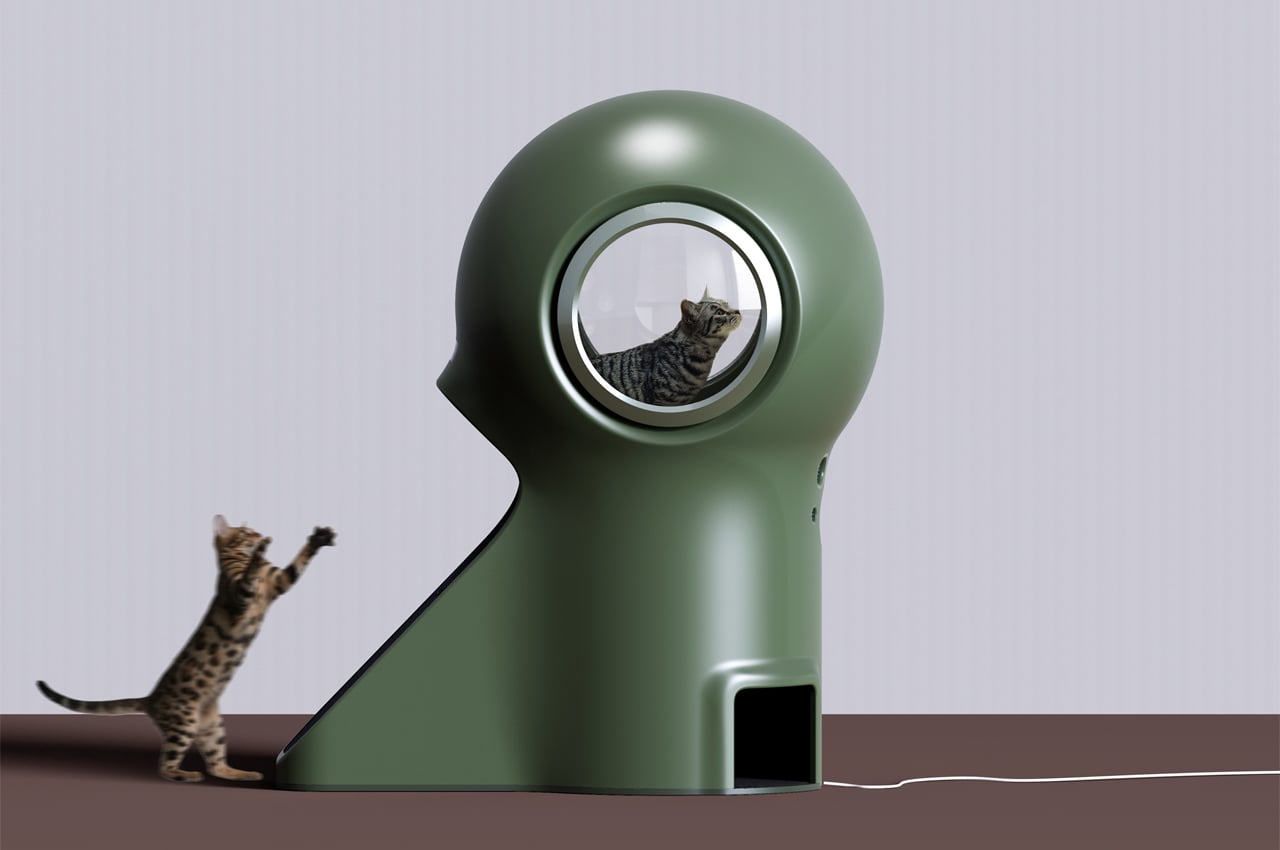
There are topics on this blog I write about frequently because they are near and dear to my heart. And then there is this topic: crazy cat furniture. I just find it fascinating how designers go to great lengths to design furniture for their cats. For example, most cats would be happy with any old cardboard box, but this designer took that a step further and made this cardboard cat house (see above).

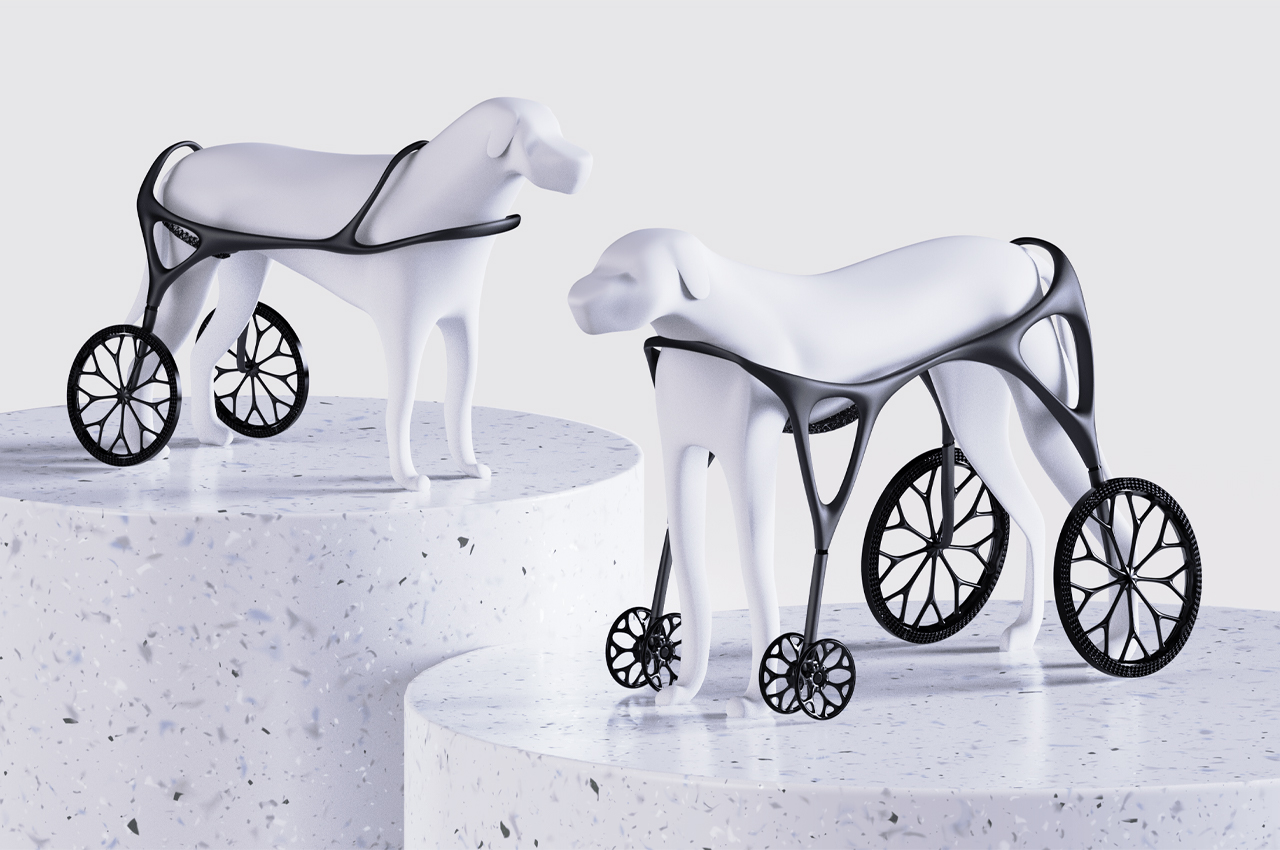
Then there’s this  minimal wooden cat scratcher that doubles up as a cozy chilling spot for your pets! My belief is that the only way the cat will settle in any given spot is either a) it’s warm b) to annoy the dog you have.

Finally there’s this!

Yes, a wall mountable cat bed that gives your cat a place to lounge up high while saving you space. They even put shelves on the wall to make it easier for the cat to get there!

Ok, that’s it for me. For now. 🙂

(P.S. All images and posts from Yanko Design, the good people who keep me stocked with all these ideas to post. )

On “Good” IKEA


Sure we all know IKEA furniture, some of it not so great (don’t get me started on my now-in-the-trash Standmon armchair :)). While that armchair gave me grief, many other pieces of theirs have been really good. (No, not you, Billy bookcase. Wait, maybe you have such a bookcase and you like it…in that case it is good). Regardless, if you are unsure about the quality of Ikea furniture, I recommend you read this:  Ikea but like the *good* Ikea.

Speaking of good IKEA…this is a good deal! See:  You Can Rent a Tiny IKEA Apartment for Less Than $1 a Month

P.S. Speaking of good IKEA, I wrote about that elsewhere on this blog. Links here:

(Image above is of another really good thing from IKEA: the Stockholm rug. A classic.)

On Auden, Brueghel, and the brilliant way the New York Times combines them

I’ve posted before on The very cool AR/VR (augmented reality/virtual reality) section of the New York Times. That time it was concerning their exploration of the Apollo 11 mission.

The folks at that section have done it again, this time with a poem from W.H. Auden titled Musée des Beaux Arts. It’s a beautiful poem, and simply reading it by yourself is a fine experience. But click here and immerse yourself into it, with the richness of analysis provided, and you will come away with a deeper level of understanding and appreciation of the work both of Auden and Brueghel.

On the ethics of the pig heart transplant

David Bennett Sr. has died, two months after receiving a genetically modified pig’s heart. Like any transplant operation, there were ethical decisions to make. If you are an animal rights activist, you have even more ethical decisions to think about. But this particular transplant brings in even a broader range of ethical considerations, which is obvious once you read this: The ethics of a second chance: Pig heart transplant recipient stabbed a man seven times years ago.

I generally have faith in medical professionals to make the right ethical choices when it comes to transplants.  I think he should have received the transplant and a transplant from a pig is acceptable. But read about it yourself and see what you think.


On Stonehenge and the Judean Date palm: the past is never gone

I have been thinking much on these two pieces I’ve read recently:

One thing I find interesting about them both is how something that could be considered part of the Past is now part of the Present. Stonehenge keeps being meaningful to us now by revealing things about the people of that era; the seed for the Judean date palm shows us what a long lost plant looks like now.

The past is never past. We choose not to pay attention to it, but it remains, piled up behind us, a huge closet full of things that were once in the present. They remain there until we find a reason to make them present again.

On the importance of intolerance and how it plays out in real life

Intolerance has a bad reputation. People will talk about having “zero tolerance” for something, which means they are intolerant of it, but they don’t want to use the “I” word in case it makes them look terrible. That’s too bad.

We need to be intolerant at times. Otherwise we run the risk that comes from the paradox of tolerance. If you are not aware of that paradox, I recommend you read this.  You may have even come across practical examples of it, such as this: Bartender explains why he swiftly kicks out Nazis even if they’re ‘not bothering anyone’ – Upworthy.

Being intolerant is not just something that is limited to Nazis. I was thinking of this recently when the “trucker rally” moved into Ottawa. That band of malcontents were tolerated by the officials of that city, and things got out of hand.  Meanwhile, they were not tolerated in other cities like Toronto, and things went better for the citizens there.

We see levels of intolerance on a smaller scale on social media. Blocking people is a form of intolerance. I generally put up with bad comments from people if they are infrequent, but others do not and block them immediately. That doesn’t make me a better person, just someone with a higher (and perhaps wrong) level of tolerance.

It can be hard to know what to be intolerant about. Too much intolerance is also bad. Too much intolerance can lead to rigidity which can lead to loss of opportunity, lack of understanding, bad feelings, and even destructiveness. Not all unwelcome behavior leads to a bad end for the tolerant. Be as tolerant as you can be, but have firm limits for those rare instances when you have to be intolerant towards those that overstep them (while understanding what if anything you lose when you take action).

On qualifications


Here’s two pieces on being qualified.

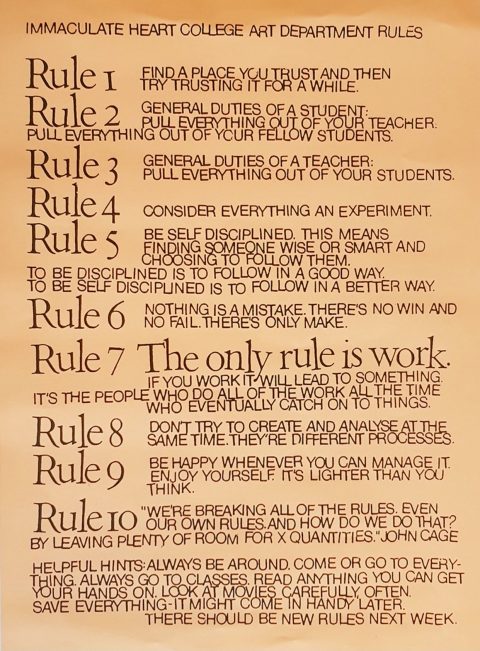
If you are underqualified at something, it can be difficult to motivate yourself because you think: I am bad at this. If that’s you, read this:  A willingness to be bad. The best way to get good is not give up because you suck. You suck! So do lots of people. Focus on sucking less.

You might think you would love to be the best at the thing you suck at. So read this: Why it’s sometimes harder to get a job you’re overqualified for.

Being qualified is a relative thing. If you compare yourself to one person, you can seem overqualified. Then you compare yourself to another person and you are underqualified. Regardless, find a standard you think is appropriate and work towards that.

Good luck!

(Image from link to Austin Kleon’s blog and the first link above.)


The two problems with home robots

This is a cool story about a concept robot for homes:  A BB-8 Droid for your home – Yanko Design.

I used to have problems with such concepts, because  they provide an opportunity to have a device wandering around your home, recording data and selling it to others. That’s why I was never keen on such devices coming from Amazon or Google. I was very pro-privacy when it came to such technology.

For better and worse, I have since adopted quite a few Google Home devices in my house. If I was worried about them recording all the time, I appear to have gotten over it. As often is the case, the convenience they provide trumped privacy concerns.

Given that, I would love to have a robot like the one above. Instead of having multiple Google Home devices, I could just have one Google Home Robot that followed me around.

That brings me to the second problem. While it is cute that they illustrate this one rolling and bouncing around a home, mobility for robots is a huge challenge. Especially homes with stairs.

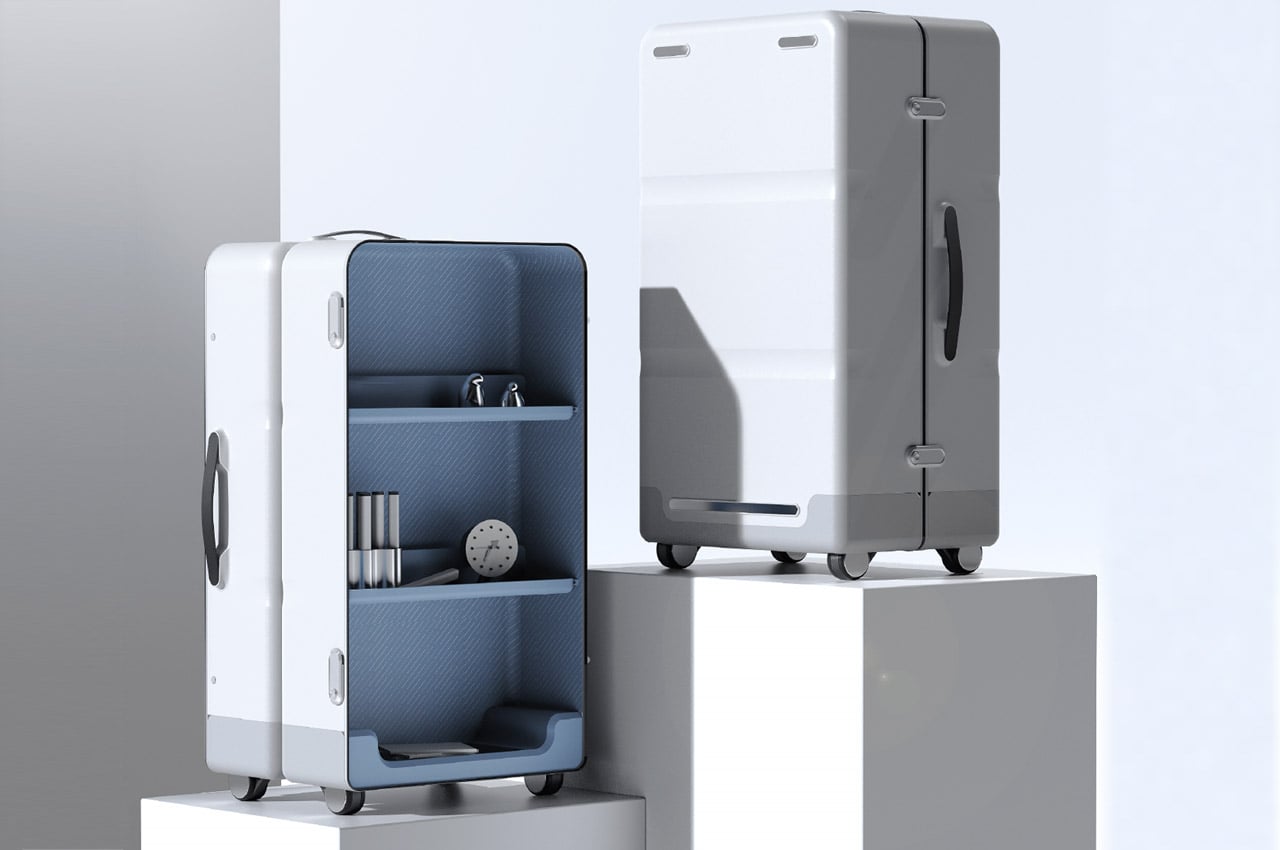
I see two ways around that. Such a robot would not be good for me, but people living in one level condos and apartments might find some combination of a vaccuum robot + Google Home device just the thing. And for people with stairs, maybe a robot above with wheels and a handle you can use to bring it with you up and down stairs might be the best alternative.

Robots are coming to most homes eventually. Maybe they will look like the one above. Maybe not. But soon we will see them everywhere.

Seven links on Indigenous people within Canada


I continue to read and collect stories on Indigenous people within Canada. I think these ones are worth sharing.

Here is a piece on the search for the unmarked graves of Indigenous Children published in the New York Times in October. Relatedly, here is another piece: Genocide In My Own Backyard.

Reconciliation and drinking water are also two things I try and gain a better understanding of. This lead me to this piece,  A 2020 Status Update on Reconciliation,  and this Canada to Pay Billions to Indigenous Groups for Tainted Drinking Water

I thought this was a good development for Mi’kmaw students, being provided by my employer: IBM opens school for Mi’kmaw students in Cape Breton . Likewise, I enjoyed this: Indigenous artists featured at a recent Toronto art fair. Back to tech, I thought this was fascinating:
How AI and immersive technology are being used to revitalize Indigenous language preservation.

What I find interesting in math and sciences, March 2022

Here are two pieces on physics that really are also about philosophy. First, in the realm of the very small: On quantum theory and reality. Second, in the realm of the very large: On space and time.

Of all the sciences, those having to do with space are the ones I enjoy reading about the most. I got interested in Lagrange points due to the James Webb Telescope. Here’s something on them: Lagrange points.

I thought this was a good reminder to me of any images we get regarding black holes (something I find fascinating): The Images of Black Holes are Not Photos.

COVID has made me think more and more about biology these days. That’s a good thing. It has me reading things like this: Disease moves like ripples on a pond.

One of my fundamental beliefs is that we don’t think with our brains but that we think with our entire bodies. This makes me interested in anything that makes that connection. This is such a piece: Our nervous system is connected to our organs and shapes our thoughts and our memories.

There was some discussion on racism in mathematics over the last while. I think this is a good discussion to have. Here are two pieces on the topic: Racism in our curriculums isn’t limited to history. It’s in math too and Opinion: Is math racist? Wrong question.

I continue to learn math in an amateurish way. I enjoyed these sources of information on it: Guide to Tensors and The Best Math Books and Statistics Books.

(Photo by Roman Mager on Unsplash)

It’s Wednesday. If you need a reset, read this


I often blog about Mondays. Mondays are pivotal days in our lives. Sometimes they are days we dread, sometimes they are days we get ahead and get on with things.

Wednesdays are a different beast. Wednesdays we are in the thick of things. Even on the best of Wednesdays we can feel over our heads and wondering if we are succeeding or even managing.

If that’s how Wednesdays feel to you, read this: How to Make the Most of Your 24 Hours. It’s a great piece on how to reset your approach to your days. You can read it on any day, but I think today is the best day to read it. Take a break and do that. You might find your week improves going forward.