Norbert Hoeller, a smart person I know, is blogging. You should read what he has to say.

I’ve often encouraged smart people I know to blog about what they know. Often they tell me stuff and I think: everyone should have the privilege I have to hear this.

So I was delighted that my dear old friend and former colleague at IBM, Norbert Hoeller, is now doing just that! For example, if you heard about how the province of Ontario will give you cash for the privilege of turning down your AC, then you owe it to yourself to read Norbert’s experience with that. His post has that clear explanation and attention to detail I come to expect from him. Like me, you’ll be wiser and better off after reading what he has to say.

Already he’s touching on different topics, like how to keep your Ikea products looking good. I hope he keeps it up. Meanwhile, add his blog to the things smart people I know (i.e., you) read.

On remote work, productivity (and the lack thereof) and three day weekends

500
Remote work that started in the pandemic continues to have an effect on the overall economy of cities. Toronto is no exception. This piece argues that workers are never going back to the office full time and Toronto will never be same. Relatedly, here’s a piece on how hybrid work is affecting downtown Toronto businesses based around downtown workers.

It’s not just cities that are affected. Here’s how this is going to affect Canada’s major banks. And here’s more on how remote work affects commercial real estate.

Elon Musk has thoughts on remote work. But honestly, who really cares what he thinks any more?

Don’t forget: companies like remote work when it suits them. For example, if they want to layoff tons of employees, like Mcdonald’s, then they think remote work is just fine.

Some companies will argue workers need to go to work to be more productive, although this piece in VOX argues that no one had a good handle on what being productive means to begin with. I’d add that good management is more than looking around and seeing who is in the office. It requires taking the time to know your employees and making sure they are doing work that benefits them and the company.

If you don’t do that, you could get unproductive workers. Case in point, here’s a study on tech workers who say they were hired to do nothing. Here’s a similar story on bullshit jobs where no work is done. And this isn’t new thing due to remote work: it’s a story as old as work itself.

We need to rethink work in light of the pandemic. Some are calling for work weeks with three day weekends. If you want productive employees, remote or not, that could be one way to get them.


Homelessness is a concurrent disorder in a number of ways

When we talk about the Poor in 2023, we speak of the Homeless. In some but not all ways, this makes sense. Anyone without a home is by default poor (unless you are very rich). And it makes sense that tackling homelessness is the best way to tackle the problems that poor people have. But it’s not enough to stop at homes: we need to treat poverty as a concurrent disorder.

If someone has addiction problems and mental health problems, professionals like those at CAMH in Toronto will treat the addiction first while taking into account the mental health problems. I think the same has to be done with poverty.

Indeed, this piece at newscientist.com says that “decades of research have shown that focusing on housing, without making sobriety or mental health treatment a prerequisite, is the most effective way to reduce homelessness”.  People need shelter first if they are to improve their lives.

But shelter is just a start. As this shows, “110 unhoused people died last year in Toronto homeless shelters”. Poor people need more. Otherwise they will have a bed (if they are lucky), but die if they are not cared for.

Part of the challenge is the homeless poor can be difficult to care for due to many reasons. It takes a special set of skills to do so, as this piece shows: “You Have to Learn to Listen” How a Doctor Cares for Boston’s Homeless. It’s not enough to just provide facilities and insist they should go to there.

Another part of the challenge is that people don’t care, either because they are indifferent or they have a peculiar moral code that stops them from providing for those suffering from being poor. So you have politicians providing ridiculous restrictions on what poor people can get with SNAP in the US: No more sliced cheese under Iowa Republicans SNAP proposal. Or you have a councillor voting No when Toronto’s council declares homelessness an emergency and asks for more aid to deal with the growing problem.

So the Poor need homes. They need better care. They need food. All basic needs. Some of them need more, like help with addiction problems. From there they need to develop skills. Otherwise they run into the problem of what to do with themselves when they no longer need to scramble to find money to buy booze, as this piece showed.

There are others besides those who are Poor who need those things: those of us who are not Poor. Shelter, food, healthcare, occupation…we all have those needs. We need to find a way that all of us can get access to that, not just for the betterment of individuals, but for the betterment of our society as a whole. Right now our society has a concurrent disorder. Dealing with homelessness may be a good way to start to tackle it, but we need to take into account more than that as we move forward. It’s the only way out society can get better.

P.S. For more on the SNAP cutbacks, read this: No SNAP for you – by Pamela Herd and Don Moynihan. Thing you could live on what SNAP provides? Read this: Snap Challenge | Budget Bytes.

Food insecurity is often tied to other problems, like whether to get food or heat and other utilities. This is a striking story that illustrates that cruel fact.

It doesn’t help if we don’t know how many homeless people they are. According to this, there are over half a million homeless people in the US. And they may not be where you think. For example, the state with the second-highest per capita homeless rate in the US is…. Vermont. That surprised me.

This also surprised me: the story on how the mayor of  Bend, Oregon who helped the homeless ended up becoming homeless himself.

Finally, this piece about how in Kitchener-Waterloo, Ont., the problem of chronic homelessness is being addressed by a community of tiny homes called A Better Tent City had me thinking continually about homelessness and poverty since I came across it.


The winter of smarter cities and why that’s a bad thing

In the early 90s, people soured on AI and work on it stopped. That period was known as AI Winter.

Smarter Cities is an idea likely in its own winter period. I concluded that when I watched the segment above on the subject. The segment’s focus (according to its Youtube comment)  was this:

In 2017, the City of Toronto embarked on a project with a subsidiary of Google called Sidewalk Labs. The idea was to develop a parcel of Toronto’s industrial waterfront in order to create a “smart city”. At first, the idea was met with a lot of enthusiasm, but eventually a number of concerned citizens, journalists and planners started to raise questions about data privacy, competition and public policy issues that Sidewalk Labs could not answer. What happened to Sidewalk Toronto and why are we so drawn to the idea of futuristic urban utopias? To help answer that: John Lorinc, author of “Dream States: Smart Cities, Technology and the Pursuit of Urban Utopias;” Josh O’Kane, author of “Sideways: The City Google Couldn’t Buy;” and Vass Bednar, Executive Director, Master of Public Policy in Digital Society Program at McMaster University.

It’s a good segment with good people critical of the idea of smart cities. Watching it, I could see why you might think that any city would be unwise to aspire to be a smarter one.

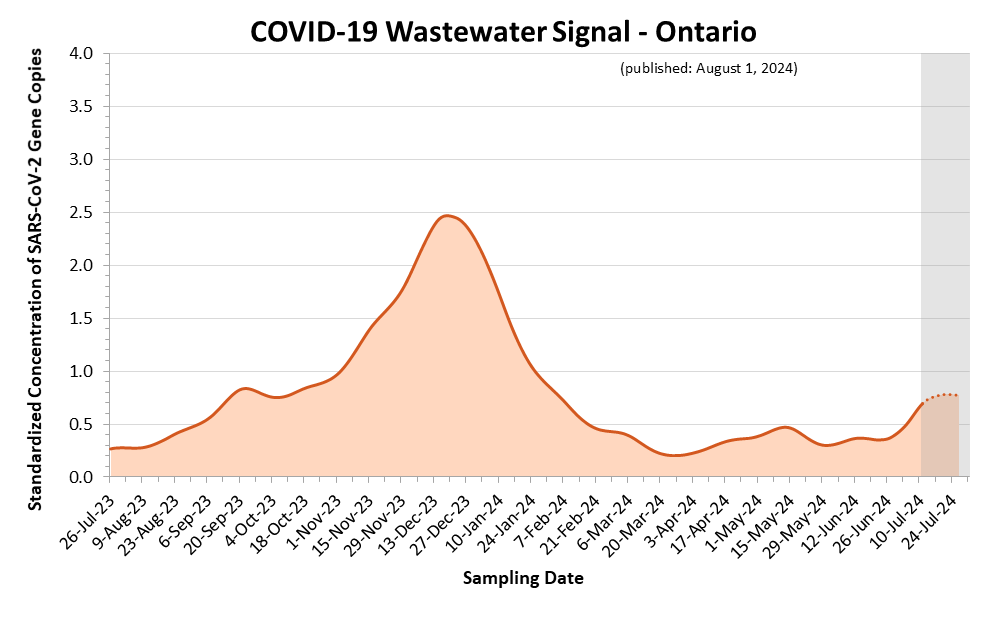
If you did think that, I’d ask you to think again. I believe cities, provinces, states and countries all benefit from becoming smarter. For example in Ontario, smart meters were deployed across the province to more accurately measure power consumption and help people shift their usage. Wastewater was measured during the pandemic to see if things are getting better or worse. And it’s not just public initiatives that matter: private services like Waze give drivers a view of the whole city and let them choose the best routes as they make their way to their destination.

Whenever there is municipal or state data available and software to process it, then you have a smarter city. It’s not at the scale that an organization like Google wanted it to be, but a smarter city nonetheless.

I strongly feel we need more of this. Smarter cities can be greener cities. Smarter cities can be better functioning cities. That’s why I am glad that Toronto is continuing to explore this, with things like its Digital Infrastructure Strategic Framework. And it’s not just Toronto: here is a list of the top 10 smart cities in the world and what makes them smarter.

It’s not just me that thinks this. Here’s Pete Buttigieg talking about smart city grants, and here is Bill Gates is talking about smart cities in Arizona.

Here’s to smarter cities. Smarter cities are better cities.

P.S. Wastewater examination is a smarter city activity, I think. Here’s more on wastewater surveillance for public health at Science.org. As for me, I check the province’s wastewater signal every week to keep track of COVID-19.

Also, some time ago I worked on the smart meter project for the province of Ontario. I led the infrastructure design and build for part of the overall system. Here is an IBM red paper I contributed to that talked about how to better design systems involved in smarter cities/planet projects.

From Henry V to King Lear: Branagh comes of an age (as do we all)

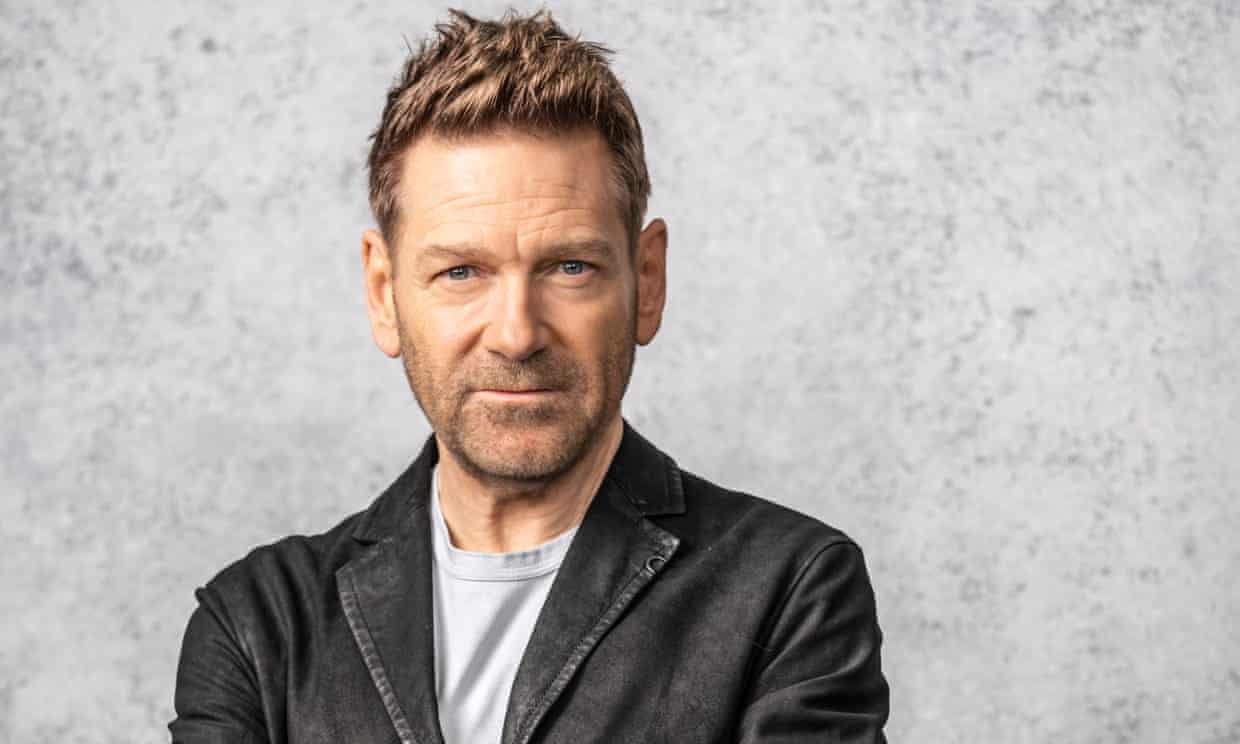
It seems only yesterday that Kenneth Branagh was wowing us with his version of Henry V. Now instead of playing one of the younger Shakespearean lead roles, he is playing one of the oldest, as he gets ready to direct and star in a new production of King Lear on London’s west end. I am sure it will be a huge success. Shakespeare has been good to him, and vice versa.

Reading that, I started to think about some of the pieces I’ve collected on aging. For example, if you or someone you love is wondering how to manage living in your home as you get older, then read this.

As we age, we hope we can retire. And by retire, we hope to work less if at all. Sadly, in some Asian societies “Retirement” just means more work. That may not be a fate limited to Asian countries, I fear.

What do you need when you get older? An old person project! Let John Demont explain. Or if the thought of getting older and wrinkled bothers you, read about preventative botox . To each their own.

Finally, here’s a fine piece on how  old women in the swimming pool gave this young woman something to aspire to.

P.S. I could not close out without including one of my favorite movie scenes, with a very bright and brash Branagh rallying the troops with his truncated version of the Saint Crispin’s Day speech:

I love that speech, that scene, and his portrayal of it.


It’s a short life, and the older you get, the shorter it gets. However…(some birthday thoughts)

I am fascinated by this clock above. Called Shortlife, it is developed and sold by Dries Depoorter, who explains that…

‘Shortlife’ is a small device showing how much percent of your life is completed based on your personal life expectancy.

You give him your birthday and your gender and he programs the clock based on this information and “the average number in your country provided by the World Health Organization (WHO)”.

It’s a good momento mori.

If you want a more accurate estimate of your life expectancy, you can go here. That online calculator’s estimate “is based on a detailed statistical analysis of NIH-AARP data and conducted by Wharton professor Dean Foster” and takes into account not just your age and gender, but also other factors like how fit you are and how much you drink and smoke.

Based on that calculator, it estimates I have twenty more years to live, if I am lucky. It also states that there is a 25% chance I won’t have more than a dozen. Of course it is just an estimate, a probability. I could die today, or I could live for another 40 years. But the likelihood of 12 (and no more) I think is good. When we were in school, 12 years felt like an eternity. I suspect these will not.

One problem with such a clock is it meant for people who see the glass increasingly empty. We need a clock that shows things increasing full. There is such a thing, of course. But it’s not a clock. It’s a tree. If you plant a tree and you are lucky, the tree will grow along with you. Growth: that’s what trees represent. A tree you plant can represent you as a growing living thing, not as a dying thing.

I think the clock is smart, of course, but I think a tree is wise. Get both, and be wiser, still.

P.S. I wrote about the joy of planting and owning a tree, here. That tree is no longer on my property, and perhaps that makes it better.

Some thoughts on learning to appreciate Instagram as a recording media

Yesterday I wrote about using Instagram as a recording device to track special events, such as life during the pandemic. As I was writing about it, I started thinking about Instagram as a service.

A weird thing happened to that service in the summer of 2022. The folks at Meta (who own it) hamfistedly tried to change the app, only to face a backlash from famous and not so famous. Unlike Twitter, Meta actually backed off from some of the changes (though they are still trying to make Reels happen). I’m glad they did.

In some ways Instagram has become my default way of sharing my life, mainly through Stories. The same 50 or so people see all my posts and can keep up with what I find interesting, and that amount is fine with me. On Twitter you can imagine lots of people are paying attention to what you post: on Instagram, you know who is. I no longer use Facebook, and who knows who reads these blog posts. 🙂 So Instagram it is.

Like many people, Instagram photos are not my life, but rather a version of it. I realized that especially when I put together my collection of images from Year 1 of the pandemic. There were plenty of things that I took photos of but never posted there. Anyone not close to me might think that’s everything happening in my life, but it’s only a sliver of the pie.

It’s good that Instagram allows you to collect Stories in Highlighted sections. It helps with the ephemeral nature of them. In most cases, the fact that photos in Stories are fleeting is good. But not always. It’s good to shape some of them into a virtual scrapbook to display.

Of course I could use Instagram Posts, but like many people, I post to Post less and less. Now I mostly use it to mark  a moment in time.

Instagram may not be the best place to publish photos, but it’s pretty good. Of course everything could change tomorrow, and all of it could be gone. I keep that in mind and keep my photos backed up separately. You should too.

Instagram has plenty of problems. Anyone reading their Wikipedia page can see that. But it has its benefits and does better than most social media these days. At least for me. Find me there, at least for now, at bernie_michalik.


My first year of the pandemic as told in Instagram stories

Instagram stories are an odd thing, at least mine are. I post almost random images of things in my life, not thinking they add up to anything. But if you are living through a dramatic period of time like the first year of the pandemic, and if you collect those images together, as I did here in “Covid: Year 1”, they take on a narrative that was not there when you snapped them and saved them.

The narrative began even before the pandemic was declared. I have photos of me going to Chinatown and eating in many places, because word had gone out that a new illness had broken out in Wuhan, China and people were avoiding that part of the city because people were afraid of coming across someone who had it and then get sick. I was down there to do a small part in keeping some of those places in business by eating as much as I could. (Brave, I know 😊.)

Soon, general precautions started. Hand sanitizer was everywhere, like this one at my work:

Then the pandemic was officially declared in March 2020 and things started to break down. I have photos of the grocery stores being cleared out of flour and potatoes. Toilet paper was scarce. People were queueing up to get into grocers and the liquor store, which both had limited occupancy. Plastic barriers went up, and everything else was shutdown: work, restaurants, stores, gyms. It was a time of lockdown.

To occupy ourselves, we adopted hobbies. People made bread. I drew and made zines. I even wrote some half decent poems.  I continued to blog, and traffic shot up.

We worked at home. Every damn day. Our hair grew long. We finally got masks to go shop for food.

We ordered take out. Lots and lots of take out.  Restaurants pivoted to this to stay alive. Some, like my favorite restaurant Brothers, didn’t make it. Many did, due to hard work and help from the government. We drank pet nat and cremant to celebrate.

In summer we finally ate outside, albeit like this:

Eventually we got to eat indoors for a bit in the fall. Otherwise, if we wanted to celebrate birthdays or Easter, we did it with people in our circle. Collecting with others outside our circle was frowned upon.

We purged our homes to make space. I had a garage sale, and was surprised by the people who showed up and bought things. We were awkwardly happy to see each other, and dealt with money for the first time in ages.

We made the best of it. We watched the blossoms in High Park in Toronto via a TV channel. We watched our talented friends put on shows on Instagram and Youtube and Twitch. We walked on streets closed off to traffic. We banged pots and pans for health care workers. We did not go to the movies, even though the movies tried to open in the summer of that first year.

We downloaded apps to keep track of COVID and to know what to do. We downloaded apps to finally travel in the fall. We wore our masks everywhere. We wore sweat pants almost as much, if not more.

We dealt with bad people. The anti-maskers. The anti-science people. We celebrated when Trump lost.

If we were parents, we tried our best to help our kids. We took them out on Hallowe’en and let them get treats delivered by chutes. We made them get up for virtual classes via Zoom and other technologies. We ordered them Christmas presents online because the stores remained closed in many places like Toronto.

Most of all, we awaited the coming of vaccines and yearned for a normal time. For many, it was the worst of times, losing their livelihoods and their loved ones. Getting ill. For some, it could also be the best of times, as it often was with me.

It was quite the year. Historic. Memorable.

P.S. I wrote at the beginning of 2021 the following post: On recording (why you should think about it differently, why you should resolve to do it), and closed by saying:

Your life has value and meaning. Recordings help show that. So get making them.

I hope you do that, in some form or another. Even if it is a collection of stories on Instagram. It all counts, just as you do.


A quick peek on what Philippe Starck is up to

If you love the work of Philippe Starck as much as I, then I recommend you head over to Uncreate and search on his name (or click here). It turns out he’s still doing cool stuff. Not surprising.

For example, this is cool: B&B Italia x Philippe Starck Outdoor Sofa. It reminds me of the great furniture he did for hotels like the Royalton in the 80s:

And this LaCie Blade Runner Hard Drive reminded me of how at the names of his older furniture often were borrowed from Philip K. Dick novels:

Love it! I wish I could find one of those hard drives. They look awesome.

Speaking of awesome looking, check out this, the Aeklys by Starck Payment Ring:

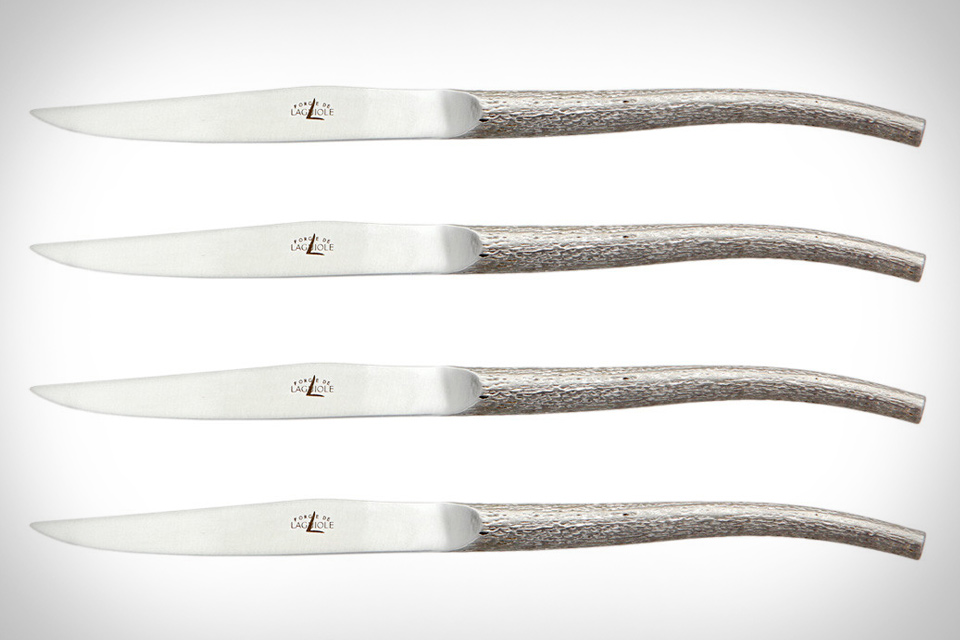
Finally these Phillippe Starck Log Knives are very gift worthy:

Nice to see one of my favorite designers is still creative, and creative in many different ways.

These Four Words greatly influence us to listen to things, agree on things, buy things are..

The four words are Most Advanced Yet Acceptable. It’s why things used to come with the label “New and Improved”. It’s why Spotify creates playlists with songs you know and songs you don’t. It describes what keeps you coming back to old restaurants (today’s specials). As this piece states:

 …to sell something surprising, make it familiar; and to sell something familiar, make it surprising.

That’s really it: people want novelty within their comfort zone. If want to influence people to do Something, that’s how you need to describe the Something.

I recommend you read the entire piece: The Four-Letter Code to Selling Just About Anything. It’s fascinating.

The rise and fall of Alexa and the possibility of a new A.I. winter

I recall reading this piece (What Would Alexa Do?) by Tim O’Reilly in 2016 and thinking, “wow, Alexa is really something! ” Six years later we know what Alexa would do: Alexa would kick the bucket (according to this:  Hey Alexa Are You There? ) I confess I was surprised by its upcoming demise as much as I was surprised by its ascendence.

Since reading about the fall of Alexa, I’ve looked at the new AI in a different and harsher light. So while people like Kevin Roose can write about the brilliance and weirdness of ChatGPT in The New York Times, I cannot stop wondering about the fact that as ChatGPT hits one Million users, it’s costs are eye-watering. (Someone mentioned a figure of $3M in cloud costs / day.) if that keeps up, ChatGPT may join Alexa.

So cost is one big problem the current AI has. Another is the ripping off of other people’s data. Yes, the new image generators by companies like OpenAI are cool, but they’re cool because they take art from human creators and use it as input. I guess it’s nice that some of these companies are now letting artists opt out, but it may already be too late for that.

Cost and theft are not the only problems. A third problem is garbage output. For example, this is an image generated by  Dall-E according to The Verge:

It’s garbage. DALL-E knows how to use visual elements of Vermeer without understanding anything about why Vermeer is great. As for ChatGPT, it easily turns into a bullshit generator, according to this good piece by Clive Thompson.

To summarize: bad input (stolen data), bad processing (expensive), bad output (bullshit and garbage). It’s all adds up, and not in a good way for the latest wunderkinds of AI.

But perhaps I am being too harsh. Perhaps these problems will be resolved. This piece leans in that direction. Perhaps Silicon Valley can make it work.

Or maybe we will have another AI Winter.….If you mix a recession in with the other three problems I mentioned, plus the overall decline in the reputation of Silicon Valley, a second wintry period is a possibility. Speaking just for myself, I would not mind.

The last AI winter swept away so much unnecessary tech (remember LISP machines?) and freed up lots of smart people to go on to work on other technologies, such as networking. The result was tremendous increases in the use of networks, leading to the common acceptance and use of the Internet and the Web. We’d be lucky to have such a repeat.

Hey Alexa, what will be the outcome?

Sunday reads on just about anything, from Inflation to Reversing Death

Sunday is a good time to catch up on our reading. If you are looking for something interesting to get you thinking, I recommend these eight pieces:

Inflation is on everyone’s mind these days. Back in the late 20th century, Paul Volcker was credited with solely bringing it down. This Vox piece argues the decline in inflation at the time was much more complicated. An excellent revision to the common wisdom on the greatness of Volcker.

We think a lot about scarcity. Maybe too much. We need to think more about abundance. Read this: Unblocking Abundance – by Sarah Constantin and see if you agree.

Here’s some good pieces on history worth reading even if you don’t think history is interesting.  For example, this is a fascinating article: Who owned slaves in Congress? As was this, on the rare coins of ancient Israel. Who were the radium girls? This piece explains.

Is death reversible? In some ways, yes. For more things philosophy related, here are the best philosophy books of the last decade. 

Lastly, I recommend this: Why Gen X Failed. Even if you are not Gen X.


On Joan Didion’s estate (our life in objects and what they say about us)

Joan Didion died last year. On Nov. 16, there will be an estate sale auction of her possessions. The New York Times covers it here. The piece is titled: Joan Didion’s Life in Objects.

It’s a good piece. Among other things, it got me thinking once again that we leave an impression on the world in several ways. One of those ways is what we collect from it. Some of those objects are mundane and collected by many:

Others are unique to ourselves:

Some of them, by how we collect them, tell a particular story:

Our objects are not just things laying about: they say something about us. They say what we were interested in.  They indicate what our passions were.  They tell a story about the person who owned them and what type of person they were or wanted to be. The books on shelves, the overused and the underused cookware, the tools either on display or tossed away: each and every one of them are like a shadow or a sketch of their owner. They don’t say everything about us, but they say a lot.

Perhaps after you read this you may want to go over your own objects and ask yourself: what does this thing say about me? Because it does, perhaps in ways you don’t even realize.

The BBC had a series, The History of the World in 100 Objects. Like the world, if we were to take 10 or 20 or even 100 objects in our lives, they would tell the history of ourselves.

(All images: links to the story in the Times. All items belonged to Joan Didion.)

Some thoughts on the genre of food writing, after reading about Chantal Braganza’s cake

Good genre writing tends to make us forget it belongs to a genre. Atwood and Kafka and Borges all can write in the genres of SF and fantasy, but we don’t think of them as genre writers. They are good writers who happen to (sometimes) write genre fiction.

I thought of that when I read this piece by Chantal Braganza in Maisonneuve: An Ugly Sweet Thing. Food writing is also a genre, and while Braganza is a food writer here, she is first a good writer who in this case is writing about food. It’s a really fine piece and I encourage you to read it. It’s about food, of course, but it’s about so much more. That’s what good food writing does.

Food writing gets knocked about these days, and that’s too bad. So many food writers that include a recipe in their writing have a button at the top that allows people to skip just to the recipe. People who click on that button are missing out. The writing is important too, not just the recipe. If you just want a recipe, go to AllRecipes.com. If you want to learn more about food and what the author thinks about this particular dish and why it is important to them and perhaps you, too, read the writing. You’ll be glad you did.

More and more I buy food books not for the recipes, but to get inspired to cook and to create in the kitchen. Preparing food is work, and some times that work gets us down. (Ok, it gets me down.)  We need things to lift us up. One of those things is good food writing. Here’s to more of it.

Now go get some cake.


What Mark Cuban can teach you about motivation is simple and powerful


Do you find it hard to motivate yourself? If you do, you should look to Mark Cuban for a valuable lesson. Mark Cuban recently started Cost Plus Drugs to allow him to bring low cost medicine to people who need it. It’s a great initiative. But it took someone awful like Martin Shkreli to get the ball rolling. As Cuban says, when he saw Shkreli’s company jacking the price up on some drugs to obscene amounts, he concluding that the opposite could happen as well. Then he went and did something about it.

So kudos to Martin S for inspiring Mark C to start this new company: your greed has not been for naught.

Here’s the lesson in a nutshell: find someone doing something wrong that you strongly disagree with and then decide to behave in the opposite way to counteract that.  You will be plenty motivated, I am sure. And you will be doing the world some good too.

For more on this, read how Mark Cuban says Martin Shkreli inspired him to start Cost Plus Drugs in Vox.

Gawker existentialism (some thoughts on the piece titled, Failure to Cope “Under Capitalism”)

This article, Failure to Cope “Under Capitalism” in Gawker touches on several areas of difficulty many young people face today. It ends with the following recommendation:

This is your life. You do not have time to wait for the revolution to begin living it. You will always be able to find someone to give you permission not to live it. But no one is coming along to live it for you.

This struck me as a form of existentialism. Gawker existentialism, if you will. It does not deny the problems that are foisted upon you: downward social mobility, addictive and manipulative social media, or an upbringing that has left you disappointed. It does not deny that, but it does insist that it is up to you to do something about it. You have to make choices, chief of which is to live your life. Your circumstances may shape you, but you are responsible for how you move forward. Perhaps the existentialism of Gawker is not as noble as the existentialism of Sartre or Camus, but it is a form of it nonetheless. (You could make a case it is somewhat close to the existentialism of Kierkegaard or Kafka.)

I leave you with this, the angst of Charlie Black, who is struggling with the perceived downward mobility of himself and the whole preppy class, in “Metropolitan”:

Like existentialism, struggles with capitalism are not new. 🙂

Not to be overlooked: five great women of the 20th century you should know about


Here are two good essays on five great women. First up is this piece on the Oxford Quartet: The Women Who Took On the Philosophical Establishment. And then there is this piece on Regina Jonas, who was officially ordained as the world’s first woman rabbi.

Both are well written essays featuring outstanding women who accomplished so much, despite the hardships they had to deal with. (In Jonas’s case, that is an understatement.) I recommend both as good things to read on a Sunday.

The story of Rabbi Jonas is part of the Overlooked series by the New York Times. I admire that series, and I’m glad the Times has it. If you want to read good bios of exceptional people, go deeper there.

(Image is of Regina Jonas, link to image in NYT)

Should we give up streaming and go back to CDs and DVDs?

Did you know you can still get DVDs from Netflix? Well according to this, you still can! And maybe you should.
I’ve been thinking about it recently for a number of reasons. One is the number of streaming services I pay for that I barely use. Sure I like the idea of being able to watch any movie at the drop of a hat. But do I….really? No, I do not. It’s a waste of money for the idea of instant gratification.

Second, streaming services may be making us less likely to hear and experience new things. I thought of that reading this piece in the Guardian. I find that happens to me with Spotify: it is trying so hard to match me with music that aligns with my taste that I get stuck in a rut. In some ways streaming is a gilded cage.

That’s why we should heed what Clive Thompson says and rewild our imagination. It’s more work, but more rewarding.

So get out your DVD player and order some movies or DVDs and watch something you’ve always wanted to but never seem to because it is not available online. You can even order a DVD player for cheap, here.


What did I do today? And how do I know?

Every day, but especially on Monday, I pull up a spreadsheet that helps me stay focused and motivated to Get Things Done.

I make a plan to make sure I am staying engaged/ in touch / helping my kids, my brother and sister, and my friends. Most weeks I am pretty good about it, unless I get super busy with work or I have other challenges. I make sure I spend time on maintaining my home and my finances, though not as successfully as when it comes to the people listed. And I try (but usually fail) to write or do one political act a week.

I track and try and get in some fitness, reading, drawing and writing. I try and work on hobbies and things I enjoy, like writing, cooking and personal IT projects. I try and go to a restaurant once a week (even a basic one) and generally get out of the house and see and do something new.

I have another spreadsheet that tracks how much I put into each week. I give more weight to certain activities and try and make a game out of it. It helps to get difficult things done in a week and a month.

Besides that I have a daily checklist to make sure I do the basics, like stretch and take care of the plants and my health.

That’s personal lists. I also have work lists that are very much dependent on the work I am doing.

I started doing this ages ago when I was depressed because I wrongly believed I was never getting anything done in a day. If you log it, you see you get a lot done. I also do it because it helps with my ADHDish brain to make sure I don’t neglect things for a long time.

So on any given day, that’s how I know how I did. Some days it’s lots of small things, other days it may be mostly one big thing, and on bad days or great days I do very little at all. I try and make every day count, though some days count for much more than others.

On the Emmys and the end of TV as we knew it

Shows such as the Grammys, the Oscars, and the Emmys give us the chance to consider the media they are based on. One thing to think about is how that old media is under attack by newer media. Music was the first to struggle with this problem. Now with everything from Netflix to Disney+, network television is also struggling but with new forms of TV. As the New York Times writes about this year’s Emmys:
The show remained fixated on a milder existential threat, however: streaming services. The theme remained dominant even though the ceremony ran on Peacock as well as NBC, with the host, Kenan Thompson, working multiple Netflix digs into his monologue. “For one more year,” The Times’s Mike Hale wrote in his review of the telecast, “we got the weird spectacle of broadcast TV nervously proclaiming its relevance as if it wouldn’t have the chance to do so much longer.”

I suspect network TV — ABC, NBC and CBS mainly — will come up with ways to survive. Perhaps they will do this by adopting a strategy of “if you can’t beat them, join them” and go with a stronger streaming presence. One thing for certain: the status quo has permanently shifted and they need to change to stay relevant.

As for the 2022 Emmys, you can read more about them, here.

Five good short essays from Austin Kleon

One of my favorite thinkers on the Internet and elsewhere is Austin Kleon. His books are great for anyone who makes things, be it in the visual arts or any creative work. His blog and now his newsletter are also great. If you were to go and randomly search through it, you’d be rewarded with lots of good reading. To save you time, here are five good pieces that can get your started.


What you should think about when you think about The Feelings Wheel

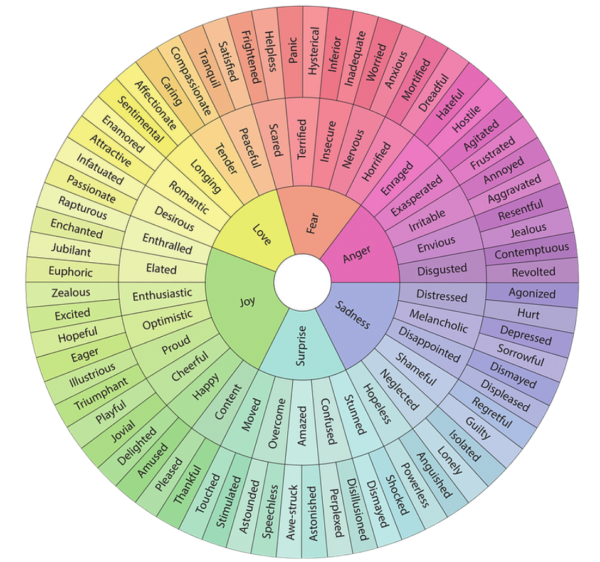
If you have done any work on dealing with difficult feelings, you may have come across The Feelings Wheel. You can see a typical one here at the Calm Blog. It can be a useful tool in helping you precisely describe what you are feeling. For example, you might think you are often fearful, but if you think about it more, it could be a range of feelings you are experiencing, from insecure to nervous to scared (all similar but different in degree).  Being able to be precise about your feelings, especially your negative feelings, can help you deal with them.

The problem I have with some versions of the Feelings Wheel is that the feelings listed are predominantly negative. That’s ok for self help or therapy: you are trying to deal with negative feelings and having more ways to describe them is helpful.

I think it is good to have a range of ways to describe positive feelings, too. Even if you aren’t feeling them, it’s good to have a way to determine feelings that you would like to have. That’s why I was happy to find the Wheel below at the site YouthSMART, because it portrays more positive feelings. If you said you wanted to be more loving or joyful, it may mean feeling more Passionate or it may mean feeling more Excited. Having that vocabulary of feelings can help you move in a better direction, I believe.

You can argue that there is only so much room on such a Wheel and I agree. What’s important is having a tool to help you understand what you are feeling and how you would like to feel. I find the wheel above is good for that.

(Image: link to image at YouthSMART.)

Happy New Year! (Why yes, the new year starts the day after Labour Day :))

Wait? What?! It’s not January 1st, you say! Nope.

To me the day after Labour Day is always the start of a new year. In Canada at least all, school starts on that day. So for 20 some years of my life I gotten used to this day as not only the start of the school year, but the start of a year itself. Even now, decades after having finished school, I think that way. I enjoyed school, so while I enjoyed the time off in July and August, I was always keen to head back to class in September and see people again and learn new things and progress with my life. It’s a rhythm that has stayed with me decades after graduating from university.

For folks who love to celebrate the New Year in the middle of winter, don’t let me stop you. But I will always think the new year begins today. To those like me…Happy New Year!

The seasons of the quiet house

There are seasons of the year when the temperature outside is somewhat close to room temperature. Neither my furnace nor my air conditioning comes on for long periods of time. Without them on, the house can be totally quiet. So quiet you can only hear the occasional noise outside or you can hear a mechanical clock. Maybe you can hear the wires in the wall humming. It’s the season of the quiet house.

I love those times of year. Nothing is more relaxing to me than sitting in a quiet house.

Right now it’s one of those seasons. I treasure it.

It’s Sunday. Here are nine pieces to mull over this afternoon.

Sure you can make yourself busy on this warm summer weekend. Or you can chill for a bit and read one of these thoughtful pieces. I know which one I am going to do. 🙂

  1. Here’s a piece on the joy of Latin. Really.
  2. 100% this: The Case for Killing the Trolley Problem
  3. Worthwhile: Piketty on equality.
  4. This is a weak piece that tries to link AI to colonialism but fails to make the case:  AI colonialism.
  5. Do you have siblings? Read this:  How Your Siblings Can Make You Happier.
  6. Worth chewing on:The limits of forgiveness.
  7. On one of our oldest technologies: the importance of wood .
  8. Dive into this list of common misconceptions.
  9. Finally, this piece on  Alexa with the voice of dead people will get you thinking.

Was the Long Tail a Lie? Ted Gioia’s thoughts and mine

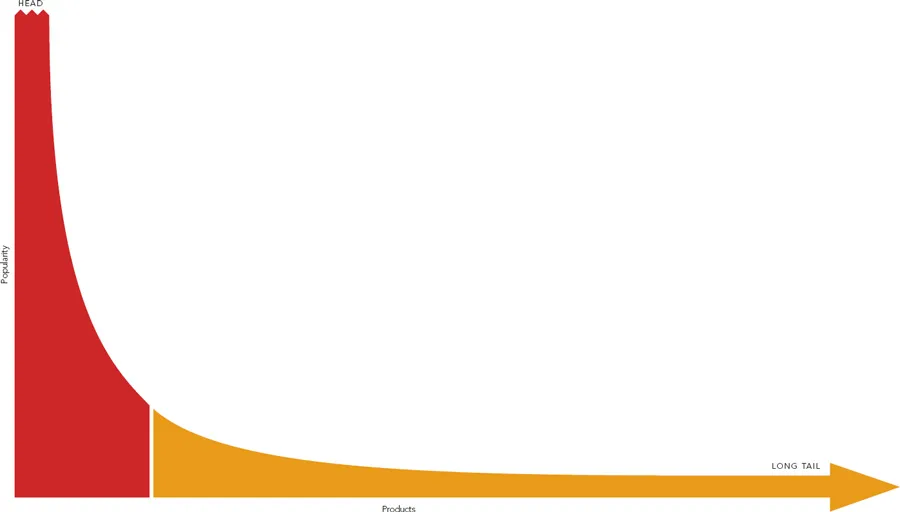
I can’t say if it was a lie. Maybe it was a fairytale. Something too good to be true but something many of us including me wanted to believe in. Whatever your thoughts,  I recommend you read this strong critique on it: Where Did the Long Tail Go? by Ted Gioia. If you are a true believer, Gioia will get you rethinking it.

As for me, I think part of the problem is that online services nudge or even push us to the short tail. There are advantages to them when it comes to selling us more of the short part of the curve in red. We need services and aggregators to get our attention to spiral outwards and look at things we never considered before. Spotify still does that to an extent when it builds me playlists.

Another part of the problem is the willingness of people to get out of their comfort zone and explore the long tail. Again, Spotify will recommend music lists to me, but I often find myself sticking with the tried and true. Services need to better encourage people to try new things or make it easier to try new things.  Give people options, but in a smart way. I know it can be done. I hope it will be done.


Computer memory isn’t our memory and AI isn’t our intelligence


Since the beginning of the digital age, we have referred to quickly retrievable computer storage as “memory”. It has some resemblance to memory, but it has none of the complexity of our memories and how they work. If you talked to most people about this, I don’t think there would be many who would think they are the same.

Artificial Intelligence isn’t our Intelligence, regardless of how good it gets. AI is going to have some resemblance to our intelligence, but it has none of the complexity of our intelligence and how it works. Yet you can talk to many who think that over time they will become the same.

I was thinking about that last week after the kerfuffle from the Google engineer who exclaimed their software was sentient. Many many think pieces have been written about it; I think this one is the best I read from a lay person’s perspective. If you are concerned about it or simply intrigued, read that. It’s a bit harsh on Turing’s test, but I think overall it’s worth your time.

It is impressive what leaps information technology is making. But however much it resembles us as humans, it is not human. It will not have our memories. It will not have our intelligence. It will not have the qualities that make us human, any more than a scarecrow does.

A sharp critique on stoicism

It seems to me that Stoicism has had a good run recently. I have seen plenty of references to stoicism and famous stoics, and those references have been positive. So it was refreshing to come across this piece, Don’t be stoic: Roman Stoicism’s origins show its perniciousness. The whole piece is worthwhile, but the closing especially so:

The world stands in the middle of a pandemic, a climate crisis, and, in many countries, our own crises of (at least quasi-) democratic self-governance. It may be tempting to embrace a philosophy that counsels us not to be sad, not to mourn the things we’ve lost, to accept all that happens as fate, and to do our duty even as the world crumbles around us. But we should not write speeches for Nero; nor should we glorify the power of the emperor. We should mourn our families when bad things happen to them, our cities when they are threatened, our houses when they burn or flood. It is not easy to feel grief, and it is tempting to seek out exercises to suppress it. But to look around the world and feel the pain of injustice, to understand and wallow in the hurt of the natural world – this is not a sign of weakness. It is a sign of humanity, and the first step towards taking action. Because if you accept your fate joyfully, as a Stoic sage should, you’ll never try to change it.

Well said. There are times when change is impossible and suffering inevitable and in such times stoicism (and other philosophies of detachment) can help. More often than not, change is possible and suffering is optional. In those times, you need a better philosophy to guide you. Keep than in mind while reading Marcus Aurelius or Seneca.

How to grow old, and other things I learned from my Father and his Father

My dad in 2012, around his 72nd birthday, looking over the land he would someday buy

My dad had two dreams late in life. One was to win a (relatively) big lottery, which he did. The other was to buy the property behind his house, which he did some time after winning the lottery. He had played the lottery for years and played the same numbers consistently each week. I thought he would never win but he prevailed.

When I was a child my grandfather planted new fruit trees in his yard. I remember being stunned when he said that they might yield fruit in a decade or so. I could not see the point in spending effort on something you might not get to enjoy soon, if at all.

The lottery tickets and the fruit trees were small acts in support of a belief in a better future. That better future may not come, but the only way it could come would be to take some action and increase — if only in a small way — the chance it would happen.

Fatherhood is like that. You plant roots and you try your luck and work and hope for a better future that may not come, or come after you’re gone. You do it regardless.

Sons and daughters live off the luck and the land of their Fathers and Mothers before they set off to find their own. During their stay some seeds are taken, some luck rubs off, some lessons (intentional and otherwise) are learned along the way. Then they go.

After you go, you think there is nothing left to learn. But then you are old like they were old, and you learn lessons even then. Lessons like the importance of having dreams and goals no matter how old you are. Lessons like living like you will never die and acting accordingly. Or the overriding lesson of believing in a better future no matter what. Though the person passes away, the lessons are passed on, like the fruit that falls from that long ago planted tree.

Happy Father’s Day to us Fathers, living and not. We the living have much to learn, and trees to plant. Wish us luck.

The elusive spotlight (being a pop star as a career)


Pop stars have unique careers. For some of them, it can be like being an athlete: you do it while you are young and then you are done. That what came across to me in this piece: ‘That’s it? It’s over? I was 30. What a brutal business’: pop stars on life after the spotlight moves on | Music | The Guardian.

Then there are some artists — not as many — who go on and on and whose careers shift and they become more akin to academics (e.g, Bob Dylan, Leonard Cohen).

What happens after the spotlight shifts depends on the artist. Read the article and see.

It’s an interesting career, to say the least. All the power in the world to those that can make a go of it.

What skateboarding can teach you (even if you don’t skateboard)


What or where is the value of skateboarding? If you read this, you might think the value is endless failure: Sisyphus, skateboarders, and the value in endless failure from Psyche Ideas.

Perhaps. But like many activities, the value that comes from any activity is dependent on the participant.

I think one thing I got from thinking about this is putting “failure” in perspective. For skateboarders, failure is irrelevant (barring injury). They just try and try again. They may eventually succeed occasionally at what they are attempting. They may even master parts of skateboarding.

I think this is a meta-lesson we could all use. When it comes to learning things, failure should be accepted and its meaning diminished. Set up a learning environment where failure has little cost, and get on with learning.

That’s a lesson from skateboarding that I get.

How Many Close Friends Do You Need in Adulthood is a good question


How Many Close Friends Do You Need in Adulthood asked The New York Times:

One 2016 study suggested people who have six or more friends have improved health throughout their lives, while a 2020 study by Suzanne Degges-White, professor and chair of the Counseling and Higher Education department at Northern Illinois University, found that middle-aged women who had three or more friends tended to have higher levels of overall life satisfaction.

Hmmm.

Before you dismiss it — I see you, fellow introverts! — go read it. Not everyone needs the same number of friends, nor does everyone need the same type of contacts. But like other parts of our lives, if we neglect our friendships, it has a adverse health on us.

We all need friends. And like exercise, we have to work at it as we get older. When we are younger, it’s much easier to find and make friends. For proof of that, check out this: Who We Spend Time with as We Get Older from FlowingData.

It’s been hard for anyone, young or old, to make and keep friends during these pandemic. Especially in places like Toronto, which suffered numerous lockdowns. But the weather is getting nicer, so get outside (literally) and work on your friendships.

Not every act of kindness is good

It’s tempting when reading these two pieces

  1. Community fridges pop up in Toronto neighbourhoods during COVID-19 pandemic–
  2. Councillor blasts group building shelters after altercation at Dartmouth park

to say, “at least they’re trying”. Or to ask “what’s the alternative”. Or even to think “you don’t support these ideas because you are “heartless, bourgeois, selfish,” etc.

First off, let me say the impulse of these initiatives are good. And the alternatives — lack of food and shelter — are terrible. So in that way these are good ideas. Some food and some shelter is better than none.

But in comparison to any other initiative involving food and shelter these ideas are poor ones. These shelters are good because they are shelters and nothing else. And the idea of having a community fridge is a disaster waiting to happen.

I’m glad that these initiatives provoke the comfortable to make a better effort to help the poor and homeless. But I will never think these are good works for any reason other than the basic ones.

Not every act of kindness is good, and sometimes a small act of kindness allows a bigger problem to fester.

Essays on aging, from Oliver Sacks, on my birthday


It’s my birthday. I’m into my seventh decade. Born in ’61, now 61.


My first decade was one of being shy and smart and tall and skinny and bullied. My second decade was one of growth: growing out of everything, from my clothes to my hometown. Cruising into my twenties I became independent and anxious and happy. By my thirties, I became responsible. In my forties, I became lost. In my fifties, I was crushed.

I expected worst things still to fall on me in my sixth decade, and I was surprised instead by things that uplifted me. Where I will land in my seventh decade, I don’t know. On good days I look to remain open, on bad days I hope for a close.

In all that time, with rare exception, I have taken off every day since I started working in the early 80s. Often those free days were filled with simple pleasures. Mixed in with that was some contemplation.

I think two good things to contemplate on this day are these two essays by Oliver Sacks. One was written when he was still vibrant and turning 80: Opinion | The Joy of Old Age. (No Kidding.) in The New York Times. The second one when he was dying of cancer not much more than a year later: Opinion | Oliver Sacks on Learning He Has Terminal Cancer, also The New York Times.

What impression they will leave on will depend on your current perspective. I encourage you to move around, literally and figuratively, to have to best perspective on life that you can have. The days will be what they are, regardless. How you perceive them depends on where you stand and how you look out.

On the Zanclean Flood and other extinction threats


The world is full of extreme events that can wipe us out. Case in point, this: When the Mediterranean Sea Dried Up. If you are not familiar with the story….

About 5.9 million years ago, due to a combination of tectonic movements and changes in climate, the Mediterranean Sea mostly dried up for over 600,000 years. The Messinian salinity crisis may have raised global sea levels by as much as 33 feet and decreased the salinity of the world’s oceans, raising the freezing point. And then, much more suddenly, it was refilled in less than two years in the Zanclean Flood.

The Zanclean Flood, like the Chicxulub meteor that killed off the dinosaurs, are two reminders that the planet we live on can be subjected to extreme events that can kill off many of us without really harming the planet itself. have no doubt that this is going to be true of global warming as well. Perhaps even a nuclear war. We can be removed and the planet will continue to operate without us.

The world is more hostile to us than we let in. We are only making it worse with dangers such as nuclear weaponry and climate change. We need to be striving to increase our chances of survival, not decrease them. There are enough forces in the universe that can destroy us.

(Image By Paubahi – Own work, CC BY-SA 3.0, https://commons.wikimedia.org/w/index.php?curid=20096173)

It’s Sunday afternoon. A good time to read Mary Oliver. Here’s her 10 best poems

There is never a bad time to read the poetry of Mary Oliver, but Sunday afternoon seems like an especially good time. You may have some of her work already. If so, why not pull it down and savour it?

If you don’t have anything by hers, I recommend you look at this list put together by the good people at the Penn Book Center: 10 Best Mary Oliver Poems – PBC

You may have a favourite outside of these. As for me, it has two of my favorites, Wild Geese and The Summer Day. Go and enjoy. Happy Sunday to you.

P.S. I wrote this on her as well. Some good links in that post.

On the ethics of the pig heart transplant

David Bennett Sr. has died, two months after receiving a genetically modified pig’s heart. Like any transplant operation, there were ethical decisions to make. If you are an animal rights activist, you have even more ethical decisions to think about. But this particular transplant brings in even a broader range of ethical considerations, which is obvious once you read this: The ethics of a second chance: Pig heart transplant recipient stabbed a man seven times years ago.

I generally have faith in medical professionals to make the right ethical choices when it comes to transplants.  I think he should have received the transplant and a transplant from a pig is acceptable. But read about it yourself and see what you think.


On Stonehenge and the Judean Date palm: the past is never gone

I have been thinking much on these two pieces I’ve read recently:

One thing I find interesting about them both is how something that could be considered part of the Past is now part of the Present. Stonehenge keeps being meaningful to us now by revealing things about the people of that era; the seed for the Judean date palm shows us what a long lost plant looks like now.

The past is never past. We choose not to pay attention to it, but it remains, piled up behind us, a huge closet full of things that were once in the present. They remain there until we find a reason to make them present again.

Micropayments are generally a bad idea. Web 3 is not going to fix that

There are certain zombie ideas that arise from time to time that cannot be killed. “Micropayments are good and we should have them everywhere” is such an idea. Like many zombie ideas, something new will come along and suddenly they rise up from the grave and start wandering around again. In this case, what has revived this particular zombie idea is Web 3.

I get why this idea gets revived. IT people love it because it is in their wheelhouse. They can imagine writing code to create small payments for any transaction, and once you have millions or billions of transactions, it adds up to some serious money.

This is not to say micropayments is always a bad idea. Micropayments happen in limited ways right now. Every time you use something like ApplePay or GooglePay, a very small transaction cost goes to those big providers of the service. What makes them acceptable is

  1. they are invisible
  2. they are very small
  3. the service provided outweighs the cost significantly

When I see IT people talking about micropayments, they are describing something that is none of those things. And so instead of being beneficial, they just become annoying and lead to their downfall.

In IT when decentralization gets painful, centralization occurs. In business, the pain of many small payments gets removed by turning into ac bundle. Bundling usually works out better for the provider in many cases. Spotify could charge you a penny a song you listen to and likely still do well, given it pays artists a small fraction of that. But by charging people one fixed price, they can aggregate their users and make more money that way than if they charged you per stream. Plus its more customer friendly I think. Most people don’t want to worry about managing many small costs: bundles help with that.

For more on this, here are two pieces that support my thinking: