How to forge a painting in the Louvre 

Painting in the Louvre
Easy! Just follow these three simple steps:

  1. Apply for one of the 250 permits the museum gives out each year.
  2. Bring your supplies and stand in front of the painting you want to copy. You can do this most days in the months of  September through June from 9:30 a.m. to 1:30 p.m.
  3. Start painting.

Ok, it’s not quite that easy. Even if you can perfectly reproduce the work you stand before, the staff of the Louvre take steps to insure no one mistakes your work for the original, as this NYTimes article points out. For example, in this article, they made sure that the copyists used

canvases that were one-fifth smaller or larger than the original, and that the original artists’ signatures were not reproduced on the copies. Then (the staff) stamped the backs of the canvases with a Louvre seal, added (the staff’s) own signature and escorted (the copyists) from the museum.

It’s a fine article highlighting a great tradition of the Louvre: well worth reading.

(Photo by IVAN GUILBERT / COSMOS and linked to in the article)

Best way to host a dinner party? Like a Parisian

Paris food
The wise David Lebovitz has great tips on how to host a dinner party in the manner that  Parisians do. If that sounds daunting to you, it shouldn’t. It’s filled with such smart advice such as “Keep it Simple” and “Finish with chocolates”. If you have a dinner party hosting coming up, drop everything  and read and follow this: How to Entertain Like a Parisian Tips – David Lebovitz. . From the good people at Food52.com.

(Photo from here)

It’s Time for You to Run for Office. Yes, you.


Great advice: It’s Time for You to Run for Office. 

Don’t see politicians that represent you or the groups you feel represent you? All the more reason to run.

Don’t get me wrong: running for office and doing the job while you are in office are both difficult things. But if you are the type of person who want to make a positive difference and you are also the type who likes a challenge, then what’s stopping you?

How to skip the Monday Blues, take off Wednesday, pace yourself throughout the week and other week hacks

slow pace image
If you suffer from the Sunday blues, whereby you spend Sunday evening dreading the upcoming week, I recommend you read this: Skip Monday Blues with Sort-Your-Life-Out Sundays – 99U. It is one way to hack your time and enjoy it more.

Another good hack is the making Thursday night the start of the weekend. Consider some of the things you enjoy doing on the weekend and schedule them for Thursday evening. Even people with jam packed weeks can do this occasionally. You still have to go in to work on Friday, but you feel you already have gotten a start on the weekend. It makes the weekend seem less stressed, at least for me.

Finally, if you feel every week is one busy day after another, try making Wednesday a night of putting everything down and just relaxing. Either pare back the things you’d normally do on Wednesday, or shift some of it to another day.

Ultimately you want to figure out how to do less throughout the week in order to enjoy each of the days in themselves, be they busy or slow. If you do that, the days you have to do things will help you enjoy the days you do not.

Pace yourself and enjoy yourself.

How many days until….

Clock
If you want a simple way to determine how many days until a certain date, or have a count down clock on your screen, consider the web site days.to. If you go to that link, you can see all the things you can do with the site. If you want to determine how many dates until a certain date, enter https://days.to/dd-month/year. For example, if you want to know how many days until January 1, 2020, enter: https://days.to/1-january/2020

Great little site!

Work sucks. Here 16 things to read and give you some perspective


Ok, work doesn’t always suck, and sometimes it can be really great. But it sucks more often than it should. If you wonder why, these links can help you gain some perspective and insight.

  1. Why Workers Are Losing to Capitalists – Bloomberg– Not promising
  2. How to Maintain Your Sanity (and Be Productive) When You Work Alone • Jocelyn K. Glei– Those who work at home, take note.
  3. Meet the Developer Who Made Games for Three Years While Living on the Streets – Motherboard – If you feel you need motivation in a difficult work situation, read this
  4. Motivation is Overvalued. Environment Often Matters More. | James Clear – on the other hand, there’s this.
  5. Pocket: I Quit My Job to Live in a Tent and Write Code – more on working in difficult situations.
  6. The pursuit of loneliness: how I chose a life of solitude | Society | The Guardian– more for those who would rather work and be alone
  7. You Probably Need a Public Portfolio Even If You’re Not a Freelancer or a “Creative”– good advice, especially for people that think they need no such thing.
  8. I’m Ira Glass, Host of This American Life, and This Is How I Work – Glass provides some inspiration here.
  9. Can a company innovate without working its employees to death? – The Washington Post– You would HOPE so.
  10. A cycle of exploitation: How restaurants get cooks to work 12-hour days for minimum wage (or less) – The Globe and Mail– depressing but essential reading.
  11. The Simple Technique To Fit A 40-Hour Workweek Into 16. | Fast Company– and here is the opposite extreme.
  12. I worked in a video store for 25 years. Here’s what I learned as my industry died. – Vox– good insight for those in a threatened industry.
  13. Working with the Chaos Monkey– help for those dealing with chaos monkeys (I have recently).
  14. The secret to success: take risks, work hard, and get luck– obvs.
  15. The Shame of Work – New Rambler Review– hmmm.
  16. Final Frame: Office Propaganda | Apartment Therapy – Finally, a light link after all that.

(Image from the last link)

It’s Monday. Your brain is barely functioning. Great news! You don’t need it!

Damaged brain due to fluid

You might think I am joking but I am not.

Take a look at the photo above. This is a scan of a living man’s brain: the black part is fluid, while the part around the black part is his remaining brain. Essentially 90% of his brain has been displaced by the fluid. And yet he was considered a functioning person, despite only have 10% of a brain mass most people have.

The story behind the scan and the questions that it raises is in this article: A civil servant missing most of his brain challenges our most basic theories of consciousness.

Fascinating. Perhaps in a few years / centuries we will understand how the brain works. For now we are mostly clueless, much like you are while you wait for your coffee to kick in. 🙂

How to look at your lifespan

When you are young, life seems endless and countless. If this is you, I recommend  you look at the charts provided by the folks  Wait But Why. They break down your life into weeks and show you how it maps out over time. For example, like this:


They even have blank charts you can use to map out your own life.

It’s sobering to consider. You have less time than you think. If you believe that and use that to motivate yourself to appreciate life, then great. If you don’t believe that, head over to that site and do the math.

Carpe diem.


Montreal’s low rents are a lesson for any city suffering the opposite

Le Plateau in Montreal

Rents in many cities are high and rental properties are becoming increasingly difficult to afford. One exception to this is Montreal, where “average rent for a two-bedroom apartment in the Montreal metro area is $760. The Toronto average is $1,288. In Vancouver, it’s $1,368.” Why is that? Well there are a number of reasons, but as this The Globe and Mail point out, a key reason is the basic economics of supply and demand. But there is more to it that just that, and I’d recommend you read the piece to find out why.

I’m not sure if other expensive cities can replicate this, but it’s worth knowing it can be done and using this knowledge in cities where politicians and others try to limit rental stock.

The migration from rural to urban areas is going to continue for some time. People need more places to live. Let’s hope other cities can learn from Montreal.

(Quote from the article, image from Wikipedia)

Paris travel tips from the New York Times, if you have no time and no money

Paris Hotel
If you want to go to Paris and have little money or little time, then the New York Times has two pages of information that might help:

  1. 36 Hours on the Left Bank, Paris – The New York Times
  2. Hotels in Paris for Under $150 – The New York Times

If you go after reading this, send me a postcard. 🙂

P.S. If you are in the mood for dreaming about going to France, here’s a bonus link from Decanter magazine: Château accommodation in Bordeaux: Living the dream

(Photo, by Ed Alcock, via a link to the page of The New York Times)

What has mattered most over the last millennium (a list of 10)

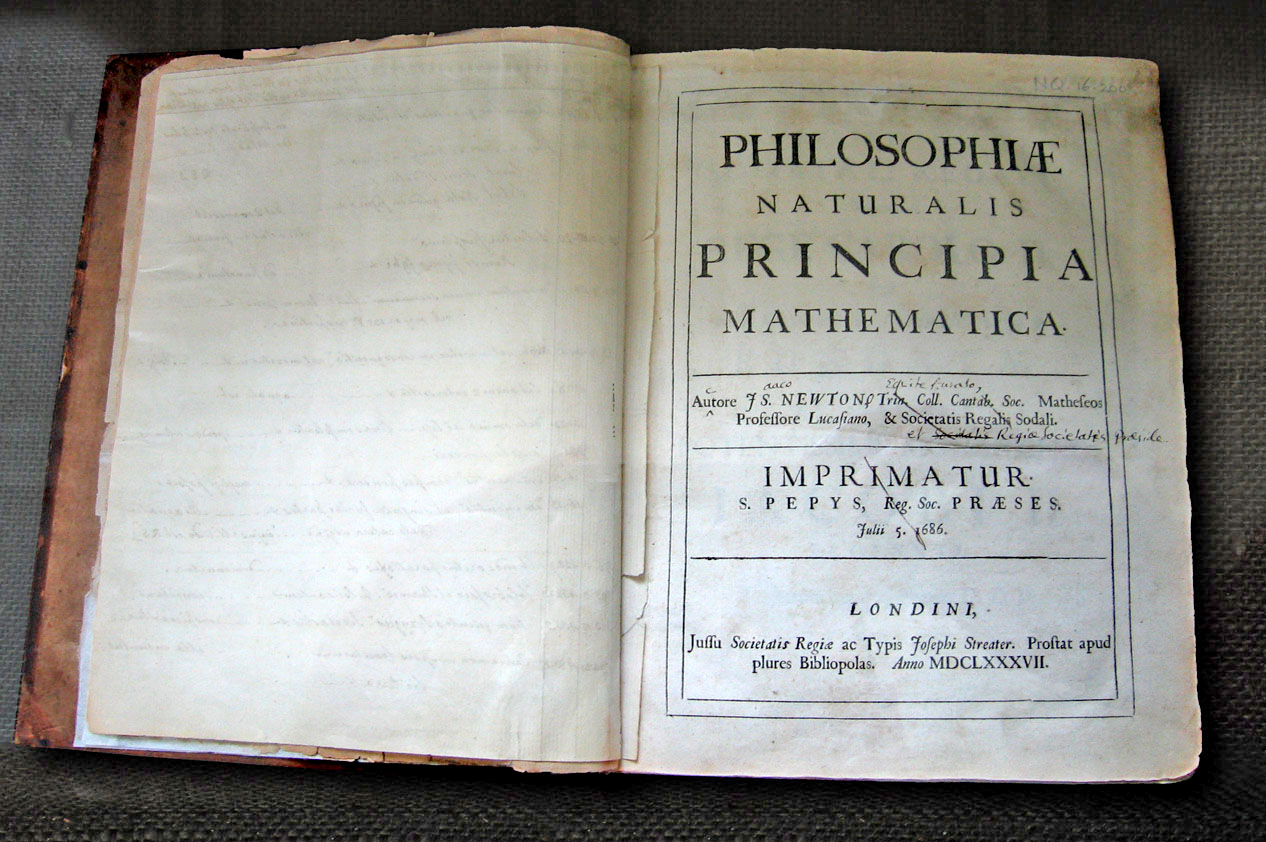
Principia Mathematica

This is a fascinating piece: The 10 greatest changes of the past 1,000 years | Books | The Guardian. It’s easy to argue that additional things should be added (e.g. emancipation) and things should be deleted or modified (I would replace “Columbus” with “Explorers”). Indeed, one of the things that makes such lists enjoyable to read and think about is how you would change it. As it is, it’s a pretty good list, and in line with what you see in other works that span time like this (e.g. “Sapiens” by Yuval Noah Harari).

If you liked reading that list, you may like “Sapiens” too.  I’d also recommend The BBC’s History of the World in a 100 Objects.


An introduction to Richard Thaler, winner of this year’s Nobel Prize for Economics

Often times it is hard to appreciate the work of Nobel Prize winners, including those in Economics. Thaler is not one of those people. His work is very approachable for laypeople, and the benefits of his work is obvious.

Here’s one example, of how his work led to better results for people in terms of pensions.

Youtube is a great source of videos on Thaler. If you want to get started understanding what is behind his thinking, you can start there.
In addition, the New York Times covers his award winning here and it is another good introduction. Finally, here is a piece in the Times that Thaler wrote himself, on the power of Nudges. If you do anything, read that.

Good to see him win.

How to get in shape, in two steps

There are only two steps to get in shape: 1) lose weight 2) exercise. Of course, those can be big steps. You need help to take both. These 15 links can provide you with some of the help you need.

1. Lose Weight

  1. Intermittent Fasting 101 – The Ultimate Beginner’s Guide
  2. The Beginner’s Guide to Intermittent Fasting
  3. Michael Pollan’s Simple Rules for Eating
  4. Scarsdale Diet – Moms Who Think
  5. Becoming Strong & Healthy as a Vegan : zen habits
  6. How Chef Nate Appleman Lost 85 Pounds with Really Good Food | Healthyish | Bon Appetit
  7. How I Lost 75 Pounds in 120 Days – Medium
  8. My Personal Fat-Loss Plan : zen habits

2. Exercise

  1. What Keeps Me Running | Runner’s World
  2. How Running and Meditation Help the Depressed — Science of Us
  3. The Beginners Guide to Orangetheory Fitness | MyFitnessPal
  4. How to Build Your Own Workout Routine | Nerd Fitness
  5. Total Body Training With Only A Pair Of Dumbbells.
  6. The 14 best beginner’s exercises to do at home – Men’s Health
  7. Beginner Body Weight Workout – Build Muscle, Burn Fat | Nerd Fitness

Gorgeous: a pavilion made out of  wire mesh 

wire mesh pavillon

I would love to see this: An Expansive Pavilion of Architectural Elements Constructed from Wire Mesh by Edoardo Tresoldi (via Colossal). 

You really want to click on the link and see what it looks like from the many photos they have on the great art site, Collosal.

It really is a stunning space and a tremendous work. It’s as if a ghost of a building appeared and took over a space. Beautiful.

The worst ever president of the United States of America is…

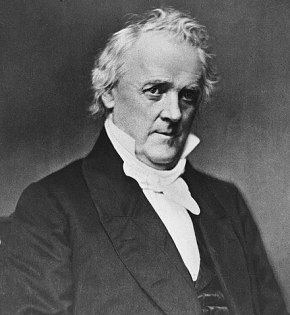
…likely this guy: James Buchanan.

James Buchanan

And this piece makes the case for why he — and not the current guy — is the worst: No, Trump isn’t the worst president ever – Indivisible Movement – Medium. In a nutshell:

In order to wrest the title of worst president from Buchanan, a contemporary commander in chief would need to wreck the economy, revoke all human rights from an entire race, violate the constitutional separation of powers, and plunge the country into a ruinous civil war that kills nearly 2% of the US population.

With all the staggering incompetence and corruption of the 45th presidency, it may seem hard to believe anyone could be worst. I believe in time Trump will be in the bottom 5 presidents. But to wrestle the title of worst President ever, he still needs to do worse. Let’s hope he does not.

You’re Going to Die, Here’s How to Deal With It

Aside from birth, the only other thing that is guaranteed to happen to every single person on the planet is death. No exceptions, no way around it. Your own death aside, chances are good that you will be affected by deaths of loved ones and most likely have to plan a funeral or two before your own comes about.

If you are still not in denial and you want to face up to your inevitable exit, read this: You’re Going to Die, Here’s How to Deal With It

Dying is a part of living. Don’t dwell on it, or you miss out.


How many lives do you have to live

Stage

It’s a cliche: you only have one life to live. But it’s not really true. We experience many lives in our lifetime. Maybe it’s closer to 11, like this great post illustrates: You Only Live 11 Times, SMBC | Jesse Rogerson. Or maybe it is closer to some other number. Certainly we all go through major stages in our lives, and as we leave a stage, it can seem like we leave one life behind for another one. We are like performers, going from one theatre to another, retaining some parts of our act while discarding others.

Enjoy the life (or stage of life) you are in right now. Savour the best parts of it. Never assume they will last long, for they won’t. (Parents, in particular know this.) Likewise, for the more challenging aspects of your life right now: they won’t last for long, either. (It just seems that way). Accept and deal with them the best way you can, and know they will also recede and end.

On ward!

The iPhone 8 is really the iCamera 8

iphone
Great review of the latest iPhone*, here: The iPhone 8 is a look into the augmented future of photography | TechCrunch. I had heard that the iPhone 8 had a great new camera, but this article really drives that home.

If you are thinking of getting an “8”, this could be the reason you need. On the other hand, if you rarely take photos or don’t care too much about the quality, I think the case for an upgrade gets weaker.

*  I don’t consider the iPhone X the latest phone so much as a promise of where the iPhone is going. To be honest, I think the iPhone X is as much an attempt to celebrate the 10 years of the iPhone and Steve Jobs’s legacy, not unlike the Twentieth Anniversary Macintosh. Not that there is anything wrong with that.


How technology can enhance work and not simply eliminate it

robot and human working together

This piece: What it’s like to be a modern engraver, the most automated job in the United States — Quartz, reminded me once again that the best use of technology is to augment the people doing the work, and not simply take away the work. Must reading for anyone who’s believes that the best way to use AI and other advanced tech is to eliminate jobs. My believe is that the best way to use AI and other advanced tech is to make jobs better, both for the employee, the employer, and the customer. The businesses that will succeed will have that belief as well.

(Image from this piece on how humans and robots can work together.)

Some thoughts on the end of the CBC mail robots

mail robot
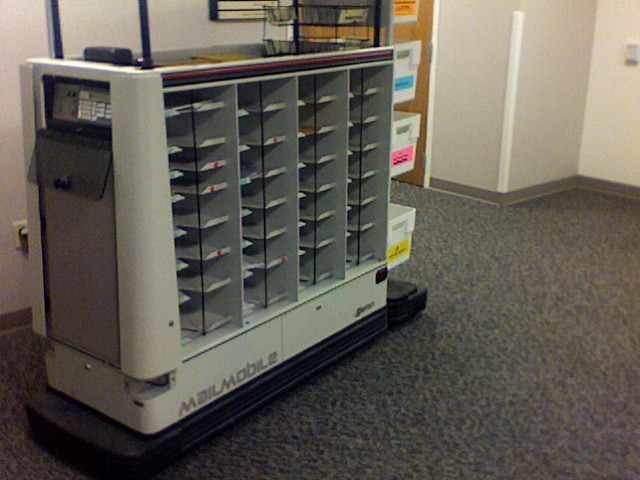
According to Haydn Waters, a writer at CBC, the mail robots at the corporation are being discontinued. Instead:

Mail will be delivered twice a week (Tuesday and Thursday) to central mail delivery/pickup locations on each floor.”

What gets lost in alot of discussions of robots, AI, etc., taking all the jobs is that the drivers for the decisions is not technology but economics. If there is no economical need for robots and other technology, then that technology will not just appear. There is nothing inevitable about technology, and any specific technology is temporary.

Of course there will be more use of robots and AI and other technology to replace the work people may currently do. The key to finding work will be to continually improvise and improve on the tasks one has to do to remain employed. That’s something humans do well, and technology will struggle with for some time in the future, AI hype not withstanding.

A Portable, Flexible and Affordable Cardboard Standing Desk that is perfect for Road Warriors

Standing desk
This: A Portable, Flexible and Affordable Cardboard Standing Desk over at the site Design Milk, is a great design of a desk that not only is capable of transforming from a typical to a standing desk, but is also capable of being packed up and easily transported to different locations. For standing desk fans that travel to different work locations, it might be just the thing you need.

It’s strong too. Check out the link above and see what this piece of furniture can do. Impressive.

A math lover’s post

I knew that Paris had streets named after politicians and historical figures, but I didn’t know how many Paris streets are named after mathmaticians. Apparently quite a few! Amazing. One more reason to love Paris.

Dover publishers have the best books when it comes to math. If you want to see some of their better ones, see this list.

Good stuff.

Published on 9/29 at 9:29 🙂


The comeuppance of Silicon Valley

It’s not in full decline, but Silicon Valley is on its heels these days, whether due to the practices at Uber or Facebook or Google or …well, the companies that belong there as a whole. Here’s three pieces that all touch on the some of the problems there, but really I could have put three dozen recent articles instead of just these three:

  1. There’s Blood In The Water In Silicon Valley
  2. Privilege and inequality in Silicon Valley – Tech Diversity Files – Medium
  3. Silicon Valley is confusing pseudo-science with innovation – The Verge

Everything I see tells me that they are not equipped to deal with the challenges on their own. If this is true, then expect these high tech companies to come in for a political bruising soon.

On Nash equilibrium and game theory

John Nash
I’ve been interested in Game Theory and in particular how to apply the concept of the Nash Equilibrium to work. These were four links I found useful

  1. Examples and exercises on Nash equilibrium in games in which each player has finitely many actions
  2. The Triumph (and Failure) of John Nash’s Game Theory | The New Yorker
  3. Nash equilibrium – Wikipedia
  4. Game theory text (PDF) from UCLA math department.

(Image of the great man himself from Wikipedia)

Here’s 32 ways to live better.


From dealing with difficult people to doing things better, here’s dozens of pieces on how to live better.

  1. Don’t treat love or leisure like a job | Life and style | The Guardian – good advice. I found that non-work activities that I treated like work became less enjoyable. If this sounds like you, read this.
  2. MJ Ryan Mantras For Dealing With Difficult Times – everyone can use this at one time or another in their lives
  3. End the Tyranny of 24/7 Email – The New York Times – what goes for email should also go for social media, Slack, etc. Improve your life: get offline more often.
  4. 7 Rules That Keep My Life Simple : zen habits – simple is often
  5. Relationship Problems? Try Getting More Sleep – The New York Times – sometimes the best approach is to start with the basics: sleep, diet, exercise.
  6. How to Write a Book: 10 Ridiculously Simple Steps – well, not exactly. But a good reminder on how the mechanics of book writing are important.
  7. Choose to Be Grateful. It Will Make You Happier. – The New York Times – if not grateful, then appreciative.
  8. Pmarchive – Guide to Personal Productivity – odd, but interesting.
  9. Achieve Goals By Gamifying Them – 99U if you like games, a good approach
  10. A psychologist explains the limits of human compassion – Vox – a reminder to give yourself a break if you are beating yourself up for not doing more
  11. Turning Negative Thinkers Into Positive Ones – NYTimes.com – this is good.
  12. Inbox Zero trick: How to clean out your inbox on Gmail and start the year fresh. | Cool Mom Tech – smaller inbox, happier life
  13. 10 Life Lessons to Excel in Your 30s | Mark Manson – 30 somethings, take note
  14. The Alan Kazdin Method for Making Your Children Behave – The Atlantic – advice for parents
  15. I’ve started responding to recruiters with this list of requirements · GitHub – how to deal with recruiters. Good idea.
  16. Résumé tips for Wall Street internships – Business Insider – I can’t recommend this, but for those who want that life.
  17. How to Start Running – Well Guide to Running for Beginners – Well Guides – The New York Times – plenty of good resources for new and experienced runners here.
  18. Make Yourself Note-able – who writes, rules.
  19. What Productivity Systems Won’t Solve – good advice, especially for those busy yet feeling stuck.
  20. 11 Ways to Write Better | The Minimalists – I am surprised the minimalists had this many 🙂
  21. Biggest goal setting mistake people make, according to Amy Cuddy – Business Insider – if you feel goal setting isn’t working, read this.
  22. Better Together – Kara’s Inspiration | Oiselle Running Apparel for Women – inspiration from one of my favorite athletes.
  23. How I Got My Attention Back | WIRED – in the Internet era, your attention is valuable. Keep hold of it.
  24. How to Be a Stoic | The New Yorker
  25. I Have 15 ideas To Change Your Life. Do you Have 5 Minutes? -sure you do. So read this.
  26. Tips for Minimal Living and Decor | Apartment Therapy – good advice on how to live minimally.
  27. The Life Balance Wheel: A Printable Tool to Find Harmony at Home | Apartment Therapy – a good technique. Replace things on the wheel with things you value most.
  28. You Should Work Less Hours—Darwin Did – see? now you have a reason to do this.
  29. How to Get to Know Someone: 53 Great Questions to Ask — Gentleman’s Gazette – for those of you that find getting to know people hard.
  30. Actually, we can buy happiness | Oliver Burkeman | Life and style | The Guardian – a good contrarian take on things
  31. Do These 5 Emotionally Intelligent Things Within 5 Minutes Of Meeting Someone – also good.
  32. When an Argument Gets Too Heated, Here’s What to Say – good to know.

(Image from Wikihow)

34 good links on AI, ML, and robots (some taking jobs, some not)

If you are looking to build AI tech, or just learn about it, then you will find these interesting:

  1. Artificial intelligence pioneer says we need to start over – Axios – if Hinton says it, it is worth taking note
  2. Robots Will Take Fast-Food Jobs, But Not Because of Minimum Wage Hikes | Inverse – true. Economists need to stop making such a strong link here.
  3. Artificial Intelligence 101: How to Get Started | HackerEarth Blog – a good 101 piece
  4. Deep Learning Machine Teaches Itself Chess in 72 Hours, Plays at International Master Level – MIT Technology Review – the ability of tech to learn is accelerating.
  5. Now AI Machines Are Learning to Understand Stories – MIT Technology Review – and not just accelerating, but getting deeper.
  6. Robots are coming for your job. That might not be bad news – good alternative insight from Laurie Penny.
  7. Pocket: Physicists Unleash AI to Devise Unthinkable Experiments – not surprisingly, a smart use of AI
  8. AI’s dueling definitions – O’Reilly Media – this highlights one of the problems with AI, and that it is it is a suitcase word (or term) and people fill it with what they want to fill it with
  9. A Neural Network Playground – a very nice tool to start working with AI
  10. Foxconn replaces ‘60,000 factory workers with robots’ – BBC News – there is no doubt in places like Foxconn, robots are taking jobs.
  11. 7 Steps to Mastering Machine Learning With Python – don’t be put off by this site’s design: there is good stuff here
  12. How Amazon Triggered a Robot Arms Race – Bloomberg – Amazon made a smart move with that acquisition and it is paying off
  13. When Police Use Robots to Kill People – Bloomberg this is a real moral quandary and I am certain the police aren’t the only people to be deciding on it. See also: A conversation on the ethics of Dallas police’s bomb robot – The Verge
  14. How to build and run your first deep learning network – O’Reilly Media – more good stuff on ML/DL/AI
  15. This expert thinks robots aren’t going to destroy many jobs. And that’s a problem. | The new new economy – another alternative take on robots and jobs
  16. Neural Evolution – Building a natural selection process with AI – more tutorials
  17. Uber Parking Lot Patrolled By Security Robot | Popular Science – not too long after this, one of these robots drowned in a pool in a mall. Technology: it’s not easy 🙂
  18. A Robot That Harms: When Machines Make Life Or Death Decisions : All Tech Considered : NPR – this is kinda dumb, but worth a quick read.
  19. Mathematics of Machine Learning | Mathematics | MIT OpenCourseWare – if you have the math skills, this looks promising
  20. Small Prolog | Managing organized complexity – I will always remain an AI/Prolog fan, so I am including this link.
  21. TensorKart: self-driving MarioKart with TensorFlow – a very cool application
  22. AI Software Learns to Make AI Software – MIT Technology Review – there is less here than it appears, but still worth reviewing
  23. How to Beat the Robots – The New York Times – meh. I think people need to learn to work with the technology, not try to defeat it. If you disagree, read this.
  24. People want to know: Why are there no good bots? – bot makers, take note.
  25. Noahpinion: Robuts takin’ jerbs
  26. globalinequality: Robotics or fascination with anthropomorphism – everyone is writing about robots and jobs, it seems.
  27. Valohai – more ML tools
  28. Seth’s Blog: 23 things artificially intelligent computers can do better/faster/cheaper than you can – like I said, everyone is writing about AI. Even Seth Godin.
  29. The Six Main Stories, As Identified by a Computer – The Atlantic – again, not a big deal, but interesting.
  30. A poet does TensorFlow – O’Reilly Media – artists will always experiment with new mediums
  31. How to train your own Object Detector with TensorFlow’s Object Detector API – more good tooling.
  32. Rise of the machines – the best – by far! – non-technical piece I have read about AI and robots.
  33. We Trained A Computer To Search For Hidden Spy Planes. This Is What It Found. – I was super impressed what Buzzfeed did here.
  34. The Best Machine Learning Resources – Machine Learning for Humans – Medium – tons of good resources here.

Some thoughts on the problems Facebook and Google (and even retailers) have with people being awful on their platforms

Google, Facebook, and Twitter are platforms. So are some retail sites. What does that mean? It means that they provide the means for people to use their technology to create things for themselves. Most of the time, this is a good thing. People can communicate in ways they never could before such platforms. Likewise, people can sell things to people they never could.

Now these platforms are in a bind, as you can see in this piece and in other places: Google, Facebook, and Twitter Sell Hate Speech Targeted Ads. They are in a bind partly due to their own approach, by boasting of their ability to use AI to stop such things. They should have been much more humble. AI as it currently stands will only take you so far. Instead of relying on things like AI, they need to have better governance mechanisms in place. Governance is a cost of organizations, and often times organizations don’t insert proper governance until flaws like this start to occur.

That said, this particular piece has several weaknesses. First up, this comment: “that the companies are incapable of building their systems to reflect moral values”. It would be remarkable for global companies to build systems to reflect moral values when even within individual nations there is conflicts regarding such values. Likewise the statement: “It seems highly unlikely that these platforms knowingly allow offensive language to slip through the cracks”. Again, define offensive language at a global level. To make it harder still, trying doing it with different languages and different cultures. The same thing occurs on retail sites when people put offensive images on T shirts. For some retail systems no one from the company that own the platform takes time to review every product that comes in.

And that gets to the problem. All these platforms could be mainly content agnostic, the way the telephone system is platform agnostic. However people are expecting them to insert themselves and not be content agnostic. Once that happens, they are going to be in an exceptional bind. We don’t live in a homogenous world where everyone shares the same values. Even if they converted to non-profits and spent a lot more revenue on reviewing content, there would still be limits to what they could do.

To make things better, these platforms need to be humble and realistic about what they can do and communicate that consistently and clearly with the people that use these systems. Otherwise, they are going to find that they are going to be governed in ways they are not going to like. Additionally, they need to decide what their own values are and communicate and defend them. They may lose users and customers, but the alternative of trying to be different things in different places will only make their own internal governance impossible.


 

On the recent German election

Good news: Merkel won by moving to the center.

Bad news: AfD, a far right party, has surged and won seats.

This could either be a blip and AfD could fade after this election.

Or it could be the start of big and bad changes for Germany, Europe and the world.

For more on this, see this good piece: Angela Merkel wins 4th term as chancellor of Germany in Vox

Where Apple is going next

According to this source, Apple is going into the Health Care Industry: Apple Is Going After The Health Care Industry, Starting With Personal Health Data.

I think a more general statement is that Apple is going to be looking into expanding into services, be they health care, banking, or something else.  They’ve already been successful with Apple Pay.  I expect they can find niches in health care and other industries that they can easily fit into. Plus they can work with partners to deliver tools to people and health care providers that can save everyone in terms of health care costs.

I’m looking forward to Apple bring forth innovations in health care that results in lower costs and better care. I hope they can deliver.

For more on some current health features from Apple, go here.

Very cool. Build a Google Home for Only $35

This is a pretty cool DIY project: The AIY Voice Kit Lets You Build a Google Home for Only $35.

Now, I have my qualms about letting Google have access to so much personal information. If you do not have such qualms and you want to build a cool project, click the link and head on over to Wired, where they have more information on it and how to get it.

Bill Gates and his most recent recommended books

Bill Gates

Bill Gates picks great books to read, and Business Insider has his latest batch here: Bill Gates’ favorite books on science – Business Insider. Unlike other such lists from famous people, I can imagine Gates actually does read all the books he recommends. From other reviewers I’ve read, his book selection is solid.

Not just non-fiction, there is some fiction in there as well.

What No One Ever Tells You About Tiny Homes

Tiny home
What this piece in the New York Times says is the truth about tiny homes is really true about living in any small space, be it a tiny home or a very small apartment or condo. I liked this article because it mentioned things you might not think of, such as how ordinary objects which are not noticeable in bigger spaces become significant in larger spaces. Anyone thinking of downsizing should read this piece.

I still think there are lots of benefits in living in a small space. And some of them, like the one above from inhabitat.com, are gorgeous. But yeah, onions and laundry baskets. 🙂