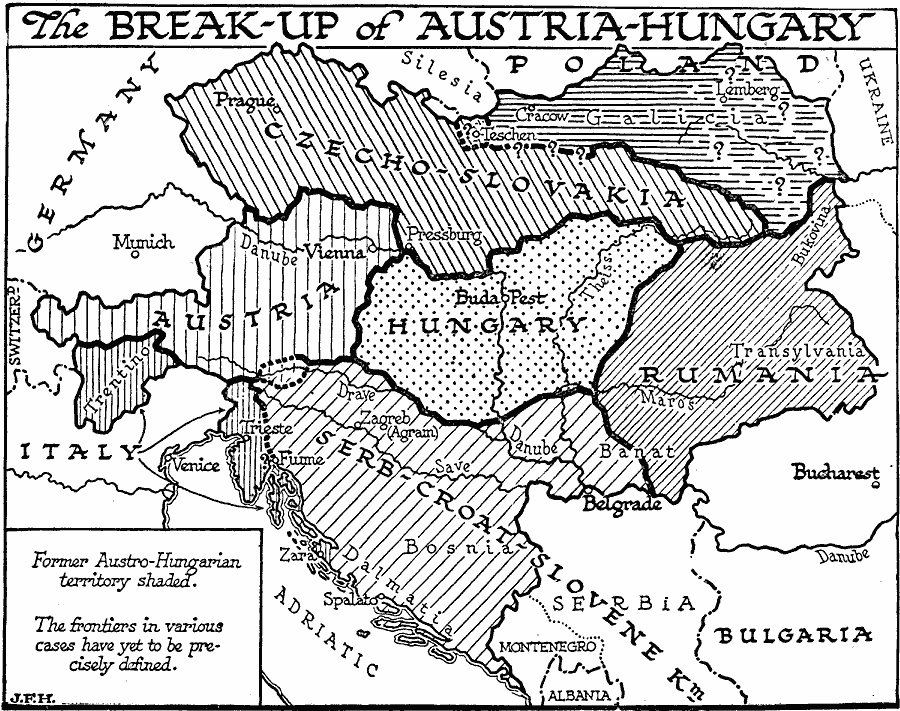
Friday night music: the sultry sounds of Sophisti-pop

Wait, what is sophisti-pop, you ask? Let me let Wikipedia explain:

Sophisti-pop is a subgenre of pop music which developed out of the new wave movement in the UK during the mid 1980s. The term has been applied retrospectively to describe acts who blended elements of jazz, soul, and pop with lavish production. Music so classified often made extensive use of electronic keyboards, synthesizers and polished arrangements. Artists also utilized cutting-edge studio technology and perfectionist recording methods.The genre has been described as mellow, romantic, and atmospheric.

Sounds right. Sophisti-pop was made by artists like ABC, Aztec Camera, Bryan Ferry, Haircut One Hundred, Joe Jackson, Prefab Sprout, Simply Red and Spandau Ballet. Add to that list three of my favorite: The Style Council, Sade and Everything but the Girl (EBTG).

EBTG captured the genre recently when they wrote: “We were a band who listened to Chet Baker but also Buzzcocks, who loved Getz-Gilberto but also The Doors, whose lyrics were intimate but also political”.  The same could be said for many of the bands listed above.

If you want to know what was some of the best of it, check out the 10 of the Best Sophisti-Pop albums. If you’re a Spotify user, they have an entire section devoted to that sound. Also EBTG put together their Complete Discography 1982-2005 on Spotify.  They have a new album coming out soon: meanwhile go back in time and listen to what you may have missed.

Finally, here’s a song I’ve listened to a million billion times since it came out. A great song for walking alone at night in the rain:


On twitter and art and the aesthetics of a Canadian painting by Chris Flodberg

In mid November the Twitter account Canadian Paintings posted the above work by artist Chris Flodberg. At the time I said: “I see some people don’t like this painting but I think it’s fantastic. Just like the Gare St Lazare paintings of Monet are fantastic. They reflect our lives. I even like the palette of this one – it’s a muted palette that goes well with the subject matter. Good composition too.”  That tweet led to a good discussion on the work and to aesthetics in general.

I really do think it is a great painting. For one thing, I love the idea of it. The viewer is on the precipice of entering the painting in their car. If you have ever driven on such a road, you can easily imagine going down the hill and merging with the traffic and then heading over the horizon. Flodberg has positioned the viewer so that the go down and to the left, then up and under (a bridge) and then to the right, giving the painting a dynamic feeling.

There’s almost a danger too, with the concrete walls everywhere. Plus the fact you are about to enter a high speed highway. The dynamic and the danger make the painting exciting to me.

It’s interesting to me what he has put in the painting: the office buildings to the right and a jumble of stores to the left. The objects that make up the painting could be anywhere in a big suburb in Canada (or the US). It has a universality in that regard. I thought it was of a part of the 401 near me: turns out it’s near Calgary. (Fun exercise: compare the painting with the images in that link…how does it make you think differently about the painting.)

Flodberg is not the only Canadian to paint a highway. If you do a search like this on Christopher Pratt or this on Jack Bishop, you can easily see that. Canadian landscapes contain many things, including highways: it makes sense good painters want to paint them.

Speaking of Pratt and Bishop, I get why some people don’t like Flodberg’s painting: his colors are dull and dark in comparison. But I think they perfectly capture many a day I’ve driven along stretches of the 401. Some of those days were mundane, and some were magical. They all get stirred up in my imagination when I take time to look at the work above. A great work, I believe.

I don’t think I would have come across this work if it wasn’t for twitter. Nor would have thought about it deeply if it weren’t for the comments people tweeted. Twitter has many flaws, but there are times when it does things no other site does. I am grateful for that

For more on the work of Flodberg, you can check out his site, here: Chris Flodberg – artist

On Queen West in Toronto, then and now

I walked along Queen West and West Queen West recently. The bones of the neighborhood that I first walked around in the 80s remain. Places like The Queen Mother, Peter Pan, the Rex, and the Horseshoe are still going strong. The Rivoli is there too, if anything fancier than ever. Same for Cameron House. It was comforting to see them all, like old friends at a reunion.

Of course many other places have long gone. The Bamboo Club for instance. It’s location is occupied with some other business, though what occupies it is not as great as it was. Also long gone is Pages. It was a must visit on those trips to Queen West long ago. Now nothing exists in its former spot, just a vacant store.

I don’t want to weep and wail too much about changes to Queen West of my youth. People have been complaining about the its transformation “into the brand-saturated retail corridor it is today” since at least 2010, if not earlier.  I do want to note something ironic though. The same brands that transformed Queen West, brands like “The Gap, GUESS, Le Chateau, RYU, EB Games, NYX, several major fast food joints” have all left in the past five years because of rent. Perhaps in five more years it will just be banks and dentists offices there.

As for me, I prefer West Queen West to Queen West now. I’m happiest taking a streetcar past Bathurst and heading over to Type Books, the Spice Trader, Cocktail Emporium, the Swan and Trinity Bellwoods Park. When you combine that strip with Ossington and parts of Dundas West, you really have some of the best of Toronto, I think, and the places I most frequent lately.

Queen West will always be a destination for many and I will no doubt head there from time to time. But there are so many other great places to head to, even on Queen, and that’s great too.

P.S. The quotes above were from this piece on the closing of H&M on Queen West. The photo of the Queen Mother is from that piece, which is a good review of the place and its history. Also a good review is the Wikipedia entry for Queen West, which includes the entire street, but has a special section on Queen West.

Finally, here’s a great snapshot of Queen West in 1986, as captured in this video of the song “I’m an Adult Now” by The Pursuit of Happiness. Needless to say, it’s a very different street!

On Michael Snow, Toronto’s artist

Michael Snow died last week. It’s hard to think of an artist whose work is as well known and as well photographed as his. Even people who know nothing about art have likely seen his sculpture at the Skydome, not to mention his Canadian Geese sculpture at the Eaton Center. His work is spread throughout the city of Toronto, and the city would lose some of its luster without his creations.

Of course you can read about his life and career in wikipedia, but I also recommend taking some time and read this: Michael Snow, Prolific and Playful Artistic Polymath, Is Dead at 94 in The New York Times. The Times piece has more on his role as a filmmaker and how influential he was there.

R.I.P. Michael Snow.

(Top image is from Wikipedia: bottom image is from the New York Times. Attribution for the Wikipedia image here)

Sorry robots: no one is afraid of YOU any more. Now everyone is freaking out about AI instead


It seems weird to think there are trends when it comes to fearing technology. But thinking about it, there seems to be. For awhile my sources of information kept providing me stories of how fearful robots were. Recently that has shifted, and the focus moved to how fearful AI is. Fearing robots is no longer trendy.

Well, trendy or not, here are some stories about robots that have had people concerned. If you have any energy left from being fearful of AI, I recommend them. 🙂

The fact that a city is even contemplating this is worrying: San Francisco Supervisors Vote To Allow Killer Robots. Relatedly, Boston Dynamics pledges not to weaponize its robots.

Not that robots need weapons to be dangerous, as this showed: chess robot breaks childs finger russia tournament. I mean who worries about a “chess robot”??

Robots can harm in other ways, as this story on training robots to be racist and sexist showed.

Ok, not all the robot stories were frightening. These three are more just of interest:

This was a good story on sewer pipe inspection that uses cable-tethered robots. I approve this use of robots, though there are some limitations.

I am not quite a fan of this development:  Your Next Airport Meal May Be Delivered By Robot. I can just see these getting in the way and making airports that much harder to get around.

Finally, here’s a  327 Square Foot Apartment With 5 Rooms Thanks to Robot Furniture. Robot furniture: what will they think of next?

(Image is of the sewer pipe inspection robot.)


The best movie posters of 2022….


According to CreativeReview.co.uk…

the best movie posters of the year once again demonstrates a wonderful array of traditional techniques and styles – photography, painting, collage – and a refusal to homogenise into any singular form. One pleasing commonality: as yet, the world of film poster design has resisted any incursion from AI-generated art. Whether their creation was through physical or digital means, by one hand or many, each of them is a product of human creativity.

I thought the AI reference was noteworthy. More noteworthy are the posters themselves. You can find them, here: Movie posters of the year 2022.

He said, she replied. A story of my weird twitter. #hssr

Long ago, twitter was interesting for many reasons. One reason was people trying to be creative within the 140 character limit. Or to link things seemingly unrelated with hashtags. Weird twitter, as some called it, was good twitter.

Between 2013 and 2015 I did this for awhile. I created a series of tweets based on an imaginary dialog between two people that stuck to a certain format and came with the hashtab #hssr (he said, she replied).

You can still find them on twitter, here. I just came across them in a folder I had in Evernote. (I had a service (IFTTT) save them.)

Who knows if they will be still on twitter a year from now? So here are most of them, as a backup. It was good to be on twitter then and I enjoyed contributing to it. I rarely feel that way now, and I hardly act creatively any more when I tweet.

That aside, here are my “he said, she replied” tweets:

  • Who believes in angels? That’s stupid, she said. We are all each other’s angels, he replied. #hssr
  • There is not much here anymore, he said. The opposite of what it was, she replied. #hssr
  • You used to say such interesting things, she said. There used to be more people listening, he replied. #hssr
  • You’ve very quiet, she said. The better to hear others, he replied. #hssr
  • I was shiny and new then, he said. You just need polishing, she replied. #hssr
  • You just might wave hello again, she said. I believe, he replied. #hssr
  • What did you bring, she asked. All the beauty I could gather, he replied. #hssr
  • What shall we do, she asked. More than we feared and less than we hoped, he replied #hssr
  • What are you listening to, she asked. The beat of my own drummer, finally, he replied. #hssr
  • No one understands these tweets of yours, she said. You are not no one, he replied. #hssr
  • In the end, you’ll be left alone, she said. It’s not the end but the beginning, he replied. #hssr
  • It is safer to be quiet, he said. Being quiet takes it’s own toll, she replied. #hssr
  • Freedom is a terrible thing and once you have it you should keep it, she said. Oh, i know i should, he replied. #hssr
  • The world is terrible, he said. The world is beautiful, she replied (and it was). #hssr
  • You thought your life would lead to something, but it’s led to nothing, she said. You’re half right, he replied. #hssr
  • I hear the mermaids singing, he said. Those are sirens, she replied. #hssr
  • Why do you live, she asked. Because i have someones worth living for, he replied. #hssr
  • You’re dancing again…I’m surprised, he said. A good song came on, she replied. #hssr
  • Once you danced so well, she said. In time I lived on dance floors but dance floors are for young men, he replied. #hssr
  • So much to do, he said. Only if time allows, she replied. #hssr
  • My life, he said. A hard road, but you make it harder, she replied. #hssr
  • So much time has passed, he said. For you, she replied. #hssr

Drawing is underrated. Let me and Henry Moore (but not Francis Bacon) convince you to rate it higher

I believe drawing is underrated. One of my favorite painters, Francis Bacon, was one of many who was dismissive of it. If you are one of those people, I have some links for you.

First off, Modern Met has this: 10 Artists Who Were Masters of Drawing, From Leonardo da Vinci to Pablo Picasso. While they are known for more than their drawings, their works of pen and pencil are inspiring.

More great drawing (to me) can be found here: Moore drawings of coal miners during wartime. You can see one of them above.

Finally, here’s a fine drawing by Van Gogh to serve as an inspiration and a reminder of how great drawing can be: Landscape in Stormy Weather 1885.

Seeing all these images makes me want to draw again. (This was an especially good link, as I have been enjoying drawing with charcoal: everything You Need to Know About Drawing (a nude/figure drawing) With Charcoal.) I hope you are inspired as well.

If something cost $1 in the 1980s, what does it cost now?


If something cost $1 in the 1980s — or the 1990s, or 2000, etc — what does it cost now?

I used to use a calculate this by using a rough 1:3 ratio in terms of 1980s dollars:today’s dollars, but there is a better way. You can go to the site in2013dollars.com and enter your information and it will spit out an answer. For example, what cost $1 in 1980 would cost $3.62 today, according to this: $1 in 1980 → 2023 | Inflation Calculator

I used that site because I was reading that in the early 80s Jim Jarmusch had an apartment in Manhattan that cost $170 a month. I wondered: what would that cost now? Well according to the site above, in 2023 that same place should cost $615. Of course the idea that ANYPLACE in Manhattan cost $615/month is hilarious. But you get the idea. 🙂

Don’t buy a new puffer coat this winter. Be great and get this instead


Sure, you could go out and get a new puffer coat. I get it: they’re warm, they’re lightweight, everyone else has one, you like looking like a marshmellow…:)

Seriously, puffer coats are….fine. But if you want to get a warm winter coat, you want to listen to me and Jeremy Scott. If your problem is lacking a winter coat…

The solution, said Jeremy Scott, creative director of Moschino, is “a sleek ankle-length greatcoat” — most notably the sort once favored by the military, looking to keep the cold out during periods of long exposure. The key to trapping in heat, he added, is choosing a double-breasted style.

There you have it. Get a great coat. You’ll be warm and stylish and sleek and timeless. You’ll look — dare I say it? — great.

For more on this, see this piece in the nytimes.com. For more on the great coat, see wikipedia. (Image above is also wikipedia: Stalin wears a great coat, while Churchill wears a British warm coat which is shorter than a great coat and not to be confused with a pea coat which is shorter still).

P.S. If you must get a puffer coat, consider this one: the Vollebak Indestructible Puffer. According to Uncrate:

Vollebak has taken the puffer jacket — traditionally one of the weakest and most delicate pieces of clothing you can buy – and rebuilt it from the strongest fibre known today. Dyneema Black is 15x stronger than steel, which is why it’s used in body armour and anti-ballistic vehicle armour.

If you are going to wear a puffer, be cool. And warm.

Do you log or journal? I recommend you do in 2023. Here’s why….


I was reviewing my logs and journals for 2022 just now. I was happily reminded of the good times I had as well as the difficult moments I had to deal with last year. I’m glad I took the time to record all that.

If you can, I recommend you do the same. Reading about your good times can make you feel good about your life. And reading about the difficulties you had to deal with can make you appreciate how well you deal with things.

Writing about good times is fairly easy. Writing about difficult times is not. To log my difficult moments, I phrase them in the way of praise. So instead of writing something like:

Absolute disaster at work this week. I hate my project!

I’ll write:

kudos for dealing well with the difficulties at work this week by persevering and staying calm

I find phrasing it that way helps to read about it later. (This is my approach: you may be fine with going with the first approach.) It also reminds my brain that I can deal with similar difficulties in the future.

Be prolific if you can. Note simple observations. Consider all your senses. Write down many good memories and good feelings you had throughout the year. It’s easy to forget about them, but like snapshots, just reading them will bring back vividly thoughts and emotions you want to recall years from now.

Log them using the media best suited for you. You might covet one of those One Line a Day journals. You might like scribbling in a plain notebook. Some people might default to their smartphone and social media to log things. (I find Instagram is good with that….Twitter…not so much.)

I depend on a little program I wrote called easylog that I use to record things. It stores the information both in a local XLSX spreadsheet and a Google spreadsheet. Of course there are countless ways you can log or journal, but that suits me. It takes me a few minutes every day…no time at all, really.

Good luck. I wish you fond memories of 2023.

P.S. This post was inspired by posts from bloggers I admire:

Austin Kleon in particular is a master at logging things. You might not want to do it to the extent he does (at first), so start with just a line or two. You’ll be glad in 6 months, a year, two years from now when you get to re-read them.

I was almost inspired to write my own wonderful things in 2022 in a blog post, but I am trying to focus my social media content to things that benefit people vs things about myself.   My goal is to have a ratio closer to 80:20 or even 90:10 (posts benefitting people: posts about myself). Let’s see.

It’s 2023…here’s how to keep those New Year’s resolutions (if you want)


It’s a new year. And let’s face it, you have some new year’s resolutions. (Why else are you reading this?)

If you want to try and keep them, then I highly recommend that you read this:  How to make New Year resolutions you can actually keep.

Yes, it is mostly stuff you old people may have read before. In that case, it’s a good refresher course for you. For younger people, that’s a good list to read and consider.

I have a love/hate relationship with resolutions. I think it’s good to resolve to change/improve your life, but I don’t think January 1st is the best time to do that. Some argue it’s February, and I tend to agree. Birthdays are also a good time to do that. So is the beginning of a new season.

If you MUST make a resolution in January, make it this one. If you are stuck and don’t know what to do, I have tons of posts here on resolutions. Perhaps one of them can help.

All the best to you.


Antony Beevor on Russia’s New Winter War

Antony Beevor has a fine historical review of Russia’s winter wars in Foreign Affairs magazine. He revisits the wars waged by and against Russia since the beginning of the 18th century with Sweden. Many of them were great victories for Russia: this war against Ukraine may be different.

For instance, in WWII, Beevor writes:

German soldiers referred bitterly to winter conditions as “weather for Russians.” They envied the Red Army’s winter uniforms, with white camouflage suits and padded cotton jackets, which were far more effective than German greatcoats.

Now in the Ukrainian war zone:

While Russian troops curse their shortages and lack of hot food, Ukrainian troops are now benefiting from supplies of insulated camouflage suits, tents with stoves, and sleeping bags provided by Canada and the Nordic nations. Putin seems to be in denial about the state of his army and the way that General Winter will favor his opponents.

It’s easy to assume that Russia comes out ahead in wintry weather wars. Read Beevor’s piece and you’ll get the sense that this may be just the opposite: Russia’s New Winter War: Could Putin Go the Way of Napoleon and Hitler?

P.S. As an aside, it’s great to see a writer like Beevor depend on more than what happened in WWII to help us understand what is happening in our world now. So many writers have a limited historical range. Beevor is not one of those.

I highly recommend Beevor’s books. My favorite is Stalingrad, but all of them are worthwhile.

My notes on falling to build a Mastodon server in AWS (they might help you)

Introduction: I have tried three times to set up a Mastodon server and failed. Despite abandoning this project, I thought I would do a write up since some people might benefit from my failure.

Background: during the recent commotion with Twitter, there was a general movement of people to Mastodon. During this movement, a number of people said they didn’t have a Mastodon server to move to. I didn’t either. When I read that Dan Sinker built his own, I thought I’d try that too. I’ve built many servers on multiple cloud environments and installed complex software in these environments. I figured it was doable.

Documentation: I had two main sources of documentation to help me do this:
Doc 1: docs.joinmastodon.org/admin/install/
Doc 2 gist.github.com/johnspurlockskymethod/da09c82e2ed8fabd5f5e164d942ce37c

Doc 1 is the official Mastodon documentation on how to build your own server. Doc 2 is a guide to installing a minimal Mastodon server on Amazon EC2.

Attempt #1: I followed Doc 2 since I was building it on an EC2 instance. I did not do the AWS pre-reqs advised other than create the security groups since I was using Mailgun for smtp and my domain was elsewhere at namecheap.

I did launch an minimal Ubuntu 22.x server that was a t2.micro, I think (1 vCPU, 1 GiB of memory). It was in the free tier. I did create a swap disk.

I ran into a number of problems during this install. Some of the problems I ran into had to do with versions of the software that were backlevelled compared to doc 1 (e.g. Ruby). Also I found that I could not even get the server to start, likely because there just is not enough memory, even with the swap space. I should have entered “sudo -I” from the start, rather than putting sudo in from of the commands. Doing that in future attempts made things easier. Finally, I deleted the EC2 instance.

Attempt #2: I decided to do a clean install on a new instance. I launched a new EC2 instance than was not free and had 2 vCPU and 2 GiB of memory. I also used doc 1 and referred to doc 2 as a guide. This time I got further. Part of the Mastodon server came up, but I did not get the entire interface. When I checked the server logs (using: journalctl -xf -u mastodon-*) I could see error messages, but despite searching for them, I couldn’t see anything conclusive. I deleted this EC2 instance also.

Attempt #3: I wanted to see if my problems in the previous attempts were due to capacity limitations. I created a third EC2 instance that had 4 vCPU and 8 GiB of memory. This installation went fast and clean. However despite that, I had the same type of errors as the second attempt. At this point I deleted this third instance and quit.

Possible causes of the problem(s) and ways to determine that and resolve them:
– Attempt the installation process on a VM/instance on another cloud provider (Google Cloud, Azure, IBM Cloud). If the problem resolves, the cause could be something to do with AWS.
– Attempt this on a server running Ubuntu 20.04 or Debian 11, either on the cloud or a physical machine. If this resolves, it could be a problem with the version of Ubuntu I was running (22.x): that was the only image available to me on AWS.
– Attempt it using the Docker image version, either on my desktop or in the cloud.
– Attempt to run it on a much bigger instance. Perhaps even a 4 x 8 machine is not sufficient.
– See if the problem is due to my domain being hosted elsewhere in combination with an elastic IP address by trying to use a domain hosted on AWS.

Summary: There are other things I could do to resolve my problems and get the server to work, but in terms of economics: the Law of Diminishing Returns has set in, there are opportunity costs to consider, the sunk costs are what they are, and the marginal utility remaining for me is 0. I learned a lot from this, but even if I got it working, I don’t want to run a Mastodon server long term, nor do I want to pay AWS for the privilege. Furthermore, I don’t want to spend time learning more about Ruby, which I think is where the problem may originate. It’s time for me to spend my precious time on technologies that are personally and professionally better rewarding.

Lessons Learned: What did I learned from this?

– Mastodon is a complicated beast. Anyone installing it must have an excellent understanding of Linux/Unix. If you want to install it on AWS for free, you really must be knowledgeable. Not only that, it consists of not only its own software, but nginx, Postgres, Redis and Ruby. Plus you need to be comfortable setting up SSL. If everything goes according to the doc, you are golden. If not, you really need an array of deep skills to solve any issues you have.

– Stick with the official documentation when it comes to installing Mastodon. Most of the many other pages I reviewed were out of date or glossed over things of note.

– Have all the information you need at hand. I did not have my Mailgun information available for the first attempt. Having it available for the second attempt helped.

– The certbot process in the official document did not work for me. I did this instead:
1) systemctl stop nginx.service
2) certbot certonly –standalone -d example.com (I used my own domain and my personal email and replied Y to other prompts.)
3)  systemctl restart nginx.service

– Make sure you have port 80 open: you need it for certbot. I did not initially for attempt 3 and that caused me problems. I needed to adjust my security group. (Hey, there are a lot of steps: you too will likely mess up on one or two. :))

– As I mentioned earlier, go from the beginning with: sudo -i

– Make sure the domain you set up points to your EC2 instance. Mine did not initially.

Finally: good luck with your installation. I hope it goes well.

P.S. In the past I would have persevered, because like a lot of technical people, I think: what will people think of me if I can’t get this to work?? Maybe they think I am no good??? 🙂 It seems silly, but plenty of technical people are motivated that way. I am still somewhat motivated that way. But pouring more time in this is like pouring more money into an old car you know you should just give up on vs continuing to try and fix.

P.S.S. Here’s a bunch of Mastodon links that you may find helpful:
http://www.nginx.com/blog/using-free-ssltls-certificates-from-lets-encrypt-with-nginx/
app.mailgun.com/app/sending/domains/sandbox069aadff8bc44202bbf74f02ff947b5f.mailgun.org
gist.github.com/AndrewKvalheim/a91c4a4624d341fe2faba28520ed2169
mstdn.ca/public/local
http://www.howtoforge.com/how-to-install-mastodon-social-network-on-ubuntu-22-04/
http://www.followchain.org/create-mastodon-server/
github.com/mastodon/mastodon/issues/10926

It’s 2023. Is sharing on the web (still) worth it?

Is sharing on the web still worth it? I don’t know.

I used to think it was. When I wrote this two years ago, On blogging/writing online in 2020 (how I write now), I believed it was. I used to like sitting down each Saturday and writing my blog. It felt worthwhile. I also had a goal then: I wanted to get to a million views. That goal has been met and then some.

I am not sure if I have any more goals or things to achieve with this blog. Perhaps I can look to blog less but keep my monthly numbers in the current range of 1600-2500/month. Or perhaps I should be happy for a much smaller number like 1000/month. It’s unclear to me what will feel worthwhile anymore.

It’s hard to know what will be worthwhile to my  readers, too.  Last year the posts most read here were:

  1. a link to Suresh Doss based on some work I did at the beginning of the pandemic
  2. a very in-depth post of using curl in a bash script
  3. my all time most popular post I wrote in 2008 on why I buy suits from Zara (something I no longer do)
  4. how to connect a Chromebook to Dalhousie’s wifi network
  5. Six steps to mindfully dealing with difficult emotions

None of them were my favorite things I ever wrote. The Zara post I once dashed off in 15-20 minutes. I’m glad thousands of viewers thought them useful enough to pay a visit, though. Someone must have found something good.

It’s not just blogging either. I like to share useful things on other social media like twitter and Instagram, but even there I wonder what is the point. Does it really matter? Is it the best use of my time? I don’t know.

Perhaps I need to focus on sharing just things I think will really benefit smart people I know. Otherwise I may just give this a rest.

P.S. The above was inspired by this post: Is Blogging Still Worth It in 2022? (7 Questions Answered!) – Master Blogging.


2022 is done. Thoughts and rambling on the last 365 days (i.e. the December 2022 edition)

Another year over. A semi-pandemic year, in a sense. Covid is still with us, but we did not (so far) get slammed with a bad new variant like we did last year with Omicron. Instead the pandemic is lesser than it was, but greater than the flu in terms of the sickness and death it brings. We still get vaccinated, though less than before. Schools are attended (though  affected),  restaurants are dined in, parties and special events are attended.

You could say things look….normal. But then you can look towards China: they seem to be struggling to deal with COVID lately. Who knows what 2023 will bring? More normal or more like China?

But that’s for 2023. As for last year and what was trending, we can look to  Google which has all its data. One place that was trending alot in 2022: China. China is struggling with both Covid and Xi’s approach to it, as this shows. As for the Chinese leader himself, it was a bad year for Xi, as well as Putin and other global bad guys, sez VOX. And it’s not just the Chinese residents that are having to deal with Xi and his government: Canada has been investigating chinese police stations in Canada. More on that here. I expect China will also trend in 2023. Let’s hope for better reasons.

Other trending events in 2022? Crypto. There was lots of talk about it and people like Sam Bankman-Fried after the collapse of his crypto currency exchange and subsequent arrest. We had stories like this: How I turned $15 000 into $1.2m during the pandemic and then lost it all. Tragic. The overall collapse of the industry has lead to things like bans on crypto mining. That’s good. It has lead to questions around the fundamentals, like: Blockchains What Are They Good For? Last, to keep track of all the shenanigans, I recommend this site: Web3 is Going Just Great. I expect crypto to remain a shambles next year. Time and money will tell.

Elon Musk also managed to trend quite often due to his take over of Twitter and more. He still has fans, but many are disillusioned. After all, his campaign to win back Twitter Advertisers isn’t going well. He was outright booed on stage with Dave Chapelle. (No doubt being a jerk contributed to this.) Tesla stock is tanking. Even his  Starlink is losing money. What a year of failure. I can’t see his 2023 improving either. Hard to believe he was Time’s Man of the Year in 2021!

Because of Musk, people are looking to join other networks, like Mastodon. (BTW, here’s some help on How to Make a Mastodon Account and Join the Fediverse). Some are looking to old networks, like this: the case for returning to tumblr. Some are looking at new ways to socialize online, like this.

Musk was not alone in trending this year due to being a bad guy. Let’s not forget that Kanye West trended as well due to his freakish behavior and antisemitism.

AI was another big trend this year, with things like ChatGPT and stable diffusion (here’s how you can set it up on AWS). We also had stories like this: Madison Square Garden Uses Facial Recognition to Ban Its Owner’s Enemies. Not good. What’s next for AI?  This takes a look. I think we may get an AI winter, but we have 12 months to see if that holds true.

For what it’s worth, Newsletters like Matt Yglesias’s are still going strong, though levelling off I think.

Trends and development aside, here’s some other topics I found interesting and worth being up to close the year:

Assisted death was a grim topic in 2022 in Canada. I remain glued to stories like this: We’re all implicated in Michael Fraser;s decision to die, and  this and this. It all seems like a failure, although this argues that assisted dying is working.

Here’s two good pieces on homelessness Did Billions in Spending Make a Dent in Homelessness? And ‘It’s a sin that we all had to leave’: Moving out of Meagher Park.

Need some advice for the new year? Try this: How Much and Where Are You Really Supposed to Tip? Consider this a good approach to  reading. Here’s a good approach to  slowing down, while here’s a good discussion on  Boundaries. Things to avoid:  the biggest wastes of time we regret when we get older.

Things I found interesting in sports this year:

Things I found interesting in general this year:

Finally, here’s some good advice to close out the year: Don’t Treat Your Life as a Project.

Thanks for reading this and anything else you read on this blog in 2022. I appreciate it. I managed to blog about roughly 3000 things on the internet this year. I hope you found some of them useful.

Happy New Year!

On restaurants (deeply) loved and lost: Grano’s

Grano’s was not just a restaurant to me. For much of my adult life it was my second home. When I walked in, I felt like I lived there. Like I belonged there.

Starting from the late 80s (when I was in my 20s) until just before the pandemic, it was the restaurant I frequented the most. I celebrated some of my most cherished moments there. I ate often by myself there too. When I did not know where to go, I went to Grano’s.

When I first came to Toronto in mid 80s, I started to learn how to eat proper Italian food in places like Masianello’s downtown in Little Italy. Toronto is a great Italian city, and to live in such a place, you should learn to eat proper Italian food. I did, and I loved it. This love led me uptown to Grano’s, which was then a simple one room place. Over the years it expanded in width and depth, filling up with its maximalist Italian style and food as well as patrons wanting to devour it all. I was always one of those people.

Grano’s was as much a feast for the eyes as it was for the belly. Bright Mediterranean colored walls, prints of classic artwork, vintage ads and plenty of pieces from the Spoleto festivals could be seen everywhere. It paid to walk around slowly (or to sit quietly) and take it all in. It never got tiring to behold.

If you wanted — though why would you? — you could rush in and buy some bread or some Italian delicacies and go home. You could stay briefly and have a glass of Italian white and some grilled calamari (one of my favorites). Best of all, you could invite dozens of friends and loved ones and have the servers bring you bottles of Italian wines and plates and plates of antipasti and pasta that was always on hand for you and your guests. Whatever you needed, Grano’s would provide. And when it was finally time to end the meal, you could savour a plate of biscotti and a perfect cappuccino before you went home happy.

As you can see, Grano’s the place was great. But what made it especially great to me was Roberto Martella, the host. No matter when I came, he always treated me like I was his favorite customer. No doubt he made everyone feel that way, but it was still appreciated by me. I even took Italian classes there once, and years afterwards he would speak to me a little in Italian and I would try my best to reply back with the little I knew.

After going there for decades, I had hoped Grano’s would last as long as I would. But sadly Roberto had a stroke, and the restaurant limped along without him for awhile before closing in 2018. You can still see the remnants of Grano’s today in 2022, though it’s been divided up into new places that lack what I loved about it.

It’s sad to lose your home, especially one you loved for so long. That’s how I felt, and continue to feel, about Grano’s. I live nearby to where it was, and I often have a pang to wander over for a plate with the ease I used to. I don’t know if I ever will get over that feeling. Sure, I can get great wine and bread in others places, but “non si vive di solo pane”. Mille grazie, Roberto. Mille grazie, Grano’s. Thank you for everything.

P.S. For lots of good photos of it when it was at its best, see here: Foto. The photos I have linked here are from there.

This is their old home page on weebly. It has a short history of Grano’s, here: 1986. 

There’s only a few images, but this is their IG account.

Finally two pieces on them: The culinary influence of midtown’s Roberto Martella – Streets Of Toronto, contains a good history. This is also good: The fall and rise of Roberto Martella, Toronto’s ‘vibrant’ don of dialogue in The Globe and Mail.


How sites like BlogTO contribute to the decline of Google searches

Google is declining in value as a search engine. You can search Google Going Downhill to see numerous pieces showing this. Even Google recognizes this: search for Google ChatGPT to see that they are concerned about how much better a user experience is with ChatGPT versus Google.

It’s not just that Google has declined by itself. What has also contributed to its declining value is the number of sites that have gotten good at SEO. I’ve pretty much given up on searching for some topics: all I get is bad Pinterest boards. Likewise hotels and restaurant searches are dominated by TripAdvisor and Yelp. You can add sites like Stack Overflow to that list. All in all, sites of low value (to me) make Google search results worse.

Locally, I think BlogTO is one of those low value sites. It really hit me this week when I was looking up a story on the demise of Betty’s on King. This recent piece in BlogTO was good. But it’s review of Betty’s? Just a placeholder, really: one sentence summarizing the place. And it’s not just Betty’s. I was doing some research on restaurants and became interested in Parquet on Harbord. Here’s BlogTO’s review of it: again, it’s one line and a poor photo. Meanwhile here’s Toronto Life’s review of it: lots of photos, in depth reporting on the place and the people who own it, context on the restaurant scene on Harbord…you name it.

Now here’s the thing: if you Google places in Toronto, BlogTO’s “writeups” will always appear on the first search page…often ahead of better reviews and even the place’s own website. If you’re mindful of this problem, you may ignore BlogTO and look around. But I am guessing that most people click on BlogTO, find their write up, and then see they have a link to the place’s website and click through. Or not.

That’s one reason why I suspect BlogTO does this: they will get clicks even for these next to useless web pages. I suspect the other reason is to do away with competition. I always wondered why Eater closed up in Toronto when it is still going strong in places like Montreal, not to mention the Carolina’s and other cities much stronger. The stated reason is here. But I suspect it is hard to compete with sites like BlogTO that will settle for a basic photo and a one line description that can be done in 15 minutes, all while coming ahead of you in Google searches.

Not all of BlogTO is bad. Some of their pieces are researched and well written, and I appreciate them. But they also flood the web with barely there pages to dominate searches for Toronto on sites like Google. And that makes it worse for everyone but them.

P.S. Here’s a tip to save you time clicking through on BlogTO pages. If you are on their page and it has a headline like “This restaurant is known for its croque monsieur”, hover your mouse over the URL. You will see the name of the place at the end of the URL. From there you can decide if you want to click through.

Tiny Homes in 2022 – ten amazing ones

I love tiny homes. I’ve been writing about them often here.  Yanko has a wrap up of their top 10 tiny homes for 2022 and I’d be remiss if I didn’t highlight some of them. It’s quite the range. For example, this one is barely tiny:

This one is more of what you’d expect:

And this one is breathtaking:

Head on over to Yanko for the entire 10, with plenty of pictures and details.

It’s the holiday season. Let’s talk about caviar, oysters and champagne

It’s the holiday season. Let’s talk about caviar, oysters and champagne, shall we? If you have decided to splurge on caviar this holiday season, I recommend you visit Food & Wine and get their advice on: The Best Caviar to Buy and How to Eat It Food & Wine.

Oysters aren’t quite the same splurge, but they can still seem luxurious. If you are new to oysters, and even if you aren’t, read their piece on: How to Talk About Oysters Like You Know What You’re Talking About.

Finally, the New York Times / Wirecuttter has a piece on Costco’s champagne of all things and why you should get some. I agree, good value champagne is a good thing indeed. But don’t limit yourself to wine from the champagne region when it comes to bubbly. French cremant is still my favorite thing to drink and it delivers much of the benefits of champagne at a fraction of the cost. If you live in Ontario, the LCBO has a wide selection of the stuff. Go here to see what I mean.

It’s Boxing Day. Christmas is past and your fridge is still full. Here’s the advice you need: turn snacks into a meal

If you are like me, you want to give cooking a break after a big feast. But you still need to eat. What to do?

Well, the good folks at Food & Wine have lots of tips and are here to help with this: How to Turn Snacks Into a Meal.

Be fancy or don’t. Avoid cooking. Hit those dips. And more. Chances are you have lots of bits and bobs of food lying around. That food can be your next dinner!


Going to see “the lights” at Christmas

When I was young, every Christmas my family would drive around our area in Cape Breton to see “the lights”. The lights was a shorthand description for the houses that would be decorated for Christmas. Cape Bretoners were not well off, but when it came to seasonal decoration, they went all out. It was always a happy trip to slowly make our way through the many streets full of festive lighting. It filled us with the Christmas spirit.

To see what I mean, check out that video above. The local media has more on it, here: Want to see holiday lights in Nova Scotia? Our map is here to help. | SaltWire

Over the las few years in Toronto I’ve noticed people keep their lights up and on well into the winter. I like that. I like that Christmas Lights have evolved to become Winter Lights. For winter needs more light and more warmth.


The rise and fall of Alexa and the possibility of a new A.I. winter

I recall reading this piece (What Would Alexa Do?) by Tim O’Reilly in 2016 and thinking, “wow, Alexa is really something! ” Six years later we know what Alexa would do: Alexa would kick the bucket (according to this:  Hey Alexa Are You There? ) I confess I was surprised by its upcoming demise as much as I was surprised by its ascendence.

Since reading about the fall of Alexa, I’ve looked at the new AI in a different and harsher light. So while people like Kevin Roose can write about the brilliance and weirdness of ChatGPT in The New York Times, I cannot stop wondering about the fact that as ChatGPT hits one Million users, it’s costs are eye-watering. (Someone mentioned a figure of $3M in cloud costs / day.) if that keeps up, ChatGPT may join Alexa.

So cost is one big problem the current AI has. Another is the ripping off of other people’s data. Yes, the new image generators by companies like OpenAI are cool, but they’re cool because they take art from human creators and use it as input. I guess it’s nice that some of these companies are now letting artists opt out, but it may already be too late for that.

Cost and theft are not the only problems. A third problem is garbage output. For example, this is an image generated by  Dall-E according to The Verge:

It’s garbage. DALL-E knows how to use visual elements of Vermeer without understanding anything about why Vermeer is great. As for ChatGPT, it easily turns into a bullshit generator, according to this good piece by Clive Thompson.

To summarize: bad input (stolen data), bad processing (expensive), bad output (bullshit and garbage). It’s all adds up, and not in a good way for the latest wunderkinds of AI.

But perhaps I am being too harsh. Perhaps these problems will be resolved. This piece leans in that direction. Perhaps Silicon Valley can make it work.

Or maybe we will have another AI Winter.….If you mix a recession in with the other three problems I mentioned, plus the overall decline in the reputation of Silicon Valley, a second wintry period is a possibility. Speaking just for myself, I would not mind.

The last AI winter swept away so much unnecessary tech (remember LISP machines?) and freed up lots of smart people to go on to work on other technologies, such as networking. The result was tremendous increases in the use of networks, leading to the common acceptance and use of the Internet and the Web. We’d be lucky to have such a repeat.

Hey Alexa, what will be the outcome?

Spotify helps makes the holidays more festive. Take advantage of it.

When I was younger, I loved listening to Christmas music all through the holiday season. This was hard in the days of radio only music, since they often stopping playing Christmas tunes once Christmas day was done. To keep it going, I could play my own records/tapes/CDs, but they get old after a time. (Except for the music for Charlie Brown’s Christmas: that never gets old.)

All that is to say that Spotify solves the problems I used to have. They have LOTS of Christmas music, and you can listen to it all you want. You can even listen to it in July. (That’s too long for me, but you do you.) Not only do they have lots of songs, but they have plenty of playlists. You can even make your own playlist. That way you can list to the type of Christmas you want, when you want it.

Happy holidays to you. Keep it festive with Christmas music, be it from the radio, your own collection, or Spotify. Joyeux Noel.

UGC (user generated content) is a sucker’s game. We should resolve to be less suckers in 2023

I started to think of UGC when I read that tweet last night.

We don’t talk about UGC much anymore. We take it for granted since it is so ubiquitous. Any time we use social media we are creating UGC. But it’s not limited to site like Twitter or Instagram. Web site like Behance and GitHub are also repositories of UGC. Even Google Docs and Spotify are ways for people to generate content (a spreadsheet is UGC for Google to mine, just like a playlist is.)

When platforms came along for us to post our words and images, we embraced them. Even when we knew they were being exploited for advertising, many of us shrugged and accepted it as a deal: we get free platforms in exchange for our attention and content.

Recently though it’s gotten more exploitive. Companies like OpenAI and others are scrapping all our UGC from the web and turning it into data sets. Facial recognition software is turning our selfies into ways to track us. Never mind all the listening devices we let into our houses (“Hey Google, are you recording all my comings and goings?”…probably)

Given that, we should resolve to be smarter about our UGC in 2023. Always consider what you are sharing, and find ways to limit it if you can. Indeed give yourself some boundaries so that when the next company comes along with vowel problems (looking at you, Trackt) and asks for our data, we say no thanks.

We can’t stop companies from taking advantage of the things we share. So let’s aim to share things wisely and in a limited way.

Checklists keep your head above water when you are overwhelmed. Get one.

During busy times, or during chaotic times, or even times when you just don’t know what to do next, you need a good checklist. Get yourself a list of things you need to do every day and check it off. Even if you don’t do everything on it every day. Even if some of the items on it refer to other checklists. Regardless, get a good checklist, and do it at least once a day.

I have always been a big fan of checklists. They save me in lots of ways. I have one I go through every morning and it helps me stay focused and get what I need to get done. I recommend you get one too.

For more on checklists, see book The Checklist Manifesto. Highly recommended!

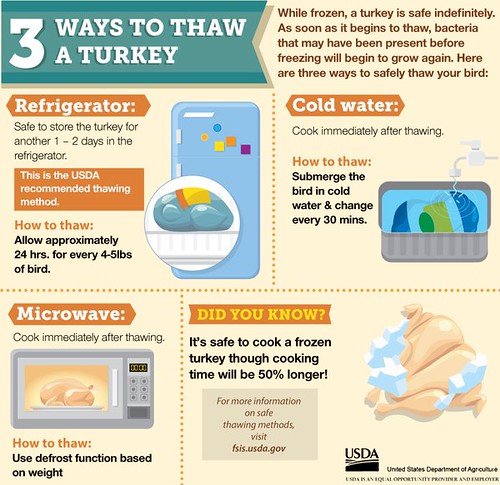
Christmas is coming! Your turkey is frozen! Don’t panic! Do this.

Christmas is coming and your turkey is frozen! What should you do??

That’s easy. Head over to the USDA and check out their advice. You have lots of options, even last minute ones.

I’d add one tip. If you are going to cook it from frozen — or even thawed — have tin/aluminum foil handy. If it is golden brown but undercooked, cover it with foil and continue cooking. The skin will not burn and the meat temperature will continue to come up to the temperature you want.

Good luck! Happy feasting!

IBM Cloud tip: be careful with security groups allow_all when setting up a server

Security groups are a great way to limit access to your server in IBM Cloud. However, if you are just setting up your server, make sure you don’t inadvertently block traffic so that you can’t do anything.

Case in point: you may set allow_all in a security group. You might think that would allow all traffic in and out of your server. However, allow_all will block some traffic still from leaving your server. I was not able to ping 8.8.8.8 or reach other traffic on my Windows VSI when I had this setting.

According to IBM support: “When setting security groups for servers you need to have an equal relationship of ingress (inbound) and egress (outbound) traffic in order to succeed in a proper connection. You would need the allow_all and the allow_outbound group to achieve this.”

White lights or colored? With the Festavia lights from Philips, you can have both at once!

For some households, there is this debate: white lights or colored lights on a Christmas tree? Well, with the Philips Festavia lighting from Hue, you can have both! And so much more. To see what I mean, see this piece in The Verge.

I am a big fan of Philips Hue lighting. I bought a wide assortment of bulbs over 5 years ago and I use them daily and they are still going strong. So while these lights ain’t cheap, they may last you a long time. And give you much joy for years to come.

On restaurants loved and lost of my youth (Woolworth’s in Glace Bay and Midtown in Halifax)

It doesn’t look like much in this black and white photo: just another store with an awning in downtown Glace Bay. For me though, it was the first place I got to go that was a restaurant. Inside was a food counter, and my mom (Ma) would take me there as a kid and she might get a club sandwich and I would likely get a coke float. The idea of going someplace to eat felt special to me and I learned to love that feeling from going there.

It may seem underwhelming to you as an adult, but as a kid, pulling up in one of those seats, being given a menu to choose what you want, and then having one of the ladies (it was always women) get it for you was amazing. Plus I never got to have coke floats outside of there, at least not for a long time, so that made it a special treat.

The Woolworth’s of Glace Bay is long gone. Later when I moved to Toronto there was one on Bloor near Bathurst and I used to go and get taken back home for a spell. Just like having a coke float takes me back to when I was a kid, sitting at that counter, sipping my drink with a straw, being happy.

This string of posts on restaurants loved and lost will be ending soon for me. But before I do, I wanted to mention another place of my youth: the Midtown Tavern in Halifax. It still exists, but the version I loved and lost was in downtown Halifax (see below). When I was in university, I would go there the few times I had some cash and get some draught beer and steak. The meat was thin and well done, but it was cheap, and the combo of the beef and the beer made me feel wealthy. It was unlike any other place in Halifax for students drinking beer. You could be a fool in other establishments, but act that way in the Midtown and their no nonsense waiters would toss you out on your ear. We were well behaved in the Midtown. In some ways it was a rite of passage where we learned to behave as much as anything else.

I loved both those places when I was young, just like I loved Mike’s Lunch in Glace Bay. They may have seemed like everyday places to some, but they left an indelible mark on me and think of them often, and with great affection.

All images you see are links. The top image is from Commercial Street_Glace Bay_Cape Breton_1965_Black Diamond Pharmacy_F.W. Woolworths. There’s also a great story in the piece I found the second image: Debbie Travels – Reviews and more: Midtown Tavern Halifax – End of an Era! A great story plus it has lots more photos of the Midtown.

P.S. I wanted to write about one other restaurant loved and lost from my youth: Fat Frank’s. When I was going to university I never had much money. I would constantly see the same ad for Fat Frank’s restaurant, and each time I saw it I thought: when I have money, I am going to eat there. It was my dream. For Fat Frank’s was one of the finest places to eat in all of the Maritimes.

Alas, it closed before I ever got to go. I never got to go inside nor eat any of its fine food. Even now it is elusive: I have a hard time finding images and stories of it on the Internet. The closest I can get is this 1976 review Craig Claiborne in the New York Times. And this blog has a shot of Spring Garden Road: Fat Frank’s would have been in one of those brick buildings on the right, I believe.

I never got to live the dream, but I dreamt about it for a long time…. an unrequited love, for a place now long gone.


On the new subway mosaics by Yayoi Kusama and Kiki Smith (and other works by fine artists)

Over at the New York Times they have a write up on the Yayoi Kusama and Kiki Smith’s Grand Central Madison Mosaics. They look fantastic. Very few art installations can achieve the viewing that those in subways achieve. It’s important to have really great work there, and in this case, I think the work is great. But see for yourself: check out that Times article. Better still, go to the subway in person.

Speaking of mosaics, this piece on how  Chicago artist Jim Bachor fills potholes with mosaics is great.

Also great:  Sheree Hovsepian’s Poetic Assemblages now showing at Rachel Uffner Gallery.

Why not take a look at the  Household Surrealism art by Helga Stentzel?

Tom Phillips died recently. I’m a fan of Austin Kleon and he was influenced by Tom. I can see why. For more, see Tom Phillips obituary  in The Guardian. Also this  Tom Phillips – Works and Tom Phillips – A Humument.

Finally, two extremes: this, At Art Basel Miami Beach the ATM is the new banana, vs this which is “an exhibition in Berlin shines a light on class, showing how social and financial inequality affect how art gets made, sold and displayed”. I was moved by the latter.

(Images: links to the Times story on the subway art installations)

What I find interesting in tech and can tell you about, Dec 2022


Time once again to show what IT stuff I’ve been doing in the last few months. Some of it I can’t include here due to confidentiality reasons, and there’s some things I want to write about separately. The rest is below and worth checking out.

Software: I’ve been doing some python programming lately, so I found these useful: How you can get your browser history via a python library. Also How to Create Your Own Google Chrome Extension...I’ve been wanting to do this. I used this tutorial recently to build a simple stopwatch With Javascript. Relatedly, here’s a  Free Countdown Timer for Your Website.

I’ve been looking into PyQT for a number of reasons so I found these good: How to Install PyQt for Python in MacOS?, and Python PyQt5 Tutorial – Example and Applications, and pyqt statusbar – Python Tutorial.

Here’s some useful git stuff: Merge Strategies in Git and  best practices on rolling out code scanning at enterprise scale.

Now useful but  cool: matrix webcam. Also this is a cool shell.

A thoughtful piece on DevOps metrics. As for this, DevOps is Bullshit, can’t say I agree.

Finally, I’ve been getting into Neo4J and found this helpful:  Neo4j and graph databases: Getting started.

Hardware/Pi: is this the next new thing: stretchable display? This fast charger is also fun. Game fans, take note: Steam is coming to Chromebooks. 

This is good:  iphone 14 is the most repairable since iphone 7. This is awesome: this retro punk nixie wristwatch actually uses authentic nixie tubes to tell the time. This is handy:  13 great arduino projects to try.

I love this:  Nerdy Hanukkah Card! I also love the idea of making a Raspberry Pi-powered radio. More on that here: at Instructables. Also a good project: How to use Google Assistant on the Raspberry Pi.

Cloud: Here’s some AWS help:  choosing an aws container service to run your modern application, and pointing your Namecheap Domain Name to AWS Linux, and db2 and amazon web services better together.

Some IBM Cloud help: share resources across your ibm cloud accounts, and migrating a large database into ibm cloud databases. Also: Get started with IBM Wazi as a Service.

Some other interesting essays on cloud:

Misc: RIP Kathleen Booth, inventor of Assembly Language. Same for another giant, Frederick P Brooks.

The future is weird:  bereal app gets real roasted with memes and gifs are cringe and for boomers giphy claims.

This surprised me:  amazon alexa is a colossal failure on pace to lose 10 billion this year. In other news, here’s a review of amazon halo rise.

Stratechery by Ben Thompson is always worth a read. Here’s they are on Microsoft Full Circle.

Here’s three stories. One on Zoho (how zoho became 1b company without a dime of external investment), one on Uber (uber says compromised credentials of a contractor led to data breach) and one on Sobeys (inside turmoil sobeys ransomware attack)


Thinking numerically about CERB fraud

Thanks to Auditor General Hogan, there has been much discussion about CERB (Canada Emergency Response Benefit) and fraudulent claims. Indeed, this piece indicates it’s a problem: Canada paid out billions of dollars in CERB to people who lied about needing it. I mean billions of dollars is a lot! It must be really bad. So let’s look at what was said, and specifically, let’s look at the numbers.

The article states: “In the end, the federal government distributed $210.7 billion ($74.8 billion in CERB alone) to Canadians who were unable to work — or rather, those who told the government they couldn’t work.” So $74.8 B went out for CERB.

Why did the government do this? It goes on to say: “The government’s decision to take workers at their word, without any sort of screening, was criticized by some when the pandemic first hit, but Prime Minister Justin Trudeau argued that getting payments out swiftly was more important than verification.” It also states that: “Officials promised at the time that they would conduct extensive post-payment verifications to claw back anything taken by scammers or ineligible recipients, but according to Hogan, they have yet to sufficiently do so.”

Key word there: sufficiently. Let’s drill down further to see why that AG said that. The article says:  “In doing so, it (the Government) recognized that there was a risk that some payments would go to ineligible recipients. We found that overpayments of $4.6 billion were made to ineligible individuals, and we estimated that at least $27.4 billion of payments to individuals and employers should be investigated further.” Ok, so now we have some extent of how many billions were lost. But wait, we also have this: “Hogan noted that some $2.3 billion of errantly-distributed funds had been recovered as of this summer, thanks mostly to voluntary repayments from individuals who’d received them.”

In short, of the $74.8 billion that went out for CERB, the AG knows that $4.6 billion of that went out to ineligible individuals but it retrieved $2.3 billion of that. So around 6% of the overall money went out to ineligible individuals but then half of that was retrieved. Another way to look at it is 94% of the money went to eligible individuals, and of the remainder, half was recovered.

Now it’s possible that a good chunk of the $27.4 billion also went out to ineligible individuals. But based on the concrete data that was provided, it seems like the program was effective, based on percentages.

This doesn’t mean fraud is good or unimportant. Fraud is bad and payment systems and payment providers need to combat it. But in light of these numbers, the amount of fraud seems low. For what it’s worth, this piece argues that in the US medical system, fraud can be as high as 20% of all claims. In an ideal world, there would be no fraud. In a real world you want to get close to zero, but you proceed knowing there will be some fraud and make tradeoffs in comparison with other benefits.

In the case of CERB, the benefits were real and significant. I agree with the government on this: there was no time to put a rigorous benefit program in place. The pandemic needed quick solutions: you could not take 12 or 18 months to develop a system to get money to people you told could not work. That would have led to all sort of societal problems. You needed to get money into the hands of people now. Delay is fatal. The last time I saw government organizations fail to take action was at the beginning of the Great Recession: that failure almost led to the collapse of the global economy.

CERB was an essential program that kept parts of the Canadian economy afloat during the worst part of the pandemic. It’s upside was good, and despite what the AG says, the downside was not that bad.

For more on why CERB was good, see this.


The history of people asking: is technology X going to replace programmers?

Recently Nature (of all publications) asked the clickbait-y question:
Are ChatGPT and AlphaCode going to replace programmers?  It then quickly states: “OpenAI and DeepMind systems can now produce meaningful lines of code, but software engineers shouldn’t switch careers quite yet.” Then why even ask the question? It goes on to say: Deepmind, a part of Google, “published its results in Science, showing that AlphaCode beat about half of humans at code competitions”.

Regardless of what you think about that article in Nature, here’s the thing to always keep in mind: technology X has been coming along to replace programmers forever.  We had machine code that was replaced with assembler language. We had Assembler language replaced with higher level languages like Fortran. We had a wealth of more sophisticated programming languages come on to the scene. In addition, programming tools like IDEs have come along to save the day and make programming easier for programmers. Yet we still have not lost the need for programmers to write programs.

Programming is still about taking what people want the computer to do and codifying it in a language that the computer understands. In other words: programming. As long as that code is required for computers to do what humans want, there will always be programmers.

Here’s another thing to consider: code is a more efficient way to communicate to a computer. I can write in English “count all the entries in this column from row 2 to 100 if the entry equals the word ‘arts'” or I can write in (Excel) code “=countif(A2:A100,”arts”)”. That efficiency will likely mean that coding will be around for quite some time yet. And people doing that coding will be programming, even if they don’t consider themselves programmers.

So no, Alphacode is not going to replace programmers and programming. It might replace some of the task of what some of them currently do. But programmers and programming will be around for some time to come.

(I like the image above because it captures how the software design and development process is a complex thing, and not just a matter of writing a bunch of code. A lot of thought goes into developing something like a smart phone application, and that thought results in code that results in a good app.)

Here’s a half dozen pieces on Work and Working that I thought were good

For many, there is not much worth considering when it comes to work. For some, though, work and the nature of it is something they think about often. If you are one of those people, I think you will enjoy these links.

This piece on  comfort work by Austin Kleon is worth considering. Do you have work that comforts you? I think we all do.

People are still discussing Quiet Quitting. This article on quiet quitting argues it could be the result of a trust issue.

If you have worked in different jobs, you may have worked at a toxic one. You may be in one now. Either way, read this on how to recover from a toxic job.

And then this piece argues that “the strongest predictor of men’s happiness and well-being is their job satisfaction, by a large margin”. That surprised me.

Is the 4 day work week the next big thing? It could be, according to this.

I used to work with someone who was incredibly neat and particular about his desk. I think he would appreciate this desk mat (see above). I don’t know which is better: neat or messy. I guess it is whatever works for you.

Have a good work week.

LASS! (Liberal Arts, Social Sciences) What I find interesting in liberal arts and social sciences, Dec 2022

What is the opposite of STEM (Science, technology, engineering, math)? LASS, of course. While I read and think much on the STEM subjects, I study quite a bit on the LASS subjects as well. Here’s dozens of links to things I have found interesting in the liberal arts and social sciences over the last year that you might as well:

Architecture: I was thinking about political architecture after someone on instagram started posting pictures of the Square Colosseum in Rome. While many remnants of 20th century fascism have been destroyed, some remains. This all led me to read good pieces like this, A Look Back at Fascist Architecture in Architectural Digest, and this, What happens to fascist architecture after fascism? – BBC Culture.

It’s fine to think of architecture as something akin to art, as this piece on Canadian Architecture does. But architecture can often have a political component. You can see that here in this story on Sussex Drive, and here, on Anti homeless architecture. And of course in the architecture of fascists discussed above.

History: When it comes to history, at least on social media, there is much focus on WWII. Too much, in fact. It seems whenever bad things happen, the result is think pieces trying to tie whatever is happening with such events as Hitler’s rise to power. People, and especially essay writers, need to read more history. Read about other wars from the first half of 20th century. Or the overall list of wars.

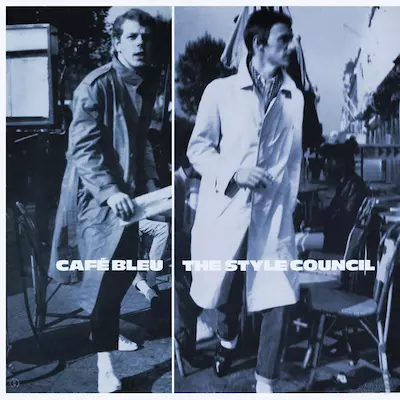
As for mr, I’ve been interested in the Austrian Empire for some time.  More so since I found out that my paternal family did not come from Poland (as I thought) but Galicia, which was part of  Austria-Hungary. They migrated to Canada while the empire was still a thing. That got me looking at maps of Galicia from that time, such as this  Map of Austria Hungary during the post WWI breakup. (I love that Galicia has all these question marks in it…where will it go??)

More such maps here,  Austria Hungary 1914, and here:  Austrian Empire, Italy, Turkey, in Europe Greece. – David Rumsey. More on the breakup,  here:  Empire breakup: states demanding independence – archive October 1918.

Other good historic pieces Ive recently read: Historical data is not a kitten it’ a sabre-toothed tiger, and this: guide to economic historians.

Economics: It’s hard not to think about economics these days, as we can’t seem to get billionaires out of our face. It helps to have good references to think about it. I thought this was a good study on wealth, Where does the wealth go when asset prices go down? Speaking of the destruction of wealth, I got thinking about the Great Recession, and that got me thinking about the Big Short and all those players involved, like AIG. If you haven’t seen the film or have but had a hard time with some of the concepts of it, I recommend this Cheat Sheet

Philosophy: This piece and this piece explore the controversy over whether the great philosopher David Hume was a racist. He certainly said racist things. My belief is we are still struggling with the shame of great thinkers also being terrible in parts. It’s a shame.

Speaking of which, here is a good piece on shame. Here is a bad piece on the Merit of Meritocracy. This was a good piece on parental ethics. And here’s a fun piece from McSweeney’s on utilitarianism.

Religion: related to philosophy, here’s something on philanthropy, ethics and Christianity.This explores the notion of whether you can have religion without belief. Here’s two pieces on two different Christian groups, the Quakers and the the Jesuits.

This was fascinating: some Muslims are using digital gings to count recitations, as was this, a video on the Popes with the new cardinals.

Sociology: we have learned many practical lessons in sociology due to the pandemic. For example, this piece argues that Covid policies show many people in prison are no danger to the public. I tend to agree. Excessive incarceration is a problem everywhere, but especially in the US. I think about it often, so I read pieces like this, and this Biden Can Bring Hope to Prisons Like Mine, this Albert Woodfox held in solitary confinement for 43 years dies aged 75, and this My Top 10 Tips for Doing Time In “the Hole”.

Preventing people from moving is one of the great difficulties all societies deal with. I have been thinking a lot of migration. So does the right, with their Great Replacement theory. This piece examines this: The great replacement is real but its not what the Right says. Indeed, the movement of people have been shaping societies for a long time. Case in point: Migration not conquest drove Anglo-Saxon takeover of England | Science. Reading this, Invasive species, I wonder if it is a fundamental difficulty.

Misc: I enjoyed this on Umberto Eco’s anti-library. (See below) Also this, on the cost studying LASS brings.


Love and rockets (things I find interesting in math and science, Dec. 2022)

In the last few months my math and science reading has mostly been about space, with some smattering of other things. NASA in particular has been the focus. First up is a piece on the DART Mission which smashed into an asteroid and altered it’s path. No small feat, that. In other big feats, they are still in the planning stages of a a balloon mission to Venus . Given that landing on Venus results in a spacecraft being destroyed, a visit that stays in that planet’s atmosphere may be the only way for it to succeed.

One such mission that should definitely succeed is Artemis, NASA’s project to visit (revisit?) the moon, Here is the NYTimes on it. Relatedly, here’s the Atlantic with a piece on the the 50th anniversary of Apollo. We are clearly due for a return trip. I wonder if it will affect the new astronauts as much as it did William Shatner after his quick trip into space with Jeff Bezos? I suspect they will be more prepared than the TV astronaut was.

Speaking of space, here’s cosmologist Katie Mack talking about scenarios for the end of the universe. I got her book last Christmas and loved it. Another book on physics I want to read is by Sabine Hossenfelder . She’s a no nonsense type of scientist, which I think is good. For while I agree that when it comes to science and especially physics, there is no escaping metaphysics, I also agree with those who say that physicists sometimes get carried away with some of their loftier or wild ideas.

Then again, some of those ideas resulted in this year’s The Nobel Prize . And it had led to physicists creating “the Smallest Crummiest Wormhole You Can Imagine”. These wild ideas really makes you think. If you think too hard, though, you will likely get tired. The Guardian has a good explanation on why thinking tires your brain .

Finally, if you are interested in learning more about physics, I recommend you check out the web site DrPhysicsA. It’s good stuff. And you want to learn more about math, you can visit the blog of one of the best mathematicians in the world. Here is is writing on odds. Also good!

The limits of YIMBYism, even for proponents of it like me

I am in favor of making improvement to all neighborhoods, of Yes In My Back Yard (YIMBY). That especially goes for my own. However, I know YIMBYism is a battle, that NIMBYism (not in my backyard) tends to be stronger. To support change, I believe change needs to be done in a controlled and limited way to dampen down NIMBYism and support YIMBYism.

That type of change is not what is happening for my area, at Yonge and Eglinton. First off, there are very large condos going up regularly. Second, we have the wholesale destruction of the area for the new Eglinton LRT line. Before that we had the destruction of the local Yonge and Eglinton center while it was upgraded. Now they plan to tear up the park to make improvements. It’s just constant upheaval and destruction, as much as it is construction.

I am a big proponent of growth and improvement. However even I am reaching my limit.  And if I am reaching my limit, I am sure many others are as well. It does not make for a good neighborhood or environment to have everything being torn up all the time. I would not recommend anyone live here if they can help it. Find a neighborhood you enjoy being in, not one that resembles a construction zone. I am sure it will be a great area in a decade or so. But I’ve lived her a long time and I regret it. It’s not a livable place. 

(Images: my own. Of Yonge and Eglinton, 2022)