Spotify helps makes the holidays more festive. Take advantage of it.

When I was younger, I loved listening to Christmas music all through the holiday season. This was hard in the days of radio only music, since they often stopping playing Christmas tunes once Christmas day was done. To keep it going, I could play my own records/tapes/CDs, but they get old after a time. (Except for the music for Charlie Brown’s Christmas: that never gets old.)

All that is to say that Spotify solves the problems I used to have. They have LOTS of Christmas music, and you can listen to it all you want. You can even listen to it in July. (That’s too long for me, but you do you.) Not only do they have lots of songs, but they have plenty of playlists. You can even make your own playlist. That way you can list to the type of Christmas you want, when you want it.

Happy holidays to you. Keep it festive with Christmas music, be it from the radio, your own collection, or Spotify. Joyeux Noel.

UGC (user generated content) is a sucker’s game. We should resolve to be less suckers in 2023

I started to think of UGC when I read that tweet last night.

We don’t talk about UGC much anymore. We take it for granted since it is so ubiquitous. Any time we use social media we are creating UGC. But it’s not limited to site like Twitter or Instagram. Web site like Behance and GitHub are also repositories of UGC. Even Google Docs and Spotify are ways for people to generate content (a spreadsheet is UGC for Google to mine, just like a playlist is.)

When platforms came along for us to post our words and images, we embraced them. Even when we knew they were being exploited for advertising, many of us shrugged and accepted it as a deal: we get free platforms in exchange for our attention and content.

Recently though it’s gotten more exploitive. Companies like OpenAI and others are scrapping all our UGC from the web and turning it into data sets. Facial recognition software is turning our selfies into ways to track us. Never mind all the listening devices we let into our houses (“Hey Google, are you recording all my comings and goings?”…probably)

Given that, we should resolve to be smarter about our UGC in 2023. Always consider what you are sharing, and find ways to limit it if you can. Indeed give yourself some boundaries so that when the next company comes along with vowel problems (looking at you, Trackt) and asks for our data, we say no thanks.

We can’t stop companies from taking advantage of the things we share. So let’s aim to share things wisely and in a limited way.

Checklists keep your head above water when you are overwhelmed. Get one.

During busy times, or during chaotic times, or even times when you just don’t know what to do next, you need a good checklist. Get yourself a list of things you need to do every day and check it off. Even if you don’t do everything on it every day. Even if some of the items on it refer to other checklists. Regardless, get a good checklist, and do it at least once a day.

I have always been a big fan of checklists. They save me in lots of ways. I have one I go through every morning and it helps me stay focused and get what I need to get done. I recommend you get one too.

For more on checklists, see book The Checklist Manifesto. Highly recommended!

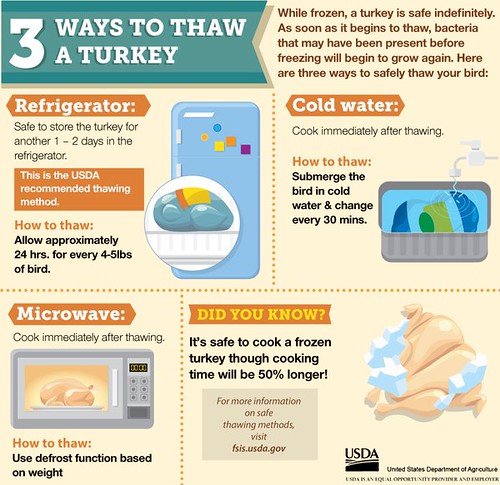
Christmas is coming! Your turkey is frozen! Don’t panic! Do this.

Christmas is coming and your turkey is frozen! What should you do??

That’s easy. Head over to the USDA and check out their advice. You have lots of options, even last minute ones.

I’d add one tip. If you are going to cook it from frozen — or even thawed — have tin/aluminum foil handy. If it is golden brown but undercooked, cover it with foil and continue cooking. The skin will not burn and the meat temperature will continue to come up to the temperature you want.

Good luck! Happy feasting!

IBM Cloud tip: be careful with security groups allow_all when setting up a server

Security groups are a great way to limit access to your server in IBM Cloud. However, if you are just setting up your server, make sure you don’t inadvertently block traffic so that you can’t do anything.

Case in point: you may set allow_all in a security group. You might think that would allow all traffic in and out of your server. However, allow_all will block some traffic still from leaving your server. I was not able to ping 8.8.8.8 or reach other traffic on my Windows VSI when I had this setting.

According to IBM support: “When setting security groups for servers you need to have an equal relationship of ingress (inbound) and egress (outbound) traffic in order to succeed in a proper connection. You would need the allow_all and the allow_outbound group to achieve this.”

White lights or colored? With the Festavia lights from Philips, you can have both at once!

For some households, there is this debate: white lights or colored lights on a Christmas tree? Well, with the Philips Festavia lighting from Hue, you can have both! And so much more. To see what I mean, see this piece in The Verge.

I am a big fan of Philips Hue lighting. I bought a wide assortment of bulbs over 5 years ago and I use them daily and they are still going strong. So while these lights ain’t cheap, they may last you a long time. And give you much joy for years to come.

On restaurants loved and lost of my youth (Woolworth’s in Glace Bay and Midtown in Halifax)

It doesn’t look like much in this black and white photo: just another store with an awning in downtown Glace Bay. For me though, it was the first place I got to go that was a restaurant. Inside was a food counter, and my mom (Ma) would take me there as a kid and she might get a club sandwich and I would likely get a coke float. The idea of going someplace to eat felt special to me and I learned to love that feeling from going there.

It may seem underwhelming to you as an adult, but as a kid, pulling up in one of those seats, being given a menu to choose what you want, and then having one of the ladies (it was always women) get it for you was amazing. Plus I never got to have coke floats outside of there, at least not for a long time, so that made it a special treat.

The Woolworth’s of Glace Bay is long gone. Later when I moved to Toronto there was one on Bloor near Bathurst and I used to go and get taken back home for a spell. Just like having a coke float takes me back to when I was a kid, sitting at that counter, sipping my drink with a straw, being happy.

This string of posts on restaurants loved and lost will be ending soon for me. But before I do, I wanted to mention another place of my youth: the Midtown Tavern in Halifax. It still exists, but the version I loved and lost was in downtown Halifax (see below). When I was in university, I would go there the few times I had some cash and get some draught beer and steak. The meat was thin and well done, but it was cheap, and the combo of the beef and the beer made me feel wealthy. It was unlike any other place in Halifax for students drinking beer. You could be a fool in other establishments, but act that way in the Midtown and their no nonsense waiters would toss you out on your ear. We were well behaved in the Midtown. In some ways it was a rite of passage where we learned to behave as much as anything else.

I loved both those places when I was young, just like I loved Mike’s Lunch in Glace Bay. They may have seemed like everyday places to some, but they left an indelible mark on me and think of them often, and with great affection.

All images you see are links. The top image is from Commercial Street_Glace Bay_Cape Breton_1965_Black Diamond Pharmacy_F.W. Woolworths. There’s also a great story in the piece I found the second image: Debbie Travels – Reviews and more: Midtown Tavern Halifax – End of an Era! A great story plus it has lots more photos of the Midtown.

P.S. I wanted to write about one other restaurant loved and lost from my youth: Fat Frank’s. When I was going to university I never had much money. I would constantly see the same ad for Fat Frank’s restaurant, and each time I saw it I thought: when I have money, I am going to eat there. It was my dream. For Fat Frank’s was one of the finest places to eat in all of the Maritimes.

Alas, it closed before I ever got to go. I never got to go inside nor eat any of its fine food. Even now it is elusive: I have a hard time finding images and stories of it on the Internet. The closest I can get is this 1976 review Craig Claiborne in the New York Times. And this blog has a shot of Spring Garden Road: Fat Frank’s would have been in one of those brick buildings on the right, I believe.

I never got to live the dream, but I dreamt about it for a long time…. an unrequited love, for a place now long gone.


On the new subway mosaics by Yayoi Kusama and Kiki Smith (and other works by fine artists)

Over at the New York Times they have a write up on the Yayoi Kusama and Kiki Smith’s Grand Central Madison Mosaics. They look fantastic. Very few art installations can achieve the viewing that those in subways achieve. It’s important to have really great work there, and in this case, I think the work is great. But see for yourself: check out that Times article. Better still, go to the subway in person.

Speaking of mosaics, this piece on how  Chicago artist Jim Bachor fills potholes with mosaics is great.

Also great:  Sheree Hovsepian’s Poetic Assemblages now showing at Rachel Uffner Gallery.

Why not take a look at the  Household Surrealism art by Helga Stentzel?

Tom Phillips died recently. I’m a fan of Austin Kleon and he was influenced by Tom. I can see why. For more, see Tom Phillips obituary  in The Guardian. Also this  Tom Phillips – Works and Tom Phillips – A Humument.

Finally, two extremes: this, At Art Basel Miami Beach the ATM is the new banana, vs this which is “an exhibition in Berlin shines a light on class, showing how social and financial inequality affect how art gets made, sold and displayed”. I was moved by the latter.

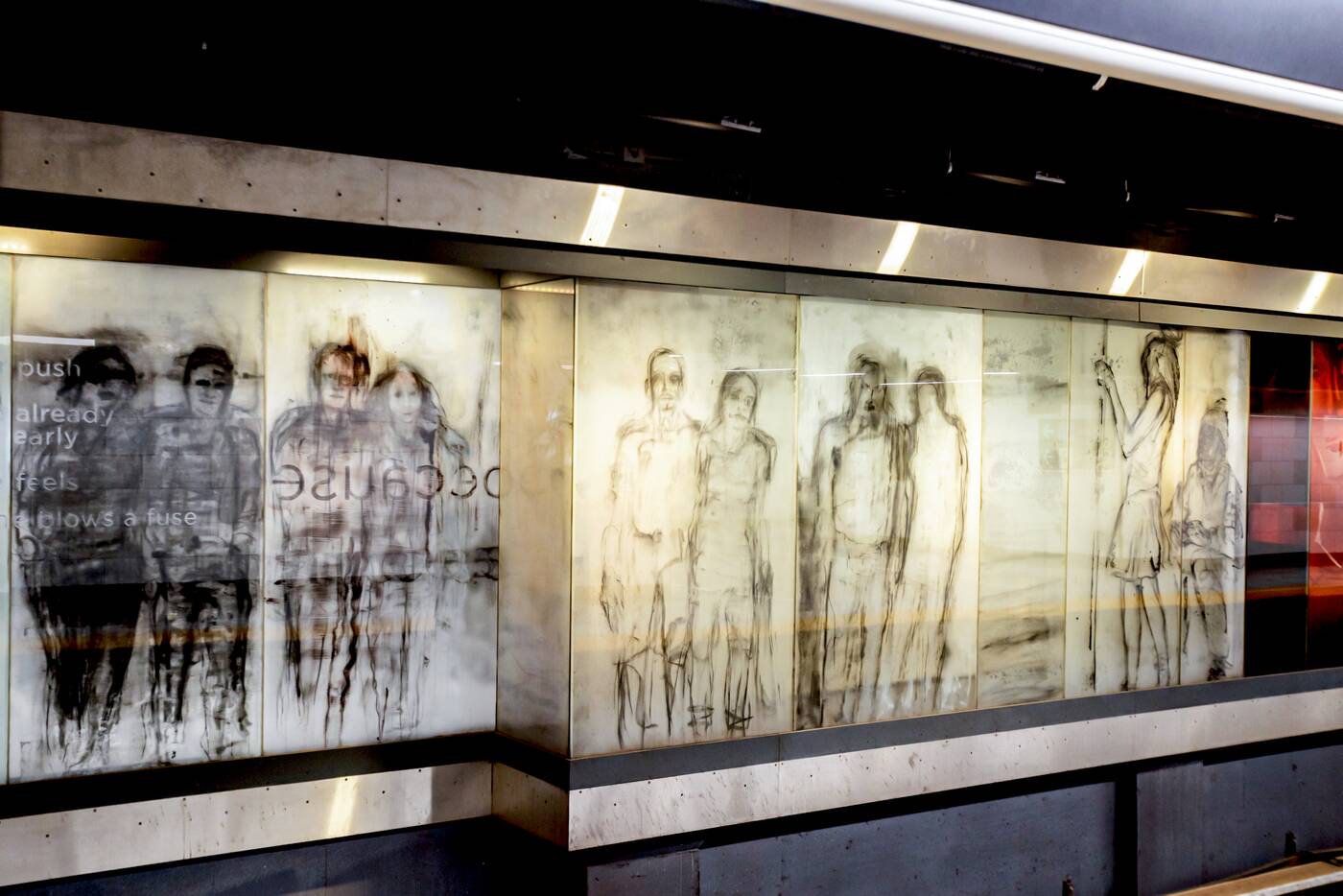
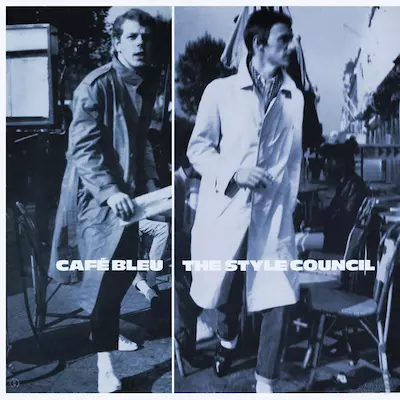
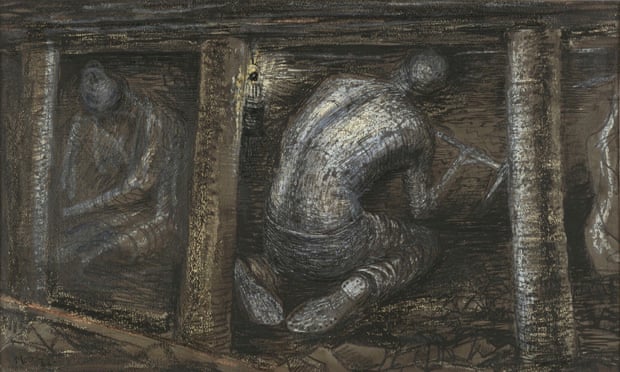
(Images: links to the Times story on the subway art installations)

What I find interesting in tech and can tell you about, Dec 2022


Time once again to show what IT stuff I’ve been doing in the last few months. Some of it I can’t include here due to confidentiality reasons, and there’s some things I want to write about separately. The rest is below and worth checking out.

Software: I’ve been doing some python programming lately, so I found these useful: How you can get your browser history via a python library. Also How to Create Your Own Google Chrome Extension...I’ve been wanting to do this. I used this tutorial recently to build a simple stopwatch With Javascript. Relatedly, here’s a  Free Countdown Timer for Your Website.

I’ve been looking into PyQT for a number of reasons so I found these good: How to Install PyQt for Python in MacOS?, and Python PyQt5 Tutorial – Example and Applications, and pyqt statusbar – Python Tutorial.

Here’s some useful git stuff: Merge Strategies in Git and  best practices on rolling out code scanning at enterprise scale.

Now useful but  cool: matrix webcam. Also this is a cool shell.

A thoughtful piece on DevOps metrics. As for this, DevOps is Bullshit, can’t say I agree.

Finally, I’ve been getting into Neo4J and found this helpful:  Neo4j and graph databases: Getting started.

Hardware/Pi: is this the next new thing: stretchable display? This fast charger is also fun. Game fans, take note: Steam is coming to Chromebooks. 

This is good:  iphone 14 is the most repairable since iphone 7. This is awesome: this retro punk nixie wristwatch actually uses authentic nixie tubes to tell the time. This is handy:  13 great arduino projects to try.

I love this:  Nerdy Hanukkah Card! I also love the idea of making a Raspberry Pi-powered radio. More on that here: at Instructables. Also a good project: How to use Google Assistant on the Raspberry Pi.

Cloud: Here’s some AWS help:  choosing an aws container service to run your modern application, and pointing your Namecheap Domain Name to AWS Linux, and db2 and amazon web services better together.

Some IBM Cloud help: share resources across your ibm cloud accounts, and migrating a large database into ibm cloud databases. Also: Get started with IBM Wazi as a Service.

Some other interesting essays on cloud:

Misc: RIP Kathleen Booth, inventor of Assembly Language. Same for another giant, Frederick P Brooks.

The future is weird:  bereal app gets real roasted with memes and gifs are cringe and for boomers giphy claims.

This surprised me:  amazon alexa is a colossal failure on pace to lose 10 billion this year. In other news, here’s a review of amazon halo rise.

Stratechery by Ben Thompson is always worth a read. Here’s they are on Microsoft Full Circle.

Here’s three stories. One on Zoho (how zoho became 1b company without a dime of external investment), one on Uber (uber says compromised credentials of a contractor led to data breach) and one on Sobeys (inside turmoil sobeys ransomware attack)


Thinking numerically about CERB fraud

Thanks to Auditor General Hogan, there has been much discussion about CERB (Canada Emergency Response Benefit) and fraudulent claims. Indeed, this piece indicates it’s a problem: Canada paid out billions of dollars in CERB to people who lied about needing it. I mean billions of dollars is a lot! It must be really bad. So let’s look at what was said, and specifically, let’s look at the numbers.

The article states: “In the end, the federal government distributed $210.7 billion ($74.8 billion in CERB alone) to Canadians who were unable to work — or rather, those who told the government they couldn’t work.” So $74.8 B went out for CERB.

Why did the government do this? It goes on to say: “The government’s decision to take workers at their word, without any sort of screening, was criticized by some when the pandemic first hit, but Prime Minister Justin Trudeau argued that getting payments out swiftly was more important than verification.” It also states that: “Officials promised at the time that they would conduct extensive post-payment verifications to claw back anything taken by scammers or ineligible recipients, but according to Hogan, they have yet to sufficiently do so.”

Key word there: sufficiently. Let’s drill down further to see why that AG said that. The article says:  “In doing so, it (the Government) recognized that there was a risk that some payments would go to ineligible recipients. We found that overpayments of $4.6 billion were made to ineligible individuals, and we estimated that at least $27.4 billion of payments to individuals and employers should be investigated further.” Ok, so now we have some extent of how many billions were lost. But wait, we also have this: “Hogan noted that some $2.3 billion of errantly-distributed funds had been recovered as of this summer, thanks mostly to voluntary repayments from individuals who’d received them.”

In short, of the $74.8 billion that went out for CERB, the AG knows that $4.6 billion of that went out to ineligible individuals but it retrieved $2.3 billion of that. So around 6% of the overall money went out to ineligible individuals but then half of that was retrieved. Another way to look at it is 94% of the money went to eligible individuals, and of the remainder, half was recovered.

Now it’s possible that a good chunk of the $27.4 billion also went out to ineligible individuals. But based on the concrete data that was provided, it seems like the program was effective, based on percentages.

This doesn’t mean fraud is good or unimportant. Fraud is bad and payment systems and payment providers need to combat it. But in light of these numbers, the amount of fraud seems low. For what it’s worth, this piece argues that in the US medical system, fraud can be as high as 20% of all claims. In an ideal world, there would be no fraud. In a real world you want to get close to zero, but you proceed knowing there will be some fraud and make tradeoffs in comparison with other benefits.

In the case of CERB, the benefits were real and significant. I agree with the government on this: there was no time to put a rigorous benefit program in place. The pandemic needed quick solutions: you could not take 12 or 18 months to develop a system to get money to people you told could not work. That would have led to all sort of societal problems. You needed to get money into the hands of people now. Delay is fatal. The last time I saw government organizations fail to take action was at the beginning of the Great Recession: that failure almost led to the collapse of the global economy.

CERB was an essential program that kept parts of the Canadian economy afloat during the worst part of the pandemic. It’s upside was good, and despite what the AG says, the downside was not that bad.

For more on why CERB was good, see this.


The history of people asking: is technology X going to replace programmers?

Recently Nature (of all publications) asked the clickbait-y question:
Are ChatGPT and AlphaCode going to replace programmers?  It then quickly states: “OpenAI and DeepMind systems can now produce meaningful lines of code, but software engineers shouldn’t switch careers quite yet.” Then why even ask the question? It goes on to say: Deepmind, a part of Google, “published its results in Science, showing that AlphaCode beat about half of humans at code competitions”.

Regardless of what you think about that article in Nature, here’s the thing to always keep in mind: technology X has been coming along to replace programmers forever.  We had machine code that was replaced with assembler language. We had Assembler language replaced with higher level languages like Fortran. We had a wealth of more sophisticated programming languages come on to the scene. In addition, programming tools like IDEs have come along to save the day and make programming easier for programmers. Yet we still have not lost the need for programmers to write programs.

Programming is still about taking what people want the computer to do and codifying it in a language that the computer understands. In other words: programming. As long as that code is required for computers to do what humans want, there will always be programmers.

Here’s another thing to consider: code is a more efficient way to communicate to a computer. I can write in English “count all the entries in this column from row 2 to 100 if the entry equals the word ‘arts'” or I can write in (Excel) code “=countif(A2:A100,”arts”)”. That efficiency will likely mean that coding will be around for quite some time yet. And people doing that coding will be programming, even if they don’t consider themselves programmers.

So no, Alphacode is not going to replace programmers and programming. It might replace some of the task of what some of them currently do. But programmers and programming will be around for some time to come.

(I like the image above because it captures how the software design and development process is a complex thing, and not just a matter of writing a bunch of code. A lot of thought goes into developing something like a smart phone application, and that thought results in code that results in a good app.)

Here’s a half dozen pieces on Work and Working that I thought were good

For many, there is not much worth considering when it comes to work. For some, though, work and the nature of it is something they think about often. If you are one of those people, I think you will enjoy these links.

This piece on  comfort work by Austin Kleon is worth considering. Do you have work that comforts you? I think we all do.

People are still discussing Quiet Quitting. This article on quiet quitting argues it could be the result of a trust issue.

If you have worked in different jobs, you may have worked at a toxic one. You may be in one now. Either way, read this on how to recover from a toxic job.

And then this piece argues that “the strongest predictor of men’s happiness and well-being is their job satisfaction, by a large margin”. That surprised me.

Is the 4 day work week the next big thing? It could be, according to this.

I used to work with someone who was incredibly neat and particular about his desk. I think he would appreciate this desk mat (see above). I don’t know which is better: neat or messy. I guess it is whatever works for you.

Have a good work week.

LASS! (Liberal Arts, Social Sciences) What I find interesting in liberal arts and social sciences, Dec 2022

What is the opposite of STEM (Science, technology, engineering, math)? LASS, of course. While I read and think much on the STEM subjects, I study quite a bit on the LASS subjects as well. Here’s dozens of links to things I have found interesting in the liberal arts and social sciences over the last year that you might as well:

Architecture: I was thinking about political architecture after someone on instagram started posting pictures of the Square Colosseum in Rome. While many remnants of 20th century fascism have been destroyed, some remains. This all led me to read good pieces like this, A Look Back at Fascist Architecture in Architectural Digest, and this, What happens to fascist architecture after fascism? – BBC Culture.

It’s fine to think of architecture as something akin to art, as this piece on Canadian Architecture does. But architecture can often have a political component. You can see that here in this story on Sussex Drive, and here, on Anti homeless architecture. And of course in the architecture of fascists discussed above.

History: When it comes to history, at least on social media, there is much focus on WWII. Too much, in fact. It seems whenever bad things happen, the result is think pieces trying to tie whatever is happening with such events as Hitler’s rise to power. People, and especially essay writers, need to read more history. Read about other wars from the first half of 20th century. Or the overall list of wars.

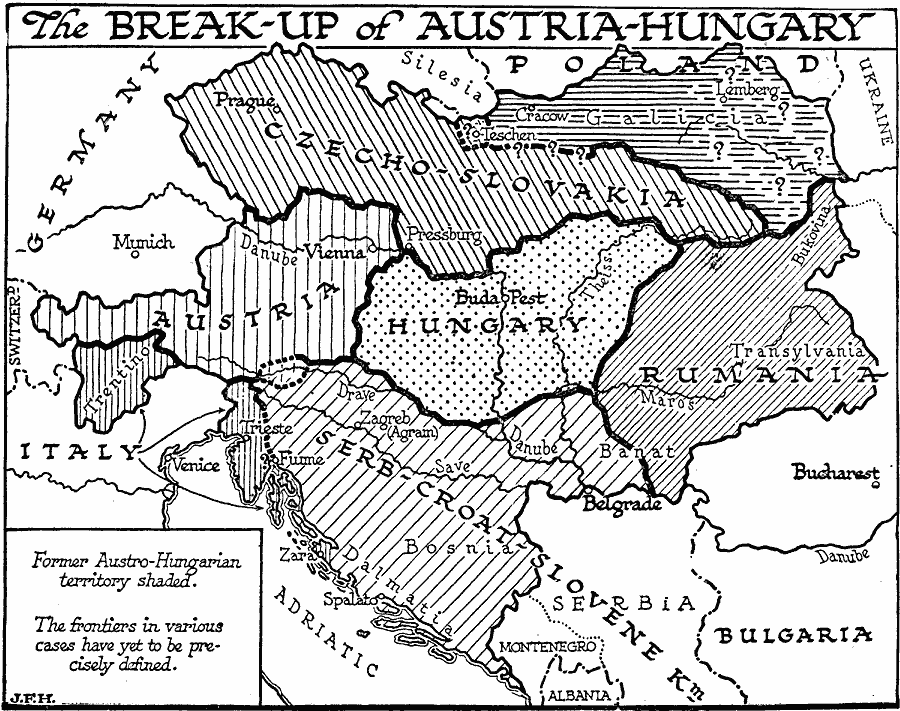
As for mr, I’ve been interested in the Austrian Empire for some time.  More so since I found out that my paternal family did not come from Poland (as I thought) but Galicia, which was part of  Austria-Hungary. They migrated to Canada while the empire was still a thing. That got me looking at maps of Galicia from that time, such as this  Map of Austria Hungary during the post WWI breakup. (I love that Galicia has all these question marks in it…where will it go??)

More such maps here,  Austria Hungary 1914, and here:  Austrian Empire, Italy, Turkey, in Europe Greece. – David Rumsey. More on the breakup,  here:  Empire breakup: states demanding independence – archive October 1918.

Other good historic pieces Ive recently read: Historical data is not a kitten it’ a sabre-toothed tiger, and this: guide to economic historians.

Economics: It’s hard not to think about economics these days, as we can’t seem to get billionaires out of our face. It helps to have good references to think about it. I thought this was a good study on wealth, Where does the wealth go when asset prices go down? Speaking of the destruction of wealth, I got thinking about the Great Recession, and that got me thinking about the Big Short and all those players involved, like AIG. If you haven’t seen the film or have but had a hard time with some of the concepts of it, I recommend this Cheat Sheet

Philosophy: This piece and this piece explore the controversy over whether the great philosopher David Hume was a racist. He certainly said racist things. My belief is we are still struggling with the shame of great thinkers also being terrible in parts. It’s a shame.

Speaking of which, here is a good piece on shame. Here is a bad piece on the Merit of Meritocracy. This was a good piece on parental ethics. And here’s a fun piece from McSweeney’s on utilitarianism.

Religion: related to philosophy, here’s something on philanthropy, ethics and Christianity.This explores the notion of whether you can have religion without belief. Here’s two pieces on two different Christian groups, the Quakers and the the Jesuits.

This was fascinating: some Muslims are using digital gings to count recitations, as was this, a video on the Popes with the new cardinals.

Sociology: we have learned many practical lessons in sociology due to the pandemic. For example, this piece argues that Covid policies show many people in prison are no danger to the public. I tend to agree. Excessive incarceration is a problem everywhere, but especially in the US. I think about it often, so I read pieces like this, and this Biden Can Bring Hope to Prisons Like Mine, this Albert Woodfox held in solitary confinement for 43 years dies aged 75, and this My Top 10 Tips for Doing Time In “the Hole”.

Preventing people from moving is one of the great difficulties all societies deal with. I have been thinking a lot of migration. So does the right, with their Great Replacement theory. This piece examines this: The great replacement is real but its not what the Right says. Indeed, the movement of people have been shaping societies for a long time. Case in point: Migration not conquest drove Anglo-Saxon takeover of England | Science. Reading this, Invasive species, I wonder if it is a fundamental difficulty.

Misc: I enjoyed this on Umberto Eco’s anti-library. (See below) Also this, on the cost studying LASS brings.


Love and rockets (things I find interesting in math and science, Dec. 2022)

In the last few months my math and science reading has mostly been about space, with some smattering of other things. NASA in particular has been the focus. First up is a piece on the DART Mission which smashed into an asteroid and altered it’s path. No small feat, that. In other big feats, they are still in the planning stages of a a balloon mission to Venus . Given that landing on Venus results in a spacecraft being destroyed, a visit that stays in that planet’s atmosphere may be the only way for it to succeed.

One such mission that should definitely succeed is Artemis, NASA’s project to visit (revisit?) the moon, Here is the NYTimes on it. Relatedly, here’s the Atlantic with a piece on the the 50th anniversary of Apollo. We are clearly due for a return trip. I wonder if it will affect the new astronauts as much as it did William Shatner after his quick trip into space with Jeff Bezos? I suspect they will be more prepared than the TV astronaut was.

Speaking of space, here’s cosmologist Katie Mack talking about scenarios for the end of the universe. I got her book last Christmas and loved it. Another book on physics I want to read is by Sabine Hossenfelder . She’s a no nonsense type of scientist, which I think is good. For while I agree that when it comes to science and especially physics, there is no escaping metaphysics, I also agree with those who say that physicists sometimes get carried away with some of their loftier or wild ideas.

Then again, some of those ideas resulted in this year’s The Nobel Prize . And it had led to physicists creating “the Smallest Crummiest Wormhole You Can Imagine”. These wild ideas really makes you think. If you think too hard, though, you will likely get tired. The Guardian has a good explanation on why thinking tires your brain .

Finally, if you are interested in learning more about physics, I recommend you check out the web site DrPhysicsA. It’s good stuff. And you want to learn more about math, you can visit the blog of one of the best mathematicians in the world. Here is is writing on odds. Also good!

The limits of YIMBYism, even for proponents of it like me

I am in favor of making improvement to all neighborhoods, of Yes In My Back Yard (YIMBY). That especially goes for my own. However, I know YIMBYism is a battle, that NIMBYism (not in my backyard) tends to be stronger. To support change, I believe change needs to be done in a controlled and limited way to dampen down NIMBYism and support YIMBYism.

That type of change is not what is happening for my area, at Yonge and Eglinton. First off, there are very large condos going up regularly. Second, we have the wholesale destruction of the area for the new Eglinton LRT line. Before that we had the destruction of the local Yonge and Eglinton center while it was upgraded. Now they plan to tear up the park to make improvements. It’s just constant upheaval and destruction, as much as it is construction.

I am a big proponent of growth and improvement. However even I am reaching my limit.  And if I am reaching my limit, I am sure many others are as well. It does not make for a good neighborhood or environment to have everything being torn up all the time. I would not recommend anyone live here if they can help it. Find a neighborhood you enjoy being in, not one that resembles a construction zone. I am sure it will be a great area in a decade or so. But I’ve lived her a long time and I regret it. It’s not a livable place. 

(Images: my own. Of Yonge and Eglinton, 2022)

Blade Runner is 40!

My favorite film, Blade Runner, is 40! You’ll want to scan this good piece in Esquire on why it is “is still the greatest Sci-Fi of all-time”. Need more Blade Runner essays? Here’s this piece on the eyes and how they are a recurrent thematic element in the films of Blade Runner… worth a look. (All puns intended.)

For fans like me, check out the Walking Tour of the Blade Runner Locations in LA. Plenty to see there. 🙂

On gamification of my time to get tough things done


I had been using a skillful form of procrastination: I was been doing things I don’t mind doing rather than doing things that are hard or that are important. For awhile this was ok: I still needed to complete the things I don’t mind doing. Eventually, though, I was getting really far behind on the hard and important things. I needed a solution.

My solution so far is to gamify my activities. Its based on achieving so many points per week. I assign a point for every minute of the day. Most minutes get 0 points for now. Some minutes get assigned positive points in the following way:

  1. 5 points for everything important I hate doing
  2. 3 points for important things I don’t hate doing
  3. 2 points for everyday chores I don’t like doing
  4. 1 point for everyday chores I like or don’t mind doing
  5. 1/2 point for staying organized and doing chores or important things I love doing

What I was doing before was spending no time on 1 and 2, some time on 3, and most of my time on 4 and 5. Not to mention fun things, sleeping, eating which I give zero points for. Now if I spent 30 minutes on cooking I get 30 points; 30 minutes shovelling snow is 60 points; 30 minutes helping my kids is 90 points and 30 minutes dealing with financial stuff is 150 points.

Once I had that system, it was pretty easy to measure my points in a day. I have a little spreadsheet to do it but you can use a paper pad or pretty much anything to do so.

The hard part of this is determining what is a win under this system. My first goal was a win would be 1000 points a week. It’s pretty hard to get that doing activities with 1-2 point activities; you need to really focus on 3-5 point activities.

In my first week I got to 1000 points by Thursday. So I decided on a different approach. 1000 points would get my Bronze level. 1500 would be Silver Level. 2000 would be Gold. Platinum would be 2500. The idea is that Bronze should be hard but achievable, Silver should be a stretch, and Gold should be an occasional win. Platinum should be rare.

It’s been successful once I calibrated it that way. The weeks I get the most important things done, they correspond to medals. The weeks I slack off lead me to get a DNF (Did Not Finish). I pledge to do better the next week. (Unless I am vacationing or sick: then a DNF is perfectly fine.)

The next hard thing: what is the benefit of winning? At first I tied physical rewards to point amounts. That might work for some people. It even worked for me for awhile too. Eventually I just found it satisfying to see there were weeks when I was getting important things done. That in itself was a reward, the win.

Overall gamification of my life has resulted in me getting the most important things done. I recommend it for people who like games and/or are stuck.

P.S. you are thinking this is like the idea of putting the big rocks in first, you are right!

For more on gamification and apps that can help you, see this: 9 of the Best Apps to ‘Gamify’ Your Life.

(Image via https://xkcd.com/2679/)

On the four eras of Twitter

There were four eras (so far) of twitter:

  1. Twitter is born: this was the early days when it was mostly geeks tweeting about their lunch. Celebrities like Stephen Fry started to use it, but it was just one of many Web 2.0 services available to people.
  2. Twitter is good:  This was around the time when Oprah Winfrey spoke to Ashton Kutcher about how great it was. The time when news of the plane landing in the river in NYC was discovered on Twitter before the news. Tweetups happened. Famous people spoke directly with their fans. Journalists piled on to make it a news destination.
  3. Twitter is bad: Then activists good and bad discovered twitter. There was Gamergate. There was brigading. The designation “hellsite” got tossed around a lot. The fun bar that was Twitter in the good days became the biker bar with lots of fighting and very little enjoyment.
  4. Twitter is dying: This is the “Elon Musk owns it” phase. Maybe this will be the last phase, and “twitter is dying” becomes “twitter is dead”. Let’s check back in a few months, years.

For more on the history of twitter, see this.

A feel good todo list: how it helps you with difficult tasks


There is a  problem I have with some items on my todo list, and you might have this too. The problem? I hate the process of doing that task, but I feel good when I finish it. Those are the tasks I’ll avoid for a long long long time, then do them — possibly cursing the whole time — and then when I’m done, I’ll think: well that feels good to have that done!

For those tasks, I’ve built something called the Feels Good todo list. For my Feels Good Todolist (FGT List), I have two columns. In the first column I write the task, and in the next column I write how I feel after it is done.

When I have to do the task I hate, I try and focus on how I feel when it is done. It requires some concentration, because my mind wants to think about how I hate it. Just as importantly, when it is done, I take the time to enjoy that feeling. I don’t rush off to do the next thing. I am trying to teach my brain to remember how good it feels so that it is somewhat easier the next time. Try it!

It’s hard to do certain tasks. If you get satisfaction from the process, that’s great. If not, focus on how good you feel when it is done. It will keep you going.

The best time to visit New York is in December. And other things NYC

The best time to visit New York is in December. I did once many years ago and I just remember how magical it was: the city was lightly covered in snow, the shops were all lit up and decorated for Christmas, and everyone was bustling about. I had a moment where I stood in front of a store, the snow lightly falling on me, and thinking excitedly: it’s perfect. I hope you can go and experience something similar.

Whenever you go, you’ll need a place to stay.  Vogue has some suggestions on places. The New York Times has a recent guide to what you can do in 36 hours. The food writer Michael Ruhlman has some suggestions, too. If you want to go where few do, perhaps you can head to the Bronx and enjoy what that borough has to offer. One day the Bronx will have it’s moment. Get there first.

If you haven’t been in awhile, this piece tells you what has changed in terms of dining. Don’t be deterred though: New York is always changing and is always good.

I’ll close off with three New York Stories. Here’s a sad story of how Trump destroyed one of the gems of Mahhattan to put up his Tower: Vanished New York City Art Deco – Bonwit Teller. Here’s a cool story on the Hart Island cemetery. And here’s a good story on planting a million trees in NYC .

One last thing: here is the trailer for one of my favorite films, Metropolitan. It’s set in New York in December, and that’s just one of many things I love about it.

(Image from Cup of Jo. I recommend their Guide to NYC in Winter.)


Transition Toronto (what’s new in Hogtown, December 2022)

It’s a time of Transition in Toronto. Transitions due to municipal and provincial elections. Transitions due to Covid. And transitions in general.

The Premier — who could not somehow find time to attend the Emergency act hearing or even certain sessions of the legislature — has managed to insert himself into city politics once again. (More on that here). I honestly think the guy would prefer to be a strong mayor of Toronto vs premier of Ontario. Anyway, that’s all going to lead to some transition.

Even with new powers the Premier has provided him, it will be a challenge for the current mayor, revenue-wise. He has new home sales dropping to a historic low and home prices overall dropping dramatically. In terms of commercial real estate, we have Toronto  workers still avoiding downtown, which is going to have an impact there. Things are tough. Let’s face it: there’s only so much money that can be raised from utilities.

Perhaps the fact that people are spending more time at home is the reason why people living in Toronto are feeling more socially isolated than ever before. I was feeling that way too, but lately I’ve been going out more and I am starting to feel more connected to the city. Can I recommend you find a friend and check out one or more of the 50 restaurants in Toronto with breathtaking interior design? I’ve been to several: it’s uplifting to go to them. Or maybe do something simpler but still great, like hitting up one of the many great dumplings places we have in the city. If you do the latter, head over to your favorite book store and pick up this fun anthology on dumplings by some fine Canadian writers: “What we talk about when we talk about dumplings”.

Or maybe you just want to get out and move. If you can skate, head down to Union Station, which is getting a free outdoor skating rink and it’s big! Winter is coming: choose to enjoy it.

Getting around the city, you’ll notice more and more people on transit. I have. Sadly, we’ve lost one of my favorite tools for that:  the Rocketman app. We need more good transit tools. Among other reasons, we are going to be getting more transit, such as the new Ontario line. Good to see the TTC continue to improve. Even old stations like Yonge and Bloor are getting upgrades.

Indigo is also getting upgraded with new coffee shops going in where the old Starbucks used to be. I miss the original cafes that Indigo first had: they served wonderful soup, among other things. But I’m glad there will be places for refreshments in the bookstore chain.

Other things getting improved: the park in my area. On one hand, I think improvements are great. On the other, the constant change / upheaval in my area can get to one (i.e., me). But hey, that’s Toronto. Nothing stays the same, not even the old Canadian Tire on Yonge north of Bloor. I mean look at that development.

Improvements are important though. It’s better for someone like IKEA to build new stores in places like a former Sears location, then for things to just be boarded up. It’s not a bad thing Toronto has the means to change and improve.

Still, it’s good to be reminded of the way things were. This piece on what Mirvish Village looked like in Toronto before it was demolished does that. I miss that area. Likewise, this visual history of Kensington is great. Heck, even this look at the soon to be vanishing pay phones is good.

Lots of change is happening in Toronto, and much of it is good. Here’s to the vibrant city I call home. Cheers!

(Images: all links to blogTO. Top: proposed new development on Canadian Tire. Middle: dumpling resto. Bottom: Mirvish Village.)


Friday Night Cocktail: a fancy martini (or three)

Here on the old blog, we like a good martini. Indeed, we have written often about that drink, as you can see. Many of those have been either classic or – dare I say – basic. Which is fine. Basic and classic are good. Fancy and new are also good. If you have a preference or are in the mood for that, I have three appealing martini offerings for you:

Whatever you prefer, fancy or basic, classic or new, I raise my glass to you. Cheers!

(P.S. Thanks to the good folks at Food and Wine for these recipes. If you want even more martinis, check out this article by them. The three you see are on a list of many more.)

How to deal with recurring nightmares (plus four other good pieces on better sleeping)

Do you suffer from recurring nightmares? If you do, I highly recommend you read this. It has worked for me and it may work for you too. Sleep can be hard enough to get: being fearful of repeating a nightmare makes it harder.

Here are some other sleep tips from the New York Times  that I thought were useful.

The Times also has advice on how to deal with waking up in the middle of the night and being unable to get back to sleep, here.

Do you exercise hard? If so, listen to  Atlantic CEO Nicholas Thompson who argues that among the things you need to be successful athlete is good sleep.

Sleepwell is an initiative to help people sleep better without medication. You can check it out,  here.


What was new in our crazy mixed up world, November 2022 edition

Yowza! It’s been a crazy month, this month, between surges in diseases, Twitter turning into a dumpster fire, crypto imploding, inflation hanging on, the war in Ukraine intensifying with seemingly more attacks on civilians, the US GOP becoming more Nazi curious….you name it.  Let’s take a look.

Pandemic: we are still seeing the effects of the pandemic rippling through our society. In Ontario the ICUs of our children’s hospitals have been slammed, with usage up to 108% at one point. Blame the pandemic on that. Other things to blame the pandemic on? Nursing shortages. In fact work shortages in general: long COVID continues to affect many people and has taken many of them out of the workforce.

In response, people are still wearing masks, though not many. Some people are carrying their own CO2 monitors to tell them when internal air quality is risky. Other people are even making their own. Fortunately new vaccines are rolling out, and you can still get COVID tests for free at some places, although that may be going away. Get that flu shot too, don’t end up being a flu statistic.

Will things gradually improve? I believe they will, but who knows. Some people thought worse variants would come along, but so far so good.

Social media: after years of something of a status quo, social media has entered a meltdown/transformation phase. This has been lead by Elon Musk, who has taken over Twitter. Initially people were wondering: will it matter? Turns out it mattered a lot. He started by firing lots of people. Then he told those left to either be “hardcore” and work under insane work conditions or quit. Not surprisingly, many quit. Other people quitting? Celebrity users. And most importantly, advertisers like GM. It doesn’t help that Musk has loaded up the company with a lot of debt. It’s going to get worse before it gets better, if it even can get better.

With Twitter in chaos, what can users do? Some people like me are considering moving on to other platforms, like Hive and Post and Mastodon. However, the alternatives have not really taken off yet, and in some cases, they are not keen for people like journalists to take their business there.  (Maybe they should have read these mastodon tips.) Who knows how it all shakes out.

One good thing about the twitter debacle: it has lead to some good essays. Like this one: Welcome to Hell, Elon. Or this one on the fraudulent king. This one by McSweeney’s was funny.  Also this. Last but not least, this piece with a rundown on how Musk is a terrible person.

If Twitter is quickly imploding, Facebook/Meta is slowly collapsing. Like Twitter, it has had its shares of layoffs. The whole Meta project seems to be failing or at least flailing. It has suffered security problems, too. Generally the company is seen poorly, as this piece by Om Malik shows. It doesn’t help that much of the popular content is trash on Facebook, though they have tried to clean it up. I’m not sure what will happen with this company either, so I’ll leave the last word on Facebook/Meta to Stratechery.

In other news, Trump’s Truth Social continues to be a dud. Tumblr is allowing nudity. And Youtube, which is kinda social, struggles with ad targeting. Just one dumpster fire after another.

How to consider all this? Maybe by reading this piece in Nature on collapsing social networks. I found it very insightful.

Crypto/NFTs: other things melting down recently is the whole crypto currency business. This was lead by Sam Bankman-Fried and his FTX company.  Not that the lunacy is limited to him: Peter Thiel had a new company that lasted three months.  Relatedly, NFTs are not doing well, but people are still flogging them. Companies are looking to incorporate them into TVs.  Into the restaurant scene. Even into famous paintings like the work of Hilma af-Klimt. Ugh. Crypto winter can’t come soon enough.

Christmas: speaking of winter, for those of you celebrating Christmas, here’s a few links you might like. Here’s some gift ideas for those of you on a budget. Here’s more gift guides you can use. I especially thought this would be a good gift for young and aspiring scientists. For people looking for cool decorations, check out that link.

Other Cool stuff:  I’ve recently got an Apple Watch and it is excellent for anyone worried about their heart. Here’s something on how it detects arrhythmia. I recommend the Apple Watch just as a health device. In terms of other devices, if you use a Kindle, I recommend Libby. This is also a cool plant device (shown below).

Inflation: Inflation is like a tenacious beast, hanging on. One place in particular that people are experiencing it is in food prices. Lots has been said about the cost of food these days. Companies like Loblaw have done quite well in turn. There has been some attempt by them to respond to this, despite these moves, I expect there will be more pressure on them in the months ahead. For one thing, the Walmart giant is waking up. Maybe more people will join me and get their groceries there. I’m a happy customer. Let’s see.

Work: workwise, things are still unsettled post pandemic. Wages aren’t rising, despite inflation. Some employees are returning to the office, but aren’t necessarily happy about it. Indeed, employees seem to be unhappy in general. It doesn’t help to be reading of layoffs in many places, even Amazon. Odd times.

Ukraine: the war in Ukraine slogs on. It could be a very tough winter for Ukrainians, though they continue to fight back in many ways. I don’t think anyone knows how to end the war. Either one side will collapse or it will be a stalemate. Zelenskyy wants it to end. The head of Turkey says Putin wants it to end. Let’s hope and pray for a quick ending.

Finally: for new fans of football watching the World Cup, here’s how to determine offsides. You’re welcome. 🙂

Thank you to those who have read this far. Merry Christmas and Happy Holidays to you! Enjoy the last few days of 2022: here’s to a brighter 2023.


Forget going to Mars. Go to Iceland

I think going to Mars is a terrible idea, but if you are the opposite of me and would love to experience that, I have a suggestion for you. You can get the experience of going there today by going to…Iceland. NPR explains:

Iceland is like Mars — if the Red Planet had hot tubs. That’s the cheeky idea behind a new pitch from Iceland’s tourism board, which says people don’t need a spaceship to see otherworldly sights like red rocks, black sand and subglacial volcanoes. Plus, they note, oxygen is abundant in Iceland. To drive home the message, they launched a promo video and a space billboard with the tagline, “Iceland. Better than space.”

See? All you need is a plane ticket and a place to stay and you can go to Mars next week. If you think the tourism people are just making stuff up, listen to NASA. NPR again:

NASA agrees: the agency has repeatedly used Iceland as a stand-in for the Moon, and it’s doing so again as it prepares astronauts for new missions off-world. “Iceland is an amazing analog for both the Moon and Mars,” says NASA’s Kelsey Young, who researches the exploration of planetary surfaces and who has done geologic fieldwork in Iceland.

For more on this, see the NPR article, here: Iceland says it’s better than space. We asked NASA about that.

How to succeed in business: make life better for people by taking advantage of new technology

What drives innovation? If we look at the most innovative companies in the last decade, we see innovation happening in areas such as:

Finance: Square, Venmo, Zelle
Communications: Spotify, Tiktok, Instagram, Slack
Logistics: Uber, Lyft

What underlies all those companies: the mobile phone. While the mobile phone is not synonymous with innovative companies,  those innovative companies I listed were able to capitalize on the capabilities of that device to vault themselves into leadership positions.

Mobile phones are not new on the whole, but the capabilities they provide in the last decade provided these companies with the means to innovate.

What else do all those companies have in common? With one of two exceptions, they all made life better for a large population of people. They made life more entertaining, they made it easier to work, to manage your money, to get in better shape, to cook well, to get around easier.

Companies that find ways to make life better for many people while taking advantage of new technologies will be successful companies. It seems obvious, but too often I see companies focused on the technology and not on making life better for people. You need both things to succeed. Obvious, not easy.

For more on this, see: The 16 most innovative new companies of 2010s.


On restaurants loved and lost: Brasserie in midtown Manhattan

It was fairly nondescript from the outside: a simple awning, some signs stating its name, and a revolving door. You might not think much of it walking along East 53rd.

Once you walked in, though, your impression immediately changed. Especially if you were there early in the morning, the way I often was in the 80s and 90s. You would be at the top of the stairs looking over the whole place, and it was packed with people there for power breakfasts. The sound of people talking just washed over you, and if you managed to find a seat, you would hear what was on the mind of Manhattan men and women of that era.

It could be intimidating, especially walking down those stairs into the middle of it all. Everyone seemed so confident, so polished, so put together. The fact Mike Bloomberg would often dine here to start his day gives you an idea of what it was like. While I felt shy on my first visit,  I quickly found the place thrilling and energizing. No doubt the other diners did too.

Among other things, it was a convenient place to go. I would be in the city for business and the offices we worked in and the hotels we stayed in were nearby. I could wander over to the Brasserie and have delicious croissants or a proper egg and sausage breakfast before I went to work. The coffee and orange juice? Also great. As was the service.  Convenient yes, but excellent too.

I don’t ever recall it changing that much over the years, which is one of the things about it that appealed to me. It gave me that constant connection to midtown Manhattan over the decades. It was my spot. After a long period of not visiting, I went back to NYC around 2018 and I wanted to hit it up, only to discover it had closed. Sad.

I’m glad I got to go all those years. If you visit a city often, I hope you can find such a place that allows you to fit in and belong and be part of something. It won’t be Brasserie, but I hope you find the next best thing.

For more on it, see this piece in Eater on it’s closing. Looks like they went out with a bang. Nice. More on it, here. (Images from those two places.) Finally this piece is in Japanese but you can get Google to translate it and there are some good images of Brasserie in it too. One thing I like about the Japanese post is you can see some of the food but you can also get a sense for what the stairs were like.

The fine photography of Jared Bramblett, London and elsewhere


My friend Jared Bramblett was recently in London, and as he does, he took some fantastic photographs of his visit, which you can see here:  5 Days in London – Jared Bramblett.

Once you check that out — and you should — take some time to look at the rest of his site. It’s wonderful.

(Image: link to image on his site.It looks so much better on his site.)

How to pick a good bottle of wine from your local LCBO with Decanter and one simple trick


I have a rule of thumb when it comes to choosing a bottle of wine for the first time: any wine highly rated by Decanter is good. If you are unsure what to get, look for bottles with a round Decanter sticker on them and you can be confident in your purchase. And  good news: most LCBO stores will have quite a few such bottles.

Alas, not all such wines rated by Decanter bear their sticker. And yes it can be a lot of work trying to find them at all.  Wouldn’t it be great if you could easily find them in the store near you?

Well there is a way you can do that: with your browser. To do this, first go to the LCBO website (lcbo.com) and pick your local store (or a store you plan to go to).

Once you do that, enter the following URL in your browser (from https all the way to [true]):

https://www.lcbo.com/en/catalogsearch/result/#q=decanter%20world&t=Products&sort=relevancy&layout=card&f:@stores_stock=[true]

What you will get back are wines in your local LCBO store rated highly by Decanter magazine. With bigger stores like the one at Yonge and Summerhill in Toronto I got over 30 results back, with many around the $20 price point.

If you are cost conscious, enter this version in your browser:

https://www.lcbo.com/en/catalogsearch/result/#q=decanter%20world&t=Products&sort=%40ec_price%20ascending&layout=card&f:@stores_stock=[true]

It will return the same list but sorted with the lower cost ones listed first.

There are lots of ratings and plenty of ways to find a good wine at the LCBO. I find this way works great for me. Perhaps you find the same thing for you.

P.S. You can play around with other rating groups. For example, Wine Enthusiast is also associated with wine in the LCBO and many of them are at an attractive lower price point. To see what I mean, enter this:


https://www.lcbo.com/en/catalogsearch/result/#q=wine%20enthusiast&t=Products&sort=%40ec_price%20ascending&layout=card

Happy Friday! It’s the weekend!

Woo! It’s Friday! If you are American, then there is a good chance you are participating in Thanksgiving activities! May your days be joyous and your feast plentiful. As for me, I’m in Canada, where we celebrated our Thanksgiving weeks ago. I suspect I will be gearing up like many Canadians for that other festive time that is coming soon: Christmas.

Speaking of feasts, here’s a cornucopia of things for you to check out and enjoy as you head into the weekend.

How cool is this  Balmuda speaker? I just love it. Move over Sonos! (JK I love my Sonos One speaker too.)

Also cool: this public bench. I wish my city had such great places to sit.

This artwork by  Rafael Lozano-Hemmer (below) is stunning. Plus it is related to your pulse. Intriguing, yes?

Speaking of stunning, check out these bold black houses. I just love to look at them and to imagine staying in them.

As for imagining things, how great it would be to take some time and do this 750-Mile Bicycle Route from New York. That’s a good bucket list item.

Or perhaps that’s too much effort. In which case, why not daydream about climbing on board The Venice Simplon-Orient-Express for one of their Winter Journeys? That sounds fabulous.

If you can’t afford that, then maybe you just want to stay at home and have a low key meal tonight. I recommend you look into what Austin Kleon does every Friday. He has these Pizza night blockbusters with his family that you might want to try (this link even has his wife’s pizza recipe). It’s a great idea and the pizzas look delicious.


Or maybe you can’t even decide what to eat. Kavall, a Swedish grocery delivery company, understands.  See that button? You press it and they will  randomly selects a recipe and have the ingredients delivered by bike in around 10 minutes. Amazing! You can read more about it here!

Want to impress your kids after dinner? Show them the metal rig Jelle Seegers built with a handmade fresnel lens on top that can concentrate solar rays tightly enough to smelt metal. You can see it, here. It will blow their mind.

Or show them this small paper microscope that works!

But don’t show them this McDonald’s gaming chair because they might want one! Unless you too like it…I dunno. 🙂

I have written often on cat furniture. Perhaps too much. But I can resist sharing this one called Igloo that is a side table that also gives your cat a cozy home.

Have fun on the last Friday of November! This year is flying by. Have a great weekend.


i

On twitter poisoning


At first I was dismissive of this oped by Jaron Lanier on how  Trump, Musk and Kanye Are Twitter Poisoned because I thought he was overstating the case for that trio. I thought: those three were messed up long before twitter!

The key thing that changed my mind on the idea of twitter poisoning was this:

Twitter poisoning is a little like alcoholism or gambling addiction, in that the afflicted lose all sense of proportion about their own powers. They can come to believe they have almost supernatural abilities. Little boys fantasize about energy beams shooting from their fingertips.

When I read that, a light went off. I know people on twitter like that! People who started off small and went on to accumulate many followers, and along the way they have suffered that form of poisoning. They have lost their sense of proportion. They seem to think they are more influential than they really are. In addition to what Lanier describes, the poisoning also seems to make some of them harder and meaner somehow. Less their former selves. The vanity that rose from their position on twitter curdled them.

Go read the article to get a full sense of this affliction.

On the wrongness of vandalizing famous paintings


Well, attacks on famous paintings continue. Since the initial throwing of  tomato soup on VanGogh’s Sunflowers, we have had vandalism on a number of works, including someone recently pouring black liquid on a Gustav Klimt painting in Vienna .

I have to say that I hate these acts. I think they achieve little and the idea that we need this form of protest to gain attention to climate change is ludicrous. As they attacks continue what I fear is this: people who resort to destructive means to gain attention will resort to more drastic forms of destruction once the spotlight moves on.  So far the works have not been seriously damaged: there’s nothing to say it won’t escalate to that point.

In response to this, some museums are bringing on undercover cops. The people who targeted  Vermeer’s Girl with a Pearl Earring are going to jail. Needless to say, all museums are being much more strict about what can be brought into the galleries they provide.

That’s leads me to the other fear I have. Long after these protests have moved on, museums may end up becoming a much less open space for people to view works. One thing I love about museums is that I can walk right up to works of art and examine them closely for as long as I want. Others can take in their own art supplies and study and copy the works to become better artists. All that is due to the openness of museums. That could all be lost due to these protests.  And that would be a great loss for anyone who loves the visual arts.

If you are looking to join a Discord Server or run yours better, read this

David Seah provides an excellent model for anyone looking to run their discord server effectively. I recommend you check out what he has to say, here: DSri’s Virtual Coworking Cafe – DSri Seah. As he describes it:

The DS|CAFE Discord is a virtual office that has became a virtual coworking space in 2016. It’s designed to provide “the right level of distraction” you need to have a productive day with the option of sharing our interests with each other.

He goes on to briefly describe what it’s for, what the people are like, what the main chat areas are, and — very important — what the chat guidelines are. I would hope all discord servers are as thoughtful.

You might be thinking: that’s all well and good, but I don’t want to start a Discord server, I just want to join one.  Well, you are in luck, because David’s server allows you to sign up. Instructions are on the site. If you do on my recommendation, I also strongly state you should respect their guidelines and their community.

P.S. David Seah is one of those people who makes the Internet a better place by sharing what he has. We need more people like that.


Two useful tools for people who want to be productive but find their work day gets away from them

Do you find the work day slide by and you think: what did I even get done today? Or do you find yourself tracking what you are doing but finding that you lost focus on what you are supposed to be doing?

If so, David Seah has tool useful tools on his web site you can use:

  1. The Emergent Task Timer
  2. The Emergent Task Planner

The first tool is a good way to track what you even got done today. David has some good examples of how he uses it. Generally I like to put what I think my focus will be at the top, put administrivia work and breaks at the bottom, and put meetings etc in the middle. You only have room for 12 tasks, so if you find you have a lot of meetings, consider grouping them all into one task: Meetings. Or you may have two tasks: Client Meetings and Internal Meetings.  However you do it, don’t sweat it too much. The first few days you might find it hard to get everything done, but it gets easier over time.

The second tool is a good way to plan your day and try to keep it focused. It takes a bit more work, but it is good when you want to ensure you spent your time well. It can be handy if you are doing daily standups, because you can list the main thing you are working on at the top. Ideally you are spending most of your day working on that…if you are doing other things below it, chances are they are a blocker of some sort.

These are just two useful tools on David Seah’s web site. I recommend you take a few minutes to check out the rest of his site: you might find other things he has worthwhile. I know I have. I’ve been using his tools off and on since 2007, and wrote about how good they are.

Good luck with the tools. Here’s to being more productive this week.

P.S. If you need a timer, I recommend this site.

(Image: link to image on David Seah’s web site)

Big hair, don’t care: more good links on the best decade, the 1980s


The 80s come back in vogue from time to time, such as when current works like Stranger Things delve into it.  Mostly the decade is seen historically. That’s fine. It was a good decade, at least for me, and I love to think and write on it. One of the great things about having your own blog is you can write what you want about whatever you want. 🙂 So here’s more things on that era that I found worth reading lately…

Much of the music of the early 80s started at the end of the 70s.  Take the music of bands like Talking Heads. Or the Ramones. Speaking of them, here’s some great bootleg footage of the Ramones in concert before the person filming it got caught!

As for other artists of that time, here’s a good piece on Blondie.  Like  punk and new wave, another trend of the time was Blitz.  This piece covers the Blitz era and all the music that was associated with it. Moving from the English music scene to Canada, here’s something on Rebecca Jenkins, an artist and musician who was involved with so many other performers I loved at the time, from Jane Siberry, to Holly Cole, to the incomparable Mary Margaret O’Hara.

Another incomparable artist from the time is Richard Grant. I will never forget him for his great turn in the film “Withnail and I” back in the 80s. Nowadays he has suffered a great loss but still keeps going and is inspirational on twitter and elsewhere. This is a good piece to catch up on him: Richard E Grant on grief fame and life without a filter.

Finally, gone but not forgotten, here’s a fine piece on Ruth Polsky Who Shaped New York’s Music Scene in that era. Recommended.

(Image from the piece on Blitz)

Fall cleaning tips


Is Fall cleaning a thing? I know Spring cleaning is. I think Fall cleaning should be something we do as well. Especially if you celebrate big festivities in November or December. Fall cleaning can be just the thing to get your place in shape before those events occur.

On that note, here’s some good cleaning tips that can help you with your cleaning, whatever season it is:

Dishwashers are like towels: they are involved with cleaning, but need to be cleaned, too. Here’s some hacks to help you do that.

Relatedly, here’s some good cleaning hacks you can do with Dishwasher Tablets. Not just for your dishes.

Yellow pillows are…not great. Rather than throw them away, why not scan this and see if you can clean your yellow pillows?

A reminder in this age of many germs, that clean and disinfecting are not always equivalent. Read and see.

For big cooks like me: How to Clean the Worst Cooking Messes in Your Kitchen

Moving to the bathroom, this advice came in handy for me: How to Clean a Bathroom Floor. Relatedly Ways to Use Distilled White Vinegar.

Happy cleaning!

The Santa Claus parade returns to TO this weekend!


What are you plans this weekend? As for me, I think anything I do outdoors will involve warm clothing because the weather is getting colder. And while I won’t be attending this year, I will be thinking of all the parents and their kids who will be bundling up to go downtown this Sunday and attend the Santa Claus parade! It has been on hold due to the pandemic, but now it’s back! Yay!

I love the Santa Claus parade. When I was a kid, I always wished I could attend. In my 20s I remember seeing it in person for the first time and being a little kid again as the floats and bands went by. And then I got to take my own kids. Some of my best parenting memories are with them at the event. It’s one of those  things that makes Toronto great.

(I also use the Santa Claus parade as a reminder than Christmas is coming soon and it’s time to get planning! Perhaps this will be a good reminder to you.)

If you are thinking of going, here’s the official site for the parade. (Map above is from the site.) Have fun!

P.S. Here’s some tips I found to having a success Santa Claus parade:

When I would take my kids, we would go stand to Bloor and Avenue Road. There is lots of space around that area, so there’s a chance you can see the parade. As well, it is near two subway stops (Museum and Bay), which makes it easy to get to and easy to leave if you take transit. Finally, the parade has to turn there which gives you lots of ways to enjoy the view.

Instead of hoping right on the subway, I would find a place to get a coffee / hot chocolate. (There used to be lots of Starbucks and other coffee shops all around Bloor and Cumberland.) My kids loved this ritual, as did I. Just as good too was the fact that it was easier to get on the subway after your drinks since the crowds had dissipated by then.

If it is going to be cold, bring hot pockets or things to warm you up. You might be ok when you first get there, but after standing around for hours, you will get very cold. Be prepared.


Ideas on furnishing and living in small spaces in the future

I suspect that living in smaller and smaller spaces is going to be the rule rather than the exception, as more people move to expensive cities. I think if that’s true, we need to think about how such spaces should be furnished.

Traditional furniture assumes a certain amount of room to move about. Those assumptions need to be challenged.

For example, this piece envisions a massive piece of furniture that combines a bed, storage and seating area into one (see below):

Or take this piece, which imagines everything within reach (see below):

I know, it’s not for everyone. But it may be the way things are going for many urban dwellers.

As I get older I get more attuned to this way of thinking: Why I Don’t Want a Bigger Home – Benefits of Small Space Living. Maybe in the near future we will all have smaller personal spaces and larger and more varied public spaces.  If so, we will need different furnishings to accommodate this.

P.S. The links have many more images showing how these pieces of furniture look. Worth checking out.

Things that are making me happy (that could make you happy too): tiny plants

Tiny plants have been making me happy. I was typically bad with plants, but since the start of the pandemic, I’ve been keeping some in my home and mainly they’ve been doing well. So I recommend if you want to be happier, getting some tiny plants might be a good way to do that.

How do they make me happy? First, I like to see them around the place. They are like small art pieces scattered on shelves, desks and tables. It’s also just pleasant having greenery nearby. Second, they give me a reason to take care of something. Just a little of taking care of something makes me happy. Third, the success of them makes me proud and also happy: I no longer feel I have a black (not green) thumb. Fourth, it gives me a reason to go shopping — which I enjoy — and get something small and not spend too much money but still something nice (which is satisfying).

I am fortunate in that I have plenty of shops nearby that sell small plants. Another option is to get cuttings from friends who have plants. Here’s a guide to doing that..

As for pots, I got a half dozen or so from Ikea. They have some for as low as $1.99.

Now that I have you convinced :), here’s a guide to the 25 best plants for the home. I have several of them.

(Image on top is from that article on the 25 best plants. Image below is from IKEA.)

On the mind and mental health


I sometimes posts links I find on physical health, which is all well and good. Here’s some pieces on mental health care and the the mind that I found worthwhile.

When I would run I was always struck by how I felt physically would literally changed my mind. If I was having a good run, positive thoughts would spring up. If I was struggling, plenty of negative thoughts arose. So I thought this was a good reminder of how our body — in this case, our physical heart — influences what we perceive and fear. Relatedly,  when you feel sick, you can thank your brain. It’s a good reminder to me of the tight interconnection between our physical and mental health.

An important way to take care of your mental health is therapy. Here are a few pieces on the topic. Therapy is important and useful, but it has its limits. For example,  this is a sad reminder of the limits of mental health therapy.  More on the topic of the limits of therapy, here: The philosophical roots of CBT help explain its limitations.

Moving on to a practical note, here’s a good piece on the importance of rituals. And this piece on training your brain for hard things is good. As is this one on how habit stacking will trick your mind into adopting a new habit.

Let’s not forget exercise. A reminder that even a single exercise session can help shift depression. That’s especially important in the winter time if you suffer from something like SAD. Besides exercise, there are other things you can do for it. See this and feel better.

Finally, if  Jonah Hill can take mental health breaks from his work, we all should.

Mental health is a serious matter, as is physical health. That’s why I think this made me sad: advice columnist does not take the mental health of someone’s dad too seriously.

Take care of yourself, mentally.