Bill Murray’s advice on being a father

From a 2012 Bill Murray Interview in Esquire comes this:

If you bite on everything they throw at you, they will grind you down. You have to ignore a certain amount of stuff. The thing I keep saying to them lately is: “I have to love you, and I have the right to ignore you.” When my kids ask what I want for my birthday or Christmas or whatever, I use the same answer my father did: “Peace and quiet.” That was never a satisfactory answer to me as a kid — I wanted an answer like “A pipe.” But now I see the wisdom of it: All I want is you at your best — you making this an easier home to live in, you thinking of others.

Sounds right.

When to think about your life, and when not to

There are times to think about your life, and times not to. Austin Kleon has a very simple rule to help him decide:

I have a very simple rule that serves me well: Don’t think too much about your life after dinnertime. Thinking too much at the end of the day is a recipe for despair. Everything looks better in the light of the morning. Cliché, maybe, but it works.

I first agreed with this. Afterwards, I concluded it depends on each individual. For me, I found a good time to think about my life was between midnight and two. It’s quiet then, I am tired but also relaxed. There’s no distractions, nothing else left to do but sleep. If I accomplished things in the daytime, it was especially good to think about what’s next in my life. Likewise if I had a good weekend, the best time to think about my life is Monday morning: I’m rested, energized, and feeling I can get a lot done during the week.

I found the time to not think about my life was any time I am really tired or sick or having a very bad day. Then the goal is not to reflect but to recover.

If anything, my rule is: if I need to recover, then I should not be reflecting.

I think we should all find times to reflect upon our lives and assess ourselves and where we’re heading. We just need to find the right times to do it, and do it then. And find the wrong times to do it and not do it then.

How to sleep better – Vox

More good advice about sleeping from Vox: How to sleep better

I agree with most of this, but there is one part I want to highlight:

If you’re not sleeping and getting anxious about not sleeping, just get out of bed and leave the bedroom. Sleep specialists have established that staying in bed while you’re anxious or not sleeping is one of the most common contributors to chronic insomnia, because it trains the brain and creates bad associations.

The part in italics is key. If you are not getting anxious about it, you likely can stay there until you fall asleep. At least that works for me. I have tried getting up and I find that more disruptive. Now when I can’t sleep, I tell myself that at least I am getting rest and I will likely fall back to sleep, and almost always I do.

If you are looking for a todo list app, read this

According to this piece:

Some to-do list tools are better than others. Check out 10 of the best to-do list tools to determine which may be right for you in 2018.
— Read on blog.hubspot.com/marketing/best-to-do-list-apps-tools

I’ve used a number of these and it makes me vouch for this list. That said, there are lots of apps you can get for to do lists that are free, so don’t think you have to pay money to get a good app to do this work.

Also consider other tools, like Evernote. Evernote is more than a todo list app, but it does that well.

Finally consider using Excel or Google sheets.

Whatever works best for you is the best app.

How chromebooks can be a means of avoiding being IT support for your family

Chromebook image
This piece explains the logic behind getting certain relatives a Chromebook so as to relieve you of being tech support:  I bought my mom a Chromebook Pixel and everything is so much better now – The Verge.

Now your mom may be tech savvy and not need a Chromebook (my mom was). But for some people’s moms or dads or children, it can be a very good solution. Especially for people who don’t travel much with their computer and who have a stable IT environment (e.g. the networking set up doesn’t change, the printer is good).

Chromebooks may not seem good value. You might compare what you get from a Chromebooks vs a Windows laptop and think: I get more from the Windows laptop. If you are good with computers, that true. But that’s not how to look at it. Factor in the cost of the relative’s computer plus the time you spend solving problems with it. When you factor that in, the benefit of the Chromebook jumps out.

A very visual way to remember healthy serving sizes

The good people of Cooking Light have put together an nice infographic on this: Here’s a Handy Way to Understand Healthy Serving Sizes – Cooking Light. 

Now you might find some of them weird (one small baked potato is the size of a hamster) or outdated (an ipod nano…really?) but most of them are relevant and very useful if you are working hard to control how much you eat.


New ideas for summer wine drinkers

For those of you looking to branch out beyond whites, roses, and heavy reds (for BBQ), here’s a good list: Chilled Red Wines to Drink All Summer – Bon Appétit.

Beaujolais is the obvious choice for Gamay, but lots of new world producers make wine with that grape. For Carignan, you may have to look around: if you can find a place that stocks a good selection of French wine, look in the Midi section. Also check out the Spanish wine section. The challenge there is it can sometimes (often times?) be blended with heavier reds. Ask the staff for help if you want something lighter. As for Zweigelt, the challenge there is finding it at all. If you can, get some.

If you want to know more about carignan, check out this from Winefolly.com:

Summerlicious 2018: the deals

I am a fan of Summerlicious (and Winterlicious) in Toronto: it’s a festival of sorts for people who like fine dining . It’s debatable if you are getting a deal on the meals, though I would argue that you are. If you lean the other way, then read this: 10 best deals for Summerlicious 2018 – NOW Magazine. By going to one or more of these 10 places, you’ll dine in a good restaurant and get a good deal as well.

Weekend goals: getting a better night sleep

If you are like most people, you don’t get enough sleep. Also, you likely wish you could get more sleep. If you fall into both of those categories, why not read this guide right now: The 2-minute guide to getting better sleep – Vox. (It will take you 2 minutes: you have time). Take some notes, then make this weekend your goal to get more sleep.

Get some rest; improve your life.

A little story about why I think Tile is awesome

I lost my keys the other day and I figured they’d show up but after a few days I concluded they were lost. Luckily I didn’t have to do a search of the house because I had a Tile attached to them. (Yes I should have used it right away.) So I opened the app and figured it would tell me they were in the house, but it said they were up the street, approximately half a kilometer a way.I used the app to go right to the location was: a gas station where I was getting my bike tires pumped up a few days earlier. The keys must have fallen out when I was doing this. Great! I went inside and asked if someone had turned them in. Clerk says: nope! I was sure they were there. I start the app and get it to play music on my key fob. I can hear them! Another clerk comes over and opens a drawer with a bunch of keys, including mine! So no thanks to the first clerk but thanks to everyone else including Tile.

Some thoughts on this:

  • Don’t assume that if someone finds your keys or wallet that they will turn it over to you if you show up. The staff may be busy, or someone may have misplaced the items, or maybe the person working there just can’t be bothered to look. Let Tile help you here.
  • If you think: I can’t afford a Tile, consider the alternative. Consider the time and money it costs to replace your keys, wallet, etc. Chances are it’s less than a Tile.
  • Even when the items you lost are nearby, having the Tile saves you a lot of hassle of going around looking for the item.
  • Consider attaching your Tile to a remote control if you have people in the house misplacing it all the time.

Can you finance a tiny home?


According to this, yes (kinda): Tiny House Financing Tips – Mobile Home Loans | Apartment Therapy

It’s not in any way straightforward like getting a loan/mortgage for a traditional home, but it can be done.

If you are interested in getting such a home, it’s worth reading those tips.

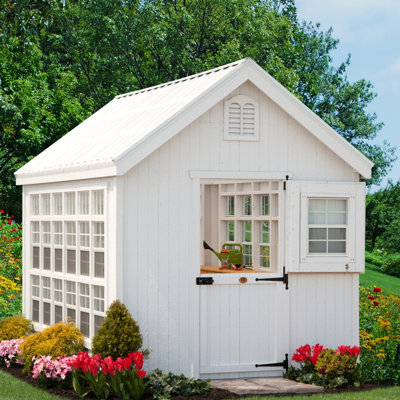
P.S. To buy the house in the image, go here. It will set you back around $11,000.


Should you read Steven Pinker’s Enlightment Now?

I have my doubts after reading this: Steven Pinker’s book Enlightenment Now is a huge hit. Too bad it gets the Enlightenment wrong. – Vox. 

I am a fan of the new wave of optimism being swept in by writers like Pinker. But misrepresenting the Enlightenment is a bad idea, and I am not sure why he did it. If you want to read it in the spirit of what out age needs now, then it is likely you should read it. If you want to learn about the Enlightenment, read the Vox piece and then go somewhere other than Enlightenment Now.

How to shuck and enjoy oysters at home

I love oysters, but I was intimidated by how to successfully shuck them. Turns out it isn’t easy, but with a good guide, like this one, it is a skill  you can master with a bit of practice: Guide to Shucking Oysters With Ease. You need a good shucking knife and some oysters. I also used an oven mitt to protect the hand holding the oyster while shucking them, in case the knife slipped.

Once you have your newly shucking oysters, here’s some good ways to enjoy them, all courtesy of The Spruce website:

(Image via SeriousEats.com)

4 behaviors that may cut the risk of cancer by 30 percent

Everyone wants to lower their risk of cancer. This piece can help with this: 4 behaviors that may cut the risk of cancer by 30 percent – Vox. The main point of the piece was that:

… people who never smoked or smoked for only a few years and people who drank no or only small amounts of alcohol (one or fewer drinks per day for women and two or fewer for men). It also included people with a BMI between 18.5 and 27.5, and people who exercised vigorously for at least 75 minutes per week or moderately for 150 minutes…

…were at a lower risk of getting cancer than people who did not do these things.

Smoking and drinking are easy for you to monitor. If you want to track your BMI and fitness level, consider getting a digital scale and a fitness tracker. I use the Fitbit Aria scale to track my BMI and my Apple Watch to monitor my exercise. Of course you can monitor those things just as well with a simple scale, a watch, a pencil and a notepad. Regardless of how you do it, I encourage you to take action in the New Year to lower your risk of cancer.

A good list of light therapy lamps for S.A.D. (Seasonal Affective Disorder)

The bad news: for people in the northern hemisphere, the days are getting colder and darker.

The good news: if you are one of those people who suffer from S.A.D., then this is an excellent list of lights that can help you deal with it: The Best Light Therapy Lamps for Seasonal Affective Disorder | Apartment Therapy

Better still, there is a wide range of price points and some of them are relatively inexpensive.

Check out the list. If you know someone who struggles with this, then consider this an excellent gift idea.

Bonus: This post was written in 2017. Since then they have updated their list, so check it out again.


How to work wellness into your work day

A good thing to consider as you start your week is: does your work day contribute to staying well, or does it do the opposite? One way to know is to compare you typical workday to something like this one: How To Schedule Wellness Into Your Workday And Still Get Stuff Done.

You don’t need to do all the things in that article, but if you do none of them, consider incorporating some of them into your work day. I believe you will see your attitude towards work improve and your workday will feel better.

Work / life balance is important. But having a work routine that is balanced in itself is a better way to enjoy your work and stay healthy, especially during the winter months.

Decluttering tips for people who have a hard time with it.

If you struggle to declutter your places, then Apartment Therapy has two good guides on how to make some progress on it:

  1. Professional Organizer Tips: What NOT To Do When Decluttering
  2. This Decluttering Pro’s 10-Percent Method Will Help You Pare Down Guiltlessly

Decluttering is always a good idea. You can live easier, and you can appreciate the things you have better.

Natural Christmastime Decorating Ideas

The folks at Apartment Therapy have put together a nice compilation of Christmastime decorating ideas that are simple as it is beautiful. For example, this:

from here. And this

from here.

What all the images have in common is the use of natural decoration, from boughs to wood to wreaths to baskets to lanterns. It’s seasonal, but timeless.

If you find it too austere, mix in some holly or some ribbon.

Enjoy the season, and the beauty of this time.

Advice on writing is often terrible. The advice of Kazuo Ishiguro is not….


And thanks to Emily Temple, who has compiled much of this advice in one article, which is here:  Kazuo Ishiguro: ‘Write What You Know’ is the Stupidest Thing I’ve Ever Heard at Literary Hub.

Worth reading, both for fans of the author and for writers looking to improve their craft.

(Image via The Paris Review, which has a good interview with Ishiguro here.)

You need good work tools to be your best at work. Here’s 11 for you to consider


We all get in ruts where we use the same tools every day for our office work. When that happens, what we need is someone to come along with a new list of tools and what makes them great.

Here is such a list. I didn’t create it, but I have used 3 of the 11 tools here and I can say they are key to making me more productive every day. I plan to use the rest of them too, based on the description of them.

Sure, you can do fine with Microsoft Office tools. This list will help you do better: 11 Most Used Tools & Apps Essential to my Work – DESK Magazine

(Image via pexels.com)

Deal with social media better by having less opinions

Word cloud
Social media bombards us with opinions. Such bombardment tugs at us to form our own opinions, but this is is a trap that leads us to be unhappy. As this piece (Free Your Mind by Having Fewer Useless Opinions) argues:

The more opinions you have, the more time and energy you end up wasting to defend those opinions, and the more small amounts of stress you accrue. But the less you have, the more time and energy you have to focus on the deep opinions you have.

I think this is a great idea. There are lots of reasons not to have an opinion on things: you don’t have knowledge on a topic, you don’t have interest on a topic, you prefer to focus your thoughts on other topics. Much of popular culture can be dismissed this way, as can many political scandals.

So let others spend their time fretting and fussing over such things and spend your time focusing on the things you think matter.

If you can’t find a new movie to watch, you want to rewatch one of these

Why this list of movies? According to Five Thirty Eight, they are the most rewatchable movies of all time. Scanning the list, I see a few of the ones I tend to watch over and over again. Chances are you do too.

Enjoy.

Meanwhile, here’s one of the many great scenes from Casablanca.

What is wrong with minimalism (and how to fix that)

What is wrong with minimalism? If you were to read this piece by Mark Manson on the Disease of More, you would be right in thinking that less is what we need. The less you have, the better off you should be. In which case, approaching minimalism should be the idea.

Yet minimalism taken to an extreme is just another form of More is Better, which seems to be the point of this Guardian article, Minimalism: another boring product wealthy people can buy.  (And the truth is, minimalism can be difficult to achieve, as this article shows.)  So, is minimalism a good idea or not? Should you give up on minimalism?

What both minimalist and anti-minimalists miss in their arguments is what is required to have a good life. What should be pursued is not to have more because more is better, or having less because less is better, but to have just what is essential for you to have a good life.

Of course what is essential depends on who you are. For some, this is a perfect environment:


For others, it’s this:

There is nothing wrong with a minimal environment if that is essential for you to be happy and content. Likewise, having a room jam packed with stimulating items may be essential to you.  You have to decide for yourself, rather than sticking with a simple formula of Less is More or More is More.

What you should have is  what is essential for you to live a good life. The fix for minimalism is essentialism. Preferably a lean essentialism. But again, that is up to you.

How to arrange supermarket flowers and other flower arranging tips

Flowers
If you are fortunate, you have access to a great florist and they can arrange your favorite flowers for you. If you don’t have that, if the best you have is flowers from the supermarket or the corner store, you can still do great things, as these three articles show:

  1. How to Make a Stunning Bouquet with Supermarket Flowers | Bon Appetit
  2. Three Stylish Takes on DIY Flower Arrangements – Bon Appétit | Bon Appetit
  3. Three Great Tips for Making Better Flower Arrangements | Healthyish | Bon Appetit

My advice: pick one or two of  these rules or examples and then get some flowers based on them. If in doubt, start small and keep it simple.  As you can see from the photo, you don’t have to spend a fortune on a big bouquet stuffed in a large vase: a simple collection of one type of flower in a simple bottle still looks wonderful. If you get a bunch of 4 or 5 different flowers from the supermarket, break them up into groups of 1, 2 or 3.  Try different things. Flower arranging is an art in more ways than one.

Also, when cutting your flowers, take your time and cut away a bit at a time until you get the height you want. You can always cut further, but obviously you cannot lengthen them!

Flowers bring automatic beauty into your life. Go get some.

P.S. If you have to get vases and you don’t want to spend alot, consider the local dollar store. Most will have a collection of simple glass cylinders of all heights. Get a small, medium, and large size cylinder and you will be all set for whatever flowers suit your mood that day, be they a small bunch of daisies or a big batch of sunflowers.

Some advice on middle age and ageism


I found a collection of links on getting older, links I am drawn to as I get older. Some of them are essential but depressing. Others affirm there are possibilities for new things as one reaches middle age and then old age. There are difficulties, including discrimination due to ageism: some of these articles can help deal with that.

I’ll conclude with two pieces on much older artists still capable of doing great things. One of the biggest problems of being middle-aged is succumbing to fatalism and a pessimistic belief that almost everything is behind you, and that you have nothing to live for or work towards. As you can see in these pieces below, that’s not always true. You should fight that belief, and live your days like you have many, while taking care to enjoy each day as you can. You need a vision to care you forward, a way to get off the track labelled Dead End and on to the one the continues forward. I hope these links can help achieve that vision:

Finally, there is this: Seeing old age as a never ending adventure

It’s Time for You to Run for Office. Yes, you.


Great advice: It’s Time for You to Run for Office. 

Don’t see politicians that represent you or the groups you feel represent you? All the more reason to run.

Don’t get me wrong: running for office and doing the job while you are in office are both difficult things. But if you are the type of person who want to make a positive difference and you are also the type who likes a challenge, then what’s stopping you?

How to skip the Monday Blues, take off Wednesday, pace yourself throughout the week and other week hacks

slow pace image
If you suffer from the Sunday blues, whereby you spend Sunday evening dreading the upcoming week, I recommend you read this: Skip Monday Blues with Sort-Your-Life-Out Sundays – 99U. It is one way to hack your time and enjoy it more.

Another good hack is the making Thursday night the start of the weekend. Consider some of the things you enjoy doing on the weekend and schedule them for Thursday evening. Even people with jam packed weeks can do this occasionally. You still have to go in to work on Friday, but you feel you already have gotten a start on the weekend. It makes the weekend seem less stressed, at least for me.

Finally, if you feel every week is one busy day after another, try making Wednesday a night of putting everything down and just relaxing. Either pare back the things you’d normally do on Wednesday, or shift some of it to another day.

Ultimately you want to figure out how to do less throughout the week in order to enjoy each of the days in themselves, be they busy or slow. If you do that, the days you have to do things will help you enjoy the days you do not.

Pace yourself and enjoy yourself.

Work sucks. Here 16 things to read and give you some perspective


Ok, work doesn’t always suck, and sometimes it can be really great. But it sucks more often than it should. If you wonder why, these links can help you gain some perspective and insight.

  1. Why Workers Are Losing to Capitalists – Bloomberg– Not promising
  2. How to Maintain Your Sanity (and Be Productive) When You Work Alone • Jocelyn K. Glei– Those who work at home, take note.
  3. Meet the Developer Who Made Games for Three Years While Living on the Streets – Motherboard – If you feel you need motivation in a difficult work situation, read this
  4. Motivation is Overvalued. Environment Often Matters More. | James Clear – on the other hand, there’s this.
  5. Pocket: I Quit My Job to Live in a Tent and Write Code – more on working in difficult situations.
  6. The pursuit of loneliness: how I chose a life of solitude | Society | The Guardian– more for those who would rather work and be alone
  7. You Probably Need a Public Portfolio Even If You’re Not a Freelancer or a “Creative”– good advice, especially for people that think they need no such thing.
  8. I’m Ira Glass, Host of This American Life, and This Is How I Work – Glass provides some inspiration here.
  9. Can a company innovate without working its employees to death? – The Washington Post– You would HOPE so.
  10. A cycle of exploitation: How restaurants get cooks to work 12-hour days for minimum wage (or less) – The Globe and Mail– depressing but essential reading.
  11. The Simple Technique To Fit A 40-Hour Workweek Into 16. | Fast Company– and here is the opposite extreme.
  12. I worked in a video store for 25 years. Here’s what I learned as my industry died. – Vox– good insight for those in a threatened industry.
  13. Working with the Chaos Monkey– help for those dealing with chaos monkeys (I have recently).
  14. The secret to success: take risks, work hard, and get luck– obvs.
  15. The Shame of Work – New Rambler Review– hmmm.
  16. Final Frame: Office Propaganda | Apartment Therapy – Finally, a light link after all that.

(Image from the last link)

How to look at your lifespan

When you are young, life seems endless and countless. If this is you, I recommend  you look at the charts provided by the folks  Wait But Why. They break down your life into weeks and show you how it maps out over time. For example, like this:


They even have blank charts you can use to map out your own life.

It’s sobering to consider. You have less time than you think. If you believe that and use that to motivate yourself to appreciate life, then great. If you don’t believe that, head over to that site and do the math.

Carpe diem.


Paris travel tips from the New York Times, if you have no time and no money

Paris Hotel
If you want to go to Paris and have little money or little time, then the New York Times has two pages of information that might help:

  1. 36 Hours on the Left Bank, Paris – The New York Times
  2. Hotels in Paris for Under $150 – The New York Times

If you go after reading this, send me a postcard. 🙂

P.S. If you are in the mood for dreaming about going to France, here’s a bonus link from Decanter magazine: Château accommodation in Bordeaux: Living the dream

(Photo, by Ed Alcock, via a link to the page of The New York Times)