:max_bytes(150000):strip_icc():format(webp)/__opt__aboutcom__coeus__resources__content_migration__liquor__2019__01__10072454__gimlet-720x720-recipe-a0d317f2ce7b4818a0fdbd2bbaaaf2c9.jpg)
If you are a martini fan but want to changing up your Friday night cocktail, then consider this Gimlet Cocktail Recipe.
A fine drink while the weather is warm. Also good to battle scurvy. 🙂
To your health!
(Image via liquor.com)
:max_bytes(150000):strip_icc():format(webp)/__opt__aboutcom__coeus__resources__content_migration__liquor__2019__01__10072454__gimlet-720x720-recipe-a0d317f2ce7b4818a0fdbd2bbaaaf2c9.jpg)
If you are a martini fan but want to changing up your Friday night cocktail, then consider this Gimlet Cocktail Recipe.
A fine drink while the weather is warm. Also good to battle scurvy. 🙂
To your health!
(Image via liquor.com)

Sure, it costs $150, but look at that marbling. And as this states, it is impossible to overcook, due to that incredible amount of fat.
You may think that is terribly decadent. And it is! If you want to know more, see: Japanese A5 Wagyu Ribeye Steak | Uncrate
I had some thoughts on the New York Times after reading this: It is possible to compete with the New York Times. Here’s how. – Columbia Journalism Review
In some ways, it confirms what I have long thought: the goal for some newspapers is not to be a regional or even national newspaper anymore: the goal now is to be a global one. The Daily Mail in the UK recognized that long ago. I know little of what they publish in the UK, I just know that they seem to be able to get a lot of people to read their online articles. In other words, they write locally but think globally. The same with the Guardian. And now I think the same is true for the Times.
The Times, according to the article, knows that most people are only going to subscribe to one paper. They want that paper to be the Times. And they seem to be winning this battle so far. Other papers might depend on click throughs, and no doubt the Times does too, but they also want to ensure that they have the one subscription you or your household pays for.
In some ways, the Times reminds me of a software company. They want to be the one platform you depend on and use every day. The way Facebook or Google or Amazon or Microsoft want to be the sole platform you use for information or social media or other essential IT.
I think there are ways to compete with the Times, just like there are ways to compete against those other behemoths. You can be a niche competitor. You can provide a deeper and richer experience tailored for a specific audience. You can be more nimble than they are. You can move to the future markets faster than they can.
None of these things are easy. But they are not impossible.
If you are in the news business, you need to learn how to compete with the New York Times. Because the Times is not going away and it is not getting smaller any time soon.
I have been trying to get better at drawing lately, but I have been floundering. Much of what I have been drawing is poor by my standards. Poor and not getting better. To try and get better, I was trying different media and different tools (coloured pencils, watercolour, etc.). All these different things didn’t help. I was stuck.
Then I came across this video and had an a-ha moment. It’s really good. I recommend you take a few minutes and watch it.
In a nutshell, the idea is to focus. Focus on drawing one thing. Don’t do what I was doing, which was a little bit of everything. A little bit of everything didn’t add up to anything.
What I found was that by focusing, I didn’t have to think of what to do, I just did it. In his case he drew emus. In my case I drew robots. Just dozens of robots. I would start by drawing a shape and then adding to the shape. Or I’d start with a theme (a book robot) and use that to draw. The drawing didn’t have to be good, though I tried to make it good. Regardless of good or bad, what I discovered was that I was learning more about drawing from each picture. Before, I would think: what shall I do to practice drawing and get better? Now I don’t think, I just draw, and I am naturally getting better.
I think this can be true of any skill. Take running for example. You might fear starting because you don’t know anything about how to run well. Fine, just pick a short distance and run it. Do that over and over. Each time you do, you will learn something. Maybe you are running too fast. Or too slow. Or too long. Or too much. Take notes each time and look to improve. If you get stuck, do some research and try to apply it. The next thing you know you will be much better at it then you were only a short time ago.
Anyway, watch the video and then think about how you can apply it to your own life. You will improve. Keep with it.
Here’s a link to the video: The drawing advice that changed my life – YouTube
Speaking of keeping to it, he has another great video about “not getting off the bus”. I highly recommend that too. You can find it here.
Because as this piece argues: Your To-Do List Is, in Fact, Too Long.
I know mine is. Yours likely is too. And if you are using your inbox as an organic todo list, I am sure it is too long.
That piece argues for one way of dealing with it. To me, I think there are several ways. Here are some:
That sounds like a ridiculous idea, but if you read this piece, you might find yourself thinking along the same lines: A Lazy Person’s Guide to Happiness.
It’s hard to be happy in a bad environment. I think most people can agree with that. It’s possible, but there is a significant mental effort to achieve it.
It’s also possible to be unhappy in a good environment. Again, it takes mental effort to achieve.
Given that, the more you can design your environment to be one you are happy in, the happier you will be. Simple when you think about it. Simple, but not often easy.
Perhaps a good task is to list all the places and people and other things in your life where you have been happy. That’s list A. Now come up with list Z, with all the things where you have been unhappy. Finally take list A and Z and come up with a plan to add more of the items on list A in your list and less of the items on list Z. But before you do, rate your happiness on a scale of 1-100. After your follow through on the plan, rate it again. Congratulations, you have engineered your own happiness. Keep it up.
The CEO of Spotify was in the news recently for challenging artists and the way the create music. The challenge was not happily received.
That’s not the only thing artists are unhappy about concerning Spotify. I am pretty sure the amount they get paid per stream is the #1 source of unhappiness. I can see why. But I also recommend that anyone interested in the business of Spotify and streaming music read this: Lessons From Spotify – Stratechery by Ben Thompson.
Spotify has a big problem and I don’t know how they get over it. Read the article and see what you think.
(Image via Morning Brew)

In exciting news, the United States, China and the UAE are all sending missions to explore Mars. It’s not the same as the space race: there have been already a number of visits to Mars. But it’s great that the interest is continuing and we will learn more about the mission as a result.
For more on this, see: ‘We are all Martians!’: space explorers seek to solve the riddle of life on Mars | Mars | The Guardian
Image via the article.

I just made a mediocre dinner. You can see it above. It’s not styled in any way. The lighting isn’t great. The ingredients are cheap and basic. The side of mustard looks awful. it’s a pile of food on a plate to feed a hunger.
While it is mediocre, it isn’t bad. The food is fresh. It’s filling. It may not be the most nutritious meal ever but it’s nutritious enough. It killed my hunger and I enjoyed eating it.
While I was making it, and even before, I thought: how should I prepare this so that it will look good enough to share on social media? Should I make a sauce? Chop up some herbs to make it more photogenic? Plate it attractively?
Then I thought: I just want to eat some food that I like that is ok. It’s like a hot dog or a bowl of cereal: it can satisfy a need without being of interest to anyone but the person eating it.
And maybe I need to think more of food that way. I am not a chef or food professional, but the way I share my food photos and think about my meals, you would think I am aspiring to be. I think that aspiration is a problem at times, just as it can be for anyone with aspirations on social media. Maybe it’s time to revisit my relationship with food and my relationship with social media.
Social media can be a force of good. It can let us discover people with talent that we might not otherwise notice. It can help us celebrate the finer things in life. But it can also distort things and get us seeking attention when we don’t really need it. Perhaps a simpler and more basic approach to things outside of social media is better.
Enjoy things for what they are. Understand there is a place and a time for the most basic to the more advanced. Know when it is right to share things and when it is right to just live and be in the moment and then let it go. Those are all imperative sentences that can apply to me. Perhaps they can apply to you as well.
To many people, grey is a dull and boring colour. But for people like me, there is so much to appreciate in the colour grey. Likewise for things mediocre. My meal was mediocre tonight, but it was filling and tasty and nutritious and economical: all things I appreciate. May you appreciate all the grey and mediocre things in your life too.
Ok, you can argue that Sangria is not a cocktail, but I disagree. Also, sangria is great, and it’s especially great in the hot days of summer.
You can buy sangria premade, but if you want to make your own and make it well, then read this: How to Make Sangria – Bon Appétit
Even if you already make a pretty good batch, it’s worth reading for tips on how to change it up and possibly even improve your current recipe.
Cheers!
I liked this piece: Where Did My Ambition Go?
I suspect many people will suffer this problem, wondering why be ambitious at your work when for many jobs the opportunities to succeed are decreasing.
The whole piece is worth reading, but the ending (below) was noteworthy:
At the same time, my ambition for my community and the wider world has gotten bigger and broader. I don’t know exactly where I fit in it, but I do know that I want all workers to be treated with dignity and respect — a small, humble ask that requires an unending amount of work. And I want all people who are unable to work or unable to find work to also be treated with dignity and respect. I want to become more active in organizing, I want to be a resource for those looking for guidance in their careers — at least while we’re living under capitalism — and I want to make enough money to be able to throw some of that money at the world’s problems. My medium-size dreams for myself may be getting smaller, but my ambitions for the greater wide world have to be enormous. It’s the only way to get through.
If you are ambitious in this way, you will achieve things beyond what you could achieve through your job. Wanting to succeed and achieve something of value is a good thing to want. Don’t limit that desire to just your work life: make it a desire for your whole life. That is truly ambitious.
The hotel business is changing in order to survive the pandemic. If you haven’t been to a hotel recently but plan to be, you should read this: What to expect from a hotel stay this summer – The Globe and Mail.
It says “summer” but really I expect this to be going on for some time to come.
(Image by Marten Bjork)
If you are tired of your view and want to look at something new, I highly recommend this site: WindowSwap.
WindowSwap gives you a random view of someone else’s window somewhere in the world. Not all the views are beautiful or interesting, but many are. For those of you wishing you could travel but can’t, this site will allow you to vicariously do it through this website.
This: Hello World · GitHub Guides.
If you wanted to learn how to use GitHub but felt unsure or anxious, this is a nice little tutorial on how to do it. You don’t need additional tools or deep skills or even be a programmer.
Well worth a visit.
(Image by Richy Great)

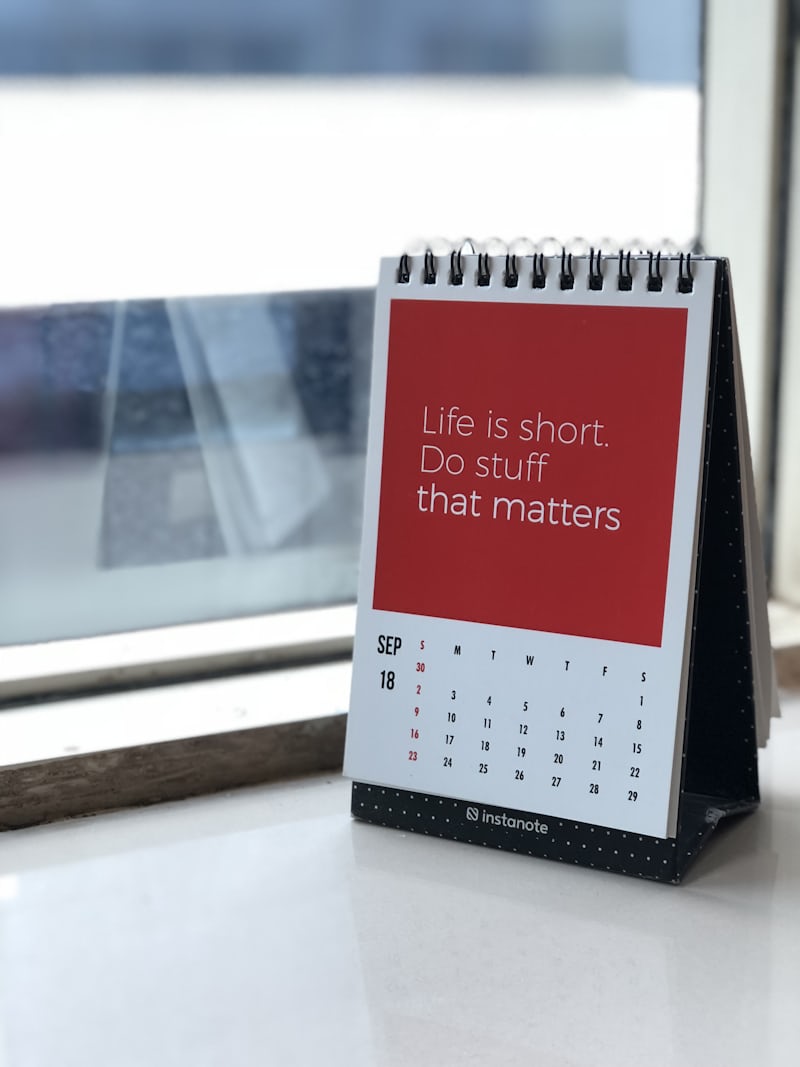
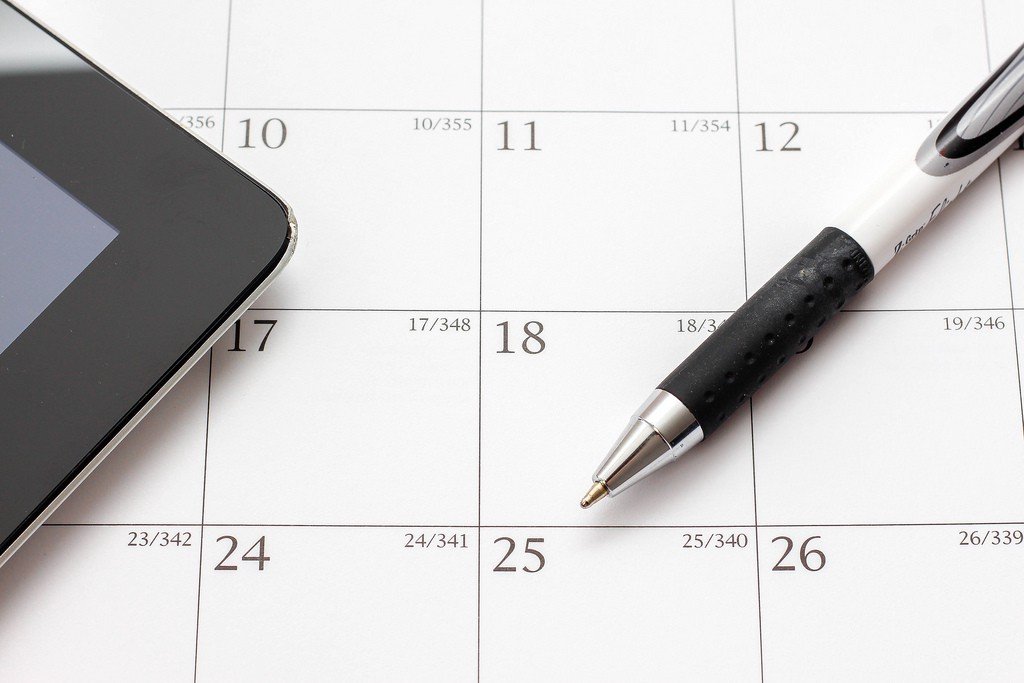
This piece argues that they are: Why Calendars are More Effective Than To Do Lists.
I think there are definite benefits to using calendars over to do lists. For example, when you need to work with other people. Scheduling time makes sure people commit to working on something and getting it done. Calendars are also great for when you need to give yourself a deadline.
I think todo lists are better than calendars when you aren’t sure how long it will take to do a task. Calendars aren’t great if you spend a significant amount of time planning to do things versus actually doing them. (Although you can procrastinate the same way using todo lists.)
One way of merging calendars with todo lists is to work in sprints of 1 to 2 to 4 weeks, like agile developers do. At the start of a sprint, go over your todo list and prioritize and size your tasks. Then fill up the sprint period with the tasks you can get done in that time. Then you can schedule them on your calendar to remind yourself to get them done. If you have things blocking you that day, plan to resolve them by eliminating the blocker.
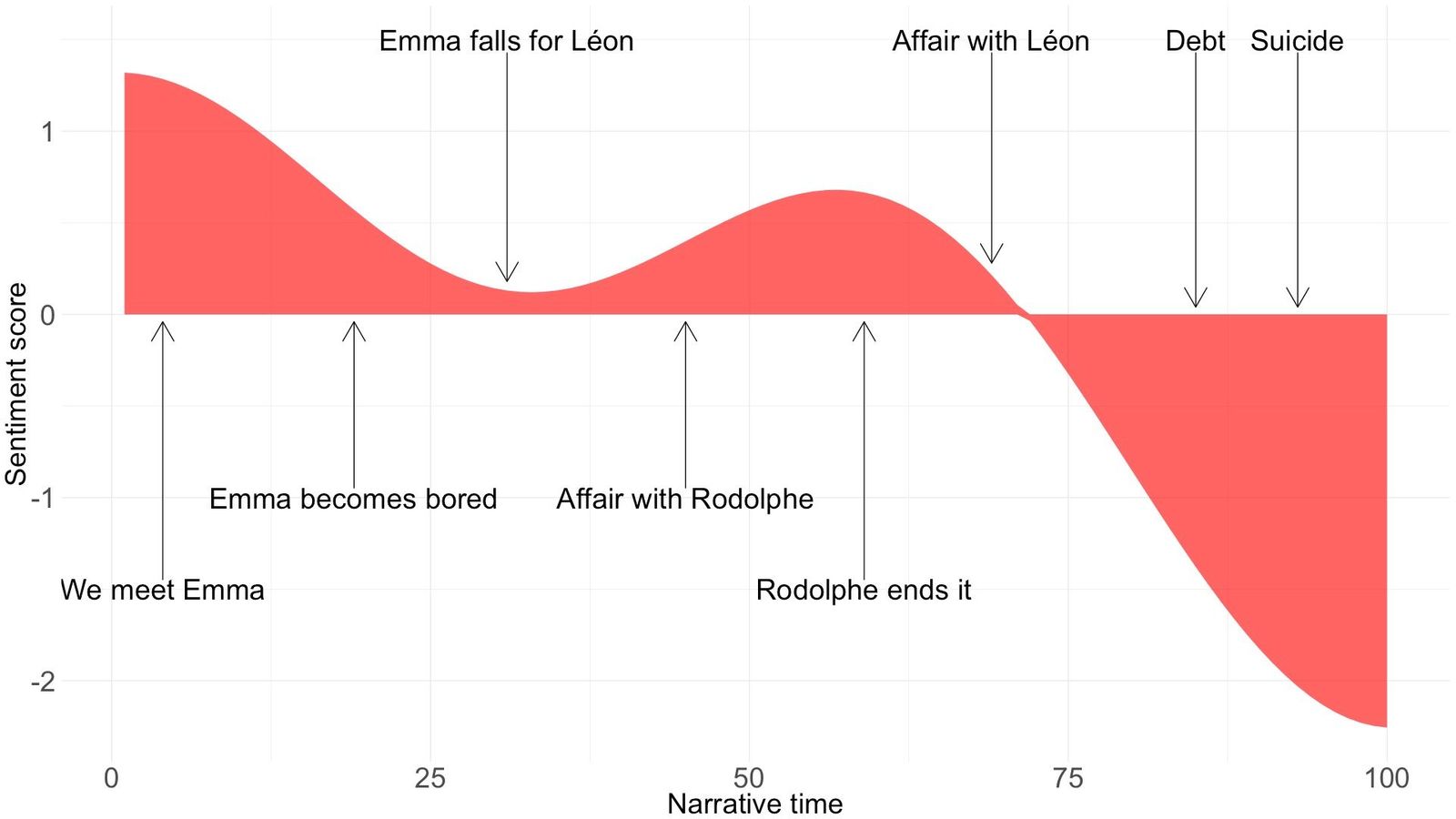
Well, you can determine for yourself whether every story in the world falls into one of these six basic plots:
1. Rags to riches – a steady rise from bad to good fortune
2. Riches to rags – a fall from good to bad, a tragedy
3. Icarus – a rise then a fall in fortune
4. Oedipus – a fall, a rise then a fall again
5. Cinderella – rise, fall, rise
6. Man in a hole – fall, rise
…by reading this piece on how data scientists ran analysis on stories to see if they do: Every story in the world has one of these six basic plots – BBC Culture
It even comes with graphs! 🙂 Here’s Madame Bovary, following plot #2:

By having very strict controls.
This piece, New Zealand goes 100 days with no coronavirus community spread – Axios), shows just how strict they are:
By the numbers: New Zealand has 23 active coronavirus cases, all NZ residents newly returned from abroad in managed isolation facilities.
Of note: The border remains closed to non-residents and all newly returned Kiwis must undergo a two-week isolation program managed by the country’s defense force, which sees all travelers tested three times before they leave.
Police are stationed outside hotels where travelers are in quarantine. Officers have taken prosecutorial action against several returned travelers who’ve breached these rules by fleeing the facilities under the COVID-19 Public Health Response Act.
So good for New Zealand for doing this. But I wish people wouldn’t say New Zealand has beaten the coronavirus. What they have done is control it better than anyone.
Hi there! Thanks again for reading my latest not-a-newsletter of highlights and ramblings since the last one in July. I didn’t think I would stick with writing these pieces, but I’ve been doing this monthly since the start of the pandemic! I still can’t see me starting a newsletter, but I am less certain now than I was months ago.
This newsletter has some bad things (references to the pandemic and Trump…sorry..) but I added some good things too (Jacques Pepin, vaccine progress, and more). I hope you find it worth reading.
Newsletters: they seem to have really taken off now. The latest one I saw is Andrew Sullivan’s. It’s only been out awhile and he already has over 70,000 subscribers and 10,000 paying subscribers. Pretty big numbers, though not surprising given his fame/notoriety (depending on how you view him). His format is very blog like and more like the Sullivan I used to read. Though a newsletter, it seems like a series of blog posts emailed to you.
You can see Sullivan’s newsletter shaping up as each one comes out. The same is true of Alison Roman’s. She fills in a bit more each time, and she seems to be learning or evolving as she goes along. She now has a free and a paid one, and the paid one gets an extra recipe. Jamelle Bouie used to do something similar before he moved over to the New York Times.
Bouie and others like Austin Kleon have been doing newsletters for years. But things seem to have really taken off since the advent of Substack. The newer ones, like Sullivan and Roman, use Substack. I’m not sure what is driving it, save that Substack makes it easier to monetize subscriptions and provide tools to make it simpler to run a newsletter. It could be that newsletters are seen as the New Thing, the way Podcasts were the New Thing only recently, and people want to get in on the New Thing. For whatever reason, newsletters seem to be taking off.
I still feel like they are emailed blogs, and because of that, I will keep blogging. Blogging, tweeting, newsletters: all just ways of expressing ourselves in the era of the Web.
Favorite newsletters: As for my favorites, Austin Kleon is near the top of the list. His is tight. He has a good structure, he is consistent in putting it out, it is diverse in what it highlights. I like Alison Roman’s too: it’s like getting a small part of what will be her next cookbook weekly. Speaking of cooking newsletters, I really like Jamelle Bouie’s for that. Unlike Roman, he doesn’t develop new recipes, but he does highlight some really good recipes from others, as well.
Bouie’s has some smart political commentary. Another person with a newsletter filled with insights is Felix Salmon. Paul Krugman’s is ok, but I don’t feel it some times.
Pandemic update: it has been dreadful to watch the pandemic play out in the United States. My optimist’s eye is I seeing some evidence that more states are getting serious about putting in restrictions to get things under control. I hope so. While Trump seems incapable of doing anything remotely useful, others seem to be doing more to keep it in check at least. I feel for Americans.
In Canada things are improving. Not as good as some other countries, but improving. The next big test will be school’s reopening in September. After that, we may see fresh outbreaks. We will see soon enough.
Overall, we seem to be in the beginning of the middle of the pandemic. If the end is when vaccines roll out and social restrictions ease, and if the beginning was our initial confusion over what to do and eventually doing radical new things, I think we are now in the middle phase where we have to buckle down and try to get by. This part is going to be the grind. When even Michelle Obama is talking about experiencing low grade depression, it is not surprising that people with less means than her and are worried about their jobs or their health or their loved ones are also having a hard time.
And other bad things: the pandemic is not the only thing weighing on the mind of Michelle Obama and others. The killing of black Americans, as well as the other injustices they suffer, plays a part. Here in Canada we are seeing the inequalities in our society highlighted in the way that certain groups end up bearing more of the brunt of the pandemic than other groups. I was hopeful that one silver lining of the pandemic would be more political and social effort to address those inequalities. I am less hopeful now. After a burst of coming togetherness in the early part of the pandemic, I suspect now people strongly want it just to be over.
But some good things: if you search for “covid vaccine”, you will be swamped with results showing that much progress is being made there. Plus already there are better forms of treatment for people who do suffer as a result of COVID-19. That’s really good.
With better treatment and a wide spread vaccine and possibly a change in government in the US, there is also the potential for a huge economic recovery worldwide. This is not to overlook the suffering now, but to look forward to a new and healthy and better off world.
The other good thing about the pandemic is the strong fiscal stimulus governments have put into fending off the worst from an economic perspective. I hope more progressive political parties and organizations use this to push on in the future for greater government involvement in improving the lives of more and more people. Let’s see.
Other good things….
Jacques Pepin: I found Jacques Pepin on Instagram. He’s great! Of course he’s great, Bernie, you sigh. I mean, what I love about him is his style of cooking and sharing. Very old school in some ways, very French, but not flashy. He cooks in a little kitchen and tells stories and chops up food and even uses a microwave. I love that! Who’s going to tell him he shouldn’t use a microwave? Only a fool would do that. Jacques Pepin can cook any way he wants. He’s Jacques Pepin, that’s why. 🙂
Le Bernardin and World Central Kitchen: Eric Ripert is making the most of his downtime by turning his world famous restaurant into a place to make meals for those less fortunate. Every week he turns out hundreds of meals that are then distributed to others. It’s a good act, and you can read about it here.
Finally…
2020 and the pandemic era: there’s a meme started by Reese Witherspoon showing a headshot for each month. Many other celebrities have adopted it. As you might suspect, each headshot shows more and more distress as the months pass. If you feel that way yourself, consider yourself part of a larger community!
We are in the pandemic era. Like other periods of great stress (e.g. the Great Depression), time is measured more by a specific set of events and less by calendars and scheduled events. We cannot schedule this, only live through it.
It will end. Just like all era do. Try and make the most of it, and try to permanently record your thoughts and feelings and anything else that embodies the era. You will fondly look back on it, the way humans tend to do. Plus, people of later generations will want to hear about it and see evidence of it. Give them something of yourself from the time. Even if it pictures of the bread you made that one time, or a snapshot of the Zoom calls you were on, or something you bought online when all the retail stores were closed. You are living through history: you are special just by living in this time.
At the beginning of the pandemic I made this zine to remind people to make a list of things they want to do when the pandemic is over. There is still time to make that list, even though some of those things are already happening. Traveling is one of the things on mind. But even something simple like causally wandering into one of my favorite noodle bars and slurping some good brothy noodles is something I am looking forward too. And with that said, thanks again for reading this.
Simply put, I love rooms like this. The books! The colour! The nik naks! 🙂

Love it. If you do too, check out where I found this photo: 19 vibrant rooms that don’t shy away from color and pattern.
Many of them are stunning and luxurious, and others are simple and low key, like this:

I’d be happy to hang out and live in any of these 19 rooms.

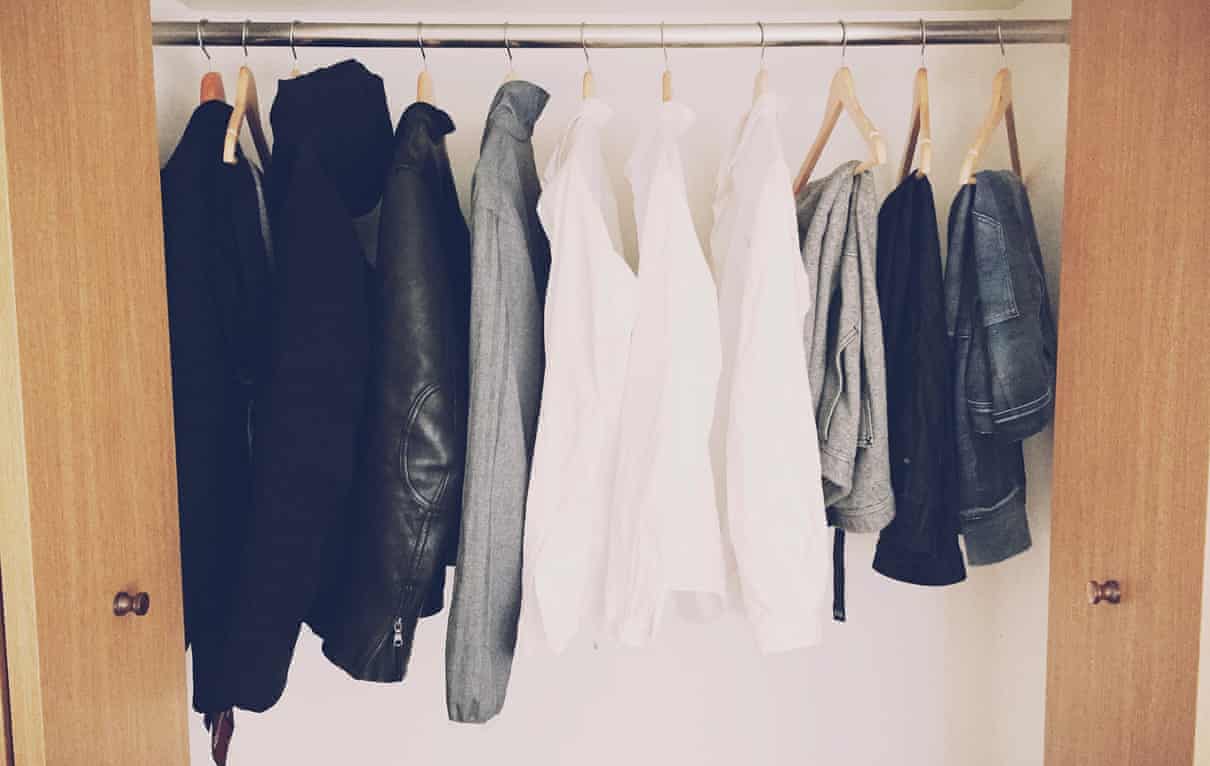
I am oddly fascinated by minimalism. It appeals to me, though I could never adopt it. Visually I like the look of minimalist places (like the one pictured above, from this piece, Goodbye things, hello minimalism: can living with less make you happier? | Books | The Guardian). But then I know I am terrible and I would be hanging pictures and adding furniture in no time.
I suspect the simplicity of it appeals to me too. So much less to manage. But then I would get bored of wearing the same clothes, like this:

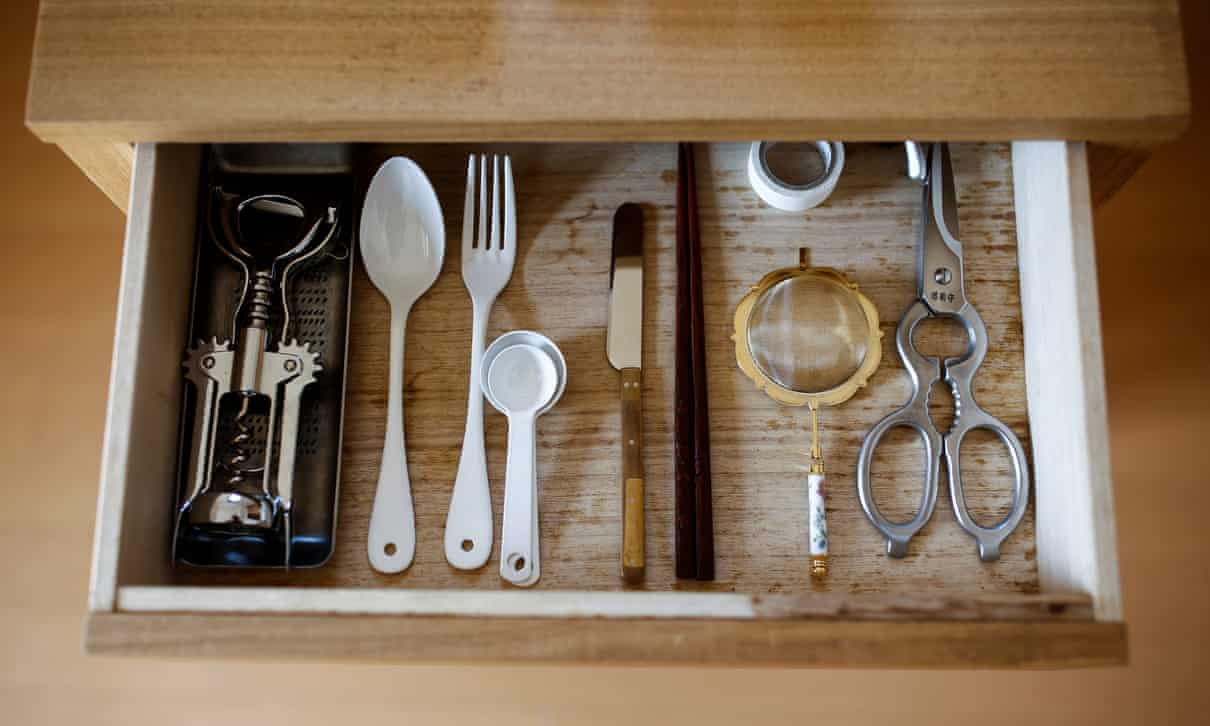
Likewise, a kitchen with this many things in a drawer seems great. No clutter, no struggling to find things, or manage things

But then I think that a kitchen is a workshop and like any good workshop, you need supplies and tools to be effective.
So when I read pieces like this, about Japanese hardcore minimalist, it lures me in to thinking about it for awhile. Then that dream fades.
I am not as anti-minimalist as the author of this piece. But I think they raise some excellent points. Then again I have read the book Goodbye Things and thought it worthwhile.
I suspect that my odd fascinating with minimalism will live on for some time.
And the result, if you are a fan of French wines, is tragic: Of Wine, Hand Sanitizer and Heartbreak – The New York Times.
You can read it straight up, but it’s worth pondering what it tells us about our values right now, and what they were before. Times are tough in the pandemic era, for winemakers in particular as well as all of us in general.
(Image thanks to Sven Wilhelm).
![]()
It’s hard to believe that this computer (see above), that is in the MoMA no less, was a failure. But as this piece shows, it was one of Apple’s least successful computers for a number of reasons: 20 Years Ago, Steve Jobs Built Apple’s G4 Cube. It Bombed | WIRED.
Beautiful design, but not a great product. Every company has those from time to time. Apple was no exception.

According to this: This Toronto trail is getting new platforms where old train stations used to be.
The Beltline Trail is one of the things I treasure about Toronto. As a pathway alone it is wonder, full of runners and cyclists and many folks just out for a walk under the tree canopy. It likely wouldn’t exist if not for the short lived train line that cut through this part of the city. Now the pathway will be tied to the very thing that brought it to life. That’s great.
If you live in Toronto, you owe it to yourself to visit it sometime.
If you want to soothe your eyes and spirit with some calm today, check out this canal house in Amsterdam:
Design Milk has a feature on this place and every image is a sight for sore eyes. To see what I mean, take yourself to this page.

You’ll be glad you did.
You might reply, sure Bernie, that’s fine and I agree, but rugs are expensive. I can’t argue that: rugs can be expensive. But there’s also good cheap rugs and if you don’t believe me, read this: Cheap Thrills: Vintage-Style Rugs Under $100 | Apartment Therapy
Now, that’s an older piece. Some of those rugs may not be there. But it’s worth reading just to get the names of websites that have low cost rugs. Check them out; you’re sure to find one you like.
If you want to change your room, you can change your furniture and you can paint your walls. But that’s can end up being a lot time and money. A cheap rug could just be the thing to freshen up your room.
P.S. Not all the rugs are colorful, but I like colorful rugs so I chose that image. Also that rug has pink and pink in a rug tends to go with many room colours.
P.S.S. IKEA is also a source of inexpensive rugs. And their black and white Stockholm rugs is famous for a good reason while being low cost.
Alan Parker just died. If you grew up in the last quarter of the 20th century, odds are very good you’ve seen one of his films, if not several. You may not even realized you did. He wasn’t a fan of the auteur idea of being a director, and that likely resulted in him not making films in a consistent way. Which is fine, since he made many a good film. The New York Times has done a wonderful thing and put together a list of some of his most well known films and where you can watch them online: Where to Stream Alan Parker’s Best Movies – The New York Times.
If you haven’t seen any of his films, now is your chance. Grab that list and go stream. I may rewatch “The Commitments”, one of the more enjoyable films from that time.
There were two problems with the company that Bill Gates built up until he left (after the famous antitrust case). One old problem was the approach they sometime took to dominate a market. Based on this quote and this article, Slack files competition complaint against Microsoft in the EU – The Verge, it seems they are using this approach again. According to Slack…
Microsoft is reverting to past behavior,” claims David Schellhase, general counsel at Slack. “They created a weak, copycat product and tied it to their dominant Office product, force installing it and blocking its removal, a carbon copy of their illegal behavior during the ‘browser wars.’ Slack is asking the European Commission to take swift action to ensure Microsoft cannot continue to illegally leverage its power from one market to another by bundling or tying products.”
That’s too bad. It’s bad for Slack, of course, but it’s bad for anyone who works in a modern office and wants to work effectively. You end up using not the best product or the one best suited to your needs, but the product from the vendor that is able to crush the competition. That’s how you end up with places having lots of Microsoft products, rather than the best products.
Which brings me to the second problem with Microsoft’s products. It’s a problem Steve Jobs talks about here:
My personal feeling is Microsoft’s products still have no taste, whether it is Sharepoint or Xbox or Azure or Teams. When I compare them to Playstation or IBM Cloud or Slack or a variety of other products from different vendor, I am always disappointed. I realize that taste is subjective and that could be just me, but I always find them a bit blah. They do the job, and at an enterprise level they may make good business sense, but in a perfect world, they would not be the ones I would use. I believe Microsoft knows this: that’s why the first problem occurs.
P.S. A reminder, when it comes to IT opinions expressed here, these are meant to be my opinions only, and not those held by my current employer.
You may have a view of trade as being straightforward: one country either buys or sells a product to another country. However as this older piece shows, it’s never quite that simple: One Tiny Widget’s Dizzying Journey Through the U.S., Mexico and Canada.
That’s not to say all products are like that. As we learned during the pandemic, all it takes is for a shutdown of one country and suddenly we can’t get a product. But for many products, the journey isn’t from A to B. It’s from A to B to …Z? It’s complex. And if there is a disruption along the way, disaster can occur.
One thing for sure, given how the pandemic disrupted supply chains, I expect many companies are countries are going to be revisiting how they get products and how they can better protect themselves against not being able to get it in times of emergency.
Keeping up with contemporary philosophy can be difficult for people who are not dedicated to it. Which is why I am happy to share news about The Stone over at the New York Times. As they describe it:

(The Stone is) A forum for contemporary philosophers and other thinkers on issues both timely and timeless. The series moderator is Simon Critchley, who teaches philosophy at The New School for Social Research.
I read a number of good essays there. The ideas can be challenging, but the language used is not. Well worth checking out.
Ok, this is fun: The Vocal Ranges of the Greatest Singers*.
You really want to check out the site using your desktop: you don’t get to appreciate the site as well on your phone.
I found some of it surprising, though not all of it. Barry White is obviously well represented in the low end, and Mariah Carey is well represented in the high end. And while some singers don’t perform in a wide range, that’s no reflection on their singing ability (ahem, Aretha).
I also added an asterisk because people familiar with singers from the opera world would argue that all these pop singers are not truly the greatest.
But like I said, it’s just fun. Enjoy.
I thought this piece was insightful and worth reading: Too Many Jobs Feel Meaningless Because They Are.
One of the examples from the piece was especially insightful:
Consider the case of Eric, a history graduate hired to oversee a software project ostensibly intended to improve the coordination of different groups in a large firm. Eric only discovered after several years on the job that one of the firm’s partners had initiated the project, but that several others were against it and were acting to sabotage its success. His job — and that of a large staff hired beneath him — was a meaningless effort to put into place a change that most of the company didn’t want.
This is not to imply that all companies are like this. Companies can be efficient and well aligned and the vast majority of the people in it can feel like the work they are doing make a difference most of the time. However there are also companies which are not well aligned and there are conflicts within the organization. When that happens, the work being done may be meaningless, despite the fact that someone wants it done.
Work can be hard for a number of reasons: too much of it, difficult people to work with, etc. But it can also be hard if it is meaningless, even if everything else is good.
I suspect there will be many more stories about the Uighurs and their relation with China in the months to come. If you want to know more about them and the reason for the conflict, I found this was a useful piece: The Uighurs and the Chinese state: A long history of discord – BBC News.

If your house is a bit of a mess right now, don’t beat yourself up. As this article showed me, it’s a pretty common problem: My House Has Not Kept Up With the Pandemic in The New York Times.
Now what you do about it is up to you. If you are fine with the mess, then fine. But if you are like me and the mess is getting to you after awhile, I recommend you start setting up a schedule to tackle it. Even bits at a time, starting with an area you can manage. You may find (like I did) that after you clean and tidy a bit, you feel better. Sure, no one may be visiting, but you’ll feel better, and that’s important too
The good folks at itbusiness.ca have a podcast called Hashtag Trending and today they talked about two interesting IT trends and one novel thing: iPhone 11s in India; Windows 95 PC inside Minecraft; Siemens doubles down on WFH. Here’s an excerpt:
Apple is building iPhone 11s in southern India. The move comes as Apple has been looking to shift some of its manufacturing away from China amid US-China trade war and disruptions stemming from the COVID-19 pandemic. Apple already assembles two other models in India — the iPhone XR and iPhone 7. ….
… A new modification has been created for the game Minecraft allowing players to order computer parts from a satellite orbiting around a Minecraft world and build a computer that actually runs Windows 95 and other operating systems. According to the Verge the mod uses VirtualBox, which is free and open-source virtual machine software, to run operating systems like Windows 95. All you have to do within Minecraft is place a PC case block and then use it to create virtual hard drives to install operating systems from ISO files.
And lastly, Reuters is reporting that German conglomerate Siemens says it’s going to allow employees to “work from anywhere” for two or three days a week, and focus on “outcomes” rather than time spent in the office. Days after the recent announcement, the company says it was giving its over 100,000 employees access to a new app that provides local data on the COVID-19 situation, shows office occupancy levels and acts as a contact tracing tool. This of course is just the latest enterprise announcing its intentions for the post-COVID-world, following in the footsteps of Twitter, Facebook, OpenText and others, which have made their own announcements around remote work for employees moving forward.
It’s really remarkable how much thought provoking stuff is jammed in here. I find itbusiness.ca a good way to keep up with IT business news, regardless of what country you live in. Worth subscribing too for sure.
And Verge has the story on this device…
![]()
…here: Microsoft’s Surface Duo looks like it’s ready to launch – The Verge.
Who knows if the world is ready for a Microsoft Phone or a Dual Screen Phone. I predict that dual screen phones like this will become more common in the next few years. Unlike some of the foldable screen phones, this one looks more durable, which will help. As well, phone makers need new designs to entice people to upgrade. And people will want the next new thing (though maybe not from Microsoft). All this adds up to more of these in the hands of cell phone users in the next few years.
That said, I am terrible at making predictions! But I predict this will see some form of success. 🙂
Christopher Nolan borrows heavily from Michael Mann, in particular from Mann’s best film, Heat, for his own film, The Dark Knight. To see what I mean, watch this video: The Dark Knight: Visual Echoes.
Visually, he borrows a great deal. But I think he goes much further than that. The bank scene in The Dark Knight takes a lot from the bank scene in Heat. Not just visually, but sounds and action too.
To see what I mean, here’s the scene from Heat:
And here’s the scene from The Dark Knight:
This is not to take away from Nolan, who is a great director. But it is fascinating to me to see how much he uses of Mann, another great director. It’s almost a homage to him.
Fans of The Dark Knight might like to watch it and then watch Heat. You won’t be disappointed.
P.S. The scene from Heat is not just the bank robbery but the getaway. It’s a classic.
Being proud is like many feelings: you have to proportion it. But many people believe that only lacking pride is the way to go. If you are one of those people, I recommend this: What Are You Proud Of? | A Cup of Jo
Being proud is a feeling that can keep you being good and drive you towards being better. Mix in some humility and some love for and your fellow human beings and you have a formula for growth as a person.

Is told here: How John Lewis’s masterful illustrated memoir is a shining torch for the next generation – The Washington Post
It’s a great story about the life of a great man captured in illustrated form.
Once you read about it, you can buy it here and other places that sell graphic novels and other illustrated books.
And by feed it I don’t mean drink more coffee. I mean eat foods that have been shown to help our brains work better. The author of this piece ate food considered best for our brains for a week and recorded what happened. Surprise: you don’t turn into a genius. But you will see some benefits. And that’s a good thing.
(Image from healthline.com)

This really deserves a look: 15 Of The Most Beautiful Metro Stations In The World
A surprising number of them are in Moscow. Only one that isn’t in Europe.
Subways should be beautiful: they get used by so many people. We deserve beauty.
(Image above a link to the original post)