Dante’s Inferno is made greater by the illustrations of Gustave Doré’s illustrations of the work. You can find a number of his work over at this page of Brain Pickings, including this one:


Dante’s Inferno is made greater by the illustrations of Gustave Doré’s illustrations of the work. You can find a number of his work over at this page of Brain Pickings, including this one:

This is a fascinating piece: The 10 greatest changes of the past 1,000 years | Books | The Guardian. It’s easy to argue that additional things should be added (e.g. emancipation) and things should be deleted or modified (I would replace “Columbus” with “Explorers”). Indeed, one of the things that makes such lists enjoyable to read and think about is how you would change it. As it is, it’s a pretty good list, and in line with what you see in other works that span time like this (e.g. “Sapiens” by Yuval Noah Harari).
If you liked reading that list, you may like “Sapiens” too. I’d also recommend The BBC’s History of the World in a 100 Objects.
Often times it is hard to appreciate the work of Nobel Prize winners, including those in Economics. Thaler is not one of those people. His work is very approachable for laypeople, and the benefits of his work is obvious.
Here’s one example, of how his work led to better results for people in terms of pensions.
Youtube is a great source of videos on Thaler. If you want to get started understanding what is behind his thinking, you can start there.
In addition, the New York Times covers his award winning here and it is another good introduction. Finally, here is a piece in the Times that Thaler wrote himself, on the power of Nudges. If you do anything, read that.
Good to see him win.
There are only two steps to get in shape: 1) lose weight 2) exercise. Of course, those can be big steps. You need help to take both. These 15 links can provide you with some of the help you need.

I would love to see this: An Expansive Pavilion of Architectural Elements Constructed from Wire Mesh by Edoardo Tresoldi (via Colossal).
You really want to click on the link and see what it looks like from the many photos they have on the great art site, Collosal.
It really is a stunning space and a tremendous work. It’s as if a ghost of a building appeared and took over a space. Beautiful.
…likely this guy: James Buchanan.
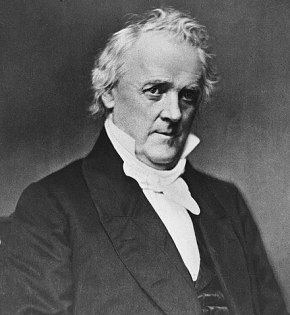
And this piece makes the case for why he — and not the current guy — is the worst: No, Trump isn’t the worst president ever – Indivisible Movement – Medium. In a nutshell:
In order to wrest the title of worst president from Buchanan, a contemporary commander in chief would need to wreck the economy, revoke all human rights from an entire race, violate the constitutional separation of powers, and plunge the country into a ruinous civil war that kills nearly 2% of the US population.
With all the staggering incompetence and corruption of the 45th presidency, it may seem hard to believe anyone could be worst. I believe in time Trump will be in the bottom 5 presidents. But to wrestle the title of worst President ever, he still needs to do worse. Let’s hope he does not.
In honour of Blade Runner 2049 coming out today, here’s your chance to see if you are a replicant with this:
You say: I don’t need to take the test because I’m not a replicant. Some replicants believe that. 🙂 Better take the test.
 Aside from birth, the only other thing that is guaranteed to happen to every single person on the planet is death. No exceptions, no way around it. Your own death aside, chances are good that you will be affected by deaths of loved ones and most likely have to plan a funeral or two before your own comes about.
If you are still not in denial and you want to face up to your inevitable exit, read this: You’re Going to Die, Here’s How to Deal With It
Dying is a part of living. Don’t dwell on it, or you miss out.

It’s a cliche: you only have one life to live. But it’s not really true. We experience many lives in our lifetime. Maybe it’s closer to 11, like this great post illustrates: You Only Live 11 Times, SMBC | Jesse Rogerson. Or maybe it is closer to some other number. Certainly we all go through major stages in our lives, and as we leave a stage, it can seem like we leave one life behind for another one. We are like performers, going from one theatre to another, retaining some parts of our act while discarding others.
Enjoy the life (or stage of life) you are in right now. Savour the best parts of it. Never assume they will last long, for they won’t. (Parents, in particular know this.) Likewise, for the more challenging aspects of your life right now: they won’t last for long, either. (It just seems that way). Accept and deal with them the best way you can, and know they will also recede and end.
On ward!

Great review of the latest iPhone*, here: The iPhone 8 is a look into the augmented future of photography | TechCrunch. I had heard that the iPhone 8 had a great new camera, but this article really drives that home.
If you are thinking of getting an “8”, this could be the reason you need. On the other hand, if you rarely take photos or don’t care too much about the quality, I think the case for an upgrade gets weaker.
* I don’t consider the iPhone X the latest phone so much as a promise of where the iPhone is going. To be honest, I think the iPhone X is as much an attempt to celebrate the 10 years of the iPhone and Steve Jobs’s legacy, not unlike the Twentieth Anniversary Macintosh. Not that there is anything wrong with that.

This piece: What it’s like to be a modern engraver, the most automated job in the United States — Quartz, reminded me once again that the best use of technology is to augment the people doing the work, and not simply take away the work. Must reading for anyone who’s believes that the best way to use AI and other advanced tech is to eliminate jobs. My believe is that the best way to use AI and other advanced tech is to make jobs better, both for the employee, the employer, and the customer. The businesses that will succeed will have that belief as well.
(Image from this piece on how humans and robots can work together.)

According to Haydn Waters, a writer at CBC, the mail robots at the corporation are being discontinued. Instead:
Mail will be delivered twice a week (Tuesday and Thursday) to central mail delivery/pickup locations on each floor.”
What gets lost in alot of discussions of robots, AI, etc., taking all the jobs is that the drivers for the decisions is not technology but economics. If there is no economical need for robots and other technology, then that technology will not just appear. There is nothing inevitable about technology, and any specific technology is temporary.
Of course there will be more use of robots and AI and other technology to replace the work people may currently do. The key to finding work will be to continually improvise and improve on the tasks one has to do to remain employed. That’s something humans do well, and technology will struggle with for some time in the future, AI hype not withstanding.

This: A Portable, Flexible and Affordable Cardboard Standing Desk over at the site Design Milk, is a great design of a desk that not only is capable of transforming from a typical to a standing desk, but is also capable of being packed up and easily transported to different locations. For standing desk fans that travel to different work locations, it might be just the thing you need.
It’s strong too. Check out the link above and see what this piece of furniture can do. Impressive.
Or so says this: The Secret to Love Is Just Kindness – The Atlantic.
And what are the two words?
Makes sense: I can’t see how you can have a long term relationship with anyone when you don’t have those qualities.

This is just one example of the stunningly intricate and beautiful multi-layered laser-cut wood artworks by Martin Tomsky featured over at Colossal. If you look carefully at the image you can see the layers of overlaid wood pieces.
I highly recommend you go to the site and see the rest of his work. Fantastic.

I knew that Paris had streets named after politicians and historical figures, but I didn’t know how many Paris streets are named after mathmaticians. Apparently quite a few! Amazing. One more reason to love Paris.
Dover publishers have the best books when it comes to math. If you want to see some of their better ones, see this list.
Good stuff.
Published on 9/29 at 9:29 🙂
It’s not in full decline, but Silicon Valley is on its heels these days, whether due to the practices at Uber or Facebook or Google or …well, the companies that belong there as a whole. Here’s three pieces that all touch on the some of the problems there, but really I could have put three dozen recent articles instead of just these three:
Everything I see tells me that they are not equipped to deal with the challenges on their own. If this is true, then expect these high tech companies to come in for a political bruising soon.

I’ve been interested in Game Theory and in particular how to apply the concept of the Nash Equilibrium to work. These were four links I found useful
(Image of the great man himself from Wikipedia)
There are lots of videos on Youtube of scenes like this. Some are good for white noise, others are good for acting as a screen saver.
Ocean Waves at night:
Ocean waves in the day:
Snow fall in the forest
Snow storm in the street
Night rain sounds
Rain fall sounds

From dealing with difficult people to doing things better, here’s dozens of pieces on how to live better.
(Image from Wikihow)
If you are looking to build AI tech, or just learn about it, then you will find these interesting:
Google, Facebook, and Twitter are platforms. So are some retail sites. What does that mean? It means that they provide the means for people to use their technology to create things for themselves. Most of the time, this is a good thing. People can communicate in ways they never could before such platforms. Likewise, people can sell things to people they never could.
Now these platforms are in a bind, as you can see in this piece and in other places: Google, Facebook, and Twitter Sell Hate Speech Targeted Ads. They are in a bind partly due to their own approach, by boasting of their ability to use AI to stop such things. They should have been much more humble. AI as it currently stands will only take you so far. Instead of relying on things like AI, they need to have better governance mechanisms in place. Governance is a cost of organizations, and often times organizations don’t insert proper governance until flaws like this start to occur.
That said, this particular piece has several weaknesses. First up, this comment: “that the companies are incapable of building their systems to reflect moral values”. It would be remarkable for global companies to build systems to reflect moral values when even within individual nations there is conflicts regarding such values. Likewise the statement: “It seems highly unlikely that these platforms knowingly allow offensive language to slip through the cracks”. Again, define offensive language at a global level. To make it harder still, trying doing it with different languages and different cultures. The same thing occurs on retail sites when people put offensive images on T shirts. For some retail systems no one from the company that own the platform takes time to review every product that comes in.
And that gets to the problem. All these platforms could be mainly content agnostic, the way the telephone system is platform agnostic. However people are expecting them to insert themselves and not be content agnostic. Once that happens, they are going to be in an exceptional bind. We don’t live in a homogenous world where everyone shares the same values. Even if they converted to non-profits and spent a lot more revenue on reviewing content, there would still be limits to what they could do.
To make things better, these platforms need to be humble and realistic about what they can do and communicate that consistently and clearly with the people that use these systems. Otherwise, they are going to find that they are going to be governed in ways they are not going to like. Additionally, they need to decide what their own values are and communicate and defend them. They may lose users and customers, but the alternative of trying to be different things in different places will only make their own internal governance impossible.
Good news: Merkel won by moving to the center.
Bad news: AfD, a far right party, has surged and won seats.
This could either be a blip and AfD could fade after this election.
Or it could be the start of big and bad changes for Germany, Europe and the world.
For more on this, see this good piece: Angela Merkel wins 4th term as chancellor of Germany in Vox
If you are looking to declutter your place, consider this: 90/90 Minimalism Rule | The Minimalists. Simple, effective, obvious. Be honest about the second 90 though.
According to this source, Apple is going into the Health Care Industry: Apple Is Going After The Health Care Industry, Starting With Personal Health Data.
I think a more general statement is that Apple is going to be looking into expanding into services, be they health care, banking, or something else. They’ve already been successful with Apple Pay. I expect they can find niches in health care and other industries that they can easily fit into. Plus they can work with partners to deliver tools to people and health care providers that can save everyone in terms of health care costs.
I’m looking forward to Apple bring forth innovations in health care that results in lower costs and better care. I hope they can deliver.
For more on some current health features from Apple, go here.

This is a pretty cool DIY project: The AIY Voice Kit Lets You Build a Google Home for Only $35.
Now, I have my qualms about letting Google have access to so much personal information. If you do not have such qualms and you want to build a cool project, click the link and head on over to Wired, where they have more information on it and how to get it.

Bill Gates picks great books to read, and Business Insider has his latest batch here: Bill Gates’ favorite books on science – Business Insider. Unlike other such lists from famous people, I can imagine Gates actually does read all the books he recommends. From other reviewers I’ve read, his book selection is solid.
Not just non-fiction, there is some fiction in there as well.

What this piece in the New York Times says is the truth about tiny homes is really true about living in any small space, be it a tiny home or a very small apartment or condo. I liked this article because it mentioned things you might not think of, such as how ordinary objects which are not noticeable in bigger spaces become significant in larger spaces. Anyone thinking of downsizing should read this piece.
I still think there are lots of benefits in living in a small space. And some of them, like the one above from inhabitat.com, are gorgeous. But yeah, onions and laundry baskets. 🙂

Or at least a high resolution image of Vermeer by going here:
Open Culture has lots of great links, including at the bottom of the Vermeer one, mentioned above. Open Source is good; so is Open Culture.
(Image linked to on the Open Culture page)

This piece, Why Freud Survives, is a great review of not just Freud’s legacy, but some of the people involved with Freud’s legacy since his death. I’ve read about it before: believe it or not, this is the short version of it. While long, the piece is well worth reading.
This section in particular gives some good context with regards to psychoanalysis in the context of psychiatry.
Since the third edition of the DSM, the emphasis has been on biological explanations for mental disorders, and this makes psychoanalysis look like a detour, or, as the historian of psychiatry Edward Shorter called it, a “hiatus.” But it wasn’t as though psychiatry was on solid medical ground when Freud came along. Nineteenth-century science of the mind was a Wild West show. Treatments included hypnosis, electrotherapy, hydrotherapy, full-body massage, painkillers like morphine, rest cures, “fat” cures (excessive feeding), seclusion, “female castration,” and, of course, institutionalization. There was also serious interest in the paranormal. The most prevalent nineteenth-century psychiatric diagnoses, hysteria and neurasthenia, are not even recognized today. That wasn’t “bad” science. It was science. Some of it works; a lot of it does not. Psychoanalysis was not the first talk therapy, but it was the bridge from hypnosis to the kind of talk therapy we have today. It did not abuse the patient’s body, and if it was a quack treatment it was not much worse, and was arguably more humane, than a lot of what was being practiced. Nor did psychoanalysis put a halt to somatic psychiatry. During the first half of the twentieth century, all kinds of medical interventions for mental disorders were devised and put into practice. These included the administration of sedatives, notably chloral, which is addictive, and which was prescribed for Virginia Woolf, who suffered from major depression; insulin-induced comas; electroshock treatments; and lobotomies. Despite its frightful reputation, electroconvulsive therapy is an effective treatment for severe depression, but most of the other treatments in use before the age of psychopharmaceuticals were dead ends. Even today, in many cases, we are basically throwing chemicals at the brain and hoping for the best. Hit or miss is how a lot of progress is made. You can call it science or not.
Psychiatry has a long way to go. It will need better tools and better ways of understanding the brain and the mind. I think over time Freud will be seen the way Galen is: not so much relevant as influential and important in moving medicine forward.
(Image from link to Wikipedia)

Mostly good recipes, but some pieces lower down on food
And now for some non-recipe related food links:
I have been fascinated by the idea of povera cucina. Here’s too links on it.
(Image linked to is of chicken bulgogi from David Lebovitz.)
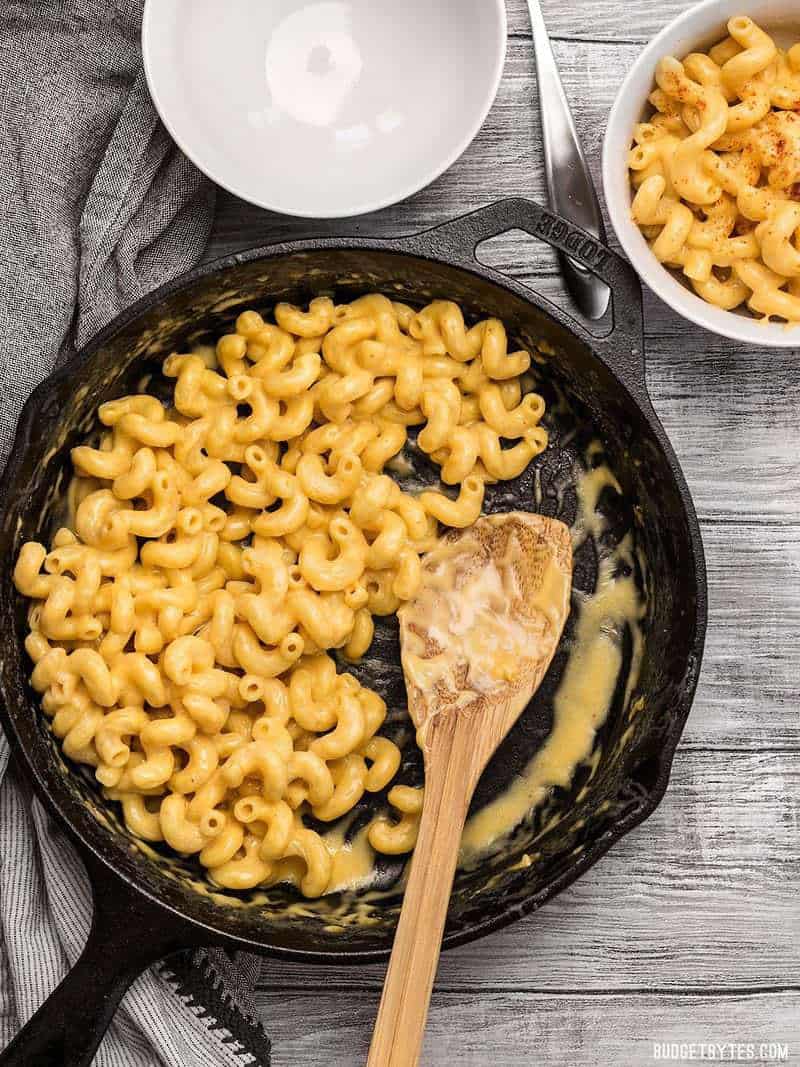
If you are looking for a variety of low cost meals online that are straightforward to make — I am looking at you, college students — then I recommend the site BudgetBytes.com. Each of the recipes has a breakdown of the expected cost, how long it takes to make, as well as the typical information you will find in a recipe. Here’s a few I highlighted recently, in no particular order.
They have a wide range of recipes, and categories (e.g. chicken, vegetarian). The recipes are simple, the ingredients easy to find, and generally they look good. Give it a try.
Save money, eat better.
(Image from here.)

Getting fit can seem like a big production, and for people who haven’t been exercising, that can be all it takes to prevent them from getting fitter. Speaking from experience, I know this to be the case.
What I think you need is something that will a) get you in the habit b) be so low key you have no real excuse to get started.
If you agree then I think these two pieces are just what you need to get started on your way to being fitter.
As for the yoga, if you don’t want to do all 10, then pick a few just to get started. Even doing 2-3 at first should get you started.
Good luck!
P.S. For more on simplifying exercise, check out this piece in Vox.
Of course you can go out and order one. But if you feel like staying home and making one, then the good folks at Bon Appetit have two version on the classic martini you might be interested in trying:
Don’t have martini glasses? Consider Crate and Barrel: they have a selection here.
(Image from Crate and Barrel)

Most people understand depression does exist and it is different and more severe than routine sadness or tiredness. Recent studies in depression indicate that there may be different categories of this mental illness. As this piece highlights, Brain Scans Show 4 Different Types of Depression | Mental Floss, there may not be just one medical profile for people with depression, but…
different medical profiles. Patients in subtypes 1 and 2 described feeling more fatigue, while people in subtypes 3 and 4 had trouble feeling pleasure.
One significant thing about this separation is that there are different treatments for different subtypes.
If you suffer from depression or know someone that does, or want to have a better understanding of the disease, I recommend that piece. That said, if you think you may be suffering from depression, always seek out professional help.
(Image is a link to the web site http://namila.org/)

John Lanchester manages in a review of a number of books to extensively pin down where Facebook is, here:
Here’s some reasons why you should care, even if don’t use Facebook
Facebook has an ability to influence politics in ways that no one understands, except possibly Facebook. I don’t imagine they are going to share that information readily. Politicians need to push back on Facebook and discover the extent of their influence.
My belief is that the strength and influence of social media like Facebook is going to decline in the next few years. That’s not anywhere certain at this point, though, and the power they have needs to be limited now.

And the NYTimes has an update on where he is in his life and his career, here: David Hockney, Contrarian, Shifts Perspectives – NYTimes.com.
I have always admired Hockney both for the wonderful lushness of his paintings and for the way he speaks about art. Both of those admirable qualities are on display in the piece in the Times. He’s in his 80s now: I hope he continues to work and speak for some time to come.
(Image linked to in the NYTimes and taken by Nathanael Turner)

These are all links I’ve come across recently and thought worthwhile:
If you are not used to reading philosophy, the first one is a must read. Otherwise, you may find yourself trying to read philosophy in a way that leaves you frustrated.
I’ve seen references to virtue ethics (as well as stoicism) frequently these days: if you aren’t familiar with it, that link is a good starting point to get to know it.
Finally, the last link is useful if you are new to philosophy and want to know it better but find it hard to get started.
Fascinating: How 5 Different Creatures Flap Their Wings

Highly recommended: Emil Zátopek: The greatest Olympian vanished from public life after he defied Russian tanks in 1968 | The Independent.
As a kid I saw a documentary on Zatopek and was in awe of how dominant a runner he was. Anyone looking for inspiration in athletics can find that in many places: I found mine watching Zatopek and Abibi Bikila (running barefoot in Rome) excel at the Olympics.