Radical Candor is a bad idea with some exceptions

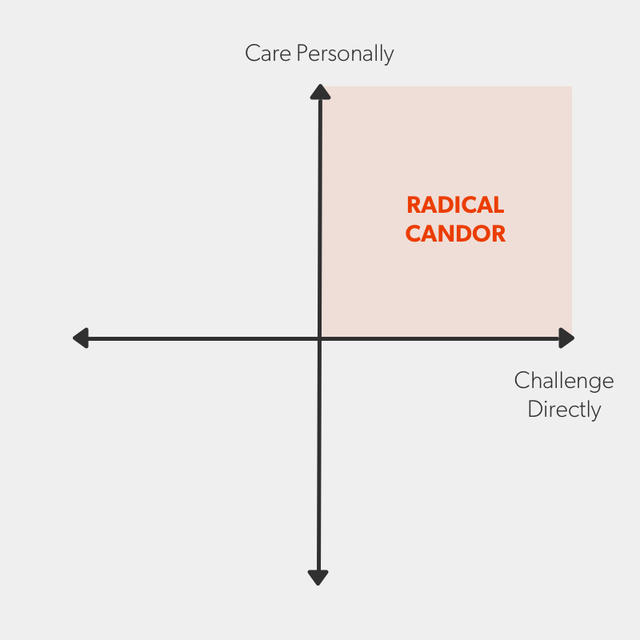
This article, Radical Candor — The Surprising Secret to Being a Good Boss | First Round Review, is making the rounds and is making my nervous. It makes me nervous because it is a terrible concept and it is very hard to do well. Even the example given – being called stupid – is a bad one. Be wary of any boss or any organization adopting this in your workplace.

My long work experience is that the Challenge Directly part takes little effort and energy, but the Care Personally part takes a lot of effort and energy. The result is a drift towards a demoralizing and toxic work environment with lots of criticism and little encouragement.

There is a rare exception where I have seen radical candor work: an elite athlete with an elite coach. Elite athletes sign up for and encourage radical candor because it is the best way to be the best. If you consider your work role similar to an elite athlete and you consider your boss an elite coach, then radical candor could work for you. Likewise if you are in the role of manager. Otherwise, I would recommend you pass on this approach and look for a better way to work.

March 2026: a good example of that rare exception happened when Maryland coach Brenda Frese went viral for yelling at Oluchi Okananwa during the 2026 NCAA basketball tournament. During the game, people watching the game were alarmed as the coach got in the player’s face and poked her with a finger. ‘“I believe in you,” Frese said forcefully, “but you’ve got to want this moment!”’ The entire article is a great example of how radical candor does (and does not) work, depending on the relationship and boundaries set up to make it work.

That story during the Paris attacks recently about a man named Zouheir, a Muslim, who saved thousands of lives? It’s mostly false.

As Snopes.com says:

An uplifting social media rumor about the purportedly heroic actions of a security guard named Zouheir during the Paris attacks was largely inaccurate.

For the details, see Zouheir: The MUSLIM Who Saved Thousands of Lives? : snopes.com.

More and more, whenever I see something viral, I check Snopes.com.

A good article: Why I Am Not a Maker. With one comment by me.

If you hang around with or are involved in some way with IT people, you will come across individuals extolling the virtues of being a “Maker”. Making things (typically software or IT systems) is seen as a virtue, in some case one of the highest virtues, and the implication is that makers are virtuous people.

A well written critique of that is here: Why I Am Not a Maker – The Atlantic. If you consider yourself  a maker or aspire to be considered one, you should read it. A key point is this:

When tech culture only celebrates creation, it risks ignoring those who teach, criticize, and take care of others.

This is true: tech culture sometimes places little or no value on other activities, such as the ones that the article mentions.

My main criticism of the article is that it has a blind spot for the middle ground. I know plenty of creative people whom I consider makers that also take care of others, teach, manage, administer…you name it. Often time the things they make are superior to those of people who devote themselves to being makers.

Being a maker is a virtuous thing, for the most part. But so is teaching, providing care, managing, cleaning, coaching and many other positive activities. Find the thing you are good at and contribute positively in your own way.  If you can make some things along the way, all the better.

A quick reminder of the path to success

Media preview

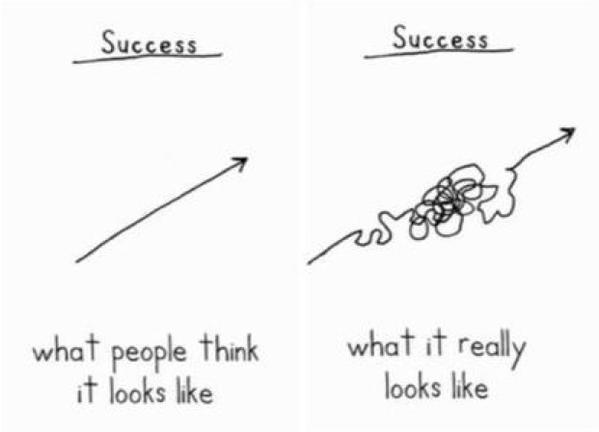
I’ve seen the squiggly versus straight line path to success in many places. It’s a great concept, and a handy reminder to keep close when things seem in a muddle and you wonder if you will ever progress. It’s also a good reminder to keep a log of your progress. A log will remind you that you are succeed, despite those bewildering times when things seem like you are getting nowhere fast.

Adulting: a funny self help book, not just for young people

For anyone starting out on the road to being an independent adult, the book Adulting (from Hachette) is a good guide to have. It is packed with tips – 468 to be exact – on pretty much any experience you are going to go through in your early 20s. If this is you or someone you love, this book will have an obvious appeal.

It’s not just for young people though. I think all adults could benefit from parts of the book, especially if you are having to start out on some adult experience that is either new to you or something you haven’t done for some time. It’s good advice, and good advice never goes out of date.

Even if you don’t need good advice, read it just for the humour. It’s a very funny book. (Note, there is a fair amount of profanity and references to sex, but if that doesn’t bother you, then you’ll be fine.)

Finally, if you want to have a better understanding of what life is like for that young person you know, this book can help you achieve that.

By the way, if you want a preview of it, you can check out the Adulting blog. Also very good.

I was killing time in a bookstore last night and I thought it looked good. I ended up reading it from cover to cover.


Why you should not buy insurance for rental cars, toys or video games

Sales people asking you if you want insurance at a counter leans on your anxiety and often leads you to end up buying it. Should you? Well, if it is rental car insurance, Vox says no and does so persuasively, here: Why rental car insurance is usually a rip-off – Vox.

Two other places I see people wasting money on insurance is toys and video games. Toys R Us used to push insurance on me all the time. Before you buy it, consider how your child plays with a toy. Chances are, the insurance doesn’t buy you anything. If it is the only toy you are going to buy your child and the only one they will play with for a long time, then sure. But most children will play intently with a toy for awhile and then the interest drops.

Likewise with video games. Perhaps your child will play with it for a year and it will be their favorite game. Most times, I’ll bet they play intently for awhile, and then the interest drops.  During that time, the chance of damage is very slight.

The insurance for toys and video games is low, but it buys you next to nothing. If the store said: do you mind if we charge you an extra 5-10% on this item, you would laugh and say “no!”. Yet that is what they are doing with insurance.

Skip it and use the few bucks to treat your child to a sweet or yourself to a coffee or give it to someone in need.

If you feel you are stuck in the Procrastination Doom Loop, there’s help (by the Atlantic and yours truly)

Do you ever get stuck in this loop?

If so, then the Atlantic has an article for you. According to this article, The Procrastination Doom Loop—and How to Break It – The Atlantic,

Delaying hard work is all about your mood.

And it goes on to talk about how to defeat this.

Seven additional suggestions I have on defeating this doom loop:

  1. set a regular schedule of tackling difficult tasks and stick with it.
  2. dilute the difficulty by giving yourself a ridiculous amount of time to do it. If it will likely take 20 minutes, schedule 2 hours and just sit there and do nothing else until you get it done.
  3. set up a reward for getting it done.
  4. set up significant negative consequences for not getting it done. You might need help from a friend or coach here.
  5. log the positive feelings and thoughts you feel after you get it done. Review that often.
  6. log the negative feelings and thoughts you have before you do it. After you do it, analyse what you wrote and revisit your thinking and feeling. You will likely find it wasn’t as bad as you had expected.
  7. have a list of things you are procrastinating on. For example, if you have two things you are avoiding, try to avoid doing one of them by doing the other. It’s better to get one thing done than getting none done

What programming language should you learn? (2015 edition)

It depends on a number of factors, but if you want to decide solely on popularity, then you need to see this: The Most Popular Programming Languages of 2015 | ProgrammableWeb.


At the top you have some consistency, with Java at the top, and C, C++ and C# in the top five. Python, a language that I am becoming fond of and using to replace Perl, is up there at #4.

Following that are what you’d expect: PHP, Ruby, and Javascript, as well as some data oriented languages.

What is interesting, and not shown, are new and up and coming languages, such as Swift. I expect that to inch into the top 10 in the next few years.

If you want to focus on learning a programming language, and you have no other criteria, pick something from this list.

Here’s what Vox and others miss when it comes to multitasking

Over at Vox is your typical article critiquing multitasking: Multitasking is inefficient. Here are 6 tips for a more productive workday. – Vox.

If you do a search on the word multitasking, you will find similar articles. Like the Vox piece, they are all reasonable, and they all offer good advice.

What they all miss is why we multitask.  I think there are three key reasons why we do, and they go hand in hand:

  1. We have too much to do in the little time you have.
  2. The tools we use are not responsive and/or support multitasking.
  3. You will be penalized for not appearing busy.

To give you an example of what I mean, consider your day. You likely have too much to do and not enough time to do it. Now let’s look at the tool you have at hand in an office. First, you have a computer and you use software like email and your browser. With email, you can start a number of tasks, but you cannot complete them. With your browser, you ask for information, then you wait for a response. If you are using a mobile device, a similar lag in request and response occurs. Now, you could just sit there and wait for a response to complete your task, but remember, you have too much to do and not enough time. As a result, you start other tasks. You are ….multitasking. You are maximizing your idle time while you wait for tasks to complete. Now you could just sit there, look out the window or go for a walk, but that would be ignoring the third point, which is that you will be penalized for not appearing busy.

If you are fortunate, you can focus on one task, complete it, and then move on to the next one. If you are like most of us, you have to multitask for the reasons above.


How to spend a day of your vacation/staycation in a Toronto neighborhood

One way to enjoy a staycation is to visit neighborhoods you normally don’t go to and treat them like you would any neighborhood in a city you are visiting. If you are from Toronto and think this is a good idea, then BlogTO has a number of pages devoted to what you can do in many of this city’s neighborhoods . Here’s a list of some of them I put together:

This list is also great if you are a tourist and want to see what the various neighborhoods of Toronto offer. Toronto has more great neighborhoods not on this list, ones you have likely heard of, like West / Queen West, the Beach/Beaches, and Harbourfront. Add some of these neighborhoods listed above to round out your trip to this city.


Two quick reads on Greece: one good, one glib.

Here’s two views on Greece: one good, one glib.

I’m a fan of Michael Lewis, but this piece of his, Greece Saunters Across the Autobahn – Bloomberg View, is glib at best. It feels like he had to bang out a few hundred words on Greece or he had this Berkeley story he’s been itching to use and finally found a place.

It’s still worth reading, because he is a good writer and his thinking is likely what many people are reading. But don’t read it thinking you will get a better understanding of why Greece is in the state it is in.

After skimming that, read this: Europe’s Attack on Greek Democracy by Joseph E. Stiglitz – Project Syndicate

It sums up what I’ve been reading by people who are more aware of what is happening in Greece. You will come away shaking your head, as you should. For what is happening makes no sense from an economic viewpoint. But then, much of Europe has been making poor choices with their economies since the Great Recession started., mainly for ideological reasons.


Thinking of getting fit this summer? You need my fitness link pack

Are you thinking of getting fit this summer? Or do you like to read about people getting fit while you drink your favorite cocktail and sit under the shade? Either way, here’s a bunch of interesting links you’ll want to read

Runner’s World | What Will It Take to Run A 2-Hour Marathon: fascinating. Right now men are closing in on this number, but this article shows how hard it will be to achieve that time. Even people who don’t run marathons will find this worth a look.
Weight loss and habit forming — Let’s not pretend we have it all figured out — Medium. For those of you struggling with their weight, this will be of some comfort.
Your Body is All You Need: The World’s Oldest Training Method (and a 1% Workout) | Arnold Schwarzenegger. Do you think you need fancy equipment to get fit? Think again and listen to Arnold.
Take off that Fitbit. Exercise alone won’t make you lose weight. – The Washington Post. Not just for fitbit users, but anyone trying to lose weight. You need to cut back on eating to make gains (though with enough exercise over time, you can lose that way too).
Dwayne ‘The Rock’ Johnson Eats About 821 Pounds Of Cod Per Year | FiveThirtyEight. On the other hand, here is an extreme example of what massive amounts of exercise can do to your diet. The Rock eats alot. ALOT. See for yourself.
The Rise of the Spornosexual. Finally, this post is a good one on anyone who wants to go from blah to fit. (The image above is from this piece.) It’s a spartan life to get that way, but it is within the range of the possible for anyone dedicated. Like you, perhaps?  (And yes, they use a bunch of tricks to make the After photo look fitter than the Before photo, but still, the dude is fitter.)


Newt Gingrich reviews the Apple Watch and it’s worthwhile

Mashable seems to have taken Newt on staff to do tech reviews and here he is the first piece of his I’ve come across: Newt Gingrich reviews the Apple Watch.

I was surprised, but I found his review well suited for non-technical people who are wondering if such and such technology is worth it for them.  If you fall into that category, you should get some benefit out of what he writes.

Veganish: for bacon loving vegan wannabes, a possible option

You may want to become a vegetarian or vegan but you may also be reluctant to give up eating things like bacon or fish. If you are experiencing this dilemma, then this question might appeal to you:

“The most effective question we can ask is not how can we increase the amount of vegetarians and vegans,” he says, “but rather, how can we reduce the amount of meat consumed?”

If this appeals to you, then I recommend this article: Love Bacon AND Animals? ‘Reducetarianism’ May Be For You. Still interested? Then I also recommend this book by Mark Bittman: VB6: Eat Vegan Before 6:00 to Lose Weight and Restore Your Health . . . for Good.

Some simple but good advice on managing stress

You are stressed. You decide: I need to manage it. That decision alone can help bring down your stress levels.

Your next step it to take action. If you have no idea how to do that, start here: Make stress management as routine as brushing your teeth viaThe Globe and Mail.

Teeth brushing won’t cure cavities and simple stress management techniques like these won’t cure significant problems in your life that are causing you to be stressed. But just like teeth brushing can prevent cavities, simple stress management can help alleviate some stress.

Unless you have a carefree life, these stress management techniques are worth reviewing.

Thinking of upgrading your Internet connection? You should test it first

If you think your Internet connection is too slow, or you just want to upgrade it, you owe it to yourself to measure how fast it is. There are a number of ways to measure it, but I like using this: Speedtest.net by Ookla – The Global Broadband Speed Test.

Record both your upload and download speed. Ideally, do it at different times of the day, and do it for both weekdays and weekends. Once you have that information, you can decide on what services would be an upgrade to this.

Also, while speed is important, the other thing to consider when you are upgrading your service is what your monthly bandwidth usage is. Your current ISP should be able to tell you that.


An excellent set of tips to improve your life…

Can be found here: 100 Tips to Improve Your Life – 99U.

I challenge you to go through this list and not find anything here that you could apply to your own life. You will likely find at least five. If you find none, maybe your life is already perfect. 🙂

The 99U is a great source of guidance on any number of topics. I have even written some articles there.

In praise of unfinished projects

Do you beat yourself up for starting projects but not finishing them? Do you not even try to start for fear you won’t finish? If so, I recommend this article: Why Quitting is Perfectly Okay. — So, this is life. — Medium. It’s one thing I hope you finish. Everything else is optional.

Of course, finishing them is also good. Either way, you have something to gain by starting those projects.

And hey, it’s Sunday evening at the start of May: a great time to plan your projects for the week or the month. Give it a go.

Success doesn’t come easy for anyone, not even Elon Musk

I admire the work that Elon Musk does, be it Tesla, Space X, or other endeavours he takes on.  I also had an opinion that the success he achieves is as close to a Given as success can be. I held that option until I read this article: Elon Musk Had a Deal to Sell Tesla to Google in 2013 – Bloomberg Business. This article shows just how touch and go it was for Musk and Tesla in 2013. Among other thoughts, it reinforced in me the notion that success in challenging areas is difficult for everyone, whether it be Elon Musk or anyone.

If you are trying to accomplish something difficult, and if you think that others have it easier than you, I recommend you read this article. I also recommend it to anyone who needs to be reminded that success is never a given, but with the right effort and focus and dedication, even the most challenging type of work can be accomplished.

The last and only advice you need on how to eat

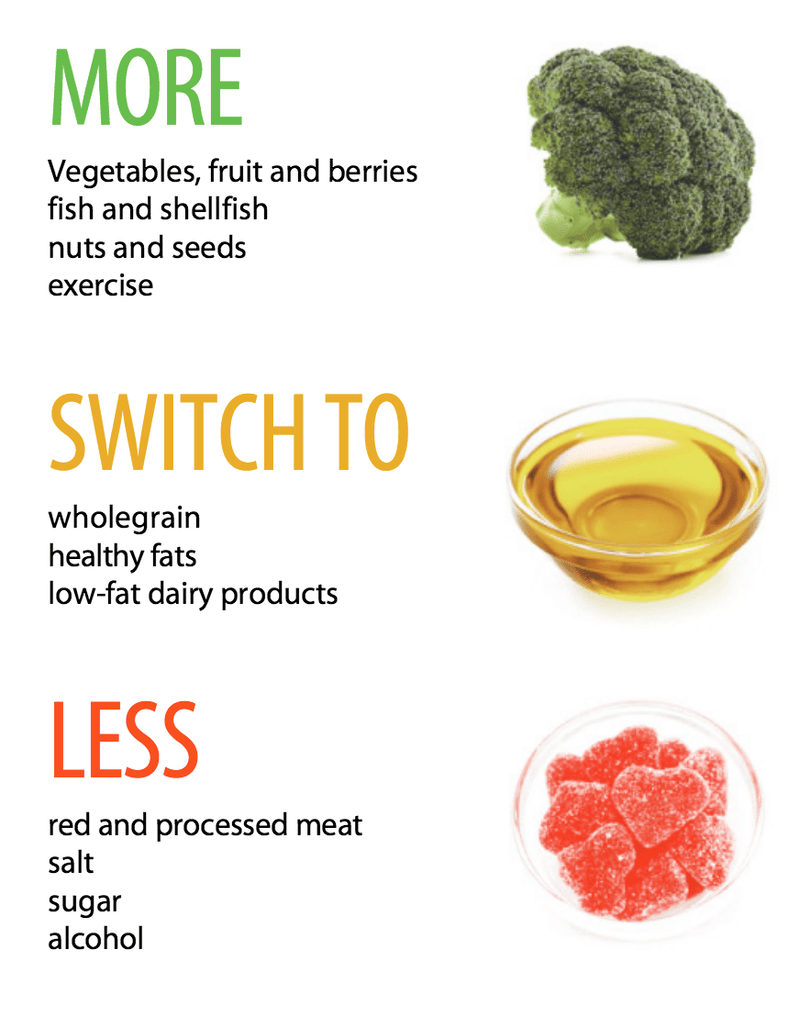
I think these rules are about the best thing I have seen on how to eat: Simple Rules for Healthy Eating – NYTimes.com.

To make it even simpler, I would boil them down to:

1) Eat less processed food, and more food you make yourself from raw ingredients

2) Eat a variety of ingredients in moderation

3) If you have to drink something, drink water

I recommend you read the NYTimes piece, though. Really good.

What you should know if you are planning to learn to code

If you are going to learn to code and you are planning to stick with it, then you owe it to yourself to read this: Why Learning to Code is So Damn Hard.

It’s well written, and it has some great graphs, including this one:

I think any area of learning where you get good initial training would look similar to this. I recommend you find some mentors to help get your through the desert of despair.

P.S. Yes, I realized they borrowed heavily from Gartner’s Hype Curve. 🙂

The best restaurant in NYC and how to eat there cheaply and without a reservation

Is Eleven Madison Park the best restaurant in NYC? If you read this, Restaurant Review: Eleven Madison Park in Midtown South – NYTimes.com, you’d be inclined to think so. Regardless, it is excellent and worthy of considering a visit.

But what if you want to experience the place without having to go through the tasting menu? Worse, what if you don’t have a reservation. Well then, you need this: How to Eat at Eleven Madison Park With No Reservation and No Tasting Menu — Grub Street.

I can’t promise that will work, but it is worth considering if you want to casually experience some of the best Manhattan has to offer.


A mental health first aid check list you might find useful

If you know someone is physically injured, you apply First Aid to either repair the injury or limit it until you can get further help.

Likewise, I think of this list as a form of mental health first aid: Eponis | Sinope – Everything Is Awful and I’m Not Okay: questions to ask before giving up. It’s not meant to replace professional help, if you need that, but it may be the thing you need to get you through a rough patch (speaking from personal experience).

Want to start a startup? All you need for that is here

And by here, I mean this site: Startup Stash – Curated resources and tools for startups. It is an amazing collection of tools you likely will need, for one thing. Plus, it has a superb user interface that not only groups the tools well, but gives you a sense of all the things you need to think about if you are going to go forward and create your own startup.

If you aren’t seriously thinking about startups, but would like to know about new tools to make you more productive at work, then I recommend you check out this site too.

Kudos to the creator of the site. Well worth a visit.

How to pair Italian wines with pizza

Over at HisAndHerWine.com they have two great infographics on how to pair wines with pizza. I picked the one above because it focuses on specific Italian wines, but the other infographic and alot more info can be found here: 16 Best Wines to Drink with Pizza.

The best wine to drink with pizza may be the one open nearest to you, but if you want to be precise and have a better pairing, check out that site.

Should you leave your job? Find out in 10 questions (or less)

The 10 questions are from this article: The only employee engagement questionnaire you’ll ever need  and it is the kind of thing a manager would ask employees. But really, they are the kinds of questions you should be asking yourself.

I like the first three:

  1. Why are you still here?
  2. What would make you leave?
  3. Where would you be if you weren’t here? (What company would you really like to work for?)

The other seven are good too.
Anyone working anywhere should ask themselves these questions regularly.

New dietary guidelines and the science behind them

The NYtimes has a good piece on new dietary guidelines and why they are changing from what you were used to: Behind New Dietary Guidelines, Better Science – NYTimes.com. You will likely be surprised by some or all of it.

Some people have very serious and specific dietary needs, and if that is the case, consulting your doctor is the best thing to do. For others, the best advice may be the most common sensical, which is to eat a wide variety of food in moderation.

TFW the New York Times asks you: Are You on Fleek?

The NYTimes.com dips into the latest slang with this: Language Quiz: Are You on Fleek? It’s fun to give it a try: I got 9 out of 12 and I have no doubt most people can do better. If you do worse, well by the end of it, you’ve learned a few new common slang terms.

If you want a better source for translating slang, you might want to head over to a site like this. Or wait long enough until The Oxford English Dictionary folks add it to the latest and greatest version of their book.

Notes for Parents on Summer Day Camps in Toronto

My kids spent many years going to summer camps in Toronto. If you have to or want to send your kids to summer camps, you might find these notes useful.

The first two things you need to do: 1) get out a calendar and 2) determine your budget. Do this in February. Really! When you get out a calendar, you will likely see that the kids have 9 weeks off in the summer (for some reason I used to think there were only 8 weeks off for the kids). Next, get a budget, because you will need to account for camp costs as well as transportation costs and extra costs like if you have to pick your kids up late. When you have a calendar and a budget, your camp options will come into clearer focus. Also, you can start thinking about other things happening in the summer, like vacations, visits from family, work assignments, and other things that will affect you.

As far as organizations offering camps, the cheapest camps by far – by far! – are the ones run out of community centers from the City of Toronto. They also fill up really fast. By March, if I recall. Book those first.

North Toronto Soccer had relatively lower costs than most camps. Great if your kid loves soccer. Note: ask how much time the kids spend outside. That can be a very tough camp in the middle of summer. (Not just NT but any outdoor camp.)

My kids liked the film camp at NFB, and it was indoors and so good during some weather, but one year was enough. Also, doing it with kids under 10 was better.

If your kid loves to do art, the AGO camps are great. If you are thinking of becoming a member and signing up, do both: members used to get a break on camp costs.

Harbourfront had some of the most interesting camps. DD loved them, but DS did not. Also, Harbourfront has buses that take your kids to and from camp from various locations around the city. Saves time, costs money. Can be a lifesaver.

Hockey camps are the most expensive, some going for $600 a week. UCC had relatively cheaper ones, but they fill up really fast too. UCC has lots of good camps, and they are in line with camps at places like AGO and NFB, but the hockey ones always filled up right away. Sign up for those first! Also there were hockey camps at Larry Grossman arena that were good and not as expensive.

Another benefit of hockey camps: the kids spend alot of time in not hot facility. Great experience during the hot days of summer.

To save some money, put your kids in camps with long weekends. That one day can save 20-50 bucks

To save more money, take time off and spend time with your kids. Note: this may not be cheap, either. If you plan to take a week off and plan to take your kid to a different venue every day, you will see it will add up. If you want to do this to save money, your goal should be to find activities you both like that aren’t too expensive, be it going to the Islands, having picnics, bike rides, kite building and flying, etc.

Don’t be too dazzled by camp promises. You might think: wow, my kid will learn SO much at this camp. They will learn things. And they will likely have fun. But think of camp as really good babysitting/daycare. Camps are mostly run by teens, and alot of camp time is getting kids to and from locations, feeding them, tracking them, etc. My son hated that. Also some councillors are really great, others are just there to do the minimum. One week my son went to a hockey camp and loved it because the councillors were great. He went to the same camp a few weeks later and didn’t because the councilllors had changed.

See if you and your kid’s friends can go to the same camp. Talk to other parents and try to make this happen, especially if your kid is not extroverted. Camp can be stressful for introverted kids: having old friends can help. Some kids thrive on camps and love them. Others can’t wait to be old enough not to go.

Try to pick up your kids on time. Once camps are done, usually around 4, the councillors will likely round the kids up in one place and more or less have them sit around until you get there. It is super boring, and it will likely make it harder for you to send your kid to such camps in the future.

My kids were done with camp by about 11. I know there were camps that go well into the late teens, but that wasn’t for mine. Likewise, overnight camp was not really an option for mine. Yours may be different.

Keep receipts for all camps. Keep them in one spot. You should be able to get a significant tax break from them, assuming you are paying taxes.


If you are cleaning up an environment by deleting resources in Amazon’s EC2, here is a checklist to get you started

I just cleaned up an environment I had set up in Amazon years ago for a client. (The client wanted to use Amazon, so we did.) In doing so, I wanted to make sure I didn’t leave anything behind which would cause me to continue getting billed even though I was no longer actively using EC2. I believe that the following checklist was useful in insuring this.

My EC2 cleanup checkist:

  1. Delete my Elastic IPs
  2. Terminated instances – running and non-running  (I did this before deleting volumes, since it deleted alot of them for me)
  3. Delete remaining volumes
  4. Delete my security groups ( 1 will be left – the default one)
  5. Deregister AMIs
  6. Delete snapshots (you need to deregister your AMIs before you do this)
  7. Check your account balance
  8. In a few days, check your account balance to see if there are any charges you haven’t accounted for

After following this checklist, my EC2 environment was cleaned up. Depending on how you are using EC2, you may have more things to delete. Checking your account balance will help there: if you left things behind, they may incur charges. An increase in your account balance will help flush them out.

One thing to consider: you may delete something, but it doesn’t show in admin console. If that is the case, logout and then in. I did that when I was having trouble deregistering my AMIs. I logged out and then in and when I checked them, they were now deregistered.

If you want to become a consultant, you will need five key traits

That’s what this piece in the Globe and Mail says (Five key traits of successful consultants – The Globe and Mail), and as a long time consultant I find it hard to disagree. The traits?

  • intellectual capacity
  • self-confidence
  • moxie
  • adaptability
  • endurance

You could argue successful consultants have more common traits, but these are a good basis for anyone who want to provide such services to clients.  If you want to become a consultant, ask yourself if these apply to you. If you want more details on this, click on the link to the Globe.

When someone you love is dying of cancer, knowing what you might expect

It is hard to know what to expect when someone you love is dying of cancer. I know that was my experience when my mom died of cancer a few years ago. There is no What to Expect when you are Expecting books to give you an education or a perspective. Yet just like we need information for when loved ones are at the start of their lives, we need information for when loved ones are at the end of their lives, too.

Here are three essays that I believe can help you with this.

When someone you love is dying of cancer, your life becomes much more difficult. Knowledge can help with that difficulty.

Git 201: how to get to the next level with git


There are quite a few really good introductions to git. I’ve written about them here. Once you get past “git 101”, where do you go to learn more and be more productive with git? I’d like to recommend this article:
developerWorks: Learn the workings of Git, not just the commands. It should help you get to the next level. I particularly like the diagrams: there are alot of them, and they help you better understand the flow that can occur when you really start capitalizing on git.

How to be more efficient online: the very big list

The folks at Buffer have put together a very big list of 100 tools, tips and tricks to work more efficiently online. I have gone over it and there are lots and lots of good tools and tips and other advice to help you be more productive and get the most out of being online. Stop wasting time on social media** and start being more productive by clicking on that link now.

** Reading this blog does not count as wasting time on social media. 🙂

On rejecting most criticism and giving license to the best criticism

We come into a lot of criticism in the course of our lives.  Just on social media alone there is a lot. Some of it is directed at you, while other criticism comes at you indirectly. Some of it comes from people you like, while other critiques will come from people you barely know. You can be criticized for the things you say, the things you do, even for who you are: a man, a woman, a person of a certain race or financial class or nationality. Pick a trait you have and nowadays you can find someone saying something critical about it.

Given that you do have to deal with a lot of criticism, you can do take a number of actions. It’s not advisable, but you can run away from it. (For example, giving up on certain forms of social media, like twitter.) You can get into arguments with people. This seems like a good idea, but I often find it frustrating, endless, alienating, and the opposite of how you may want to be. You can learn to ignore it, though learning to ignore it is not always easy. Sometimes the criticism is invalid or worse, then it’s easy to ignore. But some of the criticism is valid and when that happens, it can get under your skin. It’s great if you are thick skinned, but if you are not, you need to do something else. You need to learn to manage criticism.

One approach to managing criticism is to use understand the idea of a license to criticize. This borrows from the famous Eleanor Roosevelt quote: no one can make you feel inferior without your consent. The idea of a license to criticize is that you should only accept criticism from a small group of people, regardless of how many valid and invalid criticisms you come across. A license is different from a right. As an adult, no one has a right to criticize you: you give them that ability. Even when you do give them the ability to criticize you, it is a privilege or license.  It is a license you are free to provide or revoke. They do not own it, and you get to say when they can or can’t use it. You should treat that license as valuable, and you should only give it to people whose criticism is going to result in you and your life being better as a result of their criticism.

In your life you will want to accept criticism. Accepting criticism from people you respect and who have an interest in seeing you succeed makes sense. You become a better person and enjoy a better life from such criticism. Accepting criticism from people you don’t respect and who have no interest in seeing you succeed makes no sense. That type of criticism just makes you miserable and ruins your life.

The next time you are offered criticism, ask yourself:

  • Do you respect this person?
  • Do you respect their criticism?
  • Is the purpose of their criticism to help you succeed?

If you answer Yes to those questions, then you will likely want to accept and act on that criticism. Otherwise it is in your best interest to ignore it and look for someone who can make you answer Yes to those questions.

Finally, the number of people you should give license to criticize you should be a very small number of people. It should not be something given out to just anyone you know, never mind just anyone on the Internet.

If you are running outside, you need to warm up in more ways than one

If you are going to be running in cold weather, having a warm up to get you started will help. Here’s a good one to try: Winter Prep Workout from Runner’s World.

It typically takes 5-10 minutes to warm up when you go running. (Some people can take much longer). During those few minutes, I found I am cold and sometimes miserable. This warm up can help reduce the misery of winter running and also help you from getting injured.

Anything that makes winter running easier is worthwhile.