Then you need this. Top 40 Tricks and DIY Projects to Organize Your Office. Quite a few good set ups and tips there.
I thought this was clever:
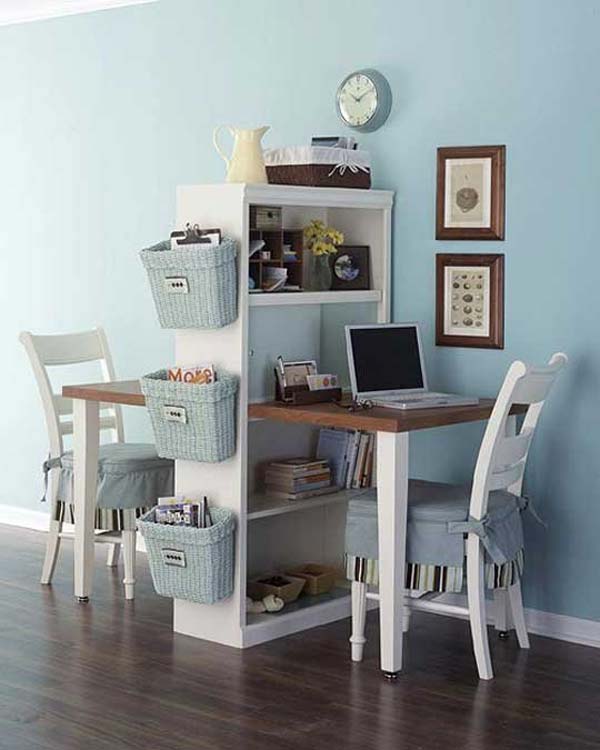

Then you need this. Top 40 Tricks and DIY Projects to Organize Your Office. Quite a few good set ups and tips there.
I thought this was clever:

If you want to run away from it all and live in a small (but nice) cabin somewhere in the woods, then you ought to read this: Modern life too much for you? Maybe a tiny box in the woods is the cure. – The Washington Post. I have often thought of it myself. I may have to check this out.
An interesting development. Ocasio-Cortez is using Instagram in a way that may bring on the new version of the fireside chat. For example:
A few days before Thanksgiving, newly elected New York Congresswoman Alexandria Ocasio-Cortez went live on her Instagram feed to cook dinner and chat with her hundreds of thousands of followers. She took questions on topics ranging from the challenges of entering Congress, to the specifics of progressive policy goals like the newly dubbed #GreenNewDeal, to whatever else came up. She made mac-and-cheese in her Instant Pot. The next day she used Twitter to thank attendees of the Instagram Q&A, but if you’d missed it, too bad: Instagram Live Videos are only available after the fact if the account holder chooses to save a replay and make it public. The same is true with Instagram Stories, which by default vanish from the site after 24 hours, unless the user saves them as a “highlight.” Right now, Ocasio-Cortez has only five of her many stories saved at the top of her account. If you want to keep track of the congresswoman-elect, you’d better stay logged in.
It will be interesting to see how this form of communication develops. For more on this: Alexandria Ocasio-Cortez Has Mastered the Politics of Digital Intimacy – Pacific Standard

This is a great piece: Not So Hot: How I Fell Out of Love With Sriracha | TASTE by David Farley. Sriracha is starting to reach the level of ubiquity that we associate with ketchup and it’s been so readily adopted that I doubt people think too much about it. If you have feelings about it — love or hate — then you want to read Farley’s piece.
I accidentally went to Paul Krugman’s blog today and was surprised to see he ended it some time ago. To quote him:
A message for regular readers of this blog: unless something big breaks later today, this will be my last day blogging AT THIS SITE. The Times is consolidating the process, so future blog-like entries will show up at my regular columnist page. This should broaden the audience, a bit, maybe, and certainly make it easier for the Times to feature relevant posts.
I remember when the Times (and many other places) finally recognized blogging as a way of communicating and started a big section on their site to blogging.
Is blogging dead? Not really. It’s no longer what is what, but people are still blogging. Does it matter? No. Blogging is writing. Communicating via words on the Internet. We have all these tools and media to communicate. For a time, blogging and blogs were a way to share that writing. Now people are doing it other ways.
What matters is the writing. The format matters much less. I still like the blogging format, but what I like more is that so many people can communicate with others.
Meanwhile, here’s a link to Krugman’s blog: Economics and Politics by Paul Krugman – The Conscience of a Liberal – The New York Times

One way would be to go to this place: Barbetta. The New York Times has a fine story on it, here: The Elegant Relic of Restaurant Row. Even if you don’t intend to go, you’d be rewarded just reading the piece.
Love that photo by Dina Litovsky for The New York Times. The sign is “made of opal glass. A forerunner of neon, it is the last of its kind in the city…”. Fantastic.
If you have ever wondered that, then read this: Where are all the aliens? — Quartz
It brings together all the ideas behind this and describes them simply and clearly.
Quite a few things, according to this: www.theatlantic.com/ideas/archive/2018/11/what-should-america-do-its-empty-church-buildings/576592/
if you have a church in your neighbourhood, there is a good chance one of the things mentioned in the article will happen in the next 10 years.
That’s been a question I have been asking myself for some time. I felt like the price just keeps going up. And if you read articles like this, it’s easy to conclude it’s true.
But here’s some numbers on the least expensive models over time, taken from this:
iPhone (4GB): $499
iPhone 3G (8GB): $599
iPhone 3GS (16GB): $599
iPhone 4 (16GB): $599
iPhone 4S (16GB): $649
iPhone 5 (16GB): $649
iPhone 5s (16GB): $649
iPhone 6 (16GB): $649
iPhone 6 Plus (16GB): $749
iPhone 6s (16GB): $649
iPhone 6s Plus (16GB): $749
iPhone 7 (32GB): $649
iPhone 7 Plus (32GB): $769
iPhone 8 (64GB): $699
iPhone 8 Plus (64GB): $799
iPhone X (64GB): $999
Looking at that, I have to think that the phones are getting more expensive, but likely they have always been that way. (And note, this doesn’t account for inflation or the improved quality of the phones, including greater storage.)
Occasionally Apple will make a cheaper phone like the 5C or the SE that are essentially remixes of older models. Or they will continue to support a wider range of phones, like continuing to sell the 7, the 8, and now the X. But it seems the high end was never inexpensive and likely never will be.

I have not stayed at the William, but I don’t need to in order to appreciate the beauty of the place (shown above). Regardless of your travel plans, if you have decorating plans, it’s a great place that illustrates how to effectively use bold colour in your home. For many, using bold colours can be both desirable and intimidating. Some concrete examples can help you achieve your bold colour dreams and overcome your bold colour fears.
For more, see this: A Bold, Colorful Hotel in the Heart of Manhattan – Design Milk
Here’s a long list of things I had saved in Instapaper that I thought worthwhile, but never blogged about individually. While I hadn’t blogged about them, they are still worth a look:

What if your goal was to see all the Vermeer paintings in the world? There are not that many: you just need to travel a lot to do it. One person set out to do that. See Vermeer Goals for details.

A visit to this page is a must for Blade Runner fans: Blade Runner Souvenir Magazine: A Fascinating Blast from the Past from the Heart of Ridley Scott’s Masterpiece • Cinephilia & Beyond.
Pull quote:
The Official Collector’s Edition Blade Runner Souvenir Magazine is a wonderful source of information, abounding in great photos and articles; a genuine treat both for hardcore fans of the film and all the newbies who just got introduced to the world of Rick Deckard. There are a lot of fascinating stuff here, but we’re especially excited about the interviews with Philip K. Dick, Ridley Scott, Harrison Ford and Douglas Trumbull. We’re incredibly thankful to webmaster Netrunner from brmovie.com, who put a lot of effort into digitalizing the magazine and even contacted Mr. Friedman to get his blessing for the endeavor. While Netrunner shaped the material by separating photos from the accompanying text, we chose to offer you a .cbr file of greater resolution and quality, so you can browse the content more easily. If we may, we’d like to suggest using a little program called ComicRack for checking out this priceless blast from the past. Enjoy the read!
Sigh.

I love College Park in Toronto. I wish it were more of a destination spot for visitors. Perhaps if it had been built out like this photo, it would have. Instead, it was built out to the area outlined in white. Still a lovely building, but it could have been a phenomenon.
What could have been.
Via The half-built relics of nixed Toronto skyscrapers – Spacing Toronto
This fact is promising and the article in the Economist is worth reading (you don’t need a subscription to read it.)
Key quote for me:
Nonetheless, beyond America’s gloomy trend is a more optimistic story: that at a global level, suicide is down by 29% since 2000 (see article). As a result, 2.8m lives have been saved in that time—three times as many as have been killed in battle. There is no one reason. It is happening at different rates among different groups in different places. But the decline is particularly notable among three sets of people.
via Why suicide is falling around the world, and how to bring it down more – Staying alive.
A good book on something that people needs to be reminded of: The Disaster of Richard Nixon | by Robert G. Kaiser | The New York Review of Books.
No matter how bad the current president is, longing for bad former presidents is nostalgia at its worst. It’s good that works like this are frequently published to remind us and give us perspective.

For fans of Bauhaus, or those who want to become one, there’s this: 10 iconic Bauhaus furniture designs: chairs, tables, a lamp and a chess set.
It includes a number of pieces by Mies, including the Barcelona chair, shown above.
This is a terrible title for a good article of the women that Francis Bacon painted: Sex Scenes: Francis Bacon’s Bohemian Muse, Lesbian Bartender and Artist/Model – GARAGE
Besides the article, the close up photos are worth viewing: you can really get an appreciation for Bacon’s brush work in the photos.
Worth reading: Senior Citizens Are Replacing Teenagers as Fast-Food Workers – Bloomberg.
Some thoughts:
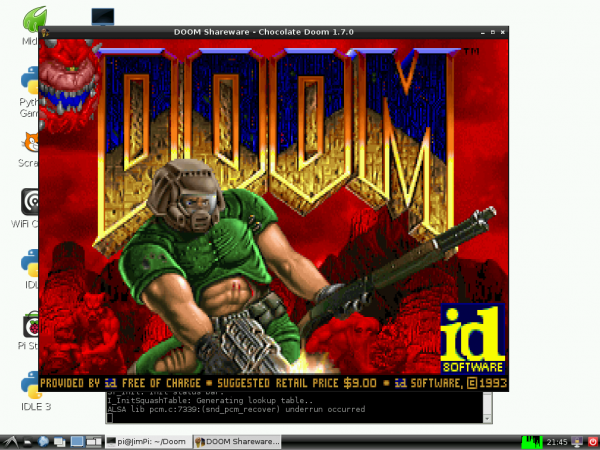
Is this Setting up Raspbian (and DOOM!) – learn.sparkfun.com
Not only will you be up and running with a working Raspberry Pi, but you can also play a limited version of the original Doom!
Very fun for old Doom afficianatos like myself.
A small, handy guide to dealing with your emotions:

According to this, art can make us more confident by providing us with stories and representations of people with characteristics we share that overcome similar obstacles that we run up against. After all….
Confidence isn’t the belief that we won’t meet obstacles. It is the recognition that difficulties are an inescapable part of all worthwhile contributions. We need to ensure we have to hand plenty of narratives that normalise the role of pain, anxiety and disappointment in even the best and most successful lives.
I agree.
The image is an extended version of the work highlighted in the article. Like the Stations of the Cross and other works, they illustrate the difficulties of a way of life, and by making us aware of them, allow us to best prepare to meet them and overcome them.
While this article, What You Can Control at The Simple Dollar, is financially oriented, it really contains wisdom you can use in general. While this wisdom is obvious once you read it, most of us lose sight of this from time to time. Go remind of yourself of it by reading the article.
While I recommend reading the whole article, but here are some points I pulled from it:
- You can’t control the actions of others
- You can control how you respond to the actions of others
- You can’t control natural forces
- You can control how you prepare for the possibility of natural forces
- You can’t control big expenses, especially unexpected ones.
- You can control how you prepare for those unexpected expenses
Also:
When it comes to things completely outside of your control, it’s not very beneficial to you to exert time, energy, emotion, or focus on those things.
Finally:
In general, actions based on emotion in response to something you can’t control are awful choices.
These two interviews appeared in the New York Times in October and August and I was impressed by both of them, especially the first one below:
Seinfeld is smart and insightful and professional. He knows comedy and stand-up well and he’s thought a lot about it.
First off, what is it? It’s this, via the About section of the site:
Stratechery provides analysis of the strategy and business side of technology and media, and the impact of technology on society. Weekly Articles are free, while three Daily Updates a week are for subscribers only.
Recommended by The New York Times as “one of the most interesting sources of analysis on any subject”, Stratechery has subscribers from over 85 different countries, including executives in both technology and industries impacted by technology, venture capitalists and investors, and thousands of other people interested in understanding how and why the Internet is changing everything.
Everything I’ve read on it has been insightful and in depth, including this piece on IBM and the acquisition of Red Hat.
From OpenShift Origin vs OpenStack – Red Hat OpenShift Blog:
OpenStack provides “Infrastructure-as-a-Service”, or “IaaS”….
The OpenShift hosted service provides “Platform-as-a-Service” or “PaaS”. It provides the necessary parts to quickly deploy and run a LAMP application:
Concisely:
I learned about Slow Radio here: I Listened To Slow Radio For A Week, And Here’s What Happened – HelloGiggles.
What is slow radio? According to that piece:
… it’s basically programming that moves at a very casual pace. It immerses you in sound to help you stay grounded in the present.
Is slow radio music, meditation, a catalog of sounds, or a podcast? The short answer: Yes. When you turn on slow radio, you won’t find any one thing in particular. One episode, you’ll get lost in ambient nature sounds. The next, you’ll hear slow-paced conversations about music. After that, you’ll take a trip through a soundscape on a bustling street in Japan.
Sound good? The BBC link to it is here.

Companies keep trying to make smart eyewear happen. First Google. Then Snapchat. Now there’s another company making a go at it. IT Business magazine has details on North, the company trying to make it happen here.
I think these are a big improvement on Google Glass. Is it enough? I don’t believe so. I think greater miniaturization needs to occur, such that there is very little difference between the shape of “dumb” eyewear and the shape of “smart” eyewear.
Meanwhile, we are getting closer to that time when there is very little difference. Stay tuned.
This is what the Internet is:
The internet is the wider network that allows computer networks around the world run by companies, governments, universities and other organisations to talk to one another. The result is a mass of cables, computers, data centres, routers, servers, repeaters, satellites and wifi towers that allows digital information to travel around the world.
The Internet is a network of networks. Much of what people believe the Internet is actually runs on top of it: the Web, social media, email, gopher, what have you.People often say “I liked the Internet when..”. They are talking about the platforms they use on the Internet. Things popular on the Internet now — hello Facebook! — will be a relic in the future. Technologies running on the Internet come and often go, but the Internet itself is relatively constant and changes slowly.
The quote highlighted above is from this article: What is the internet? 13 key questions answered | Technology | The Guardian. It’s a good introduction to the Internet at a basic level.

If you ever thought about living in a Tiny Home, here’s your chance to try them out before you buy one. Simply rent one of the ones listed here: Tiny House Rentals for Your Next Getaway (Apartment Therapy). There is a range of places and styles and prices for them.
I have thought of living in one myself, but wondered if I could manage. This could be one way to find out.
Photo courtesy HomeAway

According to blogTO, the tables are of a ….
…Design by ODAMI and MiiM (that) incorporates innovative tabletop cubbies with heavy, spill-proof lids designed to stow your phone at the beginning of the meal. Servers remove the lid at the end to remind you to return to your phone, and emerge from the period of serenity Sara offers diners.
Nice restaurant, great idea. For more on it, see: Sara – blogTO – Toronto

I saw this in Best Buy the other day, Amazon Fire 7 8GB FireOS 7″ Tablet With MediaTek MT8127 Quad-Core Processor – Black : Android Tablets – Best Buy Canada, and after reading some reviews and other articles (see below), I decided to get one. The $59 price tag had a lot to do with this.
My first thought was to try to use it as much as I could out of the box without making modifications to it. I set it up according to instructions, which were simple. I think you really want to have an Amazon account/userid to do this. I did and so things went smoothly.
The Amazon Fire has a modified version of the Android OS, which means it’s like an Android tablet, but not exactly. Likewise, Amazon has an App store, which is a limited version of the Google Play App store. You can get a number of apps from the Amazon App store, but not everything you can get on the Google Play store.
I wanted this device mainly as a place to consume media. Good news is it runs Netflix, Twitter, Instagram, Facebook, Mail, Texture and a modified version of YouTube. I was especially interested in Texture, which allows me to read magazines like New Yorker, Bon Appetit, Wired and others. I have been trying to read them on my phone and the experience was poor. On the tablet, the experience was much better, and the resolution was good. Likewise, YouTube videos are better on the tablet than the phone.
Downsides? First the device is slow compared to my iPhone 6. You notice it with things like Twitter and Instagram. You don’t notice it for things like Texture because there is more reading time and less scrolling. It’s not terrible, but it is noticeable if you have a newer device. If you have an up to date phone or tablet, you will notice this.
Another downside is the limited number of apps, especially media apps. I could not get the New York Times, Guardian or CBC app for it. It comes with the Washington Post, not surprisingly.
The browser that comes with it is slow. You cannot download other browsers without hacking the device.
One upside is you can get quite a few apps working for it. I downloaded Remember the Milk (for todos), Simplenote (for notetaking), WordPress (for blogging), Dropbox and more. I mainly want to use it for media consumption, but those things make it better.
To summarize: for $59, I think it is a great device for media consumption and basic functionality. If that’s all you want, I think you’d be happy with it. I’m glad I got it. Some reviewers said it is better to get the Fire 8 or 10, but for the money, I think the Fire 7 is surprisingly good.
P.S.Originally I was going to hack it to make it more like an Android tablet, but for now I think I’ll leave it as it is. If you did want to hack it, here’s some links to articles along that line:
P.S.S. This is not sponsored content.
This says Pi 3 but it should work for pretty much any Raspberry Pi: How to set up and use a Raspberry Pi 3 with a Mac – Macworld UK. Also, it says Noobs 1.9, but just go with the latest and greatest.

This is a really good list of apps that will make you life and your work more productive: 17 Great Apps That’ll Make Your Life Easier.
I’ve used a number of them and have found them helpful. You may not use them all, but even adding 2 or 3 to your toolbox will make you better.
You can find many places on the internet where you are encouraged to Follow Your Passion. One such place is here: Why Following Your Passions Is Good for You (and How to Get Started) – The New York Times
Love to cook? Love to write? If those are your passions, then the internet wants you to follow them.
But what if you don’t have specific passions. The NYTimes piece has an answer for that too:
No passions? Cultivate skills instead
While hobbies both enrich our lives and can turn into rewarding careers, those of us who don’t have a particular obsession aren’t hopelessly out of luck. Instead, cultivate skills that will give you a leg up in your field. We all carry a “toolbox” to work in the form of specific abilities that make us better at our jobs. Some experts say leveling up on some of these will improve your job satisfaction more than initial enthusiasm ever will.
It’s easier to improve yourself in an area you are passionate about. But taking pride in your skills and your qualities and working to hone them is worthwhile. If there’s not an area you feel a strong passion for, at least improve in the areas you can.
Passion is a strong word. So is pride. If you can follow your passion, follow your pride and be justly proud of the things you are good at.

I liked both of these articles:
Both men accomplished significant acts of creativity and generosity without having much resources. In both cases, the things they had in abundance were
They didn’t have a great amount of money or genius or things that people think you need to accomplish extraordinary things.
Do what this article says: The New iPhones Look Fine. But My Old One Is Better Than Ever. – The New York Times
According to this article, you need to:
Lots of references in the piece, so read it and get busy and get happier.
These sculptures by John Peralta are beautiful. Here’s one

You can see more here: Machinations: Historical Machines Exploded into Individual Components in Sculptures by John A. Peralta | Colossal


