Do you log or journal? I recommend you do in 2023. Here’s why….


I was reviewing my logs and journals for 2022 just now. I was happily reminded of the good times I had as well as the difficult moments I had to deal with last year. I’m glad I took the time to record all that.

If you can, I recommend you do the same. Reading about your good times can make you feel good about your life. And reading about the difficulties you had to deal with can make you appreciate how well you deal with things.

Writing about good times is fairly easy. Writing about difficult times is not. To log my difficult moments, I phrase them in the way of praise. So instead of writing something like:

Absolute disaster at work this week. I hate my project!

I’ll write:

kudos for dealing well with the difficulties at work this week by persevering and staying calm

I find phrasing it that way helps to read about it later. (This is my approach: you may be fine with going with the first approach.) It also reminds my brain that I can deal with similar difficulties in the future.

Be prolific if you can. Note simple observations. Consider all your senses. Write down many good memories and good feelings you had throughout the year. It’s easy to forget about them, but like snapshots, just reading them will bring back vividly thoughts and emotions you want to recall years from now.

Log them using the media best suited for you. You might covet one of those One Line a Day journals. You might like scribbling in a plain notebook. Some people might default to their smartphone and social media to log things. (I find Instagram is good with that….Twitter…not so much.)

I depend on a little program I wrote called easylog that I use to record things. It stores the information both in a local XLSX spreadsheet and a Google spreadsheet. Of course there are countless ways you can log or journal, but that suits me. It takes me a few minutes every day…no time at all, really.

Good luck. I wish you fond memories of 2023.

P.S. This post was inspired by posts from bloggers I admire:

Austin Kleon in particular is a master at logging things. You might not want to do it to the extent he does (at first), so start with just a line or two. You’ll be glad in 6 months, a year, two years from now when you get to re-read them.

I was almost inspired to write my own wonderful things in 2022 in a blog post, but I am trying to focus my social media content to things that benefit people vs things about myself.   My goal is to have a ratio closer to 80:20 or even 90:10 (posts benefitting people: posts about myself). Let’s see.

It’s 2023…here’s how to keep those New Year’s resolutions (if you want)


It’s a new year. And let’s face it, you have some new year’s resolutions. (Why else are you reading this?)

If you want to try and keep them, then I highly recommend that you read this:  How to make New Year resolutions you can actually keep.

Yes, it is mostly stuff you old people may have read before. In that case, it’s a good refresher course for you. For younger people, that’s a good list to read and consider.

I have a love/hate relationship with resolutions. I think it’s good to resolve to change/improve your life, but I don’t think January 1st is the best time to do that. Some argue it’s February, and I tend to agree. Birthdays are also a good time to do that. So is the beginning of a new season.

If you MUST make a resolution in January, make it this one. If you are stuck and don’t know what to do, I have tons of posts here on resolutions. Perhaps one of them can help.

All the best to you.


My notes on falling to build a Mastodon server in AWS (they might help you)

Introduction: I have tried three times to set up a Mastodon server and failed. Despite abandoning this project, I thought I would do a write up since some people might benefit from my failure.

Background: during the recent commotion with Twitter, there was a general movement of people to Mastodon. During this movement, a number of people said they didn’t have a Mastodon server to move to. I didn’t either. When I read that Dan Sinker built his own, I thought I’d try that too. I’ve built many servers on multiple cloud environments and installed complex software in these environments. I figured it was doable.

Documentation: I had two main sources of documentation to help me do this:
Doc 1: docs.joinmastodon.org/admin/install/
Doc 2 gist.github.com/johnspurlockskymethod/da09c82e2ed8fabd5f5e164d942ce37c

Doc 1 is the official Mastodon documentation on how to build your own server. Doc 2 is a guide to installing a minimal Mastodon server on Amazon EC2.

Attempt #1: I followed Doc 2 since I was building it on an EC2 instance. I did not do the AWS pre-reqs advised other than create the security groups since I was using Mailgun for smtp and my domain was elsewhere at namecheap.

I did launch an minimal Ubuntu 22.x server that was a t2.micro, I think (1 vCPU, 1 GiB of memory). It was in the free tier. I did create a swap disk.

I ran into a number of problems during this install. Some of the problems I ran into had to do with versions of the software that were backlevelled compared to doc 1 (e.g. Ruby). Also I found that I could not even get the server to start, likely because there just is not enough memory, even with the swap space. I should have entered “sudo -I” from the start, rather than putting sudo in from of the commands. Doing that in future attempts made things easier. Finally, I deleted the EC2 instance.

Attempt #2: I decided to do a clean install on a new instance. I launched a new EC2 instance than was not free and had 2 vCPU and 2 GiB of memory. I also used doc 1 and referred to doc 2 as a guide. This time I got further. Part of the Mastodon server came up, but I did not get the entire interface. When I checked the server logs (using: journalctl -xf -u mastodon-*) I could see error messages, but despite searching for them, I couldn’t see anything conclusive. I deleted this EC2 instance also.

Attempt #3: I wanted to see if my problems in the previous attempts were due to capacity limitations. I created a third EC2 instance that had 4 vCPU and 8 GiB of memory. This installation went fast and clean. However despite that, I had the same type of errors as the second attempt. At this point I deleted this third instance and quit.

Possible causes of the problem(s) and ways to determine that and resolve them:
– Attempt the installation process on a VM/instance on another cloud provider (Google Cloud, Azure, IBM Cloud). If the problem resolves, the cause could be something to do with AWS.
– Attempt this on a server running Ubuntu 20.04 or Debian 11, either on the cloud or a physical machine. If this resolves, it could be a problem with the version of Ubuntu I was running (22.x): that was the only image available to me on AWS.
– Attempt it using the Docker image version, either on my desktop or in the cloud.
– Attempt to run it on a much bigger instance. Perhaps even a 4 x 8 machine is not sufficient.
– See if the problem is due to my domain being hosted elsewhere in combination with an elastic IP address by trying to use a domain hosted on AWS.

Summary: There are other things I could do to resolve my problems and get the server to work, but in terms of economics: the Law of Diminishing Returns has set in, there are opportunity costs to consider, the sunk costs are what they are, and the marginal utility remaining for me is 0. I learned a lot from this, but even if I got it working, I don’t want to run a Mastodon server long term, nor do I want to pay AWS for the privilege. Furthermore, I don’t want to spend time learning more about Ruby, which I think is where the problem may originate. It’s time for me to spend my precious time on technologies that are personally and professionally better rewarding.

Lessons Learned: What did I learned from this?

– Mastodon is a complicated beast. Anyone installing it must have an excellent understanding of Linux/Unix. If you want to install it on AWS for free, you really must be knowledgeable. Not only that, it consists of not only its own software, but nginx, Postgres, Redis and Ruby. Plus you need to be comfortable setting up SSL. If everything goes according to the doc, you are golden. If not, you really need an array of deep skills to solve any issues you have.

– Stick with the official documentation when it comes to installing Mastodon. Most of the many other pages I reviewed were out of date or glossed over things of note.

– Have all the information you need at hand. I did not have my Mailgun information available for the first attempt. Having it available for the second attempt helped.

– The certbot process in the official document did not work for me. I did this instead:
1) systemctl stop nginx.service
2) certbot certonly –standalone -d example.com (I used my own domain and my personal email and replied Y to other prompts.)
3)  systemctl restart nginx.service

– Make sure you have port 80 open: you need it for certbot. I did not initially for attempt 3 and that caused me problems. I needed to adjust my security group. (Hey, there are a lot of steps: you too will likely mess up on one or two. :))

– As I mentioned earlier, go from the beginning with: sudo -i

– Make sure the domain you set up points to your EC2 instance. Mine did not initially.

Finally: good luck with your installation. I hope it goes well.

P.S. In the past I would have persevered, because like a lot of technical people, I think: what will people think of me if I can’t get this to work?? Maybe they think I am no good??? 🙂 It seems silly, but plenty of technical people are motivated that way. I am still somewhat motivated that way. But pouring more time in this is like pouring more money into an old car you know you should just give up on vs continuing to try and fix.

P.S.S. Here’s a bunch of Mastodon links that you may find helpful:
http://www.nginx.com/blog/using-free-ssltls-certificates-from-lets-encrypt-with-nginx/
app.mailgun.com/app/sending/domains/sandbox069aadff8bc44202bbf74f02ff947b5f.mailgun.org
gist.github.com/AndrewKvalheim/a91c4a4624d341fe2faba28520ed2169
mstdn.ca/public/local
http://www.howtoforge.com/how-to-install-mastodon-social-network-on-ubuntu-22-04/
http://www.followchain.org/create-mastodon-server/
github.com/mastodon/mastodon/issues/10926

Spotify helps makes the holidays more festive. Take advantage of it.

When I was younger, I loved listening to Christmas music all through the holiday season. This was hard in the days of radio only music, since they often stopping playing Christmas tunes once Christmas day was done. To keep it going, I could play my own records/tapes/CDs, but they get old after a time. (Except for the music for Charlie Brown’s Christmas: that never gets old.)

All that is to say that Spotify solves the problems I used to have. They have LOTS of Christmas music, and you can listen to it all you want. You can even listen to it in July. (That’s too long for me, but you do you.) Not only do they have lots of songs, but they have plenty of playlists. You can even make your own playlist. That way you can list to the type of Christmas you want, when you want it.

Happy holidays to you. Keep it festive with Christmas music, be it from the radio, your own collection, or Spotify. Joyeux Noel.

Checklists keep your head above water when you are overwhelmed. Get one.

During busy times, or during chaotic times, or even times when you just don’t know what to do next, you need a good checklist. Get yourself a list of things you need to do every day and check it off. Even if you don’t do everything on it every day. Even if some of the items on it refer to other checklists. Regardless, get a good checklist, and do it at least once a day.
I have always been a big fan of checklists. They save me in lots of ways. I have one I go through every morning and it helps me stay focused and get what I need to get done. I recommend you get one too.

For more on checklists, see book The Checklist Manifesto. Highly recommended!

On gamification of my time to get tough things done


I had been using a skillful form of procrastination: I was been doing things I don’t mind doing rather than doing things that are hard or that are important. For awhile this was ok: I still needed to complete the things I don’t mind doing. Eventually, though, I was getting really far behind on the hard and important things. I needed a solution.

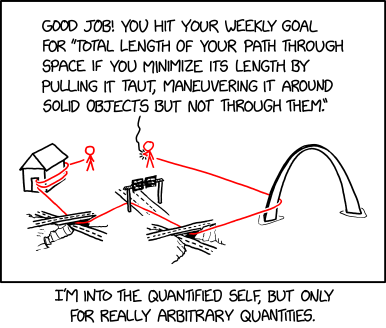
My solution so far is to gamify my activities. Its based on achieving so many points per week. I assign a point for every minute of the day. Most minutes get 0 points for now. Some minutes get assigned positive points in the following way:

  1. 5 points for everything important I hate doing
  2. 3 points for important things I don’t hate doing
  3. 2 points for everyday chores I don’t like doing
  4. 1 point for everyday chores I like or don’t mind doing
  5. 1/2 point for staying organized and doing chores or important things I love doing

What I was doing before was spending no time on 1 and 2, some time on 3, and most of my time on 4 and 5. Not to mention fun things, sleeping, eating which I give zero points for. Now if I spent 30 minutes on cooking I get 30 points; 30 minutes shovelling snow is 60 points; 30 minutes helping my kids is 90 points and 30 minutes dealing with financial stuff is 150 points.

Once I had that system, it was pretty easy to measure my points in a day. I have a little spreadsheet to do it but you can use a paper pad or pretty much anything to do so.

The hard part of this is determining what is a win under this system. My first goal was a win would be 1000 points a week. It’s pretty hard to get that doing activities with 1-2 point activities; you need to really focus on 3-5 point activities.

In my first week I got to 1000 points by Thursday. So I decided on a different approach. 1000 points would get my Bronze level. 1500 would be Silver Level. 2000 would be Gold. Platinum would be 2500. The idea is that Bronze should be hard but achievable, Silver should be a stretch, and Gold should be an occasional win. Platinum should be rare.

It’s been successful once I calibrated it that way. The weeks I get the most important things done, they correspond to medals. The weeks I slack off lead me to get a DNF (Did Not Finish). I pledge to do better the next week. (Unless I am vacationing or sick: then a DNF is perfectly fine.)

The next hard thing: what is the benefit of winning? At first I tied physical rewards to point amounts. That might work for some people. It even worked for me for awhile too. Eventually I just found it satisfying to see there were weeks when I was getting important things done. That in itself was a reward, the win.

Overall gamification of my life has resulted in me getting the most important things done. I recommend it for people who like games and/or are stuck.

P.S. you are thinking this is like the idea of putting the big rocks in first, you are right!

For more on gamification and apps that can help you, see this: 9 of the Best Apps to ‘Gamify’ Your Life.

(Image via https://xkcd.com/2679/)

A feel good todo list: how it helps you with difficult tasks


There is a  problem I have with some items on my todo list, and you might have this too. The problem? I hate the process of doing that task, but I feel good when I finish it. Those are the tasks I’ll avoid for a long long long time, then do them — possibly cursing the whole time — and then when I’m done, I’ll think: well that feels good to have that done!

For those tasks, I’ve built something called the Feels Good todo list. For my Feels Good Todolist (FGT List), I have two columns. In the first column I write the task, and in the next column I write how I feel after it is done.

When I have to do the task I hate, I try and focus on how I feel when it is done. It requires some concentration, because my mind wants to think about how I hate it. Just as importantly, when it is done, I take the time to enjoy that feeling. I don’t rush off to do the next thing. I am trying to teach my brain to remember how good it feels so that it is somewhat easier the next time. Try it!

It’s hard to do certain tasks. If you get satisfaction from the process, that’s great. If not, focus on how good you feel when it is done. It will keep you going.

How to deal with recurring nightmares (plus four other good pieces on better sleeping)

Do you suffer from recurring nightmares? If you do, I highly recommend you read this. It has worked for me and it may work for you too. Sleep can be hard enough to get: being fearful of repeating a nightmare makes it harder.

Here are some other sleep tips from the New York Times  that I thought were useful.

The Times also has advice on how to deal with waking up in the middle of the night and being unable to get back to sleep, here.

Do you exercise hard? If so, listen to  Atlantic CEO Nicholas Thompson who argues that among the things you need to be successful athlete is good sleep.

Sleepwell is an initiative to help people sleep better without medication. You can check it out,  here.


How to pick a good bottle of wine from your local LCBO with Decanter and one simple trick


I have a rule of thumb when it comes to choosing a bottle of wine for the first time: any wine highly rated by Decanter is good. If you are unsure what to get, look for bottles with a round Decanter sticker on them and you can be confident in your purchase. And  good news: most LCBO stores will have quite a few such bottles.

Alas, not all such wines rated by Decanter bear their sticker. And yes it can be a lot of work trying to find them at all.  Wouldn’t it be great if you could easily find them in the store near you?

Well there is a way you can do that: with your browser. To do this, first go to the LCBO website (lcbo.com) and pick your local store (or a store you plan to go to).

Once you do that, enter the following URL in your browser (from https all the way to [true]):

https://www.lcbo.com/en/catalogsearch/result/#q=decanter%20world&t=Products&sort=relevancy&layout=card&f:@stores_stock=[true]

What you will get back are wines in your local LCBO store rated highly by Decanter magazine. With bigger stores like the one at Yonge and Summerhill in Toronto I got over 30 results back, with many around the $20 price point.

If you are cost conscious, enter this version in your browser:

https://www.lcbo.com/en/catalogsearch/result/#q=decanter%20world&t=Products&sort=%40ec_price%20ascending&layout=card&f:@stores_stock=[true]

It will return the same list but sorted with the lower cost ones listed first.

There are lots of ratings and plenty of ways to find a good wine at the LCBO. I find this way works great for me. Perhaps you find the same thing for you.

P.S. You can play around with other rating groups. For example, Wine Enthusiast is also associated with wine in the LCBO and many of them are at an attractive lower price point. To see what I mean, enter this:


https://www.lcbo.com/en/catalogsearch/result/#q=wine%20enthusiast&t=Products&sort=%40ec_price%20ascending&layout=card

Two useful tools for people who want to be productive but find their work day gets away from them

Do you find the work day slide by and you think: what did I even get done today? Or do you find yourself tracking what you are doing but finding that you lost focus on what you are supposed to be doing?

If so, David Seah has tool useful tools on his web site you can use:

  1. The Emergent Task Timer
  2. The Emergent Task Planner

The first tool is a good way to track what you even got done today. David has some good examples of how he uses it. Generally I like to put what I think my focus will be at the top, put administrivia work and breaks at the bottom, and put meetings etc in the middle. You only have room for 12 tasks, so if you find you have a lot of meetings, consider grouping them all into one task: Meetings. Or you may have two tasks: Client Meetings and Internal Meetings.  However you do it, don’t sweat it too much. The first few days you might find it hard to get everything done, but it gets easier over time.

The second tool is a good way to plan your day and try to keep it focused. It takes a bit more work, but it is good when you want to ensure you spent your time well. It can be handy if you are doing daily standups, because you can list the main thing you are working on at the top. Ideally you are spending most of your day working on that…if you are doing other things below it, chances are they are a blocker of some sort.

These are just two useful tools on David Seah’s web site. I recommend you take a few minutes to check out the rest of his site: you might find other things he has worthwhile. I know I have. I’ve been using his tools off and on since 2007, and wrote about how good they are.

Good luck with the tools. Here’s to being more productive this week.

P.S. If you need a timer, I recommend this site.

(Image: link to image on David Seah’s web site)

Fall cleaning tips


Is Fall cleaning a thing? I know Spring cleaning is. I think Fall cleaning should be something we do as well. Especially if you celebrate big festivities in November or December. Fall cleaning can be just the thing to get your place in shape before those events occur.

On that note, here’s some good cleaning tips that can help you with your cleaning, whatever season it is:

Dishwashers are like towels: they are involved with cleaning, but need to be cleaned, too. Here’s some hacks to help you do that.

Relatedly, here’s some good cleaning hacks you can do with Dishwasher Tablets. Not just for your dishes.

Yellow pillows are…not great. Rather than throw them away, why not scan this and see if you can clean your yellow pillows?

A reminder in this age of many germs, that clean and disinfecting are not always equivalent. Read and see.

For big cooks like me: How to Clean the Worst Cooking Messes in Your Kitchen

Moving to the bathroom, this advice came in handy for me: How to Clean a Bathroom Floor. Relatedly Ways to Use Distilled White Vinegar.

Happy cleaning!

Great advice for anyone from 6 to 66, from Nick Cave (be foolish and be basic)

So someone named Chris wrote to Nick Cave and asked, “I’m 62 years old and decided to learn how to play guitar. Rock guitar. Is such an endeavour a fool’s errand for someone of my age?” To which he replied “Yes… AND…”. I think anyone considering starting something new should read it. (It can be found here: Nick Cave – The Red Hand Files – Issue #210 – I’m 62 years old and decided.) It reminds you that you can suck and you may be too old (or too short, tall, thin, fat, shy, awkward, etc.) but that good things can come out of it if you keep at it.

Reading it, I was reminded of the classic three chord recommendation: learn three chords and form a band! Why not? If this got you thinking hey maybe I should learn to play the guitar, then you might find this useful: Guitar card cheat sheet. Start with E. 🙂

BTW, I think the advice “learn the basics” and then get out there and make something is good for any creative endeavour, be it drawing or making a web page. Don’t try to learn a lot at first. Learn enough to get started and go from there.

P.S. I think “Yes….AND…” is a great way to answer things. It acknowledges the concerns someone might have while opening them up to possibilities they might not have considered or appreciated.

(More on three chords and form a band, here (and where I got the image from))


What makes you happy about your job. Think Maslow, not Brooks

Too often when I see pieces on work and what makes a good job, they downplay certain aspects, like pay or job title. That comes up in this piece by Arthur Brooks, How to Pick a Job That Will Actually Make You Happy, where he writes:

… this belief is based on a misunderstanding of what brings job satisfaction. To be happy at work, you don’t have to hold a fascinating job that represents the pinnacle of your educational achievement or the most prestigious use of your “potential,” and you don’t have to make a lot of money. What matters is not so much the “what” of a job, but more the “who” and the “why”: Job satisfaction comes from people, values, and a sense of accomplishment.

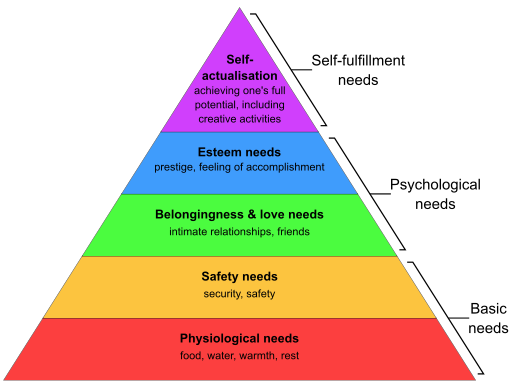
I don’t think he is wrong with this, I just think he is missing out on the bigger picture. The way to see the bigger picture is to focus on Maslow’s hierarchy of needs (shown above).

According to Maslow, we have several needs: basic needs, psychological needs and finally self-fulfillment needs. The lower needs are simple and obvious: the higher ones are complicated.

Our jobs provide for some or all of these needs. For example, our work environment should provide us with our basic needs, while our pay satisfies both basic and psychological needs. Things like job titles, promotions, awards, perqs, and other acknowledgements also help with psychological needs. As for the work itself, and the things Brooks is discussing, they satisfy our self-fulfillment needs. If you are fortunate, you have a job that provides for all those needs to a high degree.

That said, we all measure our needs differently. For people who work dangerous outdoor jobs, their basic needs may not be met nearly as well as someone who works in a warm office. For those outdoor workers, the satisfaction from the work itself (e.g. rescue work, emergency repair work) may more than make up for the discomfort and difficulty they face. Likewise, for a person working in an office, doing interesting work that fulfills their potential may be much more important than promotions and pay raises and other things their co-worker with different psychological needs has.

In Brooks’s piece, he emphasizes self-fulfillment needs and minimizes basic and psychological needs. That’s a common mistake, and the reason people might become dissatisfied with their job, even though on the surface what they have appears to be a great job. We all know about people quitting because of bad management: in that case you can see people’s needs at all levels not being met. But people can also struggle because they have a conflict that some of their needs are being met while others are not. For example, people can have a good job with lots of benefits, but it is very unfulfilling, or they can have a good job that is very fulfilling but it doesn’t meet their basic needs.

The best job can fulfill all of your needs to a satisfactory level. That’s the job that will make you happy, not just a job that satisfies your top needs. When you look to work at a new place, make sure you can get all your needs met to the level you need. You’ll be much happier.

What Mark Cuban can teach you about motivation is simple and powerful


Do you find it hard to motivate yourself? If you do, you should look to Mark Cuban for a valuable lesson. Mark Cuban recently started Cost Plus Drugs to allow him to bring low cost medicine to people who need it. It’s a great initiative. But it took someone awful like Martin Shkreli to get the ball rolling. As Cuban says, when he saw Shkreli’s company jacking the price up on some drugs to obscene amounts, he concluding that the opposite could happen as well. Then he went and did something about it.

So kudos to Martin S for inspiring Mark C to start this new company: your greed has not been for naught.

Here’s the lesson in a nutshell: find someone doing something wrong that you strongly disagree with and then decide to behave in the opposite way to counteract that.  You will be plenty motivated, I am sure. And you will be doing the world some good too.

For more on this, read how Mark Cuban says Martin Shkreli inspired him to start Cost Plus Drugs in Vox.

Save the Jack o’ Lanterns from the rats with nice tails


Walking around my neighborhood this weekend I noticed two things:

  1. People have done a great job decorating for Halloween
  2. Squirrels do not give a fig for Halloween and seem to like wrecking people’s good work. Especially their pumpkins/jack o’lanterns.

If this is happening to you, I recommend you at least read this: How to Keep Squirrels From Destroying Your Pumpkins.

You’re welcome. Thank you for decorating: the kids from 6-96 love it.

Happy Thanksgiving, Canada! Here’s a really good guide to roasting a turkey, planning the meal, and keeping it simple


Happy Thanksgiving, Canada! Last year I shared with you what I was making for the celebration here. Our meal was delicious, and all made from scratch, thanks to the fact I had help! (Thanks, Lisa!) So if you have help, I recommend what I did last year.

However if you don’t have help and you are doing it all by yourself, let me suggest you get some stuff off the shelf. I always make the turkey, some form of veg, and mashed potatoes from scratch. Always. But if it’s just me cooking, I will get Stove Top stuffing, packaged gravy, baked rolls, and canned cranberries. Hey, even doing all that is a lot of work with 4 burners going, not to mention the oven and the microwave. My foodie friends may disown me, but I learned this lesson from Anthony Bourdain years ago: simplify simplify simplify your prep even if the food isn’t the level you want. Trust me. My main goal is to get a pretty good dinner on the table reasonably, not show off I can make everything from scratch by myself. However, YMMV.

Speaking of trusting me, I would also recommend going with the simplest form of turkey roasting possible. Here’s my approach. I tend to get a 12-16 pound turkey and I roast it unstuffed at 325F at 15 minutes / pound. I write out the time I put it in, how long it should roast based on that formula, and when I believe I should take it out. I put it in the oven uncovered, and when it gets to the golden brown you see below, I cover it simply with aluminum foil but keep on cooking it until it is done. I check on it more towards the end, basting it every time I do. 

How do you know it is done? If you use a meat thermometer, many current guides will say the turkey is done when the meat is 165F. Back in the 1980s the meat was said to be done at 185F. 165F will leave you with a moister turkey, and 185F will mean everything is well done. If you are nervous, go with 185F. In the worst case, at 185F some of the breast meat may be a bit dry: that’s fixed with some gravy. 🙂

Oh, and while meat thermometers are great, a simple plastic pop up pin put in the breast works good too. If you don’t have a meat thermometer or a pop up pin, cook to the time calculation you did above….you’ll be fine. 

If you want more guidance on turkey roasting, go here. I generally get unfrozen turkeys: it makes life simpler. If you have a frozen one, you want to read this.

Enjoy your dinner, whatever form it comes in. Cheers!


Do you not have fun any more? Well, here’s how to have more fun as an adult

As kids, having fun seems natural. As adults, it can be hard to come by. Worse, some forms of fun actual harm of us. So how can we have good clean fun as an adult?

Alan McKee has written a book on the subject. In an article in the Times, the writer says that He…

…defines fun thus: “Fun is pleasure without purpose.” In other words, the same qualities that seem to make it so hard for me (the writer) to have pure fun — I need purpose! — make it hard to optimize for; put it under a brain scanner, and it has a tendency to disappear.

Fun is pleasure without purpose. Adults, especially responsible adults, often look to assign purpose to events. That may make them educational or beneficial, but it often robs them of their fun. If that is you, perhaps you need to set aside time for an activity that is purposeless. Play a kazoo.  Make playing card towers. Doodle. Solve a puzzle and then throw it away. Go for a slow walk. Dance badly. Sing out of tune. Whatever you enjoy, do it without any aim in mind, other than to enjoy it. Guess what? You may be having fun.

For more on this, read: Here’s How to Have Fun. Also, What Is Fun? in The New York Times. (That’s where the blockquote comes from.)

Want to be healthier? You need to be more social


You have to socialize if you want to be healthier. That’s been tough during the pandemic. And it is tough for men in general. As VOX shows, men have fewer friends than ever.

Of course having friends is good, and if you can form new friendships, that’s great. But socializing with strangers is also healthy. This piece, talking to strangers, shows why.

Get out their and make small talk. Smile at people. Thank them for their help. You will be doing them a favour and yourself as well.

A list of 10 resources to help you get through hard times


If you find yourself going through hard times, then you need to help yourself. Sure loved ones and professionals can make a big improvement, but the more you can do on your own, the more successful you will be.

With that in mind, here are 10 links that you may find useful in dealing with your difficulties:

  1. Here’s a guide on  how to practice self-compassion.
  2. Something else to consider: establish good daily rituals . That link might help provide you with good ideas.
  3. What is better:a happy life vs a meaningful one? It’s something to consider when you feel your life is unhappy and hard to change.
  4. This is a worthwhile thing to do, though not all the time: give up comfort / learn to live with discomfort. Learning to live with discomfort can give us insights into what we want and what is worth having.
  5. See the world from a different perspective. Always a good idea.
  6. Stoicism never goes out of fashion and is always useful.
  7. Camus might also be a source of inspiration for you.
  8. Here’s one way to motivate yourself: Motivate yourself by giving advice.
  9. Are you too busy? Print this off and use it as a checklist
  10. Finally, here are five good books on Self help that may benefit you.

There are three good suits you can wear in the summer, and linen is the best (ignore The Guardian)

There are three good suits you can wear in the summer: cotton, linen and seersucker.

Seersucker is lightweight and doesn’t wrinkle easily, but it tends to be limited in terms of colour options. (The one on the left in the photo above looks good though). If you have to wear suits in the hotter months, having a seersucker suit will help you get through them.

Cotton is also lightweight and can come in a wider range of colours than seerksucker.  However cotton wrinkles. Alot. Really it is a dry cleaners dream. It looks great well pressed, but after a few minutes it looks wrinkled and disheveled.

That’s why I like linen: it looks great pressed, and it looks great wrinkled. Plus it comes in lots of colours and cuts. Hands down it is the best looking of the three types of summer suits and it has been for some time. I had a black linen suit from Hugo Boss and even in the heat I could wear it and feel comfortable.

That’s why you should ignore the Guardian when it talks about how the loose linen suit became retirement wear. They use Boris Johnson wearing linen as an example of why (younger) men should not. I mean, please. The other comparison point is Brad Pitt who wisely decided to promote his new film in the hotter months by suiting up in linen. A smart choice. (Also note the style of Pitt: draw string pants, loose necklines, casual shoes….all good looks to steal.)

It would be a shame if men, especially young men, gave up wearing linen suits. They are extremely versatile in terms of cuts, colours and styles. They are supremely comfortable. You can wear them to a wedding and you can wear them to a show. You can wear them in the city and you can wear them in the country.

Need more convincing? See the site Man of Many, which has good tips on wearing a linen suit. Stay cool, stay stylish, get linen.

One way to be an artist is to add extra to the the ordinary

There is no particular way to be an artist and to make art. There are many ways. One of those ways is to add extra to the the ordinary to make it extraordinary. (See what I did there? :))

I thought of it when I came across this post on Cup of Jo called Four Fun Things. Among other things was a feature on an Instagram account:

The Instagram account Subway Hands by Hannah La Follette Ryan is surprisingly moving, don’t you think? (This one looks like a Michelangelo sculpture.)

I agree: the photo on the bottom left does look like sculpture! But all the images are good. What Ryan does, by paying extra attention to the ordinary (“hands on the subway”) is make something extraordinary. That is her art, and it is fine art indeed. She pays extra attention to something common and gets us to pay attention and think more about it. If you can do that too, you will be making fine art, indeed.

As Austin Kleon wrote: “The ordinary + extra attention = the extraordinary”.  (He writes about the concept in a few posts.)

P.S. Now, this is a formula, but if you just use a formula without putting much of your heart and head into it, then you will get art that is formulaic. And that ain’t good. So keep that in mind.

No, not everyone is not winging it all the time, even if that gives you comfort


A statement said so often it is assumed to be true is this: Everyone is totally just winging it, all the time. So says Oliver Burkeman. He even backs it up with examples.

I can see why it is so appealing. If you feel that you are always winging it, then thinking everyone else is doing the same makes you feel less alone. It’s also comforting if you have imposter syndrome.

But there’s two facts and a lie:

  • some people wing it all of the time (Fact)
  • all people wing it some of the time (Fact)
  • all people wing it all of the time (Lie)

In fact, most adults have expertise in fields and wing it none of the time. Surgeons, bankers, bus drivers, grocery staff…you name it, they know what they are doing most if not all the time. We expect that of them and they deliver. Even young parents go from winging it to being confident and capable most of the time. As humans, being in control makes us feel more comfortable and confident and makes those around us feel that way too.

It’s fine to wing it from time to time. It’s how we learn and grow. But don’t kid yourself: all people are not winging it all the time. Chances are, you aren’t either.

(Picture is of someone definitely not winging it.)

You should be writing better emails. Here’s how

You – yes you – can write better emails. To do so, first read this:  How to Write Persuasive Emails: 4 Simple Tips to Turn Blah Into Crisp Writing

Second, write down those goals.

Third, practice with the next emails you send.

Maybe you – yes you – already write emails like this. In that case, try this as an exercise: look at the emails in your inbox and see how many of them meet these criteria. I’ll bet most don’t.

A word to younger people: you might think, I don’t write emails…I use Slack or Teams or some other form of instant communication. If that’s true, then you definitely need to read that and practice it. You cannot avoid email (yet) and when it comes to key communication, you need to write good email. So get going on that.

Good luck! Was this clear? I hope so.

Here’s 100 tips for a better life. Why not try 3 this week?

Here are a 100 Tips for a Better Life from the site LessWrong. It’s fun and insightful. For example:

43. Deficiencies do not make you special. The older you get, the more your inability to cook will be a red flag for people.

48. Keep your identity small. “I’m not the kind of person who does things like that” is not an explanation, it’s a trap. It prevents nerds from working out and men from dancing.

53. To start defining your problems, say (out loud) “everything in my life is completely fine.” Notice what objections arise.

Take a look at all 100. Better still, pick three that you might apply to yourself and try them out. You might find by next week your life has gotten better.

On rethinking work

Work takes up a significant portion of your life. To me, it is something we should always be examining, if we care about our lives.

This is especially the case during this pandemic. I think we all have been examining work as a result of  how we have had our working lives disrupted. That’s a good thing.

I expect employers are going to want us to resume working as if it were the Before Times. Maybe you are one of those employees who wants to go back to that time. Maybe you aren’t.

All that is to say that I recommend you read these two pieces as you reexamine your work life:

We sometimes need prompts to help us think about things. Those two pieces will help with that.

Thinking about your work life is thinking about your life in general. A worthwhile thing to do.

For anyone needing medication in the USA, you need to check this out.

For anyone needing medication in the USA, you need to check out this service provided by the billionaire Mark Cuban: Cost Plus Drugs. They cover a wide range of medication and they clearly illustrate how they go about doing it.

Kudos to Cuban for doing this. It’s a highly practical and substantially useful service for people. I hope it saves people a ton of money. More importantly, I hope it saves and extends the lives of many in the USA.

In praise of ritual


I am not sure about this, but these two pieces argue that ritual is the thing you need to live a better life:

I can see value in ritual. But ritual can be as bad as a habit in that they both can lock you into behaviours that limit your life rather than freeing it. But read and judge for yourself.

Not that ritual is essential. Sometimes just a good habit can help. For example, the artist Charles Ray walks to Burger King every day and finds value in that.

On Getting Things Done

The book and system Getting Things Done (GTD) has been around for so long that I used to assume that everyone knew of it and used it. Lately I’ve been reminded that is not true.

Well, if you haven’t heard of GTD and forgot about it, this primer on it may be just the things you need to (re)acquaint yourself with it.

I have issues with GTD, but if you are someone who feels like you can never get all the things you have to do organized and get yourself feeling productive, then get using GTD. You will get more productive, for sure.

How to use the motivation equation to get more motivated

On Saturday I wrote about how the motivation equation explains why you are or aren’t motivated. I want to write now on how you can use the same equation to get more motivated.

Here’s the equation again. Recall we replaced the I with F, for Friction

In short, to get more motivated, you need to:

  • Increase the chances you can do something (E)
  • Increase the value of doing it (V)
  • Decrease the things that make it harder to do something (F)
  • Decrease the delay in it occurring (D)

Remember, we all have alternatives (A) in terms of what we can do. And this is where context C comes into the picture.

Let’s take some classic examples to walk through this. I’ll underline the approaches you can take to motivate yourself and emphasize how it relates to the formula.

First example: lie on the couch or go to the gym and get in shape? V may be the same for both, but E is low and D is big for getting in shape. Plus there is hardly any friction F in being a couch potato. Going to the gym means getting ready, getting to the gym, dealing with people at the gym, washing up, and then going home. So much friction! If only you could motivate yourself to get off the couch and do something!

The way to motivate yourself with this is to reframe things. Change the context. That will help you change the equation and bump up the Vs and Es and decrease the Ds and Fs. If you need motivation for getting in shape, the question should not be: lie on the couch or go to the gym and get in shape? The question should be: 1) lie on the couch and feel bad later and sink into poor health or 2) go to the gym and feel good now and get in shape? In that context, V for #1 drops and V for #2 increases. Next, tackle the friction F for going to the gym. People do all sorts of things for that: find a gym near them, have a gym bag packed, find a friend to work out with, or skip the gym altogether and workout at home. There are lots of actions to decrease F. Likewise, if you focus on the short term goal of feeling good on the day you go to the gym,  E increases and D decreases and your motivation goes up.

This leads to my next approach: you need a plan. Plans help increase expectations E and decrease delay D. If you want to run a 5K or a marathon, if you want to learn a language, if you want do achieve anything worthwhile, it helps to have a plan. Plans help with E:  if you have an authority (coach, instructor) telling you that if you stick to the plan you will succeed, E goes up. Plans help with D too because now you can imagine/see D decreasing with every day that passes. Likely V increases every day too. Finally plans decrease F. Uncertainty of what to do is a source of Friction. A plan decreases uncertainty and thus F.

Planning is easier than you think. Can’t come up with a plan? Do this. Say: I will do this today and tomorrow. Or today and the rest of the week. After you do it, make a record. Write it down. Mark a calendar. Whatever works. After a week, tell your stupid brain: that was the plan, dummy…I tricked you because you were telling me I couldn’t do it and I did it and before you tell me I can’t do it again you told me I couldn’t do it at all and I did so I know best and I will do it! (It’s worth a shot). Don’t let planning stop you. Any plan, even a bad plan, will help. Here’s a plan: buy a dozen beer or Gatorade. Put them on a shelf. Plan to drink one every time you work out. Put the empties next to the full ones. Plan to finish them all. Voila! Who said you can’t plan?

Another way of dealing with expectations E (and your stupid brain) is visualization. Chances are you use visualization already, just in a bad way! You imagine all the reasons you cannot succeed. Now be like a professional skier or runner and imagine all the ways you can succeed. Whenever you imagine failing, imagine successful alternatives instead and practice going over them in your mind. You will see increases in E if you work at it.

Related to visualization is internal chatter. In sports, coaches will tell players on the bench to “talk it up!”. Why? Because it encourages teammates and defeats their negative internal chatter. You should do the same. When you motivate yourself to do something and you are done, what do you do? Do you just move on to the next thing? If you do, you are telling yourself: that didn’t matter. If a team scores playing a game, they get excited! They cheer! When a team is defending, everyone yells “Defense!” All of these things increase the value V of the thing they are doing. You need to do the same, and by doing so, increase the value of what you are doing or what you did. And when you succeed, you give yourself a cheer and your brain thinks: I can do it! And with that, the next time you try and do it, E is increased.

Another way to motivate yourself is overloading. If you aren’t motivated to go to the gym to get in shape, come up with several reasons to go. You aren’t just going to the gym to 1) get in shape. You are going to the gym to 1) get in shape 2) get out of the house 3) meet your friend 4) reasons of vanity 5) reasons of pride 6) etc. Give yourself as many reasons as possible. Brainstorm ideas. Ask friends. List them all out. Get as many high value ones as possible.

Related to overloading is overshooting. Didn’t do any of your hobby last month? Missed meeting up with friends? How about planning to do it every day next month? Twice on Sunday even! Imagine making huge improvements on your drawing or sewing or photography. Think about all the enjoyment you’d get seeing all your friend or just contacting them. List all the ways you could derive value V from that. Now after a month, look back. You likely didn’t do it all. (If you did, awesome!) But look at the improvements you made. As they say, you aimed for the stars and landed on the moon and that in itself is incredible. No doubt all the effort resulted in ways you learned to decrease friction F and improve expectation E. You will find you are much more motivated to do things by planning to overshoot.

Refuse to fail.This is useful if expectations E are low and is related to overloading and overshooting. So you and your friend skipped the gym but you had a good time and you needed a break and you went the next day. Or you didn’t create anything but you cleaned up your work area and made it easier to draw the next day. Sure you could beat Today You up for not doing the thing. But give yourself credit for helping Tomorrow You be more motivated by reducing the friction  For the expectations E for tomorrow. You don’t fail if you get up the next day. There is no timeclock.

If you should do good things for several reasons, do bad (or not so good) things for one reason. Don’t lie on the couch and eat cake and watch movies and talk with friends, etc. If you do, you are going to be very motivated to be a couch potato! If you are tired, lie on the couch. If you want a slice of cake, go get one (preferably as a treat…maybe after the gym.) Talk to your friends in person. You want to decrease the value V of lying on the couch. Heck, pile stuff on the couch (increase the friction F) or lie on the couch only after you do some other things (increase D) or only lie on the couch if you flip a coin and it comes up tails (thereby decreasing E).

Understand what does motivate you and apply it to other areas. If you still are struggling to motivate yourself, sit down and write down what you are motivated in doing and understand the V, E, F and D for them, Then look at what you are not motivated in doing and see how they are similar. Is there any way you can change the unmotivating ones to look more like the motivated ones. You should see ways to increase your motivation.

Keep a log for things you regularly struggle to find motivation for. Write down the V, E, F and D for the last time you did them. Maybe you are imagining F and D as being worse than they are. Likewise, maybe it was easy for you and you enjoyed some aspect and the value V and expectation E are higher than you imagine. If so, great! If not, keep logging and log what you changed to motivate yourself this time. Keep tweaking those values until you are doing better.

Choose the next best alternative. Can motivate yourself to go to the gym? Go for a good walk rather than lie on the couch. Can’t call that one friend you should call due to high friction F? Call someone else where the value V is high but F is lower. Can’t do the creative thing you think you should be doing? Do something else creative instead. Eventually you will need to understand your lack of motivation for not doing that one thing; doing a close alternative can help.

Lastly I want to mention two last things: Habits/Routines and Novelty. Habits/routines are very good at decreasing friction F and increasing expectations, E. But they can also cause you to feel a decrease in value V, because things get stale and boring and less enjoyable. That’s where novelty comes in. Novelty decreases expectation E (who knows what will happen) and increases friction F (because it is new), but can also increase V (less stale and boring) . If habits/routines are the main dish, novelty are the herbs and spices. You need both.

If you’ve read this far: wow! you were motivated! Good work! I hope the value V was high and the fraction F was low.

If you were wondering: why did he keep repeating those letters? It’s because I really think the key to motivating ourselves is to think in those terms: V, E, D and F. Repeating them helps reinforce that. Also there is nothing new here when it comes to approaches to motivation. What I think is new (at least to me) is applying them in light of the formula. I hope you found it the same.

Now go and do good things. Great things, even!


How the motivation equation explains why you are or aren’t motivated

I was having a hard time getting motivated last week. I knew there were a number of things I needed to work on. For some of them, I had no problem tackling. For others, I really struggled. Why was this?

This simple equation, from this article, The motivation equation, really helped me. But I also felt it was lacking something:

For those who hate math, the “M” stands for motivation, “E” stands for Expectancy, “V” stands for Value, “I” stands for Impulsiveness, “D” stands for Delay.  E is the likelihood of getting something, and V is how much you value it. D is how far away it is, and I is impulsiveness. Let me walk through an example.

Let’s say it’s lunch and you have a choice of leftovers or something new. You value something new over leftovers, so all other things being equal, you are more motivated to eat something new rather than the leftovers.

Now let’s say there is a chance that the new thing you want to eat may be sold out before you get there. With leftovers, E is high: you know you can eat them right now. For the new thing, E is lower: it might not be there so expectation has dropped. To bring E up, you think: well, there are many new dishes you can try…one of them will be there for sure.

To further complicate things, let’s say it is 11 am and you are hungry but the place selling something new doesn’t open for an hour. The delay for something new is larger than leftovers. That means your motivation for eating something new may drop.

Finally, impulsiveness. I would like to replace that with F, for friction. Friction is impulsiveness and more. Friction is all those things that put a drag on you doing the things you need motivation to do. In this case, getting something new may mean having to go out in bad weather to get it. Bad weather is friction. Or you may not like the food court where the new food is because it is too crowded or noisy. Unpleasant atmosphere is friction. Or you may be hungry or tired or bored and want to eat right away. All those feelings are friction. The more friction you have, the less motivation you have.

Two other things to consider are A: alternatives and C: context. Sometimes we may be motivated to do something in one Context and not the other. On a cold day I may be motivated to have a hot chocolate. On a hot day I may not. The value of something can change in different context. Likewise, my motivation for something may change if there are alternatives. I may be motivated to eat a frozen dinner because the alternatives (make my own, get take out for the 4x this week) are worse for me at the time.

I recommend you do what I did this week and list some things you are motivated to do and NOT motivated to do and run them through the formula.

For a work example, I had two things I wanted to do on Friday, write a report and solve a hard technical problem. I worked on the latter. D E and F were the same for each. But for the report, I felt it had little value. I have to do it, but it was hard to motivate myself to do it because V was Low. On the other hand, V for the hard technical problem was High. I learned alot (which I value), I have more value as an employee because of what I learned, and I felt proud of this accomplishment. Given this, it’s not surprising I chose the hard technical problem. Now, if the expectation (E) of me solving it was lowered, then my motivation would have dropped too. Likewise, if I thought it would take a week or more (delay, D) to solve it,  motivation would have decreased.

For a home example, I have two chores to do: organize the basement and organize the living room. Both have a high value (V) for me. But D is higher for the basement: it’s much more work and will take much longer. E is the same: I can accomplish both. Also F is higher for the basement, since there is so much stuff to go through and move around. Naturally I am motivated to tackle the living room.

Finally, a personal example. I have several hobbies: painting and website design. D and E are the same, but V and F are different. I am good at web site work and poor at painting, so the outcomes are better for web site work than the outcomes of my painting. Likewise, for painting, there is setting up to paint and then cleaning up. For website work I just sit down at my computer: no setup and no cleanup. Painting has higher friction F and lower value V, so I tend to do it less.

Ok, Bernie, you say, that’s great. How do I deal with that to get motivated. That will be in part 2 of this, since this is already too long and you are likely losing your motivation to keep reading. (V is dropping, D is getting longer, E may be dropping too. Likewise you may have alternatives A that you are more motivated to do.) That will come out on Monday.

On the joy of not-quite-silence

What’s better than silence? Near silence.

When I was younger and living in Glace Bay, I used to enjoy walking down to the end of South Street to the beach. Except for summer there was no one there, and I could sit and watch the watch the waves. Some days I would dream of sailing down the coast or sailing across the ocean. Other days I used the sounds of the sea to calm my mind. The simple sound of the waves and nothing else is something I crave to this day.

Silence is great. But there is something in the almost silence of a place that is better. It can be any sounds, from the ocean to the wires in the walls humming.  Part of your brain is engaged by the simple sound while the rest of it finds peace in the background of quietness.

If you can, try to find such near silence. Give your brain just the break it needs.

Jeff Koons, skiffle, and other things You may find interesting about art, May 2022

How to: If you want to make cartoons & comics but you have no idea where to start!, read that. If you want to draw a head, read How to draw a head: A complete guide. If you want some good books on art, there is this, 16 Best Books for Learning to Paint of 2022 and this Top 10 Best Books on Painting. Click these links if you want to draw fabric or draw glass. If you want to go to OCAD and study art, click on this or this.

Artists: if you want to read about artists, here some pieces on Jeff Koons, Marcel Duchamp, Keith Haring, James Castle‚ Richard Serra and Jeff Koons again.

Thinking: if you like to think about art, then you might want to read, is my art good enough, What Does It Really Mean to Make Art?, When art transports us where do we actually go? and 24 Hours in the Creative Life.

Music: if you prefer music over the visual arts, here’s some good stuff: Guitarist Randy Bachman Demystifies the Magical Opening Chord of The Beatles‚ Hard Day’s Night. Speaking of the Beatles, here’s a piece on Skiffle. And if that inspires you: How to Play Guitar Without Learning How to Play Guitar.

Writing: if your thing is writing, here’s a piece on Essay writing. This was fun: a defense of the em-dash. This may discourage you: No one will read your book. This may encourage you: Dagny Carlsson Centenarian Blogger Dies at 109.

P.S. The good rules you see above are from that link to Swiss Miss.

It’s Monday. You’re on your own.


Do you find these “It’s Monday” posts useful? I suspect not. It’s just me writing mostly about things I find helpful, and hoping others do too. I think it’s time for me to give that up.

Here’s a few of the last ones I had queued up that I hoped to write about in depth. I think I’ll just leave them here. Hopefully someone finds them good:

Remember: to be successful, you need hard work. You need talent. And you need good luck.  You likely don’t need another post from me. 🙂

P.S. Here are all my monday posts, fwiw.


On buying cheap wine at the LCBO, 2022


Annually various publications in Toronto will publish articles on how to buy cheap wine at the LCBO. BlogTo takes a stab at it here: The top 10 cheap wines at the LCBO.


If you want to buy cheap wine at the LCBO, here’s some things to consider:

  • the wines that appear on these lists often tend to be the same year after year. The price changes, but the wines listed more or less are the same. The wines themselves are consistent too. Hey, these are not handcrafted wine! So a cheap wine list published in 2015 will likely have a list of wines you can still buy now, just with a different price and a different date.
  • Once these wine lists used to be “best wines under $10”, but that price ceiling is outdated now. Most cheap wines are over $10. There are still a few good ones, as the Toronto Star argues, but not many.
  • Once you get up into the $14-15 price point, head over to the Vintages section instead. Wines there generally are good at any price point, and you’ll get something better than the general section, imho.
  • These wine lists will hype up these cheap wines. Note: most of them are limited in quality. Not too much wine in the LCBO is Bad anymore. None of these will be Great either. Most cheap wine is pleasant and drinkable. Something to have at dinner or on an outing. They are not sophisticated. If you can’t taste all the notes of “peaches, nectarines, pears” mentioned in the lists, there’s a reason for that.
  • The “cheap” wines I’ve been drinking lately (under $15) have been Ontario Riesling. They go great with so many foods and are good value, I believe. If you want red, consider a Baco Noir. Many of them are fine and under $15.
  • If you have to go closer to $10, the best bets tend to still be Portugal, Italian and South African.

(Image linked to LCBO.com of a Californian Chard that just slips under $10)

On the working class, manual labour, and how it is still perceived

There is a famous story about Philip Glass installing a dishwasher for Robert Hughes who was then Time magazine’s art critic, among other things. Upon realizing who was his installer, Hughes exclaimed: “But you’re Philip Glass! What are you doing here?” Glass replied that he was installing his dishwasher and he would soon be finished.

I have been thinking of that story and more after recently reading these two pieces:

In all three cases there is an implicit bias against being working class.  All three men are doing jobs of physical labour. In each case, the implication is that they could be doing something else, something better. The conclusion is that they have a talent and that their time could be better spent elsewhere applying it.

I agree that if you have a talent, it is good to use it. But you may be tired of using your talent. Or your talent doesn’t pay the bills. Or you don’t value your talent. In any case, it’s up to you what you do with it. Like money, talent is yours to use as you will.

Perhaps though you get more satisfaction out of performing manual labour than performing your other ability. If so, then that can be the best use of your time. You help people and you help yourself with your physical efforts. There is nothing wrong with that, whatever society thinks.

Glass and Richardson make a defense for what they do. To me, no defense is needed. Glass did installations and applied his artistic talent. Richardson is done with his talent and now gets satisfaction out of working in Whole Foods. They were living their lives in the best way they knew how. We all should be so fortunate.


It’s Monday. You’re struggling. Maybe you need some help adjusting

If it’s Monday and you feel already like you’re struggling, it may be time to hit the reset button and ask why.

One reason may be you have too high expectations of what you can accomplish. If so, I recommend you read this: It’s Okay to Be Good and Not Great

Another reason may be that you just don’t have any energy/vigor/gas in the tank/what have you to get things done. If so, then start with this:
Building Healthy Habits When You’re Truly Exhausted

Finally, if you’re not sure what the problem is, but you think you suck for some strange reason, then go through this fine collection of articles to see if any of them can help: You’re Not So Bad: The Case Against Self Improvement

We don’t have to be at our best all of the time. Sometimes we are at our worst or close to it. These things come and go like clouds. Be good to yourself. Take a moment for yourself. Then do what you can.

Your next piece of luggage could be your next piece of furniture too

If you are in the market for luggage, I recommend you consider this sturdy luggage that morphs into an attractive trolley for dual functionality when not traveling.

It’s great for several reasons besides the obvious:

  • when you aren’t travelling, you don’t have to store/hide it anywhere. Great for places with little or no storage space
  • when you are travelling, it is an additional piece of furniture for your room. Again, you don’t have to store it: just set it up near a desk and use it to hold stationery, snacks, and other temporary items.

Lots of reasons to make this your next piece of luggage.