If you had asked me what I thought of it back in the 80s when it first came out, I would have told you it was dumb in so many ways. As Network World explains:
Basically, the (Ethernet) protocol makes sure that the line (bus) is not in use before sending any frames out. Today, that is far less important than it was in the early days of networking because devices generally have their own private connection to a network through a switch or node. And because Ethernet now operates using full duplex, the sending and receiving channels are also completely separate, so collisions can’t actually occur over that leg of their journey. Other than when encountering a collision situation, there is no error correction in Ethernet, so communications need to rely on advanced protocols to ensure that everything is being transmitted perfectly.
And that was the problem. Early networks could be half duplex, so device A on an Ethernet network would try to send information to device B on the network, but if device C tried to do this at the same time, a collision would occur and A and C would have to retransmit. If you only had a few devices on the network, it was ok. If you had many devices, collisions would happen frequently and communications was a mess.
Other / better technologies like Token Ring were designed to get around that. I was sure that they would beat Ethernet and become the standard. I was wrong.
Ethernet may have been not as good as the other technologies, but it was more open, cheaper and easier to use. And it was good enough. Anything open, cheap, easy and good enough wins. C beat other languages by being that way. DOS+Windows 3.1 won over OS/2 for similar reasons.
The next time you see a new technology that has those features, you can bet wisely that it will end up being a dominant technology. People will adopt that technology over others that lack those four features. Once adoption occurs, that tech will get better, become more than simply good enough.
Happy birthday, Ethernet. You weren’t very good in the beginning, but you were enough. Stay easy, stay cheap, stay open.
I fell down a rabbit hole reading about these places and had the urge to get to one of them before they are all gone. Indeed, Sauveur has this piece on london eel pie shops and how they are on the decline. Here’s a story of one such place closing, L Manze in walthamstow.
For anyone who feels the same, here is a list of the top 10 places to eat eel in London (L Manze still exists in other parts). Plenty of places to dine yet. And I saw a food influencer posting about stopping in F. Cooke’s and how special it was. Perhaps there is hope for eel dining in England after all.
I was watching Downton Abbey recently, and some of the aristocrats were griping about running out of money and what they should do. On the surface they were well off and established, but beneath the white ties and silk they were on the road to a financial decline and fall.
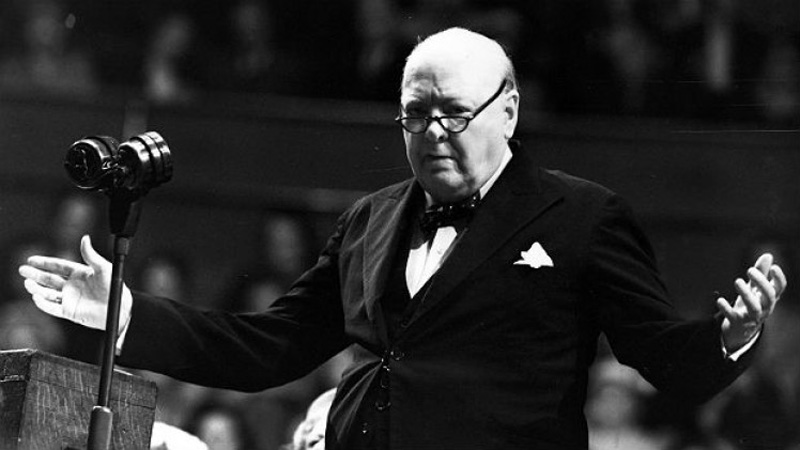
A real life aristocrat following a similar path was Winston Churchill. This is a story well told in this book: “No More Champagne: Churchill and His Money” by David Lough. It’s a quirky history, in that it approaches a well known figure from a special angle. Fans of finance or Churchill or England find much to enjoy in the book. I was sad to finally finish it.
Lists are a tricky thing to blog about. A good list is addictive: you want to go through every thing in the list and you are satisfied afterwards. A bad list is tiresome and you want to abandon it halfway through.
I hope you find these lists to be of the good kind. In a way, these lists are also a list! I hope you don’t abandon it. 🙂
It’s an easy thing to make yourself feel you are insufficient. You simply have to pick a task that you believe you can do but that is beyond your reach. It can be a nearly impossible physical task, like running a long distance. Or a mental task, like memorizing a long work of fiction. Or it can be a social task, like having plenty of fans and friends. Regardless, it can be something you can be guaranteed to fall short of achieving in the attempt.
The hard thing is to make yourself feel sufficient. To look past your failings and limits and judge yourself worthy. It requires knowing yourself. Knowing what is required of you. Knowing that even if you can’t do everything or even many things, you still can do some things, and that those things are enough. Those things are sufficient. Just like you are sufficient.
I love the Chrsyler building in New York City. While there are many great buildings in the World — never mind Manhattan — it’s always been my favorite. So I was happy to come across this on the site, Open Culture: An Architect Demystifies the Art Deco Design of the Iconic Chrysler Building. That site highlights a video from AD and explains:
In the Architectural Digest (AD) video… architect Michael Wyetzner takes us on a tour of that design, explaining how each of its features works with the others to make an enduring visual impact. Some, like the gleaming oversized radiator-cap gargoyles, impress with sheer brazenness; others, like the Native American-derived patterns that repeat in various locations at various scales, take a more practiced eye to identify.
Fans of this building, like I am, take note.
P.S. I think Ridley Scott is also a fan. In the opening minute of his film, Someone to Watch Over Me, he takes an entire minute to lovingly film the skyscraper just as night falls. Here’s a clip of it:
In February I wrote of Mayor Tory’s resignation and a brouhaha around Premier Ford’s involvement with developers and the Greenbelt. That’s the old news. The new news is we have a race on to see who will be next mayor, and it seems like 8000 people are running. (Not quite, but it’s a lot.) The Toronto Star has a rundown on them, here. Election date? June 26th. If you want to vote early or find out more information, go to toronto.ca.
As for the Premier, he continues to muck about in municipal issues. Nothing new there. First he offered up Ontario Place to private developers. Now he wants to move the Science Center there. I am sure other cities and towns in Ontario wonder if he wants to be their Premier or just the Premier of Toronto.
The TTC is still great, though. Not only it relatively efficient, it also has some great architecture, as this slideshow illustrates. (One of my favs is Rosedale, below.)
If you can make it to midtown Toronto despite our woes, try and get some coffee from DeMello. It’s great! Turns out they are expanding downtown. That’s great too.
Foodwise, a new place in Bloordale has opened and looks really good: 1211. It joins a list of restaurants best categorized as eclectic. Here’s to more new eclectic places.
Finally, here’s a blast from the Toronto past: the rise and fall of MuchMusic. And I discovered that the Health Center that I pass almost daily on Yonge used to be a police station (no 53). I always thought it was a hospital. Instead it was the home of the police, right next door to the fire department. (The fire fighters haven’t moved but the police have a newer and bigger place on Eglinton and Duplex.).
When we talk about the Poor in 2023, we speak of the Homeless. In some but not all ways, this makes sense. Anyone without a home is by default poor (unless you are very rich). And it makes sense that tackling homelessness is the best way to tackle the problems that poor people have. But it’s not enough to stop at homes: we need to treat poverty as a concurrent disorder.
If someone has addiction problems and mental health problems, professionals like those at CAMH in Toronto will treat the addiction first while taking into account the mental health problems. I think the same has to be done with poverty.
Indeed, this piece at newscientist.com says that “decades of research have shown that focusing on housing, without making sobriety or mental health treatment a prerequisite, is the most effective way to reduce homelessness”. People need shelter first if they are to improve their lives.
But shelter is just a start. As this shows, “110 unhoused people died last year in Toronto homeless shelters”. Poor people need more. Otherwise they will have a bed (if they are lucky), but die if they are not cared for.
Part of the challenge is the homeless poor can be difficult to care for due to many reasons. It takes a special set of skills to do so, as this piece shows: “You Have to Learn to Listen” How a Doctor Cares for Boston’s Homeless. It’s not enough to just provide facilities and insist they should go to there.
So the Poor need homes. They need better care. They need food. All basic needs. Some of them need more, like help with addiction problems. From there they need to develop skills. Otherwise they run into the problem of what to do with themselves when they no longer need to scramble to find money to buy booze, as this piece showed.
There are others besides those who are Poor who need those things: those of us who are not Poor. Shelter, food, healthcare, occupation…we all have those needs. We need to find a way that all of us can get access to that, not just for the betterment of individuals, but for the betterment of our society as a whole. Right now our society has a concurrent disorder. Dealing with homelessness may be a good way to start to tackle it, but we need to take into account more than that as we move forward. It’s the only way out society can get better.
Food insecurity is often tied to other problems, like whether to get food or heat and other utilities. This is a striking story that illustrates that cruel fact.
It doesn’t help if we don’t know how many homeless people they are. According to this, there are over half a million homeless people in the US. And they may not be where you think. For example, the state with the second-highest per capita homeless rate in the US is…. Vermont. That surprised me.
Fashion is for the rich, and those who aspire to look the part. For the rich, the challenge is coming up with ways of using fashion to designate that you are in fact rich. The new way to do this is with quiet luxury, as the actors in the TV series Succession illustrate.
Of course not everyone is into rich normcore. Some of the well off dress in the high end line Thierry Mugler. For those with less means who aspire to wear Mugler, H&M has once again stepped in by offering up a low cost version of the high end line. I especially liked that piece on H&M: it details the history of the low end store offering high end fashion lines, and it’s as much a sociological study as it is a fashion one.
Otherwise…one fashion guy who was in the news due to twitter was @dieworkwear, Derek Guy. There’s a profile of him here in GQ. Why he became twitter famous and newsworthy, no one but Elon Musk knows. He does know his stuff.
P.S. Image of Karl Lagerfeld from the Times. He was the first to experiment with his clothes and H&M, a risky initiative at the times. It paid off for him and H&M.
It’s long past time to write about IT stuff I’ve been working on. So much so I’ve too much material to provide, and rather than make an endless post, I’ll focus on cloud. I’ve mostly been doing work on IBM cloud, but I have some good stuff on AWS and Azure (Sorry GCP, no love for you this time.)
IBM Cloud: most of the work I’ve been doing on IBM cloud has been hands on, as you can tell from these links:
When I was growing up, there were only so many varieties of pizzas. You could get a pepperoni pizza, or a mushroom pizza, or the king of all pizzas: the Combo! The combo was pepperoni, mushroom AND green peppers. In my mind it was the best pizza ever. In some ways it still is. The last time I had such a pizza was seven years ago, from one of the places legendary for it: Venice Pizzeria.
Now people from outside of Glace Bay will tell you that the Combo was not limited to my hometown, and that’s true. The one above is from Kenny’s in Sydney, N.S. It is also good! But really pizza anywhere in Cape Breton is a good thing, and if you are visiting, try and get one. Ask for a Combo.
If you feel like something else and you are in Glace Bay, I recommend the food at Colette’s restaurant. In the morning I am a big fan of their breakfast with fried bologna. It’s fantastic. And if you are there on a Thursday, you can get their corned beef and cabbage. That’s also great. A classic, in fact.
When local hockey players wanted to get the edge — literally — on their competition, they turned to Peter Politte. For decades, Politte was widely regarded as the best skate sharpener in Glace Bay, if not the entire island. He died Saturday at age 91.
Everyone went to him, including me as a kid. If you had fresh ice and skates sharpened by Peter, you were bound to have a great game of hockey at the Miners Forum.
In doing some research on Glace Bay, I came across these sites that wrote about mines down home, including No 2 and the Caledonia mine where my grandfather dug coal. I even found this piece on a mining disaster at Caledonia mine in 1899. More on Glace bay mining at this link.
According to Google Maps — and my own knowledge — the official neighborhoods of Glace Bay are:
Bridgeport
McKays Corner
McLeod’s Crossing
East Slope
Passchendaele
Steeles Hill
New Aberdeen
Hub
Table Head
Sterling
Caledonia
Morien Hill
Unofficially, there are some neighborhoods I know because of the pit they were associated with, like No 2 in New Aberdeen and No 11 in Passchendaele. If anyone thinks I should add more, please put them in the comments and I’ll include them.
P.S. I wrote this post because recently I wanted to find information on the neighborhoods of Glace Bay and I couldn’t find anything, not even at Wikipedia. The only information I could find was from the Wayback Machine with an old link to destination-ns.com and all it said was stuff like “McKays Corner is located at 46°11’12″N, 59°59’32″W in the Metro Cape Breton region of the Cape Breton Island, Cape Breton county.” or “Glace Bay is located at 46°11’49″N, 59°57’25″W in the Metro Cape Breton region of the Cape Breton Island, Cape Breton county.” (It must have been one of the earliest pages on the Internet!)
For the record, it also included information for:
Sterling (Subdivision 0.36 kms) is located at 46°12’00″N, 59°57’27″W
Hub (Subdivision 1.73 kms) is located at 46°12’44″N, 59°57’17″W
Caledonia (Subdivision 1.90 kms) is located at 46°10’48″N, 59°57’42″W
Table Head (Subdivision 2.27 kms) is located at 46°13’01″N, 59°57’10″W
New Aberdeen (Subdivision 2.32 kms) is located at 46°13’00″N, 59°57’59″W
Morien Hill (Subdivision 2.35 kms) is located at 46°10’35″N, 59°57’51″W
Passchendaele (Subdivision 2.83 kms) is located at 46°10’36″N, 59°58’46″W
It’s funny and good and strange how something new can remind you of something very old that you barely remember. That happened to me recently.
In the early 70s (1972-4) there was a TV documentary show on CBC called Of All People. It was a simple show that did short profiles of everyday Canadians.
I would watch it as a preteen with my Dad, and afterwards we would talk about what we saw and how we thought about it. It was a great show to watch as a kid (and with your kid). I think it shaped my worldview to some degree. This idea, that a worthwhile life can be anything and anywhere, was a main theme of the series, and this idea has stuck with me ever since.
It was a lovely show. Watching each episode, you were left feeling better about people and the world. I wish I could write more about it and share more about it, but barely anything exists online.
And I thought of all that again when I listened to Denison Witmer’s new song, “It’s OK to Live a Quiet Life”. The people in Of All People lived lives that were quiet and fine and good. You can live such a life too. It’s OK. Maybe more than OK. But OK is good too.
Here’s two versions of his song. For A:
and E:
Go and listen to them on your favorite music service via this link.
You can find out more about Denison and his other work, here.
Fans of Teenage Engineering and their designs might be interested in their new CM-15 microphone seen in the photo above. Is it expensive? Yes. Is it cool and well designed? Also yes.
These two links from Uncrate and design-milk have more details on it. Audiophiles will especially want to take a look.
I just love all the things they make, and wish I were musical enough to really appreciate them.
Open Infrastructure Map is a view of the world’s infrastructure mapped in the OpenStreetMap database. This data isn’t exposed on the default OSM map, so I built Open Infrastructure Map to visualise it.
But the best thing to do is tell you to head over to it and zoom in on areas you know. Being from Cape Breton, I did just that, and I was wonderfully surprised by how much detail was there. I think you will feel the same.
I’ve written about Karl Lagerfeld often on this blog. In the past I found much to admire about him: his drive, his levels of energy, his capability to go in different directions, his ability to change mentally and physically. He was also quite the wit, as can be seen here and here, and I admired that too.
Despite all that, Lagerfeld still has allies. Like Anna Wintour, a friend who thought highly of him. It’s not a fluke he was the focus of the recent Met Gala, run by Wintour. And anyone who cares for fashion and design that flipped through this retrospective the Tines did of his work at Chanel, Fendi, H&M would agree just how influential and powerful his work was.
So what to do with difficult people? I often think the best way to think and talk about them is like this. Instead of saying “I admire Mr/Ms X”, I try to say, “There are things I admire about Mr/Ms X” or “I admire anyone who can do Y”. That is the case when it comes to me and Karl Lagerfeld now. There are things I admire about Lagerfeld. And I admire anyone who can do some of the things he achieved.
Like any famous person, Karl Lagerfeld is not my friend, my foe, or even a member of my family. I don’t have to accept or reject him unconditionally. You don’t have to either.
Besides being a famous fashion designer, he is also well known for the Karl Lagerfeld diet. You can read more about that here and here and here and here.
In the early 90s, people soured on AI and work on it stopped. That period was known as AI Winter.
Smarter Cities is an idea likely in its own winter period. I concluded that when I watched the segment above on the subject. The segment’s focus (according to its Youtube comment) was this:
In 2017, the City of Toronto embarked on a project with a subsidiary of Google called Sidewalk Labs. The idea was to develop a parcel of Toronto’s industrial waterfront in order to create a “smart city”. At first, the idea was met with a lot of enthusiasm, but eventually a number of concerned citizens, journalists and planners started to raise questions about data privacy, competition and public policy issues that Sidewalk Labs could not answer. What happened to Sidewalk Toronto and why are we so drawn to the idea of futuristic urban utopias? To help answer that: John Lorinc, author of “Dream States: Smart Cities, Technology and the Pursuit of Urban Utopias;” Josh O’Kane, author of “Sideways: The City Google Couldn’t Buy;” and Vass Bednar, Executive Director, Master of Public Policy in Digital Society Program at McMaster University.
It’s a good segment with good people critical of the idea of smart cities. Watching it, I could see why you might think that any city would be unwise to aspire to be a smarter one.
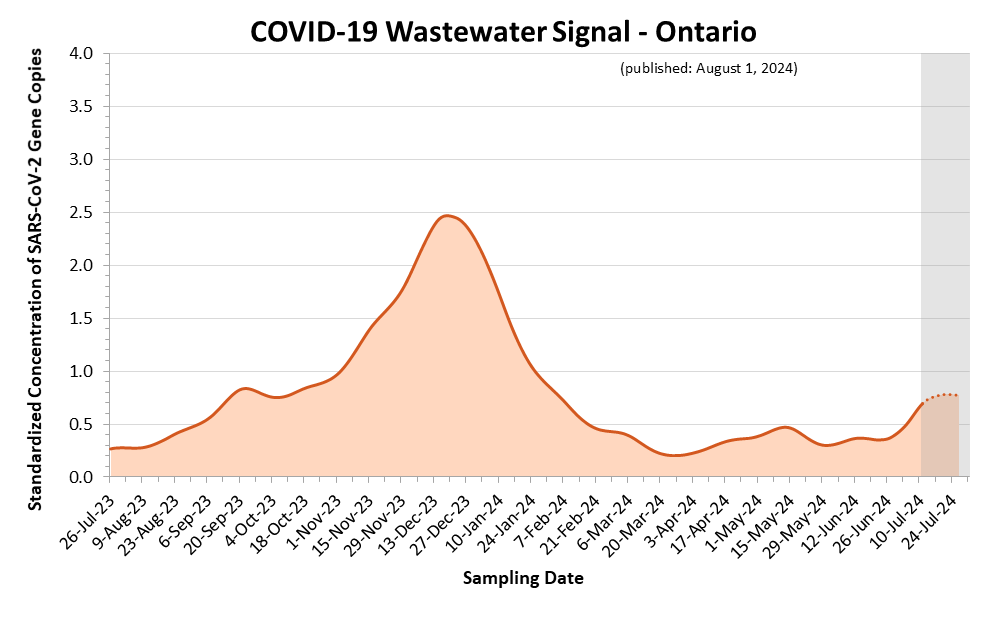
If you did think that, I’d ask you to think again. I believe cities, provinces, states and countries all benefit from becoming smarter. For example in Ontario, smart meters were deployed across the province to more accurately measure power consumption and help people shift their usage. Wastewater was measured during the pandemic to see if things are getting better or worse. And it’s not just public initiatives that matter: private services like Waze give drivers a view of the whole city and let them choose the best routes as they make their way to their destination.
Whenever there is municipal or state data available and software to process it, then you have a smarter city. It’s not at the scale that an organization like Google wanted it to be, but a smarter city nonetheless.
I strongly feel we need more of this. Smarter cities can be greener cities. Smarter cities can be better functioning cities. That’s why I am glad that Toronto is continuing to explore this, with things like its Digital Infrastructure Strategic Framework. And it’s not just Toronto: here is a list of the top 10 smart cities in the world and what makes them smarter.
The folks at Vox have a good guide on how to find your purpose in life. According to them, your purpose…
is a long-term calling, act, or way of life that interests you
something you have some competence in
makes a marginal difference in the world
For some people, their purpose is obvious. Their work is their purpose. Or their role as a parent or sibling gives them purpose. Some gain purpose from acts of kindness. Others get it from creative tasks.
Perhaps you don’t drink (red) bordeaux (never mind white bordeaux). Maybe you are one of the people who nowadays prefer burgundy. Or new world reds. Or reds from elsewhere in Europe. I used to be like you. I liked big bold jammy reds. Reds with intense fruit and flavour. High alcohol reds. Cab savs. Syrahs.
Over the last few years, though, I moved away from that and towards bordeaux wines. I like the high concentration of merlot in their reds. I enjoy “the chewier, drier style of red bordeaux (that) can go well with something more savoury such as roast beef” (as Jancis Robinson says here). I especially like that some of them come in under 13% ABV. More so, I love the value. You can obviously spend a fortune on great bordeaux, but you can find some very good ones around $20 per bottle.
I got thinking of writing about them when I read this piece by Malcolm Jolley. He talks about the region and its wine generally, then he focuses on this: Chateau Argadens. Not only is it a fine wine made by great winemakers, it’s also a bargain. Indeed, right now it is on sale for $16.95! Get a few bottles at that price. Mind you, it seems to come around every year in the Vintages section of the LCBO, so don’t panic about missing it. (Then again, if they are selling it off, who knows?)
Another one I liked in the past is this one: Jean Pierre Moueix bordeaux. It too is made by serious wine makers and it comes well rated. It has a lower alcohol content, and goes well with food like steak. (Want more? Try these: Clos Bel-Air 2016 or Chateau Hauchat 2018.)
There’s also some white bordeaux that’s good in the LCBO, like Cap Royal Bordeaux Sauvignon Blanc 2021. I enjoyed that one. Again: good winemaker. Fans of fume blanc should check it out. (There’s also a lot of not so great white bordeaux in the general LCBO section, so buyer beware.) If you can get your hands on white bordeaux from the restaurant St. JOHN, do so. I had it there with a delicious meal of fish and pork and it paired up perfectly.
If you like bubbles, then there are several well regarded cremants from the region, including this one, which is a steal at under $15: Celene Bordeaux Améthyste Brut Crémant. Cremants will go with mostly anything, from oysters to dessert. Also fine all by themselves.
There’s so much good wine in the LCBO and elsewhere. But fans of good value wine should consider grabbing a bottle or two of bordeaux.
After 24 years, one of my favorite bands has released a new album. It’s incredible that not only has this happened after a quarter of a century, but that it has managed to do so well. It’s incredible and fantastic.
Leading up to the release, they’ve received some great reviews and lots of good press. You can read some of that here in the New York Times, or in the Guardian (here and here), or Pitchfork.
With the release of this new album, I can think of them as being of three times. One time is Now, of course, in the 2020s. A second time is the 1990s. In that time they were at their peak. Here you can see them performing in 1999, just before what I thought was then end (as no doubt many people did):
The third time – the 1980s – is the time I remember them most fondly. That was the time they were just starting. Here’s some rare footage of them from then:
Pick up Fuse when you can. Meanwhile, if you are a Spotify user, here’s their Complete Discography, I believe. Give Fuse and more a listen, there.
It seems only yesterday that Kenneth Branagh was wowing us with his version of Henry V. Now instead of playing one of the younger Shakespearean lead roles, he is playing one of the oldest, as he gets ready to direct and star in a new production of King Lear on London’s west end. I am sure it will be a huge success. Shakespeare has been good to him, and vice versa.
Reading that, I started to think about some of the pieces I’ve collected on aging. For example, if you or someone you love is wondering how to manage living in your home as you get older, then read this.
As we age, we hope we can retire. And by retire, we hope to work less if at all. Sadly, in some Asian societies “Retirement” just means more work. That may not be a fate limited to Asian countries, I fear.
What do you need when you get older? An old person project! Let John Demont explain. Or if the thought of getting older and wrinkled bothers you, read about preventative botox . To each their own.
P.S. I could not close out without including one of my favorite movie scenes, with a very bright and brash Branagh rallying the troops with his truncated version of the Saint Crispin’s Day speech:
I love that speech, that scene, and his portrayal of it.
“When faced with an episode that used the French language itself as a narrative tool, the Canadian team were again able to fall back on the differences between French and French Canadian.” (Bart in Paris shows this brilliantly.)
“In the Quebec dub, the Simpsons family speaks with a thick working-class dialect of Montreal French called joual. They also do something the France dub doesn’t do: they regionalize the scripts, subbing in Quebecois politicians or places for the more US-centric references.” You can see this in the famous bit with Principal Skinner and Steamed Hams bit:
I continue to find interesting things in the area of astronomy, math, physics and more. Here are some of the best of them. I hope you like them! (Yes, there will be stoned earthworms, and something about Uranus. :))
Can non-mathematicians learn and appreciate math? This piece looks at some books on math education that try to do that. The jury is out, though I think it’s possible.
One of the problems with generative AI like ChatGPT is it makes you think it is magical. You type in some prompt, it comes back with a complex answer, the next thing you know, you are thinking this thing is smarter than a human. It doesn’t help that there is so much hype surrounding the technology. All of this can make you think it’s supernatural.
Well, it isn’t. It’s simply good IT. It consists of data, hardware and software, just like any other IT. To get a better appreciation of the ordinary nature of that, it helps to look at two recent examples: the AI the New York Times recently built and the AI Bloomberg just built.
It’s best to start with what the Times built. They used software called nanoGPT (karpathy/nanoGPT: The simplest, fastest repository for training/finetuning medium-sized GPTs) and took the works of Jane Austen, Shakespeare and more to build a chatGPT-like program on their laptops. Then they walked through the steps of getting it working, here: Let Us Show You How GPT Works — Using Jane Austen – The New York Times. It works pretty well after much much training. Obviously it is not as massive or sophisticated as ChatGPT, but after reading the article, you will have a better sense of how this technology works, and why it’s impressive but not magical.
Bloomberg today released a research paper detailing the development of BloombergGPT, a new large-scale generative artificial intelligence (AI) model. This large language model (LLM) has been specifically trained on a wide range of financial data to support a diverse set of natural language processing (NLP) tasks within the financial industry.
You can find a link to that research paper, here: BloombergGPT: A Large Language Model for Finance. What I liked about that paper is it walks through the approach they took, the data they used, and the technology deployed to make their model. Even better, they talk about how it is currently succeeding and what some of the limits of it are.
I’m happy that both these companies have been good about sharing what they are doing with this technology. I might even try and use an old laptop to build my own AI. I mean who wouldn’t benefit from tapping into the genius of Shakespeare or Jane Austen.
Is April the cruelest month? It can be in Canada. This month we’ve had summer like temperatures followed by light snow and freezing weather. It’s kinda what we expect here.
Here’s 90+ things I thought interesting that I really believe you might as well. Something for you to read on a rainy/windy/sunny/who knows April Sunday.
Pandemic: Yes, I am still going on about the pandemic. Hey, whatever public health activity is going on where you live, COVID is still making the rounds. People are still getting sick and dying. There’s a new variant going around: it’s called arcturus and so far it’s just in India. But who knows what could happen with it.
If you still want good data on covid cases, the New York Times has it. Here is a grim reminder of just how badly New York was hit by COVID. No wonder they still track it carefully.
In my last newsletter, I talked about feeling a weird nostalgia for the early parts of the pandemic. I felt that again watching this old clip of the Roots and the cast of Hamilton on Jimmy Fallon performing “Helpless”. I wonder what people will think years from now when they see it?
Elsewhere in the US, guns continue to be a major problem. Here’s the story of one of the worst guns in particular: the A-15. That’s a good piece on a horrible device.
Healthcare: there were a number of pieces on healthcare in Canada at the beginning of 2023. It could be because the provinces were in negotiation with the Federal government for more money. In the end, at least some provinces signed a health deal. I expect all will come around and sign.
Ideas: A good source of ideas is Ursula Franklin’s lectures on the Real world of technology. Austin Kleon was reading it and he reminded me of how good it was.
Famous People: Some major axe grinding in this piece on Brad Pitt, Angelina Jolie, and Jennifer Aniston. I think they will all be fine, in their own weird way, whatever skeletons are in their closet.
And on that fun note, I’ll close off this newsletter and the month of April. As always, thanks for reading this and rambling along with me. I hope you found it worthwhile. Happy Spring. Now the good weather comes.
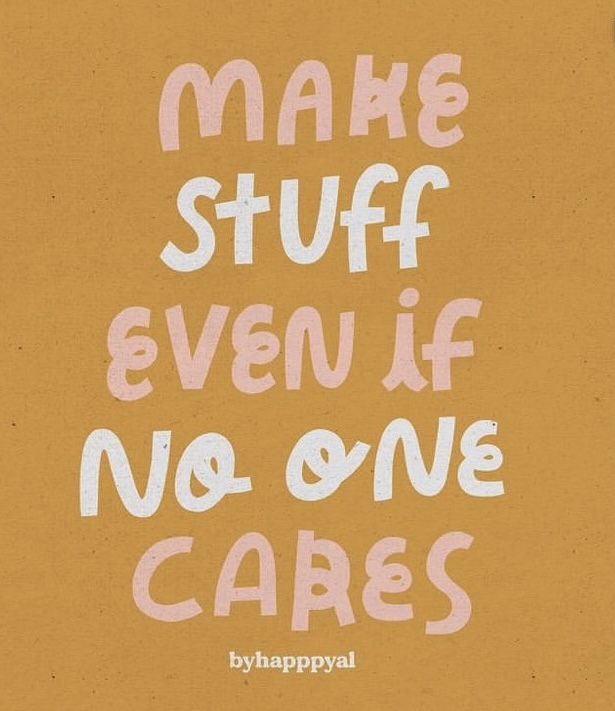
I found this image on Instagram some time ago and I kept a digital clipping of it to remind me to make stuff even if the only person that cares about it is me. I would advise you to do the same. Sometimes I imagine an audience that does like whatever I make, but I am fine to make it just for me. Kids are like that, and they’re happier as a result. We should be more like kids, like the kid we once were. Make things and be happy with the making of it. Even if you immediately toss it aside. For making stuff can do wonders for us.
Happy Friday. Make something this weekend: a poem, a salad, a chalk drawing, a record of some sort. You’ll be better because of it.
‘Shortlife’ is a small device showing how much percent of your life is completed based on your personal life expectancy.
You give him your birthday and your gender and he programs the clock based on this information and “the average number in your country provided by the World Health Organization (WHO)”.
If you want a more accurate estimate of your life expectancy, you can go here. That online calculator’s estimate “is based on a detailed statistical analysis of NIH-AARP data and conducted by Wharton professor Dean Foster” and takes into account not just your age and gender, but also other factors like how fit you are and how much you drink and smoke.
Based on that calculator, it estimates I have twenty more years to live, if I am lucky. It also states that there is a 25% chance I won’t have more than a dozen. Of course it is just an estimate, a probability. I could die today, or I could live for another 40 years. But the likelihood of 12 (and no more) I think is good. When we were in school, 12 years felt like an eternity. I suspect these will not.
One problem with such a clock is it meant for people who see the glass increasingly empty. We need a clock that shows things increasing full. There is such a thing, of course. But it’s not a clock. It’s a tree. If you plant a tree and you are lucky, the tree will grow along with you. Growth: that’s what trees represent. A tree you plant can represent you as a growing living thing, not as a dying thing.
I think the clock is smart, of course, but I think a tree is wise. Get both, and be wiser, still.
P.S. I wrote about the joy of planting and owning a tree, here. That tree is no longer on my property, and perhaps that makes it better.
If you like playing Wordle, then you should make a guide and an opponent of Wordlebot. I check it every time I finish Wordle.
Using Wordlebot as a guide, I noted which words it used first and second. Based on my notes it seems to always use SLATE as the first word. Of the second word I noticed it uses, CRONY is a common choice. That makes sense: those two words give you AEO and Y as well as CNRST. I find I can get a lot of matches this way. And if I don’t, I know the third word has an O or a U, and the remaining letters are easier to choose from.
Often I will play SLATE and then play CRONY even if I have matches with SLATE. My goal these days is to get it in three. I will only go for it in 2 if there is a good chance I can. (Like one day this month when the word was PLATE.) Currently the majority of my scores are 4: my goal is get the majority to 3. I am not sure that is possible, but it is what I’m aiming for.
While Wordlebot is a good guide, I also use it as an opponent. My hope here is to win by getting the word in less tries than Wordlebot. It does not happen too often. My next best hope is to tie Wordlebot but get a lower luck score. If we tie in tries but it has a high luck score, I also consider that a win.
One reason it is hard to beat Wordlebot is due to the eliminate process it uses. While the first word it uses tends to be SLATE, if it gets matches, it may play a word that comes from out of the blue but it is not. Wordlebot seems to calculate what possible words could solve the puzzle and then play a word to help eliminate them. If I had the ability to do the same, I would! Most of the time I do something less mentally taxing.
Wordle is a fun game, still. I especially love that people still post their scores on twitter. I consider it watercooler material. (“How’dya do on Wordle last night, Bob?” “Got it in 3” “Whoa, nice. Ok, have a good day” :)) Like Wordle, I don’t take Twitter too seriously either. The two go good together, like chocolate and peanut butter.
I wear my Apple Watch every night while I sleep, and I have found it’s been helping me sleep better.
My watch sends a ton of information to my phone during the day, including information about how I am sleeping. When I wake in the morning, I head over to the Sleep summary in the Health app on my iPhone and check how I did that night. Here’s an example:
You can see this was a pretty good night for me. I slept for 7 hours, and I managed to get in a fairly decent amount (for me) of deep sleep. I don’t know if this is typical for most people, but it is for me. I have a number of deep sleep periods, about 4 periods of REM sleep, and the rest is core sleep. You can see I woke up twice, but barely for any time at all. I also found I was refreshed and alert the next morning.
That wasn’t typical though. If you look below, you see my sleep for the week:
There’s quite a number of days where I was awake for large periods of time. Every day I would wake up and see that and think: what can I do to fix that? Some days it would be something simple, like the room was too warm. Or I ate too late. Other days it is due to more difficult things like too much stress. (Stressful days tend to cause other issues, like eating badly, which compounds the problem.)
Before I had this data, I would let myself sleep badly for a long stretch of time. Now when I start seeing I am not getting enough sleep, I work hard to get the right conditions to get a better sleep the next night.
There are plenty of things you can do to maintain good health: eat well, exercise, and sleep well. The Apple Watch can help with all of those things. If you can get one with these features, I highly recommend it.
P.S. Why is deep sleep important? It could be the time your brain gets cleaned. To see what I mean, go here.
Hey, are you still optimistic? If you are filled with optimism (or if you are not), it is all about the stories you tell yourself over and and over again. Read that, but more importantly, learn to tell yourself better stories.
Someone on my street was kind enough to plant snowdrops in their front yard. Last week they were bursting from the ground and giving me the hope I always feel when I see them. Seeing snowdrops, I know winter is over: seeing snowdrops I know spring is starting. I love the significance of this small white flower. They’re a beautiful reminder.
If you are ever wondering about planting flowers in your front yard, I encourage you to do so. I am sure I am not the only one who walks by such beauties and feels joy. You will be giving a gift to the world with whatever you plant. How great is that?
Here’s some more useful links on staying fit, physically and mentally. Plus some things on sleep, because sleep is an important part of fitness. And more!
Another person who’s work I’m a fan of is Kehinde Wiley. You likely know him for his famous portrait of Barack Obama. The Guardian has a good profile of him there.
There’s no living artist who I am a bigger fan of than Richter. He’s getting very old, though (85), and he is thinking about giving up painting in the future. But for now, here’s a story of how Gerhard Richter Rides Again, in The New York Times.
Yesterday I wrote about using Instagram as a recording device to track special events, such as life during the pandemic. As I was writing about it, I started thinking about Instagram as a service.
A weird thing happened to that service in the summer of 2022. The folks at Meta (who own it) hamfistedly tried to change the app, only to face a backlash from famous and not so famous. Unlike Twitter, Meta actually backed off from some of the changes (though they are still trying to make Reels happen). I’m glad they did.
In some ways Instagram has become my default way of sharing my life, mainly through Stories. The same 50 or so people see all my posts and can keep up with what I find interesting, and that amount is fine with me. On Twitter you can imagine lots of people are paying attention to what you post: on Instagram, you know who is. I no longer use Facebook, and who knows who reads these blog posts. 🙂 So Instagram it is.
Like many people, Instagram photos are not my life, but rather a version of it. I realized that especially when I put together my collection of images from Year 1 of the pandemic. There were plenty of things that I took photos of but never posted there. Anyone not close to me might think that’s everything happening in my life, but it’s only a sliver of the pie.
It’s good that Instagram allows you to collect Stories in Highlighted sections. It helps with the ephemeral nature of them. In most cases, the fact that photos in Stories are fleeting is good. But not always. It’s good to shape some of them into a virtual scrapbook to display.
Of course I could use Instagram Posts, but like many people, I post to Post less and less. Now I mostly use it to mark a moment in time.
Instagram may not be the best place to publish photos, but it’s pretty good. Of course everything could change tomorrow, and all of it could be gone. I keep that in mind and keep my photos backed up separately. You should too.
Instagram has plenty of problems. Anyone reading their Wikipedia page can see that. But it has its benefits and does better than most social media these days. At least for me. Find me there, at least for now, at bernie_michalik.
Instagram stories are an odd thing, at least mine are. I post almost random images of things in my life, not thinking they add up to anything. But if you are living through a dramatic period of time like the first year of the pandemic, and if you collect those images together, as I did here in “Covid: Year 1”, they take on a narrative that was not there when you snapped them and saved them.
The narrative began even before the pandemic was declared. I have photos of me going to Chinatown and eating in many places, because word had gone out that a new illness had broken out in Wuhan, China and people were avoiding that part of the city because people were afraid of coming across someone who had it and then get sick. I was down there to do a small part in keeping some of those places in business by eating as much as I could. (Brave, I know 😊.)
Soon, general precautions started. Hand sanitizer was everywhere, like this one at my work:
Then the pandemic was officially declared in March 2020 and things started to break down. I have photos of the grocery stores being cleared out of flour and potatoes. Toilet paper was scarce. People were queueing up to get into grocers and the liquor store, which both had limited occupancy. Plastic barriers went up, and everything else was shutdown: work, restaurants, stores, gyms. It was a time of lockdown.
To occupy ourselves, we adopted hobbies. People made bread. I drew and made zines. I even wrote some half decent poems. I continued to blog, and traffic shot up.
We worked at home. Every damn day. Our hair grew long. We finally got masks to go shop for food.
We ordered take out. Lots and lots of take out. Restaurants pivoted to this to stay alive. Some, like my favorite restaurant Brothers, didn’t make it. Many did, due to hard work and help from the government. We drank pet nat and cremant to celebrate.
In summer we finally ate outside, albeit like this:
Eventually we got to eat indoors for a bit in the fall. Otherwise, if we wanted to celebrate birthdays or Easter, we did it with people in our circle. Collecting with others outside our circle was frowned upon.
We purged our homes to make space. I had a garage sale, and was surprised by the people who showed up and bought things. We were awkwardly happy to see each other, and dealt with money for the first time in ages.
We made the best of it. We watched the blossoms in High Park in Toronto via a TV channel. We watched our talented friends put on shows on Instagram and Youtube and Twitch. We walked on streets closed off to traffic. We banged pots and pans for health care workers. We did not go to the movies, even though the movies tried to open in the summer of that first year.
We downloaded apps to keep track of COVID and to know what to do. We downloaded apps to finally travel in the fall. We wore our masks everywhere. We wore sweat pants almost as much, if not more.
We dealt with bad people. The anti-maskers. The anti-science people. We celebrated when Trump lost.
If we were parents, we tried our best to help our kids. We took them out on Hallowe’en and let them get treats delivered by chutes. We made them get up for virtual classes via Zoom and other technologies. We ordered them Christmas presents online because the stores remained closed in many places like Toronto.
Most of all, we awaited the coming of vaccines and yearned for a normal time. For many, it was the worst of times, losing their livelihoods and their loved ones. Getting ill. For some, it could also be the best of times, as it often was with me.
Here’s some bits and snippets on the New York I’ve been collecting over time. I hope you like them.
A great source of such snippets of life in New York can be found here, in the New York Times section called Metropolitan diary. Just little bits of life in the Big Apple, with wonderful grease pencil drawings to go with them. (See one such drawing below).
Speaking of the Times, noted conservative David French is joining them as an Opinion Columnist. I have to say, these conservatives often start out there with great praise but then become awful. Let’s see how French does. I’m not optimistic.
Yesterday I wrote of a landmark of the city closing down: the Pennsylvania Hotel. Here’s a story on a smaller landmark also leaving: Alleva Dairy in NYC Will Close. I am sure that place contains many stories itself.
Manhattan is a region of extremes when it comes to rich and poor. On the rich side, here’s a Look Inside the NYC Apartment of MALIN GOETZ Founders. Pretty posh. Also, what’s it like surviving as a staff member of the high end store, Bergdorf Goodman? Well not as tough as being Flaco the owl, but tough nonetheless. To see what I mean, see this: Surviving 10 Hours and 32 Minutes at Bergdorf Goodman. If nothing else, you can see what providing exemplary service is all about.
(Top image: Christopher O’Keeffe, the director of loss prevention, locks the door at the end of the shopping day of Bergdorf. Credit…Landon Nordeman for The New York Times)
If you are not familiar with the idea, let me explain with this quote pinched from one of the links below: “Victory gardens are gardens grown by civilians during times of widespread food insecurity. The gardens were encouraged by the Canadian government during the world wars, as a way to feed both civilians and troops.”
In time of high inflation brought on to some degree by the pandemic, such a garden might help in several ways. But heck, if you want to stick with growing flowers to lift your spirits, that’s ok by me too.