Good rules for twitter use


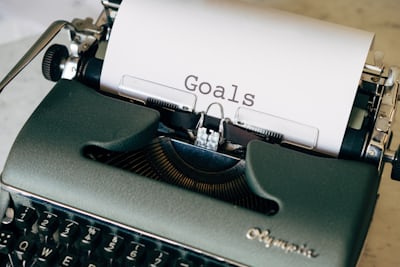
There’s been some discussion of the pros and cons of twitter this week. From one of the pro pieces came these rules which I thought were pretty good:

Never check the site before 8am.

Mute anyone who is neither funny nor polite.

Mute notifications regularly.

Delete the app periodically.

Never assume anything is important just because it’s big on Twitter.

Never say in conversation, “As I recently tweeted”.

The pro piece is here: I’m a Twitter addict and I don’t care | Financial Times

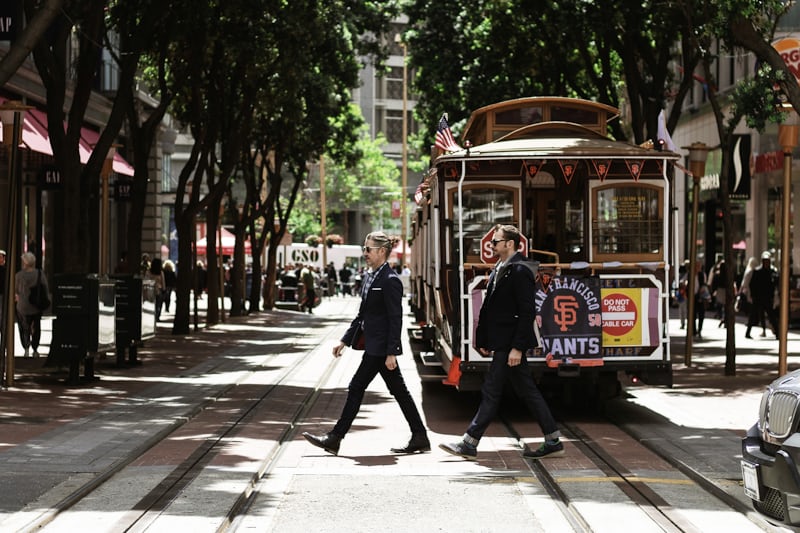
(Photo by Brett Jordan on Unsplash)

The problems with the trolley problem

Even if you have never heard of the Trolley Problem, if you have watched the TV series, The Good Place, you are aware of it. I’m willing to bet you do know of it, though.

For a time I was fascinated by it, but lately I have found it disposable. And when I came across this, Does the trolley problem have a problem? my answer was “yes, clearly”.

Whether you love, hate or are unaware of the Trolley Problem, I recommend you read that.

As for me, I don’t find it is revealing as people who use it might suppose. That’s the conclusion of many in the article, too. But read it for yourself and decide.

(Photo by Jack Patrick on Unsplash )

If you think you are suffering from complex PTSD

If you think you might be suffering from PTSD, I recommend you review this checklist: Signs You Might Be Suffering from Complex PTSD.

As someone who suffered from PTSD, I found it useful. If too many of them ring a bell for you, what should you do? First,

… stop being brave. We should allow ourselves to feel compassion for who we were; that might not be easy, given how hard we tend to be with ourselves. The next step is to try to identify a therapist or counsellor trained in how to handle Complex PTSD

There is nothing wrong with being brave. It’s admirable in many ways. Just don’t let it get in the way of getting help.

.(Photo by Finn on Unsplash )

On using Tumblr again because of my DD


When Tumblr and Posterous came out over a decade ago, I started using them a fair bit. Sadly Posterous died. Tumblr kept going, but I stopped using it. It’s not that Tumblr is a bad technology platform: it’s just that I didn’t have a need for it. But now I do.

I wanted a platform to do knowledge transfer of IT concepts for my daughter who is also currently in IT. I could email them directly, but they are not personal and others might benefit from them too. I could use WordPress or even just a straight up website. I decided to mix it up a bit and use an old Tumble log I’ve had since 2009 called BLMonIT . It has a great old school theme that looks like an old Mac OS background. It originally was meant for sharing IT knowledge. It has been hardly used. It was just the thing I needed.

I’m going to be posting IT knowledge and opinion there, I hope. If you find it might benefit you, head over to BLMonIT.tumblr.com.

Good news. No one wants to become a Wall Street banker anymore


That may seem snarky, but it’s true. Despite efforts by firms like JPMorgan hiking entry-level pay, it remains to be seen if it will be enough to attract young people to come and work with them. It’s true, many are not attracted to the extreme hours required to do the job. It’s more than that, though. As Bloomberg argues, the real reason

… isn’t only the hours. All the exciting work has been regulated within an inch of its life, leaving millennials and Gen-Z employees searching elsewhere.

And that is great news. It means regulation of banks is working. Sure the work is boring. Boring banking is stable banking. After the Great Recession of 2008, the last thing we need for a long time (i.e. eternity) is exciting banks.

Let the young people looking for exciting careers look elsewhere. Let them go join firms and fight climate change, pandemics, world inequality. Leave the people looking for stable jobs to go into banking. Everyone wins that way. Even the banks. (Ask the people who used to work at Lehmans if you disagree.)

(Photo by Sean Driscoll on Unsplash )

It’s Monday. The best time management tool you have is the word “No”

I was reading this piece, Time Management Won’t Save You, and thinking about it a lot. Some of it I agreed with, other parts of it I thought dumb. However, I did do some thinking after I read this:

In all of these instances, the solution isn’t to become more efficient to accommodate more tasks, more decisions, and more distractions. The imperative is clear: simplify. Reduce the number of tasks you take on, replace decisions with principles, and put structure in place to eliminate distractions.

He is arguing that the goal is simplifying. I agree. But I would be more assertive: if you have too much to do, the goal is to say “no”. You have to say “no” to many things in order to say “yes” to the things that matter. Saying “no” gives you more time to do the things you need to do.

You might find saying “no” hard, but you are doing it all the time. If you choose one task to work on over another, you are saying yes to one and no to the other. If you interview 5 people for a job, you have to say no to the others. It goes on and on.

Part of the reason we think saying “no” is hard is because it implies a judgment on what you said no to. For example, if I hire one person over 4 others, it doesn’t mean the people I don’t hire are bad. It means the person I hired is the best fit for this particular job. If I buy a medium size shirt, it doesn’t mean the large shirt and the small shirt are bad: it means the medium fit best. That’s all.

Likewise sometimes we say “no” when we really mean “not now”. For example, I love chocolate cake, but I might say “no” to it because I am full. I still love the cake, it just isn’t the right time for it.

Indeed, if you find say “no” hard, try “not right now” or  “not this week ” or “not until my next review period”.

Saying “no” is like weeding your garden. Weeds aren’t bad: some are beautiful. But your focus is on what you are trying to grow. That’s all you are saying with the weeding you do. Likewise, that is all you are doing when you are saying “no”. You are maintaining your focus in order to have the best outcome.

Go through all the things taking up your focus. Dump most of them into your “no/not now” list. Enjoy the time you now have to do the things that matter most.

(Photo by Daniel Herron on Unsplash )

More on New York in the 80s


Here on my blog I like to write about one of my favourite places (NYC) and my favorite eras (the 80s). So I am happy to highlight this piece on an exhibit on the music of New York at time: New York, New Music: how the city became a hotbed for music in the 80s | Music | The Guardian.

New York then was a hotbed not only for music, but for art. After almost dying in the 60s and 70s, it started it’s Phoenix rebirth in the 80s. I was happy to be a part of it, and I often like to highlight it. That Guardian piece does a good job of capturing the place and the time.

(Photo by Bryan G. on Unsplash.  I don’t think it is of the 80s, but it is a photo of the Lower East Side and it is reminiscent of it.)

Blue, the classic from Joni Mitchell, turned 50


Joni Mitchell’s great album, Blue, turned 50 this year. To celebrate, there’s been a number of good pieces done on it, including this superb one from the Times: Joni Mitchell’s ‘Blue’ at 50 – The New York Times.

If you are a huge fan or just curious to know more about the album, I recommend this: Hear Demos & Outtakes of Joni Mitchell’s Blue on the 50th Anniversary of the Classic Album | Open Culture

Of course, you can also check out the Wikipedia entry too.

Finally, Carey is one off my favorite pieces on the album and one of my all time favorite songs. So I loved reading this piece on the inspiration of that song (and California, too): When Joni Mitchell Met Cary Raditz, Her ‘Mean Old Daddy’ – WSJ


Friday night cocktails: the marg’

Ok, a marg(arita) may be more of a Saturday afternoon cocktail on a hot summer day, but here on my blog we only write about cocktails on Friday night. Regardless, as the days heat up, you need a cool drink to help you stay chill and relaxed and the margarita fits that description to a tee. If you’ve never made one before, or if you want to try new versions, Bon Appetit has the advice you need.

How powerful is twitter?


I agree with this assessment by Noah Smith: it is not powerful at all. It can seem powerful at times, like a very high wind. But like a very high wind, it either subsides or moves on. Sometimes there is damage, but mainly not.

If you disagree, I recommend you read his piece. It’s a pretty strong argument for why twitter as a social force is limited.

P.S. I have felt that for some time. I mainly post things that are either positive or amusing. If I want to take social action, there are concrete ways to do that.

P.S.S. Tweets are like straw, blowing this way and that way, yet not moving and not affecting things, besides making a nice noise.

(Photo by seth schwiet on Unsplash )

June, 2021 pandemic highlights and ramblings (a newsletter, in blog form)

Wow. It’s the end of June and summer has started. Here’s my latest blog newsletter for you. Short and sweet.

Pandemic:  Canadians continue to ramp up on getting vaccinated. 30% of the population has been fully vaxxed, including yours truly. Well done! I have been impressed by the Federal government procuring the vaccines, as well as the distribution in Toronto. They even had a big event where over 26,000 people were vaccinated in one day at the Skydome/Rogers Center.

Not everything has been awesome. Take the response from the government of Ontario. The Globe has said it has been the worst of all the provincial governments. Hard to disagree with that assessment. Ford has tried to distract others from his performance by trying to shift some of the blame on to Trudeau. That didn’t go far…Trudeau shifted it back onto Ford big time.

While Canadians have generally been good in getting vaccinated, some pockets have been resistant. So governments like that in Manitoba have been offering incentives. Here’s to everyone getting it done this summer!

There has been some positive things to note regarding the pandemic. Crime has plummettedQuarantine rules are changing for the better in Canada. So that’s good.

Businesses are trying to return to normal, but even the best of them, like Starbucks, are having a hard time getting supplies. There is still a labour shortage too. We are not out of the woods in terms of business.

Overall, this has been a tough time. As VOX argues, it has not been a sabbatical.

If you need more on the pandemic, the New York Times has a whole section, here.

Non-pandemic things I noted: NFRs are getting smarter, though there are still lots of nonsense. However at least  this time people like Sotheby’s are tying their value to the artist themselves. That’s a good thing. Another thing I keep an eye on is ransomware. Sadly, it’s getting worse.

In the US, the GOP are still focused on limiting who can vote in the US. They don’t want to change their platforms, they just want to stay in power.
That is obvious as shown here. Meanwhile, Biden seems to have their number, based on this.As for Canada, there has been a lot of focus on indigenous issues and in particular the residential schools. Here’s a good editorial
on it.

Try and go out and enjoy the nice weather while you can. Everything you can do to make the pandemic better is worth doing.

(Photo by Sofia Mejia on Unsplash )

Piquette: your new summer quaffable drink


I remember when rose used to be a hard sell in Ontario. It took years before people started drinking it in the summer.

Now people adopt new approaches to wine as fast as they can. In the last few years I’ve seen cremants, orange wines and pet nats all become hugely successful. (Though you wouldn’t know it at the LCBO).  The latest thing to catch my fancy are piquettes. This write up of them in Toronto Life describes them better than I can. As they say, piquette is a …

…low-alcohol wine is made by fermenting the pomace—leftover skins and dregs of the winemaking process—and diluting it with water. What results is a wine lover’s answer to summer-y spiked seltzers. It’s zippy, sessionable, slightly bubbly and certainly affordable—you’ll be hard-pressed to find a bottle over $20. Traditionally, piquette was reserved for farmhands and winemakers to sip while working the fields, when wine may have been easier to come by than clean drinking water. And it’s low enough in alcohol (typically, 5-9 per cent ABV) to not impact productivity. “Vineyard work is very tough, physical work, and your body gets sore and full of aches and pains,” says Mike Traynor, of Prince Edward County’s Traynor Vineyard. “Piquette takes that edge off without putting you out.”  There’s also a huge sustainability appeal to piquette. Once nothing more than compost, discarded wine skins can be a thirst-quenching source of revenue. “This actually allows me to bring down the prices on a lot of my wines because I’m getting a better yield from the grapes,” Traynor says.

A few additional thoughts:

  • piquettes are fun, but the taste of them vary widely. If you get an apple cider or a glass of sauvignon blanc, you know what to expect. With piquettes, I have not found that to be the case. The taste of one brand of piquette can be very different from another. They are like pet nats in that way.
  • I can see why winemakers like them: they can squeeze another product out of their harvest. Good for them.
  • I can’t see piquettes reaching a large audience like pinot grigio or moscato did. They will have to compete with beer and cider, which already have a huge part of the summer beverage market. But I am a bad predictor, so who knows.
  • a bottle of piquette can also be good at the end of the evening if you have a big group over for a dinner party. Try it sometime.
  • I’ve had a few piquettes now and I really like the one from Leaning Post. Indeed I like much of the wine from them. Good people, great wine.
  • The wine pictured above is from Leaning Post. It has a great punk rock vibe to it, which perfectly describes a piquette.

On the planet about to visit our solar system!

It’s true! A planet is going to make a fly by.  According to Kottke, the minor planet 2014 UN271  is about to visit our solar system. By 2031 it should be about as close to the sun as Saturn is!

I hope we can get some good views of it while it is in the area.

For more on it, see the Kottke article. He also has links to more pieces on it.

(Photo by Guillermo Ferla on Unsplash )

Work is not good for working parents. The pandemic exposed that.


If you are parenting small kids (or in my case, single parenting a large teen), you know how hard it has been during the pandemic to be a good worker. You know it was very hard to be a good parent, and it was basically impossible to take over the job of support staff for your kid’s teacher. Yet even before the pandemic it was hard to do all those things.

If you agree, I highly recommend this article.

If you are young and planning to have a career and have children, you should especially read it. At many firms, you should expect your career to take a hit if you have to beg off to do parental thing. Plan according.

(Photo by Alexander Dummer on Unsplash )

S.A.D. – not just for winter


If you think Seasonal Affective Disorder is something that only affects people in winter, read this. In some ways, it can be worse in the summer. People think: you should be happy with all the nice weather. There’s all kinds of sunlight too, they might add. But people can struggle in the dog days as much as any other time….I know I do. I find August as difficult as February. The reasons are different, but the challenges are similar.

If you find your mood goes poorly in the summer, read that piece.

(Photo by Joshua Earle on Unsplash )

GAP comes home (with home decor)

It looks like Gap is expanding into home decor like other companies like Zara and HMV. As Apartment Therapy explains:

Gap Home is a new brand of over 400 home essentials including bedding and bath, kitchenware, and general home decor like curtains, pillows, and bathroom necessities, with prices starting under $16. The brand plans to release seasonal and special lines throughout the year, so get ready to add a bunch of goodies to your holiday decor collection.

For more on it, see Apartment Therapy.

Does work leave you feeling exploited, exhausted, and alone?

Do you look to work to love you back? To make you feel valued, energized, part of a big family? Instead, do you feel “exploited, exhausted, and alone”? If so, you will want to read this.

It is a piece aimed at creative workers, but really, it can apply to anyone.

There is a lot to be gained from work besides a paycheque. But sometimes the expectations set are well beyond what work can do. If you feel your expectations are too hard, read that.

Solutions to the Fermi Paradox?

Fermi’s Paradox in a nutshell:

‘We’d estimate that there are 1 billion Earth-like planets and 100,000 intelligent civilizations in our galaxy.’ So there must be aliens. Why haven’t we heard from them?

If this fascinates you, check out this list of solutions to the Fermi Paradox.

You may not be convinced there is an answer to this problem, but for some, they will be.

(Image of Enrico Fermi from Wikimedia)

Barcelona saves Haring

I love this story. In the 80s, Haring went to a club and painted the mural you see above. To prevent it from being demolished, Barcelona City Council Steps in to Preserve a Little-known Keith Haring Mural.

Good for them! Something similar was done for a painting by Basquiat.

Here’s to the preservation of great works by great artists from the 80s.

Peter Jackson has Peter Jackson’d Get Back


When I first heard that Peter Jackson was going to remake “Get Back”, I was excited. I believe that he was going to find the happiness and joy in the making of the original film. Then sneak peaks of his work started to come out confirming this, and I was very excited indeed.

Unfortunately the pandemic hit before the film could be released and then the focus changed. As this piece explains, it is no longer going to be a feature film for general distribution. Rather it is going to be a three part feature only on Disney+.

In other words, Jackson is going to do to Get Back what he did with The Hobbit: stretch it out and over do it. I think that will be a shame. I am sure some fans will love it, and seeing the extra material will be good, but I also think it will be flabby and overdone. Just like The Hobbit.

Maybe I am too pessimistic. Maybe it will be great. We shall soon see.

(Image: link to IndieWire.com)

It’s Monday. Why are you working more than five hours a day?


It’s Monday. You are only working five hours today, right? I bring this up because I recently read this piece in Wired on how that is the right amount of hours to work each day, and how people who worked that way were more productive.

Of course there are a few caveats. For one thing, many jobs are not mainly focused on being productive. Anyone who has a job that requires many meetings can tell you that. But if you have a job that is largely focused on producing things, then try and limit yourself to five hours.

(Photo by ANIRUDH on Unsplash )

My thoughts on the Ontario government changing the curriculum for math.

My first thought in going over some of the big changes to the Ontario high school math curriculum was: good! I am critical of the current government for many reasons, but this is a positive change by them.

I have been helping my son with his math since at least grade 9 to grade 12, and it has been frustrating for him and for me. The math he needs for university is academic and limited to specific areas like functions. This academic math  benefits students who will go to university to study physics or math and very few other subjects.  The non academic math is better, but you can’t get into even a business program with it. By changing the curriculum and stopping streaming, the government has done away with two problems with the way math is currently taught. The only downside to this is for math tutors. (Maybe.)

So “1/sine 30 degrees”**  cheers to government for this. 🙂

(Photo by Antoine Dautry on Unsplash )

** sine 30 degrees = 1/2. So 2 = 1 over that. lol.

When was SNL at it’s best?

The joke is that SNL was at its best the years you watched it as a teen. I have literally been watching it since it started — Yes, I am old — and I kinda agree with that. SNL is really such an uneven thing that even back then there were good and bad parts of the show. (Usually anything after the second musical performance is throwaway). As well, SNL is best as much for individual performers as it is for the entire show. From Catherine McKinnon all the way back to Gilda Radner, there have been individual performers who made a good show great. (My favorite of all time is Bill Murray, but there are too many to mention here).

For another take on it, here is a someone more objective study on when SNL was at its peak. According to this piece in OpenCulture, this YouTuber took a systematic approach to deciding the best of SNL. He…

… decided to withhold judgment on the overall quality curve of Saturday Night Live, his favorite show, before putting in the time and effort to watch at least one episode from every year in its run

The article has a link to his YouTube results. As OpenCulture concludes,

He may not change anyone’s mind about the best, and worst, seasons, episodes, cast members, and hosts. But he does demonstrate an admirable willingness to dig into SNL’s history and give years of comedy positively antiquated by 21st century standards a fair shake.

What is going to take veganism to the next level of adoption

My belief is that there are a significant number of people who have already become vegan for various good reasons. But if you were to put them on a bell curve (normal distribution), they would fit on the front part of the curve, the small part. To get to the next level, I think, vegan food has to get to the stage where people don’t even think of it as vegan. It’s just good food that happens to have nothing animal related associated with it. I think Alison Roman is one cook who has done that: there are vegetarian and vegan recipes in her cookbooks and they are delicious, but they are not called out. They are just there and people cook them.

That’s why I was happy to read this: The Best Vegan Restaurants in America Are All in New Orleans | GQ.

It seems there is a new wave of vegan cooks and chefs who are upping the game in terms of making delicious vegan food. That’s great for a number of reasons. First, because it will inspire more cooks to jump on the bandwagon. Second, because all that will mean there are more people eating less animal food and more vegan food.

Here’s to everyone becoming more and more vegan over time.


Sleep. Not just a brain thing


This is a fascinating article that illustrates that sleeping is a more complex activity than we know: Sleep Evolved Before Brains. Hydras Are Living Proof. | Quanta Magazine

I’ve always associated sleep with something our brains need to have in order to survive. (Sleep deprivation is one proof of that.) But I have been won over to the idea that sleep is a more fundamental property of living things, brain or no brain.

Read the article: I think you’ll find it fascinating too.

(Photo by Florian Olivo on Unsplash )

The Gap Jacket from Kanye

After the hype of the collaboration of Kanye West and Gap, we now get to see the first item from what should be a long partnership. The jacket (above) is a bit of a surprise for me. I am so used to West using muted colours that I was pleasantly pleased to see he went with an electric blue. That’s a good sign. And the price is reasonable too.

Here’s hoping the pairing of the brand with the artist is beneficial to both of them.

For more details, see Uncrate.

Big city, very small (72 sq ft) apartment

I am always fascinated by very small apartments. NYC is the king / queen of them. While I have seen some small ones before, this 72 square foot one may be the smallest of all. You have to see it to believe it. It even has a kitchen (sort of) and it’s own bathroom (mainly). What it does have going for it is two amazing things: location and price.

If I was young, I would love living there. For a few years, it would be a great adventure. And like I said, you can’t beat that location at that price.

(Image via the article).

On the difficulty with being stuck on a local maximum

In math there is the concept of a local maximum. It is a point on a curve that is higher than the area around it, but not the highest point on the entire curve.

This happens in life too. You can be at a point in your life where you know life could be better, but to make a move from that point leads to life getting worse. Now if this high point is good, you can feel pretty good about it. Sure you could try and go for the higher point, but you may decide the tradeoff isn’t worth it.

The problem is when the high point isn’t good. Here you are stuck between choosing bad or worse. You could decide to move from bad to worse on the hope of getting to a much better life, but what if you don’t have the resources to do so? What if you move off the local maximum and fall into the valley of the a local minimum and never move off of there?

When you ask yourself those questions and you don’t have good answers, you will get stuck. You will be unhappy with the thought of staying, and unhappy with the thought of leaving. It’s hard. Here’s some things to consider.

First off, this is just a model. A diagram. It’s not the real world. It’s just a way of analyzing your situation. Your life is not just one point on a curve, not one score (like an IQ) that says your life is good or bad. Mathematically speaking, your life is more like a set of numbers, all different values on different curves, and these values are changing all the time. Indeed, if you only focus on one number, you may find you life painful and shallow. Some people devote their life to one measure: an award, a championship, a job title, and find themselves disappointed and even bitter when they achieve it and realize they gave up everything just for that.

Second, it is hard to measure things even at the best of times. That job title you wished so hard for suddenly means nothing when the company suddenly goes bankrupt. Or the limited domestic life you have suddenly looks good when a pandemic lands on everyone.  Measurements change all the time as the ground shifts all the time, and all measurements are relative.

That said, it is no reason to be complacent. Have more faith in yourself. Look back at all the difficulty you have had in the past that you survived and prospered in. If you do move off your local maximum, you may get stuck in a rut for awhile. But only for awhile. Keep moving. Keep remembering that you life is more than one measure, and if you are in a rut workwise, for example, your life may be at a high point in other aspects. You are not measured by one number: you are measured by a set of numbers. Better still, you can decide on some of those numbers yourself. Don’t let others dictate the numbers.

What curves you use to measure yourself, and how you measure them, are up to you. Choose wisely, and you may find your life is closer to the maximum point than you thought.

Have a good life.

It’s Monday. You want to stop procrastinating. You need to use your brain (better)


It’s Monday. If you are struggling with procrastinating, here is a good article on how to finally stop procrastinating for real this time. Basically in order to understand why you are procrastinating, you need to understand there are two parts of your brain that are influencing your behaviour. Knowing this can help you change. Here’s a key quote:

…there’s a part of the brain that accurately weighs the benefits of a behavior against its costs. This is your neocortex, and it’s one of the newest and shiniest parts of our brains. Very often, the neocortex comes to quite reasonable conclusions—that, for instance, the benefits of exercising outweigh the costs. But there’s another part of your brain that’s been around for millions of years—the limbic system—and it only seems to care about what’s happening right now. So if a behavior incurs more upfront hassles than upfront benefits, the limbic system isn’t interested in participating.

For more on this, read the article. It will help you get your neocortex and your limbic system working together. If you do that, you will definitely procrastinate less.

(Photo by Jason Strull on Unsplash )

On my study of history in school and out of school

In the United States and Canada recently, there have been terrible events that have driven people to ask: why didn’t we learn about XYZ in school? Tom Hanks devotes an article to this line of thinking in the New York Times, here.

I just have a few things to say about that, based on my own education in history, the education of my kids, and the education I gave to myself post high school.

In Canada there was a big discussion about the Residential School System and why did we not learn about it. I didn’t, and my kids didn’t, I don’t think. What I did learn when I was younger was different aspects of history for each year I was in grade school. In the earlier grades, we studied Nova Scotian history, British history, and Canadian history. We studied ancient world history and then history of the second millenium. We did study indigenous people at the time when the focus was on North America. (As well, we studied Mi’kmaq religion in grade 7, which was interesting). Indigenous people were not invisible in the lessons, and their role was significant at times. That said, the lessons were mainly Eurocentric and mainly focused on major events like wars and politics, though.

I noticed a shift in this when my kids were studying history in grades 7 and 8. There were lessons on injustices in Canada, especially when it came to racist events such as the internment of Japanese-Canadians during World War II. I thought that was a good improvement in the study of Canadian history.

Of course what facts are taught in history, and what are not, changes all the time. This will depend on many factors, from school administrators, teachers, parents, and others. Even what books are available matters. I hope and expect that Canadian history will be taught in a less Eurocentric way, and that Indigenous and people of non-European origin will get more focus. Also important would be more focus given to the role of women in history. That would be a change for the better.

I think it is important to acknowledge, though, that the point of history classes in school is not just to teach facts. For example my kids were learning not just about Canadian history, they were learning how to think about history. That makes a great deal of sense (though learning the facts is good too).

I can say this because I actually stopped studying  history as soon as I could in high school, and I think that is a shame. I found grade 10 history boring, and there were alternative classes that were more interesting in the next two years, classes I took instead. I made up for that later by reading history copiously starting in my late 20s, thanks to encouragement from my brother. By reading people like AJP Taylor, not only did I learn about history, I learned how historical writing could be criticized. I also learned from Taylor how history could be presented in a way different than more mainstream historical writing. I was studying history again. Thinking about it. Thinking about the arguments historians made. Agreeing and disagreeing with historians. Getting to recognize good history from not so good history, at least in a limited way.

I think knowing how to think about history is as important as ever. We are being confronted with our past and the past of others all the time. By being able to think critically of those times, we can better understand our past, our current era, and even ourselves.

P.S. If you want to understand more about how to history is taught, at least in Ontario, see this.

(Photo by Museums Victoria on Unsplash)

Two hacks for cleaning your oven

Sure, you can go out and buy oven cleaner and deal with all that. Or you can try one of these two hacks to clean your oven:

  1. Clean Oven with a Dishwasher Tablet | Kitchn
  2. Use Shaving Cream to Clean an Oven | Kitchn

I haven’t tried them, so I can verify they are good. But if they work as well as the articles say, it could be a nice alternative way to have a sparkling oven.

Let me know if you try them and if it works.

Crocs are back. It’s ok :)

Crocs shoe
According to this piece in Esquire, Crocs are back.

Well, I guess. I can’t ever see them having the classic appeal of Stan Smiths or Converse high tops, but I can see why people might pick them up from time to time. I wear them around the house every day. I find them perfect if you do a ton of standing. But wear them outside? Nope. Strictly a utility shoe for me. I suspect they will go back to being that for a lot of people after this latest craze.

Three great pieces on Venus, the Milky Way, and black hole visualization

This piece on the Milky Way photographer of the year is filled with amazing photos of…well, you can guess. (One of the photos is above).
This is a good piece on the efforts to study Venus. It won’t be easy to do, but it will be rewarding.
Finally, this piece on how black holes are visualized is excellent.

Zoho and other companies that hum along

When I first started following Web 2.0 companies over 15 years, Zoho was an early player. Since then, some companies became very successful and many failed. I used to joke with a friend every time a story of Zoho came up I was surprised it still existed. Not only does it still exist, but it is rolling out new features: Zoho’s pipeline-centric CRM solution built for small businesses gets new features

I’m happy to see it is a going concern. It’s easy to think companies should “go big or go home”. It’s better to think that there is another path to success. Zoho seems to have found that path.

More on them here.

What do you do if you want to keep working from home

While many of us have been forced to work from home during the pandemic, that time may be ending some time this year. Many people will be delighted to go back. If this is not the case for you, then read this article.

That article contains good advice for either finding a new job that is full time remote, or finding a job that can be a hybrid. Either way, if you want to continue to work from home, I recommend you start thinking of how to achieve that now.

(Photo by Collov Home Design on Unsplash )


Four pieces on Mary Oliver

You could do worse on a Sunday than read about Mary Oliver. Here’s four pieces on her from various parts of the Web:

I don’t have much to add other than that Mary Oliver is a fine person and her poetry is great and reading her and reading about her may make your life better. That’s all.

On fonts, old and new, and other design choices of St. JOHN

I’ve been thinking about fonts recently. Mainly I’ve been thinking why I love the font used by the restaurant St. JOHN so much.  I came to a conclusion after I read this piece, 60 free sans serif fonts to give your designs a modern touch, and came across this opening:

It is universally acknowledged that most contemporary designs require a versatile sans serif font. Sans serif fonts, as you might already know, are the fonts with no projecting lines at the ends. While serif fonts are known to be more traditional, sans serif fonts bring that much needed modernistic touch to the design.

That was it! When I think of modern and new, I think of thin sans serif fonts. And I am tired of modern and new for everything. Sometimes I want substantial, classic, traditional. The font for St. JOHN embodies that. It’s a chunky fat Serif font. The name itself is almost all capital letters. It is very different than the modern in that regard.

While their font is very traditional, in other ways, St. JOHN is very modern. There is a minimalism to the rest of their design, a minimalism of their design and decor is very modern indeed. To see what I mean, visit their web site (or better still, their establishments) and you will see what I mean.

And that’s perhaps what I love best about them: they mix in the best of what is old and traditional with what is new and modern and stride both worlds. It’s no easy feat, and yet they do it so well.

Ponoko: a great site for entrepreneurs and other makers wishing to implement physical designs

If you’ve ever thought of starting a business making physical objects, then you should check out thePonoko site. They can take your designs and transform them into physical materials from plastic to metal. Sure 3D printing is great for some things, but if you want to work with a great range of materials, check them out.

Click here to see some of the success stories of makers who have used their services. One of them is this very appropriate story in these pandemic times: Redesigning The Intubation Box To Better Protect First Responders

(Image above is of the intubation box and is a link to an image on their site.)