February is the best month to make resolutions


Why? Because as Austin Kleon points out, it is the shortest month. Even this year, when we have a leap year.

It’s also a better month to go to the gym, because all the people who made resolutions have dropped off.

In the northern hemisphere it’s cold and dark, which makes it a perfect time to resolve to read more.

If you want to diet or not drink or not smoke for a month, why not pick the shortest month.

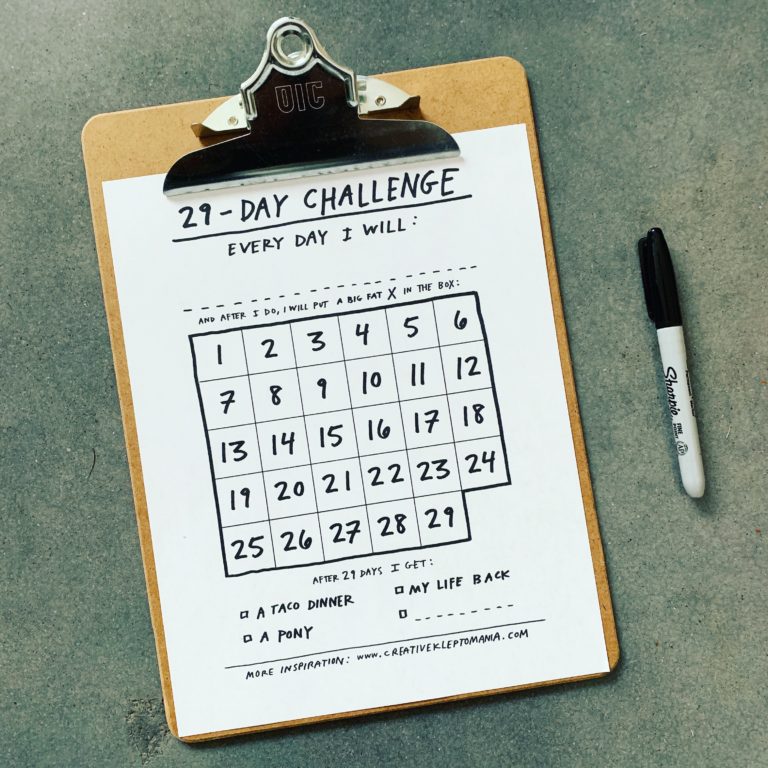
And hey, if you need a calendar to keep track of how well you are doing, go here: 29-day challenge – Austin Kleon.

Good luck!

P.S. You get an extra day  this year, and it falls on a weekend! Use it to do something you don’t normally have time for!

How to buy happiness

I know, everyone says you can’t buy happiness. I think this piece does a good job of showing how money can enable you to find happiness. Now you don’t need money for this, but money helps.

What does the article say you should do?

  1. Buy experiences
  2. Make it a treat
  3. Buy time
  4. Pay now, consume later
  5. Invest in others
  6. Make it a treat

If you read the piece, you’ll get a taste of what they are getting at: Shopping for Happiness – Put A Number On It!

Of course, you can have lots happy moments without spending any money, and lots more spending a fraction of what some people spend. Perhaps the real goal is to find as many ways as you can to be happy, and aim for those with the least amount of spending.

Regardless of what you do, aim to be happy and pursue it.

Beware of a new variation of phishing email

A simple way of determining if an email is a phishing attempt is to move your mouse over the link(s) in it to see if they match what is on your screen. For example, if you get an email from Apple that says:

Use this link https://applid.apple.com to verify your account

You might move your mouse over the URL and see that the link is to company https://phishingRUs.com/ or something else.

But what if the URL is a URL shortening site, like http://bit.ly or http://dlvr.it/?

My advice: assume it is a phishing attack. It could be the real company, but most large organizations will not do this. (And if they do, they need to at least be explicit about it in the URL).

My general advice: if you are not sure or uncomfortable, assume it is spam or phishing and delete it.

Questions to ask your parents before they die are not just for parents

This is a good piece, and the list of questions here are certainly ones you’d like to have answers to: Questions to ask your parents before they die – Rossalyn Warren – Medium

I have a book called The Parents Book and it is has even more questions like this. I have not filled it out, but I really want to. Chances are my kids would want to have answers to some of these things. Family members would likely want that too. Regardless of whether or not you are a parent, or not, consider answering a list like this and put it with your Will and other essential documents. Your loved ones will be glad you did.

How to learn physics, via Susan Fowler

Susan is famous now (for good reason!), but before she was famous, she wrote this excellent blog post:  If Susan Can Learn Physics, So Can You — Susan Fowler.

I came across it because I was trying to learn physics again. (I started off taking physics ages ago but dropped it because, well, long story, but I ended up in Computer Science and Mathematics and went on to have a career at IBM so it worked out.) I followed a lot of Susan’s advice, and while I am not good at physics yet, I highly recommend this to anyone serious about it. (Just stay away from programs that want to weed out most of the class because they want small class sizes.)

(Image via Susan’s blog)

Links for self publishing authors

If you’ve ever thought about self publishing but didn’t know where to start, this can help.

  1. How to Self-Publish a Book: the first thing you need to know
  2. How to Format a Book in 6 Powerful Steps • Ebook Formatting: how to format it
  3. What Does It Take To Be A “Bestselling Author”? $3 and 5 Minutes. | Observer: how to (cynically) promote it
  4. Russell Smith: Self-published authors may be no worse off than the rest of us – The Globe and Mail: why it’s not a bad idea
  5. Make-Your-Own Cookbook: Dinner: not really about self-publishing as it is about making your own personal cookbook via the NYTimes

Two ways to do the Toronto International Film Festival (tiff)

Here are two ways to do TIFF:

  1. There’s the way most people do it, which seems awful: The TIFF ticketing system is a total nightmare this year.
  2. There’s the way my friend Annie does it, which seems great: A day in the Life of a Torontonian: TIFF 2019 – Advanced Screenings

Now Annie’s way is going to cost more, but if you want to have an enjoyable experience and get the most out of a great festival, then read up on how she and her husband do it.

You want short novels? The Paris Review got your back


As they say, here is: A Very Short List of Very Short Novels with Very Short Commentary.

Some of these you may have read, but chances are there are a few you haven’t. I recommend short novels to people who want to read more and are stuck with not having read anything recently. Better still, read good short novels. Every book on that short list is a good book.

Enjoy

How to Read More Books, According to an Editor Who Finishes 60+ a Year


It’s Saturday. You are thinking: I should start reading more books. But I suck at it. Well then, read this: How to Read More Books, According to an Editor Who Finishes 60+ a Year

I can’t promise it will get you to 60 books, but it will help.

Things I’d add:

  • Toss books you don’t like.
  • If you get stuck on a book, move on.
  • Put down your phone.
  • Don’t just sit there: pick up a book!
  • Have more than one book on the go, but mix up the genres.
  • If you get put off by big books, get smaller books. Finishing any sized book is satisfying.

How to be more productive with a better todo list?


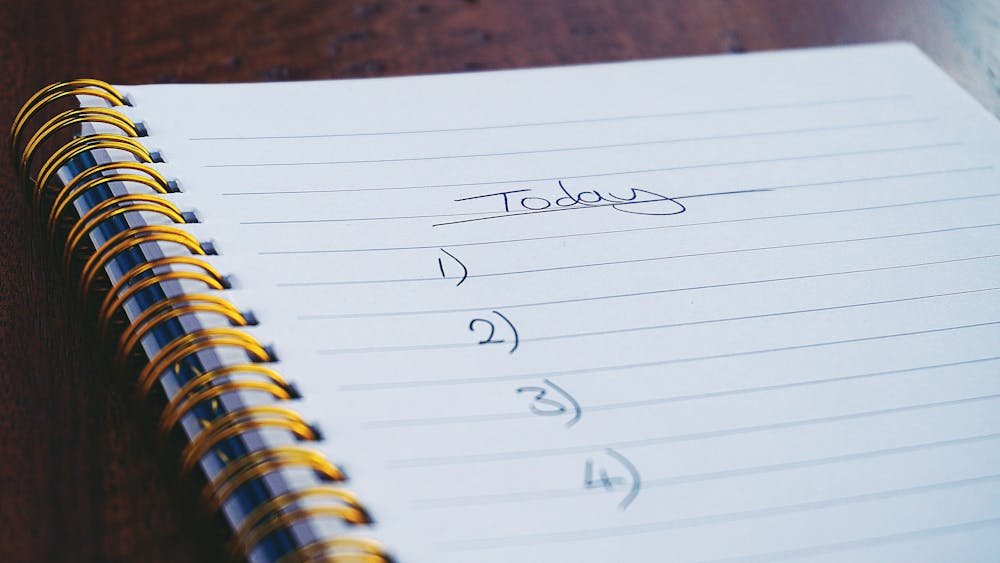
Easy. Don’t make these mistakes: These Seven To-Do List Mistakes Could Be Derailing Your Productivity

What should you do?

1. Write your lists the day before
2. Don’t have too many items
3. Have items you can truly do that day
4. Prioritize items
5. Be specific
6. Create a fresh list each day
7. Link it to your calendar

If you need guidance, see the article.

It’s a skill writing a good todo list. Having better ones means you have a better or at least a more productive day.

On being grateful (and a good alternative to it)


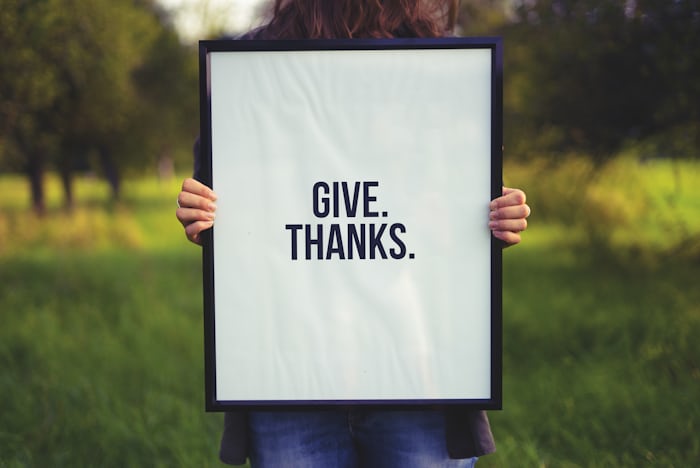
I have read in many places that it is good to be grateful. To be thankful. Here is one such article: What Does It Mean to Be Grateful? – Mindful. If that works for you, then I recommend it.

I find a simpler and just as effective approach is to acknowledge when something is good. Wake up feeling rested? Say “This is good”. Enjoy your cup of coffee or tea or even just being up? Acknowledge that “This is nice”. As you go through your day, make an effort to consciously acknowledge all the good things big and small in your life. You’ll find many. And if you can’t, that’s ok too. Work to appreciate the good things in the bad. Rainy, overcast day? Good for flowers. Monday? A new week to do something good. Etc. If you struggle to think of any, talk to a friend or some other council.

You have lots of good things in your life. As you appreciate them, you will better appreciate your life in general. And that too is good.

Five ways to be more stoical


1. Visualize Your Life Without the Things You Love

“He robs present ills of their power who has perceived their coming beforehand.” —Seneca

2. Memento Mori — Meditate on Death

“Let us prepare our minds as if we’d come to the very end of life. Let us postpone nothing. Let us balance life’s books each day. . . . The one who puts the finishing touches on their life each day is never short of time.” —Seneca

3. Set Internal Goals and Detach Yourself From Outcomes

“Some things are within our power, while others are not. Within our power are opinion, motivation, desire, aversion, and, in a word, whatever is of our own doing; not within our power are our body, our property, reputation, office, and, in a word, whatever is not of our own doing.” —Epictetus

4. Welcome Discomfort

“Nature has intermingled pleasure with necessary things — not in order that we should seek pleasure, but in order that the addition of pleasure may make the indispensable means of existence attractive to our eyes. Should it claim rights of its own, it is luxury. Let us therefore resist these faults when they are demanding entrance, because, as I have said, it is easier to deny them admittance than to make them depart.” —Seneca

5. Vigorously Pursue Character and Virtue

“Every day I reduce the number of my vices.” —Seneca

via 5 Ancient Stoic Tactics for Modern Life | The Art of Manliness

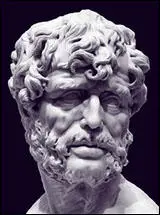
(Image of Seneca)

Why it’s so hard to finish a notebook or journal?


If you are like me and have too many half finished or unfinished notebooks and journals, you will want to read this: Why it’s so hard to finish a notebook or journal – Vox.

I can’t say reading that piece will help you finish them, but it will help you better appreciate some of the difficulty MANY of us have with doing so.

My take on it is: buy ones that are either small or have pages that are easy to tear out. After awhile go through old ones and tear out things of note and then toss them aside. And then go buy more! 🙂


What is the best age to launch that start up?


Did you guess 50? No? If you didn’t you should read this: A Study of 2.7 Million Startups Found the Ideal Age to Start a Business (and It’s Much Older Than You Think) | Inc.com

Key quote:

And in general terms, a 50-year-old entrepreneur is almost twice as likely to start an extremely successful company as a 30-year-old. (Or, for that matter, a successful side hustle.)

It’s never too late to pursue that business dream.

How to Be Thankful For Your Life by Changing Just One Word


This is a good piece: How to Be Thankful For Your Life by Changing Just One Word. I have thought about it often since I read it. You can get to read it too, but in short, write down all the things you “have to” do or “should” do and think differently. Key passage:

You have to wake up early for work. You have to make another sales call for your business. You have to work out today. You have to write an article. You have to make dinner for your family. You have to go to your son’s game.

Now, imagine changing just one word in the sentences above.

You don’t “have” to. You “get” to.

You get to wake up early for work. You get to make another sales call for your business. You get to cook dinner for your family. By simply changing one word, you shift the way you view each event. You transition from seeing these behaviors as burdens and turn them into opportunities.

Get. You get to. Better still, you are lucky to get to. Write down the inner dialog in your head and see if you can edit it this way.

The cliche, you don’t know what you got until it’s gone, holds here. Know what you got. Think about it in a new way.

Six links for minimalists


There’s a little bit of everything here for those who aspire to a minimalist lifestyle, from fitness to decor to cooking. Enjoy.

  1. The Minimalist’s Strength Workout – Outside – Pocket
  2. Y Home Minimalist Apartment by Office ZHU – Design Milk
  3. Colorful Minimalistic Photography By Collin Pollard – Fubiz Media
  4. Budget-Friendly Amazon Minimalist Home Decor | Apartment Therapy
  5. minimalist barbecue sauce – smitten kitchen
  6. Cacio e Pepe Recipe | Bon Appetit

Extreme Decluttering

I recommend this piece on a family that had to do extreme decluttering because of a move. There’s lots of good advice in the piece, and worth reading if you are feeling the need to declutter. You may not feel you need to do it in an extreme way, but does this sound familiar?

Decluttering was an item on my to-do list for years. One I kept putting off.

Yep. Never a fun thing to do. But in their case, they had added pressure:

… we decided to sell our house and downsize to an apartment less than half the size. Then, getting rid of stuff became priority number one. It was an essential step in selling our home fast and for top dollar and critical for surviving a long distance move on a shoestring budget.

When I brought in professional movers to estimate our long distance move, I was shocked by estimates that we’d have 90+ boxes of stuff to move, which did not include existing storage totes. My first thought was How could four people possibly need that much stuff? The short answer is we didn’t, and I made it my mission to get that box number down.

In fact, not only did we want less stuff but we also wanted to move it ourselves on just one rental moving truck.

Needless to say, once you have such goals, extreme decluttering becomes mandatory.

We started extreme decluttering. We ended up moving across the country with one 26 ft. moving truck that was only about three-quarters of the way full. And no, we didn’t get rid of everything. We kept enough to furnish our new apartment fully.

With half of our stuff gone, we were able to downsize from a 4500 sq ft home to a 1768 sq ft townhouse-style apartment. Now we are living comfortably in 61% less space.

A good piece. Recommended, regardless of whether or not you are downsizing.

(Bold emphasis added by me. Image from here.)

How Parental Love Impacts Flourishing Later in Life

A very good piece for parents to read. How Parental Love Impacts Flourishing Later in Life | Psychology Today

Parenting is a long term play, though it might not seem some days. And some days the effort you put in doesn’t seem to make a difference. But it does. Read that for those days when you wonder if you are doing anything right as a parent.

Talk it up! One of the best things you can for yourself is simple (and you can do it while brushing your teeth)

And what is it: Say nice things – to yourself

It sounds ridiculous, and you may feel ridiculous if you try it. If so, consider this:

  • you likely say terrible things to yourself all the time. “I can’t believe I did that…that was stupid…I am an idiot…etc”. You get the picture. If saying nice things about yourself is dumb, that is dumber. So get over yourself.
  • athletes, from amateurs to the elite, talk positively to themselves ALL THE TIME. Indeed, when I played sports in school, we were admonished to “Talk it up!” all of the time. It made the team better: it made us better.  Great athletes are great partially because they are always talking positively to themselves
  • I mean, you are already standing there in the mirror brushing your teeth. Put that big brain of yours to work. Do better with it. Talk it up! 🙂

how to become artist in 6 steps, with 33 rules to follow


From this superb piece, Jerry Saltz: How to Be an Artist, come this:

Step One: You Are a Total Amateur
Lesson 1: Don’t Be Embarrassed
Lesson 2: “Tell your own story and you will be interesting.” — Louise Bourgeois
Lesson 3: Feel Free to Imitate
Lesson 4: Art Is Not About Understanding. Or Mastery. (It is about doing and experience)
Lesson 5: Work, Work, Work

Step Two: How to Actually Begin
Lesson 6: Start With a Pencil
Lesson 7: Develop Forms of Practice
Lesson 8: Now, Redefine Skill
Lesson 9: “Embed thought in material.” — Roberta Smith
Lesson 10: Find Your Own Voice (then exaggerate it)
Lesson 11: Listen to the Crazy Voices in Your Head
Lesson 12: Know What You Hate
Lesson 13: Scavenge

Step Three: Learn How to Think Like an Artist
Lesson 14: Compare Cats and Dogs
Lesson 15: Understand That Art Is Not Just for Looking At
Lesson 16: Learn the Difference Between Subject Matter and Content
Lesson 17: See As Much As You Can
Lesson 18: All Art Is Identity Art!
Lesson 19: All Art Was Once Contemporary Art

Step Four: Enter the Art World
Lesson 20: Accept That You Will Likely Be Poor
Lesson 21: Define Success
Lesson 22: It Takes Only a Few People to Make a Career
Lesson 23: Learn to Write

Step Five: Survive the Art World
Lesson 24: Artists Must Be Vampires
Lesson 25: Learn to Deal With Rejection
Lesson 26: Make an Enemy of Envy
Lesson 27: Having a Family Is Fine

Step Six: Attain Galactic Brain
Lesson 28: What You Don’t Like Is As Important As What You Do Like
Lesson 29: Art Is a Form of Knowing Yourself
Lesson 30: “Artists do not own the meaning of their work.” — Roberta Smith
Lesson 31: All Art Is Subjective
Lesson 32: You Must Prize Vulnerability
Lesson 33: Be Delusional

But read the piece: the comments he provides are what gets to the heart of it.

The math behind why you should take care of yourself

wΔz=cov(wi,zi)+E(wiΔzi)

That equation can be found in this odd article here: Evolution: biologist George Price’s life and death – Vox.

It tells the story of George Price and how his extreme altruism led to his death. Well worth reading, especially if you think self care is bunk.

In short, take care of yourself to some degree, or you end up not benefitting anyone. And if you are not benefiting anyone, you are not being altruistic after all.

There is such a thing as a guilty pleasure


Despite what the New York Times and others say:  ‘Guilty’ Pleasures? No Such Thing – The New York Times, there is such a thing as guilty pleasures.

Usually guilty pleasures arise out of inconsistency or lack of integrity with what you like versus who you are (or think you are). You want to be one way, but you enjoy doing something the other way.  People who say they don’t have guilty pleasures are simply saying that the things they like are consistent with how they perceive themselves. Or they are saying that they have no problem with occasionally being inconsistent. That’s fine, but that isn’t everyone.

Feel free to call your pleasures guilty if you want. Just try not to have any that harm anyone or anything other than your desire to be consistent.

How to walk better

There are few who would argue against a good walk. And any old walk will do. But if you want to walk mindfully, then Thich Nhat Hanh has a book that will help you do it. Quartz has a run down on it here: Zen master Thich Nhat Hanh explains how to walk more mindfully.

I think it could be great for people who have a hard time being mindful because they always need to be on the go. And for people who want to have more mindfulness in their life, it is also great. Read the article/book and improve your walks and your mind.

Congrats! You have a day off! What should you do?


Well, there’s a lot of options, if you go through this list: What to Do With a Day Off – The New York Times. My take is you can either tackle those things you have been putting off (hello! Finances!) or you can literally vacate your normal life and take it easy. Either is good. Better yet: consider being productive this time off and extra lazy the next time.

Enjoy your day. You deserve it.

A simple trick if you want to use pomodoro but find it hard to stick with it


The pomodoro approach to work seems smart. You set a timer for 25 to focus on a task. When the timer goes off, you take a 5 minute break. Then you repeat this process.

When I first heard of it, I thought: what a great idea! I tried it a number of times and failed. The reason I failed, and why you may be failing, is that I cannot focus for 25 minutes. It’s sad, but true.

The simple trick that works for me is to adjust the times from 25:5 to 15:5. I find I can focus for 15, and a 5 minute break is just enough.

I find that even though I take more breaks, I also have more focus time throughout the day, which means I still benefit. Plus, once I get on a roll, I skip some of the breaks.

If you want to get on and stay on the pomodoro bandwagon, adjust your focus time until you find your sweet spot. Your overall productivity will go up, I’m sure.

What you should do when you are facing a dilemma


According to this:

If you’re facing a dilemma, and can’t figure out whether to take the plunge, then all else being equal, you should.

Why? Partially because we tend to stick with the status quo, especially if all the options are bad. Also, because studies show that people that did take the plunge were happier than those that did not.

For more on this, see the Guardian article linked above.

Advice to young (and not so young) artists. (We are all artists in some way)


Here are two good pieces full of advice for artists.

One big: Advice to Young Aspiring Artists from Patti Smith, David Byrne & Marina Abramović | Open Culture

One small: None of us know what will happen – Austin Kleon

Key quote from the Austin Kleon piece is this, from Laurie Anderson:

The world may end. You’re right. But that’s not a reason to be scared. None of us know what will happen. Don’t spend time worrying about it. Make the most beautiful thing you can. Try to do that every day. That’s it. You know? What are you working for, posterity? We don’t know if there is any posterity.

(Image from pexels.com)

4 + 1 Rules for dealing with adversity

If you are struggling with adversity, then read this: Read This If You’re Going Through Adversity – Darius Foroux.

There are four rules in it:

    1. Do something good. By this, do something that makes you say, “I love life”.
    2. Ask for help. You know you need help when you are getting to the stage it all becomes “too much”.
    3. Write down your biggest fear. Get it out of your head and on paper. Write about it. You will be surprised how it shrinks on paper.
    4. Create a plan. It doesn’t have to be elaborate. It can be: I will do A and then based on that I will do either B or C. There! You have a plan to deal with things.
    5. Shorten the timelines. This is one I am adding. Often when we think of adversity we imagine it never ending. But it will. Don’t believe me? Go over past adversity. Even long running adversity. It always ends. It ends sooner than we think. This doesn’t mean you should passively wait it out. Write down how long you think this adversity will end, then make a plan, ask for help, tackle your fears and do something good.

Good luck. Need more help? Read the article linked above. And congrats. You were likely facing adversity when you searched out and read this, and you decided you needed to get help. You’re already on your way to doing something about it. Well done!