Six links for minimalists


There’s a little bit of everything here for those who aspire to a minimalist lifestyle, from fitness to decor to cooking. Enjoy.

  1. The Minimalist’s Strength Workout – Outside – Pocket
  2. Y Home Minimalist Apartment by Office ZHU – Design Milk
  3. Colorful Minimalistic Photography By Collin Pollard – Fubiz Media
  4. Budget-Friendly Amazon Minimalist Home Decor | Apartment Therapy
  5. minimalist barbecue sauce – smitten kitchen
  6. Cacio e Pepe Recipe | Bon Appetit

Extreme Decluttering

I recommend this piece on a family that had to do extreme decluttering because of a move. There’s lots of good advice in the piece, and worth reading if you are feeling the need to declutter. You may not feel you need to do it in an extreme way, but does this sound familiar?

Decluttering was an item on my to-do list for years. One I kept putting off.

Yep. Never a fun thing to do. But in their case, they had added pressure:

… we decided to sell our house and downsize to an apartment less than half the size. Then, getting rid of stuff became priority number one. It was an essential step in selling our home fast and for top dollar and critical for surviving a long distance move on a shoestring budget.

When I brought in professional movers to estimate our long distance move, I was shocked by estimates that we’d have 90+ boxes of stuff to move, which did not include existing storage totes. My first thought was How could four people possibly need that much stuff? The short answer is we didn’t, and I made it my mission to get that box number down.

In fact, not only did we want less stuff but we also wanted to move it ourselves on just one rental moving truck.

Needless to say, once you have such goals, extreme decluttering becomes mandatory.

We started extreme decluttering. We ended up moving across the country with one 26 ft. moving truck that was only about three-quarters of the way full. And no, we didn’t get rid of everything. We kept enough to furnish our new apartment fully.

With half of our stuff gone, we were able to downsize from a 4500 sq ft home to a 1768 sq ft townhouse-style apartment. Now we are living comfortably in 61% less space.

A good piece. Recommended, regardless of whether or not you are downsizing.

(Bold emphasis added by me. Image from here.)

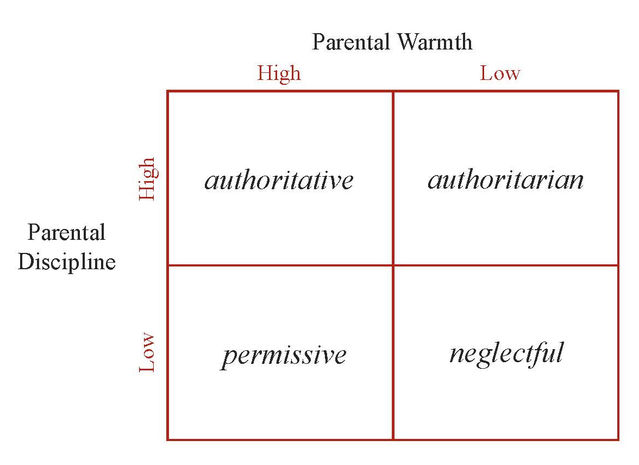
How Parental Love Impacts Flourishing Later in Life

A very good piece for parents to read. How Parental Love Impacts Flourishing Later in Life | Psychology Today

Parenting is a long term play, though it might not seem some days. And some days the effort you put in doesn’t seem to make a difference. But it does. Read that for those days when you wonder if you are doing anything right as a parent.

Talk it up! One of the best things you can for yourself is simple (and you can do it while brushing your teeth)

And what is it: Say nice things – to yourself

It sounds ridiculous, and you may feel ridiculous if you try it. If so, consider this:

  • you likely say terrible things to yourself all the time. “I can’t believe I did that…that was stupid…I am an idiot…etc”. You get the picture. If saying nice things about yourself is dumb, that is dumber. So get over yourself.
  • athletes, from amateurs to the elite, talk positively to themselves ALL THE TIME. Indeed, when I played sports in school, we were admonished to “Talk it up!” all of the time. It made the team better: it made us better.  Great athletes are great partially because they are always talking positively to themselves
  • I mean, you are already standing there in the mirror brushing your teeth. Put that big brain of yours to work. Do better with it. Talk it up! 🙂

how to become artist in 6 steps, with 33 rules to follow


From this superb piece, Jerry Saltz: How to Be an Artist, come this:

Step One: You Are a Total Amateur
Lesson 1: Don’t Be Embarrassed
Lesson 2: “Tell your own story and you will be interesting.” — Louise Bourgeois
Lesson 3: Feel Free to Imitate
Lesson 4: Art Is Not About Understanding. Or Mastery. (It is about doing and experience)
Lesson 5: Work, Work, Work

Step Two: How to Actually Begin
Lesson 6: Start With a Pencil
Lesson 7: Develop Forms of Practice
Lesson 8: Now, Redefine Skill
Lesson 9: “Embed thought in material.” — Roberta Smith
Lesson 10: Find Your Own Voice (then exaggerate it)
Lesson 11: Listen to the Crazy Voices in Your Head
Lesson 12: Know What You Hate
Lesson 13: Scavenge

Step Three: Learn How to Think Like an Artist
Lesson 14: Compare Cats and Dogs
Lesson 15: Understand That Art Is Not Just for Looking At
Lesson 16: Learn the Difference Between Subject Matter and Content
Lesson 17: See As Much As You Can
Lesson 18: All Art Is Identity Art!
Lesson 19: All Art Was Once Contemporary Art

Step Four: Enter the Art World
Lesson 20: Accept That You Will Likely Be Poor
Lesson 21: Define Success
Lesson 22: It Takes Only a Few People to Make a Career
Lesson 23: Learn to Write

Step Five: Survive the Art World
Lesson 24: Artists Must Be Vampires
Lesson 25: Learn to Deal With Rejection
Lesson 26: Make an Enemy of Envy
Lesson 27: Having a Family Is Fine

Step Six: Attain Galactic Brain
Lesson 28: What You Don’t Like Is As Important As What You Do Like
Lesson 29: Art Is a Form of Knowing Yourself
Lesson 30: “Artists do not own the meaning of their work.” — Roberta Smith
Lesson 31: All Art Is Subjective
Lesson 32: You Must Prize Vulnerability
Lesson 33: Be Delusional

But read the piece: the comments he provides are what gets to the heart of it.

The math behind why you should take care of yourself

wΔz=cov(wi,zi)+E(wiΔzi)

That equation can be found in this odd article here: Evolution: biologist George Price’s life and death – Vox.

It tells the story of George Price and how his extreme altruism led to his death. Well worth reading, especially if you think self care is bunk.

In short, take care of yourself to some degree, or you end up not benefitting anyone. And if you are not benefiting anyone, you are not being altruistic after all.

There is such a thing as a guilty pleasure


Despite what the New York Times and others say:  ‘Guilty’ Pleasures? No Such Thing – The New York Times, there is such a thing as guilty pleasures.

Usually guilty pleasures arise out of inconsistency or lack of integrity with what you like versus who you are (or think you are). You want to be one way, but you enjoy doing something the other way.  People who say they don’t have guilty pleasures are simply saying that the things they like are consistent with how they perceive themselves. Or they are saying that they have no problem with occasionally being inconsistent. That’s fine, but that isn’t everyone.

Feel free to call your pleasures guilty if you want. Just try not to have any that harm anyone or anything other than your desire to be consistent.

How to walk better

There are few who would argue against a good walk. And any old walk will do. But if you want to walk mindfully, then Thich Nhat Hanh has a book that will help you do it. Quartz has a run down on it here: Zen master Thich Nhat Hanh explains how to walk more mindfully.

I think it could be great for people who have a hard time being mindful because they always need to be on the go. And for people who want to have more mindfulness in their life, it is also great. Read the article/book and improve your walks and your mind.

Congrats! You have a day off! What should you do?


Well, there’s a lot of options, if you go through this list: What to Do With a Day Off – The New York Times. My take is you can either tackle those things you have been putting off (hello! Finances!) or you can literally vacate your normal life and take it easy. Either is good. Better yet: consider being productive this time off and extra lazy the next time.

Enjoy your day. You deserve it.

A simple trick if you want to use pomodoro but find it hard to stick with it


The pomodoro approach to work seems smart. You set a timer for 25 to focus on a task. When the timer goes off, you take a 5 minute break. Then you repeat this process.

When I first heard of it, I thought: what a great idea! I tried it a number of times and failed. The reason I failed, and why you may be failing, is that I cannot focus for 25 minutes. It’s sad, but true.

The simple trick that works for me is to adjust the times from 25:5 to 15:5. I find I can focus for 15, and a 5 minute break is just enough.

I find that even though I take more breaks, I also have more focus time throughout the day, which means I still benefit. Plus, once I get on a roll, I skip some of the breaks.

If you want to get on and stay on the pomodoro bandwagon, adjust your focus time until you find your sweet spot. Your overall productivity will go up, I’m sure.

What you should do when you are facing a dilemma


According to this:

If you’re facing a dilemma, and can’t figure out whether to take the plunge, then all else being equal, you should.

Why? Partially because we tend to stick with the status quo, especially if all the options are bad. Also, because studies show that people that did take the plunge were happier than those that did not.

For more on this, see the Guardian article linked above.

Advice to young (and not so young) artists. (We are all artists in some way)


Here are two good pieces full of advice for artists.

One big: Advice to Young Aspiring Artists from Patti Smith, David Byrne & Marina Abramović | Open Culture

One small: None of us know what will happen – Austin Kleon

Key quote from the Austin Kleon piece is this, from Laurie Anderson:

The world may end. You’re right. But that’s not a reason to be scared. None of us know what will happen. Don’t spend time worrying about it. Make the most beautiful thing you can. Try to do that every day. That’s it. You know? What are you working for, posterity? We don’t know if there is any posterity.

(Image from pexels.com)

4 + 1 Rules for dealing with adversity

If you are struggling with adversity, then read this: Read This If You’re Going Through Adversity – Darius Foroux.

There are four rules in it:

    1. Do something good. By this, do something that makes you say, “I love life”.
    2. Ask for help. You know you need help when you are getting to the stage it all becomes “too much”.
    3. Write down your biggest fear. Get it out of your head and on paper. Write about it. You will be surprised how it shrinks on paper.
    4. Create a plan. It doesn’t have to be elaborate. It can be: I will do A and then based on that I will do either B or C. There! You have a plan to deal with things.
    5. Shorten the timelines. This is one I am adding. Often when we think of adversity we imagine it never ending. But it will. Don’t believe me? Go over past adversity. Even long running adversity. It always ends. It ends sooner than we think. This doesn’t mean you should passively wait it out. Write down how long you think this adversity will end, then make a plan, ask for help, tackle your fears and do something good.

Good luck. Need more help? Read the article linked above. And congrats. You were likely facing adversity when you searched out and read this, and you decided you needed to get help. You’re already on your way to doing something about it. Well done!

Seven good links for old people

For those of us who are feeling old, or simply are old.

      1. A Checklist Before Dying – The Billfold – a good checklist to review, sooner than later
      2. An Ode to Being Old – Outside – Pocket – on the virtues of being old
      3. This 65-Year-Old Dentist Left It All Behind to Work the Line at America’s Best New Restaurant | Bon Appétit – this story made me feel good about getting old. Maybe you will too after you read it.
      4. The Future of Aging Just Might Be in Margaritaville – The New York Times – who knows?
      5. Neuroscience Shows That 50-Year-Olds Can Have the Brains of 25-Year-Olds If They Do This | Inc.com – not just for 50 year olds.
      6. Ctrl-Alt-Delete: The Planned Obsolescence of Old Coders – it’s true. But you can fight it.
      7. Am I ‘Old’? – The New York Times – Old is a state of mind to some degree. But at some point, no matter how good you feel, you are old.


If you are thinking of using chatbots in your work, read this


Chatbots are relatively straightforward to deploy these days. AI providers like IBM and others provide all the technology you need. But do you really need them? And if you already have a bunch of them deployed, are you doing it right? If these questions have you wondering, I recommend you read this: Does Your Company Really Need a Chatbot?

You still may want to proceed with chatbots: they make a lot of business sense for certain types of work. But you will have a better idea when not to use them, too.

The Twenty Minute Rule you need to manage your time


A smart approach to managing your time is allocating no more than 20 minutes to any task you need to do.  So says this: Everything should take 20 minutes | The Outline. 

The reasoning in a nutshell:

Think about a task you wish to or must complete, and imagine how long it should take you. If you are a right-thinking person like myself, the answer is “20 minutes.” A 10-minute task is hardly a task at all, more of a minor interruption, and anything that takes 30 minutes invites the thought that you could have watched a half-hour episode of television instead. Twenty minutes is, objectively, the ideal amount of time — the Goldilocks number when it comes to doing things.

Now you can quibble about it, but it’s a smart rule. If you are still unsure, read the piece.

If you need to toughen up mentally

Toughness is good and bad. When it is prioritized over other qualities, it is bad. When it seen as a reservoir to get through tough times, it is good. Regardless of your situation, if you want to improve your mental toughness, here are some books you might want to consider: The 5 Best Books for Increasing Your Mental Toughness | Inc.com

Be as tough as you need to be, not just tough for toughness sake.

The most relaxing vacation you can take is going nowhere

Good tips in this article on how to take a successful staycation. Key quote:

The key to a successful staycation, whatever you’re doing, is to just be. That’s not easy for people working in cultures intent on busyness. Yet it is a way we can reduce stress levels and return to work with more energy. “We shouldn’t associate relaxation with being away,” advises Quartz’s managing editor Kira Bindrim, who describes herself as an avid staycation advocate. “Reclaim the place you already chose to live!”

I think you can do staycations in a number of ways. Sometimes they are great ways to achieve a personal project. Other times they are good for exploring the city you live in. But if you want to have a relaxing staycation, check out that article.

Fifteen good links to help you manage your personal finances better


Lots of good stuff here, from how to save money on food, your kids, your transportation….and much more. From the New York Times, Vox, the Cut, and quite a few from a good site for this information called The Simple Dollar.

  1. When and How to Stop Paying Your Kids’ Bills – The Simple Dollar
  2. 13 smart ways to improve your finances in 2017 – Vox
  3. A Household Budget Strategy for People Who Hate Budgeting | Apartment Therapy
  4. 11 Lifestyle Changes That Will Help You Save Money & Depend Less On Consumerism
  5. What to Do When You’re Bad at Money – The New York Times
  6. How to Save Money But Still Have a Life
  7. What I Learned From Tracking My Spending for a Month – The New York Times
  8. 33 Productive Things to Do Without Spending Money | Apartment Therapy
  9. 5 Money-Saving Lessons I Learned in a Month of Budgeting – Bon Appétit
  10. The First Step Out of Debt – The Simple Dollar
  11. 10 Things You Should Never Pay For – The Simple Dollar
  12. Nine Frugal Strategies for Tackling the Winter Blues – The Simple Dollar
  13. Finding Meaning Within Your Job – Even If You Don’t Like It – The Simple Dollar
  14. Five Monthly Bills You Could Live Without – The Simple Dollar
  15. Five Things You Could Afford If You Didn’t Buy a New Car – The Simple Dollar

So you want to become famous on Instagram? You might want to read this first

Why? Because as this article shows, become famous on Instagram is a lot harder than you might think:  I Tried to Make My Dog an Instagram Celebrity. I Failed. – The New York Times.

Yes, I know you are not a dog, but the same lessons will apply.

My guess is that the ship has sailed on become famous on Instagram. Same for podcasts and any other social media that has been around for a few years. You need to get in early, work hard, and take advantage of network effects.

If you do decide to become Instagram famous and manage to pull it off, please come here and mock me and I will update this post. 🙂

Great advice for parents of older teens/young adults


Can be found here:  How Should I Talk to My Son About His Career Dreams? – The Atlantic. 

Being a parent is never easy, no matter what age your kid is. There is lots of good advice for people with infants and young children but not much for when your kids are older. Glad to see pieces like this and to promote them.

Hang in there, parents!

(image via pexels.com)

why the best white noise machine might be the Google Home Mini

I have had a number of white noise devices with some of them costing a lot more than the Mini. They are not hard to set up and once you do you can ask it to play rain sounds or relaxing sounds or whatever sounds help you relax or sleep it work. Plus you get all the advantages of having it to find out the weather, get news, set appointments and more. If you don’t mind having one in your house – and some people do – then you can buy them everywhere, like here: m.bestbuy.ca/en-CA/product/google-home-mini-charcoal/11615336

It’s RRSP season in Canada. You may feel: why bother contributing? Read this then.

If you are daunted and dismayed with the impossibiity of saving for retirement, then read this.

A few thoughts:

  1. It’s written for Americans, but it works just as well for Canadians. (Replace 401K with RRSP).
  2. You may still not be able to retire, but the more you save, the more cushion you have for later.
  3. It may help you get to sleep at night when your brain starts saying: you are doomed to die old and poor!

A great list of interchangeable ingredients to turn to when you are cooking, from Mark Bittman

Is this list.

Print it off, leave it in the kitchen, add your own items.

I often use sriracha for dried chilies, or even any hot sauce, for when you just need some heat. Likewise, if you don’t have jalapenos, you could also replace them with some of other heat source. (If it is a lot of jalapenos, you might use regular peppers with some chilies or other hot things to add the appropriate level of hotness.)

Finally, I’ve seen people suggest replacing creme fraiche with full fat greek yogurt.

Things you don’t need and the one thing you do

This struck me today: I had these two posts I found interesting, both starting with “You don’t Need”. This is good: I think I will stop pursuing something because I think I need something first. Recipes help. And have free time to make things helps. But don’t use things you think you need stopping you from doing what you want.

Here are the two pieces. The only thing you need is a desire to make things.

  1. You Don’t Need to Quit Your Job to Make
  2. You Don’t Need a Recipe – The New York Times

C’mon, It’s Just 7 Days – a good challenge for next week

You either are keeping your New Year’s Resolutions (yay!) or you have shelved them. If the latter, cheer up. You don’t need to wait a year to resolve to be better. And you don’t need to necessarily make a big commitment either. Maybe just a week of doing something for the better is enough to make an improvement in yourself. A week may be just the thing to kick start you and send you off in a better direction.

Sound good? Great. And if you are stuck for ideas, check out this:  C’mon, It’s Just 7 Days recipes and how-tos from Food52. 

It’s not just about food. If you are looking for a week of challenges to try out, read the articles there.

The articles are fun even if you aren’t looking to change. A lot can happen in a week.