Nate Silver and Paul Krugman on the importance of good models to understand and predict

This piece by Nate Silver, How I Acted Like A Pundit And Screwed Up On Donald Trump in FiveThirtyEight, is ostensibly about how he messed up in his predictions on the rise of Donald Trump. What I think is worth reading is how he goes about his work and what he learned from his mistakes. Specifically, it’s a great study on how important models are and how a good model works and what it can tell us.

Related, Paul Krugman talks about his model here: Economics and Self-Awareness in The New York Times. Like Silver, he uses models both to understand and predict. Obviously they are modelling different things, but in both cases good models are the basis of their thinking and the work they do.

It’s likely too much to ask now, but eventually anyone doing analysis and making predictions should have to disclose the models they are basing their decisions upon. The opinions of anyone not having such models are likely not worth much.

The beauty of when science and poetry intersect

According to a post by Clive Thompson,

Recently, two scientists got interested in the poem, because they realized these two facts could be used to determine precisely what time of year Sappho wrote the poem.

The poem, the post, and the work the scientists did are all great. Highly recommended. (Click on the link to the post for more details.)

The rich stay richer and the poor stay poorer (now with data to back this up)

I was impressed by this study of economic mobility over many generations in Florence: What’s your (sur)name? Intergenerational mobility over six centuries | VOX, CEPR’s Policy Portal. They make a good case that the richer families stay richer and the poorer families stay poorer regardless of the many other changes that occur in an area.To add to this, VOX reviews it and also references a study done in Sweden that finds something similar (Today’s rich families in Florence, Italy, were rich 700 years ago – Vox).

It’s depressing, but not surprising to me. I suspect that while individuals may rise and fall in terms of economic mobility, specific families work to insure that the wealth acquired is maintained through marriage and inheritance. Worse, conditions for poorer families are such that they can never acquire enough wealth to move them from the lower percentile to a higher one.

What drives A.I. development? Better data

This article, Datasets Over Algorithms — Space Machine, makes a good point, namely

…perhaps many major AI breakthroughs have actually been constrained by the availability of high-quality training datasets, and not by algorithmic advances.

Looking at this chart they provide illustrates the point:

I’d argue that it isn’t solely datasets that drive A.I. breakthroughs. Better CPUs, improved storage technology, and of course new ideas can also propel A.I. forward. But if you ask me now, I think A.I. in the future will need better data to make big advances.

The Real Bias Built in at Facebook <- another bad I.T. story in the New York Times (and my criticism of it)

There is so much wrong in this article, The Real Bias Built In at Facebook – The New York Times, that I decided to take it apart in this blog post. (I’ve read  so many bad  IT stories in the Times that I stopped critiquing them after a while, but this one in particular bugged me enough to write something).

To illustrate what I mean by what is wrong with this piece, here’s some excerpts in italics followed by my thoughts in non-italics.

  • First off, there is the use of the word “algorithm” everywhere. That alone is a problem. For an example of why that is bad, see section 2.4 of Paul Ford’s great piece on software,What is Code? As Ford explains: ““Algorithm” is a word writers invoke to sound smart about technology. Journalists tend to talk about “Facebook’s algorithm” or a “Google algorithm,” which is usually inaccurate. They mean “software.” Now part of the problem is that Google and Facebook talk about their algorithms, but really they are talking about their software, which will incorporate many algorithms. For example, Google does it here: https://webmasters.googleblog.com/2011/05/more-guidance-on-building-high-quality.html At least Google talks about algorithms, not algorithm. Either way, talking about algorithms is bad. It’s software, not algorithms, and if you can’t see the difference, that is a good indication you should not be writing think pieces about I.T.
  • Then there is this quote: “Algorithms in human affairs are generally complex computer programs that crunch data and perform computations to optimize outcomes chosen by programmers. Such an algorithm isn’t some pure sifting mechanism, spitting out objective answers in response to scientific calculations. Nor is it a mere reflection of the desires of the programmers. We use these algorithms to explore questions that have no right answer to begin with, so we don’t even have a straightforward way to calibrate or correct them.” What does that even mean? To me, I think it implies any software that is socially oriented (as opposed to say banking software or airline travel software) is imprecise or unpredictable. But at best, that is only slightly true and mainly false. Facebook and Google both want to give you relevant answers. If you start typing in “restaurants” or some other facilities in Google search box, Google will start suggesting answers to you. These answers will very likely to be relevant to you. It is important for Google that this happens, because this is how they make money from advertisers. They have a way of calibrating and correcting this. In fact I am certain they spend a lot of resources making sure you have the correct answer or close to the correct answer. Facebook is the same way. The results you get back are not random. They are designed, built and tested to be relevant to you. The more relevant they are, the more successful these companies are. The responses are generally right ones.
  • If Google shows you these 11 results instead of those 11, or if a hiring algorithm puts this person’s résumé at the top of a file and not that one, who is to definitively say what is correct, and what is wrong?” Actually, Google can say, they just don’t. It’s not in their business interest to explain in detail how their software works. They do explain generally, in order to help people insure their sites stay relevant. (See the link I provided above). But if they provide too much detail, bad sites game their sites and make Google search results worse for everyone. As well, if they provide too much detail, they can make it easier for other search engine sites – yes, they still exist – to compete with them.
  • Without laws of nature to anchor them, algorithms used in such subjective decision making can never be truly neutral, objective or scientific.” This is simply nonsense.
  • Programmers do not, and often cannot, predict what their complex programs will do. “ Also untrue. If this was true, then IBM could not improve Watson to be more accurate. Google could not have their sales reps convince ad buyers that it is worth their money to pay Google to show their ads. Same for Facebook, Twitter, and any web site that is dependent on advertising as a revenue stream.
  • Google’s Internet services are billions of lines of code.” So what? And how is this a measure of complexity?  I’ve seen small amounts of code that was poorly maintained be very hard to understand, and large amounts of code that was well maintained be very simple to understand.
  • Once these algorithms with an enormous number of moving parts are set loose, they then interact with the world, and learn and react. The consequences aren’t easily predictable. Our computational methods are also getting more enigmatic. Machine learning is a rapidly spreading technique that allows computers to independently learn to learn — almost as we do as humans — by churning through the copious disorganized data, including data we generate in digital environments. However, while we now know how to make machines learn, we don’t really know what exact knowledge they have gained. If we did, we wouldn’t need them to learn things themselves: We’d just program the method directly.” This is just a cluster of ideas slammed together, a word sandwich with layers of phrases without saying anything. It makes it sound like AI has been unleashed upon the world and we are helpless to do anything about it. That’s ridiculous. As well, it’s vague enough that it is hard to dispute without talking in detail about how A.I. and machine learning works, but it seems knowledgeable enough that many people think it has greater meaning.
  • With algorithms, we don’t have an engineering breakthrough that’s making life more precise, but billions of semi-savant mini-Frankensteins, often with narrow but deep expertise that we no longer understand, spitting out answers here and there to questions we can’t judge just by numbers, all under the cloak of objectivity and science.” This is just scaremongering.
  • If these algorithms are not scientifically computing answers to questions with objective right answers, what are they doing? Mostly, they “optimize” output to parameters the company chooses, crucially, under conditions also shaped by the company. On Facebook the goal is to maximize the amount of engagement you have with the site and keep the site ad-friendly.You can easily click on “like,” for example, but there is not yet a “this was a challenging but important story” button. This setup, rather than the hidden personal beliefs of programmers, is where the thorny biases creep into algorithms, and that’s why it’s perfectly plausible for Facebook’s work force to be liberal, and yet for the site to be a powerful conduit for conservative ideas as well as conspiracy theories and hoaxes — along with upbeat stories and weighty debates. Indeed, on Facebook, Donald J. Trump fares better than any other candidate, and anti-vaccination theories like those peddled by Mr. Beck easily go viral. The newsfeed algorithm also values comments and sharing. All this suits content designed to generate either a sense of oversize delight or righteous outrage and go viral, hoaxes and conspiracies as well as baby pictures, happy announcements (that can be liked) and important news and discussions.” This is the one thing in the piece that I agreed with, and it points to the real challenge with Facebook’s software. I think the software IS neutral, in that it is not interested in the content per se as it is how the user is responding or not responding to it. What is NOT neutral is the data it is working off of. Facebook’s software is as susceptible to GIGO (garbage in, garbage out) as any other software. So if you have a lot of people on Facebook sending around cat pictures and stupid things some politicians are saying, people are going to respond to it and Facebook’s software is going to respond to that response.
  • Facebook’s own research shows that the choices its algorithm makes can influence people’s mood and even affect elections by shaping turnout. For example, in August 2014, my analysis found that Facebook’s newsfeed algorithm largely buried news of protests over the killing of Michael Brown by a police officer in Ferguson, Mo., probably because the story was certainly not “like”-able and even hard to comment on. Without likes or comments, the algorithm showed Ferguson posts to fewer people, generating even fewer likes in a spiral of algorithmic silence. The story seemed to break through only after many people expressed outrage on the algorithmically unfiltered Twitter platform, finally forcing the news to national prominence.” Also true. Additionally, Facebook got into trouble for the research they did showing their software can manipulate people by….manipulating people in experiments on them! It was dumb, unethical, and possibly illegal.
  • Software giants would like us to believe their algorithms are objective and neutral, so they can avoid responsibility for their enormous power as gatekeepers while maintaining as large an audience as possible.” Well, not exactly. It’s true that Facebook and Twitter are flirting with the notion of becoming more news organizations, but I don’t think they have decided whether or not they should make the leap or not. Mostly what they are focused on are channels that allow them to gain greater audiences for their ads with few if any restrictions.

In short, like many of the IT think pieces I have seen the Times, it is filled with wrong headed generalities and overstatements, in addition to some concrete examples buried somewhere in the piece that likely was thing that generated the idea to write the piece in the first place. Terrible.

29 IT links to things I am working on or interested in: AI, Python, Netscaler, automation and more

Things I am interested in or working on these days: AI, WebSphere setup, Python, Twitter programming, development in general, configuring Netscalers, cool things IBM is doing, automation, among other things.

  1. If you have the AI bug and think you want to do some Prolog programming, you need this: What Prolog implementation to choose? What’s fastest? Compatibility?
  2. Deep Learning is hot in AI. If you want more info, this is good: Deep Learning Tutorials — DeepLearning 0.1 documentation
  3. Sigh. This debate never goes away in AI: Why AlphaGo Is Not AI – IEEE Spectrum
  4. More on the hysteria that AI brings: The founder of Evernote made a great point about why AI (probably) won’t kill us all – Vox
  5. Ignore most AI hysteria, but do read this: What does it mean for an algorithm to be fair? | Math ∩ Programming
  6. Want to whip up a quick mobile app? Consider: Mobile App Builder – new service now available – Bluemix Blog
  7. For power users, there’s: How to create an insane multiple monitor setup with three, four, or more displays | PCWorld
  8. Need virtual images? Take a look at this: Images | VirtualBoxes – Free VirtualBox® Images
  9. For hardcore WAS users, this is helpful: Installing optional Java 7.x on WebSphere Application Server 8.5 (Application Integration Middleware Support Blog)
  10. A classic. Anyone tuning WAS needs this: Case study: Tuning WebSphere Application Server V7 and V8 for performance
  11. Want to learn Python? Write your own Twitter client? Or do both? Then there’s this: How To Build a Twitter “Hello World” Web App in Python | ProgrammableWeb
  12. More on programming Twitter: How To Use The Twitter API To Find Events | ProgrammableWeb
  13. Nice little project to try, here: Create a mobile-friendly to-do list app with PHP, jQuery Mobile, and Google Tasks
  14. Creating Simple Responsive HTML5 and PHP Contact Form | Future Tutorials
  15. Setting up a Linux system? Then you want to read this: Most secure way to partition linux? – Information Security Stack Exchange
  16. Want to learn Linux? This is essential! IBM developerWorks : Technical library concerning Learning Linux
  17. If you are doing performance work on Unix, you will likely use vmstat. Even if you know vmstat, this is good to review: What to look for in vmstat – UNIX vmstat command
  18. Wow! OS/2 is still alive! OS/2: Blue Lion to be the next distro of the 28-year-old – Yahoo Finance
  19. Talk about old tech! This makes OS/2 seem fresh! It’s Insane that New York’s Subway Still Runs on This 80-Year-Old Switchboard | Motherboard
  20. I was doing some work on Netscaler and found this useful in comparing the set up of one Netscaler config with another: Export Netscaler Config – NetScaler Application Delivery – Discussions. This is also useful:  Netscaler 9 Cheat Sheet.doc – netscaler9cheatsheet.pdf
  21. I thought this was a good development for everyone interested in Node: IBM Buys StrongLoop To Add Node.js API Development To Its Cloud Platform | TechCrunch
  22. Alot has changed with IBM’s OpenPOWER. Forbes gets you up to date, here: IBM’s OpenPOWER: A Lot Has Changed In Two Years – Forbes
  23. Cool stuff here: Access your Docker-based Raspberry Pi at home from the internet · Docker Pirates ARMed with explosive stuff
  24. I was using Perl scripts on Linux to send me messages to my mobile device via Pushover. This was good for that: pushover Archives – Perl Hacks
  25. I was also using WinSCP for that and this helped: Scripting and Task Automation :: WinSCP
  26. For all those trying to succeed in IT but feeling you are running into ceiling, you should read this: Tech’s Enduring Great-Man Myth or this When It Comes to Age Bias, Tech Companies Don’t Even Bother to Lie | Dan Lyons | LinkedIn
  27. Linus Torvalds is always interesting, and this is especially good: Linux at 25: Q&A With Linus Torvalds – IEEE Spectrum
  28. Very cool! Particle | Build your Internet of Things
  29. And finally some links to good stuff on UML online: Multi-layered web architecture UML package diagram example, web layer depends on business layer, which depends on data access layer and data transfer objects.

Fascinating jobs unique to specific countries

This post on Quora has a long list of jobs unique to specific countries. For example, in Iran, there are professional licence plate blockers, like this guy:
And why doe such a job exist? You will have to read this: What is a unique job that you’ve only seen in your country? – Quora

The whole thread contains dozens of jobs you can’t believe exist, but once you know something about them, they make sense. A great read.

Should you take St John’s wort for depression, and other advice on supplements

This is a wonderful interactive chart that shows you how worthwhile (or worthless) certain supplements are, based on evidence (as opposed to anecdote or worse): Snake Oil Supplements from Information is Beautiful.

If you are a fan of a certain supplement, you can use this chart to discover what it is good for. And if you have a certain health concern, you can use the chart to determine what may work and what’s a waste of money.

If you like this, check out more of the charts on the information is beautiful site. They have lots of good charts.

Houses aren’t homes: they’re capital

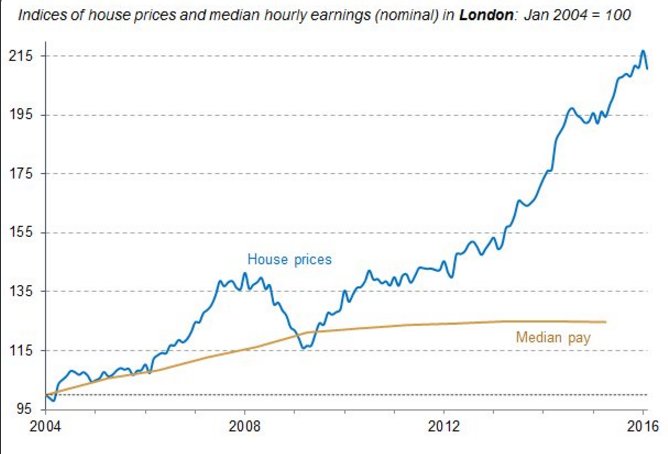
And in the richest cities, like London, they are greatly appreciating capital, as this shows:
Media preview

With some reflection, this makes sense, if you take as a given that:

  •   Stocks and bonds and even wages are fairly stagnant in terms of return on investment
  • Urbanization means homes in cities that are desirable to live in are becoming more scarce

The result is homes becoming one of the forms of capital that can has the means to greatly appreciate in value.

To reverse this will require a greater supply of homes on the market, either through greater density in desirable cities or through more cities becoming desirable to live in. I can see both of these occurring. What I don’t see occurring is other forms of capital becoming more capable of great growth.

It will be interesting to see what happens in 10 years. But right now, bet on homes in key cities to continue to do this.


A good list of resources on passwords and PC security in general

I collected a list of all the links I had concerning passwords and PC security and general on this blog. It’s not exhaustive, but it is useful, especially if your knowledge on the topic is limited.

Are you in terrible shape? Not so terrible but bad enough shape? Do you need help? Here you go

Like most people — for instance, me — , you may need to get in better shape. In doing some research on it, I came across the following links that I found interesting, inspiring, and useful. I hope you do too:

A very cool Ikea Billy Bookshelves Hack

Over at themakerista.com is a very cool hack of 3 Billy bookcases that result in something with a built in look. Here’s the work in progress:
And here’s the final product:

You may not try something as challenging, but if you are interested in spiffing up your tired old bookcases, check this out this: The Makerista: Laura’s Living Room: Ikea Billy Bookshelves Hack

With the new announcements, Apple reinforces their affordable line of products


Apple took a turn towards something I was hoping they would do: (relative) affordability. You can see it in this piece from  Business Insider:

Apple introduced an iPhone with a smaller screen on Monday called the iPhone SE. The best way to think about it is as Apple’s current top-of-the-line iPhone specs in a smaller body. It costs $399 without a contract — a surprisingly low price for a new iPhone. …the older iPad Air 2 got a price cut to $399…. While the Apple Watch didn’t get a hardware update, Apple did unveil new nylon bands and cut its starting price from $350 to $299.

I was wondering if Apple was going to try and offer some affordable products or reposition itself as a luxury brand. I am glad to see they went with affordable. There are now lots of products from Apple at a wide range of price points, starting with the iPod (at $59). I have always been a fan of the lower priced iPods, and I am glad to see Apple still offers them. Likewise, the iPad Mini 2 is an excellent tablet and the iMac mini is an excellent computer. Relative to the market, they are priced competitively and yet superior technology. Now the new Watch and the new SE phone join them.

For people who want to spend lots of money, Apple has a product for them. By offering the lower end products, they both force their competitors to offer better products as well as allow more people to have access to their excellent technology.

P.S. I realize for some people, even these relatively low prices are not affordable. In the context of this post, affordable is in context to the rest of the marketplace an Apple product competes within.

Is it worthwhile buying a slow cooker?


Short answer: it depends. According to this, Is it worthwhile buying a slow cooker?, slow cooked food tastes better and looks better, though the food in a slow cooker ends up being more moist. Go with an oven if you can  attend to it. Go with a slow cooker if you want to have a minimal cooking process going all day that doesn’t require you to do much more than to load up the cooker and go. An additional consideration: a slow cooker uses very little power. Go with a slow cooker if you want to minimize energy use.

Read the article and see what you think. And if you like the idea of slow cooker recipes but slow cookers aren’t for you, read it and get some ideas on how to use your oven to slow cook instead.

(Image via Wikimedia)

The problem with AI, Bots and social networks

Bots combined with AI and social networks are going to become an increasing problem. I thought of this when reading about the relatively recent Ashley Madison fiasco. Even if you wouldn’t be caught dead using such a service, this applies to you in other ways.

One of the fascinating aspects of Ashley Madison was just how many bots were employed by the company, at least according to this article: Ashley Madison Code Shows More Women, and More Bots. 

How many? Alot! From the article:

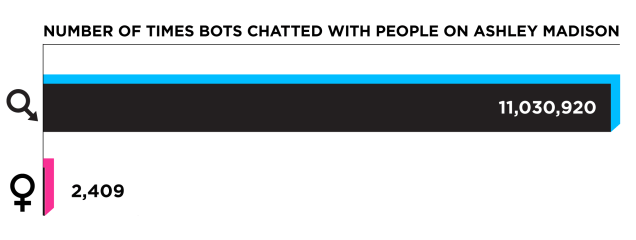
After searching through the Ashley Madison database and private email last week, I reported that there might be roughly 12,000 real women active on Ashley Madison. Now, after looking at the company’s source code, it’s clear that I arrived at that low number based in part on a misunderstanding of the evidence. Equally clear is new evidence that Ashley Madison created more than 70,000 female bots to send male users millions of fake messages, hoping to create the illusion of a vast playland of available women.

Here’s some examples:

This matters to you because chances are you will be interacting more and more with bots. Bots are cheap, and companies and organizations are going to go with them to meet their needs and yours.  Maybe the bots will be harmless, like customer service reps that are actually just software programs. However it is also possible, just like it was at Ashley Madison, that these bots will be customized to con you into thinking you are dealing with a real person so that you will give them more money in some form or another. Bots may be obvious now, but as AI improves, so will the ability of bots to fool you. It’s not inconceivable that we will spend more and more time interacting with software that we think is human. It is something we need to think about and talk to fellow humans — and not AI driven bots — about how it will affect us and if it is negative, what we are going to do about it.

Robots in the real world may not realistically resemble humans for a very long time. Online bots that realistically resemble humans will get there much sooner.  We need to quickly anticipate what positive and negative effects that will have and prepare for that.

Twitter: a former bar you used to love and now visit nostalgically

I’ve likely said enough about twitter. So much so, that there doesn’t seem much else to say. I wanted to highlight this comic, though (the long, slow death of Twitter | Technology | The Guardian) because it wonderfully sums up the arc of Twitter over the years. It matches my thoughts and feelings about the platform very well.

I still come to Twitter, the way you go to a bar you used to love. There’s not as many friends there as there was before, but there are still some. It becomes as much a visit to experience nostalgia as anything else. But then the shouters and the fighters show up and you remember why you lost your interest in it.

A better way to follow the US presidential race…

..is to follow this, from Bloomberg:  Who’s Winning the Presidential Delegate Count?

You can still read the news and follow along, state by state, but what really matters more and more is the delegate count.

One thing that surprised me: right now, Ted Cruz is alot closer to Donald Trump than I imagined. Obviously there is a way to go still, but he is doing well. Will Cruz win? I think the odds are against him, but right now they are not insurmountable.

As for the other side, I believe Hillary Clinton is going to win, regardless of the Michigan surprise showing of Bernie Sanders. Sanders is performing better than many imagined, but she has a big lead in delegates and that will only get larger as we go along.

How to Create Tarball & Compress to GZip Under Windows (.tar.gz) and why you should

If you are not familiar with Unix, then you might wonder why you would want to create tarballs and then gzip them. Recently I had a directory that was over 12 GB in size and I wanted to zip it up and send it to someone. By creating a tarball from it and then gzipping it, I was able to shrink it down to under 5 GB. That made it alot easier to send to the person.

Another reason to do this is you want to send a file from Windows to Unix. By compressing the file this way, you can be sure that the Unix user can uncompress it in a straightforward way.

For more on this, see:  How to Create Tarball & Compress to GZip Under Windows (.tar.gz) | Gettin’ Geek

Why Python programs often have this: `if __name__ == “__main__”:`

If you were wondering why Python programs often have this: `if __name__ == “__main__”:` and then a call to a function, a good explanation is here.

In short, if your program is used as input to other programs, then you want to have that snippet of code in them. If your programs are standalone, you can get by without it.

It’s Hump Day. You’ve got that “Fail” feeling. Watch this.

It’s 2 and a half minutes. What? You don’t have time? You have time to get a coffee. You have time to check your phone. You have time to read your inbox again. So you have time to watch this. Don’t play basketball? It doesn’t matter. Check it out.

Work harder. Think harder. Try harder. Fail harder. Be better.

Source: Fail Harder | Basketball Motivation – YouTube

More on the decline of Twitter from a variety of sources

From the New Yorker and Business Insider. A rebuttal here, on Medium, and also Slate.

My take is a simple one: most people are interacting less on Twitter. This likely leads to people contributing less on Twitter, which leads to a downwards spiral. I see this on other social media as well.

The one exception to those interacting less are active self promoters. Self promoters, whether doing it personally or professionally, are still interacting regularly with social media such as Twitter. After all, it’s free and it’s better than doing nothing.

Overall, though, I expect there to be a decline in use of all kinds of social media, until someone can invent a social media that is more effective than what we have today. That may be a few years off.

The timeline of the World Wide Web

If you are going to talk about the Web or the Internet, it pays to know the history of it. The people at Pew put together the key dates and events of the World Wide Web here: Web History Timeline | Pew Research Center. Of course the history of the Internet is even older.

A very useful thing to consult whenever you read some think piece on “The Internet used to be X or Y”.

What companies mean when they say money is offshore

When you hear of companies like Apple having their money offshore, you might imagine piles of gold bullion or paper bills sitting in a physical bank somewhere in Switzerland or Ireland. More likely that money is residing in one of the big banks head-quartered somewhere in the United States. (For that matter, it is likely residing as so many numbers in a computer run by one of these banks and not piles of paper or gold.)

The Times and Slate explain it here: For U.S. Companies, Money ‘Offshore’ Means Manhattan – The New York Times and Offshore accounts not actually offshore.

Finally! The cappuccino scandal revealed by  The New York Times. (I am not joking)


For some time, I have been complaining that cappuccinos have evolved into something I call “latte-ccinos”, which is a drink that is somewhere between a latte and a cappuccino. Good to see that the New York Times has a piece on it highlighting the sad state of North American coffee and in particular the sham cappuccinos now commonly served.

But what is a true cappuccino? As the Times points out, there is a debate about what it is:

There was a time when cappuccino was easy to identify. It was a shot of espresso with steamed milk and a meringue-like milk foam on top. … “In the U.S., cappuccino are small, medium and large, and that actually doesn’t exist,” the food and coffee writer Oliver Strand said. “Cappuccino is basically a four-ounce drink.” … Others cling to old-school notions of what makes a cappuccino, with the layering of ingredients as the main thing. “The goal is to serve three distinct layers: caffè, hot milk and frothy (not dense) foam,” the chef and writer Mario Batali wrote in an email. “But to drink it Italian style, it will be stirred so that the three stratum come together as one.”

I agree with Strand: a cappuccino should be a small drink and the espresso, milk and foam proportional.. If you want a bigger drink, get a latte. And if you want a true cappuccino, find a good Italian establishment — in Toronto, Grano’s makes a superb one — and get your fix there.

For more on this, see: Is That Cappuccino You’re Drinking Really a Cappuccino? – The New York Times. The photo above is a link to that article.

Your Late-Night Emails Are Hurting Your Team

Put away that email you are about to send out and read this: Your Late-Night Emails Are Hurting Your Team. The same is true for the Sunday evening emails. Stop sending them.

Once you do that, look at how many emails you send out and try and find ways to reduce that, either with meetings, quick chats, or other media (e.g., internal blogs, status updates).

The result will be a better informed and a more motivated team.

Against gratitude and being grateful. Some thoughts from Barbara Ehrenreich and me

This piece, The Selfish Side of Gratitude – The New York Times, is a scathing attack on gratitude by Ehrenreich. She makes some good points, but overall the writing is so dismissive, from the references to yoga mats to the numerous quotation marks around so many things, that I didn’t find it persuasive. No doubt some abuse the notion of being grateful, but I think there is more too it than a form of evasion. Read it and see if you agree.

My criticism of gratitude is smaller. My problem with the notion is that it isn’t as useful for me. I think there are better words for expressing how I feel, like glad or appreciative. Gratitude in the context of other people is subservient. I do not look down on the people who provide me a service, nor do I think they should think themselves somehow superior. Likewise if I do something for you, I don’t expect you to be grateful: if you are appreciative, that’s enough. And gratitude for certain aspects of nature or the universe make no sense if you are not religious.

There are people who I am grateful towards. Most of the time I can use other words to describe my feelings toward them and what they do. Grateful and gratitude are two words that should be used less often.

Some links to support your new year’s resolutions

If you’ve decided to become more fit, work better, or be better generally, then consider these resources to support you as advance towards achieving your goals:

Good luck!

If you’re having a rough start to the new year, here’s how to fit your work into 16.7 hours

It does sound too good to be true, and no, I haven’t tried it, but if you want to change your work routine, consider the pomodoro technique.

If you are still interested, there is an article on it: The Simple Technique To Fit A 40-Hour Workweek Into 16.7 Hours. I find it hard to believe, but for some of you, it may just be the thing you need to improve your work life.

The Uber juggernaut comes to a halt in parts of Europe

This is the first I’ve heard of a major failure for Uber:  Uber’s No-Holds-Barred Expansion Strategy Fizzles in Germany from  The New York Times. The focus is the city of Frankfurt, but in other cities in Germany and cities elsewhere throughout Europe, Uber seems to be getting serious push back. It seems tactics that have worked well in North American cities (and likely elsewhere) are backfiring in the cities mentioned. Whether you love Uber or hate it, this NYT story is worth reading.

At Theranos, things are coming undone

And the journalists at Wall Street Journal have been leading on this story for some time now. Their latest piece, which is a good summary of what has been happening recently with the blood testing company is here:  At Theranos, Many Strategies and Snags – WSJ.

Everything I see leads me to believe this will be a debacle. It’s hard to tell, since Theranos consistently defends themselves against the many charges against them. Perhaps they will come out successful in the end. I think we’ll find out soon enough.

Trying to get started running? Here’s four links that can help

If you want to get started running, first see your doctor and make sure you can without any risk to your health. Assuming you are cleared, then check out these worthwhile links and get ready to hit the road:

  1. How to Go From Sedentary to Running in Five Steps : zen habits
  2. Start Running Now: Our Get-Going Guide – Beginners – Runner’s World
  3. Overweight? That’s ok, you too can start running! | RunAddicts
  4. How I Got Over the Jogging Beginner’s Hump

It’s not A.I. or robots that are taking away jobs. It’s you.

A year or so ago, a parking lot I use had a human in a booth to take tickets and provide other  services. That human booth was replaced by the thing in the photo above.

It’s not a robot and it’s not A.I., but it is replacing humans.

Stories about A.I. or robots taking over work makes them interesting. It’s also secondary to the real story. What is really taking people’s jobs is a willingness of others to use technology, and a willingness of companies to replace people with technology. People are not afraid to use technology. If anything, sometimes they prefer to deal with technology. This makes it easier for companies to go with technology as compared to using people, and if companies can save money or make money, so much the better.

It is happening in all sorts of industries, from food to sportswriting. The technology isn’t the driver of this: it’s the willingness of people to prefer technology that is the driver.

Thinking critically about robots. (Hint: think vending machines)

The following is anuncritical and hyped-up analysis of robots, from Wired (On Cyber Monday, Friendly Robots Are Helping Smaller Stores Chase Amazon). A key quote from it is this (highlighting by me):

… (Amazon) is relying on more than 100,000 temp workers this holiday season to supplement its already massive warehouse workforce, the advantages of offloading more of that work onto machines are easy to see. Robots don’t slow. They don’t tire. They don’t get injured or distracted or sick. They don’t require paychecks or try to unionize.

Now check out this robot:

Once you get over the word “robot”, you can see it resembles alot of the other machines you see in workplaces. Machines like high speed printers, scanners and even vending machines.  All of those things don’t slow, don’t tire and don’t unionize. They don’t get sick, but they break down alot, which is just the same. They don’t require a paycheck, but they do cost the organizations that use them. Sometimes they perform their function so poorly that people bypass them altogether.  As well, robots need others to take care of them. An army of robots just doesn’t show up: there is an entire process of testing, deploying, fixing and replacing them that is costly and non-trivial. There is a process for deploying human resources, too, but to say that that is costly and the process of deploying robot resources is not costly is wrong.

Robots will take over some functionality in workplaces, be that function blue collar or white collar. But that is no different from alot of other machinery already in place. The difference with robots will be that they are mobile. That’s it. We should get over the notion of robot as some magical creature and just accept them as another machine.