
What I find interesting in tech, April 2021. Now with Quantum Computing inside!

Here’s 9000 links* on things I have found interesting in tech in the last while. There’s stuff on IT Architecture, cloud, storage, AIX/Unix, Open Shift, Pico, code, nocode, lowcode, glitch. Also fun stuff, contrarian stuff, nostalgic stuff. So much stuff. Good stuff! Stuff I have been saving away here and there.

On IT Architecture: I love a good reference architecture. Here’s one from an IBM colleague. If you need some cloud adoption patterns when doing IT architecture, read this. Here’s a tool to help architects design IBM Cloud architectures. Like it. Here’s some more tools to do IBM Cloud Architecture. Architectural Decision documentation is a key to being a good IT architect. Here’s some guidance on how to capture ADs. This is also good on
ADs I liked this:some good thoughts on software architecture.

Here’s some thoughts from a leading IT architect in IBM, Shahir Daya. He has a number of good published pieces including this and this.

One of my favorite artifacts as an architect is a good system context diagram. Read about it here. Finally, here’s a piece on UML that I liked.

Cloud: If you want to get started in cloud, read this on starting small. If you are worried about how much cloud can cost, then this is good. Here’s how to connect you site to others using VPN (good for GCP and AWS). A great piece on how the BBC has gone all in on serverless.. For fans of blue green deployments, read this. A good primer on liveness and readiness probes. Want to build you own serverless site? Go here

Storage: I’ve had to do some work recently regarding cloud storage. Here’s a
good tool to help you with storage pricing (for all cloud platforms). Here’s a link to help you with what IBM Cloud storage will cost. If you want to learn more about IBM Object storage go there. If you want to learn about the different type of storage, click here and here.

AIX/Unix: Not for everyone, but here is a good Linux command handbook. And here is a guide to move an AIX LPAR from one server to another. I recommend everyone who use any form of Unix, including MacOS, read
this. That’s a good guide to awk, sed and jq.

Open Shift:  If you want to learn more about Open Shift, this is a good intro. This is a good tutorial on deploying a simple app to Open Shift. If you want to try Open Shift, go here.

Raspberry Pi Pico:  If you have the new Pico, you can learn to set it up here.
Here’s some more intros to it. Also here. Good stuff. Also good is this if you want to add ethernet to a Raspberry Pi pico.

On Networking: If you want to know more about networking you want to read this, this and this. Also this. Trust me.

Code: Some good coding articles. How to process RSS using python. How to be a more efficient python programmer. Or why you should use LISP. To do NLP with Prolog the way IBM Watson did, check this out. If you want to make a web app using python and Flask, go here. If you need some python code to walk through all files within the folder and subfolders and get list of all files that are duplicates then you want this. Here’s how to set up your new MacBook for coding. Here’s a good piece on when SQL Isn’t the Right Answer

Glitch: I know people who are big fans of Glitch.com. If you want to see it’s coolness in action, check. out this and this

No Code Low Code: If you want to read some good no-code/low-code stuff to talk to other APIs, then check out this, this, and this.

Bookmarking tool: If you want to make your own bookmarking tool, read
this, this and this. I got into this because despite my best efforts to use the API of Pocket, I couldn’t get it to work. Read this and see if you get further.

Other things to learn: If you want to learn some C, check out this. AI? Read this Open Shift? Scan this. What about JQuery? Read this or that Bootstrap. this or this piece. Serverless? this looks fun. PouchDB? this and this. Express for Node? this. To use ansible to set up WordPress on Lamp with Ubuntu, go over this. To mount an NFTS mount on a Mac, see this. Here’s how to do a Headless Raspberry Pi Setup with Raspbian Stretch

Also Fun: a Dog API. Yep. Here is CSS to make your website look like Windows 98. A very cool RegEx Cheatsheet mug.. And sure, you can run your VMs in Minecraft if you go and read this. If you want to read something funny about the types of people on an IT project, you definitely want this.

Contrarian stuff: Here are some contrarian tech essays I wanted to argue against, but life is too short. Code is law. Nope. Tech debt doesn’t exist.Bzzzt. Wrong. Don’t teach your kids to code. Whatever dude. Use ML to turn 5K into 200K. Ok. Sure.

Meanwhile: Back to earth, if you want to use bluetooth tech with your IOT projects, check out this, this, this, and this. If you have an old Intel on a stick computer and want to upgrade it (I do), you want this. If you want to run a start up script on a raspberry pi using crontab, read this If you want to use Google Gauge Charts on your web site, then read this and this.

Nostalgia: OS/2 Warp back in the 90s was cool. Read all about it
here.Think ML is new? Read about Machine Learning in 1951
here. This is a good piece on Xerox Parc. Here is some weird history on FAT32. And wow, here is the source code for CP/67/CMS. And I enjoyed this on Margaret Hamilton.

Finally: Here are IBM’s design principles to combat domestic abuse. Here is how and why to start building useful real world-software with no experience. Lastly, the interesting history of the wrt54g router

(* Sorry there was less than 9000 links. Also no quantum computing inside this time. Soon!)

March 2021 pandemic highlights and ramblings (a newsletter, in blog form)

Yikes! It’s April 1st so I am a day late (and a dollar short?) on sending out my latest not-a-newsletter of highlights and ramblings since the one a month ago.Here’s a few things I’ve found noteworthy in March to share with you:

Pandemic:Right now the pandemic has been about the next wave (sadly) and vaccines (happily). It’s been a real roller coaster when it has come to vaccines. But with all the ups and downs, more and more vaccines have been distributed, thank heavens. The latest medical miracle is from Johnson & Johnson. This piece talks about how they work which I thought helpful. Also helpful is this piece from the site Our World in Data, which has some great stats on how vaccinations worldwide are doing. It gives me hope.

Locally, here’s how Ontario is doing: Ontario’s COVID-19 vaccination plan. Not bad, but not great. Somewhere through the pandemic the Ontario provincial government reverted to the idea that somehow being frugal during a catastrophe is a good idea. So we got things like this: Ontario rejected proposals to protect LTC residents, deeming them ‘too expensive’: documents, according to CBC News. Being conservative with water is a good idea, except when your house is on fire, but that looks to be the approach of the current Ford government. His team is not the only group coming up short. Toronto is struggling with a homelessness problem, and has lead to bad situations like this crackdown on tiny shelters. Meanwhile vaccine portals everywhere are failing. We all hoped for better. Meanwhile we all slog along. It’s tough.

A year into the pandemic, the effect on people is significant. Even people who have the luxury of working from home are struggling.  Artists in particular are having a hard time getting by, based on this really good piece in the New York Times on how 75 Artists On How They Spent a Year in Coronavirus . Even those who have been productive in the pandemic, like the famed art duo Gilbert and George, acknowledge that “this is an enormously sad time’ . So if you feel down on yourself, it’s understandable. But not hopeless, as this writer/runner shows. You may have given up on things, but you can start again.

Looking back, we were so cautiously optimistic at the beginning of the pandemic, making food and doing crafts. I was  using sites like this and also this to make zines. Others made chapbooks. And of course we all cooked a ton. Here’s an almost nostalgic run down of all the pandemic food trends, from Dalgona coffee to banana bread.

Post-pandemic: While the pandemic still rages on, with the rollout of vaccines, we are already looking forward to what the world is going to be like afterwards. For example, will vaccine passports be a thing? Will services discriminate based on that, as this piece discusses: Should Only Vaccinated People Be Allowed to Use the Gym?. Will our work places change? Will they feature things like this?

One thing I am afraid will happen is people will start arguing that all the sacrifices made and all the money spent wasn’t worth it. That we were duped. You can see the gaslighting already starting here: The Lockdowns Weren’t Worth It – WSJ. The thing to note in that piece is the total disregard for those who died and those who became sick. There is no accounting in it for deaths and illnesses that could have been avoided. Be on the lookout for that.

Meanwhile, if you are preparing to travel post pandemic, this is a good guide on how to visit New York City on a budget . And here’s a fun guide on how to go to concerts when you’re middle-aged because let’s face it you are going to want to do it all.

 Newsletters: still a thing. We’ve gotten to the point where they are so successful that there are debates about who is making money and what should be done about it. To see what I mean, read this: Why Substack writers are mad about money Substack is paying out – Vox.

US : I came across this article years ago concerning the Obama Administration:
Barack Obama is officially one of the most consequential presidents in American history – Vox. Funny enough, I think the Biden Administration took it as a challenge! They seem to be trying to outpace not even Obama but LBJ or FDR. It’s early days, but there is a sense Biden’s team will make great changes to the social contract in the US. Perhaps more and more people in America will be able to agree with Wallace Shawn in this essay he wrote: Why I Call Myself a Socialist.

Finally: if you can barely manage to make anything food wise these days, I recommend you read this: THE MINIMALIST; Three-Way Pasta – The New York Times. It’s a classic from Mark Bittman. I usually try to have a pasta dinner once a week. With that in hand, I have ¾ of the month covered in terms of what to make.

If you find working from home stressful, this might be helpful. How lo-fi artists make music perfect for work. (Or studying. Or chilling.) 

Perhaps in 2022 more of us will be working in fancy schmantzy sheds like the one below:

I for one would not mind. 🙂

(Image via that piece on how our workplaces will change in Yanko Design)

With Nike’s Every Stitch collection, athleisureware grows up

To me, athleisureware is athletic clothing worn for some activity other than working out. Nike is taking that to another level with their Every Stitch collection. It’s made of similar materials to work out gear, and it comes from a company that makes workout gear, but it’s not workout gear. One example is in the photo above.

It’s a great collection, I think. If you want to see more on the collection, go here.

If you love it, you can buy it here.  Nice it is: cheap it isn’t.

Perhaps this is the next progression in men’s and women’s fashion, just as the sport coat went from being clothing you wore for hunting or horseback riding to something worn every day.

From: Nike Spring ’21 Every Stitch Considered Collection | Uncrate

The palette of Dieter Rams

This is fun. Someone has translated the colour palette of Dieter Rams and has illustrated them like this, with the Hex codes about them. There are a number of them on the blog of PresentandCorrect.com; here’s an example:

If you own any Braun products with his design work, you will recognize the colours immediatey.

The entire post is here. To be honest, the whole blog is great. Start at the top, here.

It’s Monday. Your web site needs a tune up. You need this checklist


Most organizations and many people have web sites. Some of us have several. No matter how many you own, I highly recommend you study this checklist and review your own with it: Website Content Checklist: 200+ Checkpoints to Make Your Prospects Love You.

I would be willing to bet there’s at least one idea in here that you can adopt to make your web site better. In fact, I bet there are several.

If you have no web site, go through this before you start building your own. It’s a great resource if you are a small business  needing to design your web site. In today’s world, we are all small businesses.

(Photo by Andrew Neel on Unsplash)

Maybe living randomly is the best way to be post-pandemic

This is a fascinating story: Eager To Burst His Own Bubble, A Techie Made Apps To Randomize His Life : All Tech Considered from NPR. He started out small and then made bigger and bigger life changes based on randomness. Cool.

Post-pandemic, we are all going to be suddenly confronting so many choices of what to do. It may even be paralyzing . Perhaps a thing to do is write them all down on separate pieces of paper, put them in a hat, and draw them one at a time and do them. Not quite as fancy as writing an app, but still great.

The pandemic will be ending. Prepare to get out there and do things. Perhaps even do them randomly.

(Photo by Ross Findon on Unsplash)

Cecil Court: a book lover’s delight

What is Cecil Court, you might ask? According to the website, Secret London it is…

packed with twenty-odd secondhand bookshops and antiquarian booksellers, it truly is a paradise for literature lovers. Just moments away from the hustle and bustle of Leicester Square, you’ll be surprised to stumble across such a peaceful gem. The shop fronts haven’t changed for over a century, so a walk through Cecil Court is like a trip back in time

When I can travel again and go to London, I think I will make a beeline to here.

For more information on it, click on the Secret London link, or visit their web site here.

On China and LinkedIn

Unlike other social media giants, LinkedIn rarely generates controversy or makes the news. An exception to that is this story about the platform running into problems in China: China Punishes Microsoft’s LinkedIn Over Lax Censorship from The New York Times.

What happened? In a nutshell:

LinkedIn has been the lone major American social network allowed to operate in China. To do so, the Microsoft-owned service for professionals censors the posts made by its millions of Chinese users. Now, it’s in hot water for not censoring enough.

I am not sure how they are going to recover from this, if they ever do.  It’s going to be worth keeping an eye on this, as well as how other social media companies make changes to suit the needs of the Chinese government. Those companies might find they land between two chairs if the U.S. government starts pressuring them in other ways.

(Photo by Greg Bulla on Unsplash)

How to shop smarter online

With the pandemic, we’ve all been shopping a lot more online. Even when the pandemic is over, I suspect we will still do so, though not as much. To do it better, I recommend you read this: ‘Will you wear it 30 times? If not, don’t buy’: the experts’ guide to online shopping | Fashion | The Guardian

It’s a smart guide to getting the most out of online shopping.

(Photo by Charles Deluvio on Unsplash)

Fitbit for kids: good or bad?

I am of two minds on this Fitbit Ace3 Kids Fitness Tracker featured on Uncrate.

The pros are it encourages kids to get fit. It’s designed with kids in mind, unlike other fitness trackers. And it provides them with a watch to track time too.  All good things.

The main con is that all this data for your kid is going somewhere in Google’s cloud. You may not want that to happen. Another con is that these things could take the fun out of fitness. I think it would be a bad thing if kids associated fitness with one more thing they are being graded on.

For some kids this device will be great and it would be a good thing for them to have. You know your kid better than anyone and can make that call.

There are four ways to fail. Here’s how to fix three of them.


In this good piece by James Clear, he talks about three ways we fail and how we can fix it.  The three types of failure are:

.. a Failure of Tactics. These are HOW mistakes. They occur when you fail to build robust systems, forget to measure carefully, and get lazy with the details. A Failure of Tactics is a failure to execute on a good plan and a clear vision.
… Failure of Strategy. These are WHAT mistakes. They occur when you follow a strategy that fails to deliver the results you want. You can know why you do the things you do and you can know how to do the work, but still choose the wrong what to make it happen.
…Failure of Vision. These are WHY mistakes. They occur when you don’t set a clear direction for yourself, follow a vision that doesn’t fulfill you, or otherwise fail to understand why you do the things you do.

Really good piece. I recommend it as something you schedule yourself to read at least once a year to help you do better both at work and elsewhere.

In the piece he doesn’t focus on failure of opportunity, but it is huge. For people living in the right place and born into the right segment of society, success is much easier because opportunities abound.  Sometimes you can change that (e.g. emigrate) and sometimes you cannot.

Despite that, read the piece and reflect on how you can address the things that cause you to fail.


City of Darkness, Kowloon Walled City

I’ve been always fascinated by the idea of Kowloon. So I was happy to see there is a book on it and a web site to go with the book, here: Home | City of Darkness

It no longer exists, but while it did, it provide a life for people far from what many others live. It no doubt provided inspiration for late 20th century science fiction authors too.

You can read more about it here.

(Image By Ian Lambot  found in the book City of Darkness – Life in Kowloon Walled City)

In praise of e-paper and alternative displays

Here’s three pieces by Max Braun on using alternative displays for information. I think they are great.  For example, I would love to have postersized screen on my wall to read the paper each day.

And this calendar is minimal and cool:

For more on these, see these links:

Tech Stuff I am interested in, Arduino edition, March 2021


Last March at the beginning of the pandemic I was doing a bunch of Arduino projects. I stopped for some reason. Well, a number of reasons. But I want to get back at it and dive back into these sites.

If you are interested in working with an Arduino, check these out:

  1. Circuito.io: a good site to draw and plan out circuits!
  2. Using Arduino with a Nokia 5110 screen
  3. How to use bluetooth and Arduinos together
  4. More on using bluetooth and Arduinos together
  5. How to use Infrared receivers and Arduinos together
  6. A good tutorial to start you off
  7. How to use LEDS and Arduinos together
  8. How to use LCD displays and Arduinos together
  9. How to use temperature displays and Arduinos together
  10. Morre on LCD displays
  11. More tutorials
  12. A classic intro: getting an LED to blink
  13. How to use Raspberry Pis and Arduinos together
  14. How to use Arduinos to check your website
  15. More on bluetooth
  16. How to use a 16×2 display and Arduinos together

A bonus Raspberry Pi section

Finally, the homepage for Arduino is here.

(Photo by Mathew Schwartz on Unsplash )

On Eric Schmidt


I could never figure out Eric Schmidt. As a CEO, he seemed to be successful. However, he would get in public and say and do things that I would disagree with often and that seemed ridiculous at times. But nonetheless people would nod their heads and agree because hey he was the head of Google.

He’s an odd guy.

For instance, I am curious about why he became a European citizen vs Cyprus. I suspect it may be something to do with taxes. Meanwhile here he is making an anodyne statement about how China will dominate AI unless the US invests more. It’s hard to argue against it because there’s no there there. Whoever spends the most in any field will likely dominate it. How is that thoughtful or interesting?

I suspect we will hear from him less in the future. But when we do I’ll come back here to see if my opinion of him has changed.

Nov 2022: here’a story of how Schmidt helped write A.I. laws in Washington without disclosing a conflict of interest. So he’s still around and he is who he is.

On Anger

It is natural to feel angry at times. As the Mayo Clinic explains, anger is a natural response to perceived threats. What you do with your anger is what is important.

For some, stopping your anger is what is important. Some but not all. This piece argues that anger can be a public good. On the other hand, this article compares it to a form of madness that needs to be curbed. Certainly if you have kids, especially kids with severe difficulties of their own, knowing how to regain your sense of calm (as this pieces shows) is important.

My personal view is that anger is like a fire, and while fire has its uses, it is generally someone you want to contain if you don’t want to cause major damage to yourself and others. It is worthwhile to examine what you perceive to be a threat and try and break it down and determine if it really is a threat. Often the things we fear are not as threatening as we imagine. Plus sometimes we feel that way because we are tired or feeling isolated.

The last piece I want to recommend on anger is this piece in Zenhabits.

(Photo by Yaoqi LAI on Unsplash)

Why web sites crash and become inoperable

I see many people complain about websites crashing and becoming inoperable as governments rush out IT systems to support vaccinations. People wonder: how does this happen? You might gripe: websites normally don’t crash like that so these new ones must be terrible. Let me explain why that’s not necessarily the case.

Let’s talk about the diagram above. Websites are made of software running within an environment. (An environment can be a physical computer in a data center, or it could be several computers working together, or even a mainframe. In this diagram it is the box around the web site box). You use an app or your browser to send a request through the Internet to the web site for information. The software that makes up the web site provides you with the information in a response. Sometime the source of information is from the same environment, other times it has to go outside the environment to get the information. For example, you might go to a web site and click on a link to get store hours: that is your request. The website sends a response that is a web page with the store hours. Another time you might send a request to a site to give you all your account information. In that case the web site might go get that source of information from a number of different systems outside the environment and then send you a response with all your account information.

Where it often starts to break down is when too many requests come in for the web site to handle. There are a number of reasons for that. As requests come in, web site software will sometimes need to use up more resources like CPU or memory to respond to the increasing number of requests. Sometimes the web site software will ask for more resources than the environment allows. When that happens, the software might fail, just like a car running out of gas fails. Now people monitoring the software might bring it back up again but if the requests are still coming in too fast, the same problem reoccurs. Indeed, it’s usually when people give up and the requests subside that the web site software can finally come back up and work without crashing or becoming inoperable.

Not all web site software consumes resources until they crash. Some software will set some limit to prevent that from happening. For example, the software might start quitting before it has a chance to properly respond to save itself from taking up too much resources. The software will send you a response essentially saying it can’t respond properly right now. The software didn’t crash, but you didn’t get the answer you wanted.

One way to prevent this is to get a really big environment to run the web site software. There are two problems with this approach. One is that it can be difficult to know how big this environment should be; this is especially true of new web sites. The other problem is that it can be expensive to pay for that. Imagine buying an 18 wheel truck instead of a minivan just so you can have it for when you have to move your home. That doesn’t make sense. You have all this trucking capacity you don’t normally need. The same is true with website software environments.

Another difficulty can occur when the web site software has to leave the environment to get information. The web site software might have a lot of capacity in the environment, but the other systems it has to go to outside the environment to get the information do not. In that case, the other system can fail or timeout or be very slow. In which case, there is nothing you can do to make the web site better. You cannot just add capacity in the middle if the other systems are capped. The best you can do as the developer of the web site is to find tricks to not ask the back end systems for too much information. For example, if 1 million users are asking for rate information that changes daily, you can ask the backend system for it once and then serve that to the million users that day, rather than asking for the same information a million times.

There are many ways to make web sites resilient and capable of responding to requests. However with enough load they will crash or become inoperable. The job of IT architects like myself is to make the chances of that happening as small as we can. But there is always a chance, especially with new systems with great demand.

It’s Monday. You have some emails you want to send but don’t know what to say. This can help


Have you’ve been putting off sending an email to someone because you don’t know what to say? Well with canned emails, you have a good start. Simply go to this site: Canned Emails – a minimal site with prewritten emails. and search for what you want to say. Want to catch up with someone? There’s an email for that. Does someone owe you money? There’s another one for that. Want to cancel a service? That site has you covered.

Some people have a knack of knowing what to write in any situation. For the rest of us, canned emails can help us get over the hump and get that communication going.

Give it a try.

(Photo by Melinda Gimpel on Unsplash )

Sodom, or when science collides with early religions and folklore

I thought this was fascinating: New Science Suggests Biblical City Of Sodom Was Smote By An Exploding Meteor.

There is an archaeological dig happening that seems to say that a meteor hit the region at some point and destroyed the place people were inhabiting. You can see how this could have been taken for divine retribution, just like the Great Flood was. Then this great event is incorporated into folklore and early religion.

Now how good is this new science? If you read the wikipedia page for Sodom, you can see at the bottom in the section Historicity that shows the claims made and how debatable they are. So maybe this isn’t the actual site and it’s possible Sodom was not wiped out by a meteor. Still, it is fascinating to think about.

(General Photo by John Ballem on Unsplash of a site hit by a meteor.)

Three good links on terrazzo

Terrazzo is hot. (Says the guy who doesn’t really know what is hot anymore. :)) Once limited to floors, now you can see it on everything from dresses to basketballs. If you love it, you are in luck; this piece highlights one company you can use to get a vinyl version for your floors. I love it.

Now not everyone is a fan. The author of this piece, for instance: Will the Millennial Aesthetic Ever End?. But for everyone else, you now have many ways to bring it into your life. Time to jazz up your flooring.

On Bernie Michalik’s Rule of Performance Testing

Two things. First my rule of performance testing is that you cannot avoid performance testing: you either do it with test data and test users in a test environment or you do it with live data with real users in a production environment.

So often I see clients try to slim down or avoid performance testing. I came up with my rule to show them that it is impossible. Now sometimes you can get away with it but it’s risky. I never advise it. You can always do some form of performance testing before you go live. Always. Still some try not to.

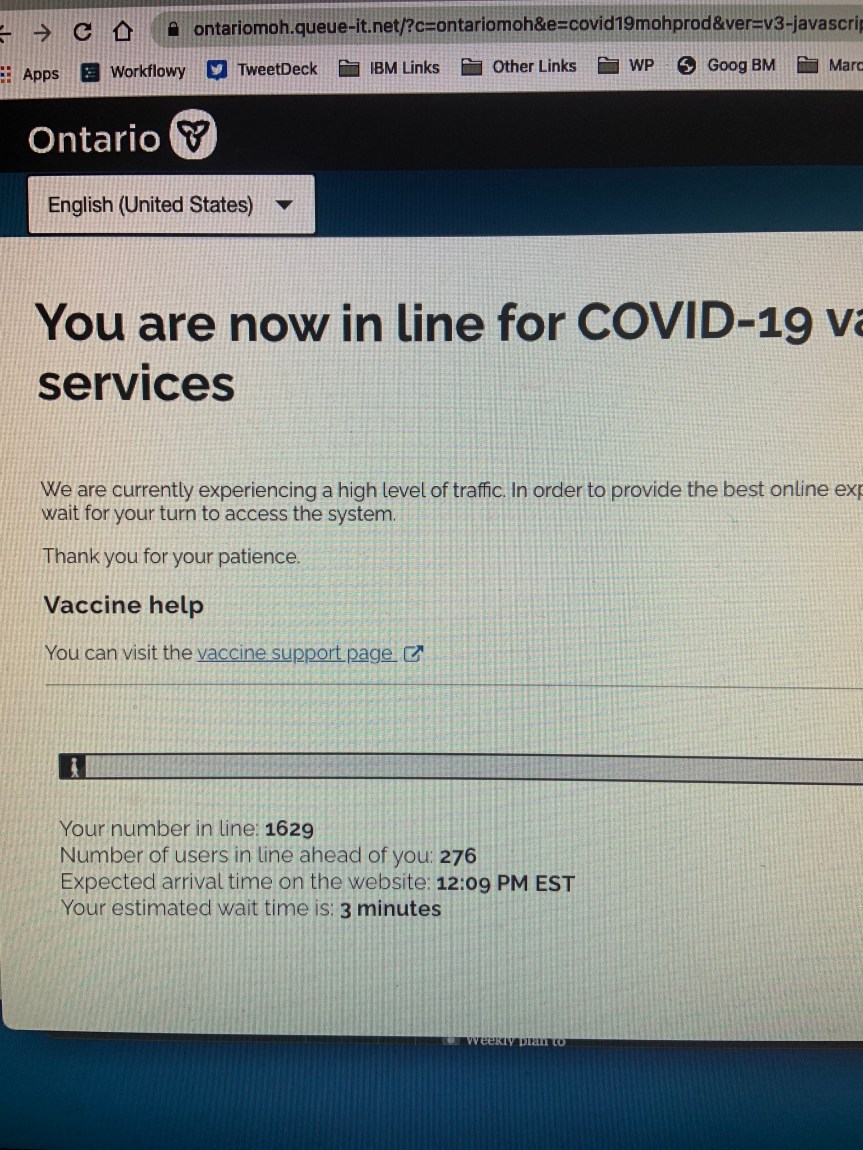
Second, above is an example of a site that clearly was performance tested. Even better, it is designed to respond to peak loads. Impressive.

You are going to be hearing a lot – ALOT! :) about NFTs. Here’s your NFT 101

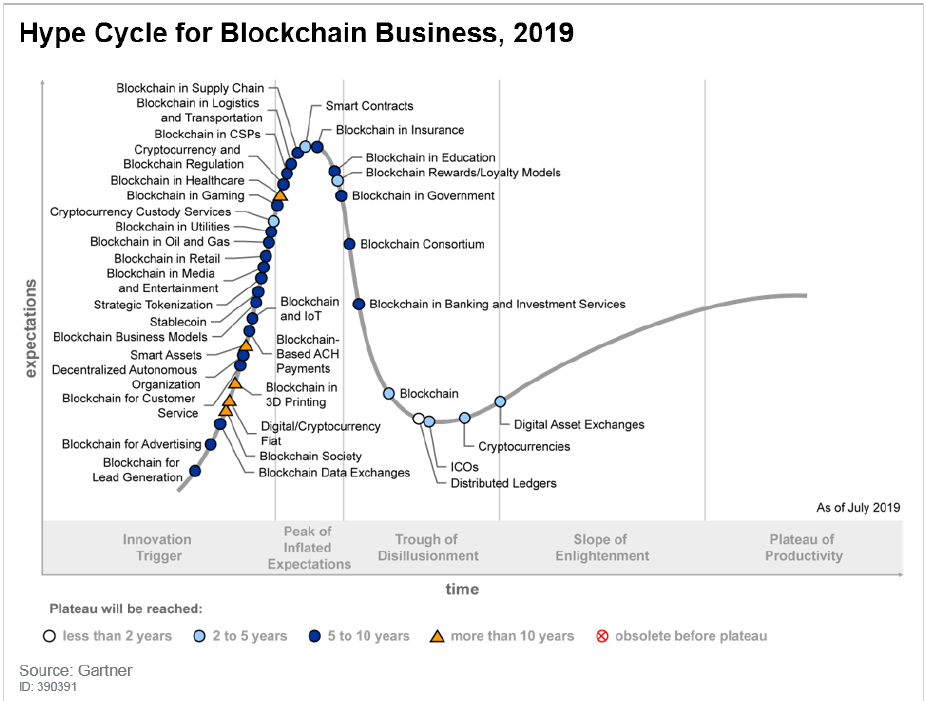
You may already be sick of hearing about NFTs (Non-Fungible Token). I have bad news: you are going to be hearing a lot about them for the next year. Two reasons for that: techies love them and they are all about money. So there’s going to be a ton of hype regarding them for the next while as people experiment with them. As you can see from the chart above, things regarding blockchain are still making their way up the Gartner Hype Curve, and NFTs are blockchain-based assets.

That aside, here’s Forbes with the info you need: Non-Fungible Tokens 101: A Primer On NFTs For Brands And Business Professionals

P.S. Gartner is very good at assessing technologies and how they play out. That particular Hype curve is from this article.

If you thought about growing a vegetable garden this year, read this now

vegetablesIf you thought about growing a vegetable garden this year, I highly recommend this piece: 13 Vegetables to Plant in Early Spring in Apartment Therapy. It has a wealth of information on what to plant, how to plant it, and when you should harvest it.

Sure a garden is work, but it’s good work. Indeed, as Samin Nosrat demonstrated, it might make you happier.

Good luck. Happy harvesting to you.

Are you eating oddly during the pandemic? Of course you are!

baby in a cake

I have been eating oddly during the pandemic compared to how I used to eat in the Before Times. Some days I will skip breakfast: other days I’ll have two! Or I’ll have dinner at 4 and then a snack at 10. I bet something similar  happening to you.

Well good news! As this article shows, everyone is going through the same thing: Your Weird Pandemic Meals Are Probably Fine – The Atlantic.

If you have maintained a consistent way of eating the whole time, that’s fine too. But if you are a bit weirded out by how you eat these days, read that article and you should feel better.

(Photo by Henley Design Studio on Unsplash)

The feeling wheel: a great tool to help you assess how you feel

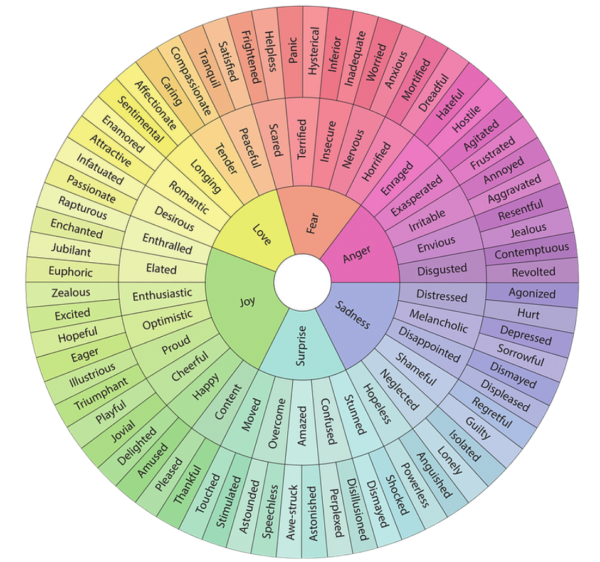
If you are in therapy or using some sort of mood log to assess how you feel, I highly recommend this tool: the emotional word wheel. It’s more than a fancy thesaurus. As the creator explains:

I work with people who have limited emotional vocabulary and as a result the intensity of their negative emotions and experiences is heightened because they can’t describe their feelings (especially their negative feelings). That’s why this list is heavily focused on negative emotions/ experiences. Being able to clearly identify how we are feeling has been shown to reduce this intensity of experience because it re-engages our rational mind.

I think it’s great, especially for men of a certain generation who have difficulty assessing how they feel and therefore have difficulty in dealing with it.

Speaking of mood logs, if you are interested in why you want to keep one, see this. Mood logs don’t have to be fancy: you can write your daily moods on post it notes for all it matters. And you don’t have to only write down bad moods: if you note the good moods, you can better understand what makes you feel good and look for ways to replicate that. That’s the goal for people like me.

You can find more on the emotional word wheel all over the Internet. The version I am referencing is here.

It’s Monday. Here’s a guide for teens to cope with anxiety that you too should read

Sign with the word Emotions on it.
Wait a second, you say. I am not a teen with anxiety, and I don’t know any. Fine, read this anyway: How to cope with teen anxiety | Psyche Guides

We all have a mix of bad feelings at all stages of our lives. You are likely reading this on a Monday: don’t tell me you don’t have some bad feelings right now. 🙂 The good news is that techniques used in CBT can help you deal with those feelings, whether you are somewhat anxious or depressed.

Not only that, but I think CBT can help people with feelings like being bored, disappointed or frustrated. Feelings you may feel weighing on you that don’t make you feel good. You can use it to shake yourself our of your current mindset which may not be helpful to you and move you into a better mindset.

Take those emotions that don’t make you feel your good self and move towards some better ones. Hey, it’s Monday: a good day to take a crack at it.

All the best.

(Photo by Alexas_Fotos on Unsplash)

Iowa shows why the move from big cities may be only temporary

Brooklyn
One thing that happened during the pandemic is that big cities like New York vacated to some degree. When they did, there was talk about how in the future more people would continue to work from home, and if they did, they might go to smaller and more affordable cities, like Des Moines, Iowa. Indeed, places like Des Moines has been recruiting people.

The problem these cities have, though, is that they are missing part of the puzzle. People in big cities like NYC and San Francisco live there for a lot of reasons. One of those is the freedom and rights that come with living there.  The respect those places have for progressive values are a big draw. Unfortunately, as this really good piece shows, Iowa (and likely other conservative cities and states) can’t and won’t provide that any time soon.

After reading that piece, I thought: yeah, even if the majority of people can still work from home, the mass exodus from Brooklyn to Des Moines is not going to be happening. Some will, for sure. But when the pandemic is over, people are going to head back to the major cities. They have more to offer than  affordability.

(Photo by Julian Myles on Unsplash)


Good design: OneClock

Alarm clock

The clock shown about is the OneClock. It looks great on the outside, and it’s smartly designed on the inside. Over at Colossal, they say, well:

Say goodbye to the days of being jarred awake by the alarm blaring from your iPhone. The creative team over at OneClock designed a streamlined device with the intention of rousing people in a more peaceful manner, one with soothing melodies that are in stark contrast to the startling sounds many of us hear every morning.

Smart. For more on the clock, click on the link to Colossal. Not only will you learn more about the clock, but there’s lots of great photos of it too.

Deleted scenes: Michael and the Don reuniting in “The Godfather”

I love deleted movie scenes. You often get insights into a film from seeing what was taken out. Sometimes the deletion is obvious: the scene doesn’t work or it redundant. Other times, though, I feel like it may have been dropped just to make the film shorter. I felt that way watching this scene:

Coppola does foreshadowing in a number of scenes in the film, including this one. You can see laid bare Michael’s desire for revenge, a revenge he gets at the end. You also see how happy the Don is to have him back.

There are key transition points for Michael in the film: when he shows up at the hospital to protect his father and when he proposes to kill McCluskey and Solozzo. I feel this deleted scene is one of those.

Obviously Coppola is a great director and he knows how to cut a film. I would have liked to see this one kept in, though.

More goodness from the 80s

David Salle painting

Here at this blog I will always share my love of the 1980s.

First up, here is a great piece in the New Yorker on a recent Whitney art show which highlighted the Joy of Eighties Art. It’s begins great:

Starting in the late nineteen-seventies, young American artists plunged, pell-mell, into making figurative paintings. That seemed ridiculously backward by the lights of the time’s reigning vanguards of flinty post-minimalism, cagey conceptualism, and chaste abstraction. The affront was part of the appeal. As with contemporaneous punk music, sheer nerve rocketed impudent twentysomethings to stardom on New York’s downtown scene. The powerful excitement of that moment has been languishing in a blind spot of recent art history, but “Fast Forward: Painting from the 1980s,” at the Whitney, a show of works by thirty-seven artists from the museum’s collection, comes to the rescue. Some of the names are famous: Julian Schnabel, David Salle, Eric Fischl, Jean-Michel Basquiat, Keith Haring.

I loved reading every word of that. A great review.

Other 80s things I found recently is this here ode to a great album of the the early 1980s: Rattlesnakes from Lloyd Cole and the Commotions.

Saxophones don’t feature on that recording, but they did on many other great recordings of the 1980s. Gradually they died off. Here’s a good piece exploring that.

If you still have music from that era, chances are some of it is on a cassette tape, which was big then. If you suddenly have the urge to listen to that, you can, with this player (shown below at Uncrate.com). It’s not the original Walkman, but in some ways it’s better.

cassette player

Rock on.

(Top image is David Salle’s “Sextant in Dogtown” (1987).Courtesy David Salle / VAGA, NY. Linked to in the article. Bottom image is from the uncrate.com article)

In praise of spreadsheets (and some new ways for you to use them)

Excel
Let’s face it: there is no better tool than Excel/spreadsheet software when it comes to managing information. New tools come out all the time, and yet people still depend on this workhorse software to get the job done.

At least it is for me. If that’s you too, then you might be interested in what they have over at Vertex42.com, including these three tools:

  1. Free Gantt Chart Template for Excel
  2. Project Timeline Template for Excel
  3. Savings Snowball Calculator

Of course Google Sheets are also great. Whatever you use, check out that site for some good tools and ideas.

New office chair and phone ideas (or, be good to your back and head :))

chair

Two things that can make our lives easier as we work from home are a good chair and a good phone. If you are in the market for a new office chair, see this:

Best office chairs of 2021 for your home office or student workstation – TechRepublic.

If you are in the market for a new phone, consider something out of the ordinary, like these minimal phones.

If your outputs aren’t great, look at your inputs


Are your outputs bad lately? Do you find your work is not up to the same grade they used to come up to? Are you finding yourself struggling to maintain good relationships with others? Maybe you find you aren’t taking care of yourself the way you used to? If your outputs are not great lately, I recommend you look at your inputs.

Simply put, if you have bad inputs, you will have bad outputs. Anyone who runs a well run machine will tell you that. It’s also true for you.

First of all, you are living in a pandemic in the middle of winter as I write that. Some of us are in a lockdown.  Just that alone is one big bad input into every day. Part of your pandemic life may be that you don’t get to see and meet people who at one time would give you a lot of positive input. A deficit of good inputs can be as  bad as a surfeit of bad inputs.  If you find you aren’t sleeping properly, or eating properly, or doing other things to take care of yourself, then those too are bad inputs.

Some of us can do well with even meagre inputs. But few can thrive that way. If you want to do better, you need to improve your good inputs and reduce your bad inputs. To do that,  I want to point you to this piece I wrote about it some time ago: Motivational Jiu-Jitsu: Staying Positive in the Face of Negativity & Indifference – Adobe 99U

There’s some inputs you can’t change. But you can tune some of them out, just like you can amplify some of your good inputs. If you do, I can assure you that you’ll get better outputs.

P.S. For more on the importantance of inputs on outputs, see: Austin Kleon – Posts tagged \’input and output\’

(Photo by Pete Nuij on Unsplash)

Two pieces to help with (getting back into) mindfulness

mindfulness sign
For some time, I was doing well practicing mindfulness. I found it helpful. I don’t know why I stopped. But then I have stopped doing so many things during the pandemic, and mindfulness was one of those.

If that sounds like you too, here’s two good pieces that could help:

  1. How to Practice Mindfulness | A Cup of Jo
  2. How to Meditate: It’s Not Complicated, but It’s Not Easy | GQ

They’re also good if you haven’t done mindfulness before and want to start.

(Photo by Lesly Juarez on Unsplash)

If you are afraid to draw, blind contour drawing is a good way to start

There are several benefits of blind contour drawing:

  1. if you are afraid you can’t draw “well”, then use blind contour drawing. Chances are it won’t look like the thing you are drawing, and that’s ok. But you will learn and get better at drawing.
  2. it is a good way to be mindful. If you are focused on doing a blind contour drawing, it’s hard to think of anything else
  3. It’s a good way to shake off your bad habits that you may have picked up.

Here’s some good links to help you learn more about it:

(Image is a link to the Austin Kleon post)

It’s Monday! You need help in keeping going. This can be the thing you need

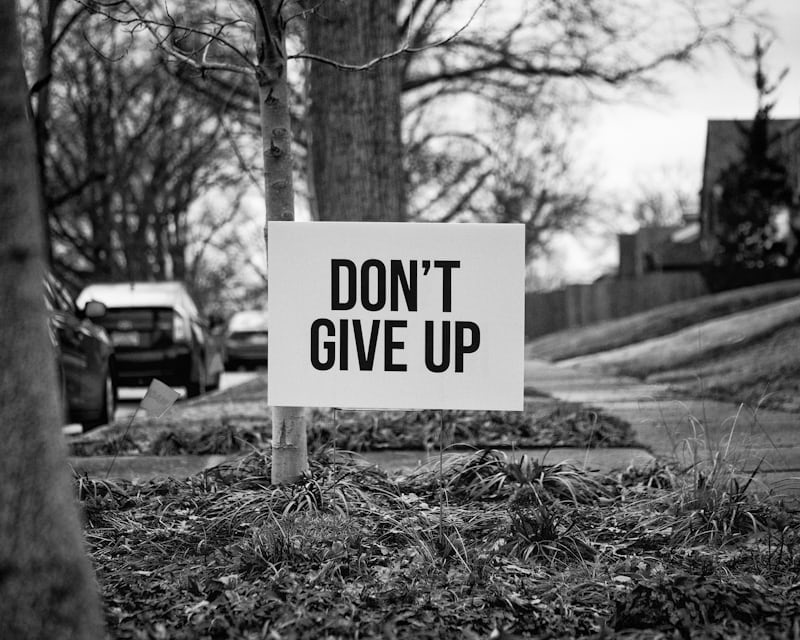
Dontt give up sign

It’s Monday! The first of March! We’ve been doing this stupid pandemic thing for a year now. We’ve managed somehow, and we have to continue to manage.

If that sounds daunting to you, I highly recommend this article: An Ode to Low Expectations in The Atlantic. I think it could be just the thing to help you get through the week, the month, and the rest of the pandemic.

We talk about managing their expectations. It’s never more important to do that in turbulent times with feelings of great anticipation.

Good luck! Appreciate what you have. Things will get better.

(Photo by Rosie Kerr on Unsplash)