This is pretty amazing. This Etsy account YesteryearPropStore seems to be selling many of the neon signs found in Blade Runner.
If I ran an establishment, I would love to have this one out front:


This is pretty amazing. This Etsy account YesteryearPropStore seems to be selling many of the neon signs found in Blade Runner.
If I ran an establishment, I would love to have this one out front:

I hope you are enjoying your summer and staying safe and well. Summer is the best time of the pandemic — it’s sad I can say that, but this is our second pandemic summer — so enjoy it as best as you can. If you need something to read as you soak up the sun and sip a cold one, here’s my latest blog newsletter for you.
Pandemic: it’s a weird time in the pandemic: on one hand, most people in places like Canada are getting vaccinated. Meanwhile, in other parts of the world, the Delta variant is causing death and devastation. I once thought the pandemic would be receding, now I am not so sure. We have signs of normality like Via Rail bringing back Montreal-Halifax service. But there is also talk about the fourth wave. People are patronizing restaurants and people are trying to avoid going to gyms. Places like Israel are struggling after early success. And while restaurants are open, restaurants are having a hard time staying staffed. (I can see that personally: my son works at Stock TC and he tells me they are struggling to hire and keep people.)
As for me, I am finally looking forward to doing some travelling to Halifax and Montreal in the upcoming months. I am going to be going to the east coast to accompany my son as he goes to university there. Then I am going to take advantage of my empty nest status to go to Montreal and partake in that great city and their wonderful views and food. Can’t wait!
It’s weird trying to arrange the trips. So much I used to do with certainty I do with great uncertainty now.
In non-travelling news, I’ve been going to some restaurants in Toronto and eating on their patios. Some patios are really great, others not so much. I love certain restaurants, but sitting on a busy street while cars and bikes whiz by is less than relaxing. Happy to patronize these restaurants, and looking forward to when we can all dine safely inside again.
Besides restaurants, other businesses are struggling to return to normal. My own employer is backing off having people return to the office, at least in NYC. The pandemic is going to have a big impact on companies in a number of ways. For example, there is much talk about preparing for the Great Resignation: 4 ways to be a better boss during the Great Resignation.
Olympics: During the recent Olympics, I expected that this sporting event could be cause of outbreaks. However, this piece argued that Tokyo has shown the pandemic can be beaten Games health adviser says. That’s good.
Health: One thing that came out of the Olympics was a discussion of taking into account not just physical health but mental health. This lead to articles like this: Why We Need To Normalize Taking Sick Days For Our Mental Health. Speaking of physical health, I agree with this, that COVID-19 has given us an opportunity to look at weight and what it means to be healthy. Our views of health change from generation to generation, but they should change dramatics because of the pandemic.
Denial: As with climate change, there are people who want to deny it is happening or that it is significant. That never ends well. For example: Oops. Canadian Province That Acted Like COVID Was Over Just Realized It Isn’t. (Yes, that’s Alberta). Some of those same people are using HIPAA as an excuse to not disclose their vaccination status. Those people need to read this: What Is HIPAA? Read This Before You Use HIPAA as an Excuse to Complain About Vaccine Requirements.
My last pandemic comment is this. You might be working from home for awhile, still. If some, here’s some good WFH furniture ideas from Simons. I may be checking it out soon. Regardless of buying new things, you may want to improve the look of your place. If so, check this out: How to curate (just about) anything.
Non pandemic stuff
Climate Change: there is so much news about climate change that I could easily fill the newsletter with references to that. Perhaps I will one day. One thing that stood out for me recently is this news: Hotter than the human body can handle: Pakistan city broils in world’s highest temperatures. The thought of parts of the world being unlivable is terrifying. My belief is that the way to turn it around is massive change on all fronts. So when I read things like this, I get concerned, to say the least: A Bill Gates Venture Aims To Spray Dust Into The Atmosphere To Block The Sun. What Could Go Wrong?. There is no silver bullet for climate change, and anyone who thinks so is wrong. Climate change is overwhelming, and only overwhelming action on all fronts is going to stabilize and improve things.
Canada: It’s Federal election time in Canada. If you need info on that, go here. If you need to see the latest polls, go here. I can’t predict what will happen: I expected the Liberals would win in Nova Scotia but the Conservatives ended up on top with a majority.
The US: for a time the President was on a roll in terms of success . His enemies and opponents like Lindsey Graham were struggling to stay relevant. But then he announced that the US was withdrawing from Afghanistan. Since then things have not been going well from him. I suspect over time it will work out for him and the American people. The occupation itself was never going to end well and it was best he declared this early in his presidency.
For some good insight on this, read this piece by Noah Smith: The Afghanistan occupation and the Japan occupation .
Still a thing: NFTs (Russell Simmons launches NFT collection to help pioneers of hip-hop), ransomware (Top 5 ransomware operators by income), and space exploration (NASA looking for people to spend a year pretending they live on Mars so it can prepare to send astronauts to red planet). Newsletters also still a thing.
Fun: this was a fun thing to read: An Oral History of Adam Sandler Pickup Basketball Legend.
Finally, this is a great time to eat fresh fruit and vegetables. Not only are they enjoyable, it is also a great way to live healthier. So eat as many as you can while you can.
Stay safe. Stay well. Hang in there.
(Photo by Dan-Cristian Pădureț on Unsplash)
Here’s a cornucopia of things I have found interesting in tech in the last month. As usual, lots of cloud, some Kubernetes, DevOps and software of course, as well as IOT. Grab a drink and read!
Cloud:
Devops:
Software:
Kubernetes:
Security:
IOT:
Cool stuff:
General
(Photo by Sam Albury on Unsplash )
During the pandemic I tried to get back into drawing and painting. I was somewhat successful. What helped me was searching around the Internet and trying to find how to sites that were actually useful. There are so many out there that are NOT useful, I can’t begin to tell you how much time I wasted reviewing them all.
If you too are interesting in started drawing or painting, I’ve put together these links that I found,m useful and inspiring. I hope you find that too.
Good luck!
(Photo by Kelli Tungay on Unsplash )
 Here are a number of pieces on two great downtown Manhattan restaurants: Florent and Odeon. Florent has been closed for a number of years. But Odeon lives on, happily. What I love about both restaurants is how the embodied that era and how they both set a stage. You can see that in the pieces below about them. Florent in particular was a radical place that was like no other, right down to their menus and promotional material (like the one above).
When they both opened the lower part of Manhattan had nothing like them. There was no gentrification down there like there is now. They were an oasis of good food, good design, and good times.
To really get a sense of that, read Restaurant Florent Takes Its Final Bows – The New York Times.
For more on the design ideas around Florent, see: Restaurant Florent | Restaurant Design in New York, NY — Memo Productions
A short history of the space Florent occupied is written about here: What remains of a Gansevoort Street restaurant | Ephemeral New York
Lastly, here is it’s Wikipedia write-up: Florent (restaurant). It’s a good source of other links on the place.
Before I forget, this is a fun piece on The Odeon: A Retro Haven That Defined New York 1980s Nightlife | Vanity Fair.
Also worth reading. Now go and eat at The Odeon.
Here are a number of pieces on two great downtown Manhattan restaurants: Florent and Odeon. Florent has been closed for a number of years. But Odeon lives on, happily. What I love about both restaurants is how the embodied that era and how they both set a stage. You can see that in the pieces below about them. Florent in particular was a radical place that was like no other, right down to their menus and promotional material (like the one above).
When they both opened the lower part of Manhattan had nothing like them. There was no gentrification down there like there is now. They were an oasis of good food, good design, and good times.
To really get a sense of that, read Restaurant Florent Takes Its Final Bows – The New York Times.
For more on the design ideas around Florent, see: Restaurant Florent | Restaurant Design in New York, NY — Memo Productions
A short history of the space Florent occupied is written about here: What remains of a Gansevoort Street restaurant | Ephemeral New York
Lastly, here is it’s Wikipedia write-up: Florent (restaurant). It’s a good source of other links on the place.
Before I forget, this is a fun piece on The Odeon: A Retro Haven That Defined New York 1980s Nightlife | Vanity Fair.
Also worth reading. Now go and eat at The Odeon.
I really found this article worthwhile: How to Clean Your House When You’re Depressed
It’s worthwhile reading even if you are not depressed. There can be times when it is too hard to clean your place. Unfortunately, a messy place may lead to more sadness and stress. Applying the lessons in that article can help alleviate that.
Now your house may not be messy, but you may be suffering from being down and not able to do other chores. Again, try and apply the lessons in that article. It may help you make progress, and clear signs of progress can often help.
Good luck. Go easy on yourself.

First up, Seneca. Here’s a good piece that summarizes some of the consolation letters he wrote to people close to him. Though they were written centuries ago, they are timeless and worth reading.
Second, Suetonius. Here’s a good piece on why you want to read him: The Consolations of History. Essentially, good histories like those of Suetonius give you perspective that help you deal with your own time. Sometimes they do that by showing you things are fundamentally the same. Other times they do that by showing how much things have changed since that time. Either way you come away with a deeper understanding of your own time even as you learn about another time.
During the pandemic I have been noticing this frequently. People are looking back at the pandemic of 1918-19 and trying to draw lessons from it. That’s a good thing, I think. We can all gain perspective by looking to the past, which is never really past.

To close off Toronto week here on the blog, here’s two pieces on what it was like to grow up in Toronto in the 1980s. First, Toronto Life has 15 signs you grew up in Toronto in the 1980s. Not to be outdone, blogTO doubles that and shares 30 signs you grew up in Toronto in the 1980s 🙂
(Image from the Toronto Life piece. I loved going to Toby’s when I was in Toronto in the 80s. They were everywhere and they had good burgs. )
Ok, I guess it is Toronto week on the old blog. Since it’s summer, here’s a good piece on where you can kayak in Toronto: Guide To Kayaking Toronto: Where To Paddle And When To Go. It sounds like fun, and a perfect activity for the summer months.
Don’t know how to kayak, you say? No worries, I have you covered. Read this: How to Finally Start Kayaking (and Why I’m Glad I Did)
(Photo by Pete Nowicki on Unsplash)

No, they do not transform into robots. Instead:
These are Toronto’s residential substations, fake houses built by Toronto Hydro to conceal what’s inside: a transformer that converts raw, high voltage electricity to a voltage low enough to distribute throughout the city.
I have seen a number of them over the years, including this one, which is not far from me: Fake Toronto castle hides electrifying secret in plain sight
They are rather cool, I think. And the fact they blend into the neighborhoods is a huge plus.
For more on them, including the one shown above, see this: Toronto Hydro’s not-so-hidden residential substations.
/https://www.thestar.com/content/dam/thestar/news/gta/2015/07/12/yiddish-sign-survives-threat-to-last-vestige-of-jewish-enclave-on-baldwin/ci-yiddishsignjpg.jpg)
Recently there was much discussion around this famous bakery in Toronto: Yung Sing. Many people I know have fond memories of going there and eating their famous pastry. And not just people I know, as this shows: Why Chinese bakery Yung Sing is one of the most fondly remembered in Toronto
That got me reminiscing about the street that Yung Sing is on. Baldwin Street has many famous places that incorporate Toronto history. You can see one example of that in this piece: Yiddish sign survives threat to last vestige of Jewish enclave on Baldwin | The Star.
And John’s and Yung Sing are just a few of the great places on Baldwin. You can read about more of them here: Toronto patios: Baldwin St. | The Star.
That’s an older piece, but there’s still some of those places. And there are other places that are new and great, like Omai.
I miss Baldwin Street. I used to go often before the pandemic. It’s easy to get to from Spadina Avenue and it’s just up from the AGO, making it a perfect destination. I need to go back soon.
If you want to learn more about the street, read this: Baldwin Village – Wikipedia
(Image linked to in the story on the Yiddish sign).

Here are three pieces on prison and incarceration that I thought were worth reading:
(Image linked to in the third piece)
Matthew Yglesias wrote this piece here and it did not go over too well: The case against crisis-mongering. I mainly agree with him, that our world problems, dire as they are, aren’t as exceptional as we may think. Or as Dan G put it on twitter:
Some things are better ≠ everything’s fine.
The past was scarier than we think ≠ today isn’t scary.
Humanity overcame huge challenges in the past ≠ the challenge we face is no big deal.I’m not sure why that has to be stated but apparently it does. Every three months or so.
— Dan Gardner (@dgardner) August 12, 2021
What Dan states is my worldview as well. There are still many bad things in the world, but there is progress and things are getting better. We have overcome problems in the past and we have the ability to fix things in the future. Plus the past was terrible in many ways and so much worse than now (and our times will look terrible to people in the future).
If you disagree with this, I strongly recommend two books:
They make the case stronger than I can for how the world is getting better and how we should be optimistic despite our difficulties.
People will say: what about global warming? The pandemic? Nuclear weapons? All I can say is read Matt’s piece and then read those books. I think that will help alot.
(Photo by Nathan Dumlao on Unsplash )
I was surprised to read this and discover that many fans of rosé prefer the lighter coloured version: A Rosé by Any Other Color – The New York Times.
I like lighter coloured rosés, but I find the darker ones have more substance and are more interesting. If you need convincing, I recommend you read that. Heck, read it regardless: it’s a good piece.
After you do that, I recommend you head out to your local wine shop and pick up a bottle or two. Maybe your favorite pale pink number combined with something darker. And if you do, why not pick up the ingredients to make a nice niçoise salad to go with it. I think they may be a perfect meal combo. If you want a minimal version of niçoise salad, I recommend this 5 ingredient version from Cup of Jo. Purists may disagree, but that is a fine dinner salad whatever you call it.
(Photo by Dennis Vinther on Unsplash )
Here a list of 5 or more things to help you become a better writer and (self)publish your book. Let me know if you find any of it useful.
(Photo by hannah grace on Unsplash …good advice as well.)
Do you have a blog, a tumblr, an account on Facebook, Instagram, twitter? Do you need fine print to go with that?
Well maybe not. But if you did, you could do no better than adopt the fine print of the account PourMeCoffee, here. Read it for the humour, but reflect on the Internet wisdom found there. It’s priceless.
Here’s some pieces worth reading on China regarding to censorship, spying, and China’s approach to the world:
(Photo by zhang kaiyv on Unsplash of Beijing)
Let’s face it: it can be hard at times to want to do anything, especially these days, the dog days of summer. You likely are getting tired from being at home all the time. The thought that the pandemic shows no sign of dying off doesn’t help. It’s also hot, and that can sap your morale too. What can you do?
Well, two things. First off, read this: How to Get Things Done When You Don’t Want to Do Anything – The New York Times. There’s some thoughtful advice on how to get enough motivation to do something. Don’t expect things to change overnight, but you can learn from it and get started.
If you are still struggling, maybe you need a better set up at home. If so, read this: 5 Habits of People Who Are Especially Productive Working from Home
Finally, maybe you need to create a short list of easy things to do to gain some momentum. I wrote about how you can do that, here.
We all fall into the doldrums from time to time. The quicksand of life, so to speak. Just stay positive and keep moving however slowly and you’ll get unstuck sooner than you think.
P.S. Finally grab one thing you love to do and do it. Don’t worry about being productive. Just focus on doing something.
(Photo by Christian Lambert on Unsplash)

In my case, the Church is the Catholic Church, which I have been estranged from since my teenage years. There are a great many good Catholics that I know, doing great acts of charity and service, such as paying off medical debt. And when I read pieces like this one, I think: yes, Catholicism can be a force for good.
But then there are the many terrible actions by the church and those within it that remind me of why my estrangement still exists. Like how Catholics who promised residential school survivors $25M instead spent $300M on a new church. or the political actions of Bishops in the United States. Or finally, laicized cardinal Theodore McCarrick.
McCarrick is being charged with a fraction of the things he got away with for a very long time. Things everyone knew about. And just so you know, McCarrick is not the end of it. If you can bare it, here’s more about it.
Finally here’s an editorial in a Catholic Church publication talking about just how messed up the church is.
That’s all I have to say for now.
P.S. April 4, 2025: The New York Times has McCarrick’s obituary here. The Times seems to struggle, in their obit, to deal with the two sides of McCarrick, the good and the bad. But the bad parts prevent me from appreciating any of the good parts. No RIP for him.
(Image: Damon Winter/The New York Times)

I am always trying to find ways to better understand the indigenous people of Canada and as a result I try and keep the better things I come across that help me with that understanding. I tend to be haphazard in how I research things: that shows in the almost randomness in what I have collected below. I think these links are worth reading, though.
On Residential schools: Recently there has been a strong focus on Canada’s Residential school system. Some people wrote about how people didn’t know this was happening back then. However this piece gives some important historical context as to what people knew at the time. As well, this piece gives more context as to how TB affected Aboriginal people.
Alot of what has been driving the focus has been the use of technology to find unmarked graves. Here are two good pieces on that ground radar technology. This piece gives a good introduction to it and this piece provides much more detail on how it works. For example, I naively expected the images to be more like an X ray or an ultrasound. It’s not quite that straightforward. Instead the images look like this:

(Image via CBC site)
As the use of the technology spread to other schools, some believed we would find graves at every residential school. However despite a lot of effort, there is no evidence found of unmarked graves related to Shubenacadie Residential School. I suspect this examination of schools will go on for a long time, and we will find more graves, but it will take time and not always come up with clear results.
As for why this is suddenly going forward, this story gives some context on how the search for the missing graves is being funded. Better late than never from the Federal government, but the lateness is still bad.
Finally, this is shameful: How the Catholic Church raised nearly $300M for buildings since promising residential school survivors $25M in 2005 . More on that story here.
History: My knowledge of indigenous history is weak. However, I found this helpful: More history: on the Iroquois as well as this: Military history of the Mi’kmaq people.
I need to go to Indigo bookstore and read more books and get a better sense of indigenous and Canadian history. If you feel the same, here’s a good list of what they have. Libraries are also good to go to and check out these books.
Other items:
Finally, if you want to learn more about Indigenous people in Canada, I’ve seen some indigenous people say that link was worthwhile.

(Top image of Shubenacadie Residential School via Wikipedia. Bottom image is of Her Excellency the Right Honourable Mary May Simon, Governor General and Commander-in-Chief of Canada taken by Sgt Johanie Maheu, Rideau Hall © OSGG-BSGG, 2021)
You would think so, if you read this: Sneering at Ontario’s anti-racist math curriculum reveals a straight line to what people value in The Star
What has the columnist angry was the removal of several passages of progressive political text that went with the update to the recent changes of the math curriculum. I can see why that removal would anger some people with progressive political values.
I can also imagine how many conservatives would have been angry if there was text like this removed from a new curriculum: “recognize the ways in which mathematics can be used as a tool to uncover, explore, analyse, and promote actions to address greater productivity and growth within our economy and to lead Canada to a strong future of wealth and opportunity”, or if the government removed anything to do with teachers creating “pro-capitalist and pro-business teaching and learning opportunities.” Any group that tries to explicitly frame a curriculum and then have that framing removed will be upset.
Mathematics itself is not political, but it is always taught within a political and historical context. For example, I have math texts that make it seem that the only worthwhile math came from European men, while I have others that show mathematics has roots all over the world. I have math textbooks that mention 0 women, while other texts show the role women have played in mathematics and delve into why women had a hard time making more of a contribution.
Whatever context you want to frame a curriculum, I think that emphasizing politics and history with regards to teaching mathematics will not achieve some of the goals that progressive thinkers hope it will achieve. I think the new changes in the curriculum with regards to things such as streaming will help achieve those goals, as I wrote here.
Additionally, I think there are other things that can be done outside the curriculum that could help students that are disadvantaged when it comes to education in math. I am thinking of the work done by organizations like BlackGirlsCode. We could use more organizations like that who can provide specialized programs not just to help kids who are struggling with math, but to uplift kids that excel in math. Organizations that can support the next Maryam Mirzakhani, wherever she is. The kids who are struggling with math need more help than what the schools can provide: the same is true for kids that excel in math.
(Photo by ThisisEngineering RAEng on Unsplash)

It looks like minimalism has had it’s time and now it’s time for maximalism to take over. At least that’s the sense I get, reading this:More Is More: The End of Minimalism | The Walrus
My thoughts are this:
For more on maximalism, here’s some other pieces I wrote. I also wrote more on minimalism too. 🙂
(Image via vinterior.co …I love it)
I’ve been a fan of QR codes for a decade. Back then I wrote about how they could be used to tag everything from trees and medic alert bracelets to IOT devices. I thought the sky was the limit for them. I was wrong.
Until this year. As Clive Thompson writes here, the pandemic has been a game changer in causing the resurgence of QR codes. I am glad to see that.
I’d still like to see QR codes everywhere. It would be a way of connecting the virtual world to the real world. Cities could tag streets and neighborhood with QR codes to allow you to get a glimpse of context into where you are standing. If a new building is being built, put a QR code on a sign out front that links to a web site providing greater detail on it. As for historic buildings, why not put a QR code on them that links to their wikipedia page describing the historical significance. Anyway, lots of ways QR codes could enhance our understanding of the world.
Here’s hoping they are here to stay, providing us a way to better navigate our world.
(Photo by Rebecca Hausner on Unsplash )
Whenever I get stuck and feel unmotivated, I write up a list of five things to do. I recommend you do this too. The list can be trivial tasks that can be done in a minute. Nevermind, just write them down. Then do them. Then take a break and congratulate yourself! Only moments earlier you were not able to do anything and you just did 5 things!
Here’s some things you can put on your list if you can’t think of anything:
You can easily pull five things out of that list.
Once you get the five done, do five more. Maybe you now have the momentum to tackle something bigger? Great, then do that!
I find this technique good when my energy levels are low, or if my todo list seems daunting. Give it a try: you might find yourself getting more things done.
How is Twitter holding up in 2021? It depends on how you look at it. As a service, it is trying to innovate with new features, but as this piece argues, it is kinda stuck: Twitter Is Stuck With Itself, Too – The New York Times.
As a company, though, it is doing well. For example, it continues to be profitable: Twitter Continues Its Profit Streak, While Still Shedding Users – The New York Times. The shedding users is a concern.
And compared to other services like YouTube, it is doing ok, as this piece shows: YouTube Is Underwhelming – The New York Times. In fact:
Twitter, which is not so hot at money, pulls in roughly double the ad sales on average from each of its users compared with YouTube.
Perhaps it should be acknowledged that the early social media companies like Twitter and YouTube are mature now and their growth and innovation peaks are behind them. Maybe they will continue to be like Facebook: mimicking every new company in the hopes of draining off some of that enthusiasm.
At least Twitter as a company seems to be doing well. For 2021, that may be all they need to be.
(Photo by Edgar MORAN on Unsplash)
There are two things I struggle with when it comes to the pomodoro technique and maybe you struggle with them too. First thing is the length of the pomodoro: 25 minutes is a loooong stretch for me somedays. Sometimes I may not even be able to do 5 minutes at a time. Second thing is that the timer is a distraction: I keep checking the time versus focusing what I am supposed to be doing.
If you also struggle with that, then read this: I Created The Best-Ever Pomodoro Timer, Just For You by Clive Thompson. Clive has the same problems I have and he writes about them there. Better still, he made a better pomodoro timer. Go check it out.
Your week will be more focused and productive because of it.
(Photo by Veri Ivanova on Unsplash)
If you have those feelings of dread and anxiety at the thought of work tomorrow, then read this:What are the Sunday scaries and how can you banish them?
Lots of good advice in there on how to get rid of them.
Some other things to consider:
(Photo by Alexandra Gorn on Unsplash )
Whew, it’s been awhile since I wrote about my cooking interests, and in the meantime the list has been building up with all sorts of delicious recipes. As well, I’ve found interesting essays and articles on food generally. Here they are: dig in!
Recipes: I have found so many good recipes I am going to separate them out just to make some sense of them.
Group Recipes: First off, here are some links to recipe lists that are rather good. Ottolenghi has some quick 15 minute lunch recipes that look good. Table for One is full of great solo recipes. Bon Appetit has compiled a list of their readers’ 23 Favorite recipes… some good ones there. A friend pointed out this collection of lovely recipes from Nigel Slater. Well worth a look. I have been craving meatballs lately. If you have too, Chatelaine can help you out there. The site Cup of Jo has a great list of Quick dinners. I like the recipes there a lot. If you feel like a salad, Bon Appetit has some salad ideas for you. Maybe you want soup? Food52 has 16 soup recipes to enjoy. Maybe you are too tired to cook at all. If so, check out 14 No-Cook recipes for hot Days or lazy nights. Finally here is an insane list from Bon Appetit: 76 of Our Best Steak Recipes from Rib Eye to Skirt Steak Fajitas to Skewers. Fire up the grill.
Italianish Recipes: I always love a good carbonara recipe. To go with that, from SaltFatAcidHeat, here is a good focaccia recipe. Remember how I said I liked meatballs? Here’s a meatball recipe from Budget Bytes. I highly recommend you make this right away: My favorite Tuscan fries from Nigella. Or maybe you want a nice antipesto plate of roasted veg.
Ok that was nice, now back to meatballs, with Martha’s Spaghetti and Meatballs and Melissa Clark’s pantry meatballs
Low cost/pantry/cucina povera: Speaking of Melissa Clark’s pantry meals — all of which I am a fan of — here are a few more. For instance this is a nice and easy meal of root vegetables paired with chickpeas and yogurt. Or this sausage and veg soup …sounds great. How about putting this savory loaf packed with cheese and olives to go with it? Sounds just right. Thanks, Melissa.
Meanwhile if you are in the mood to make loafs, I recommend these three meatloafs from Martha that are more French in style than American. There is Spicy Butternut Squash Meatloaf and also this Spanish-Style Meatloaf. Yum!
Still in the mood for more ways to eat cheap and healthy and lazy? Then read this.
Meat recipes: Speaking of eating lazy, I love cutlets for that. Here is Smitten Kitchen with a good chicken cutlet recipe. If you fancy pork, read this:
The Pork Chop Recipe That Finally Got Me on the Pork Chop Train. If you prefer beef instead, here’s a flank steak recipe with Bloody Mary Tomato salad (wow) and here’s a recipe for grilled rib eye with shishito pepper salsa.
Soups, sauces and salad recipes: no particular reason for this grouping, I just like it. Here’s a nice fennel and citrus salad. Here’s something you can have for days: Just-Keeps-Getting-Better Lentil Salad .
Need some sauces? Here’s two: a nice green sauce and a good veloute sauce.
We have a range of soups as well: from cucumber to French Onion with Comte. Here’s a general recipe to make any purred soup in 5 Steps. Last but not least: If You Have Kimchi You’re Steps Away From This Soup. So sez Melissa Clark’s pantry.
Other recipes: Here’s a nice noodle dish to try. Here’s some paleo recipes that looked promising: for fans of paleo. Did we forget drinks? Ok. Here’s a good recipe that is a base for all your summertime cocktails: homemade sour mix. Get to work on your braising. I haven’t tried this but if it works it will be fantastic: making caramelized onions in the oven.
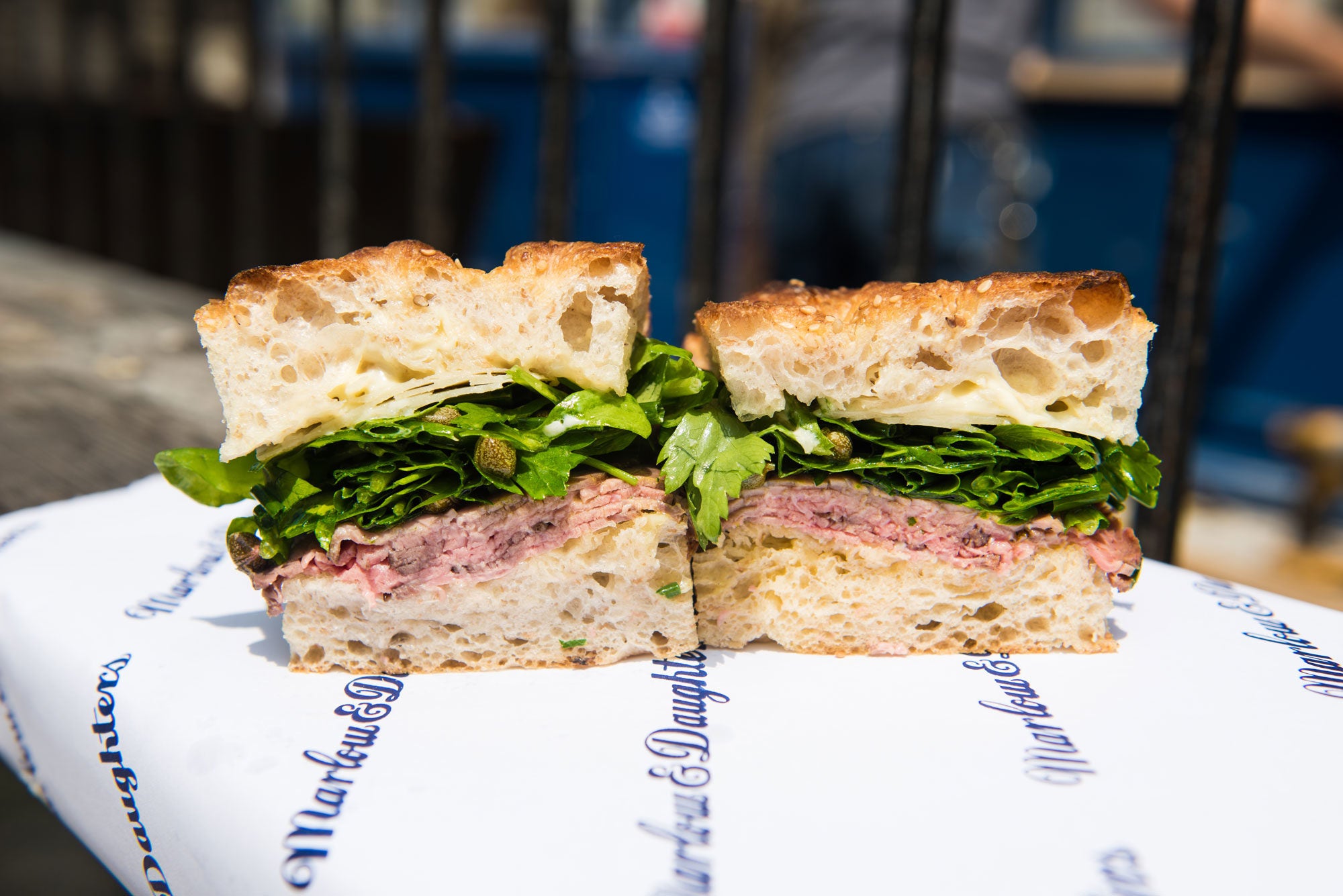
Non-recipe related: Wow. That’s a lot of recipes! Here’s some other things that seemed interesting. For example, here’s three interesting stories on French chefs dealing with the challenge of Michelin ratings: Un! Deux!Trois! Here’s a good story on space food, while here is another one on the economics of casseroles.This guy missed airline meals so much he makes them at home. Ok…sure. For fans of this chef, here’s a good write up on Eric Ripert’s latest cookbook on Vegetables. This was fascinating: Costco Builds Nebraska Supply Chain For Its $5 Rotisserie Chickens. I loved this piece on Caroline Fidanza, the chef who used to run the beloved Saltie’s in Brooklyn. Epic sandwiches! How about this great all purpose pan? Print this of if you bake: Converting cake recipes to different pans Finally, for fans of hot sauce, here is A hot sauce guide with tips for how to use 8 common styles.
Wow. That’s a ton of food links! I hope you found some useful. Happy cooking!
(Image of Caroline Fidanza focaccia sandwich via TASTE.)
Often I find links that are interesting but I don’t have anything especially interesting to say about them, other than I thought they were worthwhile reading. Here are 30 of them for this month. As the image says, you may get lots of your own ideas from reading the ideas of others:
I recently read this and I thought it was a great examination of what you should expect at each price point of wine: How to find the sweet spot in the cost of a bottle of wine | The Hub. It’s really aimed at Canadians, but it can apply elsewhere.
I am still a fan of cheap wine, but I find myself drinking closer to the $20 price point now. In Ontario at least, that seems to be the price at which wines are consistently good. There’s nothing wrong with buying wine at all sorts of price points. You should just know what to expect.
Speaking of cheaper wine, this is worth a read: The Science Behind Your Cheap Wine
(Photo by Scott Warman on Unsplash )
Often I find links that are interesting but I don’t know what to do with. Here are some for this month. I should have posted them in July but hey, it’s the thought that counts 🙂
Thank you for reading this far. I don’t know if anyone reads most of my posts, especially these general ones, but I keep at it regardless.
(Top Photo by Hello I’m Nik on Unsplash . Bottom Photo by Courtney Hedger on Unsplash)
If you are tired of autocorrect trying to teach you manners and swear less, here’s a good hack for you –> Hate the ducking autocorrect on your iOS device? Here’s how to teach it to swear
Not that I am recommending you do this. But if you want to, you can. 🙂
(Photo by Etienne Girardet on Unsplash )
I’ve been struggling to get back in some form of better shape during the pandemic. During that time, I have been researching diets, fitness routines, meditation routines, health links, wellness articles…you name it. Here are some of the good links I have found that are worthwhile:
(Photo by Alex McCarthy on Unsplash )
It’s Monday. You are trying to plan your day, your week, and you are struggling. It may just be you, but chances are it is the act of writing out your todo list. To see what I mean, read this excellent piece by my online friend and great writer, Clive Thompson. Everyone struggles with todo lists and the tools used to work with them. I know I do. I have used many such tools over time and have never landed on the perfect one.
So here’s what I recommend:
Todo list tools are good to help you achieve your tasks. But focus less on your tasks and tools and more on what you are trying to achieve.
(Photo by Markus Spiske on Unsplash )
Often times advice is overlooked because it is trite or simple. Such advice is like a butterknife: of limited use but still useful.
We can use all the tools we can to be happier. Even those that cut like butterknives. Here’s 10 of them right here: 10 simple things to make you happier at home
Whatever can help you cut through life’s sadness is worthwhile, I think.
(Photo by Calum Lewis on Unsplash )
Here’s 59 links (!) of things I have found interesting in tech in the last while.
It ‘s heavily skewed towards Kubernetes because that’s mostly what I have been involved with. Some stuff on Helm, since I was working on a tricky situation with Helm charts. There’s some docker and Open Shift of course, since it’s related. There’s a few general pieces on cloud. And finally at the end there’s links to a bunch of worthwhile repos.
Almost all of these links are self explanatory. The ones that aren’t…well…few if anyone but me reads these posts anyway. 🙂 Just treat it like a collection of potentially good resources.
Raspberry Pi / Pico: I have been interested in doing work with the Raspberry Pi Pico, so here are some links I liked:
Raspberry Pi Pico: Programming with the Affordable Microcontroller and Getting started with Raspberry Pi Pico – Control LED brightness with PWM | Raspberry Pi Projects and How to Use an OLED Display With Raspberry Pi Pico | Tom’s Hardware.
I am interested in getting bluetooth working with my Raspberry Pi Pico, so I am reading things like Bluetooth serial communication with Mac, JY-MCU Bluetooth and Arduino | Cy-View and How to: Setup a bluetooth connection between Arduino and a PC/Mac | ./notes and Cheap BlueTooth Buttons and Linux – Terence Eden’s Blog
Not a Pico, but I am also interested in doing work with the ATTTiny 85 chip, so I saved this: How to Program an ATtiny 85 Digispark : 8 Steps – Instructables
Here’s two projects I am interested in. Using a Pico to press a key on the Mac using bluetooth: How to run an AppleScript with a keyboard shortcut on macOS while here is a fun project – Making an Email-Powered E-Paper Picture Frame–
Here’s some cool MIDI projects with a Pico: this one, NEW GUIDE: Modal MIDI Keyboard @adafruit @johnedgarpark #adafruit #midi « Adafruit Industries – Makers, hackers, artists, designers and engineers, this Code the Modal MIDI Controller | Modal MIDI Keyboard | Adafruit Learning System, and this Build smart, custom mechanical keyboards for MIDI – or really tiny Ableton Live control – CDM Create Digital Music
Kubernetes/OpenShift / Containers: I’ve been doing more and more work on K8S and OpenShift and found these useful…
Cloud: some advanced cloud knowledge here:
Software Development: here’s some random dev links:
General: finally here are some interesting links on IT in general:

(Image: via NYT piece on mesh)
Happy midsummer to you. We are halfway through the summer of 2021 which also means it’s time for my latest blog newsletter.
Pandemic: For some time now, as vaccination was on the rise, the underlying story of the pandemic was “this will soon be over”. Masks were coming off. Indoor dining was on coming back. Travel restrictions were easing.
Now the Delta variant has taken over the story and masks are going back on and cases are on the rise. More on that here. I suspect that for at least the time being, we are still going to be struggling with COVID-19 in its many forms/variants.
Some places are trying to just act like it isn’t happening. For example, Tennessee abandoned vaccine outreach to minors and not just for COVID-19. That bout of madness lasted only a bit of time before the wise folks of that state reversed things. But like the pandemic, that madness is going around. For example, Alberta is going to try a similar route, ending COVID rules.
Here’s the problem with this, in my opinion: unlike poverty, politicians can’t ignore COVID. If you try and do so, cases rise, hospitals fill up, more people die. People get upset and promise to vote you out. There’s no getting around it. The only way politicians win in that case is when people ignore them and do the right thing. Even then, their poor judgment is going to hurt them come election time.
As for other provinces, Ontario is trying to open as fast as it can, but it has a good plan and it seems to be sticking to it. However, daily cases were in the 150/day range and have creeped up to over 200. The plan may not hold.
I’m still hoping Canada is on the way to post-pandemic status. Based on our vaccine rates, it’s possible. But who knows. The pandemic humbles us all.
In other pandemic stories, it’s important to acknowledge that all tragedy did not occur directly because of the disease. In Ontario, more young people died from effects of lockdown than of COVID itself. That story is a good reminder that making choices in a pandemic are never straightforward. The choice of lockdown, while benefiting many, harmed others.
The New York Times has had many a good piece on how the pandemic has affected us. Here’s another: The Year of Purchasing and Purging
Finally, many of you have been forced to work at home during the pandemic. Here’s a silver lining: Introducing a simplified process for claiming the home office expenses for Canadians working from home due to the COVID-19 pandemic
Non-pandemic things :
Olympics: It is crazy that the Olympics are going on during the pandemic. There is talk that COVID cases count spike as a result. We will see. As for the Olympics themselves, people are tuning them out. I am not surprised. I know why they weren’t cancelled altogher — a lot of money is at stake — but they should have been.
NFTs: Not much to say here. The fact that Coke is getting into the NFT game tells me that either they are becoming more mainstream or they are petering out.
US: In the US we have a tale of two presidents. The former president continues to be in hot water. First off, it looks like he will be forced to turn over tax records. As well, his actions during the attempted coup of January 6th are getting more scrutiny. Good.
Meanwhile this is what amounts to a Biden controversy: people are upset about his choices of ambassadors. That aside, Biden has a good chance that Congress is going to pass his bipartisan Infrastructure bill. That will be a big win for him.
Another big plus for his presidency is that poverty dropped considerably as a result of poverty aid programs. It’s a reminder that poverty and homelessness are a choice we make.
Finally there was the billionaire space race. I wrote about it here.
Ransomware: Continues to be a problem everywhere including Canada. It looks like Biden has expressed his unhappiness with things to Putin. I am not sure if this is a result of that conversation, but some of the people responsible for ransomware suddenly disappeared.
Lastly thanks for reading this! I appreciate it. Go out and enjoy the summer days while you can.
(Photo by Chris Galbraith on Unsplash)
Here on this blog, I like to post anything I can about my favorite artists, and Basquiat is one of my most favorite. Here’s two recent pieces on him:
The last one has this incredible photo in it:
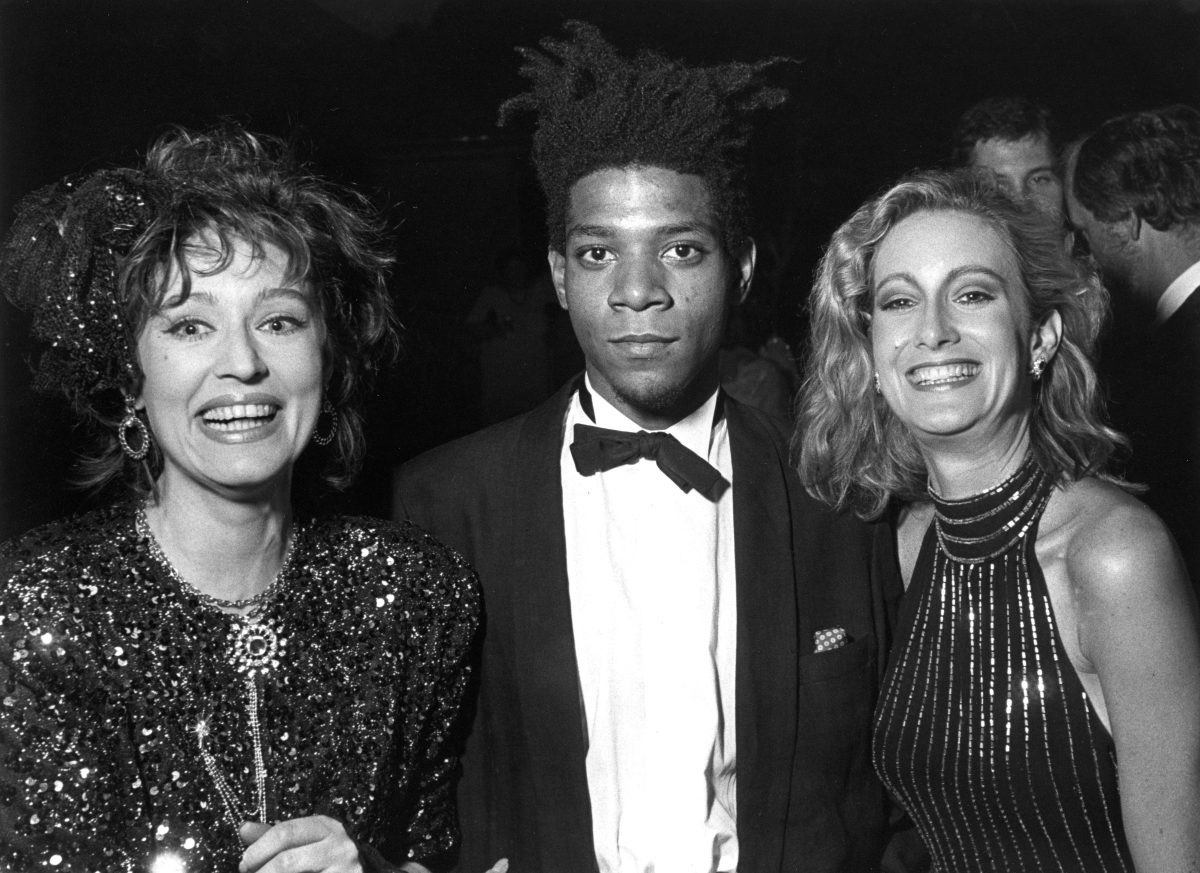
First off, the photo is titled: Jean-Michel Basquiat at the opening of Primitivism in 20th Century Art, 1985 (photo by Andy Hanson). I can’t believe that any museum or gallery categorized his work as Primitivism. (Ok, I can.) And then that photo. Basquiat looking cool and sophisticated. The women…well…something else. Anyway….good links. Check them out.

While we on this blog love a good glass of cremant anytime, in the summertime we want easy drinking cocktail and mixes like spritzes. Italian liquors are great for these. While you may be happy to chug back of sip Aperol spritzes all weekend, we’d like to recommend something different: the Lambrusco Spritz. There is much to recommend for the Lambrusco Spritz. For one, you can drink Lambrusco as a spritz or straight up. Two, it goes great with snacky food. As the Times shows:
Lambrusco pairs seamlessly with the rich foods of Emilia-Romagna, such as Parmigiano-Reggiano, cured meats and gnocco fritto, meaning that a daytime bottle can easily linger past sunset. “A lot of wines that you might apéro with, you might not want with food,” Ms. Davis said. “The great thing about Lambrusco is that you can drink it all day, and then you can drink it all night.”
Perfect, right? So grab yourself a few bottles and go Day Drinking, Italian Style.
(Image: link to NYTimes article)

This, Fighting against ageism and this, Aging is inevitable, so why not do it joyfully? Here’s how.
How we see growing old is a cultural thing. When I first went to pick out a photo, I decided on the first one of the man running. Because I am a product of my culture, as they say. I see being fit and young and productive as valuable. Especially in our culture, being able to produce is highly valued. That’s why ageism occurs. If you show signs of age, people assume you will produce less. So your value decreases to them.
Then I saw the picture below. In other cultures, being able to sit and converse with your friends is valuable. These people are not being productive. They are not trying to look young. They are being social. They are being human.
I think we have problems in our society because for many the chief purpose of humans is to produce, to be productive. As long as that is true, we will have problems with ageism. True, we need times of our life to be productive, but we also need times for growth, times for rest and reflection. To combine all those times effectively is to live a good life. A life where all humans at all times of their lives are valued.
(First Photo by Lisa Wall on Unsplash. Second Photo by Cristina Gottardi on Unsplash )















 Smart People I Know