Nine more links to help you with intermittent fasting

In 2019 I posted about five links to help you with intermittent fasting. Well since the pandemic, I’ve heard from a number of people who are interesting in the idea, because let’s face it, not many of us have slimmed down during the Indoor Times. If this is you, take a look:

  1. The science behind intermittent fasting — and how you can make it work for you
  2. How to Manage One’s Moods -The School of Life Articles | Formally The Book of Life
  3. Intermittent Fasting For Beginners: Should You Skip Breakfast? | Nerd Fitness
  4. Read This Before You Try Any of These Intermittent Fasting Diets
  5. Foods to Eat While Intermittent Fasting: The Full Breakdown
  6. The Benefits of Intermittent Fasting – The New York Times
  7. Intermittent Fasting May Aid Weight Loss – The New York Times
  8. How Good a Diet Is Intermittent Fasting? – Scientific American
  9. The science behind intermittent fasting — and how you can make it work for you |

(Photo by Louis Hansel @shotsoflouis on Unsplash)


The Internet is under water

Literally.

First up, above is a map of  all the underwater fiber optic cables that provide the internet throughout the world. While much of the connectivity for the Internet is above ground, the cables that connect one continent to another all lies at the bottom of the world’s oceans.

And not just cables. One day maybe data centres themselves will also reside in the sea versus land, based on this experiment: Microsoft’s underwater data centre resurfaces after two years – BBC News

Can you replace your desktop computer with a Raspberry Pi in 2020?

rapsberry pi 4
Not yet. Not even if it is raspberry pi 4. As this piece argues, there are still some issues with it that will make you want to hold on to your desktop computer. At least in 2020.

A few comments:

  • depending on your use, you may read this and think: hey, those issues aren’t deal breakers for me. If so, I say go for it.
  • If you have been using a Chromebook and it’s been fine, then you may be more likely to say yes too.
  • If you need a second computer for specific uses, then the Pi 4 may be just the thing.

Eventually there will be a Pi that is both fast and full function and cheap and that will be the just the thing. But in the year 2020, you still want your desktop/laptop.

All that said, the piece is really good, really detailed. Worth reading. The image is from the piece.

If you want to recreate a cubicle in your home, you can (but why would you??)

Hey, if you are really really really missing your office cubicle (why?) and you want to recreate that at home (why??), you can, with this:

Cubicle at home

It’s called the Hug desk, and you can read about it, here.

Please try and make a nice work place in your home instead. I wrote about home offices to die for, here.  These are much better to recreate, imho.


Need a temporary Mac? Now with AWS, you can get one!

How? By using their cloud service: AWS brings the Mac mini to its cloud.

Perfect for those times you need access to a Mac for a short period of time (e.g. testing software).

Throughout my career I have been involved with Macs and cloud technology. I remember when Apple made Mac servers. There was even a separate MacOS for them. So I am loving this evolution and the repositioning of Macs in a data center.

Image from here which also has a write up on this.


How to improve and get better by using taboos and your dark side


How to improve and get better by using taboos and your dark side seems like a contradiction. But sometimes using your dark side can be just the thing you need to improve.

Now this can be harder to do than you might suppose. Our culture (from Faust to Star Wars) says appealing to the dark side leads to your ruin. This can cause you to not want to do this. But anger (against injustice), pride (in becoming the best), gluttony (for hard work) and lust/vanity (to self improve) can sometimes motive you and drive you much better than love and happiness can.  Sure, excessive vices can destroy you, I agree. But vices well harnessed and in moderation might get you through the difficult days of changing and help get you to the other side.

To see a good example of what I mean, read this: A Spiteful Guide to Self-Improvement.

You may not have an enemies or rivals or arch enemies. Fine. Invent some. Then go out and take them on and in the process become a better person. Then be magnanimous and graceful in your victory. There: now you are a better person and a good one too.

(Image by Gustave DoréJacob Wrestling with the Angel (1855) from wikipedia)

On being grateful despite duress

Grateful sign
It is said that being grateful is good for our mental health. But being grateful when living under duress can seem next to impossible. To see others do so is educational.

So I give you this piece on someone who is grateful in a way many of us might not be. I found it educational. I am still absorbing the lesson. I hope you gain something from reading it.

(Photo by Dylan Ferreira on Unsplash)

On blogging/writing online in 2020 (how I write now)


In 2020, blogging is back. At least blogging as newsletters. Think Substack and all the people flocking to there. Blogging on WordPress (or Blogger or Tumblr or other blogging platforms) is not as hot but still going strong.

That’s good. I am a fan of more writing and better writing, whether it comes in blog form or newsletter form. Bring it on.

I continue to write here as I have been for some time.  I’ve written a number of pieces on blogging over the last decade; this piece will join that.

I’ll likely to continue writing here until I get 1,000,000 hits (currently at 976,745 hits) but given the limited readership, that may never happen. I’ll keep writing, regardless. We all need goals, and the million hits is one of mine.

Currently I sit down every Saturday morning and review interesting things I’ve found on the Internet and saved in Pocket. I have over 1000 things still in Pocket, not to mention a spreadsheet of old links that were noteworthy. There’s always something of interest to write about. Plus the Internet never stops being interesting.

I usually take 3-4 hours to write about these things. Then I schedule them to be posted throughout the week. My thinking is that this is more likely to bring a wider readership to them. My SEO skills are limited, but this is my thinking.

I enjoy this writing time. I grab some breakfast and a coffee and craft the posts. I grab images from Unsplash.com to illustrate the posts. It’s a hobby and something I enjoy doing. I love doing it. I’m an amateur writer and thinker.

I try and mix up the posts for readers. Something on Monday to help you get your week started. Something fun on Friday. Something to make your weekend better on Saturday. Perhaps a more thoughtful post on Sunday.

As always I think: would someone reading this get any benefit? Much of my posts are advice, but in areas I am interested in. I want to share things of interest to me but that will also interest others.

Once a month I go back over posts from other years. Today I will go back over the December posts. It’s fascinating to see what was interesting to me in other years.

Whenever I am lost for what my audience is, I think: would someone in my family want to read this? Or one or more of my friends? Once I have that one reader, I can write to them. Many of my posts are letters to people that may not realize it.

Since the pandemic, I have started a newsletter within the blog. I haven’t broken it out into its separate media. Just like I never moved to Tumblr or Medium or took up podcasts. This blog is sufficient for what I want to communicate and record.

I have a few other blogs on WordPress: one on cooking that I enjoy writing from time to time. A few others that are experimental. I use Instagram still because it is easy, but photography is a very separate and different media.

I’ll continue to write here, writing for smart people I know. I’ve been doing it since before the World Wide Web.  Why stop now?

As always, for those who have read this far:

An appropriate thank you card for this era.

(Coffee Photo by Laura Chouette on Unsplash. The other image is also from Unsplash but I could not find who to attribute it to)

Retro radios, remade

null

I absolutely love this City Radio, shown above. You push the button and it play music from the city listed.  So cool. Love the analog design too. It reminds me of the best of Dieter Rams and Braun.

Part of the reason I love it is because it reminds me of the old radio my grandmother had. As a kid it had all the cities of the world listed on a glowing panel, and as I would move the dial a needle would go back and forth and play music from different parts of the world (depending how good reception was). That just amazed me then.

If you have technical skills, and old radio and a raspberry pi, you can make such a thing for yourself.  Just google “convert old radio raspberry pi”. Of the links I found, I like this and this and this.

On being moderately gifted, and the pain and pleasure that brings


This piece by Austin Kleon on being moderately gifted got me re-thinking this idea he discusses.

I say re-thinking because it is something I have thought about since I was a young man. Back then I was getting into  jazz (as one does) and someone told me: the problem with being a jazz musician is your new album is always competing with the albums of Armstrong and Fitzgerald and Davis and Coltrane and Simone. People putting out pop music don’t have to worry about that. It’s tough to be moderately gifted in jazz, I thought, for you are always competing with the best. But in pop music, you are usually competing with the now. There’s more room to get by being moderately gifted. (Especially in the era I grew up when three chords was all you needed.)

If you have a creative spirit but moderate talents, it is easy to get dispirited and put your tools away. You will never be great you say, why bother? But I think the answer comes from looking at pop music. You may never be great, but you can enjoy putting in play whatever talent you do have. Maybe you can only paint flowers, or knit scarfs, or bake brownies. Do it with gusto! Do it like a punk rocker pounding away on his guitar with the 3 chords he knows! You might never be great, but in the moment, you are living large and the audience at the time is loving it. That’s enough. And enough is as good as a feast.

Perhaps you will go on to greatness. Whether you do or not, shine on as brightly as you can. Not all of us can be the sun, but sometimes being a campfire is fine.

How to go skating in Toronto in the pandemic

Liisa Ladouceur (shown above) has written a thorough guide for anyone who wants to go skating in Toronto during the pandemic. No, you cannot just show up with your blades and start skating. You need to do more. And you should do more, because skating is a great way to enjoy winter in the pandemic era. So read this: Where to go skating in Toronto in 2020 by Liisa Wanders. Then get out there! Maybe I will see you at a socially safe distance with a fun mask on too.

Anti COVID Posters!

This is a smart reuse of old VD posters to warn against the dangers of a new biological thread: COVID. Via The Daily Heller:

Adrian Wilson, provocateur par excellence, recently revisited a vintage poster prevention campaign against VD used during World War II, and remixed the various messages into a current cautionary attack on CoViD-19. This genre of repurposing images and words is not new or novel, but when accomplished satirically and wittily, as Wilson has done below, it can be an effective public messaging tool.


For more of Wilson’s work, click on the link above. It’s great.

The next time someone complains about the length of a recipe…

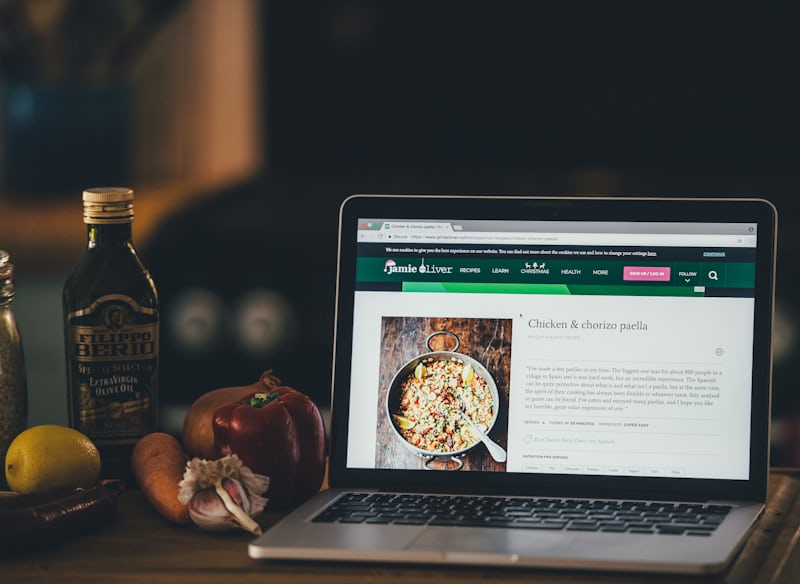
Online recipe

Show them this article by 

It’s the perfect comeback for them.  It’s dripping in sarcasm, as it should.

My other response to people who complain about food writers writing about food (duh) is to send them a link to allrecipes.com.

If you just want a recipe for food, go there. Otherwise stop complaining already.

(Photo by Annie Spratt on Unsplash)


On Microsoft Frontpage: a history not just of a product, but the early days of the web

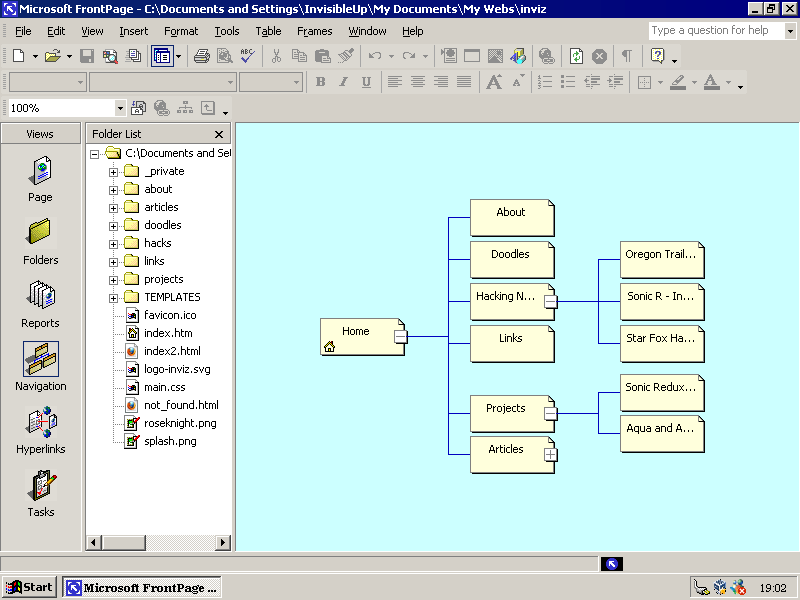
Microsoft Front Page

I found this piece on Microsoft FrontPage fascinating.  I remember when it first came out: it was a great tool if you wanted to develop for the web. While serious people went with Adobe products, FrontPage made developing web page easier for the rest of us. If you want to learn about the early days of the Web, or if you want to see what well designed software looks like (even if it seems very clunky with that Windows XP interfact), I recommend you read it.

You can actually still download it, here. Now should you? No. Read the sections of the article subtitled “Bad” and “Ugly” to see why.


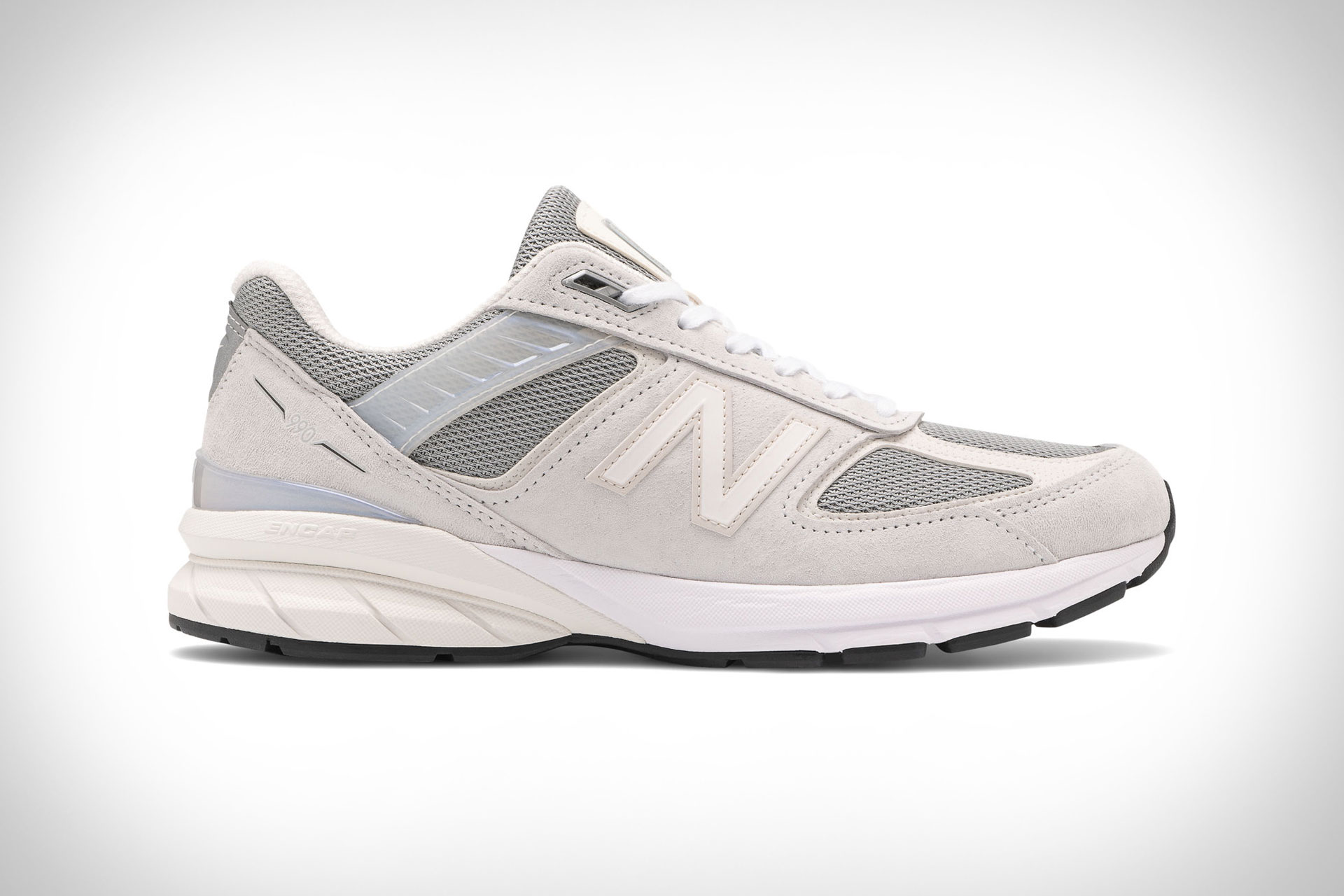
The Nimbus Cloud 990v5 running shoes from New Balance

NB 990s

New Balance has been making some form of the 990s for a very long time. If you are a clydesdale runner you may have owned one of more of these.

I wanted to highlight this pair because I just love the styling of them. Long after they no longer provide you the cushioning you need to run with, you can still walk around in them and be stylish IMHO.

For more info on them, check out this Uncrate piece.

Of course, you can also go to the New Balance site. The all black ones look great too.

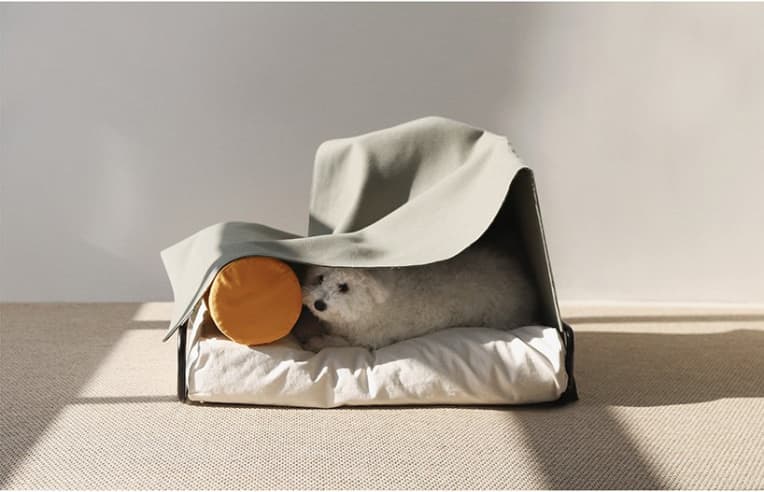
Sure your dog’s bed is nice. But here’s how to take it to the next level

Sadly, you cannot buy this modular dog bed that industrial designer Hyemin Kim created called the MUF as a project for his studies. But if you go to this link, you can see more of his approach to making his dog bed that can appeal to all types of dogs. You might be able to take some of his ideas and apply them to your own dog bed. Your dog will thank you for it, because of course, they are a good dog. 🙂

What I find interesting in tech, November 2020

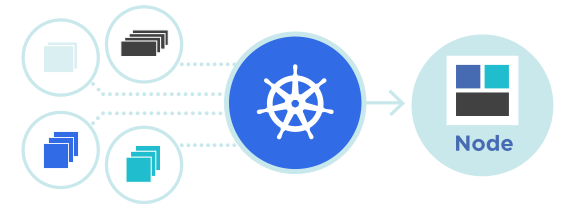
Kubernetes

Here’s 59 links (!) of things I have found interesting in tech in the last while. It ‘s heavily skewed towards Kubernetes because that’s mostly what I have been involved with. Some stuff on Helm, since I was working on a tricky situation with Helm charts. There’s some docker and Open Shift of course, since it’s related. There’s a few general pieces on cloud. And finally at the end there’s links to a bunch of worthwhile repos.

Almost all of these links are self explanatory. The ones that aren’t…well…few if anyone but me reads these posts anyway. 🙂 Just treat it like a collection of potentially good resources.

  1. How to create custom Helm charts
  2. How to make a Helm chart in 10 minutes | Opensource.com
  3. Basic kubectl and Helm commands for beginners | Opensource.com
  4. A visual guide on troubleshooting Kubernetes deployments
  5. Kubernetes Canary Deployments for User Beta testing | by Damien Marshall | ITNEXT
  6. Hands-on guide: developing & deploying Node.js apps in Kubernetes
  7. Deploying Java Applications with Docker and Kubernetes – O’Reilly
  8. Kubernetes, Kafka Event Sourcing Architecture Patterns, and Use Case Examples – DZone Big Data
  9. 10 most important differences between OpenShift and Kubernetes – cloudowski.com
  10. Node.js in a Kubernets world – IBM Developer
  11. Learn Kubernetes in Under 3 Hours: A Detailed Guide to Orchestrating Containers
  12. Service accounts — Kubernetes on AWS 0.1 documentation
  13. Copy directories and files to and from Kubernetes Container [POD] | by Nilesh Suryavanshi | Medium
  14. Monitoring Kubernetes in Production: How To Guide | Sysdig
  15. Kubernetes Cheat Sheet | Red Hat Developer
  16. Kubernetes In a Nutshell | Enqueue Zero
  17. Kubernetes Deployment in a Nutshell | Clivern
  18. Kubernetes namespaces for beginners | Opensource.com
  19. Level up your use of Helm on Kubernetes with Charts | Opensource.com
  20. Running Solr on Kubernetes
  21. Solr on Kubernetes on Portworx
  22. Zookeeper – Unofficial Kubernetes
  23. Kubernetes for Everyone
  24. Chris Biscardi’s Digital Garden
  25. Istio / Getting Started
  26. How To Set Up a Kubernetes Monitoring Stack with Prometheus, Grafana and Alertmanager on DigitalOcean | DigitalOcean
  27. Kubernetes Ingress Controllers: How to choose the right one: Part 1 | by Eric Liu | ITNEXT
  28. An introduction to Minishift, OpenShift, and IBM Cloud – IBM Developer
  29. How To Set Up an Nginx Ingress on DigitalOcean Kubernetes Using Helm | DigitalOcean
  30. An introduction to Kubernetes.
  31. Health checks in Kubernetes for your Node.js applications – IBM Developer
  32. Beyond the basics with Cloud Foundry – IBM Developer
  33. Build a cloud-native Java app using Codewind and your favorite IDE – IBM Developer
  34. Accelerating the application containerization journey – Cloud computing news
  35. 6 Key Elements for a Successful Cloud Migration | IBM
  36. An introduction to Minishift, OpenShift, and IBM Cloud – IBM Developer
  37. There aren’t enough humans for cloud-native infra. Can DevOps deal? – SiliconANGLE
  38. Leverage deep learning in IBM Cloud Functions – IBM Developer
  39. CloudReady for Home: Free Download — Neverware
  40. Council Post: It’s Time To Accelerate Your Hybrid Or Multicloud Strategy
  41. Getting started with solution tutorials
  42. How to get started with GCP  |  Google Cloud
  43. Setting up Solr Cloud 8.4.1 with Zookeeper 3.5.6 | by Amrit Sarkar | Medium
  44. solr – How to force a leader on SolrCloud? – Stack Overflow
  45. Play with Docker Classroom
  46. Getting any Docker image running in your own OpenShift cluster
  47. Building Docker Images inside Kubernetes | by Vadym Martsynovskyy | Hootsuite Engineering | Medium
  48. Get an IBM MQ queue for development on Windows – IBM Developer
  49. Ultimate Guide to Installing Kafka Docker on Kubernetes – DZone Big Data
  50. Kafka on Kubernetes — a good fit? | by Johann Gyger | Noteworthy – The Journal Blog
  51. How To Install Apache Kafka on Debian 10 | DigitalOcean
  52. Chapter 7. Monitoring and performance – Kafka Streams in Action: Real-time apps and microservices with the Kafka Streams API [Book]
  53. charts/incubator/cassandra at master · helm/charts · GitHub
  54. atlas-helm-chart/charts/zookeeper at master · xmavrck/atlas-helm-chart · GitHub
  55. nhs-app-helm-chart/solr.yaml at master · pajmd/nhs-app-helm-chart · GitHub
  56. GitHub – manjitsin/atlas-helm-chart: Kubernetes Helm Chart to deploy Apache Atlas
  57. GitHub – IBM/Scalable-WordPress-deployment-on-Kubernetes: This code showcases the full power of Kubernetes clusters and shows how can we deploy the world’s most popular website framework on top of world’s most popular container orchestration platform.
  58. A Dockerfile with (almost) all the tools mentioned in Bite Size Networking by Julia Evans · GitHub
  59. GitHub – sburn/docker-apache-atlas: This Apache Atlas is built from the latest release source tarball and patched to be run in a Docker container.

It’s Monday. You have something risky you have been dreading to tackle. Here’s how to tackle it

You have something we want to do but don’t because you feel there is a big risk involved. You think: what if I fail? If you fail you fear you will a) be covered in shame b) lose out big c) have other bad things happen to you that you can’t even imagine you can cope with. No wonder you have been putting it off.

First of all, you can cope with pretty much anything. Second of all, there is a good and painless way to approach that thing you think is risky. It’s outlined nicely in this article and in that diagram. The article uses opening a restaurant as an example, but it could be applied to any big goal you have, from taking on a new job position to running a marathon.

In my own job, we deal with managing risk every day. We plan to deal with risk by taking the same method and applying it over and over. It is very effective professionally. It can be effective for you personally. Keep iterating until the thing that once seemed very risky now seems much less so.

(Image from a link to the article.)

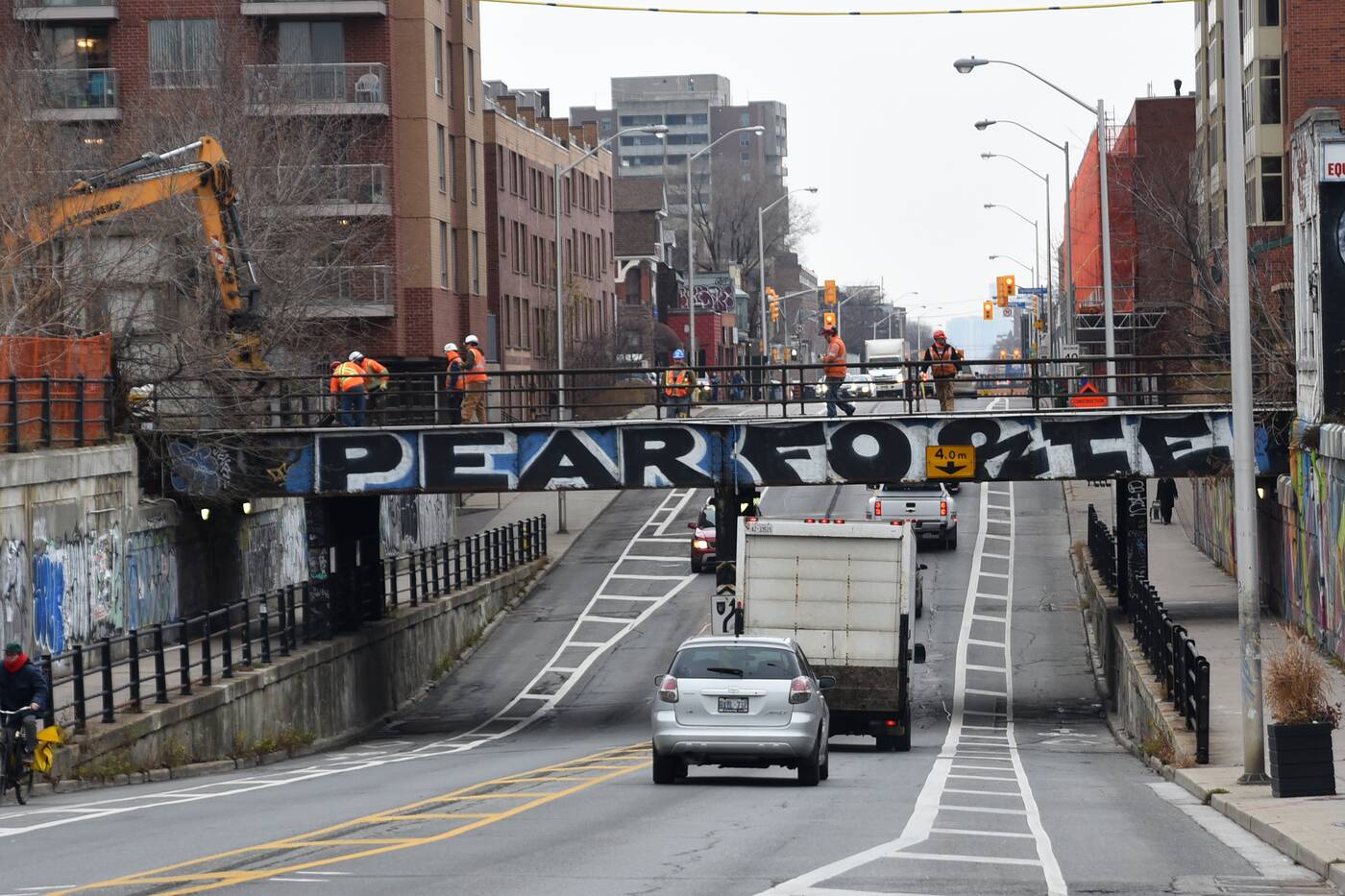
On something being ugly but something you’ll miss when it is gone

For me, it’s this bridge which according to BlogTO is going to be demolished:

When I first moved to Toronto in the 80s I lived near this area and used to pass under this bridge all the time. There’s nothing attractive about it, save the murals, which weren’t there when I lived there.

Still, I will miss it when it is gone, ugly or not.

Want help getting your place neat and tidy this weekend? I have some links

cleaning products
If you are in a rut with keeping your place clean and organized, this could help:

  1. Zettelkasten is the German Secret to a Super-Organized Life | Apartment Therapy
  2. The Best Cleaning Apps – For Families, Roommates or Anyone | Apartment Therapy
  3. 7 Smart Cleaning Hacks Using White Vinegar | Apartment Therapy

It’s a pandemic: it’s hard to go anywhere nice and clean, so make your place that place. Or you can do what I do: procrastinate about cleaning and organizing by reading about it instead. 🙂

Friday night cocktails: the champagne cocktail


The champagne cocktail is a minimal cocktail. It’s perfect if you want a cocktail and aren’t good at making them or you are too beat to make anything involved. Honestly you can make it in a flash. To see what, I mean, here’s a recipe for one: Champagne Cocktail Recipe | Bon Appétit

If you need convincing on the merits of them,  read this: The Champagne Cocktail Is the Rented Tux of Mixed Drinks | Bon Appétit.

More on them, here.

I mean look at it: it looks delicious. Go make one.

P.S. If you do want a bit more involved cocktail that has sparkling wine as an ingredient, I recommend the French 75.

(Image via liquor.com)

On US Politics, Money, and the recent election

Money
American politics is about many things. One of the main things it is about is money.  For a while it was believed that after the “Citizen United” case, the flood of money  would almost guarantee whoever had the most money would win.  Now it’s not just about what money can do, but what it cannot do.

As some states like Maine and South Carolina showed, vastly outspending the incumbent will not guarantee election: The Democrats Went All Out Against Susan Collins. Rural Maine Grimaced. – The New York Times. That’s not to say money is irrelevant. It’s just that it has limits. It’s no longer enough to bombard people with ads bought with all that money. You need to spend smarter. I am not sure if anyone in the US has that figured out.

Speaking of money, this article by Jamelle Bouie highlights the importance of money especially when it comes to low information voters: Opinion | A Simple Theory of Why Trump Did Well – The New York Times. High information voters might scoff at “Donnie Dollars” (cheques issued by the government with Trump’s name on them). But I agree with Bouie: things like that make a difference with many voters. People might not closely weigh one politician’s promises versus another, but they all remember the jobs and services and other benefits that the incumbents brought their way.

(Photo by Matthew Lancaster on Unsplash)

On starting your own Orangery this winter


Ok, ok, maybe that is a bit ambitious. But as the winter settles in, you might want a bit of summer in your home. If just to help you get through the days when it seems like winter will never end and summer will never come. (Collapse face first on the bed after you say that. :))

If you like that idea, read this: The Plant That’ll Make it Feel Like Summer in Your Home All Year Long. 

Then go get one and get started on making your own orangery.

Need more encouragement: read this from Bon Appetit.

P.S. if you are asking, “what the heck is an orangery”, then go here: Orangery – Wikipedia. It’s a fascinating idea and history.

Image above of the Belvedere Orangery in Vienna, via Wikipedia.

On the COVID fee and the airlinerization of your bill


If you are concerned about the cost of things, then you should know about this: The COVID fee, or why many services could cost you more as Toronto reopens for business | CBC News.

I get the COVID fee. It makes sense for businesses dealing with the cost of the pandemic. But it got me thinking about how we might start seeing the airlinerization of bills.

I thought of that concept when I started to get food from Uber Eats. On top of the cost of the meals is 3 or 4 fees, not including tips. Now with the COVID fee we may start seeing other service companies stacking additional costs onto the initial cost.

This reminds me of the airline industry. To compete, the fares for flights are stripped of costs. Then after you are about to pay, you find out the true cost of things. Again, I get it. It makes sense. It makes me wary of using a service that does this.

It may seem good for businesses to charge several additional fees. The listed cost seems low and attracts customers. It’s only when you get the bill do you see what you are truly paying. In my case yesterday I didn’t even see the COVID fee until I got home. The tip is added as a percentage on top of all the fees as well. My expected costs and my actual costs were wildly out of sync. This did not leave me with a good feeling for the place I just visited. I feel they need to be more transparent with this. (It is not listed on their website or on the Square terminal when I paid).

If the cost is not a concern for you, then feel free to ignore it. But for many people buying goods and services in the pandemic, caveat emptor.

(Photo by CardMapr on Unsplash)

Why you need to exercise self-care (especially in a pandemic)


It’s easy to let care for yourself slide in a pandemic. But even in normal times it can be a problem. If you find this to be the case, then I recommend this piece. It can help you understand why you aren’t taking better care of yourself. It then helps you understand what good selfcare looks like.

I’d add a base reason for self care is you can only take care of others if you take care of yourself as well. The airplane mask rule is always in effect.

(Photo by Jungwoo Hong on Unsplash)

I hope Americans still on the fence about travelling for Thanksgiving read this


I understand the importance of Thanksgiving in the US. It’s a big deal, and a big part of that is coming together. But coming together might mean spreading COVID-19, not just with the people you visit, but others after the visit.

Because of that, I hope you will stay in your respective dwellings and take advantage of this offer from Zoom: Thanksgiving on Zoom: Your family get-together can surpass 40 minutes.

Normally if you have a free Zoom account, you are limited to how long your online session can last. Happily, Zoom is waiving that for this year. It’s a great offer: you should jump on it.

I hope people will meet up virtually in the US this Thanksgiving. It will make a world of difference.

On Betty Goodwin

I’m always struck whenever I see the works of Betty Goodwin. They have a distortion that reminds me of Francis Bacon, and there is sometimes a threat implied with them, the way Bacon’s work does too. But Goodwin is her own artist, and if anything she has a greater range than Bacon does. This is not to strictly compare both artists, for they are both great in their own way. It is just meant to highlight how good I think she is.

If you want to see more of her work, you can go the National Gallery of Canada, here. The AGO also has some of her work and had a fine exhibit on her in 2019. You can read about it here.

In praise of the cardigan, perfect for your pandemic fashion needs

Fancy cardigan
Finally! Advice we can all use: How to wear a statement cardigan | Men’s fashion in The Guardian

You might think I am joking but I am not: the cardigan is my favorite article of clothing. It’s dressier than a hoodie, more comfortable than a jacket, adjustable for different temperatures, and definitely stylish. I mean look at that one above! A cardigan with a shirt and tie is casual chic. Add more layers and you will be the picture of elegance.

I only have one piece of advice about cardigans: if you see one you like, do not hesitate to buy it. Clothing lines usually have a very limited number of cardigans they make every year, and often those are boring. Some years I have not found one good cardigan worth owning. A good cardigan is a rare and wonderful thing: don’t hesitate to get one or more.

Four good ideas from IKEA


Nothing radical decor-wise, but here are some good ideas from IKEA. For example, they’ve packaged up some of their products to make improving your home easier: IKEA Launched Decor Kits That Let You Mix Up Your Style Easily

They have these speakers (seen above) that I would quickly get if I didn’t have a Sonos speaker already. It combines the quality of Sonos with the affordability of IKEA: SYMFONISK WiFi bookshelf speaker – black – IKEA.

Speaking of affordability, here’s a reminder that IKEA is always stocked with affordable items: Under $10 – Affordable Furniture and Gifts – IKEA

Finally, it is easy to criticize rooms with too much IKEA furniture in it. Such rooms tend to look like a showroom rather than your room. However, for people who have a hard time making good choices about their decor, stealing ideas from IKEA makes a lot of sense. To see what I mean, check this article out: IKEA Catalog 2021 Neutral Calming Rooms | Apartment Therapy

You know about hygge. Now it’s a good time to learn about friluftsliv

winter in NYC

You likely know about hygge, and adopting that into your life can make winter not only more endurable but even wonderful. But while hygge is good for indoors, what about outdoors? This is where friluftsliv comes in. As this article explains, ‘We belong out there’: How the Nordic concept of friluftsliv — outdoor life — could help the Pacific Northwest get through this COVID winter  the idea of outdoor life,  especially in the depth of winter, is what we are going to need to get through this cold part of the pandemic.

I think you would benefit to read the article, but basically it describes friluftsliv this way:

More expansive than outdoor recreation and less self-serious than outdoor adventure, friluftsliv describes “whatever you go to REI for,” said Meyer. “But in Norway, it’s this deeper concept of having space from other people, which is kind of a Norwegian thing to do, and then it has that sense of being able to wander freely outside.”

It’s like flaneurism combined with winter. 🙂

Get yourself some good winter clothing and start planning to get outside. Not only will it help you from feeling cooped up, it will help you appreciate what you have inside. You can come back to your cozy blankets and candles and whatever else you have to make indoors delightful. Make a tea or a hot chocolate. You are the master of winter.

(Photo by Heather Shevlin on Unsplash)

November pandemic highlights and ramblings (a newsletter, in blog form)

Hi there! It’s time for my monthly newsletter-but-not of highlights and ramblings. As always, thanks for stopping by and reading this.

It’s been an intense period of time since October. Starting with the pandemic…

Pandemic – bad: we have terrible new statistics coming out of many places, including Canada. Months ago people were talking about the second wave, and now it seems to be crashing over us in so many places. I am fearful it is going to take a dreadful toll on us this winter. I think so much has collapsed and as I feared in the last newsletter, people are just dropping the ball. Here in Canada I see a number of provincial leaders just floundering and since healthcare is their jurisdiction, I am not hopeful things will get better soon.  And it’s not just Canada: many other countries seem to be either flailing or bringing in stricter measures. I think sooner than later many places will head back to lockdown.

And it’s not just Canadian politicians. I think people have become more social and the natural outcome of this is more spreading of the virus, more people getting sick, and more people dying.

Pandemic – good: the silver lining is the news of the vaccines coming out. It can’t happen soon enough, though obviously it is going to be well into 2021 before we get them.  Let’s hope there is enough will and discipline to crack down on socialization and other contributors to the spread of COVID-19 until they are widely delivered.

Pandemic – otherwise: I thought this was an interesting approach to the pandemic: Self-care in 2020: I’m handling the election and the pandemic by throwing a series of tantrums

There’s been much good said about how the Atlantic Provinces have been handling the pandemic. But it has come at a cost. For example my home of Cape Breton has no air travel in or out of Sydney airport: Air Canada flights cancelled between Sydney, Halifax | CBC News. There is no rail either: that was cancelled long ago. Sad.

Personally,  I have not done much differently since March. I went to two indoor restaurants with plenty of social distancing in the summer, and I have had two indoor gatherings with two other people outside my tiny bubble of four, but that’s it. What I have found is I am just am accepting things as normal now. I don’t have any special projects or activities on the go the way I was earlier in the pandemic. But I am not putting things on hold either: I find I am looking forward to things that I can afford to look forward to.

The USA : the other big news of the last month is the defeat of Donald Trump by Joe Biden. Whatever shortcomings President Biden will have, they will be nothing in comparison to the shortcomings of President Trump. I argued some time ago that Trump was not the worst US President ever. I think Buchanan still might be. But I think Trump might be the second worse now, given the number of preventable deaths due to COVID if he had acted sooner. Like I said, I think Buchanan is still the worst, but with the deaths, corruption, lying, nepotism, and so many other faults, Trump is the second worst. At least he is no longer President, come January. All the world will benefit from this.

Speaking of Trump, this was quite a story: Donald Trump Has At Least $1 Billion In Debt, More Than Twice The Amount He Suggested. . I suspect he will be having more than his fair share of difficulties starting with his time out of office.

Restaurants: restaurants still continue to have a tough time of it, and come winter in Canada, I don’t know how many we will lose. Likely a lot. So I am always on the lookout for any sliver of hope out there. One I found was this innovative way to provide food.

Related to that is this article: Has the pandemic changed how we eat forever? – The Globe and Mail. Not sure if it has changed it “forever”, but it will have changed it substantially and for a long time to come.

Newsletters: Not sure if I am going to keep highlighting them. But for now I will mention that if you want a really good newsletter on the law, and I think you do, I highly recommend The Popehat Report. The author, Ken White, goes by the name of Popehat on twitter. I learn something new an in depth every time I read it.

Speaking of newsletters, the Substack service seems to be on a roll when it comes to signing up big names to provide newsletter services. I suspect this will build for awhile as a gold rush of sorts occurs. Lots of people will think they will be able to cash in. But as always the Long Tail effect will occur, and just a small number of people will really benefit from the monetization of newsletter.

Climate Change: Between the pandemic and the US election, it has been easy to forget there is still a climate crisis occurring. There are so many examples of it, but this struck me: Phoenix to break record for most 100-degree days in calendar year – The Washington Post. Eventually many parts of the world will be uninhabitable as time passes and Climate Change worsens.

Cool science: gravitational waves were first discovered in 2015. Since then, scientists have captured 50 events pertaining to gravitational waves. Here’s what that means: What 50 Gravitational-wave Events Reveal about the Universe – Scientific AmericanI love that this new tool is already letting us learn so much more about our universe.

Cool tech: I have been a fan of Raspberry Pis for a long time. They continue to come out with new and improved versions of the technology. Case in point, this: Raspberry Pi 400 – Complete Kit – BuyaPi.ca. It could be a great way to get someone interested in computers.

Plants: I’ve written number of pieces on plants; you can find themhere. I used to be terrible with them. But one good thing about the pandemic is that I am home all the time. This helps me keep a better eye on my green friends. Partially as a result of that, they are thriving. If you have problems with plants, I recommend that you read this: How to stop killing your houseplants – Vox

Finally: I realize the pandemic is getting you down. Your not alone. But there are vaccines coming, so find ways to deal with it until then.

Remember:


Are you more worried these days? This can help


Are you more worried these days? Ha! I know you are: I see your tweets and your socials! Hey, it’s fine. These are difficult days. That’s not a licence to worry your head off though. Difficult or not, being able to worry less is a good skill to have.

If you don’t think it is a skill you have much of, read this. It will give you good practical tips to deal effectively with your worrying. Better yet, read it with a pen and paper handy; when you are done, write down a practical plan to change your worrying.

Worrying is a habitual way of thinking that can cause you damage. The good news is you can break that habit and change your thinking and have it shift away from worrying.  Worrying is like smoking or eating badly or any other harmful behaviors. Behaviors you can change. So set your mind on a different form of being. You’ll be calmer and more positive soon enough.

(Photo by Henrikke Due on Unsplash)

Thinking about Fun (something good for you to do)

kid playing in leaves

Are you having fun? That’s a question often asked of us as kids. Then we get older and get more responsibilities and that question dies off. You might only hear yourself saying: I am not having fun.

That’s a great loss. Our lives are enriched by fun. If you can’t even imagine fun anymore, here are too good pieces for your serious self to read:

I really recommend you read them and challenge yourself to make time to have fun. Remember make your own fun. For some people it is being goofy, other people it’s making something, and still others find fun in doing things no one else would consider “fun”. Never mind. Find your fun wherever you can and cherish it.

(Photo by Scott Webb on Unsplash)

On Mitch McConnell

Two good pieces on Mitch McConnell, here and here.

The first piece is analyzing if he is good at his job. The second piece has a snarky title but gets to the essence of McConnell.

I’d argue he is good at his job. He’s a strong parliamentarian who knows his caucus . He has a simple agenda and he strives to get it done. If you are a progressive, that stinks. But if you are a conservative,  it’s great.

People struggling to understand McConnell usually do so because they imagine him to be someone else. But he is simple to understand. How you feel about that is different.

How to get into reading philosophy? Start with these five books

What Does It All Mean? Book
If you haven’t read philosophy before, it can be daunting. Doing it with an instructor helps. A good instructor or lecturer can give you context, guide you to what is important, help you ask the right questions, even acknowledge the difficulty of what you are reading.

If you don’t have that but still want to give it a try, I recommend this list by Nigel Warburton. Some of them are general, and some focus on specific fields of philosophy. They all sound good. Read the list: Warburton tells you what each book is about and why you want to read it.

I suspect by the time you finish the article, you’ll want to go out and get one of those books.

(Photo by Grant Jacobson on Unsplash)