The pandemic hit NYC harder than many cities, I believe. While terrible things like COVID deaths and ad hoc evacuation have thankfully declined, it is still feeling the impact. Dining is one of these things that was affected. According to the Times, the city that never sleeps is now turning off the “Open 24 hours” sign, at least in some places: In NYC Some Doors Now Close at 10 p.m. One of the reasons for this could be that for (some) New Yorkers, 6 p.m. Is the New 8 p.m. How long will will this last? I’m guessing like many things in New York, it is transitory and the city that used to never sleep will be sleepless soon enough and flocking to places like Katz’s Deli in the Lower East Side.
I love New York. It never gets old. It’s just acting like an oldster lately. 🙂
What’s new in Toronto? For one thing, there’s an election coming up soon. If you live in Toronto and want to see who is running in your ward, then click on this…. it’s a great way to find out who all is running and give you the chance to make an informed decision. Get out there and vote!
Ideally, the next batch of politicians elected will effectively deal with the problems Toronto is having, like a lack of affordable housing. Will that happen? This piece makes the case that even if the next mayor has more power, they likely will not get more housing built. I hope that isn’t true.
Problems aside, there’s lots of good things about the city to celebrate. Like TIFF! One thing new with the film festival: it now offering movies digitally, which sounds interesting. If you want to get outdoors, there’s lots of recreational facilities available, and the city is hiring for them. Some gorgeous new places have opened, like the Ace Hotel. Nice to see. Need more nice Toronto things to see? See this,TORONTOVERSE – Your interactive city and this list of the most beautiful places in Toronto.
Speaking of things closing, NOW magazine is closing down. RIP. You were an essential part of my youth. And not just me: everyone who has lived in Toronto in the last few decades.
Did you know you can still get DVDs from Netflix? Well according to this, you still can! And maybe you should.
I’ve been thinking about it recently for a number of reasons. One is the number of streaming services I pay for that I barely use. Sure I like the idea of being able to watch any movie at the drop of a hat. But do I….really? No, I do not. It’s a waste of money for the idea of instant gratification.
Second, streaming services may be making us less likely to hear and experience new things. I thought of that reading this piece in the Guardian. I find that happens to me with Spotify: it is trying so hard to match me with music that aligns with my taste that I get stuck in a rut. In some ways streaming is a gilded cage.
So get out your DVD player and order some movies or DVDs and watch something you’ve always wanted to but never seem to because it is not available online. You can even order a DVD player for cheap, here.
If you are a manager and have or planning to have trackers on your employee’s computers to see how productive they are, I have an alternative and better suggestion.
The suggestion? Use your Office software to see how many meetings your employees are in. There is an inverse correlation between the number of meetings they are in and how productive they are. (Worse, when employees are trying to be productive by multitasking in meetings, people running the meetings will sometimes criticize them for not paying attention.) If you can reduce the number of meetings your employees are in, your employee productivity will increase, I assure you. (Can you make it increase even further? Yes. Give them S.M.A.R.T. targets and do whatever you can to help them achieve them. That will be another post.)
Meetings are a necessary evil for work: you need them, but not too many. Anyone managing people should review the meetings their employees are in and find ways to cut them out like bad clutter. And if they can’t eliminate the meetings, have fewer of them and make them shorter. One way to do that is use tools that default to shorter times. Software like Microsoft Teams makes the default meeting size 30 minutes. Years ago software I had would make the default meeting size 60 minutes. Guess what? We had lots of 60 minute meetings. Ideally software would take the default meeting size down to 20 minutes: that would give back at least 20 minutes / hour to employees, and more would get done.
The big news out east recently has been focused on Hurricane Fiona. As the local media showed, Fiona destroyed property all throughout the region. One place heavily hit was Glace Bay. A ton of damage occurred there in my hometown. Homes, buildings, you name it…even the airport between Glace Bay and Sydney was hit. To get a sense of the damage done, click on any of the links (also where the above photo comes from).
Despite all this hardship, people from that part of Canada are resilient. Before the storm, the local media even had advice on how to cook when your power goes out for days: Storm day dining. Mari timers are in for some tough times, but they’ll pull through: they always do.
I’ve been thinking much about Cape Breton and Nova Scotia lately even before the storm. The great artist Kate Beaton has a new work out call Ducks which documents her life and time working in Alberta. Anyone who is a fan of graphic novels should get it. Even if you are not, I recommend it.
Speaking of great Cape Breton women, I was thinking of Ann Terry lately. Growing up, you could hear her everywhere. She seemed like she was everywhere. Here’s a good introduction to her, and here she is broadcasting. She had a tremendous voice. A great presence, too.
In other east coast news, it looks like Westjet is suspending flights to NS . I always hate to see transportation reduced to the Maritimes. Here’s hoping that doesn’t last long. Speaking of reductions, here’s a story on how some churches are closing down in Atlantic Canada. I suspect that phenomenon is not limited to that part of the country, though.
Here’s a month end cornucopia of things I found interesting and worth reading but don’t really fit into any specific category. Among other things, I like posting these because I will be curious to see how they read in the next 5-10 years. I hope you find it worth reading now, though. 🙂
China: China has been making noise about invading Taiwan. A recent visit by Nancy Pelosi especially helped stir that pot. Foreign Policy had some good pieces on it here and here. China has been threatening Taiwan with drones, although it will take much more than drones to accomplish it.
The U.S.: While Biden and Trump are likely to be fighting to be president in 2024, others are looking to content. Politico looks at how Nikki Haley raises money. And Josh Barro dismisses Gavin Newsom . AOC ponders if she will ever be president. Some day. Maybe. Finally, here’s a piece on the DeSantis Martha’s Vineyard stunt. Odious. Speaking of odious, Ken Starr died. Politico properly assesses his poor legacy.
Canada: Here in Canada the Conservative party has a new leader. Let’s see how that goes. I’d like to pause for a moment to highlight the interim leader, Candice Bergen. She forced the previous leader out of Stornoway so she could move in. Then she retires. Nice. Have to remember that the next time the Tories complain others not being fiscally conservative. More on that here and here.
Every day, but especially on Monday, I pull up a spreadsheet that helps me stay focused and motivated to Get Things Done.
I make a plan to make sure I am staying engaged/ in touch / helping my kids, my brother and sister, and my friends. Most weeks I am pretty good about it, unless I get super busy with work or I have other challenges. I make sure I spend time on maintaining my home and my finances, though not as successfully as when it comes to the people listed. And I try (but usually fail) to write or do one political act a week.
I track and try and get in some fitness, reading, drawing and writing. I try and work on hobbies and things I enjoy, like writing, cooking and personal IT projects. I try and go to a restaurant once a week (even a basic one) and generally get out of the house and see and do something new.
I have another spreadsheet that tracks how much I put into each week. I give more weight to certain activities and try and make a game out of it. It helps to get difficult things done in a week and a month.
Besides that I have a daily checklist to make sure I do the basics, like stretch and take care of the plants and my health.
That’s personal lists. I also have work lists that are very much dependent on the work I am doing.
I started doing this ages ago when I was depressed because I wrongly believed I was never getting anything done in a day. If you log it, you see you get a lot done. I also do it because it helps with my ADHDish brain to make sure I don’t neglect things for a long time.
So on any given day, that’s how I know how I did. Some days it’s lots of small things, other days it may be mostly one big thing, and on bad days or great days I do very little at all. I try and make every day count, though some days count for much more than others.
Two noteworthy events in Toronto dining happened this month: one was the start of an era and one was an end. The start was Michelin came to town and tossed out stars and Bibs and otherwise paid attention to Hogtown dining. The end was the death of restaurateur Peter Oliver.
Decades ago if Michelin had come in and gave out stars, it would have been incredible. Not now. What I loved about the Michelin event this month was how many people could not give a hoot. Toronto’s food scene is excellent, and we don’t really need Michelin to come in and tell us. That can be seen in critiques like this the Star . Sure the places highlighted are great, but there is more to good food in Toronto than the places starred. Many great restaurants were passed over, as this piece showed, because we are a city wealthy in good places to go.
To be fair to Michelin, they did highlight quite a number of restaurants in Toronto, even ones that did not get an award. One of those was Canoe. Canoe is just one of the many restaurants that are part of the Oliver and Bonacini (O&B) Hospitality group. The Oliver in the name belongs to Peter Oliver.
I have been eating in Peter Oliver’s restaurants since the 80s. Back then he had a cozy place on Yonge north of Eglinton that was a great place to meet up for brunch with friends. From that place he went on to open and close many places, some of which were truly great.
While he has a career of four decades, this piece from 2000 in the Globe really shows his career as he was becoming ascendent. He had a knack at making restaurants, even though some of them (Bofinger/Paramount on Yonge near St. Clair) were too ambitious. While the buildings themselves seem to spare no expense, the food was sometimes lacking, and leading critics at the time like Joanne Kates dismissed some of it as “tourist all the way.”
What really made a difference for Oliver was when he hooked up with Michael Bonacini in 1993 to open Jump, Then Canoe. And many more. The combined talents of the two of them lead to an entire string of successful restaurants in Toronto and elsewhere.
Over the next few years I expect Michelin will be handing out more stars in Toronto. I expect the some of them will go to O&B restaurants.
The food scene has evolved significantly since the 1980s. Peter Oliver and O&B has been a big part of that evolution. Over at their web site they have a warm Tribute to Peter Oliver. It’s worthy of consideration, just like the man himself. RIP, and thanks.
Watching the Warhol Diaries documentary on Netflix, I started thinking about when an artist is influential and young vs when they are older. Like many, I am aware of the early Andy Warhol. If you think of Andy at all, you likely have some of these Warhol works in mind. When I read references to Warhol and his influnce, these are many of the works cited.
One of the things I liked about the documentary is that it spent time on his later works. Two later commissions in particular I did not know much about. One of these was his Last Supper paintings. And the other was a group of portraits he did called Ladies and Gentlemen.
In both commissions, the Netflix documentary dives into the complexity of Warhol’s life at the time and how it affected the creation of these works. The religious nature of Warhol and his thoughts on death in the era of the AIDS crisis really comes through in the Last Supper works. While with Ladies and Gentlemen, the paintings take on more layers of meaning when you think of all the things going on in Andy’s life at the time, from the commercial celebrity portraits he was producing to the increasing openness of being gay in NYC in the 70s to his desire to be a model.
In some ways, I prefer these later works to the paintings and sculpture he made in the 1960s. There’s a depth to what came after later, a richness. They aren’t as influential as the Brillo Boxes or the Marilyn Monroes, but they are better.
Perhaps that is the case with many great artists. Even someone like Rembrandt. There is more of the artist in the later works, but the works that made them famous are the earlier works, and those are the works that are mostly remembered. It makes sense in some ways, and is a shame in other ways.
It makes me wonder what would have happened to Basquiat or Haring if they had survived into the 1990s and beyond. What works they would have made. How they would have matured. Perhaps we can look to Warhol for this. Warhol too should have died when he was gunned down and almost killed, only to be resurrected on the operating table. We know how he turned out. I’d like to think of Haring and Basquiat doing the same.
If you have the time, watch the Warhol Diaries on Netflix. It’s a good series.
For more on this, the Tate has a good piece on the people who modelled for Ladies and Gentlemen. The Guardian has more on Ladies and Gentlemen, here. Finally Christie’s has something here on the Last Supper paintings.
The famed TV show recently had a milestone: it first broadcast 50 years ago, September 1972. If you had watched M*A*S*H, and even if you haven’t, I recommend this piece by James Poniewozik, in which he presents a chronology of the show and how it evolved over the years. It brought back good memories.
Among other things, he recalls one of my favorite episodes, Point of View, particularly for this one scene. He writes:
“Point of View” is shot from the vantage of a wounded soldier whose throat injury renders him mute. In a repeated format, a reporter visits the 4077th for the new medium of television. The unit’s chaplain, Father Francis Mulcahy (William Christopher), described seeing surgeons cut into patients in the winter cold. “Steam rises from the body,” he says. “And the doctor will warm himself over the open wound. Could anyone look on that and not feel changed?”
The episode was filmed in black and white, and there is a scene showing steam rising from the patient. It was stunning.
Recently I watched another one of my favorite episodes of M*A*S*H on one of the streaming services. The writing was still good, but the format of the show displayed its age. This could just be me though: I think you really have to dive into old TV shows to adjust to the format to enjoy it. Certainly the quality is there.
One thing I would add: it is a show made in 1970s. There may be things about that era that makes you uncomfortable, like the sexism, or whole idea of Klinger dressing up as a woman to get out of the Army. These are products of that time. In its defense, the show became less sexist over time, and Klinger shelves the whole “I am a crossdresser therefore I am unfit” bit. But it was still a show reflecting that era.
The other thing to dwell on is that it existed in a golden age of TV. Just like movies and print, it was able to achieve numbers that no TV show can achieve now in the era of the Internet and streaming. We didn’t know that then: it was simply one of the best shows of its time and we all naturally watched it. (It’s funny to think of how back then we made the time to watch a show because if you didn’t, that was it, you missed it. You might, if you were lucky, see it in the summer when network TV would show the “repeats”.)
While M*A*S*H had so much going for it, what made the series one of the greats was its actors. It achieved a rare thing in that it lost three of the leads over time but never suffered as a result of this. The people that left were great, and the people that replaced them were also great. One person that was there from start to finish was Alan Alda. Here’s a 50th anniversary interview of him in the Times.
P.S. 1972 was a good year for film too. The 70s was filled with excess and schmaltz, but it was at its best on period pieces, like The Godfather, Cabaret, and M*A*S*H.
Sure, you can always go to places like the wirecutter to see their idea of what’s the best coffee maker machines for 2022. But let’s think outside the box by aiming for very old and very new.
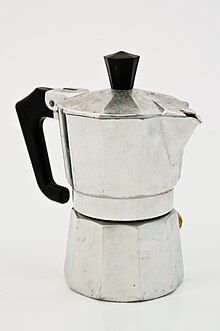
Moka pots (like this one) are very old but still very good. If you agree, then head over to Bon Appetit for their idea of the the best moka pots. They have a really good range of options for you espresso lovers.
If you love espresso, but like something more futuristic, why not this?
To be effective at work, give your best, and not burn out, you need to learn to say “no”. Now if it were as easy as saying “no”, you wouldn’t be reading this. 🙂 Given that, here’s some good advice on how to say no at work without saying no.
I’d add that you want to get to say “yes” as much as possible. However, you want to say “yes” in such a way that doesn’t cause you to be ineffective, burnout or quit. That’s no good for you or your employer. To do that, say “yes” in a reasonable context. Instead of starting by saying “no, I can’t do that this week”, trying saying “yes, I can do that next week / month / etc”. Saying “yes + better alternative” is one way to get to yes for both parties.
That said, sometimes you will have to just say no. Remember, when you say yes to One Thing you are often implicitly saying no to Other Things. Make those Nos more effective.
Speaking of say “no”, here’s a piece on bosses who promise jobs with a coveted perk: Boundaries. Two things on that. One, boundaries are a good way of saying No in advance. Two, boundaries are more common than the WSJ lets on. Your salary is a boundary. Your office situation is a boundary. Scope statements, terms and conditions in contracts, and agreements: all are boundaries. Boundaries are important for EVERY aspect of your work. Don’t let anyone tell you different. Boundaries make work better for everyone. Make sure the people you work with respect them. Go work elsewhere with other people if they don’t (thereby establishing a new boundary).
In other business links, here’s more on quiet quitting, which is a passive way of saying no. And here’s a very sophisticated mute button, which seems related. 🙂
As kids, having fun seems natural. As adults, it can be hard to come by. Worse, some forms of fun actual harm of us. So how can we have good clean fun as an adult?
Alan McKee has written a book on the subject. In an article in the Times, the writer says that He…
…defines fun thus: “Fun is pleasure without purpose.” In other words, the same qualities that seem to make it so hard for me (the writer) to have pure fun — I need purpose! — make it hard to optimize for; put it under a brain scanner, and it has a tendency to disappear.
Fun is pleasure without purpose. Adults, especially responsible adults, often look to assign purpose to events. That may make them educational or beneficial, but it often robs them of their fun. If that is you, perhaps you need to set aside time for an activity that is purposeless. Play a kazoo. Make playing card towers. Doodle. Solve a puzzle and then throw it away. Go for a slow walk. Dance badly. Sing out of tune. Whatever you enjoy, do it without any aim in mind, other than to enjoy it. Guess what? You may be having fun.
If you are decorating a space and you don’t know what to get, consider plants with really large leaves, like this here licuala grandis. It’s practically sculpture, but easier on the eyes and the wallet.
You have to socialize if you want to be healthier. That’s been tough during the pandemic. And it is tough for men in general. As VOX shows, men have fewer friends than ever.
Of course having friends is good, and if you can form new friendships, that’s great. But socializing with strangers is also healthy. This piece, talking to strangers, shows why.
Get out their and make small talk. Smile at people. Thank them for their help. You will be doing them a favour and yourself as well.
Years ago Keith Haring cut out a painting Basquiat created on a wall. And it’s a good thing he did! You can read about that drywall painting here.
Now Haring is getting the same treatment. The painting above was on a wall of his old home. It was cut out by the home’s new owners and sold at auction. The people who bought the house and did this have easily paid for the house many times over as a result. Quite the find!
Here’s two pieces in the Guardian on it. This piece tells the story behind the find. And this piece reflects on what it means.
Here’s 70+ links of things I have found interesting in tech in the last while. It’s a real mix this time, but still contains a good chunk on cloud, hardware and software. Some good stuff on UML, Pi and Doom as well. (Love Doom.) Dig in!
Cloud: here’s a dozen good pieces I recommend on cloud computing…
UML: I’ve been doing solution architecture lately, and as a result I have been using Visio and PlantUML. I love the latter and found some good links regarding it.
Awesome: make your own VK Machine: Cool Pi Project (image above)
Sensors: one thing I was going to do with a Pi is build a CO2 meter to check on air flow. However the sensor most used for this, the MQ-135, is not all that great. It’s a problem with cheap sensors in general: you just don’t get good results. To see what I mean, read these links:
Twitter: I don’t know about you, but I’ve gotten tired of the drama around Elon Musk wanting to buy twitter. However I had a recent spasm where I was reading somewhat on it. Here’s what I read:
Shows such as the Grammys, the Oscars, and the Emmys give us the chance to consider the media they are based on. One thing to think about is how that old media is under attack by newer media. Music was the first to struggle with this problem. Now with everything from Netflix to Disney+, network television is also struggling but with new forms of TV. As the New York Times writes about this year’s Emmys:
The show remained fixated on a milder existential threat, however: streaming services. The theme remained dominant even though the ceremony ran on Peacock as well as NBC, with the host, Kenan Thompson, working multiple Netflix digs into his monologue. “For one more year,” The Times’s Mike Hale wrote in his review of the telecast, “we got the weird spectacle of broadcast TV nervously proclaiming its relevance as if it wouldn’t have the chance to do so much longer.”
I suspect network TV — ABC, NBC and CBS mainly — will come up with ways to survive. Perhaps they will do this by adopting a strategy of “if you can’t beat them, join them” and go with a stronger streaming presence. One thing for certain: the status quo has permanently shifted and they need to change to stay relevant.
As for the 2022 Emmys, you can read more about them, here.
Hey, welcome back to work. Here’s some things to think about as you start (postpone?) your work day and work week:
Quiet Firing: first there was a trend about quiet quitting. Now there is a new thing: quiet firing. You can read about it here at huffpost and life hacker. I don’t know if this is a real trend or just something the next gen of workers are noticing. My take: if you are being sidelined or ignored, look for ways to discuss it with your boss or your HR people. You are responsible ultimately for your career, but you should also be getting the support you need to succeed. If you aren’t getting that support, you need to take action.
Office work: if you are looking forward to going back into the office, don’t forget: open office plans are awful and this piece reminds you why. Even if you work in a good location, you also need to consider how to deal (once again) with work distractions . You can’t ignore the coworker who sits in your workspace the way you can ignore you coworkers on Slack, I’m sorry to say.
While space is very old, some things happening in space are very new. For example, the James Webb Telescope. After much planning, it was recently made operational and started to send back amazing photos (like the one above). You can see more of them at Colossal and the official site of the James Webb telescope. To give you a sense of how great the new telescope is, here’s a piece showing side by side images of the Hubble telescope with those from the James Webb . A dramatic improvement (and the Hubble images were still great).
I’ve been thinking a lot about food since Michelin recently announced the awards given to restaurants in Toronto. When they announced the winners, I thought: how is it that I eat so much good food in Toronto and yet I have not gone to these places? Maybe I don’t know good food at all?
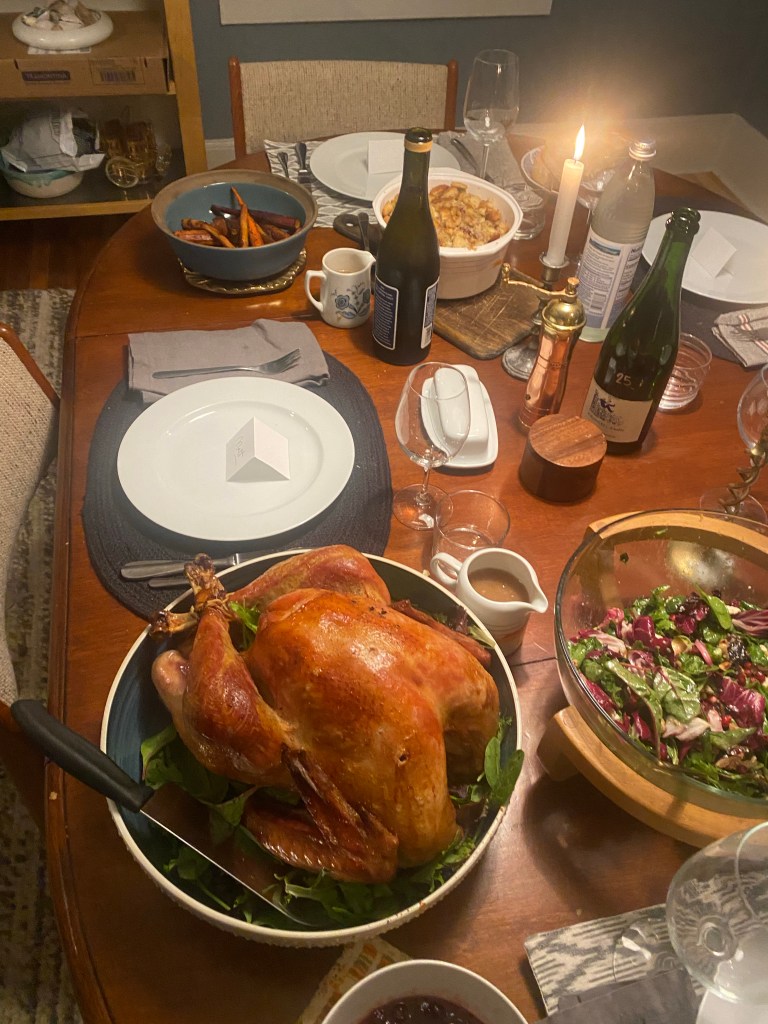
I thought about it more as I travelled to Montreal and ate on my trip. Two things I ate on my travels were pasta. This dish of pasta was part of a tasting menu at Cabaret L’Enfer on St. Denis.
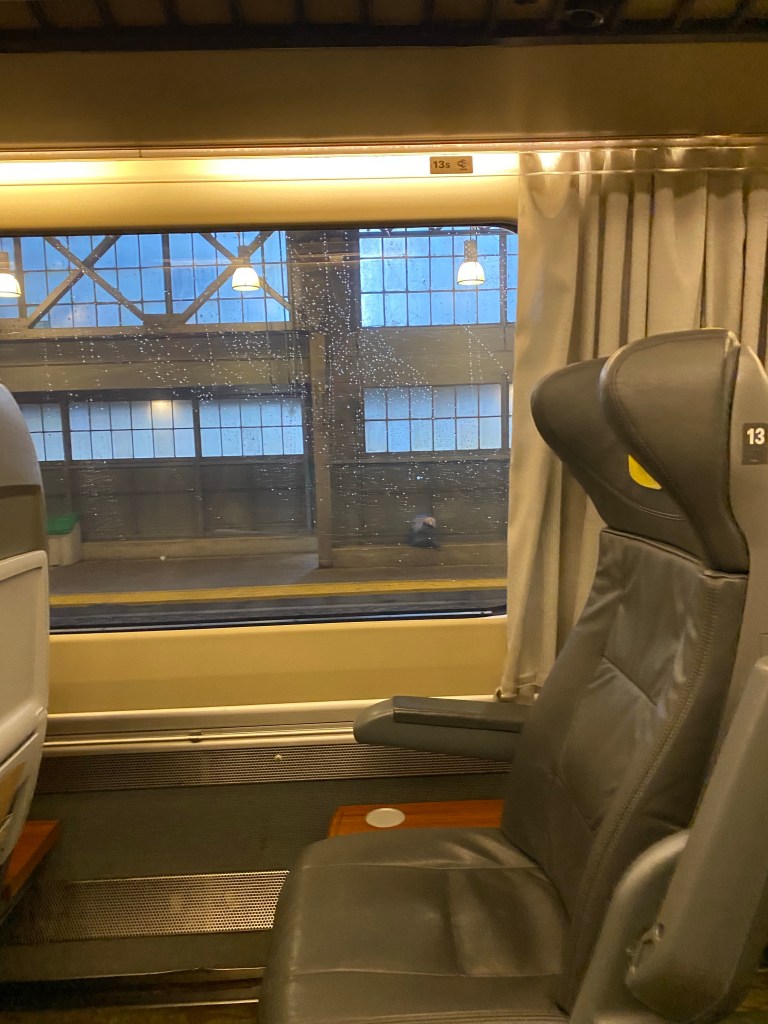
And this was a dish of pasta I had while on the train from Toronto to Montreal:
The first pasta was good, as was the second. The first pasta was carefully handmade, precisely cooked, smartly accompanied with intensely flavoured sauces and extras and wine and finally presented artfully and with a detailed explanation. The second pasta was factory made, warmed up, accompanied with not bad wine and presented politely without much explanation. Given these differences, how can I say both were good?
While the first pasta was excellent and superior to the second in many ways, the second pasta was still good. The second pasta’s temperature was neither too hot nor too cold, it had mild but pleasant flavours, and it fit in with a nice variety of other food. Eating it, I was reminded of all the meals I’ve enjoyed while travelling on planes and trains, and that made me think of all the joy I’ve had while travelling. I was hungry when it arrived, and afterwards I was pleasantly full. While it was not exquisite like the first pasta, it was far better than any of the other food I could have picked up at a train station. In this context, it was good — very good — and I was glad I had it.
While the first pasta was excellent, it was in no way filling. When combined with the overall meal I was no longer hungry, but it was not sufficient on its own to satisfy my hunger, nor was it meant to be. It did not remind me of other joys, though I enjoyed it. And while the overall meal was excellent, it was also very expensive.
Perhaps food is very important to you, and any food that doesn’t approach Michelin level is not considered good by you. But to me, good food is dependent on context. A rich cheese is no good to someone who is lactose intolerant. A fine steak is undesirable to a vegan. Likewise, if you are famished, fast food you can have right now may be better than a rich stew that takes you hours to prepare. On a bitter cold day, a simple hot chocolate may taste better than the finest champagne. Or you may desire a chocolate chip cookie that reminds you of your mom’s cooking over a slice of gourmet cake. We eat with all of ourselves, and the more we bring of ourselves to the food we eat, the more good food becomes a matter of the individual who is eating it.
Good food is also dependent on qualities. The next time you are eating, think of all the textures and the tastes you are experiencing. Think of the temperature and the toughness, the sourness and the saltiness and the softness. How does it look in front of you? What are the colours? How hard is it to make? How easy is it to eat? What do you think when you are eating it? How do you feel right after you swallow it? Or an hour later? All those thoughts and feelings that you have will help you to better appreciate your food and its qualities. It will help you realize what is good food — to you — and what is not. It will make you appreciate fine dining, whether it is in a beautiful restaurant or eating at a cafe counter or on a picnic blanket.
Michelin stars do not solely define good food or fine dining. Only you, the individual, can do that. Bon appetit.
There has been discussion about what should go on Canadian money now that the Queen is dead. For some, the choice is obvious: Charles III. For others like me, the choice is less obvious.
One thought I had was to commission Canadian artists to produce works to go on the front of the coin. We had done something similar for the back of the coin, in 1967. Then Alex Colville produces a series of animal images that graced six of our coins as part of the Centennial celebration. I think now would be a good time to commission one or more artists to produce images for the front of the coins, too.
We would still have our toonies and loonies with consistent images on the back. But now we could have new images on the front. I like the idea a lot.
For more on Colville’s coins, this piece was interesting.
P.S. Relatedly, here’s why the monarch on our coins face the way they do. Fun!
Yep, just like some of the later Beatles records, Revolver is getting remixed and maximized, with 64 tracks of goodness for you to purchase or stream. You can read about this new special edition of that great recording here: ANNOUNCING REVOLVER SPECIAL EDITIONS (news), The Beatles.
I’m a huge fan of Revolver: it may be second only to Abbey Road for me if I were to list my favourite Beatle records. It’s all killer, no filler. Get it into your life! 🙂
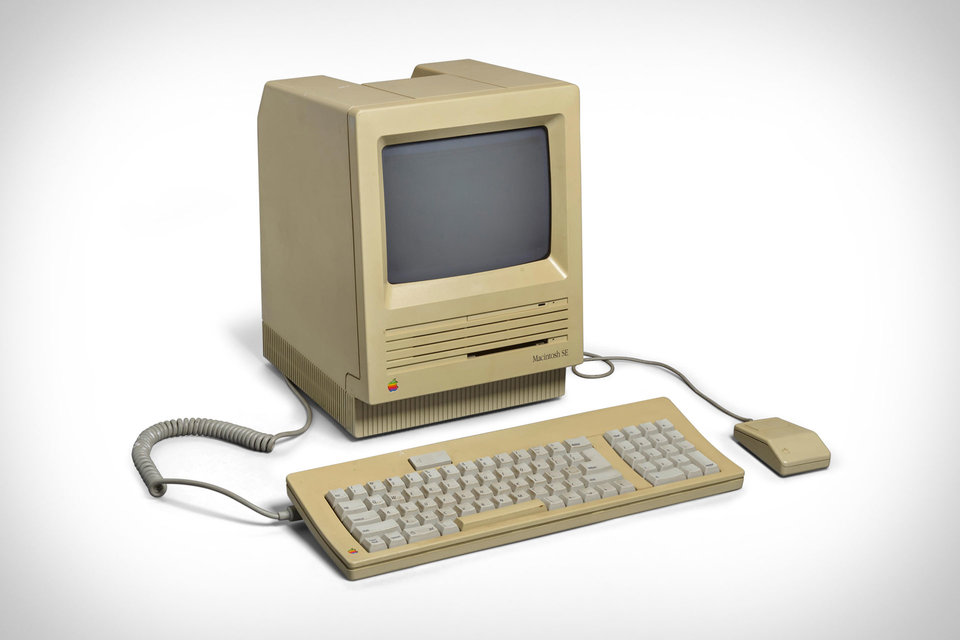
So Apple released its latest round of products recently, including the new Apple Watches. My two cents? They seem to be going after a bigger market with the watch, for on one hand (wrist?) you have the new high end Ultra while on the other you have the new low cost SE. Maybe there’s only so much of a market for such digital devices: Apple is looking to see just how big that is. Good on them. I can’t ever see me getting the high end version, but I’ve always been a fan of Apple’s SE products so maybe that watch is in my future.
For more on things Apple, here’s something on Apple Watch cases. Here’s a piece on the psychology of Apple packaging.
For fans of all things Apple, here’s a story on the design tools of John Ive.
Finally, for those of you with old iPhones, you will want to read about this on new security patches.
P.S. I’ve been writing about the Apple Watch since it came out in 2014 (?). You can read more here.
So Edmonton has gotten cold feet and cancelled the installation of Ken Lum’s sculpture for reasons you can ready about here and here.
You might conclude there’s some irony here, because Lum has expressed support of toppling monuments. There is a fine distinction between the nondescript monuments of historical figures and Lum’s unique art. Too fine, perhaps. The tide sweeping out statues of Ryerson and Cornwallis have ignored such a fine distinction and swept out his work also.
This rejection of Lum is not unique. It’s one of many examples of fear of art. To be precise, fear of how some will respond to art.
For example, in reviewing the recent Guston exhibit, John Yau writes:
A lot of issues are raised by the museum’s presentation of Guston, which have been eloquently discussed by Barry Schwabsky in The Nation and Sebastian Smee in The Washington Post. My complaint is cruder. I got sick of the museum’s defensiveness, such as the “Emotional Preparedness” card by health and trauma specialist Ginger Klee, that preps visitors for the show, and of being repeatedly told by the the wall labels that Guston’s hooded figures are about America’s racist history, because I think they are more than that, and that is what makes them so powerful, necessary, urgent, and, most importantly, relevant to whatever present they live in.
Whatever is driving them, sponsors of works of art are afraid. This fear is leading them to pull works or to water them down, in a sense. And that’s a shame.
P.S. Ken Lum was recently at the AGO and it was a good show. You can see more of Ken Lum at that link.
The latest pair of portraits of the Obamas were unveiled last week. This pair was hung in the White House, while the others went to the Smithsonian. Looking at them, I thought:
All four paintings are great in many ways. They capture the subject well, they are strong images, and they are superbly painted.
His paintings have an almost surreal quality to them: hers less so. That’s neither a pro nor con, just an observation.
There is a contrast in the poses. Her hands add to the composition: his not as much. Her body is more engaged, his is neutral.
His clothing is simple, almost austere. Hers are rich and eye catching.
One thing that caught my eye was the finish. Both of his paintings have a gloss to them, while hers have a matte finish.
I like how in one of her paintings, blue is in the background, while in the other, blue is in the foreground.
Watching a video of the painters of White House paintings, I was struck by how painstaking the work was. It took them months and months to complete. It shows in the painting, but it is also a good reminder to me of how long a great work takes to do.
I am still thinking of them. I’ll come back her later if I have any more insights.
Thanks to this piece in Hyperallergic for the images (links) below.
I am on vacation this week for a long overdue time off. In that regard, I am like many of my American counterparts. As this piece shows, Americans don’t get much vacation time. Worse, they are bad at taking it. As for why that is, it says Americans…
felt they couldn’t adequately disconnect from work while on vacation
thought they wouldn’t feel relaxed or connect with loved ones
anticipated negative outcomes, such as feeling stressed or having financial burdens.
As someone who has worked with many Americans, that all rings true.
There’s a joke on the Internet that Europeans will take off the whole summer for vacation, while Americans are available to take a business call during surgery. An exaggeration, but not that far off.
One of my favorite thinkers on the Internet and elsewhere is Austin Kleon. His books are great for anyone who makes things, be it in the visual arts or any creative work. His blog and now his newsletter are also great. If you were to go and randomly search through it, you’d be rewarded with lots of good reading. To save you time, here are five good pieces that can get your started.
The Pope was recently in Canada to apologize for the role of the Catholic Church in the residential school system and the suffering that was inflicted on indigenous people within Canada. Here’s the NYTimes on the visit. Here’s NCR online. Even our Prime Minister weighed in.
When it was over, we got follow up stories from the NYTimes, from America Magazine and from NCR online, each assessing the visit, as well as highlighting statements like: Pope Francis Calling the Abuse of Indigenous People in Canada a “Genocide”.
While the Papal Bulls got a lot of focus, what seemed to get less focus was money that the church had pledged but failed to deliver. The church failed to provide $25 million in compensation for the victims of residential schools, as this story showed. Despite claiming they could not raise the money for their sins, the Church did manage to raise much more than that amount for their properties. It was maddening to me that the media did not focus enough on that. (Later on they did report on a deal the government made freeing Catholic entities from $25M campaign for residential schools. You can read about that here and here. That would have been useful to know about before the visit.)
I had hoped for more from the Pope, the Church, the media, even activists. I hope at least the victims of the residential school system benefited from the visit and the actions of the Pope.
On a different topic, one thing I think everyone will benefit from is the appointment of Michelle O’Bonsawin to Canada’s Supreme Court. We need more indigenous leadership in the justice system, and she is in one of the key roles to provide that. You can read more about that here and here.
Finally, this New York Times interactive study on Benjamin West’s painting on the death of General Wolfe is relevant in many ways to the topic of this post. I recommend you check it out.
(Image: link to an image from one of the NCR Online pieces)
In the days when Montreal was Canada’s greatest city, Toronto was the things it was not. Montreal had Old Montreal, the Expo 67, and the Olympics, even the Habs. It was a town of greatness. In contrast, Toronto had none of those things. It was gray and conservative and it liked to make money and was ruled by the Tories for 40+ years.
Things have shifted and Montreal is a shadow of itself. But Montreal has that culture still, just like Toronto does. The economic fortunes have changed, but they are still the same in many ways.
That to me is why Toronto can’t — no, won’t — build great public buildings. When Toronto is great, it is great in spite of itself.
The Queen died today. There has been an outpouring of response to such an event. No doubt you’ve read a number of them. You will likely see many more in the days and weeks to come.
If you have done any work on dealing with difficult feelings, you may have come across The Feelings Wheel. You can see a typical one here at the Calm Blog. It can be a useful tool in helping you precisely describe what you are feeling. For example, you might think you are often fearful, but if you think about it more, it could be a range of feelings you are experiencing, from insecure to nervous to scared (all similar but different in degree). Being able to be precise about your feelings, especially your negative feelings, can help you deal with them.
The problem I have with some versions of the Feelings Wheel is that the feelings listed are predominantly negative. That’s ok for self help or therapy: you are trying to deal with negative feelings and having more ways to describe them is helpful.
I think it is good to have a range of ways to describe positive feelings, too. Even if you aren’t feeling them, it’s good to have a way to determine feelings that you would like to have. That’s why I was happy to find the Wheel below at the site YouthSMART, because it portrays more positive feelings. If you said you wanted to be more loving or joyful, it may mean feeling more Passionate or it may mean feeling more Excited. Having that vocabulary of feelings can help you move in a better direction, I believe.
You can argue that there is only so much room on such a Wheel and I agree. What’s important is having a tool to help you understand what you are feeling and how you would like to feel. I find the wheel above is good for that.
Historian and their work usually don’t get much news. So it was a bit unusual to see them making news recently. As Noah Smith explains:
A lot of people are talking about the history profession this week. There was a kerfuffle when James Sweet, the president of the American Historical Association, wrote a rambling and somewhat opaque post criticizing what he felt was his profession’s excessive focus on the politics of the present, and singling out the 1619 Project for criticism. A subset of historians predictably flew into a rage at this, and forced Sweet to issue a stumbling apology.
Smith went on to criticize historians for wanting to have it both ways in the sense that they want to wade in on topics using the weight of history while also saying that others cannot test history writing the way you can test say economic writing.
My thought is that some historians wade into other disciplines like political science and economics, and when they do, that’s when they get into trouble. History may not be testable, but when you are a historian jumping into political science with your historical ideas, you should expect to get tested.
It’s a fascinating discussion. I encourage you to read more about it here: Noah Smith on historians .
This is a story on the disturbing history of Ole Miss yearbooks and how they sometimes included lynching victims and represented racist history and other racist thought.
To me the day after Labour Day is always the start of a new year. In Canada at least all, school starts on that day. So for 20 some years of my life I gotten used to this day as not only the start of the school year, but the start of a year itself. Even now, decades after having finished school, I think that way. I enjoyed school, so while I enjoyed the time off in July and August, I was always keen to head back to class in September and see people again and learn new things and progress with my life. It’s a rhythm that has stayed with me decades after graduating from university.
For folks who love to celebrate the New Year in the middle of winter, don’t let me stop you. But I will always think the new year begins today. To those like me…Happy New Year!
It’s Labour Day. Take a well earned break from your work. Perhaps you plan to relax and take it easy. That’s a good choice. If you are itching to be more active, though, why not do something creative?
If you are looking to make something, the Washington Post has a section on beginner diy projects.
If you have already started painting and you want to improve your skills, these
YouTube videos by Ian Roberts on Mastering Compostion are good. Likewise, if you can go to the artistsnetwork.com and get guides like this: how to thin acrylic paint and more.
Another source of education is My Modern Met Tutorials.
Finally, if writing is your thing, you can start a blog here at WordPress. If you want more people to read you though, consider writing for a larger audience and see if they will still take first person articles at The Globe and Mail.
I love this work by George Shaw. They make me think of Christopher Pratt in some ways. Worth a look. Also worth a look are the Visual Diaries of Pep Carro. Fascinating.
Here’s two good pieces on Sophie Taeuber-Arp. One is from the perspective of a reviewer and one from the perspective of a viewer. In both cases, they are raising the question of why did the curators not bring forth the African and other influences that infuse her work? I was unaware of that, and I think anyone who loves the work of ST-A would benefit from knowing that.
This, on Alex Katz is good. I find it hard to believe anyone thinks he is anything other than great, but there are such people. And such people inspire him in an interesting way.
A good critique on curators who would put blinders on gallery visitors witnessing the later work of Philip Guston.
While generally not a fan of the recipes at this site, this piece at Tasty on how to cook in a small kitchen is jam packed with good ideas. Even if you have a much bigger kitchen, you could learn a lot from this piece. By the time you are done applying these ideas, you’ll be a much better and much happier cook.
I love French food, both cooking it and eating it. If you feel the same and you want to get into doing more French cooking, why not start with these recipes from Chatelaine? I recommend them. Especially, I am a big fan of their coq au vin blanc, shown above. I’ve made it a few times and each time it comes out well.
If you find the idea of making French food daunting, fear not. Here are some easy French Bistro Recipes to start with. That said, the ones in Chatelaine are not hard. Either way, you have no excuse not to start due to difficulty.
Finally, here’s a man many associate with French cooking, Jacques Pepin. That link takes you to a good piece on him talking about French food, cars, and more.
There’s been much focus on aging in Canada recently after the firing of Lisa LaFlamme as a CTV news anchor for what many believe were ageist reasons.
There’s also been focus on aging in the U.S., due to President Job Biden creeping up on his 80th. Like Biden, many people approaching 80 are still keen to continue. For example, here’s Steve Martin on His Late Career Surge and Contemplating Retirement. Note, he is contemplating it, not deciding it. I suspect we will see more of Steve as he hits that next decade.
Not too long ago, it was felt you should retire once when you got past 60.Many didn’t live into their seventies. Now with life expectancy getting into the 80s, people are asking: Is 80 the new 60? It could be.
Finally, this was a good piece on how one man set out to make up for his failure to do well at math as he approached his sixties: Aging and math.