On the new Apple watches, from SE to Ultra

So Apple released its latest round of products recently, including the new Apple Watches. My two cents? They seem to be going after a bigger market with the watch, for on one hand (wrist?) you have the new high end Ultra while on the other you have the new low cost SE. Maybe there’s only so much of a market for such digital devices: Apple is looking to see just how big that is. Good on them. I can’t ever see me getting the high end version, but I’ve always been a fan of Apple’s SE products so maybe that watch is in my future.

For more on things Apple, here’s something on Apple Watch cases. Here’s a piece on the psychology of Apple packaging.

For fans of all things Apple, here’s a story on the design tools of John Ive.

Finally, for those of you with old iPhones, you will want to read about this on
new security patches.

P.S. I’ve been writing about the Apple Watch since it came out in 2014 (?). You can read more here.

On fear of art: thinking about Lum, Gaston, Schutz

So Edmonton has gotten cold feet and cancelled the installation of Ken Lum’s sculpture for reasons you can ready about here and here.

You might conclude there’s some irony here, because Lum has expressed support of toppling monuments. There is a fine distinction between the nondescript monuments of historical figures and Lum’s unique art. Too fine, perhaps. The tide sweeping out statues of Ryerson and Cornwallis have ignored such a fine distinction and swept out his work also.

This rejection of Lum is not unique. It’s one of many examples of fear of art. To be precise, fear of how some will respond to art.

For example, in reviewing the recent Guston exhibit, John Yau writes:

A lot of issues are raised by the museum’s presentation of Guston, which have been eloquently discussed by Barry Schwabsky in The Nation and Sebastian Smee in The Washington Post. My complaint is cruder. I got sick of the museum’s defensiveness, such as the “Emotional Preparedness” card by health and trauma specialist Ginger Klee, that preps visitors for the show, and of being repeatedly told by the the wall labels that Guston’s hooded figures are about America’s racist history, because I think they are more than that, and that is what makes them so powerful, necessary, urgent, and, most importantly, relevant to whatever present they live in.

Galleries are adopting a defensive crouch to avoid provoking any one from protesting the work on display. Perhaps they are thinking of what happened to Dana Schutz’s  and her 2017 work titled “Open Casket,”  of Emmett Till, and all the controversy concerning that.

Whatever is driving them, sponsors of works of art are afraid. This fear is leading them to pull works or to water them down, in a sense. And that’s a shame.

P.S. Ken Lum was recently at the AGO and it was a good show. You can see more of Ken Lum at that link.

How the Obama paintings differ (Six or so minor thoughts on the Obama portraits)

The latest pair of portraits of the Obamas were unveiled last week. This pair was hung in the White House, while the others went to the Smithsonian. Looking at them, I thought:

  1. All four paintings are great in many ways. They capture the subject well, they are strong images, and they are superbly painted.
  2. His paintings have an almost surreal quality to them: hers less so. That’s neither a pro nor con, just an observation.
  3. There is a contrast in the poses. Her hands add to the composition: his not as much. Her body is more engaged, his is neutral.
  4. His clothing is simple, almost austere. Hers are rich and eye catching.
  5. One thing that caught my eye was the finish. Both of his paintings have a gloss to them, while hers have a matte finish.
  6. I like how in one of her paintings, blue is in the background, while in the other, blue is in the foreground.
  7. Watching a video of the painters of White House paintings, I was struck by how painstaking the work was. It took them months and months to complete. It shows in the painting, but it is also a good reminder to me of how long a great work takes to do.

I am still thinking of them. I’ll come back her later if I have any more insights.

Thanks to this piece in Hyperallergic for the images (links) below.

Are you bad at taking vacations? If you are American, chances are you are


I am on vacation this week for a long overdue time off. In that regard, I am like many of my American counterparts. As this piece shows, Americans don’t get much vacation time. Worse, they are bad at taking it. As for why that is, it says Americans…

  • felt they couldn’t adequately disconnect from work while on vacation
  • thought they wouldn’t feel relaxed or connect with loved ones
  • anticipated negative outcomes, such as feeling stressed or having financial burdens.

As someone who has worked with many Americans, that all rings true.

There’s a joke on the Internet that Europeans will take off the whole summer for vacation, while Americans are available to take a business call during surgery. An exaggeration, but not that far off.

For more on this, see: U.S. vacation time is short and Americans don’t use it wisely.

Get some time off. You and the people you work with will benefit.

Five good short essays from Austin Kleon

One of my favorite thinkers on the Internet and elsewhere is Austin Kleon. His books are great for anyone who makes things, be it in the visual arts or any creative work. His blog and now his newsletter are also great. If you were to go and randomly search through it, you’d be rewarded with lots of good reading. To save you time, here are five good pieces that can get your started.


On the Pope’s visit to Canada in 2022, and more

The Pope was recently in Canada to apologize for the role of the Catholic Church in the residential school system and the suffering that was inflicted on indigenous people within Canada. Here’s the  NYTimes on the visit. Here’s NCR onlineEven our Prime Minister weighed in.

When it was over, we got follow up stories from the NYTimes, from America Magazine and from NCR online, each assessing the visit, as well as highlighting statements like: Pope Francis Calling the Abuse of Indigenous People in Canada a “Genocide”.

Overall, many seemed unsatisfied with it, as you can see from this piece, Why Pope Francis’ Canada school apology isn’t enough, and this piece, ‘Indigenous representatives had no voice’ at Quebec City Papal event. Even during the events, some indigenous people expressed their negative feelings towards it all, as this story showed, ‘I couldn’t stay silent ‘ says Cree singer who performed powerful message. It didn’t help that some  bishops seemed to be raising money from it.  Even prominent Catholics did not see it as a success, though for different reasons than indigenous people did: 3 views on pope’s visit to Canada.

During the time he was in Canada, there was much focus on certain Papal Bulls from the 15th century. It came up in this tweet from cblackst. At first I could not figure out why this was an issue. I was ignorant to the fact that indigenous people have been demanding revocation of the 1493 papal bull since at least the year 2000. As far as some Catholics are concerned, the Catholic doctrine of discovery is already null and void.

I am not sure what revoking it would accomplish. Papal Bulls are weird documents. During times of good popes, they could be good. During bad popes, they could be evil. Anti-semitism drives many of them. If you want to read more on them, here’s some links that could be helpful: Papal Bulls – Doctrine of Discovery, and Dum Diversas – Doctrine of Discovery, and finally, Sublimus Dei On the Enslavement and Evangelization of Indians.

While the Papal Bulls got a lot of focus, what seemed to get less focus was money that the church had pledged but failed to deliver. The church failed to provide $25 million in compensation for the victims of residential schools, as this story showed. Despite claiming they could not raise the money for their sins, the Church did manage to raise much more than that amount for their properties. It was maddening to me that the media did not focus enough on that. (Later on they did report on a deal the government made freeing Catholic entities from $25M campaign for residential schools. You can read about that here and here. That would have been useful to know about before the visit.)

I had hoped for more from the Pope, the Church, the media, even activists. I hope at least the victims of the residential school system benefited from the visit and the actions of the Pope.

On a different topic, one thing I think everyone will benefit from is the appointment of Michelle O’Bonsawin to Canada’s Supreme Court. We need more indigenous leadership in the justice system, and she is in one of the key roles to provide that. You can read more about that here and here.

Finally, this New York Times interactive study on Benjamin West’s painting on the death of General Wolfe is relevant in many ways to the topic of this post. I recommend you check it out.

(Image: link to an image from one of the NCR Online pieces)

Why won’t Toronto build great public buildings? Because Toronto

If you read these two pieces in the Globe and Mail: Why won’t Toronto strive for great public buildings? and In downtown Toronto, public architecture falls flat, you will get specific reasons why Toronto is not building great public architecture.  All those reasons are true. But I think there is a more fundamental reason, and I believe that reason is the culture of Toronto itself.

In the days when Montreal was Canada’s greatest city, Toronto was the things it was not. Montreal had Old Montreal, the Expo 67, and the Olympics, even the Habs. It was a town of greatness. In contrast, Toronto had none of those things. It was gray and conservative and it liked to make money and was ruled by the Tories for 40+ years.

Things have shifted and Montreal is a shadow of itself. But Montreal has that culture still, just like Toronto does. The economic fortunes have changed, but they are still the same in many ways.

That to me is why Toronto can’t — no, won’t — build great public buildings. When Toronto is great, it is great in spite of itself.

On the passing of Queen Elizabeth II today

The Queen died today. There has been an outpouring of response to such an event. No doubt you’ve read a number of them. You will likely see many more in the days and weeks to come.

Of the ones I came across, I thought this collection by the BBC was good: Queen Elizabeth II: A life in pictures. I thought this summary by Helen Lewis also worthwhile: Queen Elizabeth’s Unthinkable Death in The Atlantic.

I have been familiar with the Queen since I was a young child. She was in post offices, on our stamps and on our money. Here’s an interesting piece on the Queen on the bank notes, from the Bank of Canada Museum.

I have written about her occasionally here. This was from 2015: What happens when Queen Elizabeth II dies? This touches on something I have always been curious about: Why did the Queen sit for a portrait painted by Lucian Freud? And finally, I will have to update this: On Liz 2 and Chuck too. (Monarchy Watch).

Rest in Peace, ER II.

(Image: link to image in Museum piece)


What you should think about when you think about The Feelings Wheel

If you have done any work on dealing with difficult feelings, you may have come across The Feelings Wheel. You can see a typical one here at the Calm Blog. It can be a useful tool in helping you precisely describe what you are feeling. For example, you might think you are often fearful, but if you think about it more, it could be a range of feelings you are experiencing, from insecure to nervous to scared (all similar but different in degree).  Being able to be precise about your feelings, especially your negative feelings, can help you deal with them.

The problem I have with some versions of the Feelings Wheel is that the feelings listed are predominantly negative. That’s ok for self help or therapy: you are trying to deal with negative feelings and having more ways to describe them is helpful.

I think it is good to have a range of ways to describe positive feelings, too. Even if you aren’t feeling them, it’s good to have a way to determine feelings that you would like to have. That’s why I was happy to find the Wheel below at the site YouthSMART, because it portrays more positive feelings. If you said you wanted to be more loving or joyful, it may mean feeling more Passionate or it may mean feeling more Excited. Having that vocabulary of feelings can help you move in a better direction, I believe.

You can argue that there is only so much room on such a Wheel and I agree. What’s important is having a tool to help you understand what you are feeling and how you would like to feel. I find the wheel above is good for that.

(Image: link to image at YouthSMART.)

Historians going wild! (What I find interesting in history, September 2022)


Historian and their work usually don’t get much news. So it was a bit unusual to see them making news recently. As Noah Smith explains:

A lot of people are talking about the history profession this week. There was a kerfuffle when James Sweet, the president of the American Historical Association, wrote a rambling and somewhat opaque post criticizing what he felt was his profession’s excessive focus on the politics of the present, and singling out the 1619 Project for criticism. A subset of historians predictably flew into a rage at this, and forced Sweet to issue a stumbling apology.

Smith went on to criticize historians for wanting to have it both ways in the sense that they want to wade in on topics using the weight of history while also saying that others cannot test history writing the way you can test say economic writing.

My thought is that some historians wade into other disciplines like political science and economics, and when they do, that’s when they get into trouble. History may not be testable, but when you are a historian jumping into political science with your historical ideas, you should expect to get tested.

It’s a fascinating discussion. I encourage you to read more about it here: Noah Smith on historians .

Some other interesting pieces on the topic of history was this, Is History History, and this, Is All history revisionist?

Speaking of historians getting into trouble, here’s a sad piece on Kevin Kruse and charges of plagiarism.

Here’s something on recent history that is still…well, history!…  history of the web. Here are three interesting pieces on ancient history: A 2000-year-old postcard – Medieval manuscripts blog and the challenges of deciphering minoan script and also does-an-unknown-extraordinarily-ancient-civilisation-lie-buried-under-eastern-turkey.

If you are like me, you may have thought the Roman Empire ended many centuries ago. This article challenges that in an interesting way: When did the Roman Empire end: 1917 or 1922? – Orthodox History.

This is a story on the disturbing history of Ole Miss yearbooks and how they sometimes included lynching victims and represented racist history and other racist thought.

Finally, here’s a fascinating story on how a Tip-Off from a Nazi saved someone’s  grandparents. Surprising.


Happy New Year! (Why yes, the new year starts the day after Labour Day :))

Wait? What?! It’s not January 1st, you say! Nope.

To me the day after Labour Day is always the start of a new year. In Canada at least all, school starts on that day. So for 20 some years of my life I gotten used to this day as not only the start of the school year, but the start of a year itself. Even now, decades after having finished school, I think that way. I enjoyed school, so while I enjoyed the time off in July and August, I was always keen to head back to class in September and see people again and learn new things and progress with my life. It’s a rhythm that has stayed with me decades after graduating from university.

For folks who love to celebrate the New Year in the middle of winter, don’t let me stop you. But I will always think the new year begins today. To those like me…Happy New Year!

It’s Labour Day. Put away that computer and make something creative

It’s Labour Day. Take a well earned break from your work. Perhaps you plan to relax and take it easy. That’s a good choice. If you are itching to be more active, though, why not do something creative?

If you are looking to make something, the Washington Post has a section on beginner diy projects.

Perhaps you always wanted to learn to paint? If so, Domestika has this creative watercolor sketching for beginner course.

If you have already started painting and you want to improve your skills, these
YouTube videos by Ian Roberts on Mastering Compostion are good. Likewise, if you can go to the artistsnetwork.com and get guides like this: how to thin acrylic paint and more.

Another source of education is My Modern Met Tutorials.

If you fantasize about going to art school but can’t imagine how you could pay for it, read this: Don’t Want to Pay for Art School? Here’s a Streamlined Syllabus for Getting your MFA.

If you want to do something musical instead, check out patatap, a fun way to make noises and visuals with your keyboard.

Finally, if writing is your thing, you can start a blog here at WordPress. If you want more people to read you though, consider writing for a larger audience and see if they will still take first person articles at The Globe and Mail.

There’s lots of ways to be creative. Have fun!

Jeff Koons is going to the moon! Also Katz, Bacon, Guston and Taueber-Arp

Jeff Koons is going to the Moon, according to the NYTimes. Which knowing Koons, is not that surprising. He’s doing more things that are fascinating as well. Read that Times piece for all the details.

I love this work by  George Shaw. They make me think of Christopher Pratt in some ways. Worth a look. Also worth a look are the  Visual Diaries of Pep Carro.  Fascinating.

Here’s two good pieces on Sophie Taeuber-Arp. One is from the perspective of a reviewer and one from the perspective of a viewer. In both cases, they are raising the question of why did the curators not bring forth the African and other influences that infuse her work? I was unaware of that, and I think anyone who loves the work of ST-A would benefit from knowing that.

Here’s a good piece on “The Brilliantly Nightmarish Art & Troubled Life” of Painter Francis Bacon. I put quotes around that because I felt that was over the top. But yes.

This, on Alex Katz is good. I find it hard to believe anyone thinks he is anything other than great, but there are such people. And such people inspire him in an interesting way.

A good critique on curators who would put blinders on gallery visitors witnessing the later work of Philip Guston.

You may not know this artist, but I love his work: Pavement Picasso…on the trail of London’s chewing gum artist.

On the lost work of gay artists of the AIDS era. Sad but worthwhile.

Flaming heck! Damien Hirst is setting his art on fire. A public service, no doubt.

Finally, the Rosalind Hobley Flower Cyanotypes are gorgeous (see below). See Collosal for more.

How to cook in a tiny kitchen

While generally not a fan of the recipes at this site, this piece at Tasty on how to cook in a small kitchen is jam packed with good ideas.  Even if you have a much bigger kitchen, you could learn a lot from this piece. By the time you are done applying these ideas, you’ll be a much better and much happier cook.

(Image: link to image at tasty.co)

Friday (French) Food for You in September 2022

I love French food, both cooking it and eating it. If you feel the same and you want to get into doing more French cooking, why not start with these recipes from Chatelaine? I recommend them. Especially, I am a big fan of their coq au vin blanc, shown above. I’ve made it a few times and each time it comes out well.

If you find the idea of making French food daunting, fear not. Here are some easy French Bistro Recipes to start with. That said, the ones in Chatelaine are not hard. Either way, you have no excuse not to start due to difficulty.

If you are feeling more ambitious, here are the best classic French dishes according to chefs, via Food & Wine. Some of those will challenge you.

Mind you, even dishes that are considered laborious can be made without too much of a fuss. For example, here’s how to make Cassoulet at home the easy way in under an hour. Traditional? No. Delicious? For sure.

Maybe you just want to skip making it and go to France and have others make it. If so, see this:Restaurants, hotels and bars in Paris and across France.

Finally, here’s a man many associate with French cooking, Jacques Pepin. That link takes you to a good piece on him talking about French food, cars, and more.

On ageism: or is 80 is the new 60?


There’s been much focus on aging in Canada recently after the firing of Lisa LaFlamme as a CTV news anchor for what many believe were ageist reasons.

There’s also been focus on aging in the U.S., due to President Job Biden creeping up on his 80th. Like Biden, many people approaching 80 are still keen to continue. For example, here’s Steve Martin on His Late Career Surge and Contemplating Retirement. Note, he is contemplating it, not deciding it. I suspect we will see more of Steve as he hits that next decade.

Not too long ago, it was felt you should retire once when you got past 60.Many didn’t live into their seventies. Now with life expectancy getting into the 80s, people are asking: Is 80 the new 60? It could be.

Finally, this was a good piece on how one man set out to make up for his failure to do well at math as he approached his sixties: Aging and math. 

It’s the end of August. This looks like a newsletter, and reads like a newsletter, but it isn’t a newsletter

Here’s a month end cornucopia of things I found interesting and worth reading but don’t really fit into any specific category. I hope you find it worth reading, too.

The pandemic is being memory-holed, unfortunately. Before people forget or try to gaslight us, here’s a piece comparing how Canada did in the initial 2 years of the COVID-19 pandemic vs other places. And here’s where you can find information on Covid and Ontario . Who knows how long that will last?

Have you wanted to learn how to play chess? Check out this at the New York Times. Here’s a good piece on how to copy quotes from a library book. If you want to learn about ten classic polish films , go there.

Filmwise, here’s a sad piece on the decline of Bruce Willis . These pieces, on the death of a Minecraft Youtuber, a young influencer who dropped out of college, and a piece on Hope Solo struggling with addiction were all sad but worth reading. Also sad was reading about an old relative in the obits: John (Jonk) Raymond Melnick | Pierson’s Funeral Service Ltd.. RIP, Jonky.

Old movie trailers, even for great films, can be embarrassing. This link can help with that: Aliens modern trailer. Speaking of Sci-Fi, here a piece on the rise of Skywalker nostaglia.

Do you know if you live in one of one of the 49 Coolest Neighbourhoods in the World Right Now? You may be if your area appears on that list. Nothing for Toronto, though some for Montreal and Vancouver.

Speaking of cool, here’s a video of Night Music episode 121 from 1989 fearuring Robert Cray, John Hiatt, Nat King Cole, Tracy Nelson, World Saxophone Quartet. Night Music was always cool.

The Stones video of “Emotional Rescue”? Also cool:

Speaking of odd, here’s something on What Justin Bieber taught someone about fun things to do. Also odd, at least to me: How influencers get paid by affiliate marketing . If you were wondering why the Girl Explaining meme is all over your Twitter feed , that link will explain why. Odd.

I used to write often on newsletters. The newsletter boom has died down but the format isn’t going away. Crypto isn’t going away either, but this the SEC crackdown of it won’t help. Shame. Not.

Finally, here’s a twitpic I took a long time ago. Amazing they still exist.

Why polio? Why now?

You may have heard that there have been new instances of polio outbreaks. There have been outbreaks in New York, in other parts of the U.S., and the world. If polio largely vanished thanks to vaccines, why is it now back? A good question, and one each of the pieces I’ve linked to tries to answer. The “TL; DR” answer is: it comes down to people being unvaccinated. We have had a rise in people rejecting vaccines for many reasons over the years, and this has lead to outbreaks of diseases that should be all but dead.

I remember getting vaccinated against polio and other diseases when I was young. The one disease I was terrified of was polio. There were lots of stories of people in iron lungs (shown above) that enabled people to live and breathe. The thought of being trapped in such a device made me easily get over any fears of needles and get the vaccine.

I really hope we don’t get a severe outbreak of that disease. No one should suffer with it, especially because there is no reason to.

If you are fearful of it, read those pieces for more information. And make sure whoever needs to gets their shots.

(Image: link to image in the S.A. above)

How’s work?

Work can be uplifting, especially if you have good leadership like that of Barack Obama, who knew the importance of such things as play at the office. Such work can be rewarding, not just financially but in spirit.

To have that type of work, you need good management, not just at the highest levels, but all through your organization. Unfortunately, no one wants to work in middle management anymore. At least according to that piece. Indeed, many women in general are giving up on work ambition in general. That’s too bad. Good workplaces need good leaders to be successful.

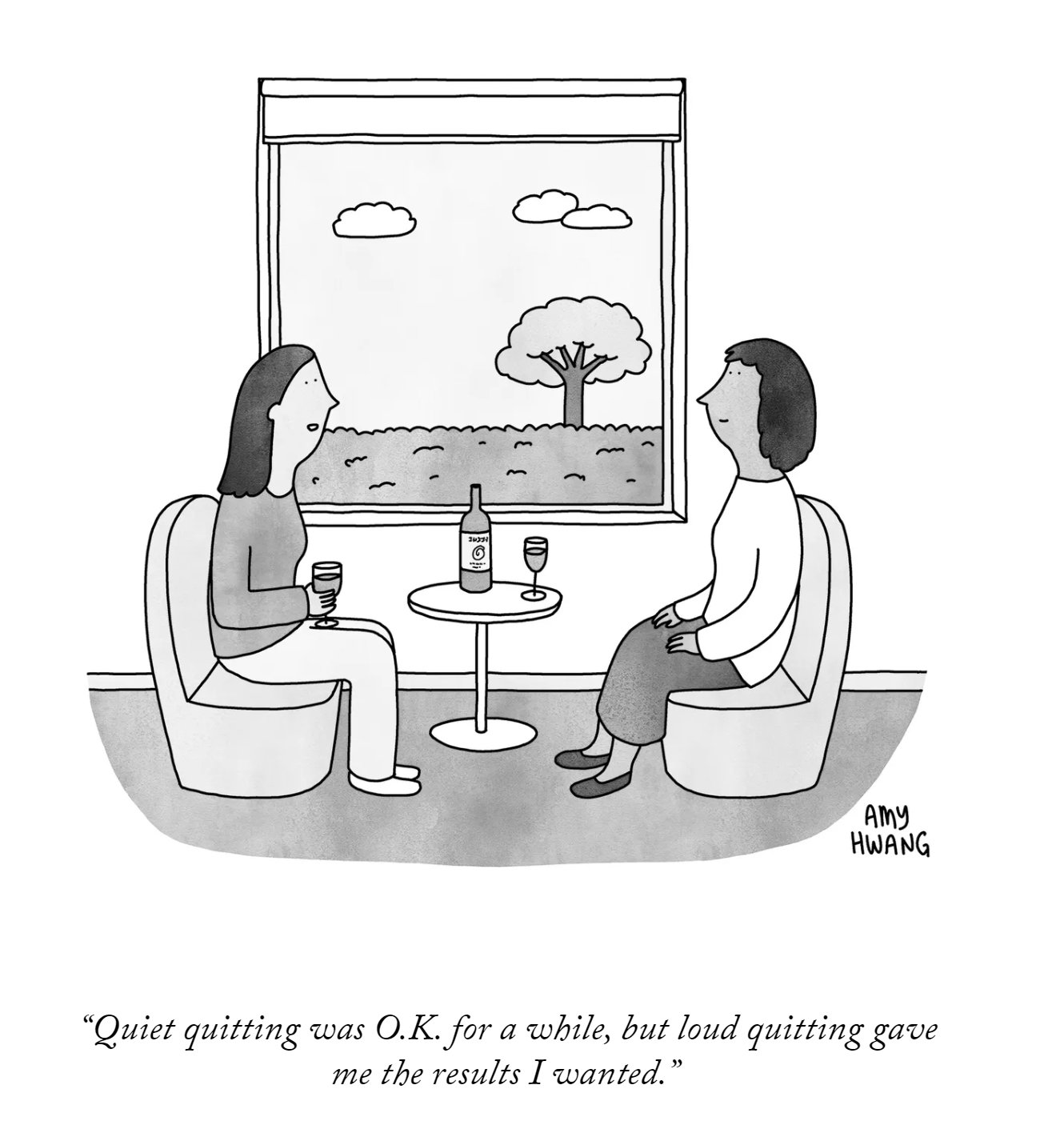
Perhaps as a result of all, we see dissatisfied employees who are “quiet quitting”. It doesn’t help that they are being forced to return to the office when they don’t want to. It also doesn’t help when you have people like Malcolm Gladwell going on about how working for home is bad (unless you are the hypocrite known as Malcolm Gladwell).

Mind you working from home can also be tough, as companies are dumb enough to think they can make people more productive by using employee monitoring. That’s the worst form of leadership.

If you are suffering at work, then you may want to read this account of how quitting a job changed their Work-Life Balance.

Finally, while it’s not for everyone, if you have considered being an entrepreneur, I recommend the site for Justin Jackson

Sunday reads: on how to deal with racist art, Critical Race Theory, and more

I collect thoughtful pieces on a wide range of topics to educate myself, to change my mind, and to see the world in a new and better way. Pieces like those below that revolve around race, racism, anti-semitism, and related topics. They are not easy reads, but worthwhile ones, I thought.

On the topic of Critical Race Theory and educating students on race and racism,  this was good: Inside Mississippi’s only class on critical race theory – Mississippi Today, as was this Teaching about racism. More on CRT, here: What CRT is.

You may not think too much about this incident, but this essay on it is very good:  Whoopi Goldberg’s American Idea of Race in The Atlantic.

This was insightful:  Slavery and the Rise of the Nineteenth-Century American Economy. As was this: Why Southern white women vote against feminism in The Washington Post.

Speaking of race and education, this was informative to me: Segregated schools in Ontario.

There was a discussion earlier this year on whether or not Darwin was racist. On the surface, he may seem so. But to me it doesn’t seem to be the case when you dig down deeper. You can read this and judge for yourself: Was Darwin a racist and does evolution promote racism? – #DarwinDay, and Quote-mining Darwin to forward a political agenda?

Here were two pieces on anti-semitism I found worthwhile:  Art and anti-semitism and Socialism without anti-semitism.

Finally, this piece got me thinking about racism within art: Tate’s “unequivocally offensive” mural to have new work alongside it. I don’t have a problem removing public statues. For art, I think it is better to put it in context. That seems to be what the Tate is doing.

(Image: link to the image in the piece on the Tate).


On the exciting White Album exhibit at the AGO

Almost a decade ago I read about this project Rutherford Chang: We Buy White Albums over at hyperallergic. I remember thinking at the time: I would LOVE to see that. 

Back in 2013, Chang had set up a store/exhibit in Soho, NYC, where

the only thing in stock here is the Beatles’s White Album, and the store doesn’t sell any of them, it only acquires more….(it included) 700 copies of the 1968 double-LP first edition of the White Album, all the personal collection of Chang. Each album is marked with a distinct serial number on the bottom corner of the starkly designed cover by Richard Hamilton, a totally white cover that’s readily attracted the wandering drawings of (possibly stoned) listeners, the visible stains of coffee cups, and some mold.

I never did get to see it, but the idea captivated me and I never forgot it.

Needless to say, I was excited and delighted to see that it was on the road and recently at the AGO! You can see part of the exhibit above. It wasn’t the same as being in the store, but it captured the essence of that 2013 event. Chang even made a new recording that consisted of 100 copies of the album all playing at the same time. The AGO had it on display and for sale, too:


As a big fan of conceptual art and the Beatles, I loved this project. I’m glad I could experience it through the AGO.

For more details, I recommend you go to that hyperallergic link and read more about it. You can also read more about the exhibit at the AGO, here.

(Images: top two mine, bottom image is a link to the hyperallergic article)

On Bades Bake Shop and the Chip Wagon of Glace Bay

It can be notoriously difficult to find images of Glace Bay on the Internet. Google is no help: I had been searching for “Bades Bakery Glace Bay” and came up with nothing. It was only through searching for the specific phrase “Bades Bake Shop” did I find it.

I loved Bades as a kid. It was on my route to the hockey arena, and depending on the time and how much coin I had, I could drop in and get a doughnut or something sweet. I don’t recall there being any other such establishment nearby, so it was an oasis for someone like me who loved sweet things. I recall the lettering for the sign being yellow against a brown backdrop. It was a great place, long gone. (You can read more about it, here.)

Here’s a good piece on another place I loved as a kid and as an adult: the Chip Wagon. When I was a kid it was in the main part of town. Later as an adult I would line up like these people to get a sample of those delicious fries. I don’t know if it is still in operation. If not, that’s sad. Like Mike’s Lunch, it was a must visit whenever I went home to Glace Bay.

If you are feeling nostalgic like me, you can see lots more images of Cape Breton at Caperpics or here at the flickr account of the Beaton Institute. Forget Google: go directly to those two places.

(Images: links to images at the Beaton Institute and Caperpics).

Is Kanye West a good clothing designer? And other fashion thoughts

Is Kanye West a good clothing designer? That’s a good question, and one this piece spends many words considering. Part of the problem is what is the standard for “good”. His work resembles the work of other good designers. His work, like the products he makes for the GAP or this  Goyard Robot Face Backpack, seem to be sought out by people:

I don’t think he is good as some of the best clothing designers, from Armani to Valentino. But I don’t think he is bad either. Just how good he is will be best measured over time. One thing for sure, he is not dull. That’s a good thing.

Now if you are thinking: I could do better than Kanye! Well, here’s just the course for you! It will show you how to Cut and Sew a Jacket from Start to Finish. You too can soon have your clothes in the GAP! 🙂

As people head back in the office, I wonder if styles like these Japanese inspired  Moshemi pants will stay in vogue.  I did like that particular pair.

I liked these NB trail shoes too:

Men’s running shoes often have boring colour palettes: those don’t.

Finally, thanks to Cup of Jo for this piece on  Striped shirts. Like dots, stripes never go out of style. If you are freshening up your wardrobe this Fall, why not add some bold stripes to the mix? There are so many ways you can bring stripes into your wardrobe. If you are leaning to the sporty side, you cannot go wrong with Adidas:

(Images from the good folks at Uncrate)

On art, being rescued, and George Westren


You could say art rescued George Westren. In discovering op art, he found a way to deal with his addiction troubles and get his life to a better place. The idea of being rescued plays out again in his life, when his neighbor saves his artwork from being thrown in the trash.

It’s a remarkable story. I highly encourage you to read about it, here: the  rescued works of George Westren, at the Washington Post.

Then go check out his work, here: georgewestren.org

(Image: link to an image in the Washington Post)

A list of 10 resources to help you get through hard times


If you find yourself going through hard times, then you need to help yourself. Sure loved ones and professionals can make a big improvement, but the more you can do on your own, the more successful you will be.

With that in mind, here are 10 links that you may find useful in dealing with your difficulties:

  1. Here’s a guide on  how to practice self-compassion.
  2. Something else to consider: establish good daily rituals . That link might help provide you with good ideas.
  3. What is better:a happy life vs a meaningful one? It’s something to consider when you feel your life is unhappy and hard to change.
  4. This is a worthwhile thing to do, though not all the time: give up comfort / learn to live with discomfort. Learning to live with discomfort can give us insights into what we want and what is worth having.
  5. See the world from a different perspective. Always a good idea.
  6. Stoicism never goes out of fashion and is always useful.
  7. Camus might also be a source of inspiration for you.
  8. Here’s one way to motivate yourself: Motivate yourself by giving advice.
  9. Are you too busy? Print this off and use it as a checklist
  10. Finally, here are five good books on Self help that may benefit you.

It’s Monday. Do you dream of labor? Not if you are this group or Beyoncé

Chances are, if you are a young person, you do not. At least according to this: Gen Z’s war on modern-day work – Vox

I was skeptical when I first started reading it. I thought: Gen Z are just another generation dealing with their first few years of work. And that’s true, but there’s much more at play than just that. Things like the number of recessions that they’ve been through, a pandemic, the high/impossible cost of home ownership, and more.

It’s worth a read. Especially if you are in a position of employing young people.

With that, I give you Beyoncé and her big summer hit about….work. And more:

For more on that, see how Beyonce’s Break My Soul Inspires People To Quit Jobs. Very relevant to the above piece.

P.S. Relatedly, here’s a list of the Top 10 books about terrible jobs over at The Guardian. That might not seem appealing, but it is a list of very good books. It might appeal to those of you, Gen Z or not, who also do not dream of labor.

It’s time to retire the “Sunday Routine” (at least the one at the New York Times)

Each weekend in the New York Times, there is a story in the section called Sunday Routine, part of “a weekly series that profiles newsworthy New Yorkers and how they spend their down time”. Sounds good. I even liked this one: How a Couple Who Started a Food Bank Spend Their Sundays. Mostly I hate read them, though. Like pieces that ask people what’s on their bedside table and they list out 20 really hard books they are reading, these Sunday routines seem so performative and superior. It’s rare now, it seems, to see people having “down time”.

So if you are someone who tries to be productive during your Sundays and hates down time, then read this series. Otherwise, give it a pass. Don’t be dumb like me and hate read it.

P.S. Ok, this week’s piece on Alice Feiring is also good. I’ll be glad to rescind this if the Times keeps this up. 🙂

On the great Billy Munnelly and what he can still teach us about buying wine at the LCBO in 2022


Since the 1980s I’ve been getting expert advice from Billy on how to buy wine at the LCBO. So I was shocked to see he had moved away and he won’t be offering LCBO wine buying tips anymore. It’s great for him, but not so great for folks looking to know what to buy and what to avoid at the LCBO.

But here’s a tip. Go to his blog Billy’s Best Bottles, and with a pen and paper take notes on what wines he likes and what he likes about them. Do you feel like a good summer wine? He has posts on them. Do you feel like a good bistro red to go with your steak frites? He has a wine for that! It doesn’t matter too much about the year (most of the time). Go and seek out those wines he recommends. The prices will have gone up, but most times the quality will be consistent year over year.

There are wines from the 80s he recommended that are still good and recommended today. (I know because I’ve been drinking them all this time.) There are many newer and better ones since then: the LCBO has improved considerably in the last few decades. There is still lots of not so great wine, though, and Billy can help you avoid those.

There are a great many people writing about wine at the LCBO these days. But back in the 1980s such info was rare. Billy had put out a small comic book back then on how to buy wine at the LCBO, and it was my mainstay for many years whenever I needed something for dinner or a special occasion. He eventually moved to the web like the rest of us, but the spirit of that little comic book lives on at Billy’s Best Bottles, Go check it out, then go get some wine.


There are three good suits you can wear in the summer, and linen is the best (ignore The Guardian)

There are three good suits you can wear in the summer: cotton, linen and seersucker.

Seersucker is lightweight and doesn’t wrinkle easily, but it tends to be limited in terms of colour options. (The one on the left in the photo above looks good though). If you have to wear suits in the hotter months, having a seersucker suit will help you get through them.

Cotton is also lightweight and can come in a wider range of colours than seerksucker.  However cotton wrinkles. Alot. Really it is a dry cleaners dream. It looks great well pressed, but after a few minutes it looks wrinkled and disheveled.

That’s why I like linen: it looks great pressed, and it looks great wrinkled. Plus it comes in lots of colours and cuts. Hands down it is the best looking of the three types of summer suits and it has been for some time. I had a black linen suit from Hugo Boss and even in the heat I could wear it and feel comfortable.

That’s why you should ignore the Guardian when it talks about how the loose linen suit became retirement wear. They use Boris Johnson wearing linen as an example of why (younger) men should not. I mean, please. The other comparison point is Brad Pitt who wisely decided to promote his new film in the hotter months by suiting up in linen. A smart choice. (Also note the style of Pitt: draw string pants, loose necklines, casual shoes….all good looks to steal.)

It would be a shame if men, especially young men, gave up wearing linen suits. They are extremely versatile in terms of cuts, colours and styles. They are supremely comfortable. You can wear them to a wedding and you can wear them to a show. You can wear them in the city and you can wear them in the country.

Need more convincing? See the site Man of Many, which has good tips on wearing a linen suit. Stay cool, stay stylish, get linen.

Italy is a reminder not to be cheap if you want to tackle climate change


To tackle climate change, Italy provided what is considered by some a superbonus to homeowners to make specific renovations. That’s right, Italy reimbursed home owners 110% to upgrade their homes in a way that helps the environment. That prompted some to ask: ‘Why so generous?’. One reason? It resulted in a “surge of green home renovations” which is great for Italians and great for the climate.

Look, people know that something has to be done about climate change. People are also motivated mainly by their own self interests. Take advantage of that by offering generous benefits for people to change. We need to use every tool at our disposal, from alternate energy to alternative uses of energy, and more. Now is not the time to quibble about the price: that time is past. Now is the time to hurry things up. Throwing money at a problem can often do that. Italy showed it.

One way to be an artist is to add extra to the the ordinary

There is no particular way to be an artist and to make art. There are many ways. One of those ways is to add extra to the the ordinary to make it extraordinary. (See what I did there? :))

I thought of it when I came across this post on Cup of Jo called Four Fun Things. Among other things was a feature on an Instagram account:

The Instagram account Subway Hands by Hannah La Follette Ryan is surprisingly moving, don’t you think? (This one looks like a Michelangelo sculpture.)

I agree: the photo on the bottom left does look like sculpture! But all the images are good. What Ryan does, by paying extra attention to the ordinary (“hands on the subway”) is make something extraordinary. That is her art, and it is fine art indeed. She pays extra attention to something common and gets us to pay attention and think more about it. If you can do that too, you will be making fine art, indeed.

As Austin Kleon wrote: “The ordinary + extra attention = the extraordinary”.  (He writes about the concept in a few posts.)

P.S. Now, this is a formula, but if you just use a formula without putting much of your heart and head into it, then you will get art that is formulaic. And that ain’t good. So keep that in mind.

The seasons of the quiet house

There are seasons of the year when the temperature outside is somewhat close to room temperature. Neither my furnace nor my air conditioning comes on for long periods of time. Without them on, the house can be totally quiet. So quiet you can only hear the occasional noise outside or you can hear a mechanical clock. Maybe you can hear the wires in the wall humming. It’s the season of the quiet house.

I love those times of year. Nothing is more relaxing to me than sitting in a quiet house.

Right now it’s one of those seasons. I treasure it.

On the good and bad aspects of Dark Brandon

There have been lots of pieces explaining Dark Brandon. (Too many!) If you want to read what I thought was the best one, I think it was this: Dark Brandon, explained – by Matthew Yglesias.

As for my two cents….part of me likes the Dark Brandon meme. It a political jiu-jitsu move, taking the use of memes and shitposting that comes from trolls, the alt-right, and basic straight up Nazis, and using it effectively against them. That part I am good with.

But I think the warning that comes from this piece is worth considering:

… experts warn there are risks to embracing this type of political iconography. “You don’t want to take a trend that is precipitated by fascists and Nazis and then sort that into your arsenal. That’s just not great,” says extremist researcher Daniel Grober, who co-authored with Hampton Stall a definitive report on the Dark MAGA trend in far-right online networks. “What it does is it normalises the aesthetic, and it gives kind of a platform for it to be solidified into the general media.”

I agree with that. Essentially the use of memes like Dark Brandon risks getting into the mud with the worst of the Internet and wrestling with them. As G.B. Shaw(?) once warned:

“Never wrestle with pigs. You both get dirty and the pig likes it.”

As an example of this, one of the Democrats grabbed a Dark Brandon meme that contained some Dark Knight/Batman imagery and tweeted it, only to have to pull it when someone pointed out the Nazi Eagle in the background.  See? The mud gets on you even as you fling it.

No, not everyone is not winging it all the time, even if that gives you comfort


A statement said so often it is assumed to be true is this: Everyone is totally just winging it, all the time. So says Oliver Burkeman. He even backs it up with examples.

I can see why it is so appealing. If you feel that you are always winging it, then thinking everyone else is doing the same makes you feel less alone. It’s also comforting if you have imposter syndrome.

But there’s two facts and a lie:

  • some people wing it all of the time (Fact)
  • all people wing it some of the time (Fact)
  • all people wing it all of the time (Lie)

In fact, most adults have expertise in fields and wing it none of the time. Surgeons, bankers, bus drivers, grocery staff…you name it, they know what they are doing most if not all the time. We expect that of them and they deliver. Even young parents go from winging it to being confident and capable most of the time. As humans, being in control makes us feel more comfortable and confident and makes those around us feel that way too.

It’s fine to wing it from time to time. It’s how we learn and grow. But don’t kid yourself: all people are not winging it all the time. Chances are, you aren’t either.

(Picture is of someone definitely not winging it.)

(Sunday) Night Music (one of the best music shows you never saw)

In the late 80s, Lorne Michaels (of SNL fame) produced this show called “Night Music” that was seen in Canada as well as elsewhere. For a show that only ran from 1988-1990, it featured a wealth of musicians. (You can see the list here.)

One of my favorite episodes was #208 which featured Sting and Mary Margaret O’Hara as well as many other fine musicians. If you have 40 minutes, you can see it here:

What I like about that episode, like most episodes, is that you get a wide range of musicians, old and new, all doing challenging or interesting music. You didn’t just see the latest artists performing their hits. You didn’t just see one style of music. You never knew what to expect, other than it would be good.

So check out that video while you can. I’ve posted Night Music videos before and they get pulled sooner or later. See it while you can, and see why it was so good.

In defence of the 80s against current day philistines

I try not to write too much here on my love of the 1980s, but sometimes the world forces me to do otherwise.

It started recently when in this piece on John Lurie and his Downtown Confessional book, the reviewer compared him to Pete Davidson. I mean, I’m sorry, but that is an egregious comparison, even in the slightest of ways. John Lurie is cool in a way Davidson could never be.  Comparison aside, that’s a good review and I recommend it and anything to do with Lurie, including his book and his work with Jim Jarmusch.

Meanwhile there are people who are in the fight to save New York’s Extravagantly ’80s Subway Entrance. (shown above) Thank god. Someone wants to replace it with some banal all glass neutral atrium or something like thousands of other places. No way. Let’s hope they save this.  It’s a small sliver of 80s goodness.

Finally, here’s a piece on Devo who were truly ahead of their time.

(Lnk to the image of Gabby Jones for The New York Times)

On the Basquiat work at the AGO in 2022

The AGO had a good show called “I AM HERE” packed with a great many works, including the one above. There were some other works like these…

There were even some drawings of food

For a Basquiat fan such as myself, it was all very exciting to see so much of his work here in Ontario.

It wasn’t until sometime later that I noticed the fine print besides the work:

That doesn’t mean to say that these are forgeries. It just says his family doesn’t vouch for them.

I can’t say one way or another. Basquiat was known to draw on all sorts of things, which made the food drawings seem real enough. To me only the head / portrait painting seemed a bit off. Not his typical pallet. But I think it seems like him in many other ways.

Given how much his work goes for and how much he produced, I think we might see more potential issues with works of Basquait on display. something to keep in mind the next time his work is on display.

How to find more joy in your life

If you want to find more joy for your life, you can go about it in two ways. One way is to read the work of Ingrid Fetell Lee. She has a book and a web site that can help you do just that. I like her and recommend her.

So that’s one way. Another way is simpler and almost too obvious. List all the things you enjoy…those are the things that bring you joy! They are people, places and things. They are activities. They are inactivities! They are free things, and not so free things. They are rare things, and they are common things.

Here’s the main thing though: when you enjoy them, take the time to really enjoy them. I often find I partake in things I enjoy, but I allow myself to get distracted. Don’t be like me. If you are enjoying a sunrise, or a trip to someplace new, or a conversation with a friend, or a new outfit, really enjoy it.

On the wonder of Big Glace Bay Lake


There’s plenty to see and do in Nova Scotia and Cape Breton, including exploring the coast. One of the best parts of that coast is Big Glace Bay Lake and the area around it. When I was younger I’d walk down to that beach and swim or or skip rocks or just sit and watch the ocean. It’s still one of my favorite things in life.

One of my favorites is now getting greater recognition. The government of Canada has designated Big Glace Bay Lake its newest National Wildlife Area. That’s great news! To see why they did, read this on canada.ca.

If you are thinking of paying a visit but need tourist help, TripAdvisor has some good information.

I love Glace Bay, but it’s not for everyone. But anyone and everyone should love Glace Bay Lake. It’s a wonder.

(Image from canada.ca)